
Dark sage and olive green bathroom ideas work when you treat green as the room’s grounding layer, not a random accent. I learned that after trying to warm up a chilly white bathroom with towels and candles. It didn’t work. The walls needed to do some of the emotional heavy lifting.
- Start with a dark sage green bathroom wall test
- Anchor the room with the Two-Wood Rule
- Paint the vanity before replacing it
- Choose olive over all-white tile
- Build the Three-Height Light Stack
- Hang a mirror with warm edges
- Mix old brass with olive hardware
- Layer textiles through the Soft-Towel Formula
- Protect your layout before adding drama
- Frame the shower with a deep green wall color
- Add a quiet pattern underfoot
- Use the Counterweight Shelf Strategy
- Bring in clay, cream, and one soft pink note
- Budget the work before you fall for marble
- Finish with a lived-in olive ritual
1Start with a dark sage green bathroom wall test
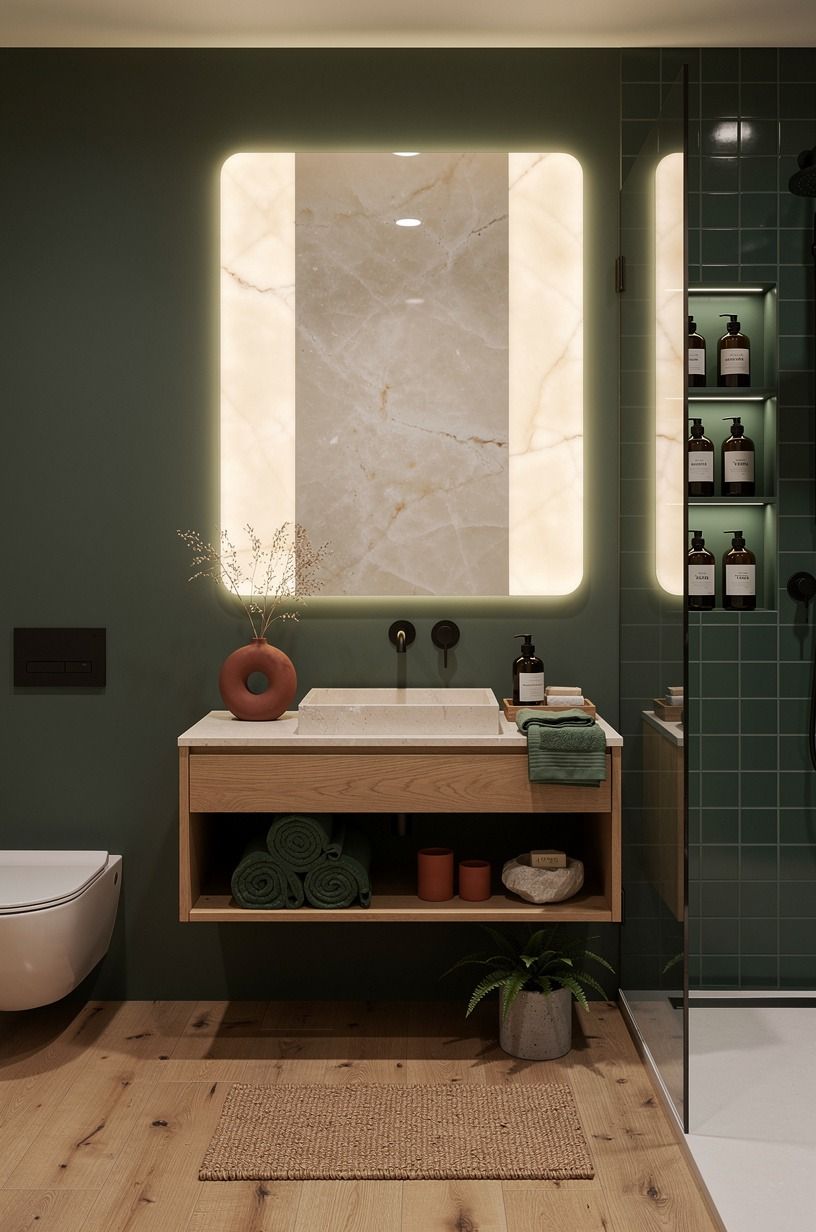
Paint one wall before you commit, especially if your bathroom gets weak morning light. Sherwin-Williams Sea Salt SW 6204 is softer than a true olive, while a forest green can feel richer beside rust accents, natural oak, and backlit translucent onyx.
Put your sample behind the mirror and near the shower, then check it at breakfast and after dark. You’ll see whether your green turns gray, blue, or pleasantly earthy. I’d skip a bright yellow-green here because it can make your skin look a little sickly in the mirror.
2Anchor the room with the Two-Wood Rule
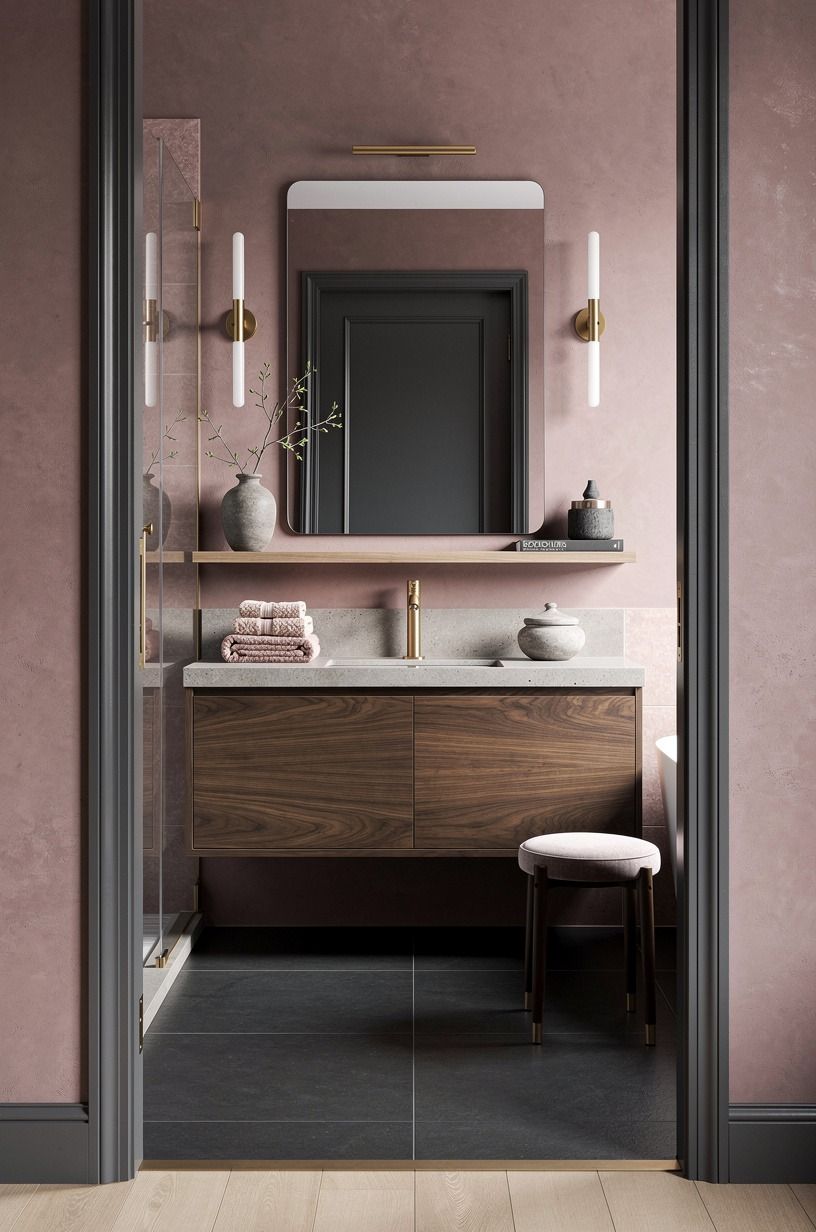
Choose two wood notes at most: one for the vanity, one for a small shelf or stool. A book-matched walnut vanity can carry the darker note, while dusty rose textiles and charcoal details keep the brass from feeling too formal.
You don’t need matching grain. You need a clear relationship. If you’re pairing green walls with timber, these dark green wood bathroom ideas for earthy organic warmth show why a lighter supporting finish keeps the room from getting swampy.
3Paint the vanity before replacing it
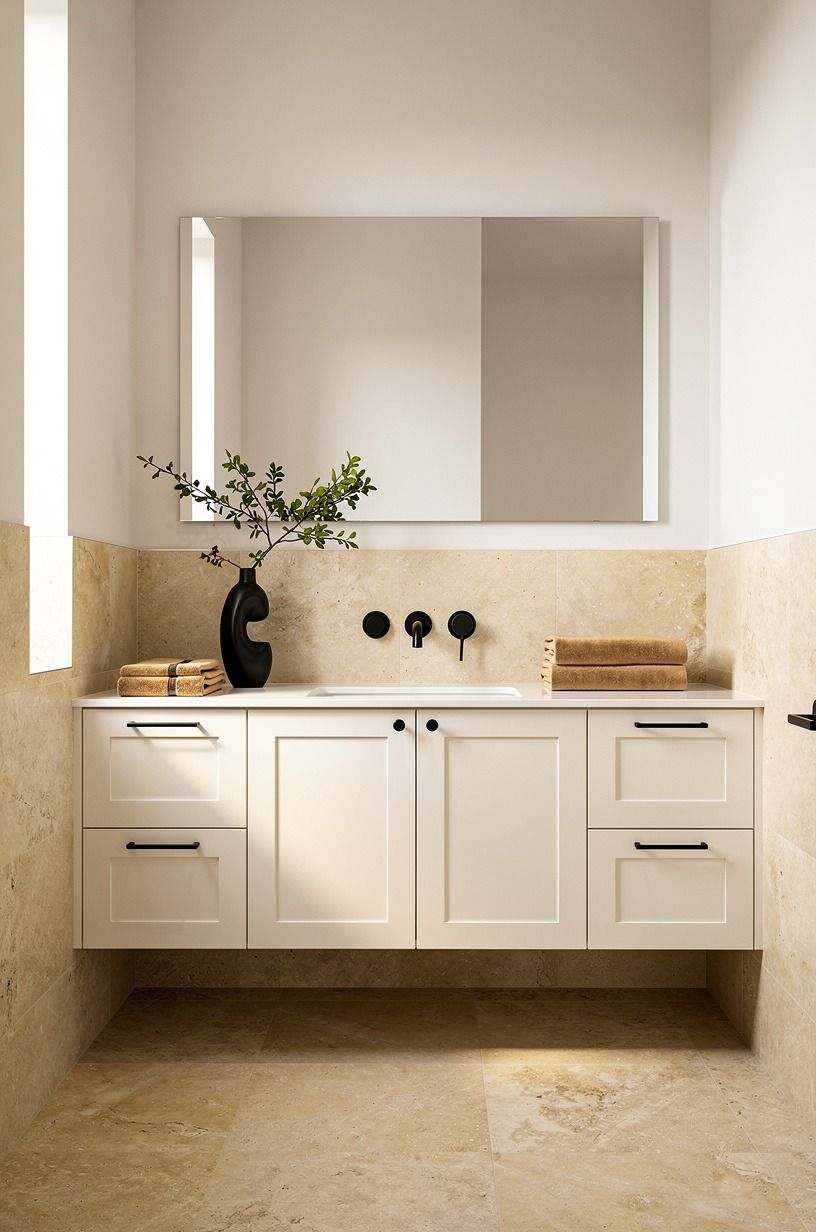
A solid vanity at 32 to 36 inches high is worth saving if the drawers still run smoothly. Paint it Benjamin Moore Chestertown Buff HC-9 for a warm counterpoint, then pair it with warm travertine and restrained black accents.
Prep matters more than the color. Degrease the fronts, sand the shine down, and let each coat dry fully. I rushed this once, and the first damp towel left a mark.
Don’t repeat my very boring mistake!
4Choose olive over all-white tile
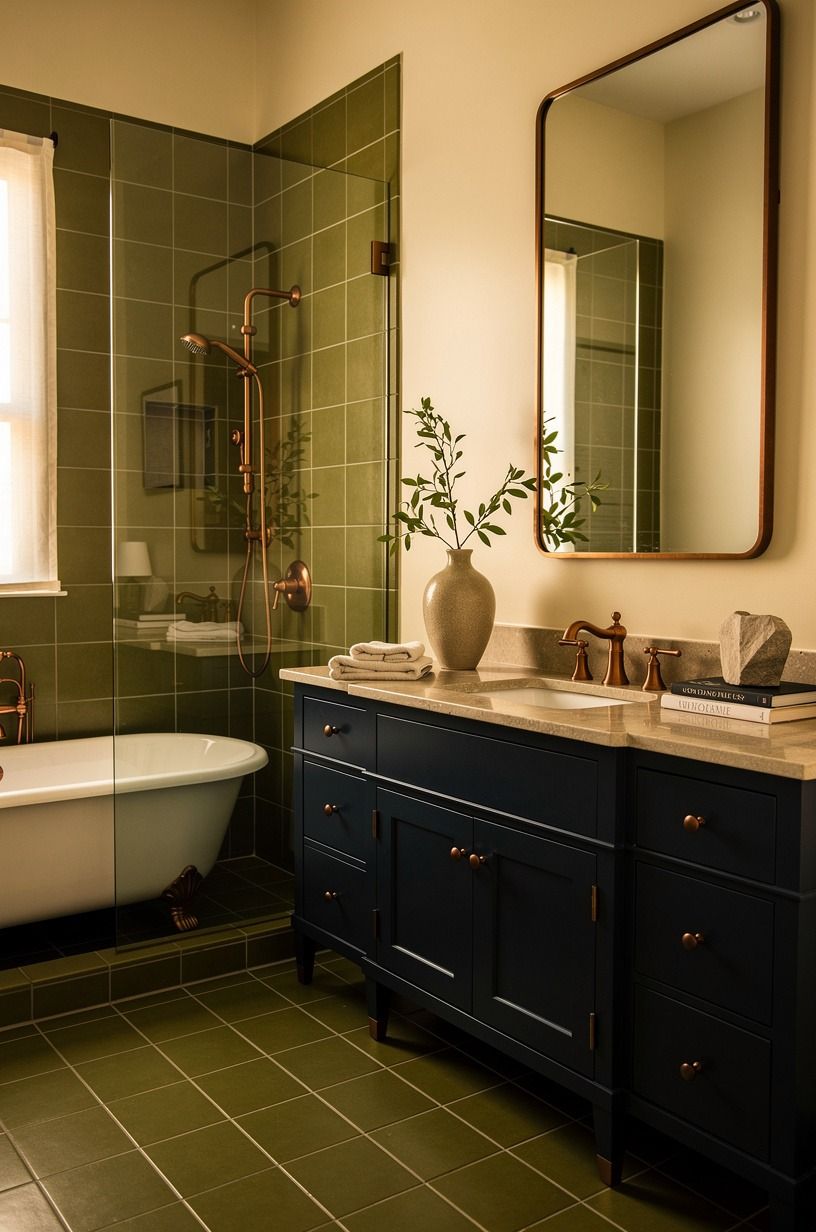
Olive looks better with white tile than white tile looks with more white tile. If you want a deeper direction, midnight blue tile with ivory grout and copper touches gives the room the same grounded contrast without making it feel blank.
You can keep the shower simple with subway tile at a typical $2 to $10 per square foot, while zellige often runs $15 to $35 per square foot. That’s the sensible split. Put the expensive variation where you’ll touch it with your eyes every day.
5Build the Three-Height Light Stack
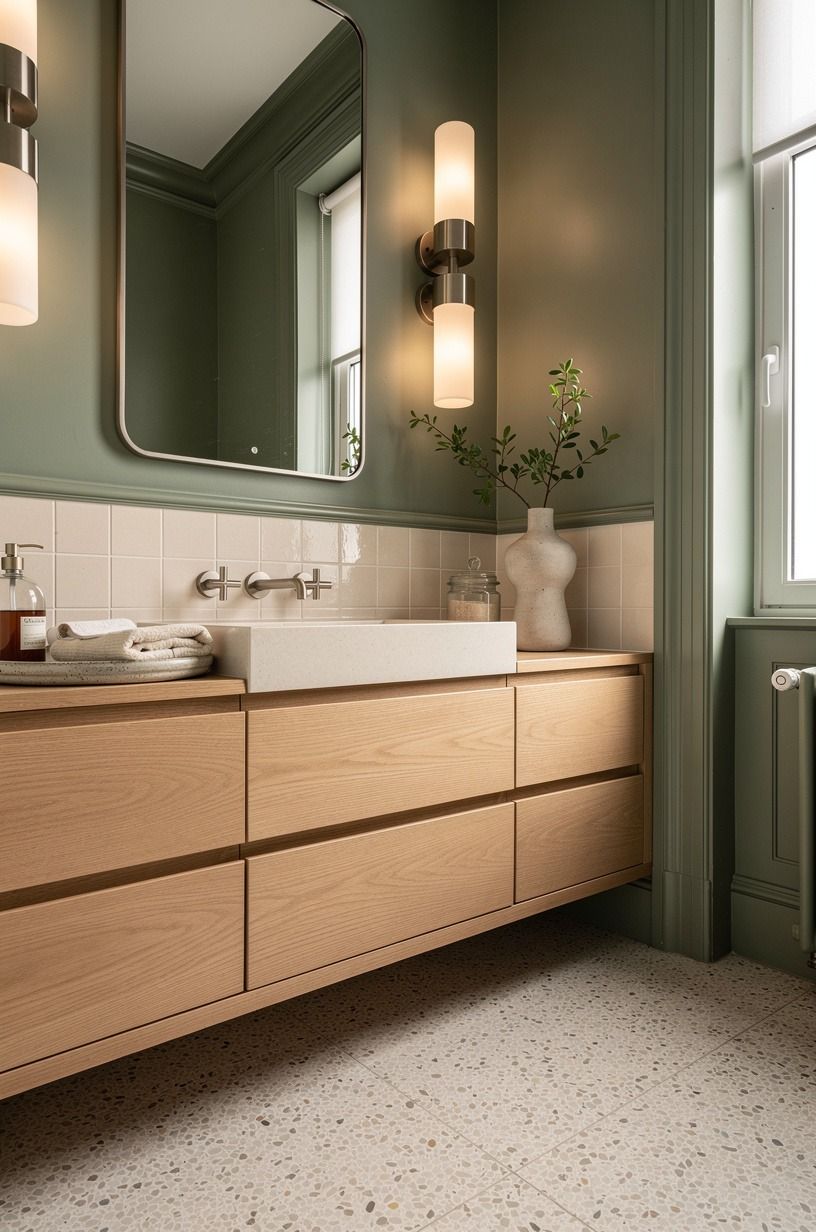
Your bathroom needs light at three heights: overhead, face level, and low glow. Sage green, warm cream, natural wood, and oversized-chip terrazzo make that layered lighting feel especially soft rather than clinical.
6Hang a mirror with warm edges
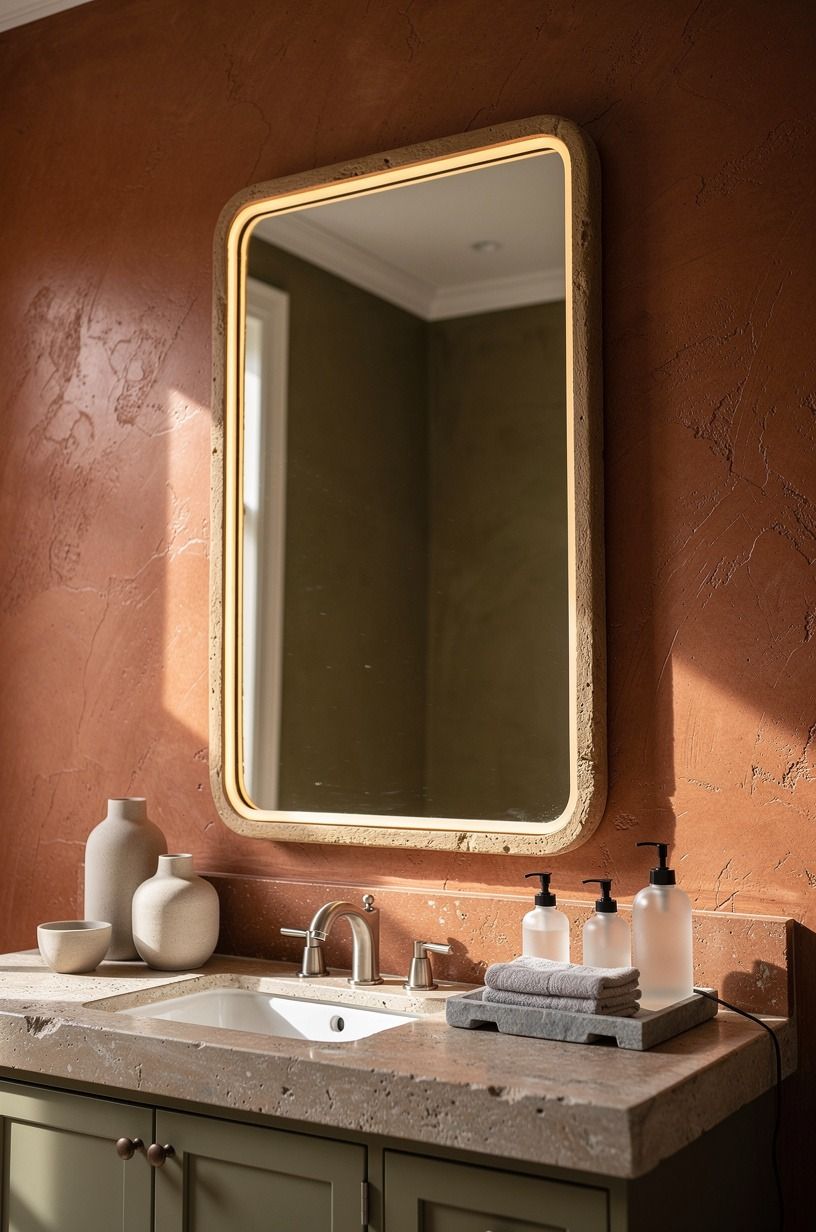
A thin black mirror can look severe against dark sage. I’d choose a rounded mirror against hand-applied Venetian plaster in terracotta, stone, and olive tones instead, because those finishes soften the room without making it feel overly precious.
Keep the bottom edge high enough that your faucet doesn’t visually crowd it. Your mirror should reflect a calm wall or a piece of art, not a pile of products. For a sharper version of this palette, borrow from these dark green black bathroom ideas for dramatic contrast.
7Mix old brass with olive hardware
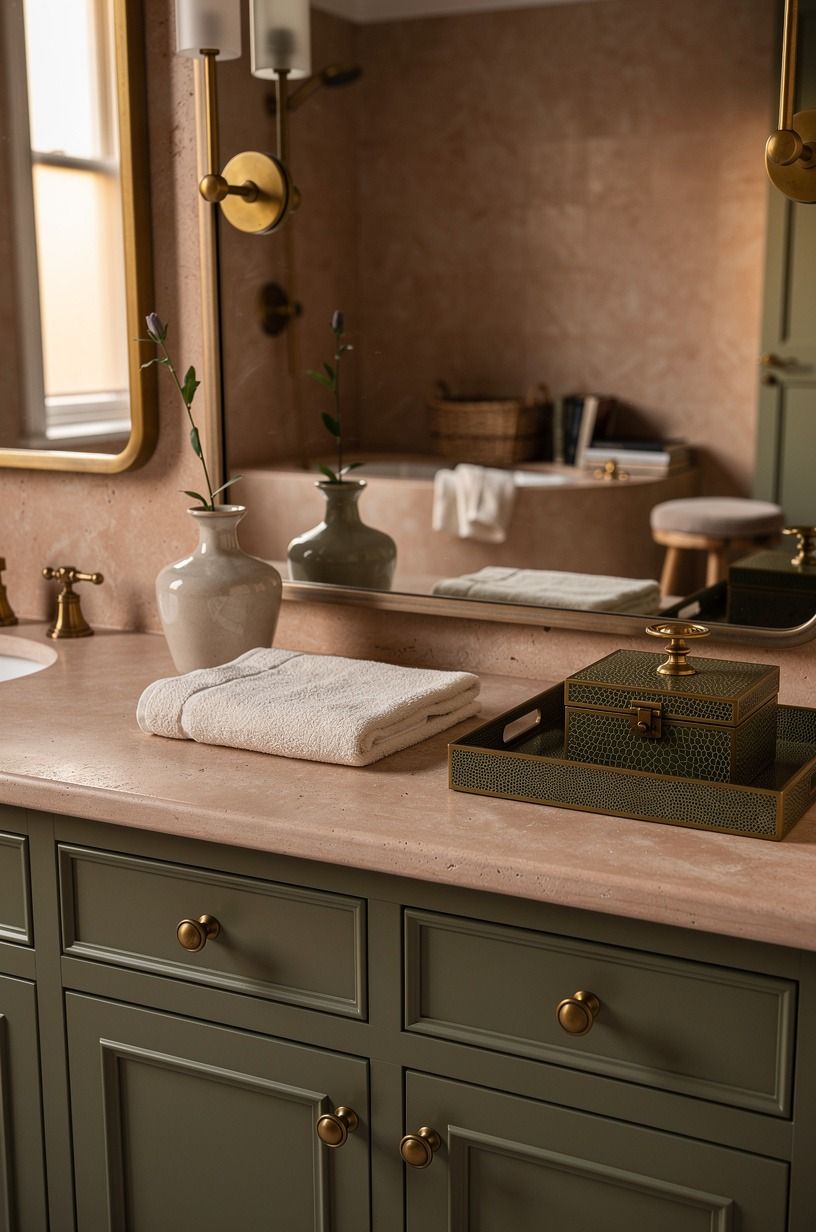
Use one metal family for the fixtures, then allow one aged exception. Brushed brass faucet hardware typically costs $120 to $450, and it brings a warm flicker against clay paint, linen, and small shagreen accents.
I wouldn’t mix polished chrome, black, brass, and nickel in one small bathroom. That’s not layered, it’s indecisive. Choose brass for the faucet and pulls, then let an old framed print or a thrifted hook carry a slightly darker aged finish.
8Layer textiles through the Soft-Towel Formula
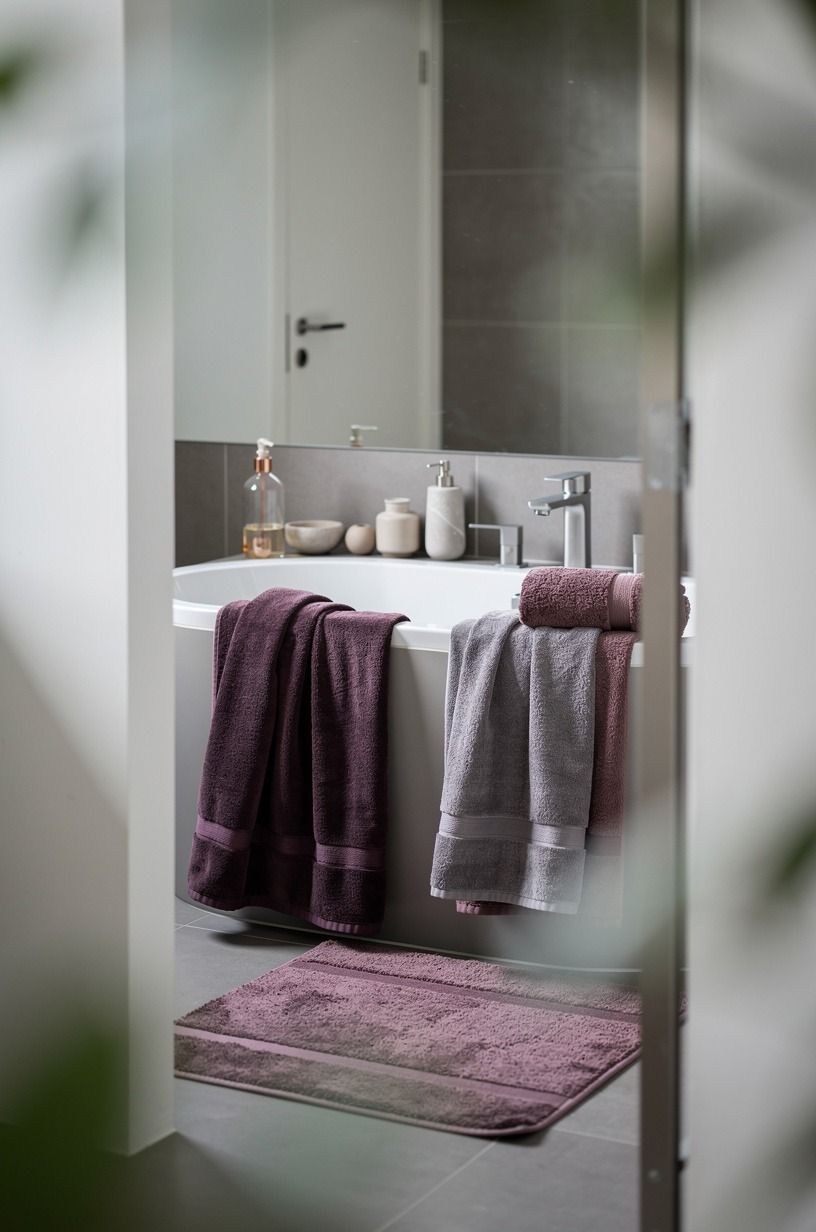
Start with two large towels, one hand towel, and one washable bath mat in related tones. Plum, grey, and rose gold look especially good in washed Belgian linen when olive needs a less expected companion.
9Protect your layout before adding drama
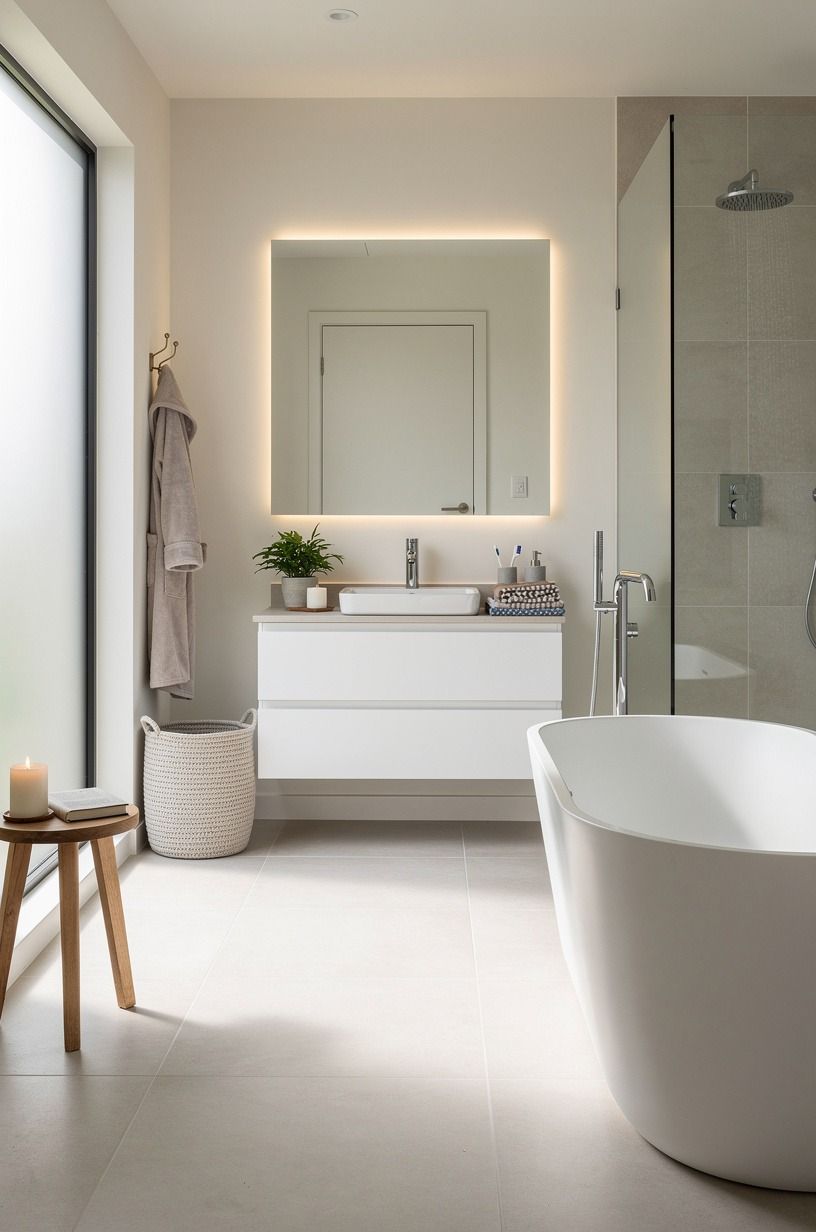
Leave at least 21 inches clear in front of the toilet, and don’t let a bath stool turn that path into an obstacle course. A comfortable shower starts at 36 by 36 inches, so your styling should respect the space you need to move.
For a standard 60 by 30 inch tub, an organic bouclé stool in navy, white, and walnut tones gives you softness without stealing floor room. You’ll appreciate that restraint on rushed weekdays, even if you’re tempted by a giant basket. Small bathroom, real life.
10Frame the shower with a deep green wall color
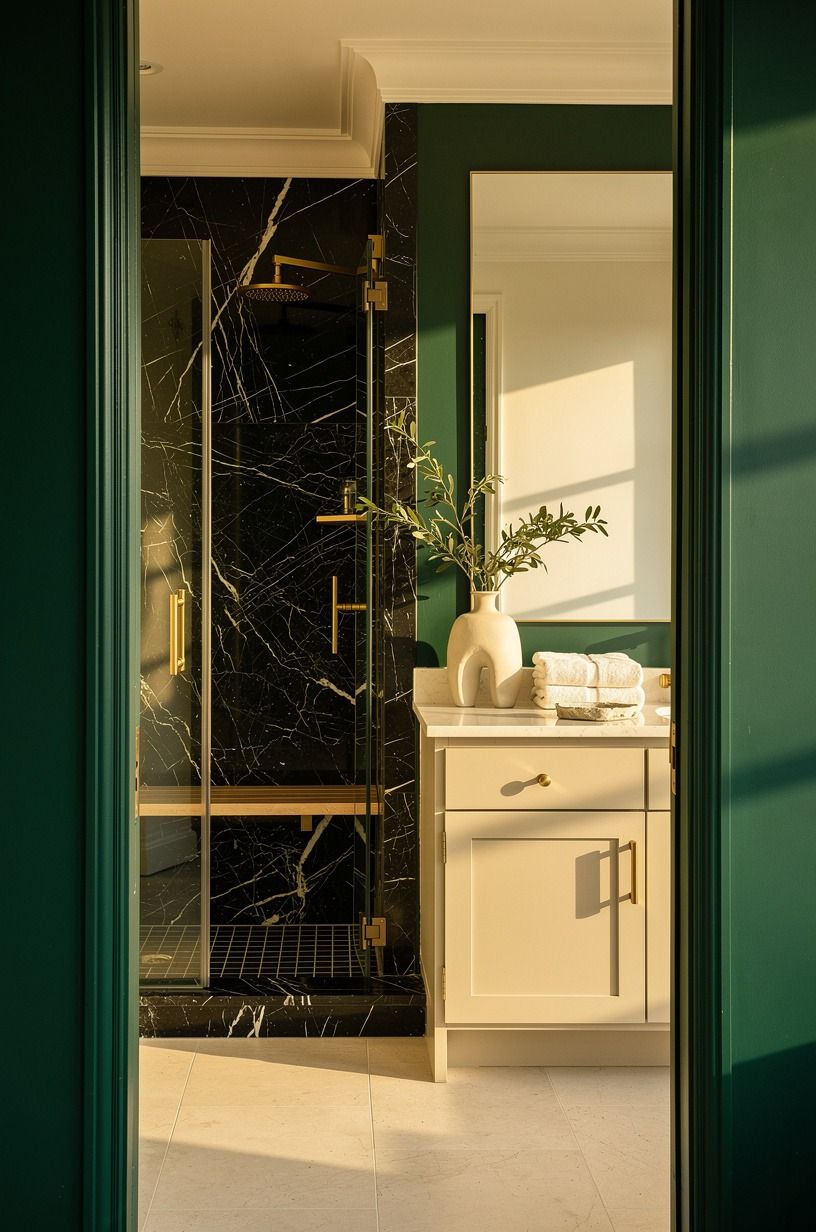
If your shower tile is plain, paint the wall outside it a darker green to make the wet zone feel framed. Emerald walls, gold hardware, cream tile, and Nero Marquina black marble with white veins make a dramatic combination that still feels intentional.
You don’t need to paint every surface. Let one wall hold the shadow, then keep the ceiling warm white so your bathroom still feels airy. If you prefer a cleaner split, these dark green white bathroom ideas for fresh crisp contrast are a better reference point.
11Add a quiet pattern underfoot
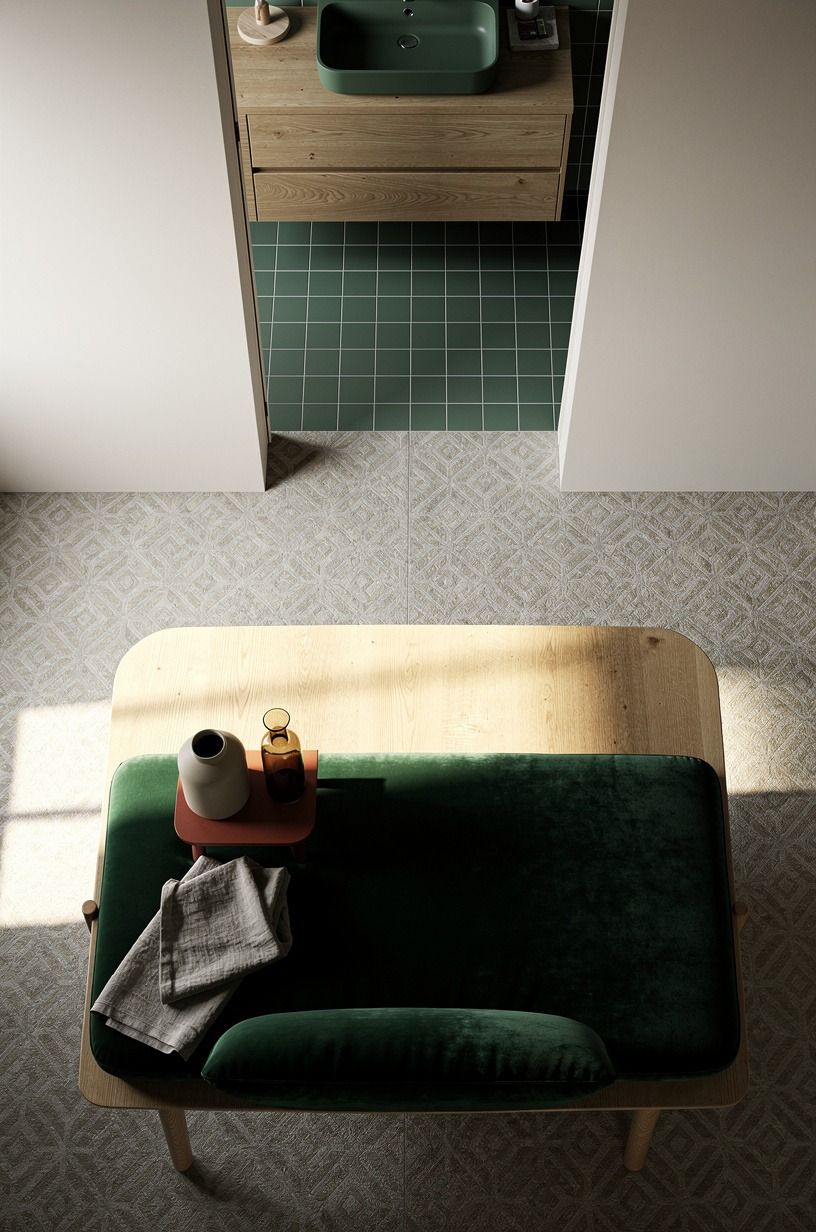
A patterned floor can hold a lot of green, but it shouldn’t compete with your walls. Forest green, rust, natural oak, and a deep-pile mohair velvet mat create warmth without needing busy tile.
I’ve seen people choose busy floor tile and busy wallpaper because each looked good alone. Together, they made the room feel like it was vibrating. Your eye needs one calm plane, preferably the floor or the wall, not both.
12Use the Counterweight Shelf Strategy
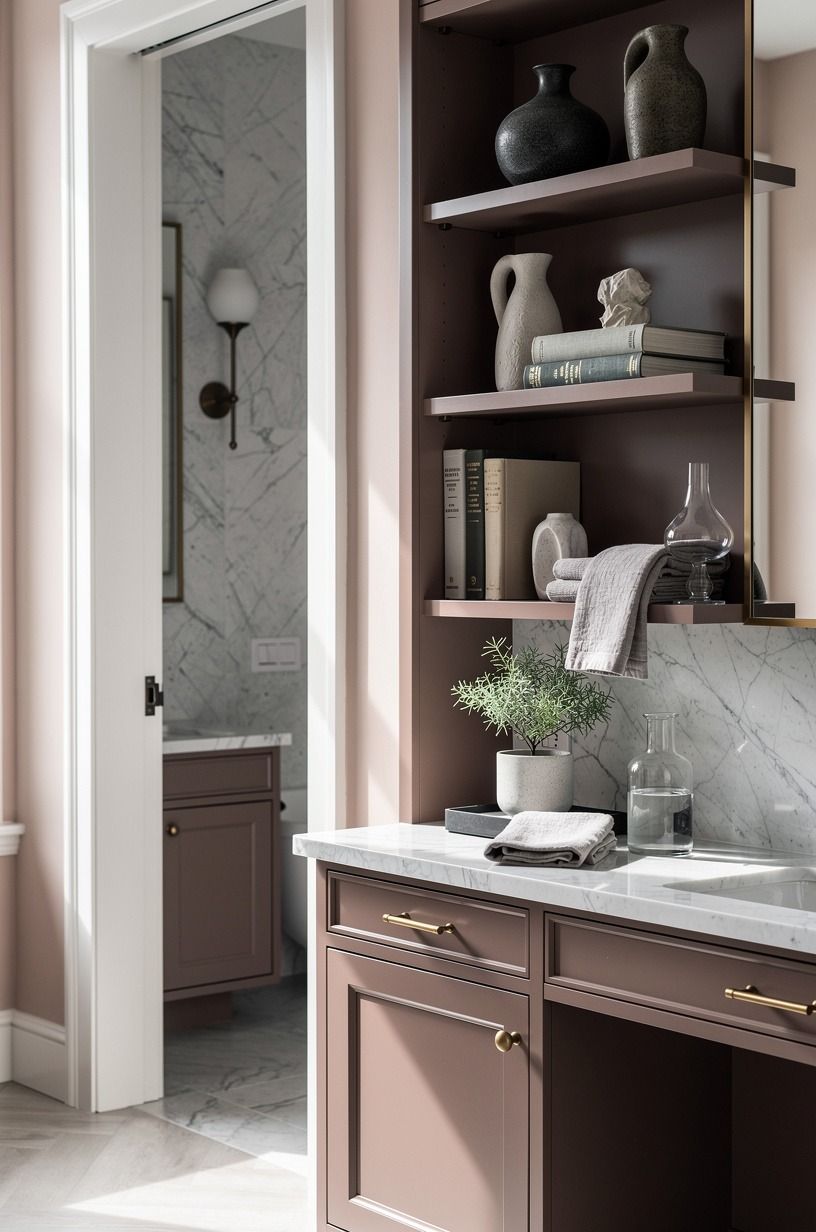
Install one narrow shelf opposite the vanity if your room feels visually lopsided. Carrara marble with subtle grey veining works beautifully with dusty rose, charcoal, and brass, especially when the shelf styling stays minimal.
Keep it lean. A stoneware cup, a glass bottle, one tiny plant.
Your shelf isn’t a store display, and you don’t need twelve objects to prove you have taste. But a little warmth at eye level changes the whole room.
13Bring in clay, cream, and one soft pink note
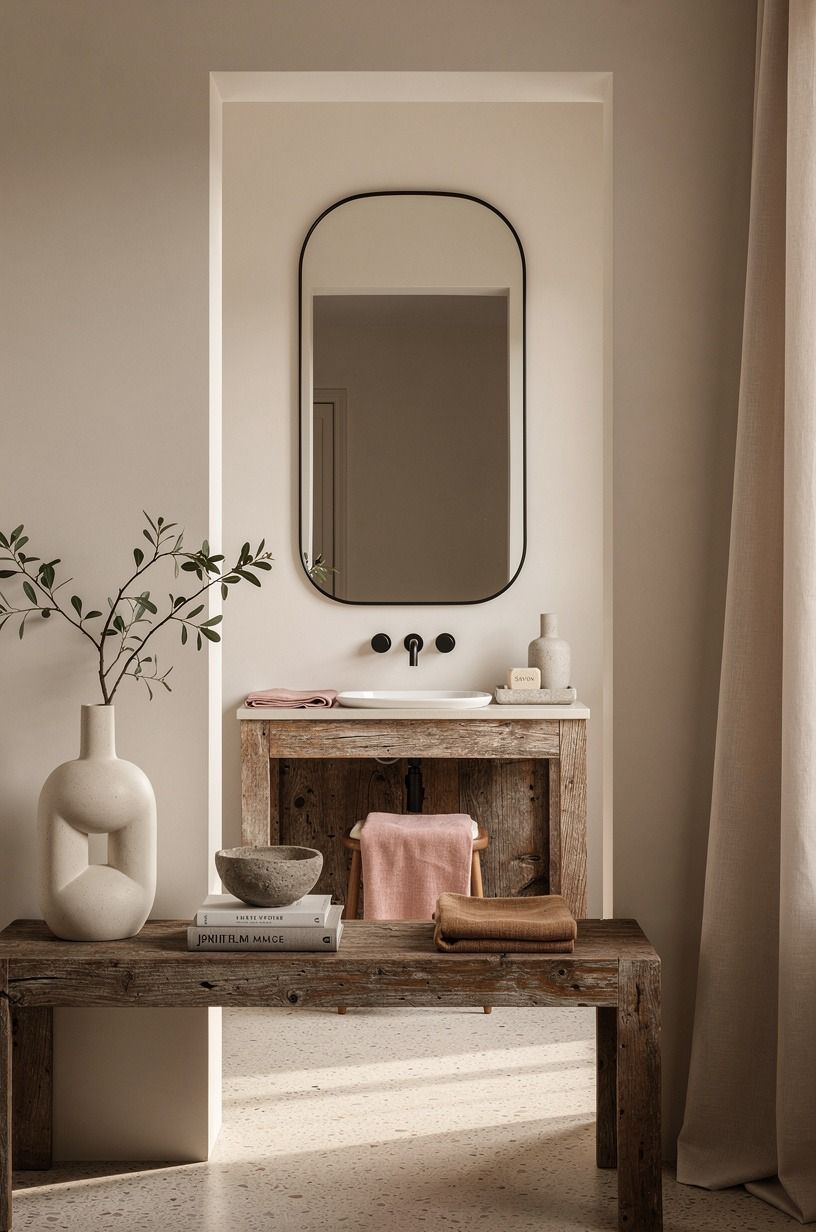
Olive green needs a warm neighbor. Reclaimed weathered teak, warm white, camel, and a few black accents give clay, cream, and soft pink more structure than they would have alone.
You can go romantic without turning the bathroom sugary. I like one faded pink detail because it catches the brass and makes the green look gentler. For a fuller version, browse these dark green pink bathroom ideas for playful romantic charm.
14Budget the work before you fall for marble
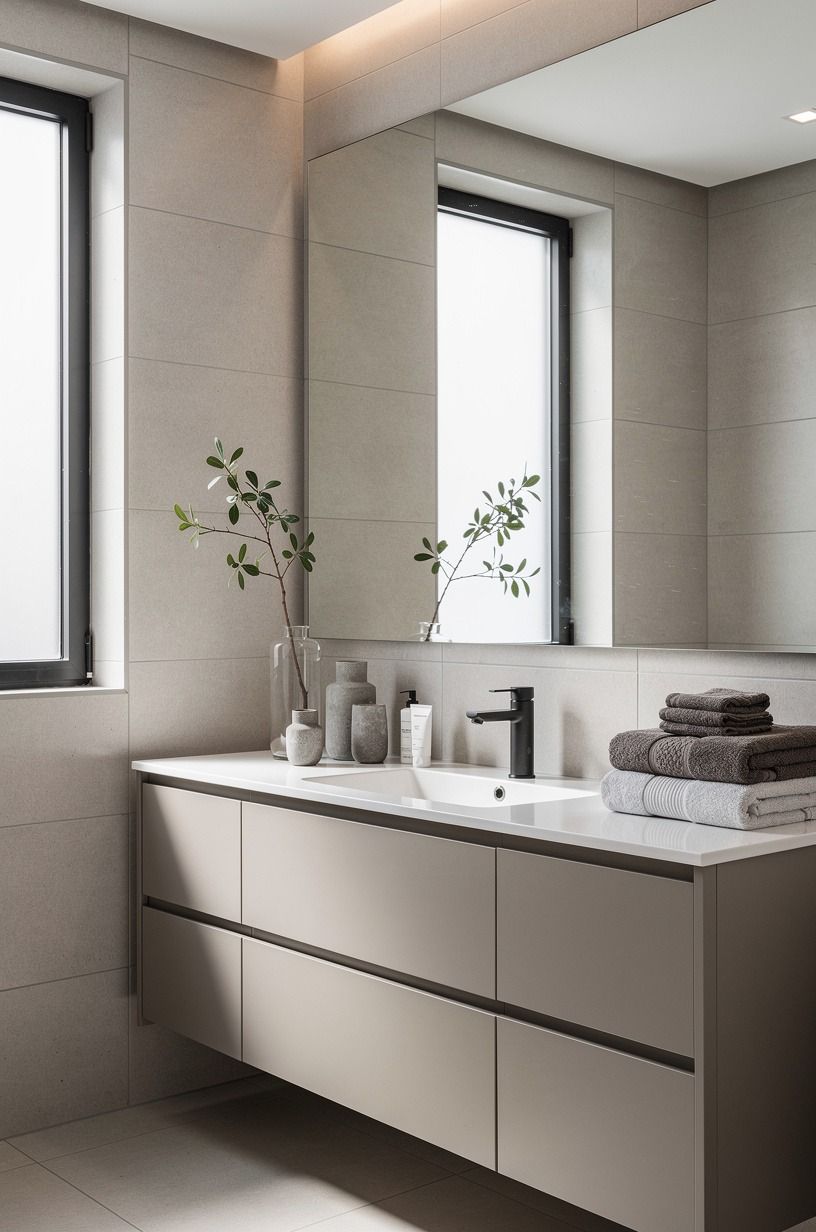
Start with the cost tier that matches the room you have, not the room you saved at midnight. A cosmetic update can be calming and refined without tearing out good plumbing.
A Calacatta marble top with gold veining typically costs $50 to $100 per square foot, so save it for a vanity you’ll keep. It works particularly well with midnight blue, copper, and ivory, but paint, oak, and one good faucet can create warmth for far less.
That’s not settling. That’s choosing where the money shows.
15Finish with a lived-in olive ritual
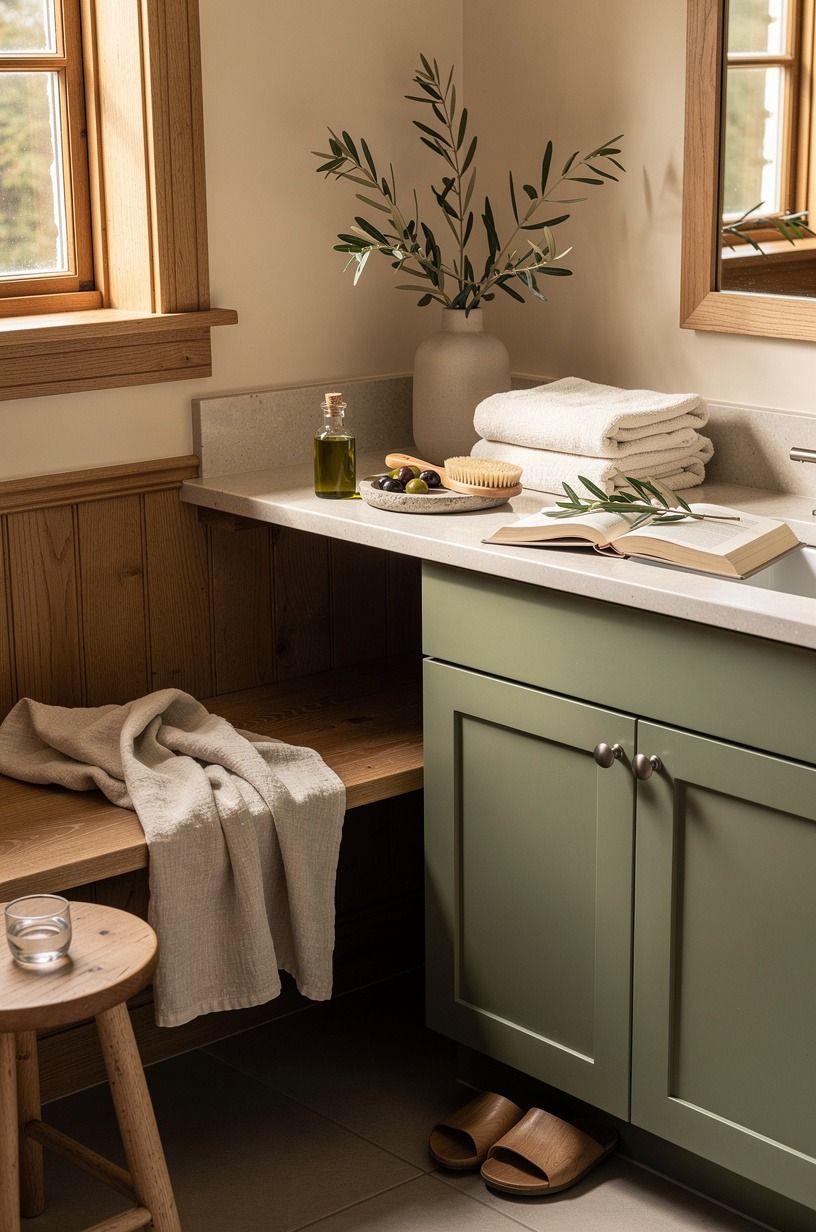
Put away the packaging, decant the soap, and leave one thing that makes the room yours. Cerused white oak, sage green, warm cream, and natural wood make an easy backdrop for a small cutting from your kitchen plant or a simple glass soap bottle.
Then stand in the doorway. Does your bathroom invite you in, or does it still read as a utility box?
But don’t overcorrect. The most peaceful rooms have a little empty space, a little shadow, and enough warmth that you’ll linger after brushing your teeth.
Why dark sage bathrooms feel right right now
I think dark green bathrooms are back because people are tired of rooms that feel like they were designed for a listing photo. We spent years making bathrooms brighter, whiter, and more stripped down, then wondered why they felt cold at 10 p.m.
A dark sage wall gives a small room a boundary. It says this is a place to close the door, wash off the day, and be alone for ten minutes.
I’ve gone back and forth on whether olive is too trend-led. It can be, especially when it’s paired with every expected brass-and-marble detail in the same room.
But olive earns its place when you let it behave like a neutral. It looks grounded with cream, old wood, clay, and soft black.
It also makes ordinary white sinks and basic tile look considered, which is useful if you’re working with builder-grade bones.
The part I’d resist is the urge to make every surface dark. Green paint, green tile, green vanity, green shower curtain: that’s a themed room, and themes get tiring fast.
Let your green have a job. Maybe it’s the wall that frames the mirror. Maybe it’s the vanity that makes your plain tile feel warmer.
You’ll know you’ve got it right when the room feels quiet before you’ve even lit the candle.
And that’s the real value. A bathroom doesn’t need to impress every visitor.
It needs to make your own daily routine feel softer. Warm light, honest materials, a color with some depth. Enough.
The Questions I Get Asked Most
What is the best dark sage and olive green bathroom idea for a small bathroom?
Paint one wall dark sage and keep the remaining surfaces warm white. Sherwin-Williams Sea Salt SW 6204 gives your small bathroom softness, while an IKEA EKET oak-effect cabinet adds storage without making the room feel crowded.
Where can I buy dark sage and olive green bathroom pieces on a budget?
Start at IKEA, Target Threshold, and Wayfair for towels, mirrors, and storage. Facebook Marketplace often has solid wood stools and brass-framed mirrors. Your best saving comes from buying one substantial piece secondhand, then keeping textiles simple.
How much does a dark sage and olive green bathroom makeover cost?
A paint-and-textile refresh usually lands around $200 to $1,200 in typical US costs. Paint, a mirror, and towels can do most of the visual work, while keeping your existing vanity and plumbing costs you nothing.
Can I create a dark sage and olive green bathroom on a budget?
Yes, and your cheapest moves are often the strongest. Paint samples, thrifted brass, and washed linen can shift the mood quickly. Keep your tile, replace the shower curtain, and use removable hooks instead of drilling new holes.
Is a dark sage and olive green bathroom worth it in a small space?
Yes, it’s worth it because a small room can carry moody color without needing much paint. One deep green wall creates depth, while a clear floor and a rounded mirror keep your bathroom from feeling boxed in.
Is a dark sage and olive green bathroom a good idea for a rental?
Yes, if you use removable layers. Peel-and-stick wallpaper, tension-rod curtains, and removable hooks let you bring in olive tones without risking your deposit. For more rental-friendly contrast, see these dark green grey bathroom ideas for calm sophistication.
Where I’d Start First
If I had to pick one step, I’d start with the wall color. You can’t make cold white tile feel grounded by piling accessories around it.
Paint gives every towel, brass hook, and oak shelf a warmer place to land. Pin the color test and start there.