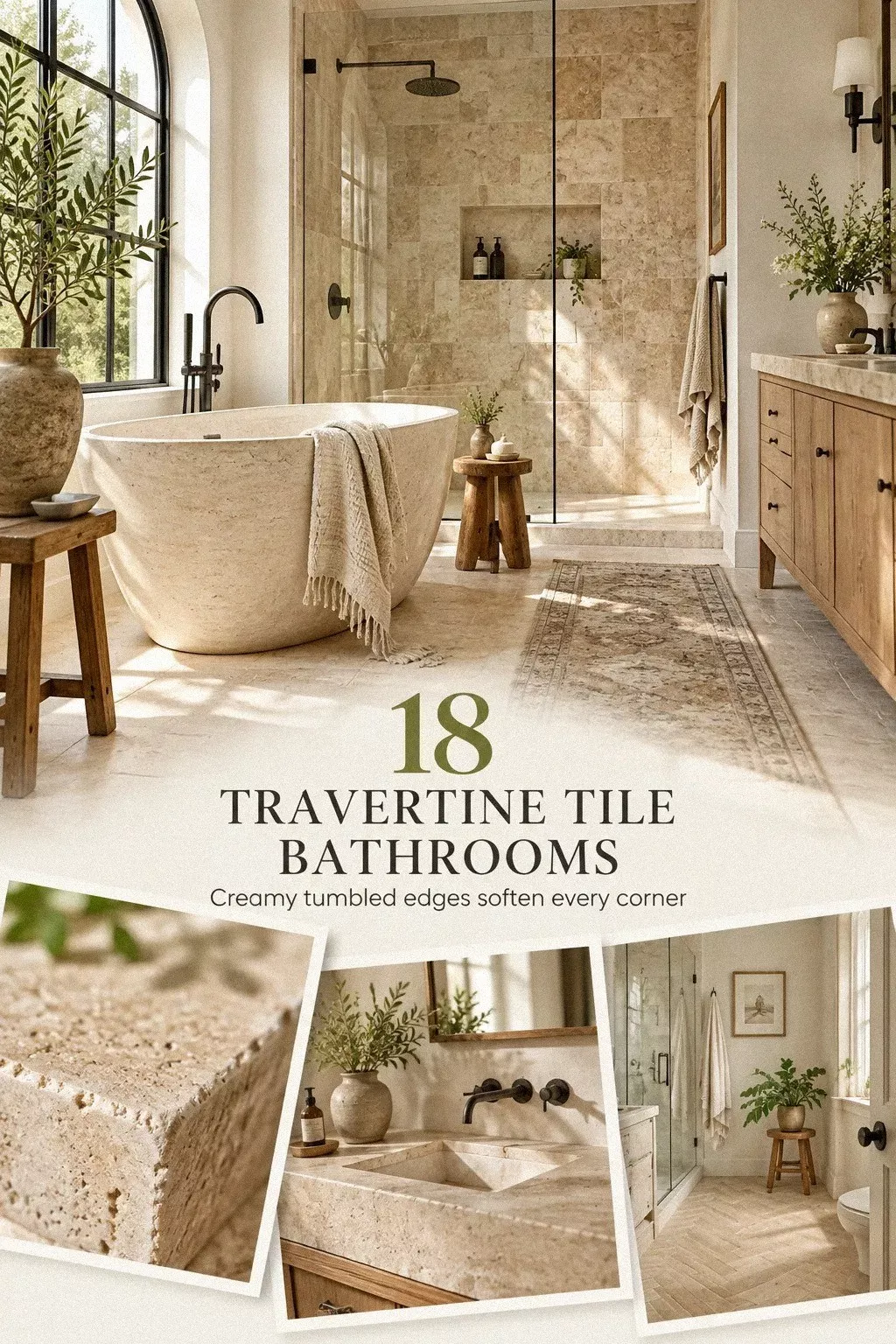
Travertine tile bathroom layouts can look warm and current without a major renovation, especially when you keep the plumbing where it is. I once chose pale tile without testing it beside the vanity, and the room turned gray by afternoon. You won’t make that mistake here. These 18 layouts use texture, proportion, and practical finishes.
- Layer a Soft Neutral Travertine Tile in Bathroom
- Why a Floating Vanity Gives Travertine More Air
- Frame the Shower With a Two-Tone Travertine Grid
- Benjamin Moore White Dove or Hague Blue?
- Travertine and Nero Marquina: A Quiet Contrast
- Swap a Bulky Mirror for a Warm Arched Shape
- Build the Three-Height Light Stack
- Travertine Meets Cerused White Oak
- Use a Vertical Stack Behind the Vanity
- Which Shower Niche Works Best?
- Float a Tub With a Travertine Edge
- Dark Grout or Pale Stone?
- Frame a Window With a Travertine Return
- Storage, Not Another Accent Wall
- Farrow & Ball Joa’s White Sets the Mood
- Arrange a Small Bathroom Around One Strong Axis
- Warm Travertine vs. Black Hardware
- Keep the One-Surface Rule for a Calm Finish
1Layer a Soft Neutral Travertine Tile in Bathroom
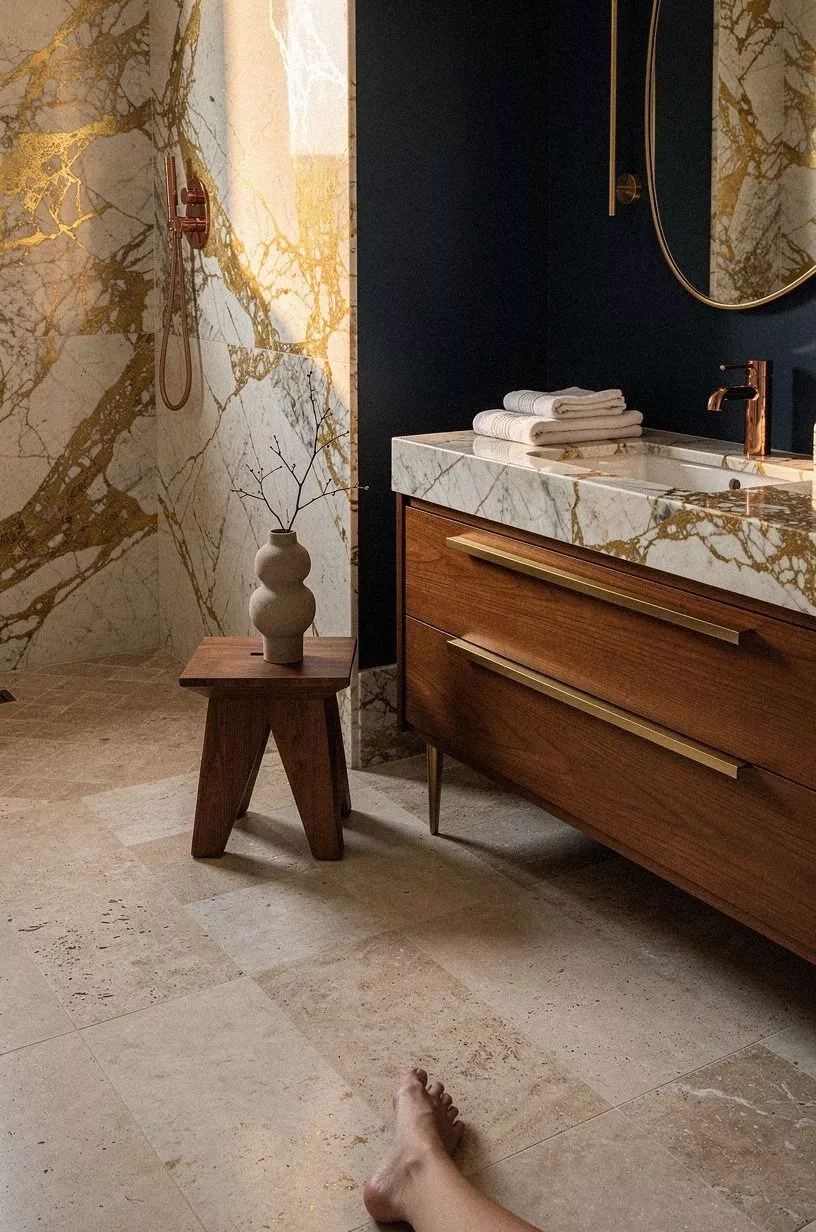
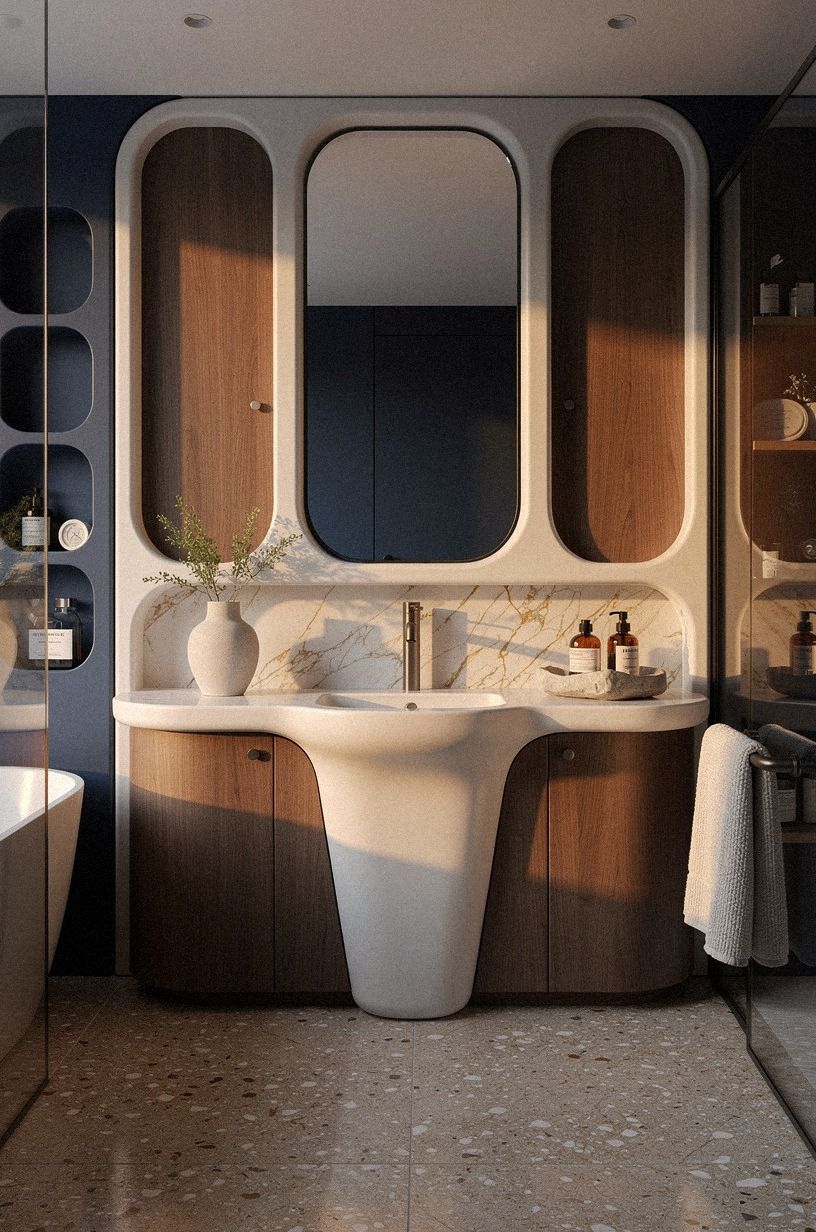
Start with a warm travertine field tile, then let the vanity carry Calacatta marble with gold veining. A midnight-blue wall, copper hardware, and ivory textiles give the bathroom depth without making the stone feel busy. Choose a 12-by-24-inch format if you want fewer grout lines and a calmer wall.
You don’t need to tile every surface. Keep the existing painted walls, use the tile behind the vanity, and repeat one ivory tone in a cotton shower curtain. Benjamin Moore Hale Navy HC-154 works beautifully beside pale stone because it gives the room a grounded, evening-rich contrast.
For your layout, center the tile zone on the sink rather than stopping at an arbitrary corner. And if you’re working around an existing mirror, let the tile finish 2 inches above its frame. That small return looks intentional, not patched.
For a brighter variation, compare these white cream travertine bathroom ideas before choosing your final tone.
2Why a Floating Vanity Gives Travertine More Air
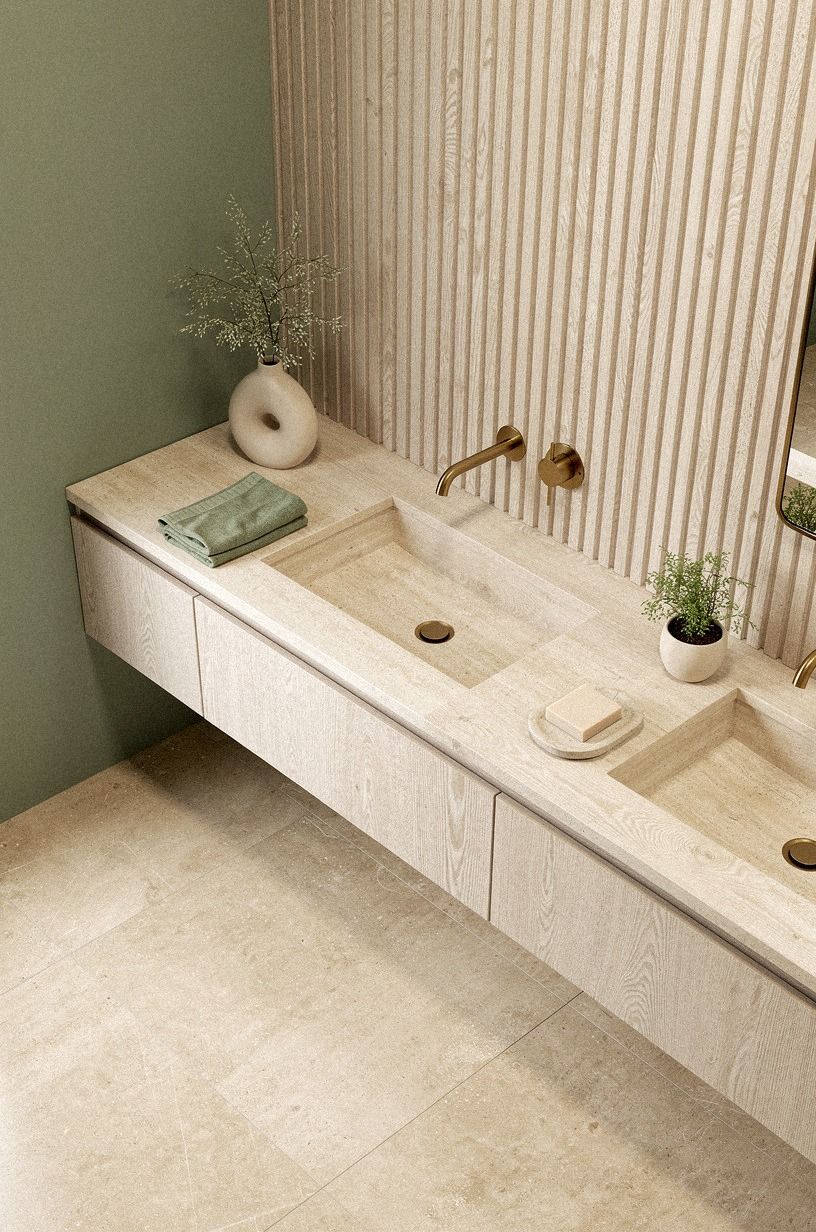
A wall-mounted vanity gives your bathroom more visible floor, which matters when the room is narrow.
Choose cerused white oak for the vanity front if you want warmth without visual weight. Pair it with sage green paint, warm cream walls, and simple brushed metal so the floating shape remains the feature. The open floor below will make the room feel lighter immediately.
3Frame the Shower With a Two-Tone Travertine Grid
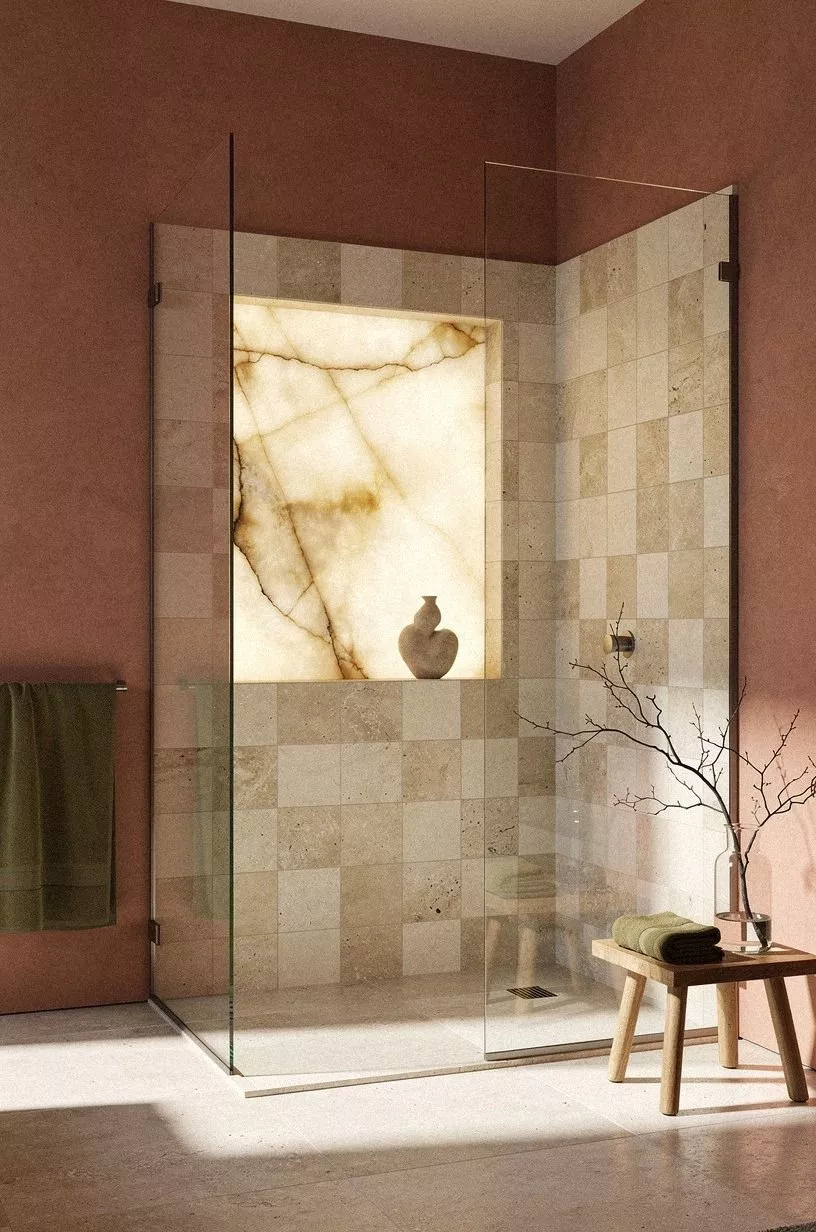
A two-tone grid makes a standard shower feel designed rather than merely tiled. Use honed travertine mosaic tile on the shower floor and reserve backlit translucent onyx for one shower wall or niche. The smaller floor pieces give your feet more grout traction, while the larger wall surface keeps cleaning manageable.
Bring in terracotta through a painted wall or bath textile, then use olive for one small accent. Keep the grout close to the stone’s middle tone. Bright white will outline every joint, and dark brown can make pale travertine look dated.
I’ve tested both, and a soft mushroom grout is the better call for your bathroom because mineral marks disappear into the color. If you like this warmer direction, browse Moroccan tile bathroom ideas for another surface contrast.
A 36-by-36-inch shower is the comfortable minimum, so protect that footprint before adding a bench or niche. If your enclosure is smaller, a recessed shelf is more useful than a projecting corner caddy. Your bottles stay contained, and the wall still feels open.
4Benjamin Moore White Dove or Hague Blue?
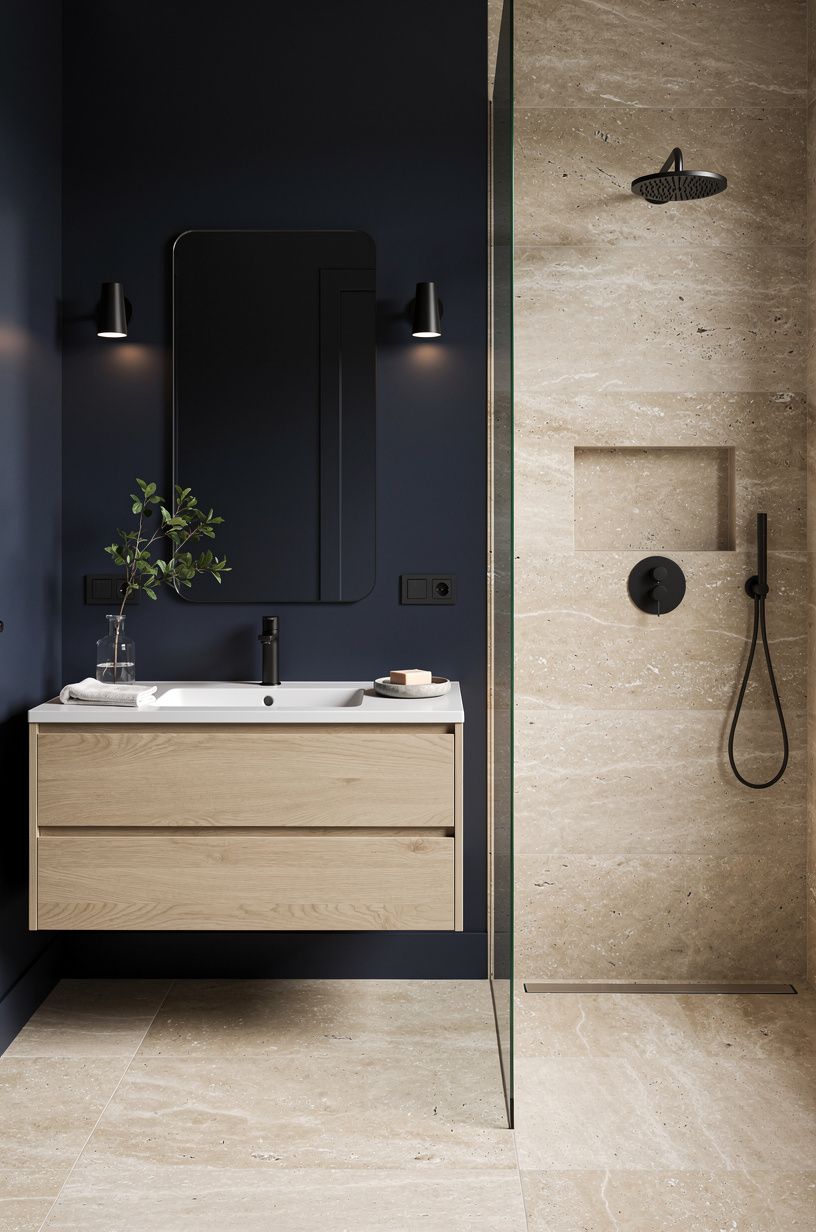
A one tile bathroom can still have depth if you change the ceiling color. Keep the walls and floor in the same warm travertine family, then paint the ceiling Benjamin Moore Chestertown Buff HC-9. The clay warmth catches light above the mirror without making your room feel chopped up.
For a softer version, use Farrow & Ball Joa’s White only on the ceiling and the wall behind the vanity. That linen-like tone is calming when your fixtures are aged brass and the vanity is book-matched walnut. You don’t need a patterned accent wall to make the room memorable.
I wouldn’t pair this ceiling idea with glossy white subway tile. The shine fights the stone’s quiet surface, and your eye won’t know where to rest. Instead, use a matte finish, one rounded mirror, and a warm bulb that throws a soft pool across the ceiling.
5Travertine and Nero Marquina: A Quiet Contrast
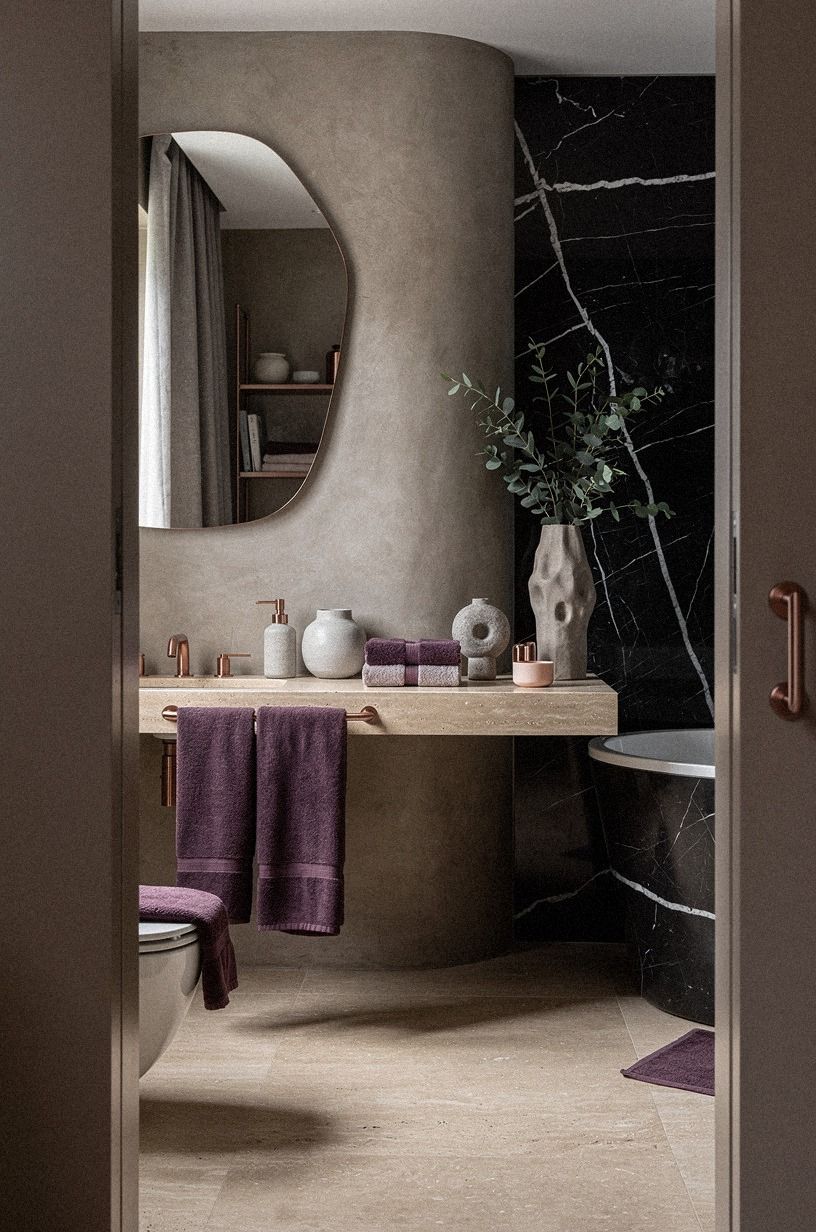
A narrow border can make simple tile layouts for bathrooms feel custom without moving a single pipe. Lay warm travertine in a 2-inch strip around the room, then fill the center with honed stone. Add plum-gray paint and a small rose-gold metal detail for contrast without making the floor feel severe.
Your border should follow the room’s actual geometry, not an imaginary perfect rectangle. Dry-lay the first row beside the toilet and vanity before setting anything.
If the border leaves a tiny sliver at the doorway, shift the whole field by half a tile. For more pale-stone inspiration, revisit these cream travertine bathroom layouts.
And don’t use the border on every wall too. It can make a compact bathroom feel boxed in.
Keep the warm stone underfoot, repeat rose gold in one fixture, and let the walls remain soft. The result is refined without requiring a full floor replacement.
6Swap a Bulky Mirror for a Warm Arched Shape
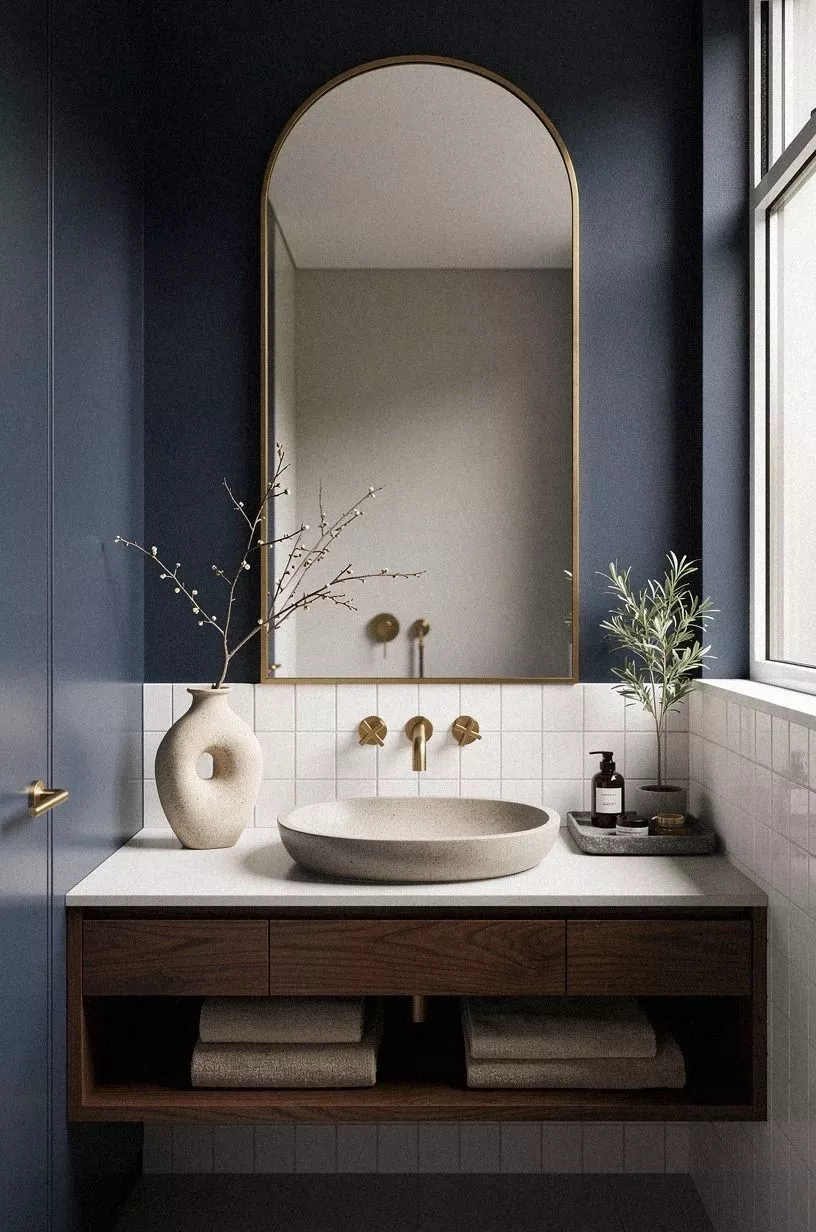
An arched mirror changes the vertical rhythm of a bathroom faster than another tile pattern will. Hang a West Elm arched mirror above the vanity, leaving enough clearance for the faucet and any medicine cabinet door. The curved top interrupts all those straight grout lines.
Your mirror should be wide enough to relate to the vanity, but it doesn’t need to fill the entire wall. A 30-inch vanity with a slightly narrower mirror can look more collected than a wall-to-wall glass panel. If you’re keeping the old light fixture, center the mirror beneath it before choosing the final width.
I made the mistake of installing a frameless rectangle in a stone-heavy bathroom, and the room felt hard. You won’t need that extra severity. Choose a slim unlacquered-brass frame, add one white linen hand towel, and let a walnut vanity bring warmth to the navy-and-white palette.
7Build the Three-Height Light Stack
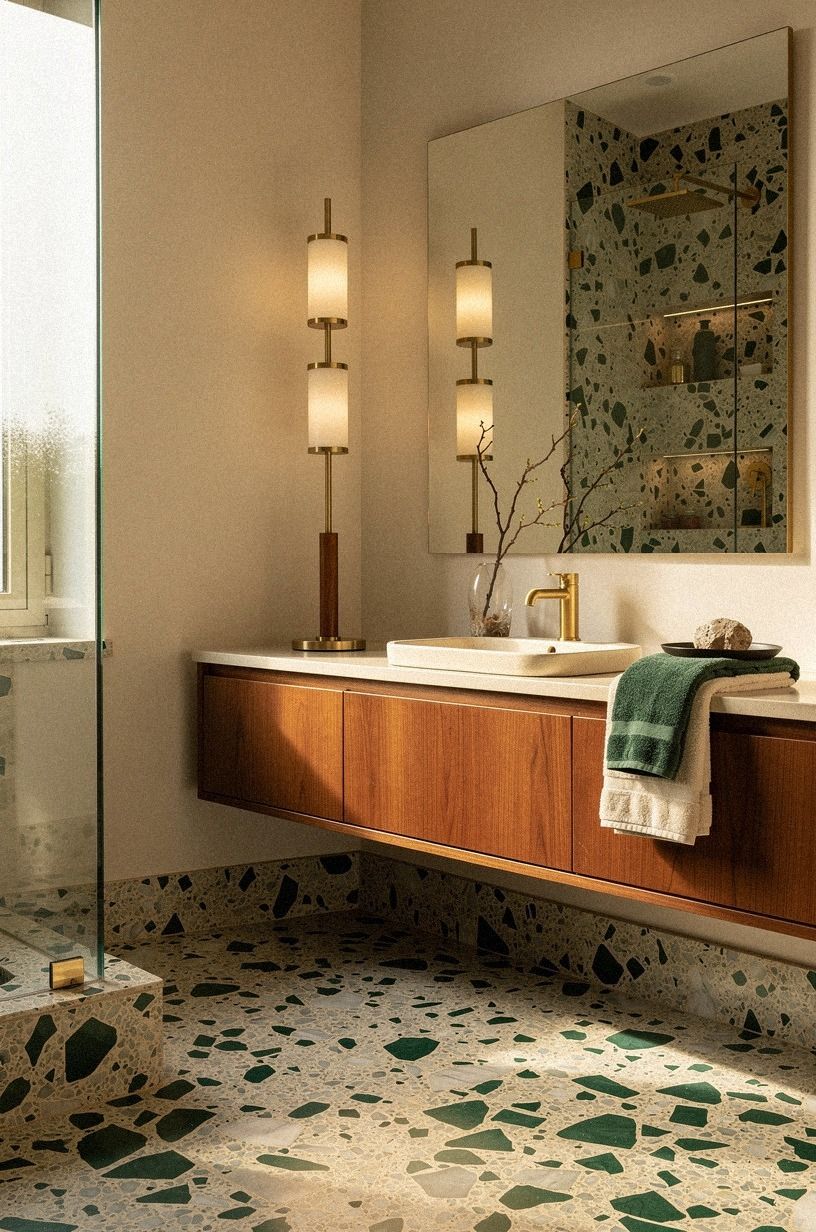
Your bathroom lighting should work at three heights: ceiling, mirror, and floor. A small flush mount handles general light, sconces sit beside the mirror, and a low night-light or toe-kick strip gives the room a gentle glow after dark.
Use unlacquered brass sconces with warm bulbs, but don’t put every fixture in brass. The metal looks more sophisticated when your faucet is the only other bright note. An oversized-chip terrazzo floor can handle a deep emerald wall while cream textiles keep the room from feeling heavy.
If you’re renovating around existing wiring, choose plug-in sconces with a cord cover painted to match the wall. That’s less expensive than opening tile, and it won’t force you into a new electrical plan. And yes, your night-time bathroom will feel calmer immediately!
8Travertine Meets Cerused White Oak
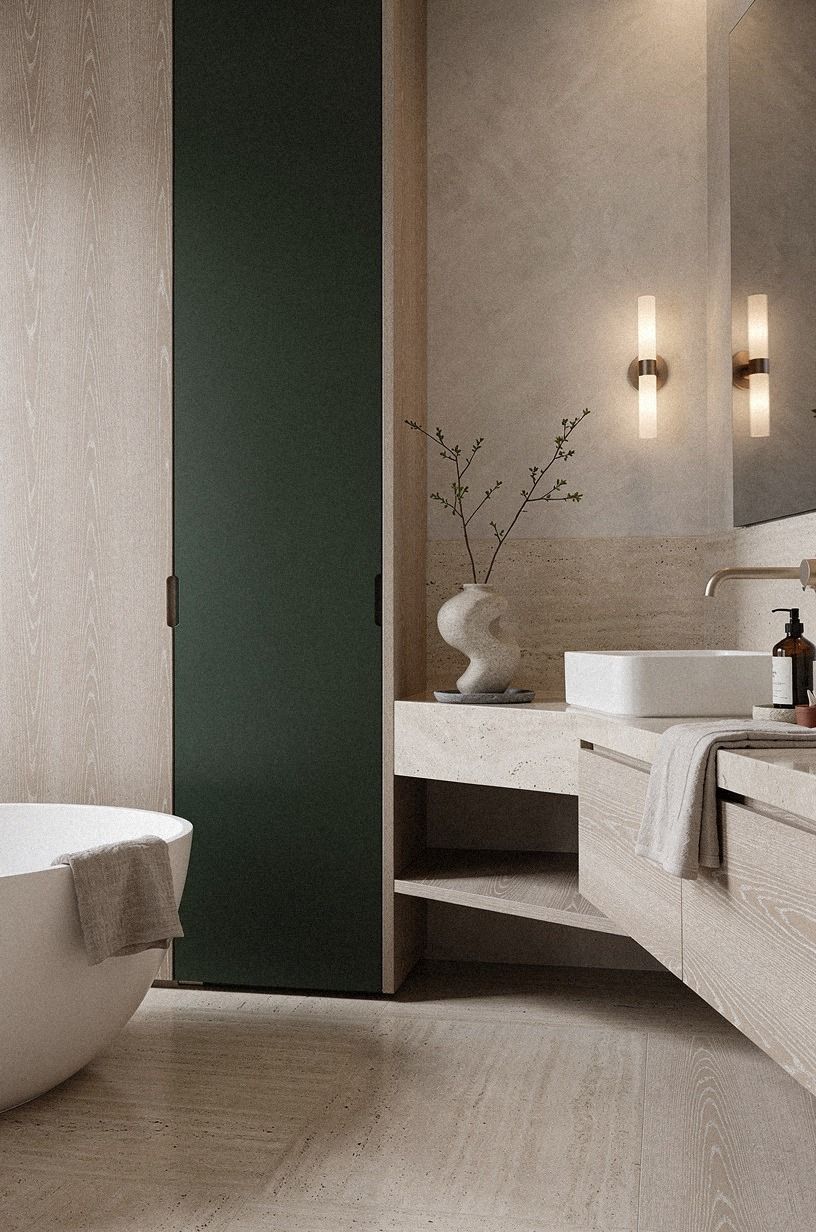
Travertine and wood can make a bathroom feel inviting, but the wood needs the right finish. Choose natural oak for a vanity front or a shallow storage cabinet, then pair it with hand-applied Venetian plaster before it meets steam and splashes.
A light oak tone works best with the plaster because both materials have visible variation. I’d avoid orange oak beside cream stone.
It pushes the room toward a yellow cast, especially under warm bulbs, and you won’t be able to fix that with a new towel. For another natural combination, see these travertine and wood bathroom ideas.
Your cabinet doesn’t have to be custom. An IKEA HEMNES bathroom vanity can provide the structure, while a carpenter adds a natural-oak drawer front. Keep the hardware simple, use a 3/4-inch solid oak shelf if you add one, and let the stone remain the rougher texture.
9Use a Vertical Stack Behind the Vanity
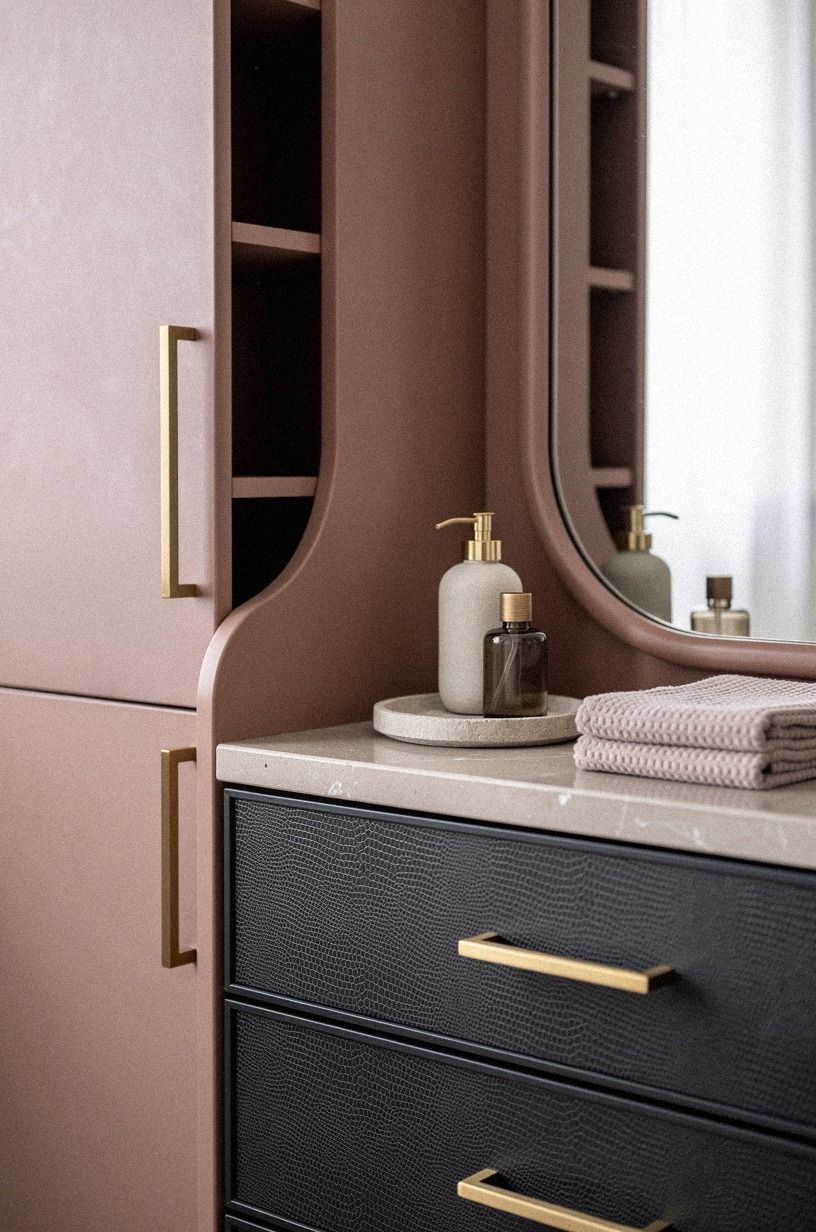
Vertical tile draws your eye upward and makes a low bathroom feel taller. Set a dusty-rose tile in a straight stack behind the sink, stopping at the bottom of the mirror. Use charcoal grout sparingly, then add a small shagreen accent to the vanity front for texture without a loud pattern.
You don’t need to cover the whole bathroom. A 36-inch-wide vanity wall is enough to establish the layout, especially if the surrounding paint is quiet.
Farrow & Ball Setting Plaster No.231 keeps the transition soft and works with aged-brass hardware. If you want a related handmade surface, compare these Moroccan tile bathroom combinations.
But don’t use tiny tile behind every fixture. Your bathroom will collect more grout lines, and cleaning becomes a weekend project. Keep your feature wall focused, use a matching stone shelf, and repeat one brass tone in a small soap dish.
The room will feel warm, not overworked.
10Which Shower Niche Works Best?
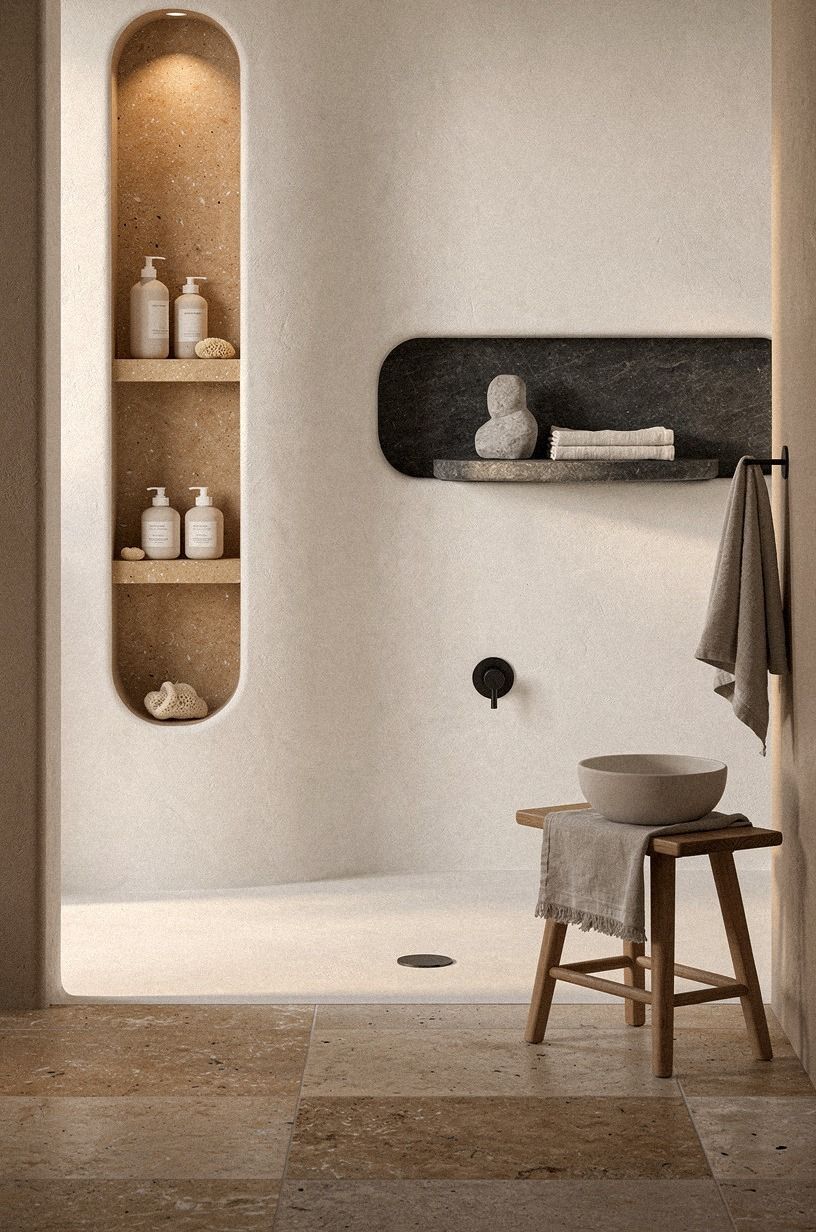
A recessed niche is one of the most useful changes you can make during a shower refresh. Line it with warm white stone, then use the same material for the shelf. A washed Belgian linen curtain or towel softens the niche, while black hardware gives the shower a crisp focal point.
Place the niche where you can reach it without bending or stretching. If you’re keeping the existing showerhead, measure from that centerline before cutting. A long horizontal niche can look elegant, but a compact vertical niche may preserve more waterproofed wall area.
For a softer material pairing, explore these travertine green bathroom ideas.
I wouldn’t add a decorative ledge just because the wall feels empty. It steals elbow room and gathers soap. Your goal is a dry, easy-to-wipe surface, so keep the shelf slightly sloped and use a single material.
It isn’t flashy, but you’ll appreciate it every morning.
11Float a Tub With a Travertine Edge
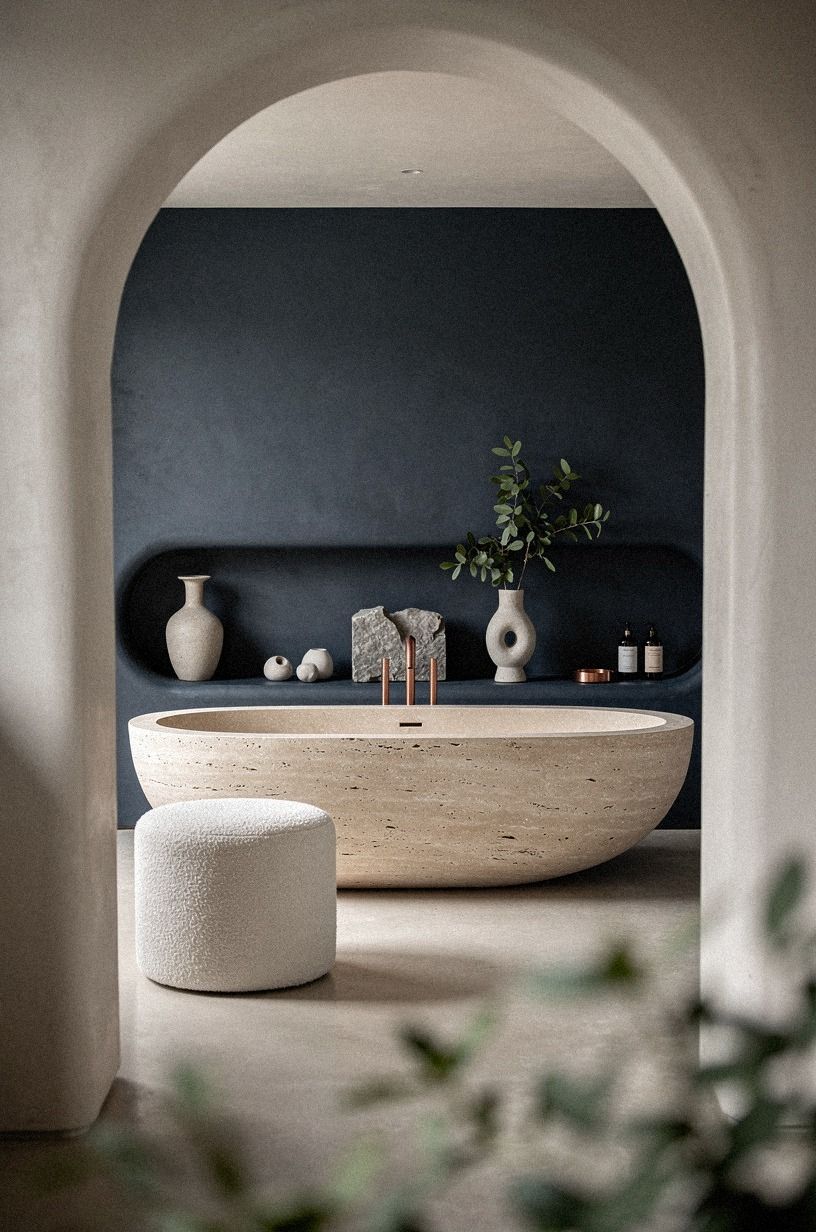
A standard tub is 60 by 30 inches, and that footprint can still feel special when the surround is handled carefully. Wrap the front and one short end in a slim honed travertine edge, then paint the remaining wall a deep midnight blue.
Keep the tub edge visually light. A thick stone ledge can make a small bathroom feel crowded, while a slim 2-inch return gives you a place for soap without swallowing the rim.
Add ivory textiles and an organic bouclé bath mat outside the splash zone. If you’re replacing only the surround, match the new stone to the existing floor rather than chasing an identical vein. These natural travertine and wood combinations can help you soften a stone-heavy room.
The best layout keeps your toilet clearance at least 21 inches in front. Measure that first, then decide whether a towel bar belongs beside the tub or behind the door. Your bathroom will work better when every pretty surface leaves enough room to move.
12Dark Grout or Pale Stone?
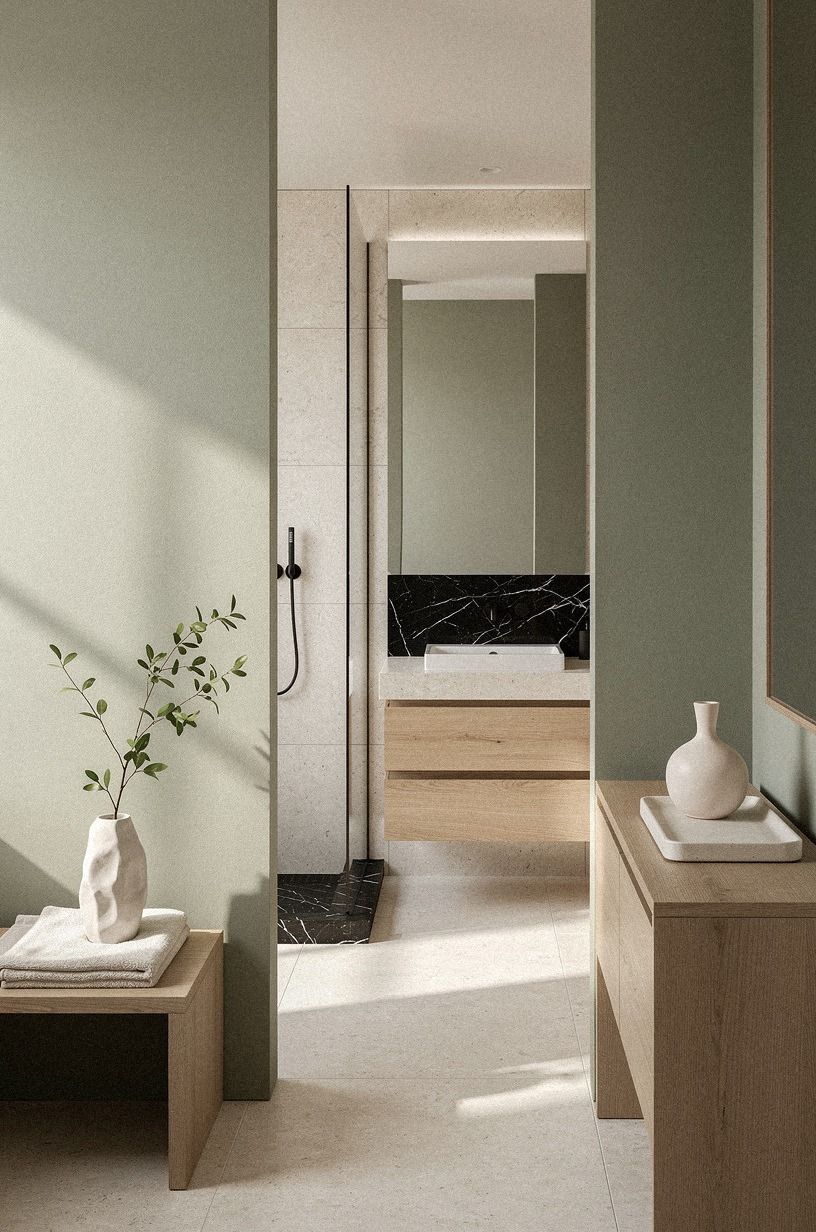
Dark grout can sharpen pale travertine, but it changes the entire mood of the room. Use warm charcoal grout with a creamy tile, then repeat the contrast with Nero Marquina black marble with white veins in a small shelf or threshold. A natural wood vanity and sage-green wall will keep the combination from feeling stark.
Don’t assume a darker joint hides everything. It can highlight uneven tile edges and make a small floor look busier.
Test one sample beside your faucet, mirror, and paint before committing. I went back and forth on this because the sample looked bold in daylight, then almost black at night.
The warmer alternatives in these Moroccan tile bathroom examples are worth studying.
If your room is compact, stay with a medium mushroom grout instead. Your eye will read the floor as one broad surface, and the stone’s natural pitting will remain the star. And if you want drama, bring it through one painted wall instead of every joint.
13Frame a Window With a Travertine Return
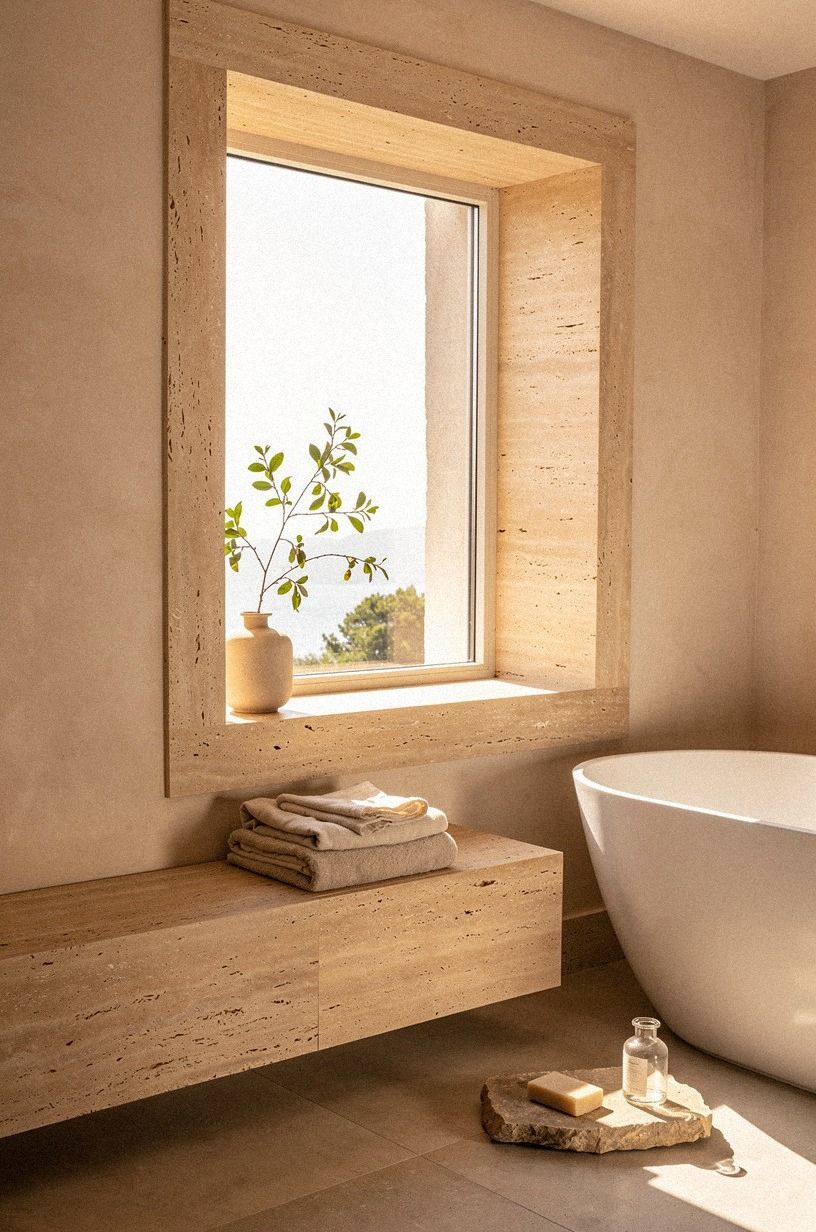
A window can become the quiet center of your bathroom when you tile its reveal instead of covering it with bulky trim. Use travertine bullnose edging around the opening, then continue the same stone onto the sill. Water has a clear path to drain, and the frame feels built into the wall.
Your window treatment should stay simple. A terracotta-toned café curtain adds warmth without hiding the tile, while a tension rod means you won’t drill into the frame. If you’re working in a rental, choose a removable shade and keep the stone idea at the sill only.
I would skip glossy trim beside honed travertine. The reflective edge looks disconnected, and your eye will land on the wrong detail. Keep olive in one small accessory, then place a deep-pile mohair velvet stool well outside the splash zone.
14Storage, Not Another Accent Wall
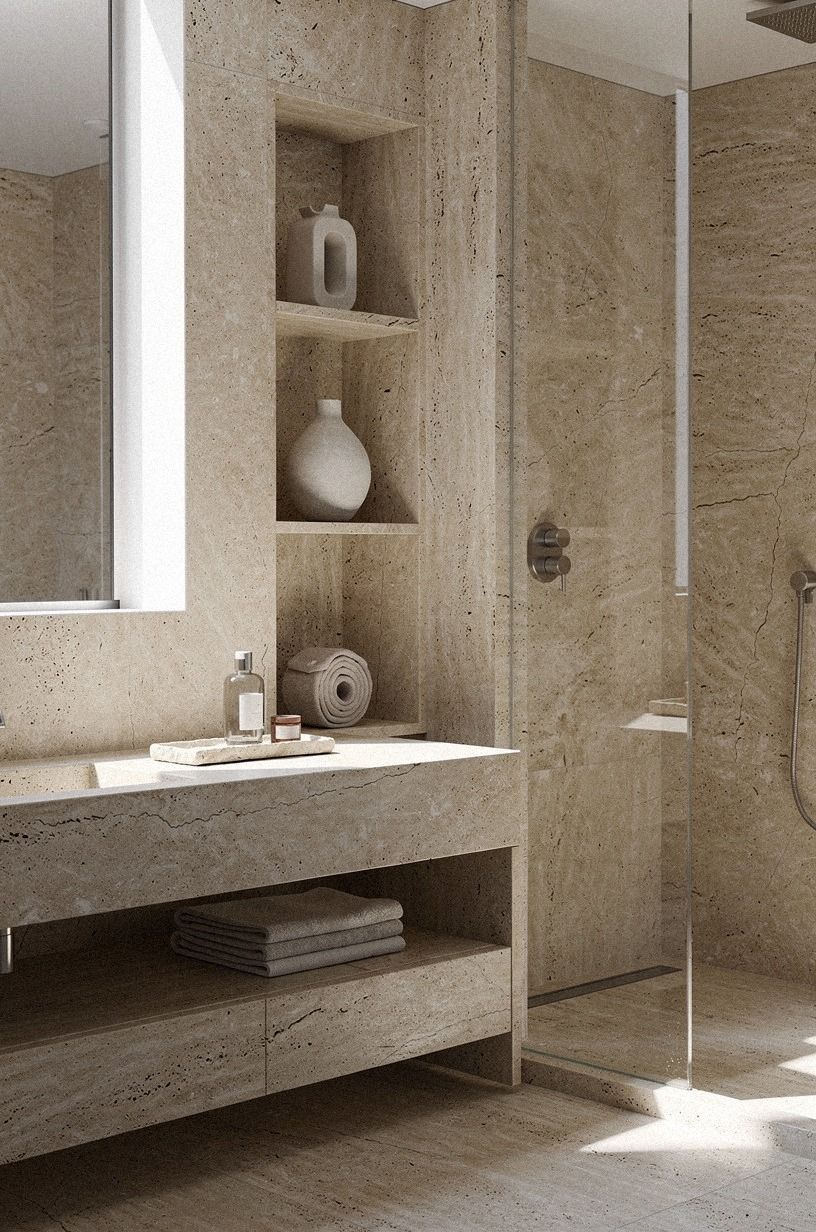
Storage can create more impact than an additional accent surface. Build a shallow cabinet beside the vanity and finish its doors in a clay-toned laminate, using the color as a warm counterpoint to the stone. Add a Carrara marble top with subtle grey veining and aged-brass pulls.
A full-depth cabinet may block your comfortable path, so measure from the vanity edge to the opposite wall. Your toilet needs at least 21 inches of clearance in front, and that open zone matters more than another shelf.
If you’re tight on space, use a 10-inch-deep cabinet for towels and paper goods. A green-toned bathroom can also borrow ideas from these travertine green layouts.
The IKEA KALLAX birch-effect unit can work outside a wet zone when properly protected, though I’d prefer a closed cabinet beside the door. Open cubes collect dust and make your bathroom look unfinished. Doors, one linen basket, and a Carrara stone tray are enough.
15Farrow & Ball Joa’s White Sets the Mood
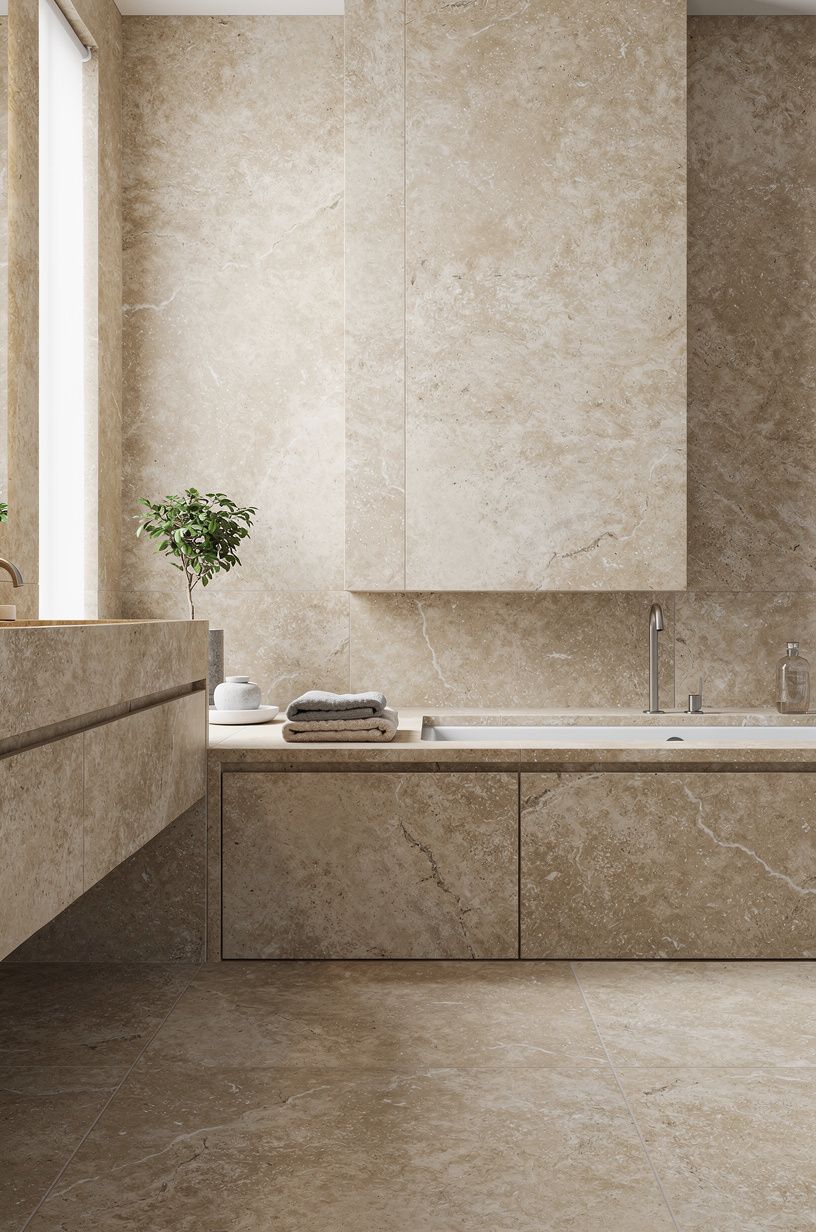
Travertine tile in bathroom designs often looks best when the paint doesn’t try to match it exactly. Use Farrow & Ball Pelt No.254 for a plum accent wall, or choose Farrow & Ball Purbeck Stone No.275 when you want a quieter gray around the vanity. Reclaimed weathered teak adds warmth without competing with the stone.
Paint the wall opposite the mirror if you want the color reflected throughout the room. Your eye will see the shade twice, and the stone will feel less isolated.
A small sample board is worth the effort because natural travertine can shift from beige to pink beside different whites. For another pale approach, revisit these white and cream travertine ideas.
But don’t paint every wall a saturated plum in a room with one tiny window. It may feel intimate at night and heavy at noon. Keep your ceiling lighter, use one warm lamp, and bring in a restrained rose-gold detail so the bathroom remains peaceful.
16Arrange a Small Bathroom Around One Strong Axis
A strong axis makes a small bathroom feel orderly. Line up the door, vanity, mirror, and shower opening so your eye can travel through the room without hitting a random cabinet corner. This is one of the most effective layouts for bathrooms because it improves both movement and proportion.
Use a 12-by-24-inch honed Calacatta marble tile on the floor, with the long edge pointing toward the shower. Your room will read longer, especially when the grout lines continue in one direction.
A navy vanity, white walls, and walnut accents can support the layout without adding visual clutter. These travertine and wood layouts show how a restrained material palette can support that axis.
Would you rather have another decorative shelf or a clear path to the shower? Choose the path. Your bathroom will feel more comfortable when the layout lets you turn without brushing the vanity.
Add drama through the mirror shape, not through obstacles.
17Warm Travertine vs. Black Hardware
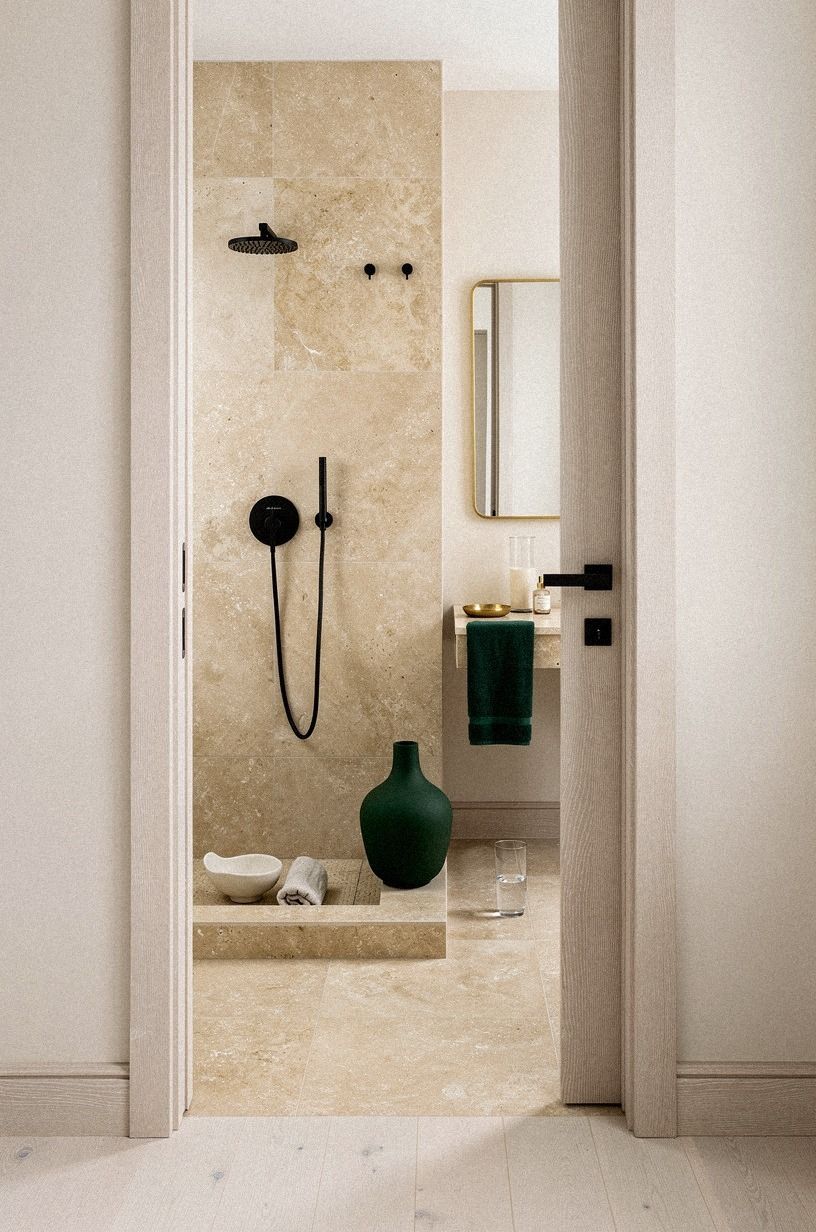
Warm gold hardware can give pale travertine a richer edge, but it needs repetition. Use aged-gold plumbing at the sink and shower, then repeat the finish in the mirror frame or cabinet pulls. Two or three appearances are enough for your eye to understand the choice.
Keep the rest of the materials tactile. Gold beside glossy white porcelain can look stark, while the same finish beside honed stone, cerused white oak, and woven cotton feels refined. An emerald wall and cream textiles can carry the color without adding another hard surface.
For a greener version of the same palette, see these travertine bathroom ideas with earthy color.
I wouldn’t choose this combination for a bathroom with no natural light unless you add strong layered lighting. Your ceiling fixture, mirror sconces, and night-light should create different pools after sunset. Otherwise, the hardware will look harsh instead of warm.
A warm bulb changes everything!
18Keep the One-Surface Rule for a Calm Finish
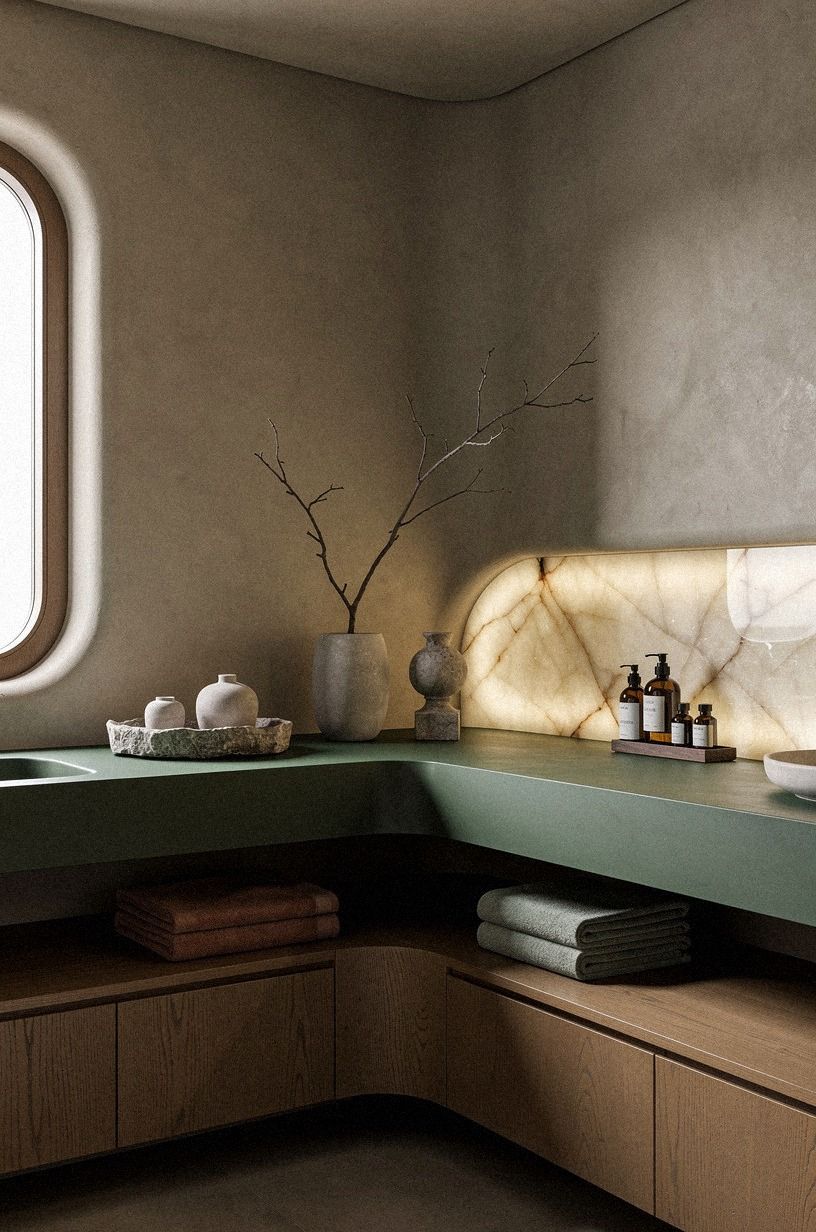
The one-surface rule means you choose one major material to repeat, then let the supporting finishes stay restrained. Use backlit translucent onyx on one short vanity backsplash, while natural oak, forest green paint, and rust-colored textiles provide the changes in texture.
This approach is especially useful when your renovation is cosmetic. You can keep the existing tub, toilet, and plumbing, then improve the room through a mirror, faucet, lighting, and textiles. A 32-to-36-inch vanity height remains comfortable, and your layout won’t need a costly reset.
For your final styling, choose one ceramic vessel, one folded towel, and one small branch in a narrow vase. That’s enough.
If you’re tempted to add another pattern, remove one object first and look again. The bathroom will feel airy, welcoming, and finished without looking staged.
The Travertine Decision I’d Make in Your Bathroom
Travertine is having a moment because homeowners are tired of bathrooms that feel sealed in plastic and polished to exhaustion. The stone has variation, weight, and small imperfections that make a room feel lived-in. But it isn’t automatically low-maintenance.
Your finish and grout choice will decide whether you enjoy it or spend every weekend fussing over it.
I’d choose honed tile over a high-gloss surface almost every time. Gloss can look impressive in a showroom, but it shows water spots and turns every light into a reflection. Honed stone gives your bathroom a softer surface, and it works with oak, linen, aged bronze, and painted walls without demanding a matching suite.
The first mistake I made was choosing the prettiest sample instead of the best sample beside the room’s fixed pieces. Travertine looked creamy on the counter and pink beside the old tub.
Test your tile near the window, under the ceiling fixture, and beside the faucet before you order. That small pause can save you from replacing an entire visual direction.
I also think the best bathroom layouts protect empty space. You don’t need a niche on every wall, a stool in every corner, or a second accent tile. Give your eye one stone, one metal, and one warm painted note.
If the room still feels flat, change the lighting before buying more materials.
The cost can rise quickly when you move plumbing or retile a complete shower, so decide where your money matters. A cosmetic refresh can stay in the lower range, while a full wet-area renovation climbs much higher.
Your smartest starting point is usually the surface you see first from the doorway. Make that one area convincing, then let the rest support it.
And if you’re unsure, live with two tile samples for a week. Morning light tells the truth.
The Questions Worth Answering First
What is the best Travertine Tile Bathroom Ideas (Layouts That Wow) for a small bathroom?
A floating vanity and large-format honed travertine are strong picks because they keep the floor visually open. An IKEA GODMORGON vanity can provide clean storage without a bulky base. For more color direction, compare these white cream travertine bathroom ideas before choosing your paint.
Where can I buy Travertine Tile Bathroom Ideas (Layouts That Wow) pieces on a budget?
Look at IKEA, Wayfair, and Target for mirrors, storage, and textiles, then check Facebook Marketplace or a local thrift shop for solid wood pieces. Your tile should come from a reputable local showroom. For another material direction, browse why Moroccan tile belongs in your next bathroom.
This site uses display advertising, not commission links.
How much does a Travertine Tile Bathroom Ideas (Layouts That Wow) makeover cost?
A cosmetic update can run about $200 to $1,200 for paint, a mirror, a faucet, and textiles. A mid-range project with a new vanity, partial wall tile, and lighting typically reaches $3,000 to $9,000. Your free changes include rearranging storage, editing decor, and improving bulb warmth.
Can I create a Travertine Tile Bathroom Ideas (Layouts That Wow) on a budget?
Yes, and your first moves can be inexpensive. Paint one wall, replace the mirror, and reuse your existing vanity with new hardware.
A thrifted wood stool and Turkish cotton towels add texture without a full renovation. Save bigger tile changes for the surface that bothers you most.
Is a Travertine Tile Bathroom Ideas (Layouts That Wow) worth it in a small space?
Yes, because a small room lets you repeat one material without buying large quantities. Use a floating vanity, a 12-by-24-inch floor tile, and a mirror that reaches close to the ceiling.
Your room will feel taller and quieter. See travertine wood bathroom ideas for natural warmth for a softer pairing.
Is a Travertine Tile Bathroom Ideas (Layouts That Wow) a good idea for a rental?
Yes, if you keep the stone effect removable. Use peel-and-stick tile only on a dry backsplash, a tension rod for the curtain, and removable hooks for towels.
Your landlord-approved changes can still feel warm. For a stronger color contrast, look at travertine green bathroom ideas for an earthy spa vibe.
Where I’d Start First
If I had to pick one, I’d start with the floating vanity. It reveals more floor, makes the travertine look lighter, and improves storage without moving plumbing. Pin the idea for later, then compare your room’s morning and evening light before choosing tile.