
Moroccan tile belongs in your next bathroom because it gives even a plain 60-by-30-inch tub wall a focal point with real warmth. I did this makeover while trying to keep the plumbing untouched, and the result made our beige little room feel far more intentional. Not bad for a surface change!
- Here’s what it looked like before
- Anchor the room with a Moroccan tile focal wall
- Use The Quiet Border Rule around the pattern
- Paint the ceiling before you judge the tile
- Choose a small Moroccan bathroom scale that won’t shout
- Replace chrome with brushed brass, slowly
- Let The Three-Height Light Stack soften the wall
- Frame the vanity with a mirror that has weight
- Build The Two-Wood Rule into your Moroccan style home interior design
- Keep the vanity at a comfortable working height
- Run the tile behind the faucet, not just beside it
- Pick warm grout over bright white grout
- Why does Moroccan tile work in a plain bathroom?
- Add soft textiles so the tile doesn’t feel museum-like
- Float storage below the pattern instead of covering it
- Repeat one color at floor level
- Give the toilet its required breathing room
- Spend the budget on surface, not a full fixture swap
- The Honest-Material Test before you buy more tile
1Here’s what it looked like before
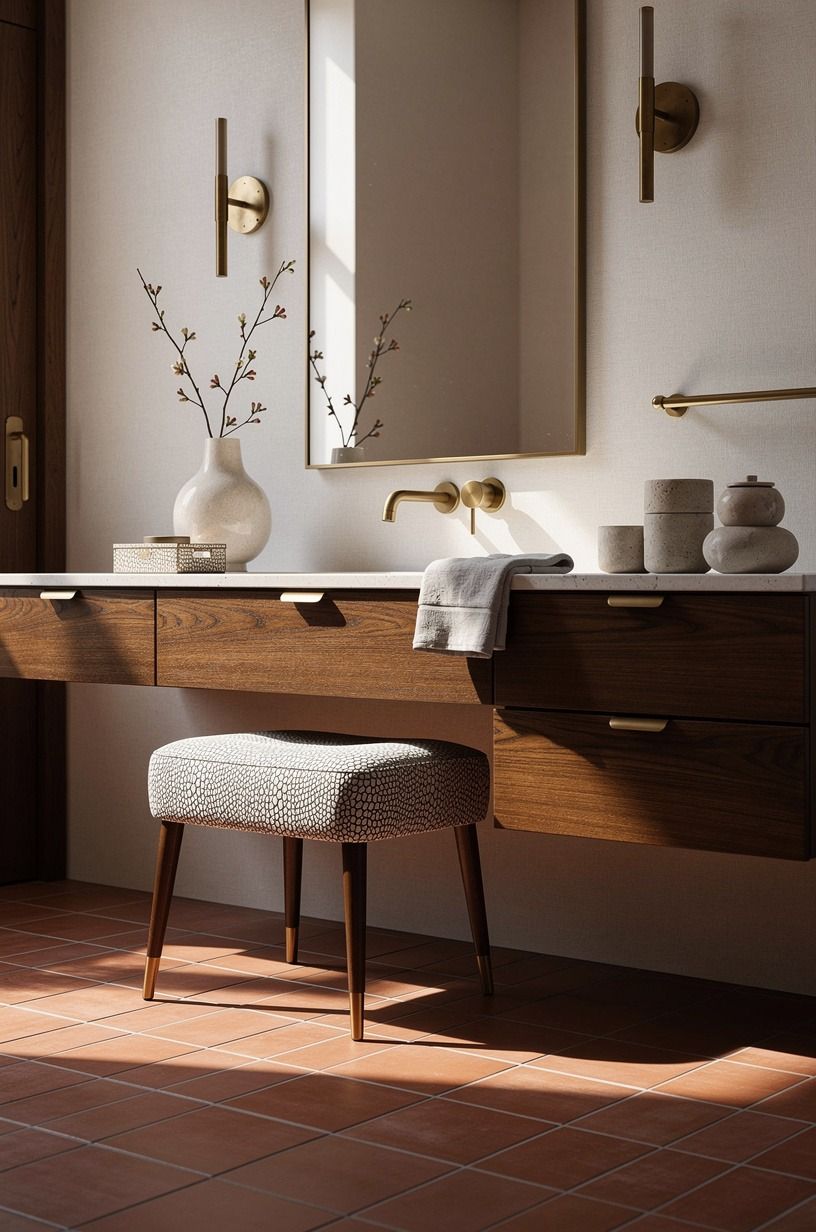
Before, it was the full 2005 starter-home package: clay-toned floor tile, a narrow vanity, aged brass hardware, and walls that looked faintly gray by noon. I kept thinking you could fix it with towels. You can’t.
The room had no place for your eye to land, so every practical thing felt louder. The mirror floated above the sink, the tub surround read flat, and I was tired of buying soft accessories for a room built entirely from hard, chilly finishes.
2Anchor the room with a Moroccan tile focal wall
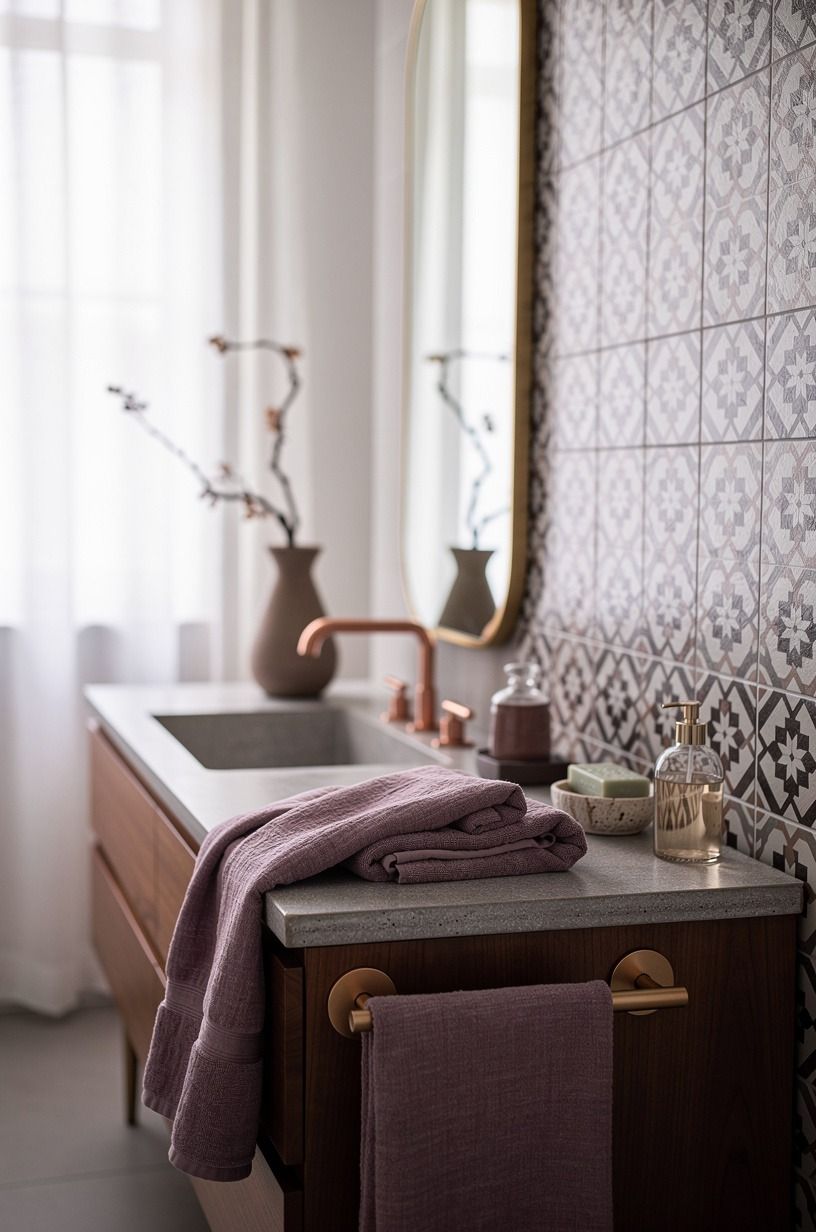
I chose a single plum, gray, and rose-gold wall behind the vanity for the Moroccan cement tile, rather than wrapping every surface.
3Use The Quiet Border Rule around the pattern
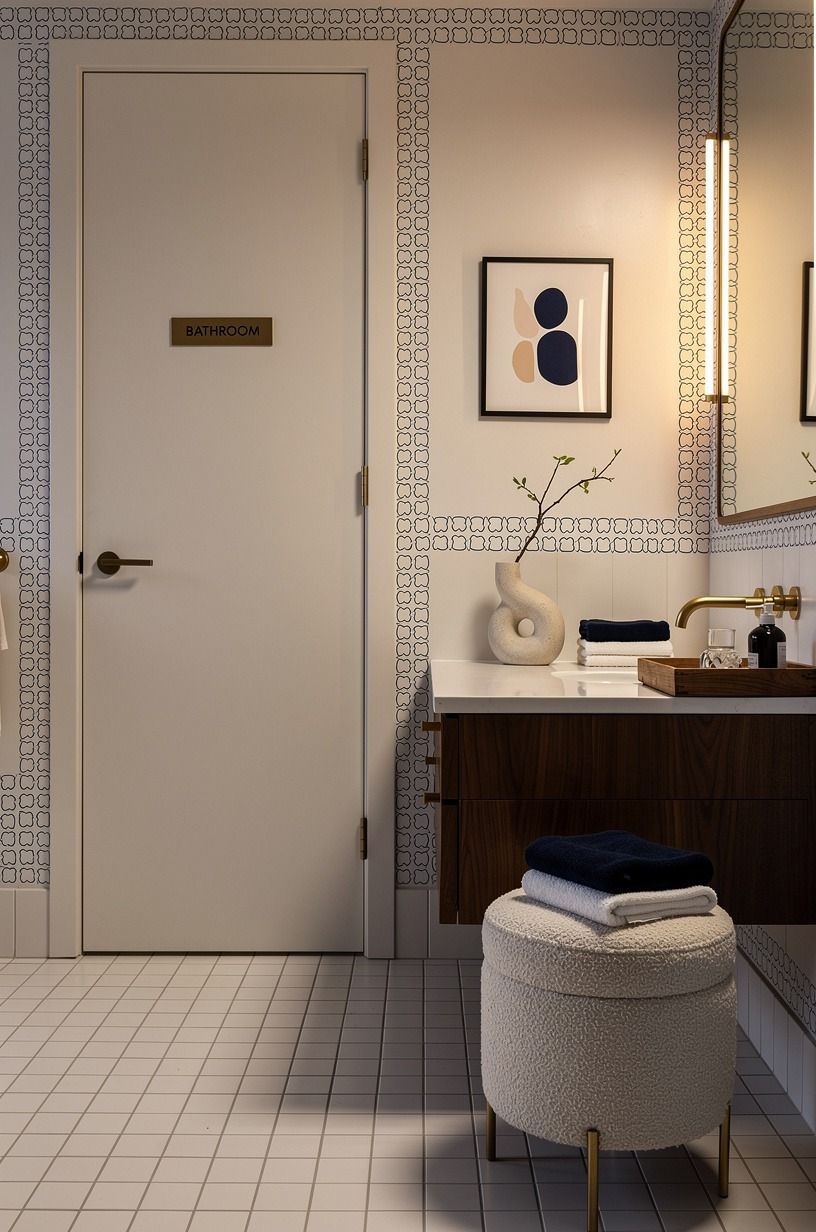
The handmade-look zellige field tile needs breathing room. I left a plain painted border above it, which gave the pattern a clear stopping point and stopped the wall from feeling crowded.
You’ll want that border to be at least visually generous, especially if your ceiling is low. I painted it with Benjamin Moore Chestertown Buff HC-9, a soft ochre that doesn’t fight the tile’s rust notes. An organic bouclé stool nearby keeps that edge from feeling too severe.
But don’t use stark white grout and bright white paint together; the contrast feels clinical, not inviting.
4Paint the ceiling before you judge the tile
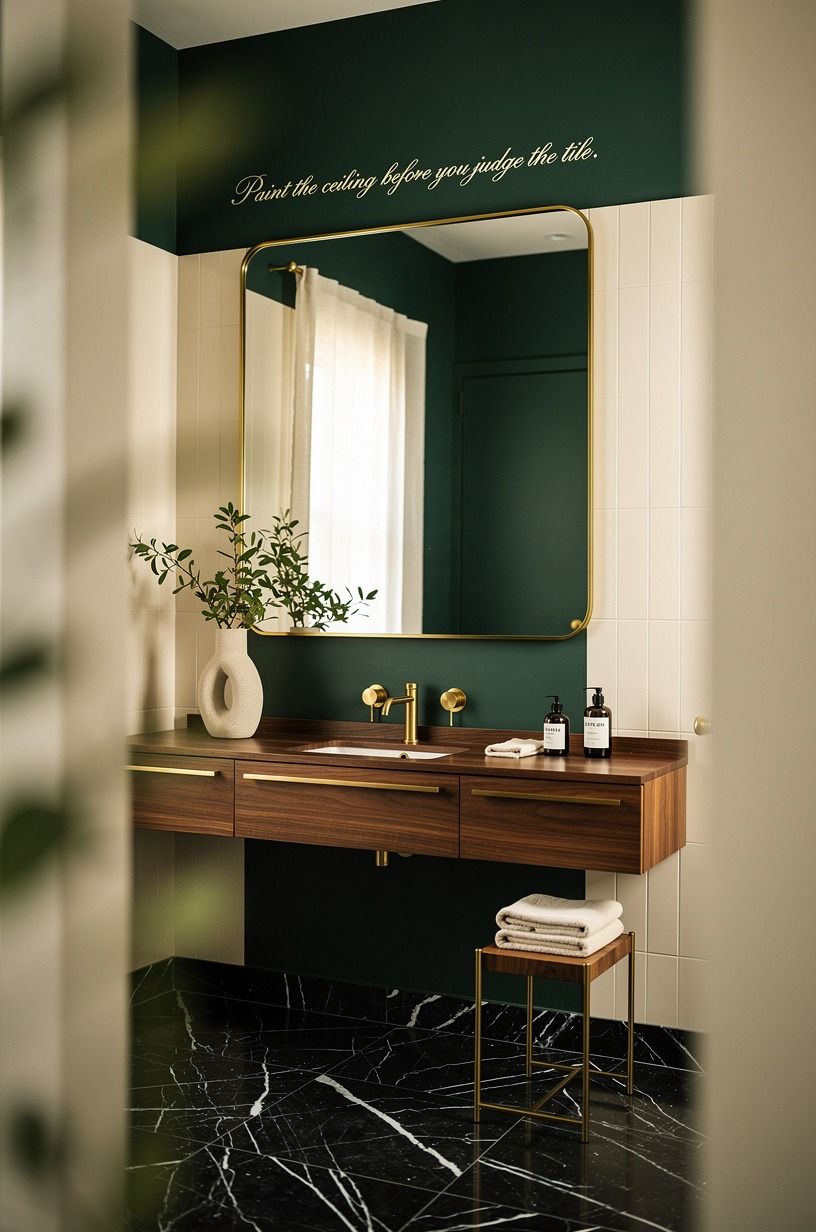
A bathroom ceiling changes the tile more than people expect. Emerald, gold, and cream can make even a black marble vanity feel warmer and less formal.
5Choose a small Moroccan bathroom scale that won’t shout
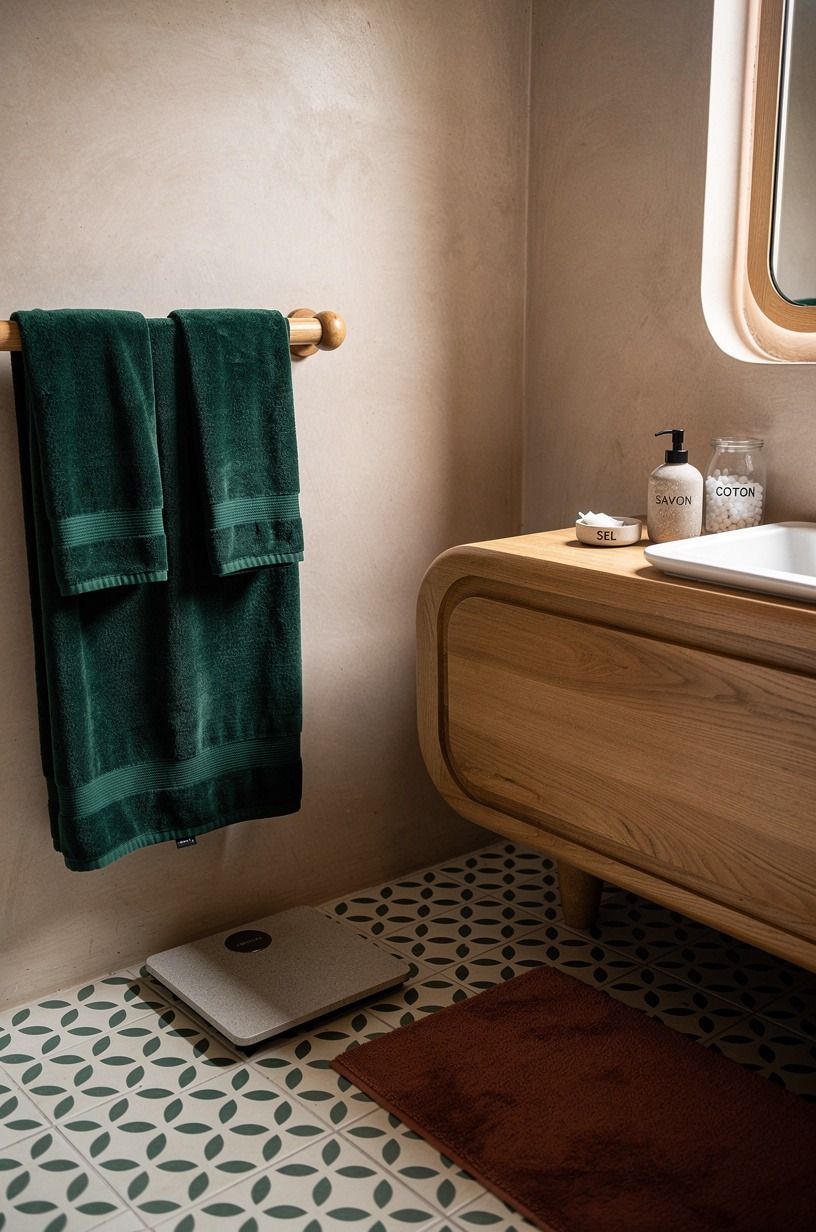
For a small Moroccan bathroom, I’d use a tighter repeat on the wall and reserve large graphic shapes for a floor with more open sightlines. Your eye reads a busy tile field faster than you think, especially beside a toilet and vanity.
A 4-by-4-inch patterned tile gives you more rhythm around awkward corners than a large slab does. And it’s easier to stop cleanly around an outlet. I liked the imperfect, soft edges best; too much factory precision can make Moroccan style home interior design feel staged.
A deep forest green and rust palette keeps the result grounded.
6Replace chrome with brushed brass, slowly
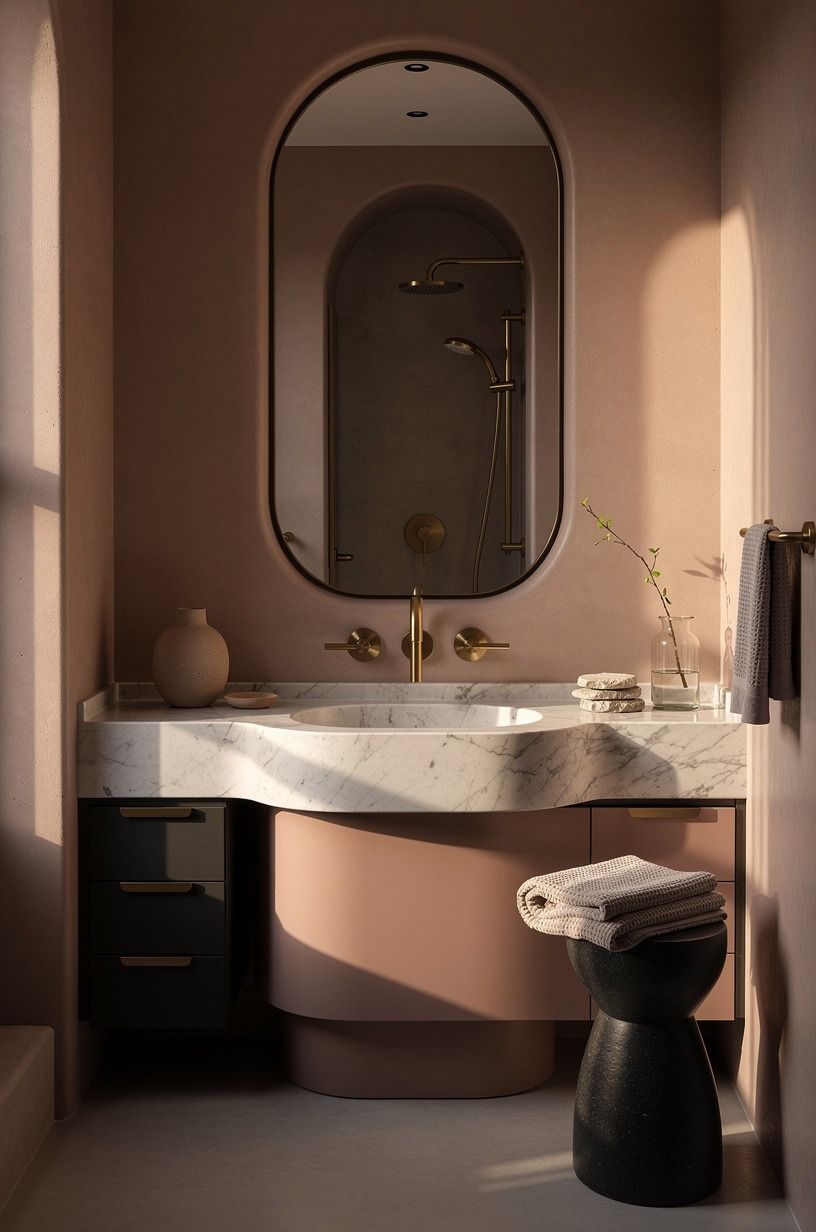
You don’t need to swap every fixture in one weekend. I started with a brushed brass faucet, then changed the mirror hardware later, and the metal gave the tile a more refined companion without stealing attention.
Typical brushed brass faucet costs run from $120 to $450, so let your budget decide the pace. If you’re choosing between a fancy drain and a visible faucet, put your money where your hands and eyes go every day. The drain can wait.
7Let The Three-Height Light Stack soften the wall
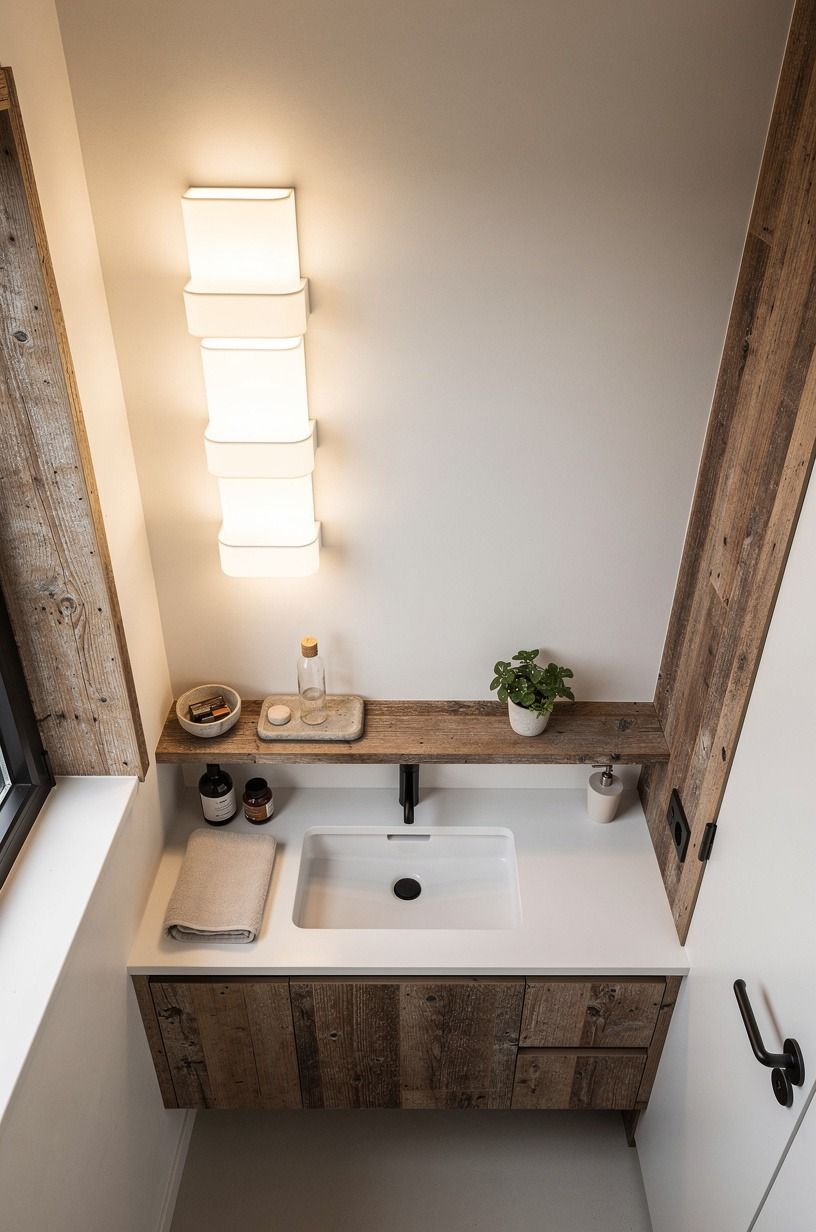
I learned that one ceiling fixture makes patterned tile look flat. You need three heights: an overhead light, mirror-level illumination, and a small lower glow from a lamp or plug-in sconce.
Your bathroom doesn’t have to be huge for this to work. A linen-shaded wall sconce beside the mirror throws an amber pool across the tile, while a low reclaimed-teak lamp makes midnight trips less harsh. And yes, a bathroom can have a lamp if you keep it well away from splashes!
8Frame the vanity with a mirror that has weight
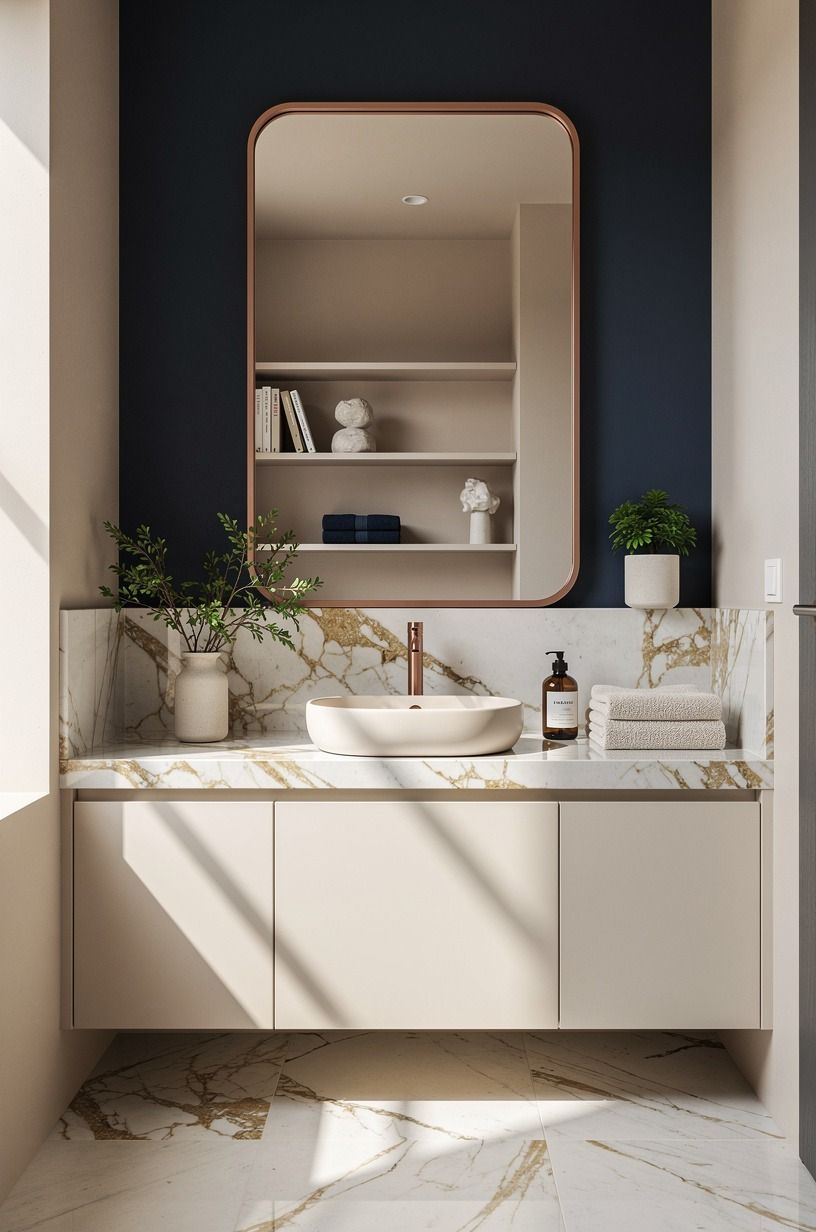
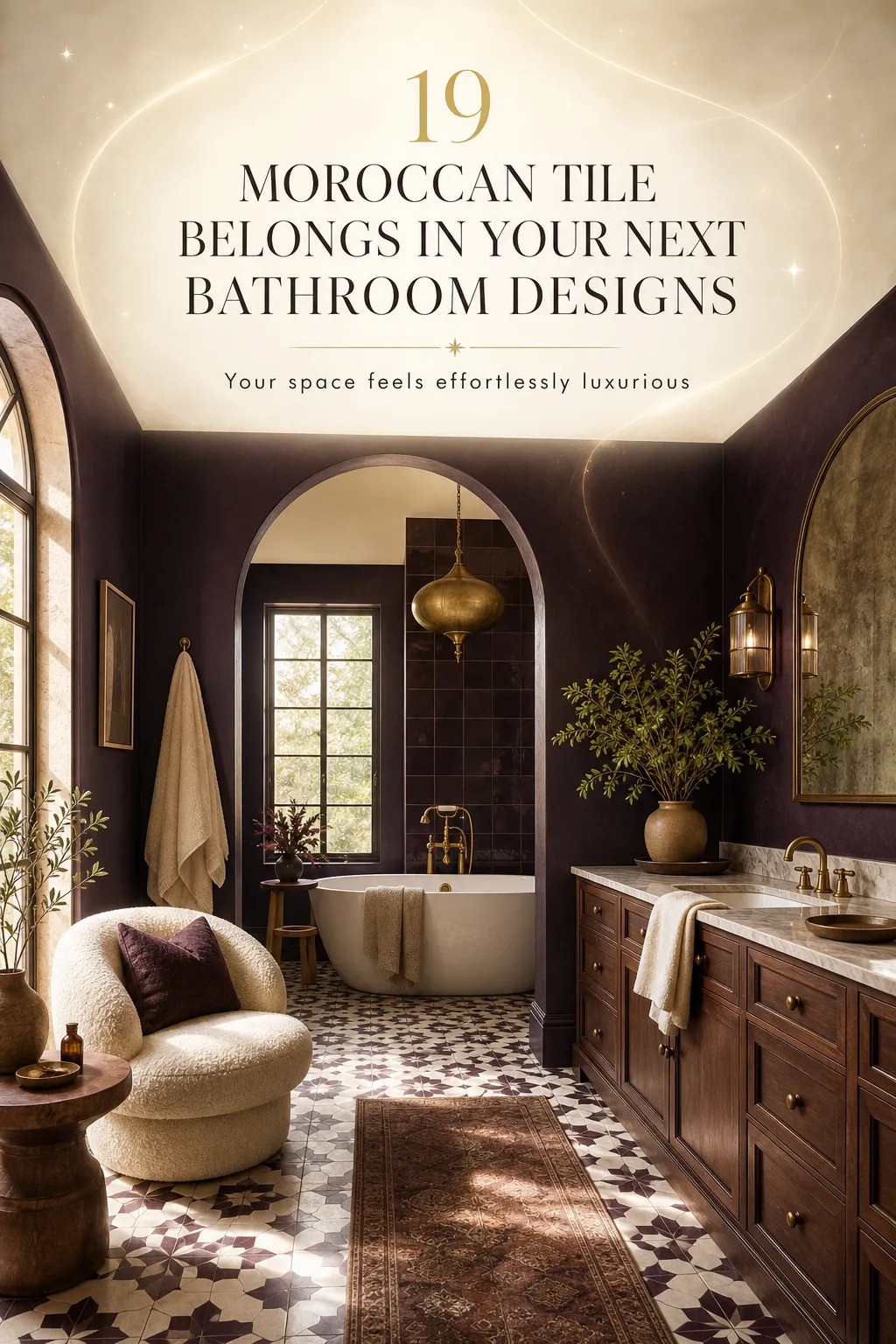
A thin frameless mirror disappeared against my new tile, so I replaced it with a rounded copper-framed mirror.
9Build The Two-Wood Rule into your Moroccan style home interior design
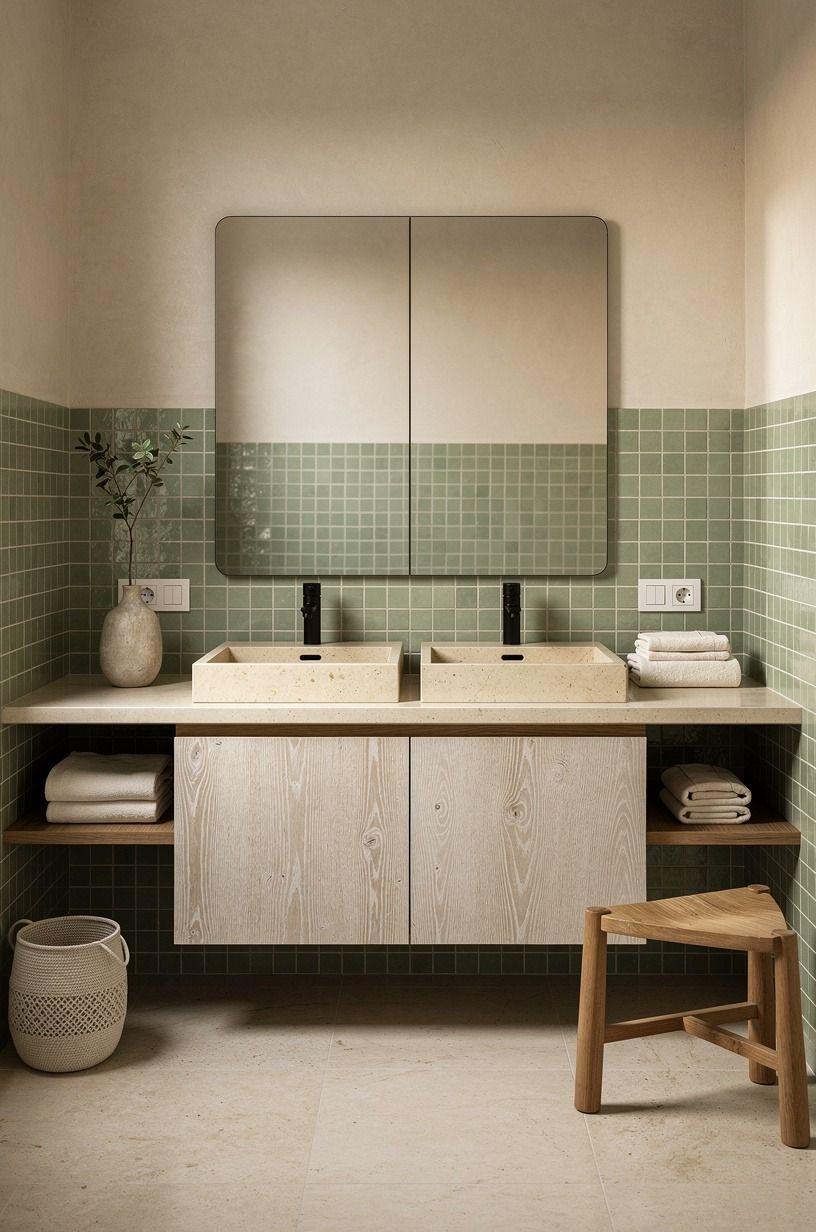
I used two wood notes only: the oak mirror and a tiny cerused white oak bath stool. More than two, and you risk turning your bathroom into a catalog of competing grains.
You can make this feel organic without adding a cabinet, shelf, and tray all in different finishes. The stool held a folded Turkish cotton towel and gave me somewhere to set a book during long baths.
A small aside: it also became the cat’s preferred bathroom furniture. Naturally.
10Keep the vanity at a comfortable working height
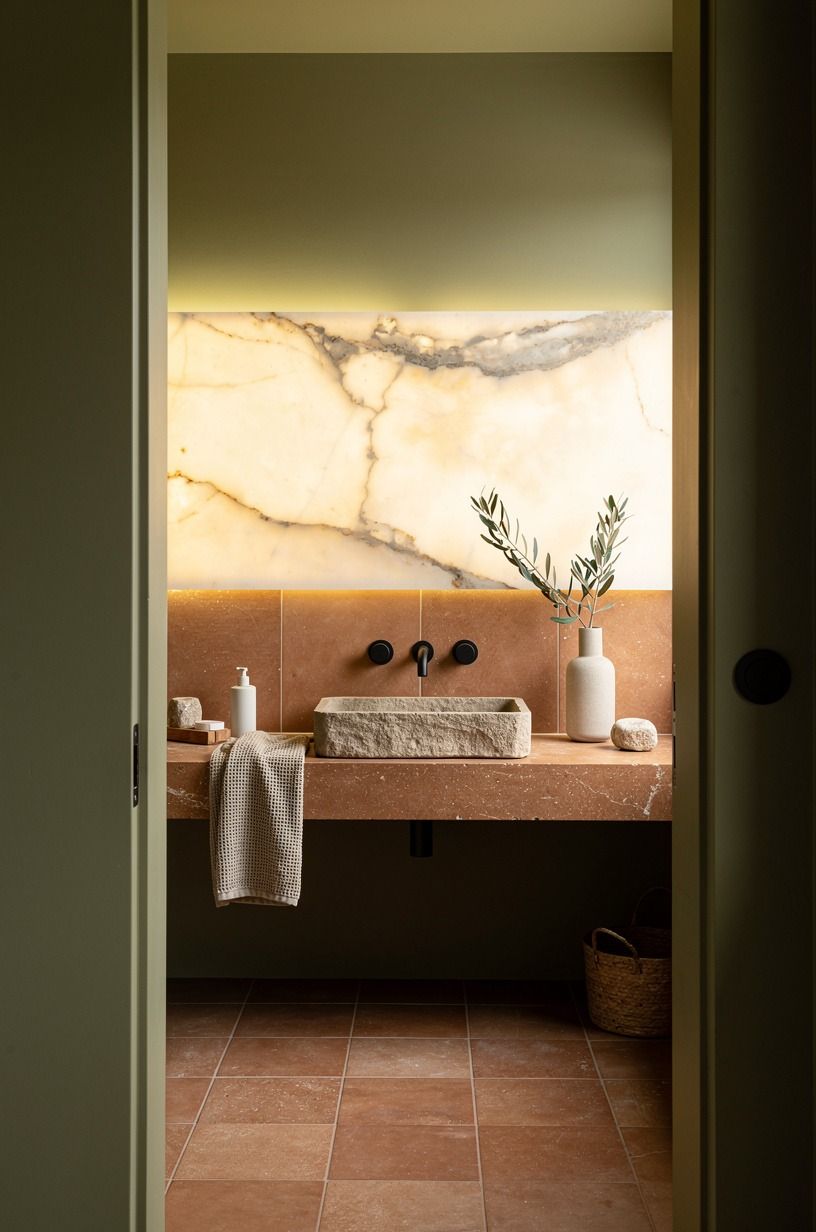
A standard vanity height lands around 32 to 36 inches, and that measurement matters when you’re adding a bold wall behind it. Your tile should frame the sink rather than making the whole counter feel visually squat.
I kept the existing 34-inch vanity because it was solid, then painted the cabinet in Farrow & Ball Bancha No. 298. You can see why navy keeps working in bathrooms if you’re deciding between blue and a warmer neutral. Bancha won because its olive depth worked beautifully with stone and the soft glow of onyx.
11Run the tile behind the faucet, not just beside it
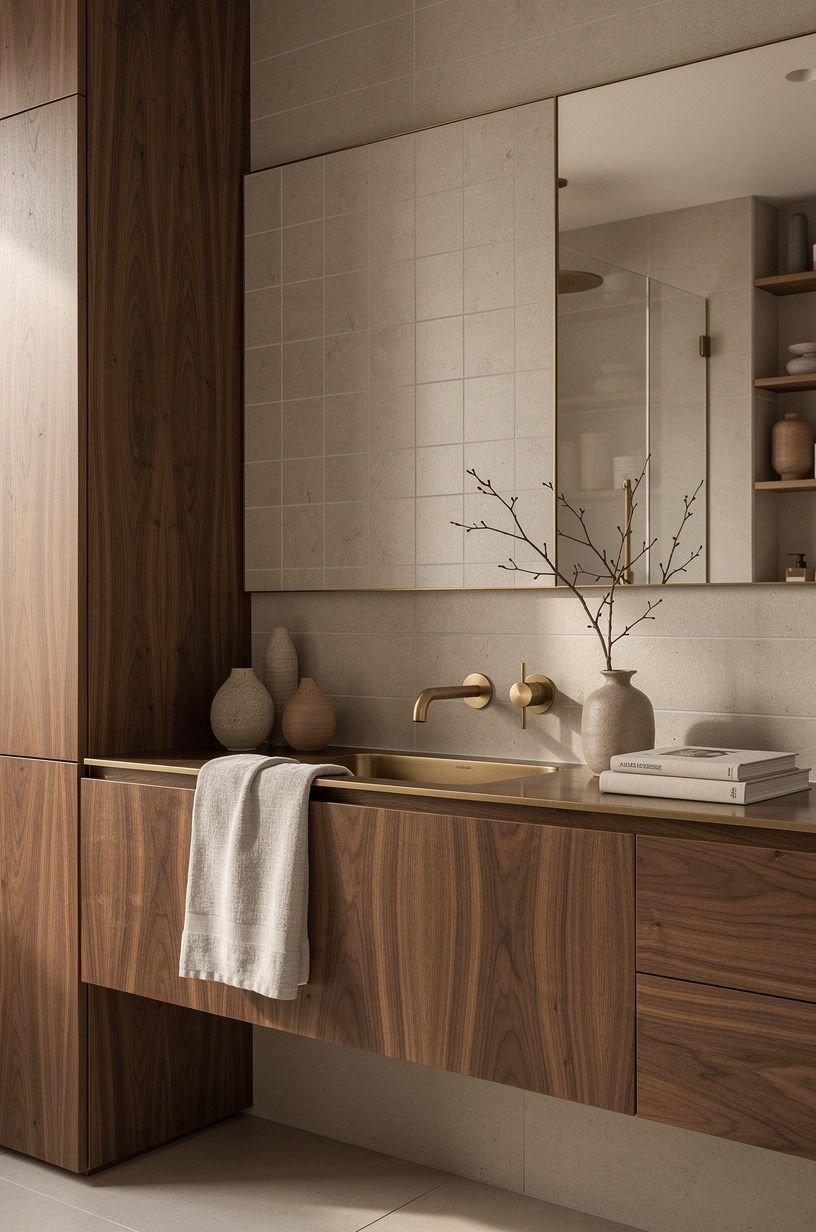
Stopping patterned tile below the mirror can look accidental. I carried my Moroccan star-and-cross motif up behind the faucet and mirror, then used a book-matched walnut surround to give the sink wall a clear center.
If you’re paying for installation, this is where I’d spend a little more. You touch that zone constantly, and the tile catches water droplets in a way that makes the room feel lived-in rather than precious. But seal porous tile properly; I didn’t rush that part, and you shouldn’t either.
12Pick warm grout over bright white grout
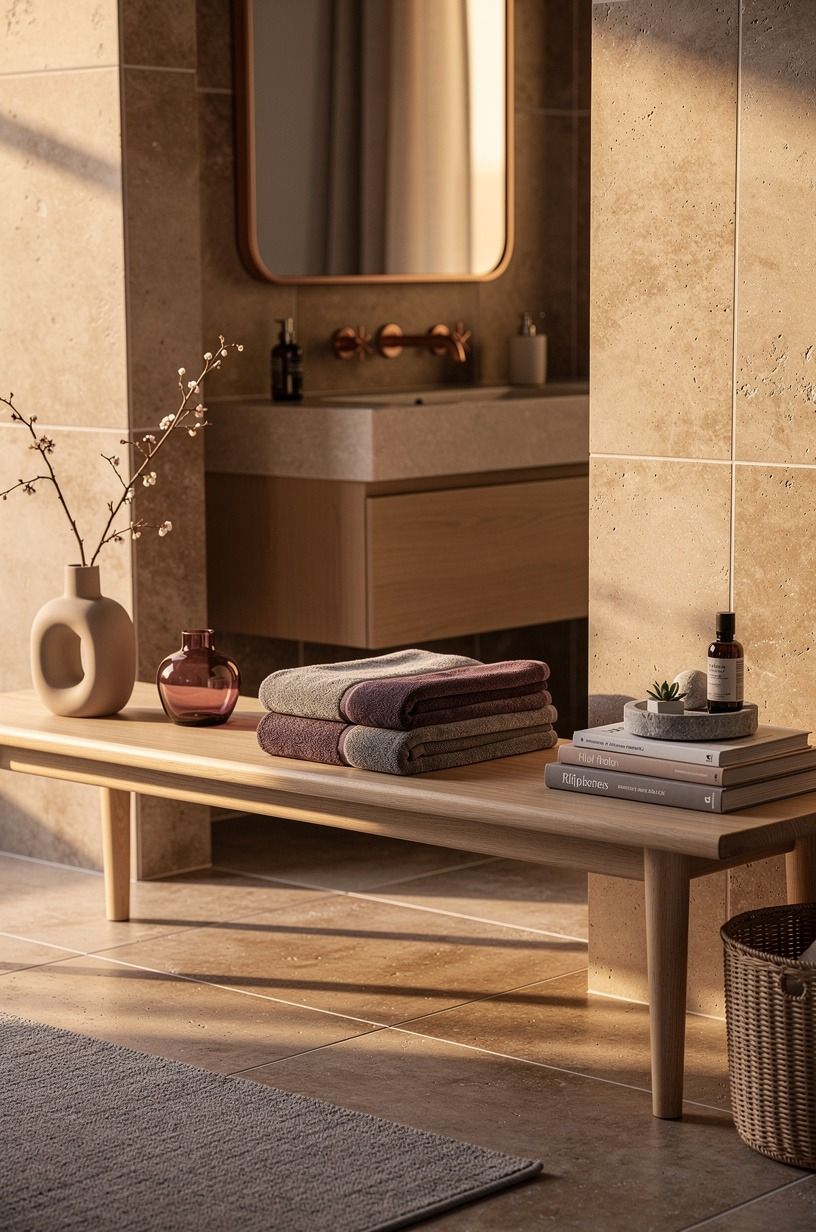
Warm gray grout was the quiet hero. It softened the edges of the plum, gray, and rose-gold tile and saved me from a grid that would have felt too crisp.
You’ll be tempted by white because it looks clean in a sample board. I’d avoid it with handmade-looking surfaces; every joint becomes a headline.
A mushroom or sand shade gives your pattern room to breathe, and it hides the little evidence of real life much better. Warm travertine nearby makes that choice feel especially natural.
13Why does Moroccan tile work in a plain bathroom?
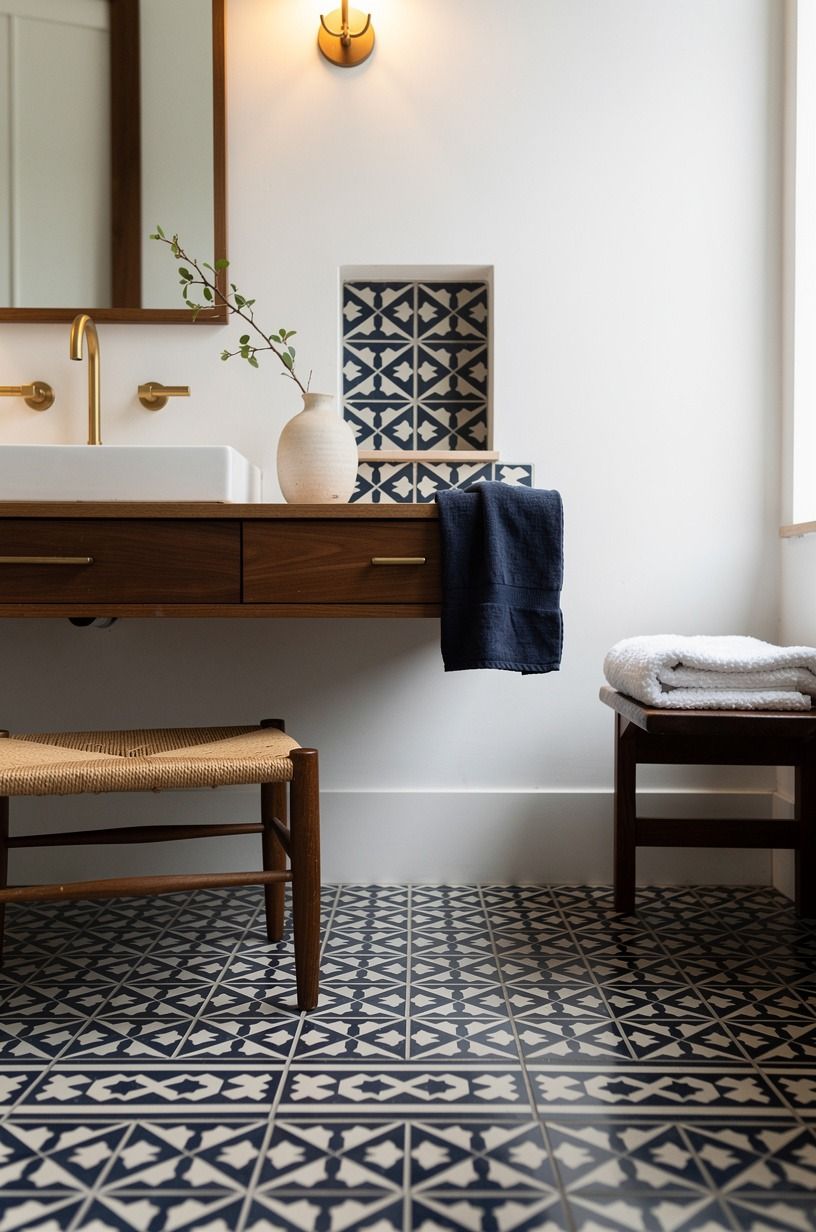
Because pattern gives a plain bathroom a point of view without asking you to rebuild the room.
14Add soft textiles so the tile doesn’t feel museum-like
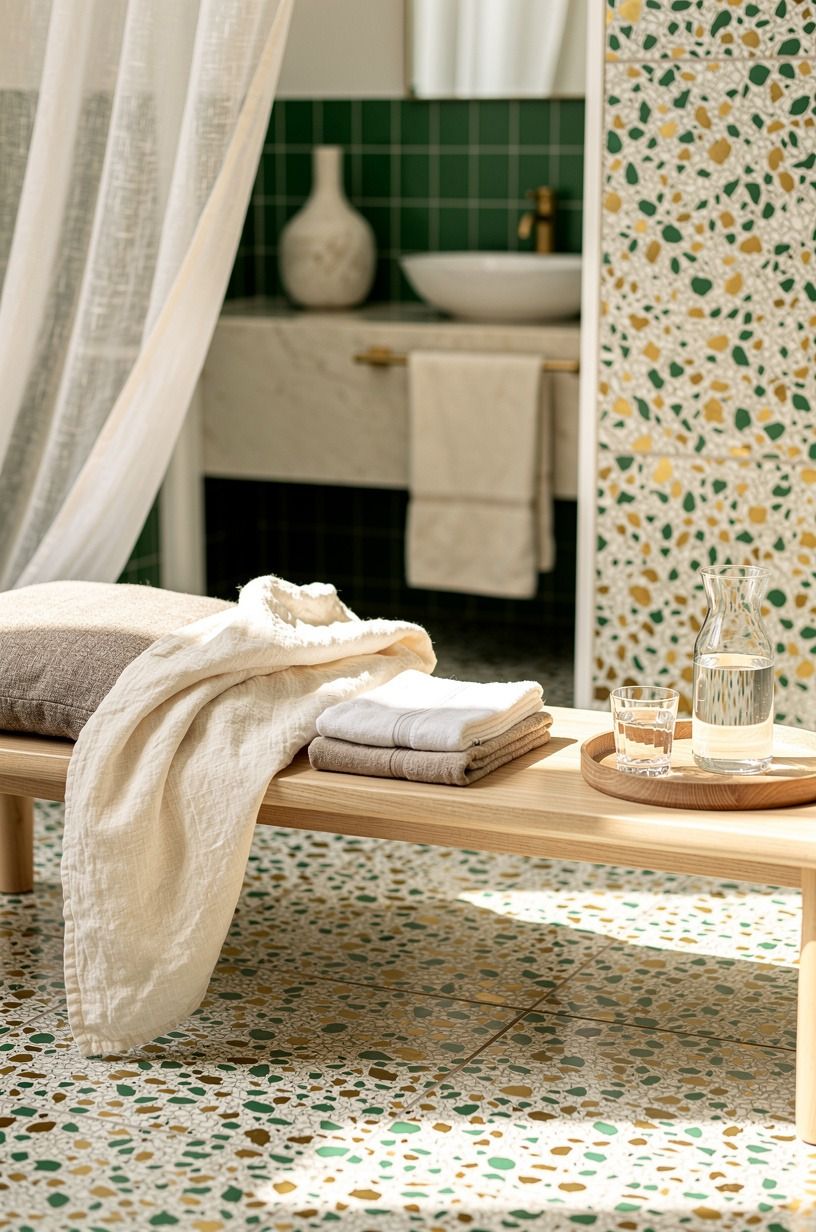
Patterned walls need something absorbent and quiet nearby. I used 600gsm Turkish cotton towels in cream and an emerald linen curtain, and the room immediately felt more relaxing.
For your own bathroom, keep the textiles solid. I’d skip striped towels beside a busy tile because you’re adding another rhythm where you need a pause.
The linen curtain also softens the sound a little, which makes an oversized-chip terrazzo floor feel more intimate. Tiny change.
Big difference!
15Float storage below the pattern instead of covering it
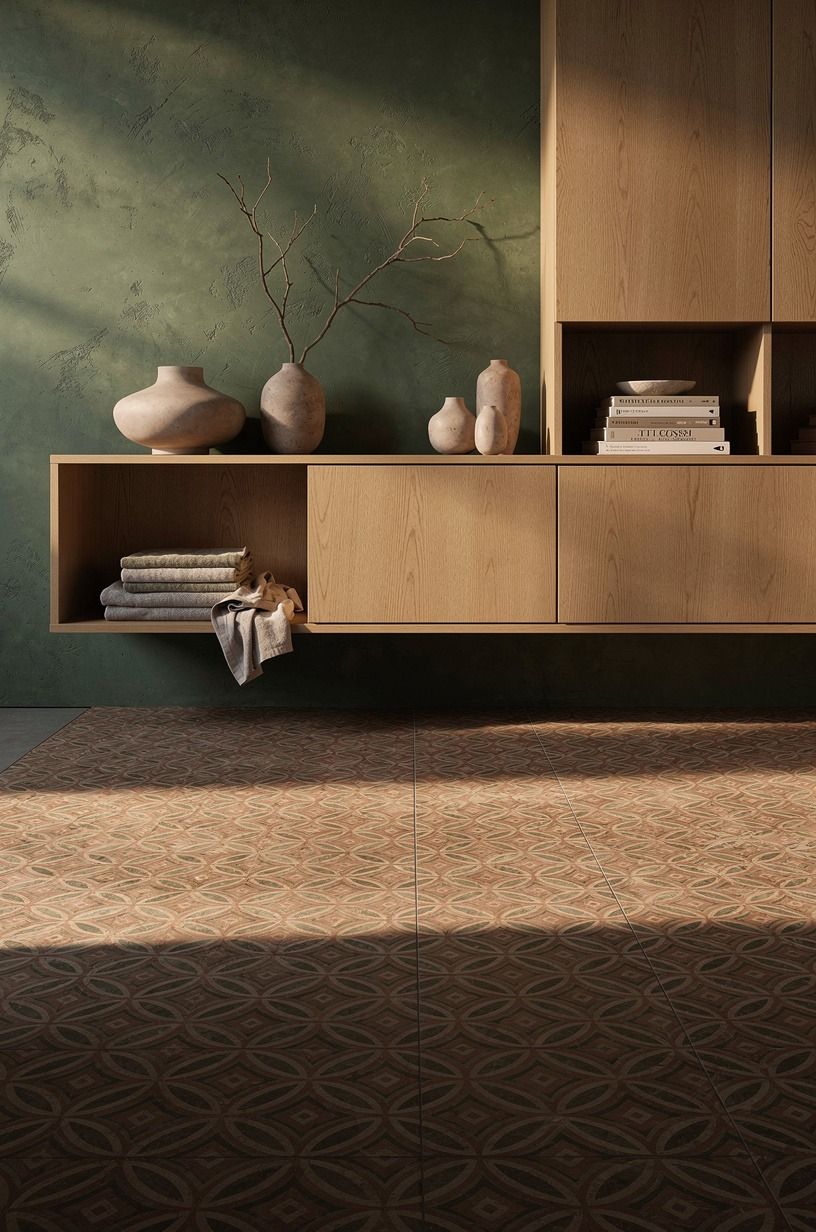
I installed a small IKEA EKET wall cabinet low on the adjacent wall, not over the tile itself. Your storage should solve the toothpaste-and-hairbrush problem without blocking the part you paid to notice.
This is where better storage decisions can affect what you buy next in a broader sense too: buy fewer, more useful pieces. I went back and forth on an open shelf, but closed storage won because bottles and patterned walls together looked fussy. Hand-applied Venetian plaster around the cabinet kept that side of the room calm.
16Repeat one color at floor level
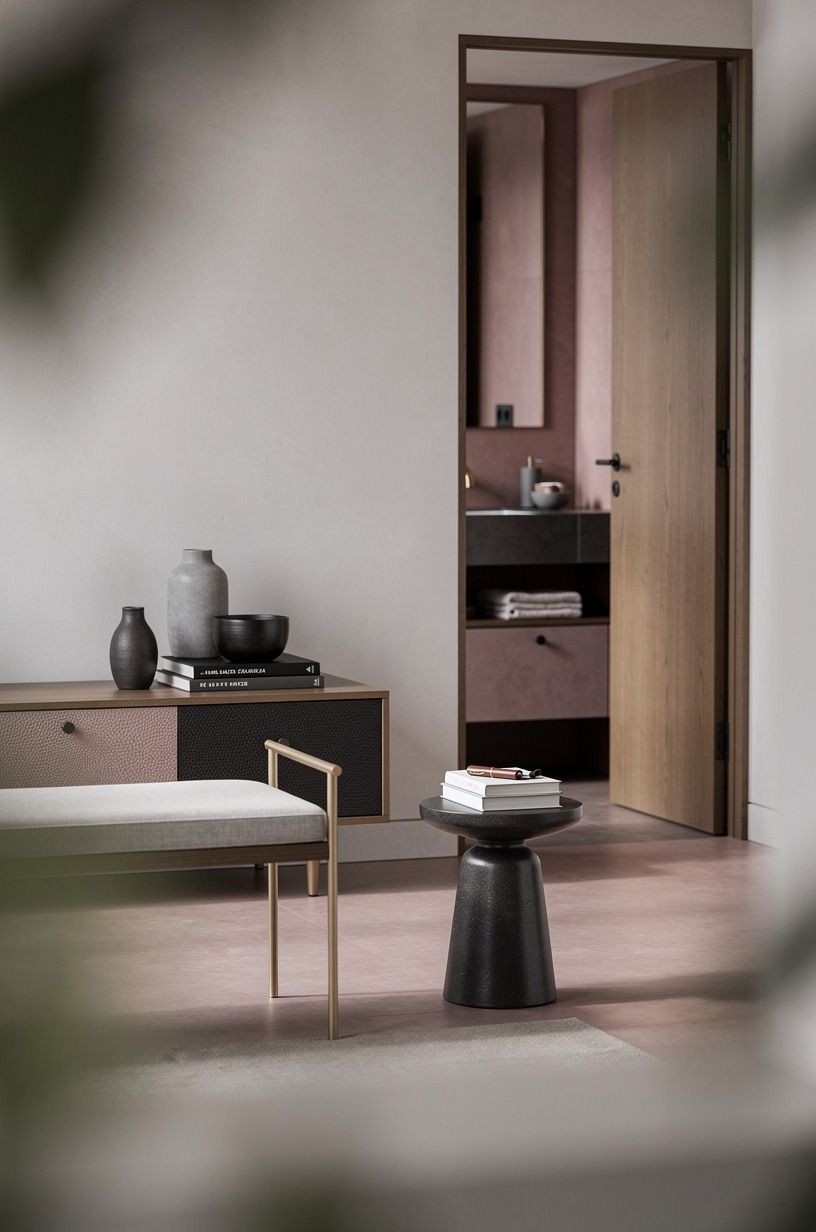
I pulled the dusty rose from the tile into a washed cotton bath mat. That little echo made the whole bathroom feel harmonious, even though the floor stayed charcoal.
You don’t need a matching set. In fact, I’d avoid matching everything because it makes the room feel less collected. One repeated color at floor level is enough to connect your eye from the vanity wall down to the tub, then back again.
17Give the toilet its required breathing room
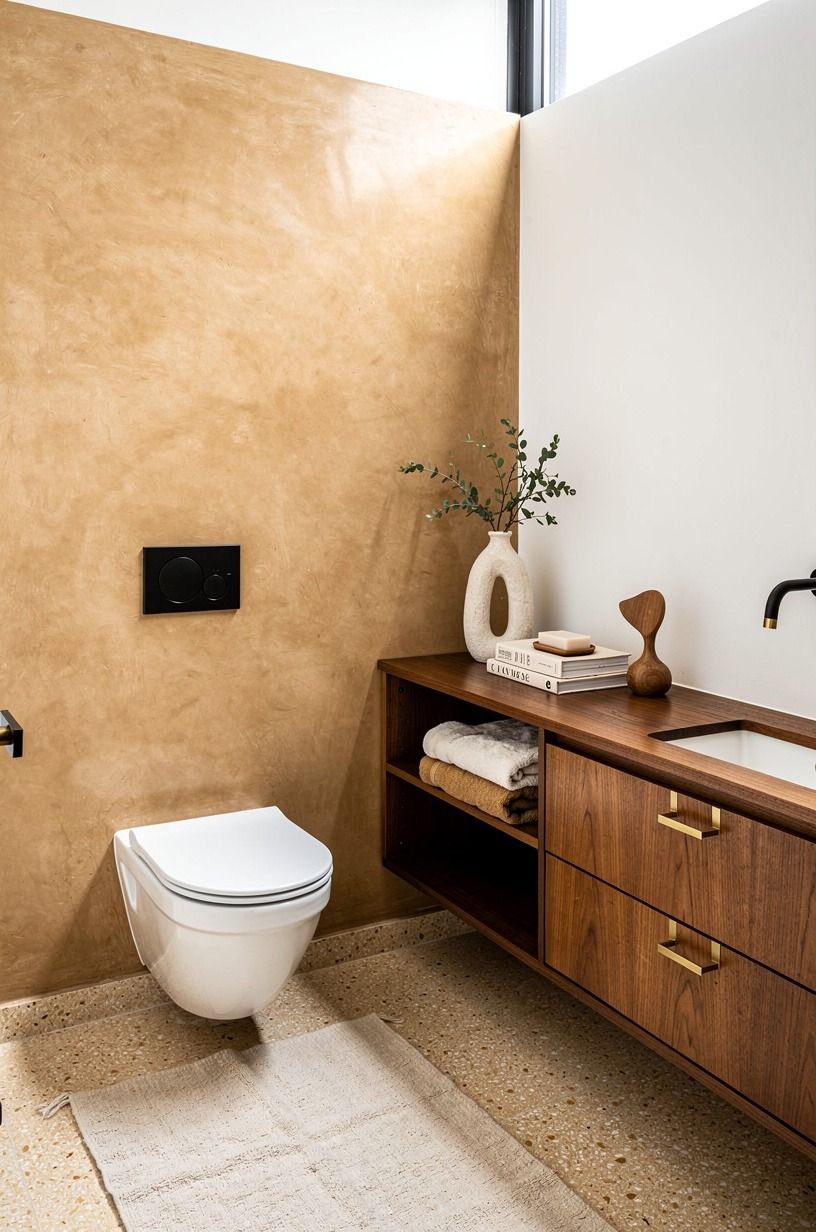
Leave at least 21 inches clear in front of the toilet, even if you’re desperate to add a basket, stool, or tall plant.
18Spend the budget on surface, not a full fixture swap
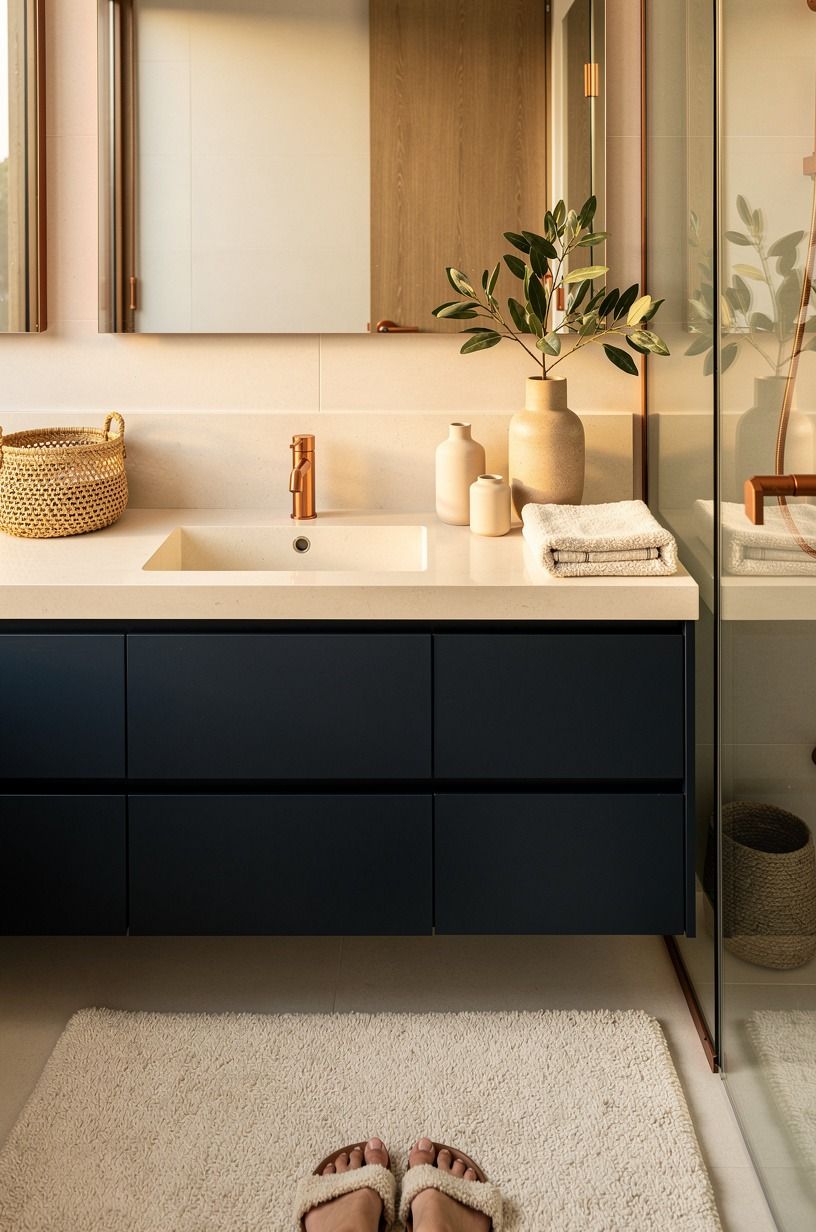
Here’s the honest cost picture I used while planning. If your plumbing works, tile and paint can change the feeling faster than replacing a vanity that’s merely unfashionable.
You can get a warm result in the budget tier if you’re disciplined. I’d skip a marble top before I’d skip the feature tile; a small organic bouclé stool adds softness for far less than a full countertop upgrade, while tile gives you more visual return in a small room.
19The Honest-Material Test before you buy more tile
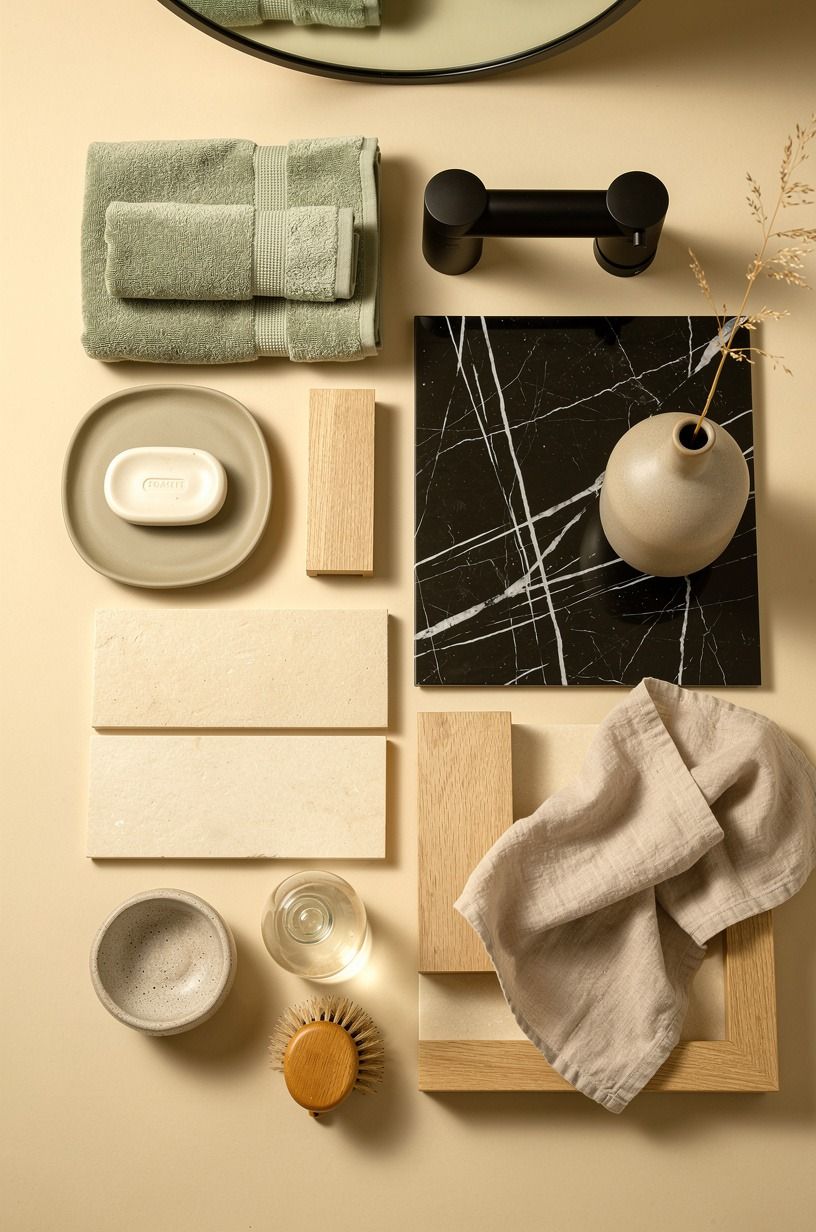
Moroccan tile isn’t supposed to look machine-perfect. I chose a surface with slight tonal shifts and small variation, because the irregularity catches light in a more human way.
Your material choice matters more than copying a photo. Nero Marquina black marble with white veins can give a patterned wall needed contrast, while subway tile often sits at $2 to $10 per square foot; neither is morally better. But I’d choose the zellige for a small accent wall because its gentle ripples give your bathroom movement that flat printed tile can’t fake.
My rule for deciding whether this makeover is worth it
I’ve made enough small-room mistakes to know that a bathroom makeover can become a pile of unrelated purchases very fast. The first mistake is treating every visible surface as a chance to add something.
More tile, more brass, more shelves, more baskets. It sounds generous.
In practice, it makes a small bathroom feel like it’s asking you to look at twelve things at once.
For me, the decision came down to what the room needed emotionally. It needed warmth, yes, but not a theme.
Moroccan tile worked because it carried history and unevenness into a builder-grade box. The pattern has a little grit. The glaze changes as you move past it.
At night, the brass faucet picks up the ochre in the tile and the whole sink wall feels quietly alive.
I also think it’s worth being honest about where the money goes. I wouldn’t pay for full-wall tile in a rental, and I wouldn’t rip out a functioning vanity just because it isn’t new.
Put your budget into the thing that changes what you see first: the tile, a paint color with some depth, and light that doesn’t bleach everything flat. You can add the stool later.
You can find towels at a thrift store. You can live without a second shelf.
But you can’t layer warmth over a cold visual foundation. I tried. I bought the rug, then the towels, then a plant that hated the low light.
None of it fixed the room. The patterned wall did. It gave every simpler choice afterward a reason to be there.
That’s the whole point.
The Questions I Get Asked Most
What is the best Moroccan tile choice for a small bathroom?
A small repeat in softened blue, ivory, or clay is the best choice because it gives your room pattern without closing it in. A 4-by-4-inch matte tile works especially well behind a compact vanity, while an IKEA EKET cabinet keeps nearby storage visually quiet.
Where can I buy Moroccan bathroom pieces on a budget?
Start with IKEA, Target Threshold, and Wayfair for mirrors, towels, and small storage pieces. You can also check Facebook Marketplace for a wood stool or vintage frame. Your best secondhand find is usually something with grain, not another patterned accessory.
How much does a Moroccan tile bathroom makeover cost?
A cosmetic Moroccan tile bathroom makeover often costs about $200 to $1,200 when you keep the plumbing and layout. Paint, a faucet, textiles, and a feature wall do the visible work. Reusing your vanity and mirror is the free part.
Can I create a Moroccan spa bathroom on a budget?
Yes, and you don’t need a demolition crew. Paint the upper wall, use one patterned tile zone, and bring in solid cotton towels. Your zero-cost move is removing mismatched countertop clutter; the tile reads better when the sink area stays clear.
Is Moroccan tile worth it in a small space?
Yes, it’s especially worth it in a small space because you need less material and see the result more often. One focal wall creates a strong first impression. Keep the other walls pale, and your bathroom will feel bold without feeling cramped.
Is Moroccan tile a good idea for a rental?
Yes, if you use removable choices and save permanent tile for a future home. Peel-and-stick panels, a tension-rod linen curtain, and removable mirror hardware bring in the look without damage. You can borrow the mood without changing the lease.
Where I’d Start First
If I had to pick one, I’d start with the Moroccan tile focal wall. You can’t make a bland sink wall feel gathered with towels alone. Pin the wall idea for later, then let your next bathroom purchase answer to it.