
Yes, a navy bathroom can stay timeless because it behaves like a neutral when you pair it with warm stone, brass, oak, and the right scale. I learned that after painting one tiny bath too dark, then spending less than $300 correcting the balance with cream textiles, a softer mirror, and better light. Navy is not the risky part. The cold finishes around it are. If you build the room in the right order, you will get drama that still feels easy five years from now.
- Start with a navy vanity and brass pulls
- Anchor the room with navy painted wainscoting
- Paint the ceiling navy for cocooned polish
- Frame the mirror with navy built-ins
- Layer navy zellige behind the sink
- Run navy floor tile in a herringbone pattern
- Hang navy linen curtains beside the tub
- Build a navy niche into the shower wall
- Pair navy beadboard with marble counters
- Wrap the tub apron in navy panels
- Choose navy grasscloth above white trim
- Install navy sconces with milk glass shades
- Ground the shower with navy penny tile
- Add navy towels against warm stone
- Paint the door navy for quiet drama
- Set navy cabinetry under a vessel sink
- Use navy mosaic tile around the mirror
- Style open shelves with navy ceramics
- Finish with navy art in thin brass frames
1Start with a navy vanity and brass pulls
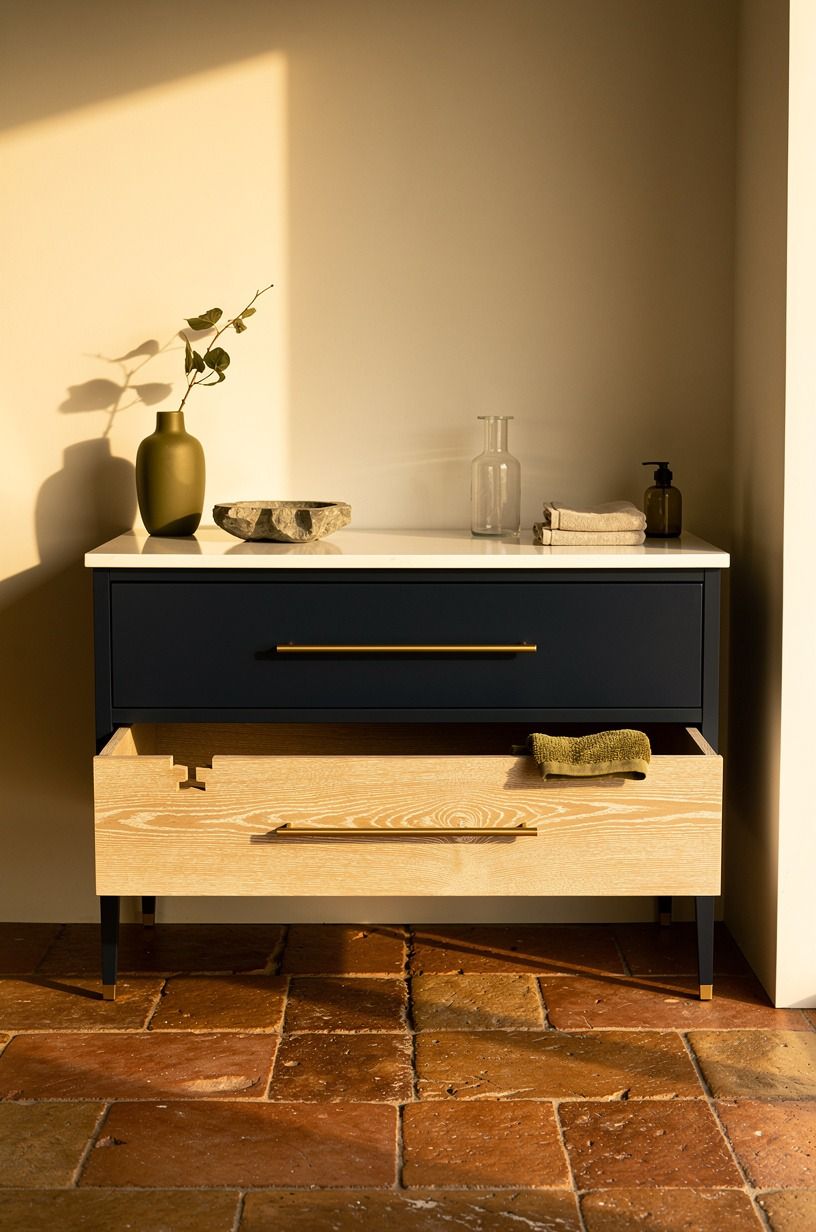
If you want navy blue bathroom inspiration that will not feel random, start at the vanity because it is the piece your eye lands on first. A painted base in Farrow & Ball Hague Blue No.30 gives you depth without turning the whole room into a cave, and brass pulls keep it from reading flat. I like a vanity height between 32 and 36 inches because you will get the custom look without messing up the room’s proportions.
Now look closely at the finish mix. The photo works because the navy is grounded by brass and a cerused oak note, not because navy alone is magic. If you’re buying instead of painting, a simple shaker vanity with warm hardware usually ages better than a slab front in a trendy blue.
But skip tiny polished chrome knobs here. They make a navy vanity feel colder than it needs to.
For more classic layouts, I keep coming back to these timeless bathroom designs.
2Anchor the room with navy painted wainscoting
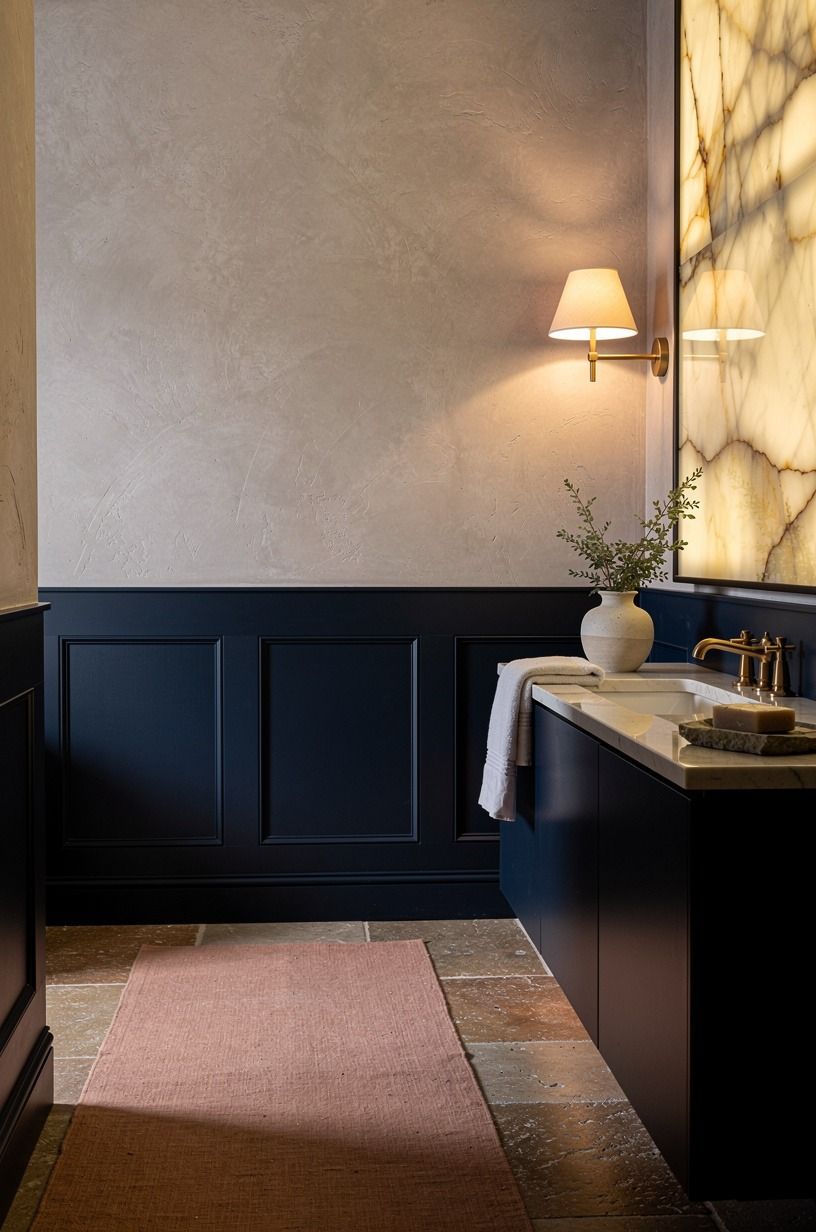
Wainscoting is where navy bathroom inspiration starts to look architectural instead of decorative. When you wrap the lower wall in navy and keep the upper wall light, you get color with structure, which matters if your bathroom is narrow or short on daylight. A 42 to 48 inch wainscot height usually looks right, and the clay linen runner in the photo softens the whole thing fast.
This is also the easier move if you are nervous about going all in. You can paint the lower half in Benjamin Moore Chestertown Buff HC-9 above the trim for warmth, then let navy hold the bottom with more weight. I made the mistake once of using bright white above dark wainscoting in a north-facing bath, and it looked sharp in the bad way.
But a warmer white, aged brass, and a little translucence in the mirror lighting will save you every time. If you need a sanity check on classic proportions, these timeless bathroom designs help.
3Paint the ceiling navy for cocooned polish
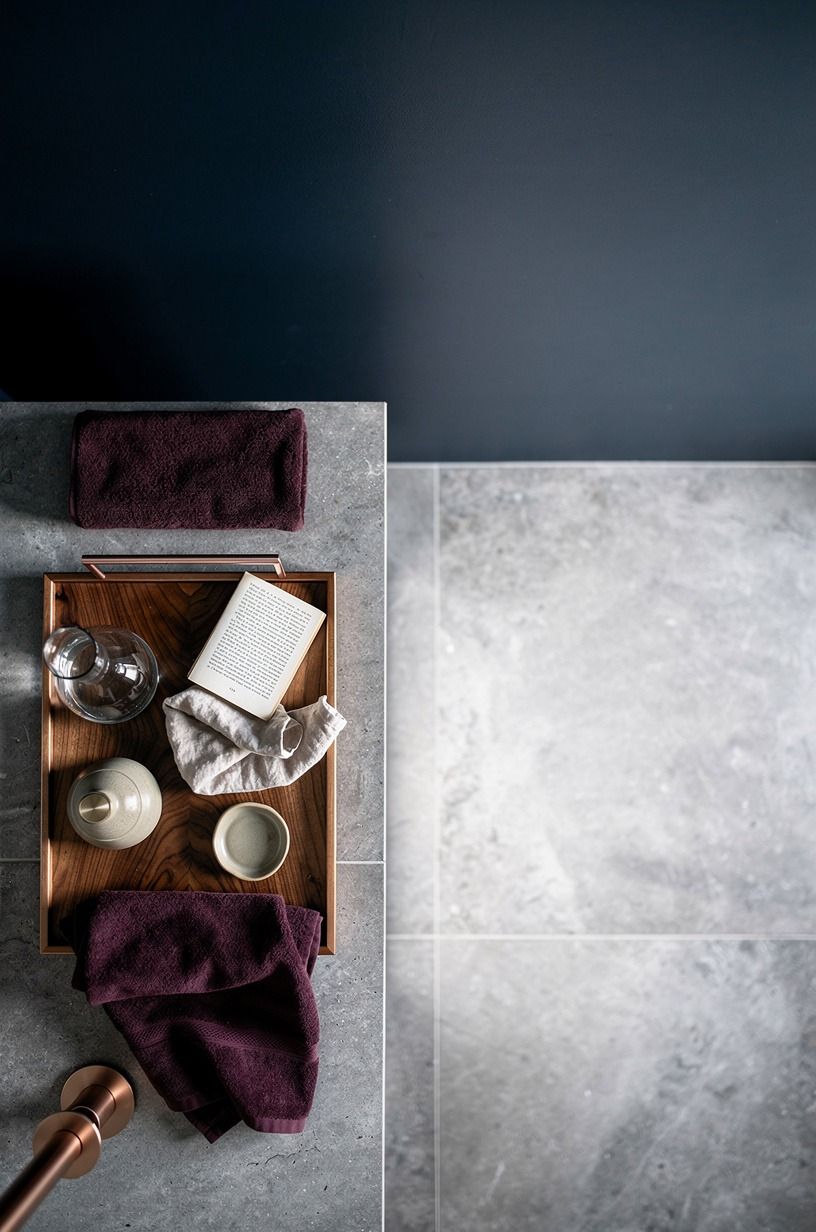
A navy ceiling sounds like a lot until you see how much calmer the room feels when the color wraps overhead. In dark blue bathrooms, the ceiling is often the missing piece because the walls stop too soon and the room feels chopped up. If your bathroom has decent natural light, painting the ceiling navy can make everything below it look more intentional, especially cream tile and soft brass.
Keep the rest of the palette quiet. White trim, pale stone, and one warm wood note are enough. And please test the color first. Navy can tilt black after 3 p.m. if the room faces north.
I prefer this move in a bath with a standard 60×30 inch tub because the room already has enough solid shapes to balance the color above. It gives you that tucked-in, hotel-like feeling without needing expensive tile.
A little bold, yes. Worth it!
For more classic color balance, save these timeless bathroom looks.
4Frame the mirror with navy built-ins
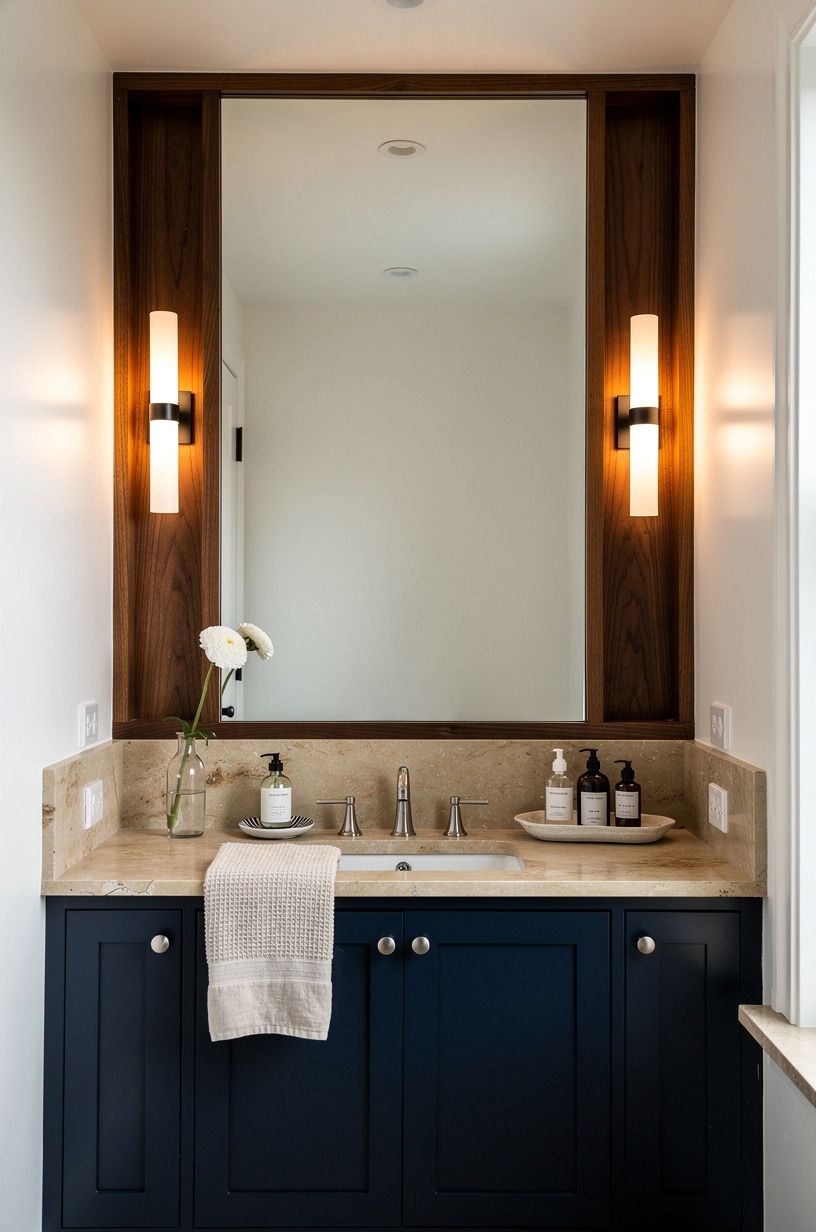
Built-ins around a mirror are one of those navy blue interior decor moves that make a bathroom feel finished, not styled at the last second. In the photo, the mirror is held by navy storage on both sides, and that symmetry is doing half the work. You get a real frame, a place for daily products, and a stronger line across the wall than a floating mirror alone can give you.
Material matters here. Navy paint beside walnut and antique brass feels classic because each finish has visual weight.
If you’re planning shelves or slim cabinets, 8 to 12 inches deep is usually enough for skincare, extra soap, and rolled hand towels. But don’t crowd the mirror with fat side towers in a small bath. You’ll lose the breathing room that makes the whole composition feel expensive.
This same edited balance is why I like these timeless bathroom design ideas so much.
5Layer navy zellige behind the sink
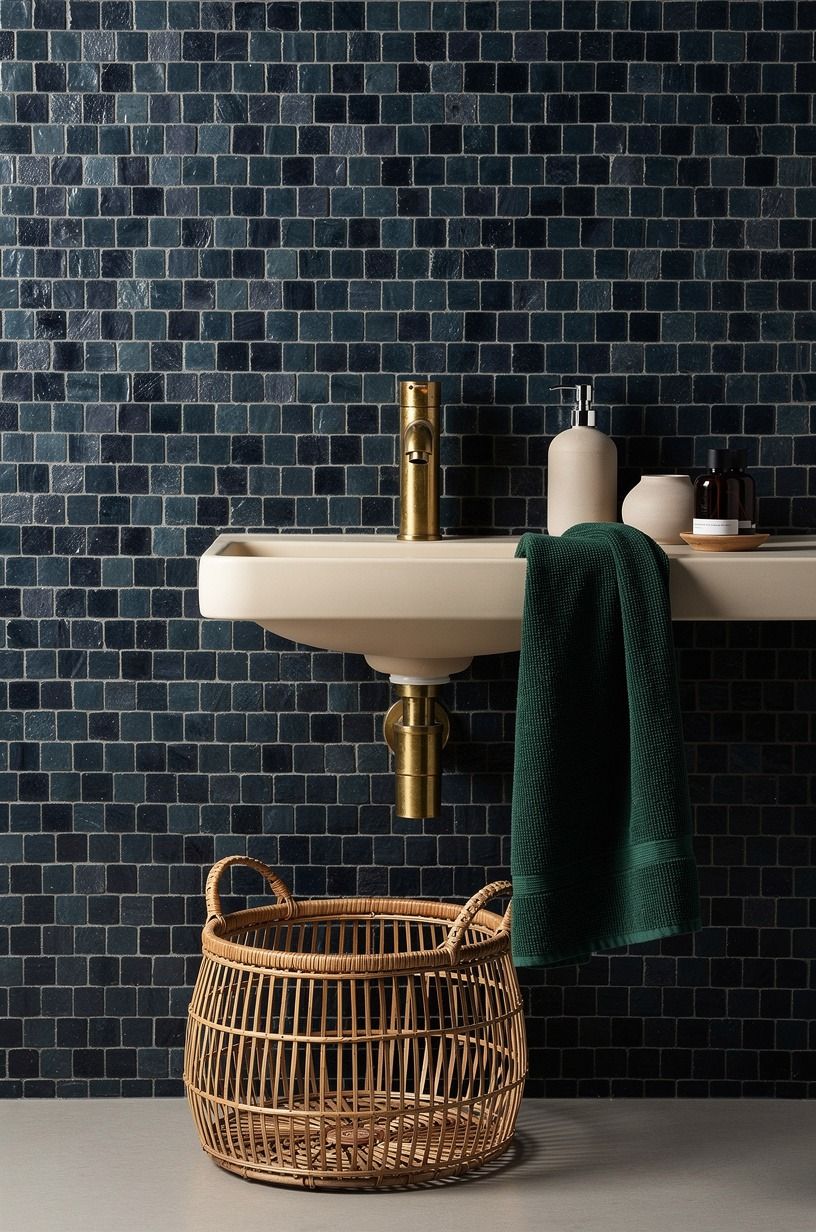
If you want navy bathroom inspiration with movement, zellige is the smarter pick than a dead-flat ceramic.
6Run navy floor tile in a herringbone pattern
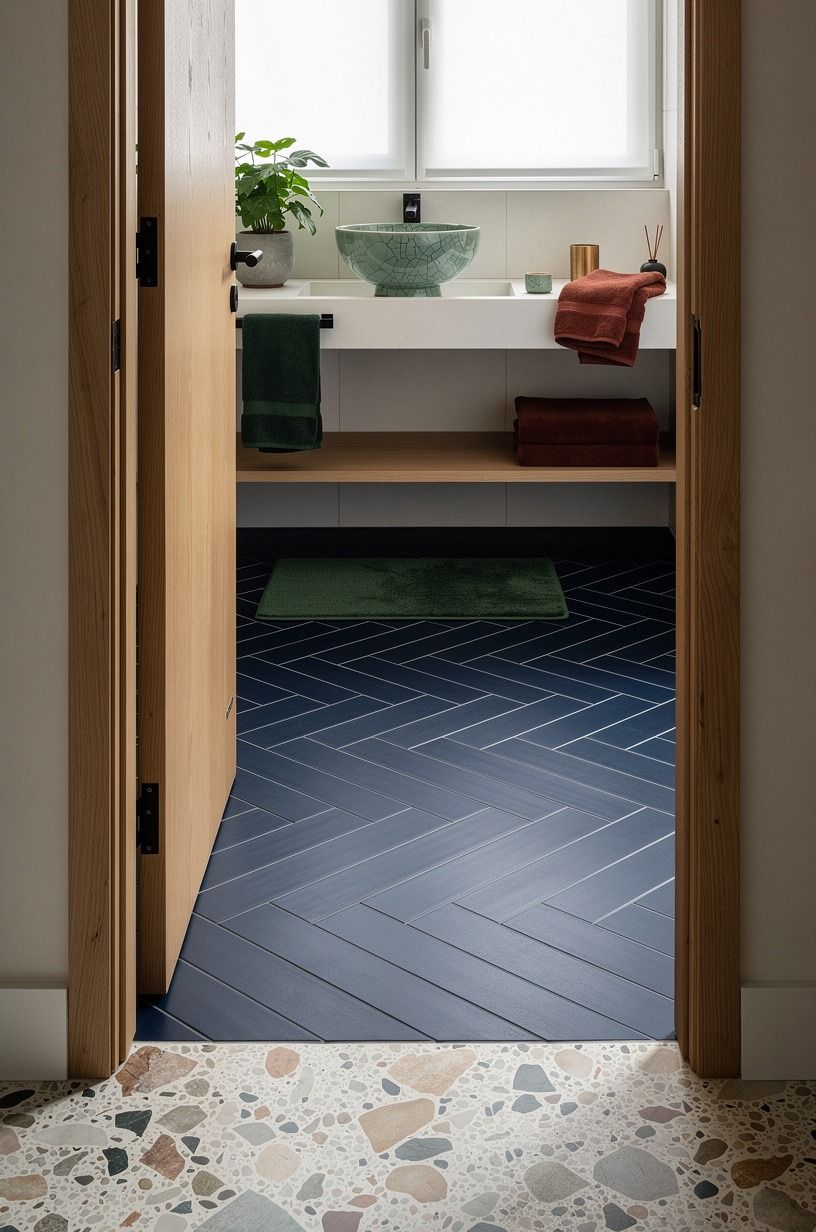
This step works because the floor leads you through the room before you even notice the individual pieces on it. A navy herringbone tile has motion built in, so the room feels layered without needing more decor on the walls. In a bathroom seen through the doorway, that directional pull makes a small footprint look more deliberate right away.
I would not use herringbone if the rest of the room is already full of pattern. The better call is one visual rhythm at a time. Keep the vanity simple, the shower tile quiet, and let the floor do the talking.
A comfortable shower starts at 36×36 inches minimum, so in a tighter bath, the floor pattern can carry more personality than the walls can. But grout color matters.
Go too bright and the whole thing turns busy. Go too dark and it can disappear.
7Hang navy linen curtains beside the tub
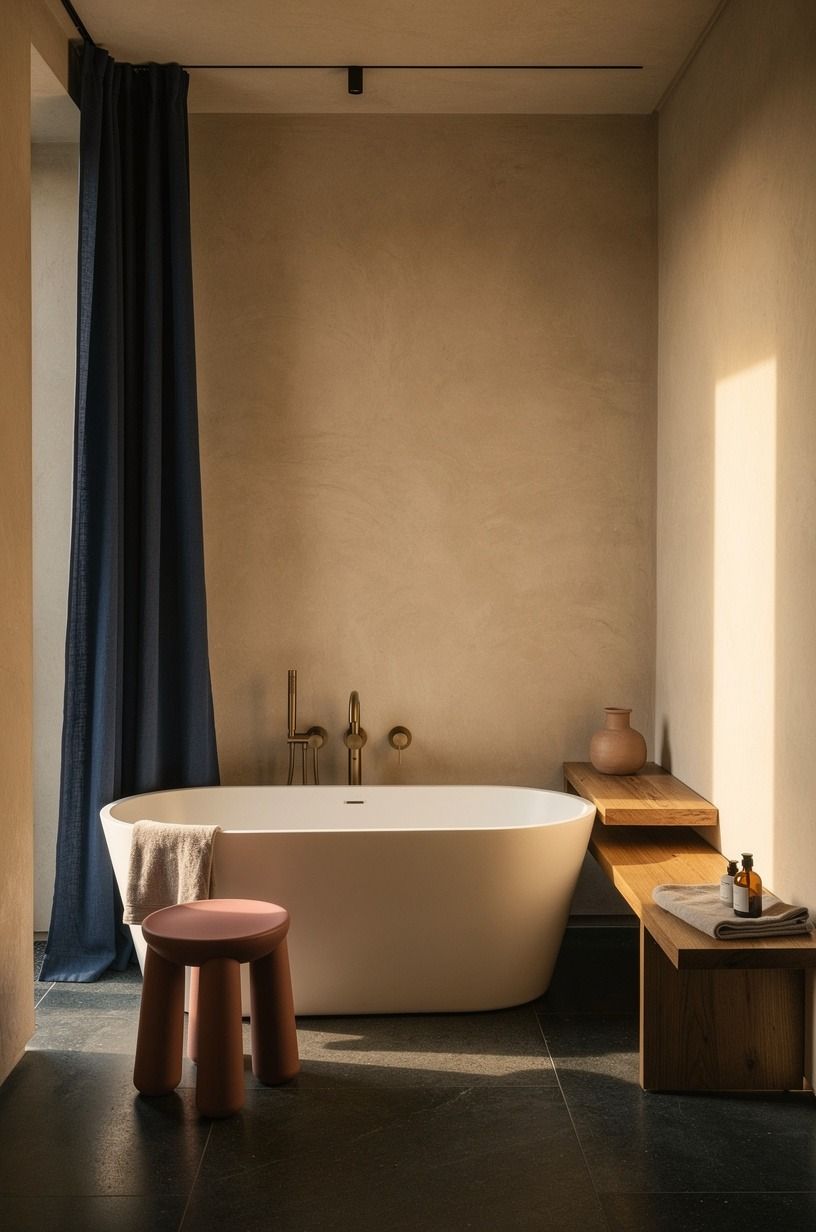
Navy linen curtains are one of the easiest ways to warm up dark blue bathrooms without renovation dust. The photo gets it right because the curtains sit beside a freestanding tub, not crammed on top of it, and that side-by-side arrangement feels softer. Linen also diffuses light in a way plastic shades never will, especially if you choose a washed texture instead of something crisp and formal.
This is a great renter-friendly move, too. A tension rod, a pair of panels, and better hardware can shift the room in an hour.
I like a slightly puddled hem only if the floor stays dry. Otherwise, keep the panel just skimming the tile.
And don’t go icy white with the towels if your curtain is navy. Cream, camel, and warm stone feel richer together.
For that same color-confidence lesson, I weirdly think of women embracing silver hair this spring. The contrast works when the undertones agree.
8Build a navy niche into the shower wall
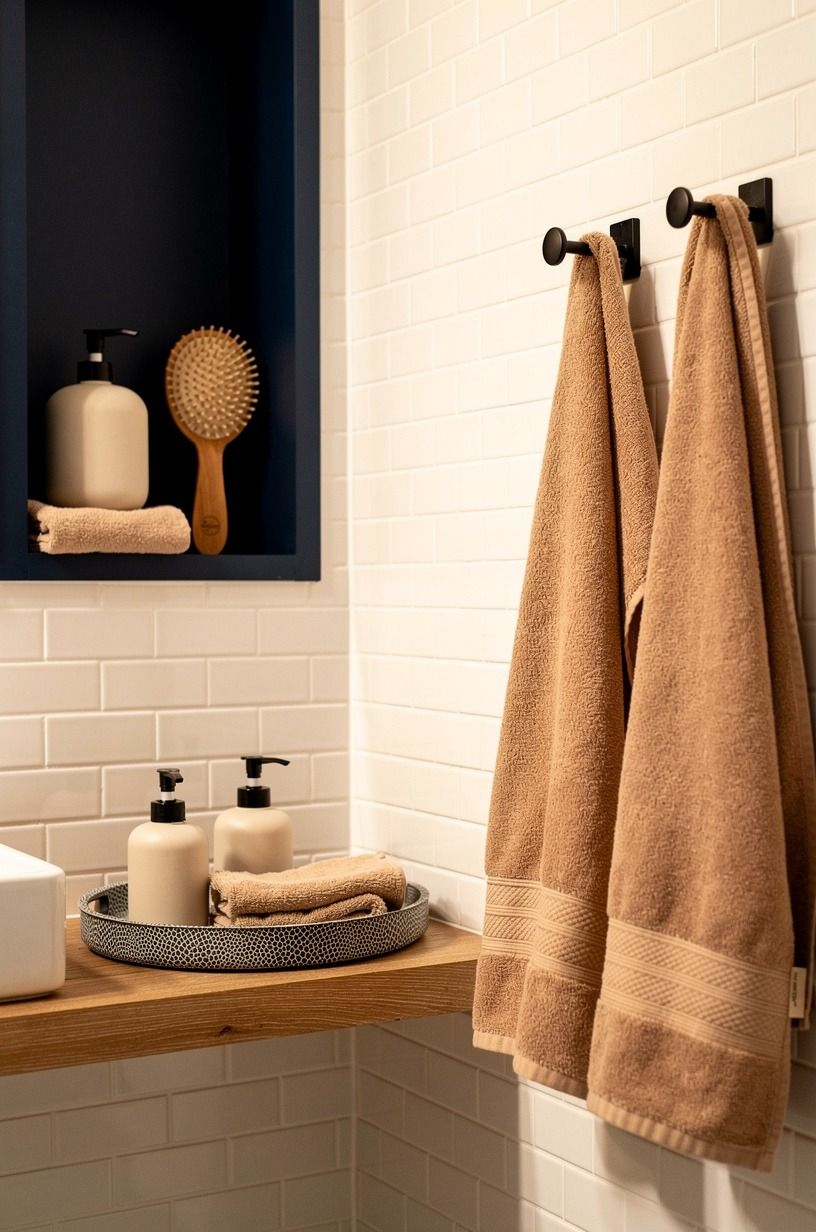
A shower niche is practical, sure, but in navy blue bathroom inspiration it also becomes a moment of contrast that makes the whole shower feel planned. Set into warm white tile, a navy niche reads like a shadow box for the things you use every day.
Camel towels, amber bottles, a bar of soap on a dish. Small things, but they matter.
Keep the dimensions honest. A niche that’s around 12 by 24 inches usually holds enough without forcing you into awkward bottle stacking.
And line it up with your grout. Nothing looks more off than a niche that feels dropped in after the fact.
But don’t fill it with ten products just because you can. Three or four essentials look better and clean faster.
If your room needs more classic guidance around this kind of built-in detail, this bathroom roundup is still one I’d save.
9Pair navy beadboard with marble counters
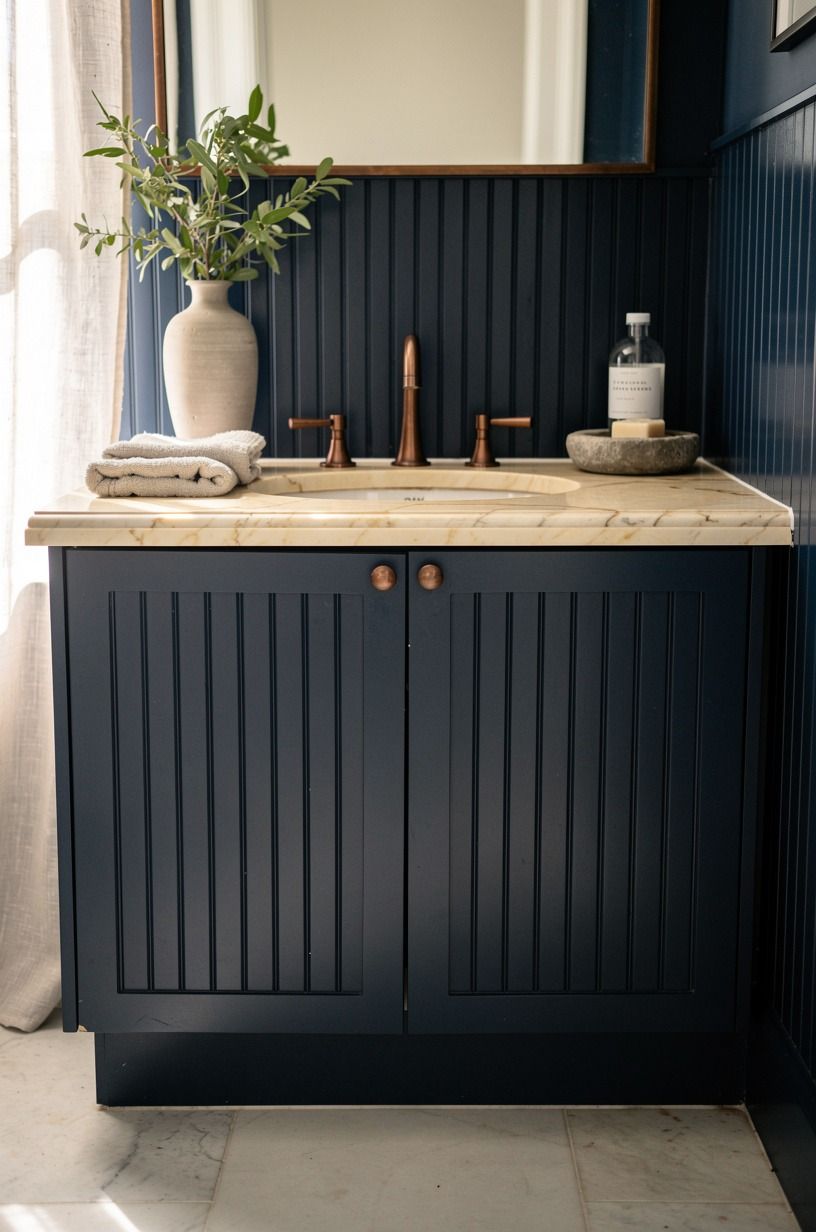
Beadboard is how you get navy bathroom inspiration to feel rooted instead of slick. The vertical lines add old-house texture, and marble on top brings in a cooler, harder surface that keeps the room from turning cottage-sweet.
In the photo, the low angle makes the vanity feel substantial, and that’s a clue. Beadboard needs some visual heft around it to avoid looking flimsy.
A marble top typically lands around $50 to $100 per square foot, so this is where I would spend selectively. Use a quieter counter with soft veining instead of a loud slab that competes with the beadboard grooves. And yes, navy plus marble is classic.
But only if the beadboard profile is crisp and the paint finish is smooth. If it chips and drags, the whole look slips fast.
I learned that the annoying way during one rushed weekend repaint.
10Wrap the tub apron in navy panels
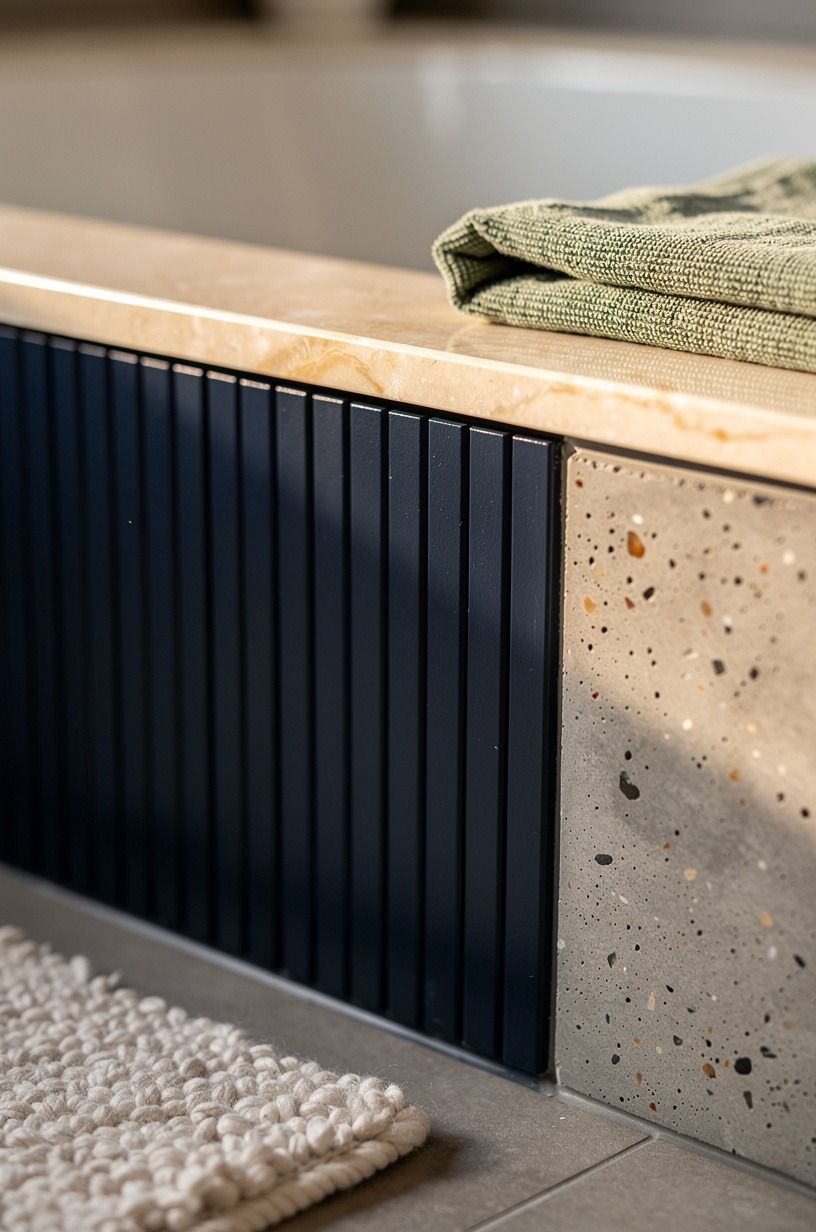
The tub apron is one of the most overlooked places to add navy, which is exactly why it works so well.
11Choose navy grasscloth above white trim
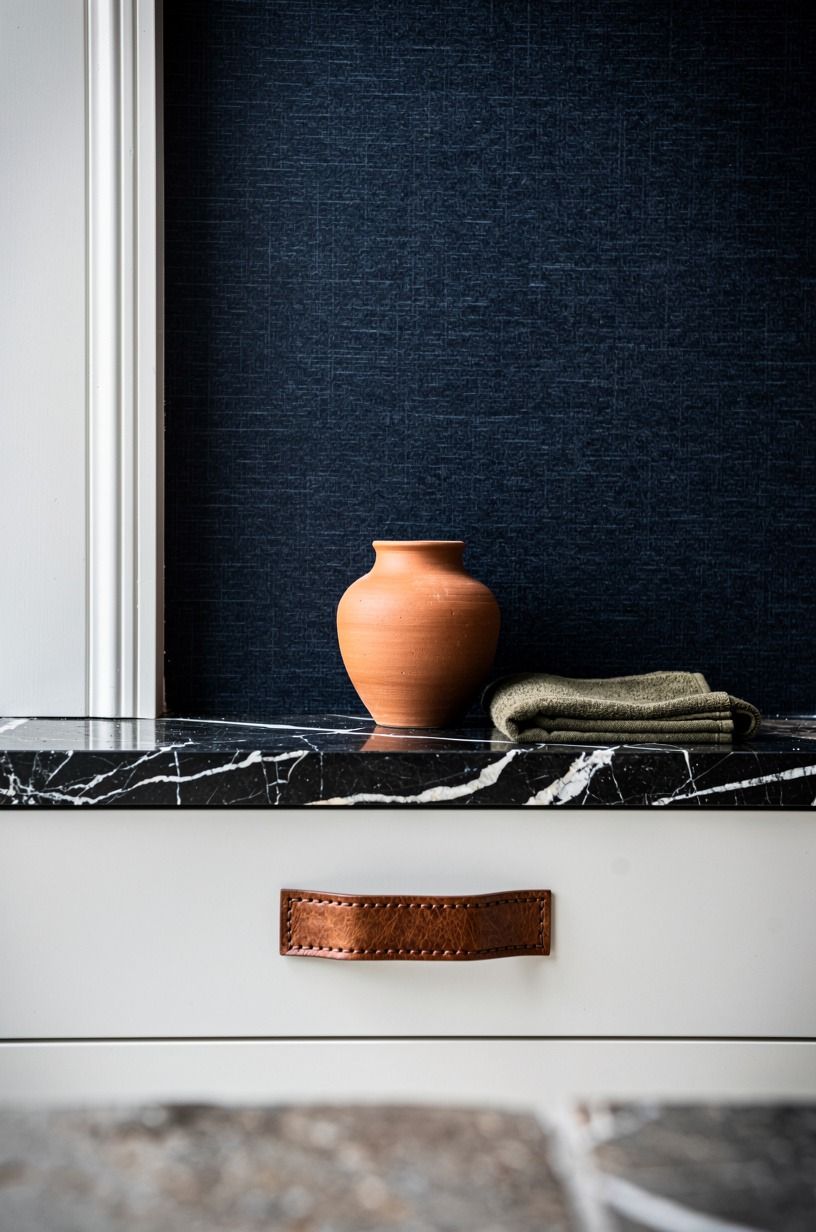
Grasscloth brings navy blue interior decor into a softer, more tailored zone than paint alone can reach. The texture catches light in a dry, matte way, so the wall feels deep without feeling heavy. Above white trim, especially near a dramatic surface like Nero Marquina marble, navy grasscloth looks polished because the contrast is clean and the materials don’t fight each other.
This is not the cheapest route, and it should not be the first move in a splash-prone kid bath. But in a powder room or a well-ventilated primary bathroom, it can be gorgeous for years.
Keep the trim warm white, not stark white, and let the wallpaper breathe. One full wall is often enough.
More than that, and the texture can start to dominate. Want a shortcut? Test the navy against warm black accents before you commit, just like you would with a wardrobe statement piece in this hair color lesson.
12Install navy sconces with milk glass shades
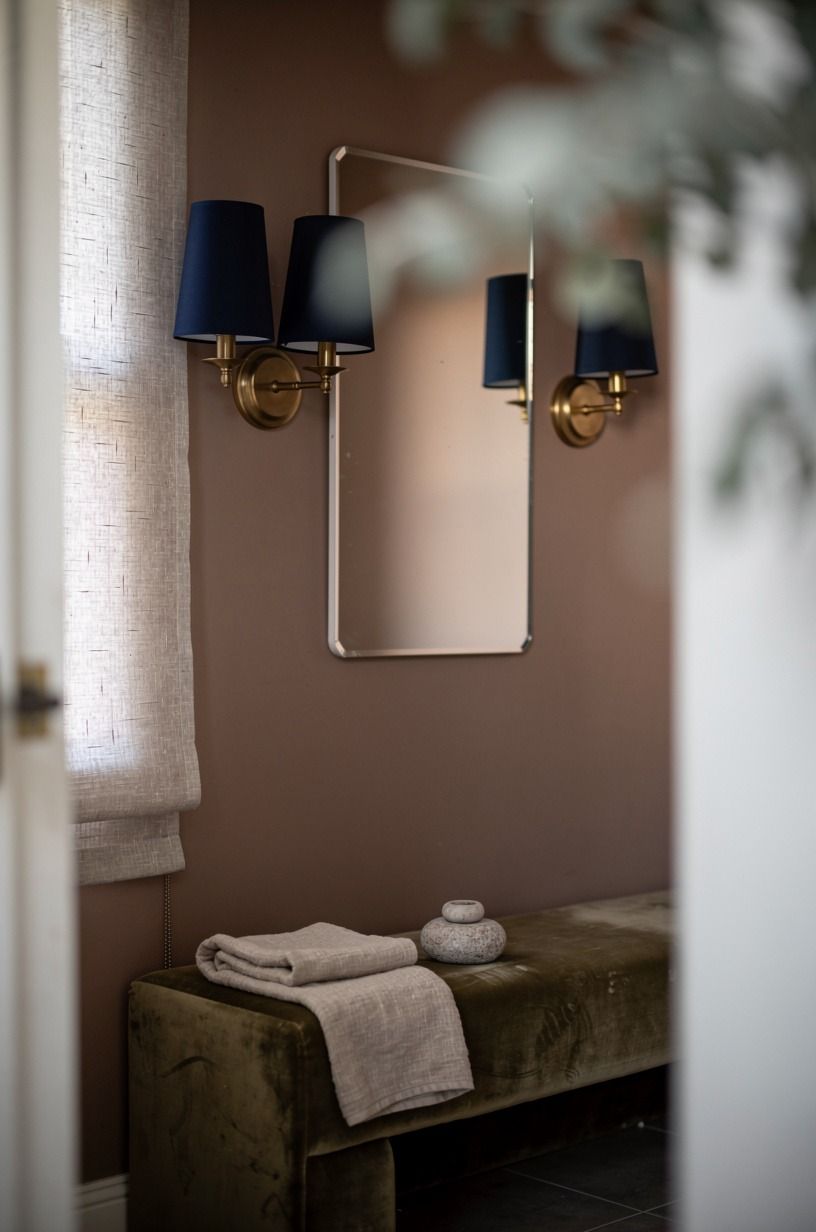
Lighting is where a lot of navy bathrooms go wrong because people stop after paint and never soften the glow. Navy sconces with milk glass shades do that job fast.
The blue body ties back to the room, and the glass throws a gentler light than exposed bulbs ever will. If you want the mirror area to feel flattering, this is the move I’d make before buying more accessories.
A brushed brass faucet usually costs about $120 to $450, so if your budget is tight, pair a simpler faucet with better sconces first. The daily payoff is bigger.
I like the fixture centered around face height, with the pair spaced evenly off the mirror edge, not floating too far out. But do not mix three metal finishes in this zone.
Navy, brass, and milk glass already give you enough contrast. Anything more starts to look indecisive.
If you are mapping the whole room, these timeless bathroom designs are a good cross-check.
13Ground the shower with navy penny tile
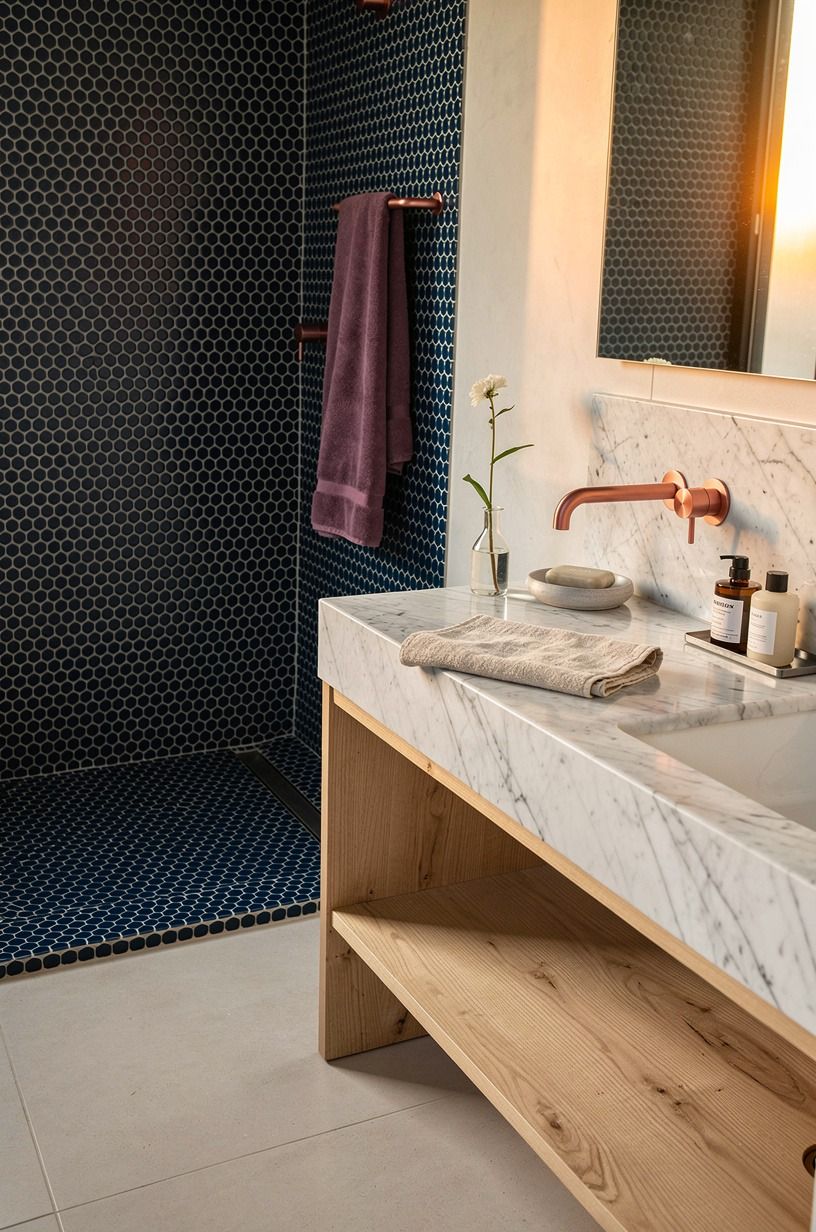
Penny tile is small, but it can anchor a shower in a way larger tile sometimes can’t.
14Add navy towels against warm stone
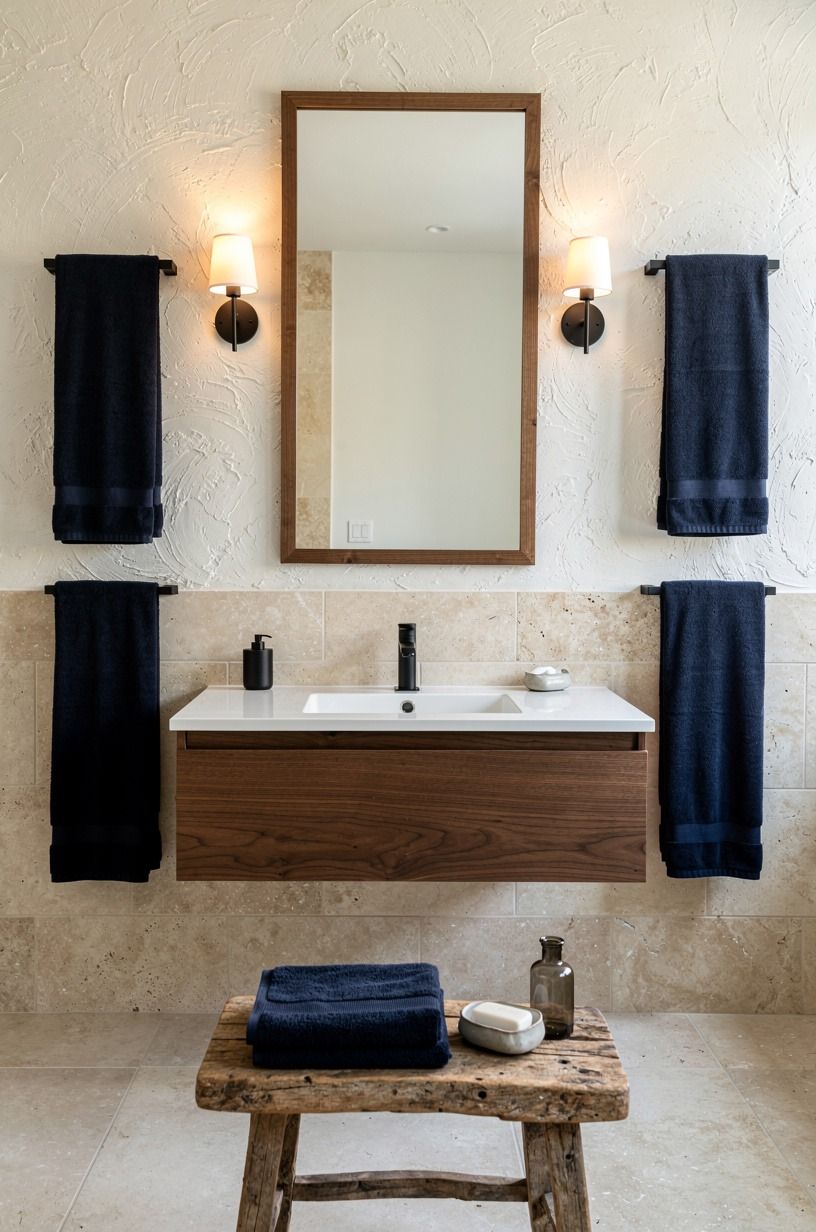
Sometimes navy bathroom inspiration is less about renovation and more about contrast you can swap in ten minutes. Navy towels against warm stone are a perfect example.
The photo feels strong because the towels are deep, the stone is creamy, and the symmetry is calm. You don’t need a new vanity to test whether navy belongs in your room. You need two good towels and some honesty.
Here’s the honest part. Cheap towels can kill this idea fast. If the pile is thin, the color looks dusty.
I like 600gsm Turkish cotton because it holds navy better and reads fuller on the wall. Stack bath sheets, hand towels, then one small folded washcloth for shape.
But don’t add six other accent colors around them. Navy likes restraint.
If your room is already busy, this single switch may be enough to tell you where to go next.
15Paint the door navy for quiet drama
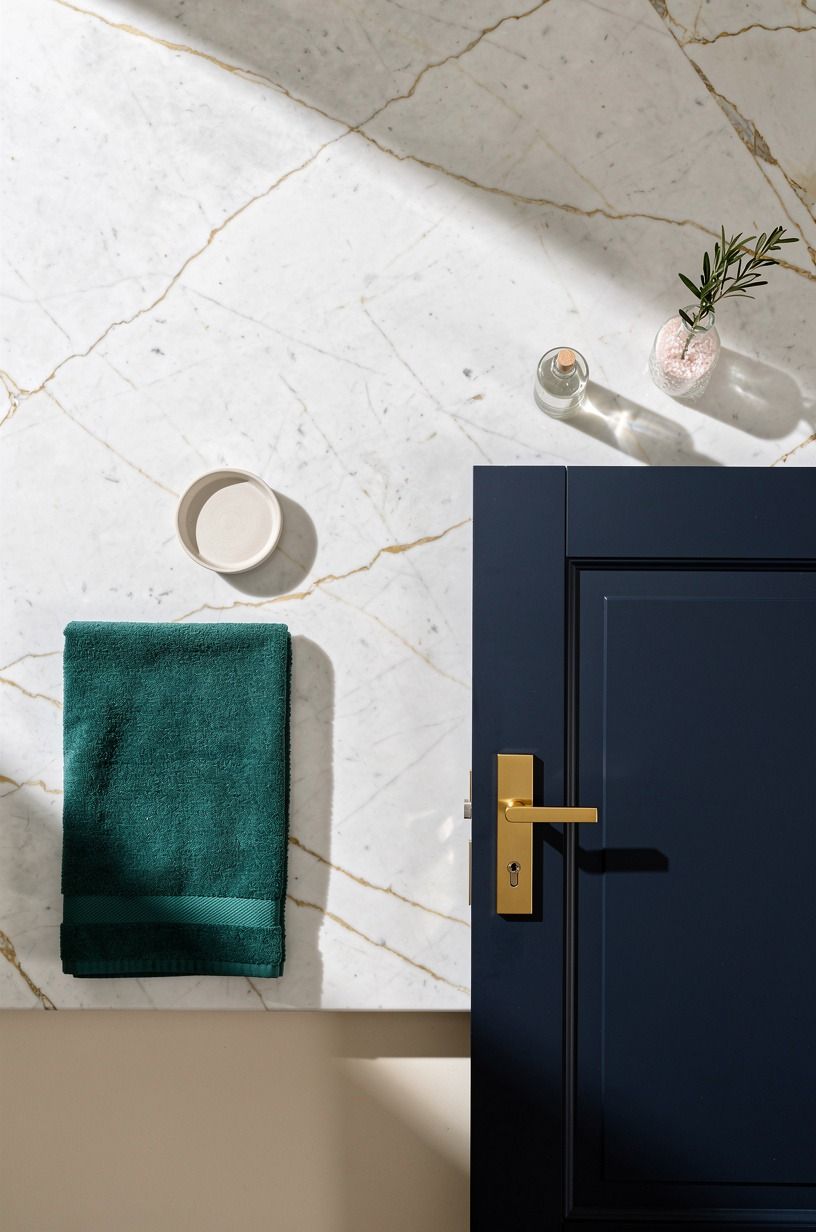
A navy door is one of my favorite low-commitment moves because it gives you contrast right at the threshold. In a light bathroom, that little hit of dark color can make marble and tile feel more expensive without touching the major surfaces.
The overhead view in the photo says it all. The door is not dominating the room.
It’s punctuating it.
This is also one of the cheaper upgrades in the whole article, often well under $100 if you already have primer and decent paint. Use satin or soft eggshell so the panel detail catches light, and keep the trim cleaner and lighter.
But don’t paint the door navy if your vanity, ceiling, and floor are all already dark. You need somewhere for your eye to rest.
What makes a navy bathroom look timeless instead of themed? Editing.
Always editing. If you want examples of that restraint, save these timeless bathroom looks.
16Set navy cabinetry under a vessel sink
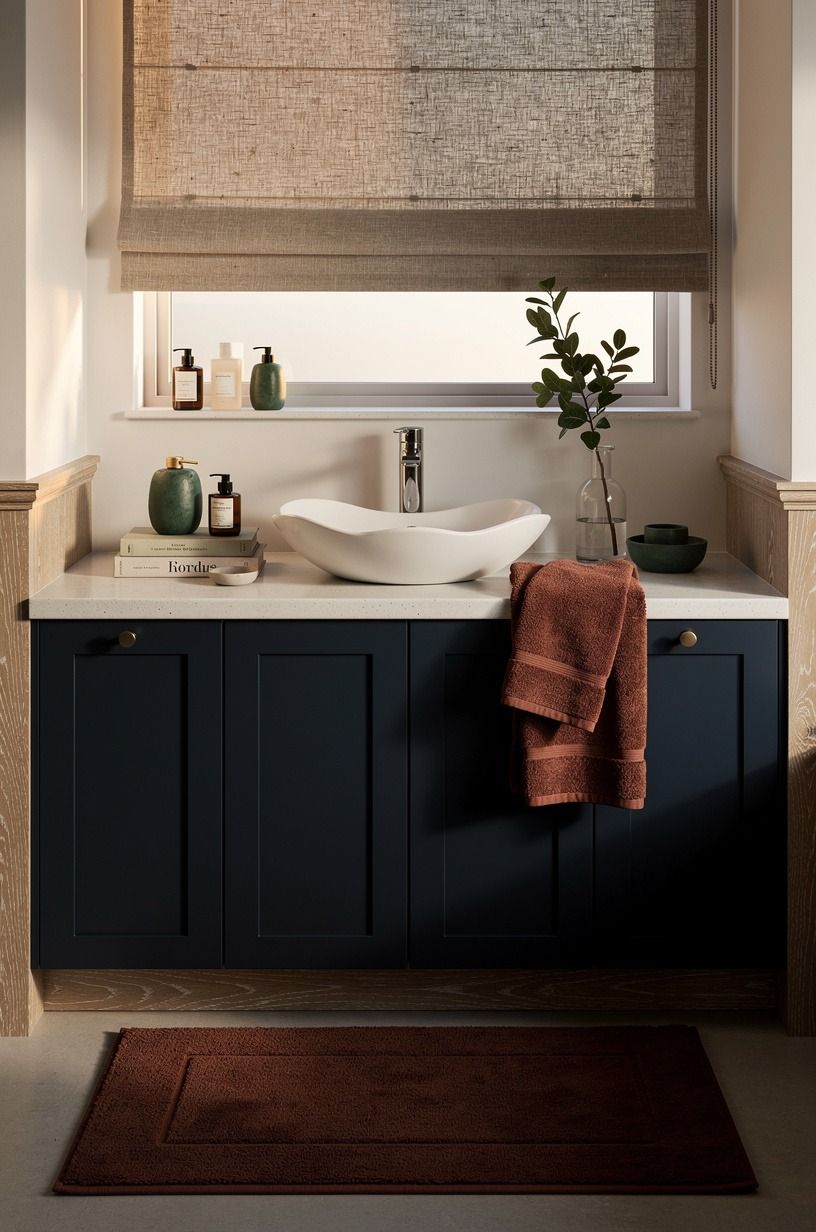
A vessel sink has presence, so the base under it needs enough weight to hold the look together.
17Use navy mosaic tile around the mirror
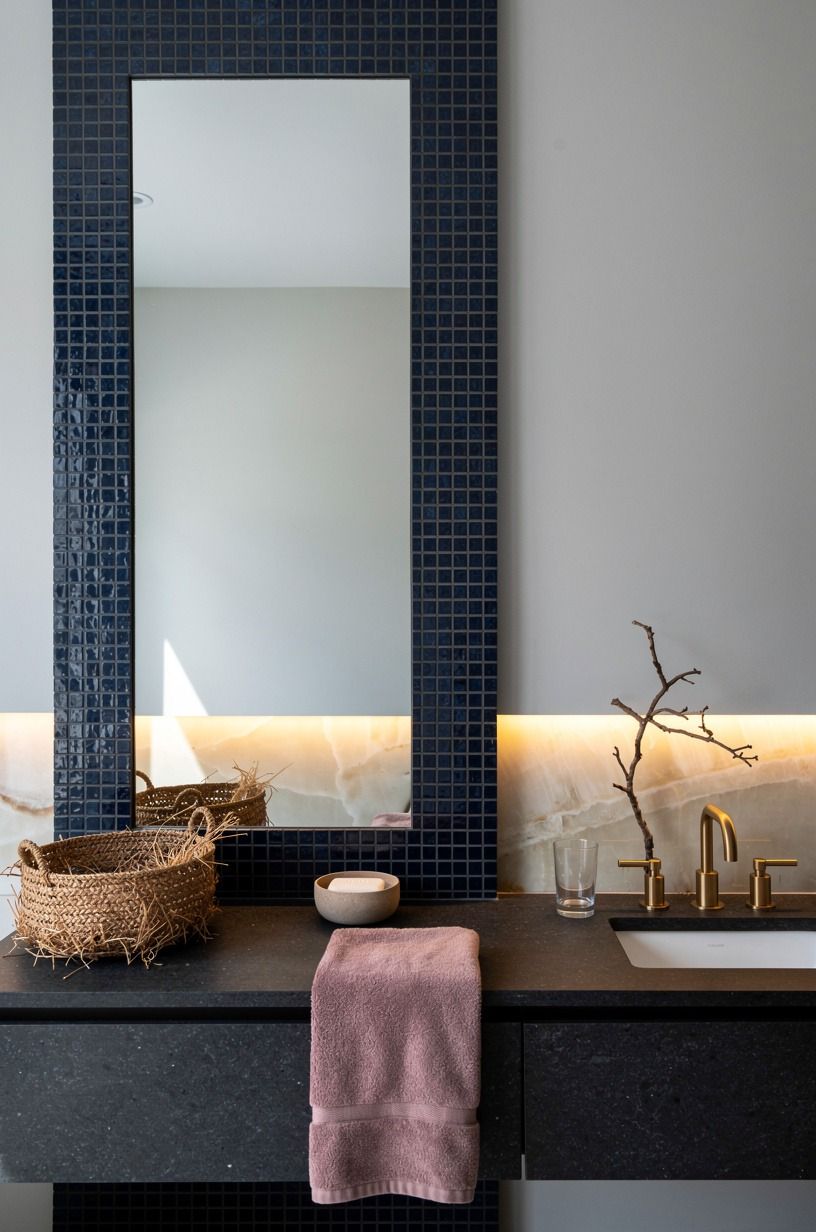
Mosaic around a mirror is the kind of navy blue bathroom inspiration that reads custom because it frames a very specific zone. You don’t have to tile the whole wall to get impact. A border or full field around the mirror can turn a plain sink area into the most finished part of the room, especially when the rest of the wall stays simple and pale.
This is where scale matters more than color. Tiny mosaic pieces already bring movement, so I would keep the vanity lines clean and the accessories minimal.
White walls, one wood note, and thin brass are enough. But don’t choose a chaotic navy with too many undertone shifts unless the room is otherwise dead simple.
You want shimmer, not noise. If you like the idea of one focused statement instead of six scattered ones, it’s the same discipline I notice in short cuts that style themselves.
18Style open shelves with navy ceramics
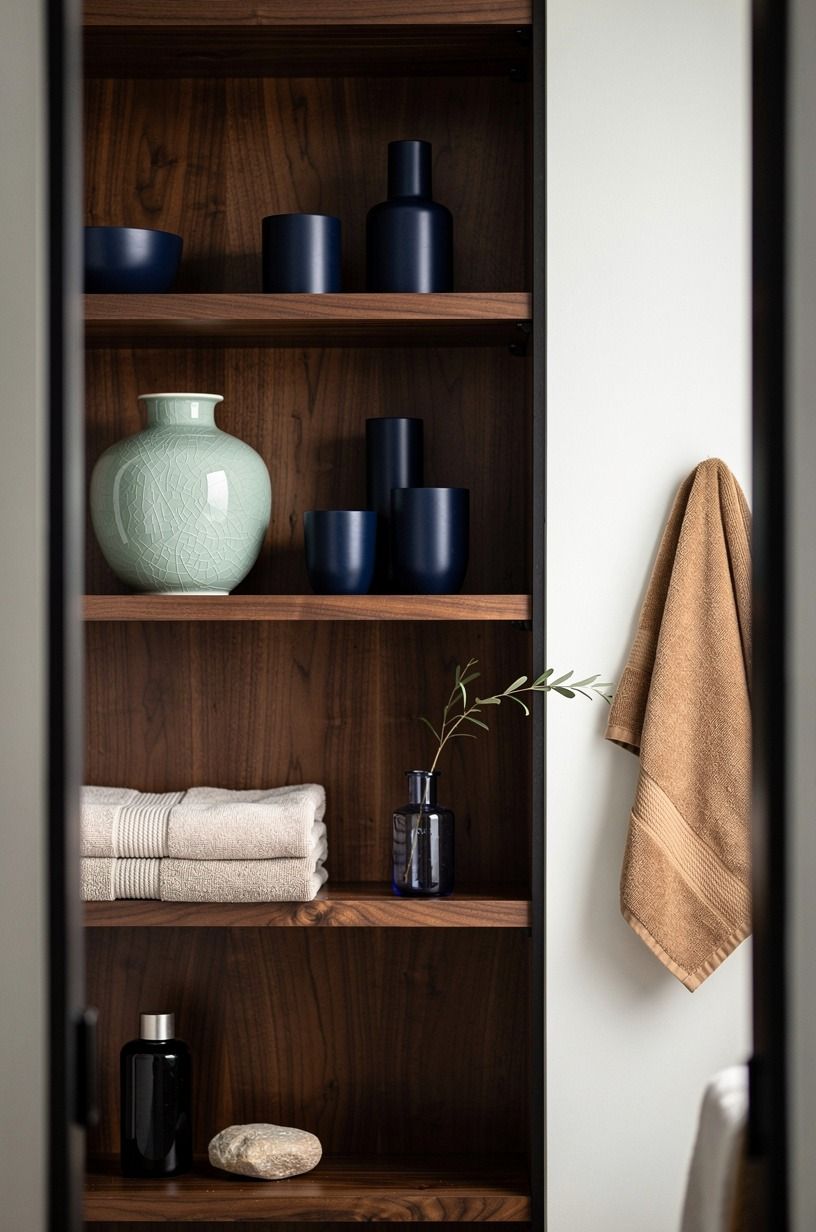
Open shelves can cheapen a bathroom fast if they turn into storage spillover.
19Finish with navy art in thin brass frames
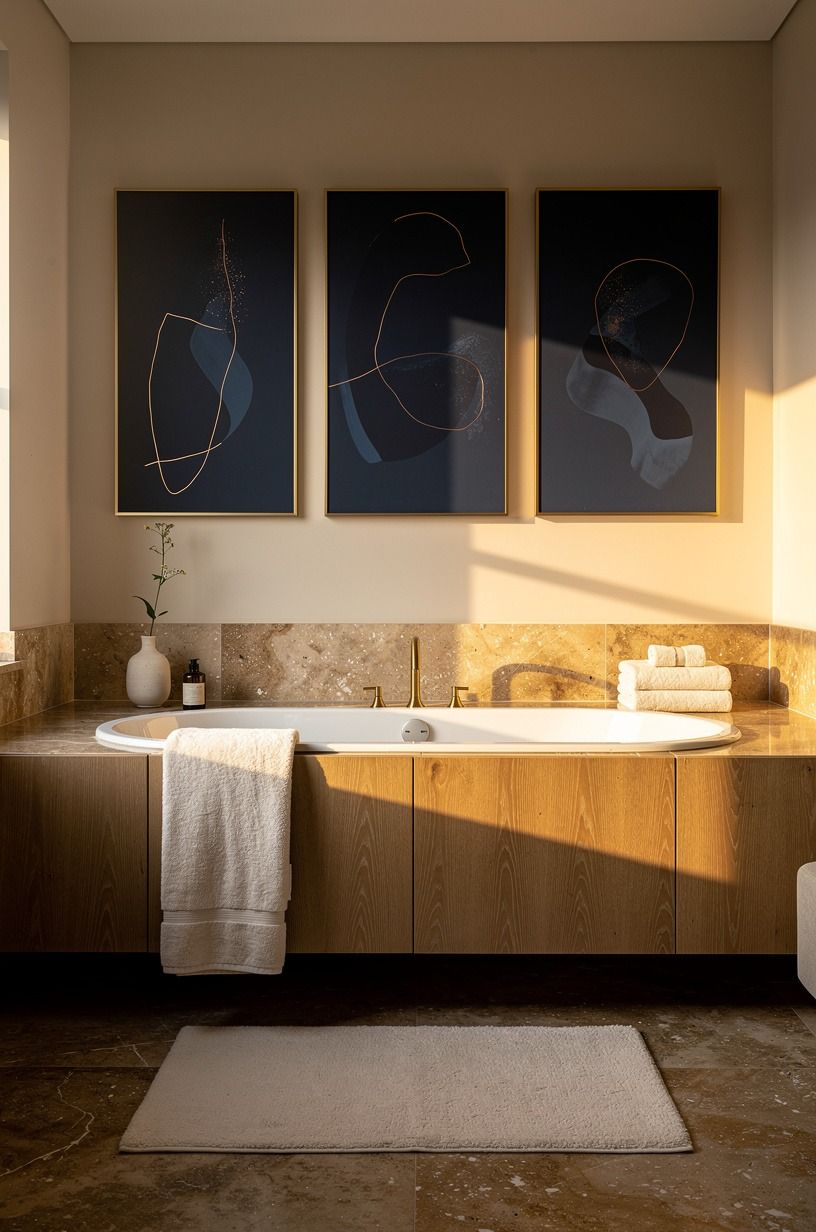
Art is how you make a navy bathroom feel inhabited instead of merely finished. Thin brass frames keep the line light, and navy artwork ties back to the color story without repeating it in another hard surface.
In the photo, the art sits inside a fully composed room, which is the key. The artwork works because the bathroom already knows what it is.
I like two or three pieces in matching frames rather than one oversized print trying too hard. Keep the mat simple, the palette deep, and the spacing even.
But skip word art or anything too literal. A bathroom doesn’t need a joke on the wall. It needs a little culture, a little calm, and one last navy note that makes the whole room feel gathered.
For more rooms that land this mood, save these timeless bathroom looks.
Before you start: what you’ll need and what it usually costs
Before you buy a single tile, decide whether you are doing a surface refresh or a true remodel. That is the split that keeps you from overspending in the wrong place. A paint-and-textile update can make a bathroom feel dramatically better for a few hundred dollars, while new tile, lighting, and plumbing moves push you into a very different budget lane.
I wish more people separated those two jobs at the start.
Here’s the quick cost reality. If your room already has a good layout, paint, a new mirror, better lighting, and textiles usually get you farther than ripping out serviceable finishes.
But if the vanity is undersized or the shower tile is failing, cosmetic fixes won’t solve the deeper issue. Use this table as your gut check before you commit.
And if you’re weighing materials, these are the numbers I keep in mind before calling anything affordable.
Why navy keeps working when trend colors burn out
I’ve gone back and forth on navy more than once because it can look incredibly tailored or very try-hard, and the difference is smaller than people think. It is not just the shade.
It is what sits next to it. When navy is paired with cold gray tile, bright white light, and shiny chrome, it starts to feel locked to one era.
A little harsh. A little internet-renovation-core. But when you put it next to oak, stone, milk glass, linen, and brass, it loosens up and starts acting like a classic.
That is why I’d rather talk about order than color psychology. People usually start with the paint chip, then wonder why the room still feels off.
I start with the hardest-working surface in the room. Usually the vanity, sometimes the floor, occasionally the ceiling if the architecture can handle it.
Once that anchor is doing its job, the rest gets easier. Your textiles can stay simple.
Your mirror does not have to scream. Even your art can whisper a bit.
And navy has one huge advantage over trendier bathroom colors. It does not need to be the whole story.
You can use it on a vanity, a niche, a door, or just towels, and it still reads intentional. That’s rare.
A lot of fashionable colors demand total commitment, then punish you when your light changes or your budget runs out halfway through. Navy is more forgiving than that.
But here’s the mistake I see all the time. People keep adding blue because they think repetition equals cohesion.
It does not. Cohesion comes from contrast, scale, and undertone control.
If the navy is cool, warm it with cream, oak, camel, or brass. If the tile already has movement, simplify the counter.
If the floor is patterned, calm the wall. The room wants one clear lead voice and a couple of supporting notes. Same as getting dressed, honestly (and yes, rooms are not outfits, but the principle holds). And that is what keeps it classic!
So if you’re wondering why navy never really leaves, that’s my answer. It has enough depth to feel moody, enough familiarity to feel safe, and enough flexibility to work at a $200 update or a $20,000 remodel.
Very few colors can do all three. That’s why it lasts.
The Questions Worth Answering First
What is the best navy bathroom idea for a small bathroom?
A navy vanity is usually the best first move in a small bathroom because you get strong contrast without shrinking every wall. Add a warm mirror and light floor, then keep the rest quiet. These timeless bathroom designs show why that balance works.
– Slim vanity footprint – Pale wall color – One brass accent
Where can I buy navy bathroom pieces on a budget?
Target, IKEA, and Wayfair are the easiest starting points for budget pieces, and Facebook Marketplace is still great for mirrors and stools. The win is better shape and finish without custom prices. I also like comparing silhouettes against these timeless bathroom ideas.
– Flat-front or shaker vanities – Linen-look curtains – Secondhand brass frames
How much does a navy bathroom makeover cost?
A surface-level navy bathroom makeover usually costs about $200 to $1,200, while a bigger vanity-and-lighting update often lands around $3,000 to $9,000. Paint and towels are the cheapest test run.
– Paint and hardware – Mirror and textiles – Vanity and partial tile
Can I create a navy bathroom on a budget?
Yes, and you really can do it without tearing the room apart. The big benefit is high visual impact from a few smart swaps.
– Navy towels – Painted vanity or door – Peel-and-stick shade or curtain upgrade
Is a navy bathroom worth it in a small space?
Yes, a navy bathroom is worth it in a small space because the tighter footprint can make contrast feel more tailored, not more crowded. Keep one main navy zone, then let lighter surfaces open the rest.
– One anchor surface – Warm reflective finishes – Clear floor sightline
Is a navy bathroom a good idea for a rental?
Yes, navy can work in a rental if you focus on removable layers and skip permanent tile. You will get depth without losing your deposit. And if you want it to stay classic, save these timeless bathroom looks.
– Tension-rod linen curtains – Removable art and frames – Towels, storage jars, bath mat
Where I’d Start First
If I had to pick one step, I’d start with the navy vanity. It gives you contrast at eye level, hides everyday wear better than pale paint, and tells you immediately whether the room wants brass, oak, or stone around it. Pin that before you touch the tile.