
How to make a windowless powder room feel bright and expensive came down to about $200 in cosmetic changes, not a renovation. Mine had one overhead bulb, beige walls, and the full 2005 starter-home package. I stopped fighting its lack of windows and gave it a warmer job instead. The result surprised me!
- ✓ Paint the walls in a color that holds candlelight
- ✓ Use the Three-Height Light Stack
- ✓ Swap the flat mirror for one with a real edge
Here’s what it looked like before
Before, you walked into a dim box with a yellowed builder mirror, a squat oak vanity, and a ceiling light that made everybody look faintly ill. There wasn’t room for a dramatic layout change, and I didn’t have plumbing money. You probably know this kind of powder room: useful, but never somewhere you’d linger.
The toilet had barely the required 21-inch front clearance, so I couldn’t add a big basket or a storage stool. I kept the footprint. Then I made every surface earn its place, starting with light, reflection, and a color that didn’t turn gray after sunset.
- Paint the walls in a color that holds candlelight
- Use the Three-Height Light Stack
- Swap the flat mirror for one with a real edge
- Build the Two-Wood Rule around the vanity
- Hang the mirror lower than you think
- Put one bold material where guests can touch it
- Why not use a dark guest bathroom color?
- Float storage above the toilet
- Choose a soap bottle that doesn’t look temporary
- Frame art like it belongs in the rest of your house
- Bring in a textile that softens the echo
- Let the faucet do the expensive-looking work
- Try the Borrowed Hotel Rule for towels
- Use a removable wall treatment behind the door
- Edit the counter until it feels deliberate
1Paint the walls in a color that holds candlelight
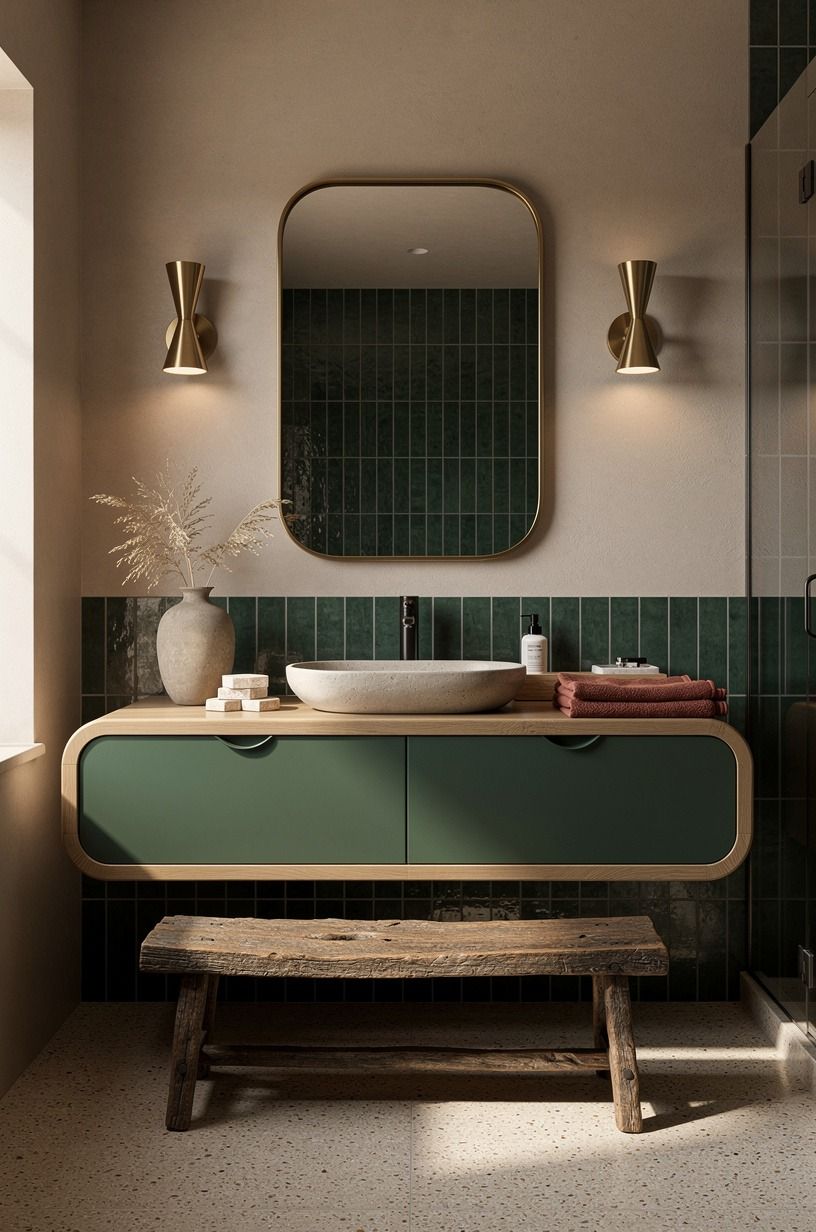
I chose Farrow & Ball Studio Green because I wanted depth without the muddy look that some beige paints get under LED bulbs. Your powder room doesn’t need to be white to feel bright. It needs a color with enough pigment to look intentional when the door closes.
The first coat looked deep at noon. By dinner, it was soft and refined, especially against rust-toned accents and natural oak.
I’d skip stark white here because a windowless room makes it read blue and clinical. Two coats, one Saturday, and suddenly the room had a pulse.
2Use the Three-Height Light Stack
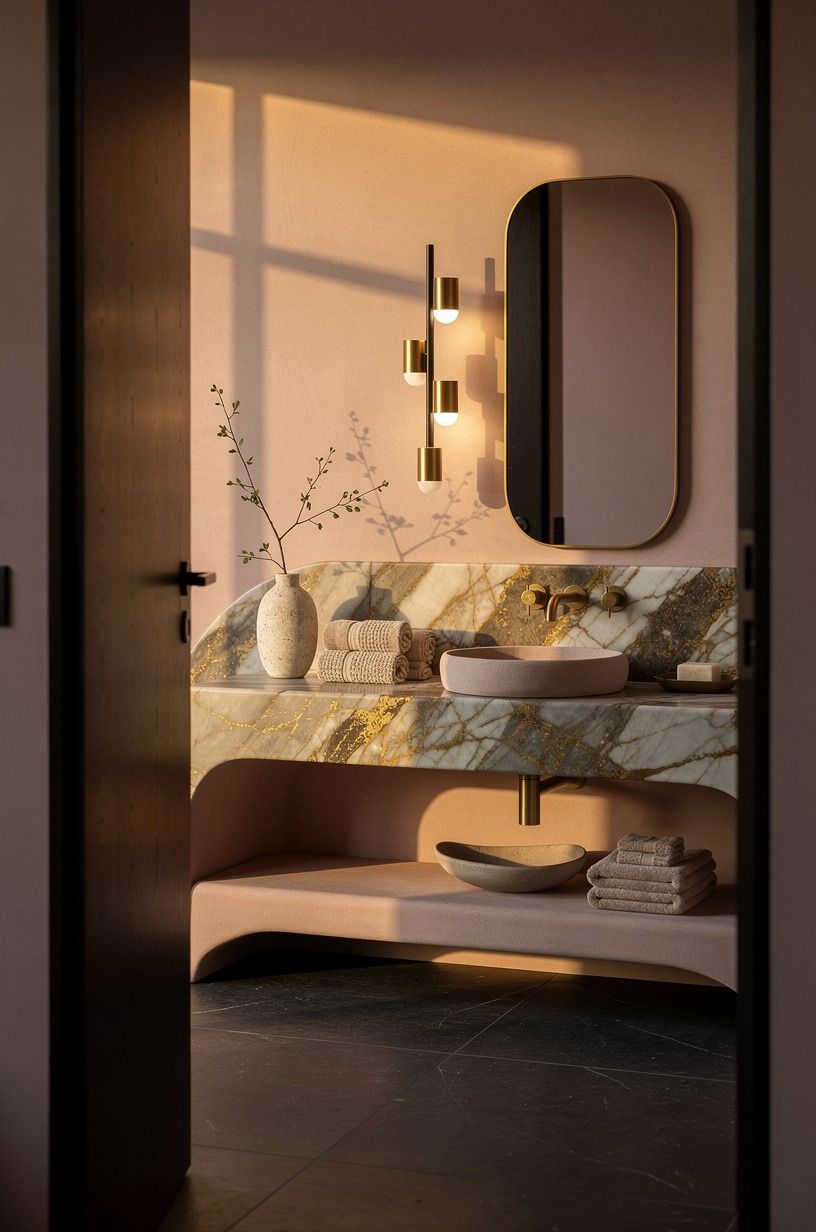
You need light at more than one level, even if your room is tiny.
3Swap the flat mirror for one with a real edge
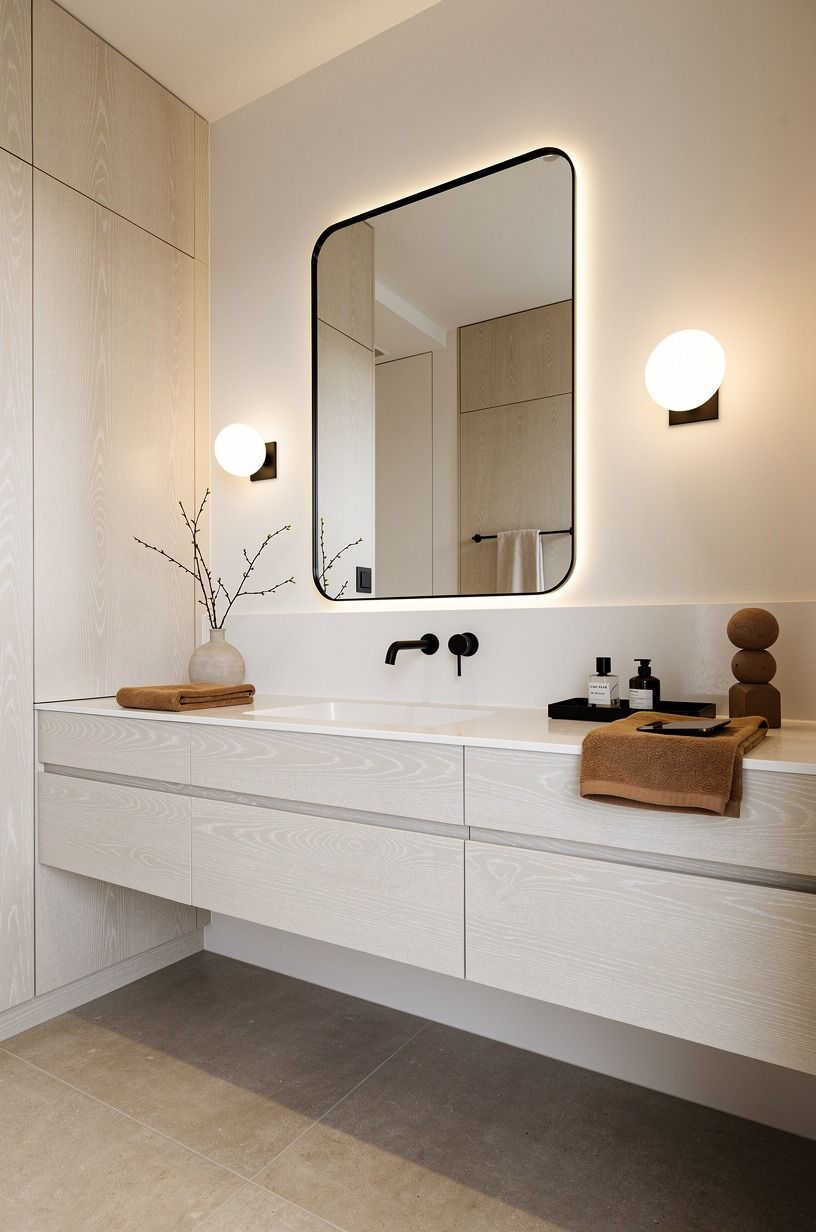
The old frameless mirror made the room feel like a rental office restroom. I replaced it with a rounded arch-top cerused white oak mirror, and that single curve loosened up all the hard little corners. Your mirror is the largest wall object in a powder room, so it can’t be an afterthought.
I went back and forth on black metal. But black would have made the space feel more severe, while the pale oak picked up the warm white and camel tones and gave the room a lived-in note. A mirror around 24 inches wide worked above my narrow vanity without crowding the faucet.
4Build the Two-Wood Rule around the vanity
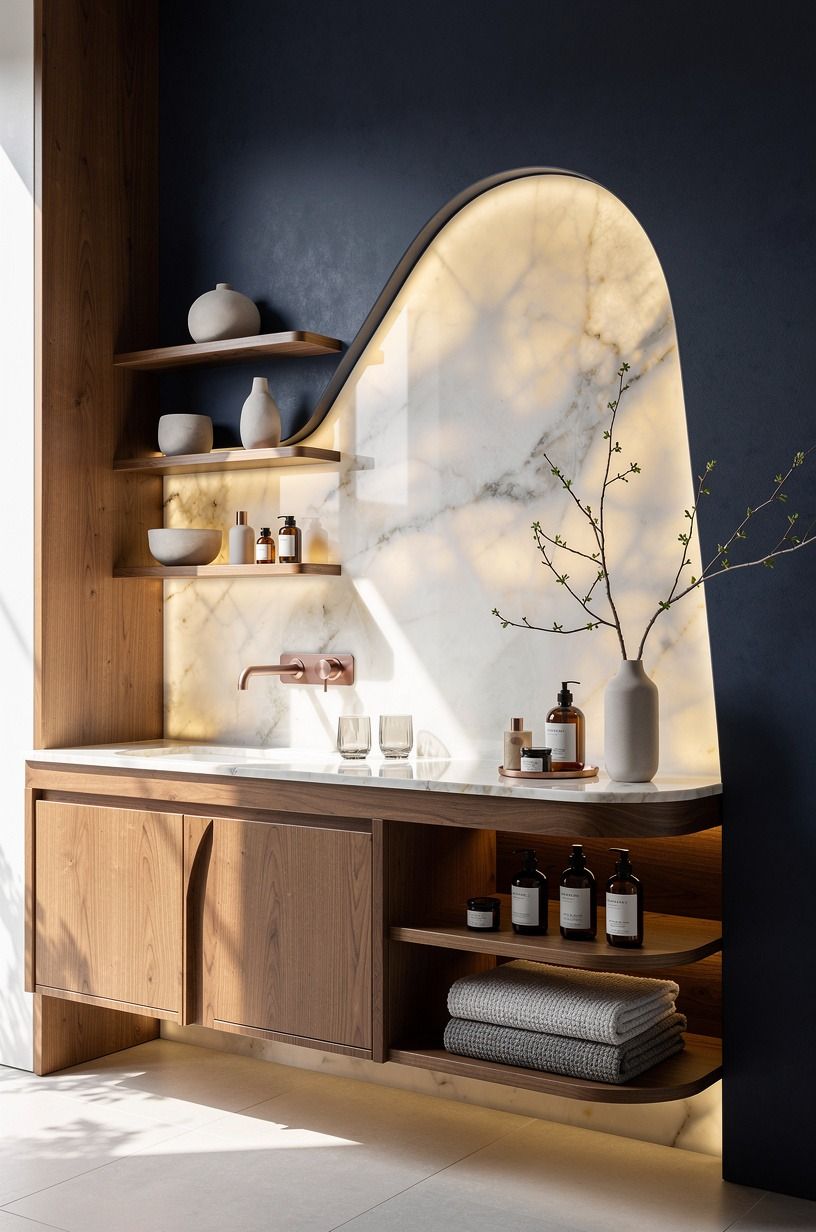
I used two wood tones only: the existing medium oak vanity and a lighter wood accent nearby, then let a backlit translucent onyx surface be the one richer material. You can mix woods, but you need a clear limit or your small room starts looking like a sample board.
The shelf is only 8 inches deep, which means you still have room to sit comfortably and reach the flush plate. On it: a hand-thrown stoneware dish, folded Belgian flax linen hand towels, and one small framed print.
No pile of decor. Your powder room needs breathing room more than it needs another object.
5Hang the mirror lower than you think
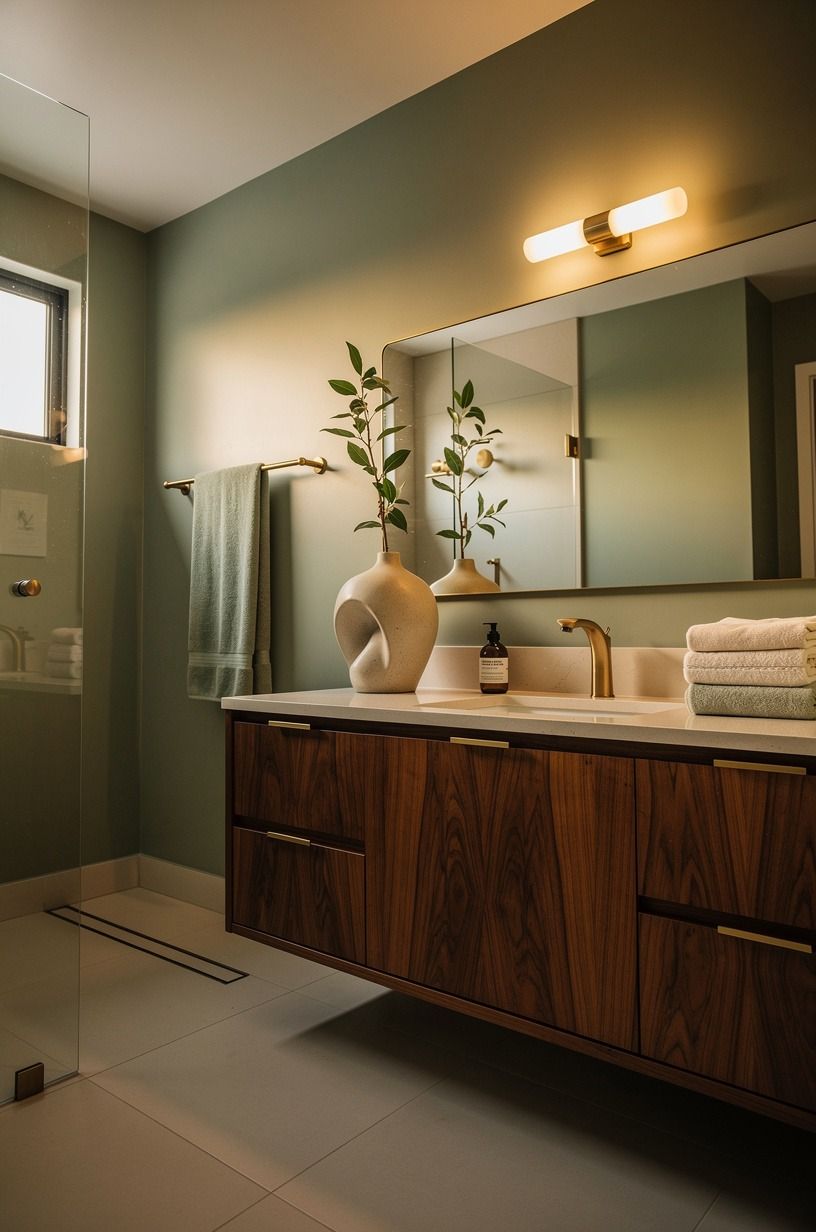
I dropped the mirror by a few inches, and the room instantly looked less like it was assembled by a contractor. When you hang it too high, you create a blank strip of wall that pulls your gaze upward toward the ceiling fixture. Not flattering.
I centered mine so the bottom sat close enough to the faucet that they read as one composition. The book-matched walnut edge gave the sage green and warm cream palette a grounded note.
Small shift. Big payoff!
If you’re learning to judge proportion in compact rooms, these luxury-minded small sitting room ideas make the same point in a larger setting.
6Put one bold material where guests can touch it
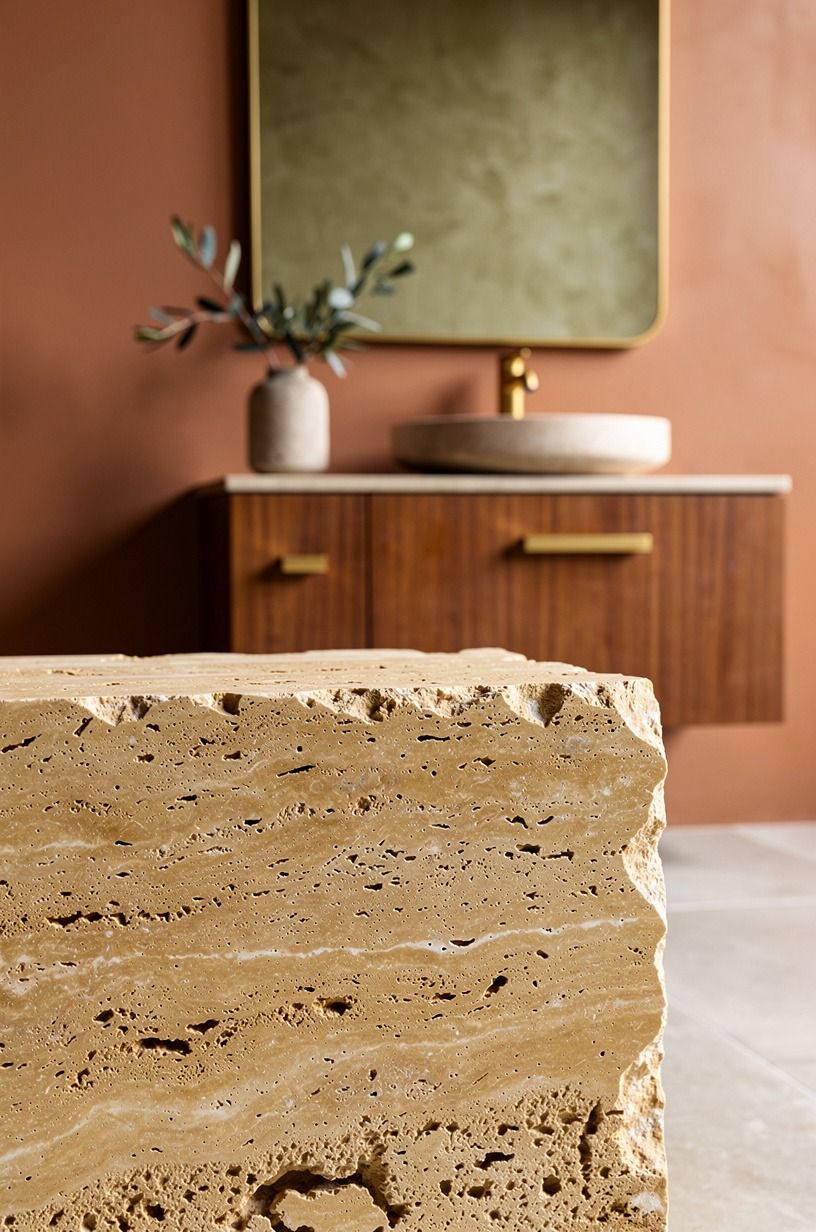
I didn’t tile every wall. That would’ve been expensive, busy, and a little too eager for a powder room with no natural light. Instead, I added a warm travertine panel behind the vanity in terracotta, stone, and olive tones.
Your hand lands near that wall when you reach for soap, so it feels more luxurious than its size suggests. The natural variation gives the room movement. I’d take one tactile surface over six generic upgrades every time, because the room needs a focal point, not a catalog display.
7Why not use a dark guest bathroom color?
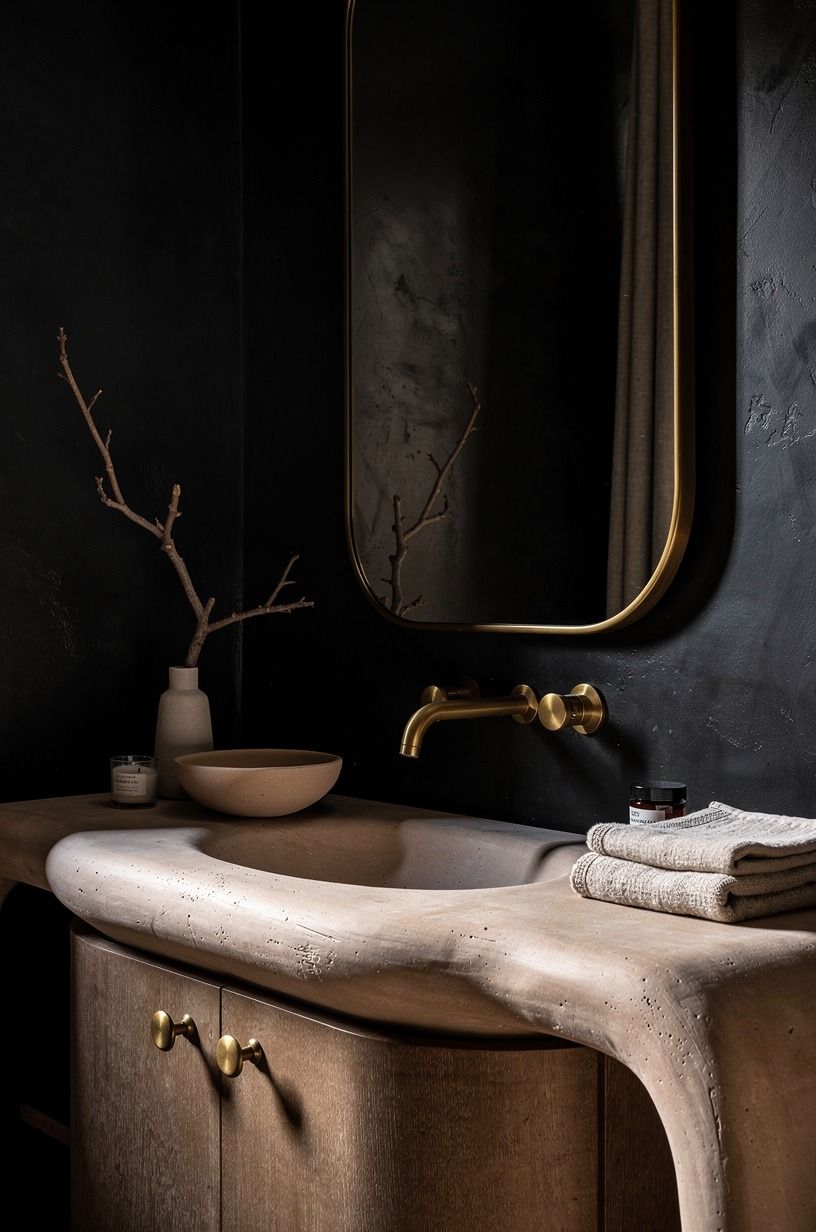
Because darkness isn’t the same thing as drama. You can use a deep clay color, but I’d reserve it for a powder room with excellent mirror lighting and pale fixtures. In mine, it swallowed the corners by 4 p.m. and made the vanity look orange.
Your best move is a mid-tone with warmth, then contrast through aged brass and art. I wanted a calming background, not a cave. The dark sample was gorgeous in isolation, but it lost the argument once I held it beside the linen-toned elements.
8Float storage above the toilet
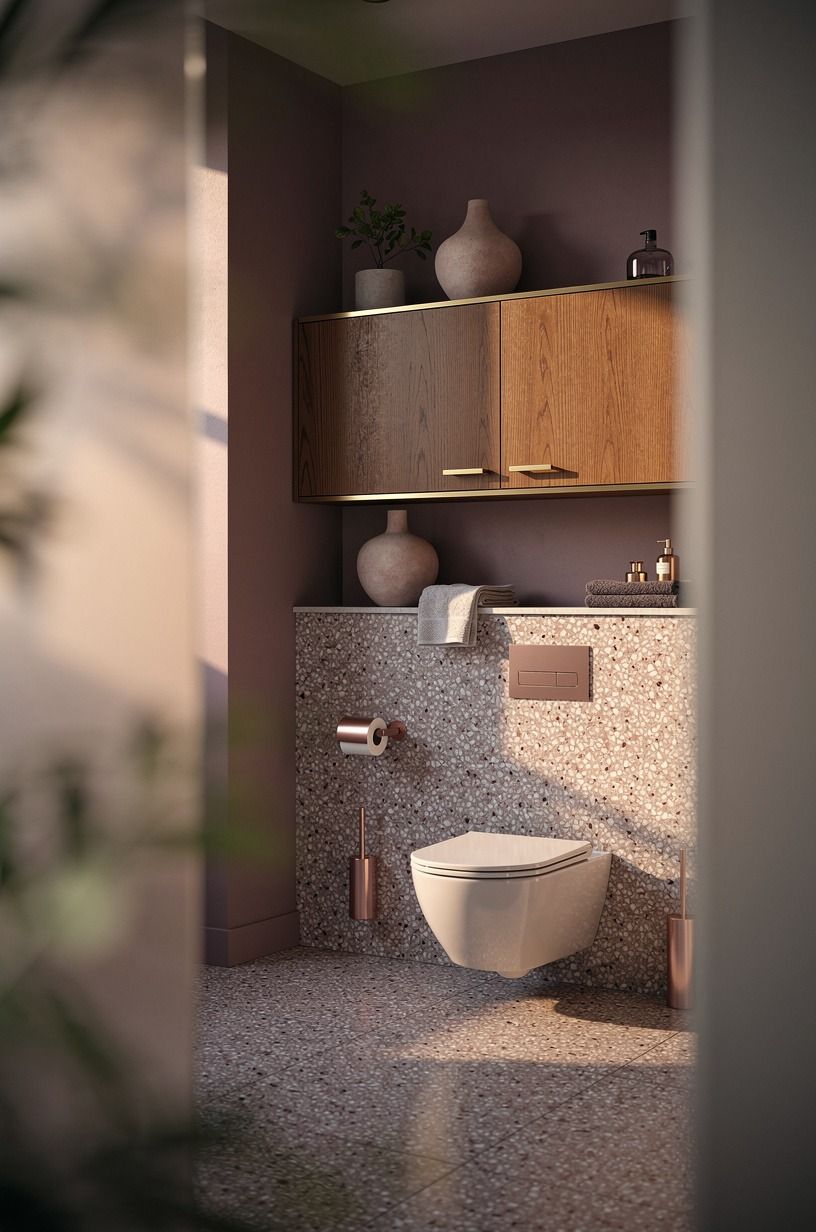
A floor basket would’ve taken up too much of my precious clearance.
9Choose a soap bottle that doesn’t look temporary
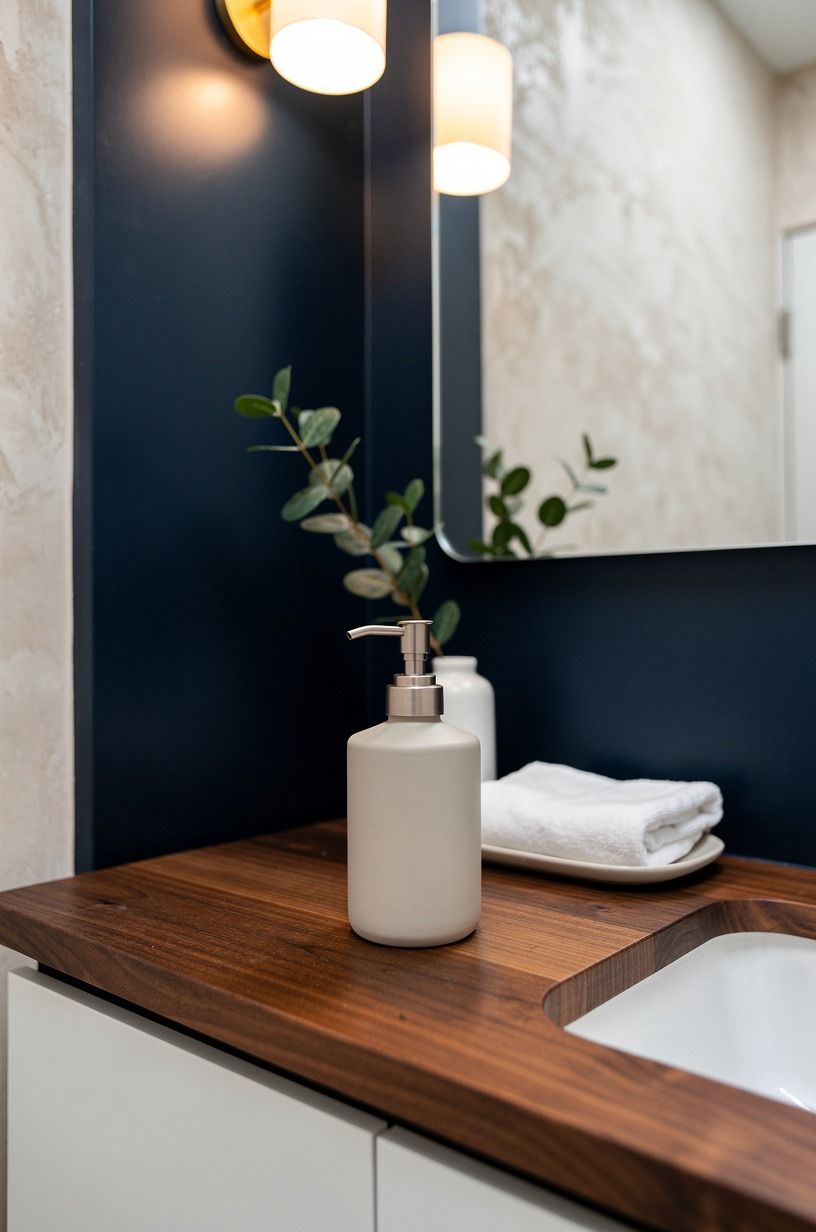
This sounds fussy until you see what a bright orange pump bottle does next to warm paint. I decanted hand soap into a refillable smoked glass dispenser with a brushed metal collar. Your sink area is only a few inches wide, so every item gets a starring role.
I also kept the surrounding finish simple with hand-applied Venetian plaster. It cost less than a dinner out, but it gave the vanity a quiet, tactile texture. But don’t buy matching dispensers, tray, and toothbrush cup as a set.
That matchy look is where expensive rooms go to die.
10Frame art like it belongs in the rest of your house
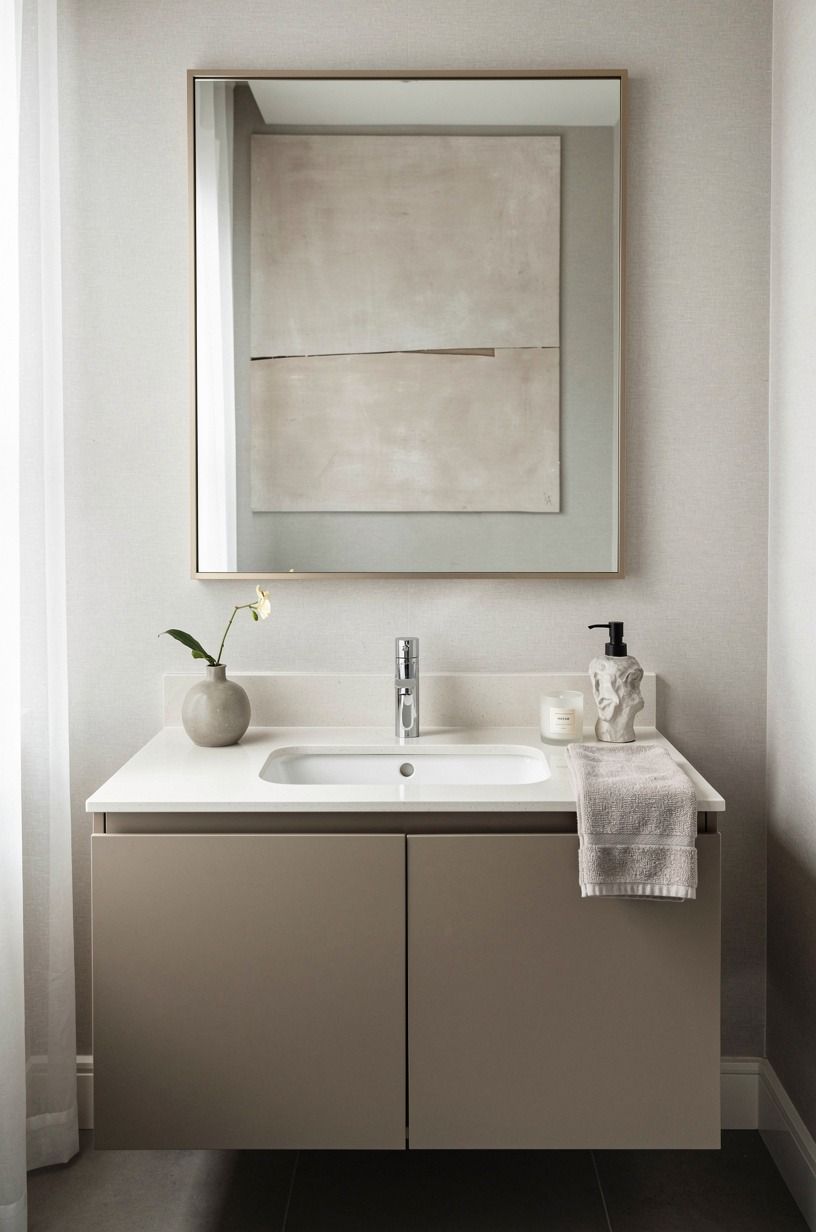
I hung a small botanical print instead of bathroom-themed art. No words about washing hands.
No generic coastal sign. Your powder room should feel connected to the rest of your home, even if it’s the smallest room in it.
The print sits in a shagreen frame with a warm ivory mat, and I chose colors that repeat the emerald, gold, and cream palette. I love a little humor in a bathroom, but the art still needs to look like you chose it on purpose. A room this small can carry one slightly odd, charming piece.
For color confidence, I kept thinking about a tiny room wrapped in red brown. Your walls don’t have to disappear to make a room feel bigger.
11Bring in a textile that softens the echo
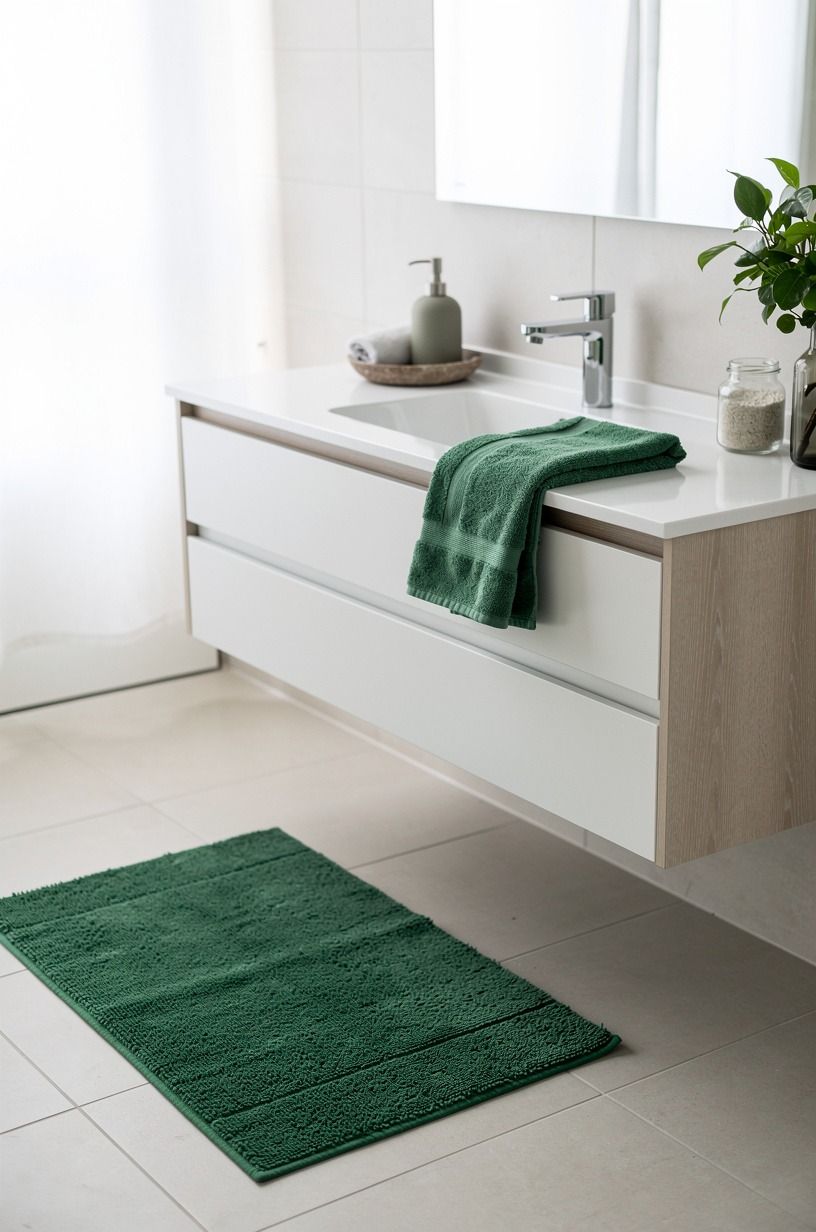
Hard surfaces make a powder room sound and feel cold. I put down a washable washed Belgian linen bath mat in faded rust and natural oak tones. Your feet notice that softness before your brain starts analyzing the paint color.
I’d skip a thick, fluffy white rug. It gets grimy fast, and the bulky shape makes a narrow bathroom feel cramped.
The low-pile mat gave me a gentle landing spot while leaving the floor line visible. Practical, warm, and much less precious.
12Let the faucet do the expensive-looking work
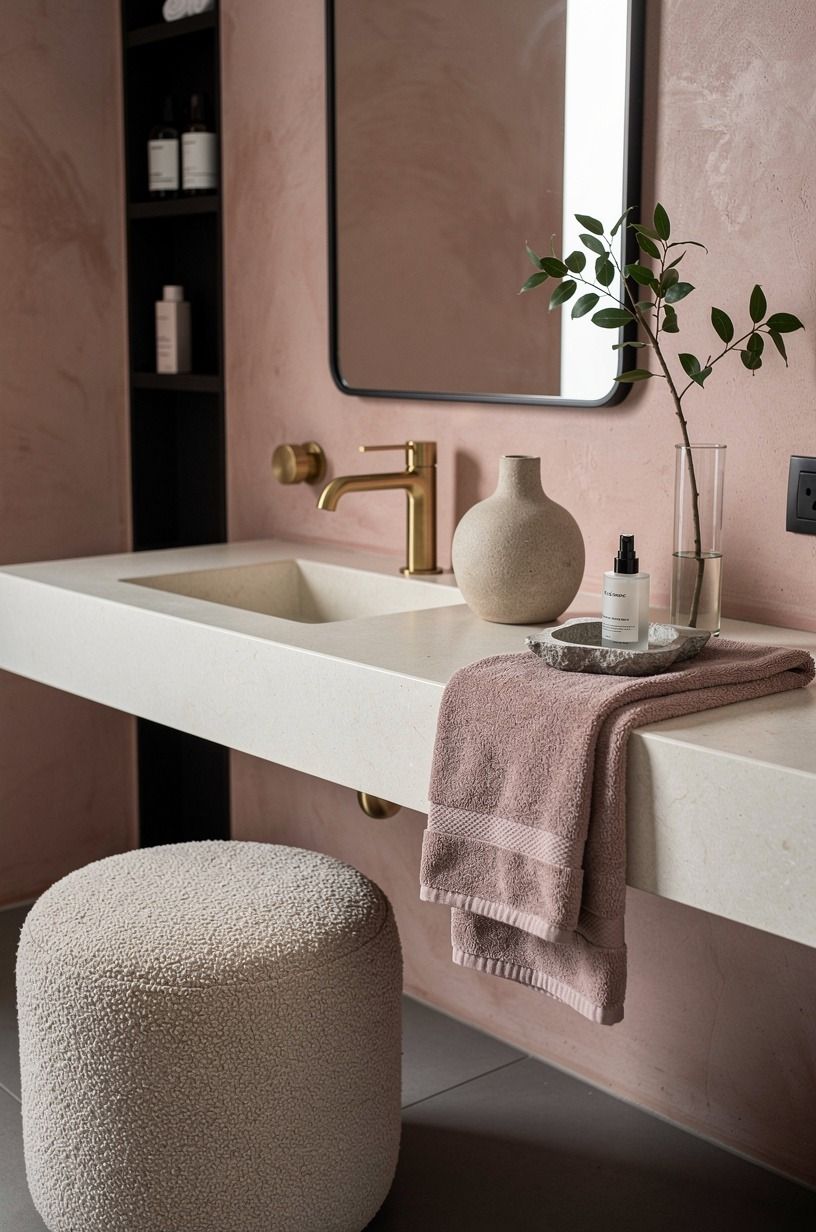
I replaced the chrome faucet with a brushed brass faucet in a simple gooseneck shape. Typical costs run $120 to $450, and I understand why people hesitate. But your faucet is the one item guests use, so it earns more attention than a decorative vase ever will.
The brass changed the room without requiring a new vanity. It looked especially good beside an organic bouclé stool, where the metal read soft rather than flashy.
I’d skip a super-modern square faucet here. Its sharp silhouette fought the mirror curve and made everything feel less harmonious.
13Try the Borrowed Hotel Rule for towels
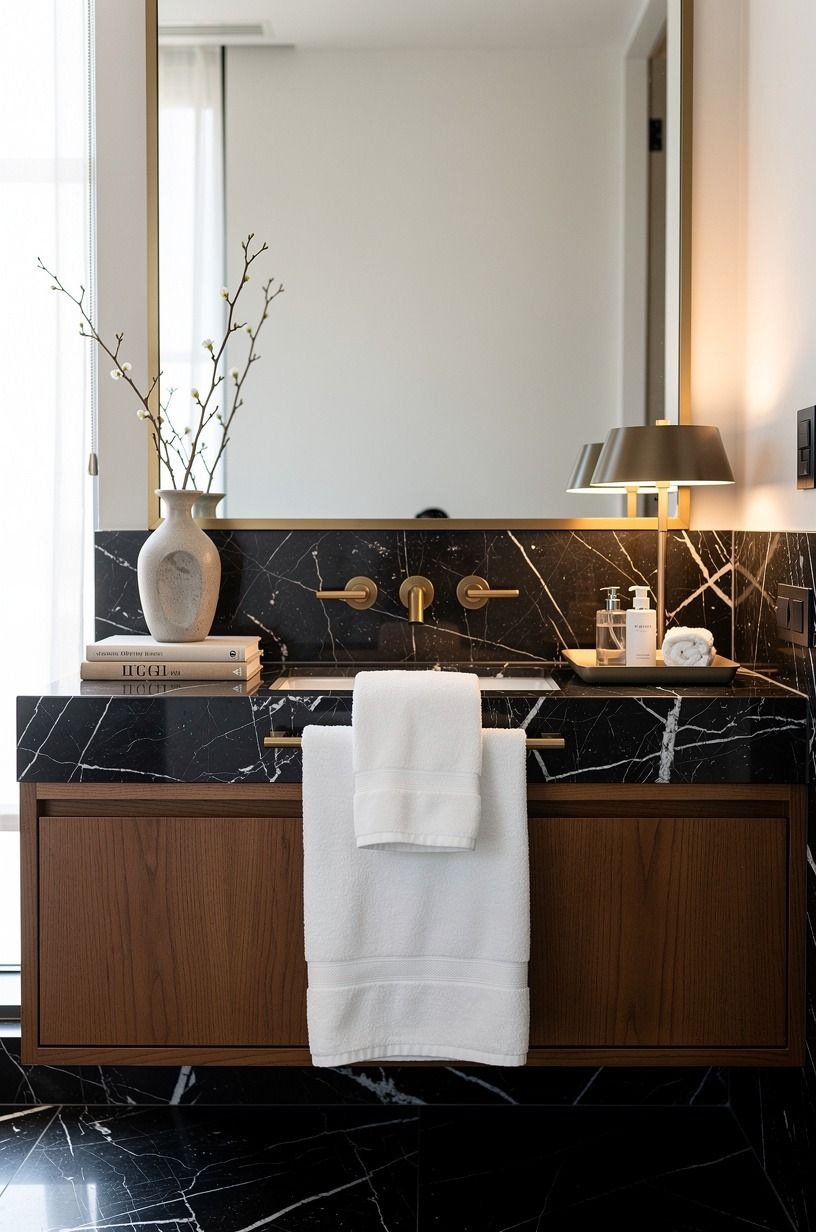
Hotels understand one useful thing: visible towels should look plentiful, even when the room is tiny. I folded two warm-white hand towels on the Nero Marquina black marble shelf and tucked a third inside the vanity. Your guests shouldn’t have to hunt for one.
I chose warm white rather than bright white, because the cream tone held the paint color together. The folded stack made the room feel welcoming without adding clutter. A little bit of abundance, but controlled.
That’s the borrowed hotel rule.
14Use a removable wall treatment behind the door
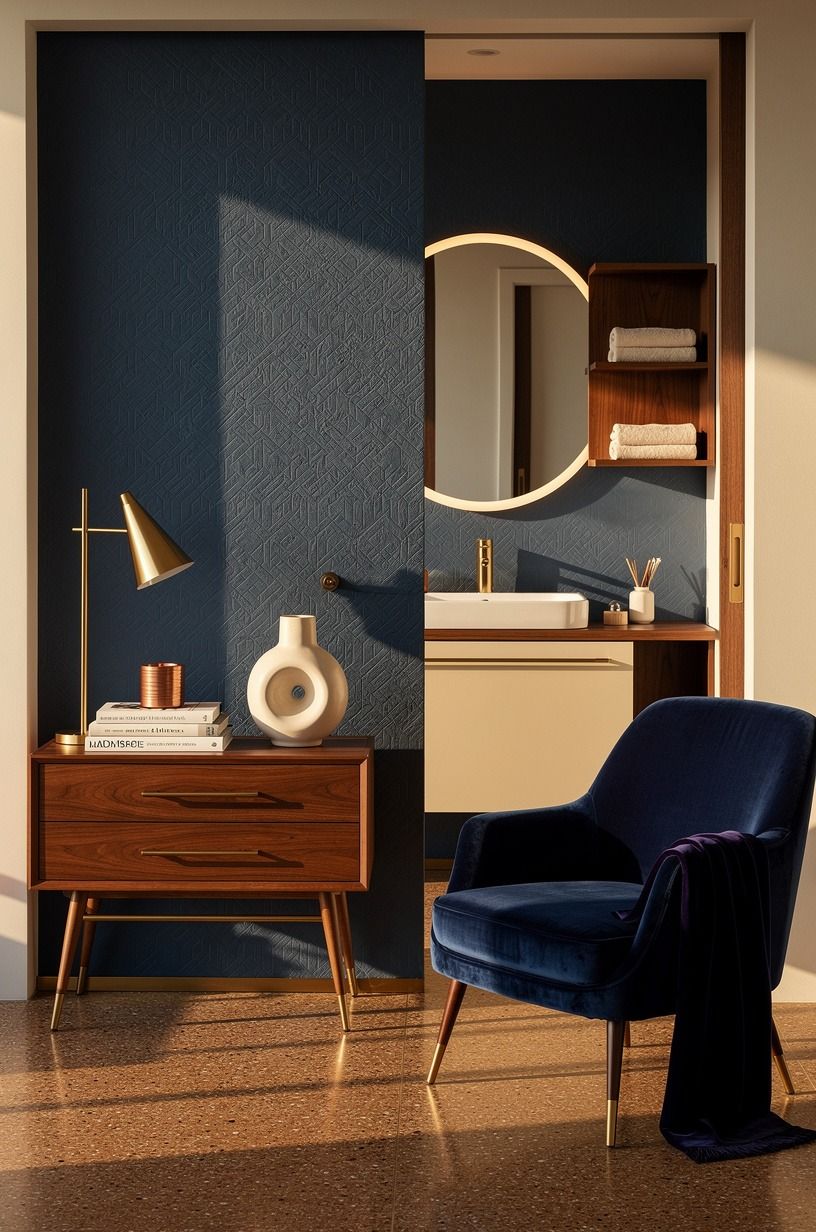
The wall behind my door was doing nothing, which bothered me for months. I added a narrow removable panel of deep-pile mohair velvet in a soft midnight blue. When the door closes, your eye gets one extra layer of texture instead of a blank wall.
It was renter-friendly, but I still tested a corner first (always do this with paint and wallpaper). The soft pile made the room feel intimate, not dark. I’d avoid a busy floral in this exact spot because the door breaks the pattern every time it opens.
15Edit the counter until it feels deliberate
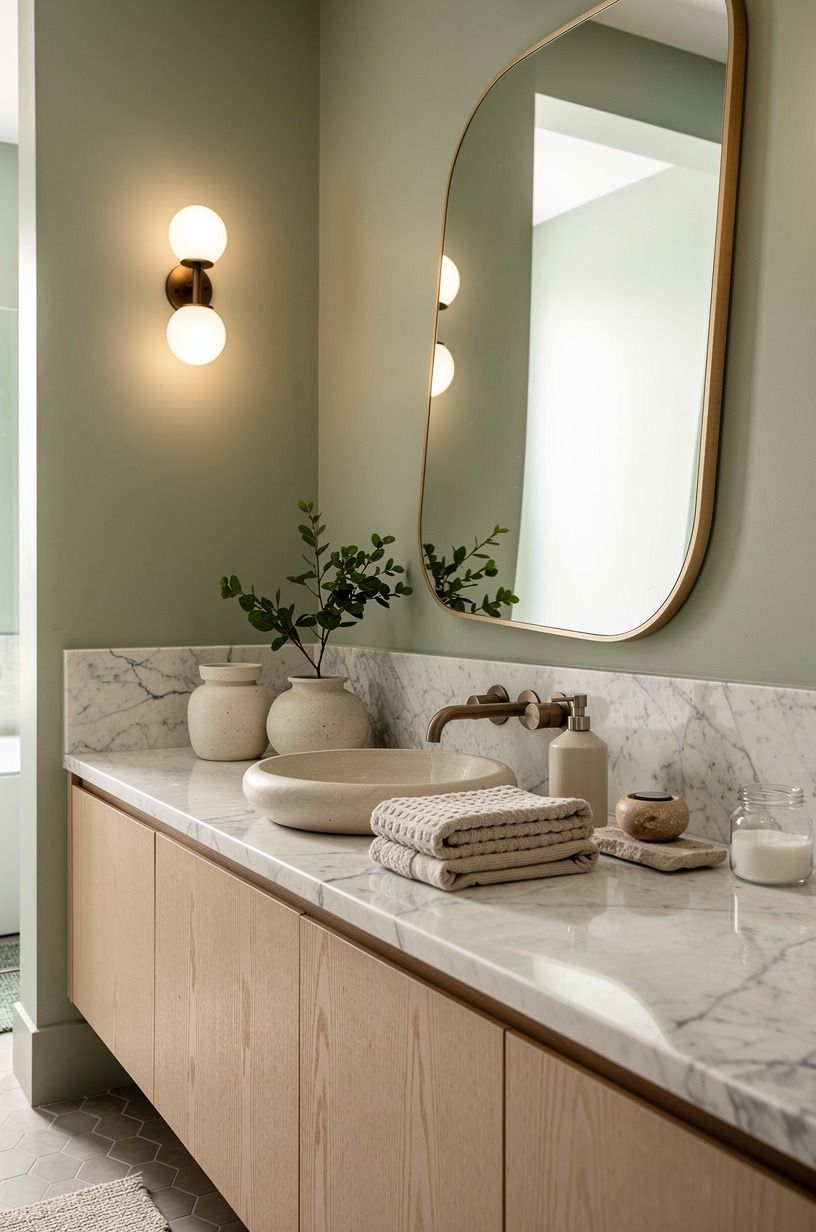
My biggest mistake was trying to decorate every empty inch of vanity top.
How much it cost
My cosmetic version landed near the budget end of a typical US bathroom refresh. I spent on the faucet and lighting, then reused the vanity and toilet. If you’re planning a deeper project, these ranges are useful reality checks.
I didn’t need a new vanity, but you might. A standard vanity height is 32 to 36 inches, and changing one can affect plumbing, mirror placement, and your whole budget. The part I’d protect is lighting.
You can layer warmth over an old vanity; you can’t make a bad ceiling bulb flattering by buying prettier soap.
The decision I’d make again
I used to think windowless bathrooms needed to impersonate daylight. White walls, bright bulbs, lots of shiny chrome.
It’s a reasonable instinct, but it’s also why so many powder rooms feel like waiting rooms. A room without windows has a different opportunity: you get to control the mood all day.
No sun angle will expose a color you only liked in a sample card. No harsh afternoon light will flatten the textures you paid for.
I learned that after painting this room twice. The first color was a pale gray that looked clean in the store and completely defeated at home.
It turned lavender under the overhead bulb, then green near the vanity. I hated it, and I lived with it longer than I should have because repainting felt like admitting defeat.
It wasn’t defeat. It was information.
The second time, I picked warmth on purpose. Farrow & Ball Studio Green isn’t trying to be neutral in the timid sense.
It has enough body to make white porcelain look crisp, enough depth to flatter brass, and enough softness that you don’t feel trapped in a yellow box. Your room may need a different shade, but I’d still choose a color that does something after dark.
And this is the larger point: expensive-looking rooms aren’t necessarily full of expensive objects. They’re edited.
They repeat a few materials. They treat light as part of the furniture. You can feel when someone has made decisions instead of simply buying upgrades.
That’s what I wanted here. A tiny, soothing room that feels like it knows exactly what it is.
The Questions Worth Answering First
What is the best way to make a windowless powder room feel bright and expensive for a small bathroom?
The best combination is warm paint, a framed mirror, and layered lighting. Your room will feel brighter at face level when a picture light or sconce softens the shadows that an overhead fixture creates.
– Farrow & Ball Studio Green – Arch-top oak mirror – Brushed brass picture light
Where can I buy windowless half bathroom ideas on a budget?
Start with IKEA, Target’s Threshold line, and Wayfair for mirrors, towels, and small storage. You can also find solid wood frames and old brass accessories on Facebook Marketplace, where your patience usually matters more than your budget.
– IKEA HEMNES mirror – Target Threshold towels – Facebook Marketplace frames
How much does a powder room no window makeover cost?
A cosmetic update usually costs about $200 to $1,200 when you keep the vanity and plumbing. Paint, decluttering, and rearranging what you own are free, while a new faucet or mirror is where your budget starts to move.
Can I create dark guest bathroom ideas on a budget?
Yes, and you don’t need to replace the tile. Your cheapest wins are warm paint, a better bulb, and a clear counter. You can make the room feel inviting with a thrifted frame, folded towels, and one refillable soap bottle.
Is a bright, expensive-looking powder room worth it in a small space?
Yes, because a small room lets every upgrade have more impact. Your mirror, faucet, and paint cover very little area, so you can choose materials that feel more refined without furnishing an entire room.
Are powder room over toilet ideas good for a rental?
Yes, if you keep them removable. Your best options are peel-and-stick wallpaper, a tension-mounted shelf, and a plug-in picture light. You’ll get texture and storage without drilling into every wall or changing permanent fixtures.
Where I’d Start First
If I had to pick one, I’d start with the wall color. You can’t layer warmth over a gray room that turns sickly under a ceiling bulb.
Paint changes the reflection on every surface. Pin this for later, then test your color after dark.