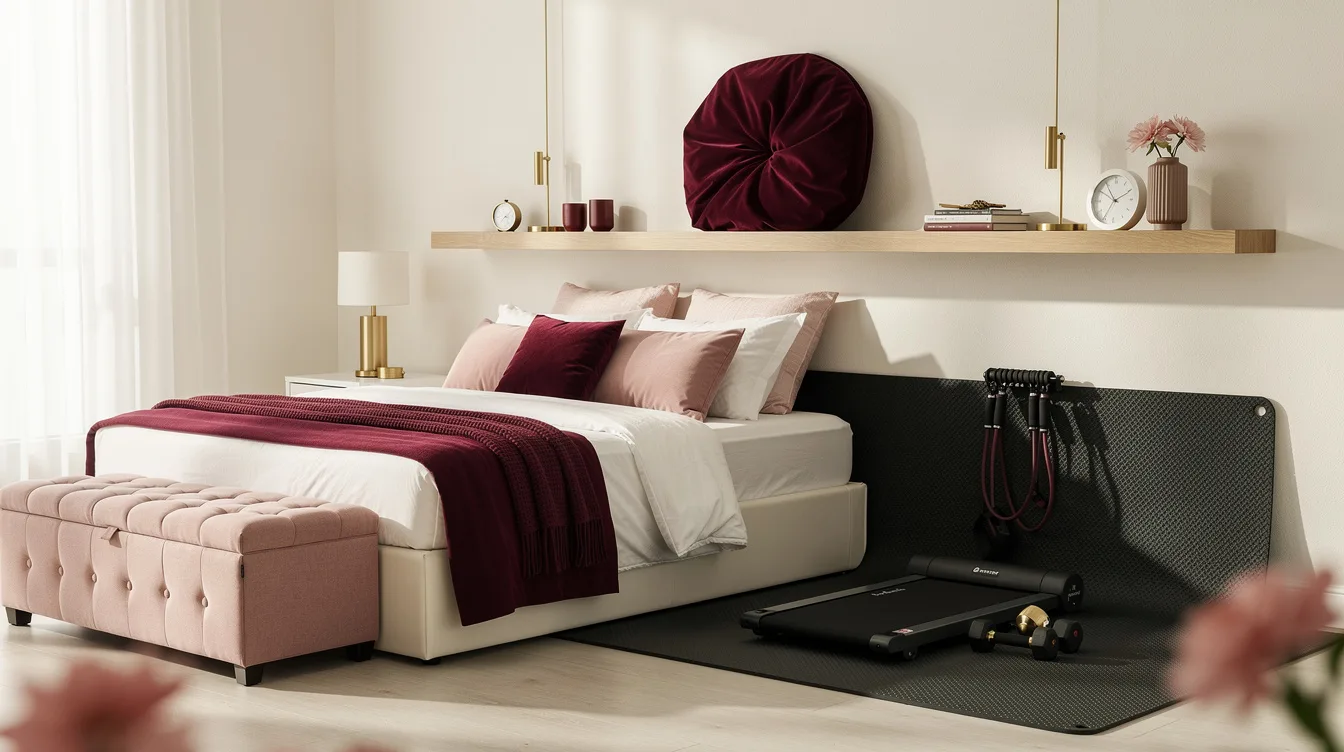
A fitness setup beside a 54-inch bed can feel like a private hotel amenity, or like the last thing you see before sleep. The difference usually comes down to giving it a roughly 4-to-6-foot-wide fitness bay, instead of forcing a full rack-and-bench setup into a sleeping space.
I’m firmly against equipment that stays visually “on” all day. A bedroom-adjacent workout area should close up, soften sound, and leave the room feeling restful after the last set.
Claim One Wall With Intention
Let the gym occupy one deliberate wall, ideally a blank wall or the wall opposite the bed. A roughly 1.2-to-1.8-meter bay creates a boundary that reads as architecture, while equipment scattered around the room reads as unfinished business.
Mount a slim oak shelf above the equipment for headphones, a towel, charging cable, and water. Keep the shelf shallow enough that it looks like bedroom storage, not a locker-room ledge.
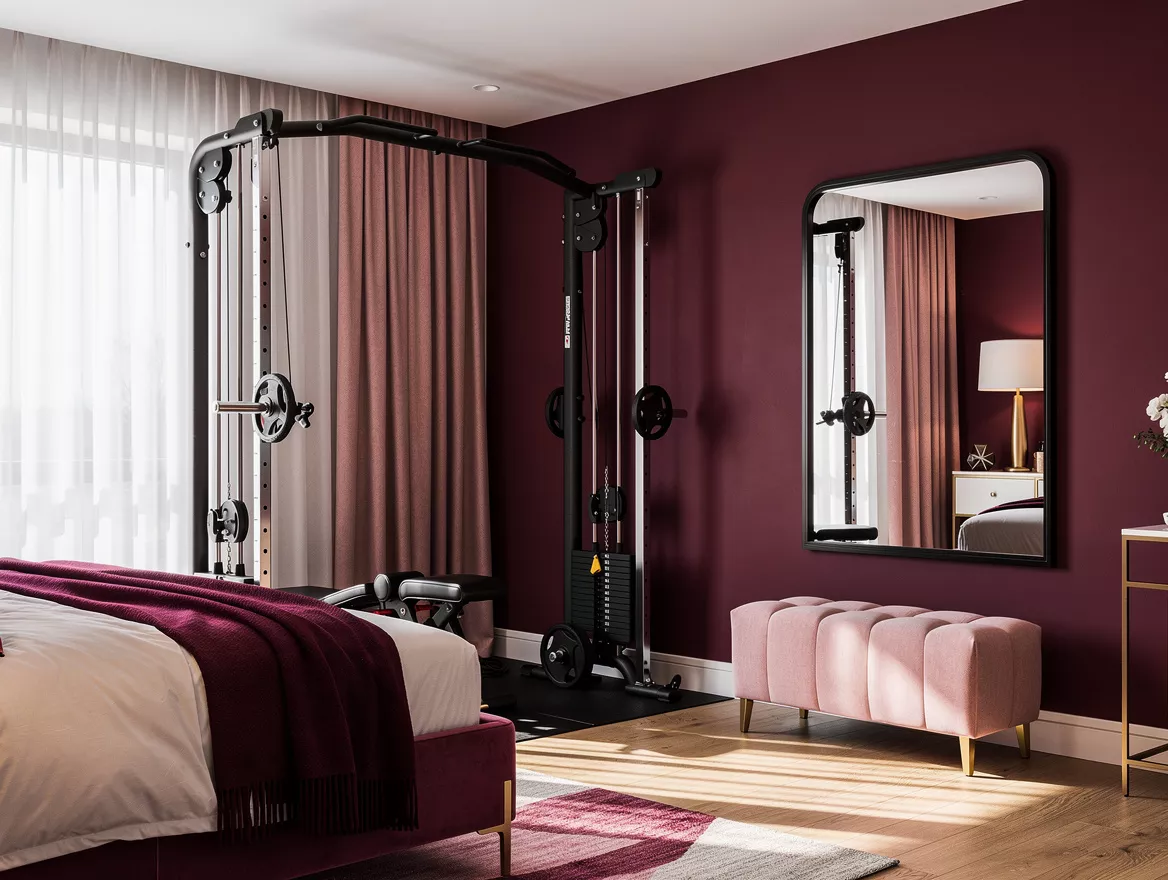
Skip the temptation to place a machine directly beside the headboard. Even a polished black-framed mirror feels active at bedtime when it reflects cables, handles, and a workout mat from the pillow.
Choose Equipment That Folds Away
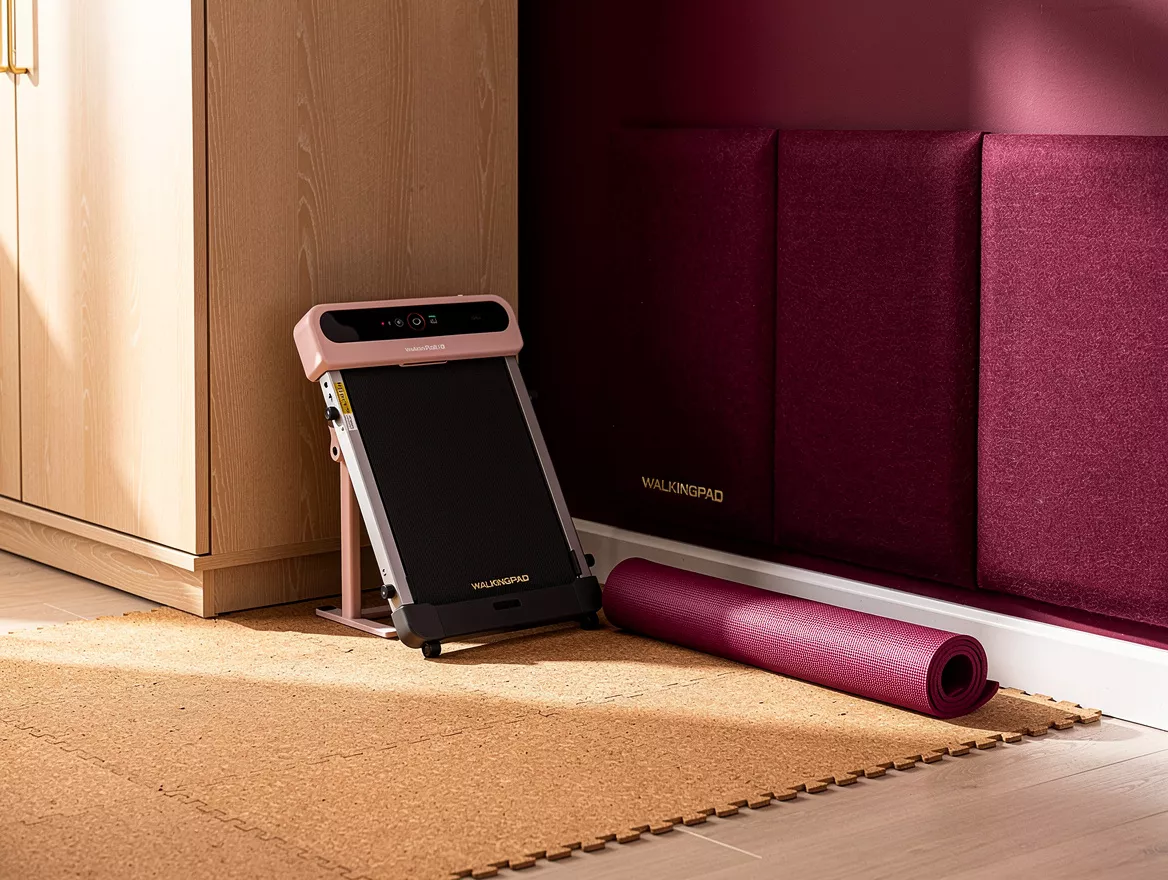
A foldable walking pad earns its footprint because it disappears after use. The WalkingPad R2, typically listed around $599 on sale, opens to about 57 by 28 by 40.5 inches and folds to roughly 39 by 28 by 6 inches.
That slim folded shape can tuck beside a wardrobe, under a low bed, or behind a door with enough clearance. Its approximately 47-by-17-inch belt suits daily walks and light jogging, which is exactly the pace most primary-bedroom layouts can support gracefully.
For a more substantial runner, the WalkingPad X21 is typically around $799 on sale and stores at about 39.6 by 27.9 by 8.8 inches. I’d only choose it when the room has a clear wall, because squeezing it between furniture defeats the calm, furniture-like effect.
Measure the Open Workout Zone First
Stored dimensions are only half the story. Mark the deployed zone with painter’s tape before buying anything, then make sure the route around the bed still works without sidestepping a machine.
A walking-pad bay generally needs around 1.5-to-1.7 meters when open, while a compact strength corner needs roughly 1.2 by 1.8 meters of clear floor. That empty floor is not wasted space, it is what keeps the bedroom usable when nobody is training.
The Vitruvian Trainer+ can make sense for resistance work because its platform is about 140 by 53 centimeters. At roughly $2,490-to-$2,990 before extras, it is a serious purchase, so it needs a real working rectangle rather than a narrow strip beside a dresser.
Build a Quiet Floor Under Every Machine
Bedroom walls carry vibration more than people expect, especially in apartments or homes with a nursery nearby. Put cardio equipment on a dense 6-to-8-millimeter rubber mat, sized roughly 90 by 180 centimeters for a compact walking-pad setup.
Wall-to-wall carpet is not a substitute for a protective layer. A dense cork-rubber mat is easier to wipe clean, keeps feet steadier, and helps reduce the faint but irritating hum that can travel through a floor.
Protect the wall as carefully as the floor. A simple felt furniture pad behind a stored walking pad prevents scuffs and stops a folded frame from tapping drywall whenever someone reaches into the closet.
Make Storage Look Like Bedroom Furniture
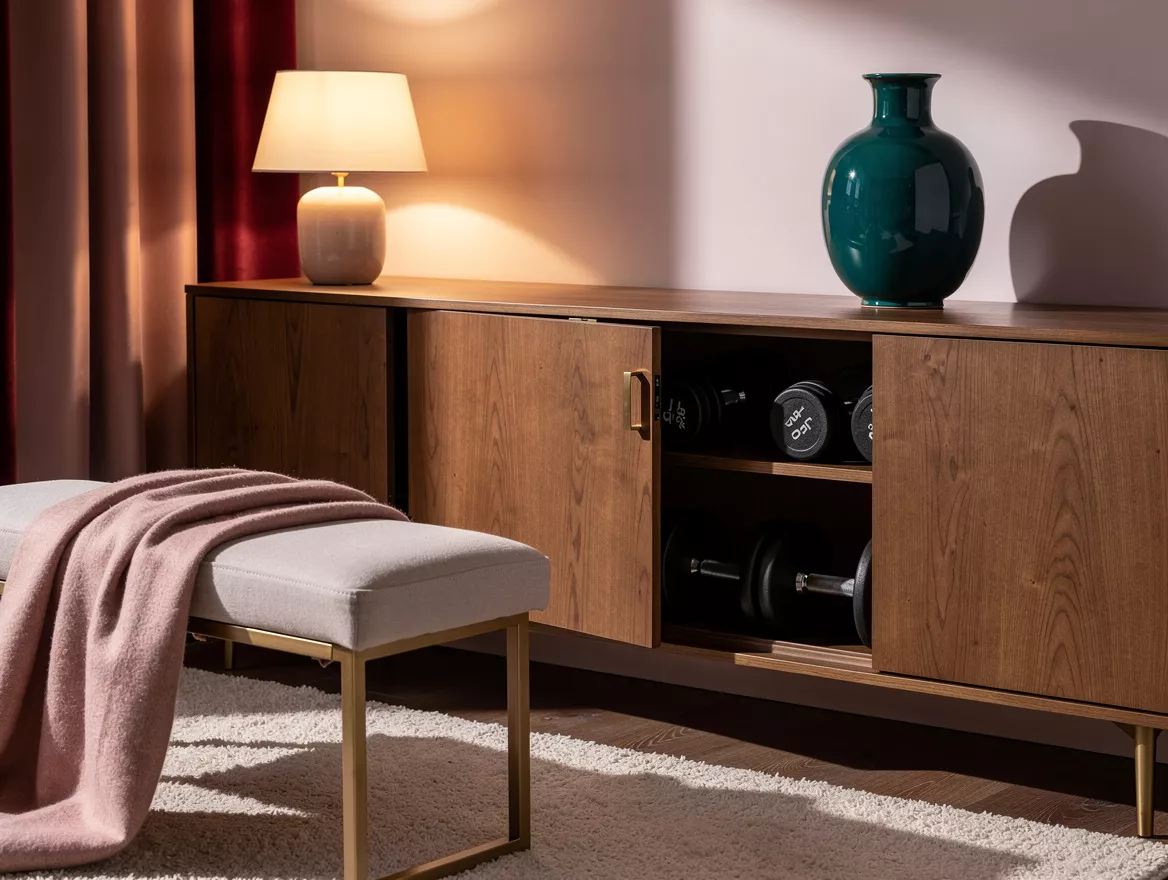
Visible accessories are where a compact gym usually loses the room. Put bands, sliders, and a mat inside an upholstered storage bench, then let the bench work as a spot to sit while dressing or putting on shoes.
A small set of adjustable dumbbells belongs in a lidded cabinet or low console, never perched on the floor beside the bed. The typical $400-to-$1,500 hotel-gym corner works because every hard-edged item has a place to disappear.
Use one material language throughout: warm wood, black metal, or a light upholstered finish. Mixing chrome plates, plastic bins, and a rustic basket gives the area the temporary look designers tend to avoid.
Treat Digital Strength Gear Like a Screen
A wall-mounted cable trainer is the cleanest high-budget answer when the fitness bay must blend into the room. The Tonal 2 has a footprint of about 50.9 inches high, 21.5 inches wide, and 5.25 inches deep, so it resembles a dark screen more than a conventional gym station.
Its typical machine price is around $4,295, with about $59.95 monthly membership costs plus installation and accessories to consider. Put it away from the headboard when possible, because the cable movement and screen glow belong across the room, not beside sleep.
Give it a roughly 2-by-2-meter clear training area and keep that space genuinely open. A flatweave wool rug can sit beyond the exercise zone, but don’t let bedroom rugs creep beneath moving cables or your stance.
Start by taping off the open workout area beside the bedroom wall tonight. If the room still has a clear path around the bed and a place for every accessory to close away, the gym has earned its place.
Mia Carter writes about small-space living and budget home makeovers. She has restyled three rentals and tests most ideas in her own 45 sqm flat.