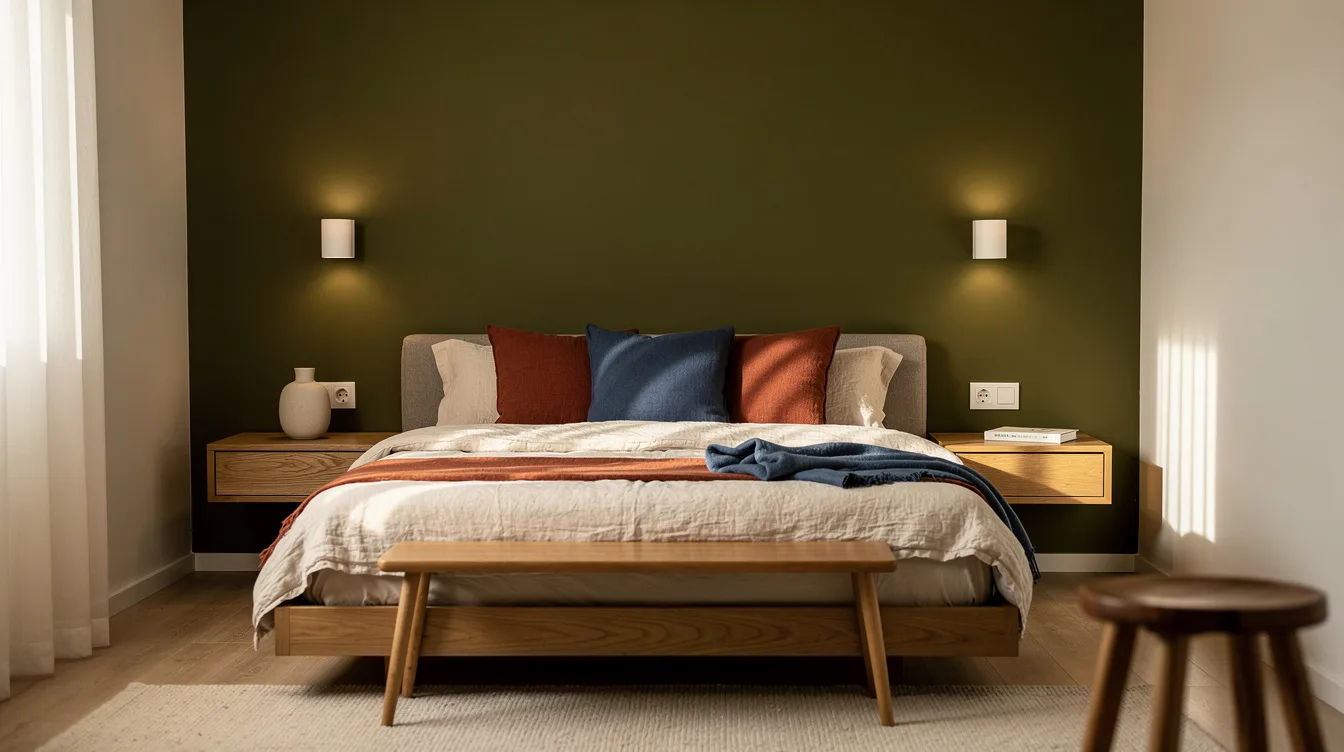
A small bedroom of roughly 8 to 12 square meters can feel deliberately designed when the bed wall does all the visual work. The other three walls should stay light, quiet, and low-contrast, leaving the bed as the room’s clear anchor.
The choice comes down to four practical routes: deep paint, mural-scale wallpaper, narrow vertical slats, or an upholstered headboard zone. Each adds character without stealing circulation from a room that may already hold a 140- or 160-centimeter bed.
The smartest version is restrained at the edges and confident at the center. Start with the wall behind the headboard, then make every other decision support it.
Anchor the Bed on One Bold Surface
The wall behind the headboard is the safest place for drama because it creates a focal point without interrupting circulation. In a room roughly 2.6 to 3.2 meters wide, keep the statement surface limited to the bed zone.
A deep painted wall works especially well behind an IKEA NORDLI bed because its low profile keeps the color block visible. Olive, blue-gray, tobacco, aubergine, clay, forest green, and warm cocoa all bring weight without requiring bulky furniture.
A typical DIY paint project may cost about $45 to $110, depending on the surface and supplies. That makes paint the strongest first move when the room needs personality but the budget needs discipline.
Keep the Other Three Walls Quiet
The three surrounding walls should support the feature wall with warm off-white, pale beige, putty, light greige, or a muted version of the accent color. High contrast on every surface makes a small room feel busy before you add a single accessory.
Use a soft matte finish from Home Depot on the quiet walls so daylight spreads gently instead of bouncing in sharp patches. The ceiling should stay close to the wall color, which gives the room a calmer visual ceiling line.
Skip competing gallery walls, dark trim, and oversized art beside the bed. One strong backdrop has more authority than several medium-strength decorating gestures.
Build a Painted Headboard Block
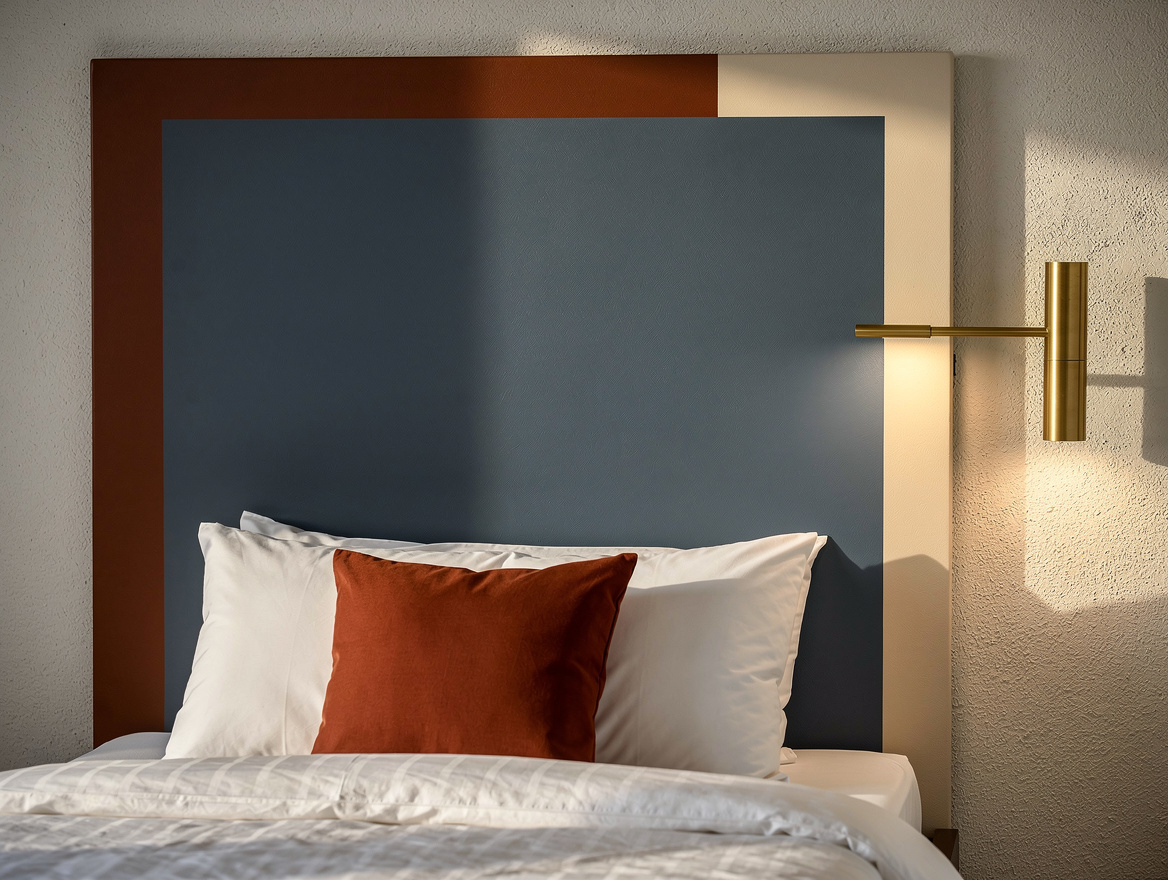
A full accent wall is easy, but a painted headboard block can give a narrower room a cleaner proportion. Make the block about 20 to 30 centimeters wider than the bed on each side, so it feels intentional rather than accidentally undersized.
For a 140-centimeter bed, a block around 180 to 200 centimeters wide works well; for a 160-centimeter bed, aim for about 200 to 220 centimeters. Carry the color from floor to ceiling for a crisp graphic effect, or stop it about 120 to 140 centimeters above the floor for a classic headboard shape.
Keep slim shelves or wall-mounted reading lights inside the same color zone. A pair of narrow Target wall sconces can replace bulky bedside lamps and préservé every useful inch beside the mattress.
Choose Vertical Texture With Restraint
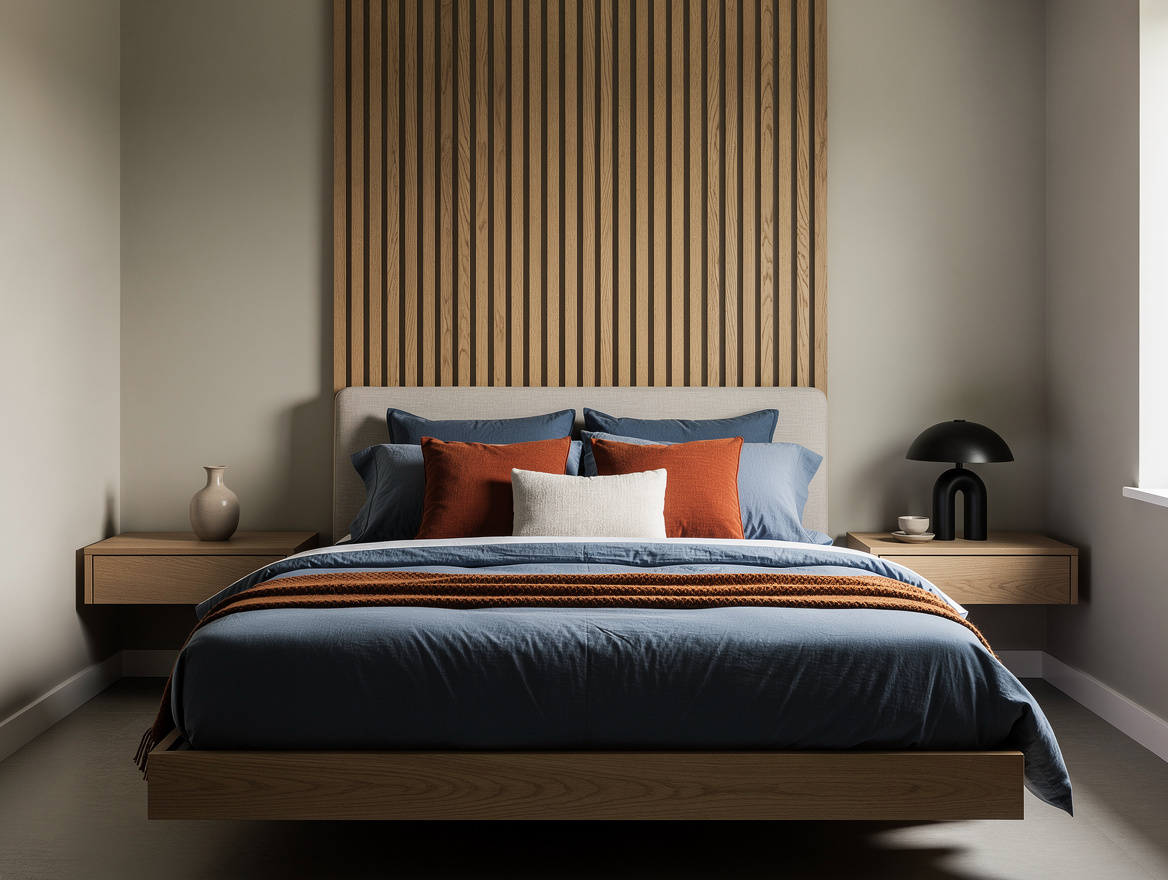
Vertical slats add warmth and make the bed wall appear taller, but full-room cladding is too heavy for most small bedrooms. Limit the treatment to a strip about 160 to 240 centimeters wide and keep the depth minimal.
Oak veneer, MDF slats, or a PET panel from Lowe’s can create a boutique-hotel feeling without consuming much floor space. Choose a natural wood tone that repeats once in the room, then let the remaining furniture stay simple.
Install the slats vertically from floor to ceiling when the ceiling feels low. Stop them at the headboard height only when you want the wall to read as furniture rather than architecture.
Wrap the Bed in a Mural-Scale Pattern
Wallpaper gives the strongest decorative impact while taking up no floor space. Choose a mural-sized non-woven design that matches the wall dimensions, with common formats around 159 by 280 centimeters, 350 by 250 centimeters, or 400 by 280 centimeters.
A quiet botanical, aged plaster, or low-contrast geometric pattern from Wayfair works better than a tiny repeated print. Small patterns can look restless at close range, while a broad image gives the bed wall a clear visual destination.
A typical wallpaper project may run about $45 to $140 with adhesive and basic tools. Measure the wall before ordering, especially if the design has a fixed horizon, oversized branches, or a centered motif.
Mount Light Where Tables Stay Slim
Small bedrooms often lose their breathing room beside the bed, so lighting should move onto the wall whenever possible. Mount matching fixtures on each side of the headboard and leave the nightstands free for a book, water glass, or small tray.
A pair of brushed brass or black Amazon plug-in sconces can work in a rental, while hardwired fixtures create a cleaner result in a permanent home. Hide cords in a paint-matched raceway if the outlet sits below the bed height.
Choose a low or visually light bedframe that is no wider than necessary. The statement wall should frame the mattress, not disappear behind an oversized headboard and crowded nightstands.
Repeat One Tone Through Soft Layers
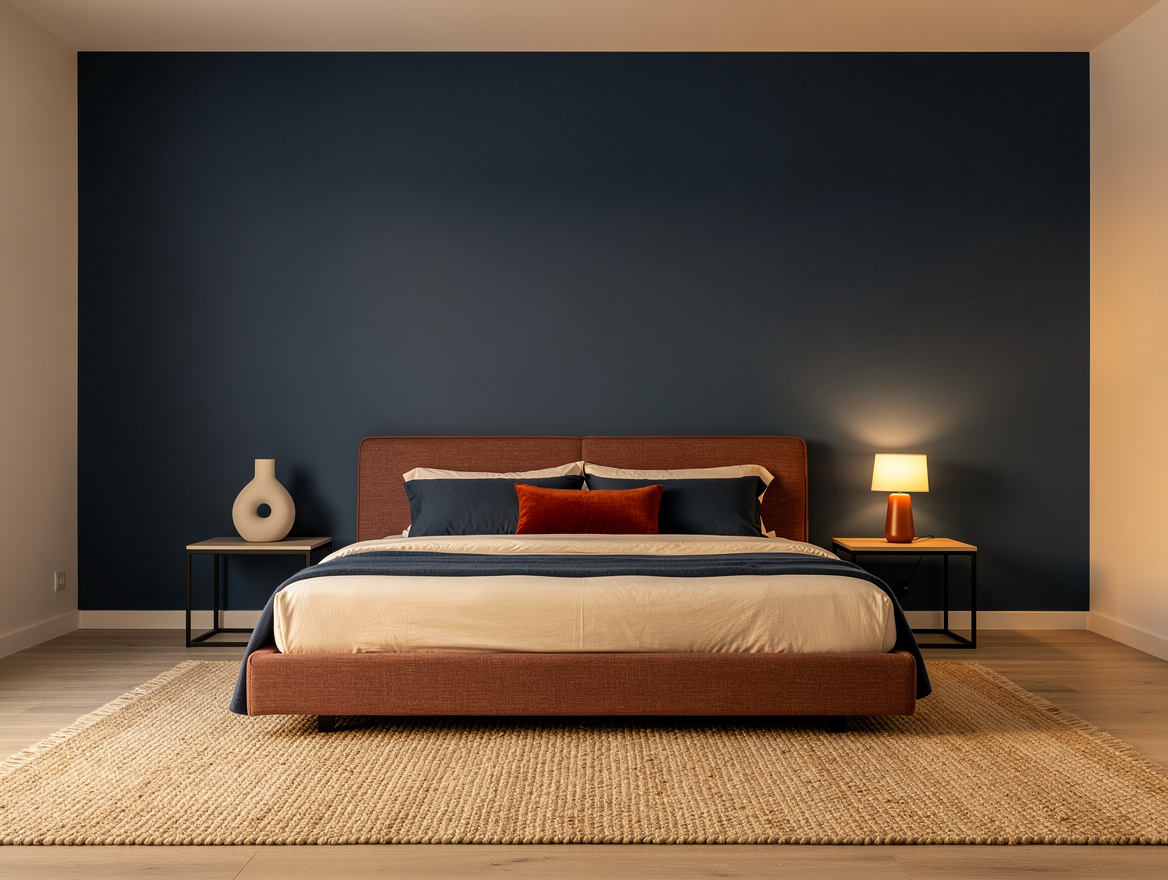
The statement wall should appear again in small, useful details rather than in a second feature surface. Repeat its color in a cushion, throw, ceramic lamp base, or narrow piece of art.
Use breathable linen-look bedding in cream, oat, or warm white to soften a saturated wall. A textured throw from Walmart can add contrast without introducing another dominant hue.
Keep the floor visually quiet with a small woven rug placed partly under the bed. The result should feel collected over time, while every major line still points back to the bed wall.
Begin with the bed wall and test one large paint sample beside the natural and artificial light. Once that color feels right, keep the bed low, the lighting narrow, and the remaining walls quiet.
That order protects the room’s open feeling while giving the statement surface enough presence to look deliberate.
Mia Carter writes about small-space living and budget home makeovers. She has restyled three rentals and tests most ideas in her own 45 sqm flat.