Jim Thorpe, Pennsylvania, carries the name of a 1912 Olympic champion who never lived here or even visited. His mausoleum sits in town anyway, which gives this compact Carbon County destination an unusual, slightly uneasy pull.
The story is stranger than a standard hometown tribute. The athlete won two Olympic gold medals in 1912, then his remains came here after his 1953 death through an agreement with his widow. You’ll find the memorial, but not a lived-in connection.
That disconnect is the point. Jim Thorpe is a town built around its own history, from coal to rail, yet its most famous name arrived after the man himself was gone.
A town renamed for an athlete
Before the current name, this place was Mauch Chunk, founded in 1818 around anthracite coal and its transport. Later, Mauch Chunk and East Mauch Chunk merged and adopted Jim Thorpe’s name. The past still clings to the streets.
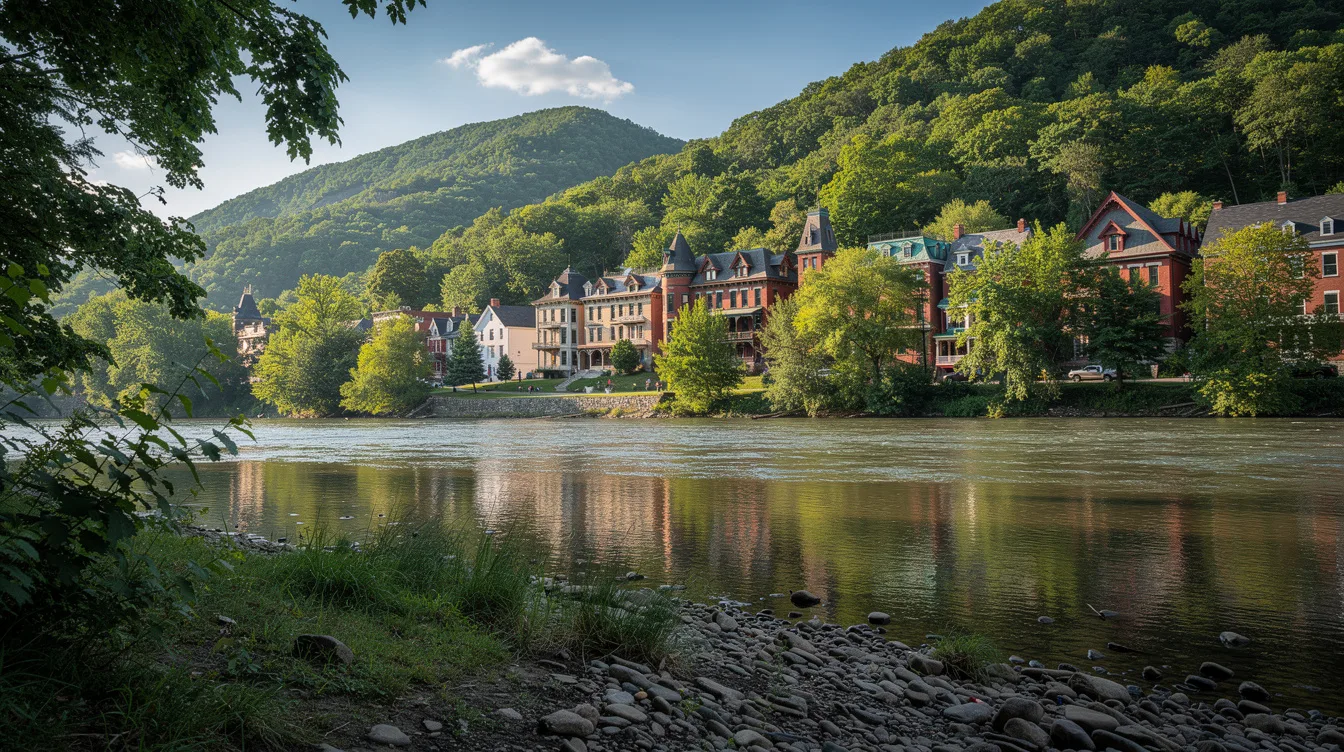
And the setting explains why people stop. The town sits in the Pocono Mountains beside the Lehigh River, with wooded slopes pressing close to the old center. It feels theatrical, but the terrain also makes walking more work than visitors may expect.
You can spend a morning looking at Victorian buildings, then notice the rail lines and steep grades that made this a working town first. It’s historic, but it doesn’t feel frozen behind velvet ropes.
Its 2020 population was 4,507 residents, so the center has a small-town scale even when weekend visitors arrive. That intimacy is appealing. But it also means October crowds can quickly fill the streets and lodging.
The mausoleum is the essential detour
Start with the memorial if the town’s name brought you here. It holds the remains of Jim Thorpe, the Native American athlete whose Olympic victories included the pentathlon and decathlon. You’ll understand the central contradiction within minutes.
And it’s worth sitting with that fact rather than rushing toward the shops. This isn’t a birthplace, childhood home, or former training ground. It is a memorial site attached to a town that chose an enduring national name.
The athlete’s medals were stripped under the amateur rules of his era after he had been paid for semi-professional baseball. In 1983, the International Olympic Committee restored the medals. In 2022, he was restored as sole champion in both events.
That history gives the mausoleum weight beyond local tourism. But the town’s tribute can still feel surprising, because there is no familiar hometown narrative to smooth it into something simple.
Broadway, railcars, and the river
Beyond the memorial, Broadway is where Jim Thorpe becomes an easy weekend stop. Victorian-era buildings hold shops, restaurants, breweries, and bed-and-breakfasts. You can browse slowly, though the narrow streets reward comfortable shoes.
The Asa Packer Mansion and Old Jail Museum add more of the town’s older texture. From there, the Lehigh Gorge Scenic Railway offers a rail-based look at the surrounding gorge. It’s a sensible choice when you want scenery without committing to a long ride.
But outdoor visitors have more active options. The Lehigh Gorge Trail is popular for biking, while the river draws rafting trips. Hiking and mountain biking are also part of the local mix, so you can make the day as strenuous as you want.
It can work as an excursion from Philadelphia or New York, although an overnight stay makes more sense when you want both the historic center and time outside.
Fall is beautiful, and busy
Autumn is the season that best fits Jim Thorpe. Forest color gathers around the tight streets and nearby slopes, while the river and rail corridor give the foliage somewhere to stretch. It’s the kind of place that makes a casual walk take longer.
And October is also the busiest period. Arrive early, especially on weekends, and consider staying overnight if you don’t want the visit dictated by parking and day-trip timing. The crowds are real, but they thin once the daytime rush leaves.
You should come for the odd history first, then let the town handle the rest. By late afternoon, the river keeps moving below the old streets, and the name on the signs still feels a little improbable.