Mid-Century Bathroom Remodel Ideas can refresh a period bathroom for $200-$1,200 at the budget tier, while larger work reaches $30,000+. The strongest rooms balance warm wood, practical clearances, and one bold vintage note. You don’t need a full gut renovation to create an inviting, timeless result. Start with the surface that controls the room.
- Float a walnut vanity against mint-green tile
- Frame the mirror with rounded teak trim
- Install a terrazzo countertop with brass edging
- Pair mustard wall sconces beside the medicine cabinet
- Lay geometric floor tile in muted retro tones
- Wrap the shower in vertical color-blocked tile
- Choose a sculptural globe pendant above the vanity
- Mount a frameless mirror over starburst tile
- Add walnut slats to conceal bathroom storage
- Restore chrome fixtures with fluted glass details
- Paint the ceiling a warm avocado green
- Style open shelving with amber glass accessories
1Float a walnut vanity against mint-green tile
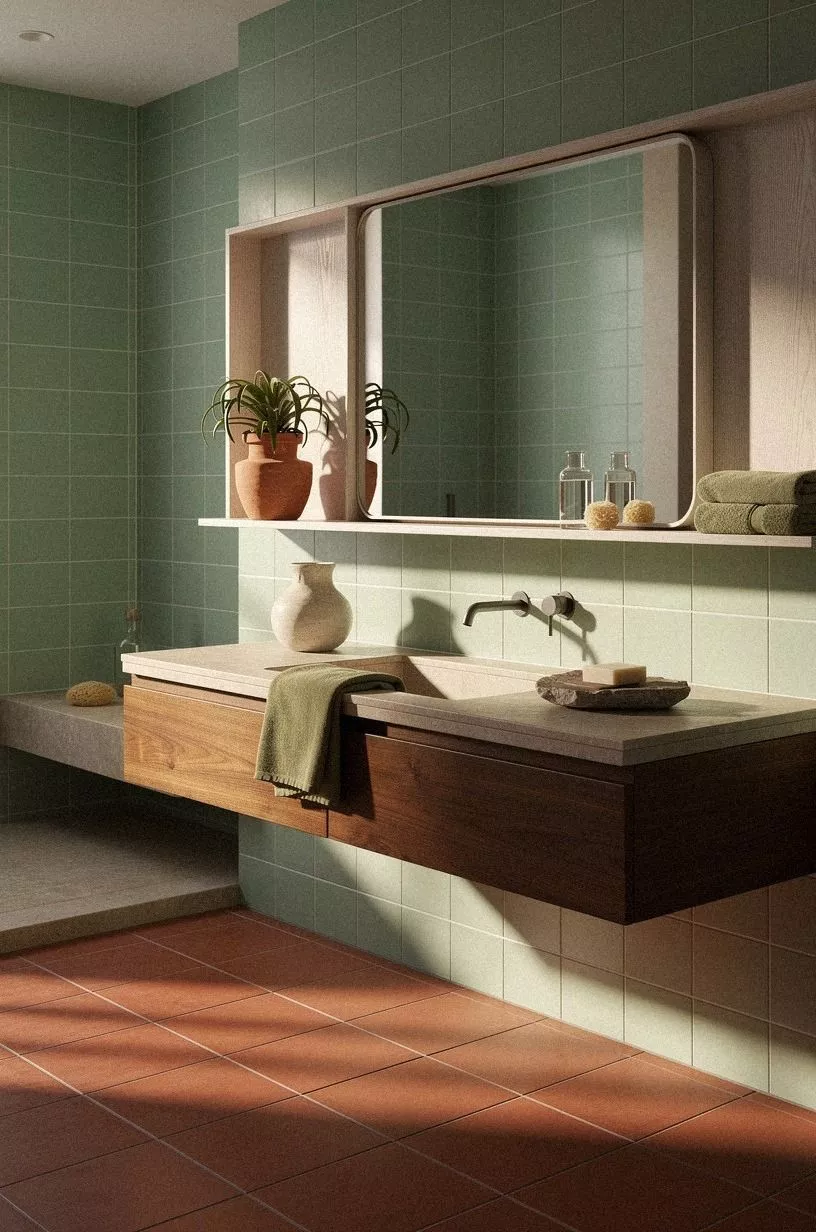
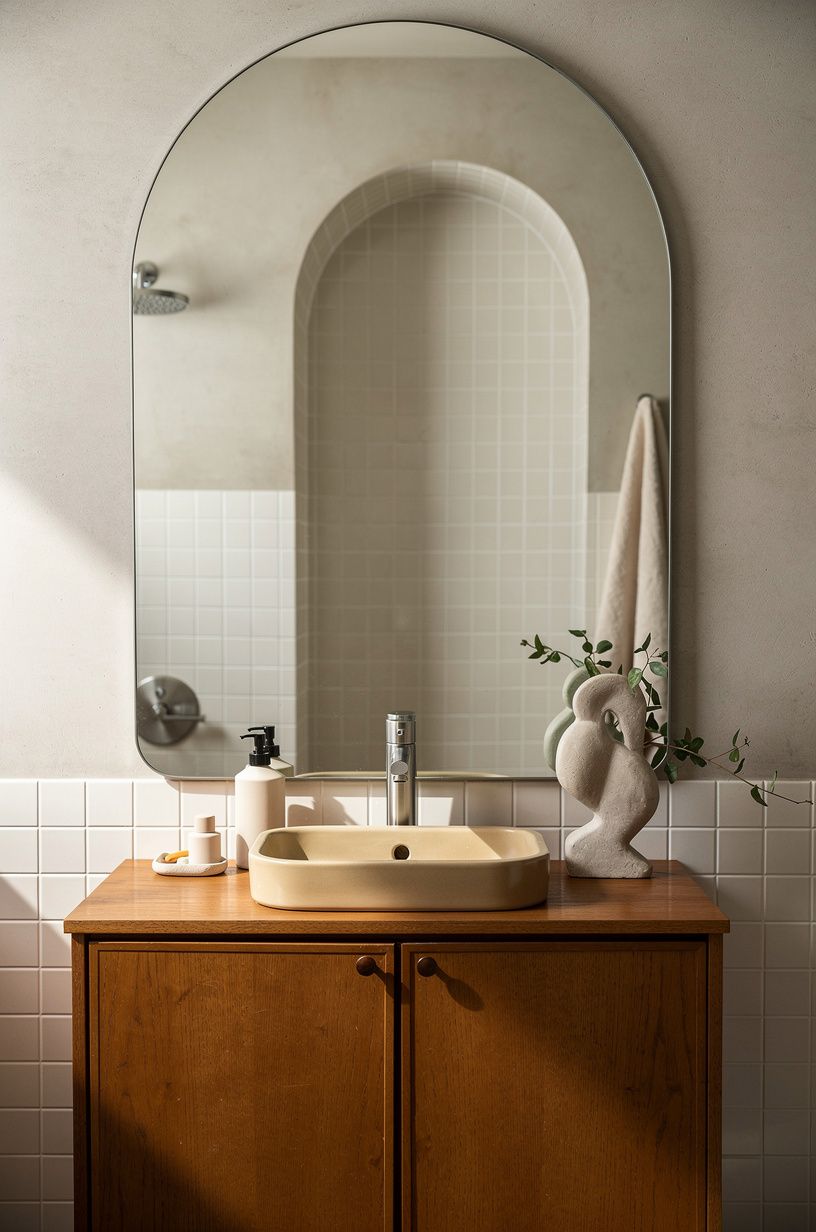
A floating vanity gives your bathroom more visible floor and lets terracotta tile carry the retro mood. Choose cerused white oak or walnut with a softly matte finish.
Vanity height usually works best between 32 and 36 inches for comfortable daily use. You’ll want drawers rather than one cabinet door if your room is narrow. Drawers keep towels and grooming supplies easy to reach without blocking the walkway.
The palette should feel earthy, not themed. Stone accessories, olive towels, and a honed stone vessel sink can warm the terracotta without competing with it.
Don’t pair this look with glossy orange wood. The shine can pull the room toward a dated builder-grade finish. A compact flat-pack vanity can provide the shape at a lower cost, while custom walnut brings richer grain and better storage.
The Walnut Float Rule is simple: keep the wall beneath the vanity visible, then repeat the wood once elsewhere. A narrow shelf, framed print, or stool is enough. Related layouts appear in these small mid-century bathroom layouts.
Your eye will read the open floor as calm, and you won’t need extra decoration to make the room feel finished.
A floating design also makes cleaning easier. The gap beneath the cabinet exposes more flooring and prevents a heavy block of furniture from dominating a small room. You’ll still need careful plumbing placement, especially when the drain must move inside an older wall.
Keep access panels practical. A beautiful vanity becomes frustrating when every repair requires removing the entire cabinet.
For a softer period reference, pair walnut with Farrow & Ball Studio Green on one small wall or the lower half of the room. The deep green works best beside warm white trim and aged metal.
Don’t let dark paint spread across every surface. One controlled zone gives the bathroom character while preserving brightness.
2Frame the mirror with rounded teak trim
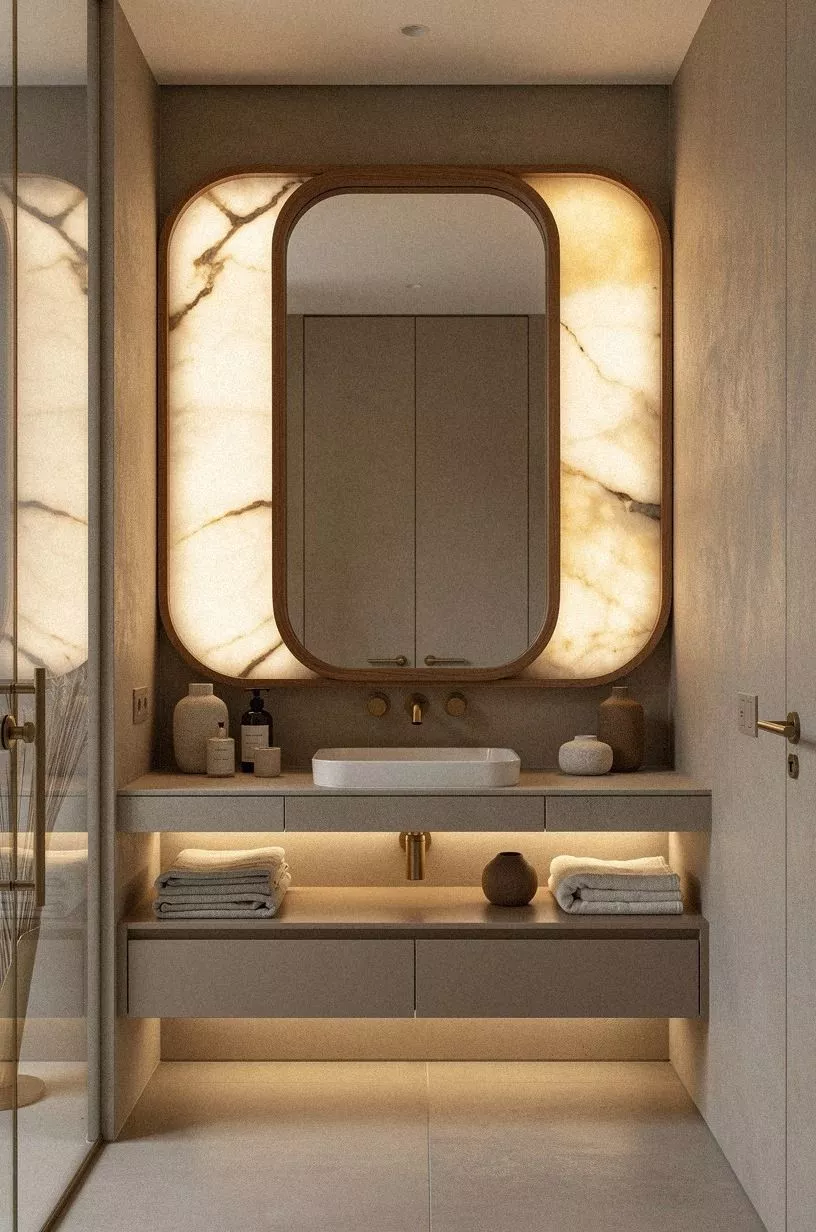
Backlit translucent onyx around the mirror softens the hard geometry common in period bathrooms.
3Install a terrazzo countertop with brass edging
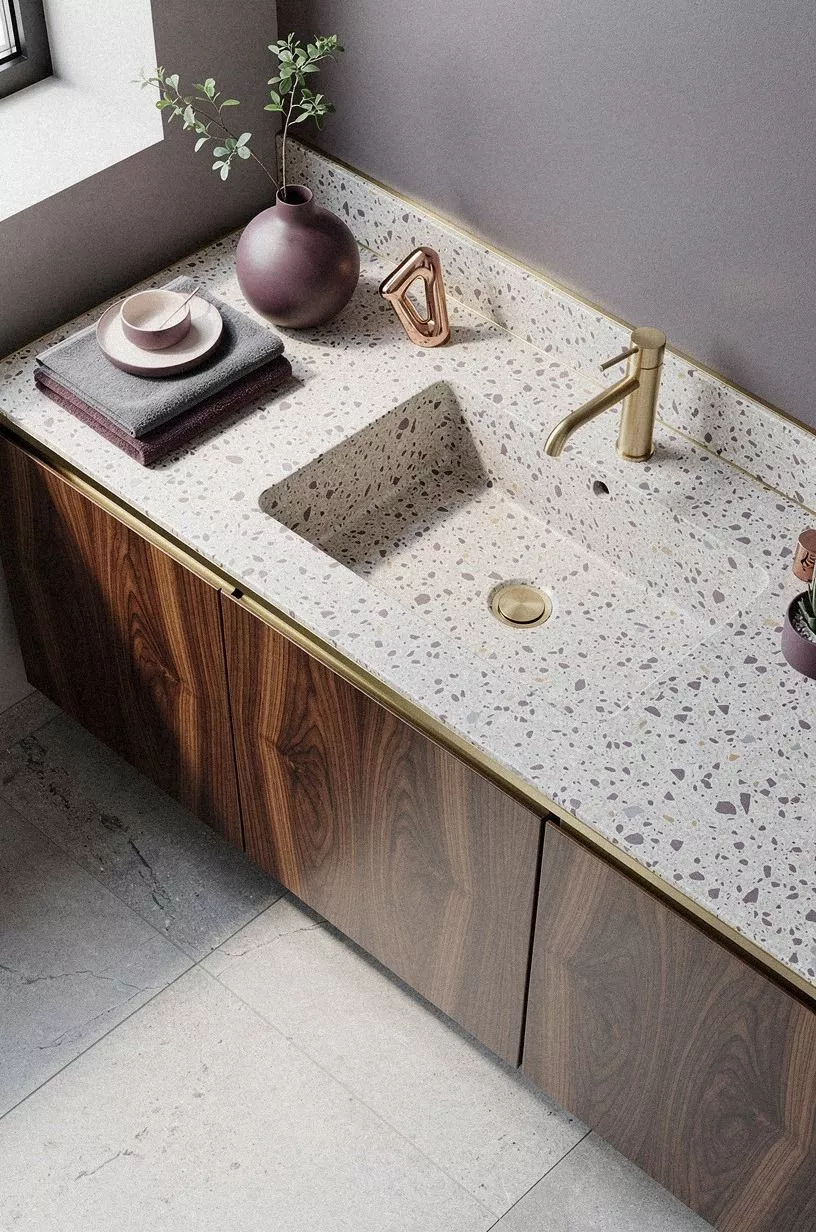
Terrazzo brings the playful surface quality associated with mid-century interiors, but the aggregate should connect to the room’s existing colors. For a plum, grey, and rose-gold palette, choose a countertop with muted burgundy chips rather than bright primary fragments. You’ll want the pattern to read from across the room before the smaller pieces become visible at the vanity.
A thin brass edge can make the slab feel tailored, especially beside book-matched walnut cabinetry. Unlacquered brass will develop a softer patina over time, while polished rose gold creates a sharper, more decorative effect. Don’t use both finishes across every fixture.
Keep the faucet restrained, then let the counter edge provide the metallic note.
The Three-Surface Rule keeps this combination from becoming noisy: terrazzo for movement, walnut for warmth, and one metal for reflection. A flat-front vanity can support the look without adding carved details.
You’ll also want a low-profile sink, because a tall vessel bowl may interrupt the clean horizontal line. For a more organic direction, browse these organic mid-century bathroom palettes. Your countertop should be the lively detail, not one element among six competing accents.
Terrazzo requires a practical maintenance plan. Sealed surfaces handle ordinary bathroom use well, but harsh cleaners can dull the finish.
You’ll want a cleaner approved for the specific binder and stone mix. A small sample board can reveal how the aggregate looks beside grout, paint, and metal before a full slab gets ordered.
A narrow brass edge is especially useful when the countertop meets a painted wall. It creates a clean transition and gives the eye a small reflective line. That shift matters!
Keep the edge thin, because a wide metallic border can make the vanity feel ornamental instead of architectural.
4Pair mustard wall sconces beside the medicine cabinet
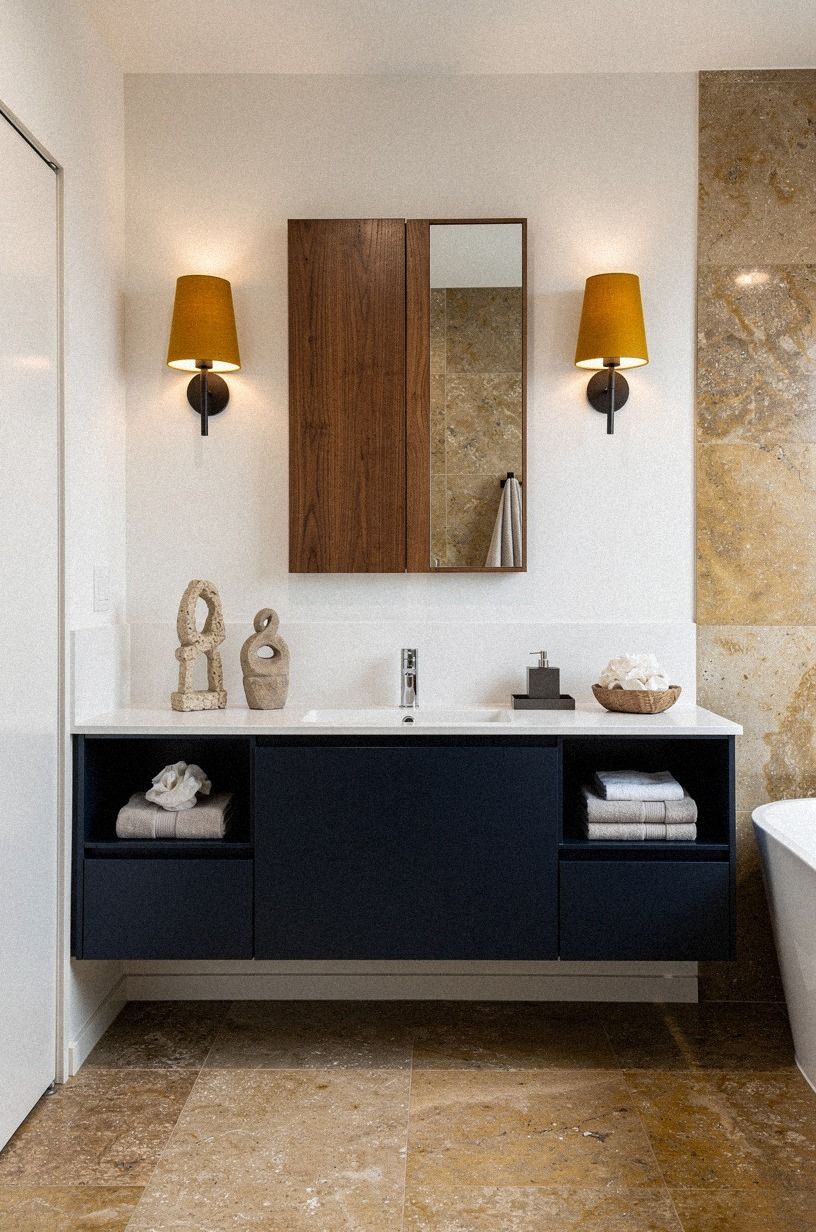
Mustard sconces bring a controlled burst of color to a navy, white, and walnut bathroom.
5Lay geometric floor tile in muted retro tones
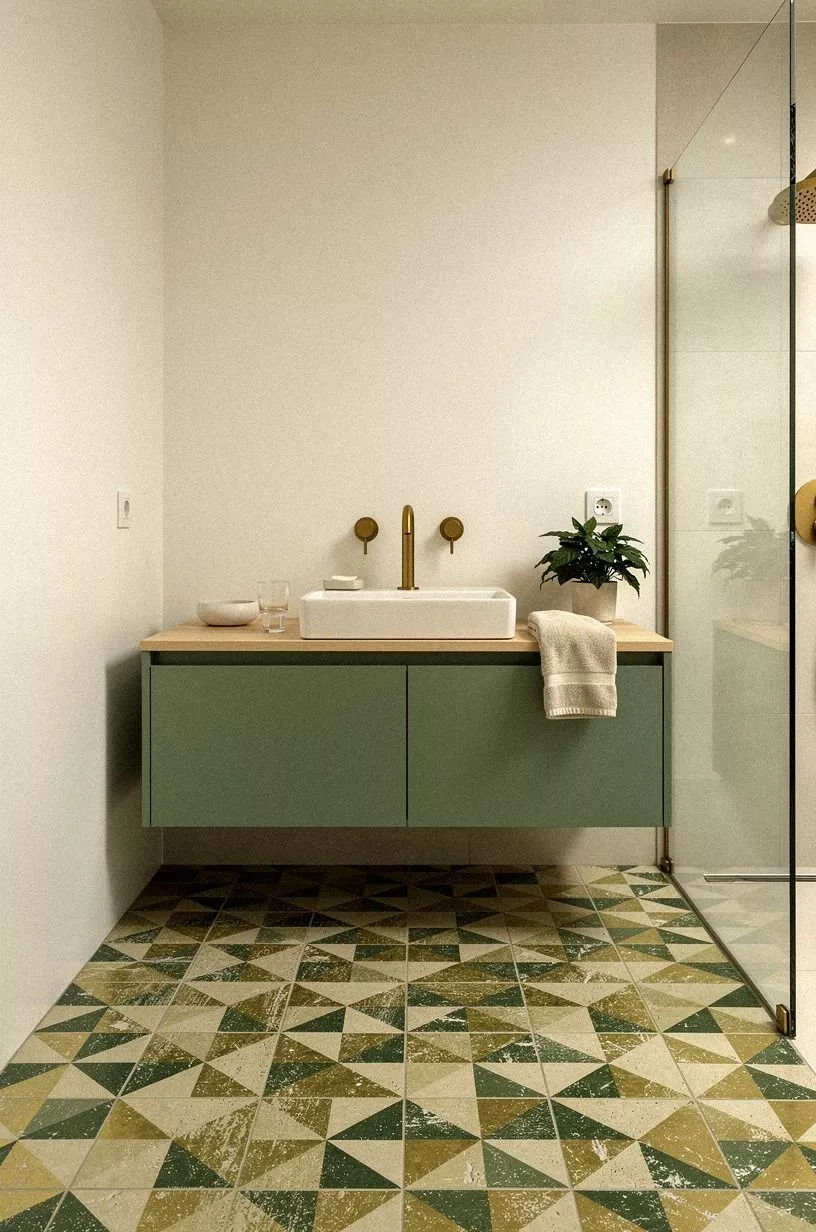
Geometric floor tile can make a small bathroom feel designed without covering every wall in pattern. Emerald, gold, and cream work especially well when the shapes stay slightly softened rather than sharply graphic. You’ll want the floor to carry the visual energy, so pair it with quiet wall paint and simple cabinetry.
Use unlacquered brass developing soft patina for the faucet and cabinet pulls, then repeat the gold note in only one accessory. Cream grout will keep the pattern connected, while stark white grout can outline every shape and make the floor feel busier.
Don’t choose a tiny mosaic solely because it looks vintage. More grout lines mean more cleaning, especially around the toilet and vanity.
The Pattern-to-Plain Ratio favors one strong surface and two calm ones. A Benjamin Moore Chestertown Buff HC-9 wall can echo the cream tile without becoming yellow. If you’re renovating a compact room, maintain at least 21 inches of clearance in front of the toilet.
The floor should look lively underfoot, but your daily path still needs to feel easy.
A larger geometric tile can reduce grout maintenance, although the room must be measured carefully. Older homes rarely have perfectly square walls. You’ll want the installer to center the pattern at the doorway or vanity instead of allowing a narrow, awkward cut to dominate the first view.
Consider the door swing before ordering tile. If the door opens toward the toilet, a bold floor pattern won’t solve the circulation problem.
Reversing the swing or using a pocket door may create more useful space than changing the finish. Small changes add up!
6Wrap the shower in vertical color-blocked tile
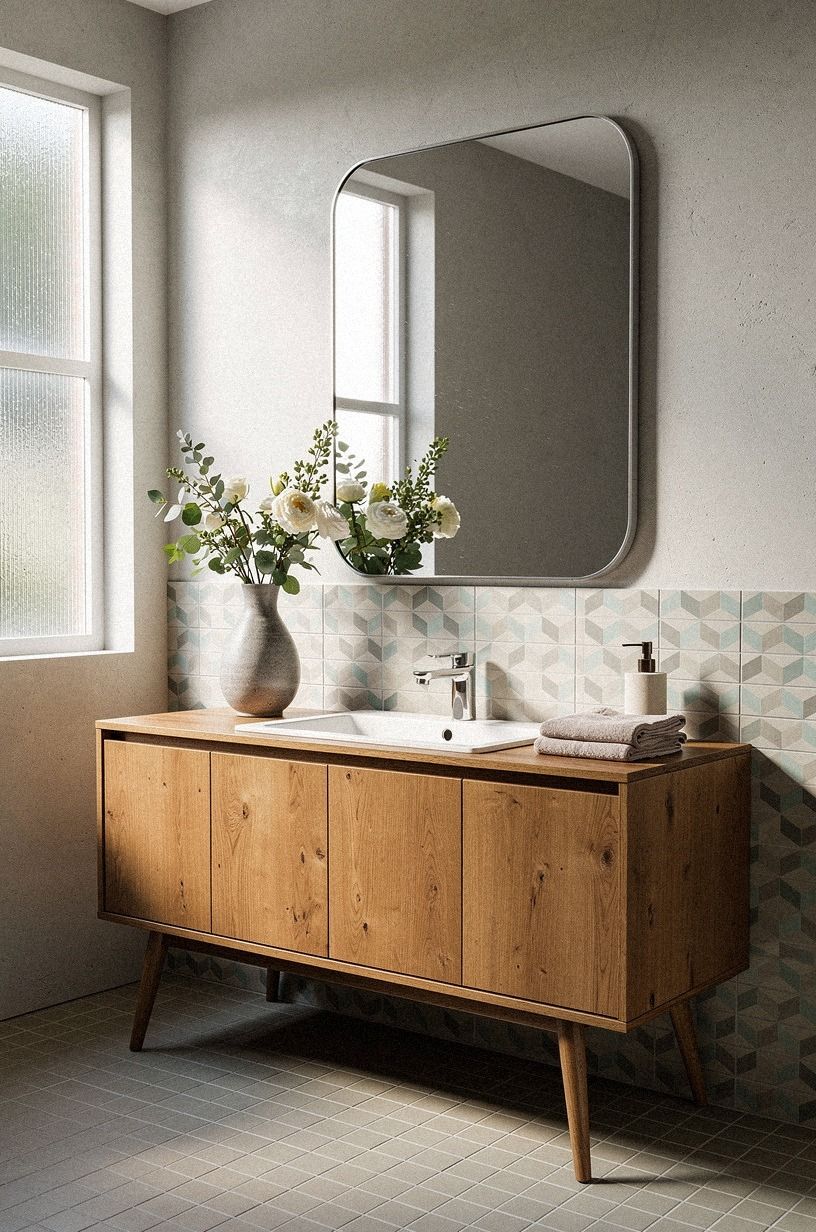
Vertical color-blocked tile gives a shower more height and creates a strong backdrop for forest green, rust, and natural oak.
7Choose a sculptural globe pendant above the vanity
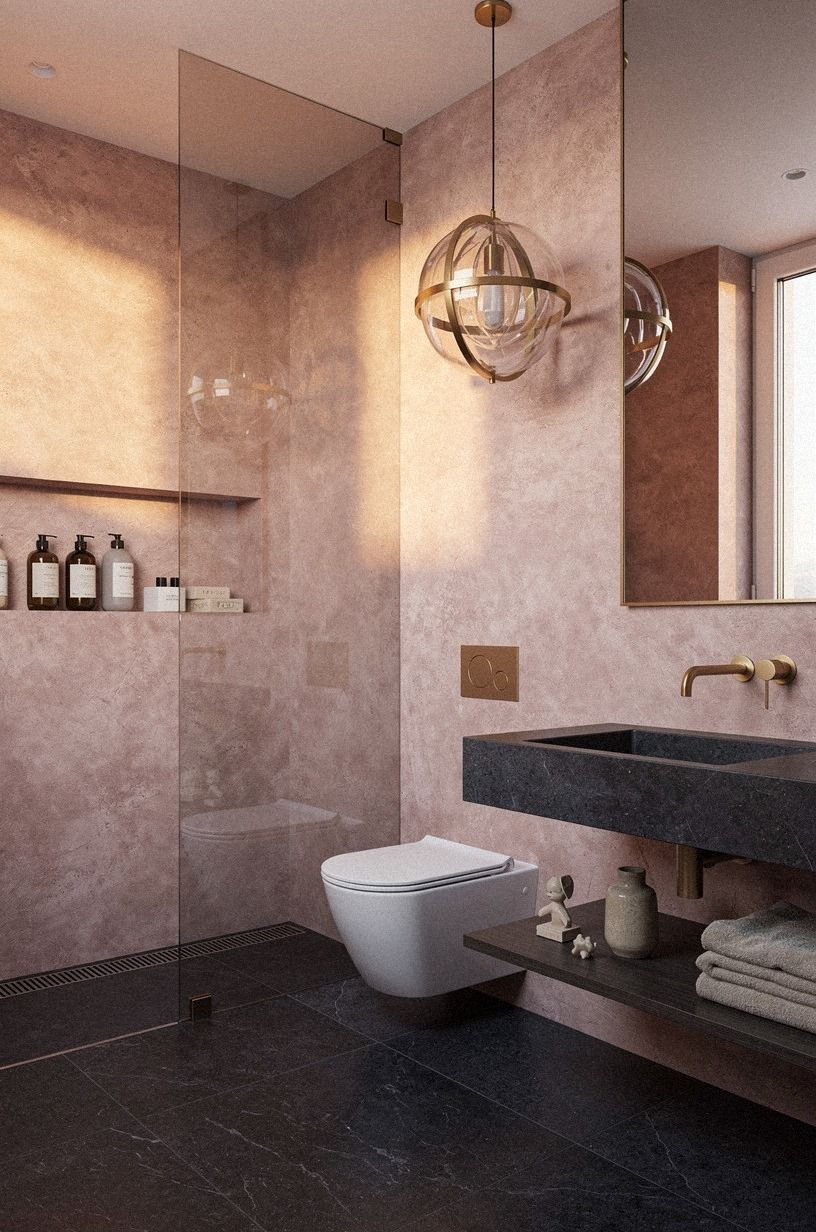
A globe pendant gives a dusty rose, charcoal, and brass bathroom a soft focal point. Choose an opal glass globe with a rounded silhouette, then hang it high enough to clear the mirror without blocking the reflection. You’ll want the pendant to supplement task lighting rather than replace side sconces, particularly if the vanity is wider than 36 inches.
Hand-applied Venetian plaster can create a subtle wall texture behind the mirror. Its cloudy finish suits charcoal accents and keeps brass from looking too shiny. A Schoolhouse globe pendant can provide the right period reference, while a simple ceiling fixture elsewhere keeps the room from feeling staged.
Don’t combine multiple sculptural lights unless the bathroom is large enough to give each form breathing room.
The Single-Sculptural-Note Rule protects the composition. Let the pendant be the rounded statement, then choose straight cabinet fronts and a quiet faucet.
If you’re using a dimmer, you’ll get a gentle glow for evening routines and brighter light for grooming. Your bathroom will feel more intimate when the pendant creates a pool of light instead of washing every surface evenly.
Check the fixture’s damp-location rating before installation. Bathroom humidity can damage unsuitable electrical components.
You’ll also want the pendant centered over the basin rather than centered on the wall if those measurements differ. Functional alignment matters more than perfect symmetry.
8Mount a frameless mirror over starburst tile
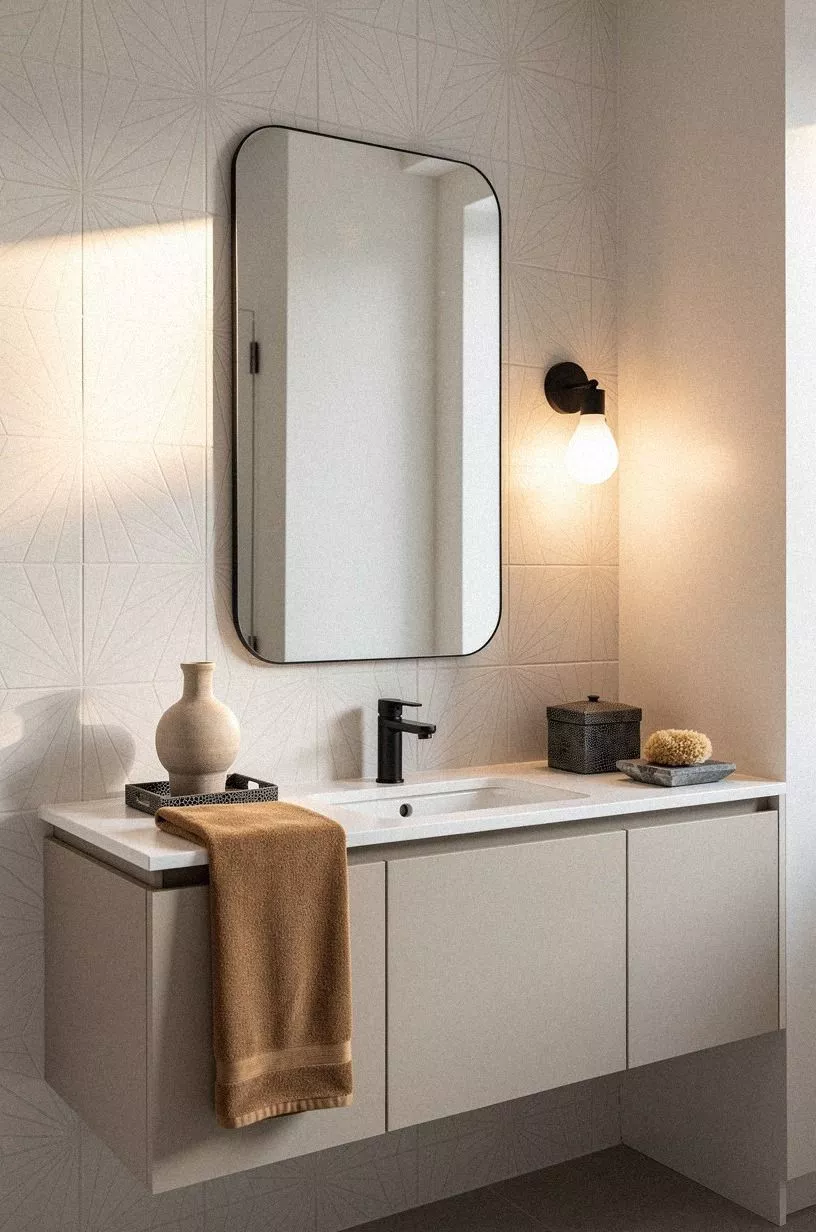
A frameless mirror lets starburst tile remain visible around the edges, which is useful when the bathroom is compact. Warm white walls, camel textiles, and black accents keep the pattern from feeling overly sweet. You’ll want the mirror to cover enough of the tile for function while leaving a clear border on all four sides.
Shagreen accents can appear as a small tray, drawer pull, or framed panel. The texture adds quiet luxury without introducing another color.
Article Sven tan leather can inspire the camel tone, even if the bathroom uses a simple wood stool rather than upholstered furniture. The starburst tile shouldn’t meet a second star pattern in the shower curtain or floor.
The Frame-Free Focus approach lets the tile create the border. A pale oak vanity and matte black faucet will give the eye a resting place beneath the mirror. If you’re planning a larger renovation, compare this mood with mid-century master bathroom schemes.
Your room will look more refined when accessories stay sparse and the tile receives the attention.
A frameless mirror can also make a narrow room appear wider. The reflection doubles the visible tile and catches light from the sconces.
You’ll need polished edges and reliable mounting, especially when the mirror is large. Adhesive alone may not be enough for a heavy bathroom installation.
9Add walnut slats to conceal bathroom storage
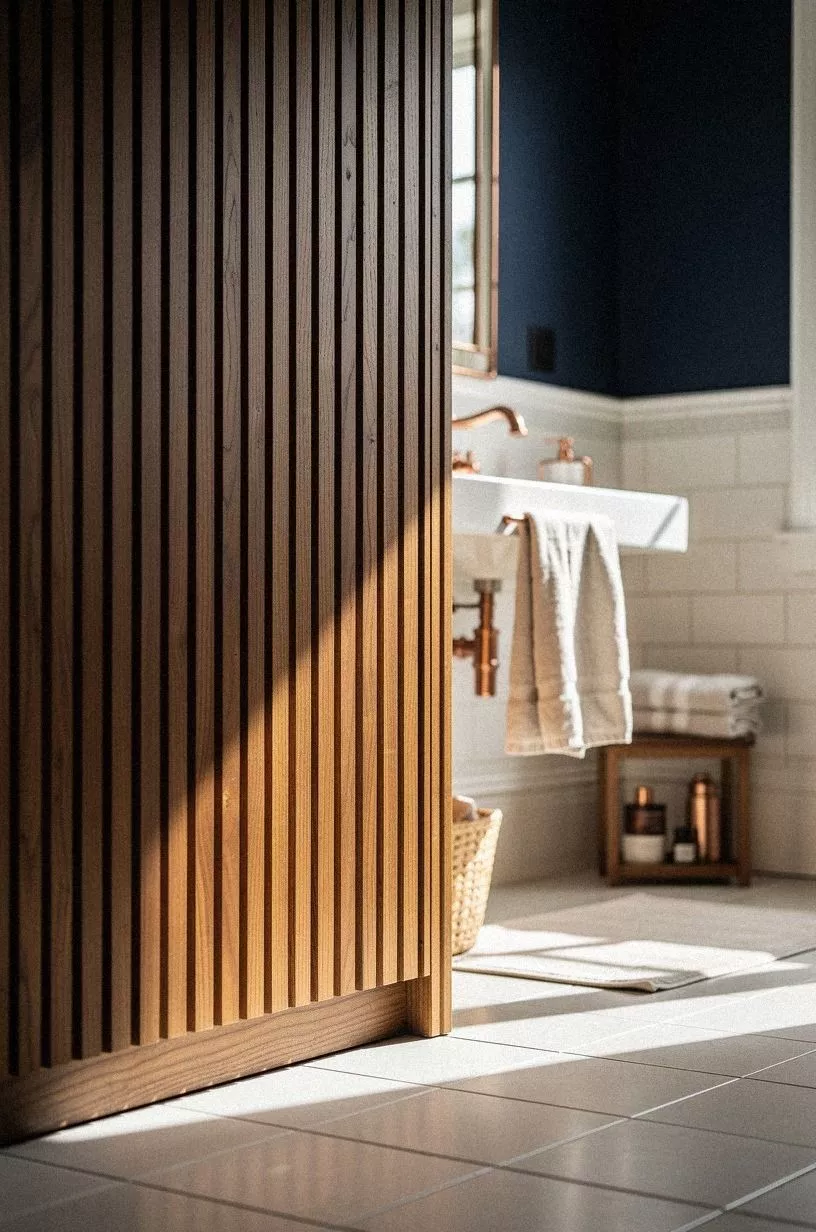
Walnut slats can hide open storage while preserving ventilation and visual depth. Use narrow vertical battens over a shallow cabinet, leaving enough spacing for the doors or drawers to operate. You’ll want the slats sealed against humidity, especially near a shower, and the backing should remain easy to access for plumbing repairs.
Midnight blue, copper, and ivory create a dramatic palette, while washed Belgian linen keeps the room from becoming too formal. A birch-effect storage unit can serve as the concealed base if the dimensions fit, but real walnut veneer will provide a richer result. Don’t cover every cabinet face with slats.
One feature wall or vanity section is enough to establish the pattern.
The Slatted Screen Effect is strongest when storage disappears from a distance and reveals itself close up. You’ll still need labeled bins inside, because attractive doors won’t fix chaotic storage.
For a warmer stone connection, pair the walnut with a honed travertine shelf. These travertine bathroom surfaces show how that surface can balance dark cabinetry. Your bathroom will feel lived-in when useful objects stay nearby but visually quiet.
Slat spacing should account for dust, cleaning tools, and door hardware. Narrow gaps look refined but can be annoying when a cloth cannot pass through.
You’ll want removable panels where plumbing access is likely. A concealed cabinet still needs straightforward maintenance.
Walnut can darken naturally as it ages. Place a sample beside the tile and paint for several days before committing. The changing tone may reveal whether the room needs more cream, more brass, or a lighter textile.
That small test costs little and prevents an expensive mismatch.
10Restore chrome fixtures with fluted glass details
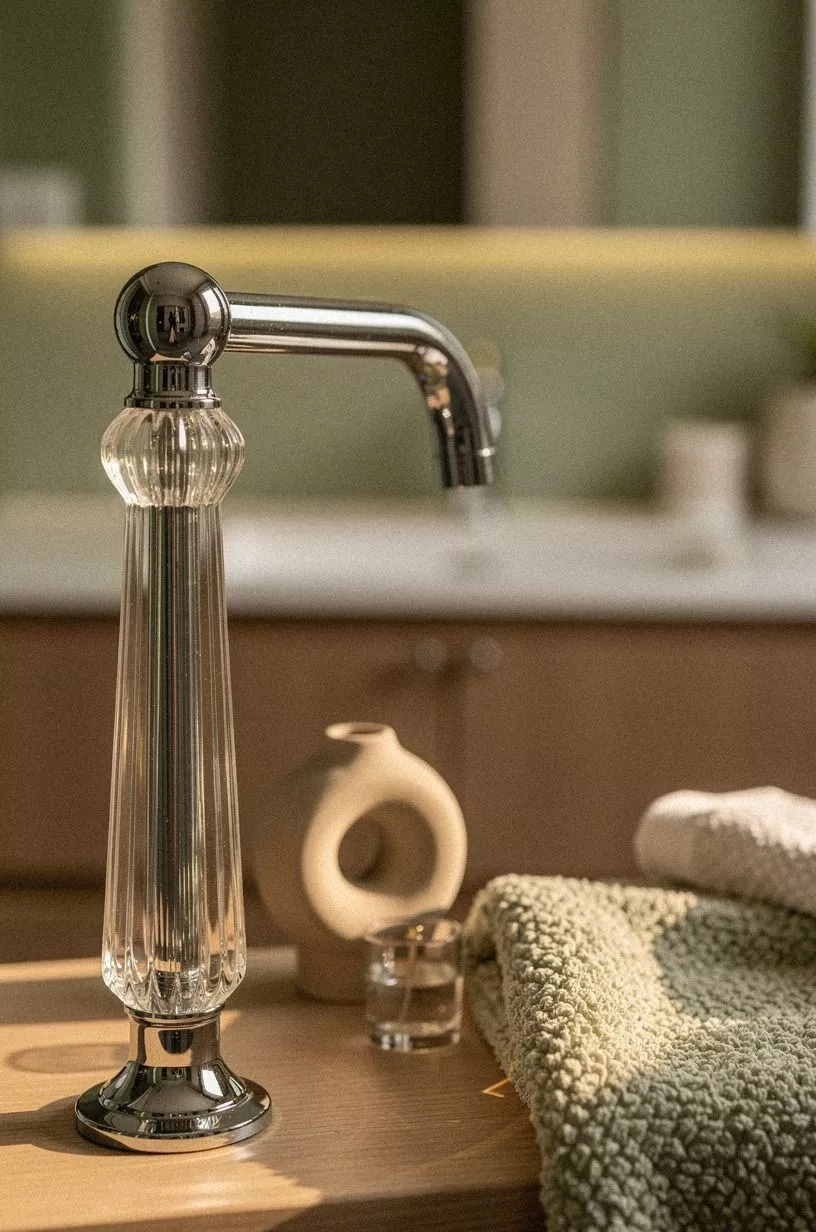
Chrome fixtures can look right at home in a period bathroom when the shapes are simple and the surrounding materials feel warm. Restore the faucet if the finish is sound, then add fluted glass through a pendant, cabinet door, or privacy panel. You’ll want the glass to scatter light without becoming opaque, especially beside a window.
Sage green, warm cream, and natural wood create a softer direction than the usual black-and-white renovation. Organic bouclé can appear on a small stool or bench, but keep fabric away from splash zones. A Kohler Purist faucet can supply a clean profile, while vintage chrome hardware adds character when the condition is reliable.
Don’t mix three different chrome shapes. Repetition makes the older fixture feel intentional.
The Restored Metal Rule favors repair before replacement when the plumbing works and the finish can be polished safely. You’re saving money and keeping a period detail that mass-produced hardware may not replicate. For a compact layout, preserve the 21-inch toilet clearance in front.
Your bathroom will gain charm from small signs of age, provided the fixtures remain practical and clean.
Fluted glass works well when privacy matters but natural light still needs to pass through. Use it in a narrow upper cabinet or a fixed window panel rather than across every surface. You’ll keep the texture visible without turning the room into a collection of competing lines.
Chrome also gives a useful contrast against warmer materials. Walnut, travertine, and clay tile can look richer beside a cool reflective finish.
If the room already contains polished metal, balance it with matte paint and honed stone. The result will feel layered rather than overly bright.
11Paint the ceiling a warm avocado green
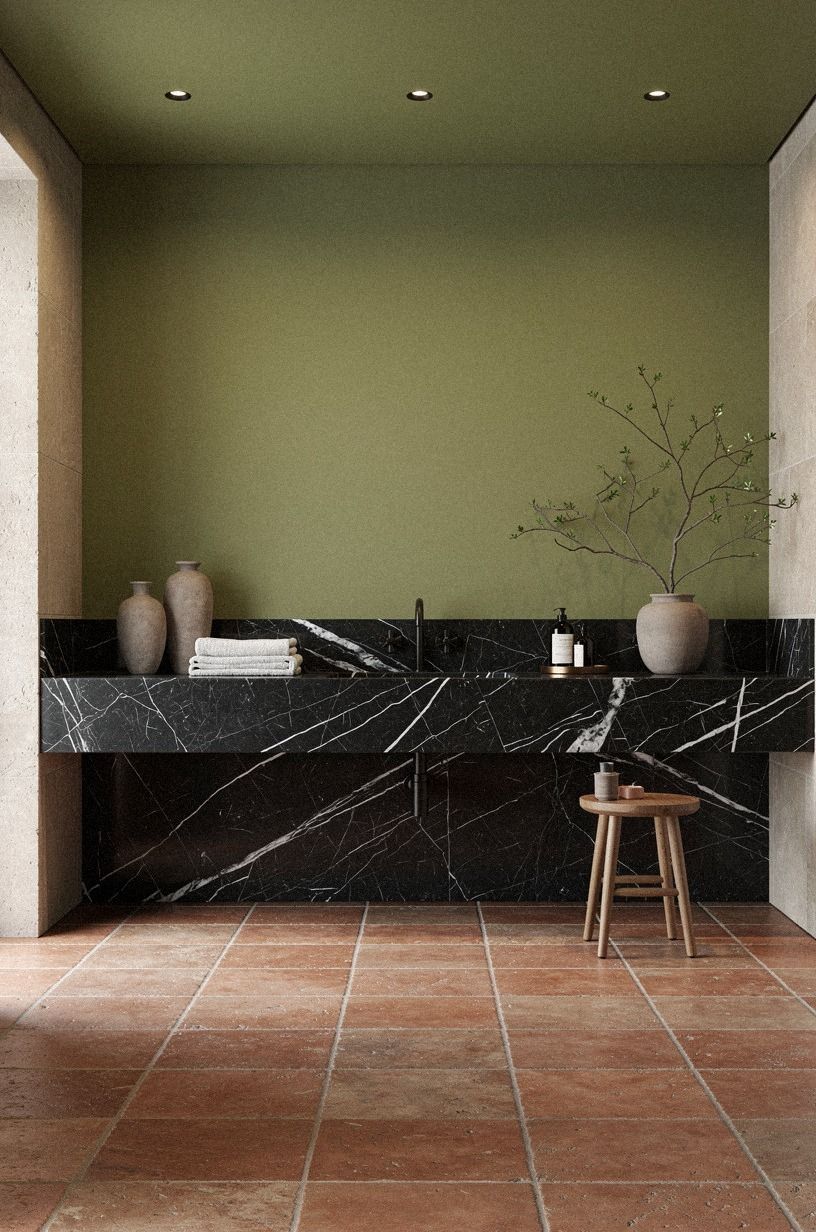
A warm avocado ceiling can turn an overlooked surface into the period detail that ties terracotta, stone, and olive together.
12Style open shelving with amber glass accessories
Open shelving gives a clay, linen, and aged brass bathroom a relaxed, collected finish. Use two or three shelves rather than filling an entire wall, then group amber glass bottles with folded textiles and one useful basket. You’ll want every item to earn its place, because exposed storage becomes visual noise quickly.
Deep-pile mohair velvet can appear as a small stool cushion or cosmetic pouch, away from direct water. Turkish cotton towels add absorbency and a soft ivory layer beside the warm glass.
A sturdy shelf system can provide reliable brackets, while reclaimed wood works if it has been sealed properly. Don’t arrange every object at the same height.
Variation keeps the shelf from looking like a retail display.
The Three-Cluster Shelf Method uses one tall bottle, one low vessel, and one folded textile per grouping. You can adjust the mix as storage needs change, and you won’t have to redesign the whole wall.
For another period-friendly direction, explore these retro bathroom color palettes. Your bathroom will feel more personal when the shelves hold useful objects with varied shapes.
Keep the lowest shelf above the splash zone. You’ll protect paper labels, woven baskets, and unfinished wood from repeated water exposure. Amber glass looks attractive, but opaque containers may work better for products that need protection from light.
Function should decide the final mix.
A narrow shelf beside the mirror can hold daily items, while a higher shelf can carry decorative pieces. Don’t place heavy glass directly above the toilet or basin without proper anchors. Small safety decisions keep an open display relaxed instead of stressful.
Which surface wins, warm wood or sterile white?
Warm wood wins when the bathroom belongs to a period home, because it introduces grain, shadow, and visual friction against hard tile. All-white finishes can look clean, but they often erase the architectural character that makes an older house worth keeping. You’ll get more depth from one walnut vanity than from another layer of white subway tile.
That doesn’t mean every surface should become dark. A pale wall, cream grout, or translucent glass can keep the room bright while the wood supplies the anchor. The best combinations use contrast with restraint: one strong timber, one practical metal, and one color that feels slightly unexpected.
You don’t need a themed reproduction bathroom, and you shouldn’t copy every detail from a 1950s catalog.
The honest budget split is straightforward. Paint, a mirror, a faucet, and textiles may fit within the $200-$1,200 budget tier. Partial tile and a new vanity move the project toward the $3,000-$9,000 mid range.
Re-tiled showers, floor work, and plumbing can reach $12,000-$30,000+. If your layout already works, spend first on the surface your eyes meet every morning.
Choose warm wood when the room has original trim, terrazzo, or vintage chrome. Choose a lighter wood when daylight is limited or the floor already carries a strong pattern. You’ll get a more balanced result when the vanity responds to the architecture instead of competing with it.
A period bathroom doesn’t need to look frozen in one decade. Modern plumbing, efficient storage, and safer lighting can sit comfortably beside teak, terrazzo, and avocado paint. The goal is a room that belongs to the house and still works for current routines.
Material cost reference
The Questions Worth Answering First
What is the best mid-century bathroom remodel idea for a small bathroom?
A floating walnut vanity and a frameless mirror usually make the strongest small-room pairing. Visible floor creates air around the vanity, while a mirror keeps the wall visually open.
A shallow profile and clear circulation will matter more than a famous brand. You’ll gain storage without making the room feel crowded.
Where can a shopper find mid-century bathroom pieces on a budget?
Budget retailers, Wayfair, and Target carry affordable vanities, mirrors, lighting, and textiles. Secondhand value often appears through Facebook Marketplace and local thrift shops, especially for teak mirrors and chrome fixtures. You’ll want to inspect finishes, hardware, and moisture damage before bringing anything into the bathroom.
How much does a mid-century bathroom makeover cost?
A cosmetic update often falls within the $200-$1,200 budget tier, while a mid-range project may reach $3,000-$9,000. Free savings include keeping the existing layout, refinishing sound fixtures, and restyling shelves. Major shower tile, floor work, and plumbing can reach $12,000-$30,000+.
Can a mid-century bathroom work on a budget?
Yes, and the first moves can be inexpensive. Low-cost progress includes repainting the ceiling, changing cabinet pulls, polishing chrome, and adding vintage-style textiles. You can also frame an existing mirror, shop secondhand, and use one strong tile accent instead of redoing every surface.
Is a mid-century bathroom remodel worthwhile in a small space?
Yes, because a small room needs fewer materials and benefits quickly from better proportions. Clear circulation matters most, so preserve at least 21 inches in front of the toilet and choose a vanity between 32 and 36 inches high. A compact layout can make a bold material feel deliberate.
Is a mid-century bathroom suitable for a rental?
Yes, especially with no-damage swaps. Removable upgrades include peel-and-stick ceiling samples, tension shelving, adhesive hooks, a lightweight mirror, and changeable textiles. You’ll want to avoid permanent tile work, but a walnut tray, amber glass, and portable lighting can still create a period-inspired mood.
Additional renter-friendly ideas pair well with these retro bathroom color palettes.
Where to Start First
If one upgrade deserves the first dollar, choose the floating walnut vanity. It adds storage, reveals more floor, and brings warmth that paint alone can’t provide. Pin these Scandinavian mid-century bathroom palettes for later, then match the mirror and lighting to that wood tone.
If the vanity must wait, start with paint and lighting. A warm ceiling, a carefully chosen sconce, and a teak-framed mirror can change the room’s mood without moving plumbing. You’ll create a clearer direction before committing to tile, stone, or custom cabinetry.
For a fuller comparison, pair the vanity plan with these Scandinavian mid-century bathroom colorways. The best first step is the one that improves daily function and gives every later finish a clear role.