Outdoor dog bed ideas work best when the bed stays dry, shaded, and easy to wash, not when it simply matches the patio. A low cushion can turn damp overnight, while a raised frame keeps air moving underneath. These 15 setups balance comfort, weather resistance, and a warm outdoor look. Small changes matter!
- Elevate a cot bed above wet grass (The Dry-Air Gap)
- Build a shaded bed beneath the pergola (The Three-Filter Shade Stack)
- Tuck a cushion inside a garden bench (The Bench Pocket Rule)
- Frame the bed with fragrant rosemary (The Fragrance Frame)
- Install a cooling tile beneath the cushion (Is tile the smartest cooling layer?)
- Repurpose a wooden crate as a dog bed over a plastic shell (The Ventilated Box Rule)
- Anchor a raised bed beside the pool (The Poolside Dry-Zone)
- Layer outdoor rugs beneath a washable mattress (The Soft Landing Stack)
- Carve a sleeping nook into the deck (Can a built-in outside dog bed work?)
- Cover the bed with a striped canopy (The Soft Roof Effect)
- Surround the cushion with smooth river stones (The Stone Border Method)
- Mount a hammock bed between sturdy posts (The Four-Point Hang)
- Paint the frame to match the fence instead of matching the cushions (The Quiet Camouflage Rule)
- Add a retractable sunshade above the bed (The Step-Out Shade)
- Place the bed beside the back door (The Golden Return Zone)
1Elevate a cot bed above wet grass (The Dry-Air Gap)
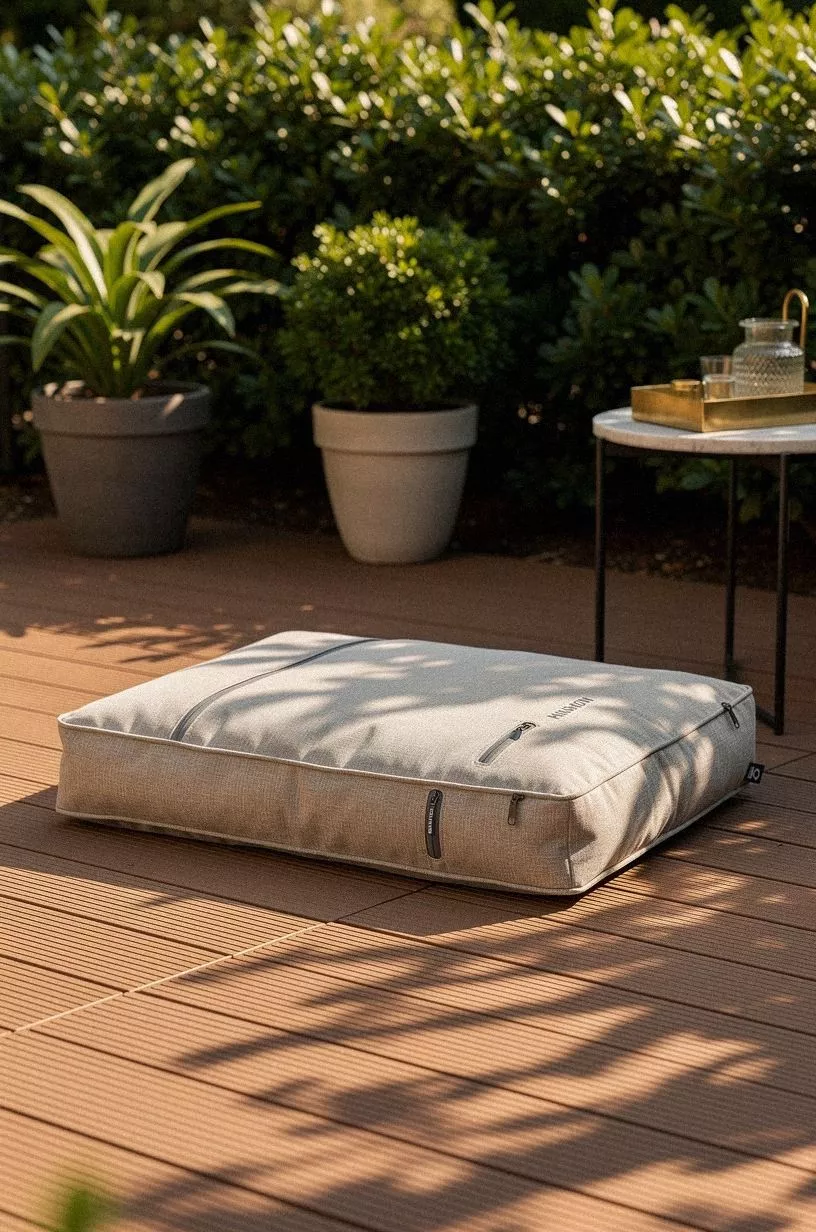
A raised cot solves the most common backyard problem first: damp ground. Choose a frame with cerused white oak details or a weather-resistant wood finish, then position it where the backyard remains visible without placing the bed in a low spot. Your dog gets airflow below the cushion, and the patio still feels open.
The best cushion has a removable cover in a tough outdoor weave. A Sunbrella cushion in terracotta, olive, or warm stone will connect the bed to nearby planters and pavers without looking overly matched. You’ll want a surface that dries quickly after a sprinkler cycle, and you won’t want thick foam sitting directly on wet grass.
Keep the cot clear of the main walking route, especially if your patio connects to a gate. A 36 in walkway clearance remains a useful minimum around furniture. And if the frame starts to rock, don’t add loose stones underneath; level the ground and check every connection instead.
2Build a shaded bed beneath the pergola (The Three-Filter Shade Stack)
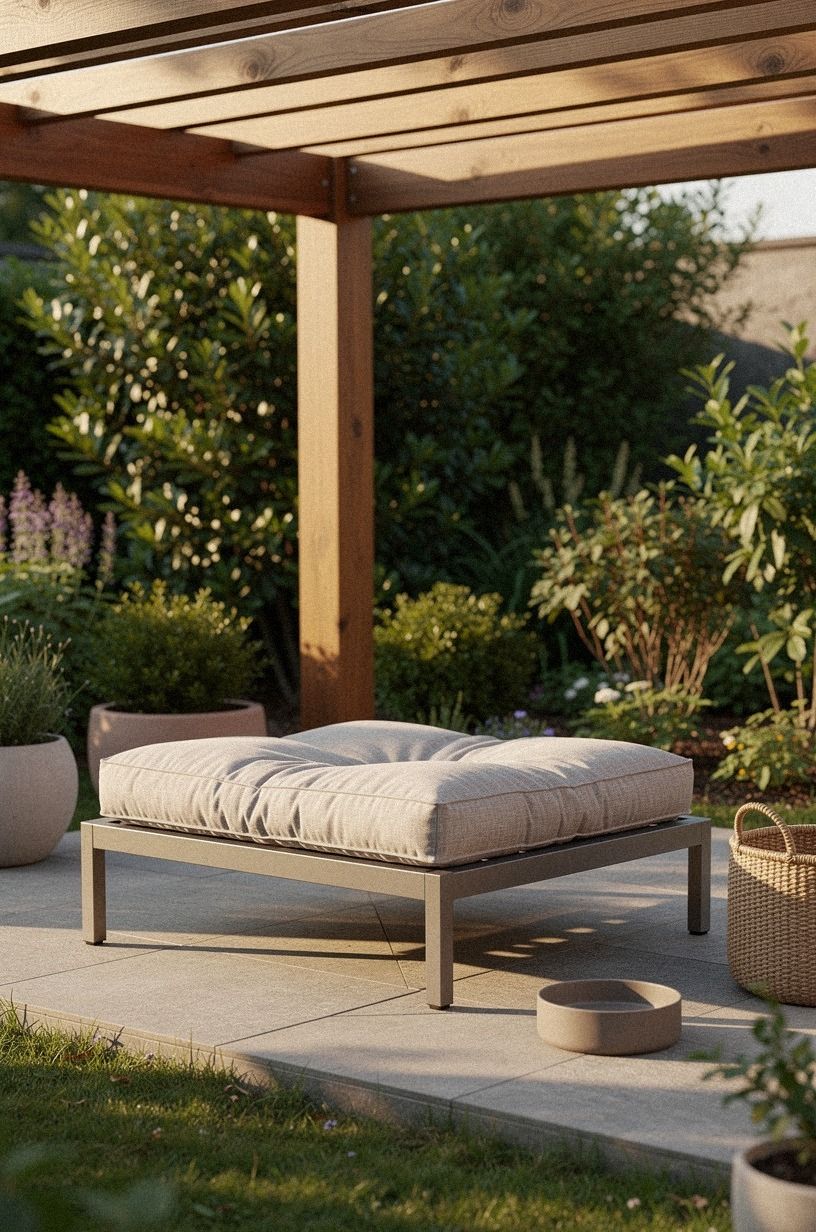
A pergola gives an outdoor dog bed a proper room-like location, especially when the shade falls across the cushion during the warmest part of the day.
3Tuck a cushion inside a garden bench (The Bench Pocket Rule)
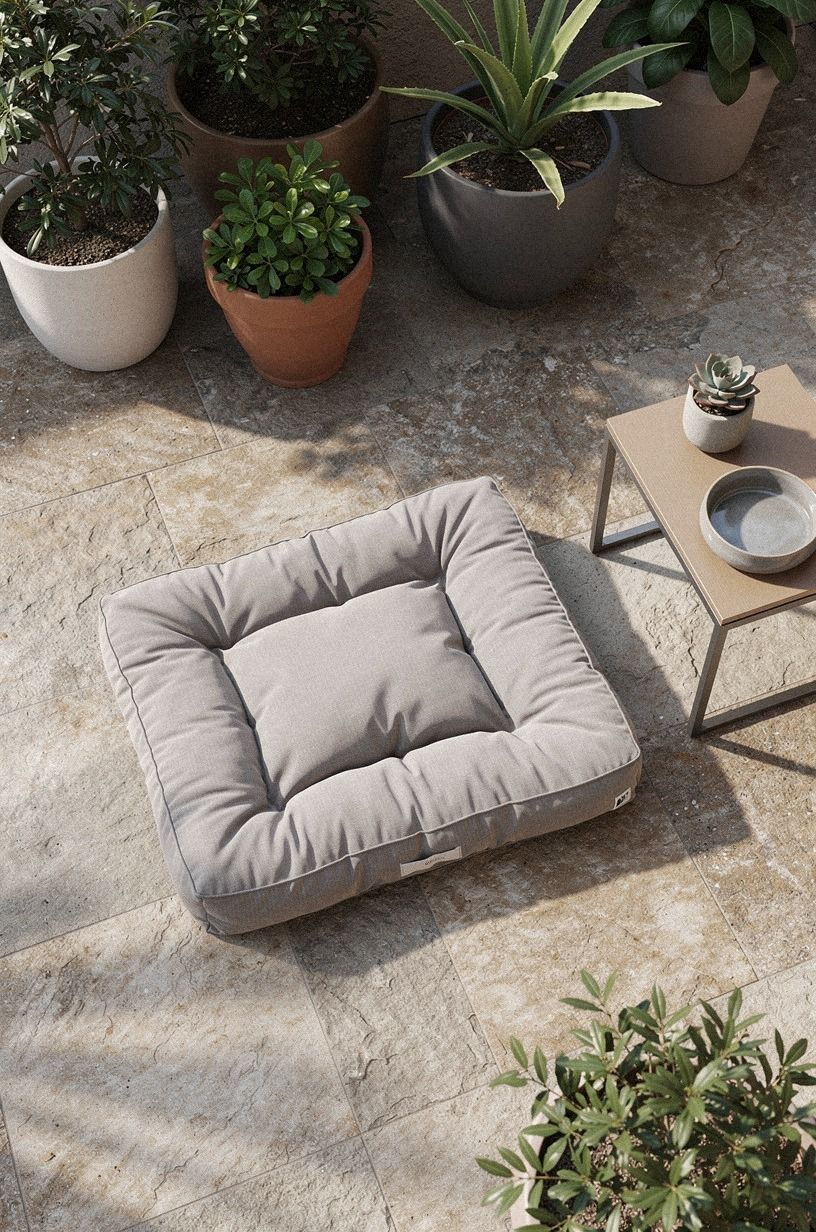
A garden bench can become an outside dog bed without taking over the patio. Slide a plum, grey, or soft rose cushion under the seat rail, leaving enough open space for your dog to enter and turn around. The surrounding book-matched walnut pattern adds an editorial touch, while the bench keeps the bed visually contained.
Look for a cushion with a zippered cover and a dense insert that won’t collapse against the floor. A birch-effect modular storage unit can inspire the storage idea nearby, but a bench should remain the sleeping surface rather than a place for loose baskets. You’ll want the cushion to lift out easily when rain arrives.
Keep the bench close to a wall or fence, not in the center of the yard. A small water bowl can sit beside it, though a heavy ceramic bowl works better than a lightweight plastic version. And if the bench is used by people during gatherings, choose a removable bed pad so the space can change roles quickly.
4Frame the bed with fragrant rosemary (The Fragrance Frame)
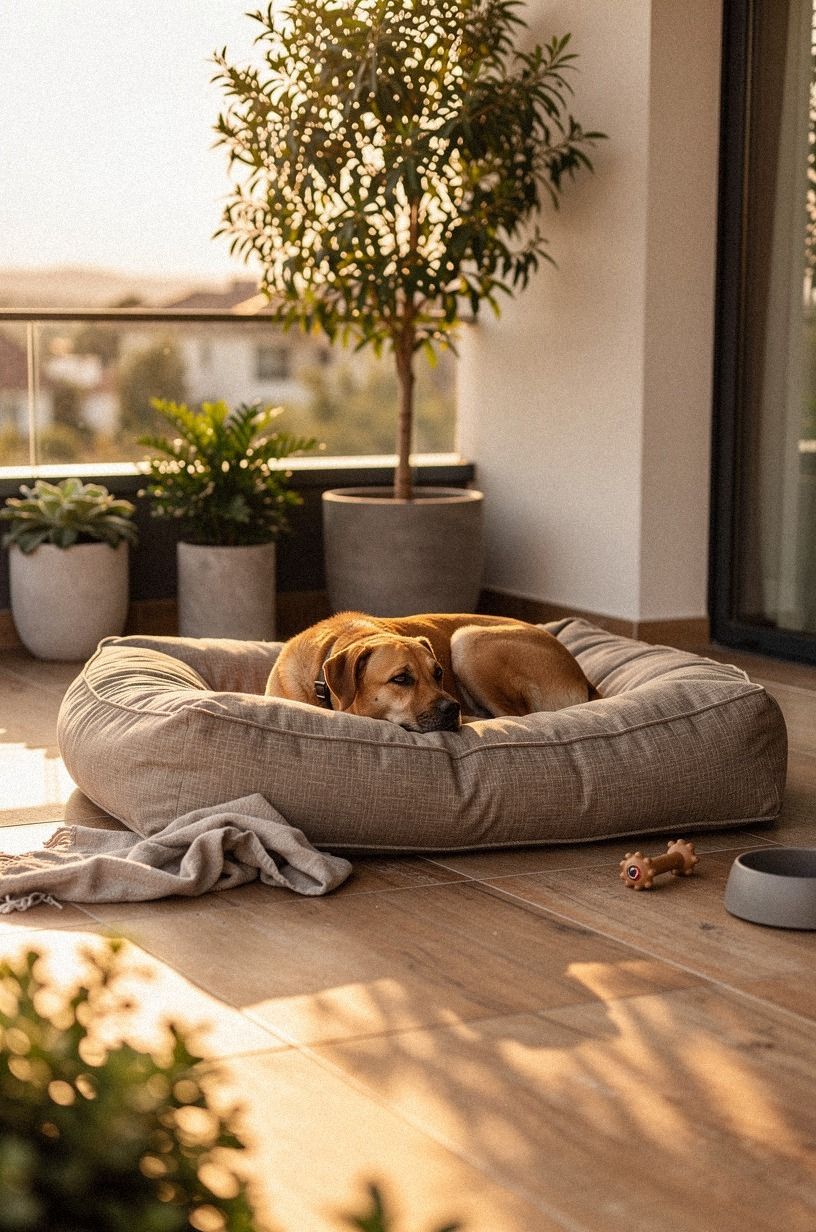
Rosemary gives a dog bed a garden edge without adding bulky furniture.
5Install a cooling tile beneath the cushion (Is tile the smartest cooling layer?)
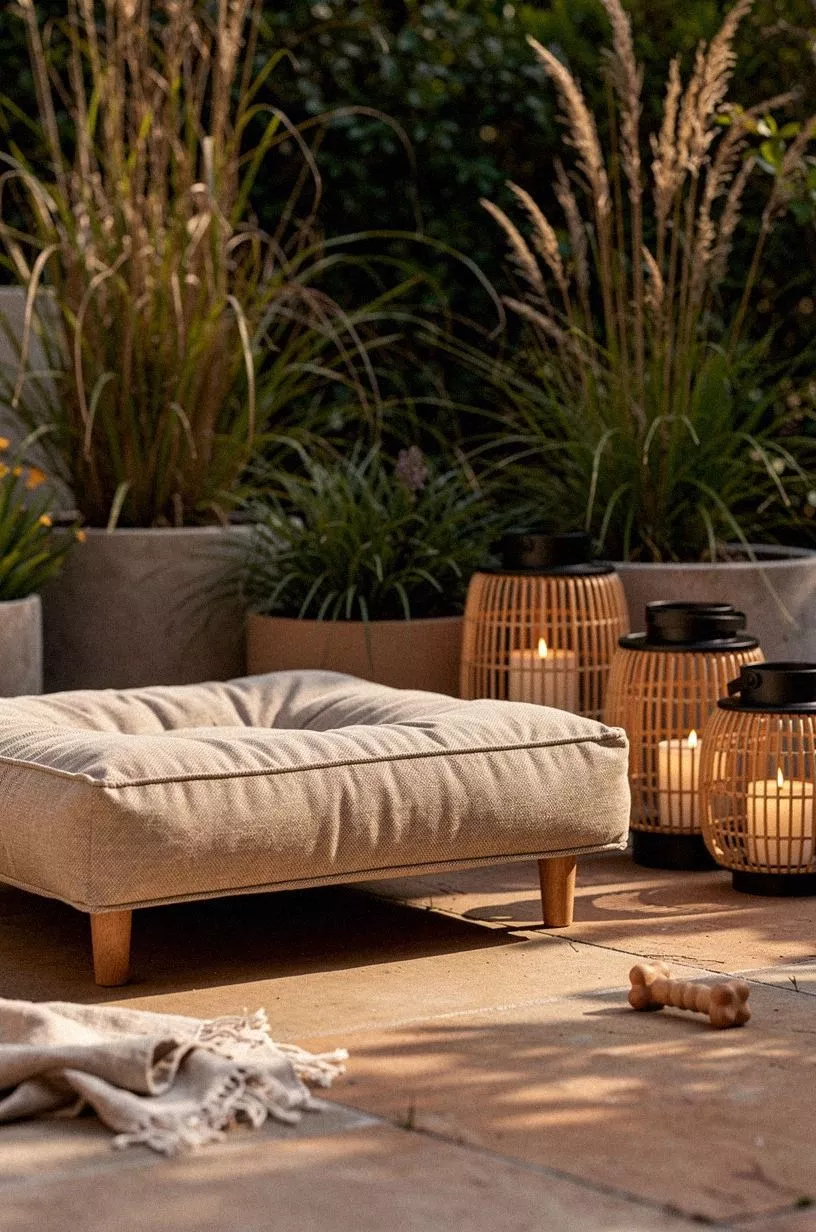
Tile can help a bed feel less stuffy when the surrounding patio is warm, but the surface needs shade and a fabric barrier. Set a thin cushion over pale tile in an emerald, gold, and cream palette, then frame the base with unlacquered brass developing soft patina. The effect feels polished without looking like indoor furniture outdoors.
A honed finish offers more visual softness than glossy tile, and a removable mat prevents direct contact with a hot or cold surface. Your dog can shift between the cushion and the tile edge, which gives more choice than a fully enclosed bed. You’ll want to test the tile with a bare hand before placing the setup in full sun.
Avoid dark stone under direct afternoon light. It can hold warmth longer than expected, while pale surfaces stay visually quieter.
But a pale tile won’t replace shade, airflow, or clean fabric. Put the bed beside a wall, umbrella, or planted screen so the cooling layer supports the setup instead of carrying the whole job.
6Repurpose a wooden crate as a dog bed over a plastic shell (The Ventilated Box Rule)
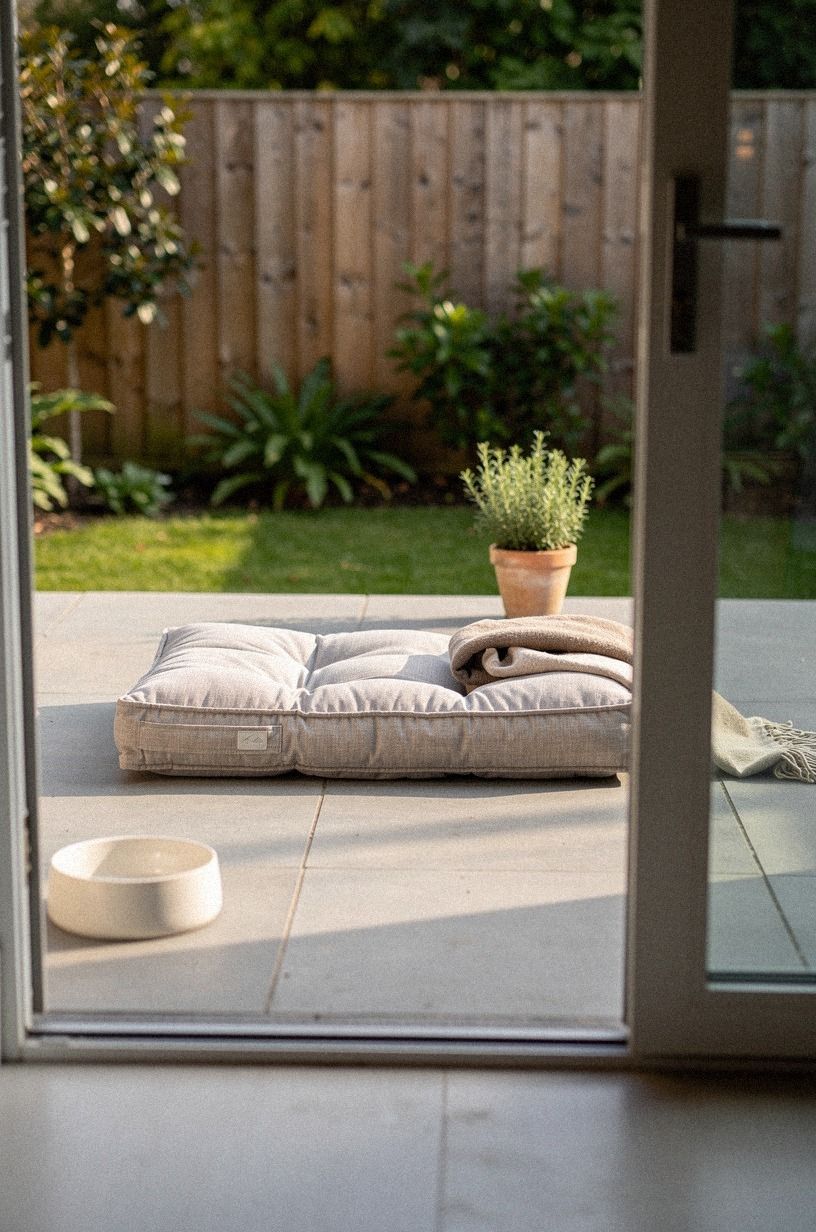
A wooden crate brings rustic character to a forest green, rust, and natural oak patio. Use the crate as an outer shell, then place a washable insert inside so the dog isn’t resting on rough boards. Oversized-chip terrazzo nearby can repeat the chunky texture without making every surface look newly installed.
Sand every edge, inspect the corners, and keep the crate raised slightly from soil or puddled paving. A removable liner means you can lift the textile out quickly after rain. You’ll want ventilation on at least two sides, and you don’t want the crate pressed tightly against a fence where damp air gets trapped.
For a budget version, repaint only the exterior with Sherwin-Williams Emerald Exterior in a deep green. Keep the interior finish smooth and fully dry before adding the cushion. And don’t seal the crate in a way that blocks airflow; the charm comes from the open slats, while the insert provides comfort.
7Anchor a raised bed beside the pool (The Poolside Dry-Zone)
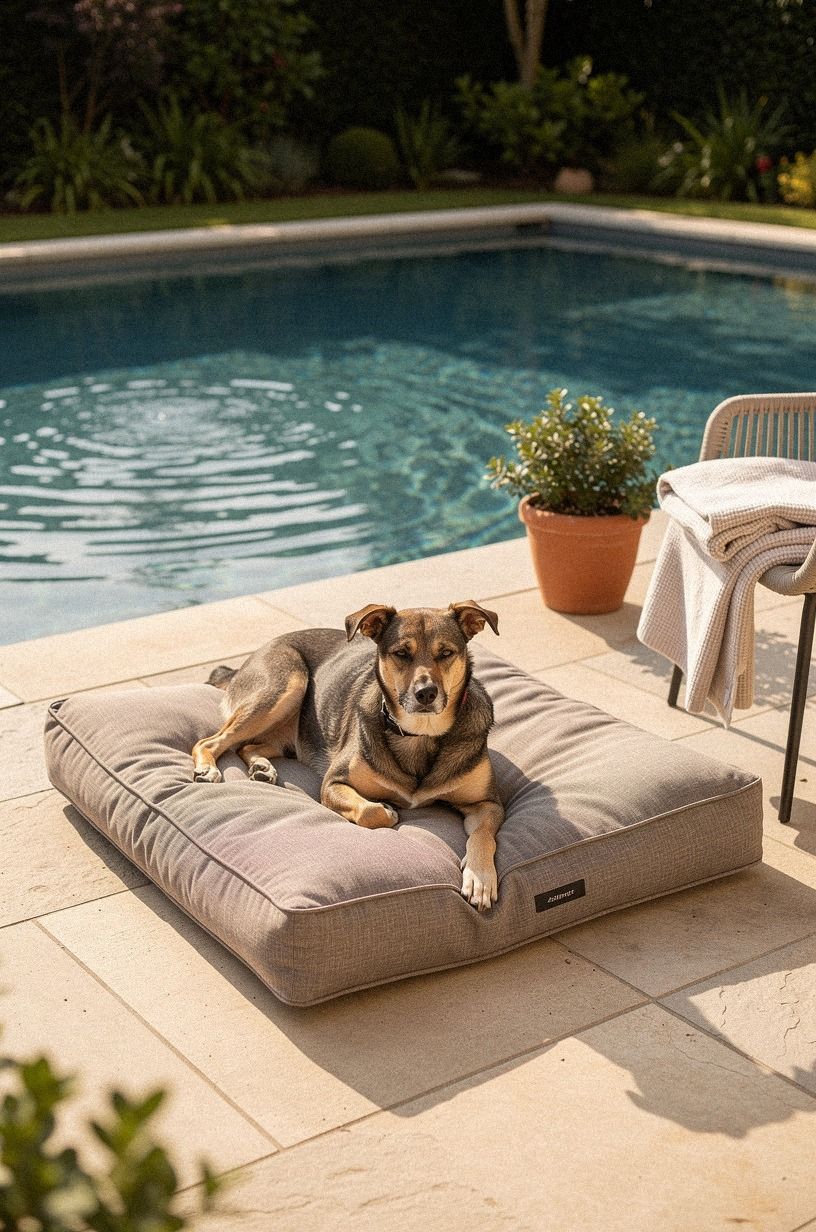
Pool areas need a dog bed that looks intentional but can handle splashes.
8Layer outdoor rugs beneath a washable mattress (The Soft Landing Stack)
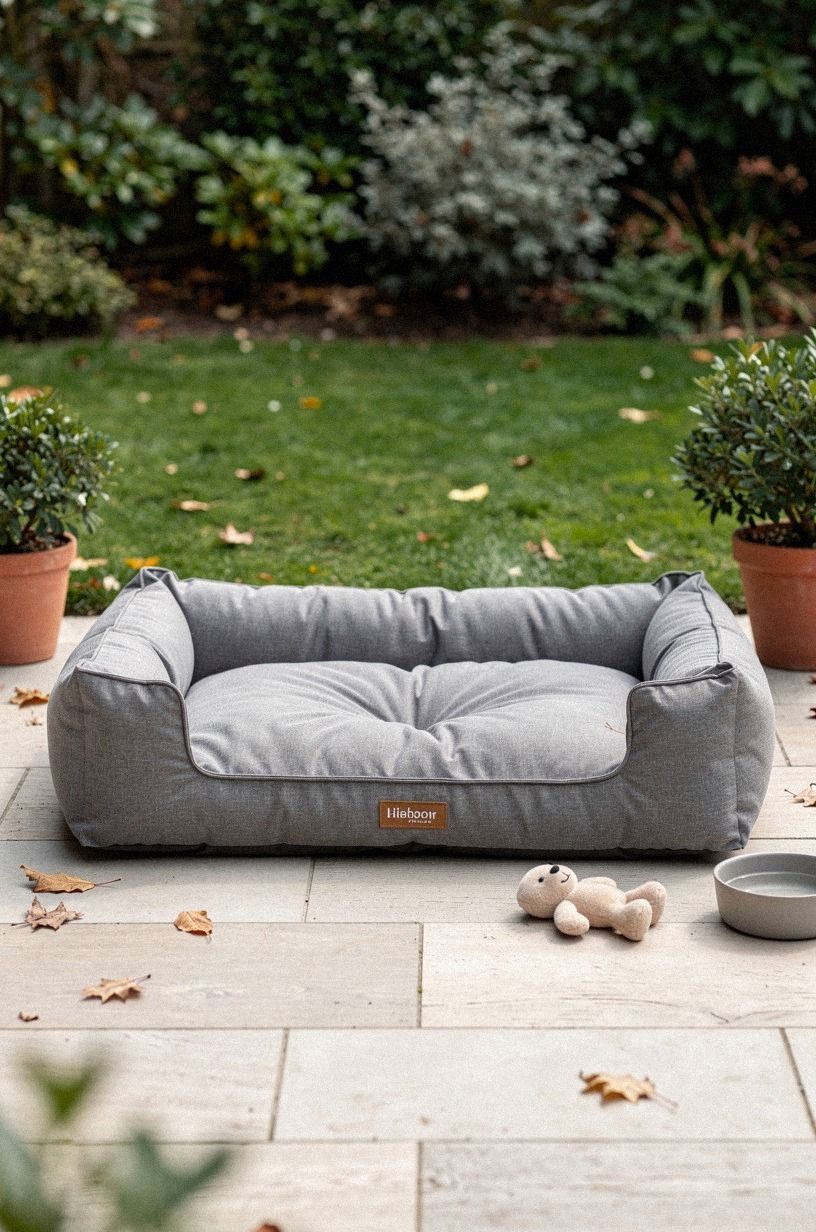
Layering rugs makes a basic outdoor dog bed feel more finished, especially on a broad porch with warm white walls and camel upholstery. Start with a flat polypropylene rug, then position the bed so the front legs or base sit on the rug rather than floating beside it. Shagreen accents can appear on a nearby tray or planter without touching the dog’s sleeping surface.
Use one large enough rug to connect the bed with a chair or side table. A smaller mat under the mattress can shift, collect water, and create a curled edge. You’ll want the layers to remain flat, and you’ll want the mattress cover to come off without moving every piece around it.
A black metal frame gives the warm white and camel palette enough contrast. Article Sven tan leather can inspire the nearby seating color, though leather furniture should stay out of direct wet zones. And if the rug begins to hold odor, remove the mattress first and wash the textile separately rather than masking the problem with fragrance.
9Carve a sleeping nook into the deck (Can a built-in outside dog bed work?)
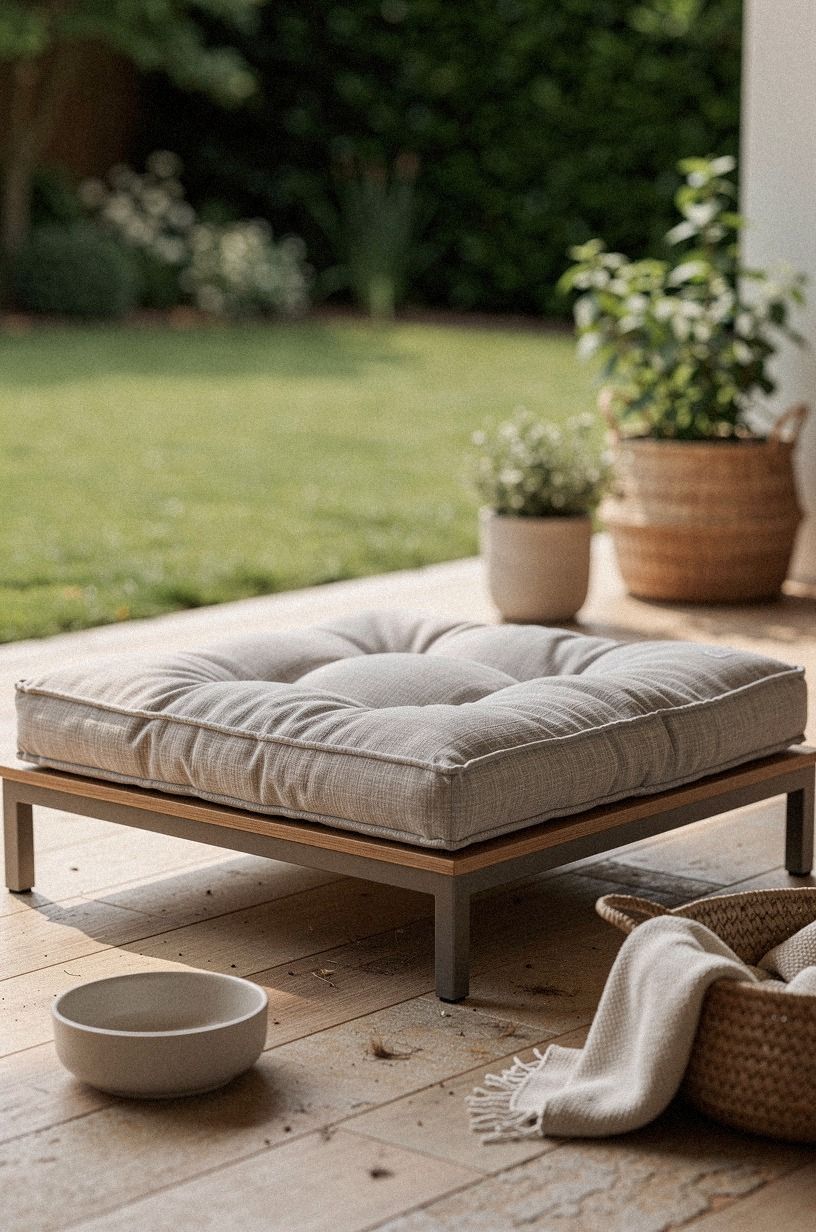
A deck nook can make an outdoor dog bed feel architectural, especially with midnight blue, copper, and ivory around it. Build the sleeping zone into a wide bench or under-seat opening, then line it with washed Belgian linen in a removable cover. The backyard remains visually calm instead of becoming the entire composition.
The opening should stay easy to reach and easy to clean. Leave airflow beneath the bench, keep the cushion above any deck drainage path, and avoid a deep recess that traps leaves. Your dog gets a protected corner, while you can pull the mattress out before rain arrives.
A built-in nook suits a larger deck better than a narrow balcony because the furniture remains fixed. Use copper-toned hardware sparingly, then let the grain of the deck carry the visual interest.
You’ll want the opening to feel generous, but you shouldn’t fill it with pillows that reduce turning space. Simple, low, washable, and calm works best here.
10Cover the bed with a striped canopy (The Soft Roof Effect)
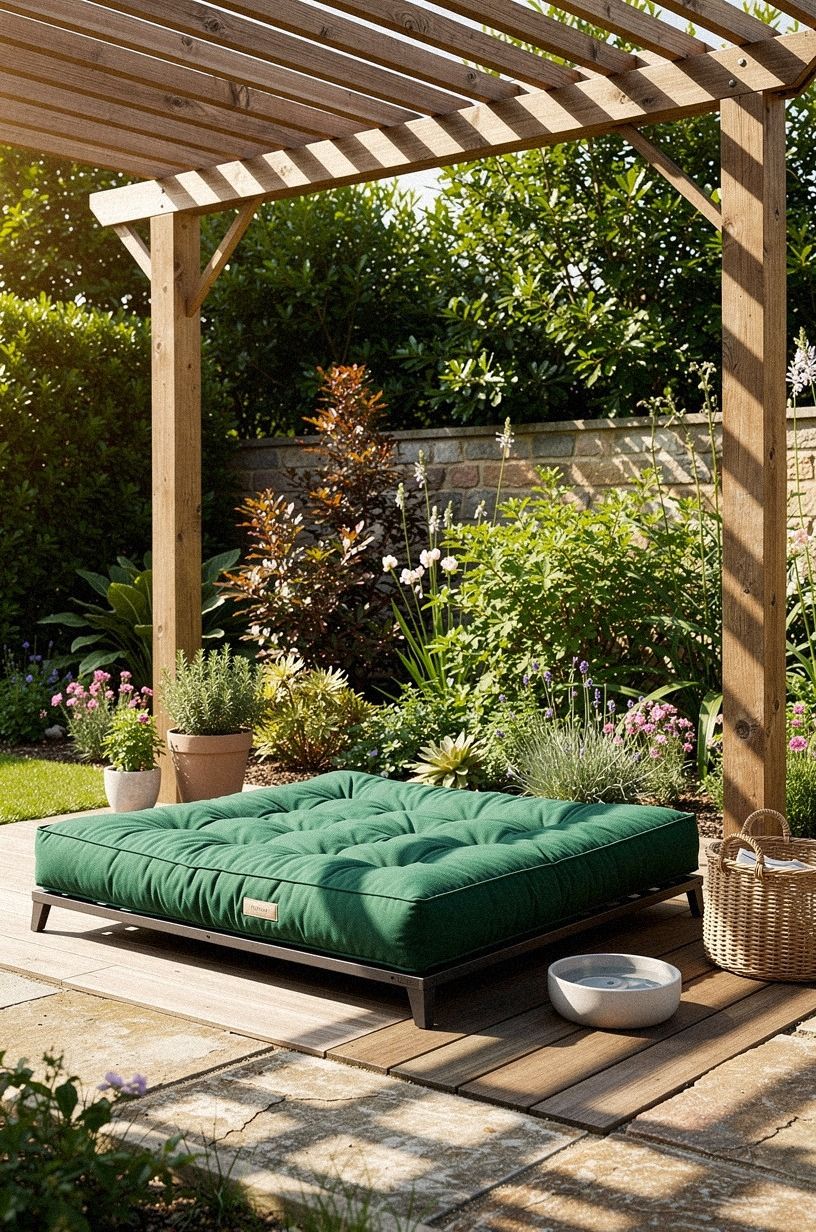
A striped canopy gives a dog bed a clear destination in a sage green, warm cream, and natural wood setting. Use a short canopy over the frame rather than a long drape that can drag through mud. Organic bouclé works well as a nearby accent, while the canopy itself should use a smoother outdoor fabric.
Keep the stripes broad enough to read from across the yard. Sage and cream can soften a dark fence, and natural wood keeps the look grounded rather than coastal. Your dog gets visual shelter, and you’ll have a simple way to introduce pattern without replacing the entire patio palette.
Paint the canopy frame with Farrow & Ball Exterior Eggshell, then allow full drying before fabric touches it. A canopy won’t block every angle of sunlight, so position the bed according to the shade pattern at midday. But don’t make the roof so low that your dog must duck; comfort matters more than a perfectly styled silhouette!
11Surround the cushion with smooth river stones (The Stone Border Method)
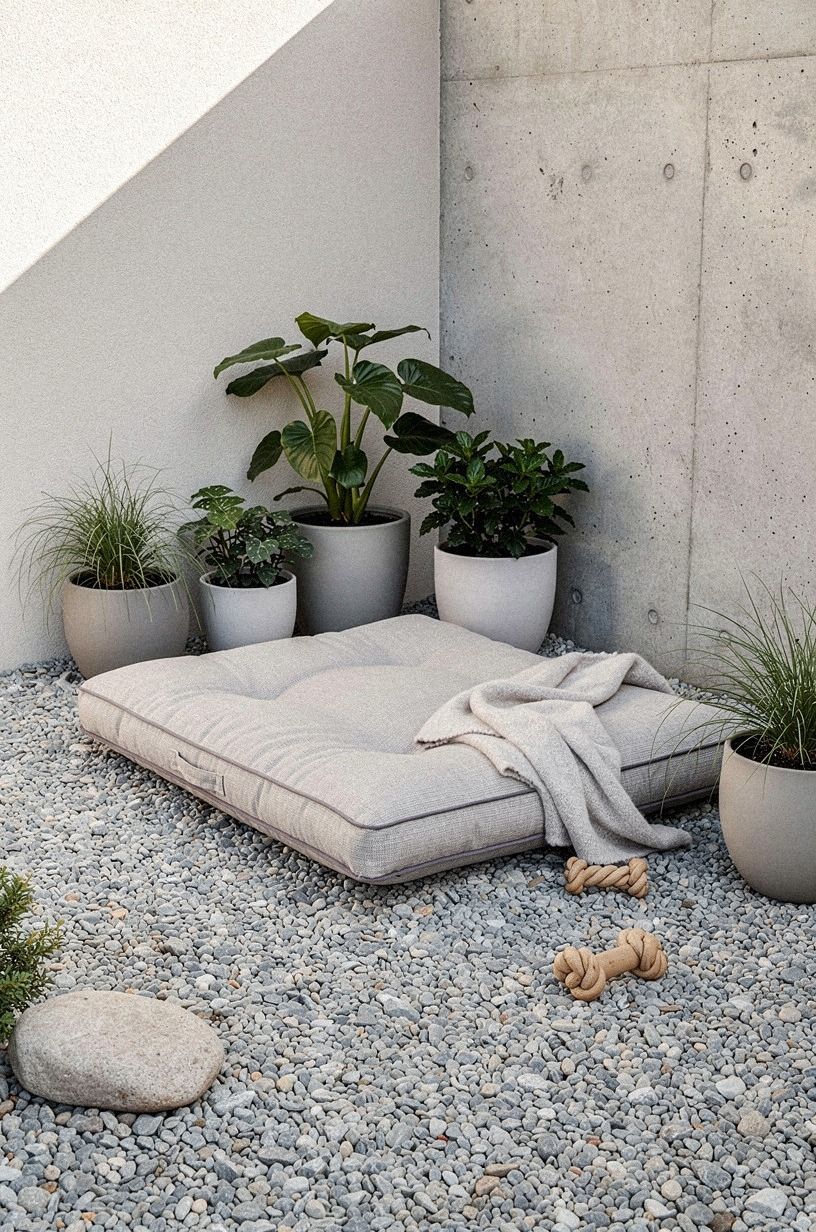
Smooth river stones can define an outdoor dog bed without adding a bulky frame. Arrange them around the outer edge of a cushion in terracotta, stone, and olive, leaving the sleeping surface clear. Nero Marquina black marble with white veining can appear on a nearby table or planter ledge for a sharper contrast.
The stones should stay outside the main step-in area. Loose pieces beneath the cushion can create uneven pressure, while stones that migrate into a walkway become a trip concern. Your dog gets a visual boundary, and you’ll keep the bed comfortable by treating the stones as landscape edging rather than padding.
Choose stones large enough to remain in place after sweeping. A low wood frame can hold the outer line, and an olive planter can soften the contrast. And if rain moves sediment across the patio, rinse the border before placing the cushion back.
The best version looks relaxed, but every edge still has a practical job.
12Mount a hammock bed between sturdy posts (The Four-Point Hang)
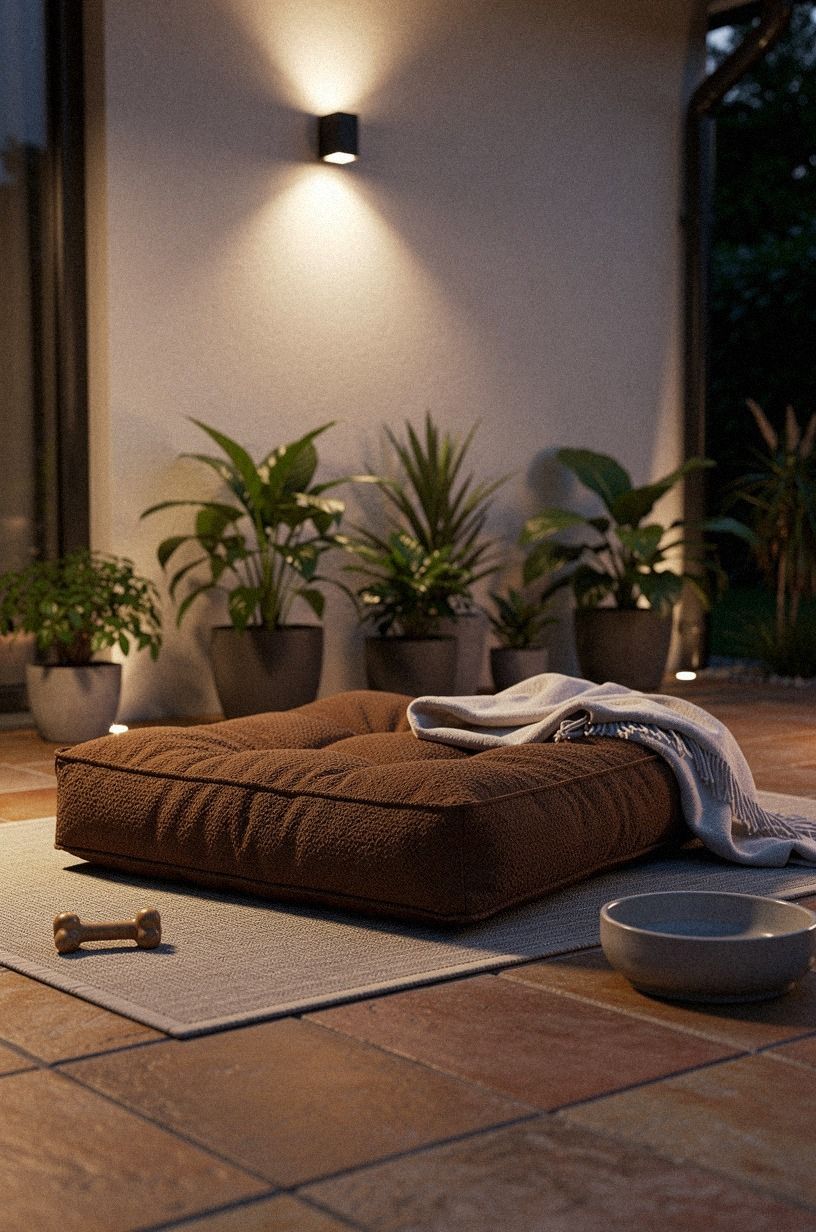
A hammock bed adds gentle movement to a clay, linen, and aged brass patio. Mount a washable sling between sturdy posts, keeping the fabric low enough for easy access. Deep-pile mohair velvet can inspire a nearby throw or bench cushion, but the hammock surface should remain breathable and washable.
Check every attachment point before allowing regular use, and inspect the fabric for stretching or frayed seams. The posts should not wobble when the sling shifts. Your dog can enjoy a suspended resting place, and you’ll avoid a cushion sitting directly on dusty paving.
Keep the hammock away from sharp corners, pool edges, and busy gates. A clay-colored frame works with terracotta planters, while aged brass hardware adds a restrained glint.
You’ll want enough tension for support without making the fabric rigid. If the sling sags too deeply, adjust the mounting height rather than adding loose padding underneath.
13Paint the frame to match the fence instead of matching the cushions (The Quiet Camouflage Rule)
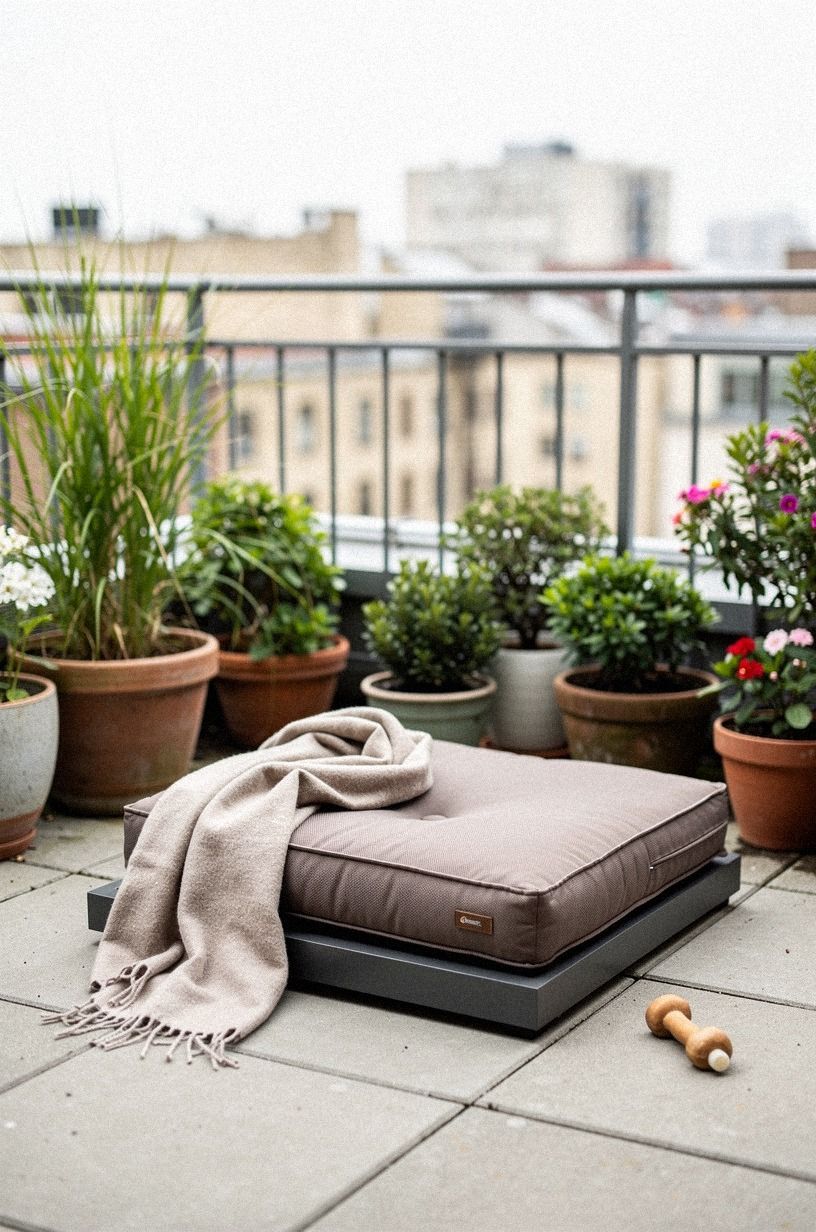
Matching the bed frame to the fence makes the sleeping area recede, which helps a small backyard feel less crowded. Use a plum, grey, and rose gold palette, then let Carrara marble with subtle grey veining appear on a nearby surface rather than under the dog bed. The result feels layered without adding more furniture.
Paint the frame with an exterior product made for the material, and keep the color close to the fence rather than slightly brighter. Benjamin Moore Chestertown Buff HC-9 can work for a warm fence direction, while a grey frame may suit stone paving better. You’ll want the bed to disappear visually, but not become hard to locate at night.
A matching frame is usually calmer than a matching cushion, because the textile can change with the season. Keep the cushion removable and choose a washable cover with a subtle pattern. But don’t paint over hardware that needs inspection; leave moving parts visible so maintenance stays simple.
14Add a retractable sunshade above the bed (The Step-Out Shade)
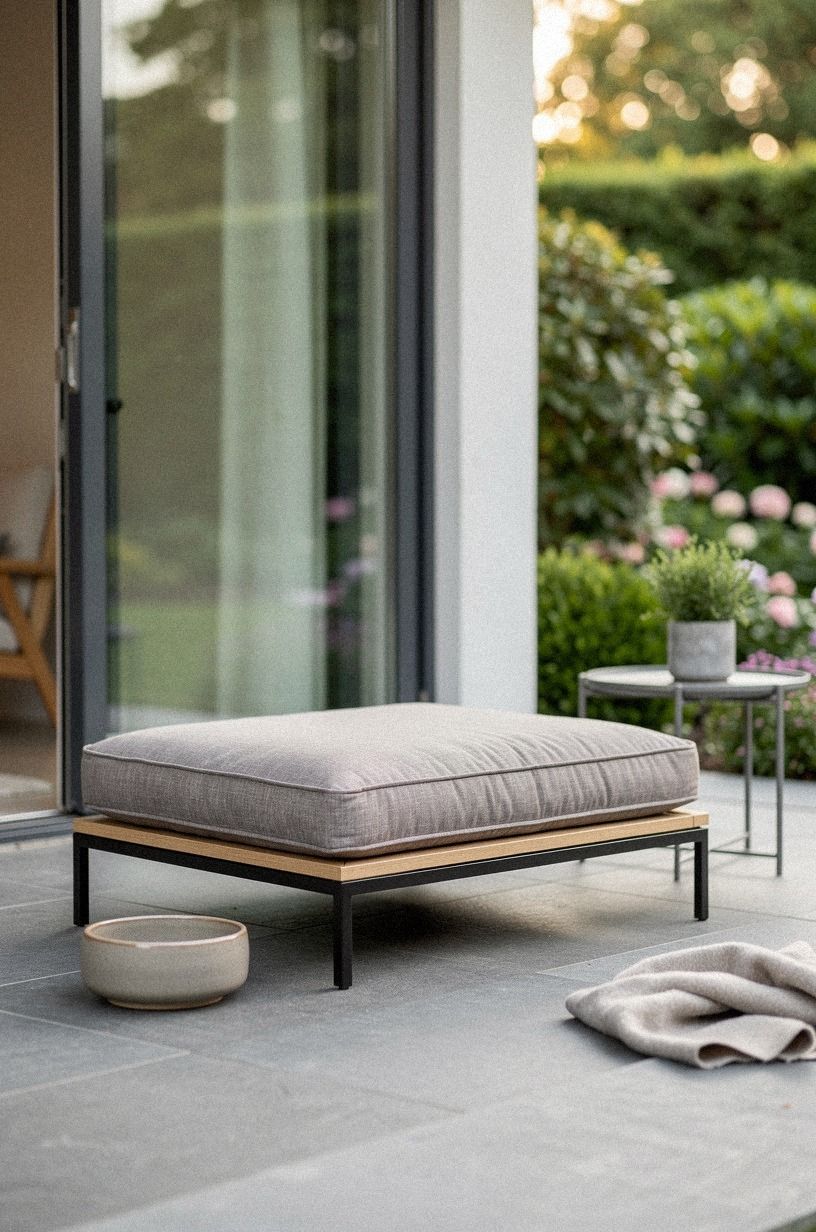
A retractable shade creates flexible protection for a navy, white, and walnut dog bed. Extend it during bright afternoons, then pull it back when the air cools. Reclaimed weathered teak adds a tactile anchor, especially beside a door or deck step where the backyard remains clearly visible.
Use the same coverage logic as a patio umbrella: the shade should extend beyond the table or bed area rather than stopping directly at the edge. The standard reference is roughly 2 ft beyond each side of a table. Your dog gets a wider shadow, and you’ll reduce the chance of half the cushion sitting in direct sun.
Choose a shade fabric that rolls away cleanly and inspect the mechanism after storms. A retractable system costs more than a fixed cloth panel, but it gives the patio more daily flexibility. And if the shade is attached to a wall, keep the bed far enough from the door swing that people can pass without stepping over it.
15Place the bed beside the back door (The Golden Return Zone)
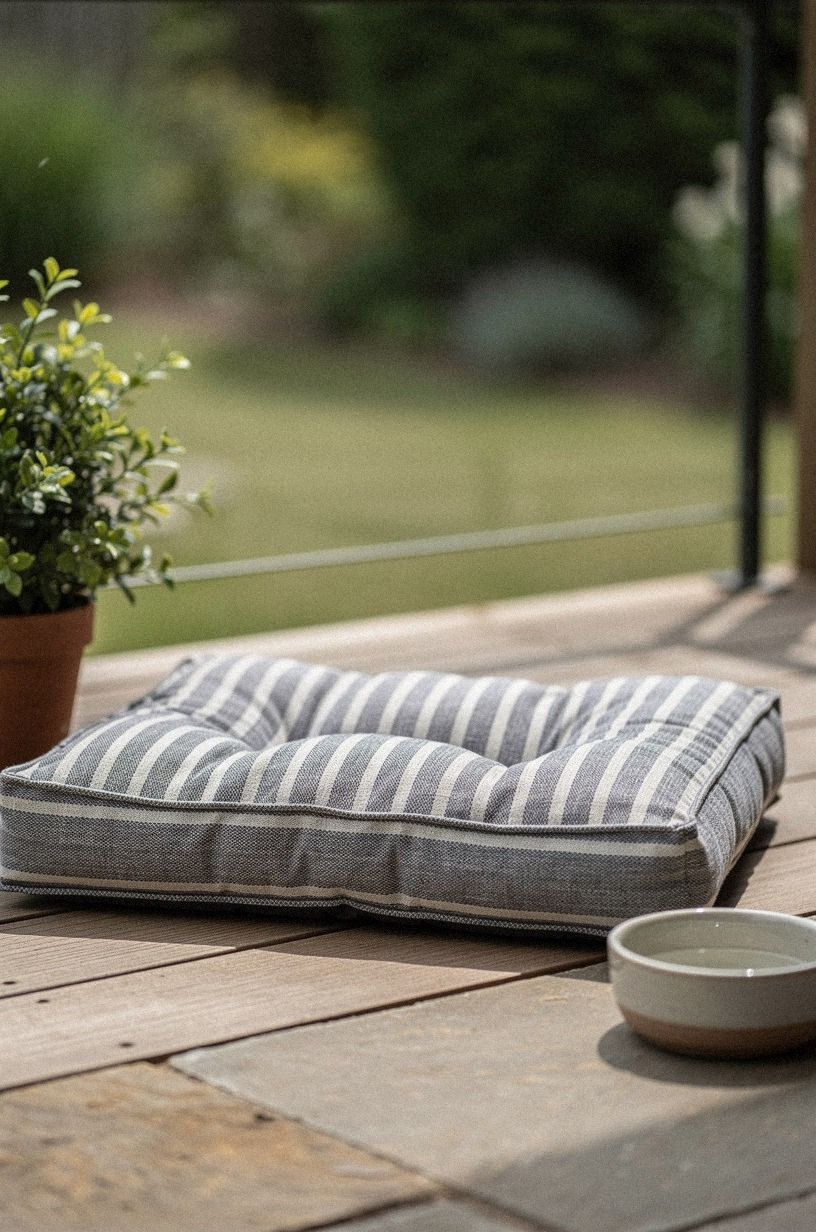
A bed beside the back door works because the location supports daily routines. Use emerald, gold, and cream around a cushion framed by Calacatta marble with gold veining on a nearby threshold or side table. Your dog can settle near the household flow, and the bed stays easy to move indoors before rough weather.
Keep the doorway clear and preserve at least 36 in for walking. A low raised frame is easier to shift than a heavy built-in, while a washable cover handles muddy paws. You’ll want a small towel station nearby, but you don’t want loose baskets narrowing the entrance.
For wider patio planning, typical US outdoor project costs often fall into these ranges:
A simple dog bed can stay well below a full patio project when the frame already exists. Sunbrella cushions commonly sit in the $40-$150 each range, while a polypropylene rug may run $80-$400. That contrast helps decide whether to refresh the sleeping surface or rebuild the whole corner.
The Outdoor Dog Bed Decision Rule
The strongest outdoor dog bed usually begins with location, not decoration. Shade comes first, drainage comes second, and access comes third.
A gorgeous cushion placed beside a hot wall won’t feel inviting for long, while a plain raised cot under a pergola may become the spot used every day. Your patio should support the bed before the bed asks the patio to perform.
Material choice follows the location. Polypropylene suits exposed flooring because it handles outdoor use with less fuss than jute. Washed linen looks relaxed under cover, while dense upholstery fabric belongs on a removable layer rather than a permanently exposed mattress.
Unlacquered brass can age attractively, but it still needs sensible placement away from standing water.
Budget matters too. A full outdoor project can reach $200-$900 at the budget tier, while mid-range patio updates often reach $1,500-$6,000.
That doesn’t mean a dog bed requires a major spend. Your best first move may be a raised frame, a washable cover, and one reliable shade source.
And if those three pieces work together, decorative additions can wait!
The Questions Worth Answering First
What is the best outdoor dog bed idea for a small backyard?
A raised cot or a bench cushion usually works best because the footprint stays compact and airflow remains available. Birch-effect modular storage can inspire a nearby organization zone, but keep the dog bed itself washable, low, and easy to move when the yard needs cleaning.
Where can you buy outdoor dog bed pieces on a budget?
Look at IKEA, Wayfair, Target, Facebook Marketplace, and local thrift stores for frames, cushions, and planters. Polypropylene outdoor rugs can offer practical coverage from $80-$400, while second-hand wood can become useful after sanding, inspection, and an exterior finish.
How much does an outdoor dog bed makeover cost?
A small refresh can land around $100 to $300 when an existing frame is available. Outdoor textiles usually create the biggest visible change, while free improvements include moving the bed into shade, clearing the walkway, and washing the cover rather than replacing every piece.
Can you create an outdoor dog bed on a budget?
Yes, and the first steps don’t require a full patio renovation. Use a crate or bench already on hand, add a washable cover, and create shade with an existing pergola or umbrella. A raised frame is the best place to spend first because airflow protects the cushion from damp ground.
Is an outdoor dog bed worth it in a small space?
Yes, because a defined resting zone can prevent cushions, towels, and blankets from spreading across the patio. A corner cot keeps the center open, especially when the bed sits beside a fence or door and leaves a 36 in walking route through the space.
Is an outdoor dog bed a good idea for a rental?
Yes, when the setup uses removable pieces. Choose a freestanding cot, a tension-mounted shade, and a washable rug rather than drilling into walls. Removable outdoor textiles can create a finished look without permanent changes, and every component can move to a new porch later.
Where to Start First
If one option deserves the first slot, choose the raised cot bed. The air gap keeps damp grass away from the cushion, which makes every later textile choice easier. Pin the raised outdoor dog bed setup for later, then review these summer patio rug mistakes before buying a mat.