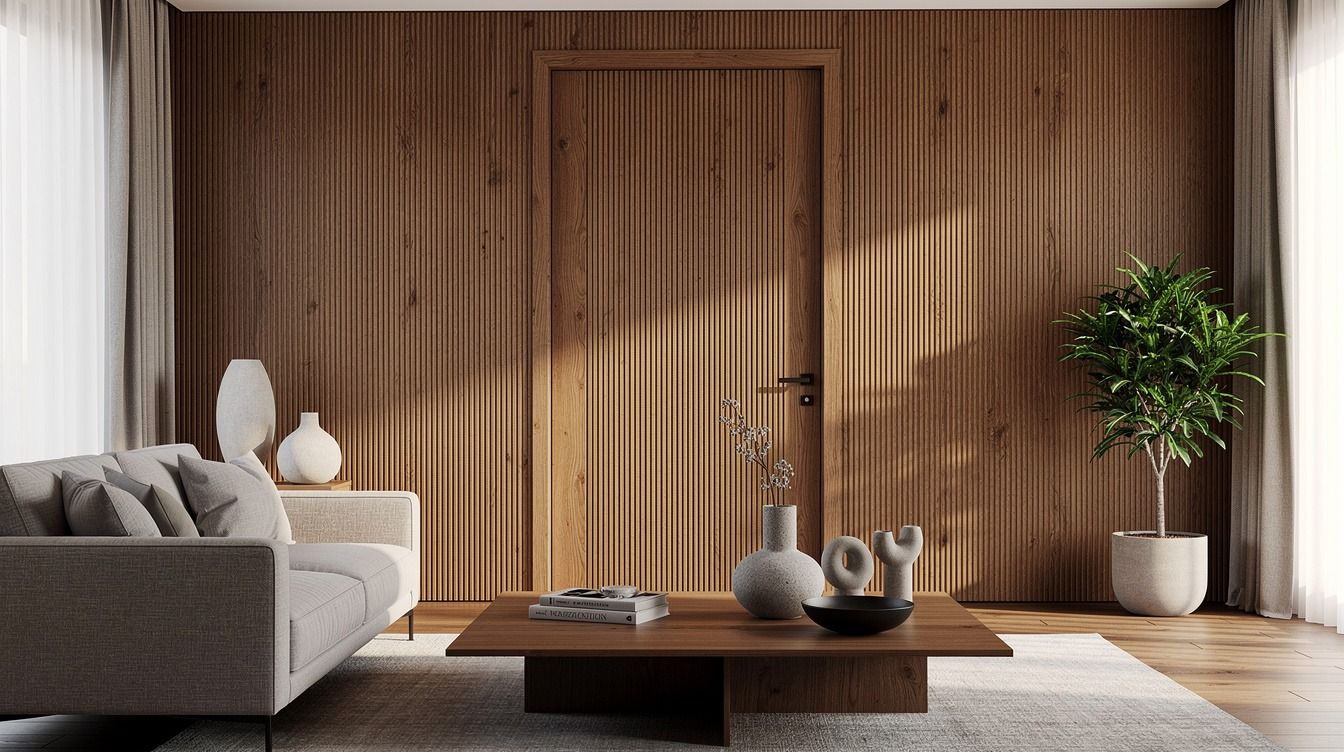
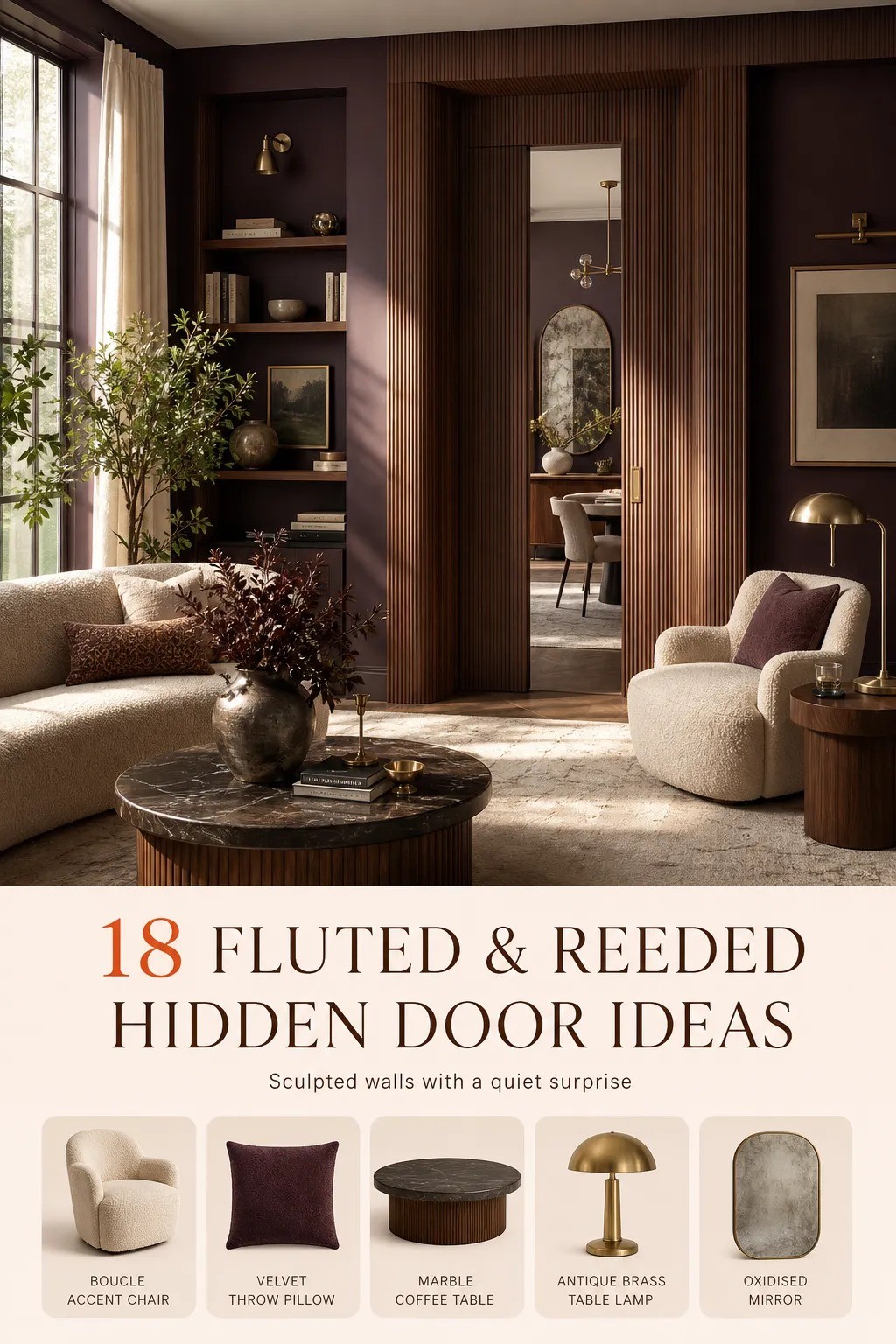
Fluted & reeded hidden door ideas for a textured statement wall work best when the textured millwork reads as architecture, not a novelty. I learned that the hard way after overplaying the hardware on an early living room project. Once you let the texture do the talking, the whole wall settles down. That is what you are after here.
Don’t overthink: Hide the latch inside a vertical groove.
- Wrap the doorway in continuous reeded walnut
- Hide the latch inside a vertical groove
- Frame the opening with matching fluted pilasters
- Run slats across the door and wall
- Can a media wall fully disguise a door?
- Blend the seam into floor-to-ceiling reeds
- Should the hidden door be darker than the wall?
- Add brass pulls inside one slim flute
- Continue crown molding over the detail door
- What cerused white oak arches do for the reveal
- The Oversized Panel Disguise
- Pocket the door behind fluted oak cladding
- Mirror the fluted wall beside the fireplace
- Why moody charcoal is the smartest reed finish
- The West Elm Panel Grid Approach
- Align every slat with the baseboard
- Soften the reveal with warm LED grazing
- Bookmatch reeded panels across the hidden opening
1Wrap the doorway in continuous reeded walnut
Start by thinking about the whole wall, not the door alone. If you want this living room move to feel expensive, you need the opening to disappear inside a full field of cerused walnut instead of stopping at a visible casing.
I made the mistake once of trimming the door like a feature. It looked fussy right away.
Let the reeds run floor to ceiling, and keep the spacing steady so your eye doesn’t pause at the jamb. If your sofa is a deep Article Sven style profile in the standard 35-40 in range, that long vertical texture helps the seating wall feel taller without adding visual noise.
You can see the same full-wall logic in these hidden door in wall paneling ideas. If you want a broader treatment comparison, these wood hidden door ideas hit the same restraint from a different angle.
I wouldn’t mix three wood tones here. Use one dominant wall wood, then let one secondary tone show up in the coffee table or flooring. Your room feels calmer when the wall acts like built-in millwork, and that’s the whole point.
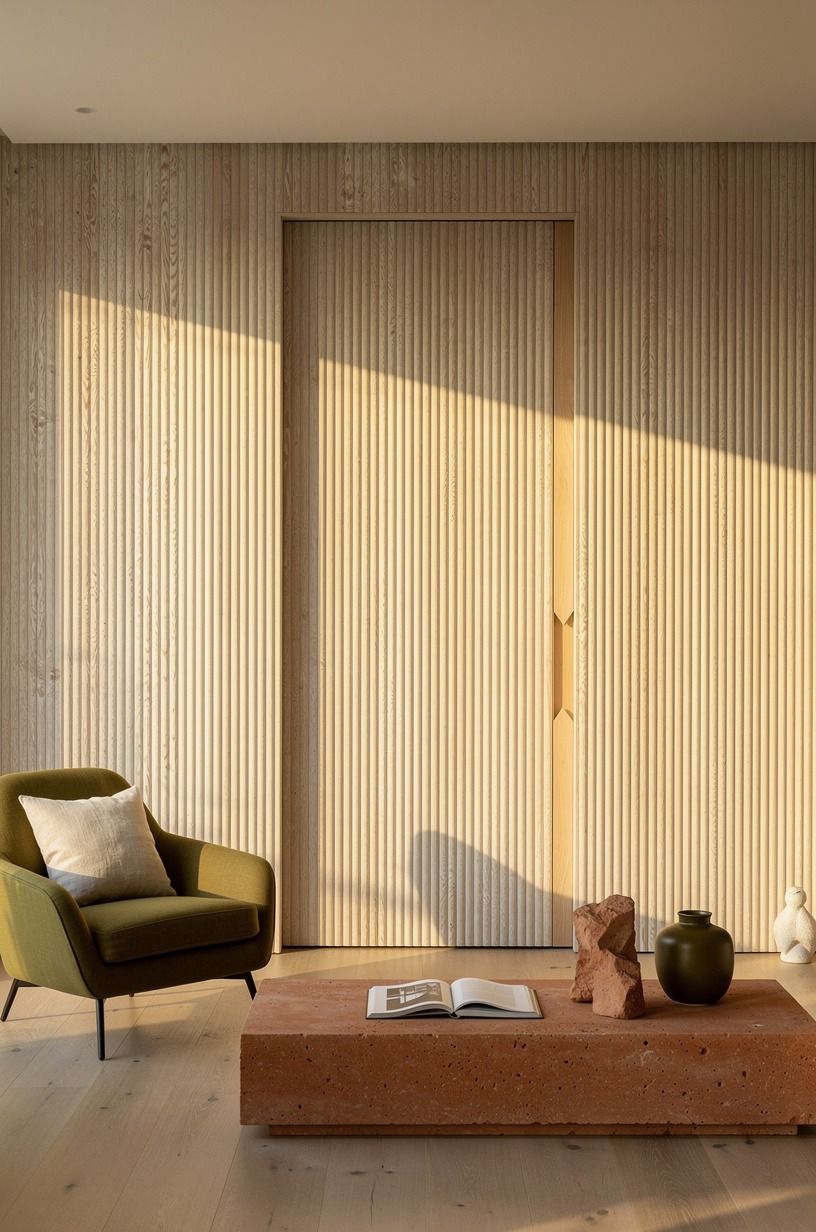
2Hide the latch inside a vertical groove
This is one of those details you notice only when it’s wrong. If the handle interrupts the reeds, your eye goes straight to the door, and you lose the illusion before you even cross the room. Tuck the grip inside one narrow oak groove so the wall keeps reading as one surface.
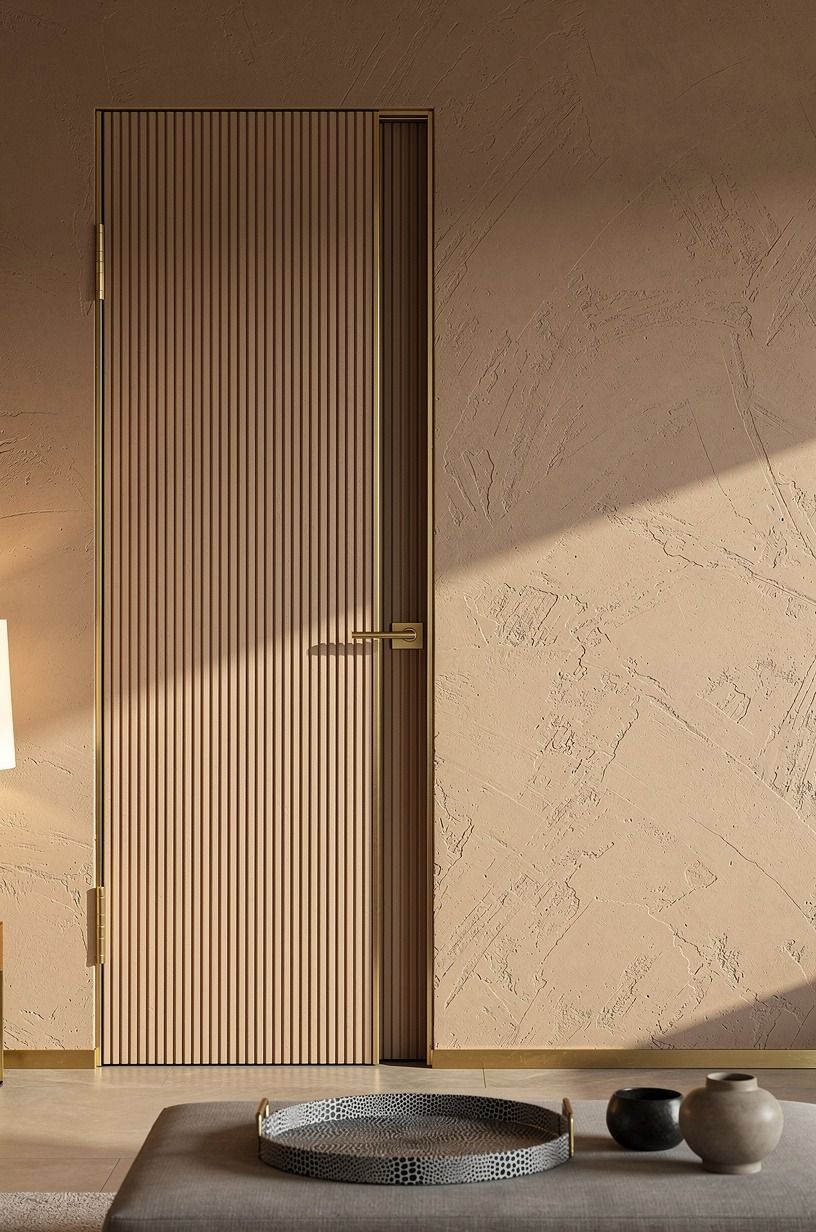
You don’t need flashy hardware. A recessed touch point in aged brass works better than a proud pull, especially if you’re walking toward the wall from a first-person angle and the latch sits slightly off center.
That tiny offset keeps the composition relaxed instead of stiff. The little detail shows up in utility door wall ideas too, where precision beats pride.
And if you are nervous that guests won’t know how to open it, do not be. People figure out one discreet access groove fast, especially when the wall already tells them where to reach. It feels generous, not hidden.
3Frame the opening with matching fluted pilasters
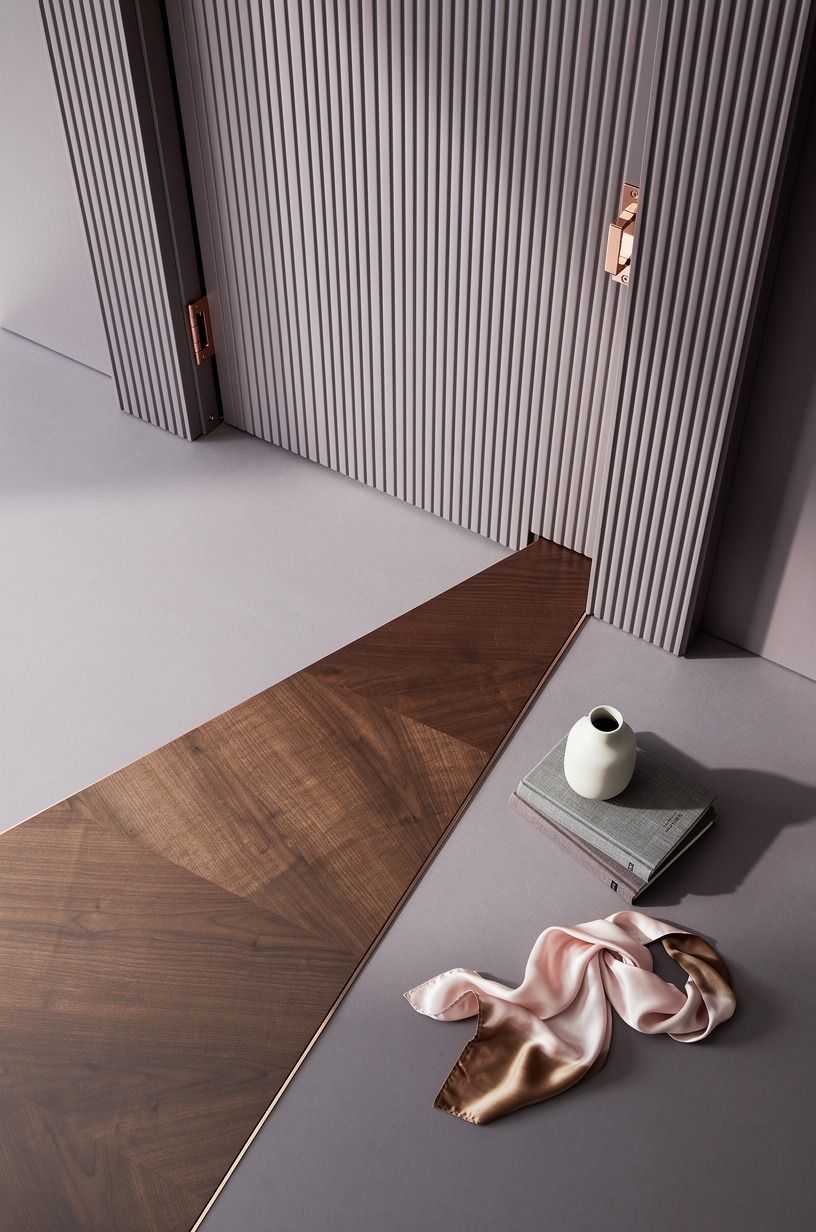
Pilasters can save this look when your doorway sits in a wide living room wall and needs a little rhythm. Use two fluted side pieces in the same white oak profile so the concealed opening feels intentional, not accidental. Your threshold looks finished from above, even in a bird’s-eye editorial angle.
I’d keep the pilasters slim. Thick, heavy posts can make the wall feel stagey, while a narrow 3/4-inch solid white oak build gives you enough relief to define the opening without shouting. If you like this more architectural approach, the proportions pair well with these wood hidden door ideas for warm wall treatments.
For a broader pattern study, browse hidden wardrobe door ideas and notice how the proportions repeat themselves.
But match the spacing exactly. Once one edge flute widens, the disguise starts to wobble, and you can spot the door from across the room.
4Run slats across the door and wall
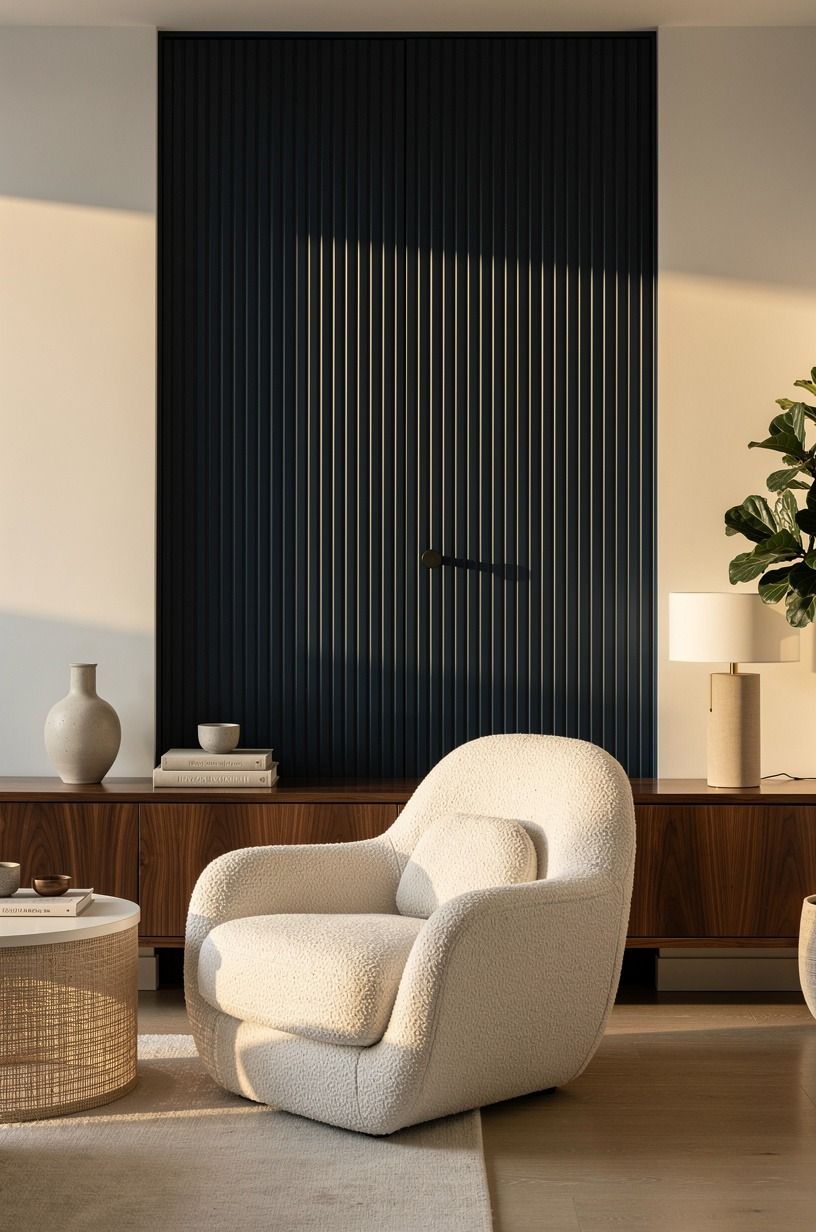
The easiest way to make a concealed opening feel believable is to carry the same vertical rhythm across everything. Run the slats over the door face and continue them onto the wall in one unbroken pattern of reeded oak. When you view it at a 45-degree angle, the line work should pull your eye sideways, not inward.
Keep your reveals slim and consistent. A living room with an 8×10 rug, a low media console, and a screen wall already has enough horizontal interruption, so those vertical slats need to stay disciplined. I like this when the TV sits at about 1.5-2.5x the screen diagonal from the sofa because the wall still feels clean when you’re seated.
If you want more examples of that long-line treatment, this roundup of tv wall with hidden door ideas is worth a look. It proves that the slat pattern matters more than the gadgetry.
5Can a media wall fully disguise a door?
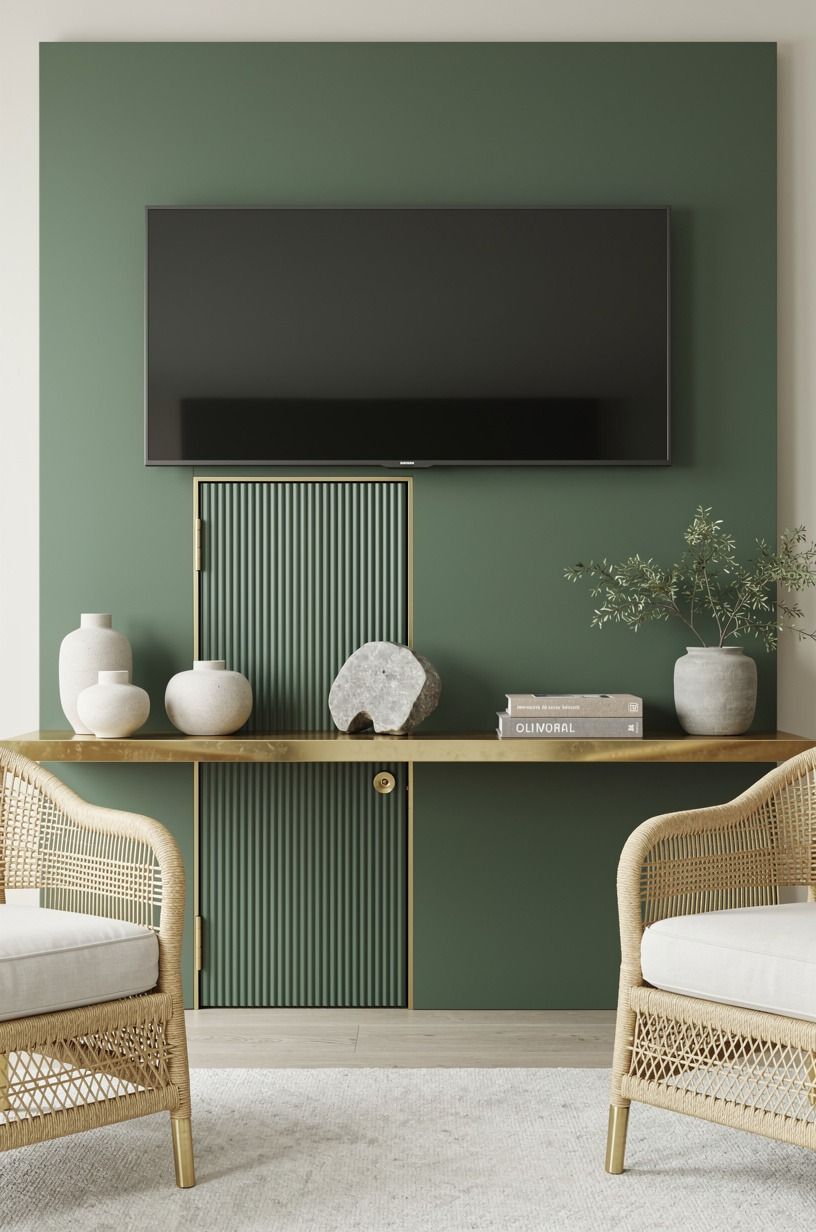
It can, if you’re willing to work with the screens and consoles you already own.
6Blend the seam into floor-to-ceiling reeds
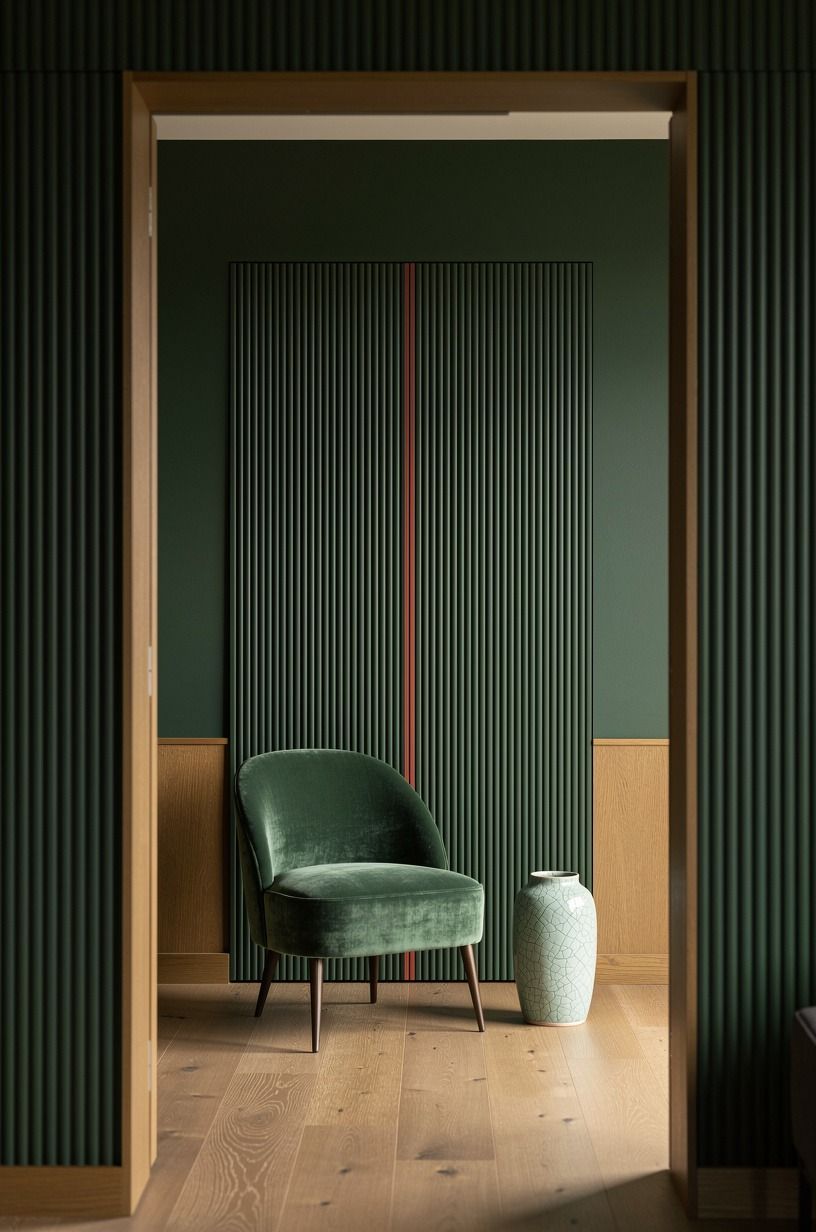
Your seam should be the last thing anyone notices. When the wall is covered in full-height vertical reeds, the join can hide inside the natural shadow lines as long as the groove depth stays consistent from baseboard to crown.
View matters here. When you’re seeing the wall through another doorway, even a tiny shift becomes obvious, so I’d rather simplify the handle, the paint, and the trim than overcomplicate the carpentry. A restrained wall usually looks richer from a distance because the shadow line carries the drama, not the hardware.
If you want a sister idea with that same disappearing act, these wood hidden door ideas for warm seamless walls get the restraint right. Your living room doesn’t need more decoration. It needs a quieter wall treatment.
7Should the hidden door be darker than the wall?
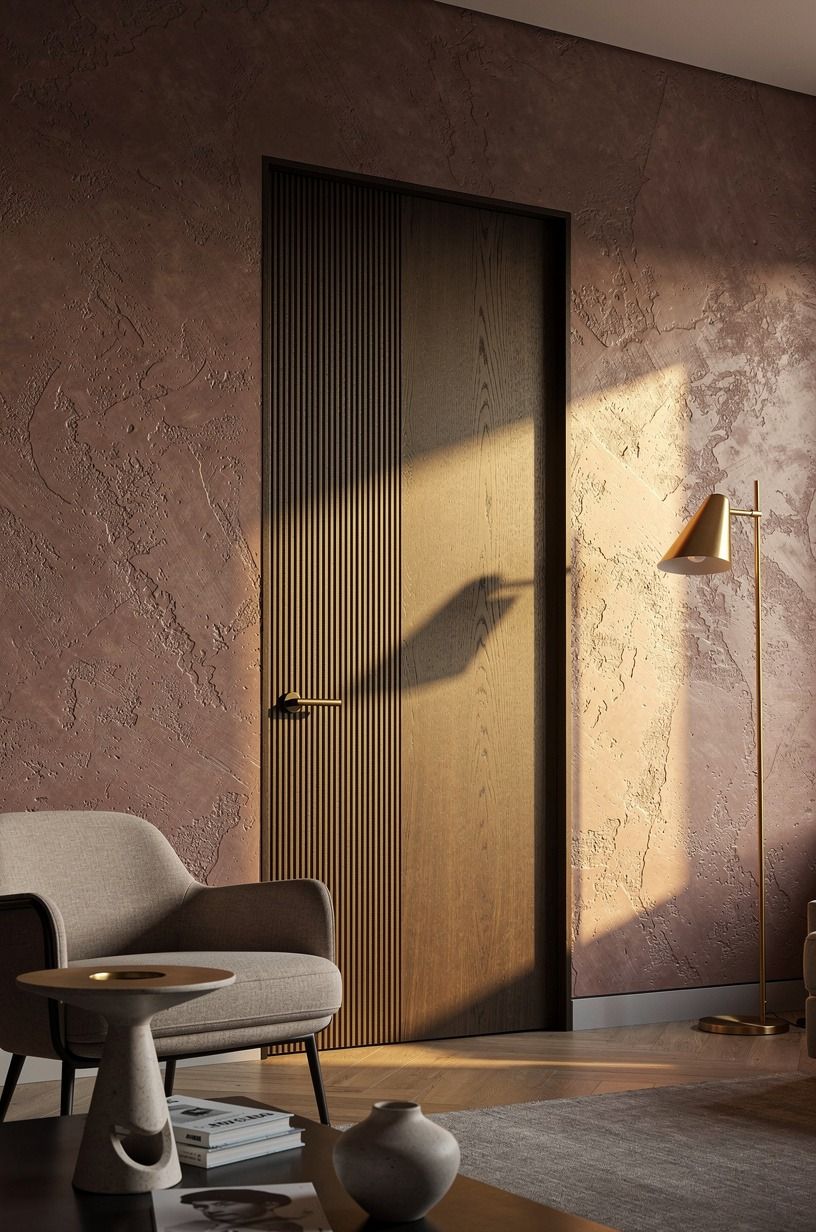
Yes, and here’s why it works. When the concealed opening reads as depth instead of outline, the wall stops trying to “hide” the door and starts using it as a shadow.
I’m talking a stain one step deeper on the same wood species, not a contrasting tone. Think a richer smoked walnut against the surrounding natural oak, and the brain reads it as recession rather than interruption.
The usual objection is that darker makes the door obvious. But once the reeds continue across both planes, the dark tone reads as a soft plinth, like the wall has a quiet room carved into it.
Want the effect at lower cost? A single coat of Minwax Provincial on raw oak gives you that exact warm depth for about twenty-five bucks, and you can test it on one flute before you commit.
For a deeper end of the spectrum, drift toward Rubio Monocoat Charcoal only on the door slab itself.
I’d avoid the temptation to make the whole wall darker just to match. The contrast should live in one component, and the rest should stay light and inviting.
8Add brass pulls inside one slim flute
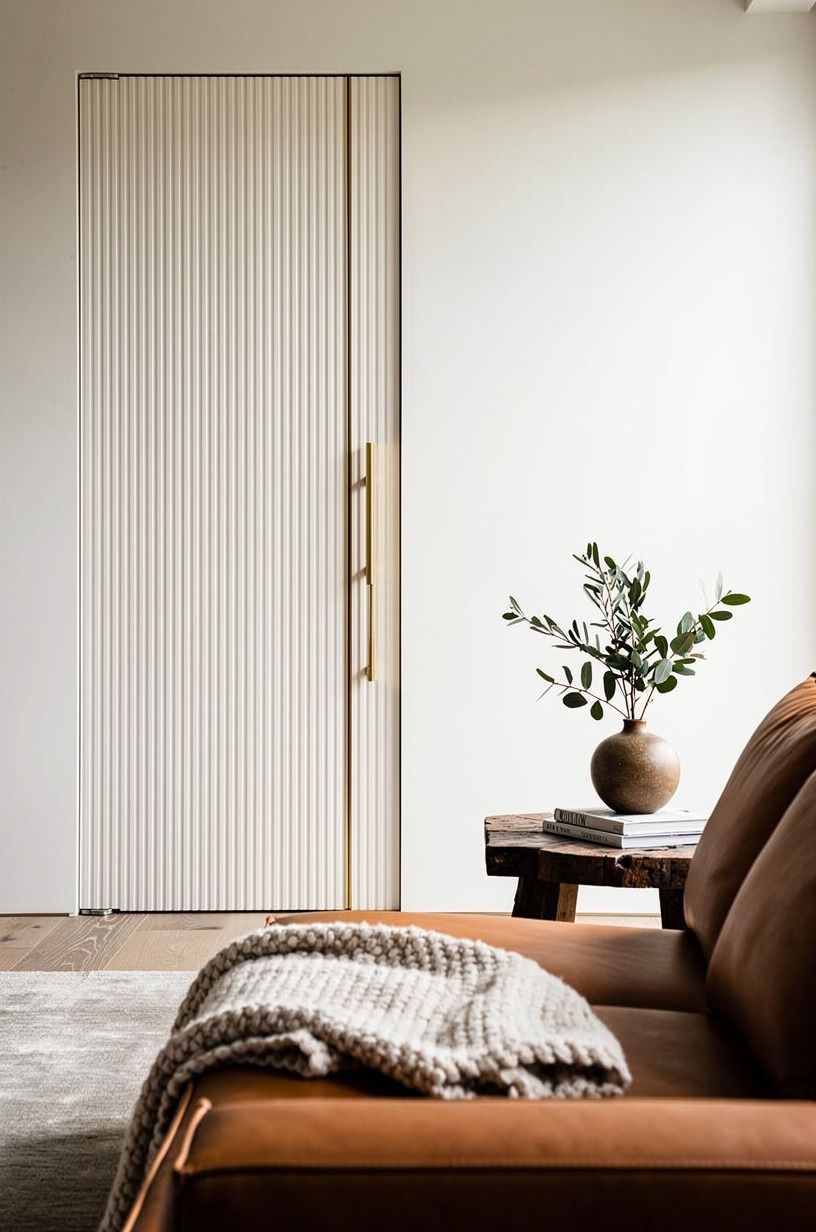
If you need a visible pull, make it tiny and tuck it inside one narrow line. A slim recessed brass pull gives you enough function without breaking the rhythm of the reeds, especially from that relaxed three-quarter view near the seating area.
Keep the brass warm and quiet. I like unlacquered brass here because it softens over time, and that slight patina sits better against walnut than a super-polished finish. If your seating mix includes cream linen and a dark rug, the hardware should feel like a whisper, not jewelry.
You can study a similar balance of concealment and function in these hidden utility door ideas for a tidy wall. Your hand needs to find the recessed pull. Your eye doesn’t.
9Continue crown molding over the detail door
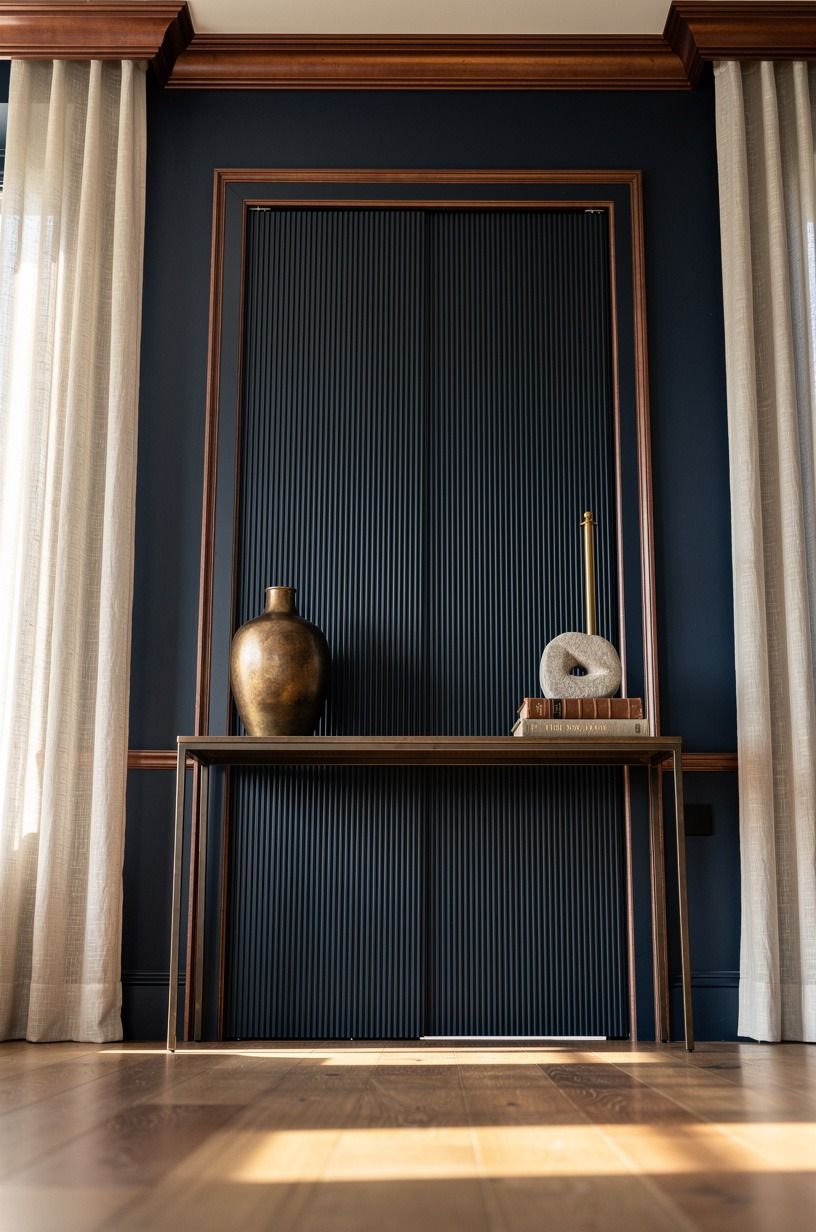
Crown molding is where a lot of concealed walls fall apart. If the top line breaks, the whole disguise goes with it, so carry the same painted crown straight across the opening and keep the profile aligned to the fraction. From a low floor-level view, that upper continuity sells the room more than the door face does.
This is where a moody paint can help. A run of reeds under Farrow & Ball Hague Blue No.30 or another deep tone gives the shadows something to work with, and the crown reads as part of the architecture instead of an afterthought.
I learned this after leaving the crown off once. The omission screamed louder than any knob ever could.
But don’t pile on extra trim below. One clean crown line is elegant.
Busy headers and stacked moldings just announce the opening you were trying to hide. For a calm contrast study, look at bedroom concealed door treatments where trim tends to disappear into the wall finish.
10What cerused white oak arches do for the reveal
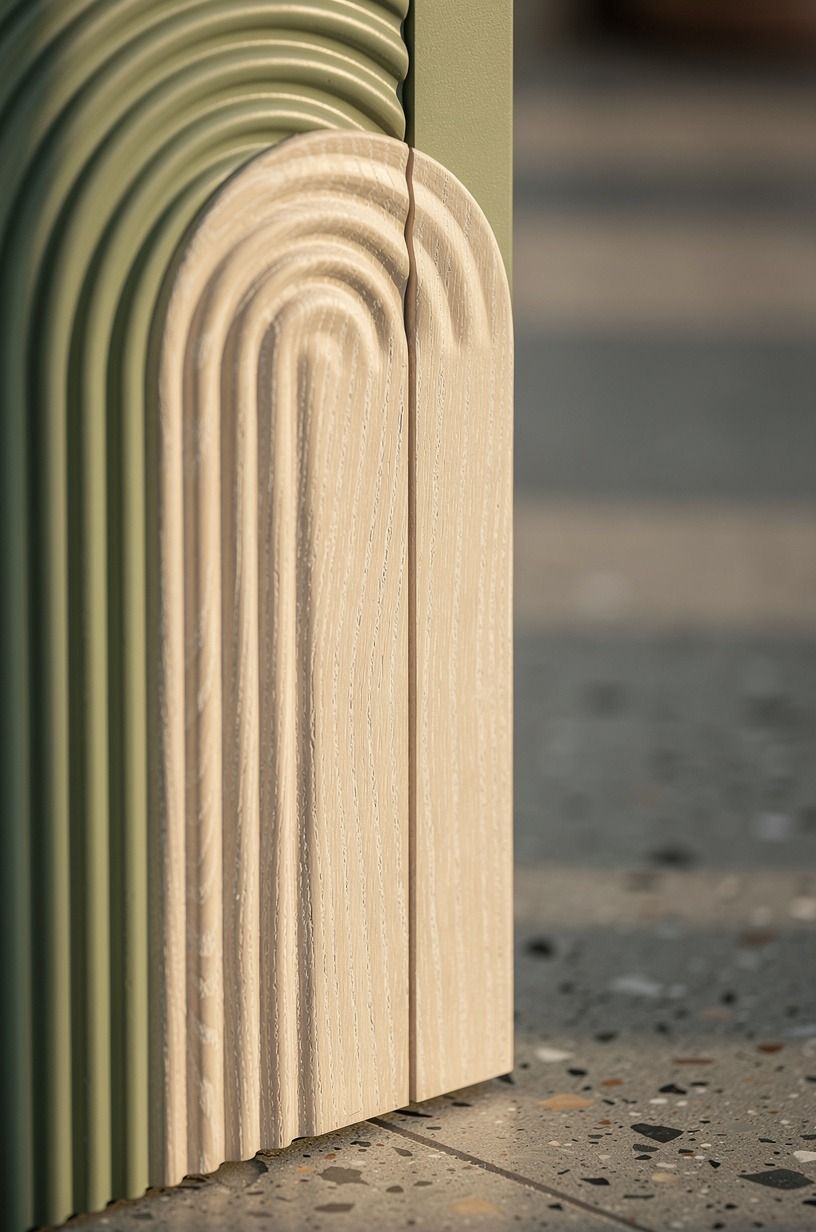
A straight vertical field can feel strict, so an arched rhythm is a smart way to bring some grace back in. Let the curve form inside the cerused white oak grooves themselves, not as a separate applique, and the opening feels gentler the second you get close.
This is best as a detail move, not a whole-room theme. In macro view, the soft arch, the fine seam, and the oak grain do enough work on their own, especially if your palette already includes warm plaster, clay linen, and one rounded chair silhouette. You don’t need to repeat the arch on every object.
Would I use this in a very sharp, modern media room? Probably not.
But in a softer living room with boucle seating and linen, the curved groove can be the detail that keeps the wall from feeling severe. The arch becomes the feature, the door becomes the punctuation.
11The Oversized Panel Disguise
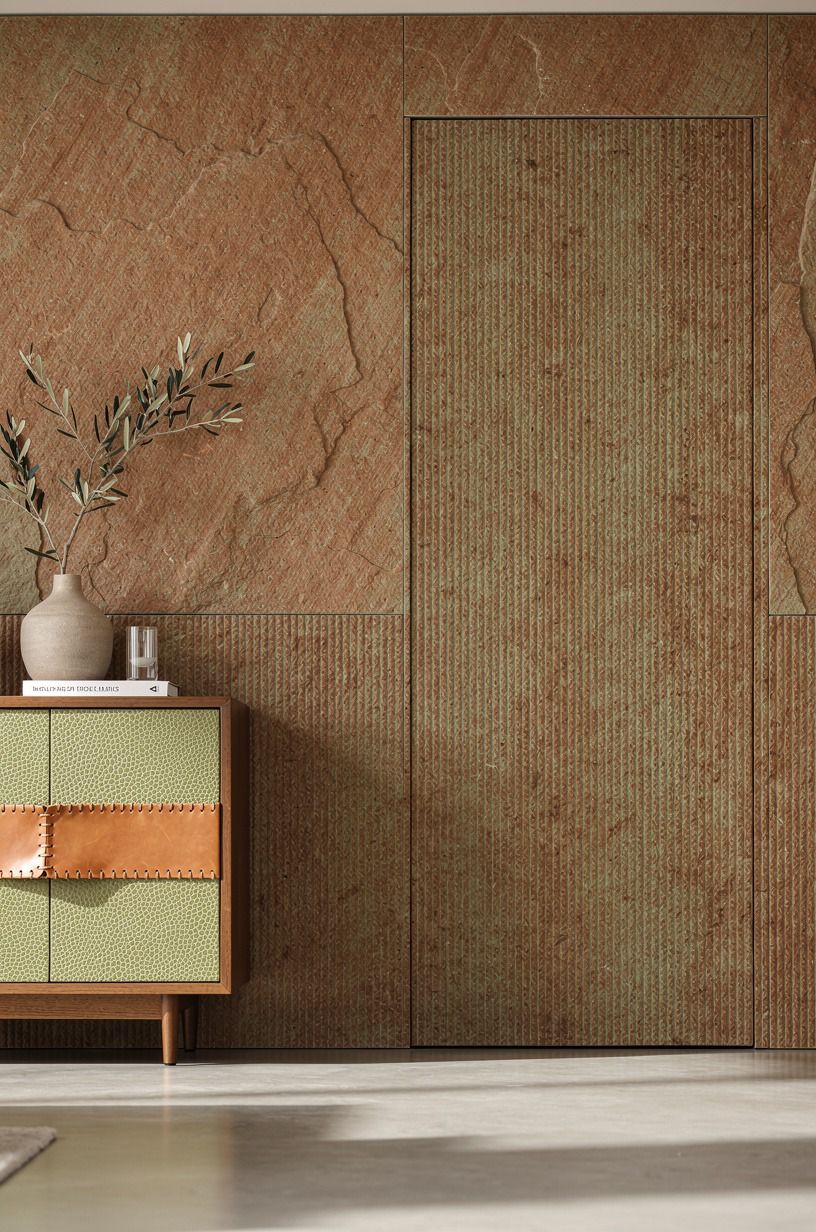
Oversized paneling makes the opening harder to clock because your eye reads bigger blocks before it reads joinery. Use tall flush wall panels with generous widths (24 to 36 inches per bay), and let the concealed panel land inside that larger grid instead of a fussy narrow pattern. You’ll see this proportion logic in a lot of CB2 showroom rooms because it reads as quiet architecture rather than busy decoration.
This is especially good if you’re seeing the wall from a ground-level angle and want the texture to look broad and architectural. A panel rhythm like this sits nicely with a CB2 Primitivo style chair, a wool rug, and one large art piece because the wall already has enough visual structure.
I’d rather go big here than overly detailed. For proportion check, compare it with hidden bedroom wall paneling where bays tend to run wider for the same reason.
If you want to compare that broader treatment with a more obvious disguise, this guide to hidden door wall paneling shows how much cleaner large-scale paneling can feel. Your room gets presence without fuss.
12Pocket the door behind fluted oak cladding
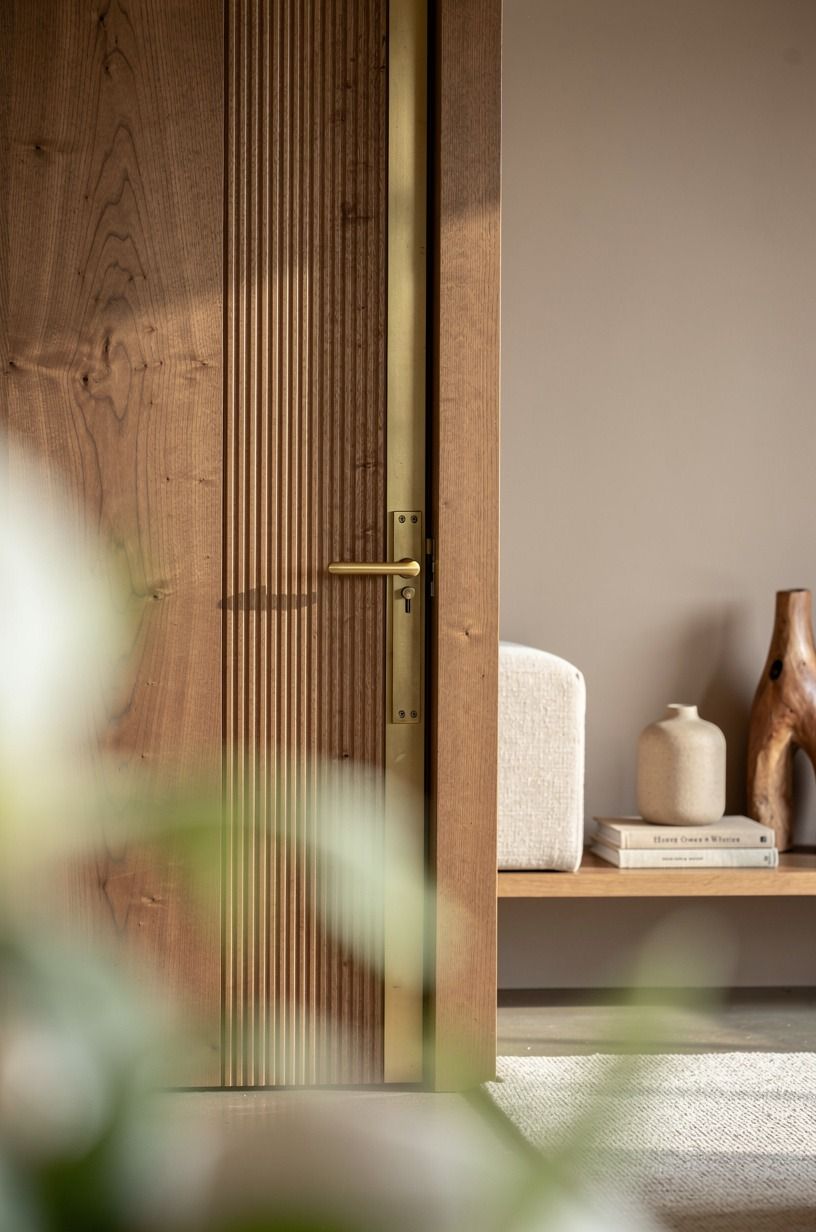
A pocket setup changes the experience completely because the panel disappears out of sight instead of swinging into the room. Wrap the passage in fluted oak cladding, keep the outer face warm and matte, and the living room reads uninterrupted even when the opening is in use.
This is one of the best options for a tighter layout. If your sofa takes up 35-40 in of depth and your coffee table needs the usual 16-18 in height with breathing room around it, a swinging slab can feel like too much drama.
A pocket door gives your circulation back. The same logic shows up in modern concealed door rooms where the wall holds the focus instead of the swing.
And if you’re styling through an open passage with foreground foliage, the texture looks layered instead of flat. That’s why this approach keeps showing up in rooms that feel calm but still custom. So grounding, so good.
13Mirror the fluted wall beside the fireplace
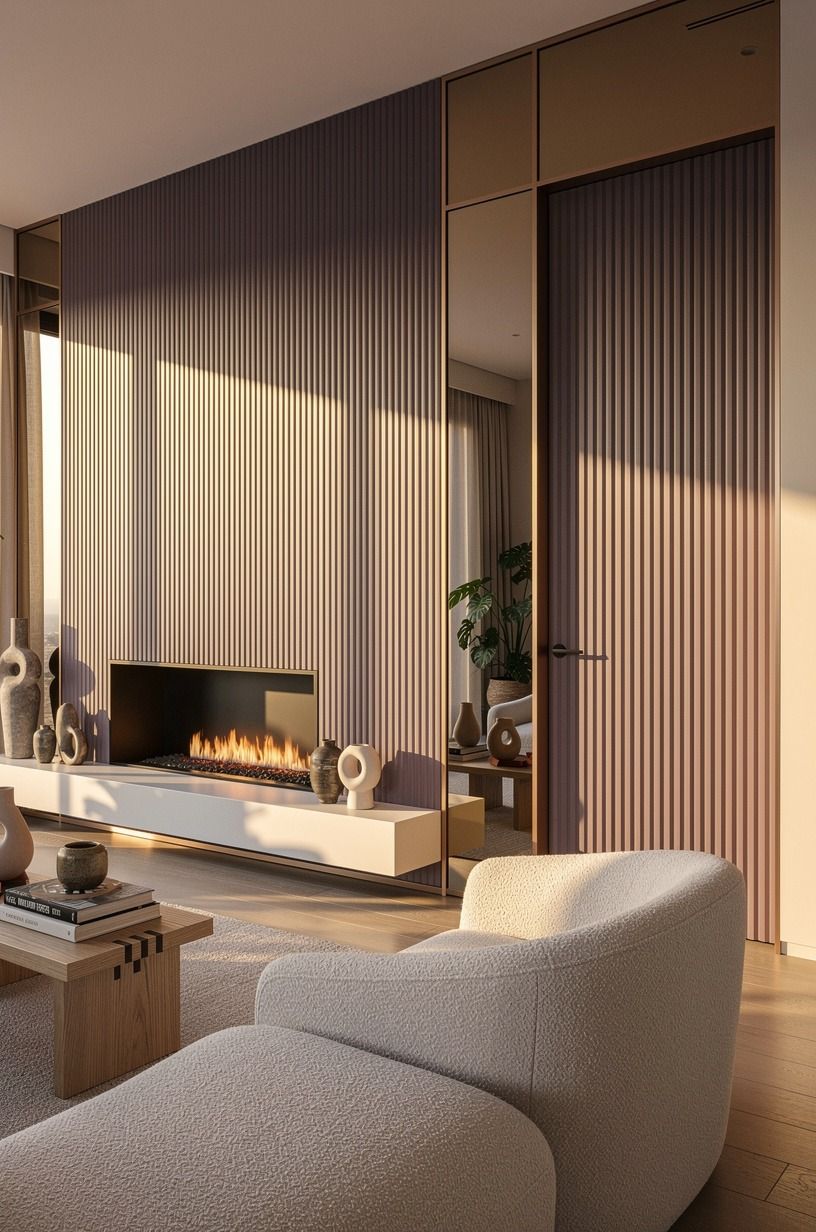
A fireplace wall loves symmetry, and a concealed opening beside it can either sharpen that feeling or ruin it. Mirror the same reeded millwork on both sides of the firebox so the hidden panel feels like part of a complete statement wall, not an odd interruption.
You can warm this up with one honest paint choice. I like Sherwin-Williams Evergreen Fog SW 9130 nearby because it softens the wood without dulling it, especially when the room also has cream upholstery and old brass accents.
If your hearth wall needs more ideas, these tv wall hidden door layouts are useful for proportion checks. The same symmetry shows up in tv wall hidden door concepts where the firebox side anchors the layout.
I wouldn’t center the whole room around the door. Center it around the fireplace wall, then let the panel play backup. That hierarchy is what keeps the wall elegant.
14Why moody charcoal is the smartest reed finish
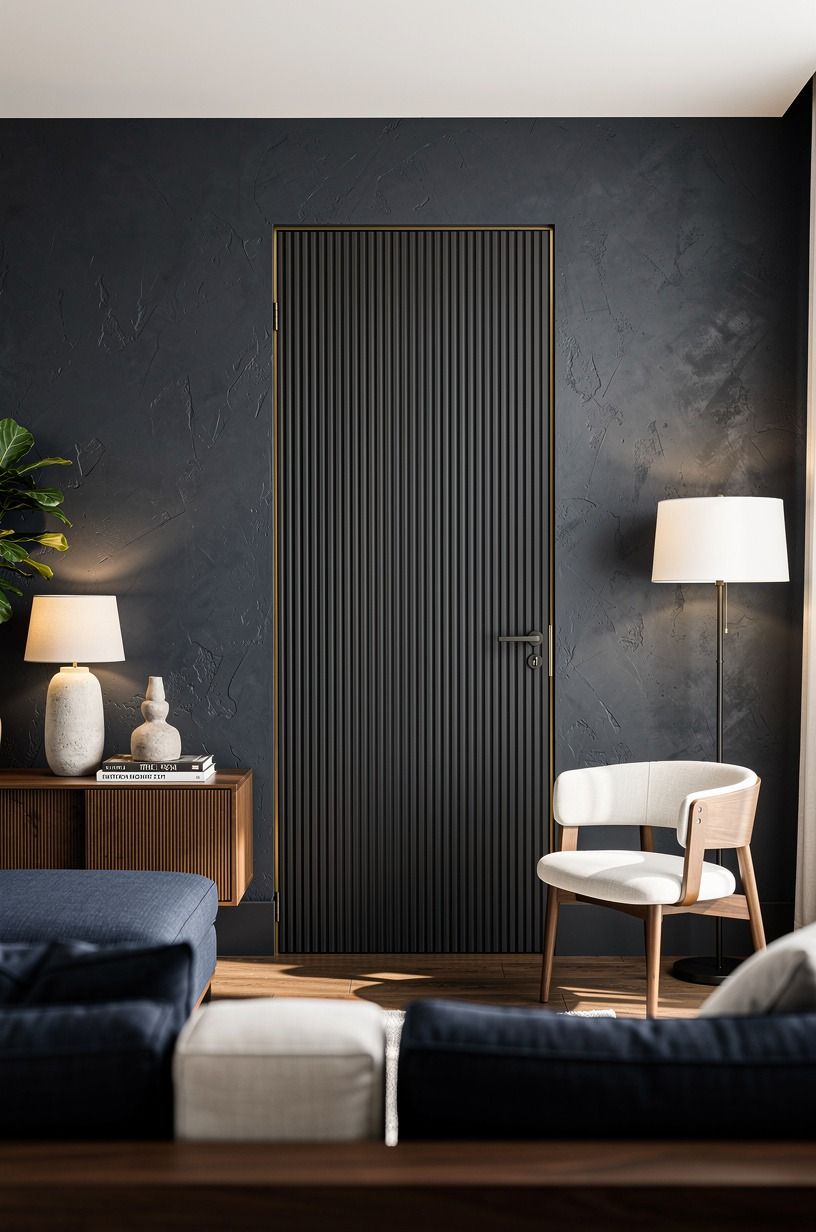
Sometimes the smartest move is paint, not stain. A moody charcoal finish on the reeds can make the opening melt into a symmetrical living room wall, especially when navy, white, and walnut are already carrying the room. It feels richer, denser, almost cinematic at night with a single warm lamp on.
The key is to keep the undertone warm enough that the wall doesn’t turn flat by 3 p.m. I prefer a charcoal with brown depth over a cold graphite, and I’d test it next to Benjamin Moore Revere Pewter HC-172 or your trim color before you commit.
Paint can save you hundreds if custom woodwork isn’t in the budget. If you want a softer end of the spectrum, look at paint palettes that pair with hidden doors where muted finishes tend to make the millwork sing.
But give the room one soft counterpoint. Linen drapes, a light rug, or a warm lamp keeps the dark wall from feeling like a void. Total 10/10 move for evening rooms.
15The West Elm Panel Grid Approach
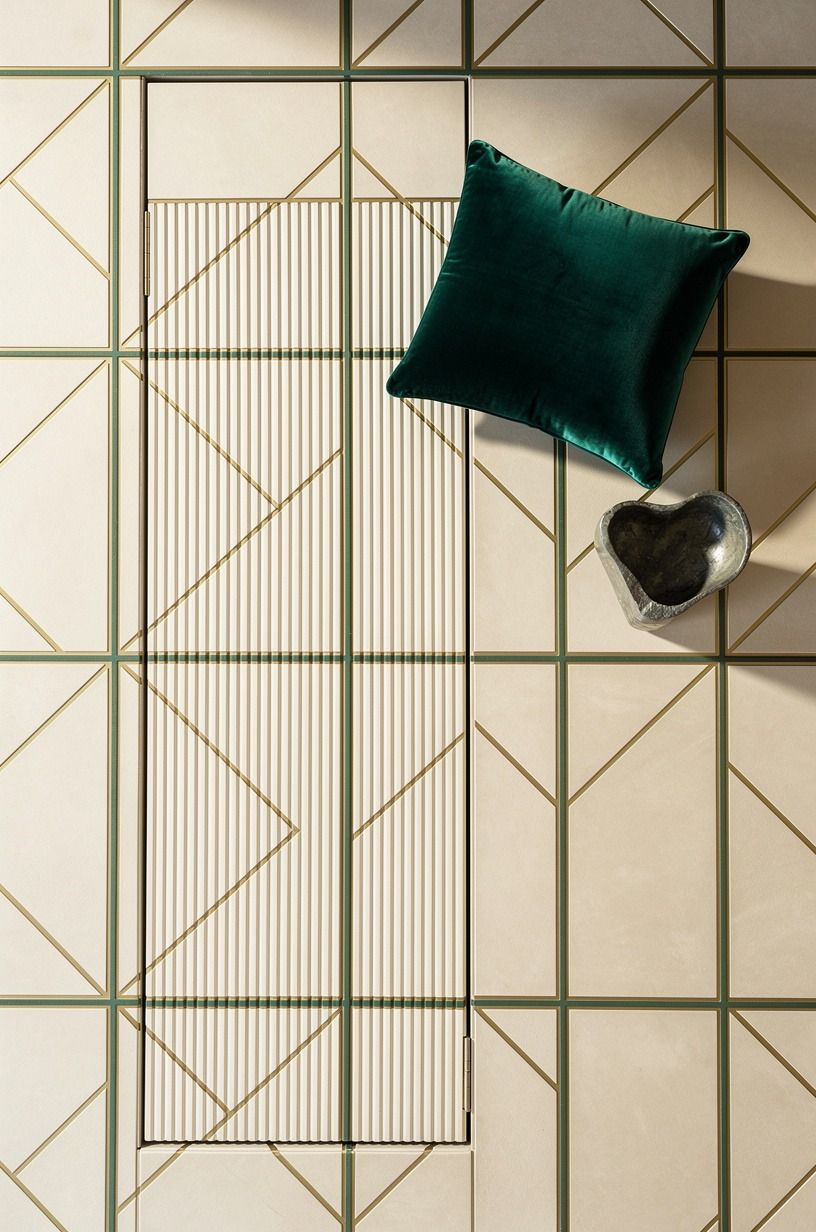
A strong grid can make a concealed opening look deliberate in the best possible way. Build the wall as a refined panel framework, then place the door inside one bay so the seams read as part of the composition when viewed from above.
This is the West Elm playbook: precise margins, steady reveals, no carved fussy trim. You get architecture, not ornament.
This is where precision matters more than ornament. Equal margins, steady reveals, and a believable panel rhythm will do more for you than carved trim ever could.
I like this when the room also includes a tailored Pottery Barn Thatcher style console or another clean-lined piece that supports the geometry. For proportion inspiration, the layout language recurs in wood-hidden-door seamless wall treatments and in bedroom concealed-door precedents where the grid is the star.
If you’re weighing this against a simpler panel wall, browse these wood hidden door ideas for warm seamless walls first. You’ll notice the best ones don’t chase complexity. They chase panel rhythm.
16Align every slat with the baseboard
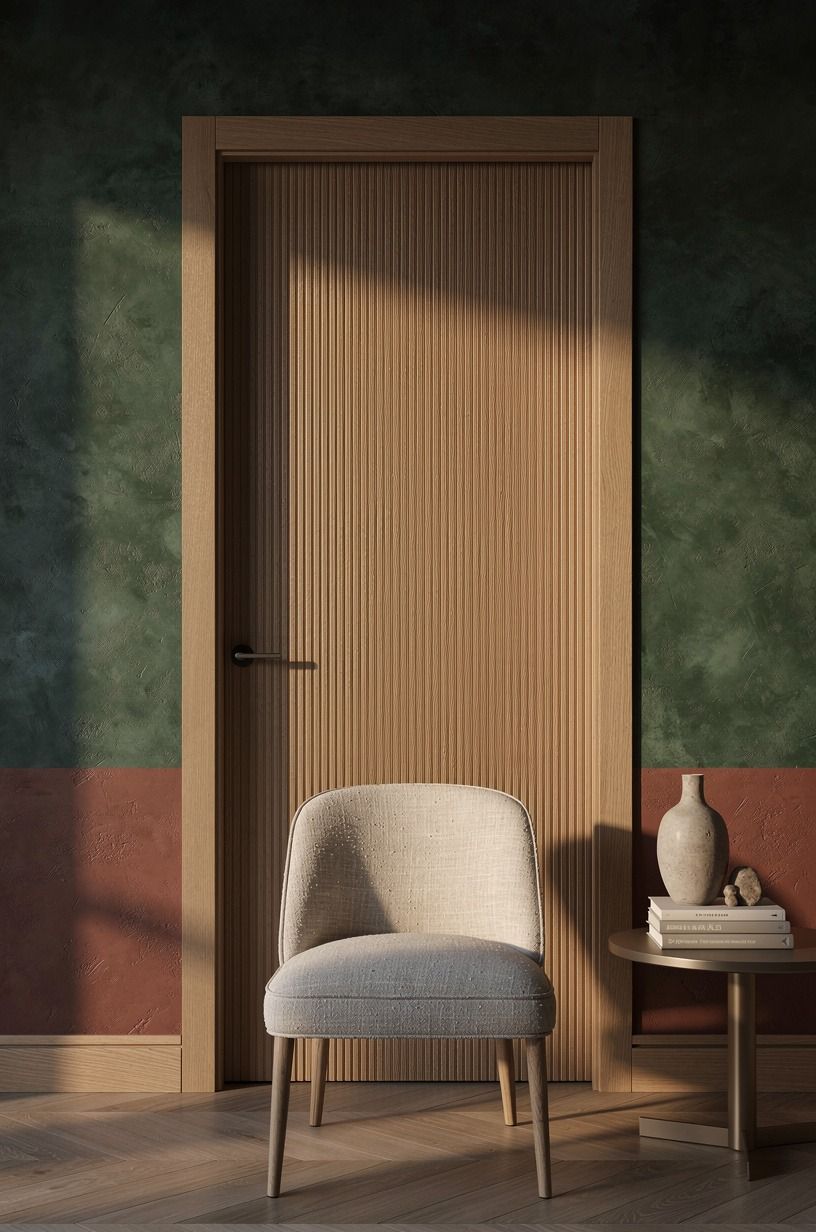
This sounds small. It isn’t. When the vertical rhythm lands cleanly on the baseboard line, the whole wall reads as custom joinery because nothing looks casually measured.
Take the time to map the slat spacing from the floor up before the first slat goes in. If you miss the base by even a little, the error repeats itself all the way up the door face, and your eye catches it fast from that 45-degree magazine angle. I made this mistake once, and I couldn’t unsee it for weeks.
You can borrow that same tidy logic from these hidden utility door wall ideas. Your living room may be softer than a utility zone, but precision layout still reads as luxury.
17Soften the reveal with warm LED grazing
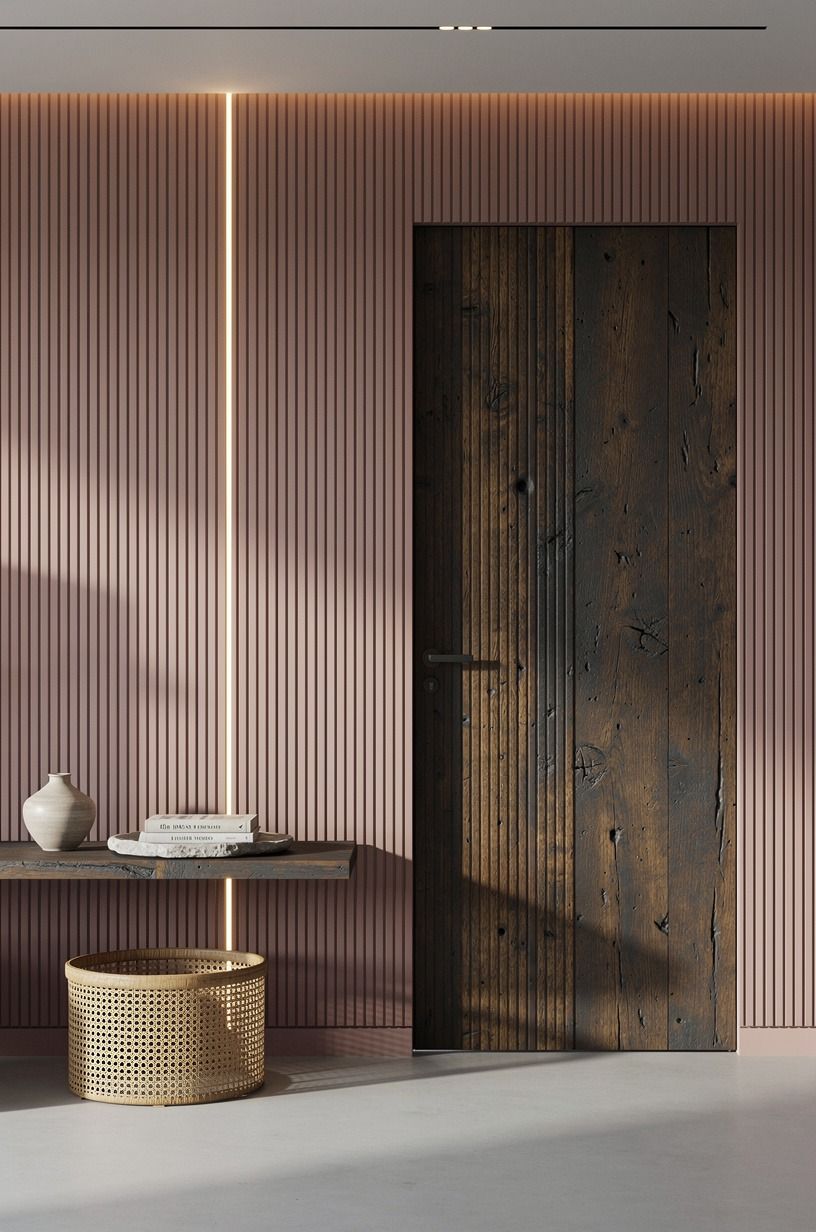
Light can rescue a wall that feels too sharp. Run a warm line of 2700K LED grazing along the groove zone, and the texture gets a soft wash that makes the concealed opening feel intentional instead of severe.
This is especially effective in an eye-level symmetrical room where the wall is front and center after sunset. You don’t want a strip that screams. You want a low amber glow that stops just shy of theatrical, the kind that makes walnut, linen, and brushed brass look better at night.
And yes, dimming control matters. Full blast kills the mood.
A restrained glow gives you texture, depth, and that hotel-lobby calm people always try to fake with extra decor. It reads calmer at night!
For layered lighting inspiration, the same warm logic shows up in utility door with tidy lighting where people use the LEDs as the design moment.
18Bookmatch reeded panels across the hidden opening
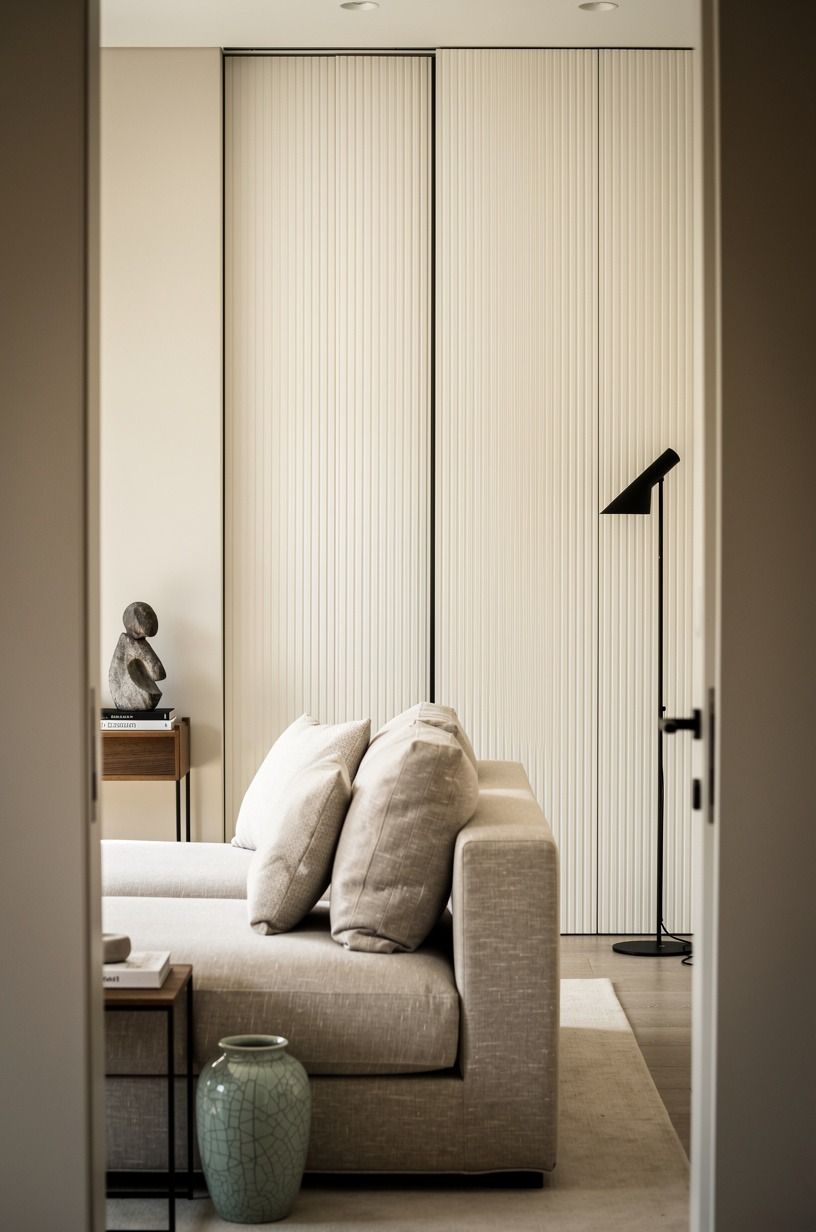
Bookmatching is the move if you want the wall to feel truly custom. Let the grain in the reeded veneer mirror itself across the concealed opening so the door reads like a continuation of the panel story, not a practical interruption.
This works best when the living room already has a warm white plaster shell and a few grounded materials like camel upholstery and medium oak. If your room feels busy, bookmatching can calm it because the texture looks planned instead of random.
That’s a real upgrade you can feel from the doorway. Your guests will ask which side is the door, and you’ll smile every single time.
For more examples of walls that disappear through material continuity, these hidden wardrobe door ideas for a clean wall are useful outside the bedroom too. The lesson is the same. Match the surface story first.
The Two-Wood Rule for planning your budget
If you’re wondering what this kind of living room wall usually costs, the short answer is that styling around it is affordable, while true millwork is where the price jumps. I use a simple Two-Wood Rule: one visible finish for the wall, one supporting finish elsewhere in the room. Once you start mixing more than that, you usually spend more and get less calm.
A few anchor pieces set the scale too. A wool rug 9×12 often lands at $600-$2,500, linen drapes usually run $120-$400 a pair, and a solid oak coffee table can fall between $300-$1,200. Spend on the wall finish and proportions first.
The accessories can catch up later. For cost-conscious siblings of this look, these pantry door seamless kitchen ideas prove you can do a lot with $200 of strategic paint plus one weekend of patience.
Why the Quiet-Seam Principle keeps this look from dating fast
Here’s my honest take: the hidden door itself isn’t why this idea feels good. It’s the restraint around it.
I’ve seen plenty of concealed doors with clever hardware, louder grain, and dramatic trim, and most of them feel old faster than a plain wall with great proportions. You do not remember the Quiet-Seam Principle as a gimmick.
You remember whether the room felt calm when you walked in. That’s the Quiet-Seam Principle for me.
What keeps it current in 2026 is that it solves two problems at once. You get vertical texture, which living rooms badly need once screens, low furniture, and big rugs flatten everything out.
And you get storage or circulation without adding one more visual break. In a room where your sofa length, rug size, and TV distance already create enough geometry, fewer interruptions almost always look richer.
I also think it makes the room feel quieter and more intentional in a way that no amount of styling alone can buy.
I also think people overspend on visibility and underspend on mood. They’ll chase a dramatic pull, a complicated stain story, or a fancier pattern, then leave the lighting ordinary and the seating thin.
That’s backwards. I’d rather see a simple reeded wall in Farrow & Ball Hague Blue No.30 with one good lamp, a dense Belgian flax linen drape, and a sofa you can sink into than a custom panel wall surrounded by skimpy furniture.
The room should win, not the reveal.
And this is where your own habits matter. If you want the concealed opening to disappear, style the room like you trust the wall.
One large art moment. One grounded table. Enough negative space that the millwork can breathe.
I went back and forth on this once because I thought more styling would make the panel feel intentional. It did the opposite.
The part that worked was editing. Less hardware, fewer wood tones, warmer light, better scale. That restraint is the magic!
It’s the kind of room people describe as “expensive” without being able to say why, and the price tag was probably mid-tier.
The Questions Worth Answering First
What is the best Fluted & Reeded Hidden Door Ideas for a Textured Statement Wall for a small living room?
The best small-room version is a full-height painted reed wall or a pocket panel because both keep the floor plan clean. Pair it with a low IKEA BESTA console so your eye reads width first, then let the door disappear into the texture. For more compact-room layouts, bedroom concealed-door treatments scale the same logic down beautifully.
Where can I buy Fluted & Reeded Hidden Door Ideas for a Textured Statement Wall pieces on a budget?
Start with IKEA, Target Threshold, and Wayfair for consoles, sconces, and drapery that support the wall without draining your budget. Facebook Marketplace helps too.
Older wood tables, unlacquered-look lamps, fluted cabinets, often better with a little patience. The same sourcing habit shows up in seamless kitchen millwork where the savings come from mixing new and vintage.
How much does a Fluted & Reeded Hidden Door Ideas for a Textured Statement Wall makeover cost?
A cosmetic version usually lands around $300-$1,200, while a fuller living room refresh with better seating and lighting can hit $2,500-$8,000. Paint is the cheapest lever.
Custom millwork, not pillows, is what pushes the number up fast. For a deeper cost breakdown, this wood-hidden-door seamless wall study shows what real installs look like at the higher end.
Can I create a Fluted & Reeded Hidden Door Ideas for a Textured Statement Wall on a budget?
Yes, and you don’t need custom joinery first. Try paint-grade slats, a thrifted wood console, and one warm 2700K lamp. Free wins count too: edit the clutter, shift the art lower, and give your wall one cleaner focal line.
The same toolkit appears in concealed-door wardrobe makeovers where renters do 90% of the effect for under $300.
Is a Fluted & Reeded Hidden Door Ideas for a Textured Statement Wall worth it in a small space?
Yes, especially in a small living room, because a concealed opening keeps the wall visually whole. That’s a real space-saving payoff. Let the rug front legs sit on an 8×10 or 9×12, keep the console low, and the room will breathe easier.
Is Fluted & Reeded Hidden Door Ideas for a Textured Statement Wall a good idea for a rental?
Yes, if you fake the effect instead of rebuilding the wall. Use removable slat panels, peel-and-stick molding, and renter-safe sconces. I’d skip anything that changes the swing or jamb.
Texture is easy to borrow. Permanent carpentry isn’t.
Start with texture over hardware
If I had to pick one, I’d start with continuous reeded walnut. Hardware dates faster than texture, and a quiet wall gives you room to layer better lighting later. Pin the walnut wall for later and save these warm wood hidden door ideas.