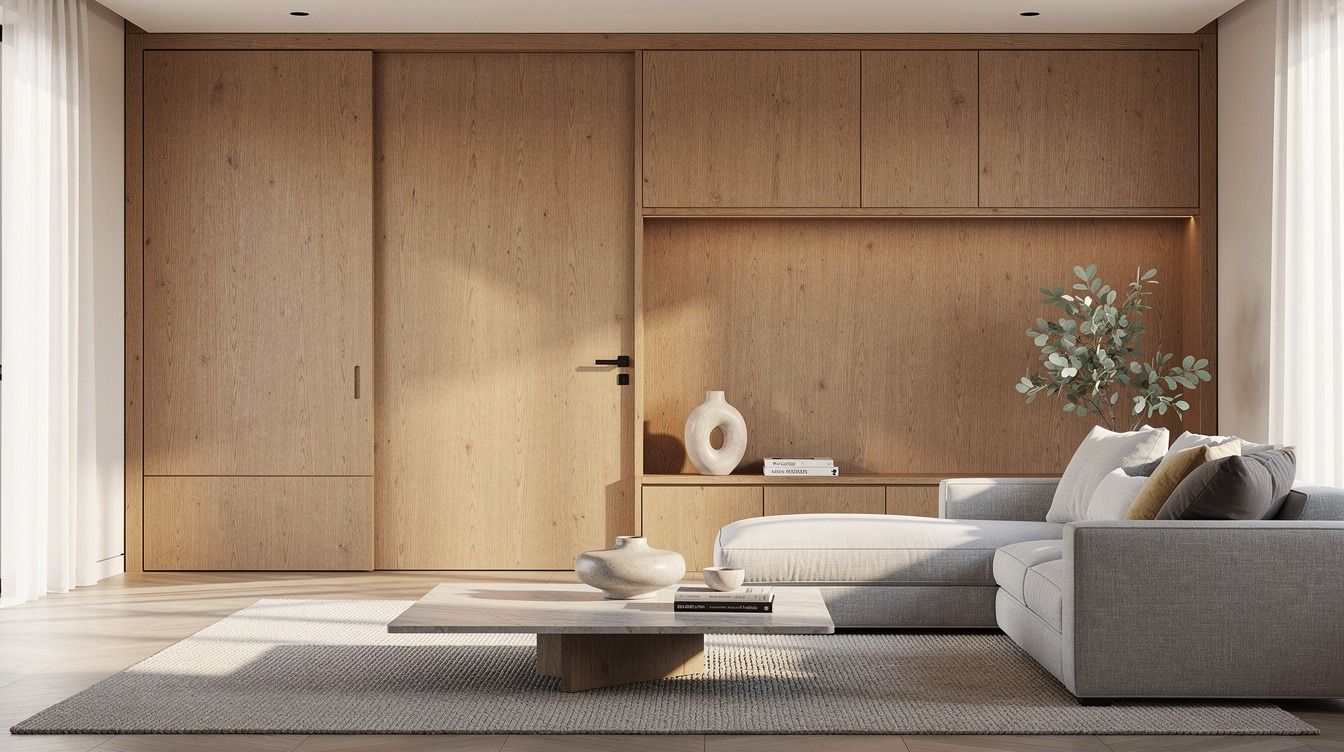
Wood hidden door ideas for warm, seamless walls worked for me once I treated the opening like millwork, not a lonely door. Our living room had one odd break in the main wall, cooler trim, and a panel that always caught your eye first. I redid it in stages, kept the palette warm, and the room finally felt settled.
Here’s what it looked like before:
Before the makeover, the wall looked split in two. The fireplace side felt soft and grounded, but the opening beside it had brighter trim, flatter paint, and a slightly different sheen that made the whole room feel patched together. You’d sit down, look up, and your eye went straight to the wrong spot.
I kept trying softer fixes first. A better rug. A warmer throw on the Article Sven sofa.
One more lamp. None of it solved the real issue because the wall itself still felt broken. If you’ve got a room like that, you know it.
- Frame the whole wall in warm oak panels
- Hide the swing door inside vertical slats
- Match the handle to the wood grain
- Carry the panel seams across the opening
- Build a concealed door beside the fireplace
- Wrap the doorway in walnut picture molding
- Choose push latch hardware for a flat wall
- Add a double hidden door behind shelving
- Use fluted wood to blur the edges
- Stain the door darker than the panels
- Tuck the opening behind a media wall
- Continue baseboards across the hidden door
- Center the sofa on the disguised wall
- Finish with art that avoids the seam
1Frame the whole wall in warm oak panels
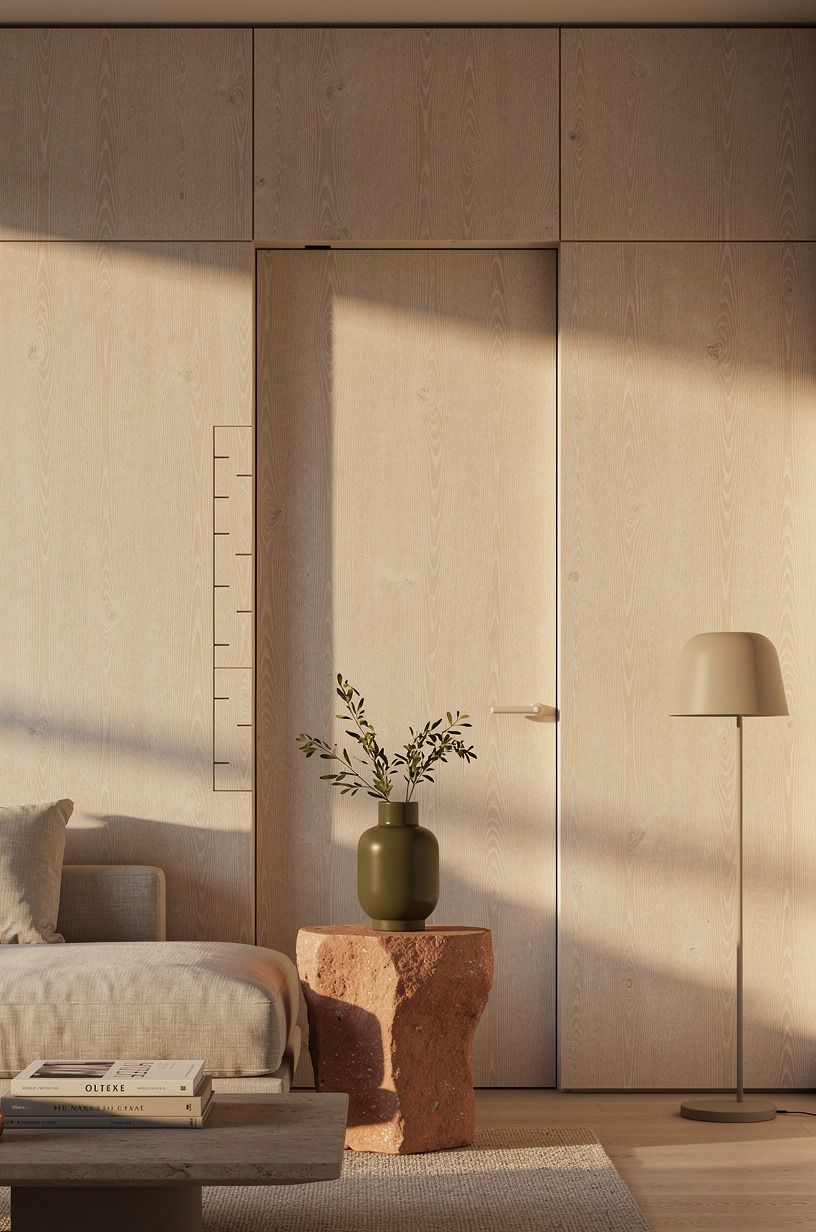
The first good decision was going bigger. Instead of wrapping only the opening, I framed the entire wall in cerused white oak so the door became one part of a larger surface. That gave the room warmth fast, especially next to terracotta stone and soft clay linen.
You don’t need a huge footprint for this. You need one calm plane.
I used 3/4-inch solid oak panels and lined the seams from floor to ceiling so your eye kept moving. That mattered more than any decor swap I tried later. If you want cleaner modern proportions before you sketch, this roundup of modern hidden door ideas for sleek seamless interiors helped me simplify the millwork wall.
2Hide the swing door inside vertical slats
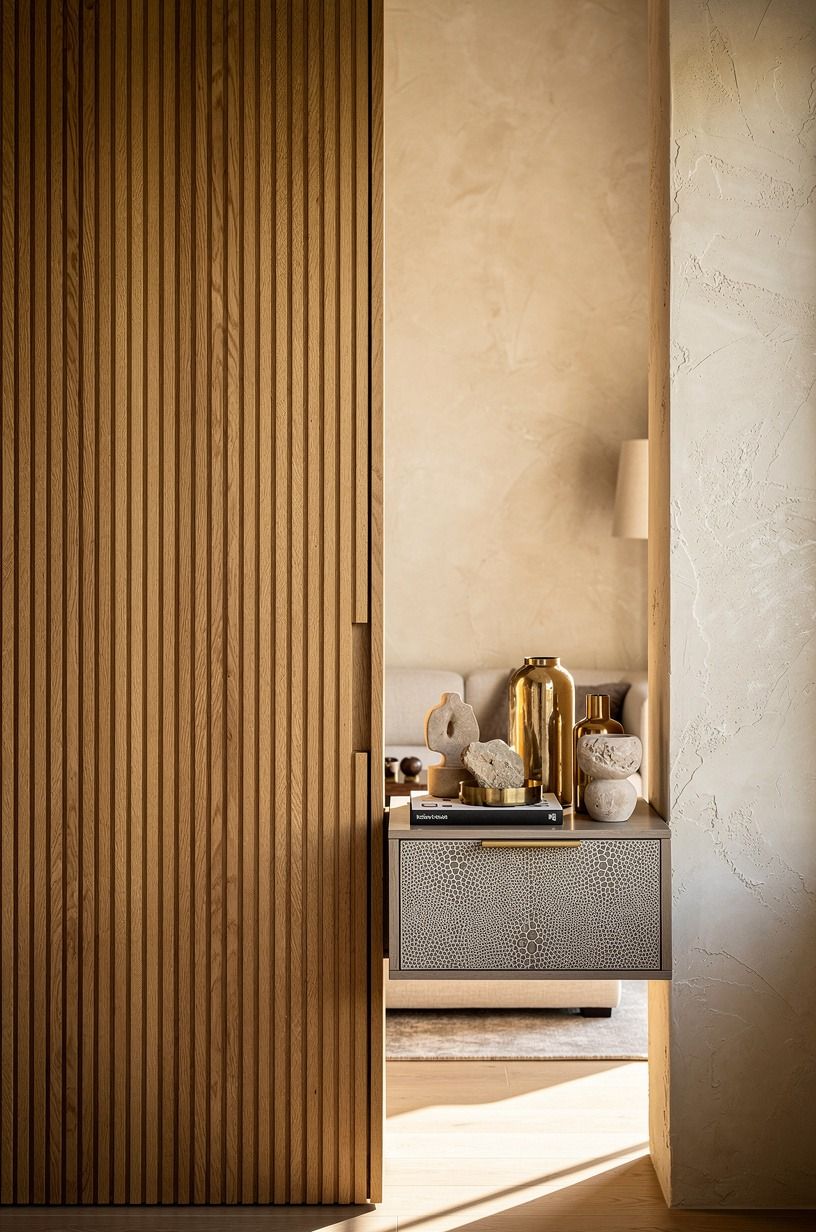
Vertical slats made the opening feel designed instead of disguised.
3Match the handle to the wood grain
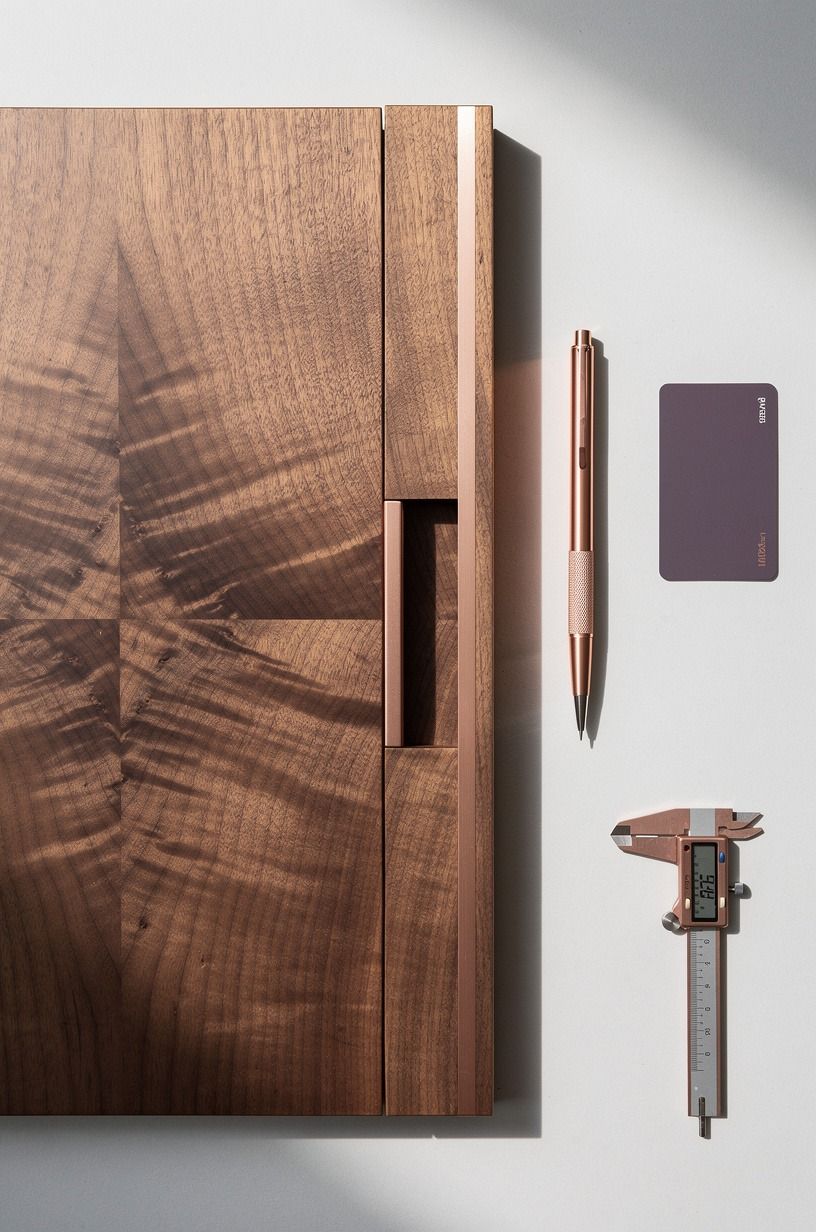
The handle looked like a tiny choice until I laid the samples out together. A bright pull broke the illusion every time, while a quieter flush pull disappeared into the book-matched walnut veneer.
That’s when the wall started feeling expensive. Your hardware shouldn’t interrupt the grain if your goal is visual calm.
I tested the pull against stain strips, trim pieces, and the door sample before anything went on the wall. Good thing, because the first option was too shiny by a mile.
And once you see that mismatch, you can’t unsee it! If you’re working near a television zone too, tv wall with hidden door ideas conceal a whole room shows the same quiet flush pull logic.
4Carry the panel seams across the opening
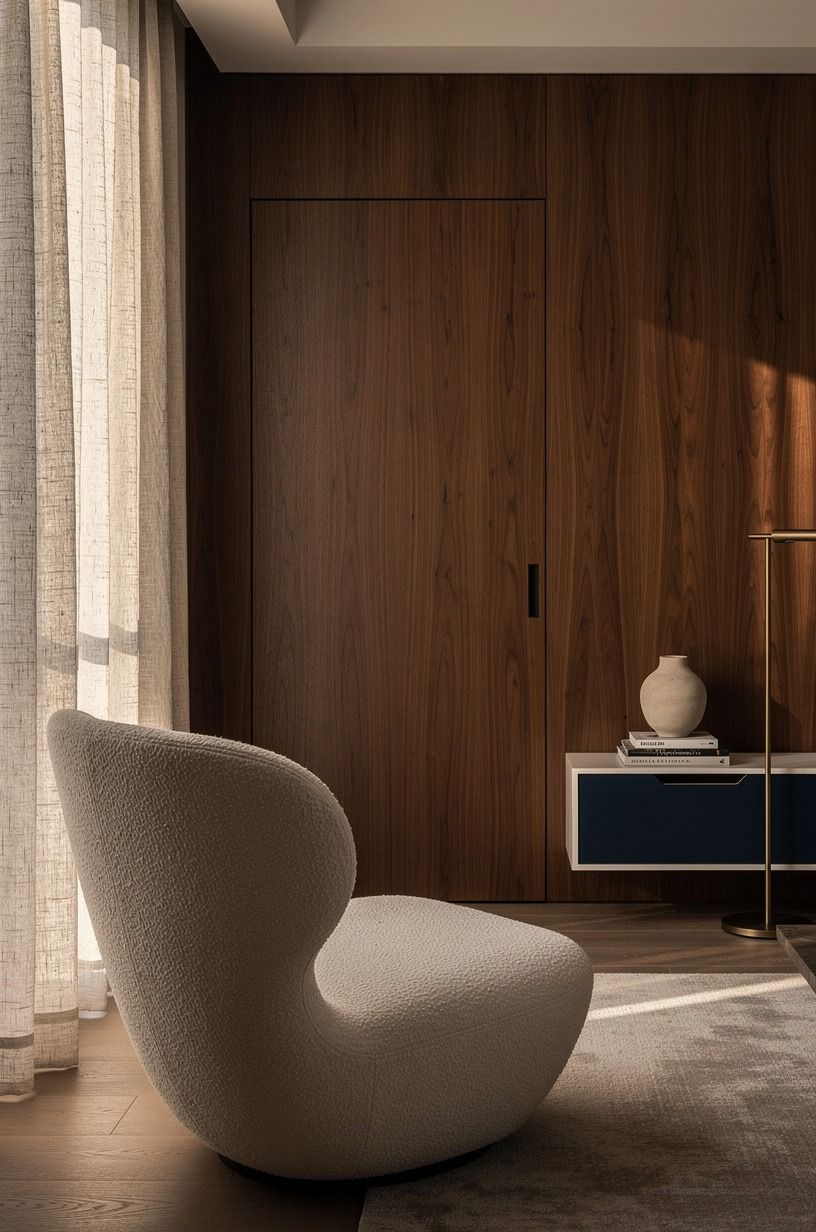
This was the move that fooled people fastest.
5Build a concealed door beside the fireplace
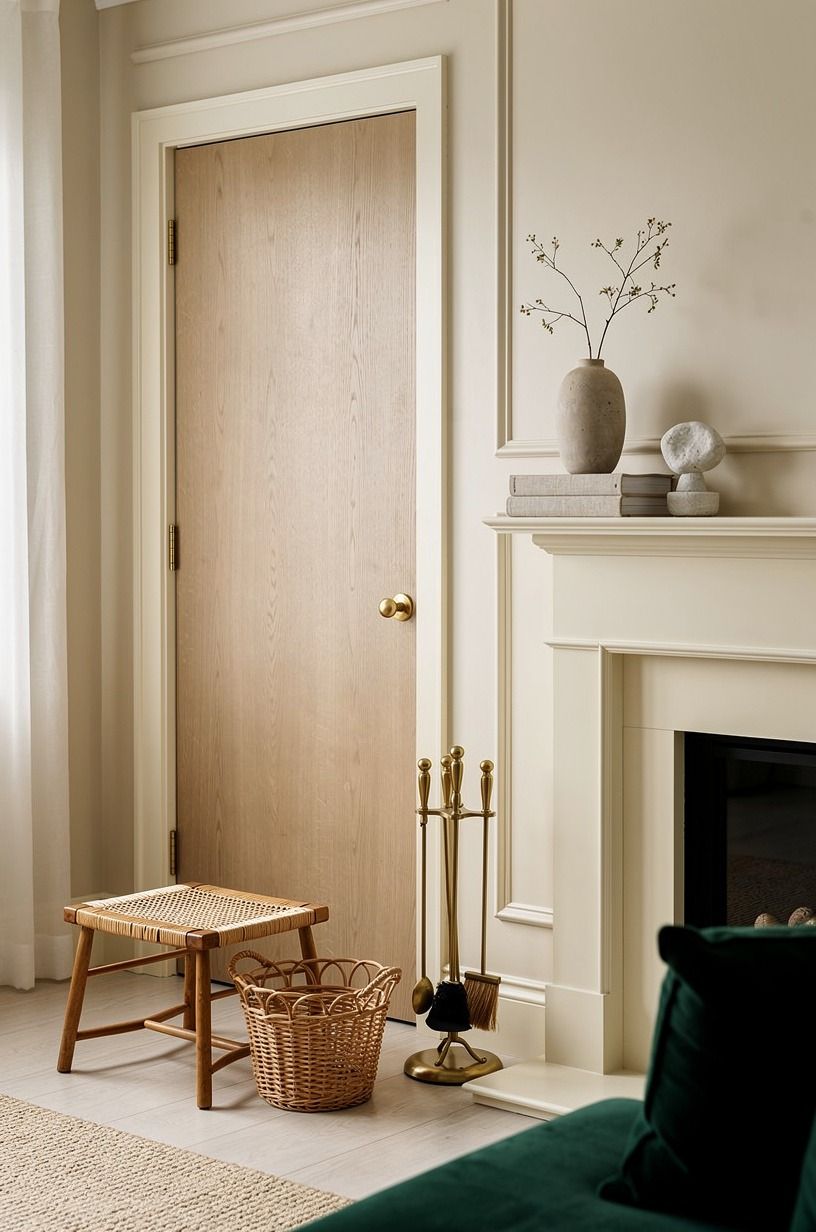
I worried this would compete with the fireplace, but the opposite happened. The creamy surround gave the whole wall a focal anchor, and the door could disappear beside it once I kept the detailing flatter and quieter. A touch of emerald velvet in the room helped the oak feel richer without dragging the wall into drama.
The real lesson was hierarchy. Your fireplace gets to lead.
The hidden panel has to support it. I skipped heavier trim on the door side and kept the wall calm enough that the firebox still held the room.
If you’re managing two focal jobs on one wall, tv wall with hidden door ideas conceal a whole room is useful for scale and balance.
6Wrap the doorway in walnut picture molding
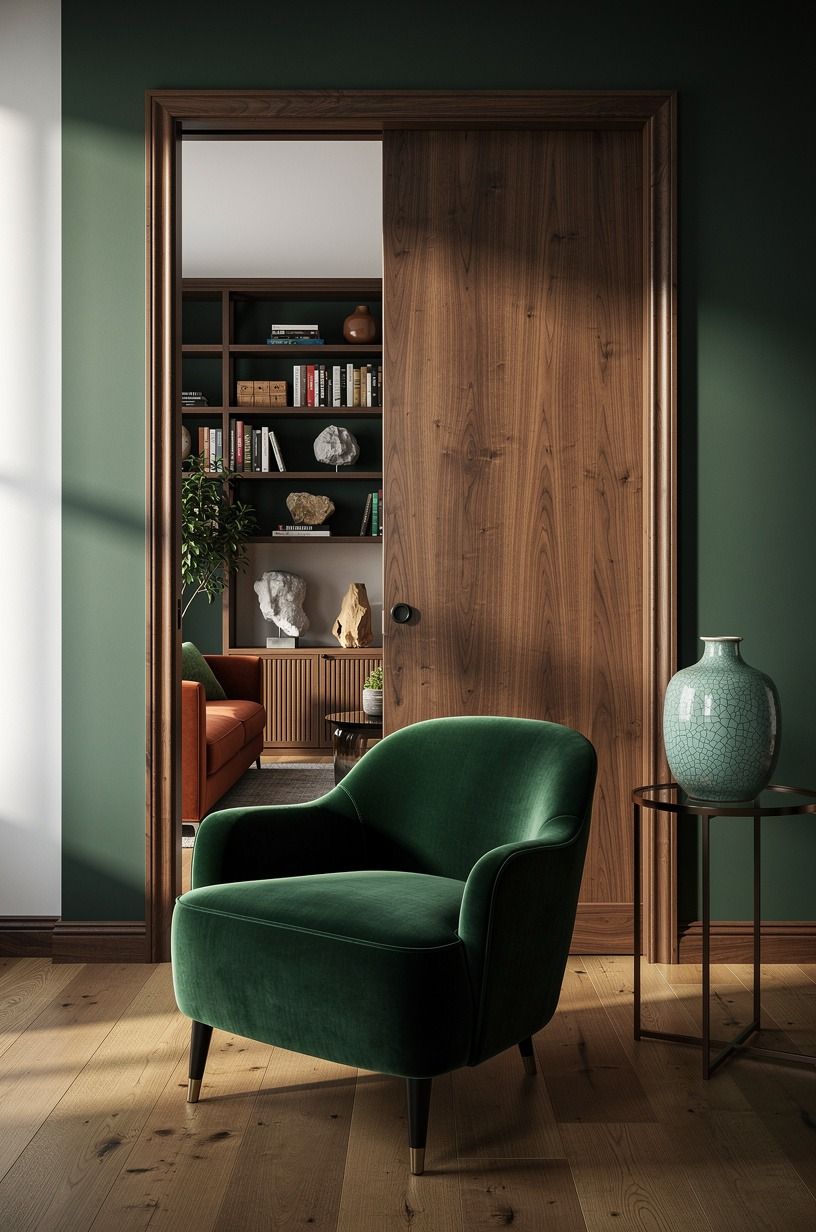
When the room needed more architecture, walnut picture molding solved it without adding clutter. The grid gave the opening discipline and made the hidden door wood detail feel like part of the room’s bones. I used low-sheen walnut picture molding, not anything glossy, because you want age and depth here, not a formal showroom finish.
You do need to map the boxes before installing anything. If the concealed opening lands inside an awkward half-rectangle, the whole effect falls apart.
I tested a few layouts on paper first, then kept the best one. For proportion help, I studied modern hidden door ideas for sleek seamless interiors and trimmed back anything that felt busy.
7Choose push latch hardware for a flat wall
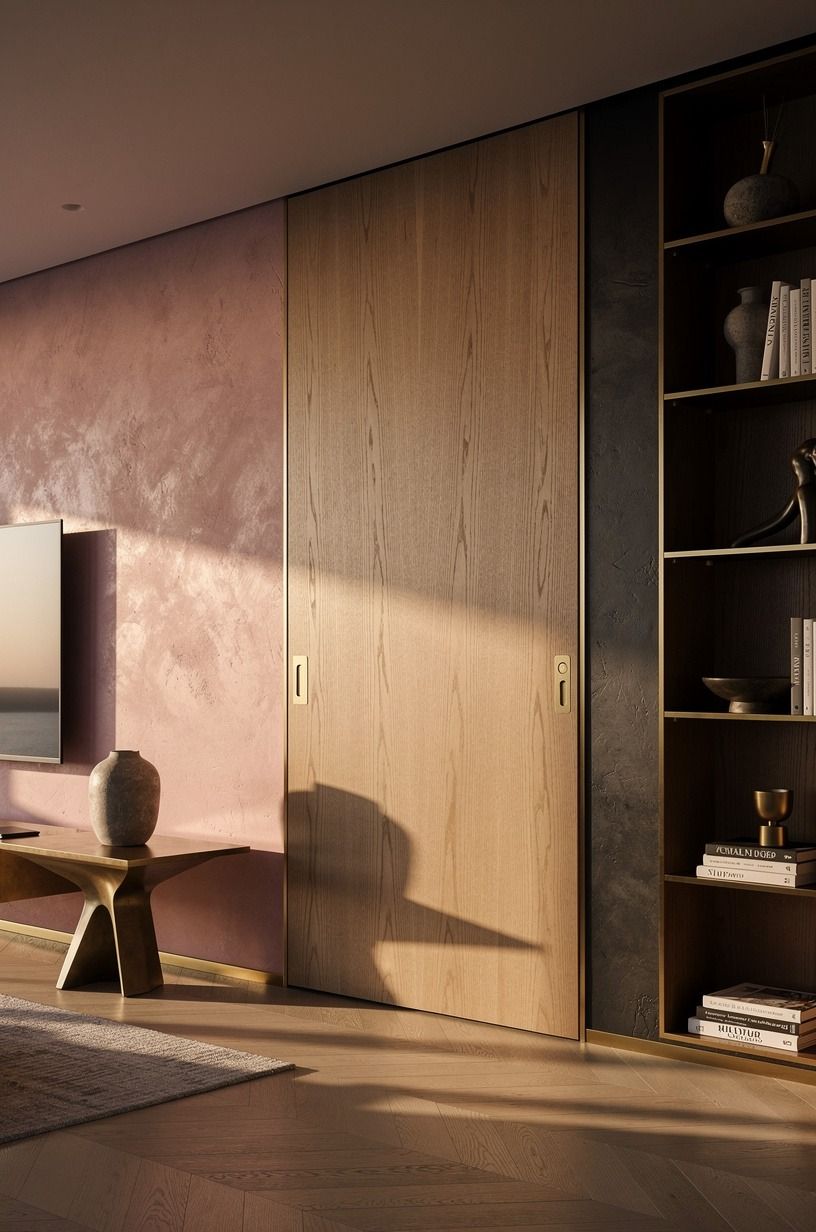
A flat wall can’t stay flat if a handle keeps sticking out of it. I tried a visible pull first, hated it, and swapped to push latch hardware. The difference was immediate.
With a flush oak face and a soft plaster-adjacent finish beside it, the whole wall felt quieter. That matters from the sofa, where you see the same line every day.
But only do this if the swing is smooth and the latch is reliable. Otherwise you’ll resent it in a week.
I liked this setup even more once Sherwin-Williams Evergreen Fog SW 9130 came into the room on nearby accents because the green softened the oak. To compare flatter concealment options, I used hidden sliding door ideas for seamless space saving style as my hardware check.
8Add a double hidden door behind shelving
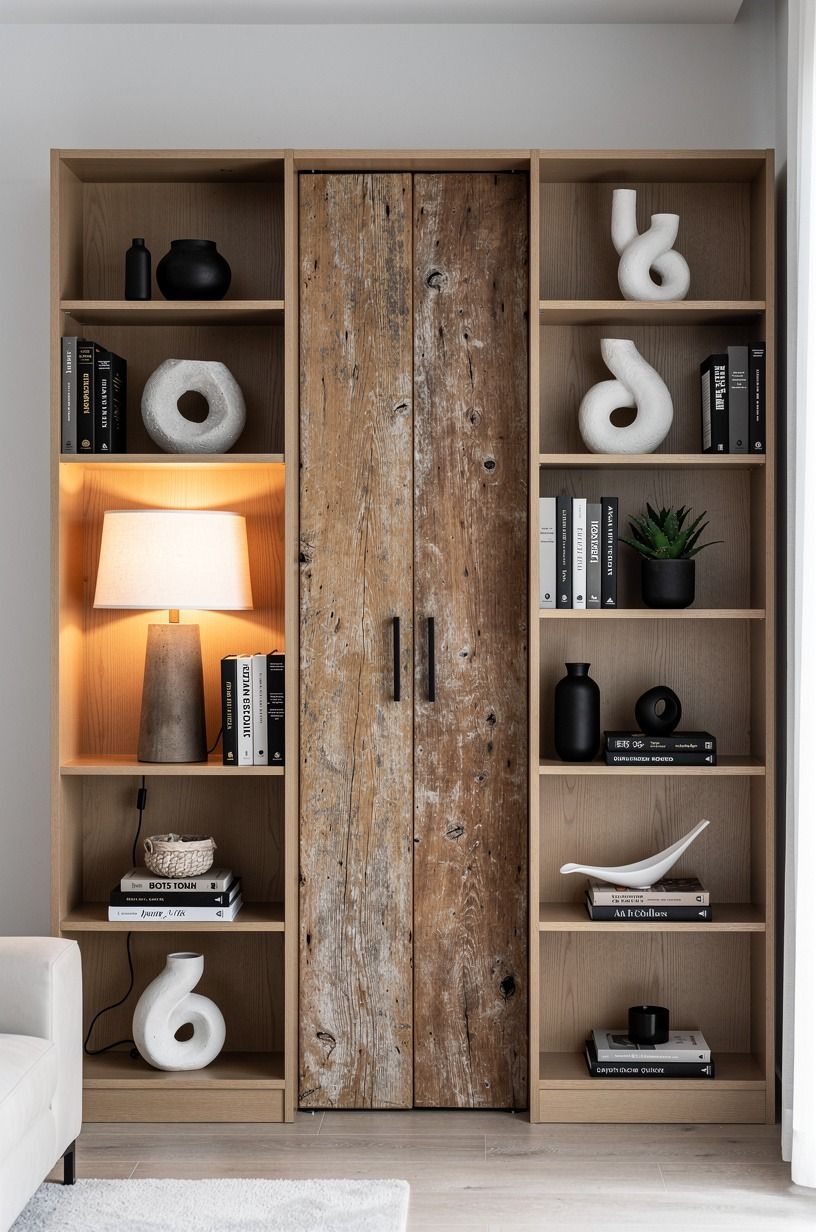
Shelving turned one plain stretch of wall into the hardest-working part of the room.
9Use fluted wood to blur the edges
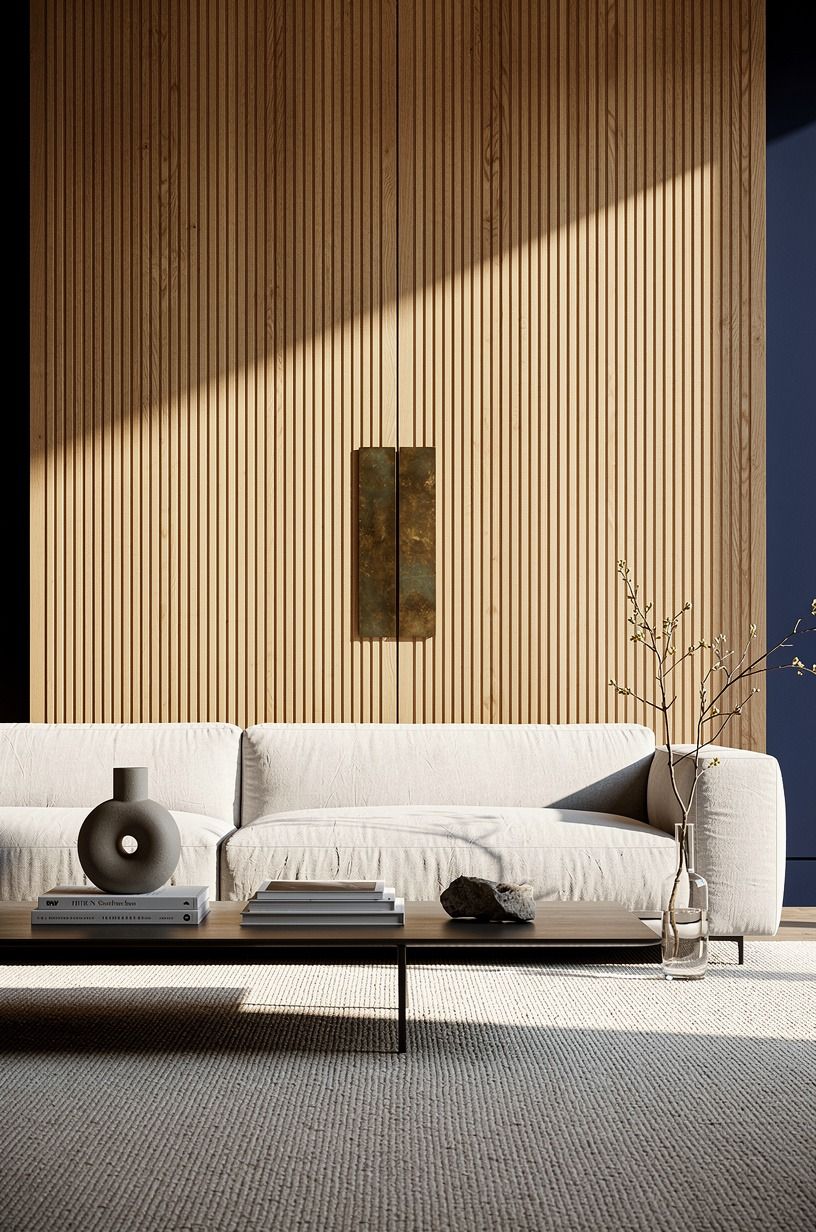
Fluted wood did part of the concealment work for me. The repeated grooves caught light and scattered it just enough that the edge became harder to read from across the rug.
In a living room, where you often view the wall from a lower seated angle, that texture can be more forgiving than a perfectly flat panel. Why make the material work against you?
I preferred a medium flute in warm oak, not the ultra-skinny version that can date fast. The texture also hid everyday bumps better than flat paint would.
A connecting wall in Benjamin Moore Revere Pewter HC-172 kept the palette soft and grounded. I checked hidden sliding door ideas for seamless space saving style whenever I wanted to compare smooth versus ribbed finishes.
10Stain the door darker than the panels
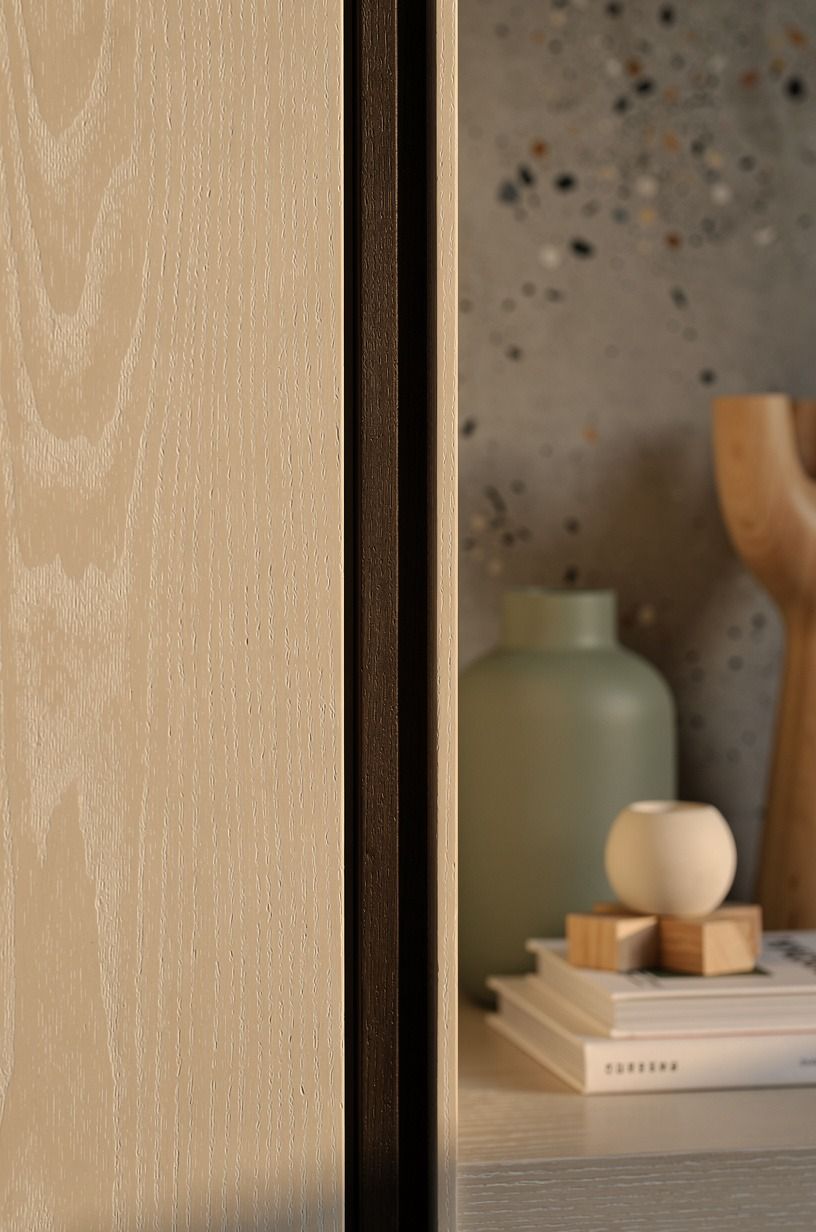
This move surprised me most. The surrounding panels stayed pale in cerused white oak, but the door itself went one shade darker so the seam looked like natural tonal variation instead of a flaw. From close up, you can tell what’s happening.
From the sofa, it just reads as depth. That’s a much calmer result.
I wouldn’t push this into high contrast. Espresso against blond oak would turn the door into the headline, and that’s not the goal.
A shade deeper is enough. I repeated the darker note through a sage textile and warm metal so it felt intentional.
The tonal examples in modern hidden door ideas for sleek seamless interiors gave me the confidence to stop before it became too dramatic.
11Tuck the opening behind a media wall
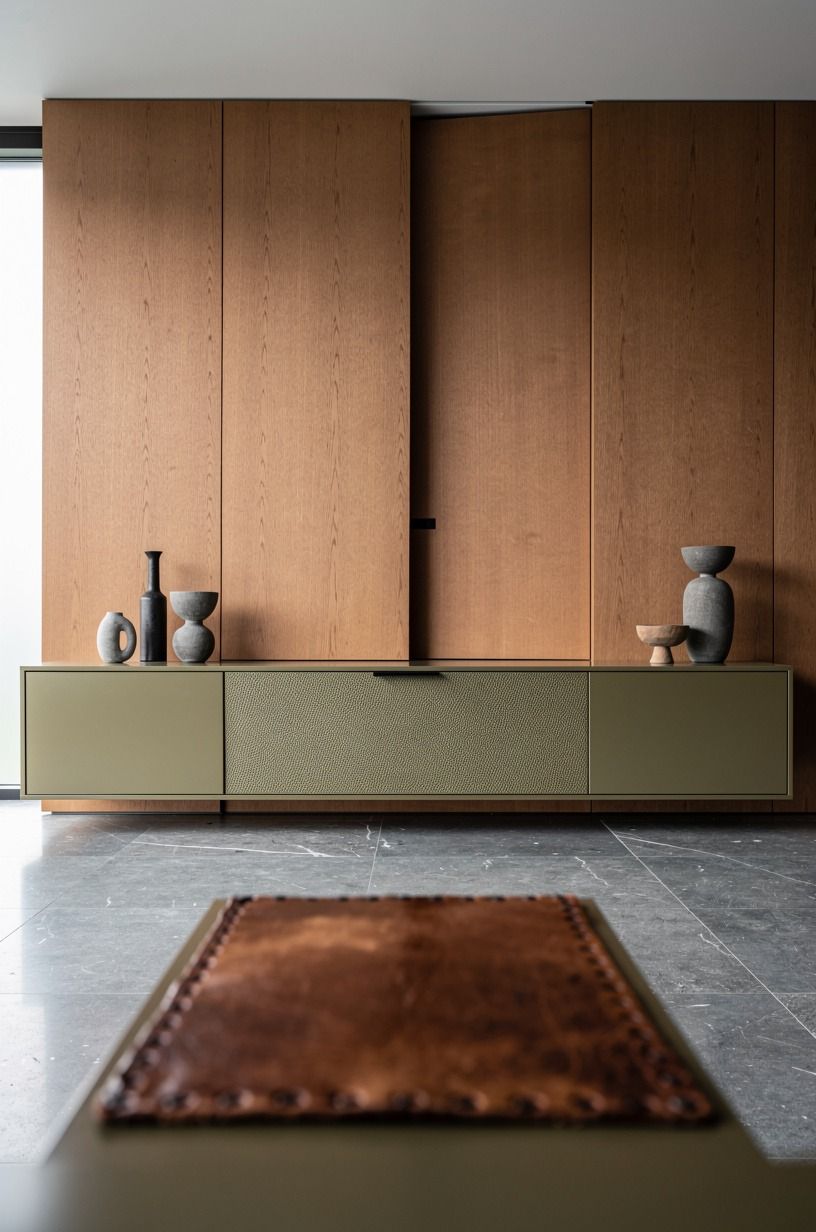
A media wall can hide an opening brilliantly if you keep the whole composition low, warm, and continuous. Mine looked random before I built around it.
Afterward, the television, terracotta-toned panels, and concealed opening finally shared one language. The wall felt anchored instead of top-heavy, which made the room read bigger too.
I still respected viewing distance, roughly 1.5 to 2.5 times the screen diagonal, so the wall stayed practical. And because media walls can go cold fast, I worked in aged bronze and warm stone to keep the zone human. If you’re combining entertainment and concealment, tv wall with hidden door ideas conceal a whole room is worth your time.
12Continue baseboards across the hidden door
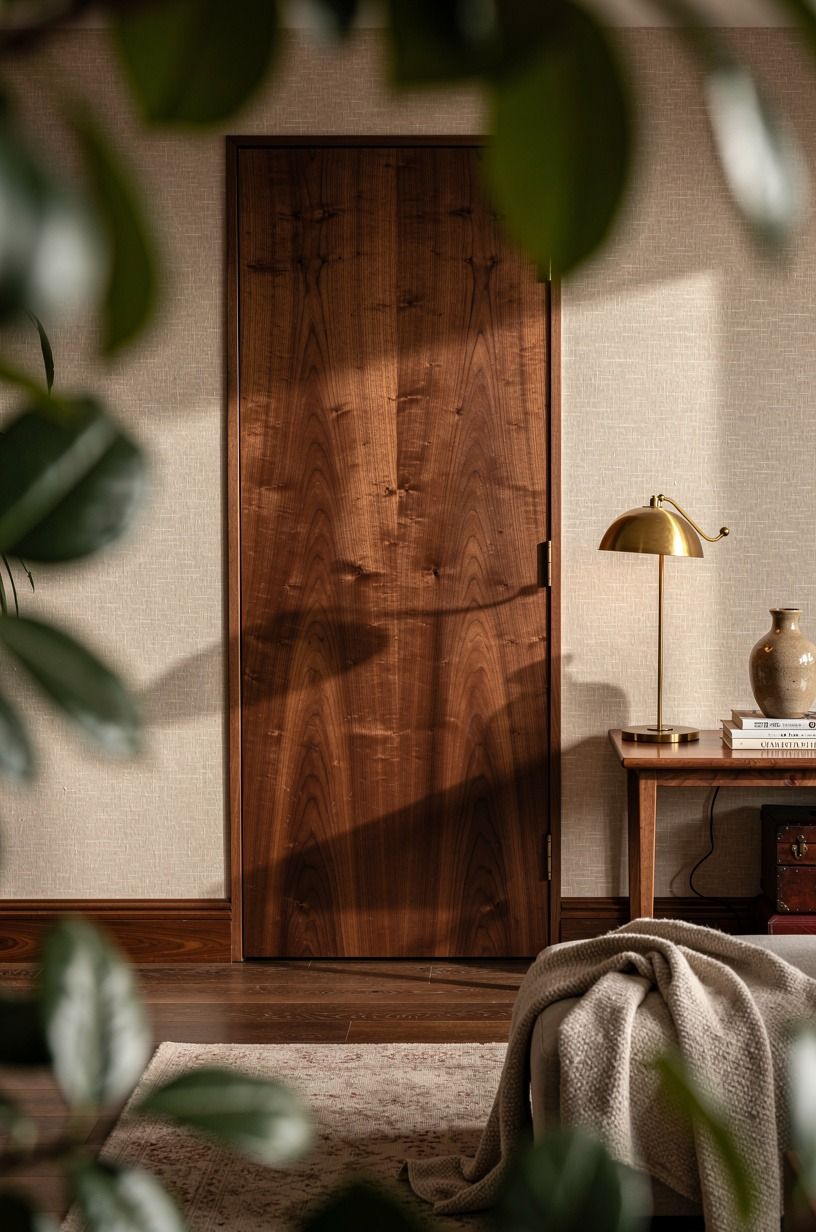
Continuing the baseboard across the opening was one of the quietest fixes and one of the most useful.
13Center the sofa on the disguised wall
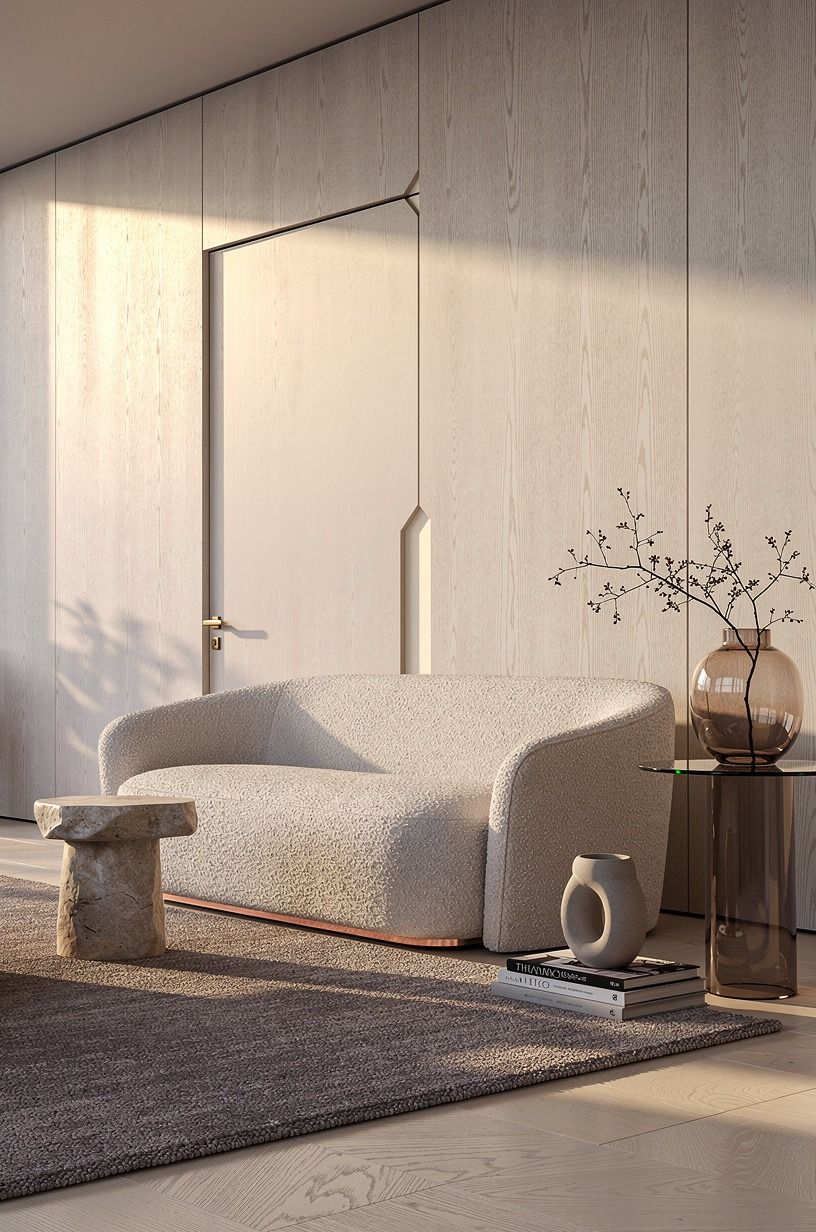
Once the wall looked right, the furniture finally had to respect it. Centering the sofa on the disguised wall made the room feel calmer and kept the opening from pulling attention sideways. My sofa depth sits in the standard 35 to 40 inch range, which helped because anything bulkier would’ve crowded the wall and made the doorway feel tighter.
The rug mattered too. An 8×10 worked, but a 9×12 wool rug let the front legs sit on it and made the whole zone feel more intentional.
I paired that with a coffee table around 16 to 18 inches tall so the sightline stayed clean. If you’re laying out a concealment wall around seating, tv wall with hidden door ideas conceal a whole room reinforces the same layout rules.
14Finish with art that avoids the seam
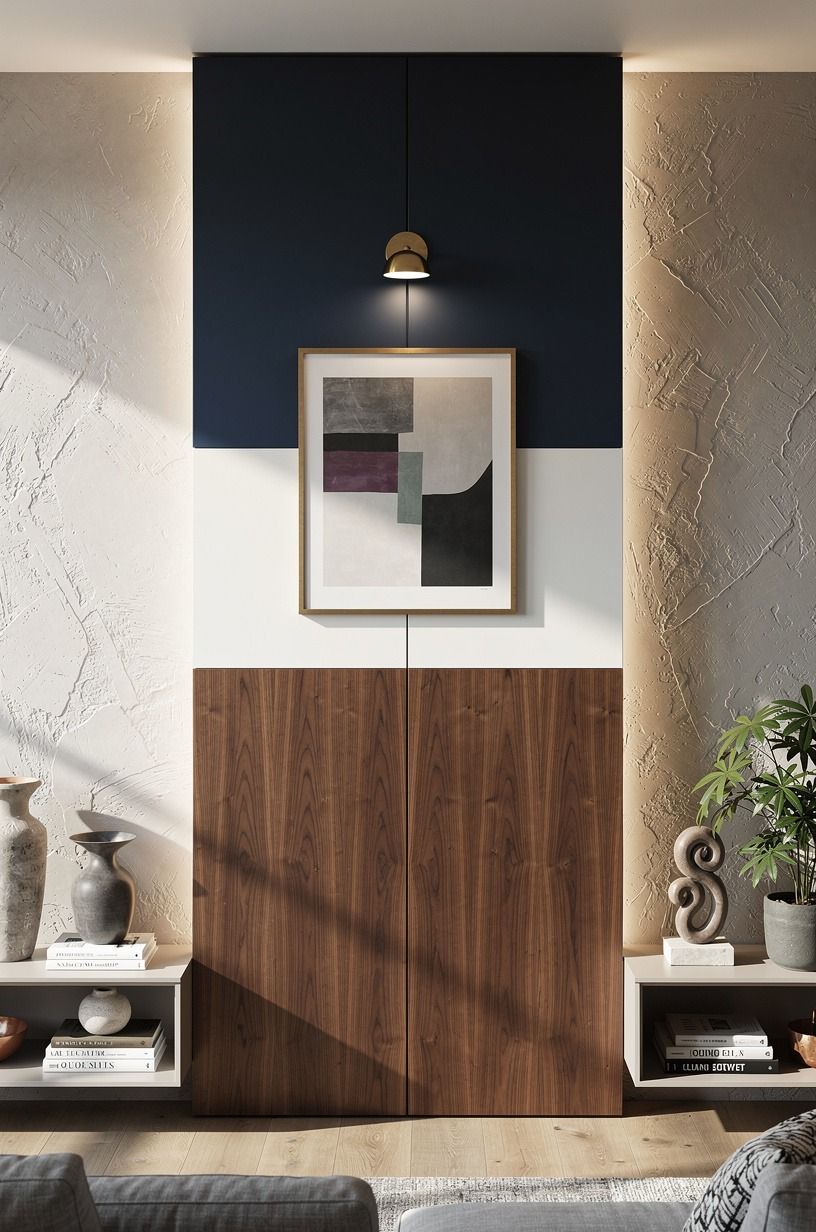
I almost made the classic mistake here and centered art right over the join. It didn’t distract from the seam. It spotlighted it.
The better move was hanging art away from the opening so the wall’s symmetry could breathe. In my navy, white, and walnut room, one warm-toned piece on the fixed panel looked calmer and more expensive than a fussy gallery arrangement.
You don’t need giant statement art. You need restraint.
I used a simple frame that repeated the room’s brass note, then left the concealed area quiet. But if your wall is tighter, a smaller layered piece can work just as well.
I kept checking modern hidden door ideas for sleek seamless interiors because the cleanest option kept winning.
How much it cost
I kept this makeover in the budget tier because I wanted warmth and continuity, not a full custom rebuild. Some of the lift came from materials, some from layout, and a lot from not wasting money on the wrong detail first. That’s good news if you’re trying to make a living room feel finished without jumping straight to millwork.
My version lived much closer to that first band. And honestly, that was enough. You can get a warmer wall with paint, trim logic, better wood choices, and a stronger furniture plan long before you pay for full custom work.
The Two-Wood Rule over one-note walls
The clearest rule in this whole makeover was simple. Two woods, not five.
One wood for the broad surfaces, one for depth and punctuation. Once I stopped adding extra stains, the room got quieter fast. If your wall still feels busy, this is the first edit I’d make.
I used pale oak for the main planes and walnut for accents, then repeated brass and clay linen so the palette held together. You can see the same restraint in modern hidden door ideas for sleek seamless interiors and in hidden pantry door ideas for a seamless kitchen, where fewer finishes make the concealment stronger.
Why did The Quiet-Wall Test work so fast?
It worked because I stopped asking the wall to impress me and asked it to calm the room down. Hidden doors get weird when every decision is about the reveal. Living rooms don’t need that.
You need a wall that lets the sofa, the firelight, and the rug do their jobs without one odd opening breaking the mood every time you look up.
My earlier mistake was treating each choice in isolation. One week I sampled panel profiles.
The next week I sampled hardware. Then I sampled stain.
Nothing clicked because I wasn’t protecting the sightline from the sofa, the doorway, and the kitchen pass-through at the same time. Once I checked all three positions before every choice, the room got easier to read and the answers got simpler.
But warmth didn’t come from layering more stuff. It came from fewer interruptions.
Broad oak planes, quiet hardware, and one grounded anchor, either the fireplace or the sofa line, did more than extra styling ever did. That’s why cerused white oak helped more than another decorative object, and why I wouldn’t spend my first dollars on accessories if the wall still feels chopped up.
And the room feels better now in a way that’s hard to fake. The opening doesn’t ask for attention.
It gives some back. With Farrow & Ball Hague Blue No.30 in the textiles and Sherwin-Williams Evergreen Fog SW 9130 softening a nearby accent, the wood wall reads warm, settled, and lived in.
That’s what I wanted all along.
A Few Things Worth Answering
What is the best Wood Hidden Door Ideas for Warm, Seamless Walls for a small living room?
A full oak panel wall or a slatted wall usually works best because both make the opening part of a bigger gesture. The payoff is visual calm. A compact Article Sven sofa or an IKEA KALLAX nearby helps the wall feel useful too. See tv wall with hidden door ideas conceal a whole room for layout cues.
Where can I buy Wood Hidden Door Ideas for Warm, Seamless Walls pieces on a budget?
I start with IKEA, Target Threshold, and Wayfair, then check Facebook Marketplace for solid wood pieces worth refinishing. The win is better material for less money.
Oak-look frames. Linen drapes.
Secondhand tables with good bones. I also cross-check styling ideas with hidden sliding door ideas for seamless space saving style.
How much does a Wood Hidden Door Ideas for Warm, Seamless Walls makeover cost?
Most rooms land somewhere between the budget and mid range, roughly $300 to $8,000 depending on furniture, lighting, and millwork. Paint and layout give the cheapest lift. Rug size.
Better lamps. Smarter hardware.
Full custom work is where the bill really climbs.
Can I create a Wood Hidden Door Ideas for Warm, Seamless Walls on a budget?
Yes, and you can make real progress without custom construction. The cheapest gains come from continuity. Matching trim tones.
Repeating one wood finish. Using push latches instead of visible pulls.
Centering your furniture so the wall reads as one composed zone.
Is a Wood Hidden Door Ideas for Warm, Seamless Walls worth it in a small space?
Yes, because a small room benefits most from fewer visual interruptions. The value is a space that reads bigger and calmer. Keep the sofa centered, let the rug hold the front legs, and use one dominant finish so your eye moves cleanly across the wall.
Is Wood Hidden Door Ideas for Warm, Seamless Walls a good idea for a rental?
Yes, if you treat it like a styling move instead of built-in millwork. The renter-friendly version can still feel warm. Peel-and-stick slat look panels.
Removable art away from the seam. A media console wall that visually tucks the opening back.
Easy win!
Where I’d Start First With The Grain-Match Rule
If I had to pick one, I’d start with matching the handle to the wood grain. A bad pull breaks the illusion faster than paint or styling ever can.
Get that quiet first. Then the whole wall starts working.