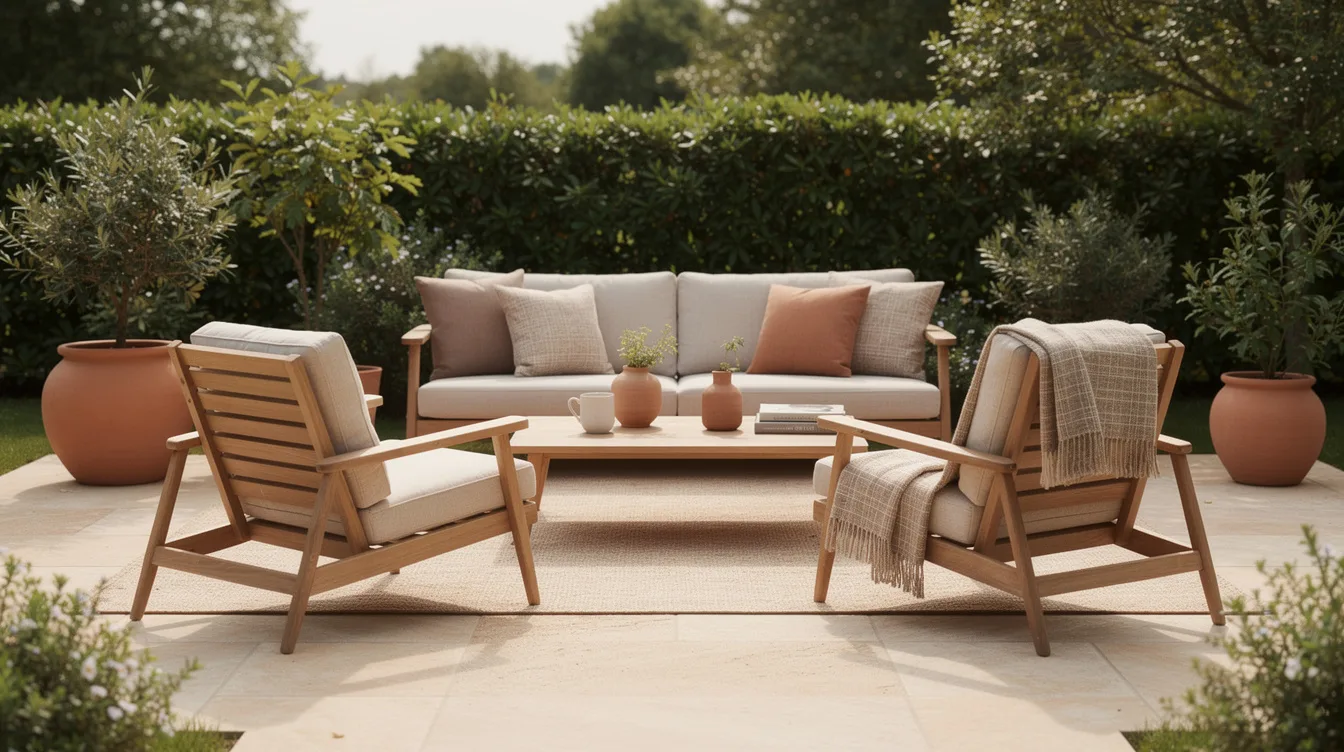
Last summer I walked into a backyard where the cushions had gone butter-yellow in the sun, the fence looked pink-beige, and the black dining set felt way too sharp against the plants. Nothing was ugly on its own, but together the colors made the whole space feel older than the house.
That is the trap with slow-summer palettes. They are supposed to feel quiet and easy, yet a few repeated color mistakes can make the yard look dated in one season.
Quit Washing Every Surface in Flat Beige
Slow-summer palettes usually start with beige, and that part makes sense. The problem starts when the fence, rug, cushions, and planters all land in the same dusty tone.
A backyard needs contrast to feel current. When everything is pale and powdery, the space reads sun-faded before summer is even over.
If you are repainting a fence or privacy wall, a gallon of Home Depot exterior paint typically runs about $45 to $70, so it is worth choosing a warmer mushroom or a deeper sand instead of default builder beige. Flat beige is the color mistake I see most because it tries to play safe and ends up looking tired.
Match Undertones Before You Paint Hardscape
Designers repeat this one all the time: they put a cool gray coating next to warm brick, tan pavers, or honey-toned stone. In bright sun, the mismatch gets louder, not softer.
Porch and patio paint from Lowe’s or Home Depot usually falls in the $40 to $60 range per gallon, and that is cheap compared with living with the wrong undertone for two years. A cool gray floor beside warm masonry already feels dated to me.
Look at the fixed surfaces first, especially brick, concrete, and stone. If the hardscape has orange, gold, or pink in it, pick clay, greige, or putty, because those shades stay calmer through the whole season.
Use Green as an Accent, Not a Blanket
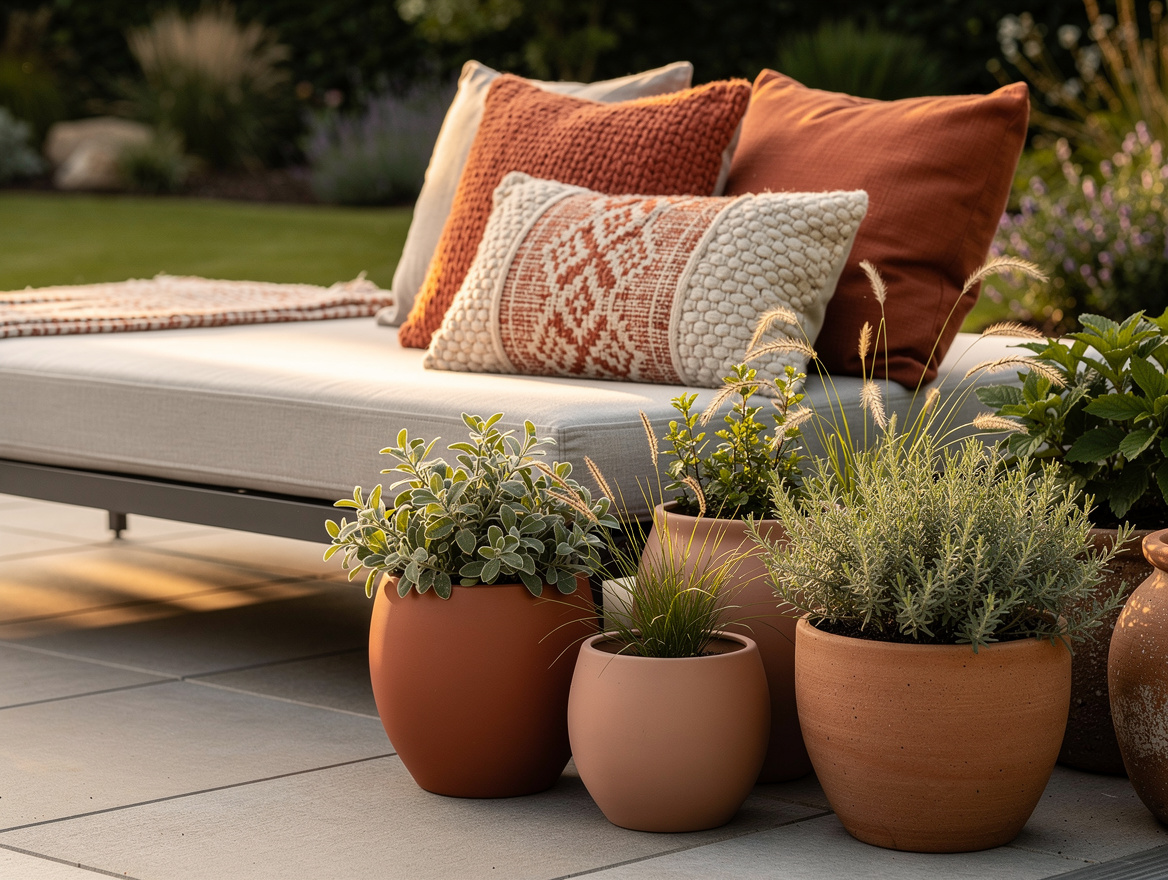
A yard already has plenty of green. Piling on sage pillows, olive umbrellas, and eucalyptus pots makes the seating area melt into the landscaping.
This is where the slow-summer trend can go flat fast. I like green outdoors, but I want it in one or two spots, not across every soft surface.
An 18-by-18 Target outdoor pillow usually costs about $20 to $30, so it is easy to overbuy the same muted shade because it feels safe. I would rather use one green pillow and let warmer colors, rust, clay, camel, do the real work.
Cut Heavy Black Metal With Wood or Wicker
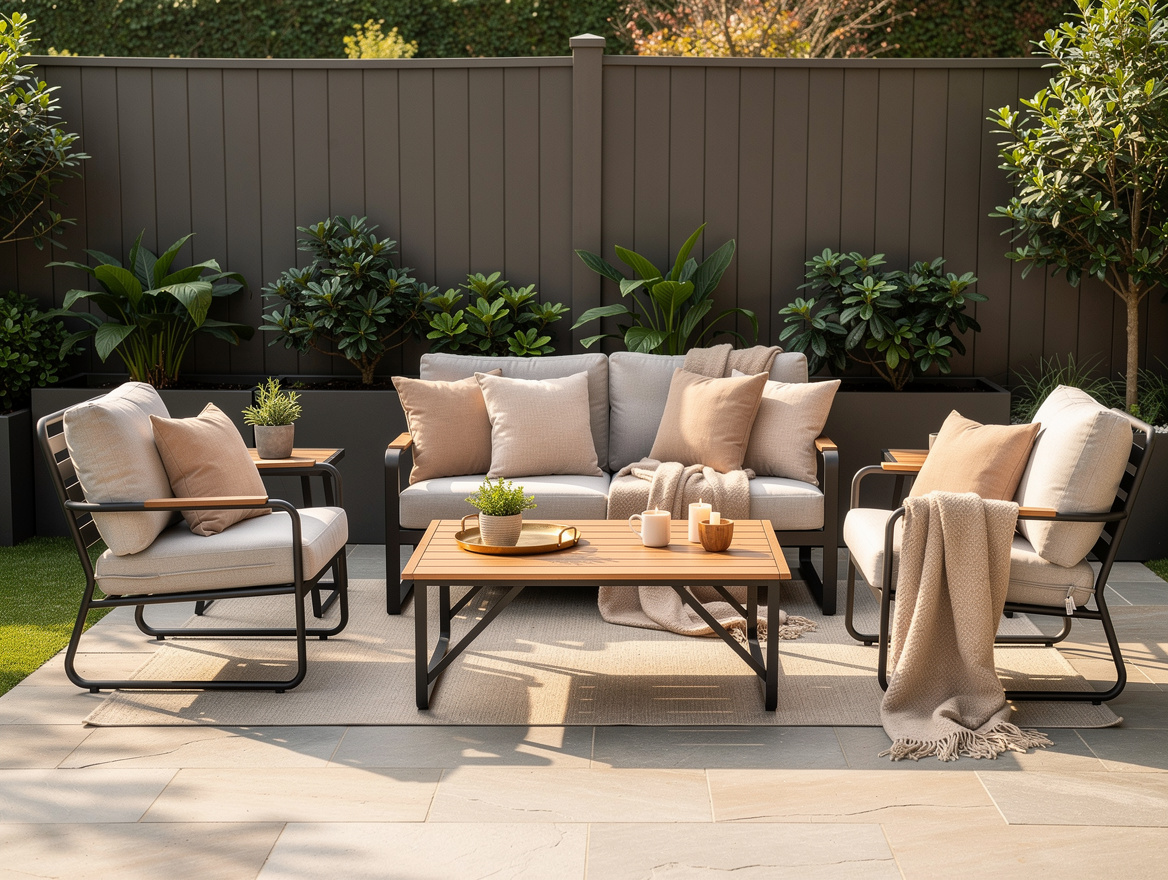
Black metal furniture photographs well, which is why so many backyards get stuck with too much of it. In real life, a full set of black chairs, black lanterns, and a black pergola can feel severe by late afternoon.
The fix is texture, fast. Add one acacia wood side table, a woven storage bench, or a lighter dining top so the dark frame stops dominating the whole view.
IKEA and Wayfair both sell small outdoor tables in the roughly $50 to $100 range, and that single swap can loosen up a rigid patio. Black works best as structure, not as the backyard’s entire personality.
Soften Bright White Resin Before It Starts Shouting
Fresh white outdoor pieces can look crisp for about five minutes, then the sun hits them and every surface turns harsh. Resin seating in particular reflects light in a way that can make a relaxed yard feel cheap.
A typical Walmart resin Adirondack chair lands around $80 to $140, so I understand why people buy them. I would never leave that bright white alone, though.
Ground it with a sand outdoor rug, a flax throw, or a jute-look planter. White needs warm texture around it, or it reads more pool deck at a rental than backyard you actually want to linger in.
Repeat One Clay Tone Instead of Five Vacation Colors
The fastest way to date a backyard is mixing too many cheerful accents because each one feels harmless on its own. Coral pillow, turquoise planter, lemon candle, striped umbrella, now the whole setup looks like clearance decor from three different summers.
Pick one earthy color and repeat it on purpose. Terracotta, rust, or cinnamon usually works because those shades like wood, greenery, and concrete equally well.
A 5-by-7 Wayfair outdoor rug typically costs about $60 to $120, and a couple of rust pillows from Target or Amazon can carry the same tone without much budget pain. One repeated color feels edited, and edited always lasts longer than playful clutter.
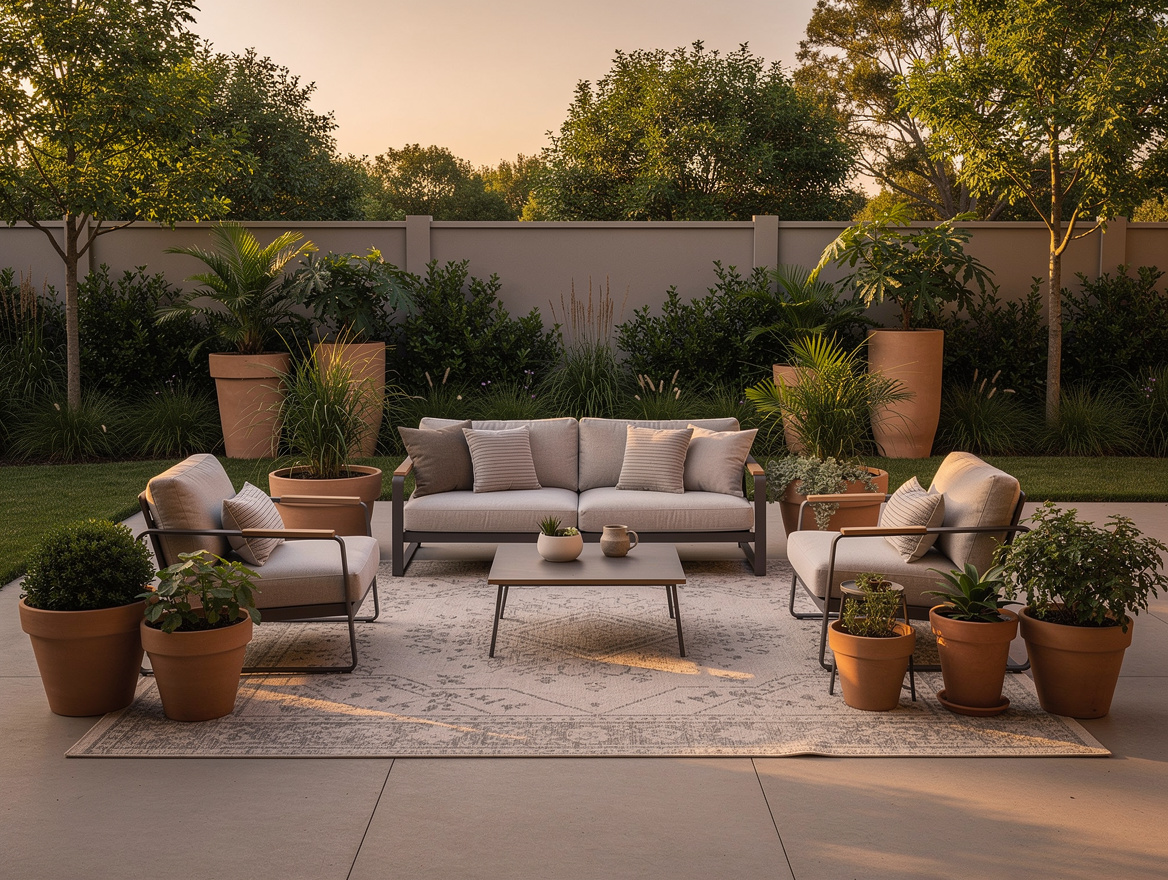
Start with the biggest surface you can actually see from indoors, usually the fence, rug, or seat cushions. Once those undertones agree, every smaller piece gets easier to buy, and the backyard stops feeling patched together.
Mia Carter writes about small-space living and budget home makeovers. She has restyled three rentals and tests most ideas in her own 45 sqm flat.