
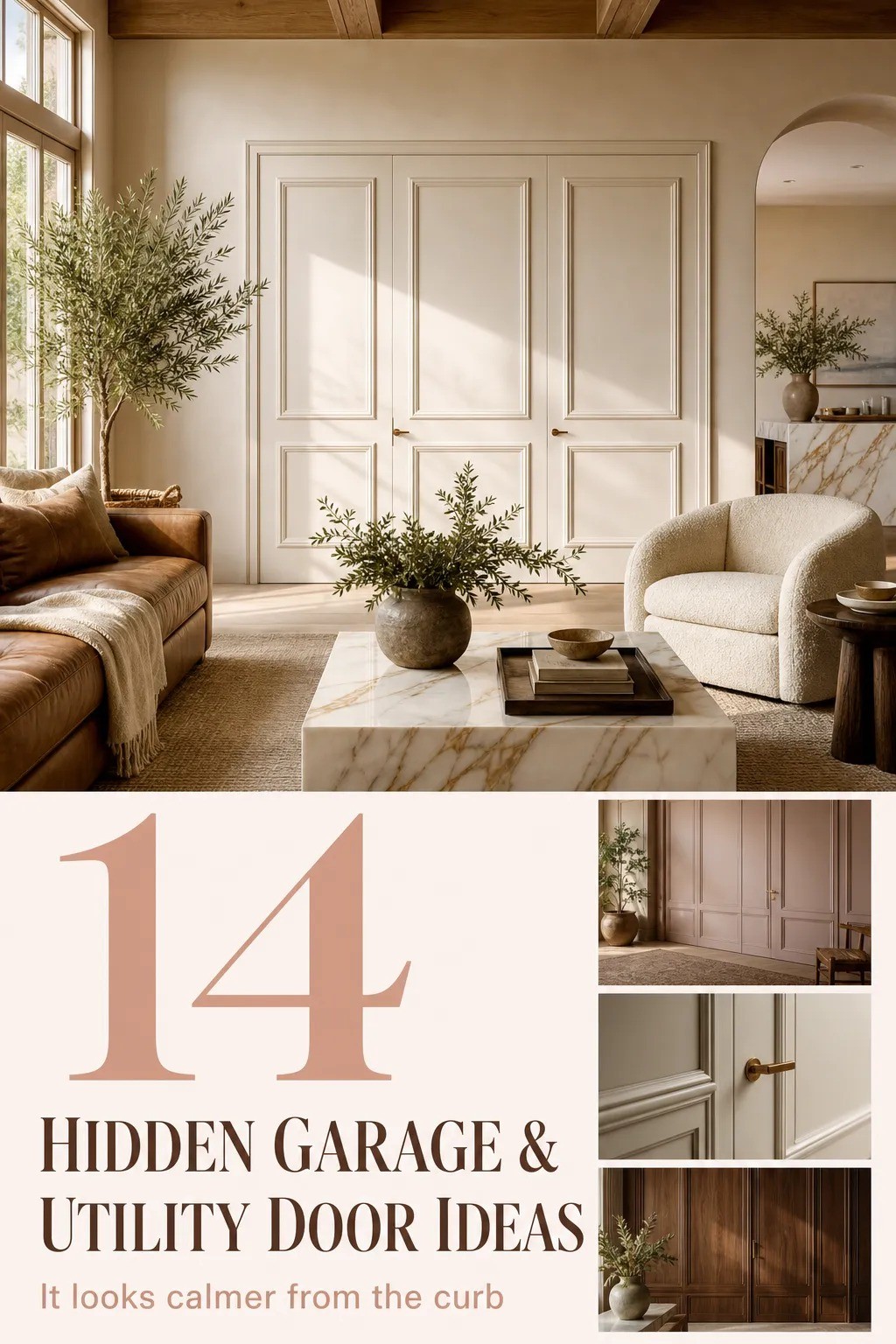
Hidden garage and utility door ideas for a tidy wall work best when the door stops begging for attention and starts acting like part of the room. I learned that the hard way after painting one access panel a fresh white and somehow making it louder than the sofa. Once you stop treating the door like a problem and start treating the whole wall like one composition, it gets easier fast. And yes, you can do that without turning your living room into a millwork project, with help from a steady hand and one calm paint color.
Don’t overthink: Wrap the utility door in vertical tambour panels.
- Disguise the garage door with picture-frame molding
- Wrap the utility door in vertical tambour panels
- Paint the door flush with the living room wall
- Hide the door inside a full-height bookcase wall
- Cover the access door with oversized framed art
- Build a slatted screen across the door swing
- What if you paneled the wall with seamless shaker rectangles?
- Blend the door behind grasscloth wallpaper
- Benjamin Moore Revere Pewter HC-172 vs crisp white for hiding the door
- Mirror the door with antique glass panels
- Farrow & Ball Hague Blue No.30 over board-and-batten camo
- What does a console vignette actually buy you over a chair?
- Use concealed hinges for a gallery-wall door
- Turn the door into a faux fireplace surround
1Disguise the garage door with picture-frame molding
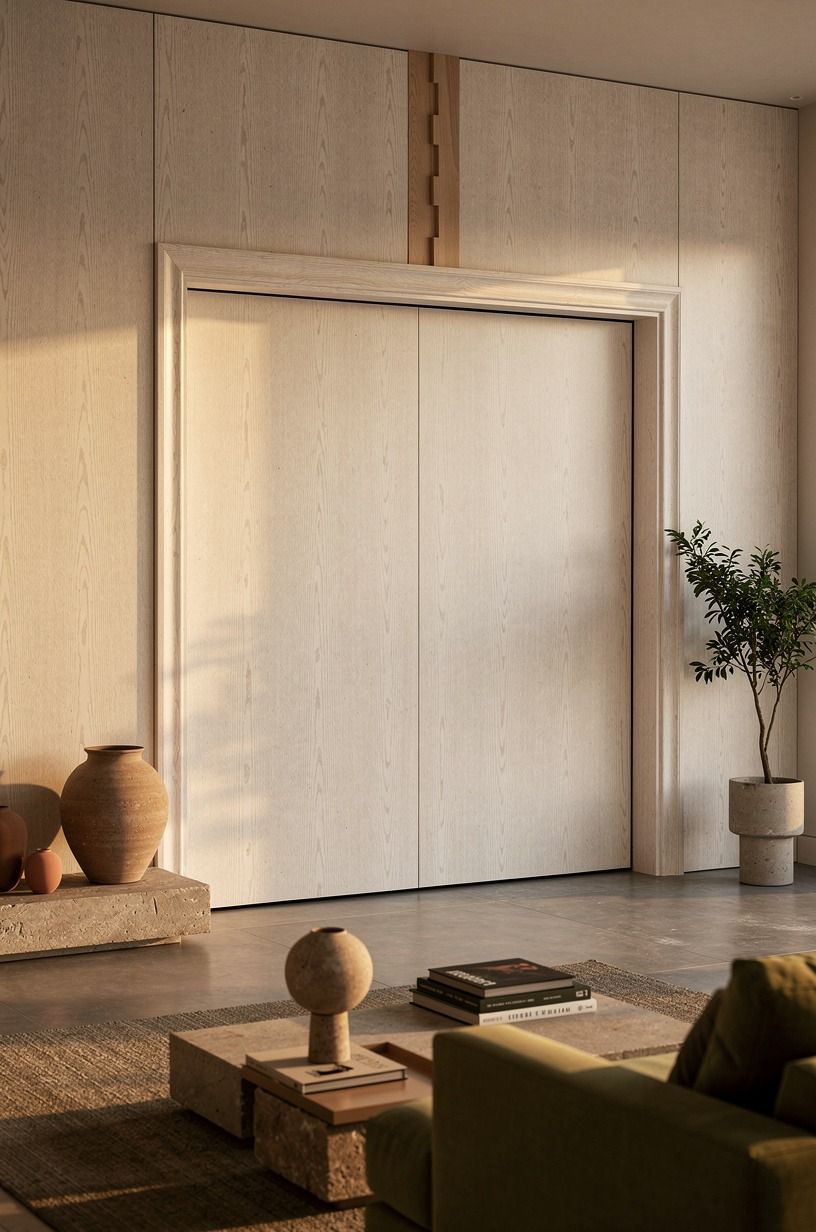
Start by laying picture-frame molding across the entire wall, not just the panel itself, so your eye reads one repeated grid instead of one awkward opening. On a living room feature wall with flush seams still slightly visible, that rhythm matters more than perfection. I like a cerused white oak finish here because the grain gives you movement, and movement hides a seam better than flat paint ever will.
You’ll want the molding boxes to stay generous, not fussy. Think fewer, wider rectangles and an exposed fumed oak beam above if your room already leans warm. If you’re building out a full concealed wall language, the examples in paneling layouts that vanish into the woodwork show why repeated frames beat one isolated trim move every single time.
The mistake I’d skip is over-deep trim. Your garage access panel still needs to move, and anything too proud can catch, chip, or make the reveal obvious.
Keep the profile restrained, line the rectangles across your adjacent wall too, and let the frame pattern do the quiet camouflage. It’s the simplest way to make your eye stop hunting for the door.
2Wrap the utility door in vertical tambour panels
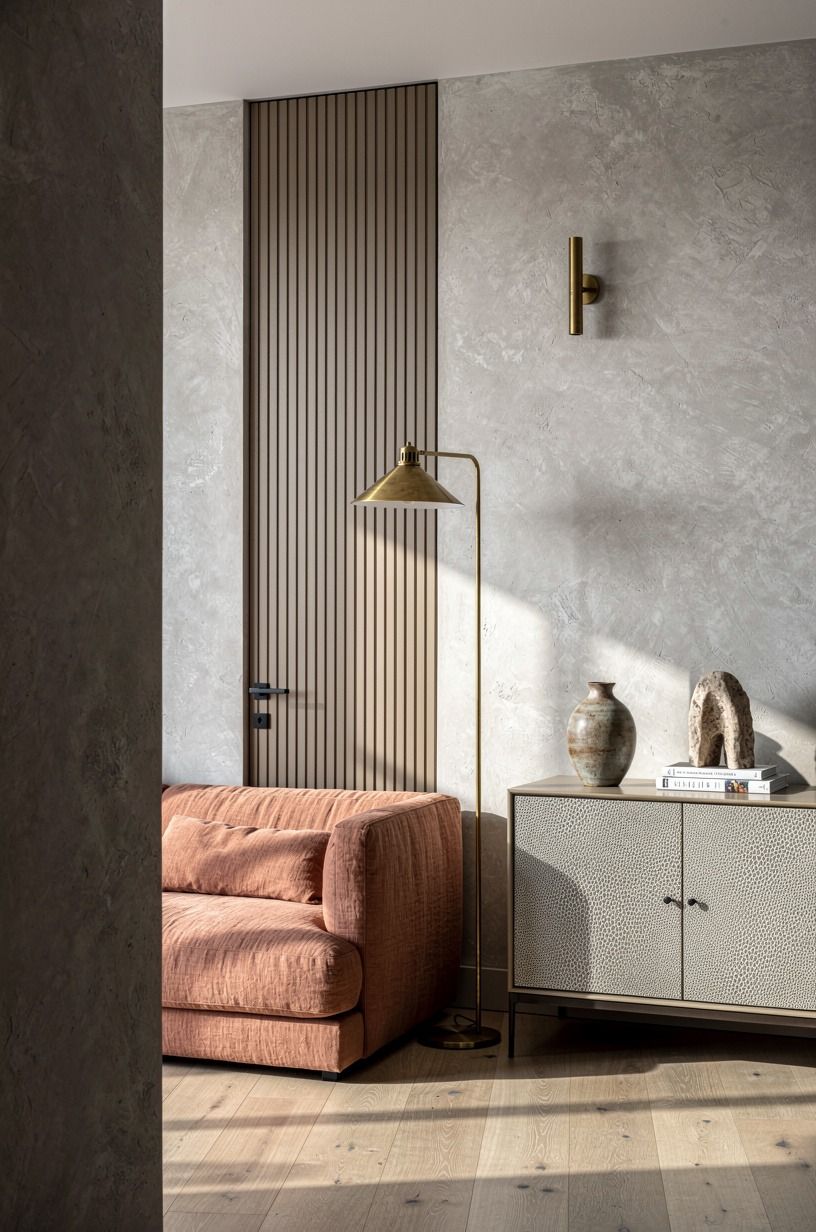
Wrap your door and the surrounding section in slim vertical tambour so your eye follows line, not interruption.
3Paint the door flush with the living room wall
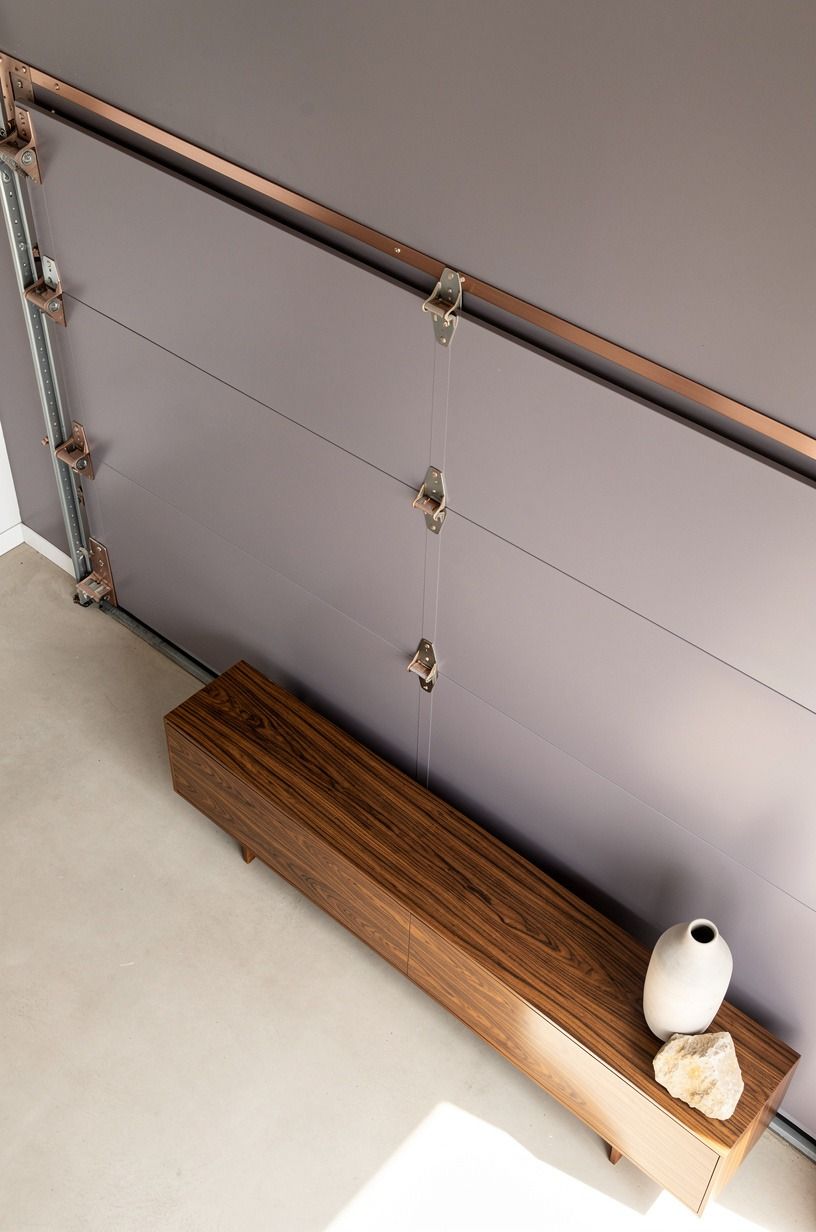
Paint is still the cheapest move, and yes, it’s worth trying first. When your wall and door share one low-contrast tone, the opening line recedes, especially in a room viewed from above or from long angles across the floor plane. Benjamin Moore Revere Pewter HC-172 is one of those colors that softens edges without making your room feel sleepy or muddied.
You’ll want to keep the sheen identical across wall, frame, and panel. That’s the part most people miss on the first try. A satin door inside matte walls will betray itself by 3 pm, even if your color match is perfect.
I also think this is where renters and cautious DIYers should begin, because a gallon of paint is a much safer bet than a weekend of trim math. For another wall-first concealment strategy, tv wall with hidden door ideas breaks down how far a continuous finish can go.
And if your wall gets little natural light, skip crisp bright white. A quieter mid-tone gives you more forgiveness and a warmer, lived-in read. You’ll feel the difference the first evening you sit in the room.
4Hide the door inside a full-height bookcase wall
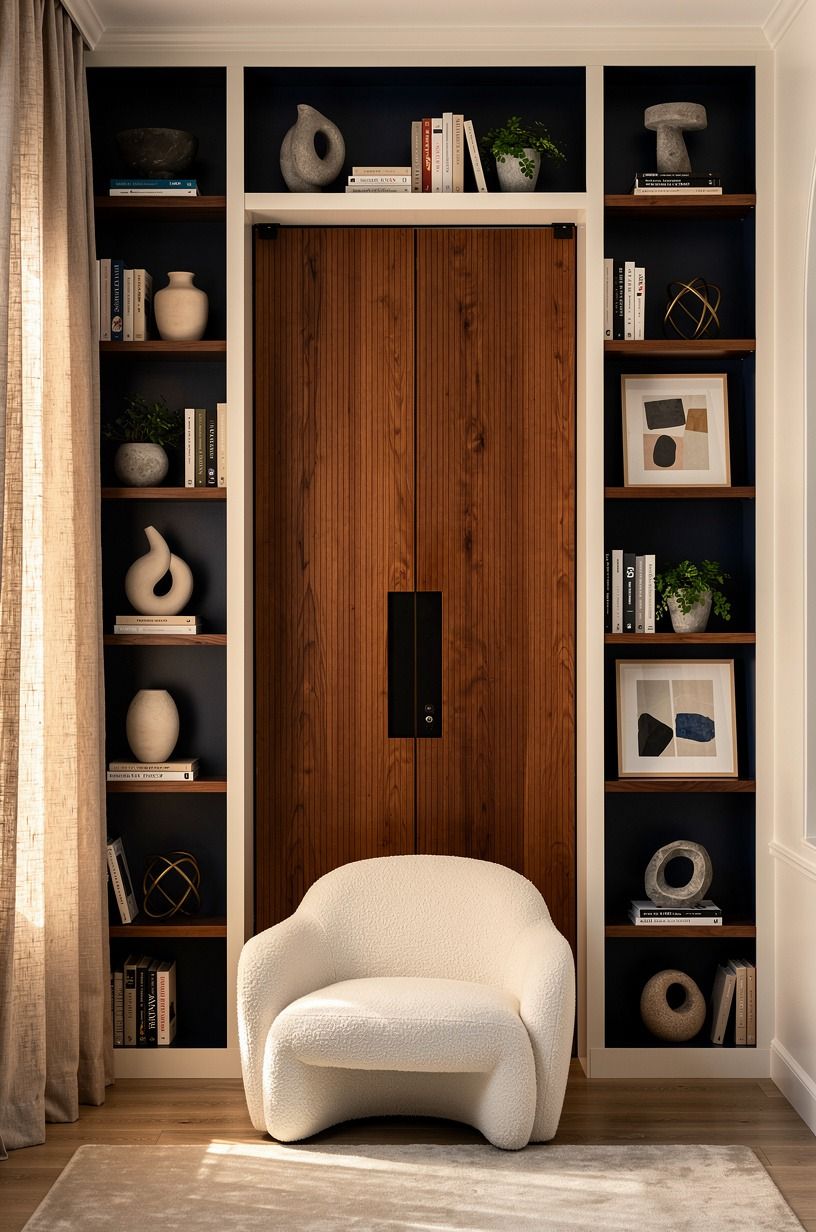
Build your whole wall up to the ceiling and let one bay become the access panel. Front-on symmetry does a lot of the hiding for you because your eye wants to believe every vertical is structural. In a navy and white room, a bookcase wall painted in Farrow & Ball Hague Blue No.30 with one disguised panel can look far more expensive than it actually is.
You don’t need custom millwork from day one, either. A run of IKEA BILLY units trimmed together with filler strips can fake the architecture if you keep the depth consistent.
I went back and forth on whether open shelving or closed lowers work better, and closed storage wins, hands down. Real talk: visible clutter will point straight to your hidden panel because the rest of the wall feels too busy.
If hidden storage is your main goal, garage wall storage systems that earn their keep is worth a look too.
Think of this as the Library Wall Rule. If every bay carries equal visual weight, your door stops reading like a door and starts reading like architecture.
5Cover the access door with oversized framed art
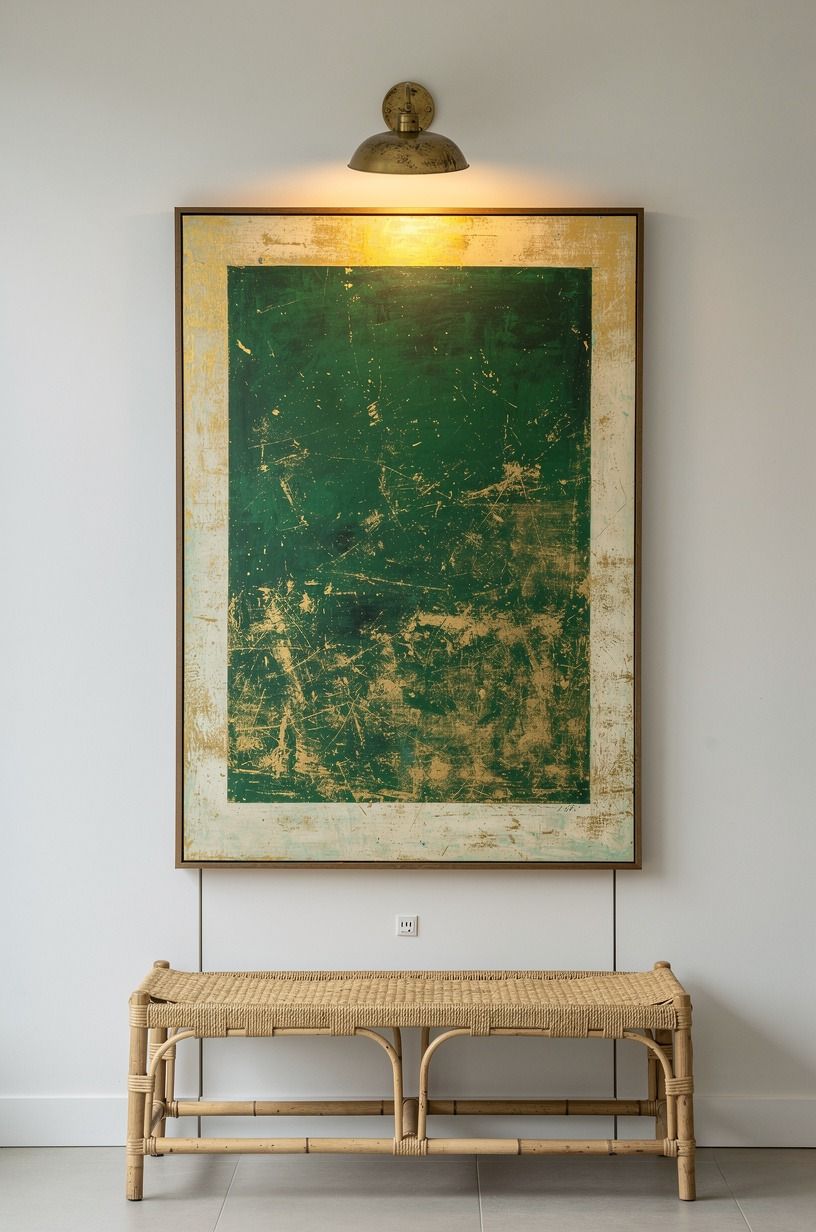
Hang one oversized artwork so your concealed panel sits behind the composition, not beside it. In a calm wall with emerald and cream art, the color blocking does half the work for you because it distracts from small perimeter shadows. I love this move when you want something softer than paneling and less permanent than built-ins.
Use real scale here. A timid 24 by 36 inch print won’t do much on a broad living room wall, but a larger piece feels deliberate and gives you enough visual mass to pull focus away from the seam.
Unlacquered brass picture lights above the frame help too, especially if the rest of your room has aged metal notes already. If you’re layering decorative concealment across a bedroom or lounge, hidden wardrobe door ideas for a clean bedroom wall shows why art beats apology decor every single time.
But don’t over-gallery this one wall. One strong frame in a walnut gallery rail is calmer. Five medium frames can make your door line more noticeable, not less.
6Build a slatted screen across the door swing
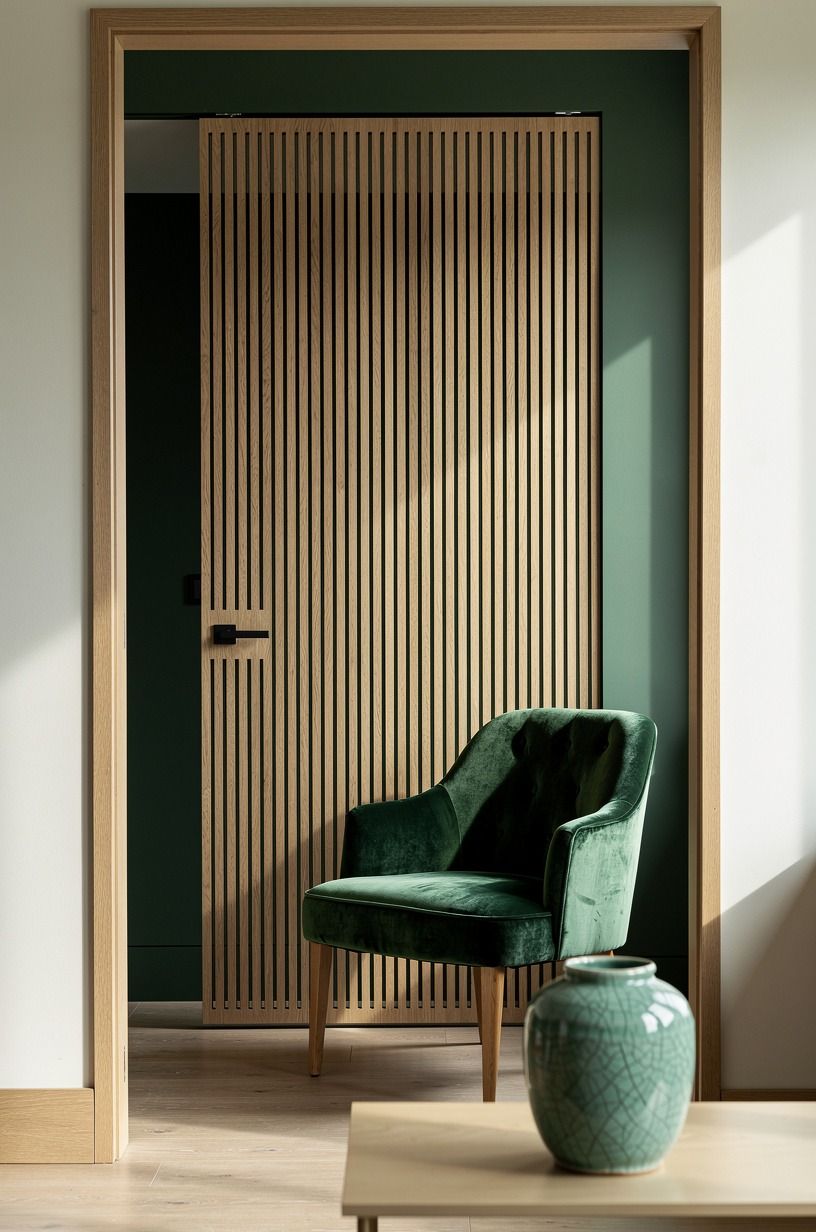
Build a freestanding or semi-fixed slatted screen in front of your door path so the utility access sits behind a rhythm of oak lines. Seen through a doorway, that layered view feels thoughtful right away. I think this is one of the smartest options when you can’t alter the actual door much but still want the room to read finished and grounded.
You’ll want to keep the slats airy enough that light still moves through. Forest green walls behind natural oak slats are especially good because the dark field drops back while the screen becomes the warm feature.
A 3/4-inch spacing usually feels clean, and it won’t make your corner feel boxed in. If you like an architectural divider that still hides function, slat wall hidden door ideas gives you more ways to balance openness and cover.
I call this the Soft Barrier Move. You aren’t erasing the door. You’re making the layer in front more interesting than what’s behind it.
7What if you paneled the wall with seamless shaker rectangles?
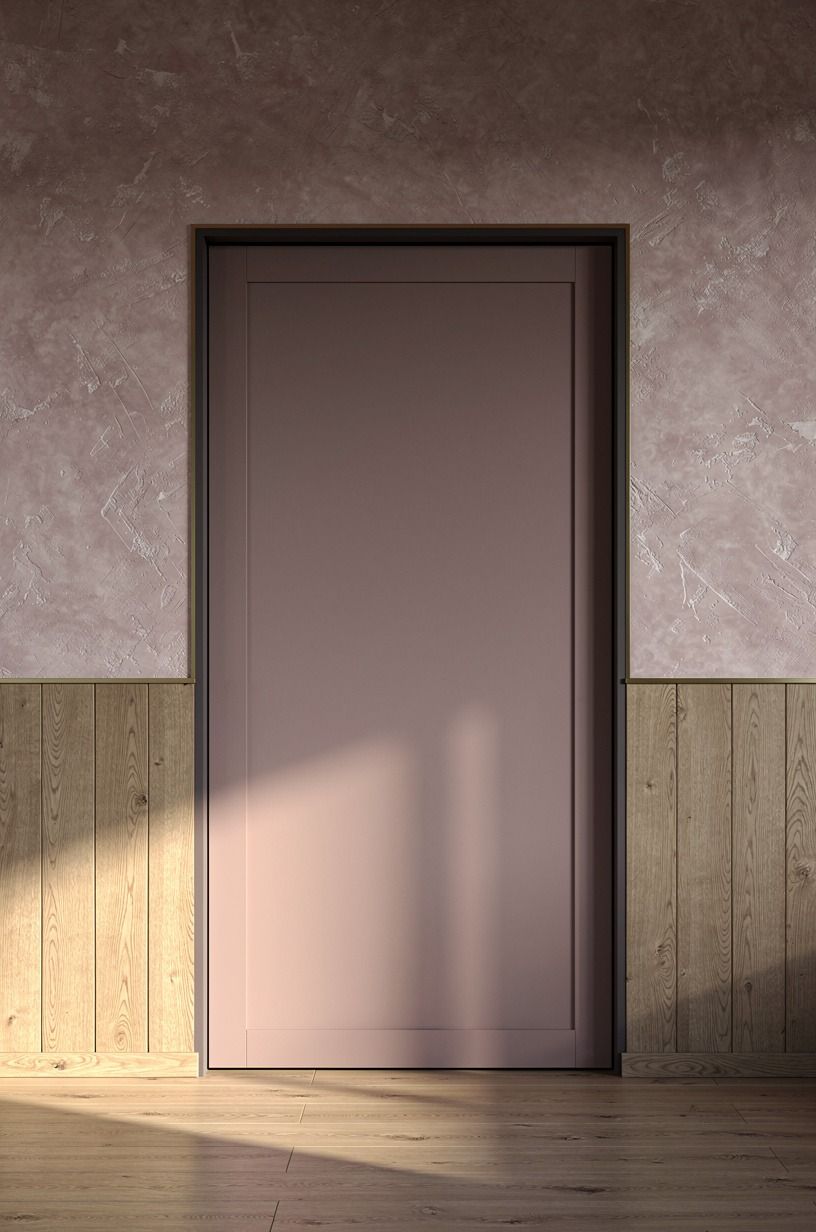
Panel the whole span with shaker-style rectangles that run corner to corner, then let your concealed panel sit slightly off-center inside the pattern. This is the classic answer when you want structure without heaviness. On a broad living room wall, the repeated rails and stiles pull your eye sideways, which helps a lot when your door itself is inconveniently placed.
You can keep the look modern by choosing slimmer profiles and painting everything one tone. Sherwin-Williams Evergreen Fog SW 9130 is especially good here because it has enough gray to quiet the wall but enough green to keep it alive at 4 pm.
I wouldn’t use thick farmhouse battens for this version. They can feel costume-y in a cleaner room, and your panel joint gets more dramatic instead of less.
For more examples of whole-wall disguise, matching millwork patterns for hidden door walls shows why continuous geometry matters.
And yes, you should run your trim over the door exactly as if it were fixed wall. That’s what makes the illusion land, and your guests will stop noticing the seam by the second visit.
8Blend the door behind grasscloth wallpaper
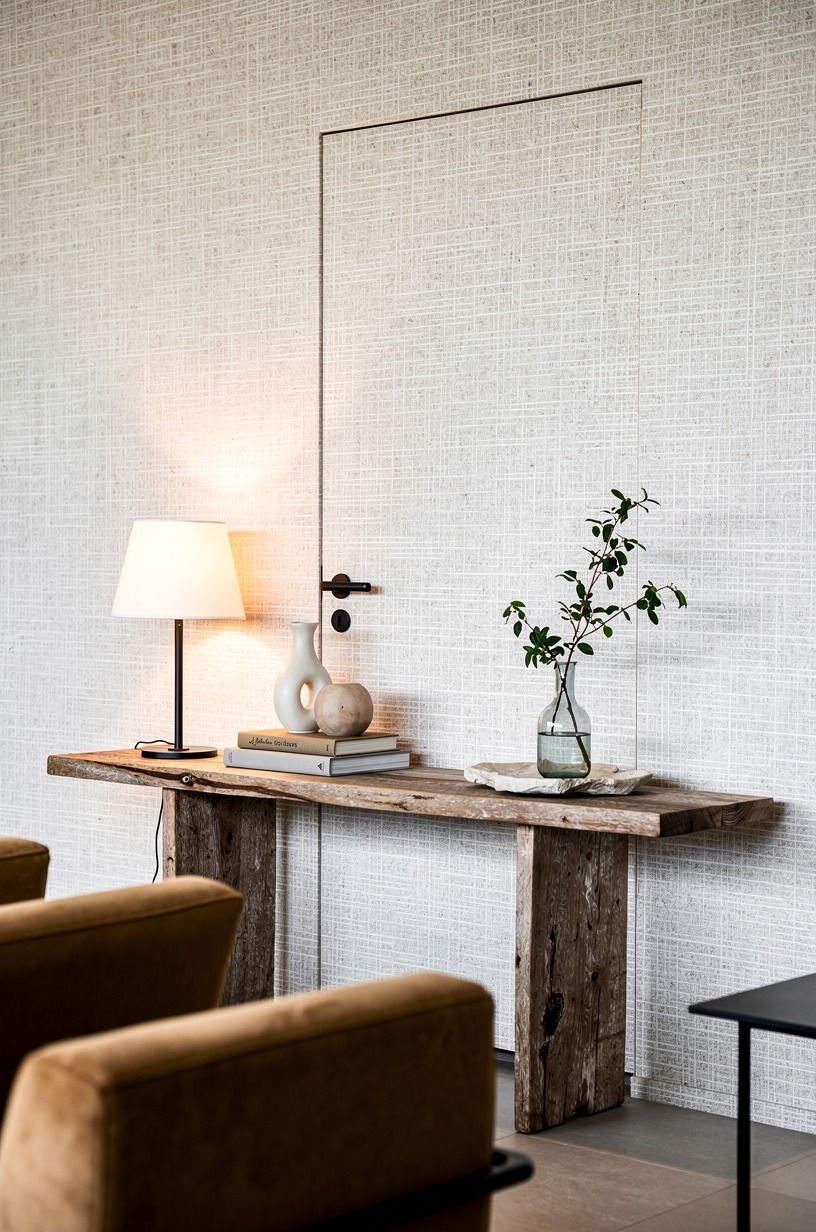
Use grasscloth when you want texture to blur your seam without adding depth. Warm white woven wallcovering is forgiving in the nicest way, especially in a relaxed living room where light rakes softly across the wall instead of hitting it head on. If your panel line is already fairly tight, texture can do more than trim ever will.
I like this best on utility doors that don’t need to be touched all day. The woven surface breaks up the perimeter shadow, and the subtle irregularity helps the joint disappear into the weave.
You should still color-match your trim first, then wrap the wall and panel together so the seam doesn’t flash a different base tone. Want another concealment idea that leans decorative over structural?
concealed cabinet face ideas for a hidden door makes a good companion read.
The only thing I’d skip is cheap faux grasscloth with a printed repeat. Once you notice the pattern loop, you notice the door too.
9Benjamin Moore Revere Pewter HC-172 vs crisp white for hiding the door
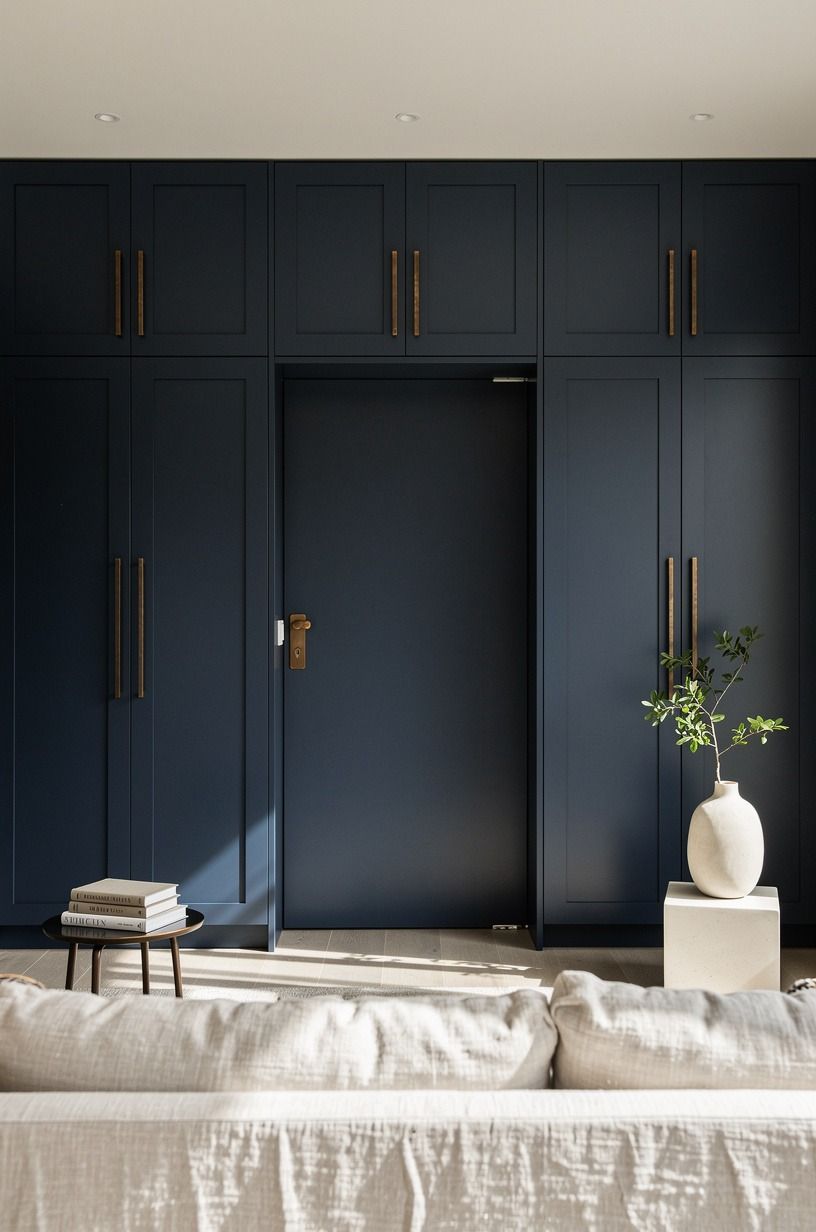
In my experience, a quiet mid-tone like Benjamin Moore Revere Pewter HC-172 beats crisp white nine times out of ten, especially on a living room wall where the door is supposed to disappear into the architecture. White reads as a fresh coat, and a fresh coat draws the eye. Mid-tone reads as the wall, and the wall is exactly what you want your eye to land on.
You’ll want to test the swatch at three times of day before you commit. Revere Pewter shifts slightly warm in morning light and slightly cool by dusk, and that quiet swing is what hides the seam instead of flashing it.
Pair it with a soft satin finish across wall, frame, and panel so the sheen stays consistent. For a deeper alternative on a north-facing wall, Benjamin Moore Pale Oak OC-20 keeps the same low-contrast logic with a touch more warmth.
And if you want a bolder read, Farrow & Ball Down Pipe No.26 on a darker accent wall can swallow the seam entirely, though I’d save that move for a room with serious natural light.
10Mirror the door with antique glass panels
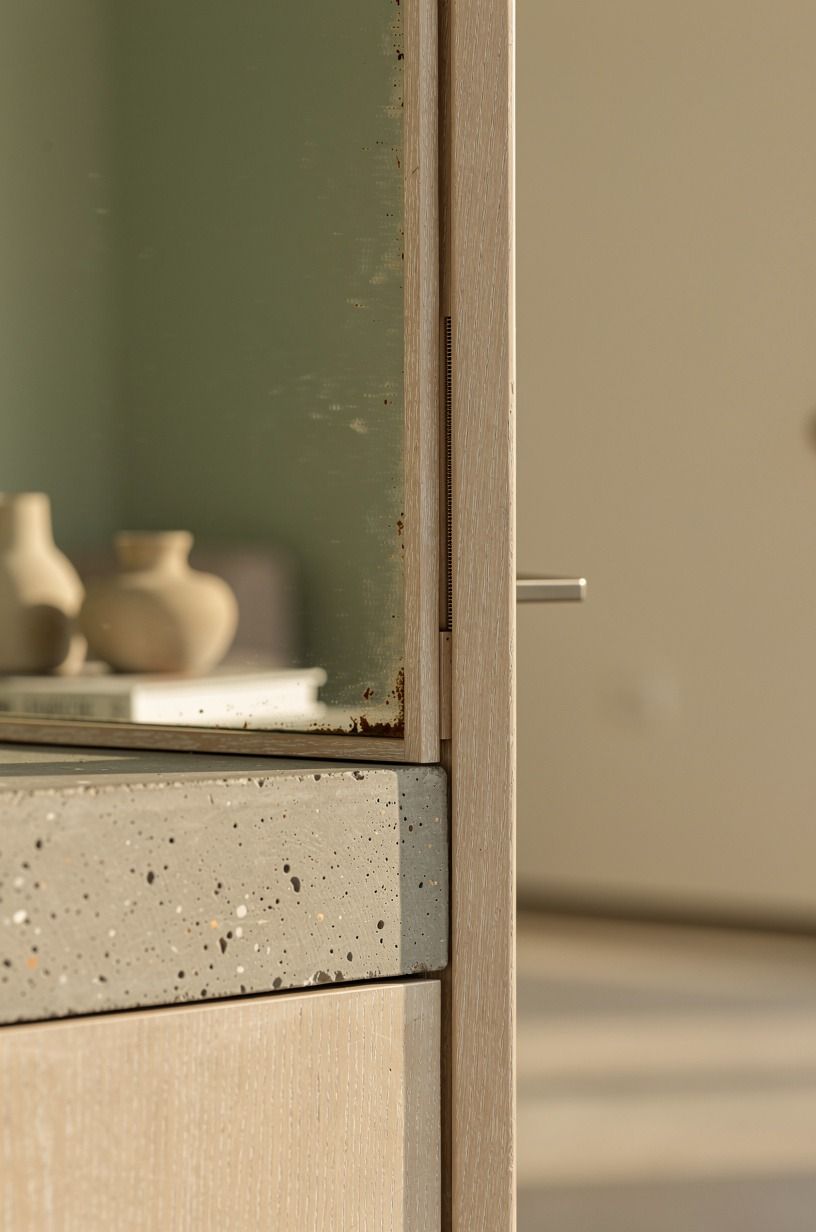
Use antique mirror panels when you want your door to dissolve into reflection instead of texture.
11Farrow & Ball Hague Blue No.30 over board-and-batten camo
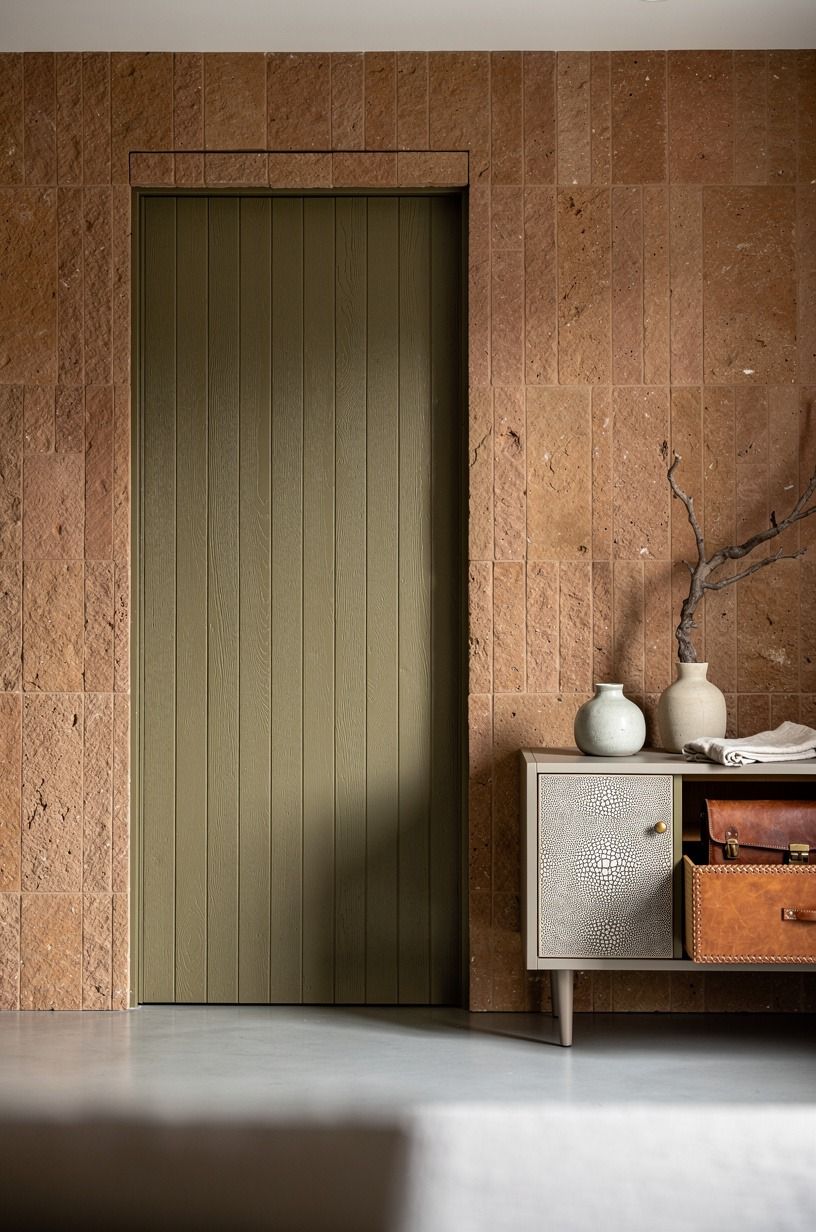
Run battens cleanly across your whole wall so the door disappears into a repeated vertical pattern. In a terracotta stone and olive room painted in Farrow & Ball Hague Blue No.30, that structure feels warm rather than stiff, especially when your battens align exactly over the concealed panel. I still think this is one of the most forgiving DIY routes if your reveal isn’t millwork-perfect on the first try.
Keep the spacing regular and the base color muddy, not stark. Benjamin Moore Revere Pewter HC-172 or a clay-leaning neutral will hide little shadows better than bright white, and a matte finish keeps your wall from announcing every line.
You can pair the wall with a 9×12 wool rug if the room is open, or at least an 8×10 with front legs on it, so the whole area feels anchored instead of top-heavy. For more hidden-access inspiration with practical wall language, garage wall storage layouts that earn their keep is worth a read for the adjacent zones too.
But don’t let your battens stop at the door frame and restart. That little pause is exactly what your eye will catch every single time!
12What does a console vignette actually buy you over a chair?
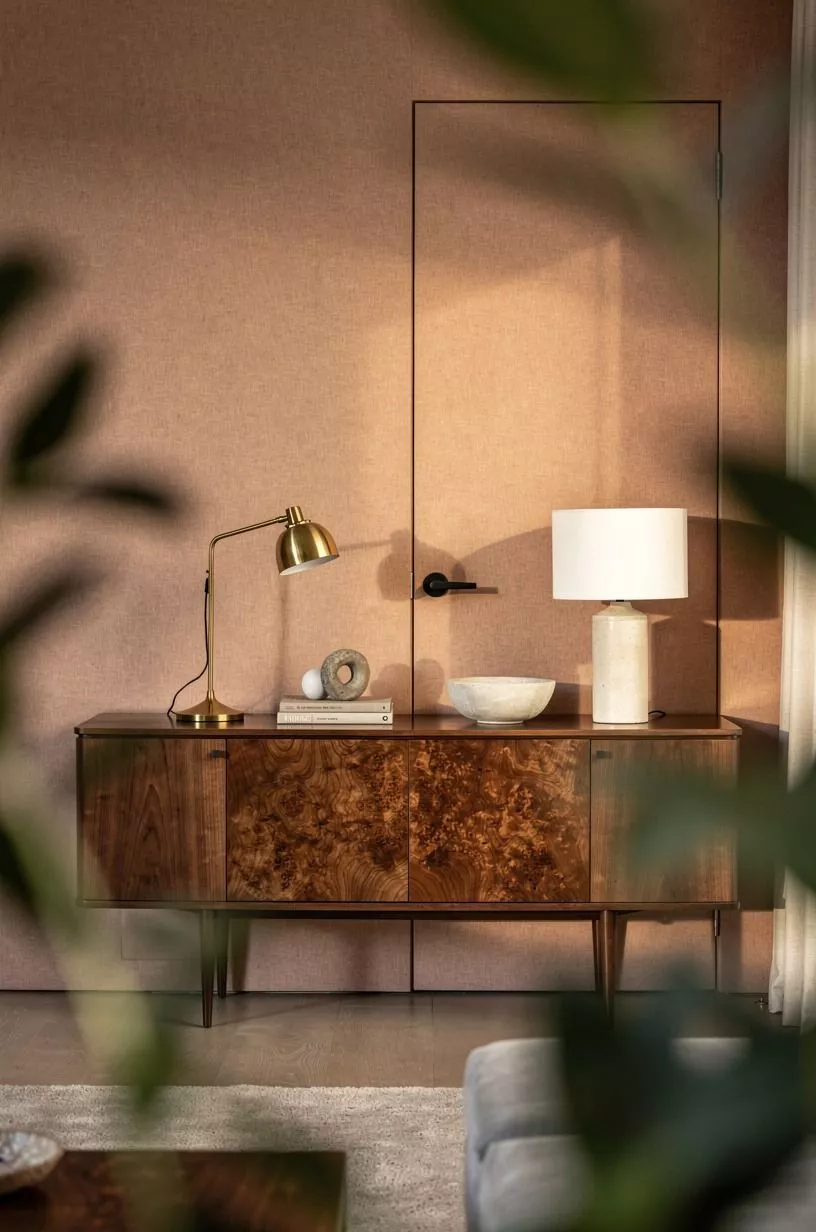
A console vignette buys you silence. A chair parked in front of a door tells every guest in the room that something is hiding behind it. A styled console, a warm lamp, and one piece of art shift the eye six inches off the seam, and that’s usually enough to make the door stop being a problem.
I lean on this move in rentals because it costs nothing to commit to.
You’ll want the console to land a few inches wider than the door on both sides so the eye reads furniture, not opening. A slim cerused oak console, a bouclé stool tucked underneath, and a single unlacquered brass lamp usually carry the whole job.
Stack two or three books, one small hand-thrown ceramic, no more. Clutter at console height pulls focus right back to the seam.
For a softer read in a darker room, choose a lamp with a linen shade in a 16 to 18 inch drum so the pool of warm light feels generous. And if you want a layer that adds storage too, concealed cabinet face ideas for a tight doorway shows how to fake a built-in without ripping into drywall.
Skip anything shiny on the console top. Glossy finishes bounce light straight at the door line.
13Use concealed hinges for a gallery-wall door
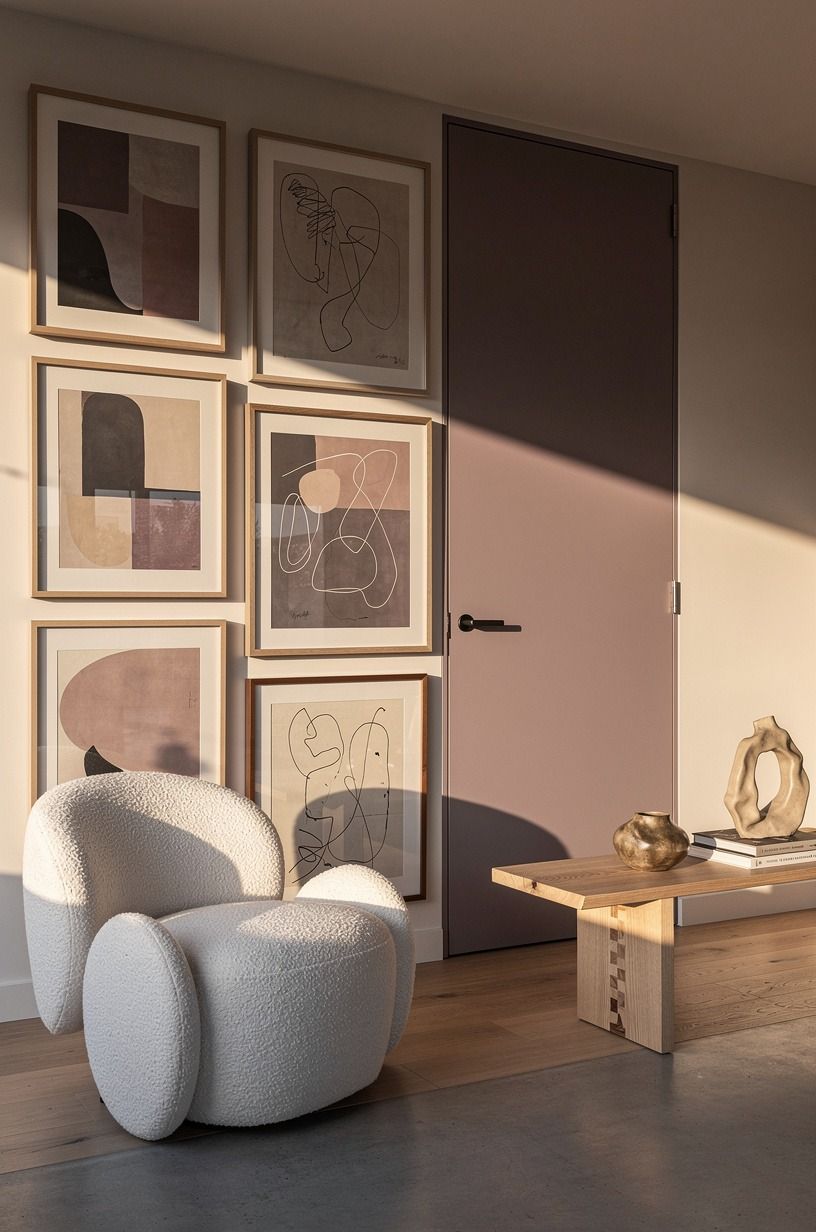
Switch to concealed hinges and let the art run right across the access panel so your wall reads as one continuous display. A wide-angle room with frames spanning the hidden garage access looks far calmer when the hinge side doesn’t shout hardware.
Would I do this before repainting the wall? Probably not, because bad color will still give your door away.
You can keep the gallery wall casual, but the spacing should stay disciplined. I like mixing matte black, walnut, and antique gold frames as long as the mat color stays consistent.
That consistency is what keeps your eye moving across the collection instead of stopping at the panel edge. And if you’re using home storage solutions elsewhere in the room, this move helps the art feel like architecture, not filler.
Hidden wardrobe door ideas for a clean bedroom wall and wall systems that hide a tv and a door both echo the same lesson.
But skip tiny frames. You want enough scale that the arrangement reads first and your access disappears second.
14Turn the door into a faux fireplace surround
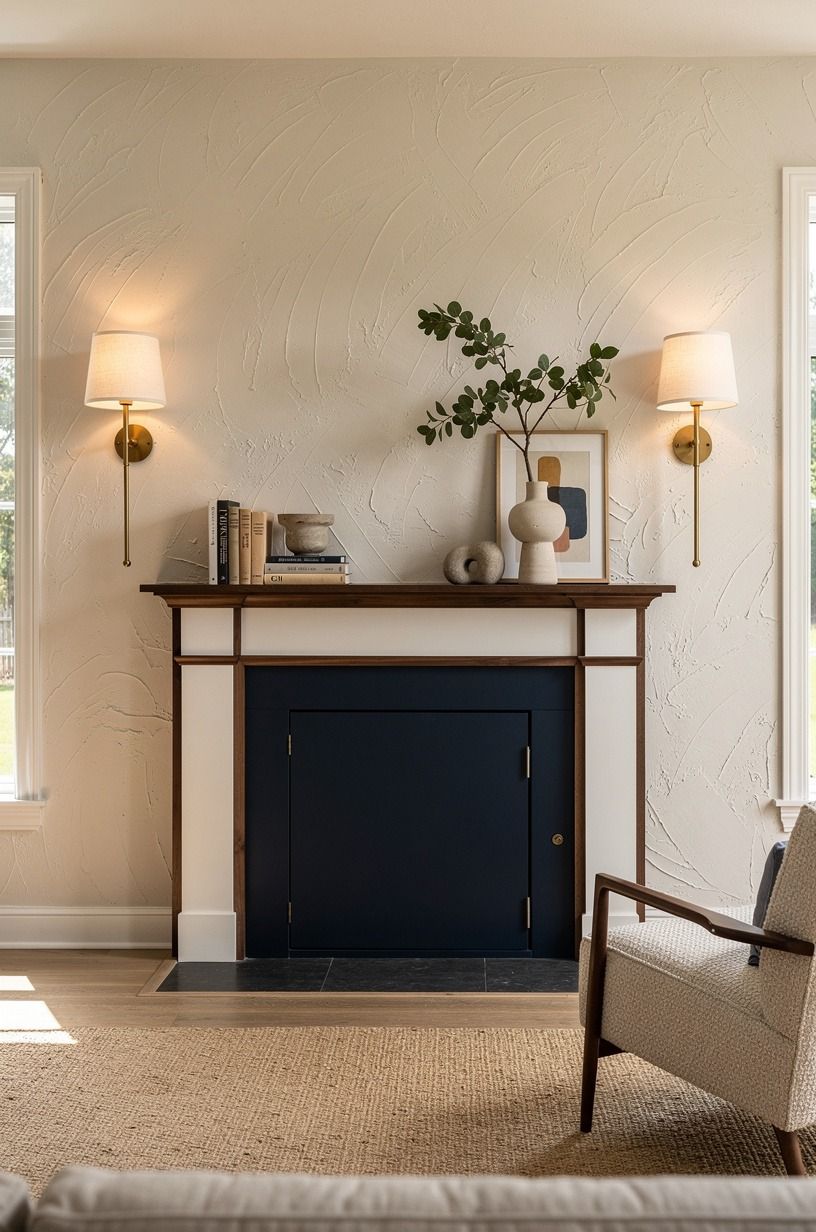
Frame your utility panel as if it were part of a fireplace composition, complete with mantel, side trim, and a strong central shape.
Why this works better than a random cover-up
I’ve seen people treat hidden garage and utility doors like one weird little problem in the middle of an otherwise normal room, and that’s exactly why the fix rarely sticks. The wall has to read as a whole idea.
Not a patch. Not a disguise kit.
A whole idea.
If I had to boil it down, tidy walls come from one decision: you pick the visual language first, then make the door obey it. Sometimes that’s millwork.
Sometimes it’s tambour. Sometimes it’s paint, grasscloth, or a console that shifts your eye six inches to the left and suddenly the whole thing settles down.
But the winning rooms all do the same thing. They stop asking the door to vanish by itself.
I also think people overspend in the wrong place. They’ll price out custom panels before testing the cheaper moves that change the read of the room immediately. Paint and symmetry can do a lot.
So can one oversized artwork, one built-in line, or one believable rhythm of battens. The expensive part isn’t always the solution.
Sometimes the expensive part is fixing an overcomplicated idea you didn’t need in the first place.
And here’s the part nobody says loudly enough: if the room around the door feels underdesigned, your hidden panel won’t save you. A concealed door inside a sad wall is still a sad wall.
You need the rest of the composition to carry its weight. Warm wood. Proper scale. A paint color with some depth.
Lighting that hits the surface kindly. Even something as ordinary as a 9×12 wool rug, Belgian flax linen drapes in the $120 to $400 range, or a sofa in performance fabric can make your wall treatment feel intentional because the whole room starts speaking the same language.
A clean IKEA sofa slipcovered in linen can hold the room together while you save for the millwork.
My honest framework is simple. Start with the move that unifies your wall.
Then spend where your eye rests longest. If the room is already pretty close, a finish change may be enough.
If it isn’t, build a stronger wall story first. That part’s worth it every single time.
A Few Things Worth Answering
What is the best Hidden Garage & Utility Door Idea for a Tidy Wall in a small living room?
The best option is usually flush paint or a slim bookcase wall because both keep floor space open while making the access feel intentional. Low visual bulk matters most in a small room. A narrow IKEA BILLY run or one tone-on-tone wall finish will usually beat chunky trim.
Where can I buy Hidden Garage & Utility Door Idea pieces on a budget?
Start with IKEA, Target Threshold, and Wayfair for bookcases, tambour looks, frames, and slim consoles. Lower entry cost is the win there. Then check Facebook Marketplace for solid wood cabinets or oversized art frames you can repaint, because secondhand scale is often better than new cheap scale.
How much does a Hidden Garage & Utility Door Idea makeover cost?
A small makeover usually costs about $100 to $300 if you’re painting, hanging art, or styling a console, and it climbs fast once you add built-ins. Paint is the cheapest leverage. Custom millwork, concealed hinges, and cabinet fronts are what push the project into the serious-money lane.
Can I create a Hidden Garage & Utility Door Idea look on a budget?
Yes, and you probably should start there. Cheap fixes can look polished if your wall story is strong.
Paint the panel to match, hang oversized art, use removable grasscloth, or restyle the sightline with a slim console and one lamp. Small moves.
Big difference!
Is a Hidden Garage & Utility Door Idea worth it in a small space?
Yes, it’s especially worth it in a small space because visual noise feels louder when every wall matters. A calmer wall makes the room feel larger. Keep furniture scaled right, let front legs sit on the rug, and don’t crowd your disguised panel with bulky accent pieces.
Is Hidden Garage & Utility Door Idea a good idea for a rental?
Yes, if you stick to reversible choices. No-damage upgrades still help.
Think peel-and-stick wallpaper, oversized art on a removable system, a freestanding slatted screen, or a console vignette that shifts focus without changing the underlying door construction. Renters can still get the look!
Where I’d Start First
If I had to pick one, I’d start with painting the door flush with the living room wall. Bad contrast gives everything away, and no trim move can rescue that. Pin that move for later and use it before you spend on anything custom.