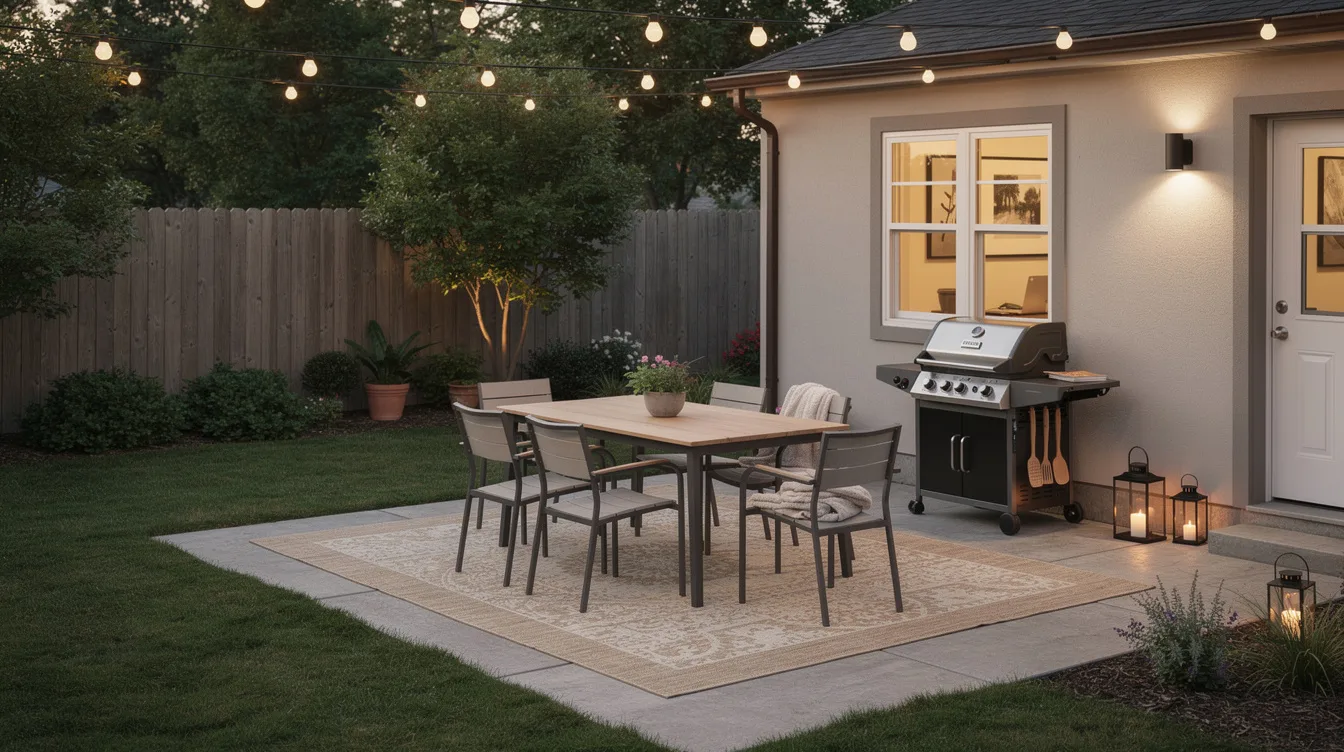
I can always tell when a small yard is about to feel chaotic before the first guest even sits down. The grill lid clips the chair behind it, the cooler lands in the walkway, and somebody has to do that awkward side-step just to bring out a bowl of watermelon.
Most of the problem is not the yard size. It’s a few layout mistakes that make sound bounce harder, movement feel tighter, and family gatherings feel more crowded than they really are.
Stop Oversizing the Dining Zone
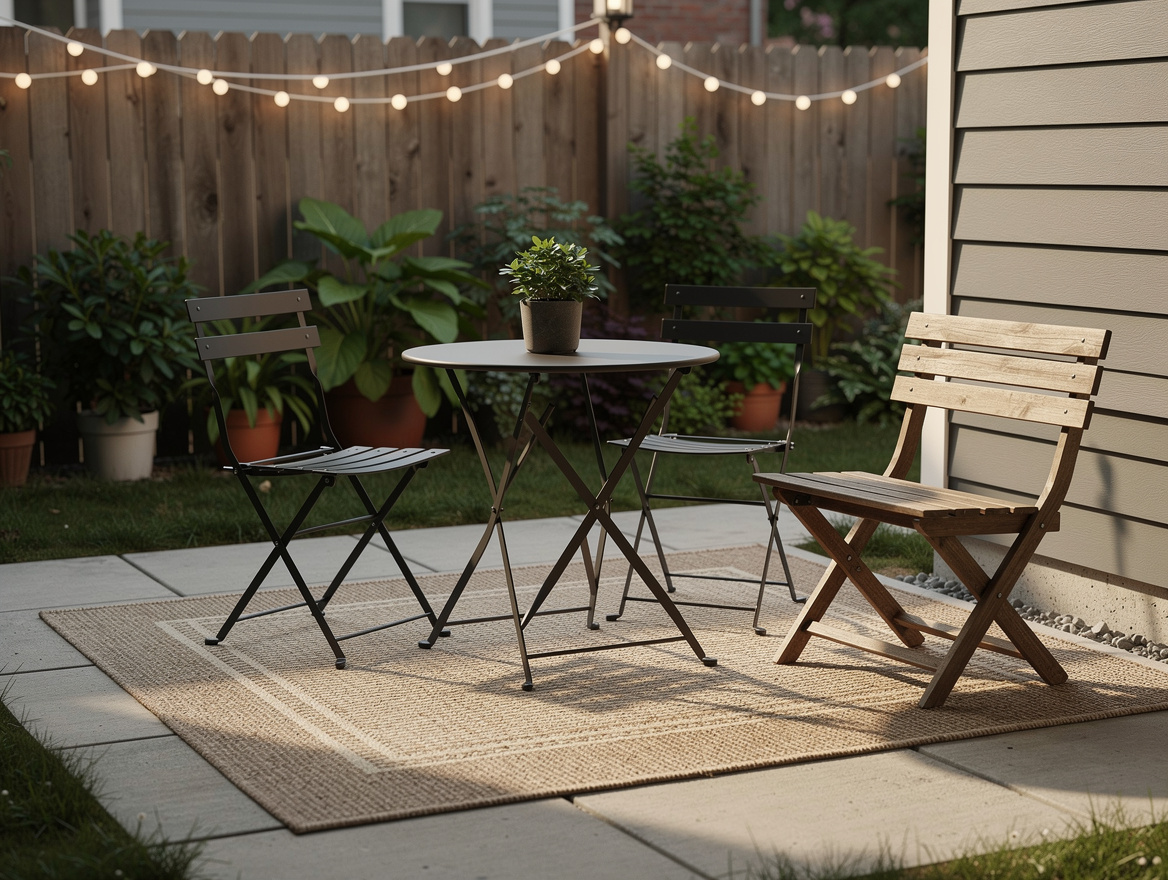
The fastest way to make a small yard feel stressful is dropping in a full patio dining set meant for eight. In a tight setup, a typical Target bistro table around 28 to 32 inches wide keeps meals possible without turning every chair pull-out into a traffic jam.
I’d rather add flexible seats than one giant table that dominates the whole yard. A Wayfair folding bench usually lands around 42 to 48 inches long, and it tucks against a wall or fence when dessert is over.
Pull Seating Away From the Fence Line
People think pushing every chair to the perimeter opens the middle, but it usually creates a ring of bodies with nowhere natural to move. Leaving even a small breathing gap behind a Lowe’s outdoor loveseat, about 6 to 10 inches, makes the whole layout feel less pinned down.
That gap also helps sound. Voices bounce hard when furniture is shoved right against wood fencing, and the yard starts to feel louder than the guest count deserves.
Soften the Hard Surfaces That Echo
Noise in a small yard is often a materials problem, not a people problem. Too much concrete, metal, and resin in one compact space throws sound back at everyone, especially when kids are running and coolers keep opening.
A typical Home Depot outdoor rug in a 5-by-7 or 6-by-9 size often costs about $50 to $120, and it does more than warm up the floor. It absorbs some of that slap-back sound, marks the social zone, and makes the space feel finished instead of temporary.
Keep the Grill Out of the Main Path
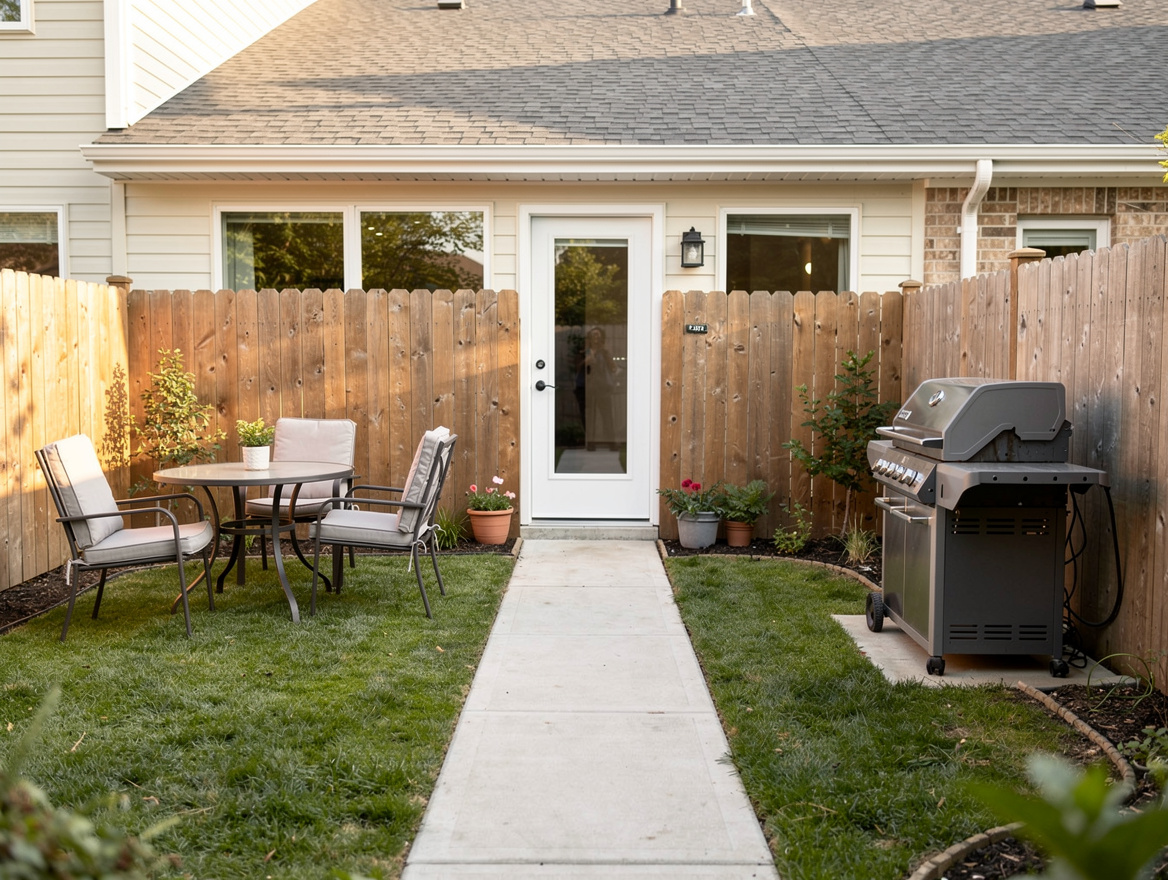
When the grill sits between the door and the seating area, the yard never settles. Every burger flip turns into a bottleneck, and a Weber grill with its lid open takes more visual and physical room than people account for.
I like the cooking zone pushed to one side with a small landing surface, not dead center like a stage. A narrow IKEA TORPARO table, typically around 20 inches deep, works better than a bulky prep cart that eats the last clean walkway.
Use Lighting That Glows Instead of Glares
Bad lighting makes a cramped yard feel harsher after sunset. One bright flood from the house flattens everything, while a few low sources, like Amazon string lights in warm white, usually make the edges recede and the space feel calmer.
I’m opinionated here: cool white bulbs are wrong for family hangouts unless you enjoy the mood of a parking lot. A Costco solar lantern or two on the table adds enough light for drinks and cards without making every face look overexposed.
Break Up Toy Storage Before It Takes Over
Family yards get noisy and cramped when kid gear claims every visible corner. One giant plastic deck box sounds practical, but in a small yard it often becomes a visual block that attracts loose balls, towels, bubble wands, and three things nobody can identify.
I’d split storage into smaller pieces and hide them near where the mess actually starts. A typical Ace Hardware metal basket for sidewalk chalk and water toys, plus a slim lidded bin by the door for sunscreen and bug spray, feels far more controlled than one oversized catch-all.
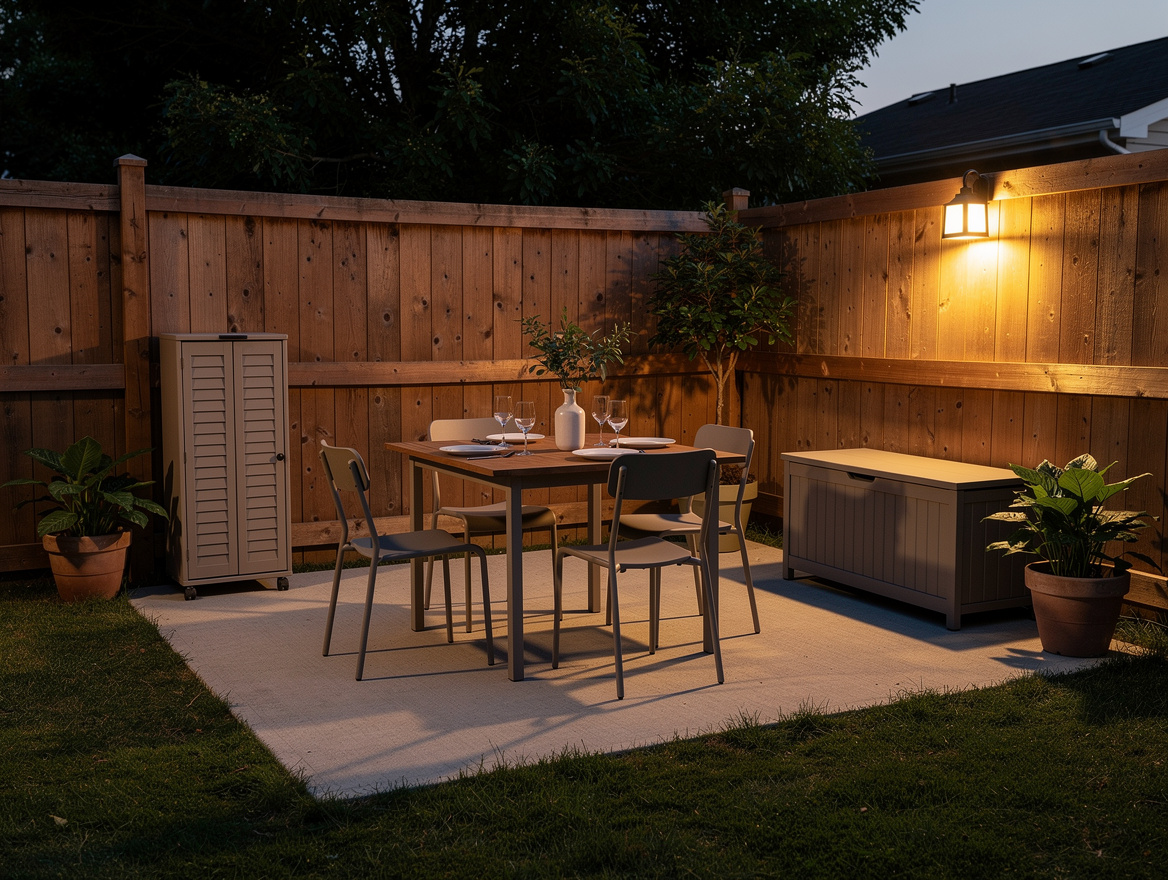
Start with the walkway from the back door to the seating area, then size everything else around that path. If people can move without turning sideways, the yard will instantly feel quieter, calmer, and a lot bigger.
Mia Carter writes about small-space living and budget home makeovers. She has restyled three rentals and tests most ideas in her own 45 sqm flat.