
Christmas table setting ideas that make dinner feel special worked for me only after I stopped buying more decorations and changed the table’s rhythm instead. I used what I owned, added warmer layers, and let the food breathe. The room felt intimate, earthy, and welcoming by dessert. That was the surprise!
- ✓ Layer Belgian flax linen over bare wood
- ✓ Why dark linens beat a white tablecloth
- ✓ Build the Three-Height Centerpiece
The table needed one clear path from the centerpiece to each guest. I changed the light, height, and texture without replacing the furniture, and the whole room felt calmer.
Here’s what it looked like before
The table was useful, clean, and completely forgettable. The chairs were pushed too close to the wall, the ceiling light was bright, and every place setting looked like it had been dropped there separately.
I had a white tablecloth, plain plates, and one tired glass vase. You could eat comfortably, but you wouldn’t linger.
My job was to stop treating the table like a storage surface. I didn’t replace the table or chairs. I changed the light, the height, and the texture, which made the whole room feel calmer without a renovation.
- Layer Belgian flax linen over bare wood
- Why dark linens beat a white tablecloth
- Build the Three-Height Centerpiece
- Use one branch instead of a full garland
- Anchor each place with a small plate
- Keep the Three-Inch Candle Rule
- Float warm light above the table
- Farrow & Ball De Nimes Sets the Backdrop
- Frame the plates with soft napkins
- Mix old silver with new stoneware
- Set the table around 24 inches per guest
- Benjamin Moore Hale Navy Behind Bright Plates
- Place a handwritten card at every seat
- Why red-brown beats bright red
- Build a serving station with the HEMNES sideboard
- Finish with one sculptural chair
1Layer Belgian flax linen over bare wood
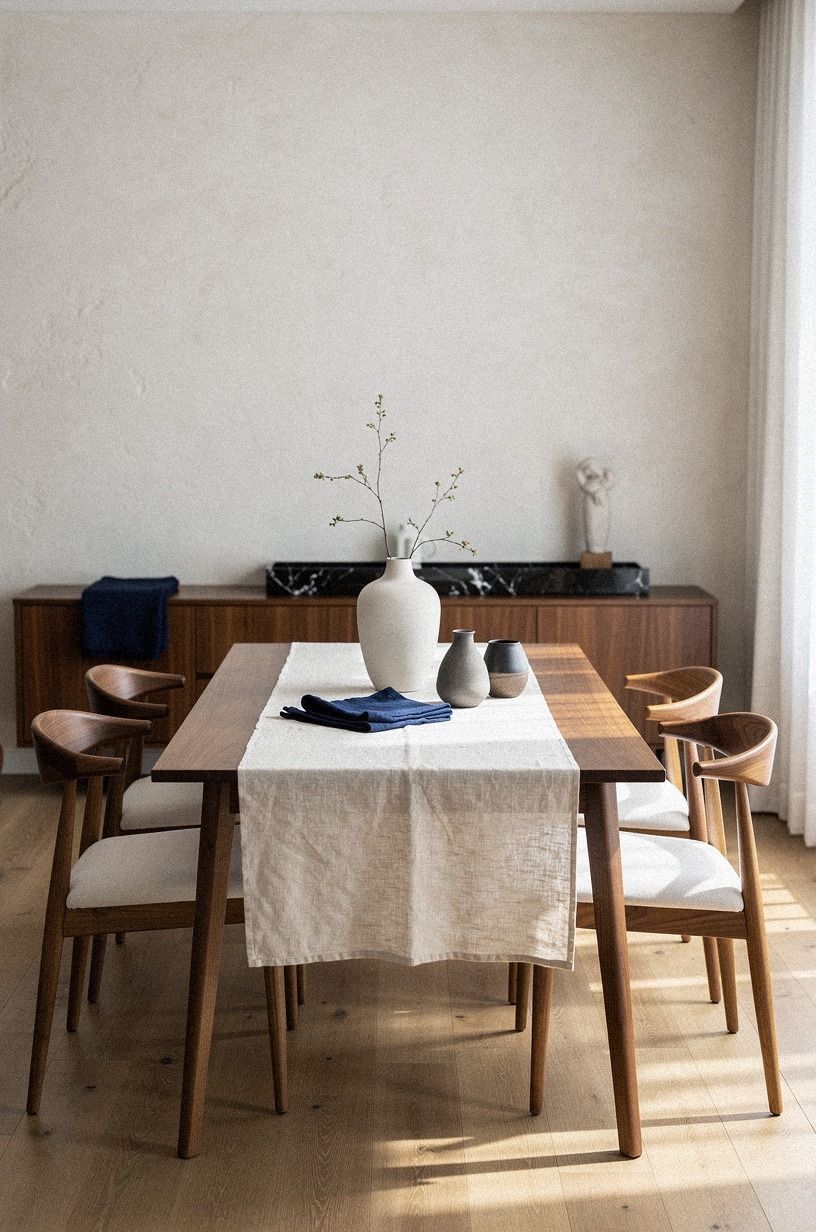
I started with a runner in Belgian flax linen, set against Nero Marquina black marble with white veins and warm walnut showing at both ends. That decision made the Christmas table setting feel relaxed instead of dressed for a hotel banquet. The dark stone gave the navy-and-white palette some weight, while the walnut kept it from feeling severe.
I chose a deep navy shade rather than stark ivory because it worked with the room’s earthy colors. A full cloth would have hidden the marble and walnut and made your narrow dining area feel smaller.
If you’re comparing textures, my guide to Christmas dinner table settings that look expensive has more layered examples. I’d skip shiny polyester here. It catches every ceiling-light glare and makes an inviting table look stiff.
2Why dark linens beat a white tablecloth
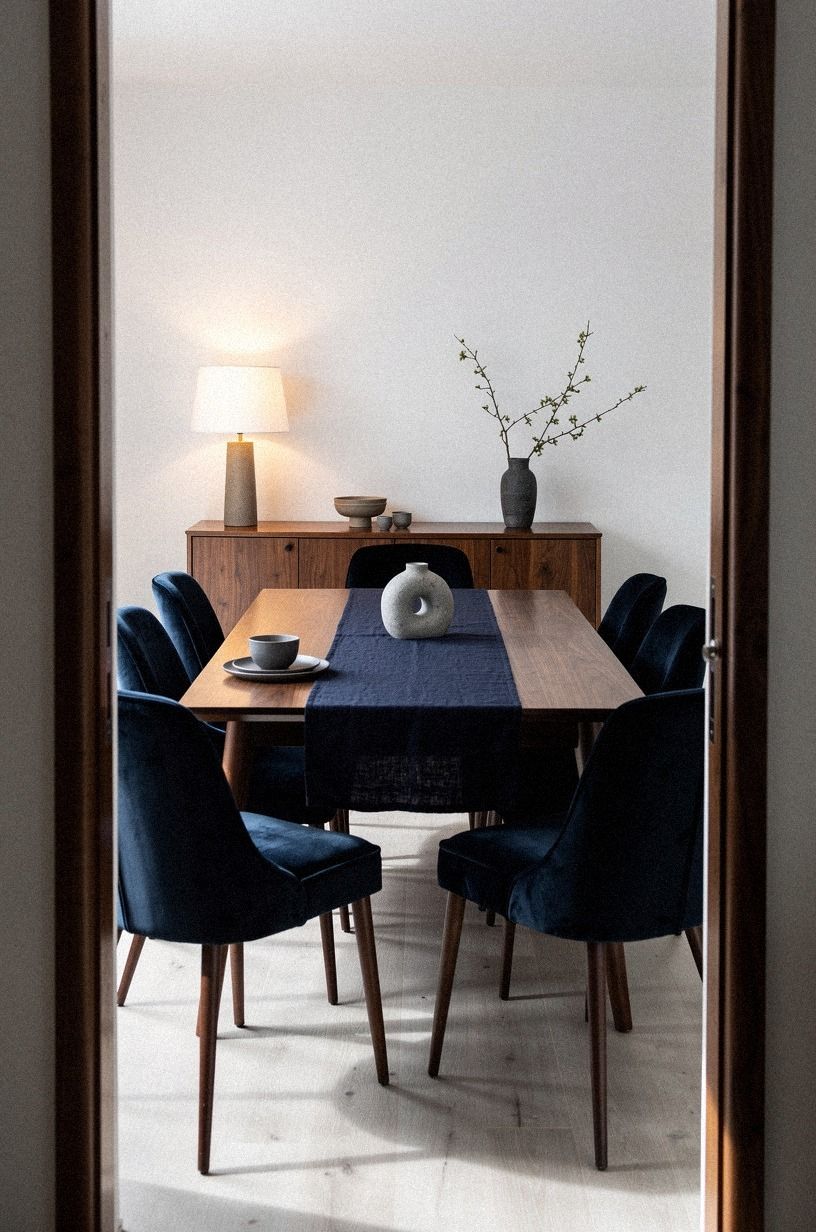
The second change was a set of deep-pile mohair velvet napkins in navy. I folded them loosely beneath each fork, and the dark color immediately made the plates look brighter. Your eye needs that contrast, especially if your dishes are white or cream.
But I didn’t want the room to become heavy, so I kept the runner pale and added clear glassware. That balance felt moody without becoming gloomy.
You can borrow the same move with charcoal, olive, or wine-colored napkins. I’d choose velvet over satin because its soft pile gives the navy palette a warmer, quieter surface after dinner starts.
For more color direction, see these dark table linens for warmer winter dinners.
3Build the Three-Height Centerpiece
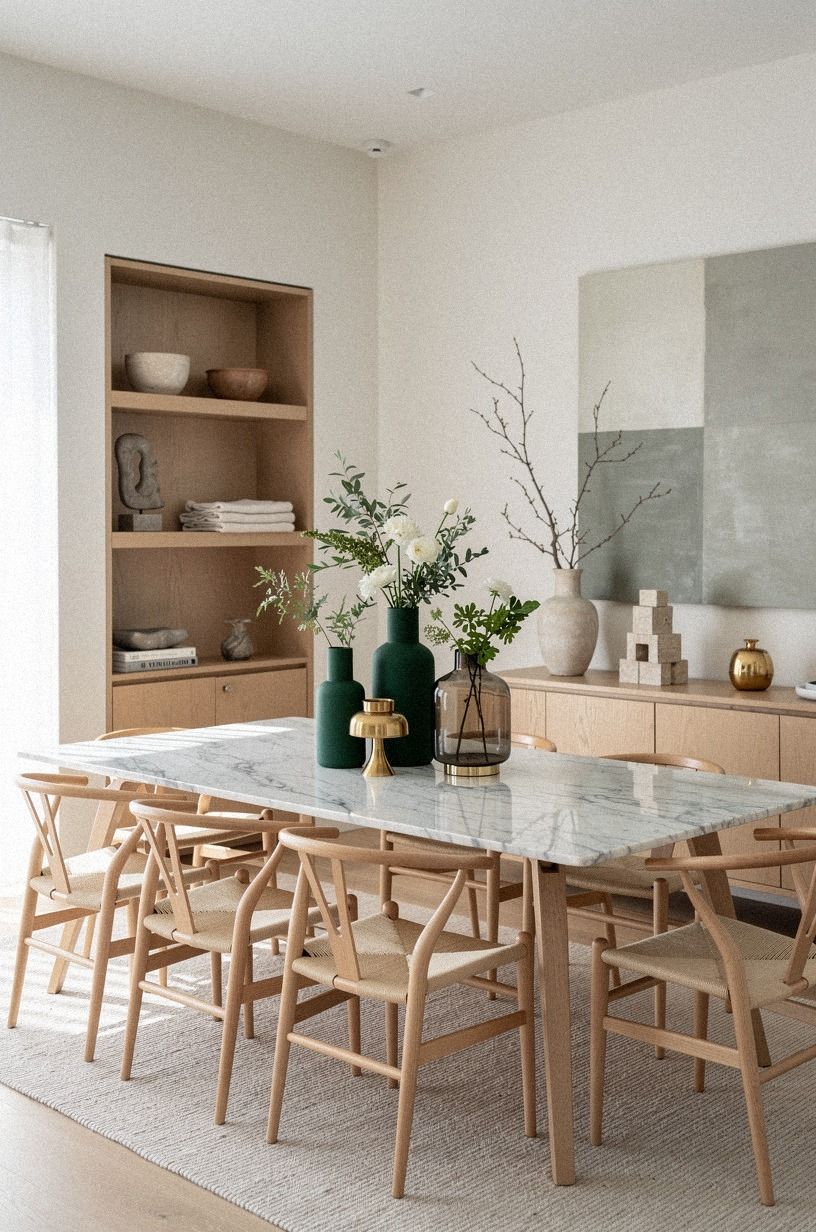
I made the centerpiece with low greenery, medium candleholders, and one taller branch.
4Use one branch instead of a full garland
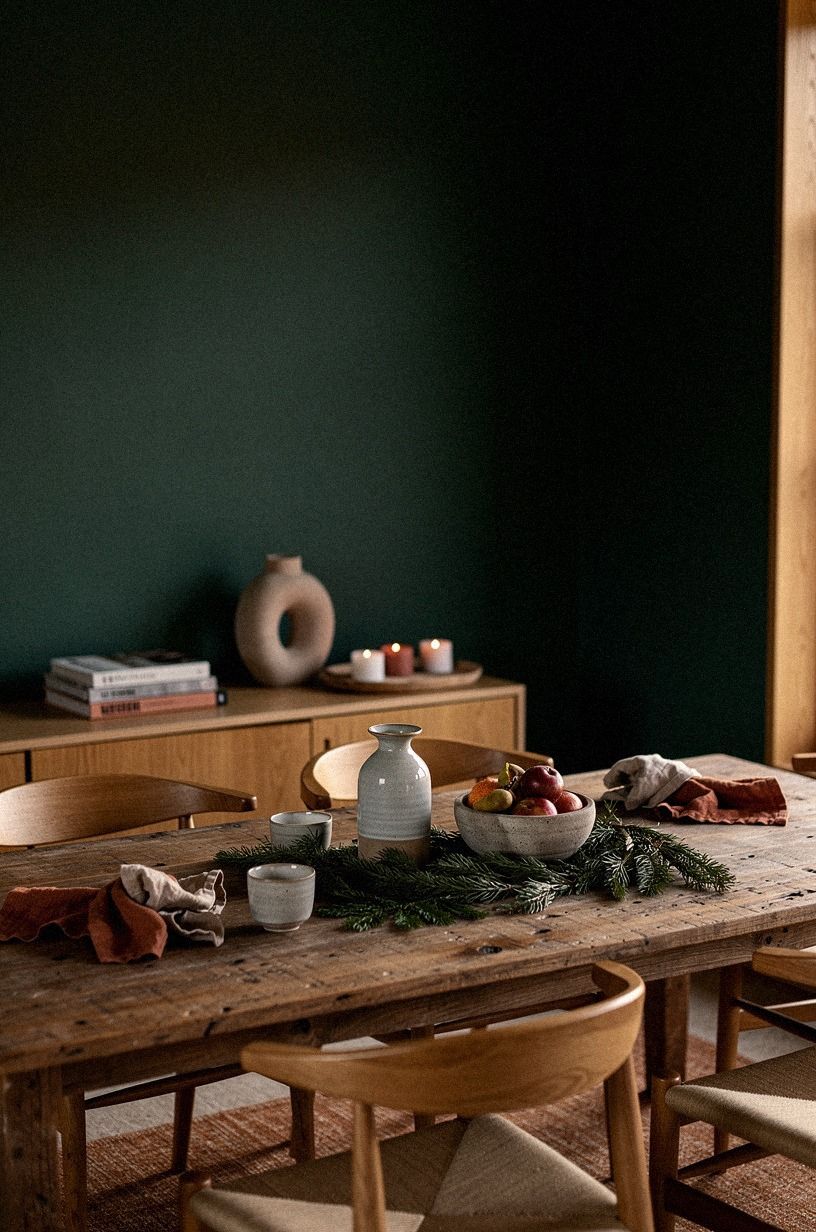
I wanted the table to feel organic, so I used one loose branch against reclaimed weathered teak rather than a symmetrical garland. The forest green, rust, and natural oak tones followed the table’s palette without taking over. Your table doesn’t need decoration from end to end to feel festive.
And honestly, a full garland was my losing option. It looked polished in the store, but it crowded the serving dishes and shed needles into the gravy. One branch gave me the rustic, charming quality I wanted with much less cleanup.
You can place it diagonally or run it beside the plates. If your room is small, this red-brown small-room approach offers a useful color direction.
5Anchor each place with a small plate
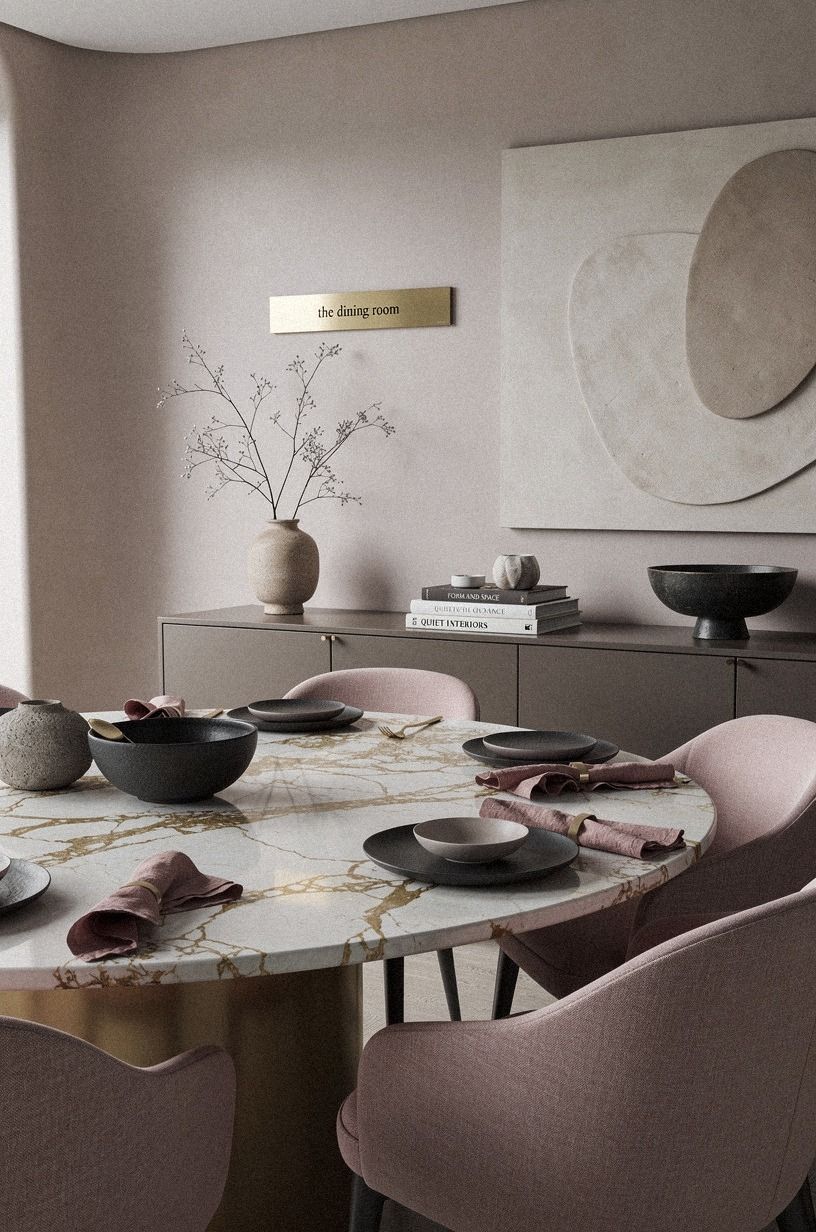
I added a small Calacatta marble plate with delicate gold veining above each dinner plate for bread, butter, or a few sugared nuts. It was a modest change, but your place setting suddenly looked intentional. The fine veining caught tiny flashes of candlelight, which gave the table a more collected feeling.
I learned not to use a matching shape at every seat. That sounds charming, but it can make your table look accidental unless one color repeats across the whole setting.
Choose one shape for your guests and let the napkins provide variation. You can also use a small saucer you already own.
I’d avoid a large charger here because it steals table width and makes your elbows compete for space. For another restrained arrangement, compare these Christmas dinner table settings before buying anything.
6Keep the Three-Inch Candle Rule
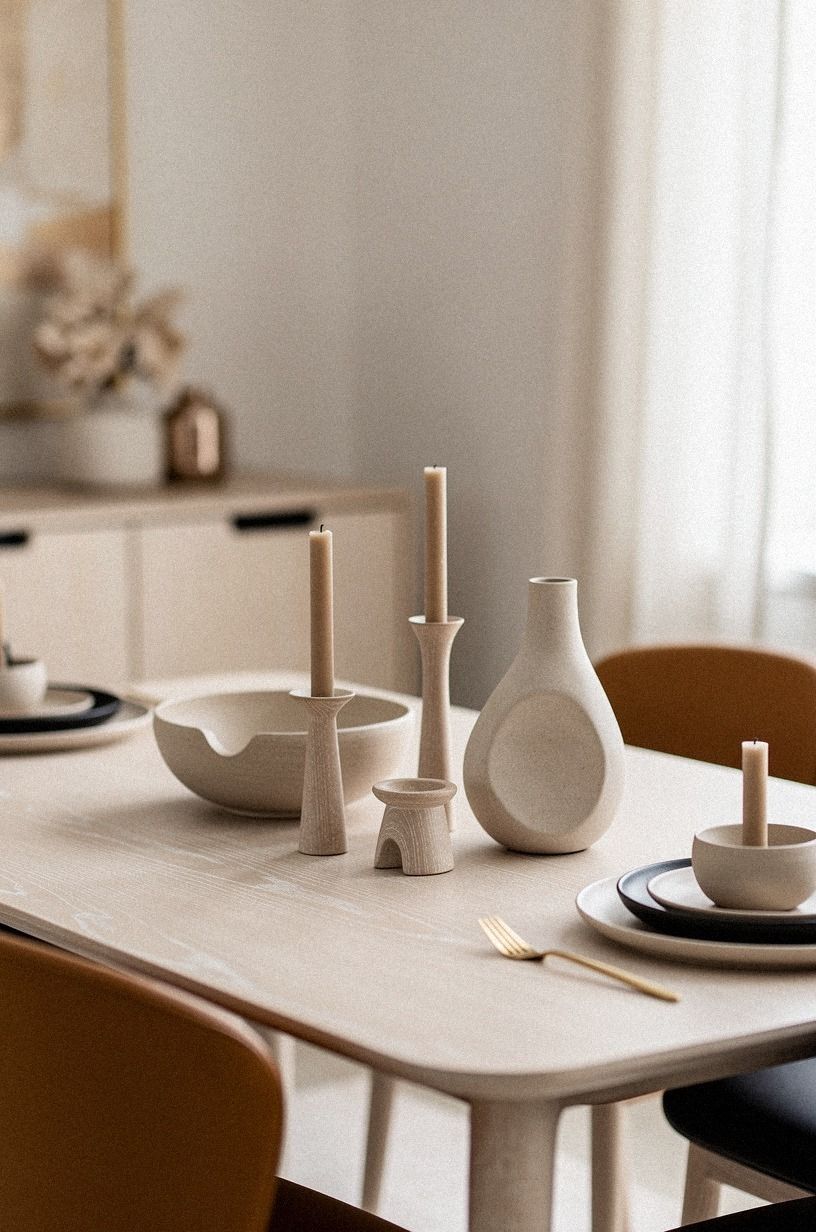
My candles sit close enough to glow across the table, but not so close that your guests have to dodge them. I used cerused white oak candleholders with warm-white unscented tapers, leaving about 3 inches between the holders. That small gap kept the centerpiece airy and made the arrangement feel serene.
You don’t need expensive candlesticks for this effect. A thrifted pair can look sophisticated if the finish repeats somewhere else, such as the flatware or a picture frame.
I tested silver against the pale oak, and silver was the weak choice because it made the room feel colder. If you’re styling for children, use battery candles in low ceramic cups and keep the same spacing.
7Float warm light above the table
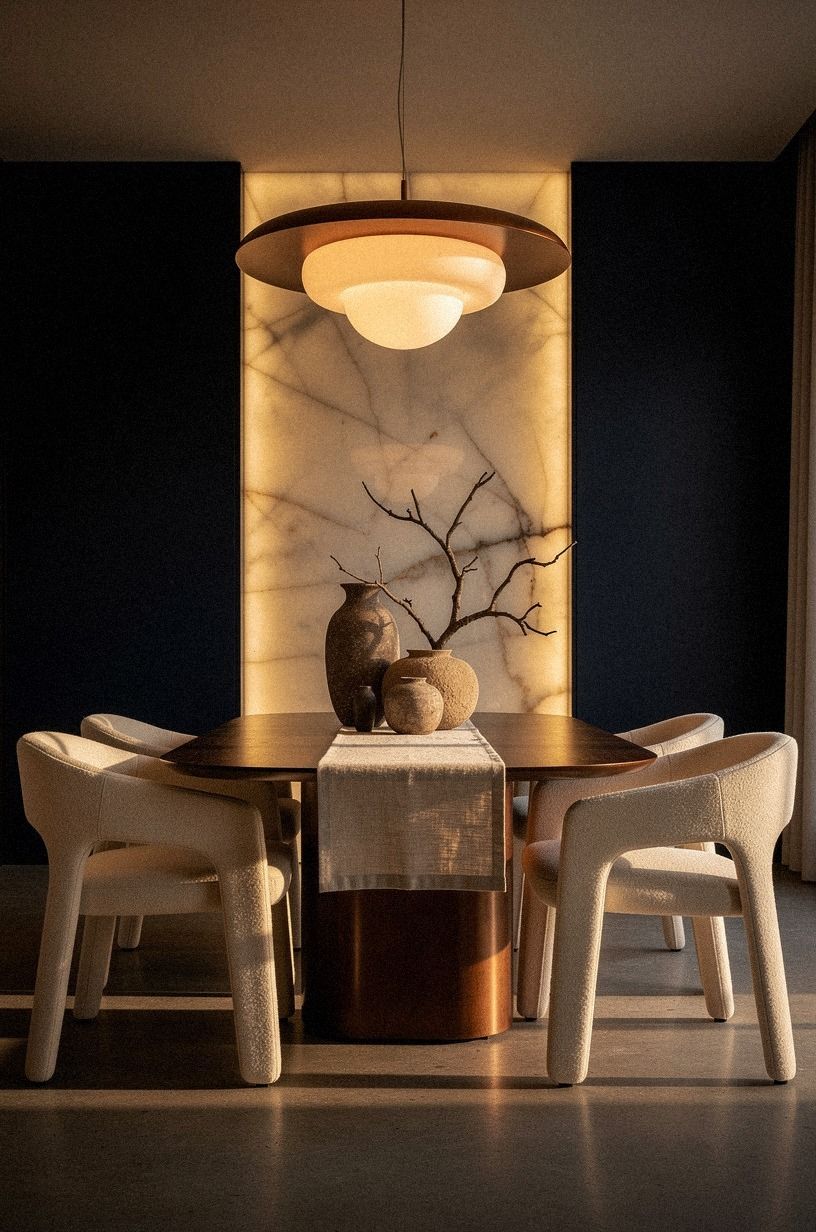
The pendant hung too high and threw a flat circle of white light. I lowered the visual focus by switching to warmer bulbs and checking the pendant height from the seated position. The recommended distance is 30 to 36 inches above the table, so your light stays useful without shining directly into your eyes.
I didn’t change the electrical fixture. I changed the bulb and turned off the recessed lights.
Your dining room felt more intimate in seconds, and your food looked less washed out. Start there!
Dark dining-room ideas can help if your room still feels too bright.
West Elm has pendant shapes I like, but I’d skip an oversized globe if your table is narrow. A smaller backlit translucent onyx shade gives a softer, more calming pool of ivory light.
8Farrow & Ball De Nimes Sets the Backdrop
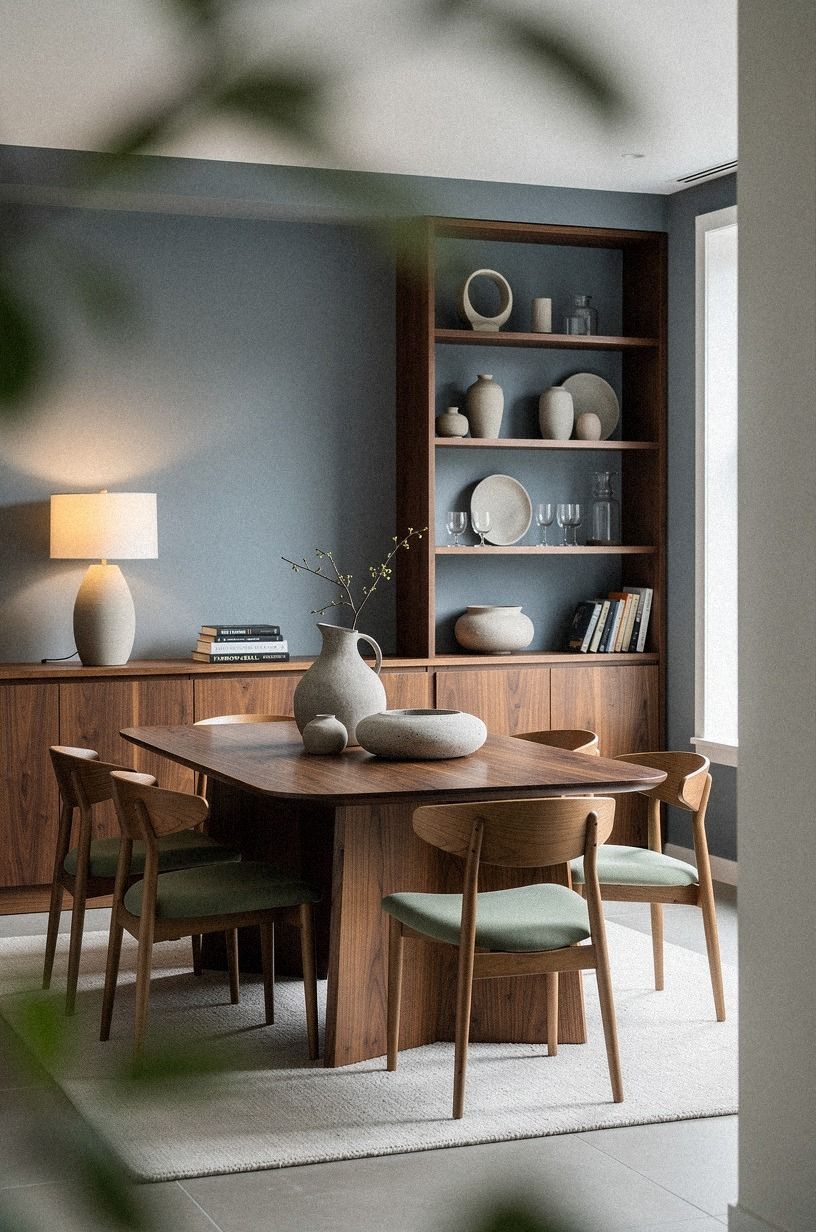
The wall behind the table was Farrow & Ball De Nimes, a muted sage blue-green, and the book-matched walnut nearby kept every cream and natural-wood detail grounded.
9Frame the plates with soft napkins
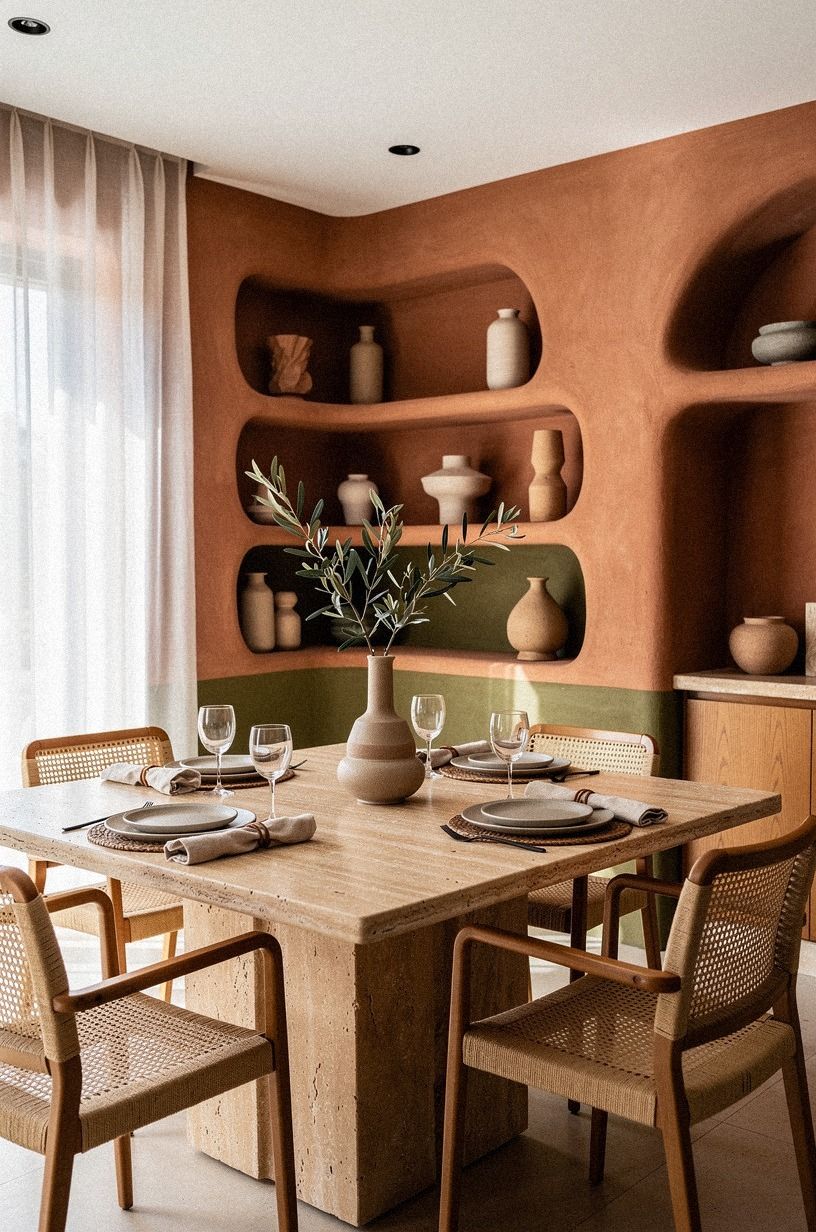
I folded each terracotta cotton napkin into a loose rectangle and placed it beneath the fork over the warm travertine surface instead of on top of the plate. The napkins felt soft in your hand, and the texture gave the table a quiet luxurious note without looking formal.
I tried a knotted fold first, but it made every place setting look busy. The flat fold won because it let your plates and glassware stay visible. If you’re using linen, press only the center fold and leave the edges slightly relaxed.
That small imperfection makes the table feel lived-in. For a brighter version, use cream napkins with an earthy green runner.
For a more dramatic version, use cocoa napkins and clear glass. These dark table linen ideas use the same principle.
10Mix old silver with new stoneware
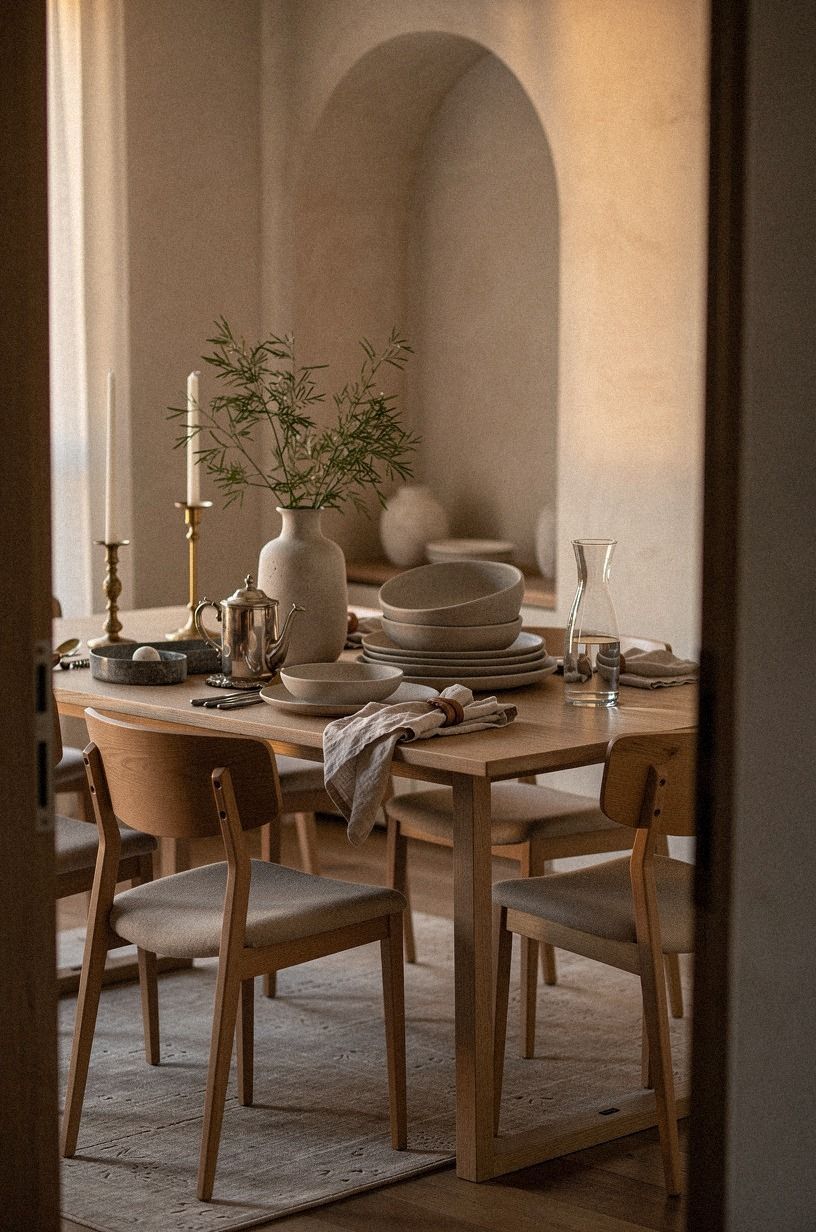
I used my grandmother’s unlacquered brass teaspoons beside newer matte ivory stoneware. The combination gave your place setting history without requiring a matching heirloom set. The spoons were scratched and slightly patinated, which made them more charming than a flawless new collection.
You can mix finishes, but repeat at least one tone so your table doesn’t feel scattered. My rule was aged brass, pale dish, dark textile.
I’d skip mixing three different metals unless your room already has that language. Brass, silver, and black together can look sophisticated, but they need careful repetition.
A thrift store is worth checking for vintage serving pieces, especially if you want one small object that starts a conversation before dinner. You can also find more restrained combinations in these Christmas table setting examples.
11Set the table around 24 inches per guest
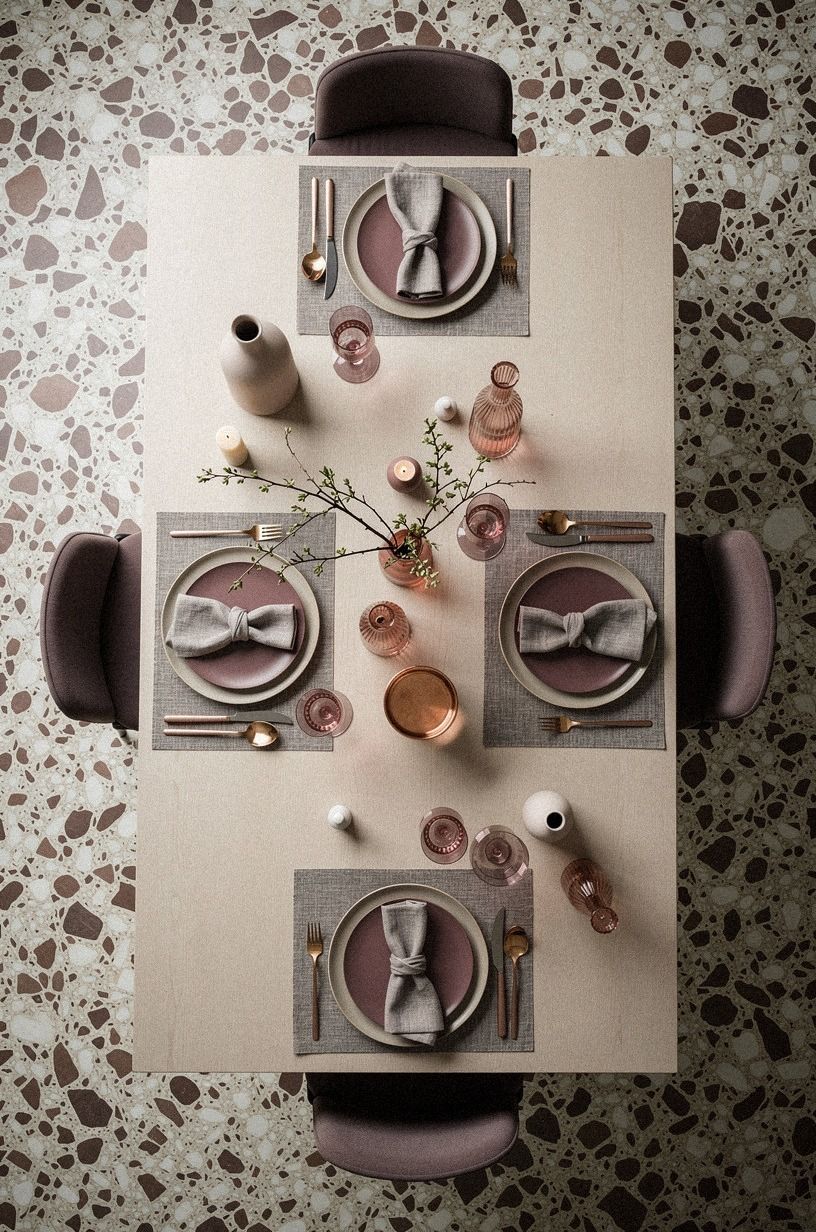
The table looked better when I stopped squeezing in extra chairs. Each guest needs about 24 inches of table width, and your elbows will notice when you ignore that number. I measured before placing the plates, then removed one decorative bowl that had been stealing space.
My oversized-chip terrazzo table is the standard 30 inches high, so I didn’t need to alter the furniture. I needed to protect the usable surface.
You can make a smaller table feel generous by serving food from a sideboard instead of placing every dish in the center. IKEA KALLAX can work as a temporary serving station if you cover the top with a sturdy textile. I’d rather seat four comfortably than six people with their shoulders touching.
12Benjamin Moore Hale Navy Behind Bright Plates
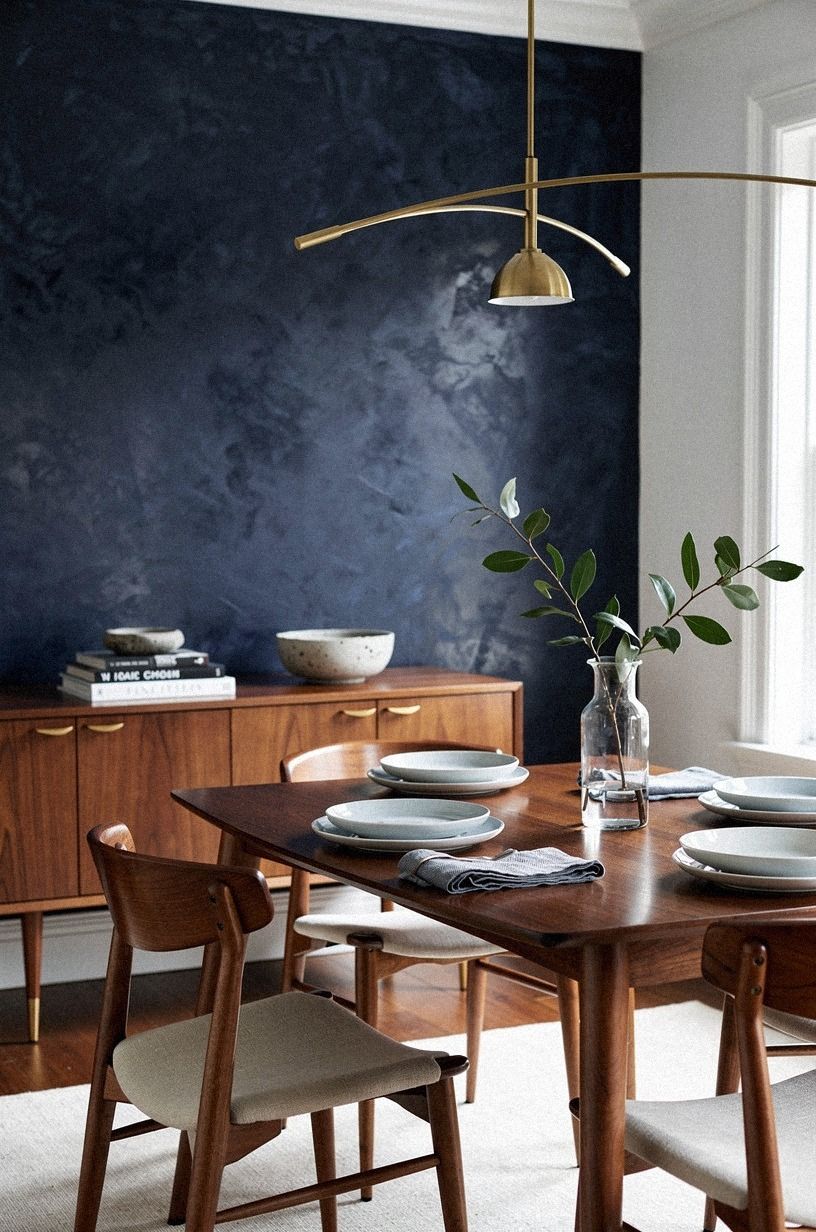
For another version, I used Benjamin Moore Hale Navy HC-154 over hand-applied Venetian plaster and kept the table mostly cream, brass, and evergreen.
13Place a handwritten card at every seat
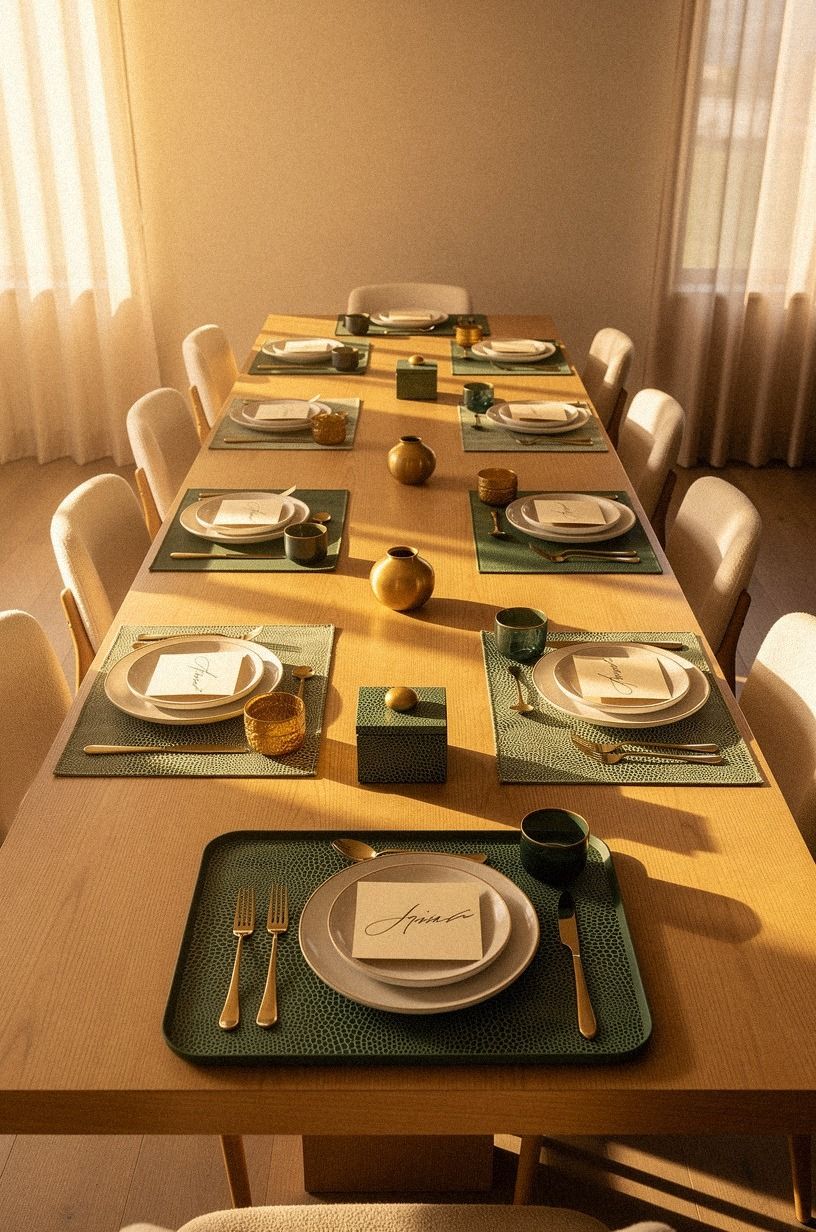
I wrote each guest’s name on a small cream card with a shagreen accent and tucked it beneath the water glass. The cards took less than an hour, but they changed the emotional temperature of the table. Your guests know where to sit, and each person receives a tiny sign that you expected them.
I kept the wording simple instead of writing a long message. One name, one small star, done.
Keep it simple! You can use brown paper, a scrap of watercolor paper, or a folded receipt card if the writing is neat.
I’d avoid glitter because it travels into the food and looks dated under candlelight. A handwritten card feels intimate, especially when the rest of your setting stays restrained.
These centerpiece ideas for dining tables also leave room for personal details.
14Why red-brown beats bright red
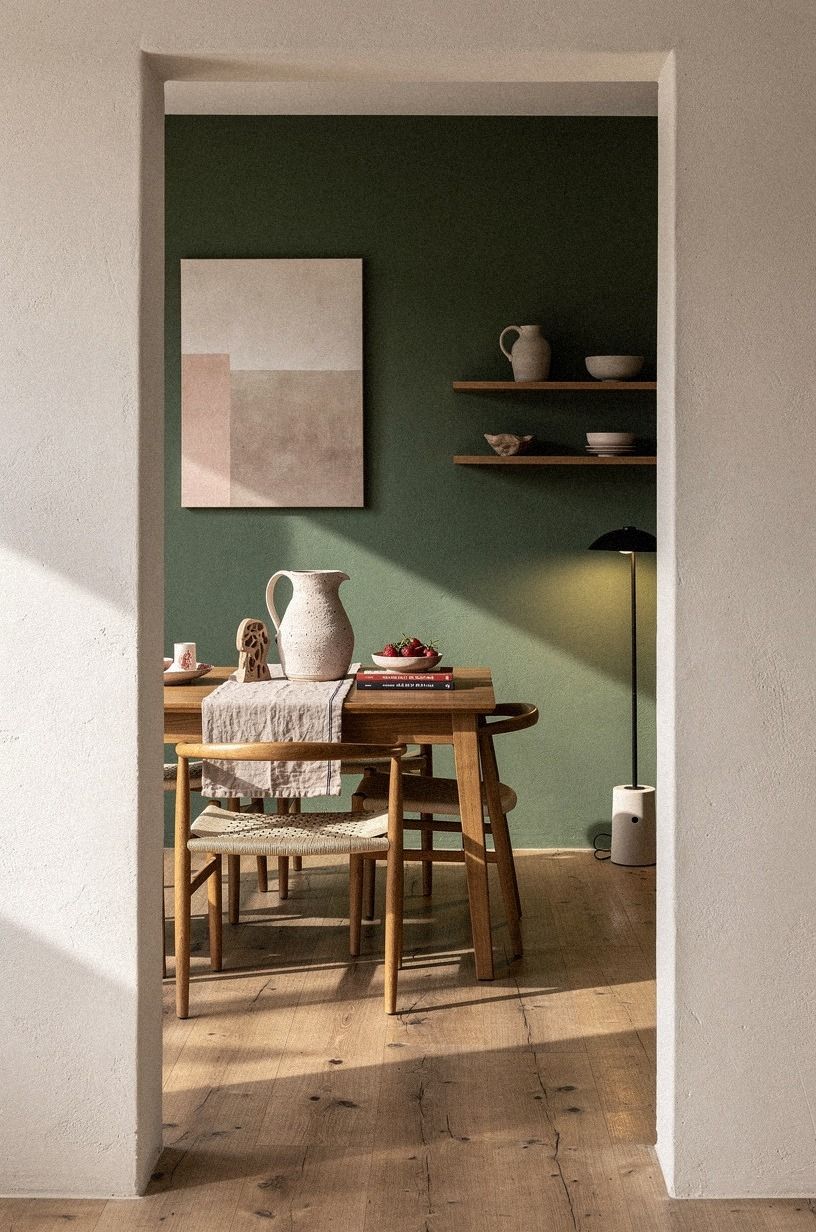
I love Christmas red, but bright red against washed Belgian linen felt more like a retail display than a dinner.
15Build a serving station with the HEMNES sideboard
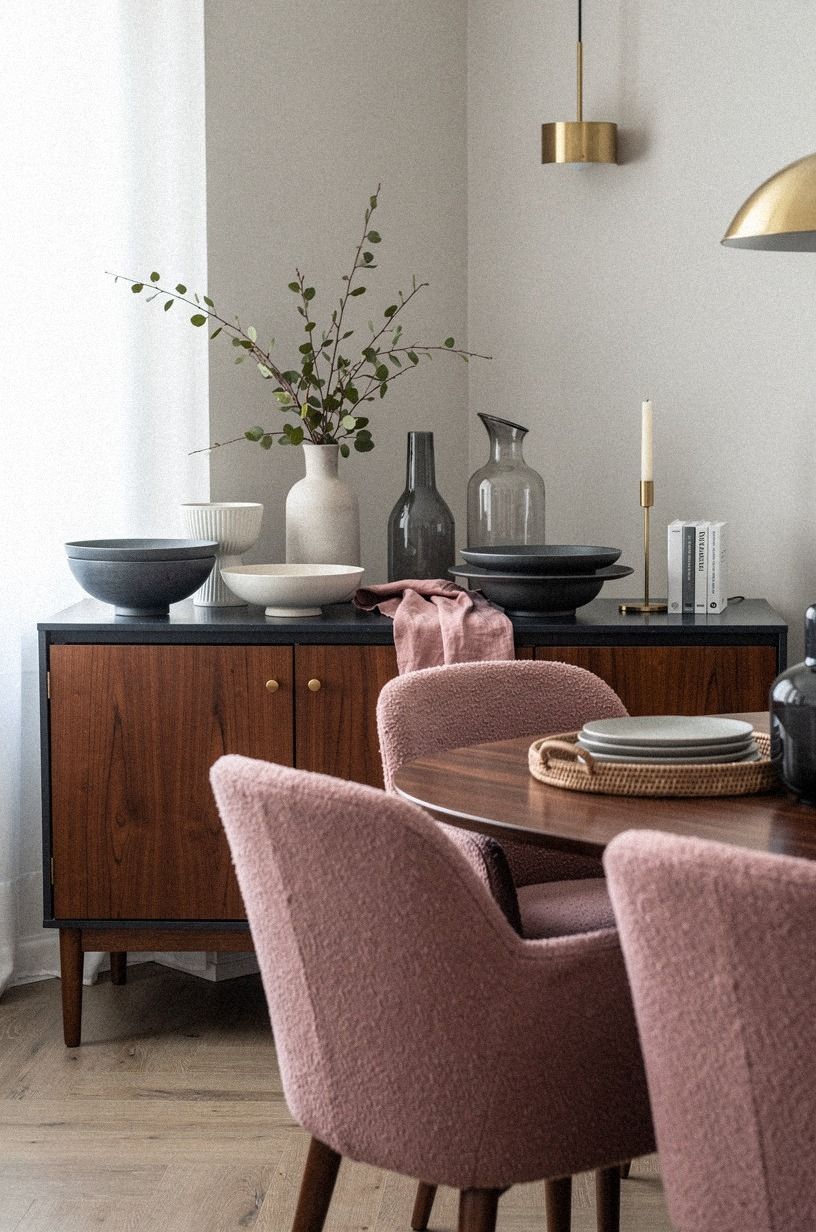
I moved the serving dishes off the table and onto an IKEA HEMNES sideboard near the dining room entrance. That one decision made the table feel airy, and your guests could serve themselves without reaching across the centerpiece. The sideboard also gave me a place for extra napkins and water.
You can use a console, a sturdy shelf, or a small rolling cart if you don’t have a sideboard. Add an organic bouclé textile beneath a brass tray if the station feels too hard or flat.
Keep the serving station at a comfortable height and group food by course, not by container size. I’d skip putting every dish on the table just because it looks abundant.
Abundance is more inviting when your guests can move around. A small bowl of butter, a warm loaf, and one serving spoon were enough to make the station feel generous.
This dining-table centerpiece guide shows why the center needs breathing room.
16Finish with one sculptural chair
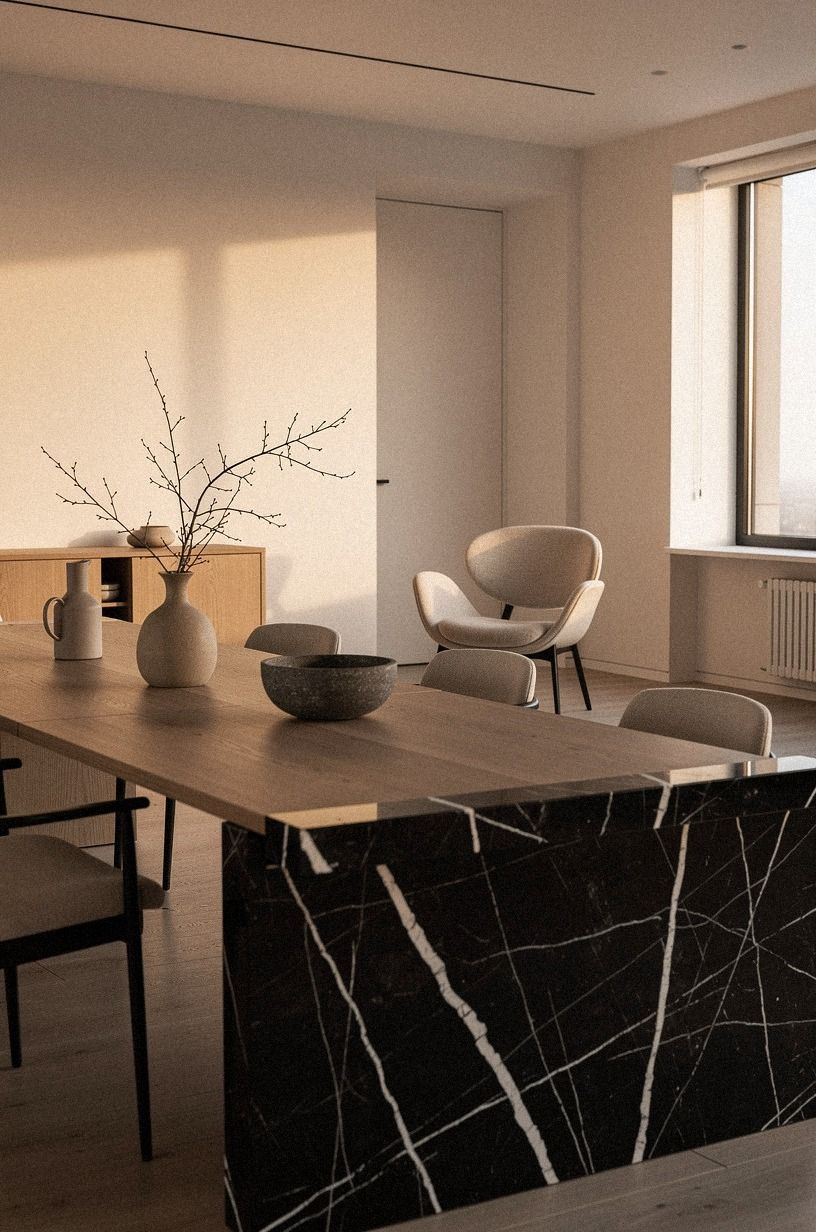
The last change was adding one sculptural chair beside a Nero Marquina black marble pedestal at the head of the table. I didn’t buy a full matching set. The black stone and warm camel upholstery created a focal point and made the room feel collected, almost like the table had been assembled over time.
You can use a chair you already own, provided its height works with your table. Leave about 36 inches behind each chair if you want people to pull it out without bumping the wall.
I’d skip a bulky upholstered host chair in a narrow room because it eats up that clearance quickly. Your table setting should feel warm when people arrive and still function when everyone is carrying a plate.
That is the difference between a display and a dinner.
How much it cost
I spent less than I expected because the largest improvement came from rearranging the room and using pieces I already owned. The new napkins, candles, cards, and greenery were the main additions. Your budget will depend on whether you already have a table, chairs, and serving pieces, but these typical US ranges give you a useful frame.
The table itself stayed at 30 inches high, and I protected about 24 inches of width for each guest. Those measurements cost nothing, but they kept the room comfortable.
I’d put your first dollars into lighting and textiles, not decorative objects. If you want a more elaborate tablescape, compare this centerpiece guide for dining tables before buying anything.
For a larger dining room, these typical material costs can help you decide whether to refresh or replace:
Why I stopped chasing a perfect Christmas table
I used to think a special Christmas dinner required a table that looked finished all the time. That belief made me keep buying little objects while ignoring the things guests noticed first: whether they could see one another, whether the light felt soft, and whether there was room to pass the potatoes. Once I paid attention to those details, the table became less precious and much more welcoming.
My biggest mistake was starting with the centerpiece. I bought a tall arrangement before measuring the table, then spent the meal watching everyone lean around it. I also used bright ceiling light because I thought candles alone would feel impractical.
They didn’t. The warmer bulbs made the room feel serene, and the lower light made ordinary food look more inviting.
You don’t need to copy every setting here. Choose the part that solves your room’s real problem.
If your table feels cold, start with dark textiles. If it feels crowded, remove the centerpiece and serve from a sideboard.
If it feels flat, add one branch, one candle height, and one material with texture. Those choices have more staying power than a pile of matching decorations.
That’s the whole trick!
And I still like a little mess. A folded napkin that isn’t identical to its neighbor, a scratched spoon, crumbs near the bread board.
Those details tell your guests they’re allowed to relax. The table became special when I stopped designing it for a display and started designing it for the people I wanted to keep talking to.
What People Always Want to Know
What is the best Christmas table setting for a small dining room?
A low centerpiece and IKEA KALLAX serving station work best because they protect table space. Keep each guest near 24 inches of width, use soft linen, and move extra dishes away from the table.
Your room will feel more intimate when guests can see one another clearly. This small-room Christmas table approach follows the same space-saving logic.
Where can I buy Christmas table setting pieces on a budget?
Start with IKEA, Wayfair, and Target, then check Facebook Marketplace or a thrift store for glassware and chairs. Secondhand serving pieces often have better texture than new sets.
You can save more by using branches, cards, and bowls you already own. These dark table linen ideas can also help you choose one strong textile instead of several small purchases.
How much does a Christmas table setting makeover cost?
A full dining-room makeover can range from $300-$1,000 at the budget tier, while a mid-range project may reach $2,000-$6,000. Your table setting can cost far less if you reuse furniture and spend on warm lighting and textiles instead of replacing everything.
Can I create a Christmas table setting on a budget?
Yes, and you can begin with three low-cost changes: move serving dishes off the table, use greenery from your yard, and fold your existing napkins in a new way. Add one thrifted candleholder or bowl, then stop before your table starts feeling crowded.
Is a Christmas table setting worth it in a small space?
Yes, because a small table benefits from editing. Use a low centerpiece, protect 24 inches per guest, and leave about 36 inches behind chairs when possible. Clear sightlines make a compact dining room feel calmer, even when the guest list is full.
Is a Christmas table setting a good idea for a rental?
Yes. Use removable hooks, a tension rod for fabric, peel-and-stick wallpaper behind a sideboard, and freestanding lighting. No-damage styling can still feel sophisticated.
Your table, linens, and portable art will create most of the atmosphere without changing the walls.
Where I’d Start First
If I had to pick one, I’d start with the warm lighting. It changes how your food, faces, and old dishes look without requiring new furniture.
Turn off the ceiling glare, set the pendant 30 to 36 inches above the table, and let dinner run long. Dark linen ideas can come next.