
The best Christmas centerpiece ideas for a dining table use one strong shape, warm light, and enough empty space for plates. I learned that after crowding my own table with greenery, candles, and ornaments until nobody could see the gravy. Your centerpiece doesn’t need to shout. It needs room to breathe.
- Layer a Candlelit Table Formula for Christmas Dining Rooms
- How Long Should Fir Branches Be for a Dining Table?
- Build the Three-Height Light Stack
- Mix Cranberries With Warm White Ceramic
- Swap Red Ribbons for Velvet Forest Green
- The Winter Fruit Bowl
- Hang a Three-Height Light Stack Above the Table
- Frame One Evergreen Branch With Bowls
- Why Paint the Backdrop in a Moody Christmas Dining Room?
- Pair White Linen With Aged Bronze
- The Two-Wood Rule for a Rustic Table
- Tall Arrangement or Low Glass Clusters?
- Which Winter Citrus Works Best?
- Mix Metallic Ornaments With Natural Greenery
- Paint the Vessel Instead of the Whole Table
1Layer a Candlelit Table Formula for Christmas Dining Rooms
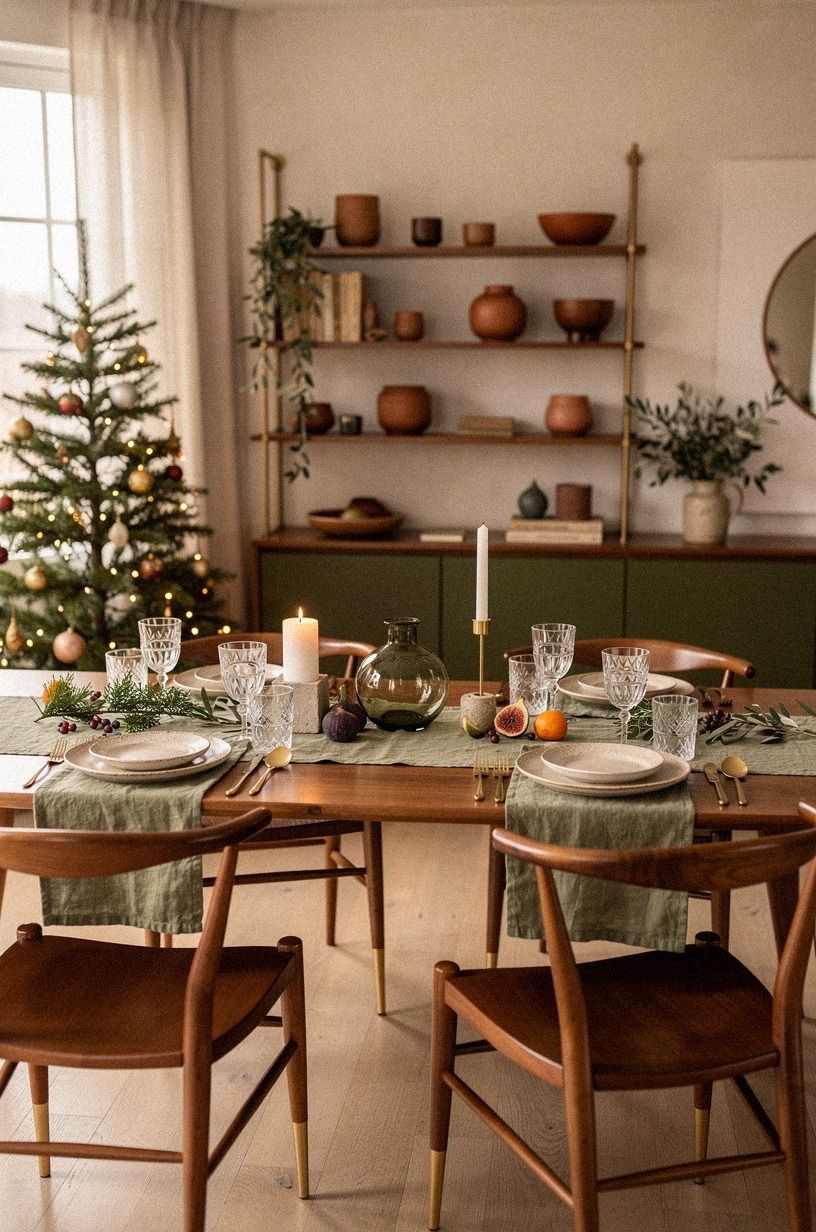
Start with a low runner, then build three quiet layers: olive branches, candlelight, and one textured object. Olive branches look especially rich against stone-colored linen because the leaves add shape without making the table feel heavy. You can use a thrifted cerused white oak tray as the base, and you’ll still have space for serving dishes.
I like taper candles in uneven heights, but I wouldn’t use six tall holders in a narrow room. They block faces and make conversation awkward. Keep the tallest flame below eye level when you’re seated, then place a small bowl of sugared cranberries between the holders.
And don’t match every finish. A little terracotta ceramic beside matte stoneware looks collected, welcoming, and beautifully unforced. If you’re unsure about spacing, compare your arrangement with this guide to layered candlelit tables, then remove one object before guests arrive!
2How Long Should Fir Branches Be for a Dining Table?
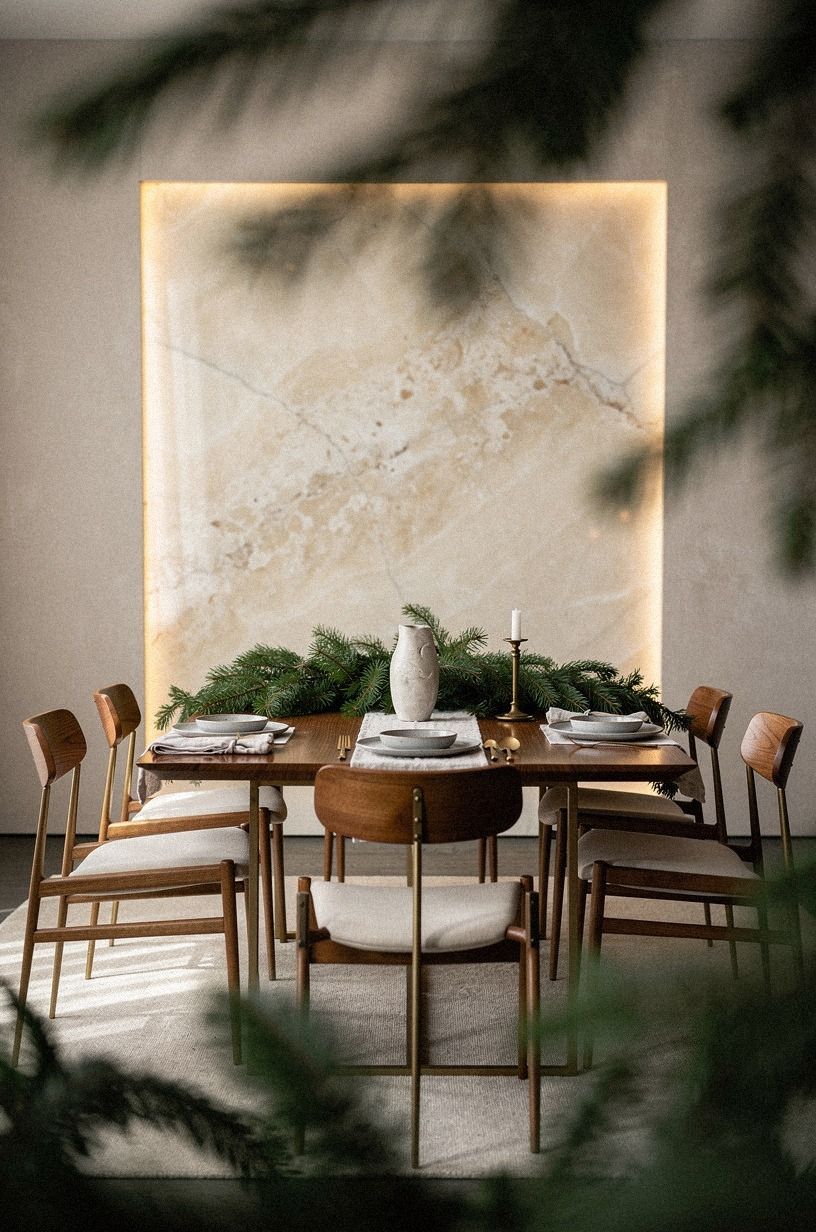
A long vessel gives you the dramatic effect of a garland without covering the middle of the table. Choose Nordmann fir or another branch with a soft, full shape, then let the ends extend slightly beyond the container. Your eye should travel along the table instead of stopping at one bulky mound.
My favorite version uses a translucent onyx trough in a soft clay tone. Its subtle glow makes the needles feel lighter, and the material adds quiet drama without looking overly polished.
You can add a few pinecones, but skip glittered ornaments here. They catch too much light and make the arrangement feel like a store display.
But don’t use a branch length that competes with your place settings. Leave the table width needed for each guest, which is typically 24 in, and you’ll keep the meal comfortable.
For more proportion ideas, see these long dining table centerpiece arrangements. The finished effect should feel generous, graceful, and easy to live with.
3Build the Three-Height Light Stack
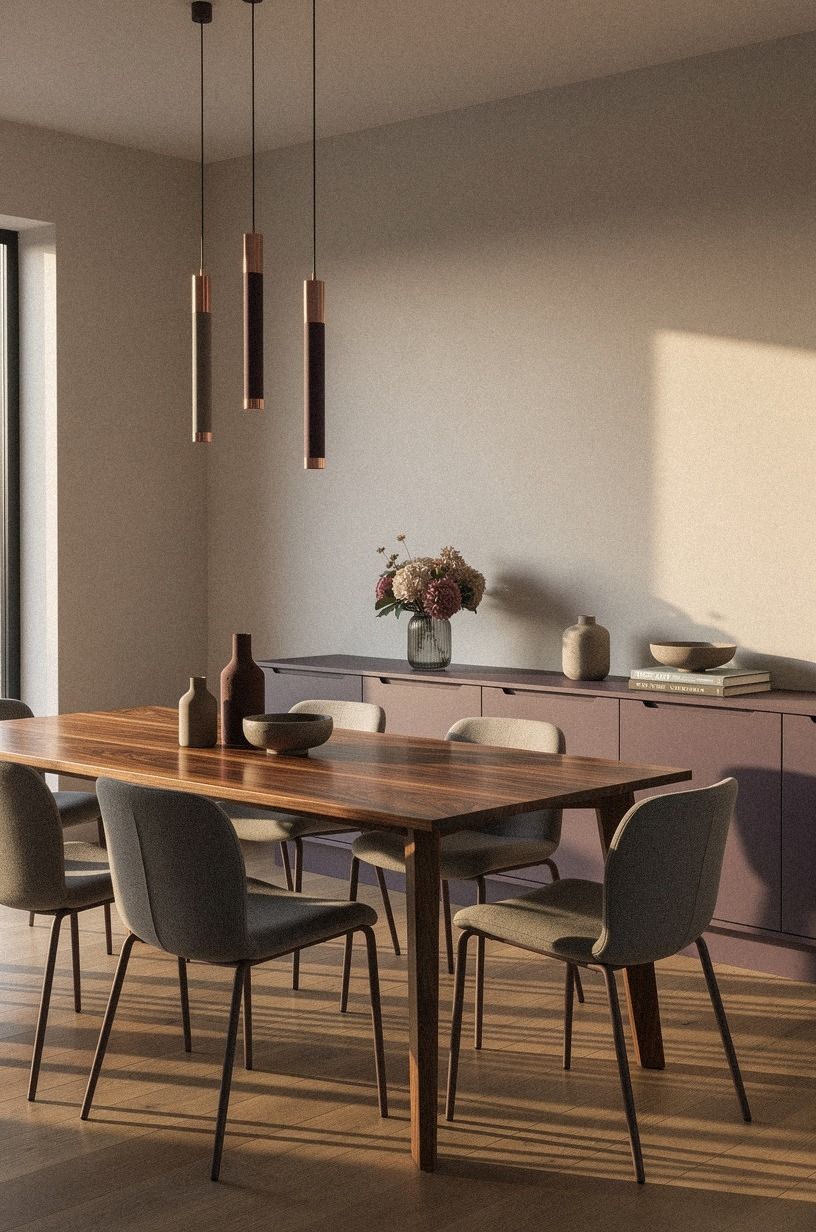
The Three-Height Light Stack uses one low glow, one medium glow, and one taller point of light. A smoked glass votive creates the lowest layer, a small rose-gold lantern provides the middle, and a slim taper supplies the height. You can repeat that rhythm down the center without filling every inch.
Use rose-gold lanterns if your room has plum upholstery, grey walls, or a book-matched walnut table. I tried polished silver once, and it looked chilly beside the warmer palette. The softer metal lets the candlelight do the work while keeping the arrangement grounded and intimate.
And if you have children at the table, battery candles are the sensible choice. You won’t get the same flicker, but you can still create a warm pool of light with frosted glass. A narrow room benefits from this lighter arrangement, especially when you follow the small-table spacing rule.
4Mix Cranberries With Warm White Ceramic
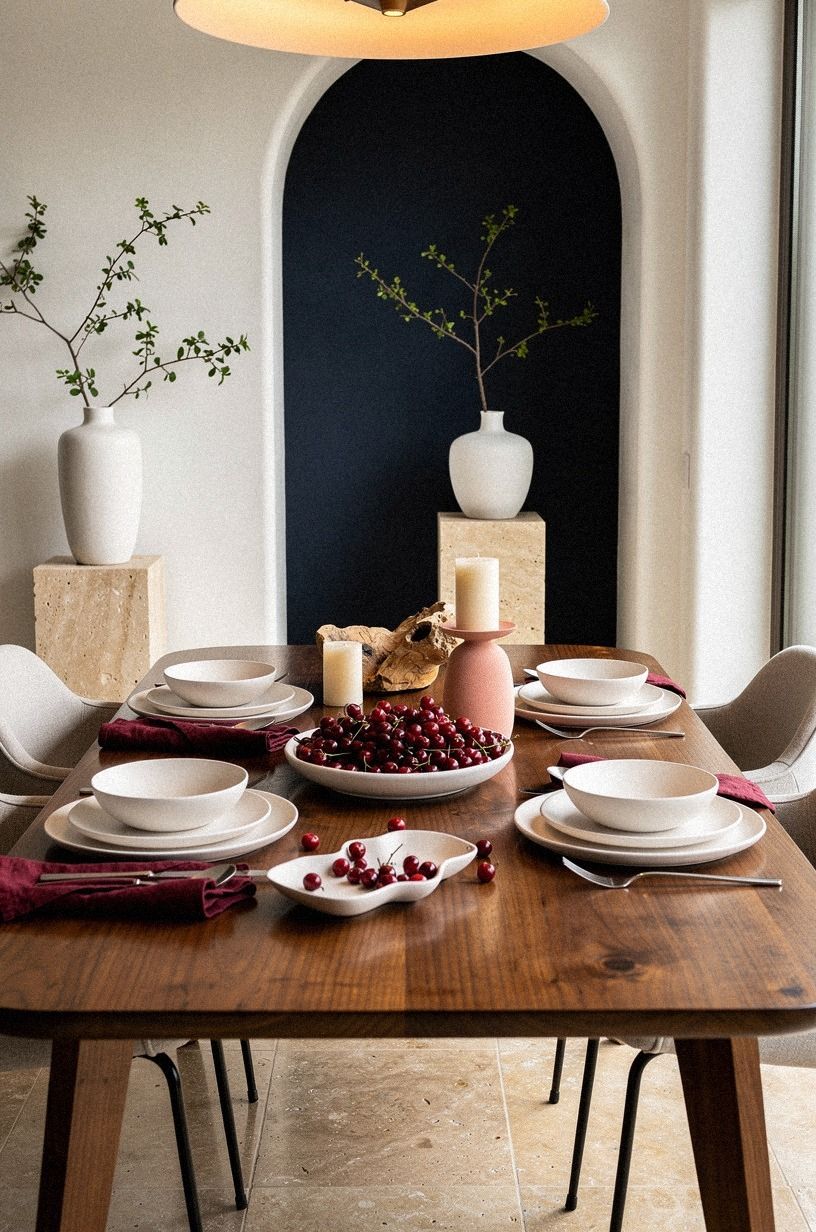
A bowl of cranberries gives your table one clear color note, which means the rest can stay simple. Use fresh cranberries in a shallow warm-travertine bowl with water and floating tealights, or choose faux berries if you’ll need the arrangement to last through several dinners.
I prefer warm white ceramic over bright white porcelain here. The creamy glaze makes the red look deeper, and it won’t fight with cream linen napkins. Place the bowl near the center, then add two small walnut-toned branches at each end so your composition has a gentle horizontal line.
You can use this idea on a budget with a thrifted bowl and greenery from your yard. Don’t overfill it.
A sparse surface lets the berries look intentional instead of looking like a holiday craft project. If you’re building a larger tablescape, borrow the proportion ideas from this simple object arrangement guide.
5Swap Red Ribbons for Velvet Forest Green
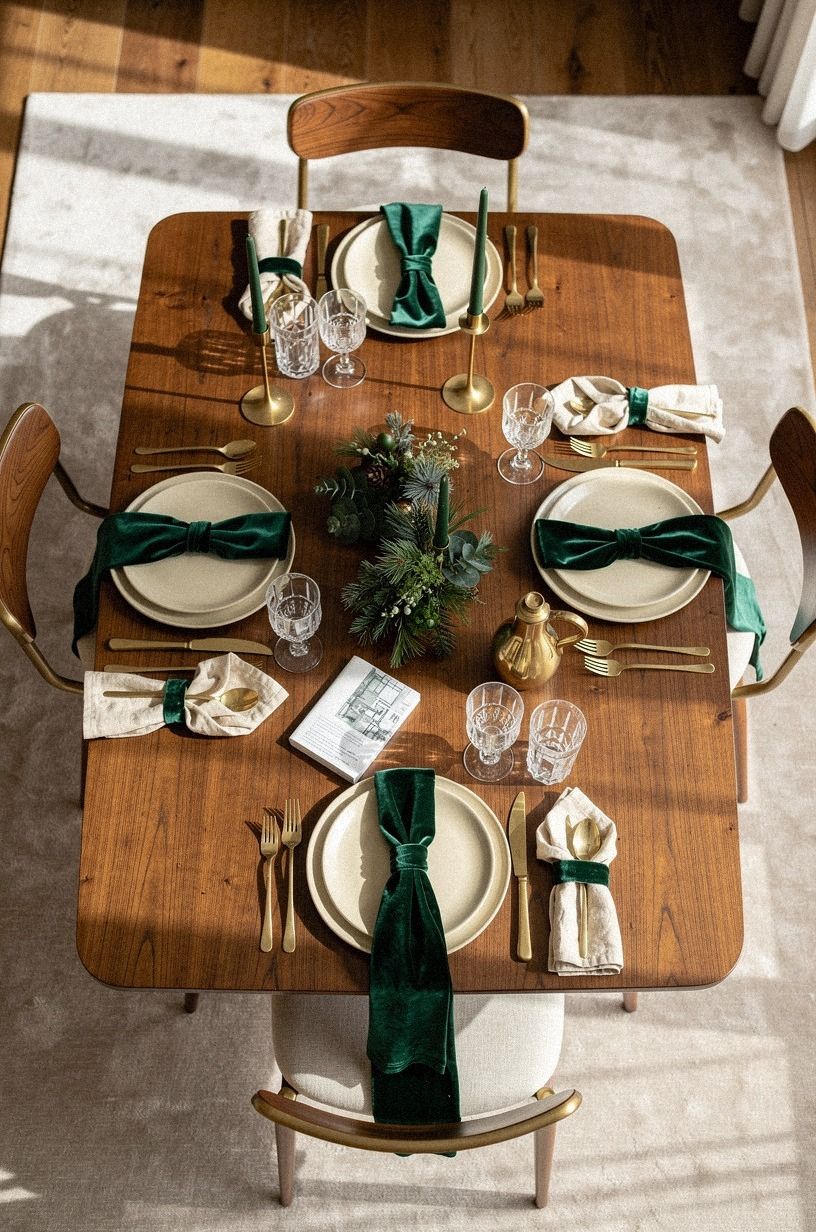
Red ribbon is familiar, but it can turn fussy fast. Emerald velvet feels quieter and more refined, especially when tied around napkins or looped loosely through a branch arrangement. You can keep the rest of the table cream and let that rich, tactile texture carry the season.
Choose 18 oz cotton velvet if you’re buying ribbon or making simple napkin ties. It has enough body to hold a knot without looking stiff.
I wouldn’t pair it with shiny red ornaments because the contrast becomes loud. Emerald velvet with cream, gold, and patinated brass feels far more grown-up.
But don’t make every bow identical. One loose knot at the vessel, two narrow ties at the place settings, and a short length beside the candles will feel more relaxed.
Your table should look ready for dinner, not arranged for display. This three-layer table formula can help you keep the texture balanced.
6The Winter Fruit Bowl
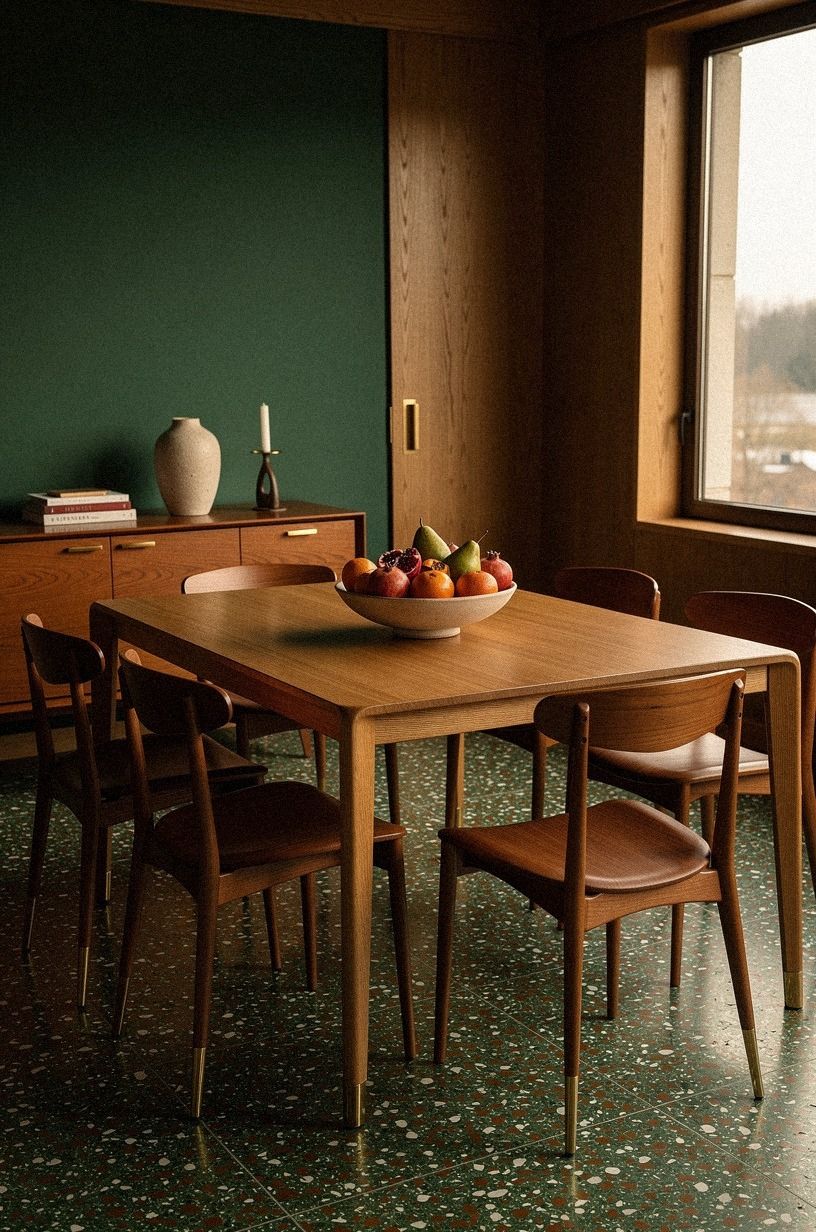
A winter fruit bowl brings color, scent, and height without requiring a florist. Rust-colored persimmons are my first choice because their irregular shape feels generous, and the warm skin looks good with natural oak, linen, or cream pottery. You can add pears for a softer contrast.
Use an oversized-chip terrazzo bowl if your table is dark or painted. The lively chips keep the arrangement from becoming visually dense.
I once used a glossy black bowl with red fruit, and the whole thing looked sharper than I wanted. Your centerpiece should invite people to sit down, not make the table feel formal.
Leave a little space around the bowl so it reads as one strong object. If your table is small, choose three fruits and one low branch instead of building a full display.
And keep the arrangement below eye level so guests can talk across it comfortably. For another relaxed approach, compare these natural dining table centerpiece ideas.
7Hang a Three-Height Light Stack Above the Table
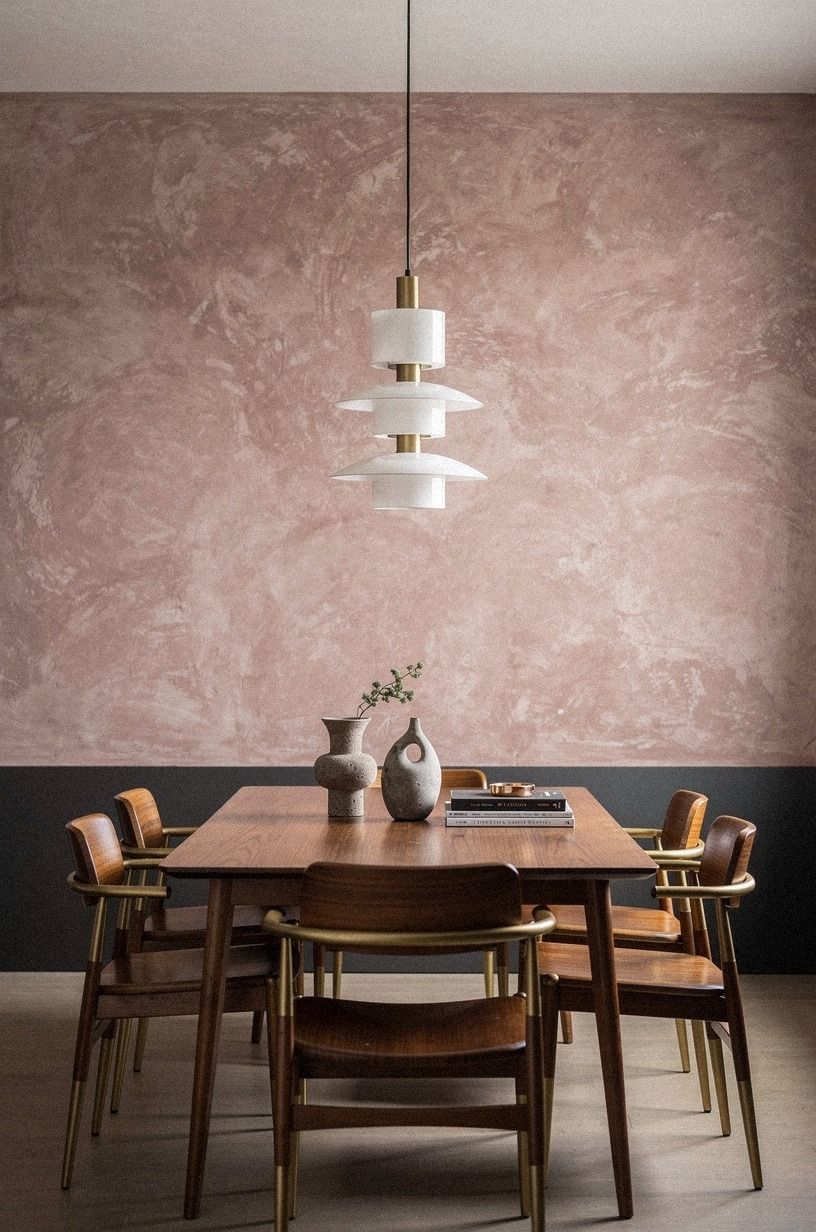
Sometimes the best centerpiece is overhead. A cluster of pendants or hanging ornaments gives your dining table a focal point while leaving the surface open for food. Dusty rose glass pendants soften the light and keep the room from feeling harsh after sunset.
Hang the pendant 30-36 in above the table, measured from the tabletop. That range gives you enough glow without putting the fixture in your sightline. If you’re working with an existing fixture, hang velvet ribbons or small paper stars from the lower frame instead of changing the wiring.
I prefer this approach when the table already has a strong grain or a beautiful finish. You don’t need to cover it. A charcoal canopy can echo dark trim, while warm bulbs keep the mood gentle.
A wall finished in hand-applied Venetian plaster adds softness without competing with the light. For more lighting proportion ideas, browse this dining table rule for comfortable spacing.
It makes a difference!
8Frame One Evergreen Branch With Bowls
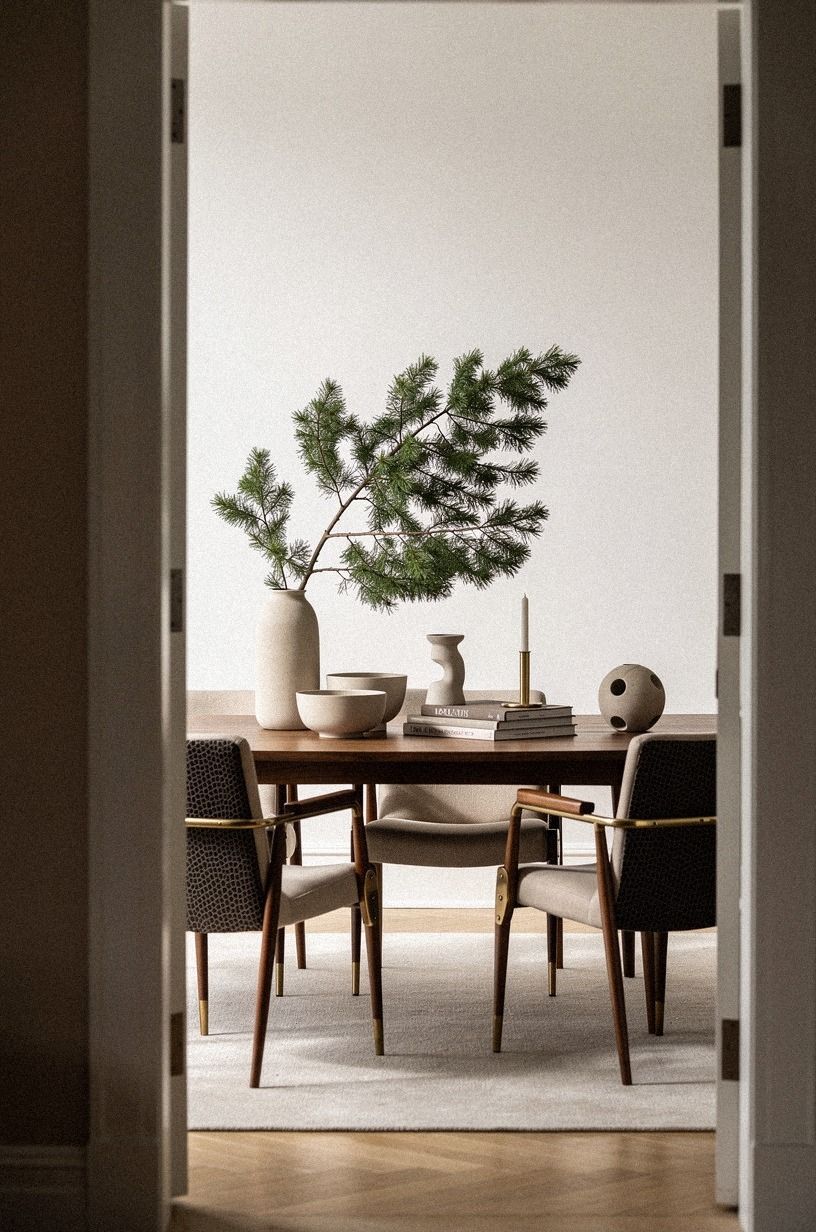
A single evergreen branch can look elegant when everything around it stays restrained. Lay evergreen branches along the center of the table, then place two low bowls at either end. The natural needles add enough color, while the bowls give the eye a stopping point.
Try camel shagreen bowls with black accents if you want a warmer, more tactile interpretation. Their pebbled surfaces catch candlelight in small flashes, which feels more interesting than a perfectly smooth finish. You can fill them with nuts, clementines, or folded napkins depending on the dinner.
Don’t scatter tiny ornaments through the branch. They disappear from a distance and create visual clutter up close.
Your strongest version will probably have fewer pieces than you expect. If you need help editing the arrangement, use this four-zone styling method as a loose guide.
9Why Paint the Backdrop in a Moody Christmas Dining Room?
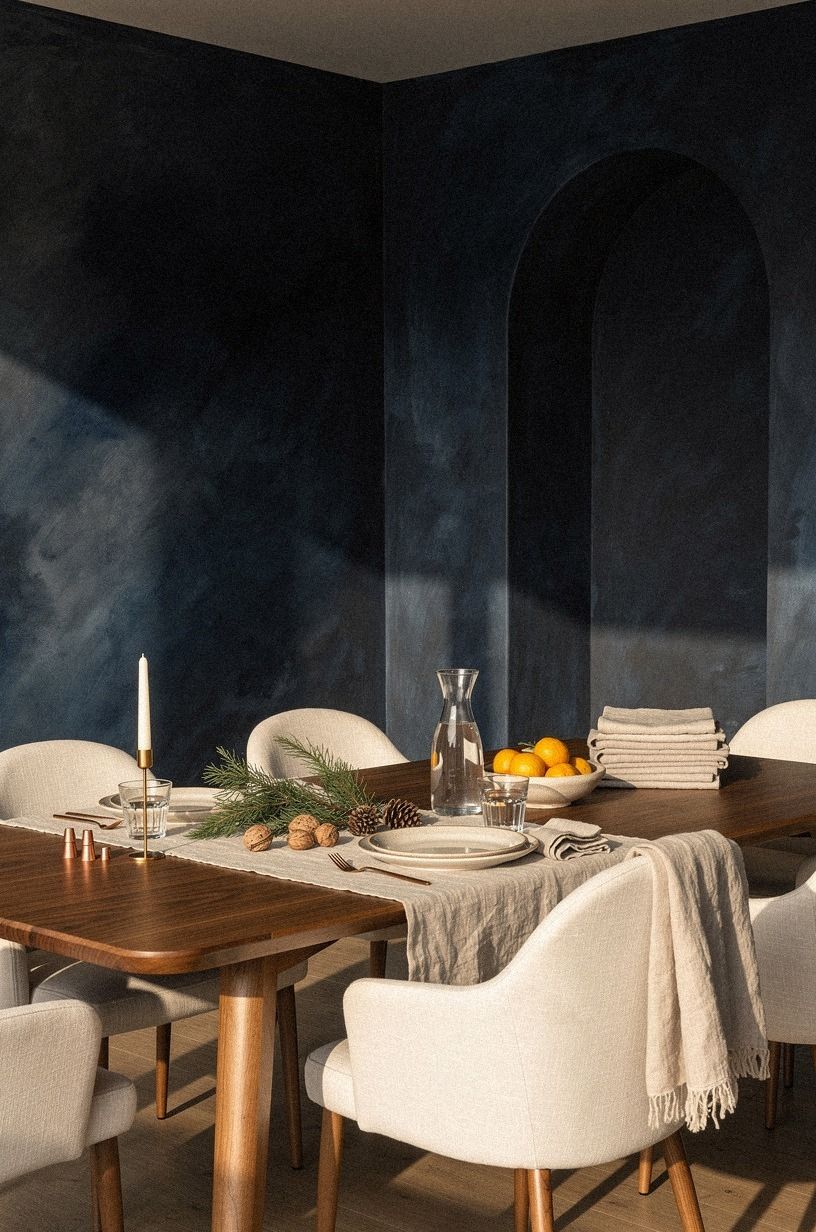
A centerpiece looks more intentional when the wall behind it supports the mood.
10Pair White Linen With Aged Bronze
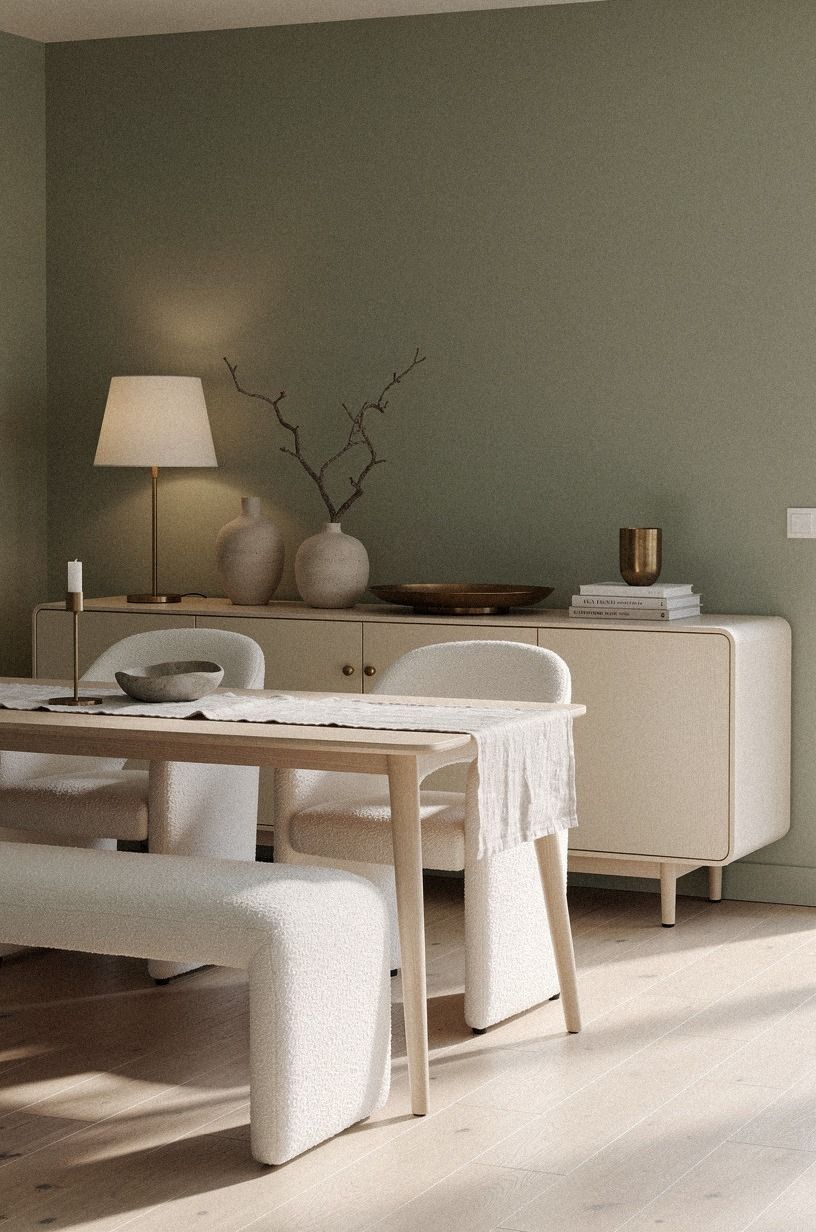
Warm cream fabric gives your Christmas table a calm foundation, especially when the centerpiece includes dark greenery. Choose an organic bouclé runner with visible texture so the cloth feels soft without looking fussy. You can leave the edges slightly rumpled, but don’t let the fabric bunch beneath every plate.
Add natural wood candlesticks for warmth. Wood is less reflective than polished metal, so it gives you a soft glow rather than a bright flash. I like it with sage greenery, warm cream, and natural oak because the palette feels earthy without becoming rustic.
A table with a cream foundation can take one stronger note, such as red fruit or a deep green ribbon. It doesn’t need both.
But if you’re serving a colorful meal, the quiet cloth will keep the overall room balanced. Your centerpiece should support dinner, not compete with it.
These three-layer table styling ideas are useful when the surface starts feeling too busy.
11The Two-Wood Rule for a Rustic Table
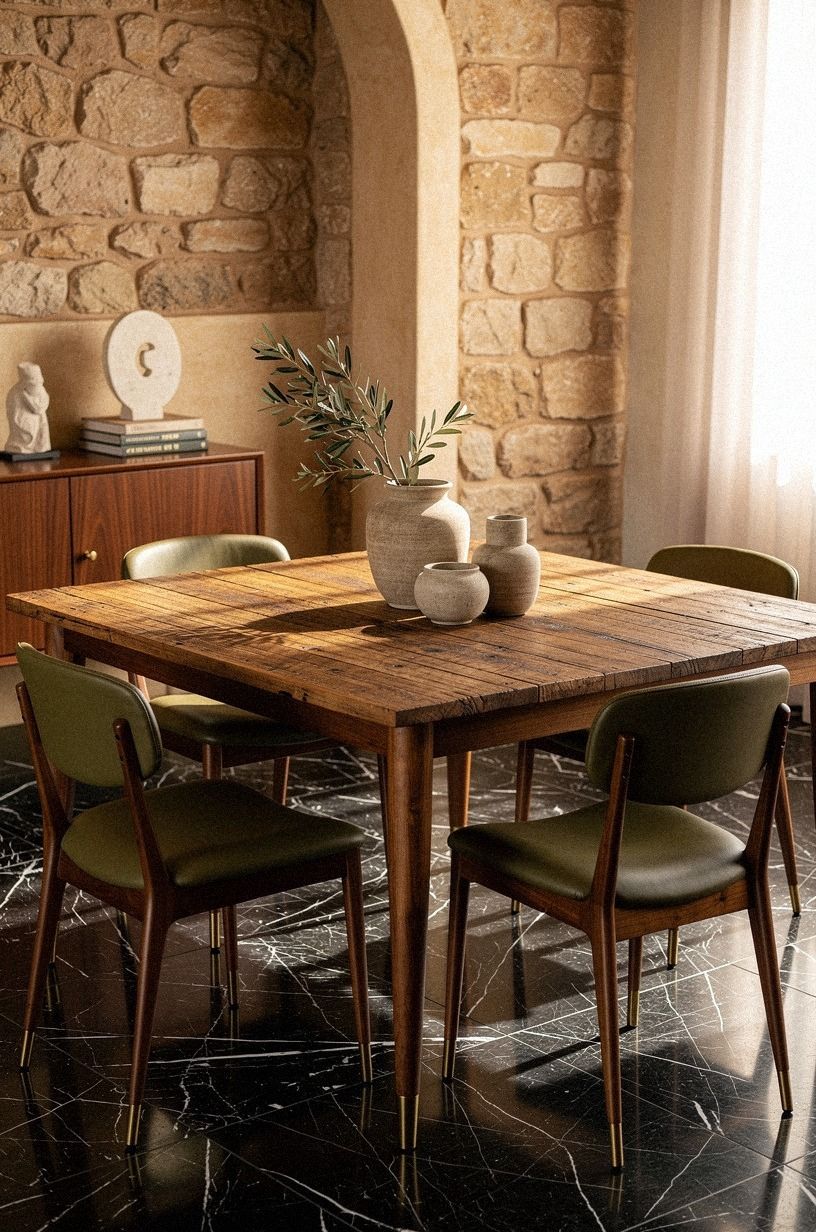
The Two-Wood Rule keeps a rustic table from looking like a cabin supply shop.
12Tall Arrangement or Low Glass Clusters?
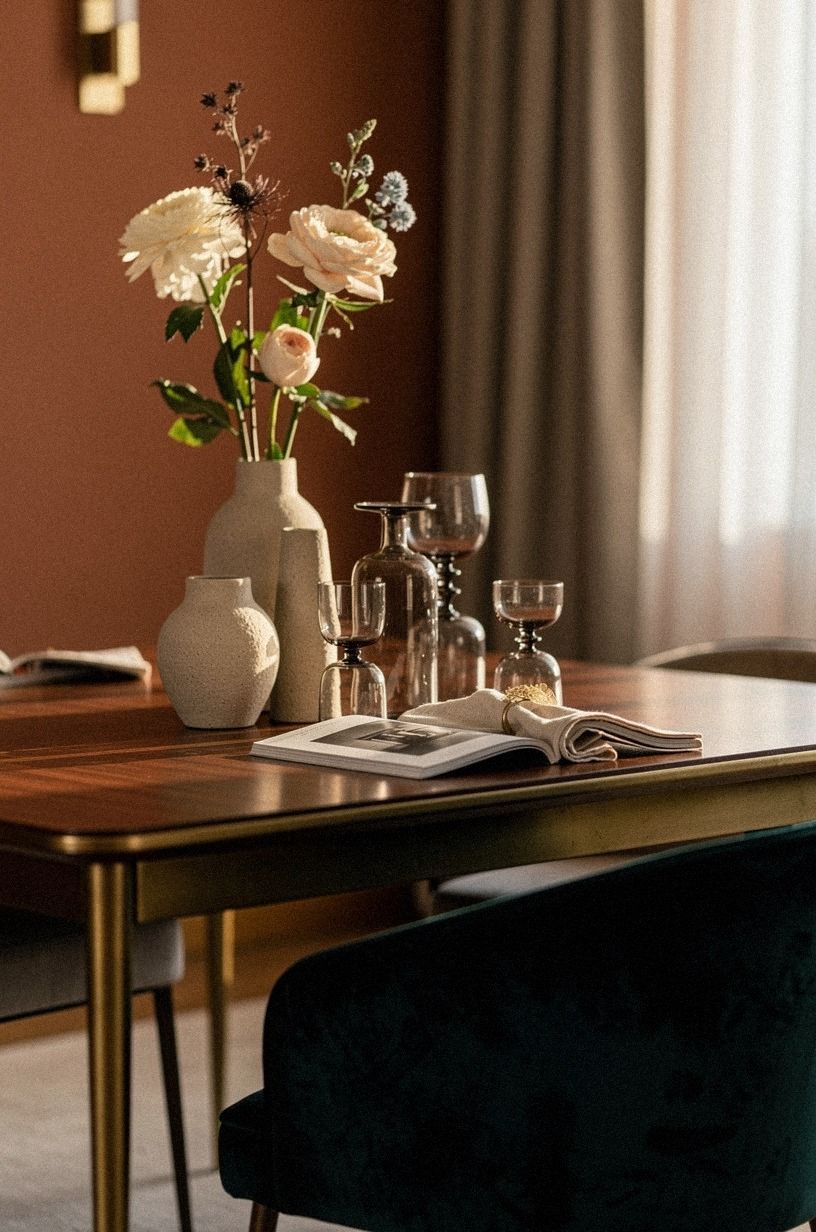
Tall flowers can feel festive, but low glass clusters are easier to live with during a long meal. Use clay-toned ribbed glass bowls or cylinders on a linen runner, then fill them with water, cranberries, and evergreen clippings. The light will move through the glass instead of stopping at its surface.
Add aged-brass candleholders in three small vessels rather than one large bowl. A deep-pile mohair velvet accent at the center adds softness without filling the table. That repetition gives the table rhythm, and you can move the pieces when platters arrive.
But don’t line every glass in a ruler-straight row. Shift the vessels slightly so the arrangement feels gathered.
I went back and forth on this style because it can look sparse, but the open surface is exactly what makes it work in a narrow dining room. Use these low table centerpiece proportions as a starting point.
13Which Winter Citrus Works Best?
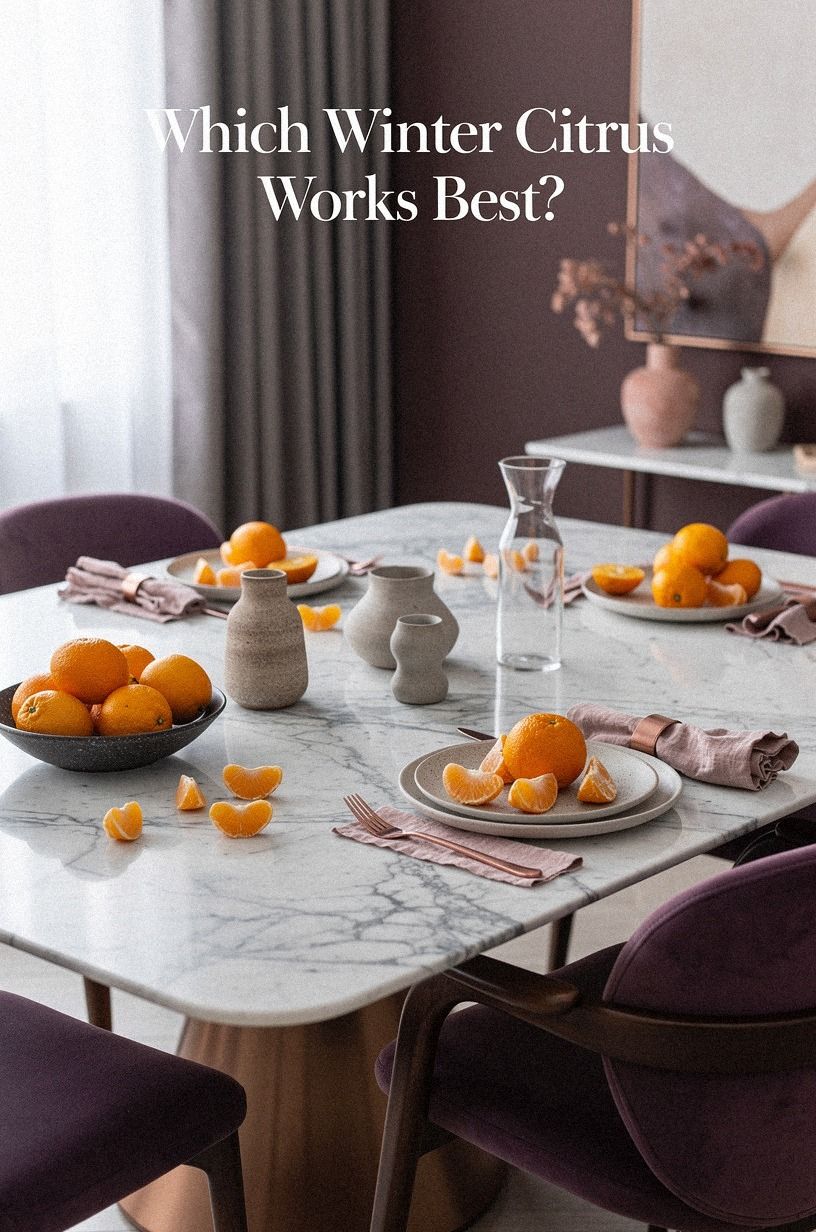
Winter citrus adds a bright note to a darker holiday table.
14Mix Metallic Ornaments With Natural Greenery
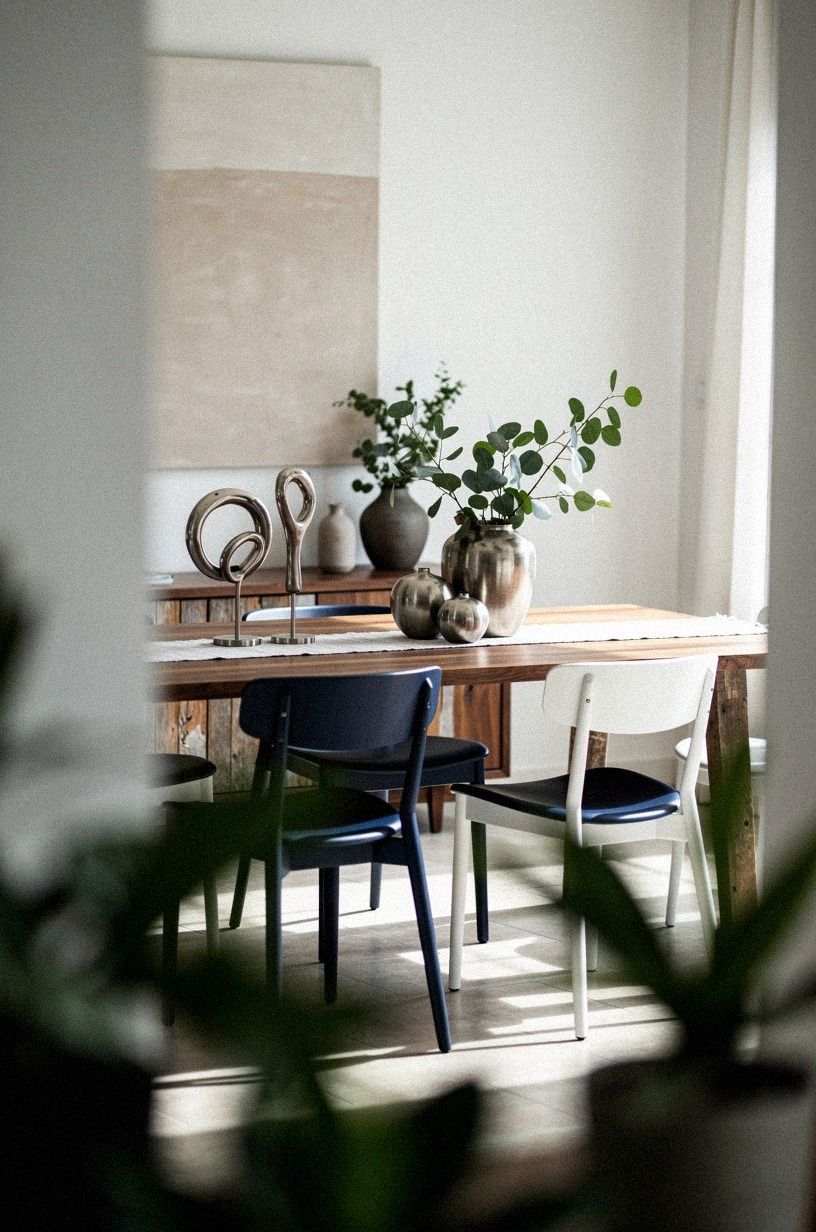
Metallic ornaments can look elegant when they’re used as small accents rather than the whole story. Navy-and-white metallic ornaments tucked into greenery catch the candlelight, especially when the branches sit beside a reclaimed weathered teak vessel. You can use only three or four and still get enough sparkle.
Add olive branches or eucalyptus for a softer shape. Their muted leaves keep the ornaments from feeling shiny or formal.
I wouldn’t mix silver, gold, copper, and red in one centerpiece. Choose one metal, then repeat it in the flatware or candleholders.
Your table will feel more cohesive when the ornaments have different finishes but the same general color. A brushed surface beside a lightly hammered one looks collected.
For another restrained approach, see these three-layer table styling ideas. The best version won’t need many pieces!
15Paint the Vessel Instead of the Whole Table
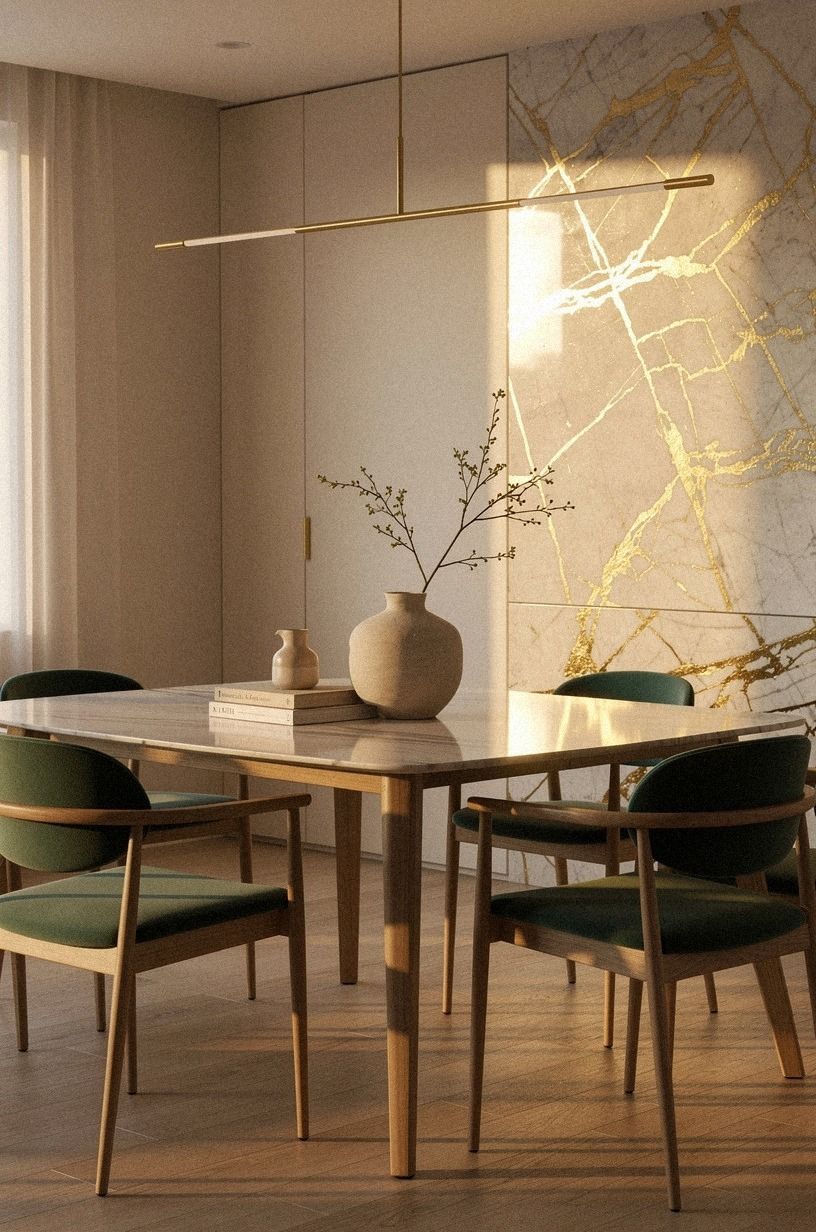
A painted vessel gives you a strong seasonal color without committing the entire room to it. Farrow & Ball Studio Green is a useful reference if you want a deep emerald that works with fir, cream, and warm wood. You can echo the shade in a small ceramic bowl or candleholder.
Choose a matte emerald vessel for a richer interpretation. Its surface absorbs light, so it won’t compete with flames or metallic details. Place it on a Calacatta marble tray with subtle gold veining, then add a few cream ornaments if the shape needs a little softness.
And don’t place the vessel directly in front of the person hosting dinner. Offset it slightly so serving remains easy.
Your table width still needs 24 in per guest, and a centerpiece that steals that space will feel irritating by the first course. This simple table centerpiece roundup can help you compare full, low, and asymmetrical arrangements.
What These Tables Get Right
The most successful Christmas tables I’ve styled weren’t the ones with the most decoration. They had one decision that felt deliberate, then let everything else support it.
A low branch arrangement needs space around it. A tall light cluster needs a quiet tabletop. A bowl of fruit needs a color that repeats somewhere else, even if that repeat is only in a napkin.
I used to think an elegant table required matching pieces. It doesn’t.
IKEA stoneware beside a thrifted brass candlestick can look more convincing than a full boxed set when the scale is right. Your guests won’t inspect the provenance of every bowl. They’ll notice whether the light is comfortable and whether they can reach the bread.
The practical details matter more than people admit. A dining table is typically 30 in high, and a pendant belongs 30-36 in above it. Leave 36 in behind chairs so people can move.
These measurements sound ordinary, but they protect the relaxed feeling you’re trying to create.
For a dining-room refresh, the typical US costs can vary widely. The table below is a useful planning frame, not a promise for one exact project.
I wouldn’t spend heavily on seasonal objects first. Put your money into the pieces you use beyond December, such as a solid table, a comfortable chair, or lighting that makes every meal feel better.
Then use branches, fruit, linen, and candles to bring in the holiday. Your centerpiece can be temporary while the room still feels personal.
That balance is why I prefer natural materials over themed decorations. Cerused white oak, linen, glass, and greenery age well from one dinner to the next.
They don’t lock you into one color story, and they leave room for your own traditions. If the arrangement looks too polished, remove one item.
If it looks flat, add texture before adding more color.
A Few Things Worth Answering
What is the best Christmas centerpiece idea for a small dining room?
A low branch arrangement in an IKEA ceramic vessel is the easiest choice because it leaves sightlines open. You can pair it with three small candles and still have room for serving dishes. Your best small-space centerpiece will stay below eye level and use one strong color.
Where can I buy Christmas centerpiece pieces on a budget?
Look at IKEA, Target, Wayfair, Facebook Marketplace, and local thrift shops. You can find bowls, candleholders, linen, and vessels without buying a matched set. This site uses display ads rather than affiliate commissions, so you won’t find commission links in these recommendations.
How much does a Christmas centerpiece makeover cost?
A simple makeover can run about $100 to $300, depending on what you already own. Branches, fruit, and water can be free or inexpensive, while a new vessel and candles raise the total. Your table doesn’t need a full room refresh to feel seasonal.
Can I create a Christmas centerpiece on a budget?
Yes, and you can begin with three free or low-cost elements: evergreen clippings, a bowl from your kitchen, and candles you already have. Add one cotton velvet ribbon or thrifted brass piece if you want more texture. The strongest budget tables usually edit first.
Is a Christmas centerpiece worth it in a small space?
Yes, because a small table benefits from one clear focal point. Choose a narrow vessel, keep the arrangement low, and protect 24 in of table width per guest. Your limited surface will make editing easier, not harder, and the room can feel more intimate.
Is a Christmas centerpiece a good idea for a rental?
Yes. Use removable hooks for greenery above the table, a freestanding vessel on the surface, and battery candles instead of hardwired lighting.
Peel-and-stick accents can add color without permanent changes. Your rental table can still feel warm, collected, and ready for guests.
Where I’d Start First
If I had to pick one, I’d start with a low evergreen branch in a warm ceramic vessel. It leaves sightlines open, works with almost any table, and won’t fight your serving dishes. Pin that arrangement for later, then compare it with this three-layer dining table formula.