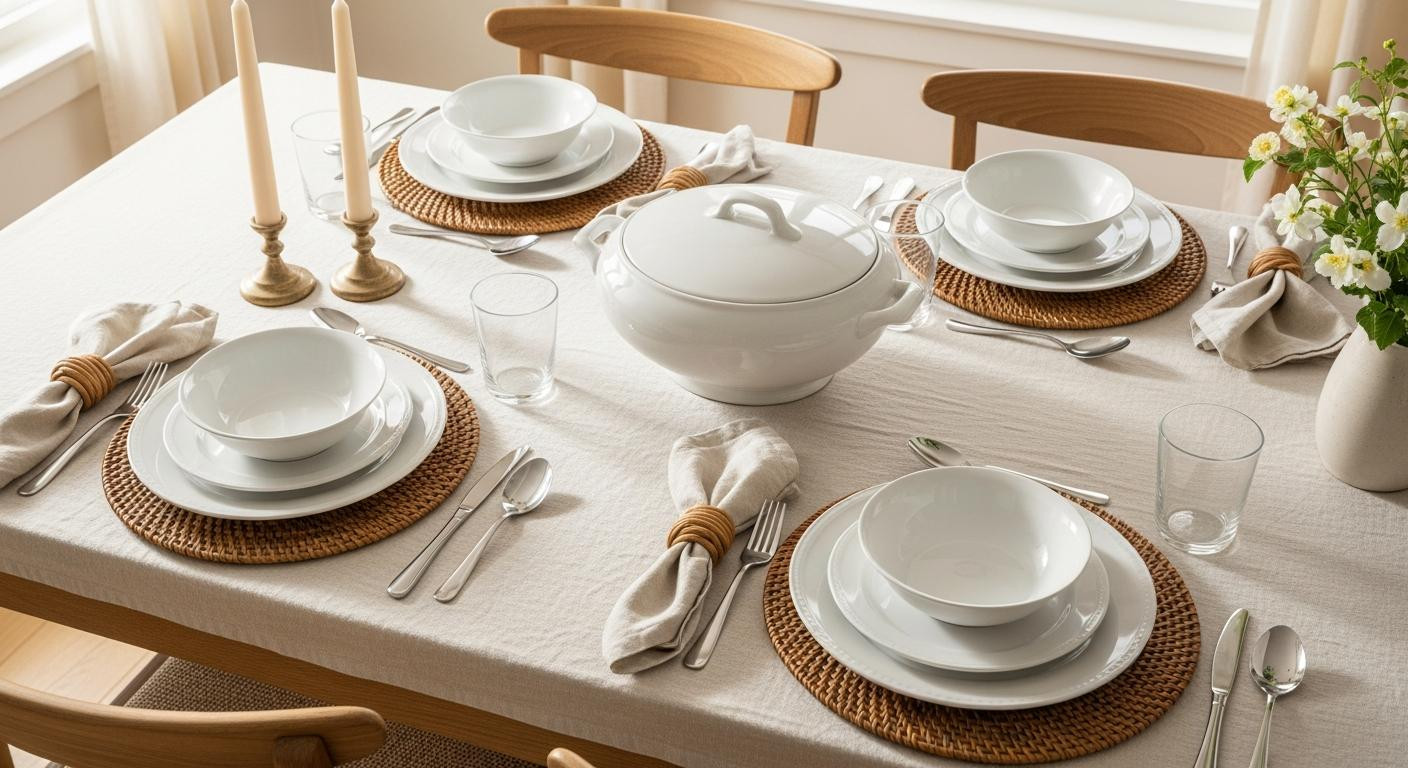
Your dining table on a Wednesday at 6:47pm when you plate leftover roast chicken onto white dishes that haven’t changed since 2019, and your seven-year-old asks if this is “a regular dinner or a special dinner” because the table looks exactly like it did at breakfast. The room holds $340 worth of chairs and a rug, but every meal feels like refueling at a highway rest stop. Three layers—not five, not ten—separate tables that fade into background noise from tables that make frozen pizza feel like hospitality. The formula takes 8 minutes using items already in your kitchen.
Most people skip the setup entirely because they think tablescapes require floral arrangements and napkin origami. But the real difference sits in stacking what you already own in a specific order. The result is a space that feels intentional without feeling staged.
Layer one puts texture under the plate, not a placemat
Your current setup probably involves bare table or a single cloth placemat creating visual silence. A charger—that oversized base plate—holds the eye before food arrives. Rattan chargers make white plates read deliberate rather than default.
Amazon sells 13-inch rattan chargers for around $15 each, while West Elm’s version hits $40. The cheaper option works just as well for everyday dinners. Place the charger edge 1 inch from the table edge, centered at each seat.
And here’s the practical angle: chargers protect table surfaces from heat without permanent installation, which matters if you’re renting. According to entertaining specialists featured in lifestyle publications, chargers create dimension even when plates are simple—they separate “I fed you” from “I set a table for you.” But this only works for tables 48 inches or larger. Smaller surfaces feel crowded with that extra layer.
Layer two stacks plates by size, but only two deep
The specific formula matters: 10-inch dinner plate on charger, 8-inch salad plate centered on top. Larger base keeps the composition stable. The salad plate rim catches overhead light and creates a shadow line that photographs better than a single flat surface.
Pottery Barn’s white plates run around $30 for a set of 4, Lenox textured options hit $25 per plate for mixing patterns, and IKEA OFTAST basics cost $10 for serviceable daily use. Budget depends on whether you’re building from scratch or mixing what you own.
Don’t add a third plate layer. Three plates (charger plus dinner plus salad plus bread) overwhelms everyday tables in a way that violates the “lived-in, not staged” principle. It tips into restaurant formality that makes weeknight chicken feel like performance art.
What to skip when it’s just family
Solo dinners don’t need chargers—visual effort without audience feels performative. Kids under 5 need single unbreakable plates because stacking creates toppling risk. And admittedly, this only works if your dishwasher fits stacked dirty plates without requiring immediate unstacking, which kills the time-saving benefit.
Layer three adds one thing to the center, never three
Shared serving vessels replace separate decorative arrangements. A ceramic bowl holding salad, pasta, or roasted vegetables sits center table and eliminates the need for florals you’ll toss in three days. The napkin trick designers use for expensive vibes applies here—placement matters more than price.
IKEA’s OFTAST 10-inch bowl serves 4-6 people for $10, stays through the meal without clearing mid-dinner, and creates restaurant family-style visual impact. Bowl diameter should not exceed one-third your table width—that’s 16 inches maximum on a 48-inch table. Steam rising from the bowl during first pass creates a living centerpiece that cut florals can’t match.
When to use candles instead, and when to skip both
Two pillar candles work when serving cold dishes. Unscented, 3-inch diameter versions from Target cost around $8 and flank the center without adding fragrance that competes with food. Height matters: candles under 4 inches disappear behind plates, over 6 inches block sightlines across the table.
Skip centerpieces entirely for tables under 42 inches. Crowding kills the calm the formula promises. If you’re reaching around it to pass salt, it’s not hospitality—it’s an obstacle.
This only works if you clear the table first
Layers look staged, not welcoming, when mail baskets and yesterday’s napkins still occupy corners. Pre-dinner clearing creates psychological reset and takes 3 minutes. Bare wood table for 90 seconds before setting feels empty; with three layers, the same surface feels intentional.
But here’s the catch: you need a designated landing zone elsewhere for table clutter—entry console, kitchen counter, floating shelf. The system doesn’t solve clutter, it relocates it. Design experts confirm that layering creates warmth only when the table starts neutral. Clutter under pretty plates still reads as clutter.
Realistic timeline: 3 minutes clearing plus 8 minutes layering equals 11 minutes total. That’s faster than scrolling TikTok while waiting for pasta water to boil. And it transforms the space in a way that portable rental upgrades under $200 can’t quite replicate without this foundational structure.
Your questions about everyday tablescapes answered
Do I really need chargers if I’m using paper napkins?
Yes, if napkins are linen-look paper (around $6 for 40 from Target). No, if they’re cheap paper that tears when folded. Texture contrast between charger and disposable napkin creates elevated casual that works for busy weeknights. Chargers hide napkin quality gaps in a way that organized storage solutions can’t address.
What if my table only seats two?
Formula scales down: use dinner plate directly on table, skip the charger layer, single centerpiece candle instead of bowl. Two-person tables under 36 inches can’t support three-layer depth without feeling crowded. The system adapts to intimate scale by removing volume while keeping intention intact.
Can this work with my kids’ plastic plates?
Partially. Charger layer works under plastic and creates visual upgrade. Skip the salad plate layer—plastic stacking looks institutional, not inviting. Use the centerpiece bowl for adult portions, serve kids directly from it. The formula targets adults’ visual experience while accommodating practical kid needs.
Thursday dinner at 7:02pm when your daughter reaches across the rattan charger for the serving bowl and asks why tonight feels different. Same chicken, same table, same overhead light catching the salad plate’s rim. The difference sits in three layers your hands arranged in eight minutes before anyone walked in.