
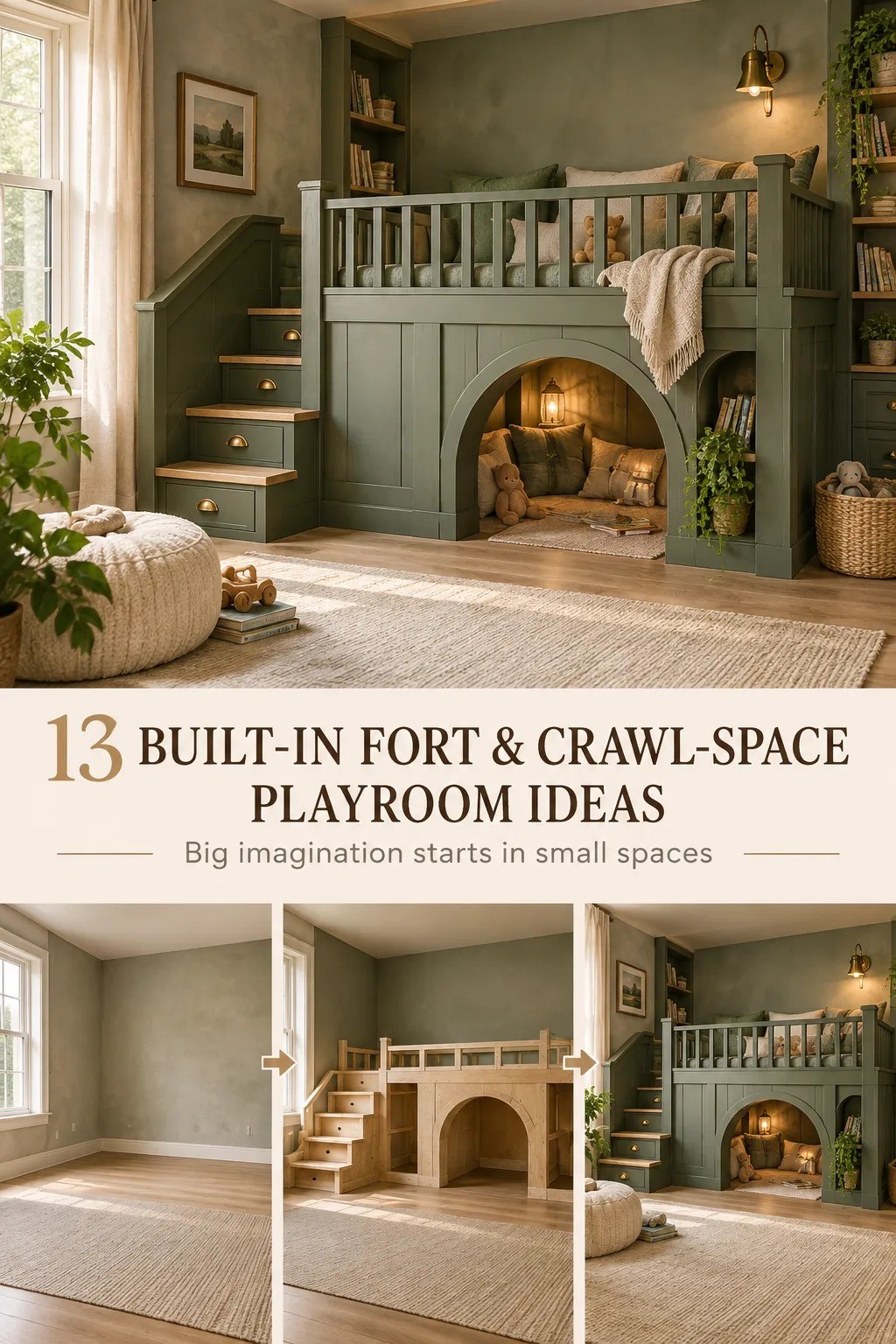
Built-in fort and crawl-space playroom ideas work best when kids can reach, hide, read, and reset without adult help. I’ve learned that the magic isn’t expensive furniture. It’s a 38×75-inch sleep zone, soft lighting, and storage placed where small hands can find it. Keep the structure simple. Make the details warm.
Don’t overthink: Layer a three-height light stack for an indoor treehouse playroom.
- Build a low built-in fort playroom with a real mattress
- Layer a three-height light stack for an indoor treehouse playroom
- Paint the crawl space with a ceiling-to-wall color wash
- Float a book ledge beside the built-in playhouse
- Add the Two-Texture Rule for a warm crawl-space playroom
- Frame the entrance with a soft arch
- Swap bulky storage for a child-height landing zone
- Hang a fabric roof instead of building a heavy ceiling
- Mix a quiet nook with an active crawl-space playroom
- Anchor the design with The Two-Wood Rule
- Create a bunk-safe crawl-space playroom with measured clearance
- Budget the built-in fort with a clear cost ladder
- Finish the indoor treehouse playroom with a reset ritual
1Build a low built-in fort playroom with a real mattress
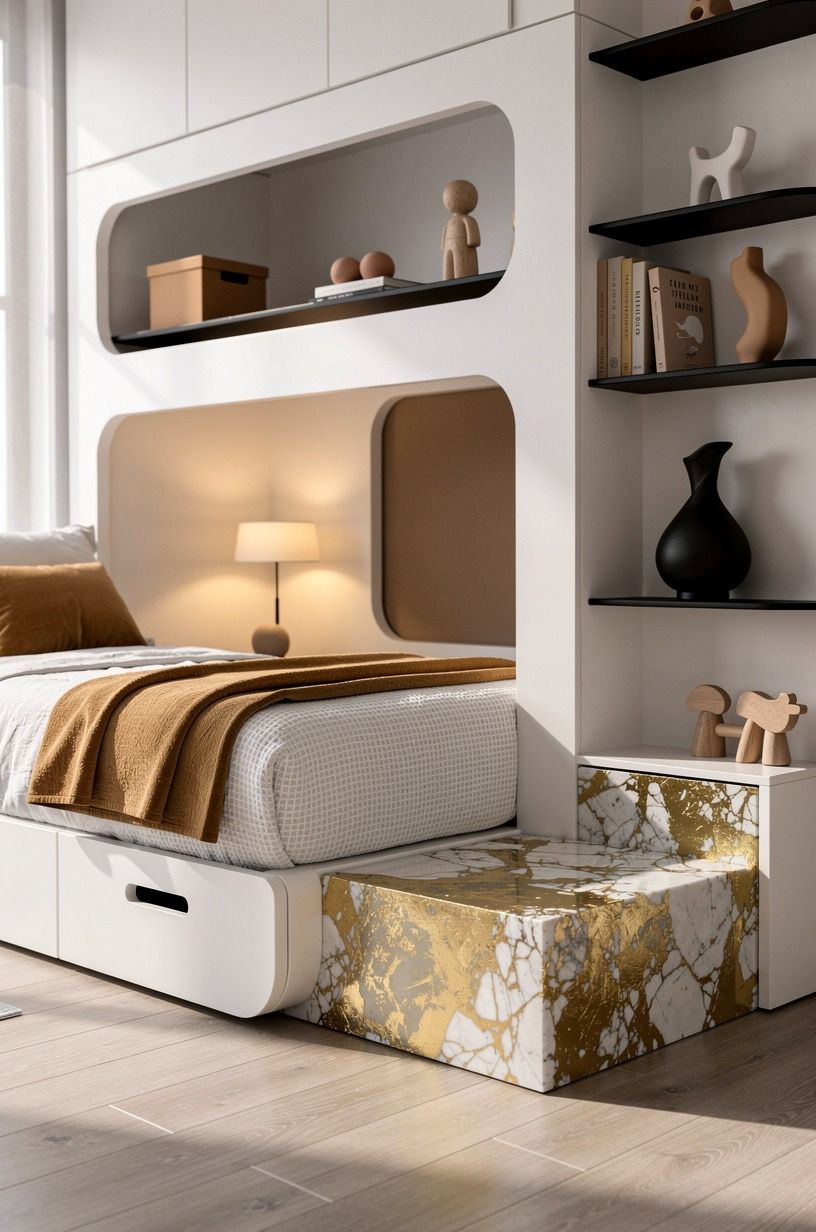
A low platform turns an awkward crawl-space playroom into a destination without making the ceiling feel lower. Start with a twin mattress sized 38×75 inches, then frame it with painted plywood and a shallow ledge for books.
You’ll want the mattress to sit low enough for independent climbing, but not directly on the floor where air can’t move. I’d choose Benjamin Moore White Dove OC-17 for the walls because its warm white tone keeps a tucked-away nook feeling bright beside camel upholstery and black accents.
Give your child one reading light, two washable pillows, and a basket that can slide under the platform. And keep the opening wide. A tiny entrance looks charming at first glance, but you’ll regret it when you’re reaching inside for a lost shoe.
My favorite finish is a 3/4-inch Calacatta marble lip with soft gold veining and rounded corners. It feels earthy, safe, and substantial without turning the nook into a bulky cabin.
For another small-space layout, compare these under-stairs playroom ideas.
2Layer a three-height light stack for an indoor treehouse playroom
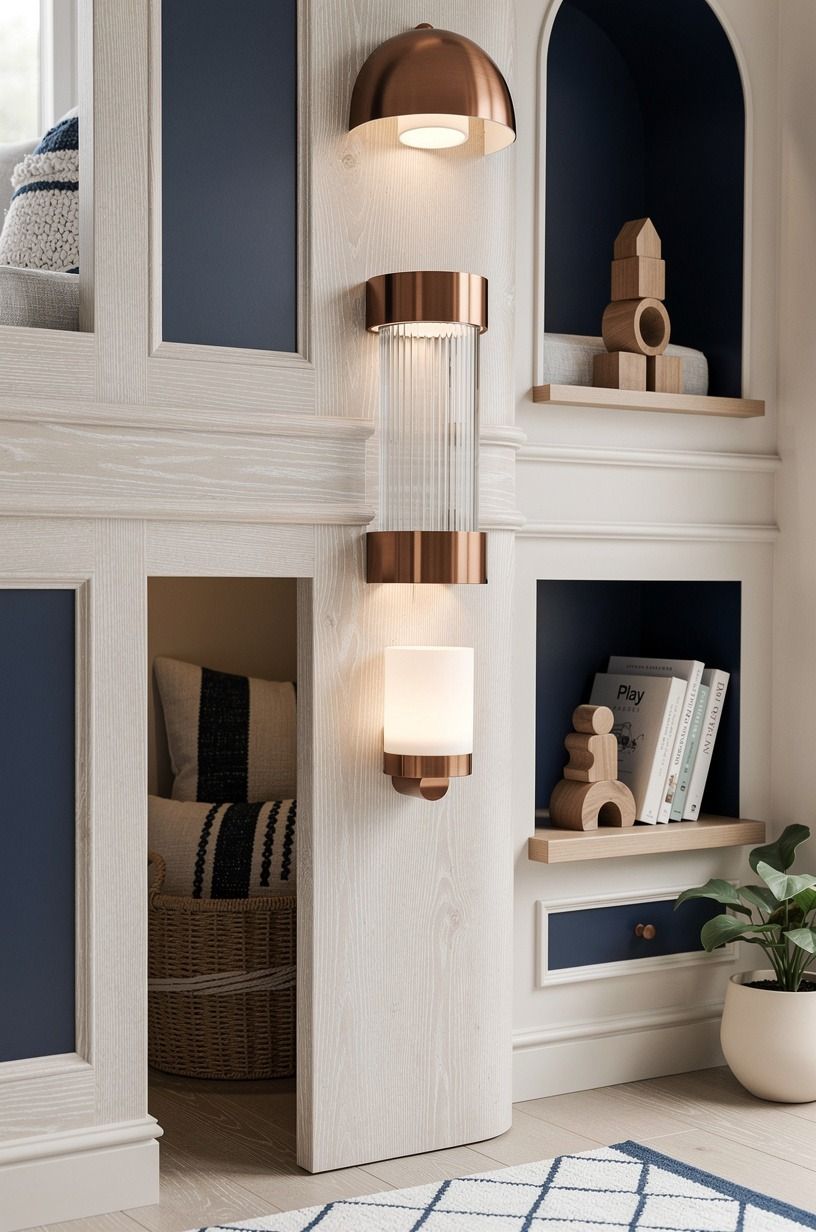
Lighting decides whether your built-in playhouse feels inviting or like a cupboard.
3Paint the crawl space with a ceiling-to-wall color wash
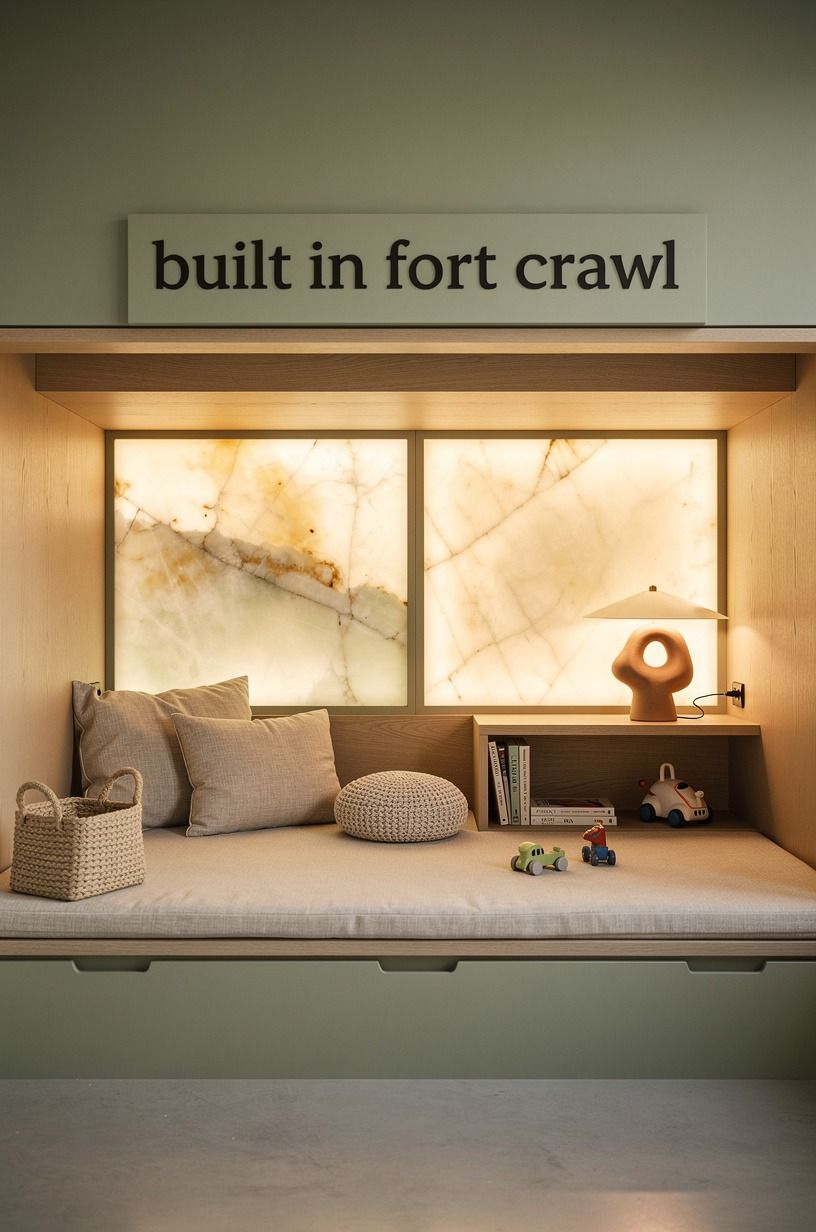
A color-washed crawl space can feel larger because your eye doesn’t stop at a hard white ceiling line. I’d use Sherwin-Williams Evergreen Fog SW 9130 when the nook needs softness, especially beside natural wood and warm cream bedding.
It’s muted rather than sugary, and afternoon light gives it a grounded quality that feels almost like a tent at sunset. You’ll want to test a sample first because enclosed spaces amplify color.
Paint the ceiling, trim, and back wall in the same family, then keep the platform in natural wood so the bed doesn’t disappear. I made the mistake of choosing a stark white for a small play nook once.
It looked clean for about three days, then every scuff and toy shadow stood out. A muted wall hides ordinary life better.
Use washable eggshell paint at child height, and save the deepest color for the back wall if you want a more dramatic, peaceful feeling.
4Float a book ledge beside the built-in playhouse
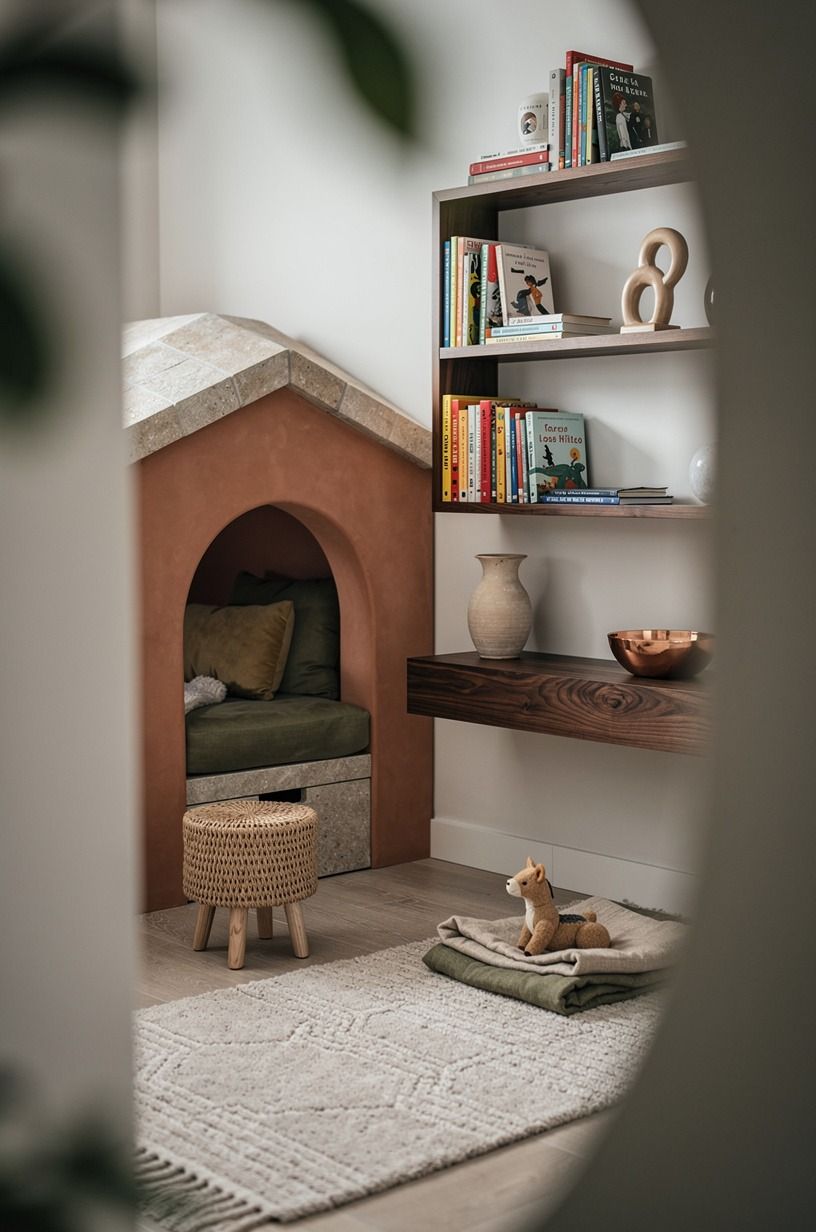
A floating, book-matched walnut ledge gives your child a reason to stay in the fort after the initial excitement fades.
5Add the Two-Texture Rule for a warm crawl-space playroom
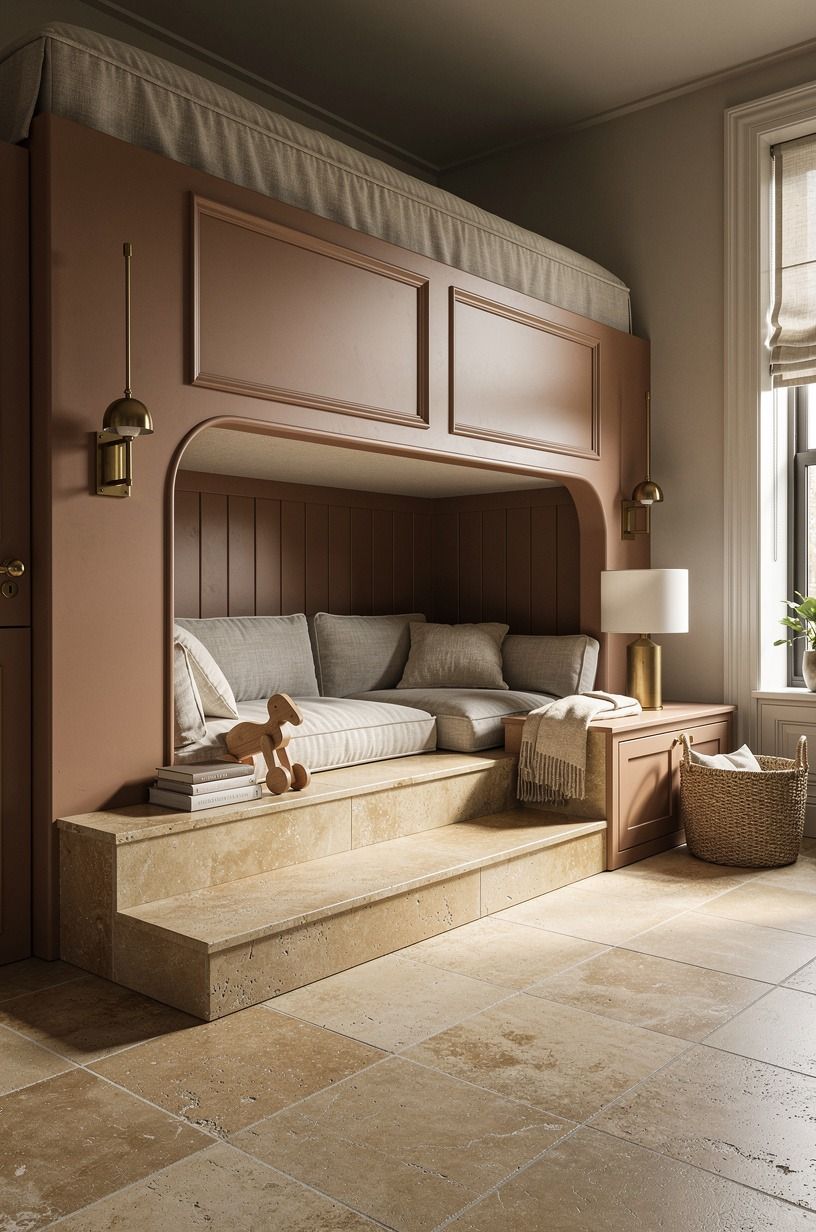
Kids use spaces that feel good under their hands, so combine one smooth surface with one nubby surface in every fort. Pair warm travertine with washed linen, or use an aged-brass detail beside a washable linen-blend rug.
You’ll create contrast without filling the nook with decorations. I’d avoid faux fur here.
It collects crumbs, traps heat, and looks tired quickly in a high-use playroom.
The smooth travertine helps cars, blocks, and books move easily, while the tactile linen layer makes the floor comfortable for reading. You can use a 5×7-foot play rug outside the opening and a smaller washable mat inside. If you’re working with a narrow footprint, leave the center open for bodies and put the softest material along the back wall.
Your child doesn’t need ten textures. They need two that feel intentional, durable, and inviting.
For a more unusual fort reference, see this story about a five-room pillow fort.
6Frame the entrance with a soft arch
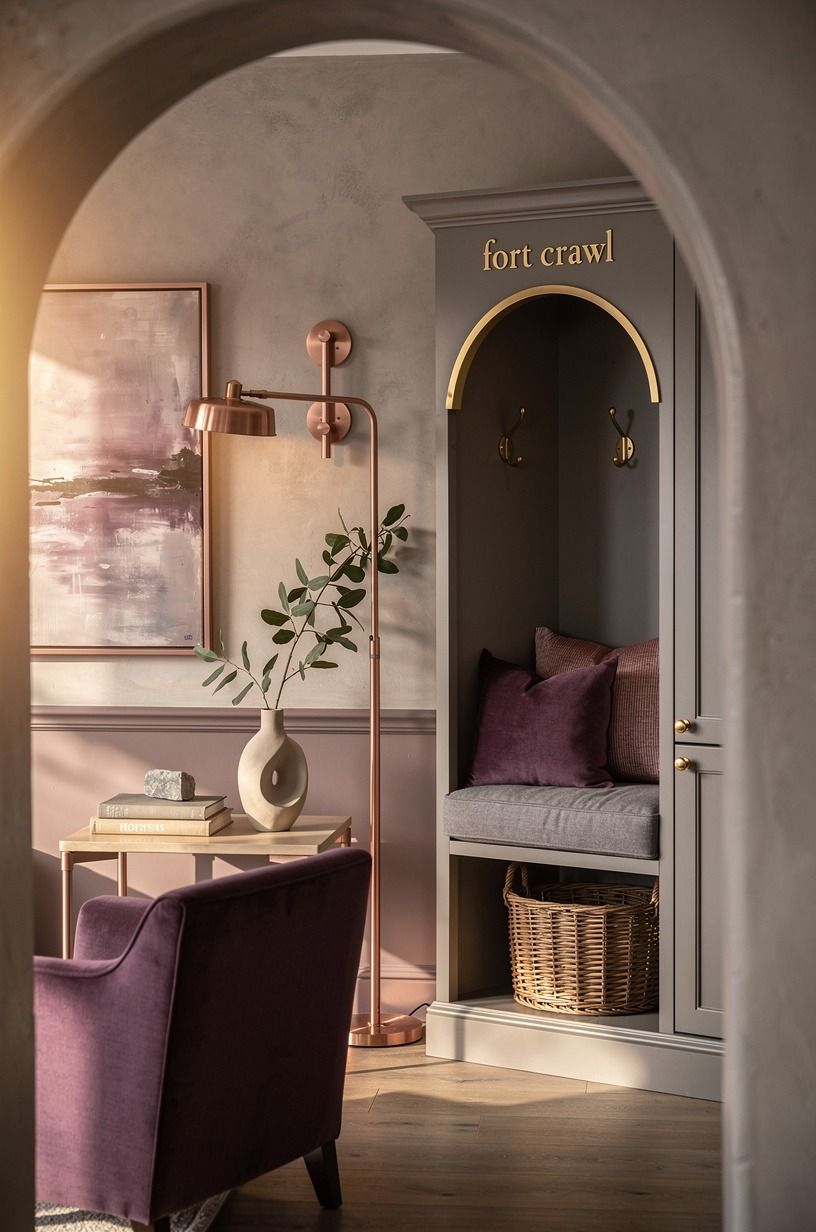
An arched entry changes a basic under-stair opening into a little architectural event. You can create it with flexible trim, painted MDF, or a simple plywood template, then soften the inside edge with grey linen curtains.
I’d choose an arch over a pointed roof. The arch feels calm and modern, while a sharp peak can make a low ceiling seem even tighter.
You’ll want at least enough width for an adult hand to reach through.
Hang the curtain on a tension rod so you can remove it for washing. Let the fabric stop a few inches above the floor, since long panels become a tripping hazard when children rush out. And don’t make the opening too dark.
A curtain should signal privacy, not block supervision. My favorite combination is a plum wall against grey linen, with one small unlacquered brass ring pull that will develop a soft patina.
If your room has a difficult corner nearby, this small-space furniture guide can help you protect the walkway.
7Swap bulky storage for a child-height landing zone
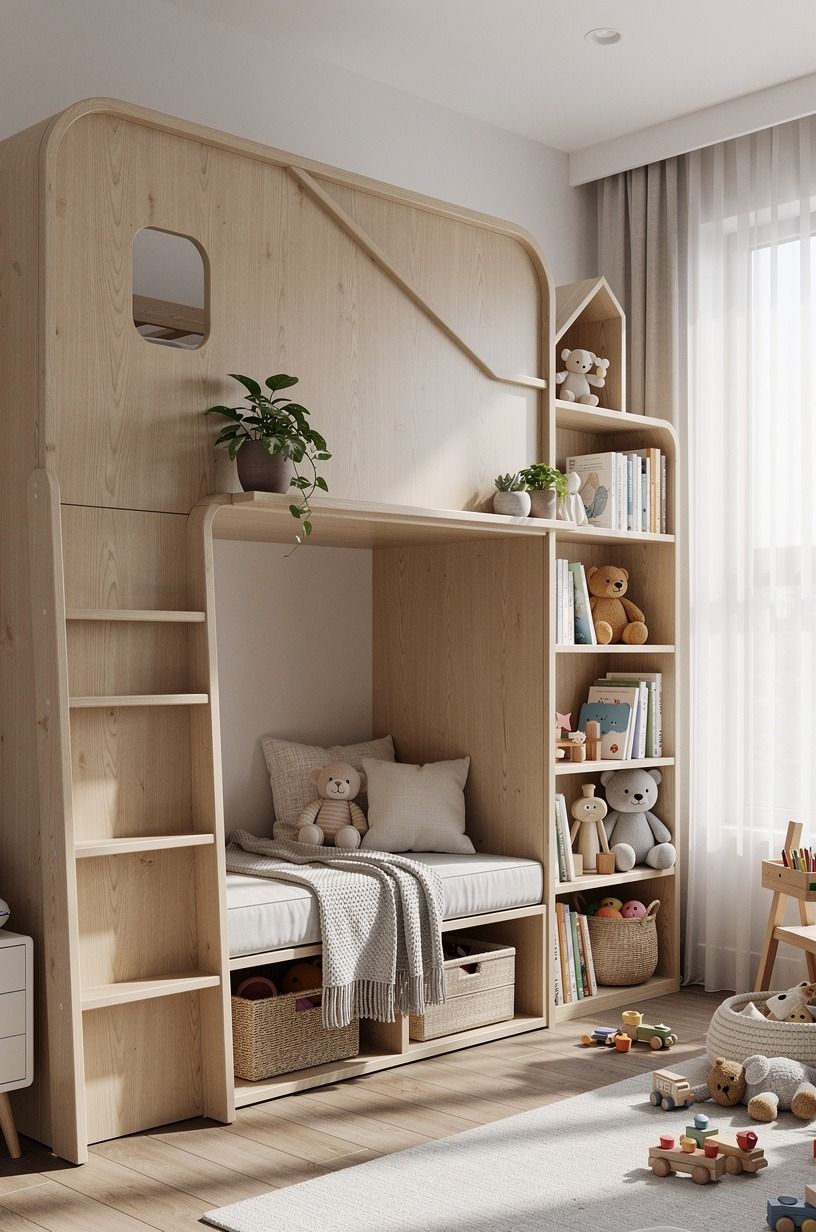
A fort becomes easier to use when storage lives directly beside it. An oversized-chip terrazzo landing zone in navy, white, and walnut can give the arrangement a clear home without adding a tall cabinet.
8Hang a fabric roof instead of building a heavy ceiling
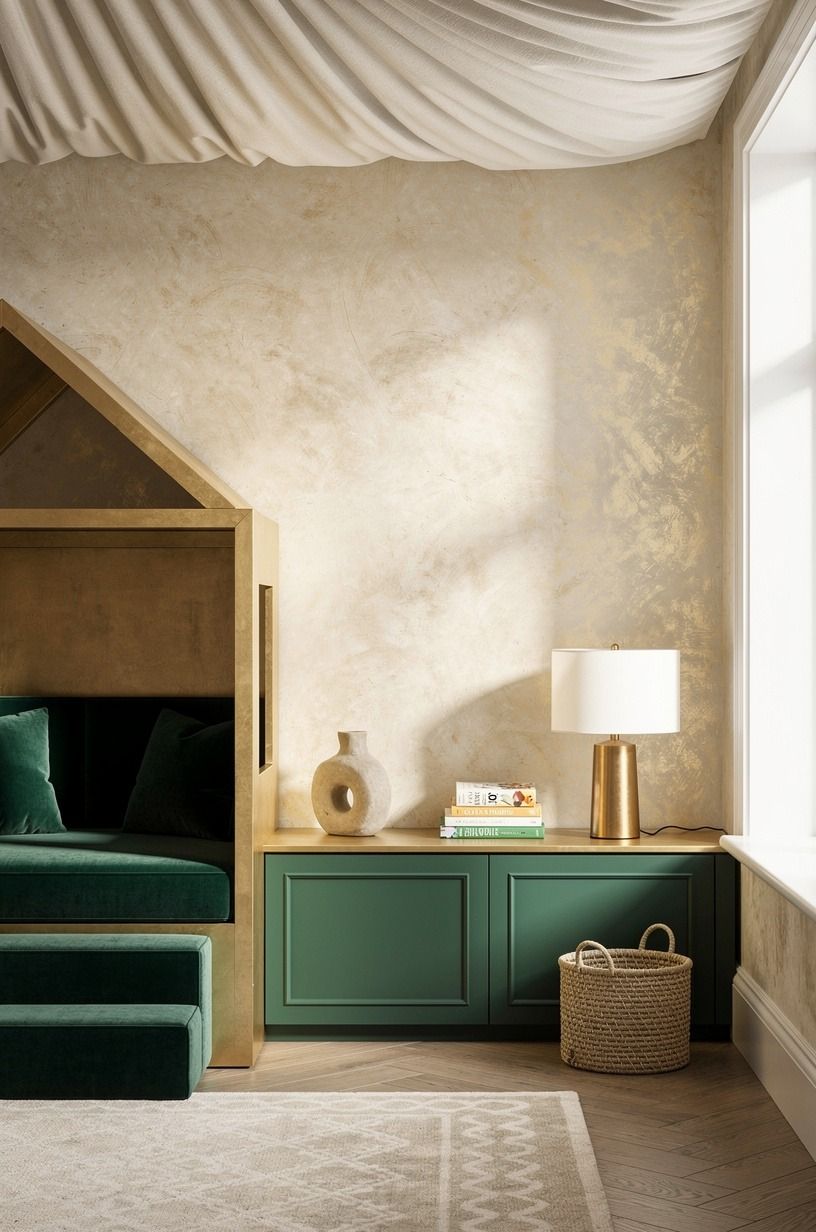
A fabric canopy creates the feeling of a built-in fort without adding weight to the structure. Attach quilted cotton muslin to a slim ceiling track, then let it drape along the sides of the mattress.
You’ll get a gentle tent shape that can open fully during the day. I’d skip permanent fabric stapled to the ceiling.
It gathers dust, complicates cleaning, and makes the space feel fixed when your child’s interests change.
Use one color outside and a quieter lining inside. Farrow & Ball Studio Green No. 93 can work beautifully on the surrounding wall beside hand-applied Venetian plaster, while oatmeal fabric keeps the interior warm rather than overly themed.
You can add a few embroidered stars, but don’t cover the canopy with decorations that could detach. The best part is the movement. When your child pulls the panel aside, the fabric shifts and the playroom feels alive.
It’s dreamy without being fragile. For a broader look at hidden child zones, browse these under-stairs playroom layouts.
9Mix a quiet nook with an active crawl-space playroom
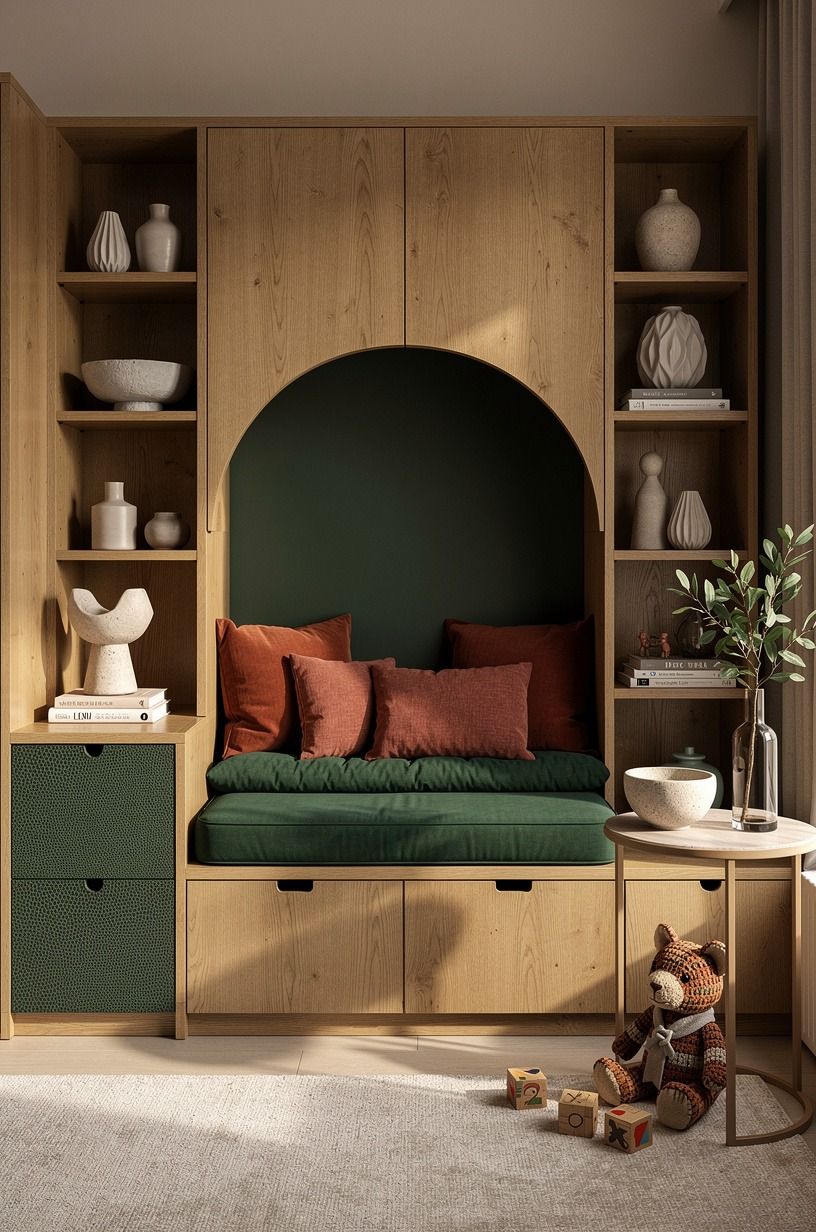
The strongest playrooms give children somewhere to move and somewhere to settle. Put the fort at one end, then leave a clear rectangle of floor for crawling, blocks, or dramatic play.
You’ll want the active zone to stay outside the sleeping nook so the bed doesn’t become a storage shelf. I’d use a 5×7-foot rust-toned washable play rug as the visual boundary, not a bulky room divider that steals valuable floor area.
Place a low natural-oak table near the rug and keep the fort entrance visible from the main room. That balance helps you supervise without hovering. And if your child is sensitive to noise, use a shagreen pinboard or padded wall panel near the active zone to soften echoes.
I once placed a hard toy shelf beside a reading nook, and every dropped block sounded twice as loud. A small fabric panel fixed more than another basket could have.
Your room will feel calmer when sound has somewhere to land.
10Anchor the design with The Two-Wood Rule
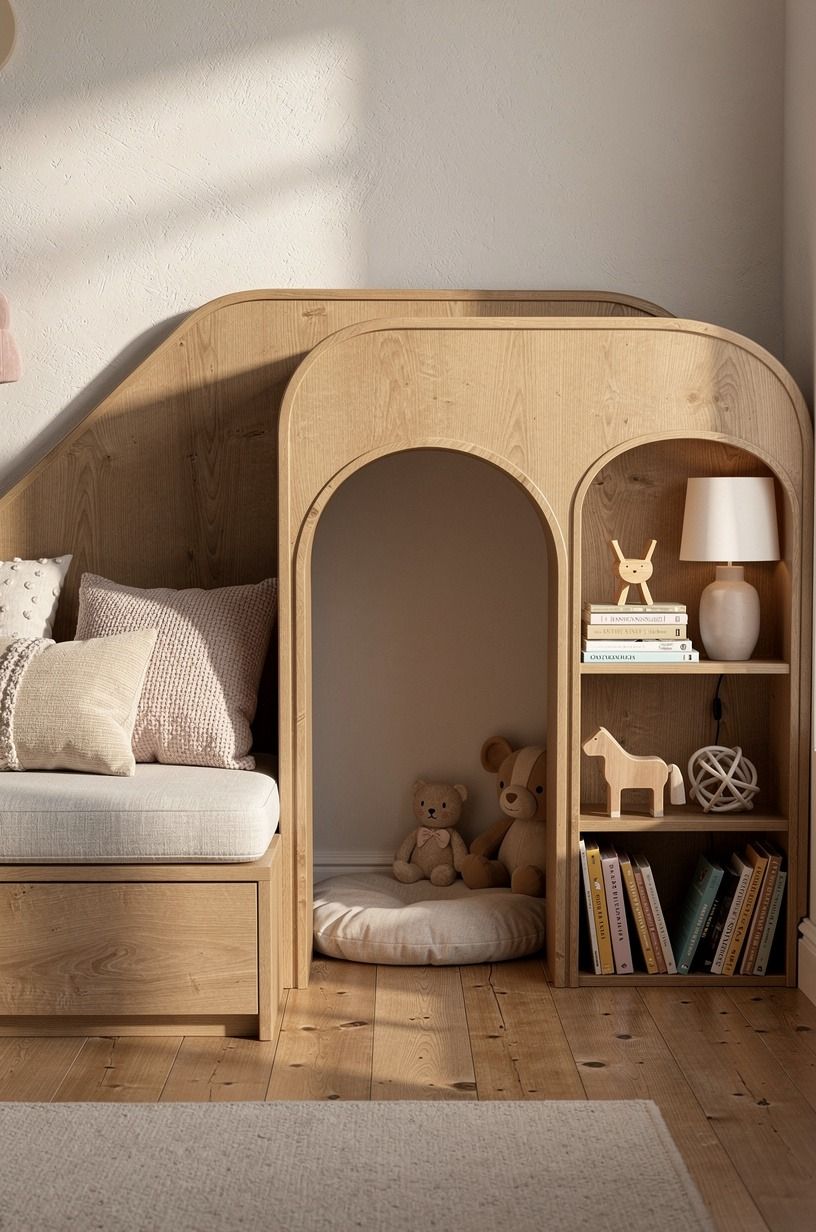
Using two wood tones keeps a built-in fort from looking like a showroom set. Choose one pale wood for structure, such as white oak veneer, and one deeper wood for accents, such as walnut-stained poplar. You’ll get contrast without collecting random finishes.
I’d avoid mixing three or four grains in a small room because the eye starts counting materials instead of noticing the play space.
Use the lighter tone for shelves and the platform edge, then reserve the darker tone for a peg rail or small brass handle. Your child will notice the warmth even if they can’t name it. Pair both woods with one fabric color, such as dusty rose, charcoal, or washed Belgian linen.
But don’t try to match every toy. The room should hold evidence of play.
A few plastic pieces in bright colors will look better against a quiet material base than against a wall full of competing patterns.
11Create a bunk-safe crawl-space playroom with measured clearance
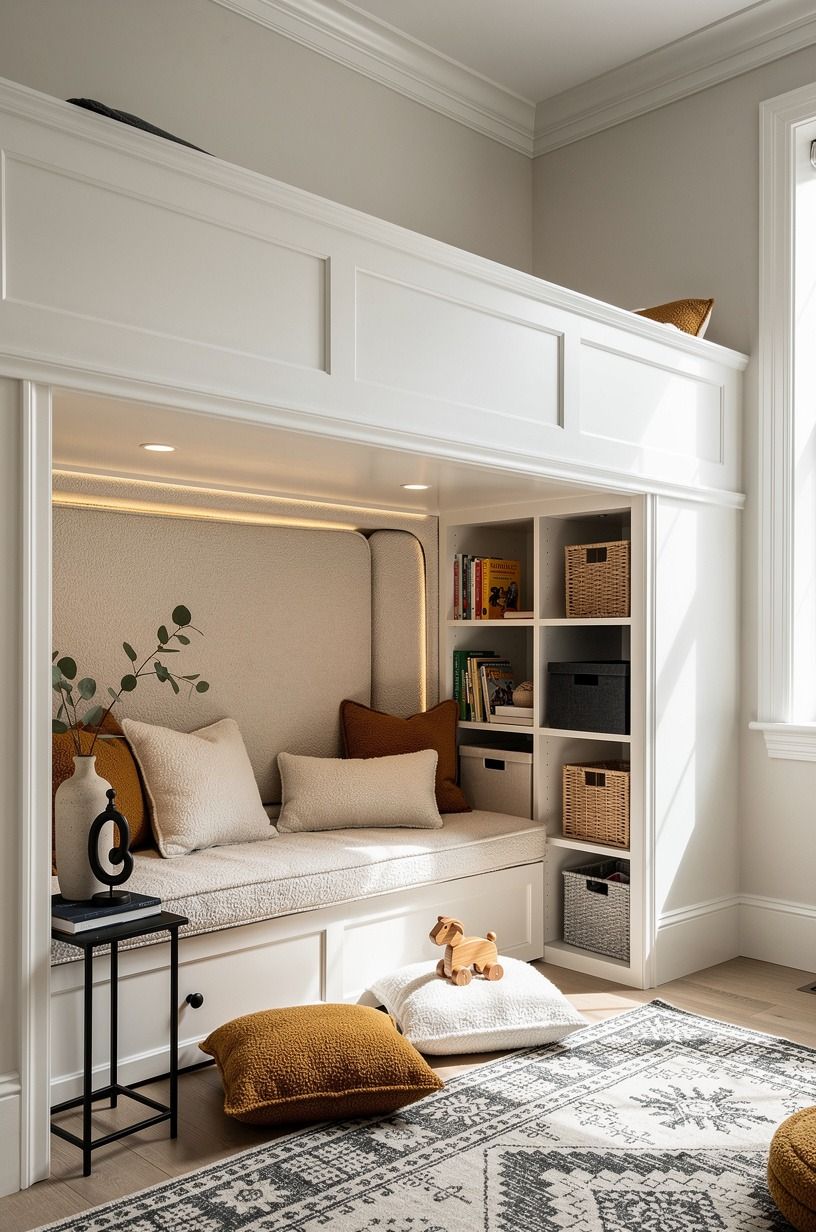
If your fort sits below a raised bed, measure first and decorate later. The top bunk needs 33 inches of clearance to the ceiling, and the lower play area needs enough height for your child to sit without knocking their head.
You’ll want solid wood guardrails and fully anchored stairs, not a decorative ladder that shifts under weight. I’d choose safety and access over a more dramatic treehouse silhouette every time.
Keep the lower nook free from climbing furniture that could become an improvised ladder. Use a wall-mounted book ledge and organic bouclé floor cushions instead. If the opening is under a bunk, install a light where you can reach the switch from outside.
And check the structure every season because screws loosen as wood moves. The result can still feel adventurous, but the adventure should come from imagination, not from an unstable platform.
For a historic fort-inspired mood, this Charles Fort story offers an unexpected shape reference.
12Budget the built-in fort with a clear cost ladder
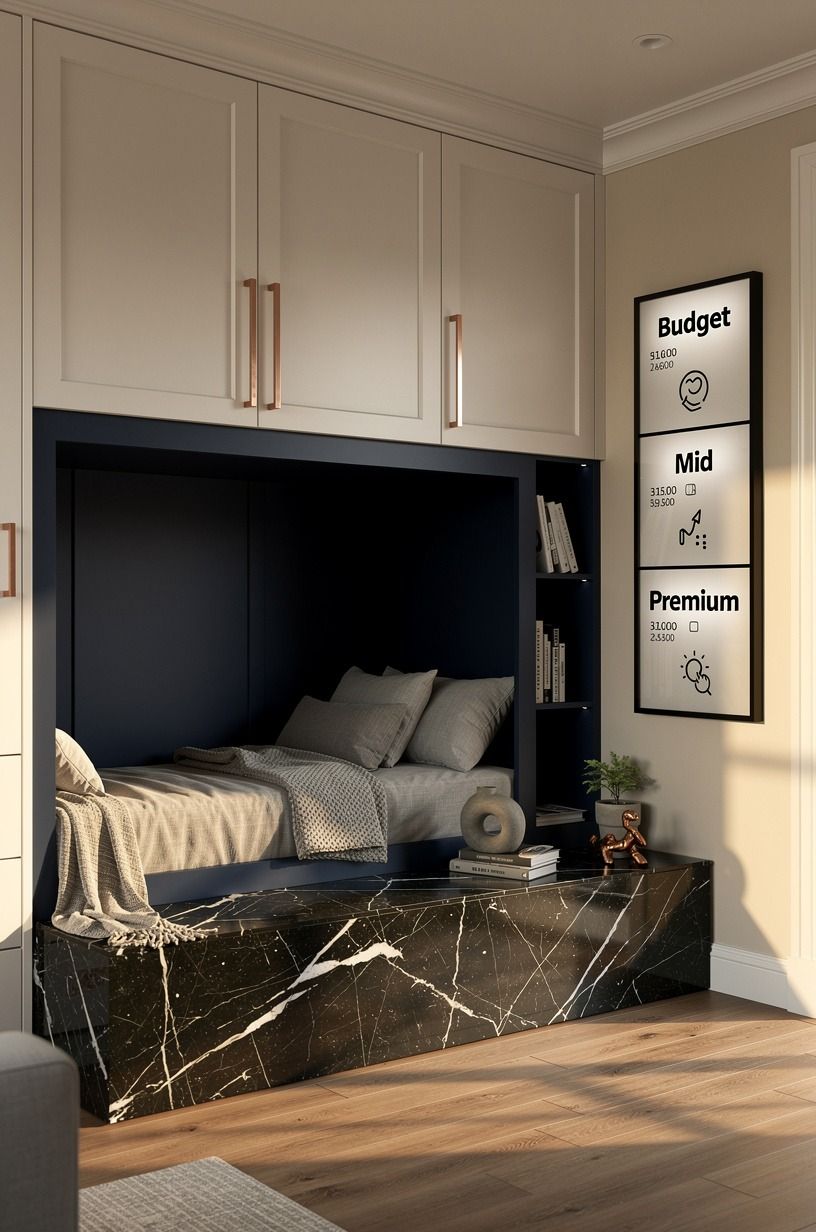
You don’t need a full renovation to make a crawl-space playroom feel finished. Start with midnight-blue paint, an ivory washable rug, and storage you already own. I’d spend first on the surface your child touches most, usually the mattress cover or play rug, then improve the lighting.
The table below gives typical US ranges, so you can see where a modest plan ends and a full built-in project begins.
A twin bed frame typically runs $120-$500, a bookcase $80-$400, a play rug $80-$300, and blackout curtains $40-$150. You’ll get the most visual change from paint and a defined entrance, not from buying every matching piece. And if you’re working with $150, use removable decals, secondhand bins, and one good light.
That combination can feel warm, modern, and deliberate without pretending it’s a custom renovation.
13Finish the indoor treehouse playroom with a reset ritual
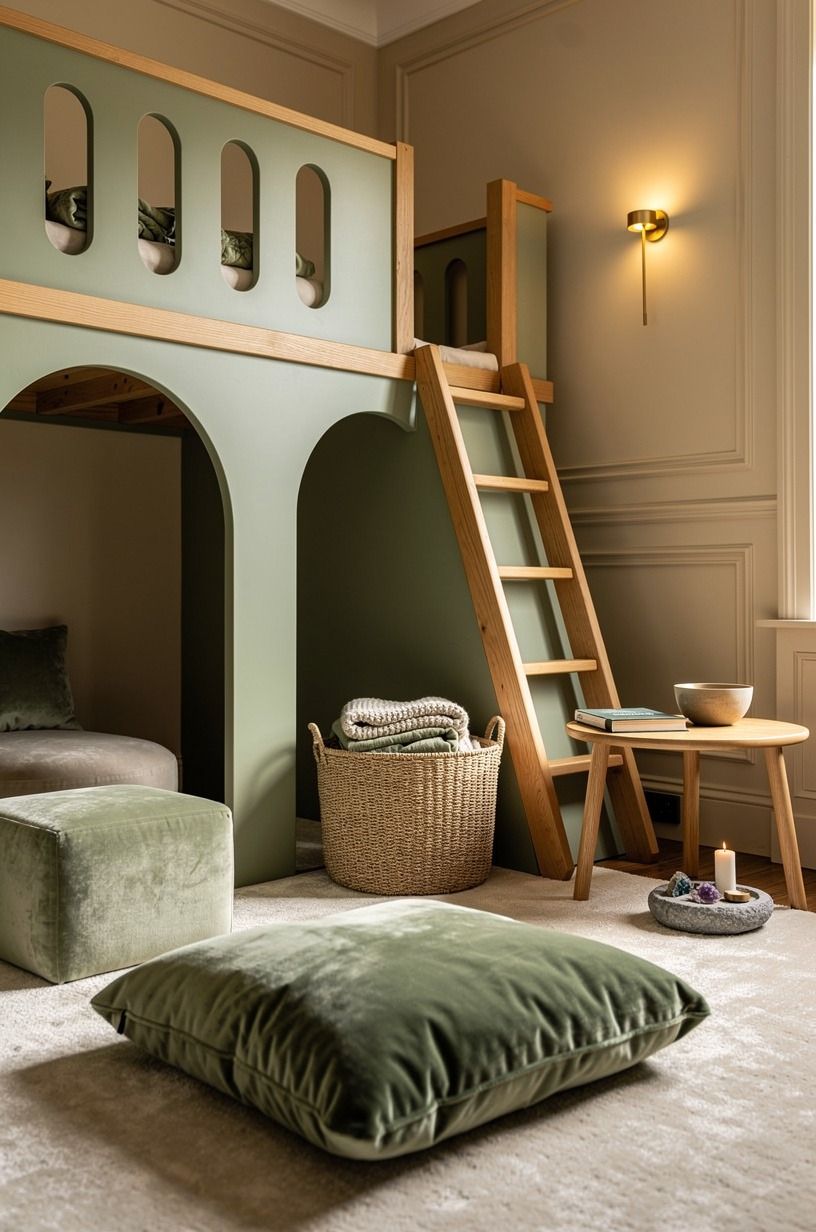
The final idea is less about an object and more about how your child returns to the space. Add one hook for a dress-up cape, one basket for books, and a small tray for treasures.
You’ll create a landing pattern that makes cleanup visible. Add a deep-pile mohair velvet cushion in warm cream so the reset spot feels soft without becoming precious.
Keep the ritual short: books on the ledge, fabric pulled open, loose toys in the lowest bin. Your child can learn the sequence because every item has a place near the fort. But don’t demand a spotless room.
A playroom that looks untouched usually isn’t doing enough. Leave one small invitation out, perhaps a wooden train or a stack of drawing paper, so returning feels easy.
This is where a practical closet playroom conversion can teach you the most: tiny spaces work when the next activity is obvious.
The Design Choice I’d Make Before Buying Anything
I’ve built play zones that looked wonderful at first glance and failed by the second week. The problem was always the same: I designed the shell before watching how the child moved.
A low nook might seem ideal, but if the entrance is awkward, nobody uses it. A tall shelf might look efficient, but if your child can’t reach the favorite books, it’s just a wall with compartments.
My rule now is to observe first. Where does your child already hide?
Do they carry toys from room to room, or do they build one large scene and protect it? If they’re collectors, give them shallow shelves and a treasure tray. If they’re movers, leave a clear route between the fort, rug, and doorway.
The room should follow the child’s habits, not force a Pinterest-perfect layout onto them.
I also care more about maintenance than I used to. Washable cotton beats delicate fabric.
Rounded plywood beats a sharp decorative trim. A removable tension rod beats a permanent curtain when you’re renting.
These choices aren’t glamorous, but they’re what keep the playroom usable after spilled juice, rainy afternoons, and the inevitable phase where every object becomes a bed for a stuffed animal.
My one honest mistake was making the fort too precious. I kept the cushions arranged, the books facing outward, and the fabric perfectly closed.
Nobody wanted to disturb it. Once I loosened the styling and left a basket of blocks inside, the room came alive.
Your fort should invite a mess that can be reset, not demand admiration from the doorway.
A Few Things Worth Answering
What is the best Built-In Fort & Crawl-Space Playroom Ideas setup for a small built-in fort crawl?
A low twin platform with a 5×7-foot rug and child-height shelves works best because it combines sleep, reading, and movement. IKEA KALLAX cubes add reachable storage without blocking the opening. You’ll want one clear entrance, one soft light, and no tall furniture inside the fort.
Where can I buy Built-In Fort & Crawl-Space Playroom Ideas pieces on a budget?
Check IKEA, Wayfair, and Target for bins, rugs, curtains, and small lights. You can also find solid shelves and gently used furniture through Facebook Marketplace or a local thrift shop. Look for washable cotton, rounded edges, and pieces your child can reach without climbing.
How much does a Built-In Fort & Crawl-Space Playroom Ideas makeover cost?
A small update usually costs about $100 to $300 when you reuse the platform and focus on paint, bedding, bins, or lighting. A typical budget room may reach $150-$600, while mid-range work runs $1,000-$3,500. You can keep the labor free by styling what you own.
Can I create a Built-In Fort & Crawl-Space Playroom Ideas space on a budget?
Yes, and you can begin with three low-cost changes: repaint the back wall, move books to 36-48-inch shelves, and use a secondhand basket for loose toys. Add a curtain with a tension rod and keep the existing mattress. Your biggest gain will come from clearer zones, not more furniture.
Is a Built-In Fort & Crawl-Space Playroom Ideas setup worth it in a small space?
Yes, because a small footprint can make the fort feel intentional rather than lost in a large room. Use the wall height for books, keep the floor open, and place the play rug outside the sleeping nook. Reachable storage is what makes the arrangement work every day.
Is a Built-In Fort & Crawl-Space Playroom Ideas a good idea for a rental?
Yes. Use peel-and-stick decals, a tension rod, removable hooks, and freestanding storage instead of permanent framing. A floor mattress, lightweight canopy, and removable wall lights can create the same tucked-away feeling.
Check your lease before mounting shelves, and keep every change easy to reverse.
Where I’d Start First
If I had to pick one, I’d start with the low platform and washable rug. That pairing defines the fort, gives your child a comfortable place to land, and costs less than decorative built-ins. Pin the platform idea for later and measure your opening before buying anything.