
Black and wood bathroom ideas for warm, grounded contrast work when you give the dark finish a job and let the wood soften it. I learned that after living with a black vanity that felt flat until I added real oak nearby. Your bathroom doesn’t need more decor. It needs contrast with some grain in it.
Before You Start, Measure the Hard Edges
Start with the spots your body uses every day, because you can’t style around a cramped toilet or a vanity that’s too low. Keep at least 21 inches of toilet clearance in front, choose a vanity between 32 and 36 inches high, and treat a 36-by-36-inch shower as the comfortable minimum. Your black and earthy bathroom will feel more relaxed when circulation is handled first.
I’d draw the room on graph paper before you buy anything. Not glamorous. Still useful.
Put the IKEA GODMORGON oak-effect vanity or your existing cabinet at its real depth, then mark door swings and towel access. If you’re dealing with a tight footprint, these small black-and-white bathroom layouts will help you see where dark finishes can sit without swallowing the room.
- Start with a Soft Black Base Instead of Pure Black Walls
- Anchor Your Vanity with the Two-Wood Rule
- Paint the Upper Walls for a Calming Break
- Choose Wood Over Fake Wood at Eye Level
- Layer the Three-Height Light Stack
- Hang a Mirror That Breaks Up the Black Plane
- Mix Hand-Glazed Tile with Quiet Wood Grain
- Ask: Does Your Faucet Warm Up the Palette?
- Float Storage with the Open-Floor Effect
- Frame the Floor with a Rustic Luxe Bathroom Runner
- Finish with the Black-Brown Editing Pass
1Start with a Soft Black Base Instead of Pure Black Walls
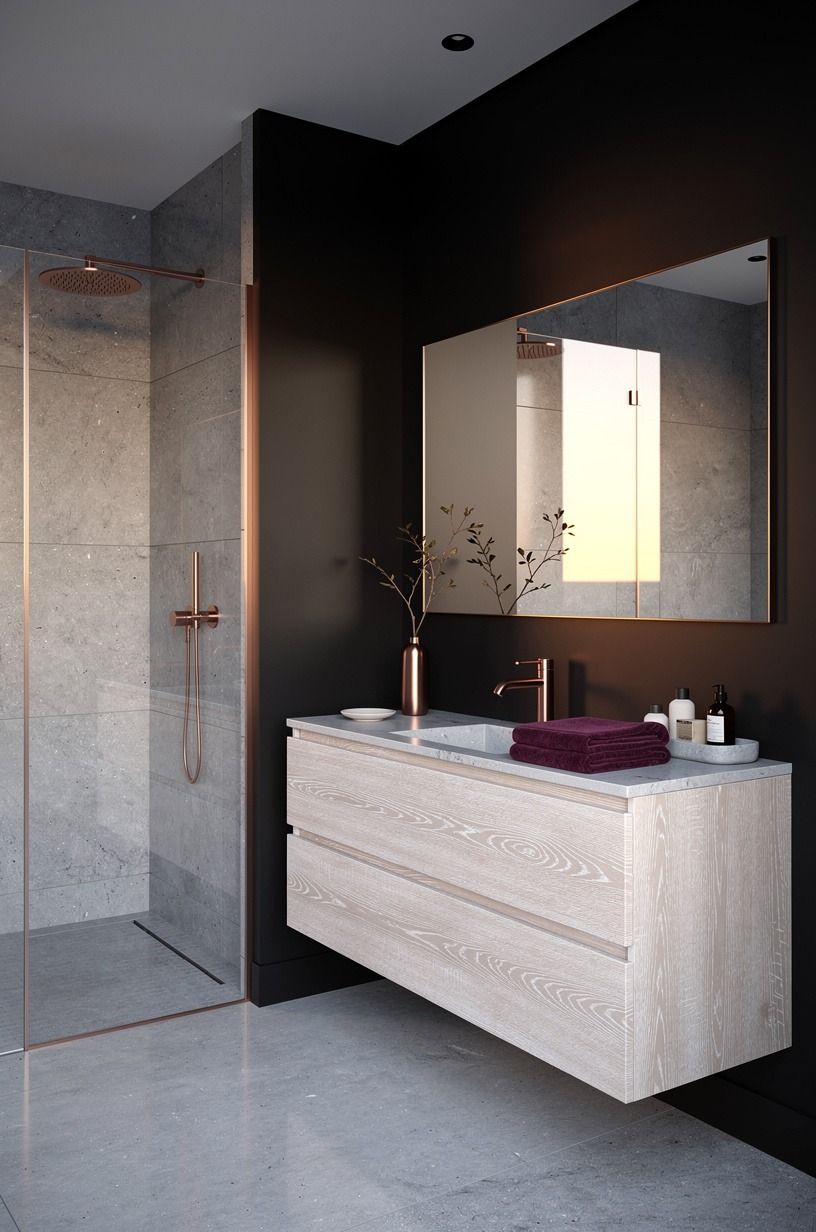
Choose black for one durable anchor, then stop. A matte vanity, window frame, or lower wall in Farrow & Ball Hague Blue No. 30 reads nearly black in a bathroom, but it keeps a little blue depth around your wood. Your eye gets drama without the sealed-box feeling of a full black room.
I’d skip shiny jet-black paint here. It shows every water spot, and you’ll be polishing it more than enjoying it.
Use a washable eggshell on walls and pair the dark base with cerused white oak. The pale grain keeps the plum, gray, and rose-gold notes feeling inviting rather than cold.
2Anchor Your Vanity with the Two-Wood Rule
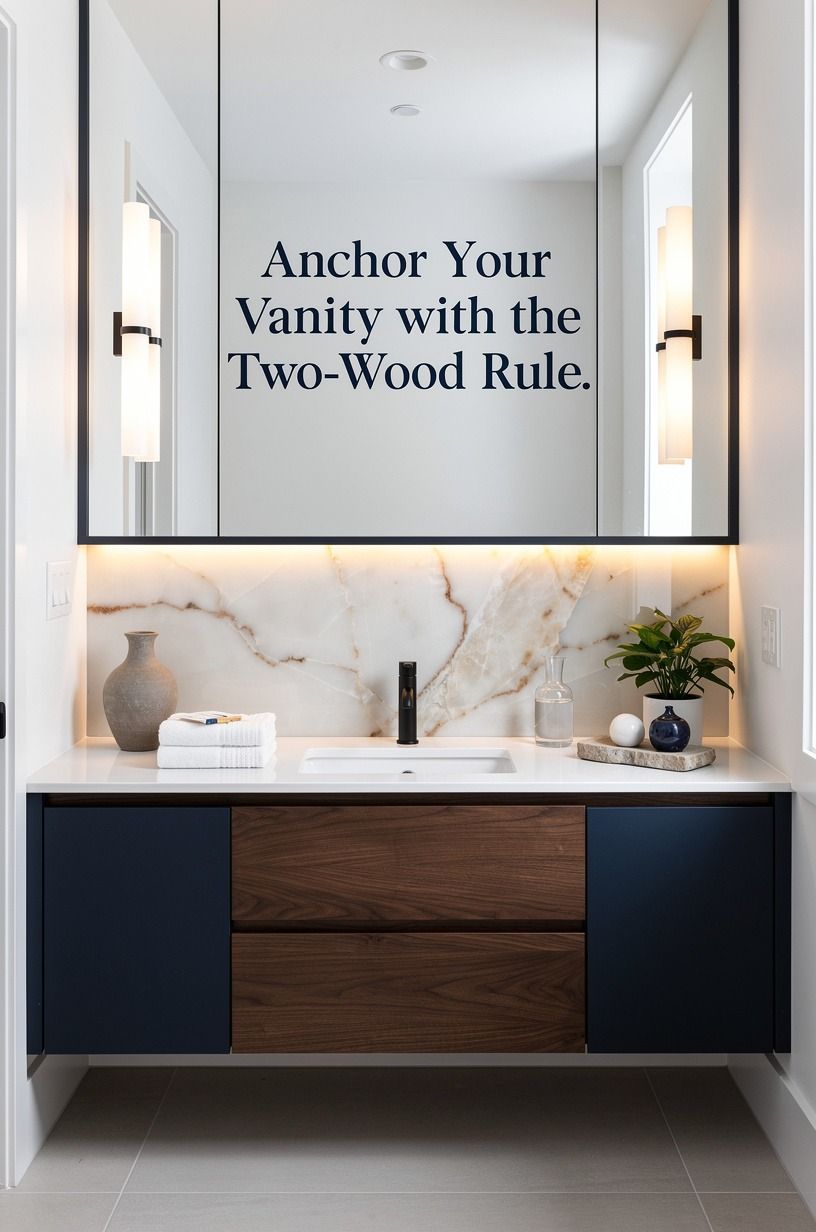
Use two wood notes, maximum: one substantial wood finish and one smaller echo. For your main piece, try a warm walnut cabinet.
Then repeat that tone in a stool, frame, or shelf. Three unrelated stains turn black brown bathroom decor into a hardware-store aisle.
I made this mistake in my own bath, mixing orange teak, pale oak, and espresso shelves because each piece looked fine alone. Together, they argued.
Pick the closest match, not the exact match, and let black handles carry the gap between them. A backlit translucent onyx detail can bring the navy, white, and walnut palette together without adding a third wood tone.
3Paint the Upper Walls for a Calming Break
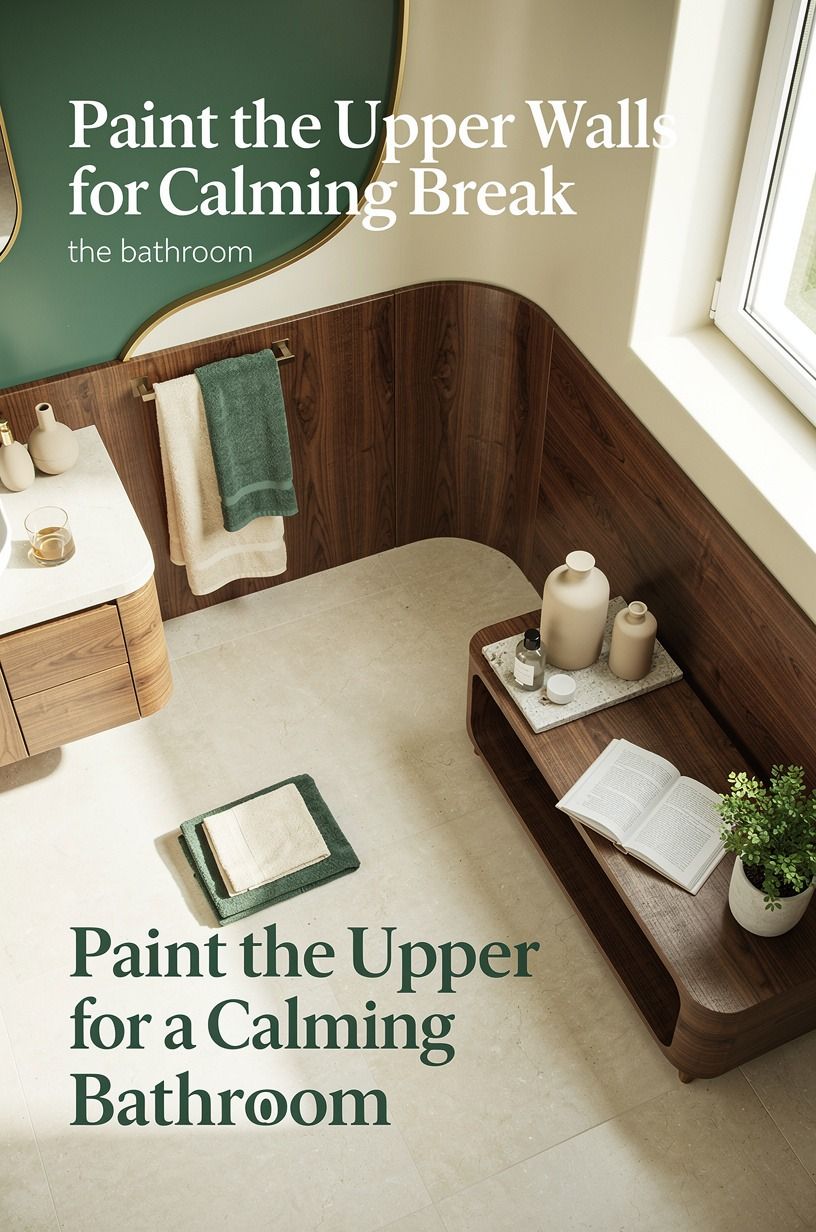
Keep your darkest finish below eye level when the bathroom is small. Benjamin Moore Chestertown Buff HC-9 above a black vanity gives your wood a honeyed backdrop, and it won’t make your morning mirror routine feel like a cave. You’ll notice the color changes gently once steam clears, which is half the charm.
But don’t paint every surface beige. Leave the ceiling light and quiet, then use emerald, gold, and cream around a book-matched walnut vanity or cabinet detail.
Your room needs a pause between those strong notes. For a softer variation, Sherwin-Williams Sea Salt SW 6204 can work with blond oak, especially if you like a more peaceful, organic look.
4Choose Wood Over Fake Wood at Eye Level
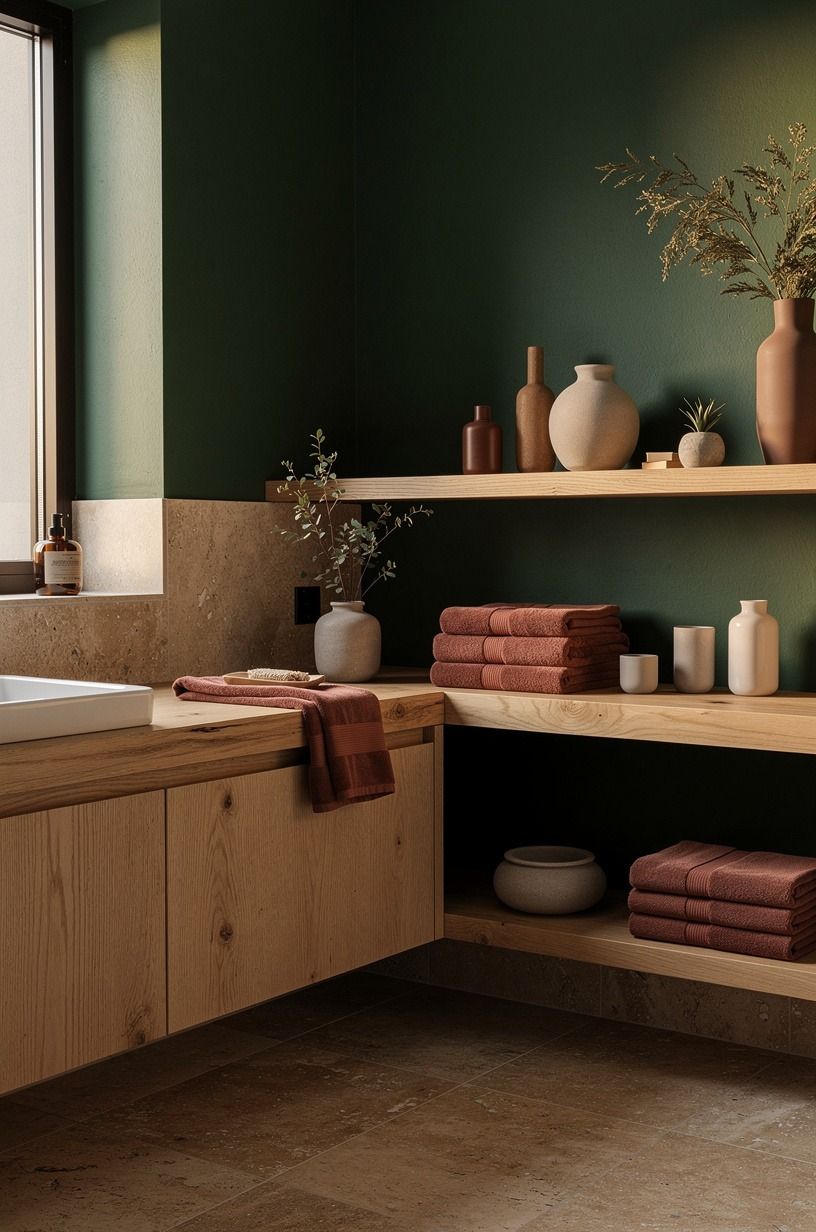
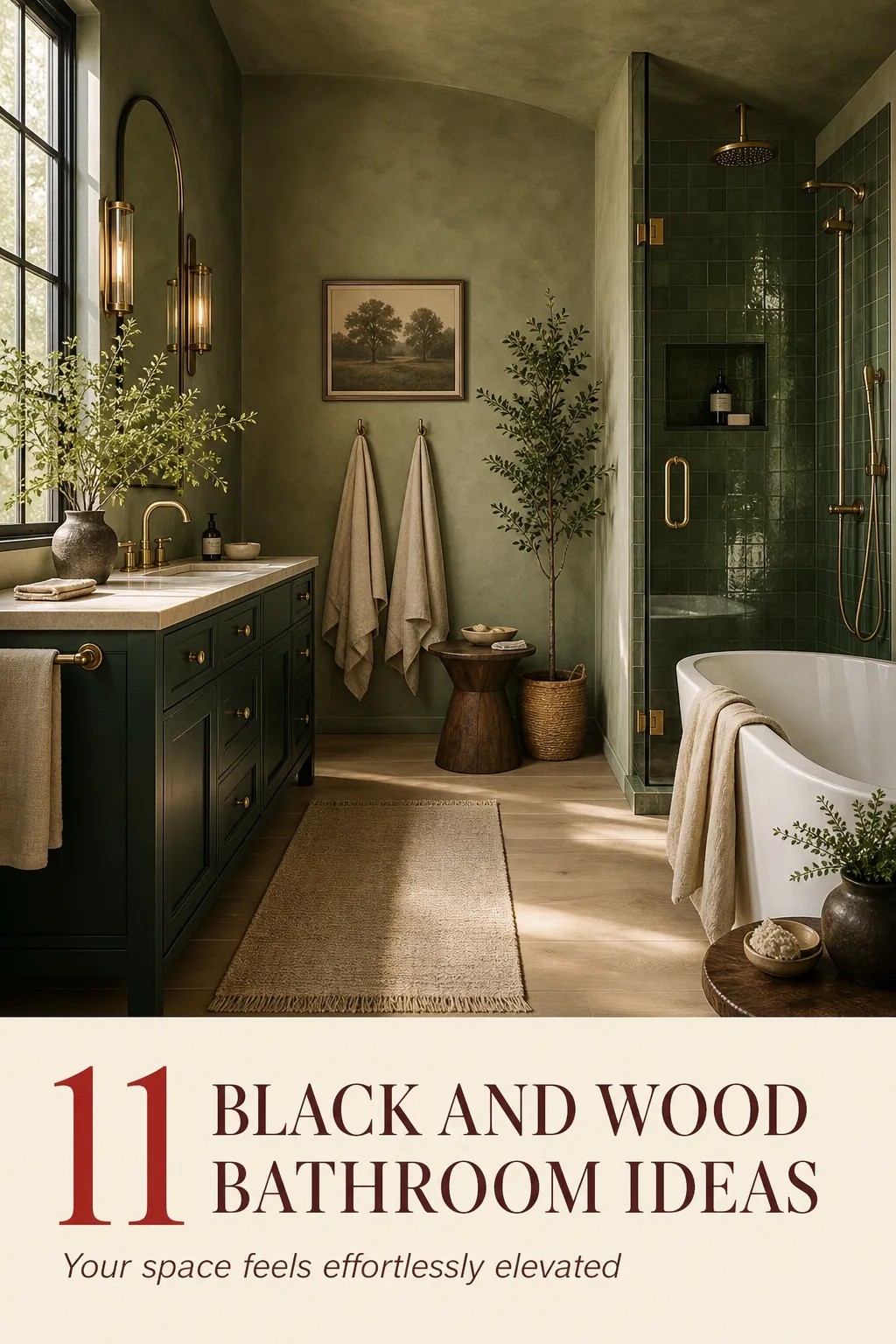
Spend your material budget where your hand and eye land most often: vanity fronts, open shelving, and mirror frames. Natural oak earns its place here, especially beside warm travertine, because the two materials make forest green and rust accents feel settled rather than busy.
5Layer the Three-Height Light Stack
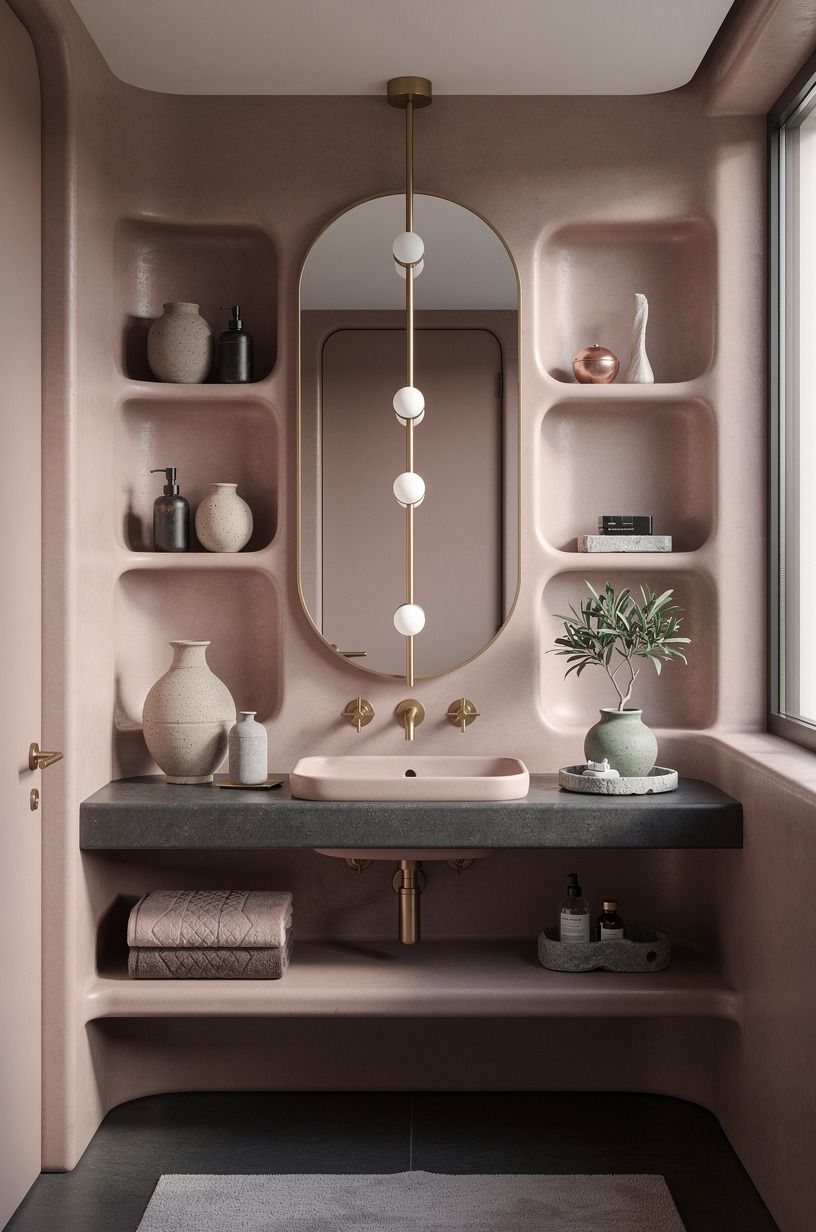
Build your lighting at three heights: overhead, face level, and low glow. Your ceiling fixture handles general light; sconces at mirror height help you see yourself; a small shaded lamp or under-shelf strip gives the room an intimate evening mood. That’s the Three-Height Light Stack, and it’s far more useful than one bright ceiling disk.
Hang unlacquered brass sconces about face height beside the mirror, rather than directly above it. You’ll get fewer shadows under your eyes and a gentler pool of light on the wood grain. The brass will develop patina over time, which suits dusty rose and charcoal much better than cool bulbs do.
Choose warm lamps and dimmers if you can. And don’t forget the switch location.
Your future sleepy self will thank you!
6Hang a Mirror That Breaks Up the Black Plane
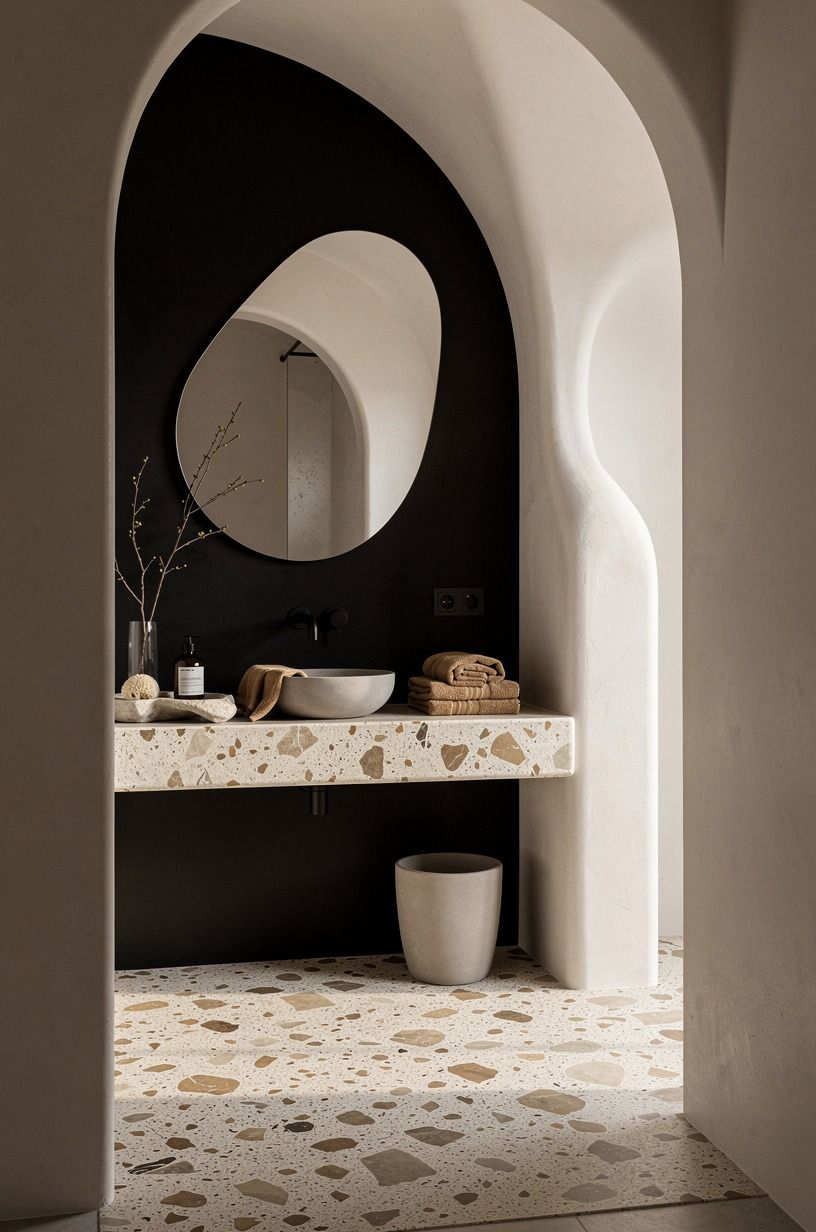
Give the mirror a warmer edge than the vanity. A rounded wood or brass mirror above a black cabinet adds a soft note without making every finish match. An oversized-chip terrazzo surface can carry the warm white, camel, and black accents while giving the room a little movement.
A rectangular black-framed mirror can work, but I’d choose wood or brass first if the vanity is already black. Otherwise, the wall becomes one big dark rectangle.
Keep the mirror wide enough to relate to your sink, with breathing room on both sides. The black-and-white bathroom combination is useful reference here, but wood is what keeps your version from feeling clinical.
7Mix Hand-Glazed Tile with Quiet Wood Grain
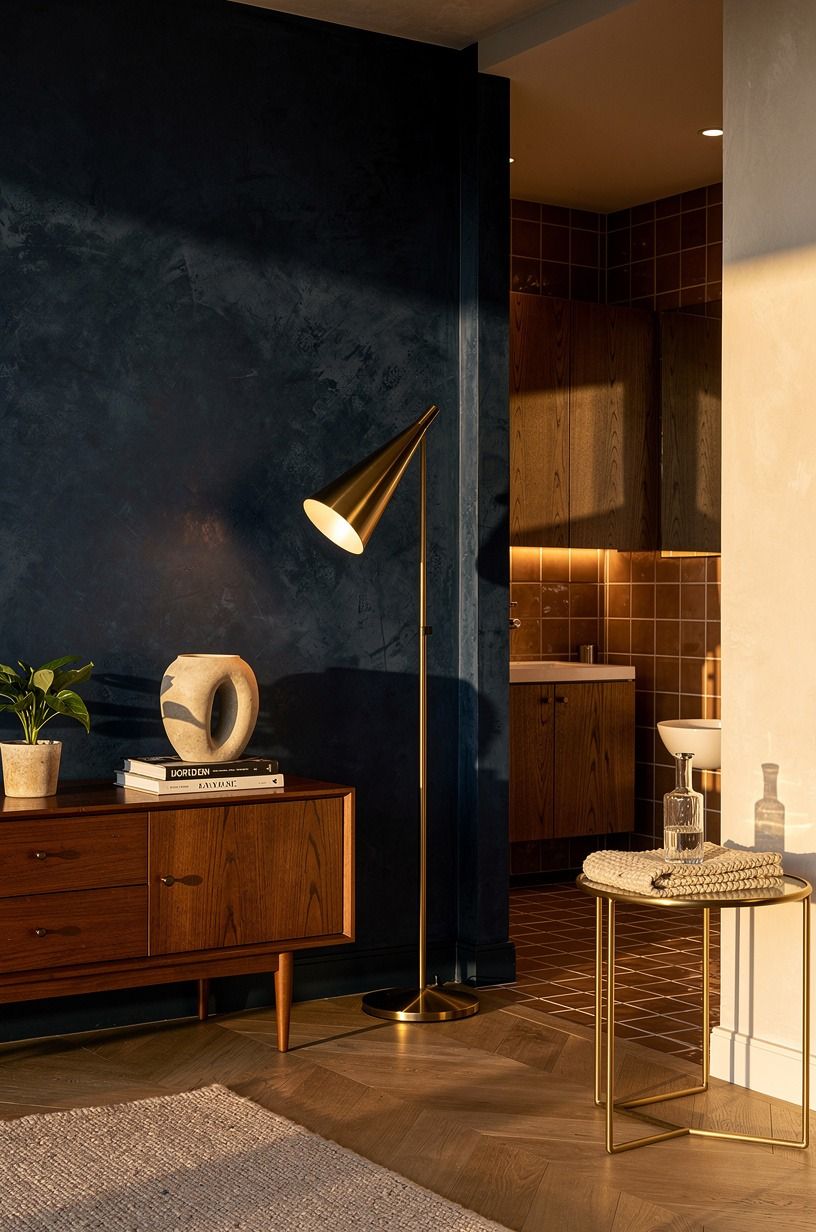
Use tile for shine and wood for relief. A midnight blue, copper, and ivory palette can feel rich beside quiet wood grain, especially when hand-applied Venetian plaster brings softness to the surrounding walls. Your grain should stay visible, because that’s where the warmth lives.
Typical material costs make the decision clearer:
For tile alone, zellige tile typically runs $15-$35 per square foot, while subway tile is usually $2-$10 per square foot. I’d use the handmade tile only where you’ll see it up close.
Your shower walls don’t need to become a luxury showroom to feel luxurious. A small reflective patch does plenty.
8Ask: Does Your Faucet Warm Up the Palette?
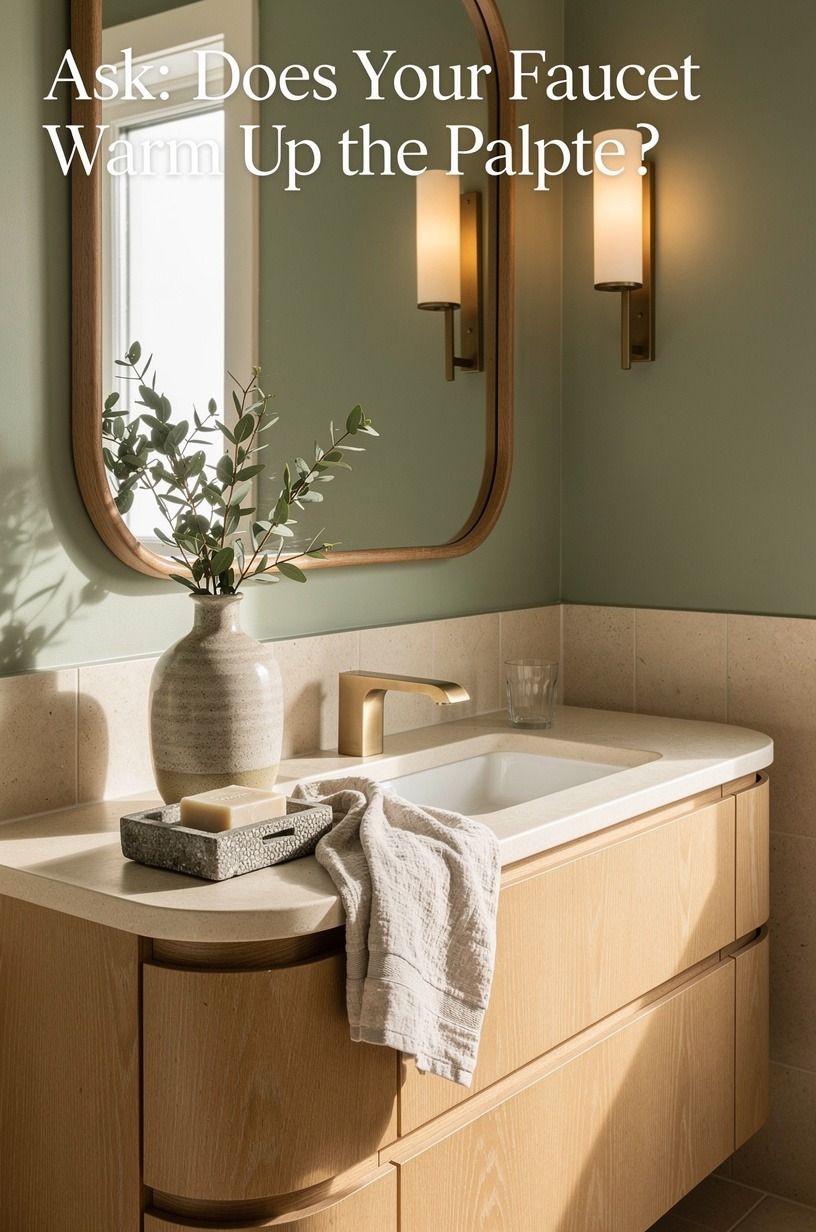
A brushed brass faucet is usually the missing bridge between black and wood. It works especially well with sage green, warm cream, natural wood, and small shagreen accents, which keep the palette tactile without making it fussy.
9Float Storage with the Open-Floor Effect
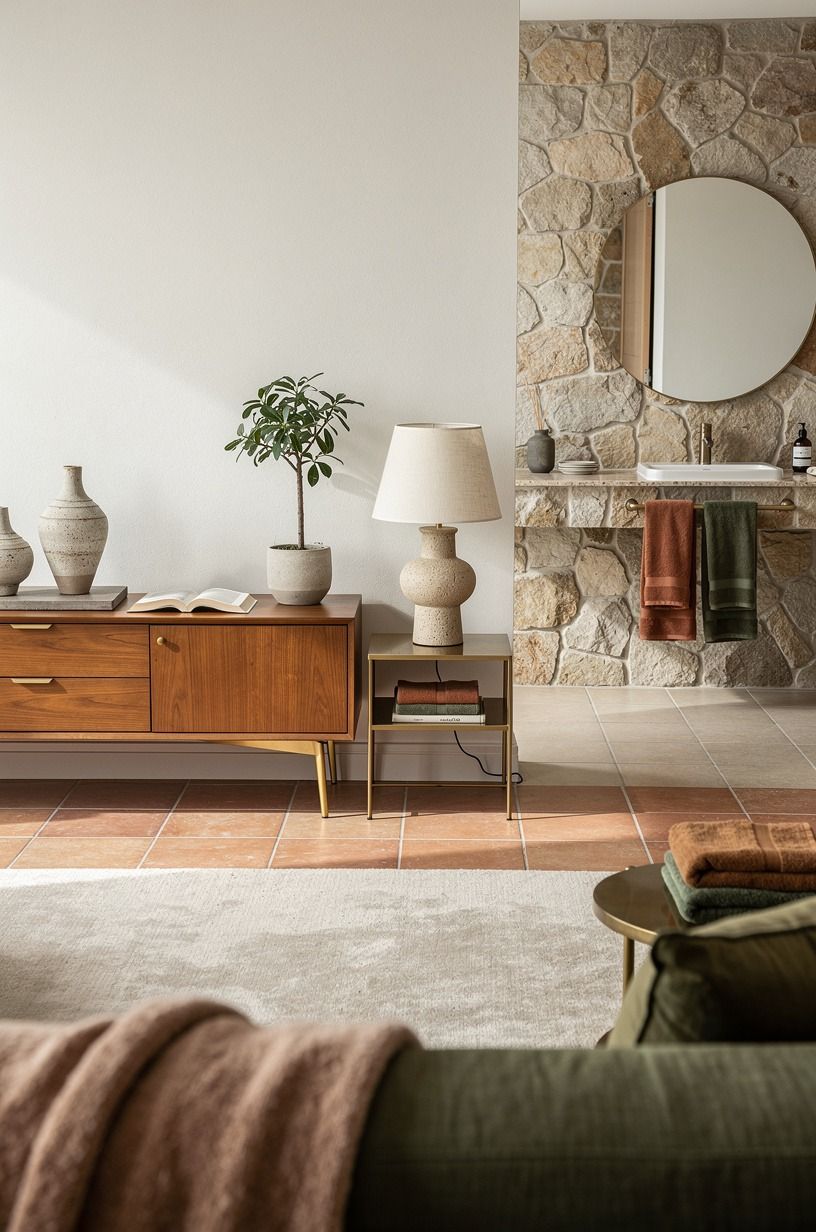
Mount storage off the floor when you can, particularly in a narrow bathroom. A floating black vanity lets your floor run underneath, so your room reads wider even if nothing physically changed. Your feet have somewhere to go, and cleaning is less annoying too.
Use a TONSTAD oak-effect cabinet style as a reference for calm, flat-front storage, then keep washed Belgian linen baskets low and simple. I wouldn’t add a leaning ladder shelf beside it. Those things eat floor space and become towel parking.
A shallow floating ledge is smarter for your daily items, while these wood hidden door ideas show how flush wood surfaces can make storage disappear.
10Frame the Floor with a Rustic Luxe Bathroom Runner
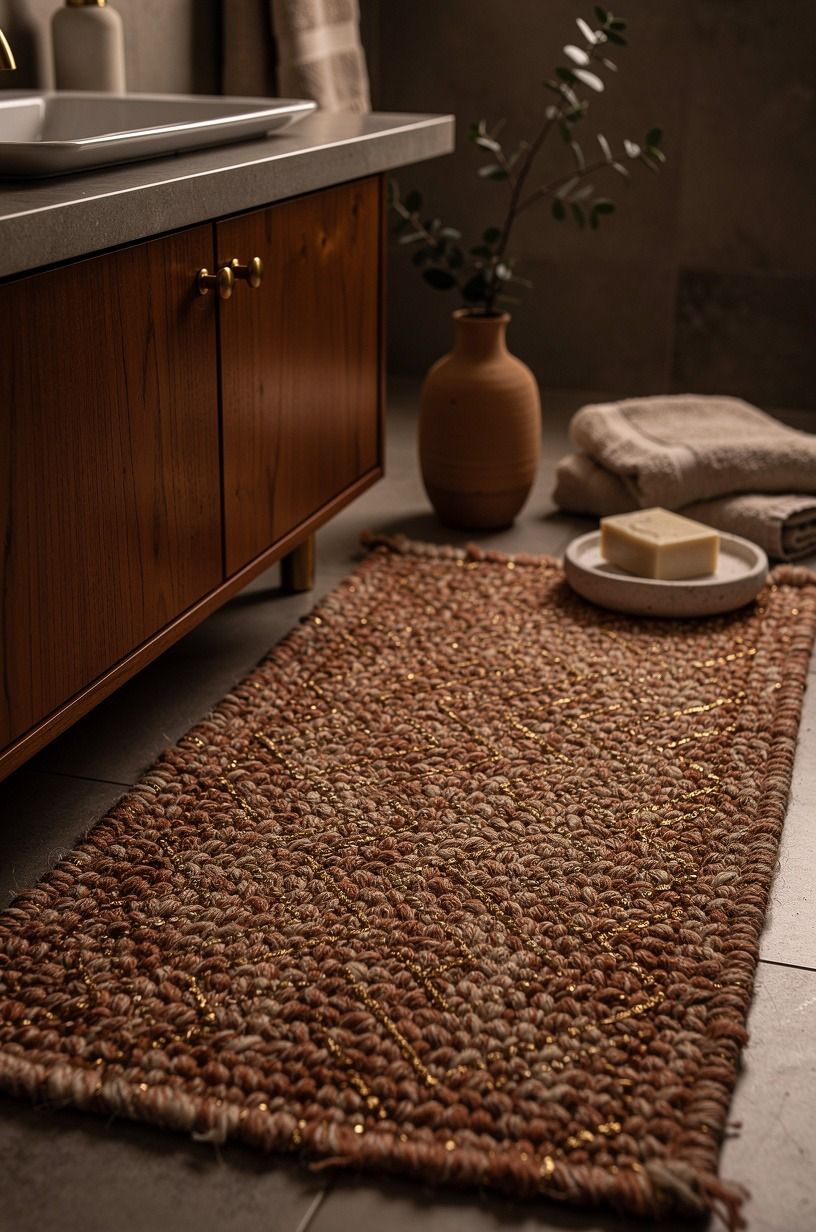
Bring softness underfoot, but make it washable. A faded clay-and-linen runner beside a black vanity can pull the wood tone downward and make your bathroom feel lived-in rather than staged.
Organic bouclé adds softness, but your rug shouldn’t be fluffy enough to trap moisture. It needs a flat, practical weave.
Look for Turkish cotton with a low pile, then leave a clean border of tile around it. A standard 60-by-30-inch tub already takes up visual room, so you don’t need an oversized rug fighting it.
I’d choose clay, tobacco, or muted olive over bright white. White looks fresh for a week, then it tells on everyone.
11Finish with the Black-Brown Editing Pass
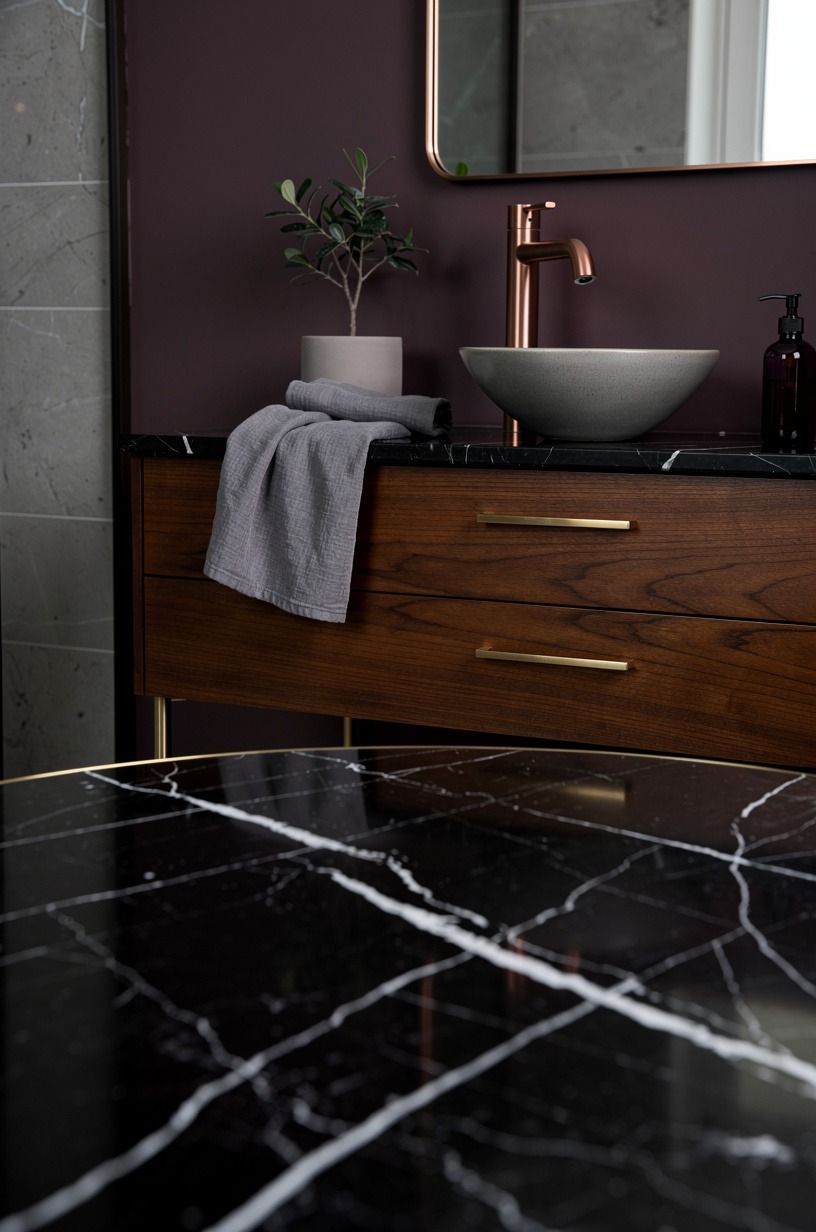
Edit before you buy a final accessory. Walk in, stand at the door, and ask yourself: can you name the black anchor, the dominant wood, and one warm metal? If you can’t, your room probably needs fewer objects, not more.
This is the Black-Brown Editing Pass.
Keep the last layer useful. Belgian flax linen hand towels.
A small oak tray. One dark soap bottle.
Nero Marquina black marble with fine white veining can make the plum, gray, and rose-gold palette feel deliberate without adding clutter. Your counter doesn’t need six matching jars to look polished.
But a single handmade cup for toothbrushes can add a charming bit of irregularity, especially against strict black tile. For more floor direction, the checkerboard bathroom floor guide offers a graphic alternative that still works with warm wood.
Why This Contrast Feels So Good Right Now
I think black and wood bathrooms are back because people are tired of rooms that look freshly unboxed. All-white bathrooms photograph easily, but they can feel oddly impersonal after a few months.
Wood fixes that because it records light, water, and time differently every day. A tiny knot in oak, a brass edge going dull, the shadow under a black shelf at 7 p.m. Those are the things that make you want to stay in the room for an extra minute.
I’ve also learned that darkness works best when it has somewhere soft to land. I once pushed a bathroom too far toward black: black walls, black vanity, black hardware, charcoal floor.
It was dramatic in the first photo and exhausting in real life. The fix wasn’t another decor purchase.
I swapped in a pale oak frame, a clay-colored towel, and a warmer bulb. Suddenly the room had air again.
That’s my decision frame for you: choose black when you need definition, choose wood when you need warmth, and let each one do a separate job. Don’t force every item to match.
A bathroom should feel collected through use, not assembled in one afternoon (even if you do finish it in one afternoon). And if you’re tempted by a full black room, start with the vanity first.
You can always add more darkness. It’s harder to persuade a dark room to breathe.
The Questions I Get Asked Most
What is the best black and wood bathroom idea for a small bathroom?
A floating black vanity with an oak-framed mirror is the best small-space starting point because it keeps your floor visible. You’ll get more visual room without moving plumbing.
– Open floor below the cabinet – Warm frame at eye level – One dark anchor
Where can I buy black and wood bathroom pieces on a budget?
Start with IKEA, Target Threshold, and Wayfair for mirrors, shelves, and simple cabinets. Your best value may be a Facebook Marketplace wood dresser converted into a vanity, if its dimensions work.
– IKEA cabinet hardware – Target washable runners – Secondhand oak frames
How much does a black and wood bathroom makeover cost?
A cosmetic update usually lands around $200 to $1,200 in typical US costs, depending on paint, lighting, and the faucet. You can keep your existing vanity and spend nothing on layout changes.
– Paint and textiles – New mirror – Brushed faucet
Can I create a black and wood bathroom on a budget?
Yes, and you should begin with paint, hardware, and one real wood accent. Your room can feel more warm and grounded without replacing tile.
– Existing cabinet repaint – Thrifted wood stool – Removable black hooks
Is a black and wood bathroom worth it in a small space?
Yes, it’s worth it when you limit black to one anchor and keep your wood light enough to reflect warmth. A small room makes the contrast feel intentional faster.
– Floating vanity – Light oak shelf – Clear floor path
Is a black and wood bathroom a good idea for a rental?
Yes, if you use removable changes around the fixed finishes. You can create renter-friendly contrast without touching permanent tile or plumbing.
– Peel-and-stick black backsplash – Tension-rod linen curtain – Removable oak-look shelf
Where I’d Start First
If I had to pick one step, I’d start with the vanity. A black base with real oak nearby gives every loose towel and brass fixture a reason to belong. Pin the vanity idea for later, then let your lighting and mirror follow its lead.