Mid-Century Modern Bathroom Storage & Shelf Designs can make a small room warmer, calmer, and easier to use without a full renovation. The strongest layouts pair teak, walnut, brass, and stone with practical vertical storage. Your bathroom doesn’t need more furniture. It needs better placement, clearer zones, and materials that age well.
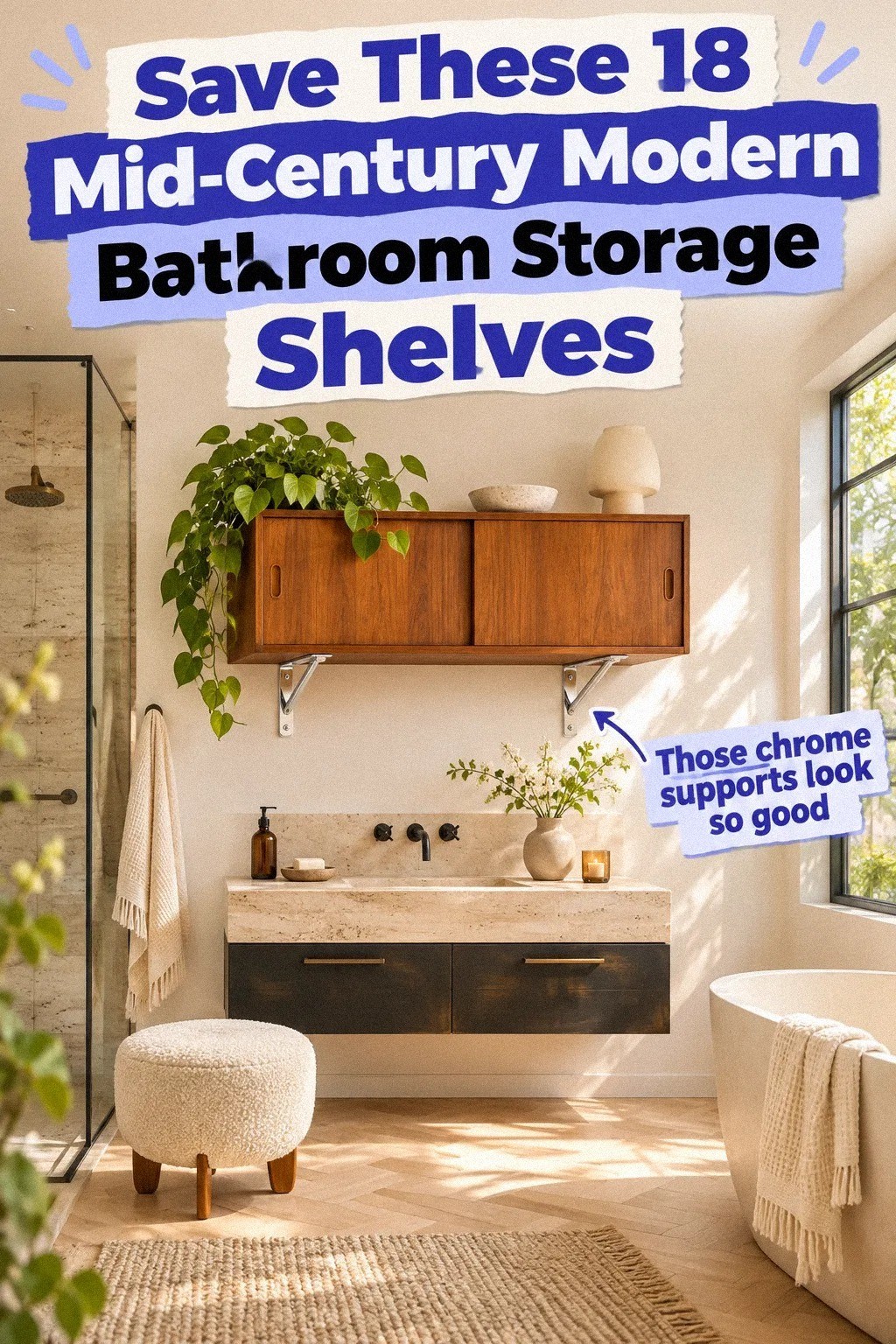
- Suspend a teak cabinet above the vanity
- Walnut and brass: a better pairing
- Why frame the mirror with floating storage?
- Tuck rolled towels into a slatted tower
- Asymmetry beside the medicine cabinet
- Style a peg rail with amber glass
- Build a narrow niche between wall studs
- The ladder shelf
- Choose tambour doors for concealed toiletries
- When a round mirror leads the layout
- Convert a bar cart into towel storage
- Install hairpin brackets beneath a vanity
- Avocado green inside the shelf
- Stack teak cubes beside the bathtub
- A sculptural shelf above the toilet
- Use open cubbies beneath a wall-mounted sink
- Anchor tall shelving in a bathroom corner
- Organize cosmetics inside a vintage credenza
1Suspend a teak cabinet above the vanity
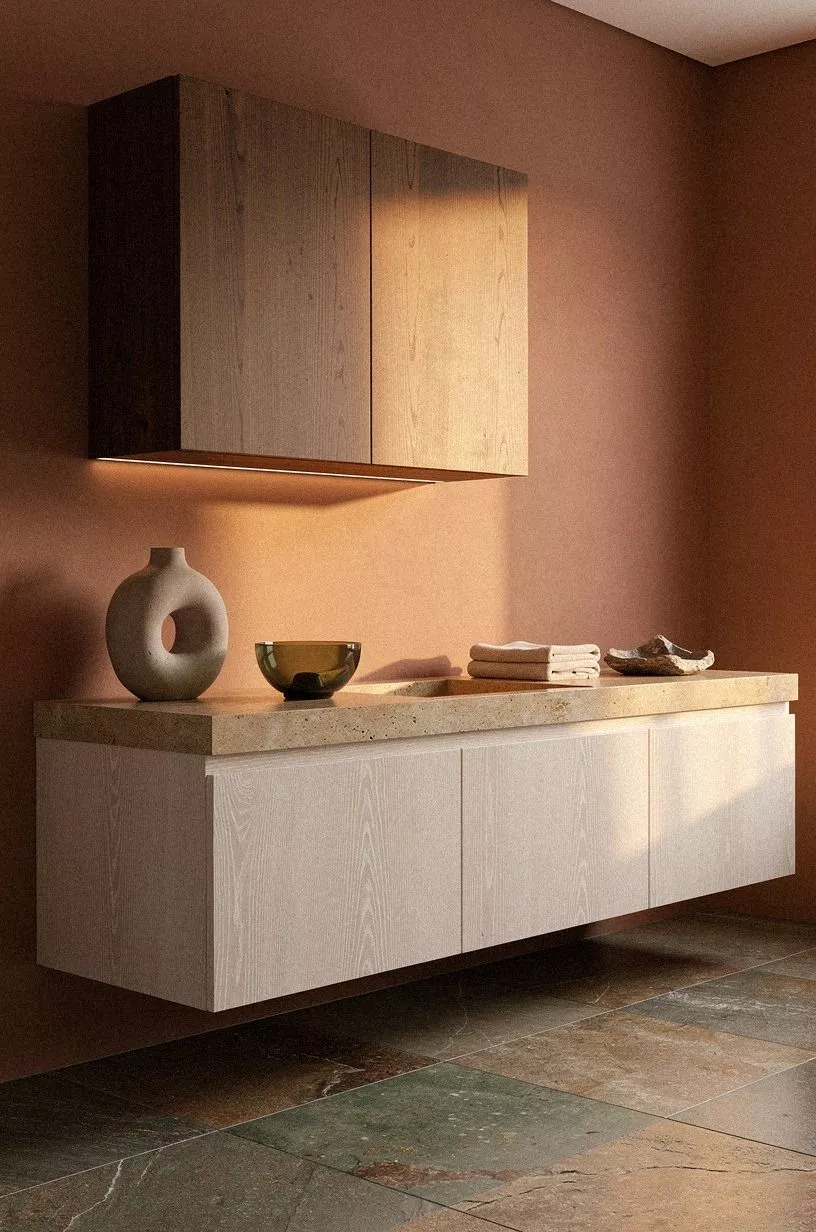
A suspended cabinet keeps the floor visible, which makes a bathroom feel open even when storage is limited. Choose a shallow cerused white oak cabinet with sliding doors, then mount it high enough to leave the vanity comfortable without creating a heavy block above the sink.
A cabinet around 24 to 30 inches wide can hold daily supplies while keeping the counter clear. You’ll want moisture-resistant finishes, concealed mounting hardware, and a depth that won’t crowd your head. The wall should look intentional, not packed.
Call this the Two-Wood Rule: pair one dominant wood with a quieter supporting tone. Cerused white oak doors can sit beside olive paint, terracotta accessories, and honed stone without visual noise. If the vanity already has a strong grain, choose a calmer cabinet finish.
For compact layouts, these small bathroom storage layouts offer useful planning references. A clear wall measurement will help you judge whether the cabinet’s cost is worth it before ordering.
Typical cost by tier, US averages:
2Walnut and brass: a better pairing
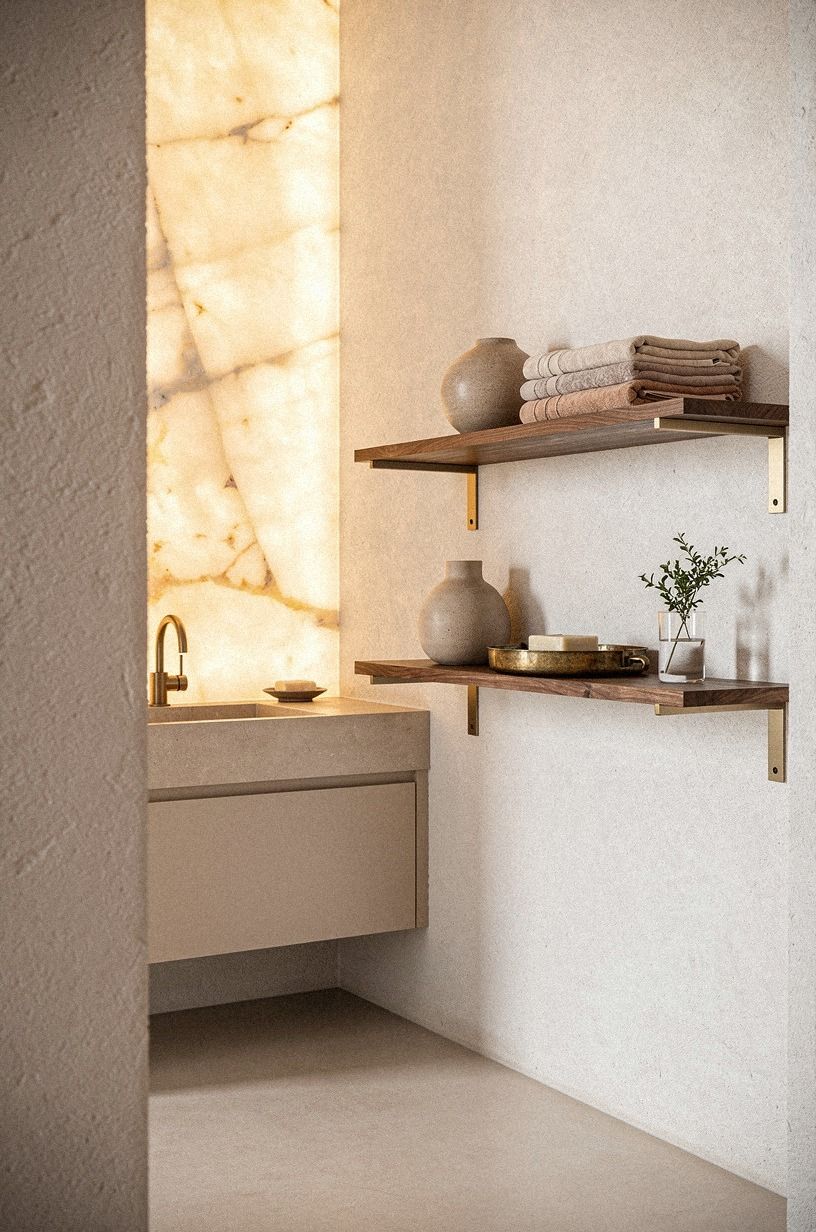
Open shelves bring warmth to a bathroom that might otherwise feel hard and reflective.
3Why frame the mirror with floating storage?
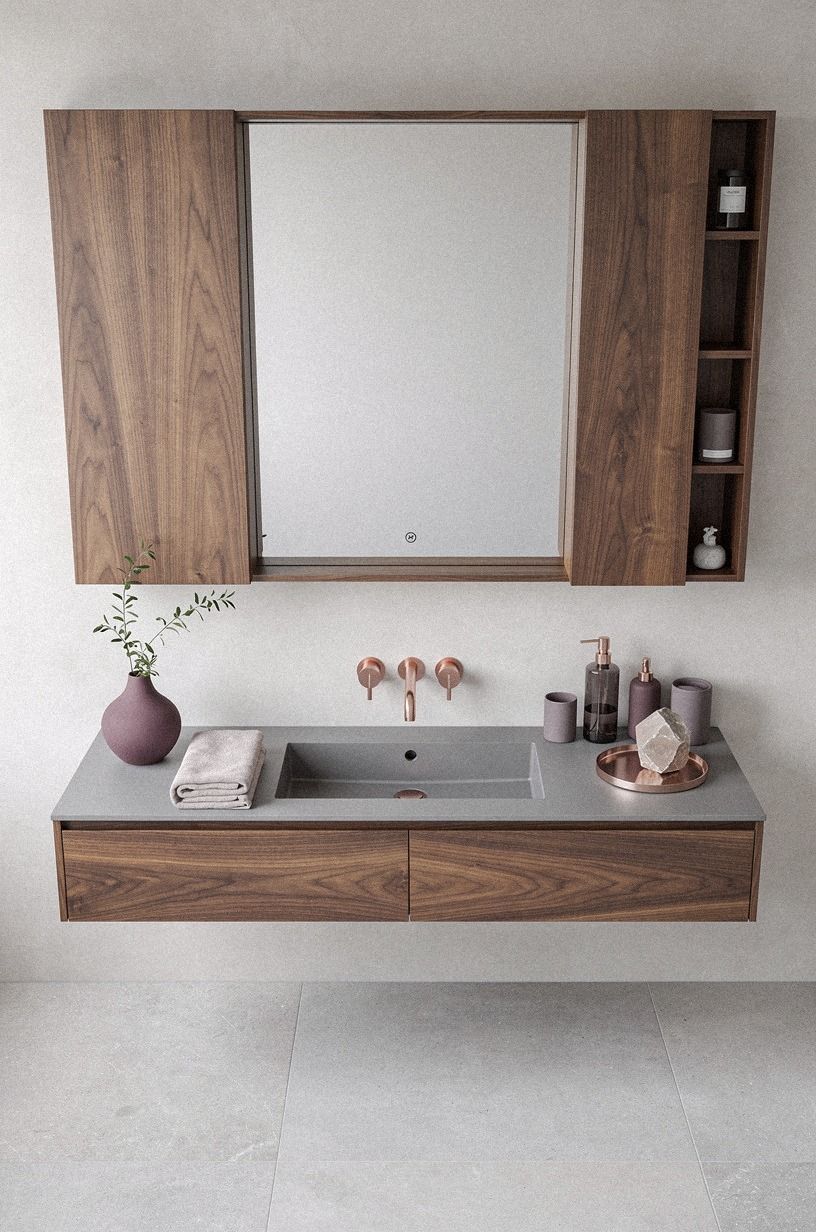
A mirror framed by shallow shelves turns an unused wall into a practical grooming station. Install narrow book-matched walnut boxes on both sides of the mirror, keeping the shelves shallow enough that elbows and shoulders still have room near the sink.
Plum paint, soft grey, and rose-gold accents make the arrangement feel refined without becoming formal. Your best storage pieces will hold objects used every day: face cloths, small jars, hair ties, and hand lotion.
Backups belong in a drawer or linen cabinet. Open shelving works better when it displays a few useful things instead of every product in the room. Isn’t a clear counter more calming than a crowded one?
Use warm bulbs, rounded corners, and one ceramic tray to soften the geometry. The mirror should remain the visual center, while the shelves provide balance.
For a similar rounded treatment, pair this arrangement with round mirror arrangements if that page is part of the approved site map. If no approved URL exists, keep the reference as plain editorial text.
The cost stays reasonable when standard floating boxes replace custom millwork. A premium mirror can still deliver strong value if the shelving around it remains simple.
4Tuck rolled towels into a slatted tower
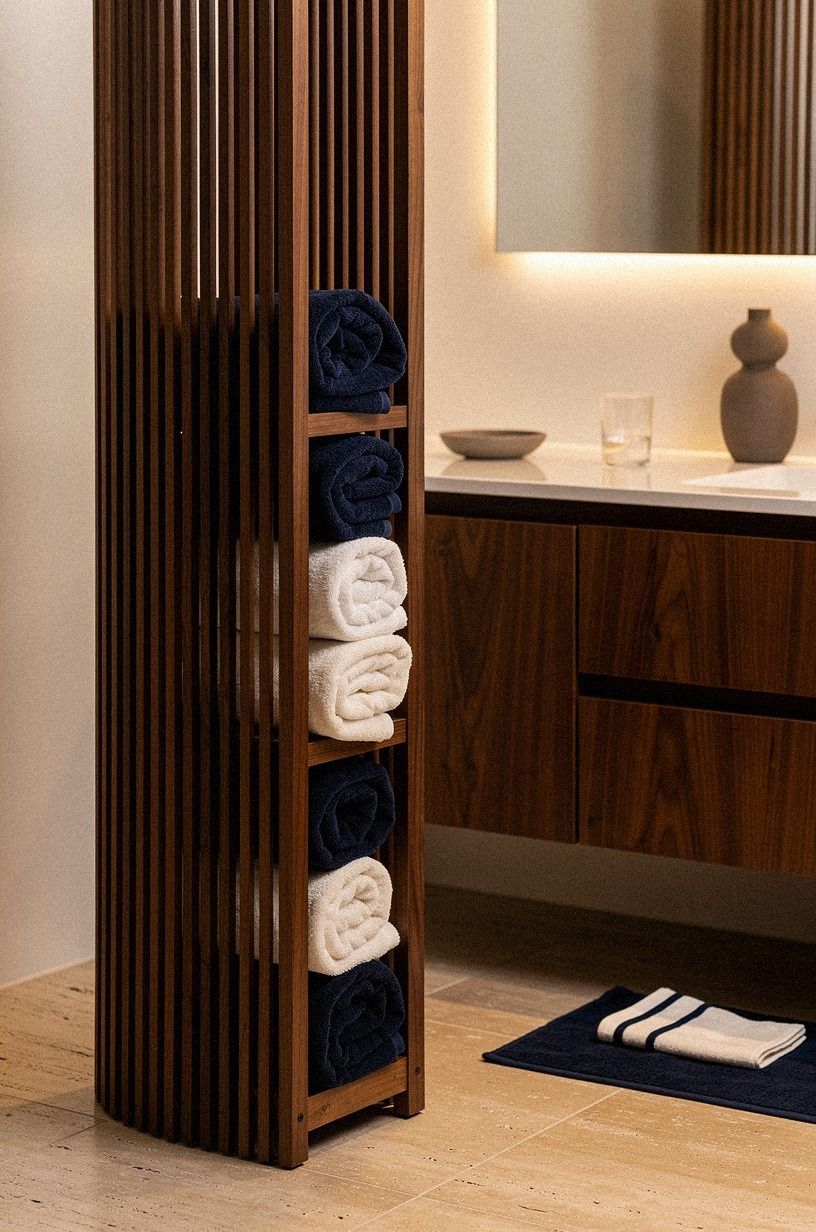
A vertical slatted tower uses height instead of floor area, making it a strong choice for narrow bathrooms.
5Asymmetry beside the medicine cabinet
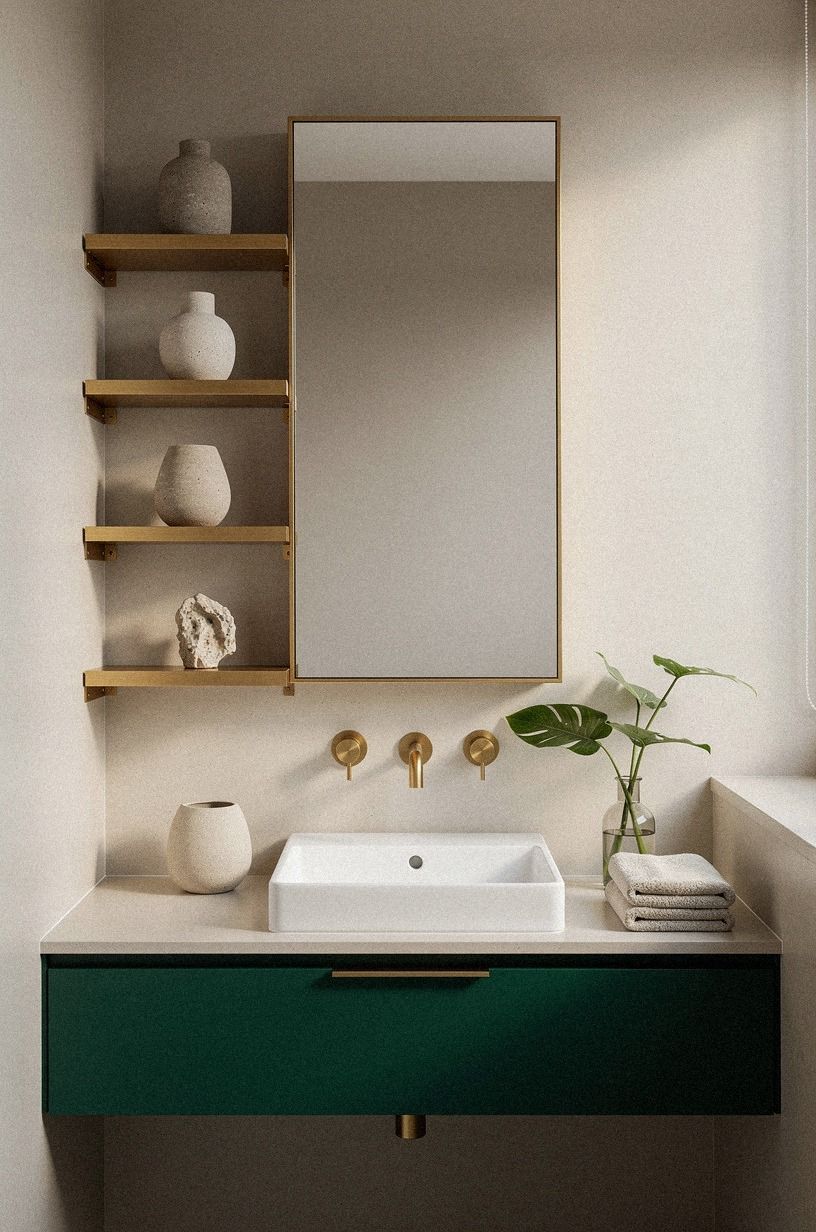
Asymmetry keeps storage from looking like a showroom display. Mount one unlacquered brass rail shelf high on one side of the medicine cabinet, then place a shorter shelf lower on the opposite side.
Emerald paint, cream, and gold tones give the arrangement an elegant edge. Changing brass tones add character as the surface develops patina. The shelves should still follow a visual line, even when their lengths differ.
Align one edge with the medicine cabinet and use the other shelf for a smaller object, such as a lidded ceramic cup or amber glass. Don’t place breakable pieces where a wet hand can knock them down.
The composition feels bold because the heights shift, not because the accessories multiply. For stronger color, pair the layout with these bold wallpaper pattern ideas. A washable vinyl pattern can add value when a full tile upgrade isn’t in the budget.
Repeat the color once elsewhere. A green towel, brass faucet, or framed print will connect the shelves to the wider room. You’ll get more impact from one clear accent than from six unrelated shades.
6Style a peg rail with amber glass
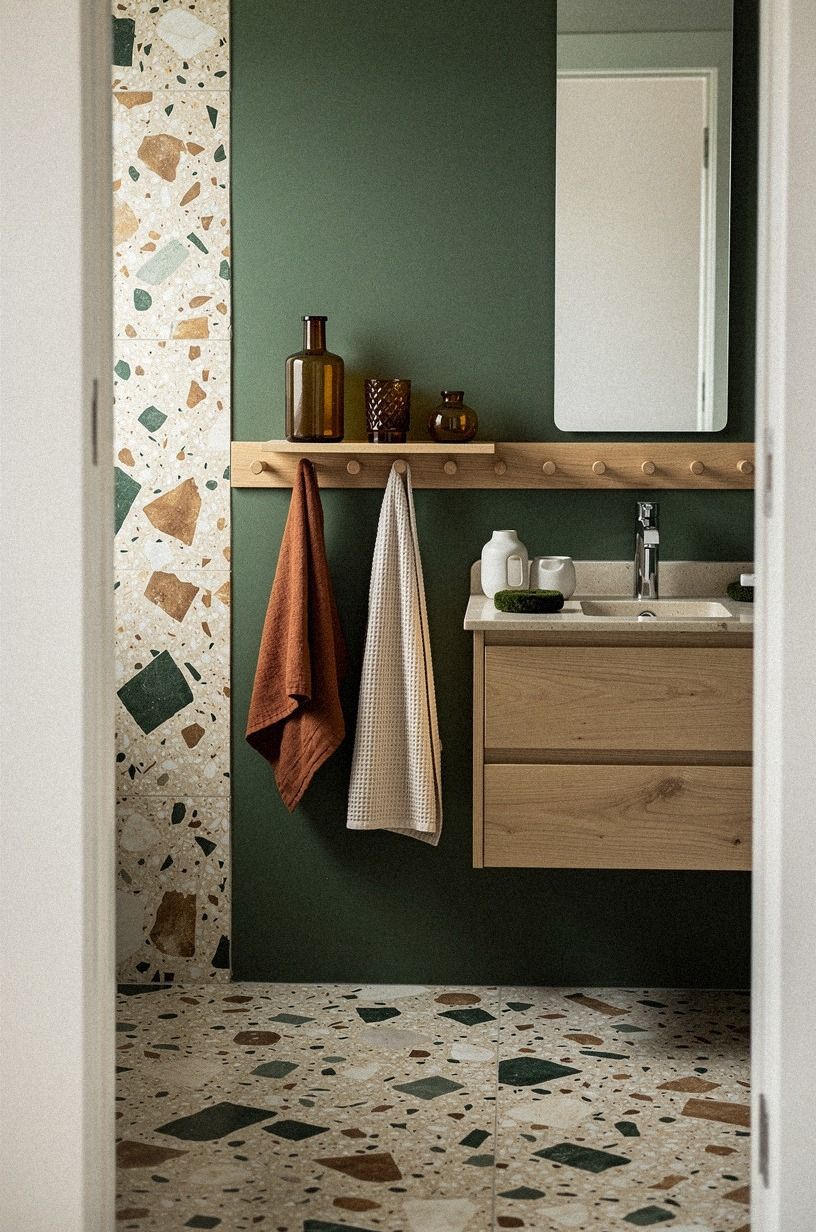
A peg rail offers flexible storage for hand towels, robes, brushes, and small baskets.
7Build a narrow niche between wall studs
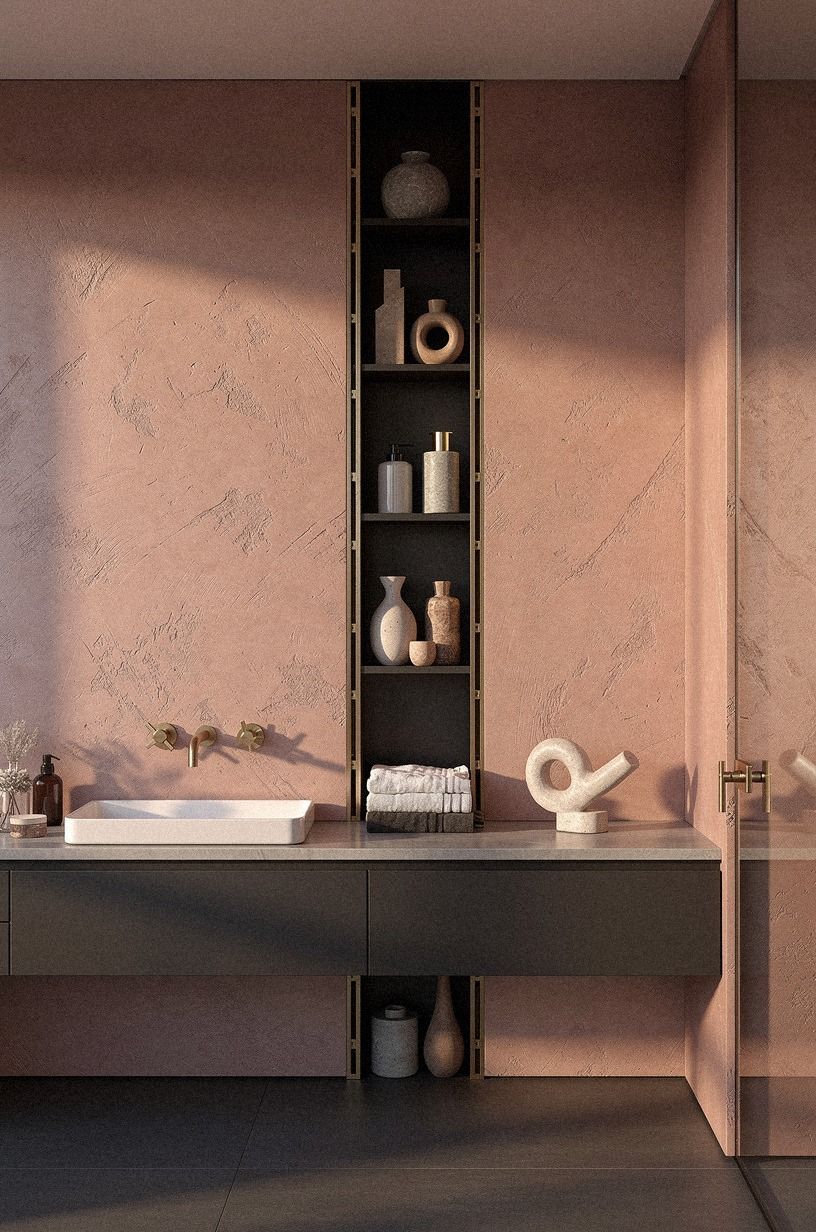
A recessed niche turns dead wall depth into storage while keeping the room’s footprint unchanged. Use hand-applied Venetian plaster around the opening for a soft, tactile contrast against dusty rose, charcoal, and brass.
The niche can hold folded washcloths, small bottles, or a single ceramic vessel. Before cutting into a wall, confirm stud locations, plumbing routes, and electrical lines. Your niche should stay outside wet areas unless the construction includes proper waterproofing.
A narrow vertical opening can be more useful than a wide shelf when the bathroom is tight, especially beside a vanity or between the sink and shower. The Three-Height Light Stack works well here: one item low, one centered, and one near the top.
For tile transitions and waterproof surfaces, review these retro bathroom tile surfaces. Glazed ceramic tile often offers better long-term value than a delicate finish in a splash-prone zone.
A niche can raise renovation cost because waterproofing and trim require care. It’s worth considering when the wall is already open for plumbing work. Adding one later may cost far more than planning it during construction.
8The ladder shelf
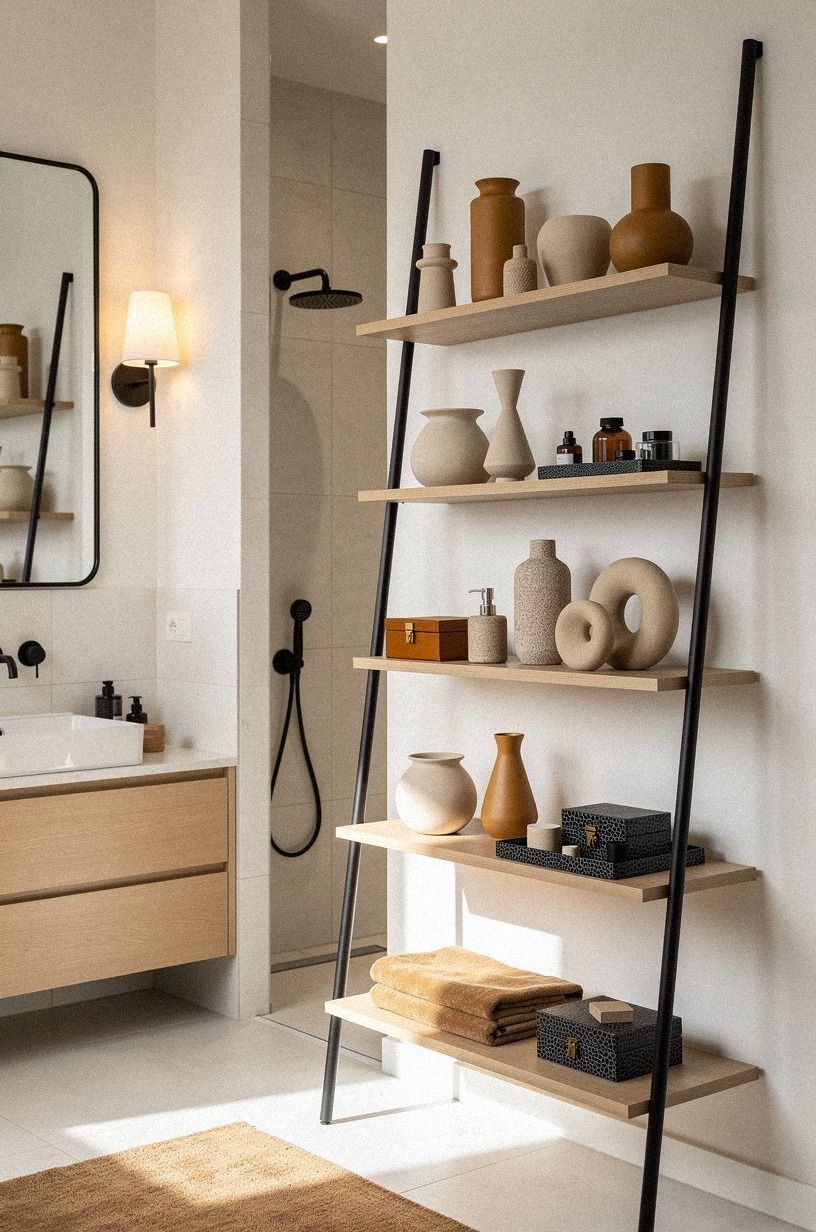
A ladder shelf adds tall bathroom storage without demanding a large wall installation. Choose a shelf with shagreen accents or a painted finish that matches warm white, camel, and black accents.
The lower rungs can carry towels and baskets. Higher levels suit lighter items, such as a small plant, a ceramic vessel, or rolled washcloths. You’ll create a calmer composition when every level has a different purpose.
Anchor the shelf if children, pets, or frequent traffic make tipping possible. Don’t place it directly beside a wet tub unless the finish is rated for bathroom humidity.
A ladder shelf is a useful rental option because it doesn’t require major construction. It also gives strong value when a future layout may change. The price depends on wood quality, joinery, and finish, so inspect the back and lower feet before buying.
9Choose tambour doors for concealed toiletries
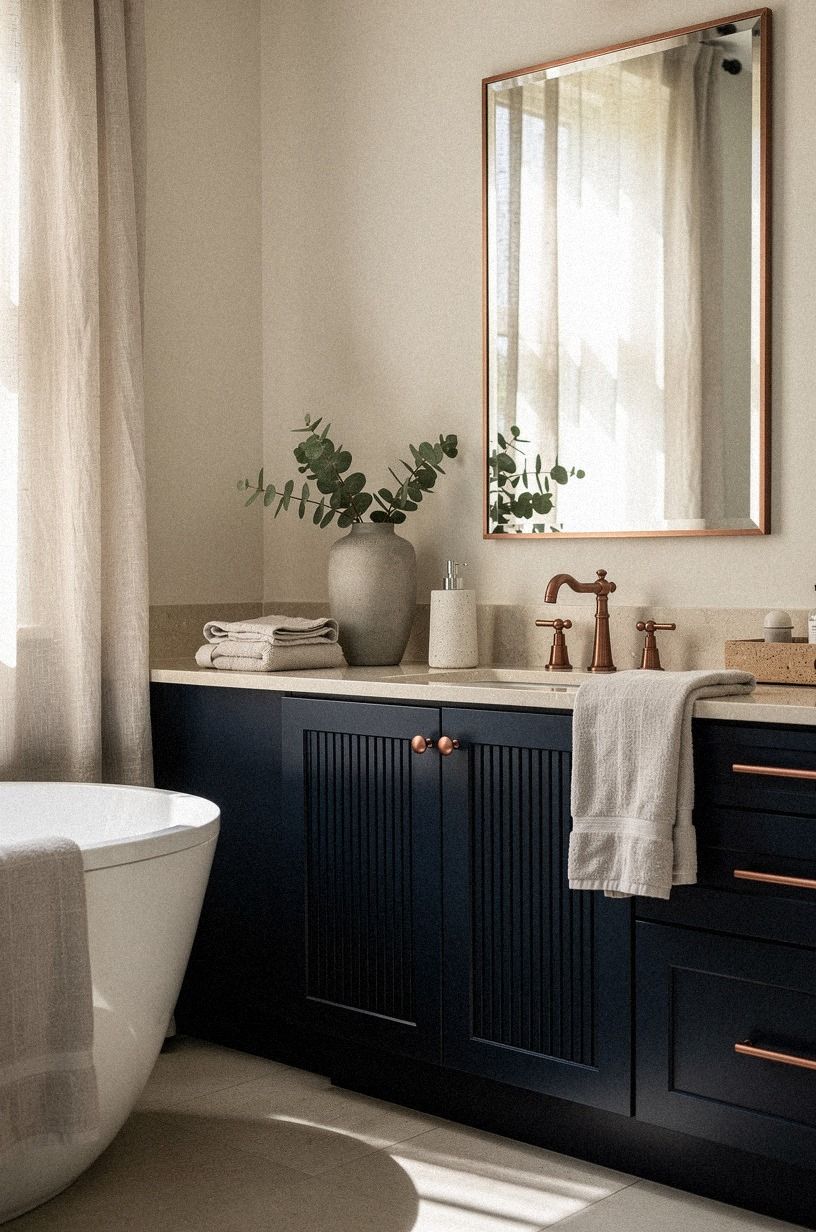
Tambour doors hide toiletries while adding movement and texture to a compact cabinet.
10When a round mirror leads the layout
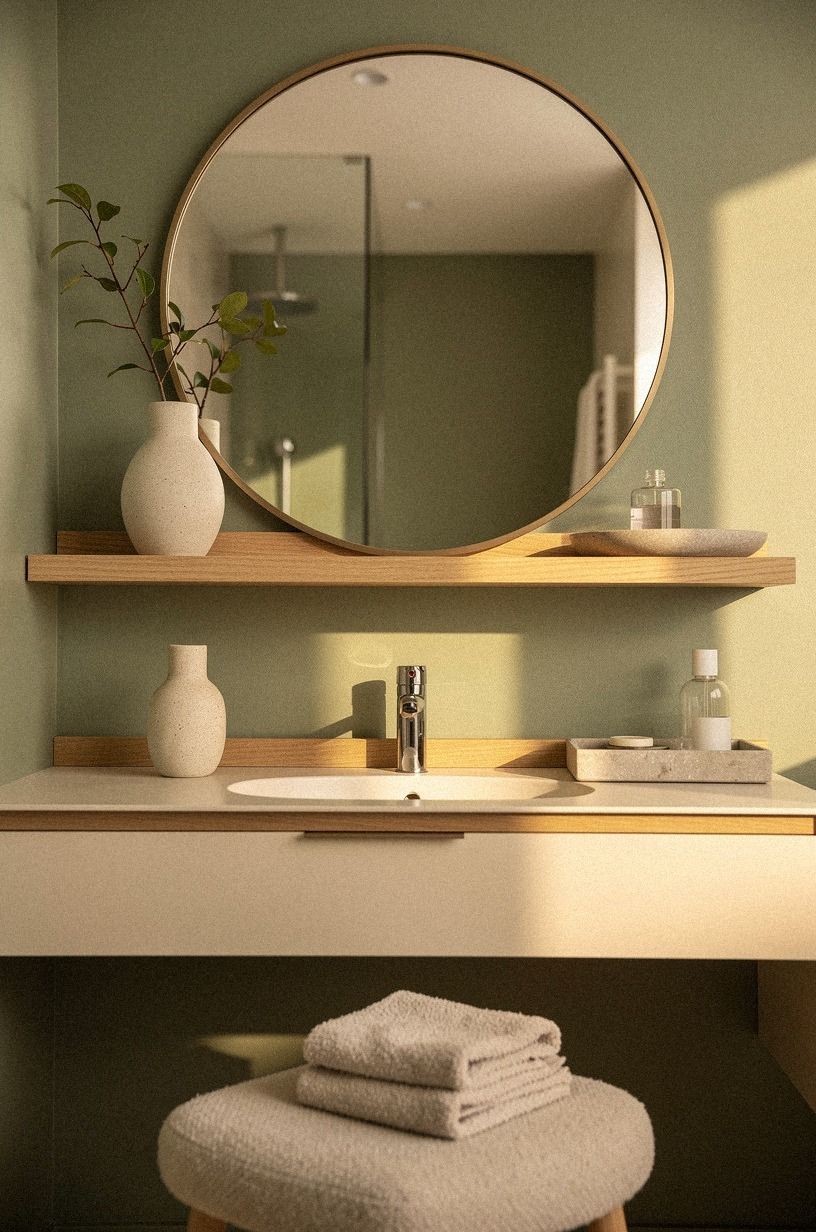
Floating shelves around a round mirror create a soft counterpoint to square tile and straight vanity lines. Install one shelf above the mirror and one or two shorter shelves beside it.
Use organic bouclé on a nearby stool or bench to bring in texture. Sage green, warm cream, and natural wood keep the room welcoming. Your mirror should remain the visual center, so shelves need to frame it rather than compete with it.
Keep the upper shelf light with one vase or folded cloth. The lower shelf can hold daily essentials. You’ll want a consistent wood tone across the shelves and vanity, even if the shapes differ.
A round mirror also helps soften a narrow room’s hard edges. More natural combinations appear in these organic mid-century modern bathroom ideas. The material mix can feel high-end without requiring a high-end budget.
Leave enough space around the mirror for cleaning. If the shelf nearly touches the frame, dust and water marks will become harder to manage. A small gap looks deliberate and keeps maintenance simple.
11Convert a bar cart into towel storage
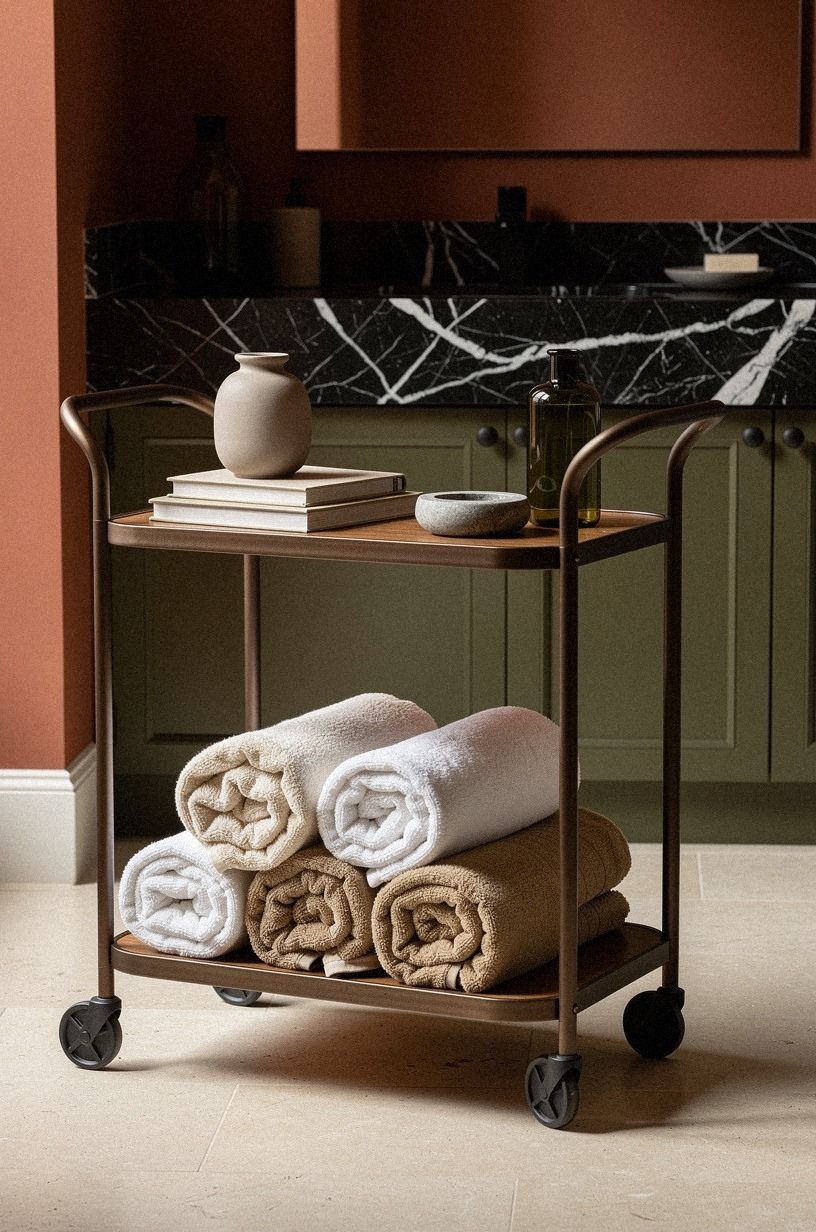
A bar cart can become a movable towel station when wall storage isn’t practical.
12Install hairpin brackets beneath a vanity
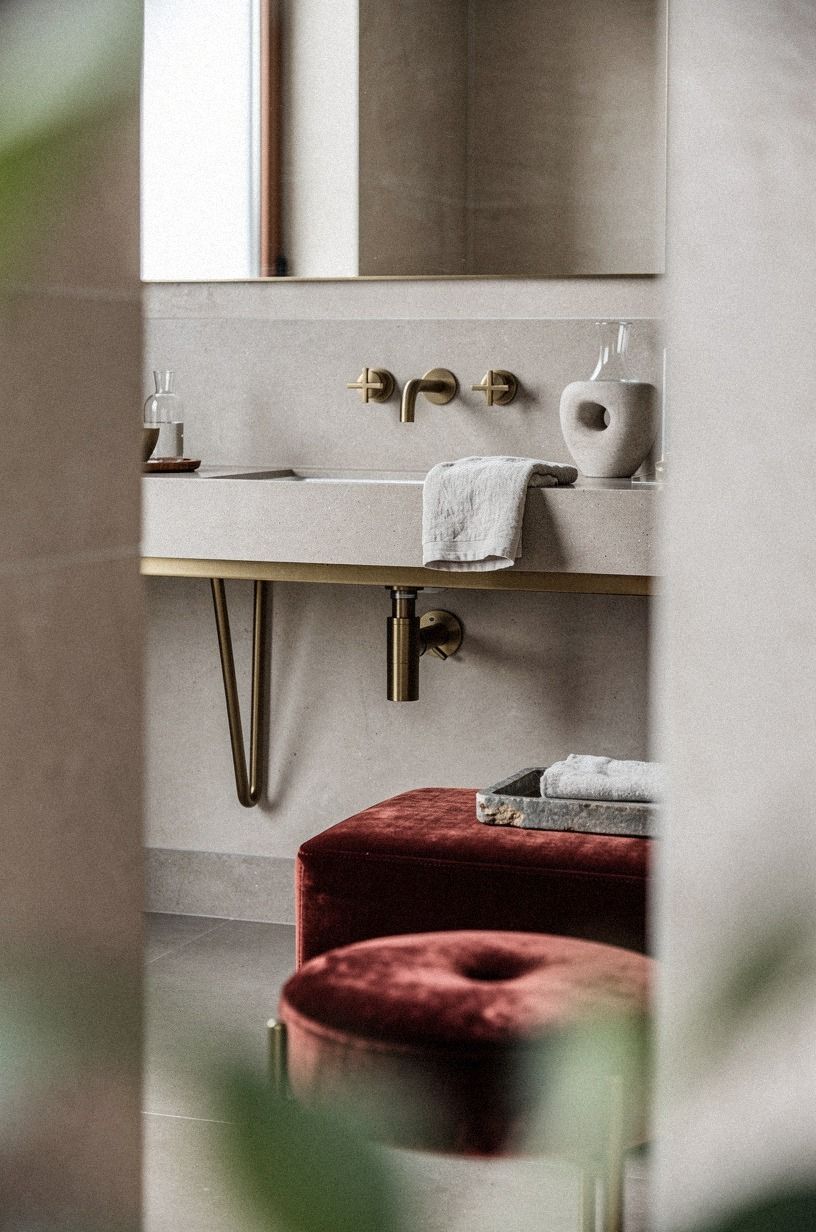
Hairpin brackets can turn the open area beneath a wall-mounted vanity into useful towel and basket storage. Use deep-pile mohair velvet on a nearby stool or bench, then balance the clay, linen, and aged brass palette with a dark metal frame.
The result feels light because the floor remains visible. Your vanity height usually falls between 32 and 36 inches, so measure the open space before choosing baskets.
Keep plumbing accessible and avoid packing the lower zone with objects that block cleaning. A pair of matching baskets can hold spare towels, while a narrow rail can support hand towels. You’ll get a more comfortable room when the open area stays edited.
For warmer vanity proportions, see these walnut vanity profiles. A properly sized vanity can offer better long-term value than adding several small storage pieces later.
Hairpin brackets are usually affordable, but installation must support the vanity’s load. Use appropriate anchors for the wall type. If the wall is tiled, plan drilling carefully to avoid costly repairs.
13Avocado green inside the shelf
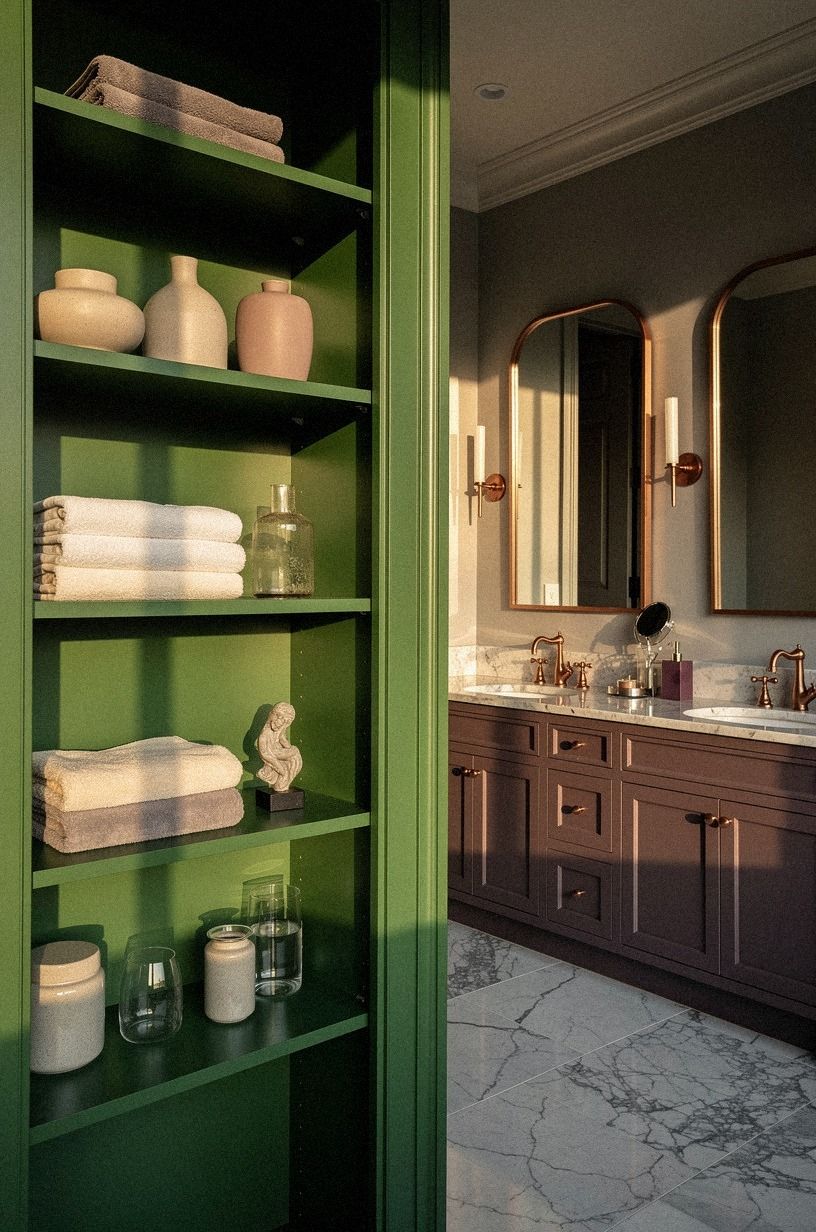
A shelf backed by Carrara marble with subtle grey veining creates depth without covering the whole bathroom in color. Plum paint, soft grey, and rose-gold accents offer a refined vintage direction.
Use the marble inside a niche, cabinet, or open cubby. The exterior can remain walnut, cream, or natural oak. You’ll make everyday objects stand out without buying new accessories.
A marble interior is a durable change, but moisture preparation matters. Clean the surface, use a suitable sealer, and choose a washable finish for surrounding surfaces. Don’t install stone over damp wood or peeling laminate.
The color should connect to another small detail, such as a towel, artwork, or soap dish. One repeated note is enough. If the whole room echoes the same plum or rose-gold tone, the storage loses its focal effect.
This approach delivers strong design value because it changes the feeling of a cabinet without changing its footprint. Start small! A single shelf interior can reveal whether the material suits the room before a larger commitment.
14Stack teak cubes beside the bathtub
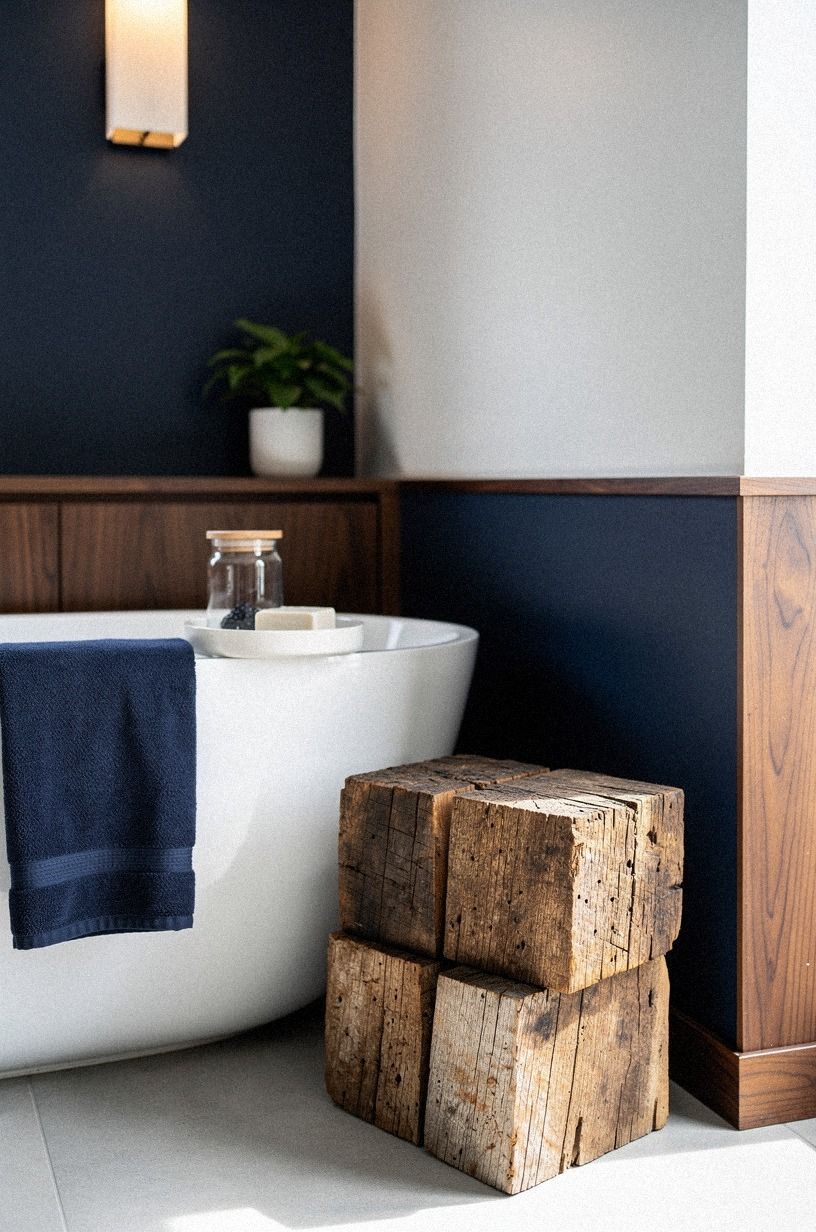
Teak cubes provide modular storage beside a bathtub without the bulk of a built-in cabinet.
15A sculptural shelf above the toilet
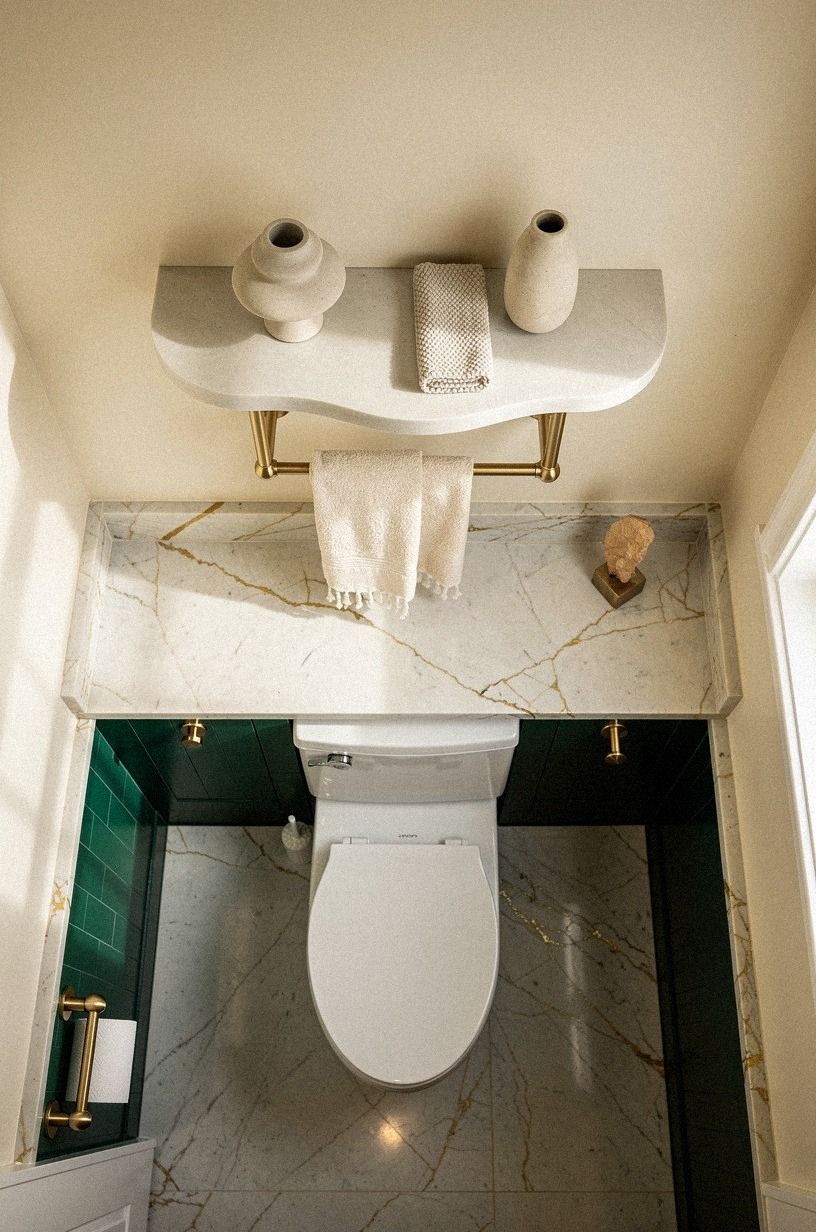
A sculptural shelf gives the wall above the toilet a strong focal point while keeping the floor clear. Choose a Calacatta marble ledge with gold veining, a curved brass frame, or a board with an unusual tapered profile.
The shelf should remain shallow enough to avoid head contact. Keep the most frequently used items elsewhere, since reaching over the toilet is inconvenient. A small vessel, folded hand towel, and one framed object may be all the styling required.
You’ll need solid wall anchors and careful spacing around the flush mechanism. Don’t store heavy glass or large ceramics overhead. A shelf above the toilet can look dramatic, but it still has to feel safe and easy to clean.
This is a relatively low-cost upgrade when the wall already has a suitable mounting surface. The visual return can be high because the shelf occupies a commonly ignored area. That balance makes the idea worth considering for a small budget.
16Use open cubbies beneath a wall-mounted sink
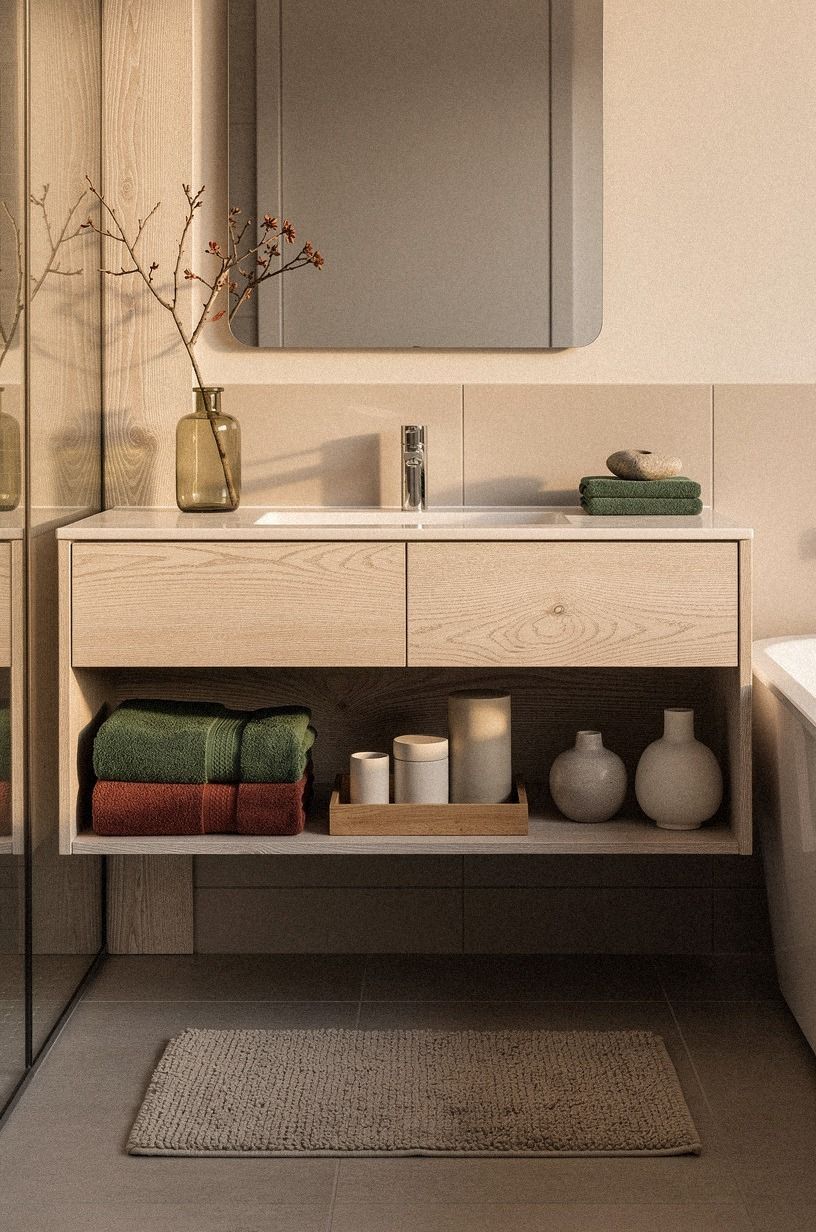
Open cubbies beneath a wall-mounted sink make everyday supplies visible and easy to reach.
17Anchor tall shelving in a bathroom corner
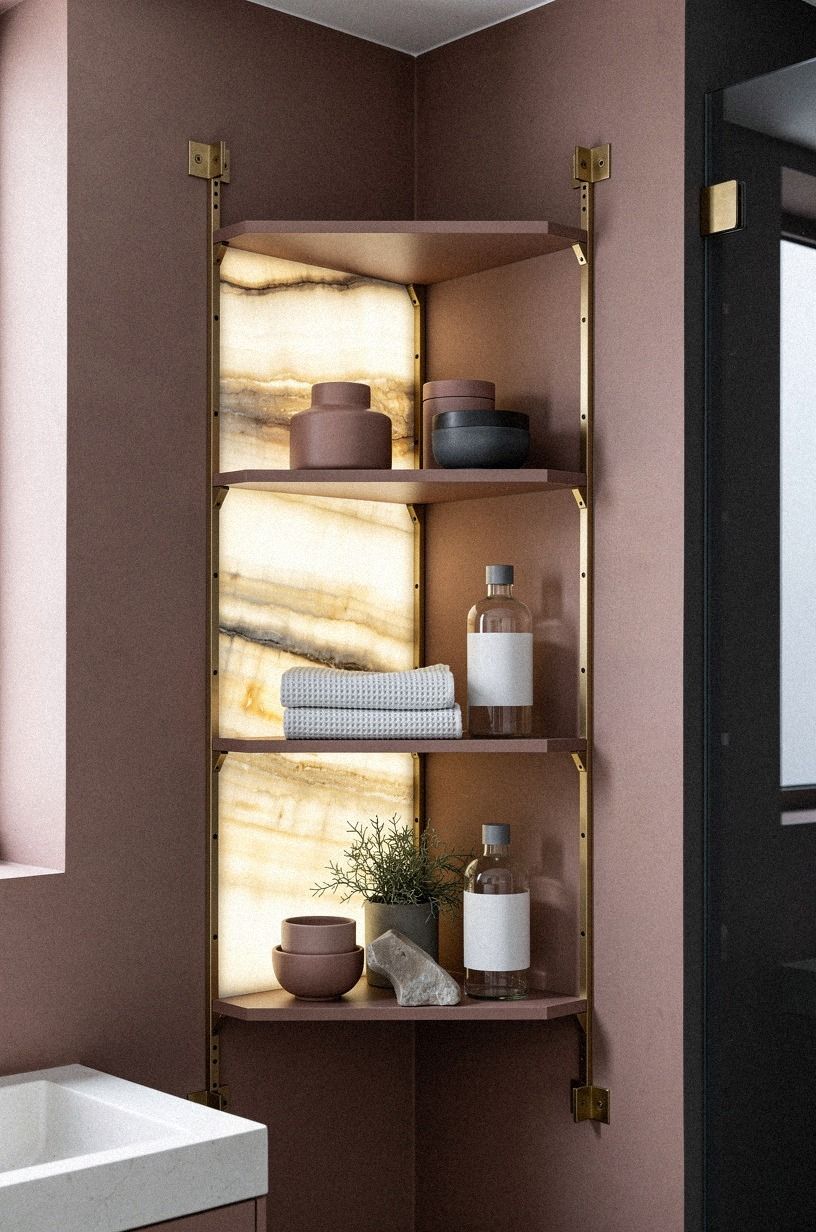
Tall corner shelving uses an awkward vertical zone for towels, baskets, and decorative storage. Choose backlit translucent onyx for a nearby ledge or wall detail, then build around dusty rose, charcoal, and brass.
A frontal symmetrical arrangement can make the room feel calmer, especially when the vanity and mirror already have strong lines. Your shelf should be anchored to studs or a secure mounting surface, particularly when the upper levels hold ceramic pieces.
Keep heavier storage low and lighter objects high. You’ll want the corner to remain visually open near the sink, so avoid filling every shelf with matching containers.
One brass frame, one folded textile, and one earthy vessel can create enough rhythm. This is a useful move for tall bathroom decor when floor area is limited. A narrow custom shelf may cost more than a freestanding unit, but it can use an otherwise wasted corner with greater precision.
Measure the baseboard, outlet locations, and door swing before ordering. Small errors can turn a promising corner into a daily obstruction.
18Organize cosmetics inside a vintage credenza
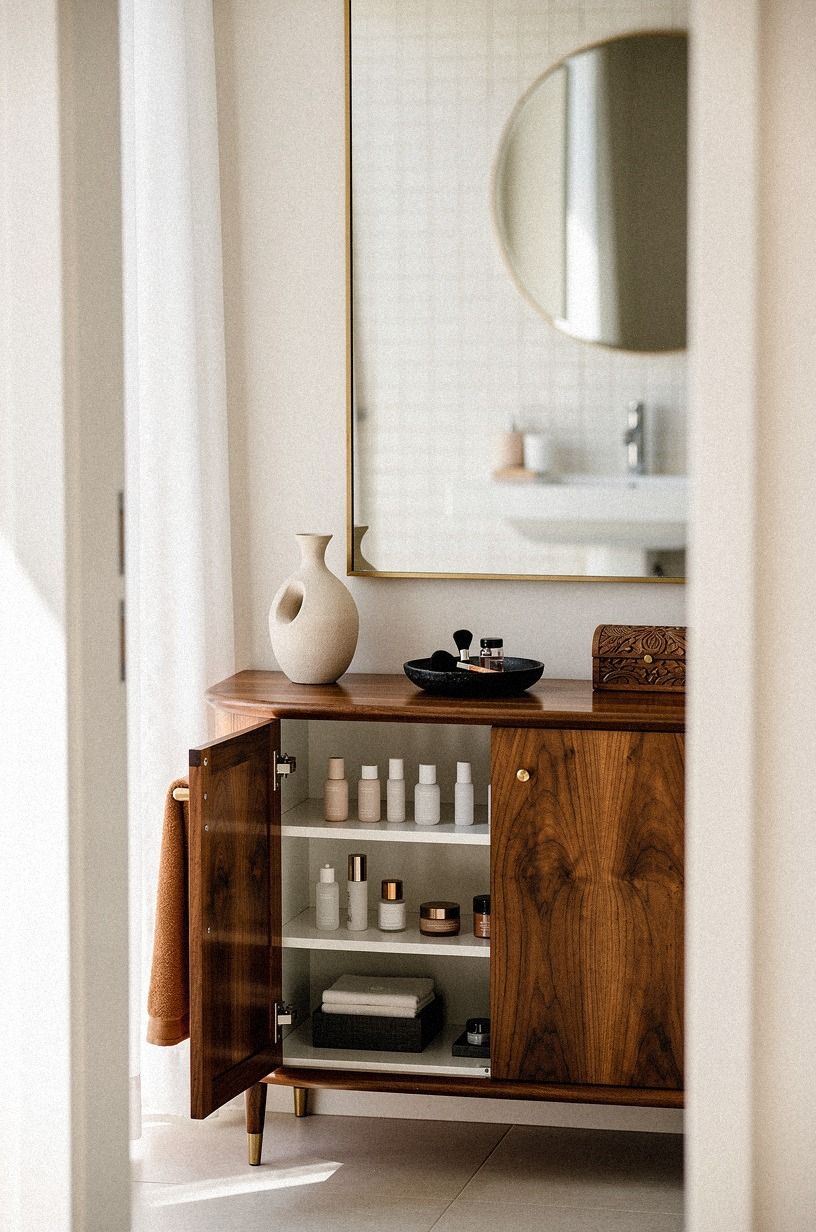
A vintage credenza can hold cosmetics, towels, and spare supplies while bringing genuine furniture character into the bathroom. Choose book-matched walnut with clean tapered legs, then pair warm white, camel, and black accents with low-profile trays inside the drawers.
The bathroom remains recognizable, but the storage feels gathered rather than generic. Your credenza needs a sealed finish and enough clearance for doors, drawers, and floor cleaning.
Keep cosmetics in shallow organizers so small products don’t vanish at the back. You’ll want daily items near the top and backup supplies lower down. A vintage piece is worth choosing over a flimsy flat-pack cabinet when the grain, hardware, and proportions carry the room.
Inspect drawer slides, veneer edges, and signs of water damage before buying. Refinishing can add cost, but quality construction may deliver better value over time. The right piece can feel refined, welcoming, and quietly dramatic!
The Two Rules That Keep Mid-Century Storage Calm
Mid-century bathroom storage works best when every piece has a visual reason to exist. Warm woods bring softness, but too many wood tones can make a small room feel busy. The Two-Wood Rule keeps the palette controlled: choose one main wood, such as walnut or teak, then add a second tone only when it creates contrast.
Your shelves, vanity, and cabinet don’t need identical finishes, but they should share a similar warmth. If the vanity has orange undertones, avoid a pale grey wood shelf that makes the contrast look accidental.
The second rule concerns height. Storage should move the eye upward without making the room feel crowded. Place heavy baskets low, useful objects at hand height, and lighter ceramics above.
You’ll get more from a 36-inch vanity wall when the upper area stays edited. The best storage isn’t the piece with the most capacity. It’s the piece that makes daily movement easier while leaving enough quiet space for the room to breathe.
Cost matters, but value comes from fit, durability, and daily convenience. A cheap shelf that blocks a drawer won’t save money for long. A modest cabinet that keeps the counter clear may be worth a larger initial price.
The Questions Worth Answering First
What is the best Mid-Century Modern Bathroom Storage & Shelf Design for a small bathroom?
A shallow floating shelf or suspended teak cabinet is usually the strongest choice because it preserves floor visibility. A narrow cube unit can work in a dry corner, while a walnut shelf keeps daily items within reach without crowding the vanity. Choose based on wall width, door swing, and budget.
Where can you buy Mid-Century Modern Bathroom Storage & Shelf pieces on a budget?
Accessible shelves, baskets, and towel rails are available from large home retailers, local resale shops, and online marketplaces. Second-hand furniture can offer better wood quality for less, but check cabinet depth, moisture damage, hardware, and repair cost before bringing a piece home.
How much does a Mid-Century Modern Bathroom Storage & Shelf makeover cost?
A storage-focused refresh can cost about $100 to $300 when existing shelves, paint, and baskets are reused. A new vanity or custom cabinet raises the price quickly. Free improvements include editing crowded surfaces, regrouping towels, and moving attractive containers into visible zones.
Can you create Mid-Century Modern Bathroom Storage & Shelf arrangements on a budget?
Yes. Refinish an existing wood shelf, use a tension rod for a curtain or hand towel, and repurpose a bar cart or small stool.
Second-hand wood furniture can add more character than a new matching set. Spend first on safe mounting and moisture-resistant finishes.
Is Mid-Century Modern Bathroom Storage & Shelf Design worth it in a small space?
Yes, when the storage improves movement rather than simply adding capacity. Open floor area helps the bathroom feel larger, while shallow shelves keep daily supplies visible. Keep at least 21 inches of clearance in front of the toilet and avoid furniture that blocks the door swing.
Is Mid-Century Modern Bathroom Storage & Shelf Design a good idea for a rental?
Yes. Use removable hooks, tension rods, freestanding carts, and peel-and-stick color on cabinet interiors.
Damage-light storage adds warmth without permanent construction. Before mounting anything, check the lease and choose hardware that can be patched cleanly when the space changes.
Where to Start First
Start with the suspended teak cabinet above the vanity. It clears the counter, preserves floor visibility, and gives later choices a warm wood reference.
Pin that single idea for later, then measure the wall, vanity height, and door swing before buying anything. That preparation can save space, time, and money.