A modern blue bathroom stays warm when you balance cool pigment with wood, soft light, aged metal, and touchable textiles. Deep blue paired with icy white grout can feel sharp instead of inviting. These 14 ideas show you where to add warmth without losing the clean, modern edge.
- Paint the Upper Walls Above Eye Level
- Balance Blue Walls With Two Wood Tones
- Choose Warm White Tile Against Blue Walls
- Swap Cool Chrome for Brushed Brass
- Layer Light at Three Heights
- Float the Vanity at the Right Height
- Frame the Mirror With a Warm Material
- Could Textiles Make the Blue Feel Softer?
- Keep Shower Color on One Plane
- Ask Whether Pale Blue Can Still Feel Modern
- Repeat One Blue Through the Room
- Compare Tile Costs Before You Commit
- Add Organic Shapes Beside Clean Fixtures
- Protect the Layout With 21 Inches of Clearance
1Paint the Upper Walls Above Eye Level
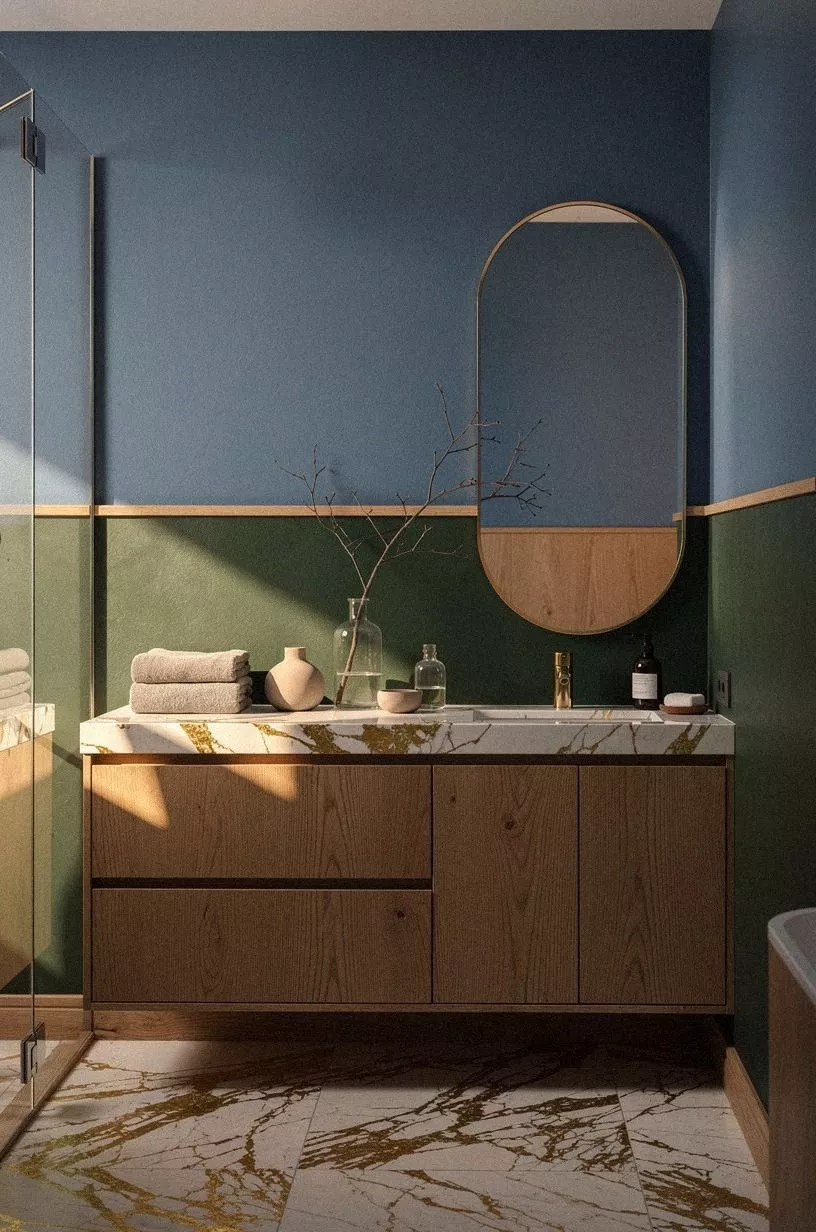
Keep the strongest color below or around eye level, then carry a warm white higher on the wall. Farrow & Ball Studio Green works beautifully on a vanity wall, but covering every surface can make your bathroom feel heavy by late afternoon. Your eye needs a resting place.
Try Studio Green behind the mirror and a warm white on the remaining walls. Add rust through a small textile or accessory, then use natural oak to keep the contrast calming. Calacatta marble with gold veining can bring a refined note to the vanity without making the room feel glossy.
You can test the idea without a full repaint. Paint one wall first, live with it through morning and evening, and see how your room changes. For a smaller blue bathroom, compare the result with these light blue bathroom ideas for a calm look.
You can also repeat the same warm-white tone on the ceiling.
2Balance Blue Walls With Two Wood Tones
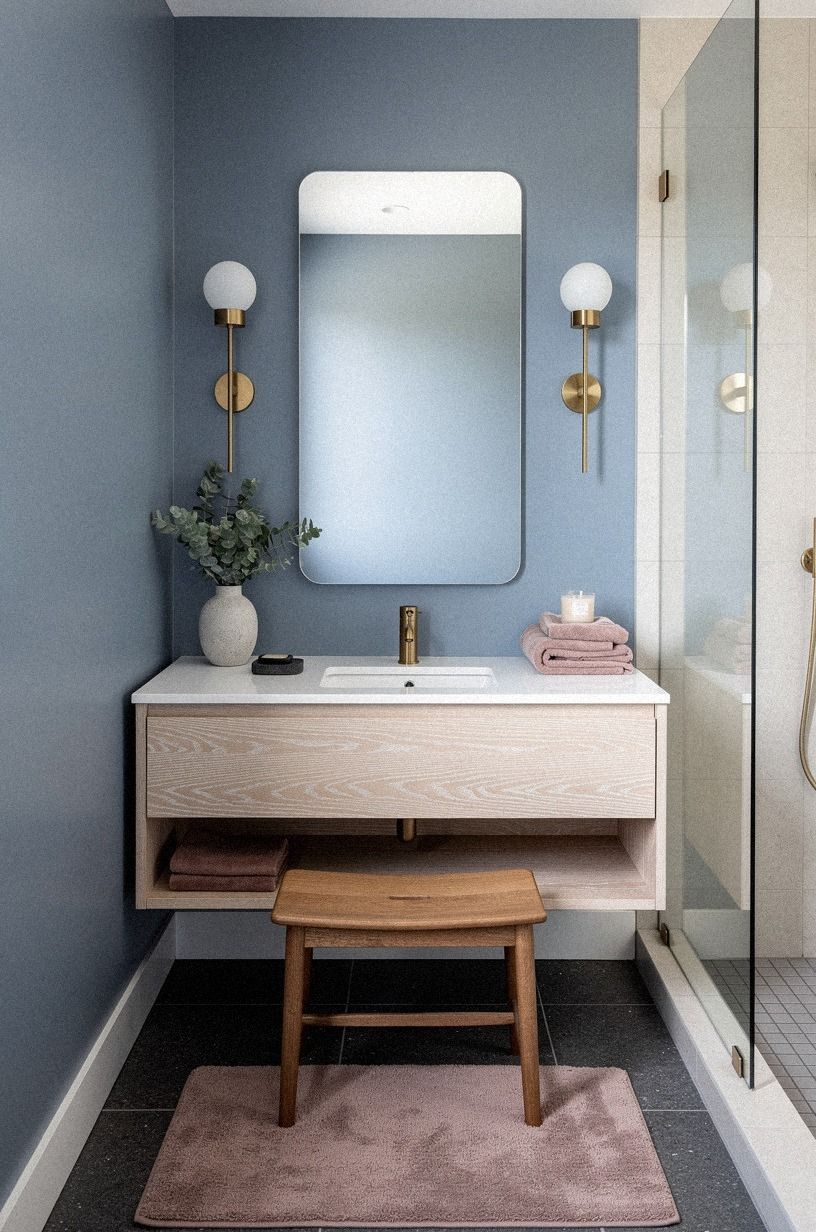
Use two wood tones, not five. A charcoal vanity with cerused white oak shelving and brushed brass hardware gives your bathroom enough grain to feel organic without turning it rustic. Cerused white oak is especially useful because its pale grain reflects light while the subtle texture keeps blue walls from feeling flat.
Use charcoal for the larger furniture and cerused oak for the smaller pieces. That order matters.
Your eye reads the darker finish as an anchor, then the lighter wood as a supporting note. A room full of matching dark surfaces can look formal for a bathroom.
If you’re working with a rental vanity, bring in the second tone through a framed mirror or a small oak bath mat. You’ll get the same warm contrast without changing plumbing.
The mid-century modern bathroom vanity guide has more ways to make wood work with blue. A small oak tray can repeat the lighter tone without adding clutter.
3Choose Warm White Tile Against Blue Walls
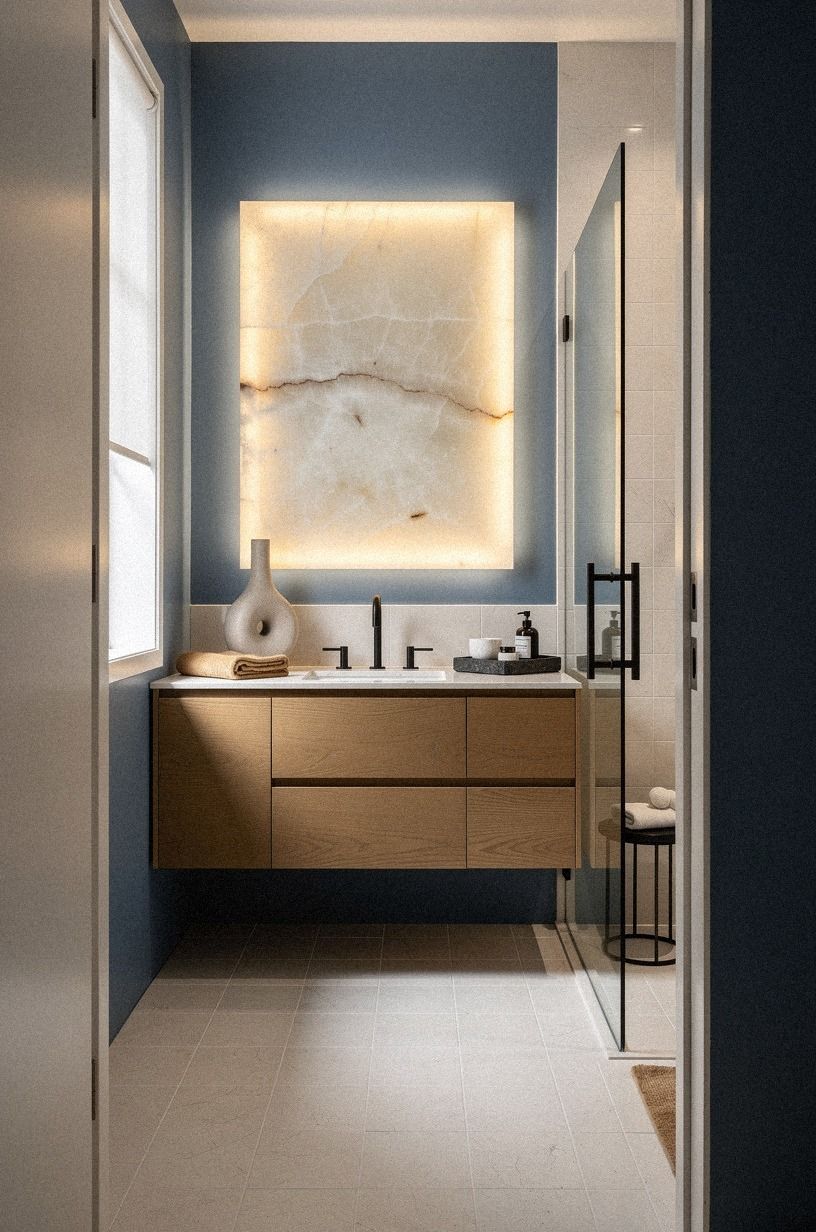
Blue paint becomes more inviting when it meets a warm tile instead of a blue-white one. Backlit translucent onyx has a soft, luminous quality, so the surface brings warmth without turning yellow. That glow keeps a sleek bathroom from feeling too manufactured.
Use it behind the sink or across the shower wall, then let the blue appear on the adjacent painted surface. You’ll want the stone to look warm but not yellow. Hold samples beside your faucet and mirror before choosing, because bathroom bulbs can change white dramatically.
Bright white subway tile next to a rich blue is a risky pairing. The grout stands out sharply, and the whole wall can start reading like a commercial washroom. A softer surface suits the room better.
For another warm material direction, see these organic modern travertine bathroom ideas.
4Swap Cool Chrome for Brushed Brass
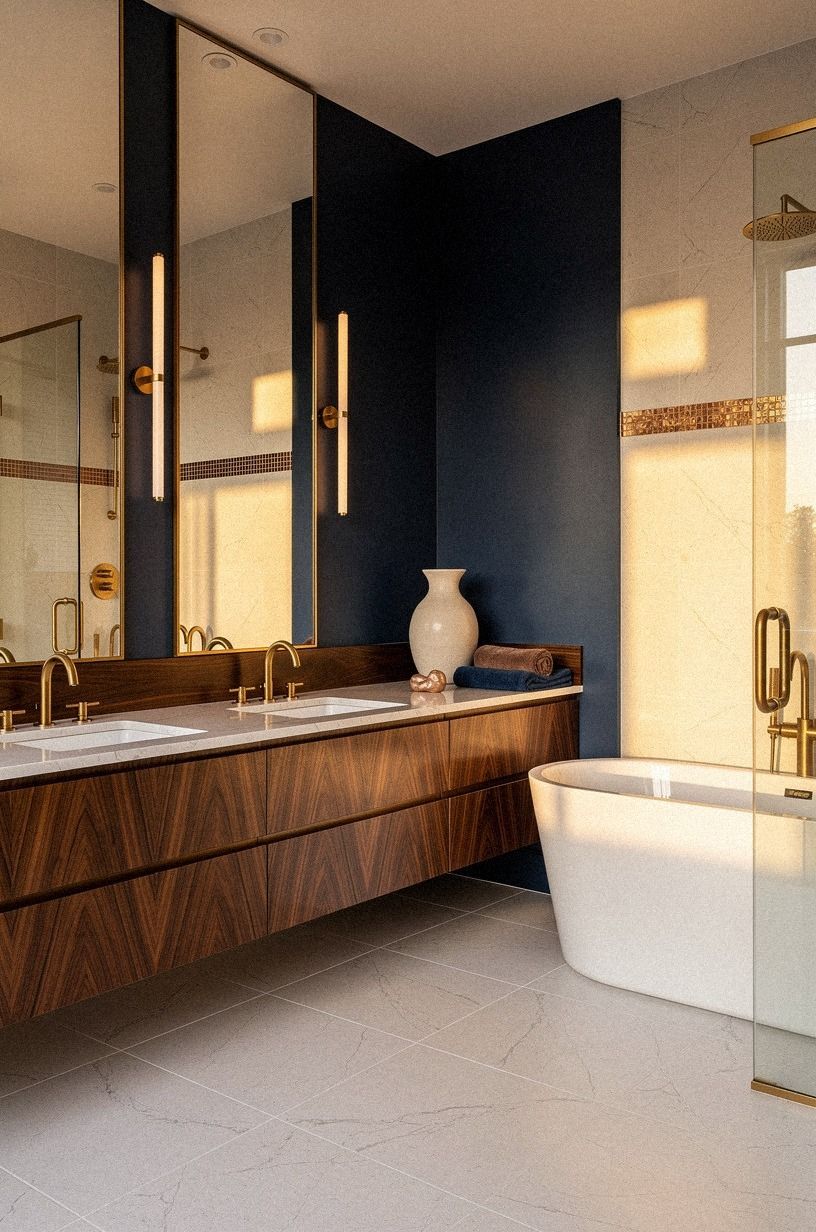
If your blue feels chilly, look at the metal before repainting. Aged copper adds a muted burnished note that makes navy, slate, and dusty blue feel more comfortable. Choose it for the faucet, mirror frame, cabinet pulls, and one small accessory so the finish feels intentional.
Skip mirror-finish copper. It can compete with the blue and make a compact room feel busy.
A softer aged finish catches the lamp glow without throwing hard reflections across the mirror. A walnut piece nearby gives the copper and ivory accents somewhere warm to land.
Don’t replace every fixture at once if your budget is tight. Keep the existing faucet and add a copper-framed mirror or two pulls first.
That small shift can change the room’s temperature fast.
You can also borrow ideas from this warm bathroom lighting guide.
5Layer Light at Three Heights
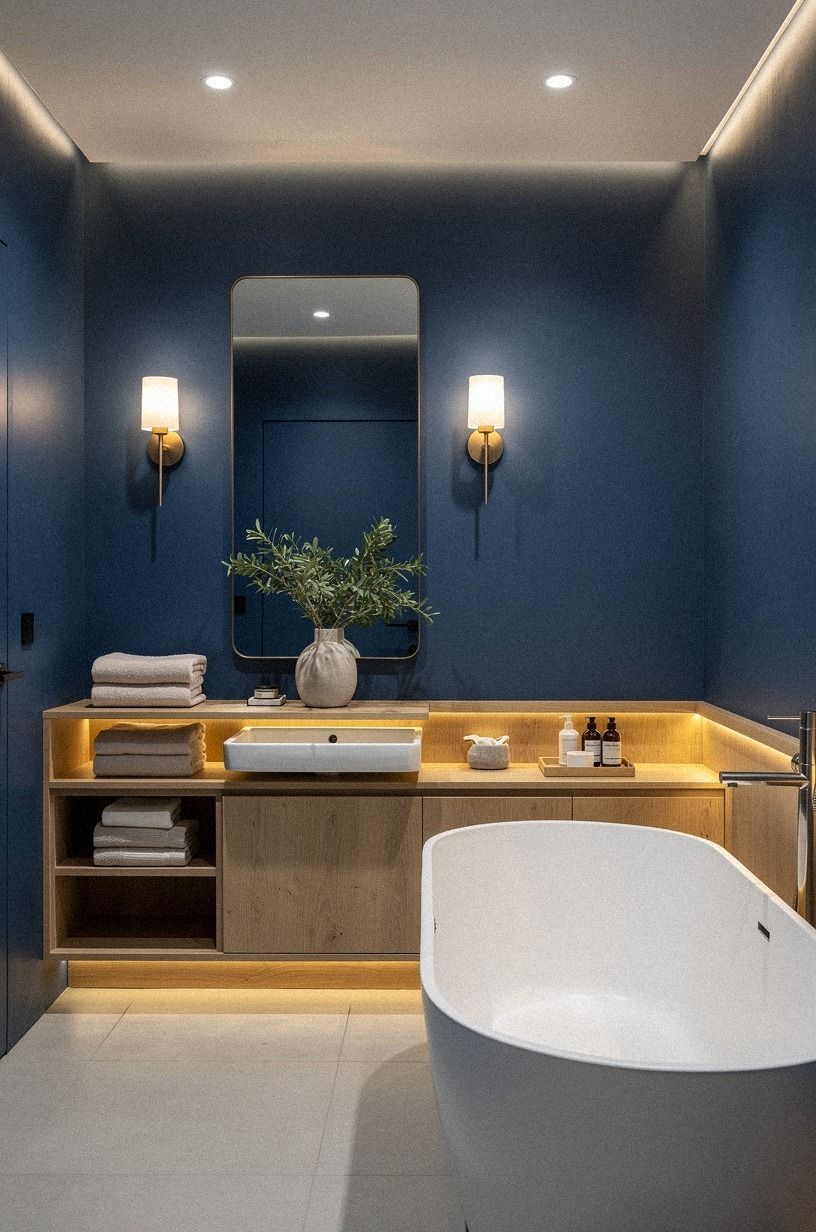
A modern blue bathroom needs light at three levels: overhead, face level, and low or reflected light. Opal glass sconces beside the mirror soften shadows, while a ceiling fixture handles basic visibility. A small lamp-like night-light or under-vanity glow gives the floor a gentle pool after dark.
The goal is simple: stop one ceiling light from doing every job.
Place sconces around eye level, then choose bulbs with a warm white appearance so the blue doesn’t turn violet or icy. Warm cream walls and natural wood will keep the palette settled, while warm travertine adds weight below.
If you rent, use a rechargeable picture light above the mirror or a plug-in sconce with a cord cover. Your bathroom will feel more serene once the light comes from the sides, not only from above. A pale blue room can use the same approach, as you’ll see in these calm blue and gray bathroom ideas.
Test the bulbs after sunset before committing.
6Float the Vanity at the Right Height
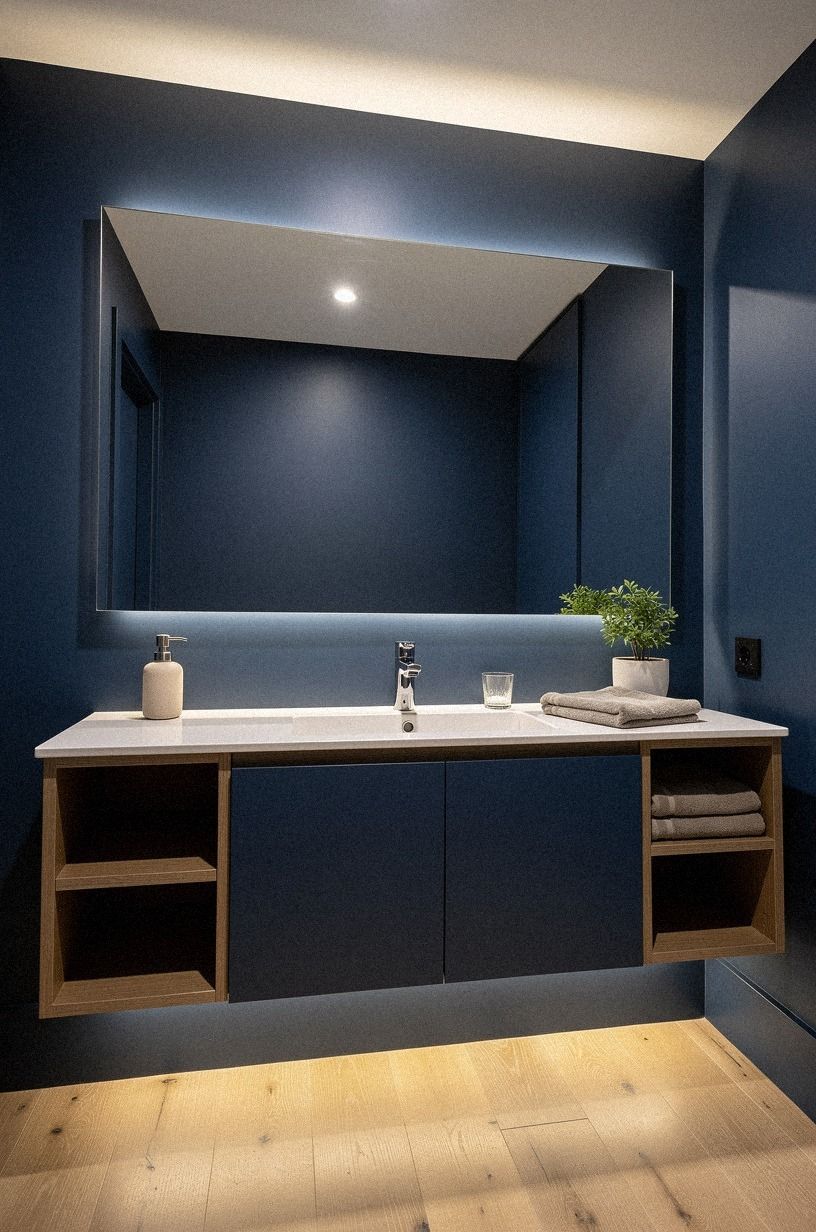
A floating vanity makes the floor visible, which helps a small bathroom feel airy and modern. Keep the finished vanity height between 32 and 36 inches, then check how that measurement works with your sink and daily routine. Your room will look larger when the shadow line under the cabinet stays clear.
Choose a cabinet with a tactile surface, such as stone or a finish that works with terracotta and olive accents. Unlacquered brass on the pulls or faucet will develop a soft patina over time. Avoid a flat blue vanity if the walls are already blue because the room can become one unbroken block of color.
Floating storage can’t hide clutter by itself. You’ll want drawers for daily items and one basket for towels, not a collection of bottles around the sink. If you’re planning the whole layout, compare your measurements with these organic mid-century bathroom ideas.
Leave enough clearance for cleaning underneath.
7Frame the Mirror With a Warm Material
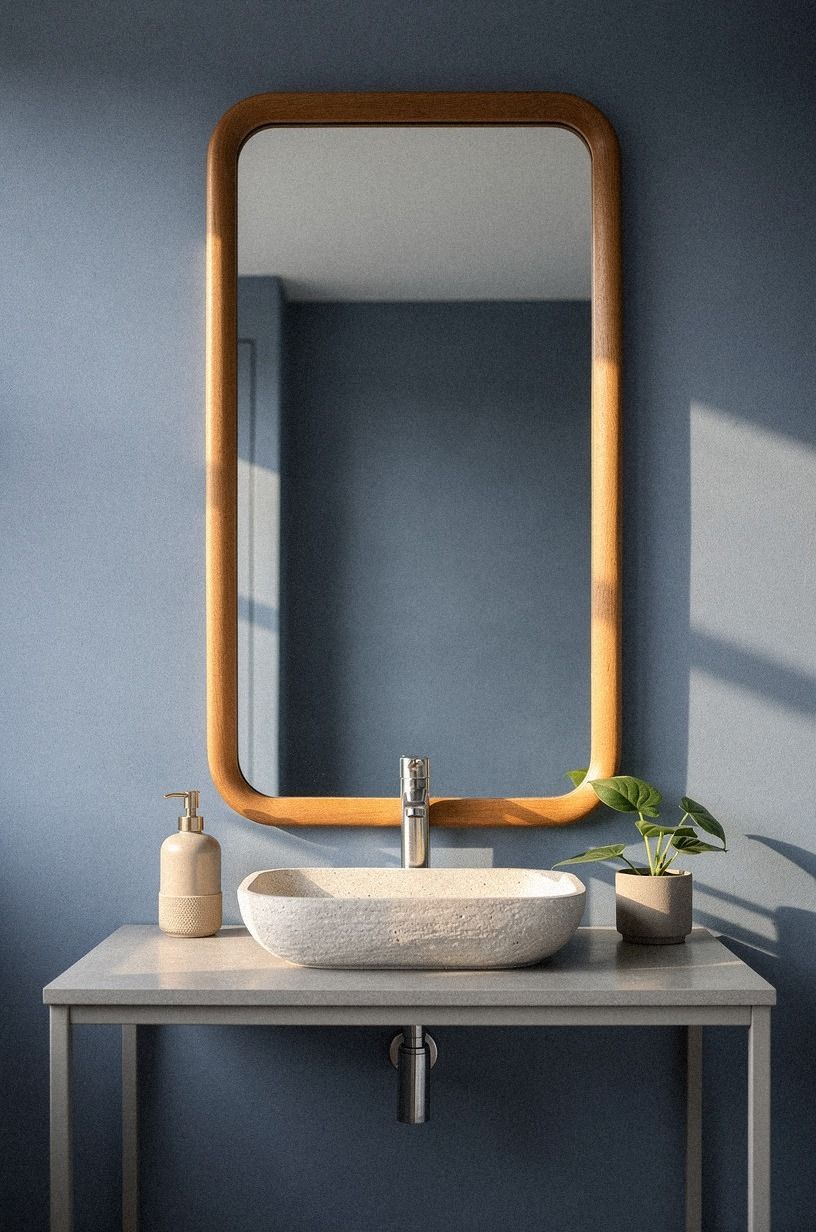
A mirror is one of the largest visual surfaces in your bathroom, so its frame can shift the entire mood. Oversized-chip terrazzo brings a lively mineral texture to deep blue, while aged brass feels richer and more grounded. Choose one based on the amount of daylight your room receives.
In a north-facing bathroom, use a linen-toned surround or aged brass because both support a softer palette. A dark frame can be gorgeous, but it needs help from warm sconces and a lighter counter. You’ll want the surround to support the blue, not create another heavy rectangle.
Try a round mirror if your vanity has many straight lines. The curve breaks up the hard geometry and makes the room feel gentler.
If you’re styling a narrow powder room, a tall mirror can visually stretch the wall. These warm powder room ideas use the same balance between color and texture.
A softly rounded frame can do more than another decorative object.
8Could Textiles Make the Blue Feel Softer?
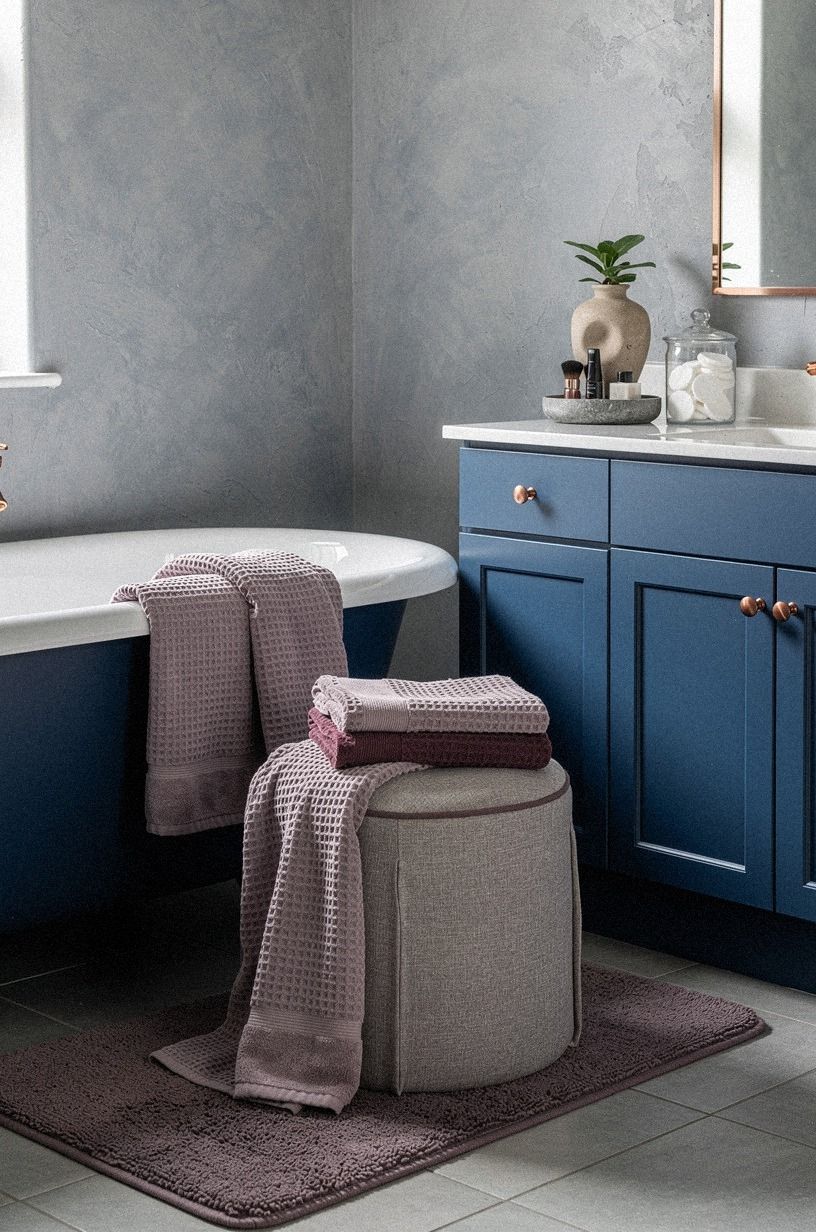
Textiles are the fastest way to make blue feel lived-in.
9Keep Shower Color on One Plane
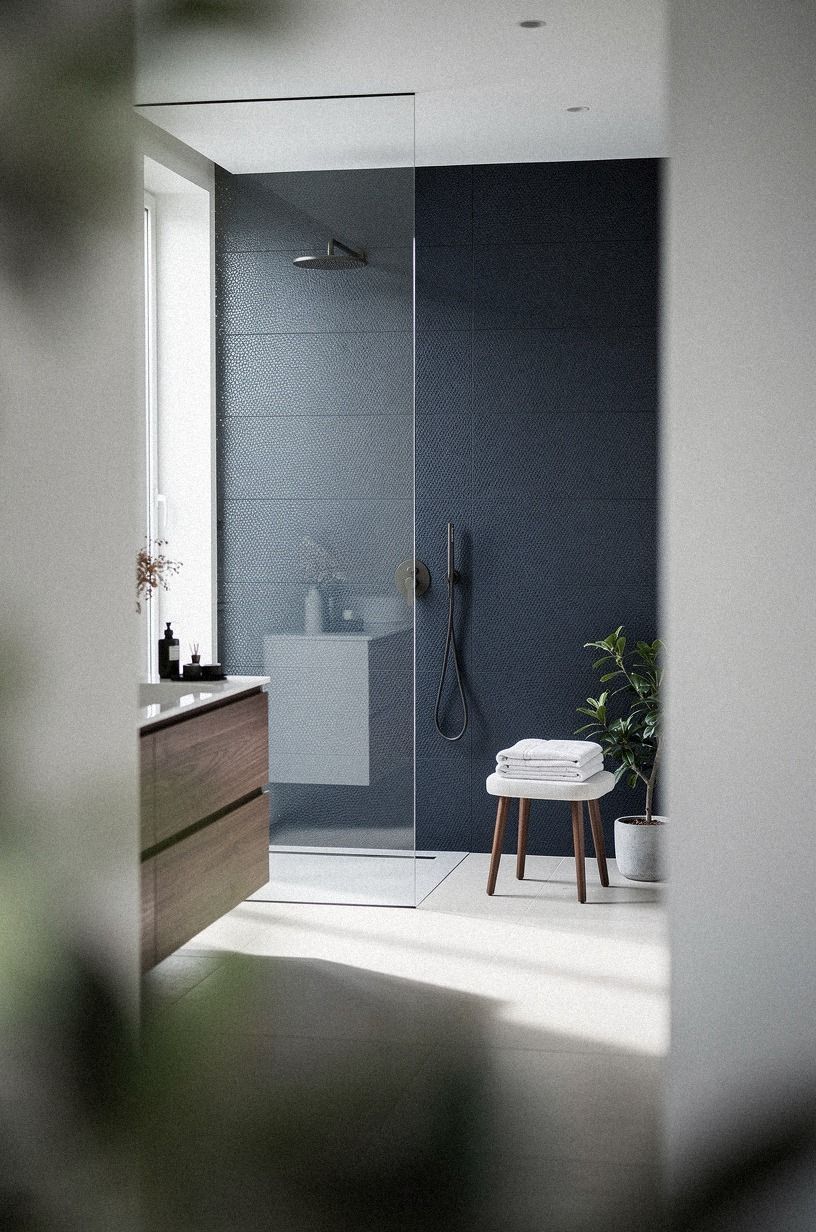
Blue tile is most effective when it has a boundary. Use navy tile on the back shower wall, then keep the side walls in a warm white or pale stone finish.
Add small shagreen accents through a tray or accessory, and use walnut nearby to keep the palette grounded. This one-plane approach gives you drama without making the shower feel like a dark box.
A comfortable shower should measure at least 36 by 36 inches, so your color decision needs to account for the full wall area. In a smaller shower, a glossy tile can bounce light better than a matte one, but too much shine may feel busy beside chrome fixtures.
Avoid carrying dark blue onto every shower surface unless your room has strong daylight. The color can look elegant at noon and murky at 7 a.m. Your best test is a sample board beside the actual shower light.
For a softer direction, compare the effect with these light blue bathroom design ideas. A clear boundary lets the blue feel deliberate.
10Ask Whether Pale Blue Can Still Feel Modern
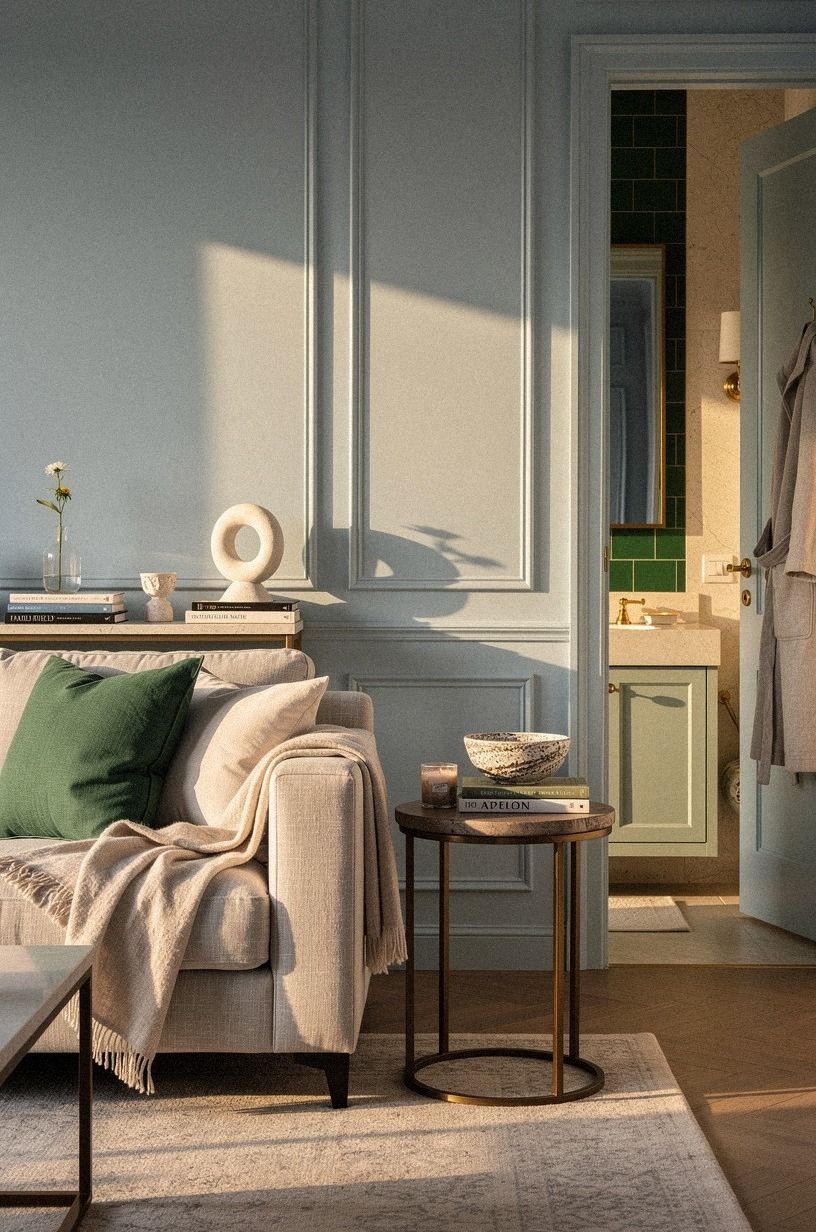
Yes, pale blue can look modern when the shape and materials stay crisp. Sherwin-Williams Sea Salt SW 6204 can work beautifully when you sharpen it with simple hardware, clean tile lines, and a substantial mirror. Emerald, gold, and cream can create the same clean contrast when you want a richer direction.
Pale blue feels old-fashioned only when it is paired with too many delicate details.
Choose a squared-off vanity, a broad mirror, and one sculptural light. Skip floral shower curtains and tiny decorative shelves here because they pull the room toward a theme.
A pale blue wall can be wonderfully calming when the floor brings weight. Try washed Belgian linen in the window treatment or towels, then add one warm gold detail.
You’ll get a peaceful room with enough texture to keep the modern bathroom design from feeling sterile. That balance matters most in a compact space.
If you’re uncertain about the undertone, compare your sample with these Japandi travertine bathroom ideas. Pale blue needs a grounded partner.
11Repeat One Blue Through the Room
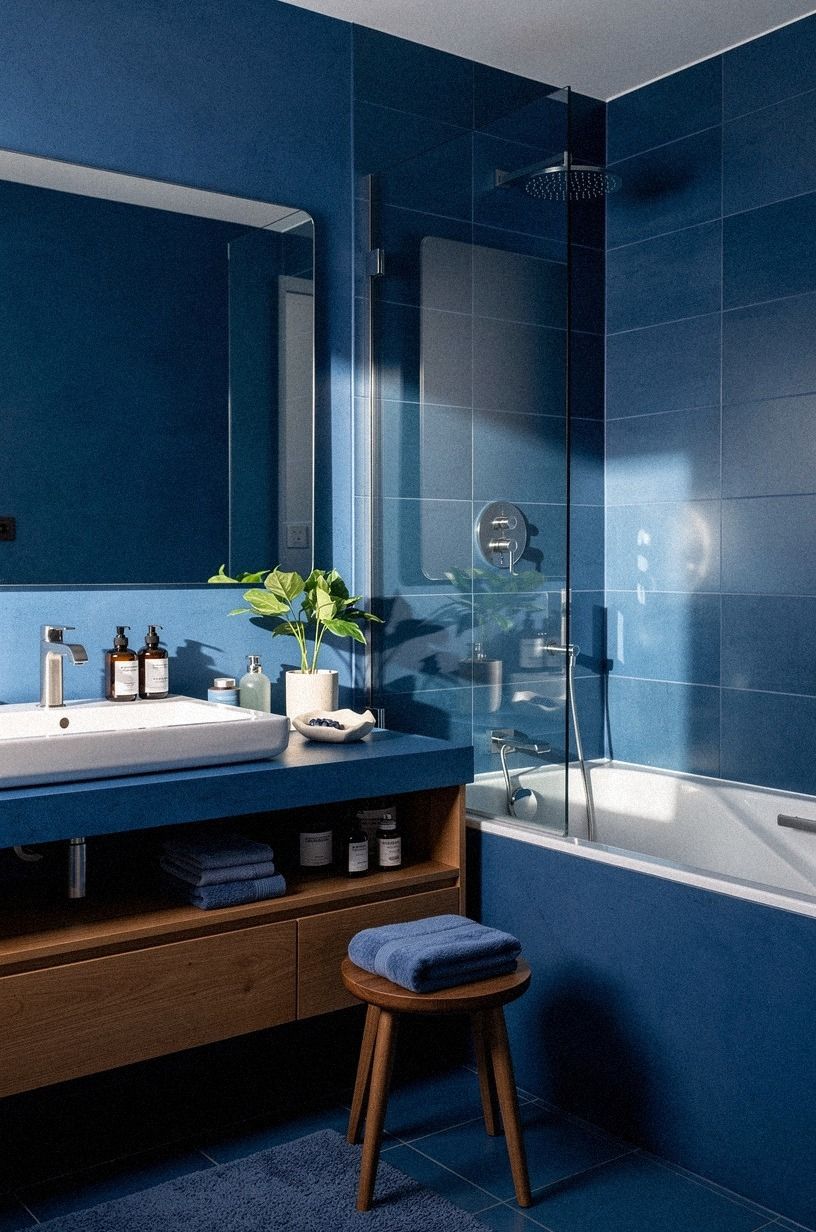
Choose one dominant blue and repeat it three times, at different scales. Farrow & Ball Studio Green might appear on the vanity wall, in a small framed print, and beside a rust-colored textile. The repetition gives your eye a path through the room.
Don’t match every color exactly. Natural oak can sit beside forest green if both share an organic quality.
Three related tones beat one exact shade used on tile, paint, art, and accessories. Too much matching can make your bathroom look staged.
You’ll also want one texture that interrupts the color. Organic bouclé, terracotta, or soft cream can do it without stealing the focus. If you’re styling a guest bath, a small ceramic cup or amber glass soap bottle adds a warm note at the sink.
Keep the surface useful, not crowded.
12Compare Tile Costs Before You Commit
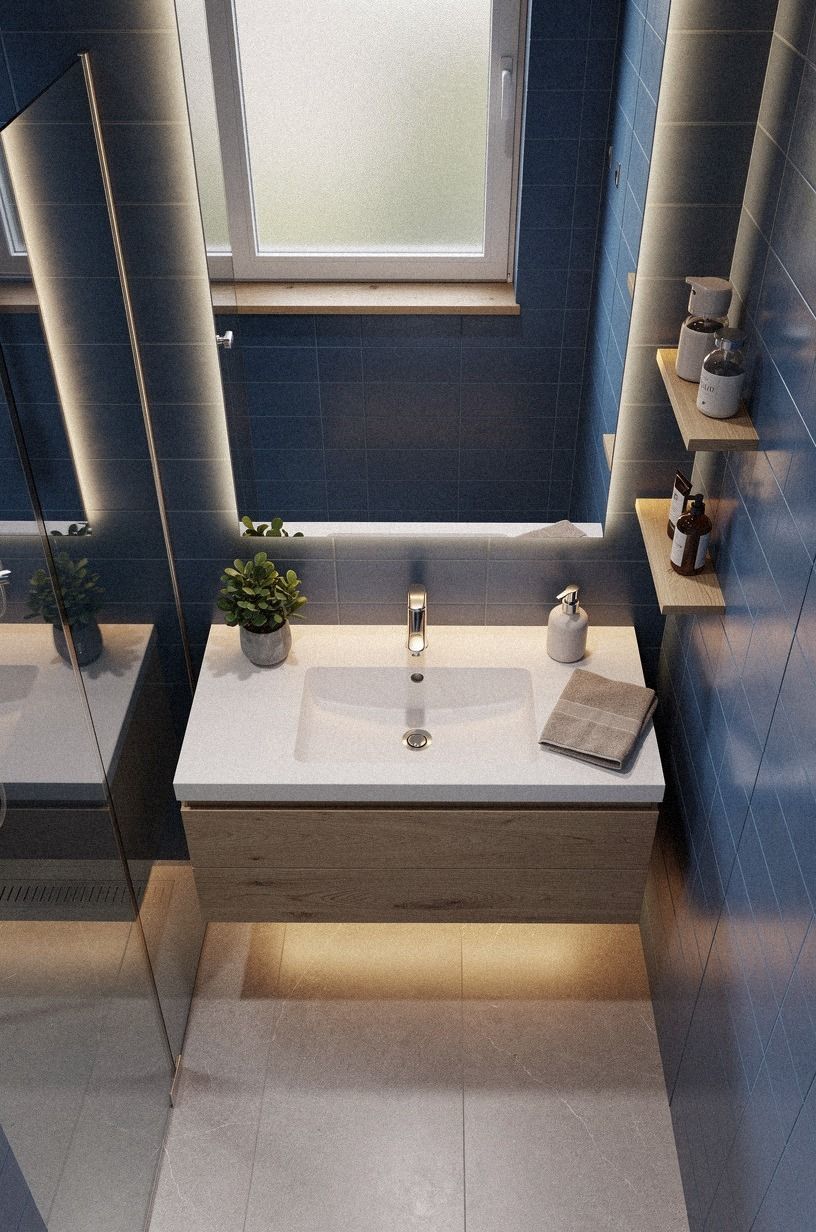
Blue bathroom ideas get expensive when you choose the finish before deciding where it matters most. Use the high-impact wall behind the vanity or shower, then keep the remaining surfaces simpler. Nero Marquina black marble with white veins can give a blue room strong contrast, but it doesn’t need to cover every inch to make an impression.
Here are the typical US cost ranges from the planning brief. Your final number will depend on room size, labor, plumbing, and the amount of tile being replaced.
For individual materials, subway tile usually gives you more coverage at a lower typical cost than zellige, while a brushed brass faucet takes a larger portion of the fixture budget. You’ll make a smarter choice if you spend on the surface you touch or see first. These modern travertine bathroom ideas can help you compare a warmer stone direction.
If your budget is limited, paint and lighting often create the biggest visible change. Save the expensive tile for the one wall you’ll notice every day.
13Add Organic Shapes Beside Clean Fixtures
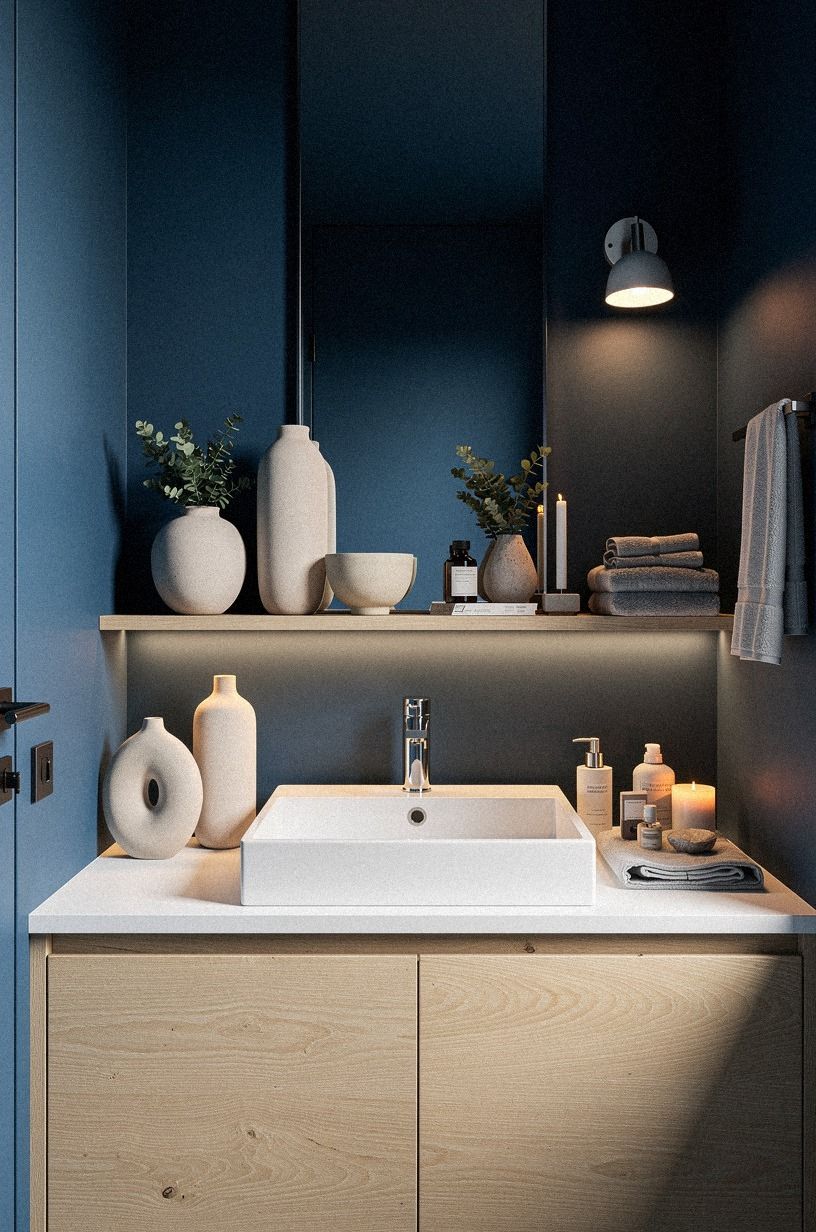
A blue bathroom can feel soft without becoming rustic. Add one rounded object, such as a deep-pile mohair velvet stool, beside a squared vanity or rectangular mirror. The contrast makes the room feel more relaxed because every line isn’t competing for attention.
Keep the organic details useful. A woven basket for spare towels, a curved stool, or a wood tray can introduce texture without adding visual clutter. Skip faux greenery with glossy leaves because it often reflects the bathroom light in a plastic-looking way.
A small real plant works if your room has enough daylight.
You can also soften the floor with a rounded mat or a quiet pattern. Your blue walls will feel more inviting when the shapes around them vary.
If you’re unsure, remove one accessory before adding another. The room should give you breathing space when you walk in.
A few natural curves can make hard tile feel much less severe.
14Protect the Layout With 21 Inches of Clearance
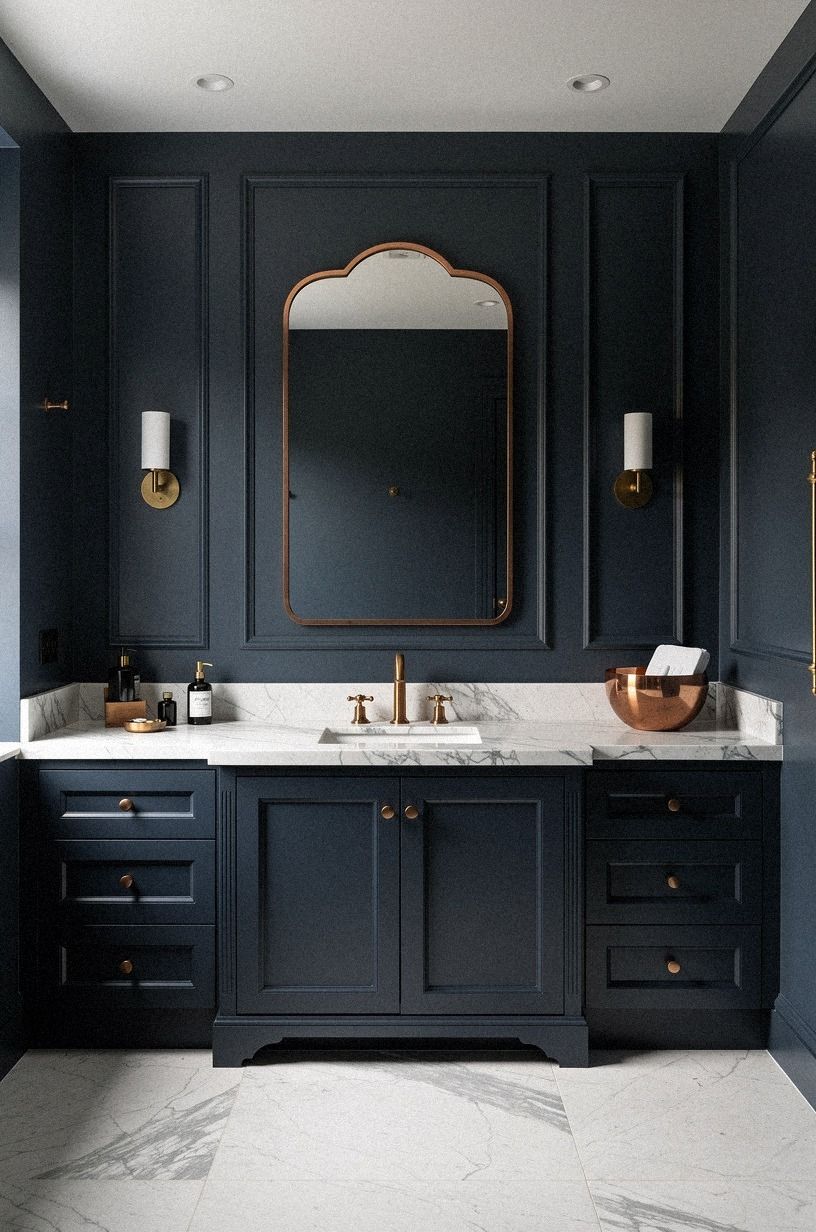
Warmth won’t rescue a bathroom that’s difficult to use.
Why Warmth Matters More Than the Blue
A blue bathroom can feel colder than the sample board suggested.
Usually the cause is the room around it: cool bulbs, white laminate, polished chrome, and a hard ceramic mat that sounds like a dropped plate every time it moves. Blue needs a counterweight.
That counterweight can be wood, and it also helps to add a warm light source at face level, a textile that absorbs sound, and at least one finish with visible variation.
Unlacquered brass develops a soft patina, while honed travertine shows natural pitting. Those surfaces keep the room from looking frozen in place.
Stop chasing the idea that modern means minimal to the point of emptiness. Your bathroom can have a soap dish, a towel with weight, and a small framed print. The goal is a serene room that works at 6 a.m., not a showroom that asks you to hide every useful object.
The best blue bathrooms have a little tension. The walls can be bold while the towels stay soft.
The vanity can look clean while the wood grain remains visible. The lighting can be practical without making your face look like it’s under an office panel.
That mix is what makes the room feel warm year-round.
Common Questions
What is the best blue bathroom look for a small bathroom?
Use one medium or pale blue wall, warm white tile, and a floating vanity. Sherwin-Williams Sea Salt SW 6204 can keep the room bright, while an IKEA floating cabinet leaves more floor visible. You’ll get a calmer, airier layout without covering every surface in blue.
Where can you find blue bathroom pieces on a budget?
Look at IKEA, Wayfair, and Target for mirrors, towels, lighting, and storage. Facebook Marketplace and local thrift shops can also turn up wood-framed mirrors and stools. Compare dimensions first, because a low price won’t help if your cabinet blocks the door.
How much does a blue bathroom update cost?
A cosmetic update typically falls within the $200-$1,200 budget tier for paint, a mirror, a faucet, and textiles. You can spend nothing on layout if you reuse your vanity and shop your home for baskets, art, and towels.
How do you keep blue from making a bathroom feel cold?
Start with light: side sconces with warm white bulbs do more than any paint change. Then add wood, aged brass or copper, and a textile with some weight. Benjamin Moore Chestertown Buff HC-9 can warm an adjacent wall if the blue still reads icy.
Is a blue bathroom worth it in a small space?
Yes, because a small room lets you use a stronger color with less material and less labor. Keep the vanity between 32 and 36 inches high, protect the 21-inch toilet clearance, and place the deepest blue behind the mirror so the room has a clear focal point.
Can you use deep blue in a rental bathroom?
Yes. Use removable wallpaper or a peel-and-stick backsplash on one protected wall, a tension rod for textiles, and a freestanding cabinet instead of changing plumbing. Warm wood accessories can make the blue feel settled, and you can take every major piece with you later.
Where to Start
Start with the lighting. Cool overhead light makes even warm blue look harsh, while side sconces reveal the wood, tile, and brass you already have.
Pin this idea for later and compare it with these warm bathroom lighting ideas before you repaint. You can also review these modern bathroom mirror ideas before choosing the final frame.
Four small changes can shift the whole room.