
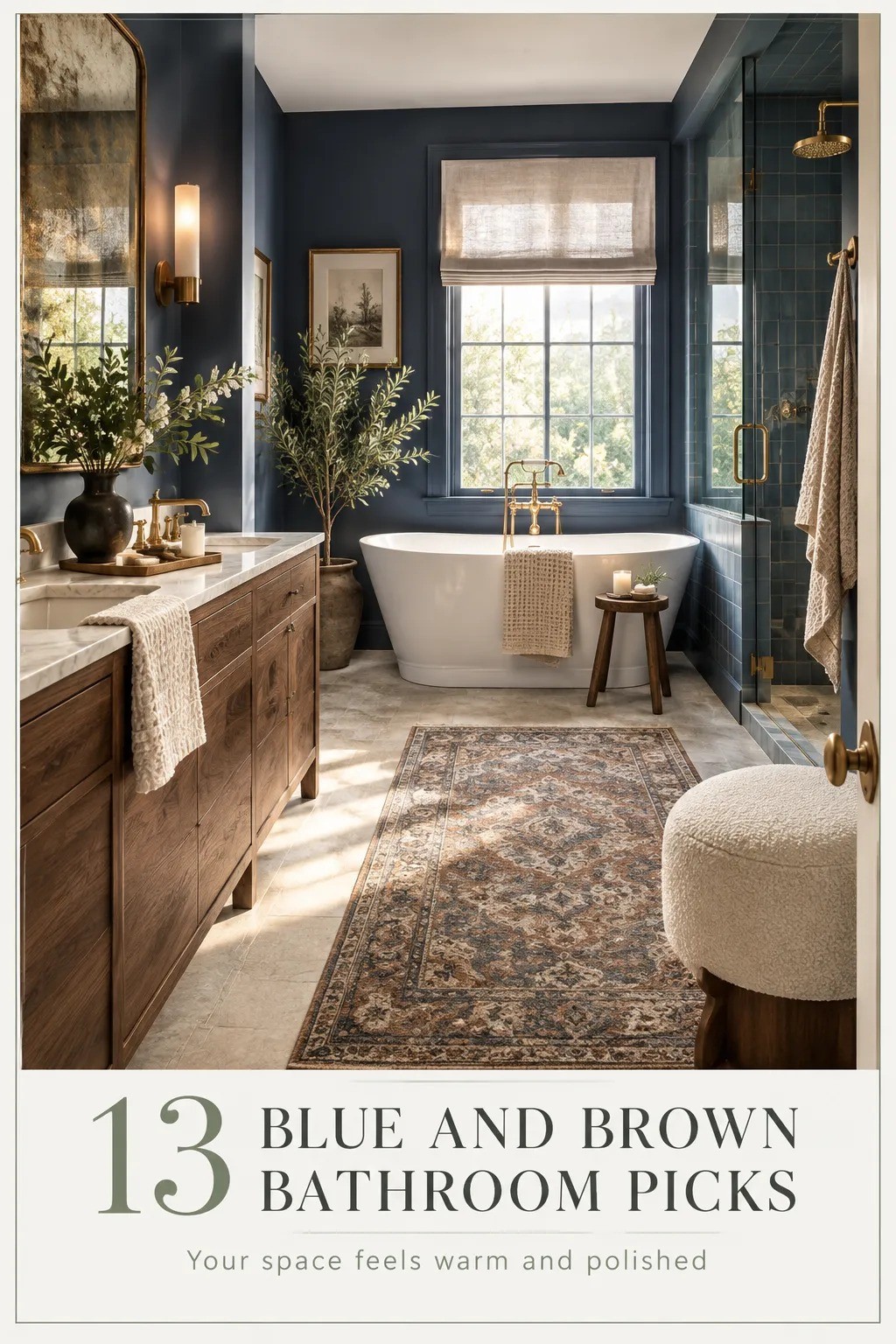
A blue and brown bathroom feels warm when blue handles the walls and brown brings in tactile weight through wood, leather, woven fibers, or aged metal. I learned that after one room stayed cold despite new towels and fresh paint. The fix was balance, not more decoration. Here’s the step-by-step plan.
- Start with the blue you can live with
- Test the paint beside your real wood
- Anchor the room with The Two-Wood Rule
- Choose blue tile over another painted wall
- Build the Brown Vanity Zone
- Layer the Three-Height Light Stack
- Let the Mirror Frame Carry Warmth
- Bronze Over Bright Chrome
- Layer Textiles with Earthy Contrast
- What Does Your Small Bathroom Need First?
- Hang Art that Repeats the Room’s Undertones
- Vintage Character, Clean Lines
- Finish with One Living Detail
1Start with the blue you can live with
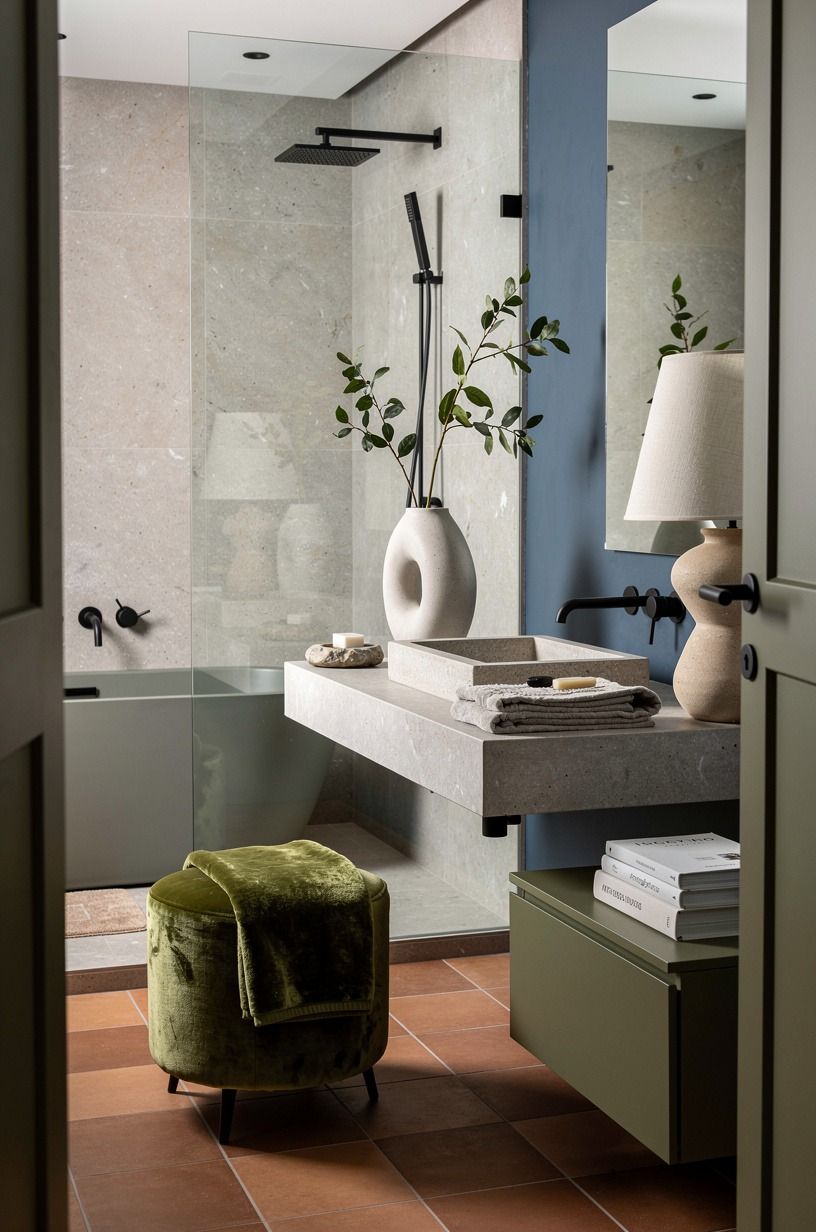
Choose the blue before you choose the brown. Farrow & Ball Hague Blue No.30 gives a moody, dramatic bathroom, while Sherwin-Williams Sea Salt SW 6204 keeps a small room airy and gentle. If you’re working with limited daylight, test both on a board and watch them from morning through evening.
You’ll want the blue to support the brown, so consider its undertone carefully. I’d skip bright royal blue beside orange-toned wood because the contrast can feel sharp and dated. A dusty navy, blue-gray, or softened teal has more staying power.
For a softer direction, compare these light blue bathroom ideas before you commit. You may notice that the most inviting examples rely on dusty color, pale trim, and warmer accessories rather than a single strong blue.
Paint samples, a clean brush, and one quiet afternoon are enough to get started. Don’t trust the store lighting!
Put your sample beside the mirror, under the vanity light, and near the shower. Your eye will catch shifts that a small paper swatch hides.
If your bathroom faces north, a blue with a little green can stop the room from feeling icy. In a sunny bathroom, a blue-gray or restrained navy may feel more balanced.
I’d also test the color against your white porcelain fixtures. Some whites look creamy beside blue, while others suddenly appear gray.
2Test the paint beside your real wood
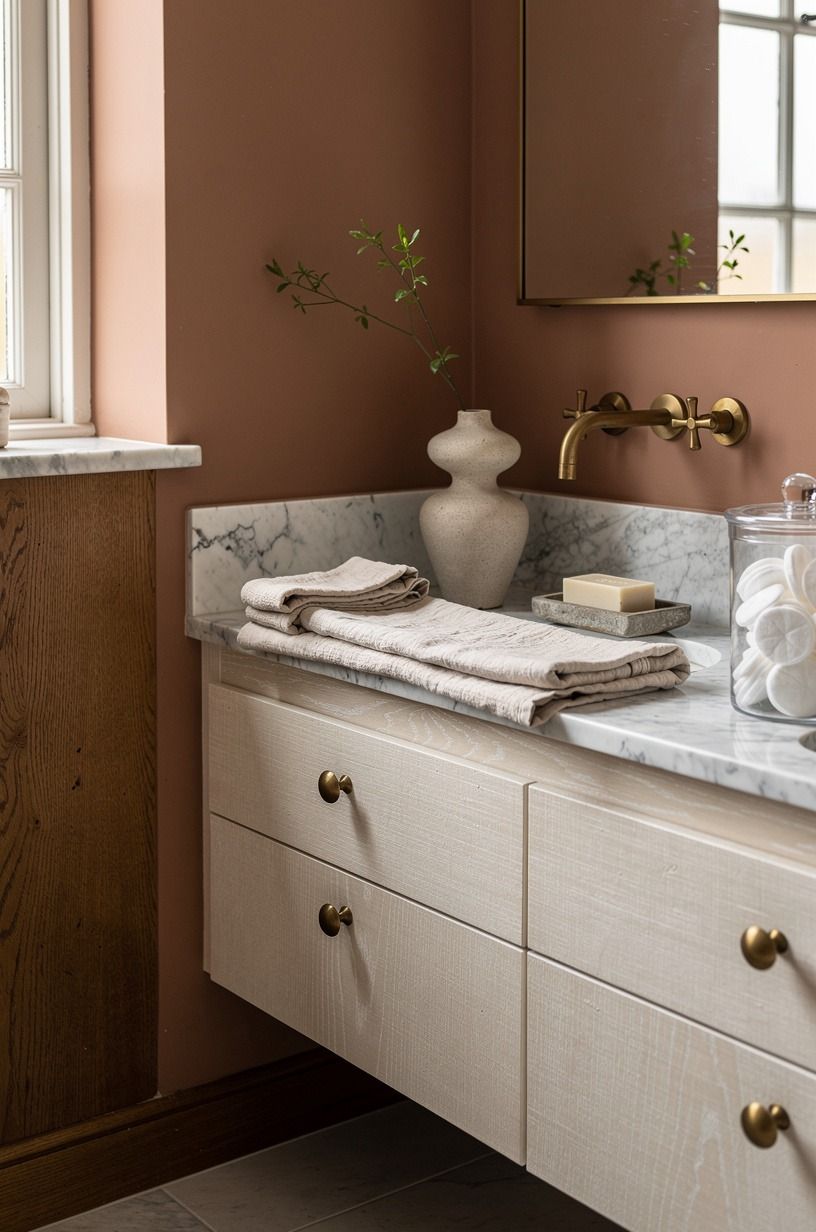
Paint the blue sample beside the material you’ll keep. Your vanity, floor, door, or shelf will change the color more than a tiny paper swatch can show. Benjamin Moore Chestertown Buff HC-9 is a useful warm accent if your brown leans toward walnut, but it can look yellow beside reddish oak.
I once chose a blue from a screen and watched it turn violet beside a dark vanity. Not ideal.
You’ll want two coats on a 12-by-18-inch board, then move it around the room. Look at it beside your mirror and under every bulb.
If the brown has gray undertones, choose a blue with some gray too. That shared undertone is what makes the room feel serene instead of assembled.
You can also place a small piece of your flooring sample beside the test board. The floor often reveals more than the cabinet sample.
Before you buy several gallons, compare the sample with white and cream travertine bathroom ideas. Pale stone can make a dark blue feel elegant, but it can also expose a brown that looks too orange.
Your goal is a blue that changes pleasantly through the day. In the morning, it should feel fresh.
At night, it should become intimate rather than murky. If the color looks beautiful for only one hour, keep testing.
3Anchor the room with The Two-Wood Rule
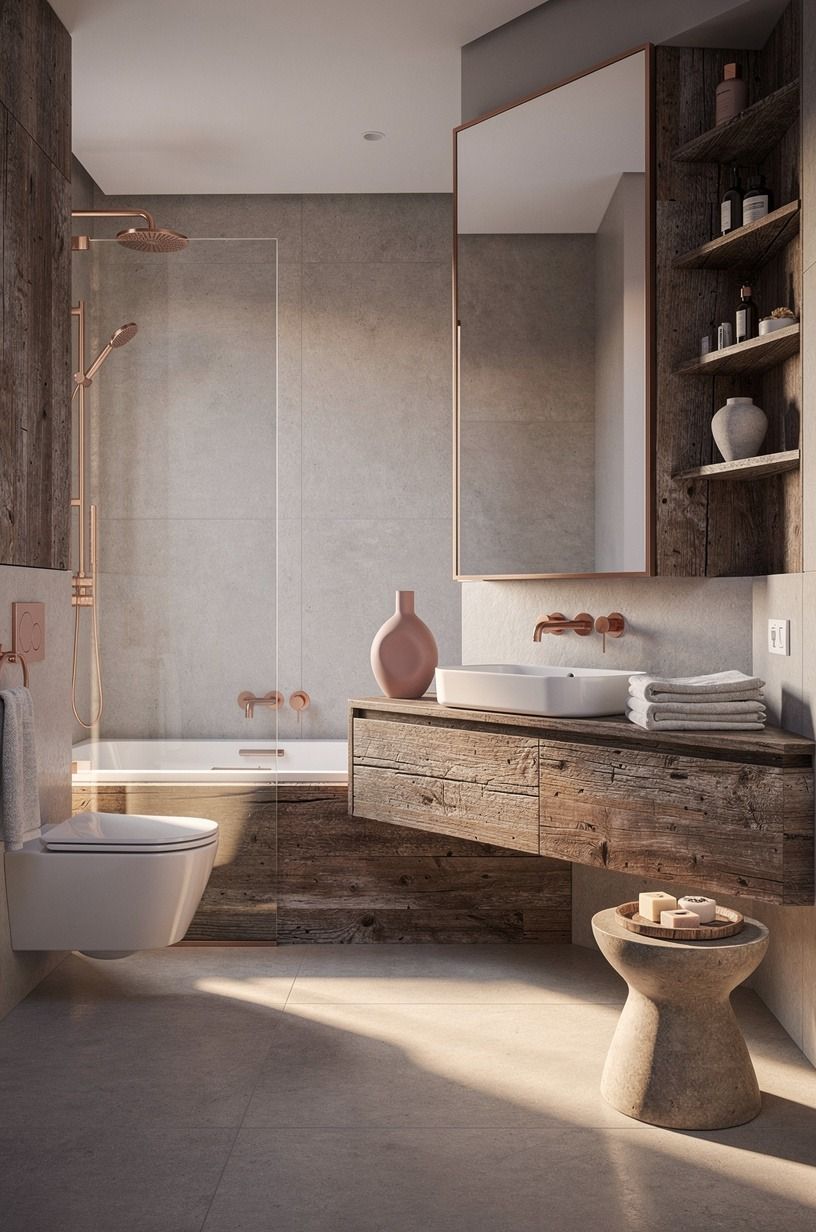
Use one main brown wood, such as reclaimed weathered teak, and one supporting wood tone.
4Choose blue tile over another painted wall
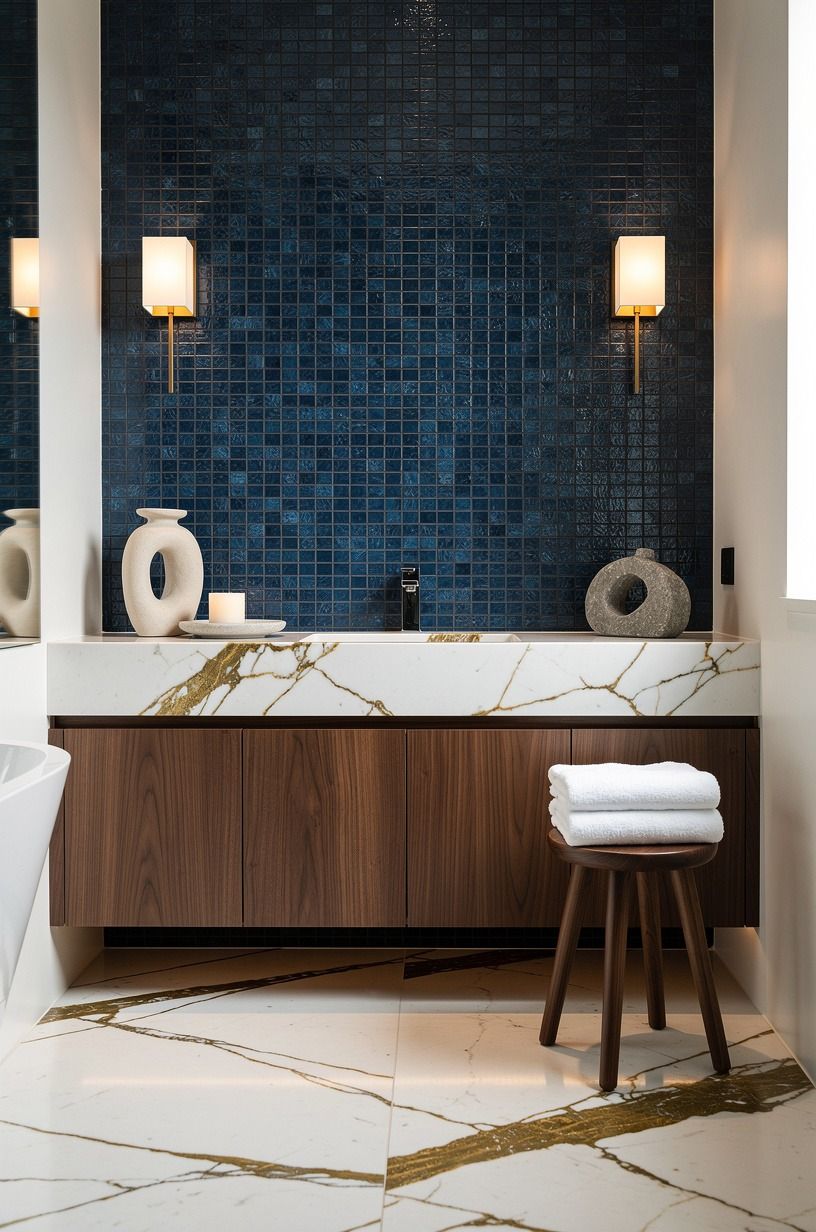
Blue tile gives your bathroom a surface that catches light, holds color, and survives splashes better than ordinary paint. Calacatta marble with gold veining connects blue tile to a warmer brown palette, bringing a quieter, lived-in quality to a shower or backsplash.
You don’t need to tile every wall. A strip behind the vanity or a shower surround can carry the room. Zellige typically runs $15-$35 per square foot, while subway tile is often $2-$10 per square foot, so your budget matters.
If you’re trying to control cost, use blue tile in one zone and paint the rest. This lets the tile become the memorable detail while the brown vanity and textiles do the warming work. For another calm direction, revisit these light blue bathroom ideas, especially if your room needs more brightness.
A glossy tile reflects more light, while a matte tile feels quieter and more grounded. A handmade tile adds movement through variation, but a uniform ceramic tile gives you a cleaner, more restrained finish. You’ll want to decide whether the room’s character should come from color or texture.
Keep the grout in the same family as the tile if you want a seamless effect. A contrasting grout can make a small wall look busier. If you already have patterned flooring, choose the calmer tile.
Your bathroom needs one leading idea.
5Build the Brown Vanity Zone
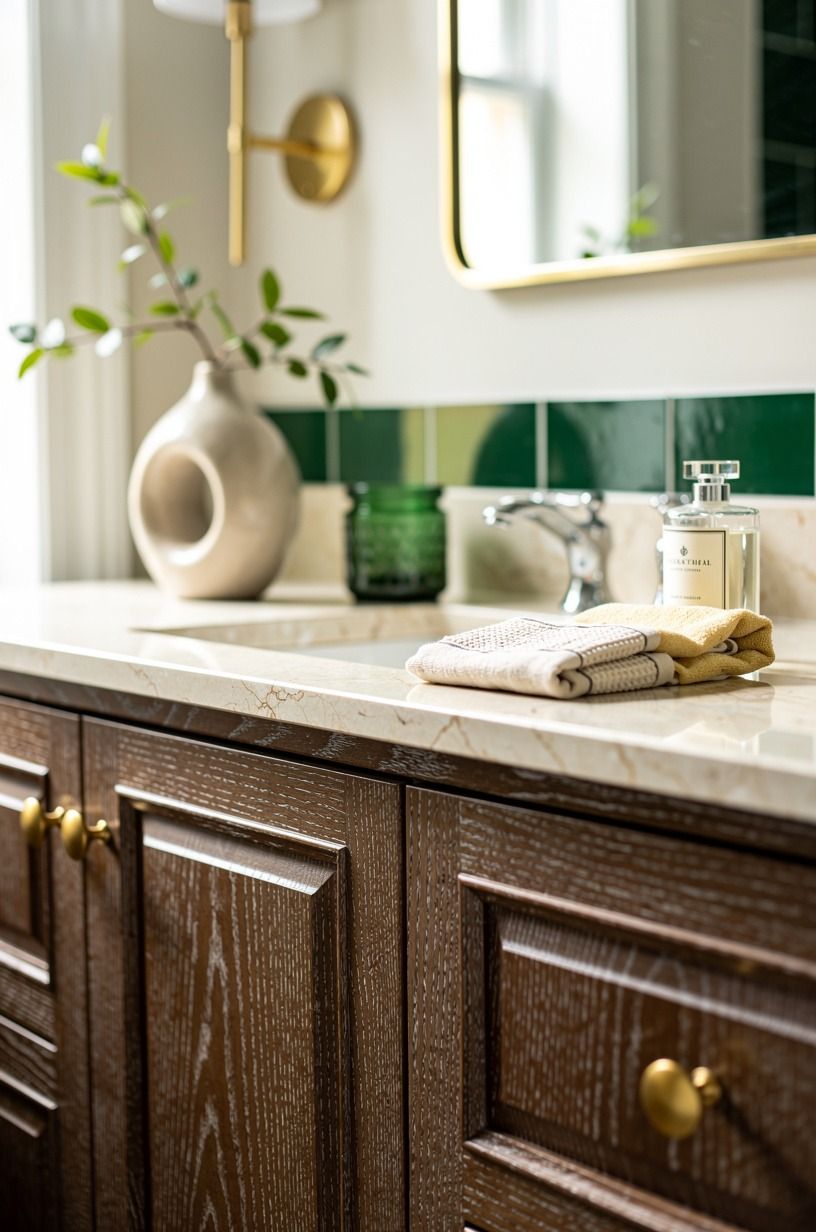
Treat the vanity as the room’s furniture, not just a place for plumbing. A cerused white oak vanity gives you visible grain and a softer brown than espresso, while a walnut finish brings more drama against pale blue walls. You’ll want the vanity height between 32 and 36 inches, which is the standard comfortable range.
Keep the counter quiet. A honed marble top with gray veining can connect the blue to the brown without adding another loud color. I’d skip a busy granite pattern here because it tends to make the small room feel chopped up.
A cerused white oak stool or open shelf can carry that warm note without bringing upholstered leather beside the sink. Your vanity should feel grounded, not heavy. If the cabinet is visually dark, choose a pale countertop and leave some wall visible below it.
You can also use a freestanding console vanity if your bathroom has an interesting floor. The exposed legs create a lighter silhouette, while a wall-mounted cabinet gives you more contemporary clarity. I’d choose the style that supports your room’s proportions rather than chasing a specific trend.
For a lighter renovation, keep the existing cabinet and change only the pulls, counter, or finish. Brushed brass pulls can make a plain brown vanity feel intentional without forcing you into a full replacement.
Before ordering, measure the door swing, toilet clearance, plumbing location, and drawer depth. A gorgeous vanity that blocks the doorway will become a daily irritation. Your best design decision should also make the room easier to use.
6Layer the Three-Height Light Stack
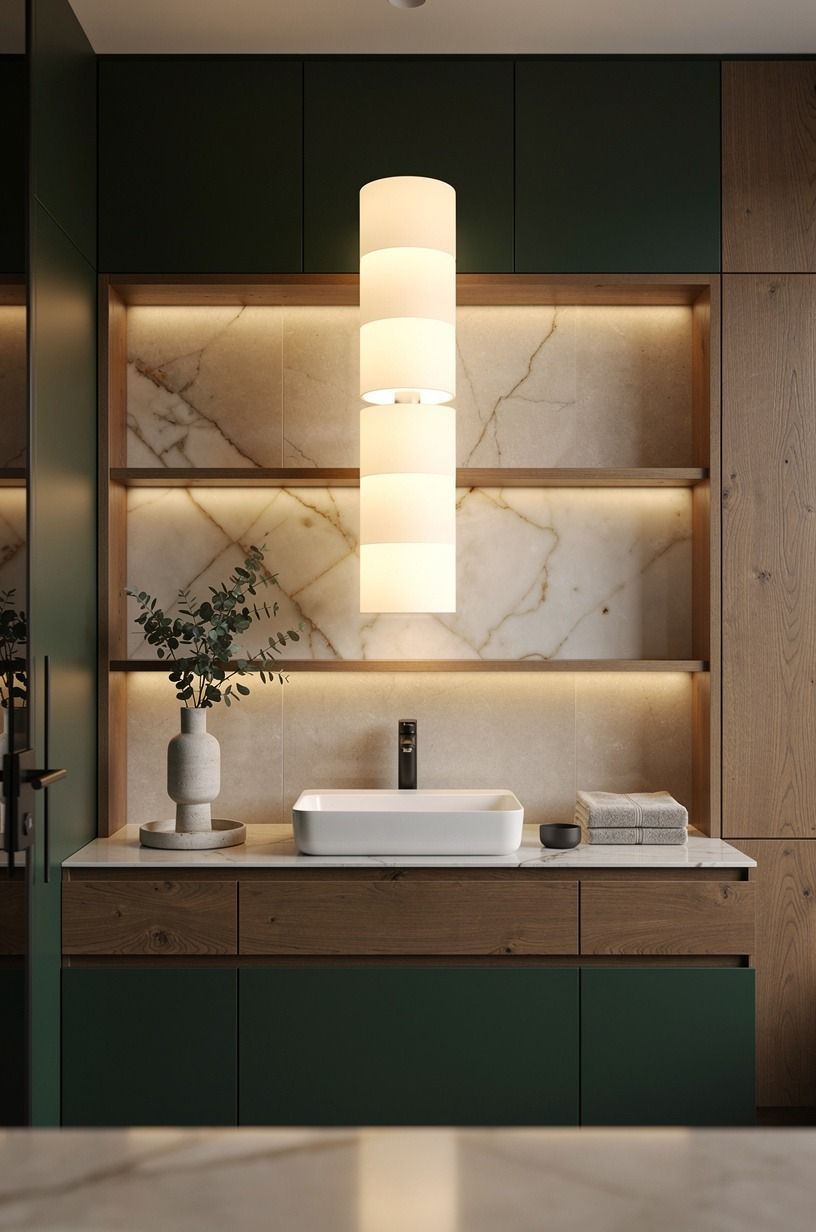
Build light at three heights: ceiling, face level, and a low glow through backlit translucent onyx.
7Let the Mirror Frame Carry Warmth
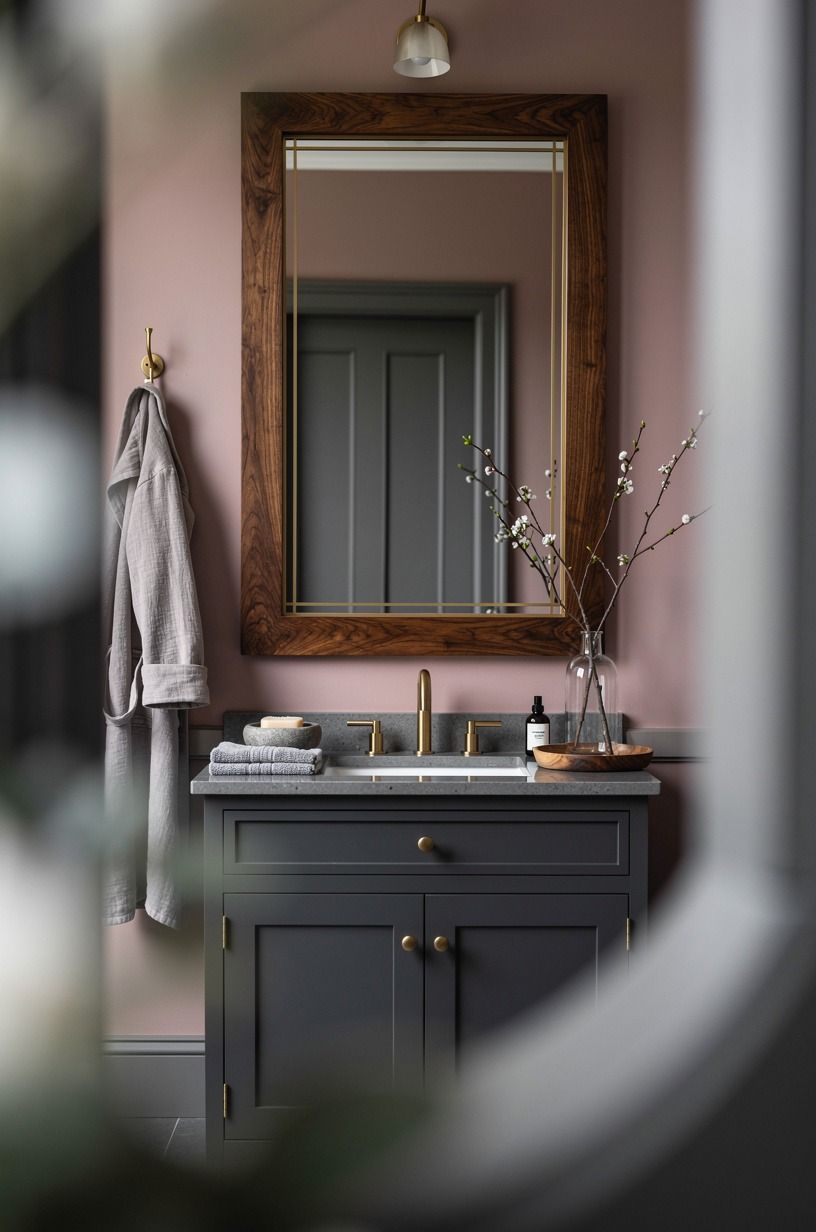
A mirror is the largest visual object above most bathroom vanities, so its frame can carry the brown half of your palette. Try unlacquered brass, book-matched walnut, or a dark bronze frame against blue paint. The metal will slowly develop a softer patina, which is more interesting than a finish that stays shiny forever.
Choose a round mirror if your vanity and tile lines are mostly square. Choose a rectangular mirror if your room needs height. You’ll want enough clearance for the faucet and sconces, but don’t push the mirror so high that your ceiling disappears.
I’d skip a frameless mirror with a cold chrome edge if the room already feels stark. A warmer frame gives your eye a place to rest and makes the whole arrangement feel more intentional. If the bathroom has a low ceiling, a tall rectangular mirror can create a surprisingly elegant lift.
A dark frame works best when another dark element appears elsewhere, such as a thin shelf bracket or small art detail. Otherwise, it can look isolated. For a gentler effect, choose a medium oak frame with a matte finish.
You can also use the mirror to repeat the geometry of the room. An arched top softens square tile, while a simple rectangle reinforces a clean, modern layout. The right shape can make your blue-and-brown combination feel deliberate before you add anything else.
8Bronze Over Bright Chrome
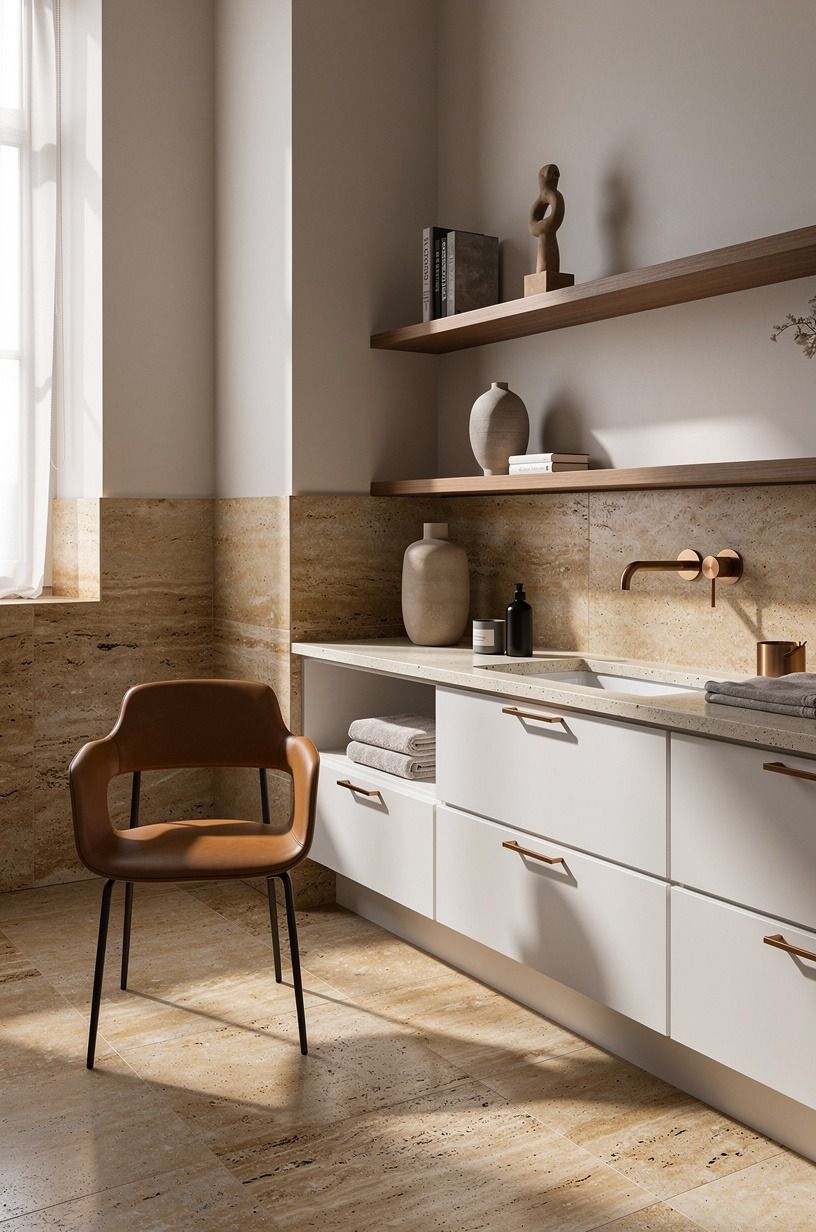
Chrome reflects a lot of light and can make blue look colder. Aged bronze, oil-rubbed bronze, or brushed brass gives the room more visual warmth.
You don’t have to replace every fixture, though. Your faucet, cabinet pulls, towel hooks, and light fixture can share one main finish while a second finish appears only once.
I prefer brushed brass with mid-tone blue because it creates a soft, elegant contrast. With dark navy, aged bronze feels more grounded. Don’t mix three shiny metals in one small bathroom.
That choice will compete with the tile and wood.
If you’re keeping an existing chrome faucet, use chrome in the mirror or lighting too, then add brown through woven baskets and a wood stool instead. This keeps your renovation focused and saves money for the details you’ll touch every day.
Aged finishes work especially well with handmade tile because both have subtle variation. A highly polished faucet beside irregular tile can still work, but it creates a sharper mood. Your choice depends on whether you want the room to feel crisp, rustic, or quietly collected.
Look at samples beside your blue tile before committing. Bronze can appear almost black in a dim room, while brushed brass can become very yellow next to warm wood. A small sample is inexpensive insurance.
9Layer Textiles with Earthy Contrast
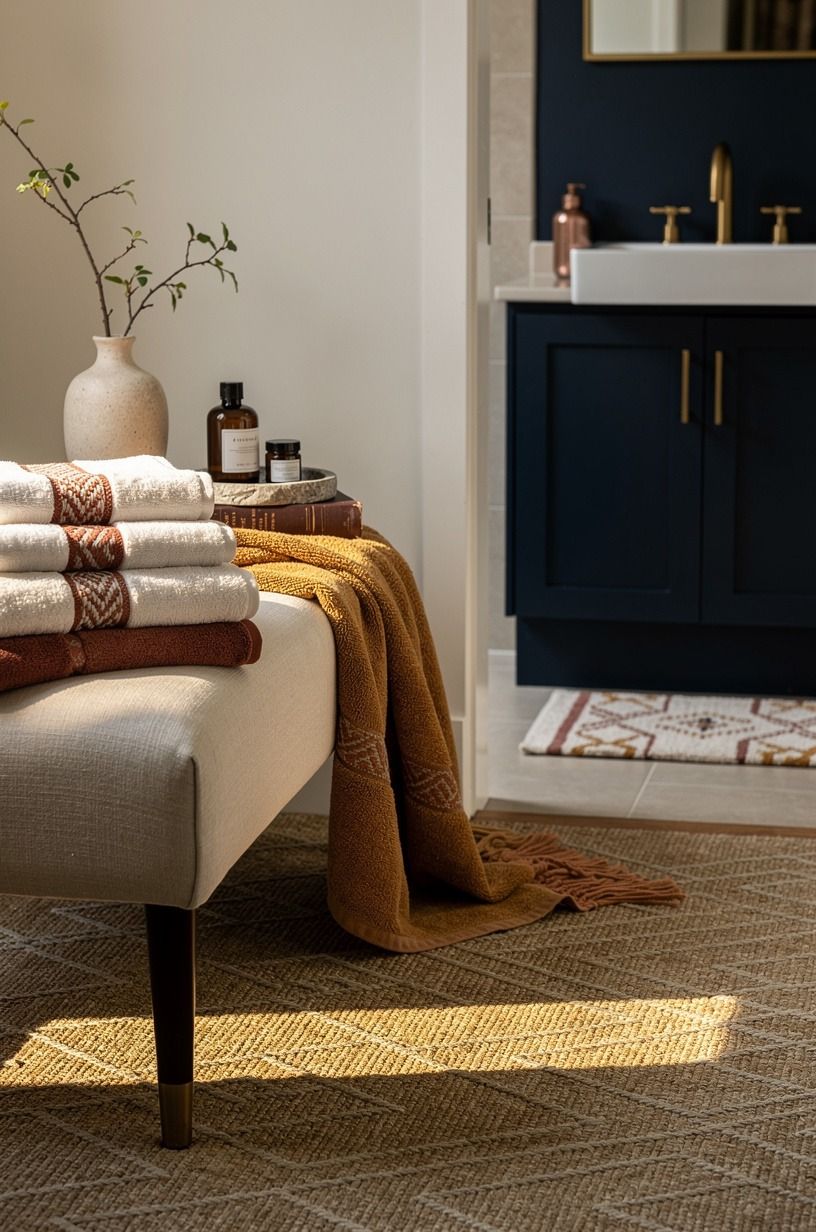
Textiles are the fastest way to make a blue and brown bathroom feel comfortable. Start with a 600gsm Turkish cotton bath mat or towel, then add a thinner waffle towel for texture.
Brown doesn’t have to mean chocolate. Cognac, tobacco, camel, and mushroom can all warm a blue room without making it rustic.
Your shower curtain is a large color field, so take it seriously. A cream curtain with narrow brown stripes can soften a deep blue wall, while a muted terracotta pattern gives a pale blue bathroom more energy. I’d skip a fully matching towel set because it looks flat and overly planned.
Two shades of brown, one blue, and one quiet neutral are plenty. The goal is soft, relaxing contrast, not a themed hotel suite. You can use a small woven basket, a linen hand towel, and a cotton bath mat to create three different textures without crowding the room.
Hang towels where you can actually reach them. A beautiful ladder that sits across the room will frustrate you every morning. If the space is tight, a simple hook rail may be more useful than a decorative rack.
Washable rugs can bring pattern into a bathroom, but check the backing and moisture rating first. A thick rug that stays damp will undermine the calm atmosphere quickly. Your room should feel inviting and practical at the same time!
10What Does Your Small Bathroom Need First?
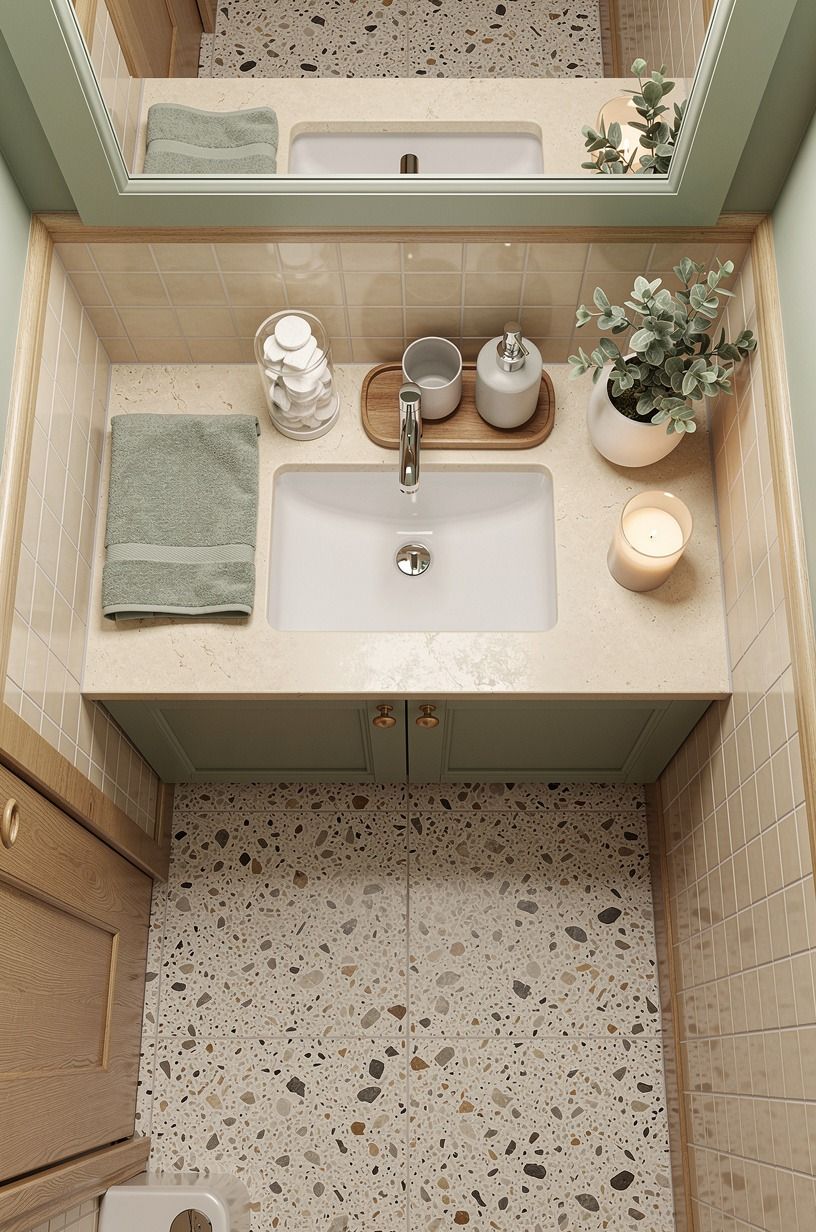
A small bathroom can handle dark blue, but your layout has to protect the light.
11Hang Art that Repeats the Room’s Undertones
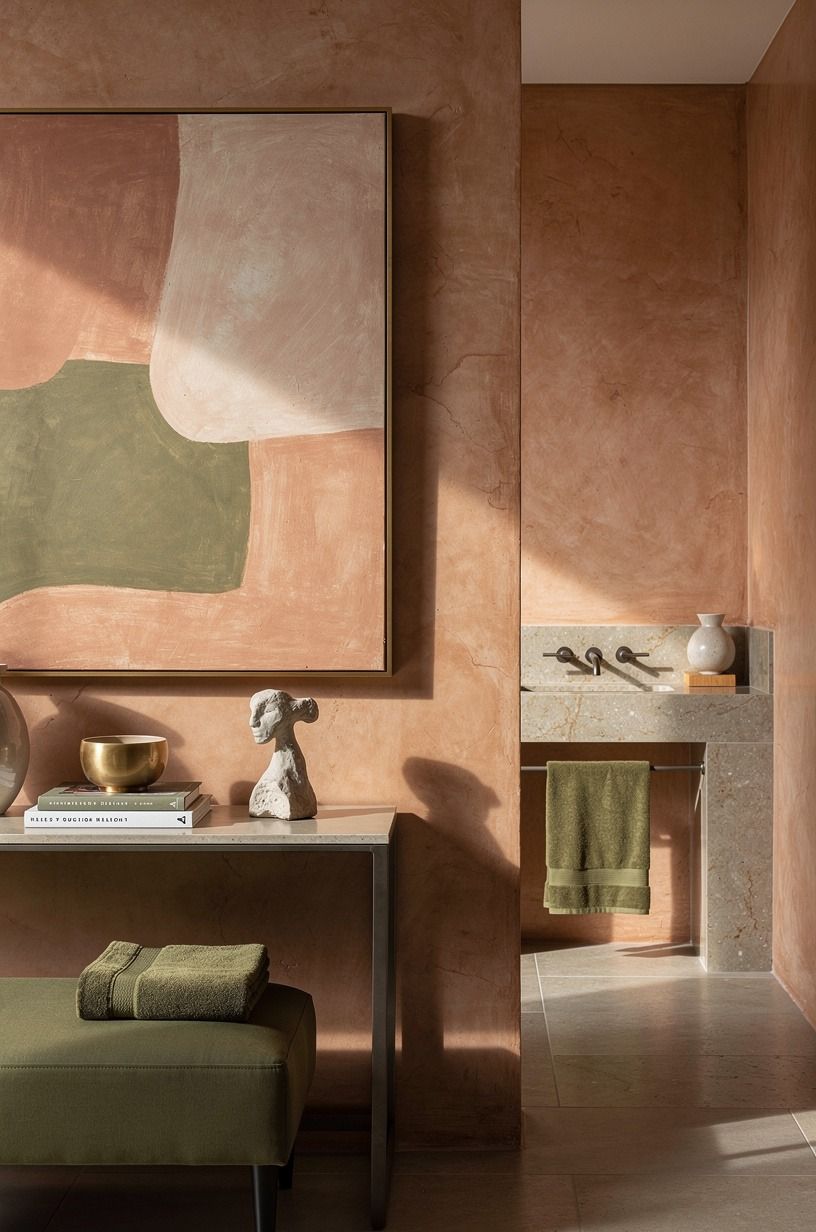
Art gives you a chance to connect blue and brown without adding another large renovation expense. Look for a small landscape with blue-gray sky, umber ground, and cream highlights. A vintage botanical print, framed in walnut, can make the room feel collected rather than decorated all at once.
Protect paper from direct steam with a frame that has a sealed back and place it outside the wettest zone. You’ll want the lower edge high enough to avoid splashes but low enough to relate to the vanity.
I’ve found that one 18-by-24-inch print often feels stronger than four tiny pieces scattered around the room. And if you’re drawn to old bathroom decor ideas, choose one antique-looking object and let it breathe instead of filling every shelf.
A small ceramic artwork can be more forgiving than paper in a humid room. Look for handmade pottery, a shallow relief, or a simple framed textile. These materials add dimension while staying connected to the natural brown note.
Use the art to introduce a quiet third color. Cream, rust, ochre, or muted green can enrich blue and brown without changing the main palette. You don’t need a gallery wall to make the room memorable.
For more ideas about keeping warm surfaces restrained, revisit white and cream travertine bathroom ideas.
12Vintage Character, Clean Lines
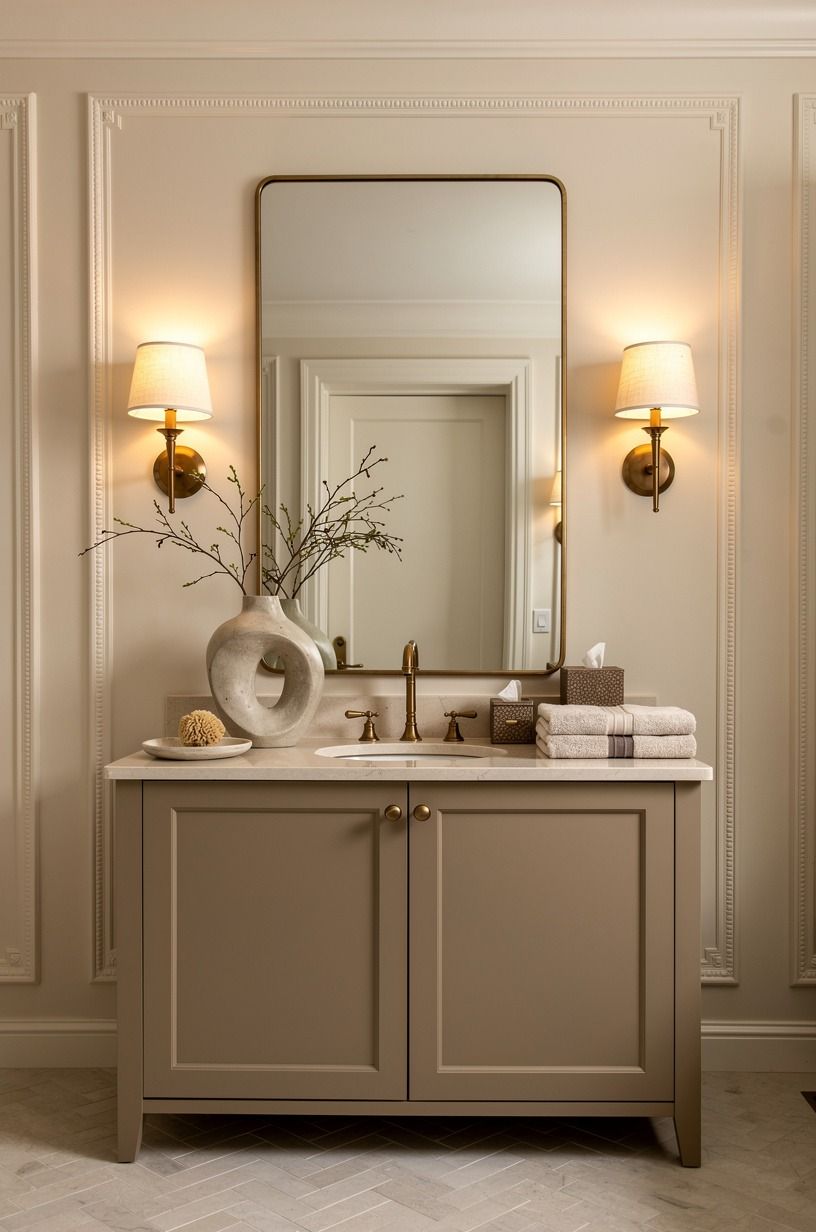
A small vintage bathroom with shagreen accents can feel warm, but too much texture will make the room feel busy.
13Finish with One Living Detail
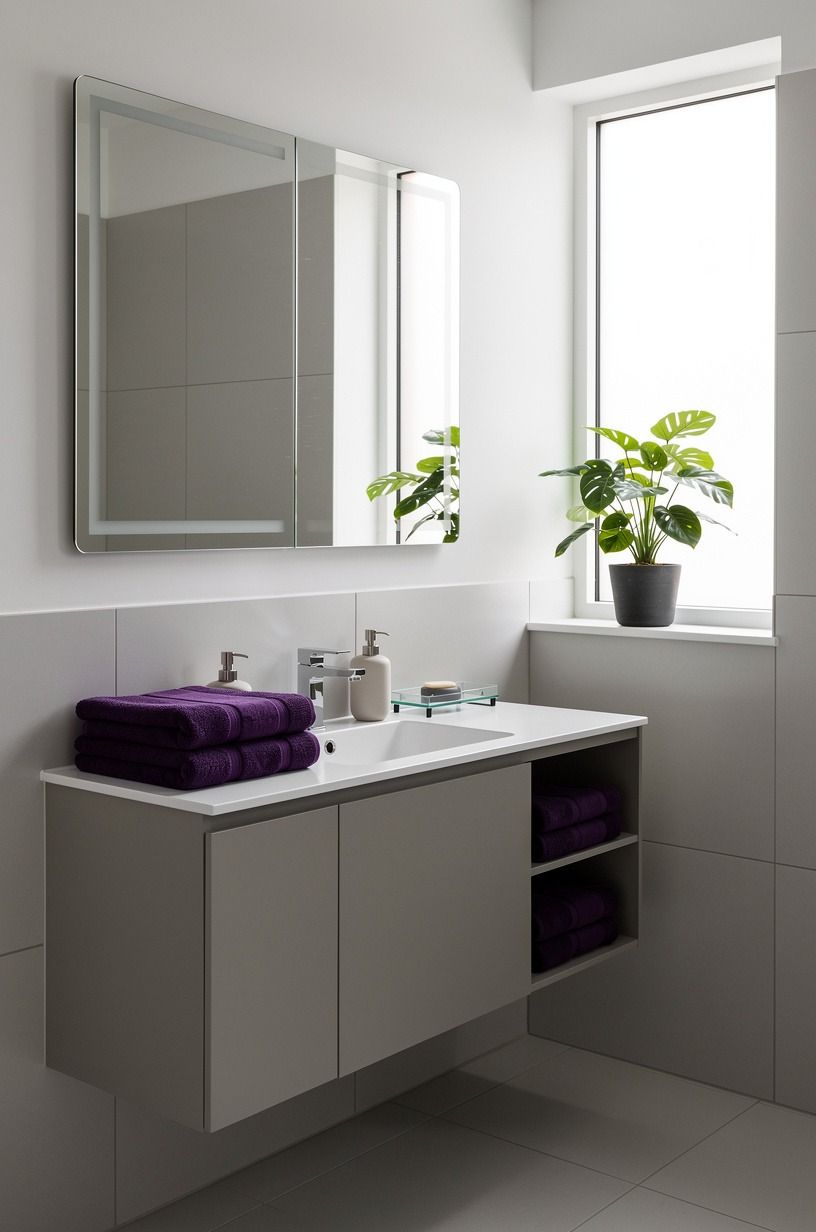
Finish the room with something alive or visibly handmade. A small olive tree, trailing plant, or vase of eucalyptus can soften the tile and wood while adding a gentle green note. If your bathroom has little daylight, choose a durable low-light plant or use a realistic dried arrangement.
You can also bring in a handmade soap dish, carved brush, woven container, or irregular ceramic cup. These little details keep the room from feeling assembled from a catalog. I’d choose one object with a pleasing imperfection rather than several decorative pieces competing for attention.
Keep the living detail away from direct splashes and give it enough airflow. A plant that struggles in a dark, damp corner will make the room feel neglected. Your final choice should be easy to care for.
This is also the moment to remove one thing. If the counter feels crowded, take away the extra tray. If the shelf looks busy, keep the most useful object and the most beautiful one.
A calm room usually has a little empty space.
Why Brown Makes Blue Feel More Restful
Blue is often treated as the calming color, but blue alone can become chilly in a bathroom. Tile, porcelain, glass, and metal already give the room plenty of hard reflection. Brown introduces visual weight and the suggestion of natural materials, even when the actual space is small.
I’ve tried the all-blue route, and it needed more warmth than I expected. The room looked crisp in daylight but felt clinical at night.
Brown fixed that because it absorbed some of the light and gave the eye a resting point. You’ll notice the same effect with woven linen, aged bronze, and oak grain.
The decision isn’t really blue versus brown. It’s about which one gets the larger surface and which one carries the tactile detail. Let blue lead on walls or tile, then let brown appear in the vanity, frame, stool, and textiles.
If you reverse that balance, the room can become dark quickly. A blue wall with a medium-brown vanity is the safer starting point for most homes. In a bright bathroom, however, a darker brown floor or ceiling detail can create a dramatic, luxurious mood.
And don’t confuse calm with bland. A hand-glazed tile edge, a brass surface that changes over time, or a towel with visible loops can give you enough texture. The best rooms have a little friction.
Your bathroom should feel serene, but not so polished that nobody wants to leave a toothbrush there.
For more pale-surface inspiration, revisit these white and cream travertine bathroom ideas. They’re especially helpful when your blue feels too intense or your brown vanity needs a lighter backdrop.
A Few Things Worth Answering
What is the best blue and brown bathroom idea for a small bathroom?
A floating medium-wood vanity with soft blue walls is the strongest starting point. It keeps your floor visible and adds warmth without crowding the room.
A rounded mirror and pale towels will reflect light, while one narrow oak shelf gives you storage without making the walls feel busy. You can also compare these light blue bathroom ideas if the room has limited daylight.
Where can I buy blue and brown bathroom pieces on a budget?
Look at IKEA, Target, and Wayfair for vanities, mirrors, towels, and lighting, then check Facebook Marketplace or local thrift stores for wood stools and framed art. Your best savings usually come from secondhand furniture, paint samples, and keeping the existing plumbing. I’d spend first on the mirror and lighting because you’ll notice them every day.
How much does a blue and brown bathroom makeover cost?
A light refresh usually costs about $200-$1,200 for paint, a mirror, faucet, and textiles. A mid-range update can reach $3,000-$9,000 with a new vanity, partial tile, and lighting.
Larger shower, floor, and plumbing work often runs $12,000-$30,000 or more. Your final price will depend on labor, tile selection, layout changes, and whether hidden water damage appears.
Can I create a blue and brown bathroom on a budget?
Yes, and you can start without changing the tile. Paint one wall, replace the shower curtain, add brown textiles, and switch the cabinet pulls.
A framed mirror often gives you more visual impact than several small accessories, especially when you’re keeping the existing vanity. These light blue bathroom ideas can also help you choose a paint direction before spending on materials.
Is a blue and brown bathroom worth it in a small space?
Yes, because the palette gives a small room depth without demanding a full renovation. Keep the blue lighter if the room has little daylight, then use brown below eye level through the vanity, mat, or baskets.
Your wall space will stay calmer and the floor will look more open. A pale surface reference such as these white and cream travertine bathroom ideas can help you balance a deep shade.
Is a blue and brown bathroom a good idea for a rental?
Yes. Use removable wallpaper or peel-and-stick tile only where the surface is suitable, then add a tension rod, temporary mirror, woven storage, and removable cabinet pulls. A wood stool can bring in the brown note without drilling, painting, or changing anything permanent.
You can also use a framed print and washable textiles to create character that moves with you.
Where I’d Start First
If I had to pick one step, I’d start with the medium-brown vanity. It gives blue something substantial to lean against, and its grain still looks warm under ordinary bathroom lighting. Pin the vanity idea for later, then test your blue beside real wood before buying paint.
That sample can save you an expensive repaint.
Before you make the final choice, compare the room with these light blue bathroom ideas and then check the warmer balance in these white and cream travertine bathroom ideas. You’ll know which direction feels like your bathroom, not just a palette that looked good on a screen.