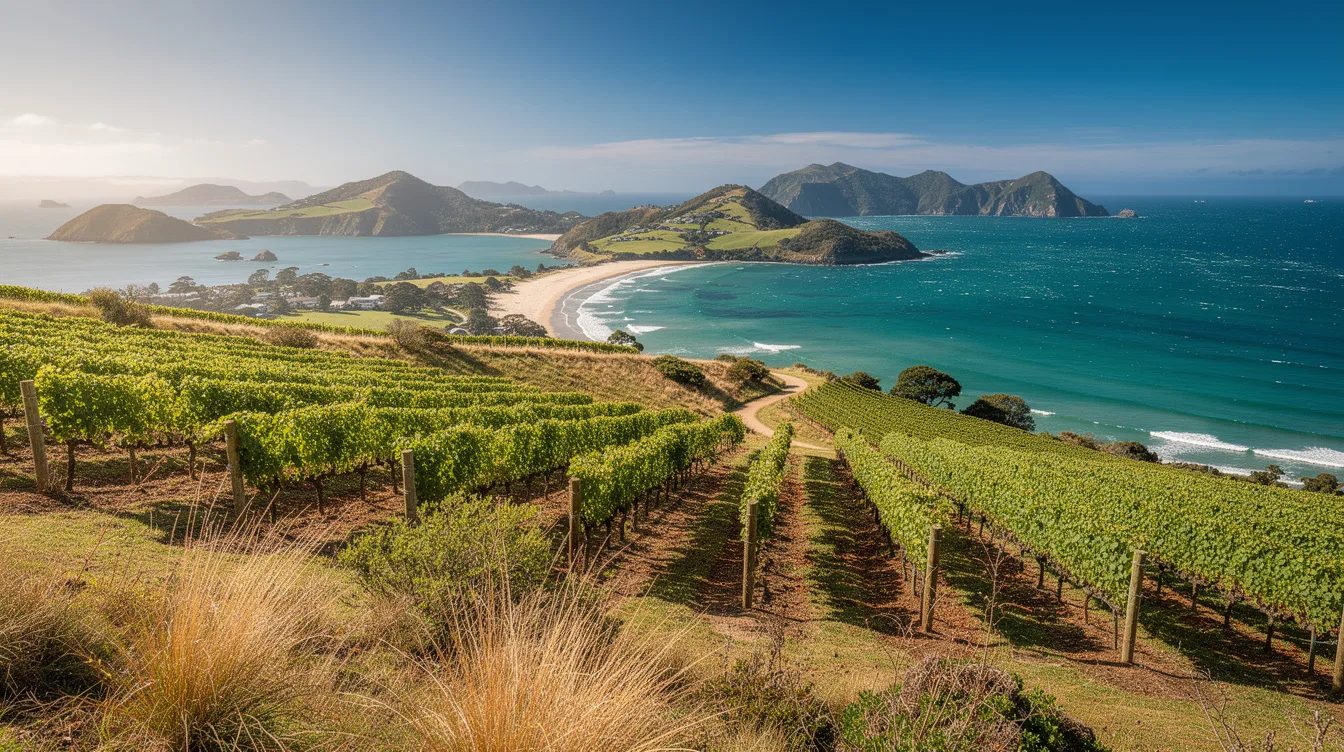
And Waiheke Island puts 25 beaches, vineyards, and about 62.1 miles of walking trails within 40-45 minutes of downtown Auckland. That short ferry ride changes the mood completely, from city traffic to salt air, low hills, and boats sliding across the Hauraki Gulf.
But this isn’t a place you’ll understand by rushing through one tasting and one beach. You can visit for a day, though two nights let you swim, walk, eat, and linger without watching the ferry clock.
And the island feels calmer and more polished than Auckland, with small bays, hillside homes, olive groves, galleries, and restaurants above the water. It is easy to reach, but it still feels like a proper escape.
Forty-five minutes from Auckland, the island changes pace
And the passenger ferry leaves from Auckland’s Downtown Ferry Terminal and reaches Matiatia Wharf at Waiheke’s western end. The crossing takes 40 to 45 minutes, so you can be drinking coffee in the city and tasting wine on an island before lunch.
But the ferry is also the day’s first reminder that timing matters. Summer crossings, weekends, and event days can fill quickly, so you should leave room for the return trip rather than treating the last sailing as a casual option.
From Matiatia, buses, taxis, scooters, bicycles, and hop-on hop-off tours make a car unnecessary for many visitors. New Zealand travel often demands more planning than this, which is part of Waiheke’s appeal.
Twenty-five beaches give you a reason to slow down
And 25 beaches mean you don’t need to build the day around a single famous stretch of sand. Oneroa Beach is the easiest choice without a car, while Palm Beach feels smaller and quieter when you want less activity around you.
But Onetangi Beach is the one I’d save an afternoon for. Its long northern shore gives you room to walk, swim, or simply sit with the sound of water moving over the sand.
Little Oneroa works well for a short break near cafés and shops, while Shelly Beach is sheltered between Oneroa and Ostend. You can choose convenience or calm, and the island gives you both.
Can you enjoy Waiheke without a car?
And yes, you can visit without driving, especially if you stay near Oneroa. Buses and taxis connect the main areas, while tours make it easier to combine vineyards with beaches.
But the eastern end is more rural, and several wineries sit away from the main villages. If you want to explore widely, a car saves time, though it also removes some of the pleasure of watching the island unfold from a bus window.
Vineyards make the beach day taste better
And Waiheke is a real wine destination, not merely a beach stop with a few tasting rooms. The island is known for Bordeaux-style reds, along with rosé, white wine, olive oil, and restaurants that turn lunch into the day’s main event.
But don’t try to collect every cellar door in one visit. The sensible plan is two vineyards at most, then a beach or coastal walk before dinner.
Many wineries sit in the island’s central and western areas, which keeps a first itinerary manageable. You can spend the morning around Oneroa, taste wine over lunch, and reach Onetangi before the afternoon light fades.
Sixty-two miles of trails reward a longer stay
And the connected walking network covers about 62.1 miles around the island. Coastal paths, Hauraki Gulf viewpoints, and native bush give you a way to experience Waiheke beyond its restaurants and tasting rooms.
But the island is hilly, and a day of walking can become demanding when paired with swimming and wine. Wear shoes you trust, carry water, and choose one section rather than pretending you can cover everything.
The eastern side feels more rural, with farms, vineyards, and open natural areas. If you stay for two nights, you can give that quieter end of the island the time it deserves.
Plan summer around ferries, not the other way around
And austral summer is the season when Waiheke feels most in demand. Reserve restaurants and tastings ahead, particularly on weekends and during school holidays.
But a day trip still works beautifully: take a morning ferry, walk around Oneroa, visit a winery, then spend the afternoon at the beach. For a slower visit, stay near Oneroa for convenience or Onetangi for sand outside your door.
By evening, the ferry carries you back toward Auckland across darkening water. Waiheke’s best argument is simple: the city is close enough for an easy escape, but far enough that you can hear the tide before you hear traffic.