Why a black freestanding tub is the boldest bathroom upgrade comes down to contrast, not size. I once chose pale fixtures for a small bath and spent months wondering why it felt flat. A dark tub gives your room a focal point, even when you aren’t changing the tile. And it doesn’t need much else to look intentional.
Don’t overthink: Paint behind it with The Two-Tone Perimeter.
- Anchor the room with The Black Anchor Rule
- Paint behind it with The Two-Tone Perimeter
- Layer light with The Three-Height Light Stack
- Frame the tub with the Right Tile
- Choose warm metal over matching black
- Float a wood stool beside the tub
- Hang textiles that soften the black finish
- Build contrast with The Quiet Hardware Test
- Price the upgrade with real bathroom numbers
- Can a black tub work in a small room?
- Style modern freestanding tub designs with one living detail
1Anchor the room with The Black Anchor Rule
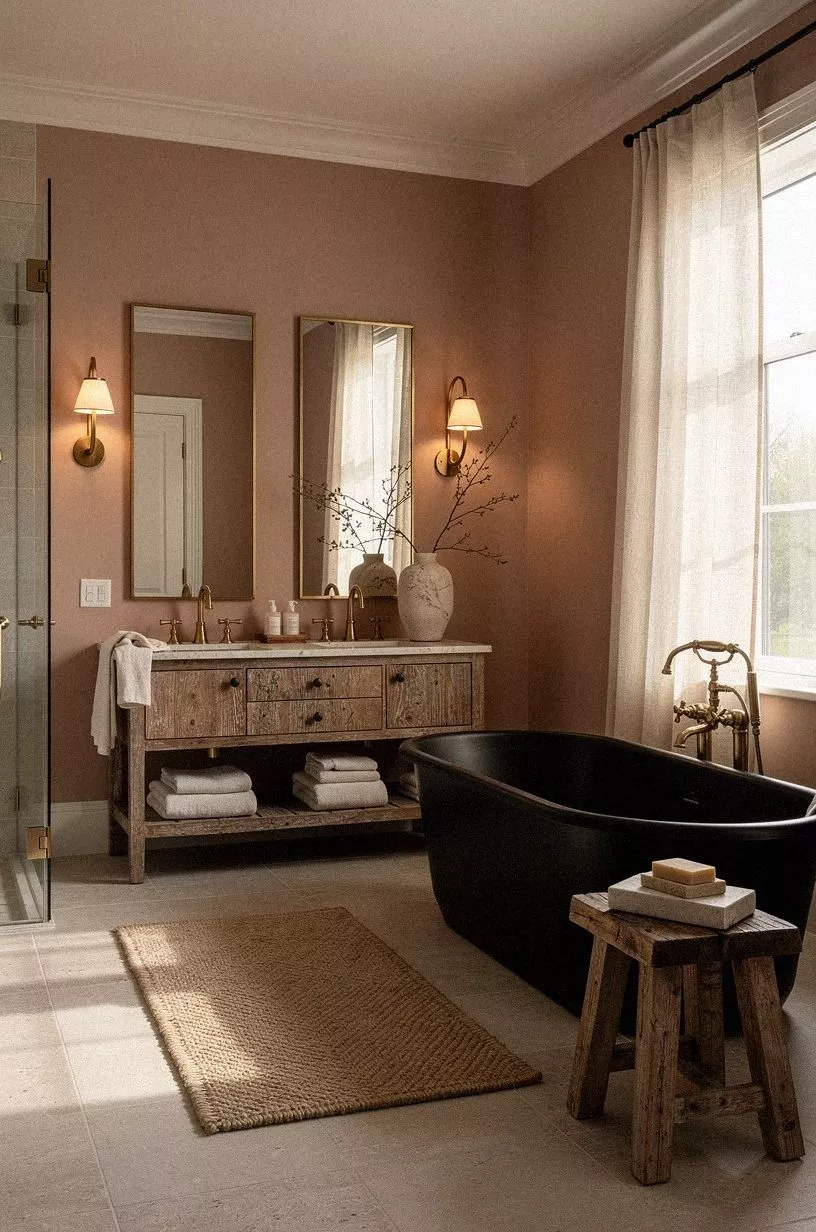
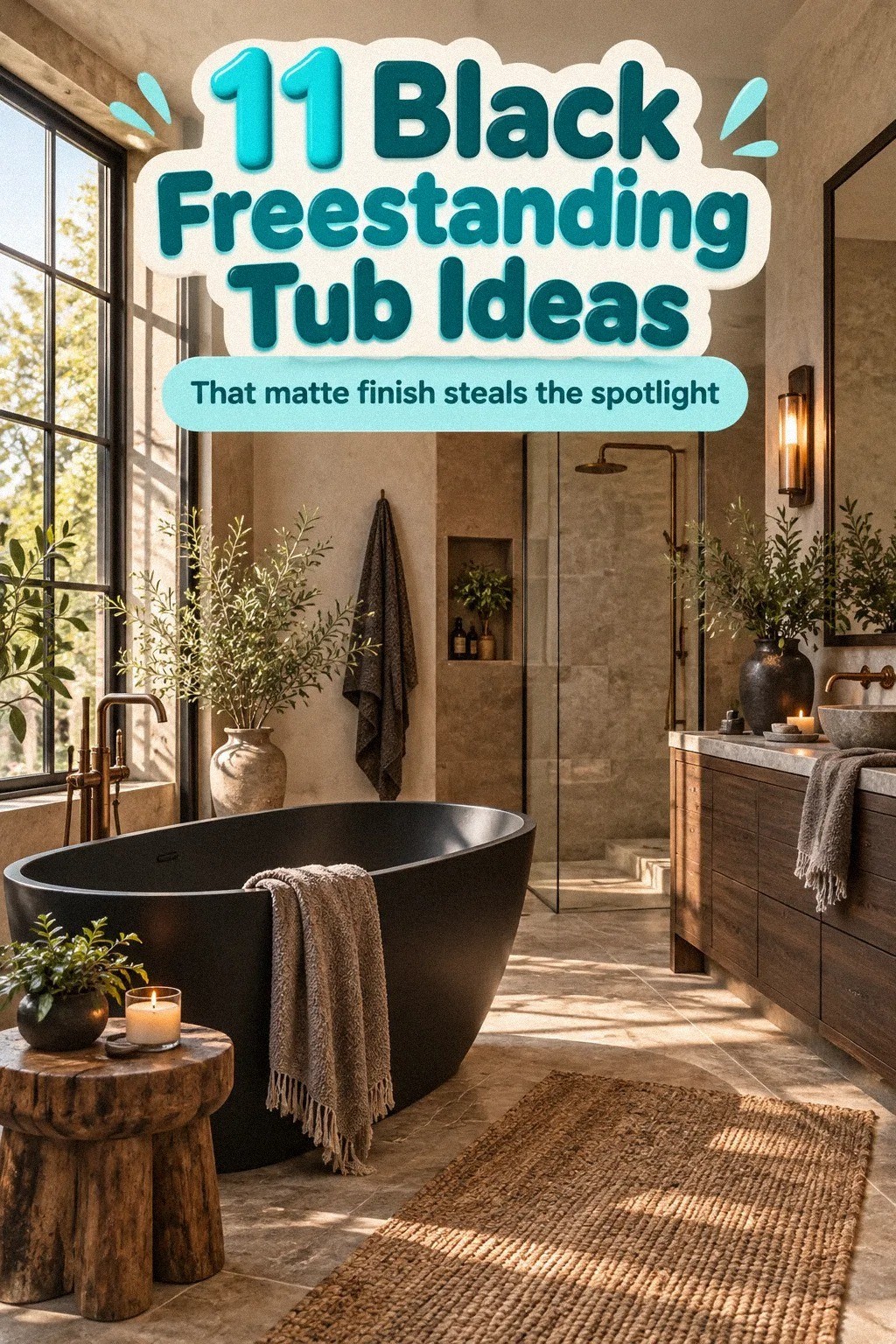
A black freestanding tub should be the visual weight your bathroom has been missing. Set it where you can see it from the doorway, then give it breathing room instead of crowding the rim with baskets and bottles. Your eye will land on the tub first, and the rest of your choices will feel calmer because they have a clear center.
The best shape depends on your floor plan. A rounded matte black soaking tub softens a narrow room, while a squared model feels more architectural beside a reclaimed weathered teak vanity.
Standard tubs measure about 60 by 30 inches, so you’ll want to map that footprint with painter’s tape before buying anything. I made the mistake of trusting a showroom layout once.
My taped outline showed that the door swing would have clipped the tub.
And if you’re working with limited space, compare your measurements with this guide to fitting a freestanding tub in a small bathroom. Your room doesn’t need to be large. It needs a clean path around the fixture.
2Paint behind it with The Two-Tone Perimeter
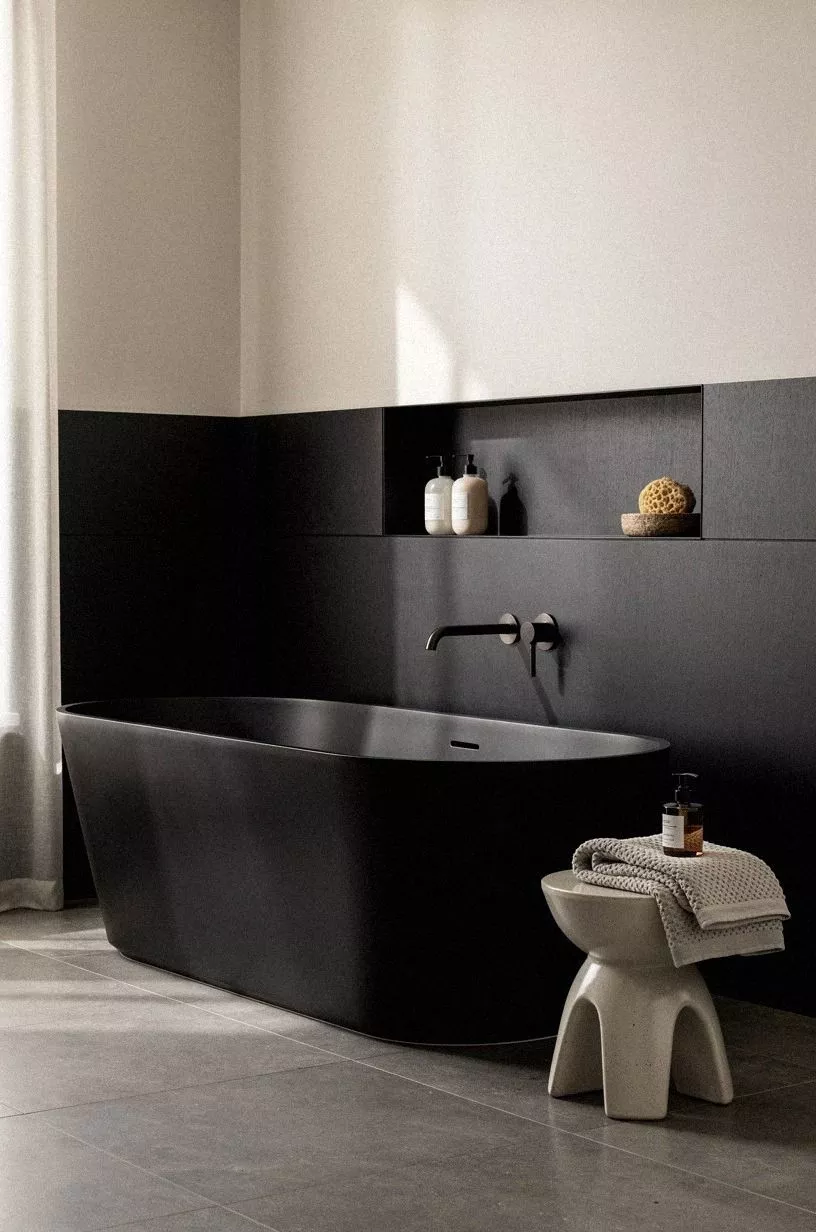
The wall behind a black tub deserves more thought than a random white sample. I’d choose a deep plum backdrop that lets the dark finish look rich instead of harsh. Farrow & Ball Brinjal No.222 brings a saturated plum note to the wall, and the color pairs beautifully with a rose-gold accent.
But your eye needs a quiet border around that strong tub. Keep the remaining walls lighter, or use Sherwin-Williams Repose Gray SW 7015 where the room needs a softer counterpoint.
You’ll get grounded contrast without turning the bathroom into a high-drama cave. I’d skip stark blue-white paint here because it makes the black surface look disconnected and a little commercial.
A sample board will tell you more than a phone screen. Paint one board, lean it beside your tub, and look at it in morning and evening light. Your best shade may change once the room’s bulbs are on.
For another strong palette, see these black and white bathroom combinations, then soften the contrast with Calacatta marble with gold veining.
3Layer light with The Three-Height Light Stack
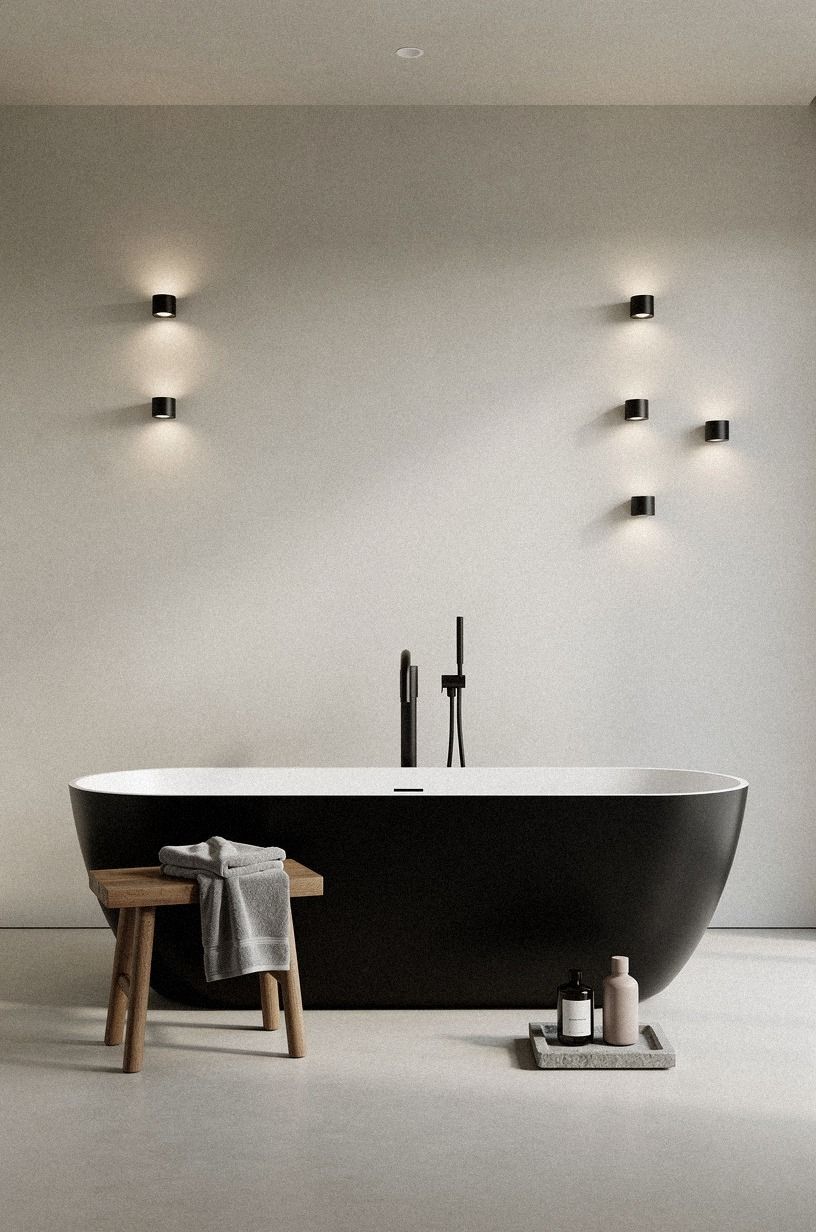
A black tub needs layered light because one ceiling fixture will flatten every surface around it. Start low with a small lamp or candle on a safe nearby ledge, add sconces at eye level, and keep the ceiling light dim. This gives your bath a warm, intimate glow instead of the glare of a dressing room.
Use white-shaded sconces if you want the room to feel crisp, or choose a walnut-framed mirror when you prefer a warmer edge. Your sconces should sit where their light reaches your face without shining directly into the tub.
I’d avoid cool bulbs, even if the box promises clarity. They make black enamel look gray and turn your relaxing bath into a utility zone.
And yes, a small room can handle three light levels. You’re not adding visual clutter when each source has a job.
The low glow settles the floor, the sconces make your mirror useful, and the ceiling fixture handles cleaning. I’ve used this setup in bathrooms with barely enough room for a towel hook, and it still feels inviting!
4Frame the tub with the Right Tile
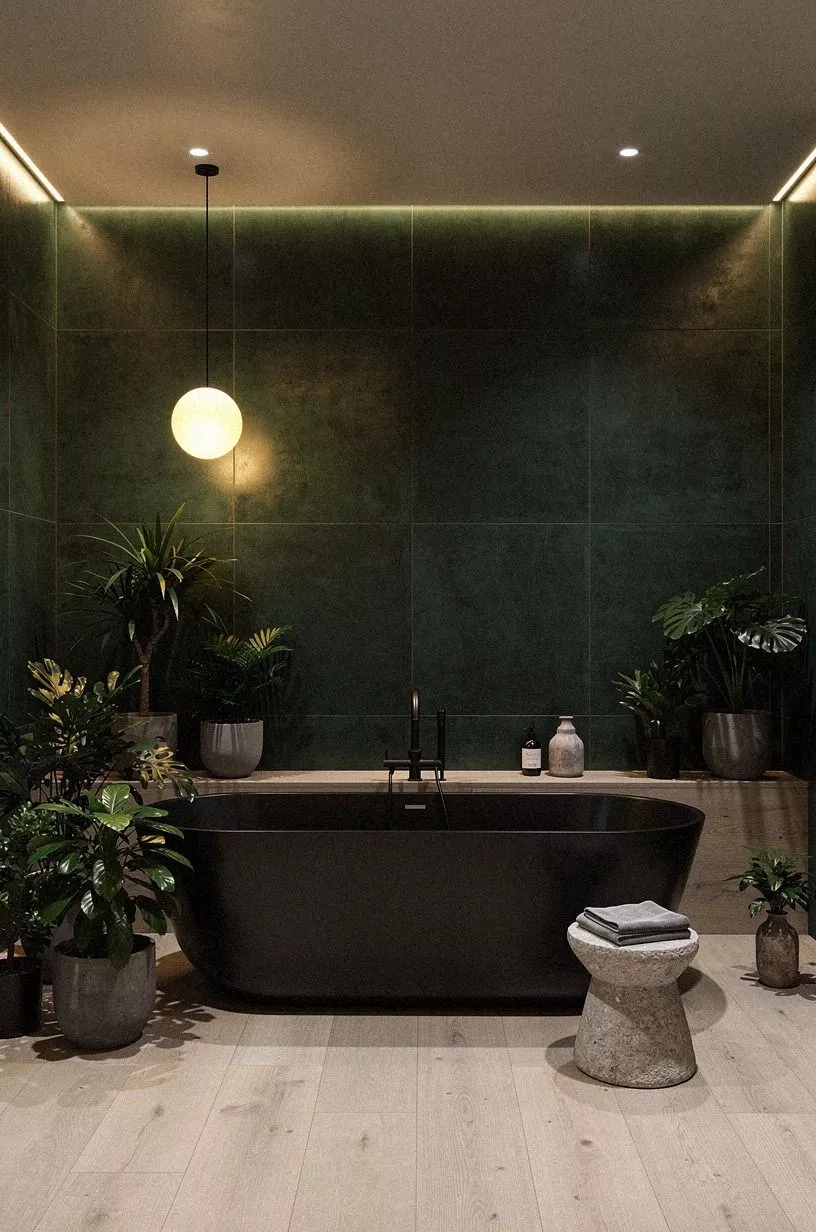
Tile should frame your tub, not compete with it. A narrow vertical panel of backlit translucent onyx behind the fixture gives the black surface a jewel-like backdrop, while subtle gold veining keeps the wall from looking too polished. You’ll want to stop the tile at a deliberate height, especially if the rest of your bathroom is painted.
For a quieter result, choose matte cream tile and let the tub provide the drama. I’d skip glossy black tile beside a black tub because the two surfaces can merge into one heavy block. Matte and lightly textured materials are easier for your eye to separate, and they won’t show every splash as loudly.
What if your existing wall is plain drywall? Start with one tiled zone instead of renovating the whole room.
Your budget may cover a focused splash area, and the tub will make that decision look intentional. This zellige bathroom upgrade guide can help you compare texture, maintenance, and visual weight before you commit.
5Choose warm metal over matching black
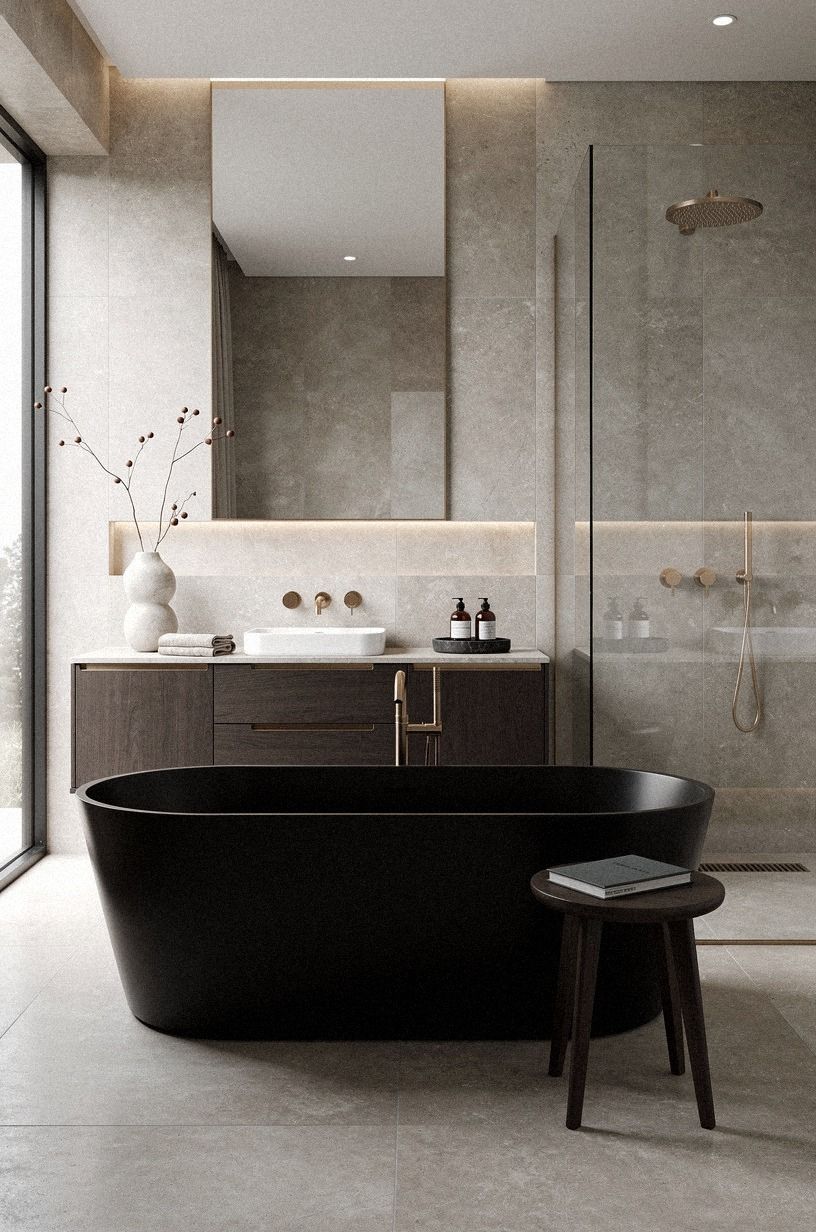
Matching every fixture to the tub sounds tidy, but a fully black bathroom can lose its sparkle. I’d pair the tub with aged copper because its rusted warmth breaks up the darkness and gives your hand a richer surface to touch. The finish will change over time, which is part of its charm.
You can use that metal on the faucet, drain, mirror frame, and towel hooks, but don’t repeat it in every corner. Your room needs a little friction. One copper faucet, a book-matched walnut mirror frame, and a natural oak stool will feel more gathered than a complete matching suite.
I tried an all-black hardware scheme once, and the room looked sleek at first but strangely flat in person.
A freestanding tub faucet also needs practical clearance. Place the spout so it reaches the basin without forcing you to lean across the rim.
You’ll appreciate that decision every time you fill the tub, especially if your controls sit behind the fixture. For a related layout, study the freestanding tub between double vanities before you position plumbing.
6Float a wood stool beside the tub
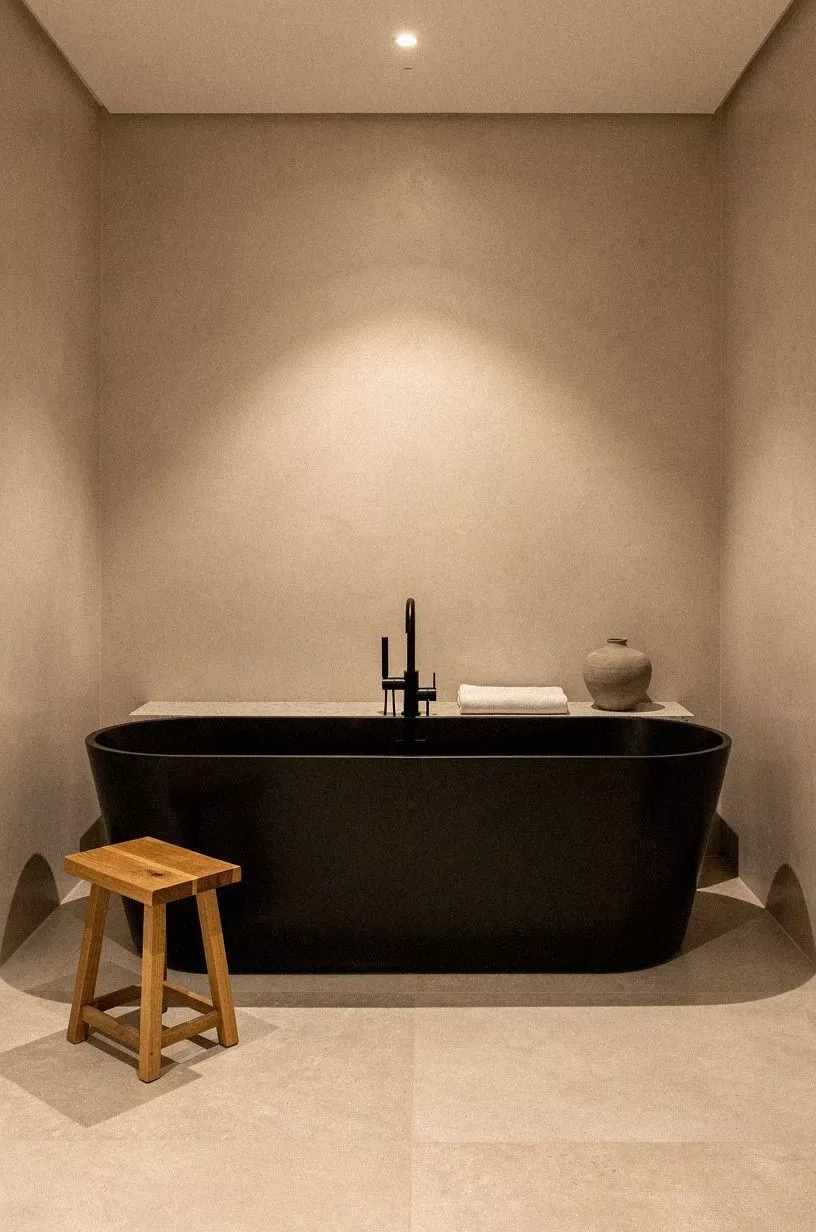
A bath can look staged when every surface is ceramic, metal, or glass. Add one small warm travertine stool beside the tub, and your room gets a place for a book, towel, or glass of water. The stone catches side light, and that little organic note keeps the black finish from feeling severe.
Your stool shouldn’t become storage furniture. Keep it almost empty, with one folded towel and perhaps a small stone dish. I’d avoid a bulky cabinet because it steals the negative space that makes a freestanding tub feel special.
You’ll want enough room to step in, sit down, and move around without brushing against three different objects.
And if you’re styling a rental, a lightweight stool gives you the same warmth without drilling into the wall. Look for a compact travertine-look piece or a secondhand stone stool with a stable base.
Your choice doesn’t need a designer label. It needs a finish that can handle a splash and a shape that won’t crowd your knees.
7Hang textiles that soften the black finish
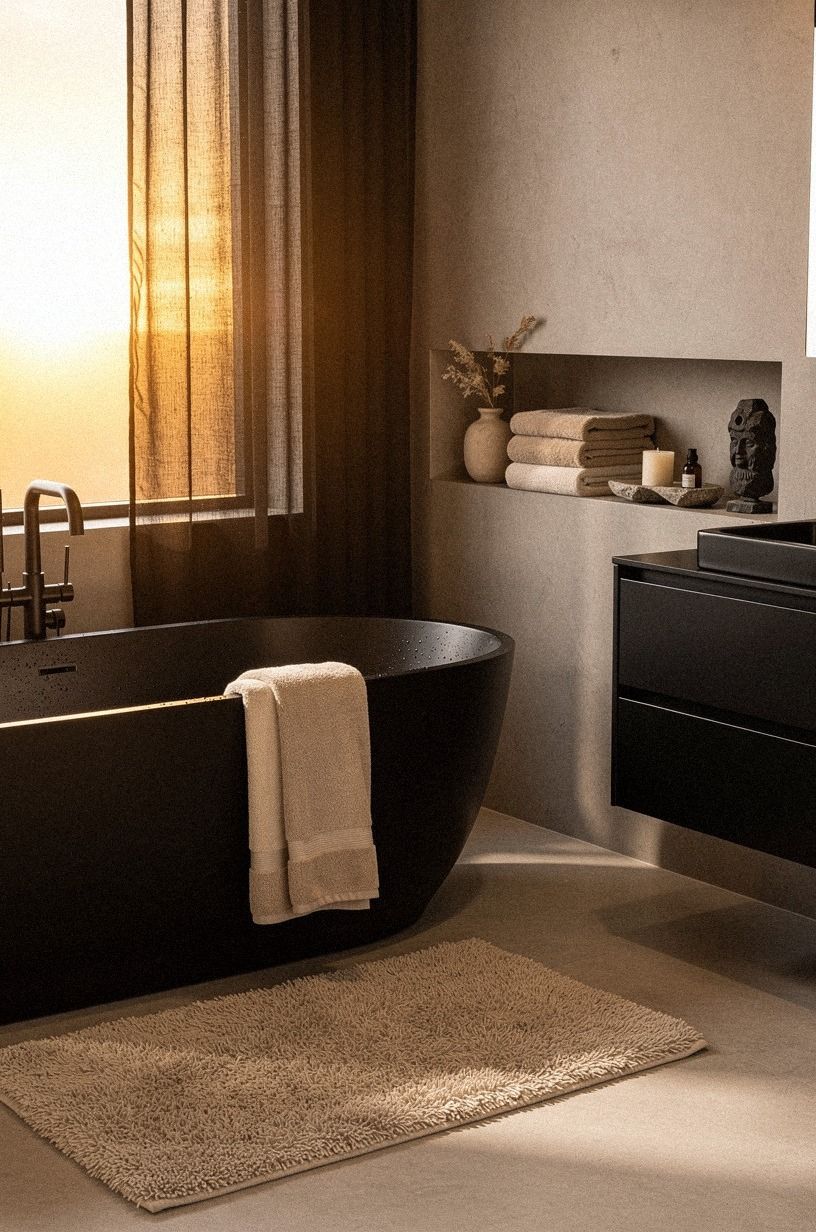
Textiles are where your bathroom starts to feel lived-in rather than showroom-clean.
8Build contrast with The Quiet Hardware Test
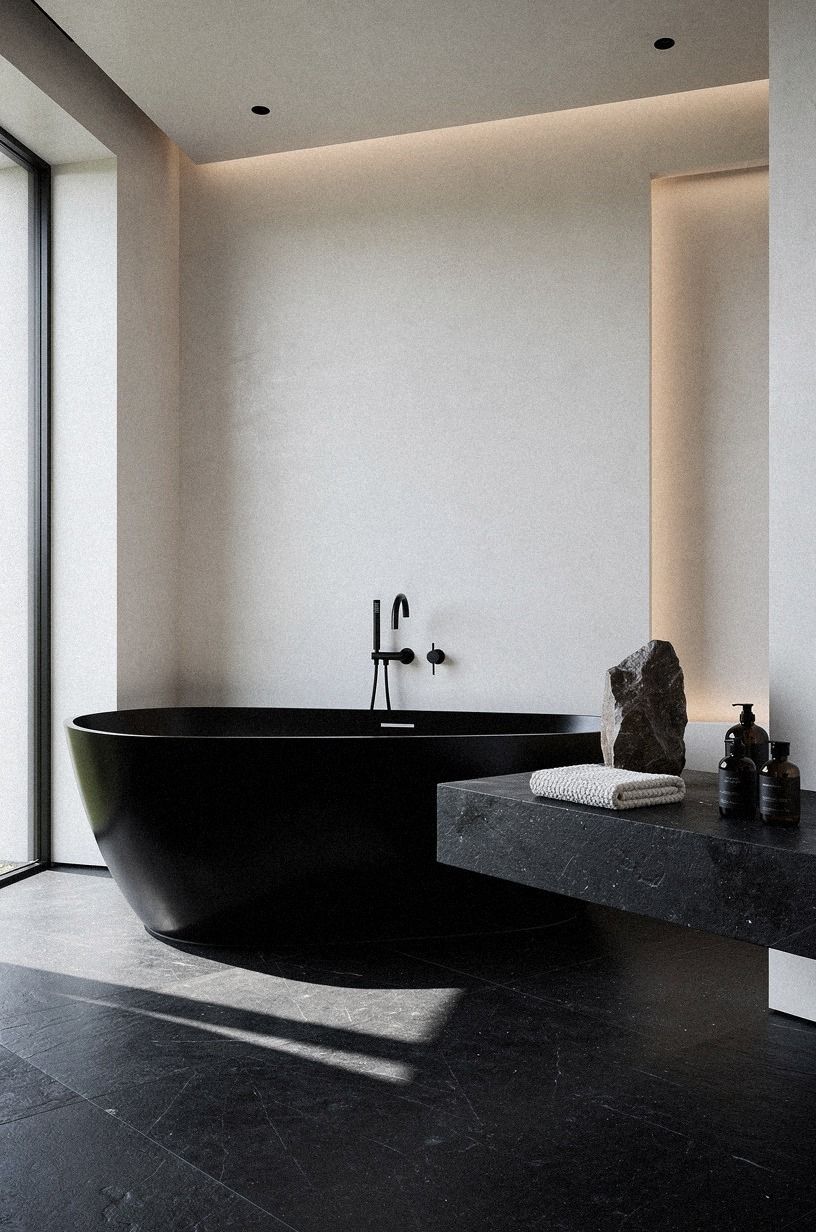
The Quiet Hardware Test is simple: remove one decorative item from your plan and see whether the tub still carries the room. If it does, you’re close. A black fixture already has presence, so your choices should support it with restraint rather than adding more visual noise.
Try oversized-chip terrazzo on a small ledge or vanity top if your room needs movement. Its aggregate gives you interest without competing with the tub’s silhouette.
I’d avoid pairing it with loud patterned cement tile, oversized art, and a sculptural mirror all at once. You’ll lose the calm contrast that made the black fixture compelling.
Your hardware can still have personality. An ivory bouclé stool introduces softness, while a simple copper hook gives the wall a quiet punctuation mark.
But your room should have one loud decision, not five. Would you rather remember the tub or the collection of accessories fighting beside it?
I know which one I’d choose.
9Price the upgrade with real bathroom numbers
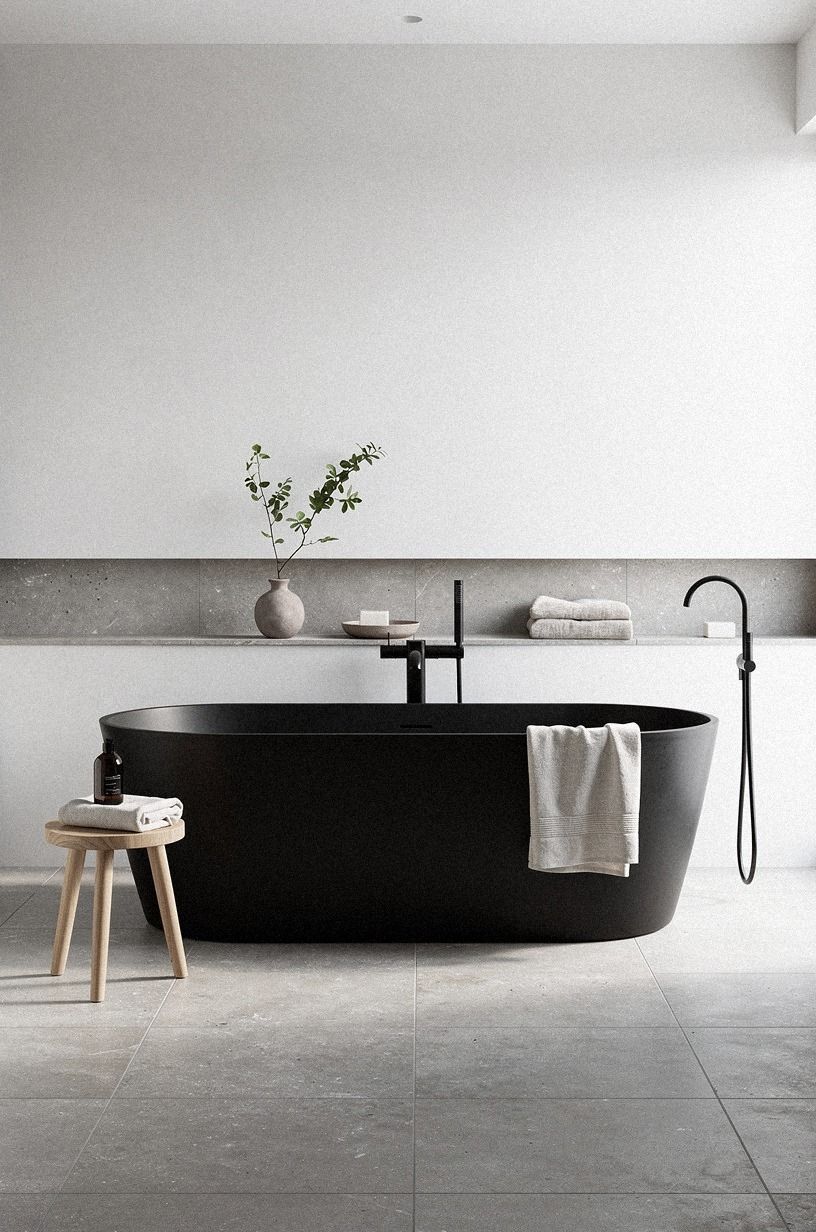
A black tub can be a focused cosmetic change, but plumbing and tile can move your budget quickly. Before you shop, write down what you’ll keep, what you’ll paint, and what needs a licensed professional. Your plan may fit the budget tier if the plumbing stays put and the floor is sound.
Materials can shift the total even before labor enters the picture. Hand-applied Venetian plaster can be a larger line item than paint, while a natural wood vanity top may run $50-$100 per square foot and a rust-toned faucet may cost $120-$450. Those ranges give you a useful frame before you fall for a finish.
Your best savings usually come from keeping the existing layout. I’d spend on the tub’s finish and faucet, then choose paint and textiles carefully. If you’re comparing tile options, this guide to Moroccan tile in a bathroom can help you decide where texture earns its place.
10Can a black tub work in a small room?
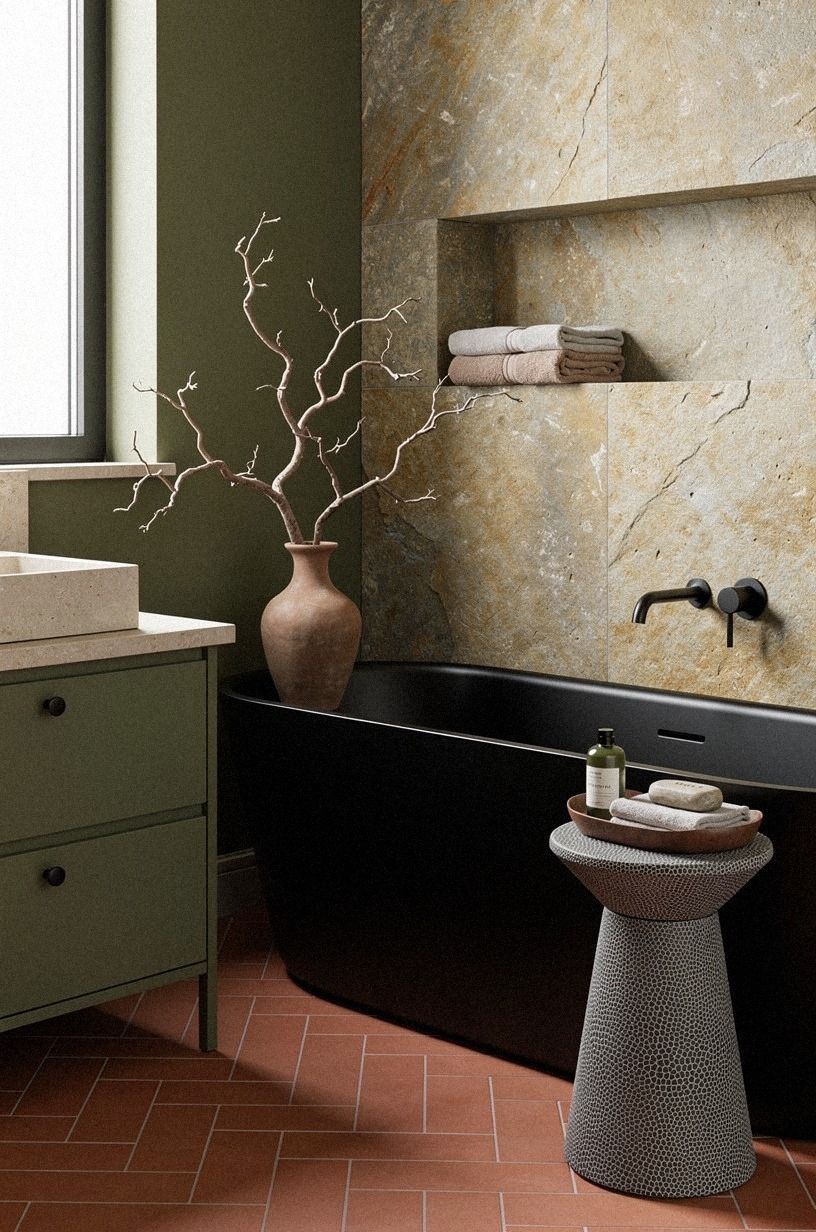
Yes, a black tub can work in a small room if your circulation stays clear.
11Style modern freestanding tub designs with one living detail
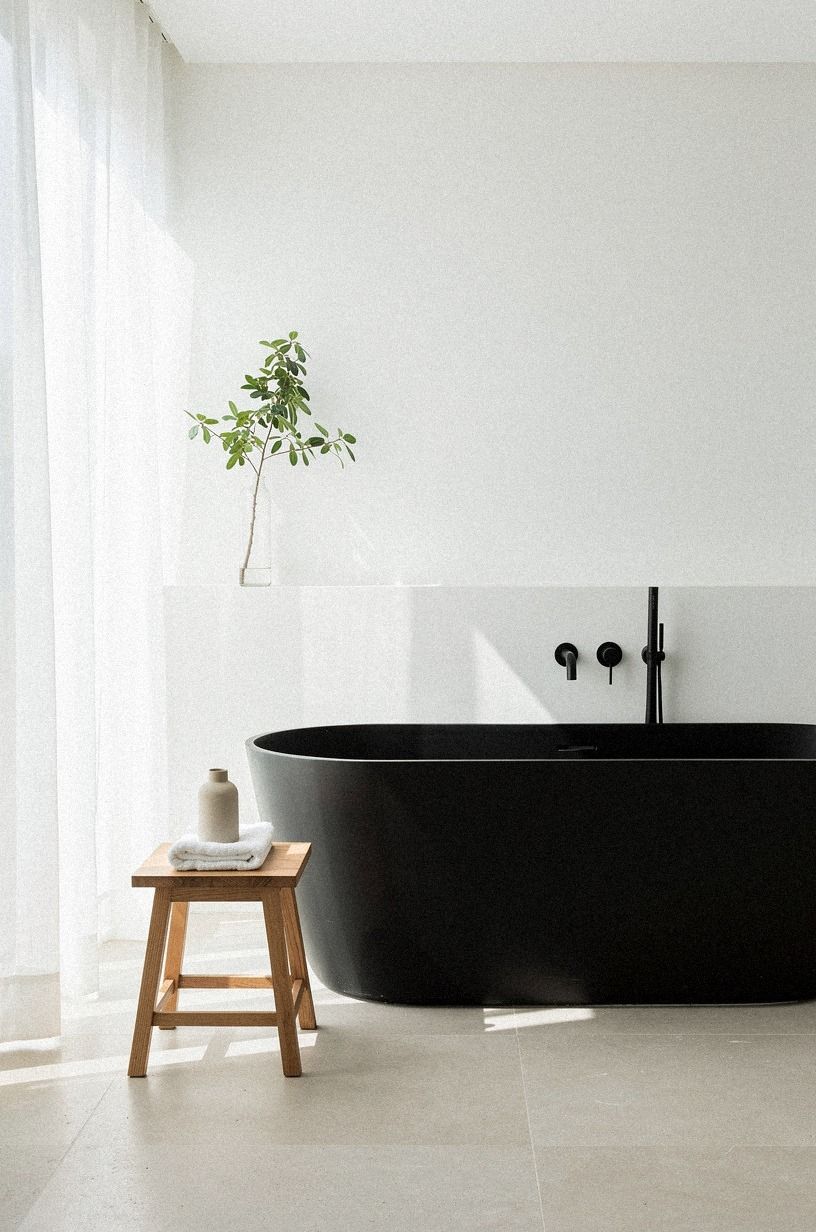
Modern freestanding tub styles can feel cold when every edge is sharp and every surface is new. Add one living detail, such as a leafy branch in a heavy ceramic vase, a woven basket, or a small framed print that has a little age. Your bathroom will feel more intimate without losing its clean outline.
Choose Sherwin-Williams Cavern Clay SW 7701 for a warm companion wall if your room receives plenty of daylight. In a darker bathroom, keep that shade to a small vanity wall and let cream paint carry the rest.
I’d avoid making every surface dramatic because the black tub already gives you the bold moment. One clay-toned wall and one dark fixture can be enough.
Your final styling should pass a practical test. Can you clean around the tub? Can you reach the faucet?
Can you step out without landing on a slippery pile of fabric? Keep the floor open, use washed Belgian linen only for a small accent, and let the room breathe.
And if you want another color direction, this guide to navy bathroom paint offers a softer route than full black.
What I’d Do Differently After Styling One
I used to think a bold bathroom needed a bold budget. I’d see a black freestanding tub in a magazine, notice the stone walls and expensive faucet, and assume the whole feeling depended on those high-cost pieces.
That assumption cost me time. The part that changed the room was the relationship between the tub, the wall color, and the empty floor around it.
Your bathroom doesn’t need every surface upgraded at once.
I also made the classic mistake of choosing finishes separately. The tub was matte, the faucet was polished, and the mirror frame had a cold silver edge.
Each item looked fine alone, but together they made the room feel accidental. I’d decide your finish family before shopping.
Warm copper, aged bronze, and oak will sit comfortably beside a black tub. Bright chrome can work, but it needs a cooler palette around it.
Then there’s the question of scale. A black tub draws attention, so you’ll notice poor clearances more quickly.
I’d tape the 60 by 30 inch footprint, mark the 21 inch toilet clearance, and walk the room several times before ordering. Your body will find problems that a floor plan misses.
That little rehearsal is free, and it can save you from an expensive fixture that makes the door awkward.
My strongest opinion is this: don’t buy the tub first unless you’ve already measured the room. Choose the layout first, then the silhouette, then the finish. I’ve seen homeowners fall for a dramatic slipper shape only to discover that the faucet lands too close to a wall.
The tub should feel generous when you use it, not merely impressive at a glance.
The black finish is worth choosing when you want the bathroom to feel grounded, warm, and a little unexpected. It’s less forgiving of dust and water marks, so you’ll wipe it more often.
That’s the honest tradeoff. Still, the visual payoff is immediate, and your other choices can stay simple.
I’d rather maintain one memorable fixture than renovate every wall trying to create interest.
What People Always Want to Know
What is the best black freestanding tub for a small bathroom?
A compact 60 by 30 inch tub with a rounded interior is the safest pick because it preserves movement around the room. Choose a slim reclaimed weathered teak piece nearby, not a deep cabinet. Your best small-bath combination is a light wall, open floor, and one strong black focal point.
Where can I buy black freestanding tub pieces on a budget?
Check IKEA, Wayfair, Target, Facebook Marketplace, and local thrift shops for stools, mirrors, faucets, and textiles. Target Threshold towels can soften the look without adding visual weight. Your tub itself deserves careful inspection, especially around the finish, drain, and plumbing connections.
How much does a black freestanding tub makeover cost?
A cosmetic refresh can run about $100 to $300 when you keep the plumbing, use paint, and shop your home first. A broader budget bathroom update may fall within the $200-$1,200 range. Your free moves include decluttering, rearranging, cleaning grout, and reusing existing wood accents.
Can I create this look on a budget?
Yes, and your first three moves can be inexpensive: paint one wall, change the textiles, and add warm lighting. Look for freestanding tub accessories only after measuring your room. A secondhand stool, thrifted mirror, and existing copper tray can give the bathroom a collected feel.
Is a black freestanding tub worth it in a small space?
Yes, if your clearances work. The strong silhouette can make a compact bathroom feel planned rather than crowded. Keep at least 21 inches in front of the toilet, protect the tub’s walking path, and use a frameless mirror so your eye can travel through the room.
Is a black freestanding tub a good idea for a rental?
Yes, when you’re styling around an existing fixture or using removable updates. Try peel-and-stick tile behind the vanity, a tension rod with washed Belgian linen, and removable hooks. Your landlord-friendly changes should leave plumbing untouched and come down cleanly when you move.
Start With the Tub Placement
If I had to pick one, I’d start with the tub placement. A perfect finish can’t rescue a cramped path, but the right footprint makes every later choice easier.
Measure, tape it out, and pin this guide for later. Your bathroom will tell you what it needs.