
Terracotta floors can warm a Mediterranean bathroom with paint, textiles, and a carefully chosen layout, even when a full renovation costs thousands. I once paired orange clay tile with the wrong white, and the room looked like a waiting room. Your floor needs quieter partners. These ideas make the earthy color feel intentional, welcoming, and fresh.
Don’t overthink: Pair Clay Tile With Benjamin Moore Chestertown Buff.
- Layer Soft Linen Over Italian Floor Design
- Pair Clay Tile With Benjamin Moore Chestertown Buff
- Use the Three-Height Light Stack
- Frame the Floor With Hand-Glazed Zellige
- Swap Chrome for Unlacquered Brass
- Float a Pale Oak Vanity Above the Clay
- Anchor a Patterned Tile Bathroom With a Quiet Border
- Paint the Ceiling a Soft Mediterranean Blue
- Build the Two-Wood Rule
- Mix Spanish Flooring Ideas With Plaster Walls
- Frame the Mirror With a Sun-Washed Arch
- Layer Olive, Clay, and Cream
- Hang a Woven Shade Beside the Tub
- Contrast Terracotta With Creamy White
- Protect the Layout With the Clear-Path Rule
- Let the Floor Lead the Mediterranean Bathroom Tiles
1Layer Soft Linen Over Italian Floor Design
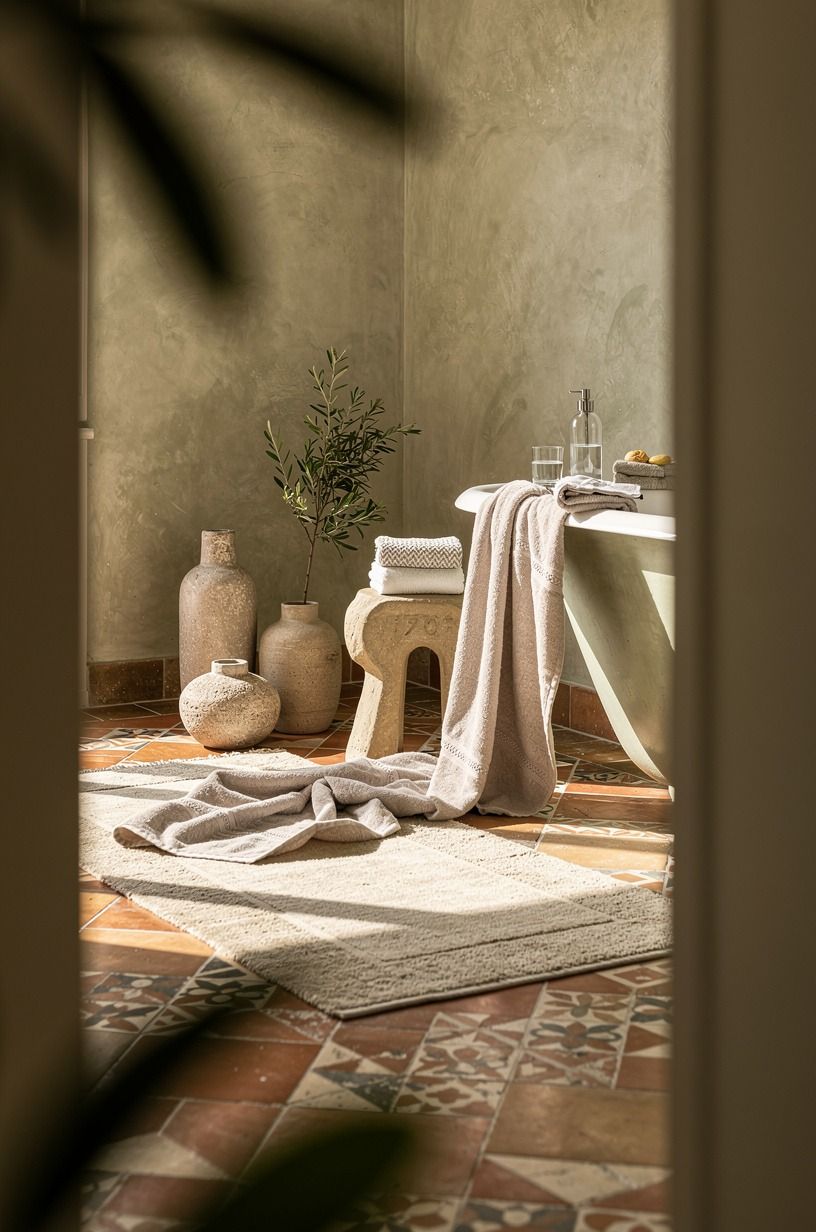
Terracotta can feel bold under bare feet, so bring in hand-applied Venetian plaster in a soft stone tone to quiet the first impression. A flat-weave runner beside the vanity gives your bathroom a gentle landing spot without hiding the tile completely. Add muted olive through a small textile or ceramic accent, not bright white, because your floor already has enough visual heat.
I’d use a runner that leaves several inches of terracotta visible on every side. You’ll see the clay border, and your room won’t feel covered up.
A 600gsm Turkish cotton bath mat works near the tub, while linen belongs near the sink where it can dry quickly. And if you’re working with a narrow room, my guide to Mediterranean bathroom tiles has more layout ideas.
2Pair Clay Tile With Benjamin Moore Chestertown Buff
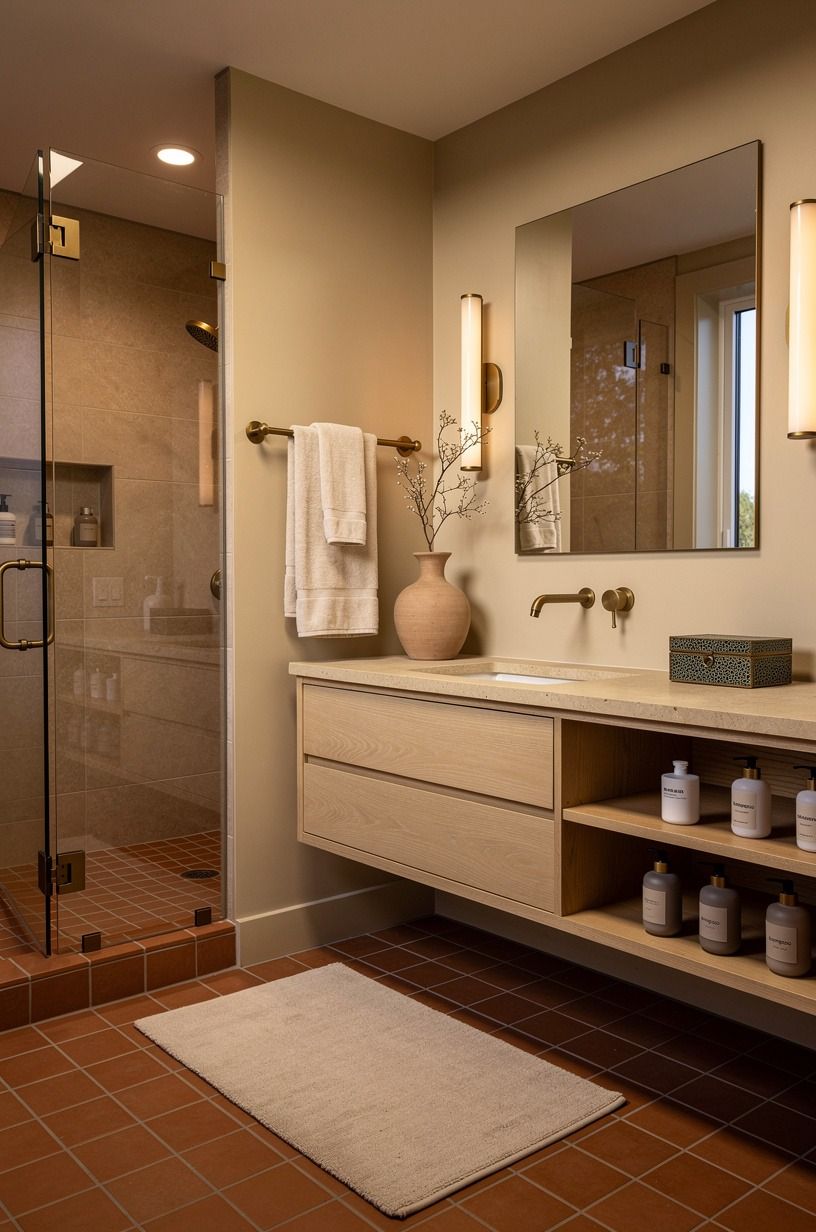
Paint the upper walls and leave the lower area tiled if your room already has a partial backsplash.
3Use the Three-Height Light Stack
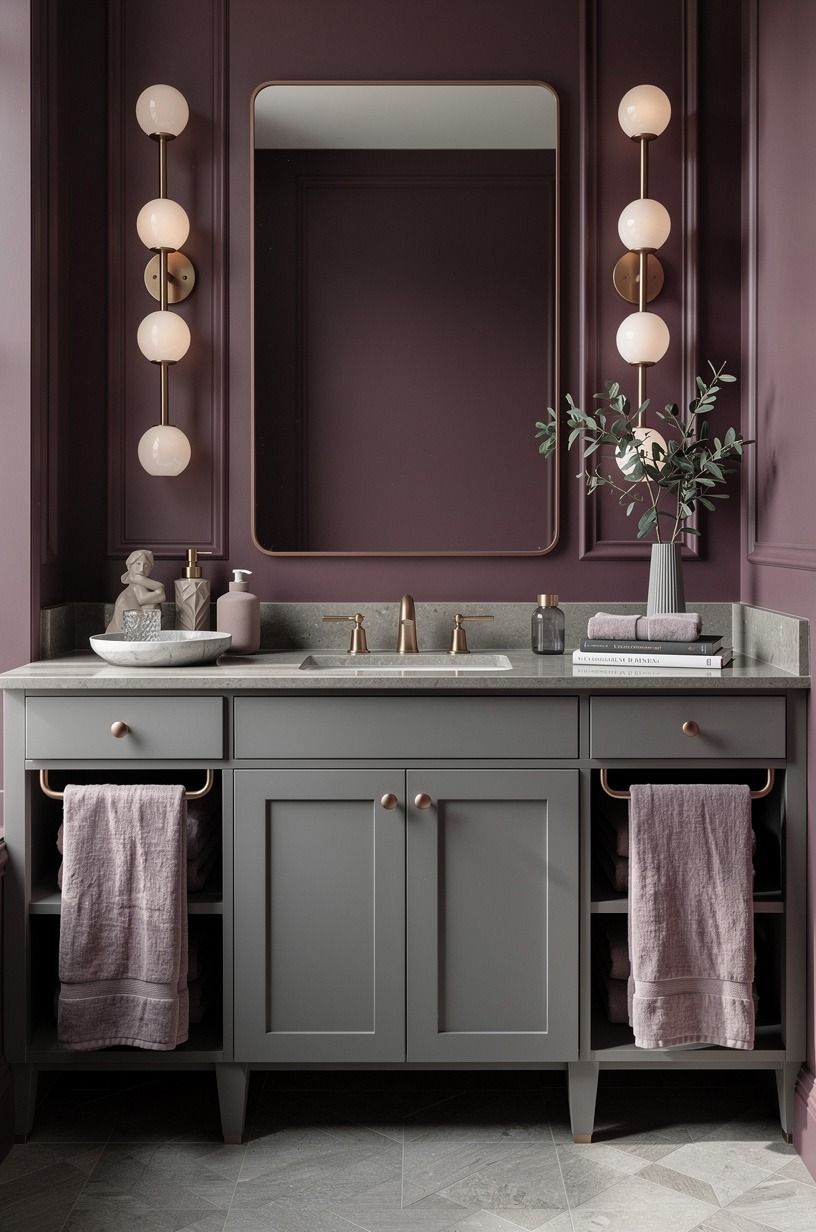
The Three-Height Light Stack gives a terracotta bathroom the layered glow that overhead lighting can’t provide. Your first level is the vanity light, your second is a wall or mirror light, and your third is a low lamp or candle-like glow on a safe shelf. Plum, grey, and rose-gold accents make each pool of light feel softer.
Choose a rose-gold sconce at eye level, a small opal globe above the mirror, and one rechargeable lamp on a closed vanity shelf. You’ll get a soft, moody room at night instead of a flat white box. A piece of washed Belgian linen near the vanity can temper the metallic warmth, while a dimmable fixture keeps the room practical.
I’d avoid matching fixtures everywhere. A simple rose-gold sconce beside a quiet grey light feels more collected than a full matching suite. If you’re comparing fixture shapes, browse these Mediterranean coastal bathroom ideas before you choose.
4Frame the Floor With Hand-Glazed Zellige
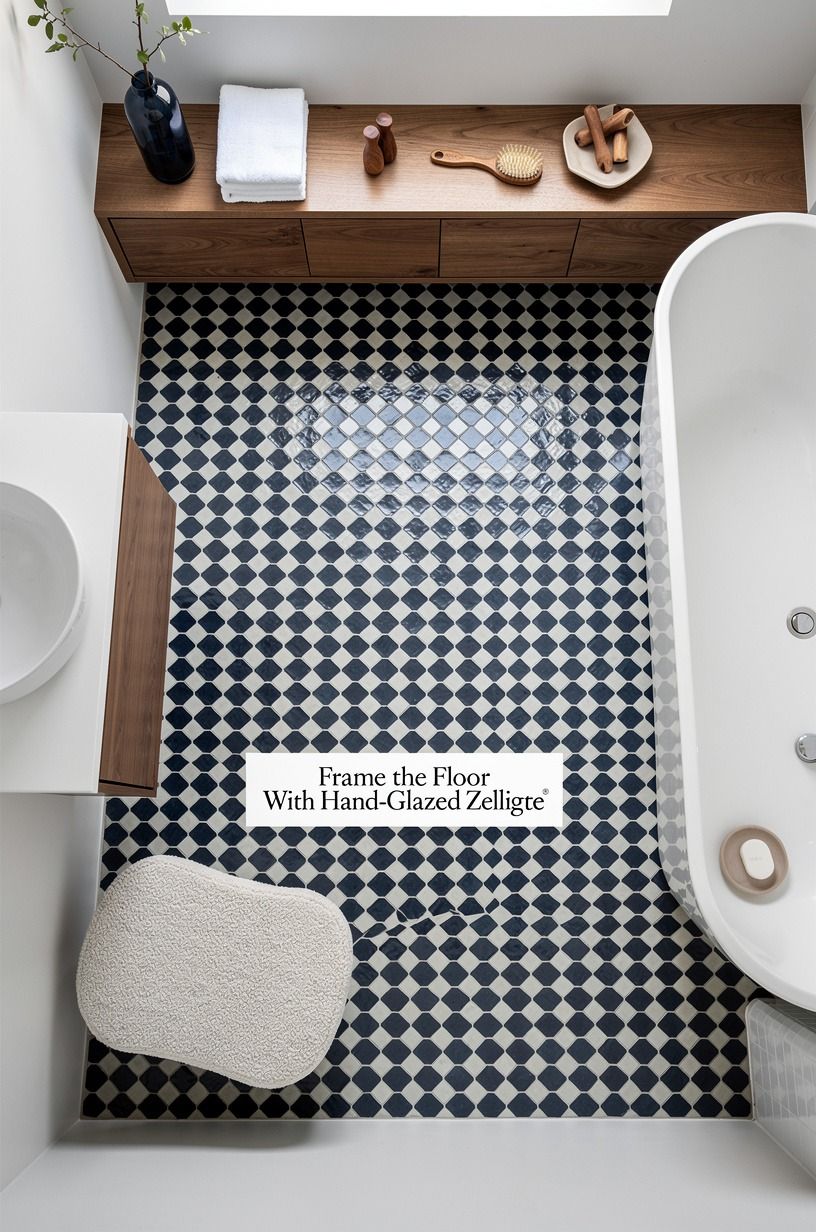
Hand-glazed zellige tile gives terracotta a lively partner because its uneven surface catches light in small flashes. Use it behind the sink, inside a shower niche, or across one short wall. A small organic bouclé stool can bring softness beside the vanity while the tile carries the handmade quality.
I like navy, white, and walnut alongside orange clay. I’d skip another strong red, since the room can become visually loud before your towels even arrive. A narrow vertical installation can make your ceiling feel taller, while a horizontal band makes a compact room feel wider.
Zellige usually costs about $15 to $35 per square foot in the provided US cost range, so measure your splash zone before you fall for a whole-room plan. You’ll get more warmth from one carefully framed wall than from covering every surface. For a deeper comparison, read whether zellige tile is worth the upgrade.
5Swap Chrome for Unlacquered Brass
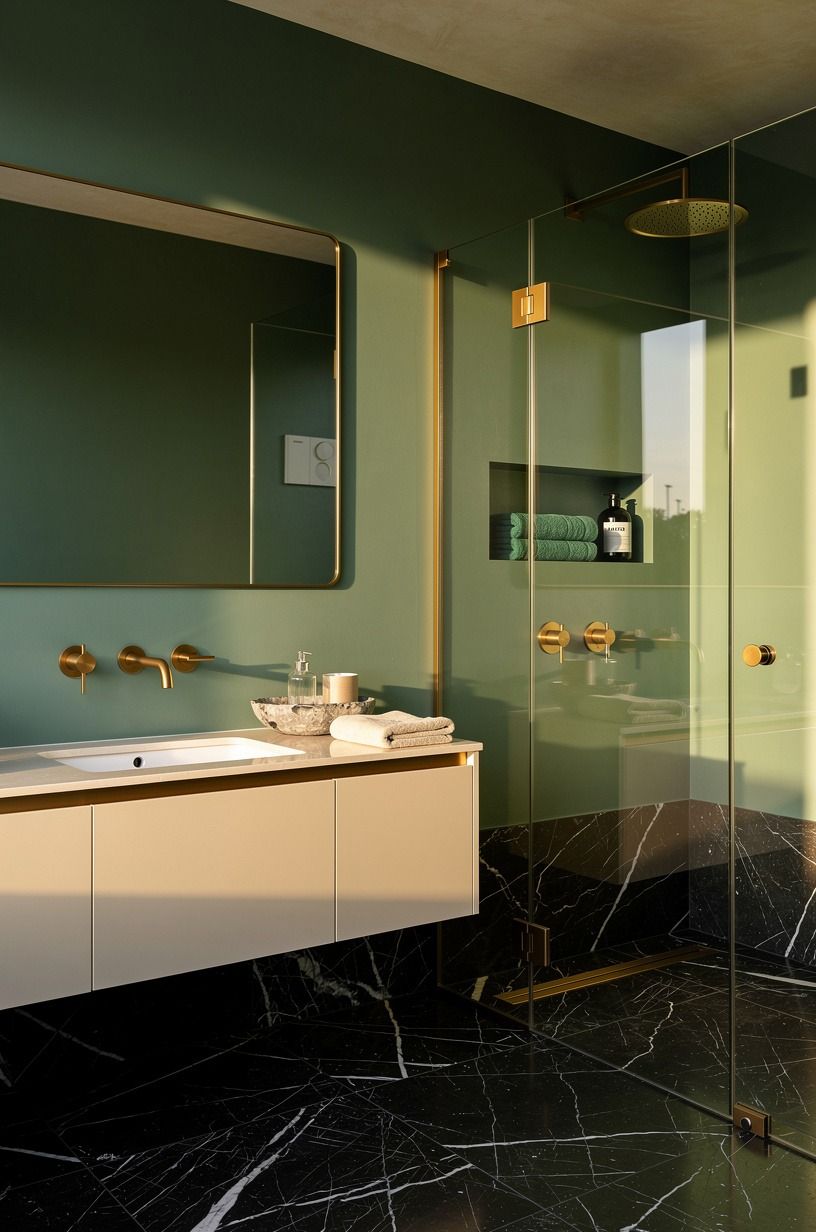
Chrome can make a terracotta floor look colder than it is. Replace the most visible pieces, such as the faucet, mirror frame, and towel hooks, with gold-toned accents, then ground them with Nero Marquina black marble with white veins. Your room will gain a richer contrast without losing warmth.
You don’t need a full hardware replacement. Start with the faucet, then decide whether the mirror needs a warmer frame.
The black marble works beautifully with emerald, gold, and cream, especially on a vanity top or narrow shelf. I’d avoid shiny yellow brass with a lacquered surface, which can look too polished beside handmade tile.
Brushed brass faucets in the supplied cost range run about $120 to $450. That’s a wide spread, so your budget can guide the decision.
But don’t mix five metal finishes in one small room. Two related finishes will feel calmer than a display of samples.
6Float a Pale Oak Vanity Above the Clay
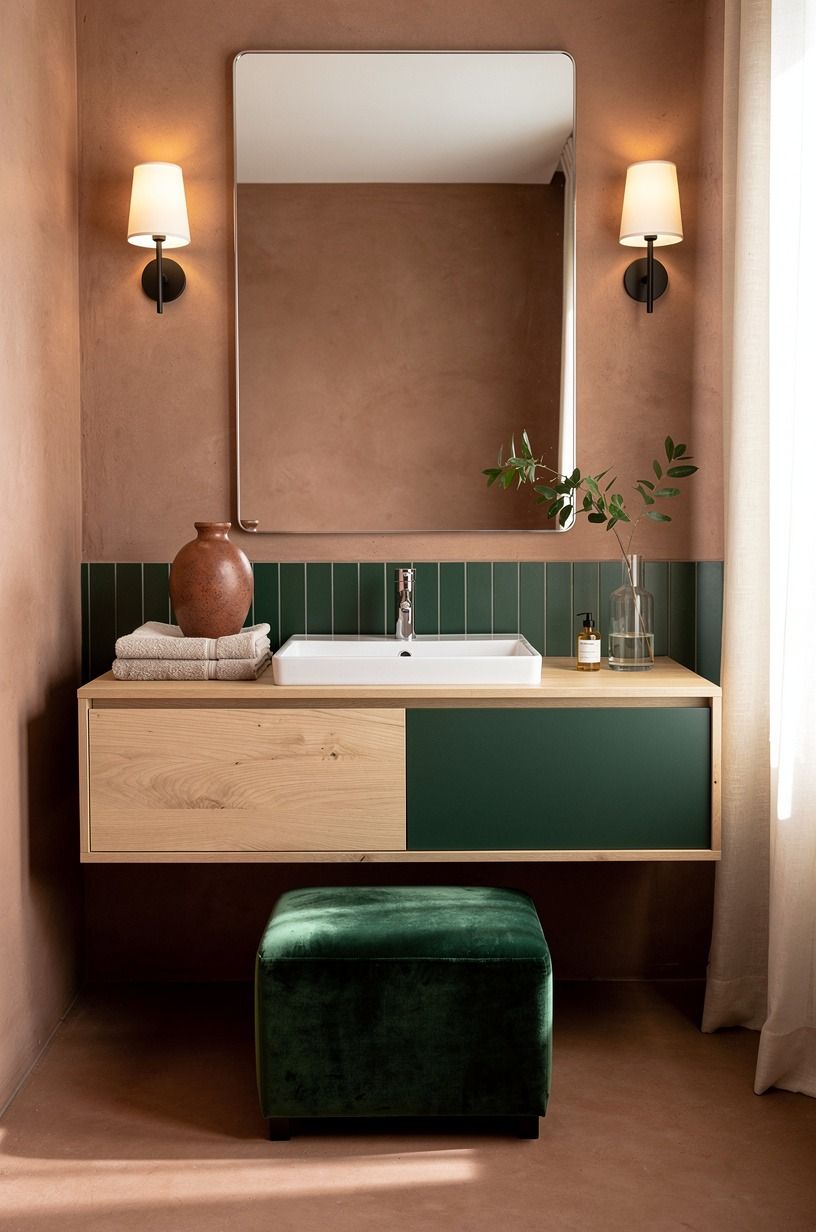
A floating vanity lets more of your terracotta floor remain visible, and that extra strip of tile makes your bathroom seem larger. Choose natural oak with visible grain, then add a deep-pile mohair velvet stool or cushion in forest green or rust. Your eye can travel beneath the cabinet instead of stopping at a heavy base.
Keep the vanity height between 32 and 36 inches, the standard range supplied for comfortable use. You’ll want enough room for daily storage, but a deep cabinet can crowd the walking path. I’d choose drawers over open shelving if your bathroom collects clutter quickly.
The IKEA GODMORGON oak-effect vanity offers a practical starting point, while a custom 3/4-inch solid oak cabinet gives you a stronger material story. Don’t pair a glossy lacquered vanity with highly textured tile unless you want a sharper, more modern contrast. Your floor deserves a surface with some grain.
7Anchor a Patterned Tile Bathroom With a Quiet Border
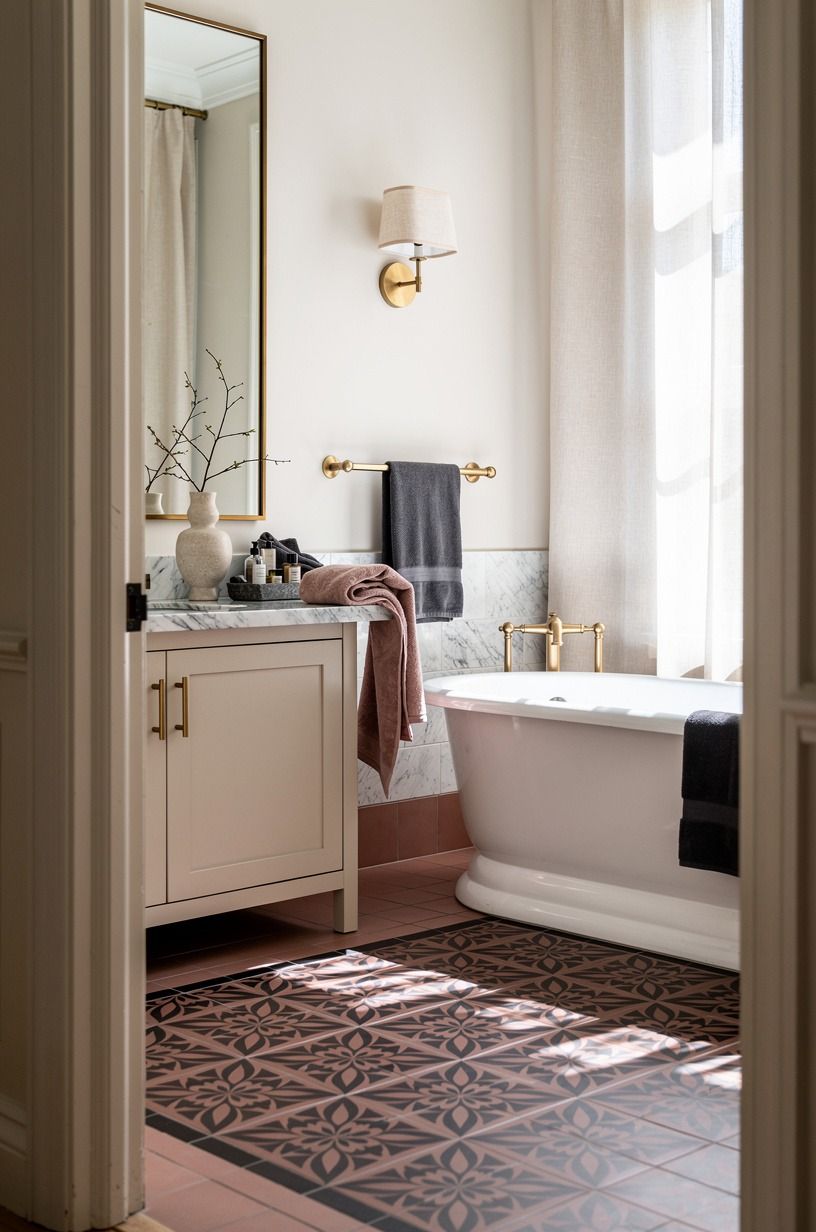
If you love a patterned tile bathroom, use terracotta as the quiet border around the drama. A small checker or floral inset can sit inside a larger field of plain clay-colored tile. Your pattern gets attention, but the room won’t feel visually restless.
I’d keep the pattern to one zone, such as the shower floor or the area beneath the vanity. Carrara marble with subtle grey veining can create a gentler contrast than black stone, especially alongside dusty rose, charcoal, and brass. Test grout beside the floor before installation because bright white can outline every shape too sharply.
The comfortable shower size begins at 36 by 36 inches, so use that footprint to judge whether your pattern has enough breathing room. You’ll need a smaller repeat in a compact shower. For another graphic direction, compare these checkerboard bathroom floor ideas.
8Paint the Ceiling a Soft Mediterranean Blue
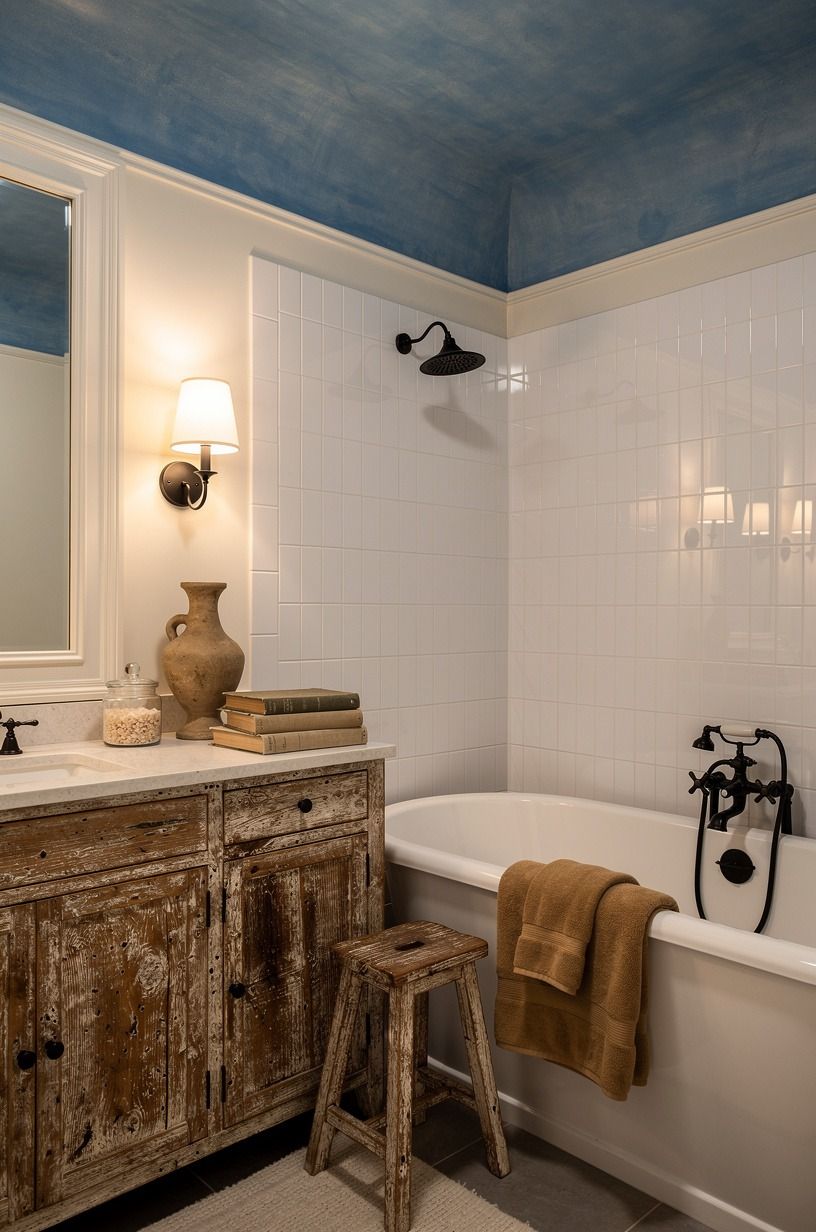
A soft Mediterranean blue can make terracotta feel less heavy, especially in a bathroom with limited windows. For a warmer interpretation, keep the ceiling close to warm white and bring camel textiles and black accents into the room instead. Reclaimed weathered teak adds depth without making the palette feel cold.
I’d use warm white in a small north-facing bathroom and reserve the blue for a room with strong daylight or pale plaster walls. If you choose a stronger blue, sample it above eye level before you commit. You’ll notice the difference most at night.
Keep the walls quiet if the ceiling is bold. Creamy plaster, camel towels, and reclaimed teak will stop the blue from becoming a separate theme. But if you’re drawn to a stronger contrast, use one black mirror detail and let the floor remain the warmest note.
9Build the Two-Wood Rule
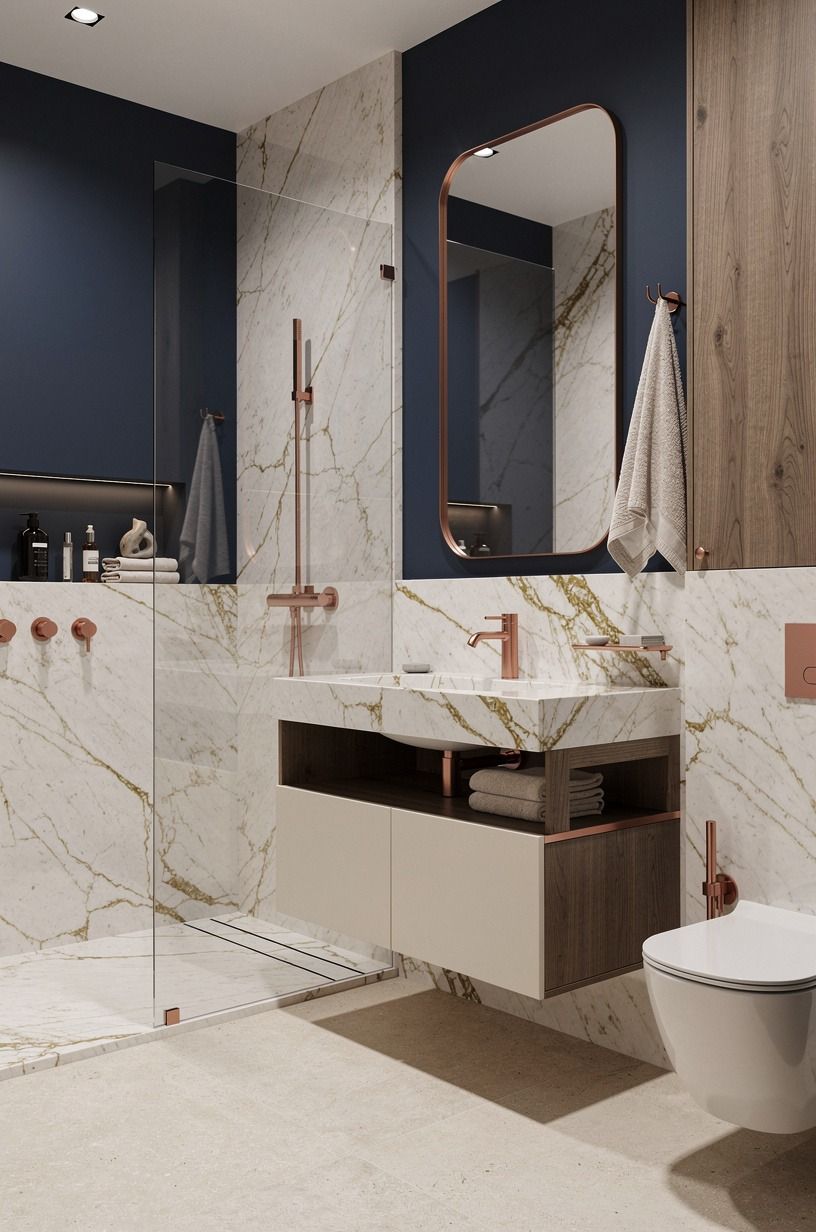
The Two-Wood Rule keeps a Mediterranean bathroom from turning into a furniture showroom. Use one wood for the vanity and one related wood for a stool, shelf, or mirror frame. Midnight blue, copper, and ivory can sit around those natural surfaces without competing with five different grains.
I’d pair one warm oak with a darker walnut rather than mixing several orange finishes. Calacatta marble with gold veining can supply the brighter note, while copper hardware brings warmth to the darker palette. You’ll want the grain directions to vary slightly, because perfectly matched wood can feel staged.
Avoid placing a large wooden basket directly beside a wood vanity unless one piece has a clear difference in scale. A low woven basket, an ivory stone tray, and a linen curtain can break up the surfaces. And if you’re unsure whether the look should lean rustic or polished, these Italian Mediterranean travertine bathroom ideas show how natural materials can share a room.
10Mix Spanish Flooring Ideas With Plaster Walls
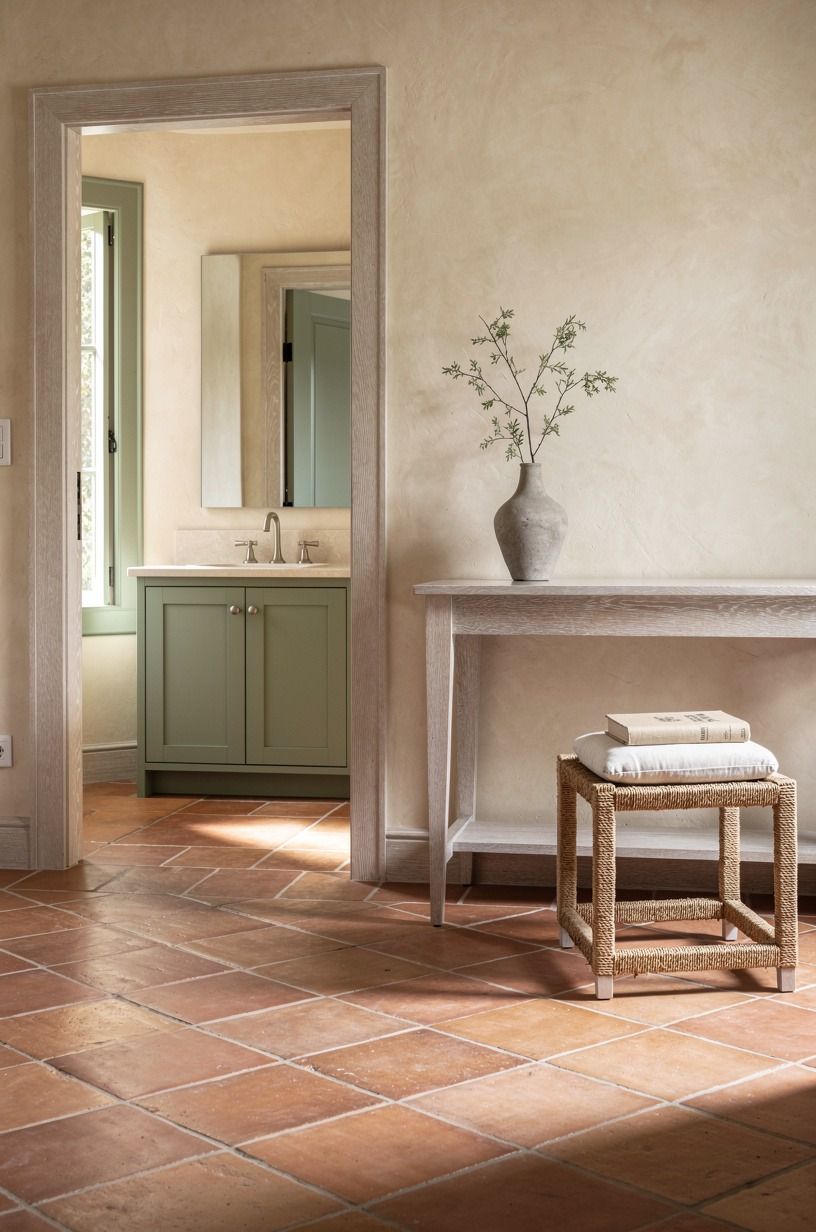
Spanish flooring ideas often work best when the walls stay imperfect. Pair sage green, warm cream, and natural wood with cerused white oak for a softer interpretation of the style.
11Frame the Mirror With a Sun-Washed Arch
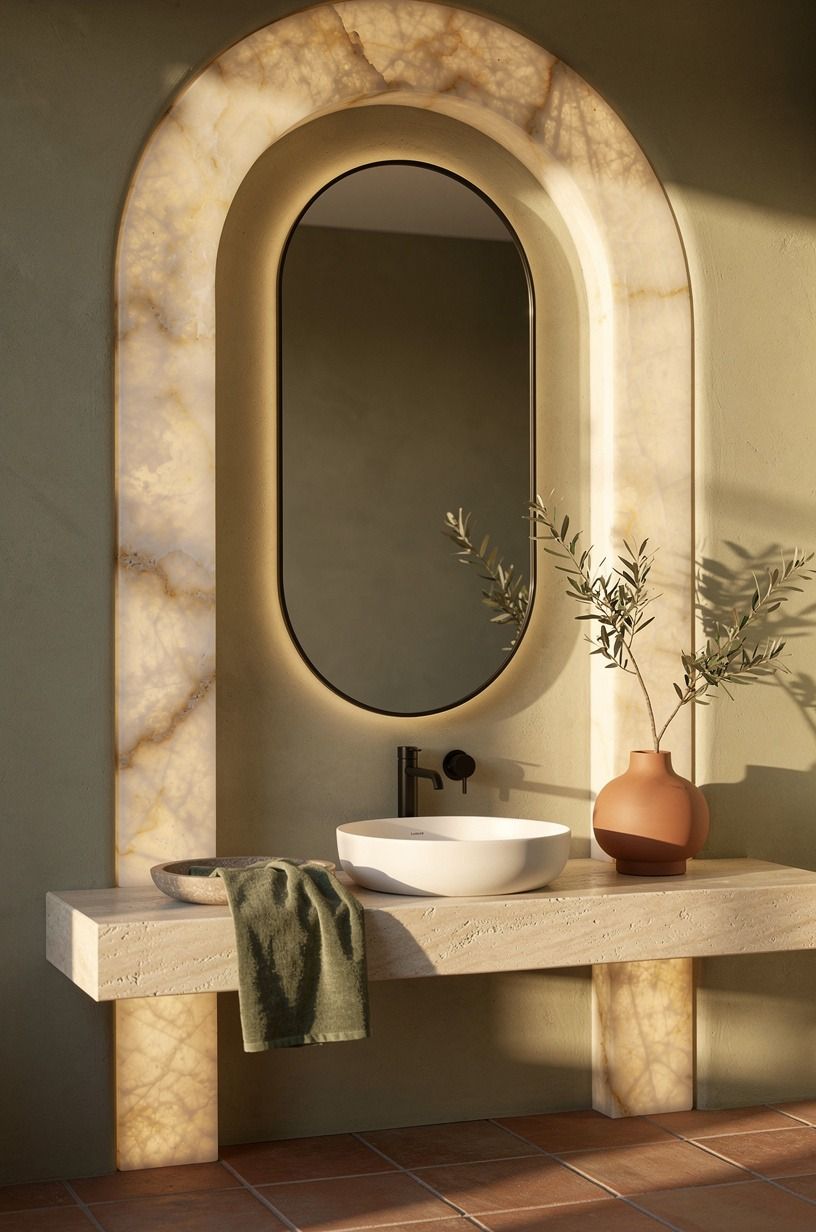
An arched mirror brings a gentle architectural shape above a rectangular vanity. A backlit surround in translucent onyx adds a warm glow, while terracotta, stone, and olive keep the palette connected to the floor. Your bathroom will feel more considered without needing another tile pattern.
A 24- to 30-inch-wide mirror usually leaves useful wall space for sconces, but measure your vanity before ordering. You’ll want the mirror centered on the basin, not merely centered on the wall. A slim onyx surround can suit a cleaner room, while a hand-finished wood detail feels more rustic.
I’d avoid a thick black frame if your floor is already dark and variegated. It can visually anchor the room too low.
Add a small ceramic vessel, a folded towel, and one trailing plant instead. Those details will make the mirror feel connected to your daily routine.
12Layer Olive, Clay, and Cream
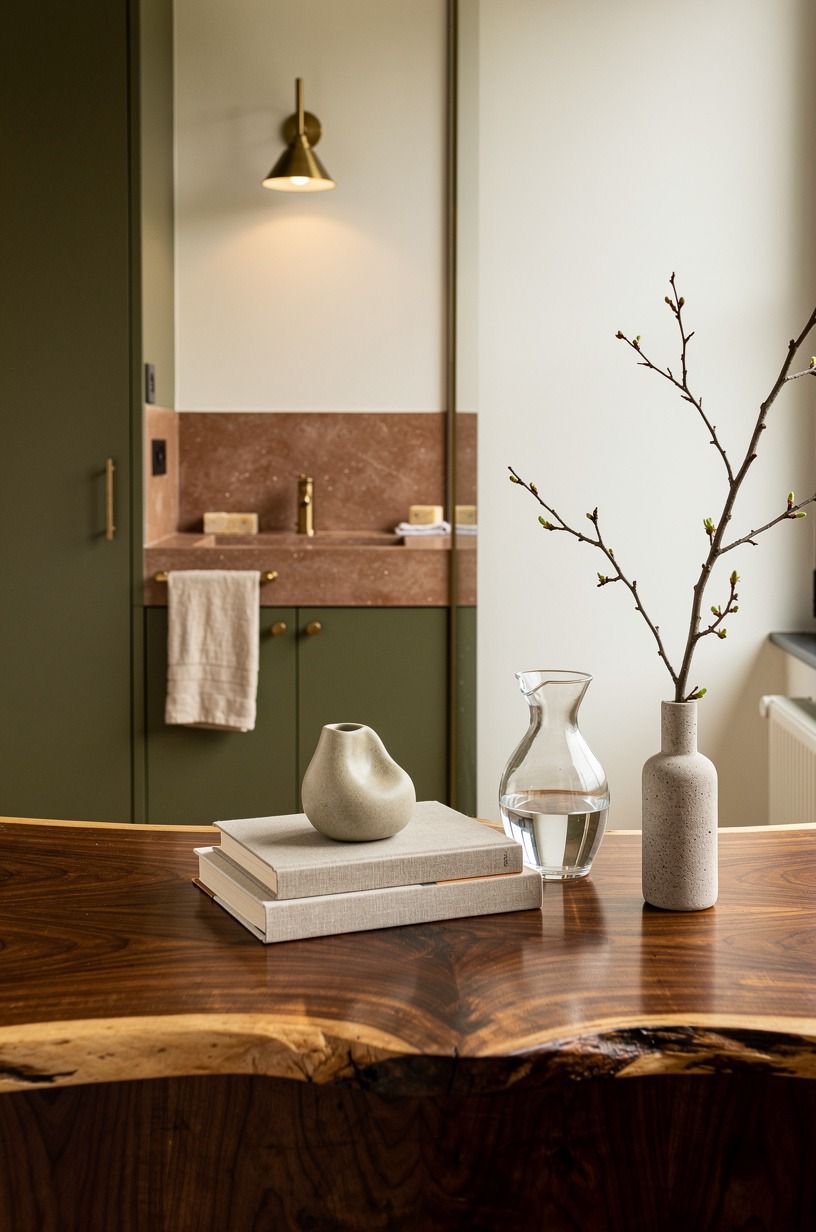
The most harmonious terracotta palette uses clay, linen, and aged brass as its main supporting colors. Keep olive to a small accent if you want it, while book-matched walnut can bring depth to cabinetry or a vanity.
Your towels don’t need to match the wall exactly. Look for washed linen, faded rust, and warm cream.
A Parachute Classic Turkish Cotton towel gives you texture without adding another strong pattern. I’d skip saturated emerald unless your room has plenty of daylight, because the contrast may feel jewel-box dark.
Use one material to bridge the colors. A book-matched walnut vanity, a clay soap dish, or an aged-brass tray can repeat the palette naturally.
But don’t fill every surface. A little empty counter space makes the warm colors feel intentional rather than crowded.
13Hang a Woven Shade Beside the Tub
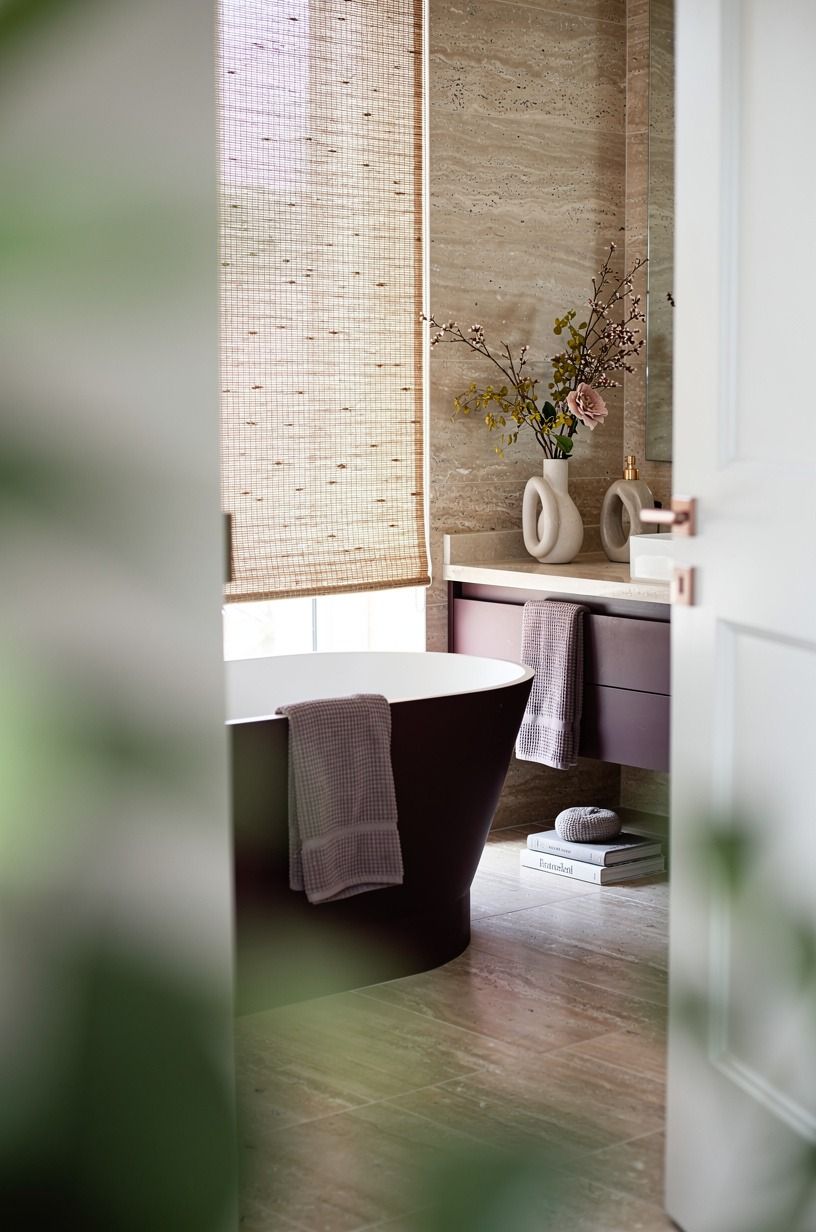
A woven shade filters hard sunlight and gives terracotta a softer, more picturesque glow. Pair it with warm travertine around the tub and plum, grey, or rose-gold accents for a richer Mediterranean palette.
14Contrast Terracotta With Creamy White
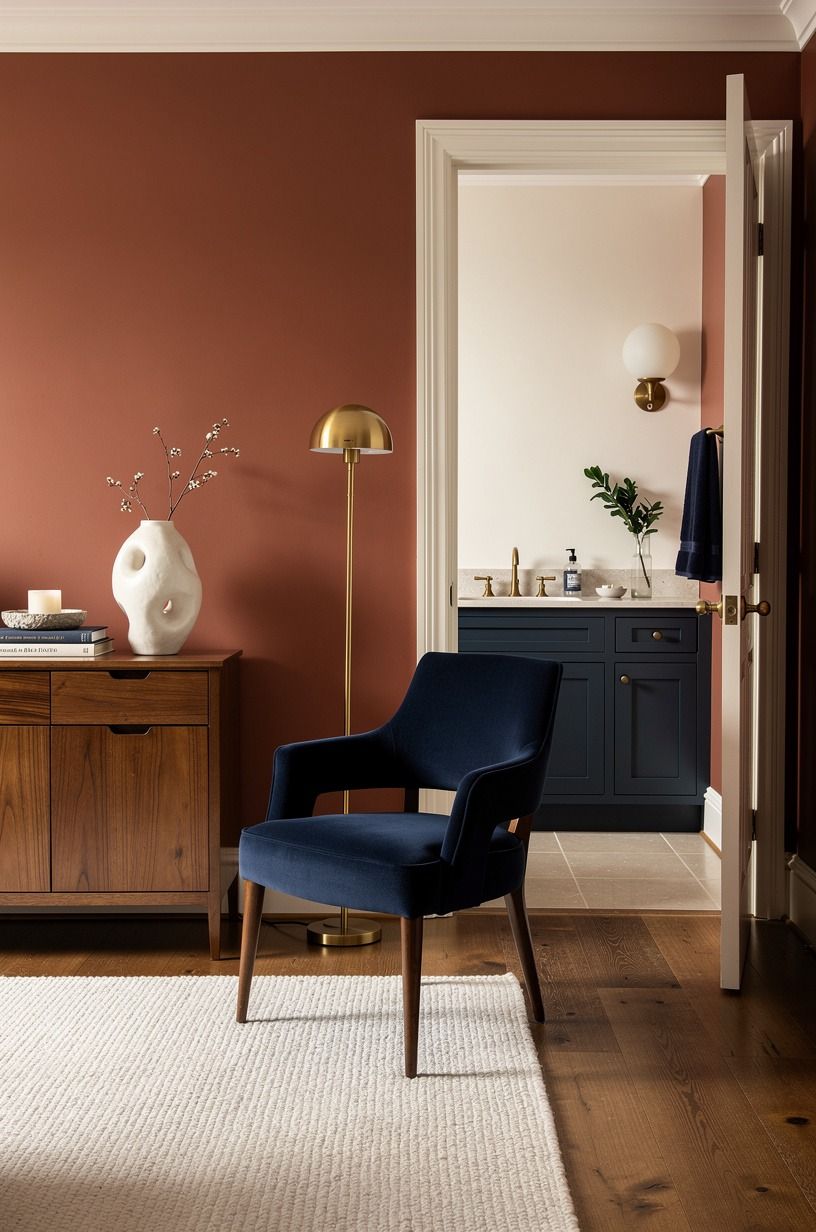
Terracotta needs contrast, but stark white can make it look more orange. Use creamy white with navy accents and warm walnut instead. Your floor will still stand out, but the room will feel serene rather than sharp.
A walnut vanity can soften the room, while unlacquered brass adds a golden note that develops patina over time. Matte porcelain keeps cleaning simple. Marble tops in the supplied US range cost about $50 to $100 per square foot, so use stone where your eye lands most often.
I’d place it on the vanity rather than covering every possible surface.
Keep your grout close to the tile color if the floor is handmade or irregular. Strong contrast grout can turn small variations into visual noise. You’ll get a more refined result from a warm neutral grout that lets the clay shapes read as one field.
15Protect the Layout With the Clear-Path Rule
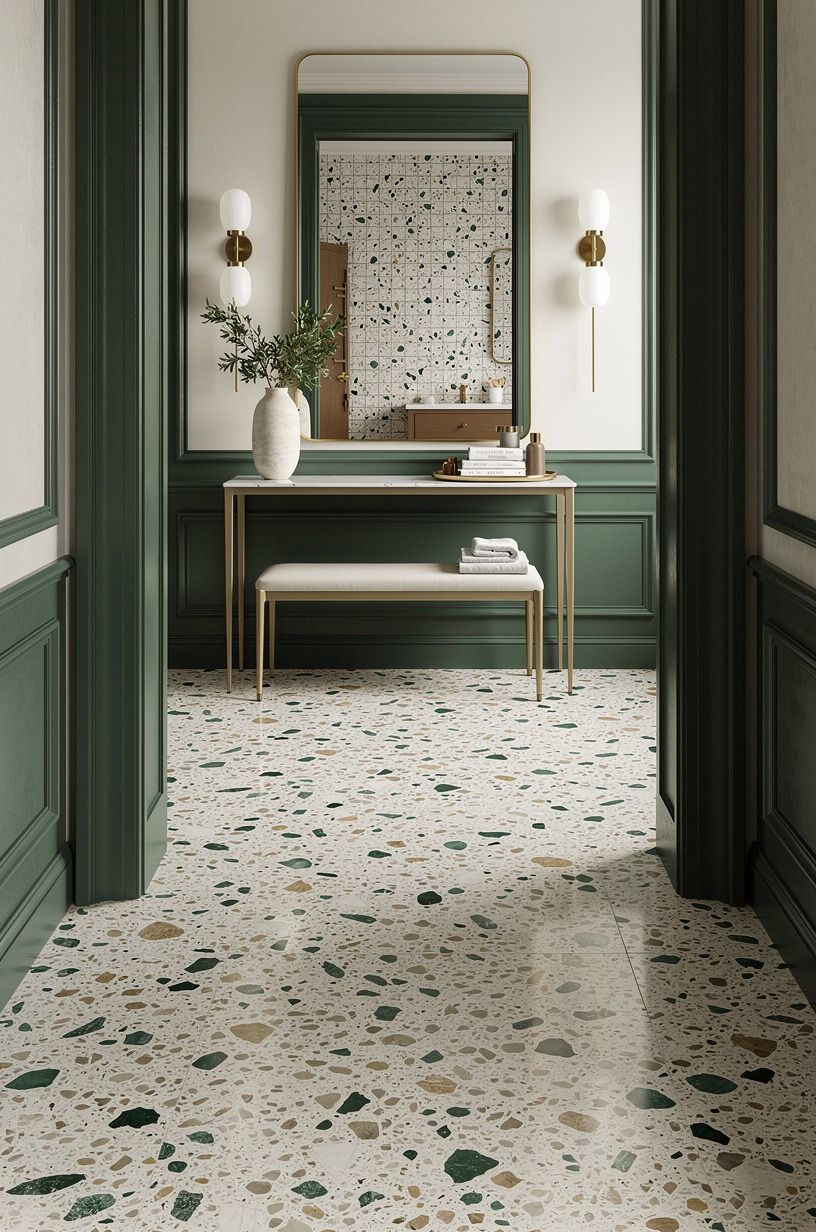
The Clear-Path Rule keeps a bathroom with emerald, gold, and cream accents comfortable instead of crowded. Oversized-chip terrazzo can add texture, but keep the walking route open around it.
16Let the Floor Lead the Mediterranean Bathroom Tiles
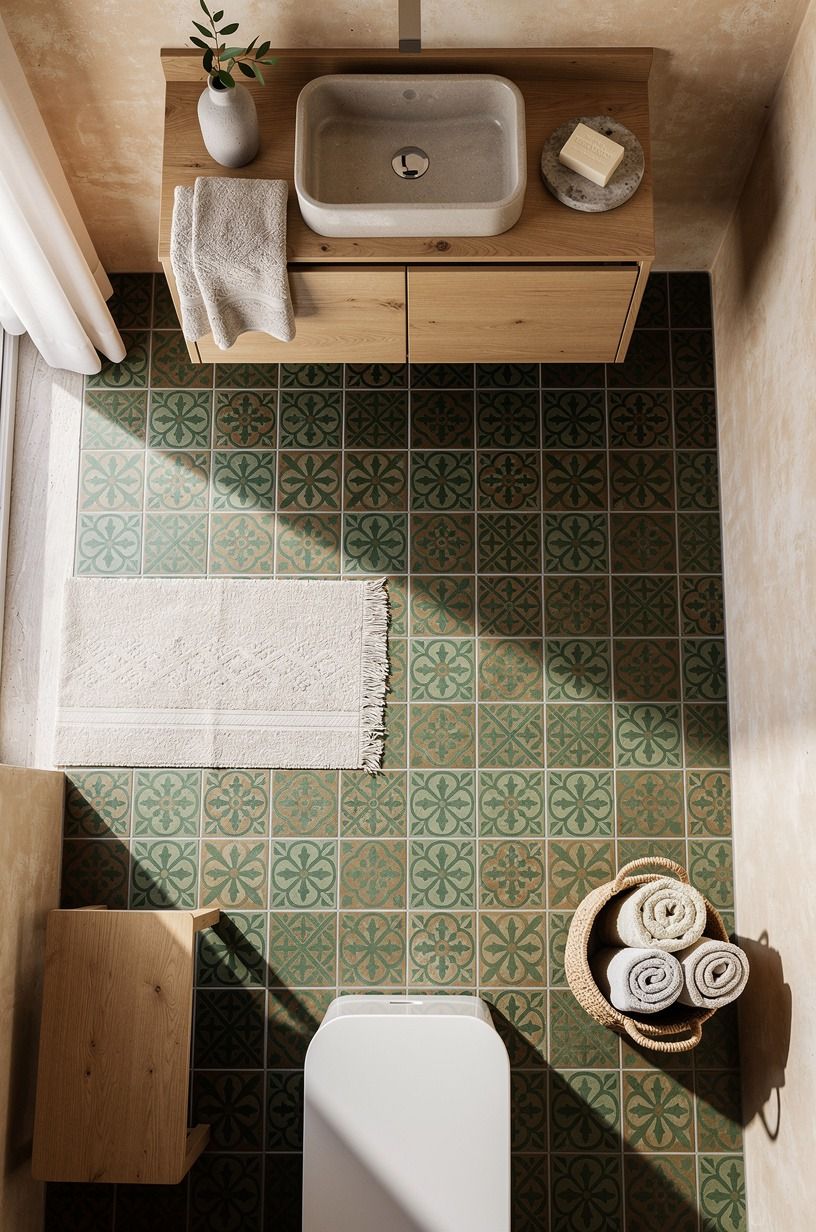
Your floor should be the starting point, not the last color added after every other decision. In this palette, forest green, rust, and natural oak create the warmth, while hand-applied Venetian plaster keeps the walls soft and organic.
If your floor has pale variation, choose lighter Mediterranean bathroom tiles for the shower and keep the vanity simple. If the room leans toward forest green and rust, use cream walls and natural-oak details to lower the intensity. I’d skip a second statement floor or a loud mosaic because the existing surfaces already have enough personality.
A narrow room can still carry the look. Keep the shower at least 36 by 36 inches where possible, protect your clearances, and let the tile run continuously beneath the vanity.
For a broader style plan, see this guide to modern Mediterranean bathroom design. You’ll get more impact from continuity than from adding another pattern.
What the Budget Really Changes
A terracotta bathroom doesn’t need a complete renovation to feel new. If your layout works, paint, lighting, a mirror, and textiles can create most of the warmth for the budget tier. You’ll spend more when you move plumbing, retile a shower, or replace the floor and walls together.
The material choice changes the total quickly. Zellige tile runs about $15-$35 per square foot, subway tile about $2-$10 per square foot, a marble top about $50-$100 per square foot, and a brushed brass faucet about $120-$450. Your best investment is the surface you touch or see every day.
Why Terracotta Is Having a Moment
Terracotta is returning because bathrooms have become less interested in looking sterile. The color carries the memory of old courtyards, sun-warmed floors, and handmade pottery, but it can still work with a clean floating vanity or modern glass shower. Your room doesn’t have to look historic to feel grounded.
I’ve gone back and forth on whether every terracotta bathroom needs rustic styling. It doesn’t.
A pale oak vanity, a simple globe light, and a precise frameless mirror can make the floor feel modern, while a plaster wall keeps it from becoming generic. The strongest rooms let old and new disagree a little.
What matters is the material relationship. Smooth chrome beside rough clay can feel chilly, while aged metal, linen, oak, and zellige build a more inviting surface story.
You’ll notice the difference when afternoon light moves across the floor and catches the uneven edges. That small movement is why I’d choose real variation over a flat printed imitation whenever your budget allows.
My Honest Take on the Warmth Question
I’d start with the floor before choosing paint because terracotta has more influence than most people expect. It changes the way white looks, the way brass reads, and the amount of green your room can handle. If you choose the wall color first, you may spend the rest of the project trying to calm it down.
The mistake I see most often is treating terracotta as a theme. A few clay vessels, a woven shade, and warm tile can suggest the Mediterranean without turning your bathroom into a restaurant set. Your goal is a lived-in room, not a collection of references.
I’d also resist the urge to make every finish rustic. One rough surface needs a cleaner partner.
Pair handmade zellige with a simple vanity, or use polished stone beside a weathered mirror. That tension gives the room energy.
And if you’re still unsure, make one sample board with the actual floor, paint, metal, and towel colors before ordering anything.
What People Always Want to Know
What is the best terracotta floor approach for a small bathroom?
A floating pale-oak vanity, soft cream walls, and one arched mirror usually work best. Open floor area makes the room feel larger, while a compact IKEA GODMORGON vanity keeps storage practical. Your shower should stay at least 36 by 36 inches when possible, with a clear path between fixtures.
Where can I buy terracotta bathroom pieces on a budget?
Look at IKEA, Wayfair, and Target for vanities, mirrors, towels, and lighting, then check Facebook Marketplace or local thrift shops for wood stools and frames. Second-hand wood adds character without forcing your budget upward. You don’t need every item to come from one collection.
How much does a terracotta bathroom makeover cost?
A cosmetic update typically falls in the $200-$1,200 budget range from the supplied US figures. Paint, a mirror, a faucet, and textiles can change the room without moving plumbing. A mid-range renovation runs $3,000-$9,000, while major tile and plumbing work can reach $12,000-$30,000 or more.
Can I create a terracotta bathroom on a budget?
Yes, and you can start without replacing the floor. Paint the walls, change the mirror, switch the faucet, and regroup what you already own. A $200-$1,200 refresh can feel substantial when you choose one metal finish and repeat the floor’s warm color in towels or ceramics.
Is terracotta worth it in a small space?
Yes, because a small room gives the warm floor more visual impact. Continuous tile makes the footprint feel connected, especially beneath a floating vanity. Keep patterns restrained, protect the 21-inch toilet clearance, and choose one wall treatment rather than layering several competing surfaces.
Is terracotta a good idea for a rental?
Yes, if you work around the existing floor and use reversible changes. Removable upgrades include peel-and-stick mirror frames, tension-rod linen curtains, renter-safe sconces, and freestanding storage. You can bring in clay color through a washable runner, towels, and ceramic accessories without drilling into tile.
Where I’d Start First
If I had to pick one, I’d start with the warm wall color. Terracotta looks harsh beside a cold white, and every mirror, towel, and metal finish will fight it.
Choose the paint first, then let the floor lead. Pin this guide for later and build the room slowly.