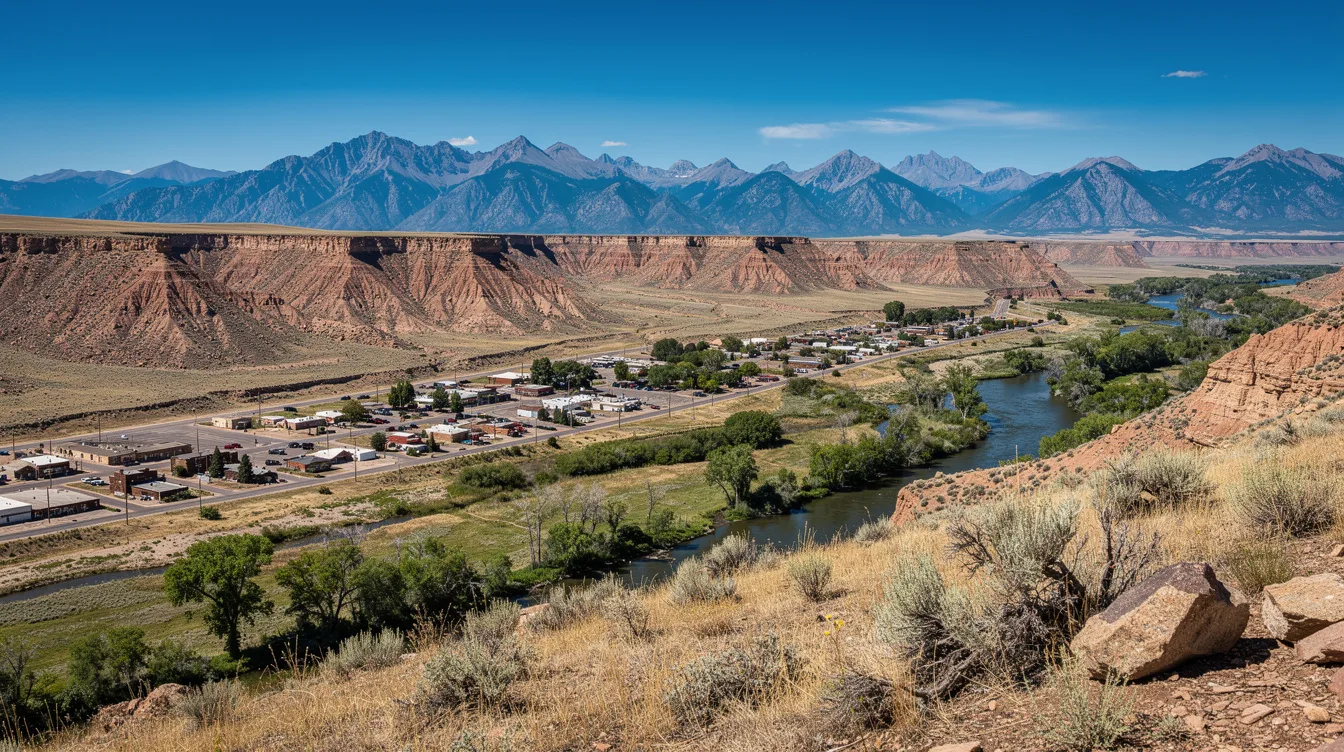
Dubois is the kind of Wyoming town that makes a road trip slow down. Fewer than 1,000 residents still gather for a summer rodeo, generally on Friday nights from July through August. And because the town sits about 90 minutes from Yellowstone’s south entrance, you can trade crowded gateways for a quieter western base.
But Dubois isn’t a polished resort town, and that’s the appeal. Ranches, horses, mountain roads, and a dry western valley shape the mood. You’ll hear the place before you understand it, with rodeo energy replacing the usual park-town bustle.
It’s remote, but it isn’t difficult to reach by car.
The rodeo gives summer its Friday rhythm
And the Friday Night Rodeo is the clearest reason to plan around Dubois in summer. The event generally runs during July and August, when visitors and locals meet for an evening of western competition and community tradition. You don’t come for spectacle alone.
You come to see a small town make room for its own ritual.
But the rodeo is only one part of the town’s western identity. Traditional dances, local events, ranch stays, and horseback riding keep the culture connected to the land. For more ideas, browse this Wyoming travel guide before choosing your route.
Why Dubois beats Jackson for a quieter stop
And Dubois can be a better choice than Jackson if you want a more restrained Wyoming experience. Jackson is more tourist-oriented, while Dubois feels rustier and less managed for visitors. The difference matters when you want coffee, conversation, and mountain air without turning every stop into an attraction.
But don’t mistake quiet for effortless. You’re still in a mountain setting, and road conditions can affect plans. The town works best as a one-to-three-night stop, especially if your trip includes about 90 minutes of driving to Yellowstone’s south entrance.
That distance makes it useful, though not ideal for entering the park early every morning.
US Highway 26 leads into a real mountain valley
And the US Highway 26 approach gives Dubois a strong sense of place. The town sits in the Wind River Valley, on the eastern side of Grand Teton and Yellowstone. Mountains surround the route, and the road feels like part of the experience rather than a mere connection between parks.
But mountain access comes with limits. Weather can constrain roads and activities, particularly outside the main travel season. If you visit from June through September, you’ll have the simplest conditions for hiking, fishing, mountain drives, and ranch experiences.
Start with this Yellowstone road trip planning guide if Dubois is one stop in a larger loop.
Whiskey Basin and the Wind River reward slower days
And Whiskey Basin gives wildlife watchers a reason to stay beyond rodeo night. The National Bighorn Sheep Interpretive Center explains the local ecosystem and the wild sheep of the Rocky Mountains. You’ll get more from the visit if you leave room for pauses, because the setting asks you to watch rather than hurry.
But the area’s outdoor choices extend beyond wildlife. The Wind River runs through the region, where fly-fishing notes mention brook, rainbow, cutthroat, and brown trout. Brooks Lake, Union Pass, the Dubois Badlands, and Shoshone National Forest add options for hiking, camping, fishing, and photography.
The views are expansive, but the activities still depend on weather and road access.
Can you build a two-day visit around Dubois?
And a two-day stop works well if you want a taste of town and country. On the first day, arrive along US-26, see the Dubois Scenic Overlook, walk through the center, and visit the National Bighorn Sheep Interpretive Center. If it’s a summer Friday, finish with the rodeo.
But the second day should reach beyond town. Head toward Brooks Lake or Whiskey Basin for hiking, wildlife watching, or fishing, then return through the Dubois Badlands before continuing toward Grand Teton, Yellowstone, or Lander. You can also choose a dude ranch for horseback riding and a slower western stay.
When should you go?
And June through September is the most practical season for a first visit. July and August add the rodeo, while autumn brings fewer visitors and changing colors. Winter offers snowmobile trips, Nordic skiing, snowshoeing, and ice climbing around Togwotee Pass, but conditions can be serious.
But Dubois is at its best when you accept the trade-off. You won’t get a full resort menu or an easy daily park commute. You will get a Friday night arena, dark mountain roads, and a town that still knows how to gather when the summer sky turns blue.