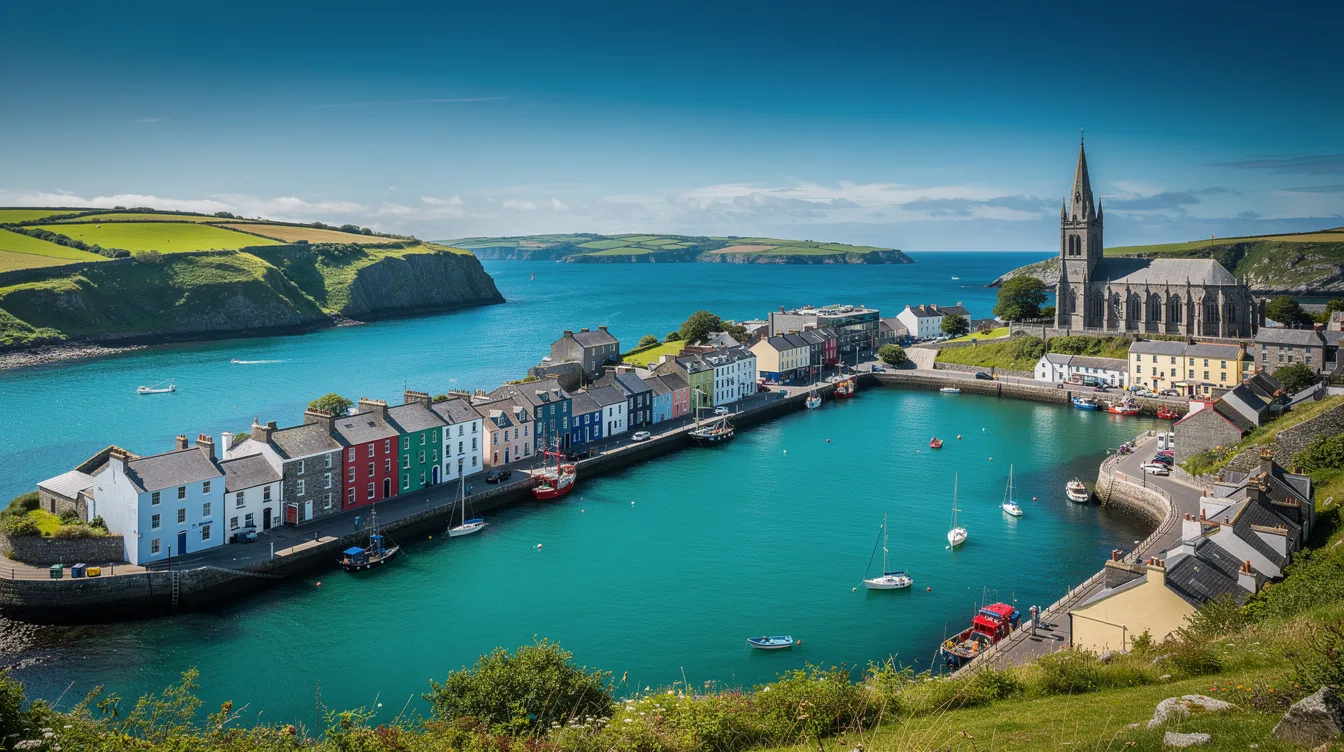
Cobh sits on Great Island in Cork Harbour, and its most famous visitors arrived by tender. On April 11, 1912, the town was the RMS Titanic’s last port of call before New York. Of the 123 passengers who boarded here, only 44 survived the sinking.
That number changes the way you read the waterfront. The colorful terraces and calm harbor look cheerful in the afternoon, but the piers carry a much heavier memory. You can still walk the same town where those passengers spent their final hours on land.
The Titanic story begins at the water
The town was then called Queenstown, a major departure point for Irish emigrants. The Titanic stopped here briefly, and small White Star Line tenders carried passengers, luggage, and supplies out to the ship.
And that is why Cobh feels different from a museum built around a single event. The harbor is still working, cruise ships arrive in summer, and ferries cross the water. You’re walking through an active port, not a preserved stage set.
Start at Titanic Experience Cobh, located in the former White Star Line building. The visit follows the last passengers who boarded at Queenstown, while the Titanic Trail adds the streets, buildings, and piers connected to that morning.
Climb 300 feet for Cobh’s clearest view
St. Colman’s Cathedral rises above the town at 300 feet, making it the easiest landmark to spot from the harbor. Its Gothic stonework feels grand against the rows of brightly painted houses below.
But the climb is real, especially on a warm summer day. You’ll hear the carillon’s 49 bells and see the harbor open toward Spike Island and Haulbowline Island. The view rewards the effort because the town’s steep terraces finally make sense from above.
Walk back toward the waterfront and find the Deck of Cards, the local nickname for the colorful houses arranged along the slope. The waterfront stroll is free, and the best photographs come when the cathedral rises behind the rooftops.
Can you understand Cobh in half a day?
Yes, if you keep your route focused. Visit the Cobh Heritage Centre, walk past the Lusitania memorial, climb to the cathedral, and stop for lunch beside the harbor.
The Heritage Centre occupies the old railway station and explains Cobh’s emigration history alongside its Titanic and Lusitania stories. You’ll leave with a broader sense of the town, because its maritime past reaches far beyond one famous ship.
Spike Island gives the harbor a second act
If you have a full day, take the ferry to Spike Island, a former fortress, prison, and military site across from Cobh. It’s the strongest addition to the visit because it shifts your attention from departure stories to defense, confinement, and the harbor itself.
And the boat ride supplies the perspective you can’t get on shore. Cobh’s terraces rise behind you, while the water widens around the islands. Check the ferry schedule before committing, since the extra trip depends on suitable departure times.
Cobh also remembers the RMS Lusitania, torpedoed offshore in 1915. A memorial in Casement Square honors 1,198 victims, and the Old Church Cemetery contains the graves of more than 100 people who died in the disaster.
Getting to Cobh from Cork is unusually easy
Cobh is less than 25 minutes by train from Cork City, and the station sits directly beside the harbor. That makes this one of Ireland’s easiest maritime day trips, especially if you don’t want to rent a car.
But summer brings cruise crowds, so arrive early if you want quiet streets and room inside the museums. You can cover the main sights in three or four hours, while a full day leaves time for Spike Island and a slower lunch.
Come for the Titanic connection, then stay for the bells, steep streets, and salt air along the quay. By late afternoon, the harbor settles again, with Cobh’s colored houses rising above the water.