
Mediterranean tile made my bathroom feel finished because it gave the room a real point of view, not just a new surface. I worked around a cramped 60×30 in tub, a beige vanity, and a budget I didn’t want to regret. One wall changed the whole mood!
Here’s what it looked like before
Before, it had the full starter-bathroom package: beige floor tile, a narrow vanity, chrome fixtures, and a mirror that seemed to shrink the room every morning. The tub was fine, the plumbing worked, and I didn’t want a demolition project. But none of it belonged together.
I kept staring at the empty wall above the tub. You know that feeling when your bathroom is clean but still looks unfinished?
That was ours. The old tile stopped halfway up the wall, the paint read gray in morning light, and every towel looked accidental against it.
- Start with hand-glazed mediterranean bathroom tiles
- Use the Sun-Washed Wall Rule around the tub
- Lay a patterned tile bathroom floor with breathing room
- Frame the mirror with aged brass, not chrome
- Why does a european tile bathroom need plain grout?
- Build the Three-Height Light Stack
- Paint the quiet walls Chestertown Buff
- Float a vanity so your floor can show
- Let linen soften the azulejos bathroom look
- Skip the tiny rug and anchor the wet zone
- Mix wood tones with the Two-Wood Rule
- Hang art where you least expect it
- Add a stool that earns its place
- Choose a quiet vanity top over busy marble
- Can you make a rental mediterranean tile moment?
- Keep the shower generous, even when it isn’t large
- Finish with objects that look collected
1Start with hand-glazed mediterranean bathroom tiles
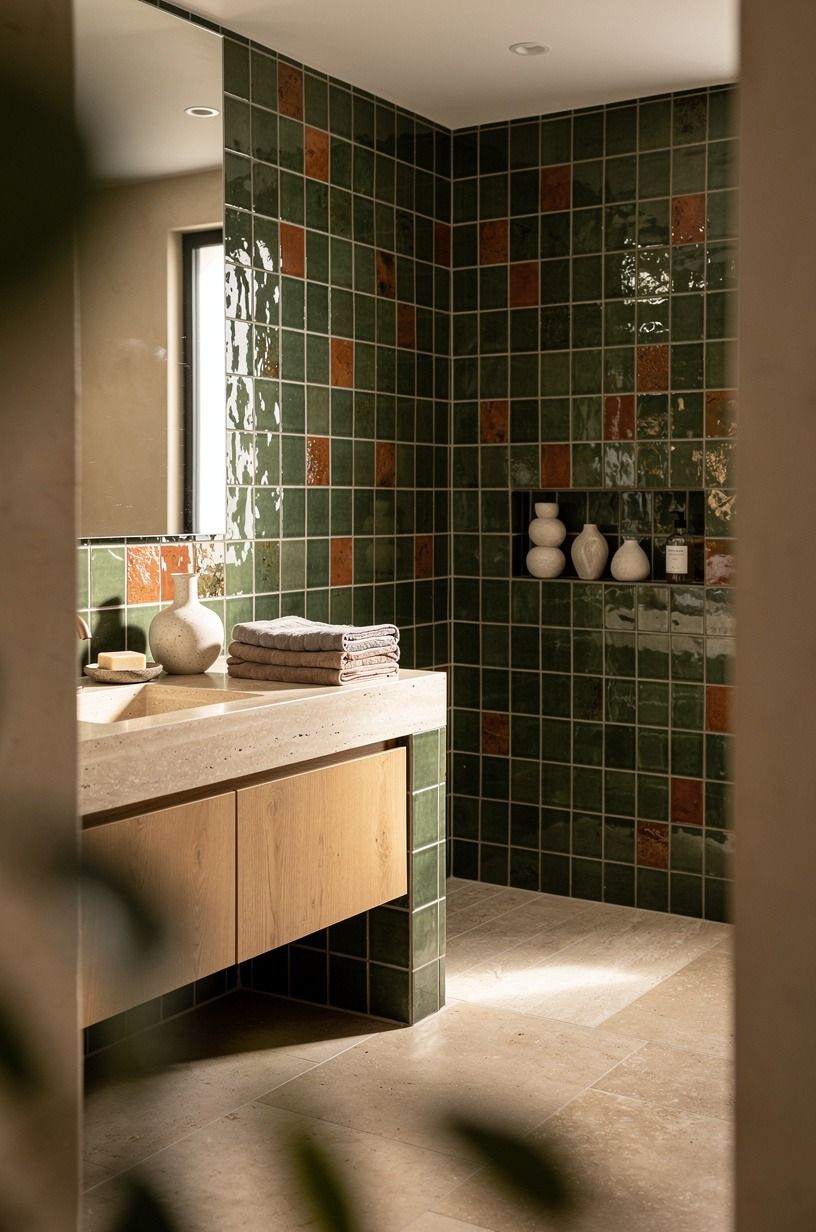
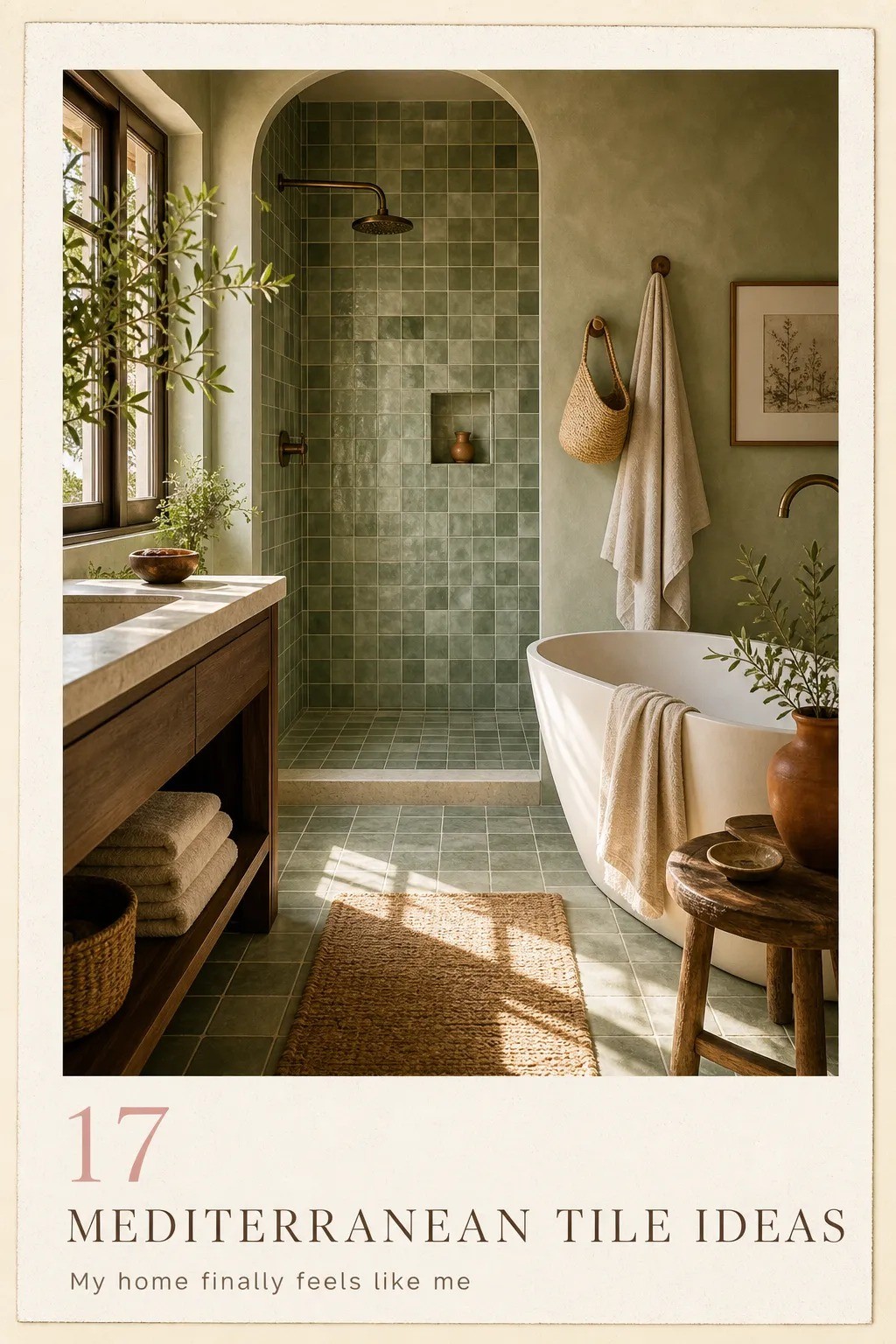
I chose hand-glazed emerald zellige for the wall behind the vanity because flat, machine-perfect tile would’ve made the room feel too new. You want variation here: tiny ripples, uneven edges, and a glaze that catches light differently at noon than it does after dinner.
I ordered samples first, then held them beside the faucet and paint. That step saved me. Zellige tile typically runs $15-$35 per square foot, so you don’t need to cover every wall to get the effect.
A single strong field is enough, especially with warm travertine and natural oak nearby.
2Use the Sun-Washed Wall Rule around the tub
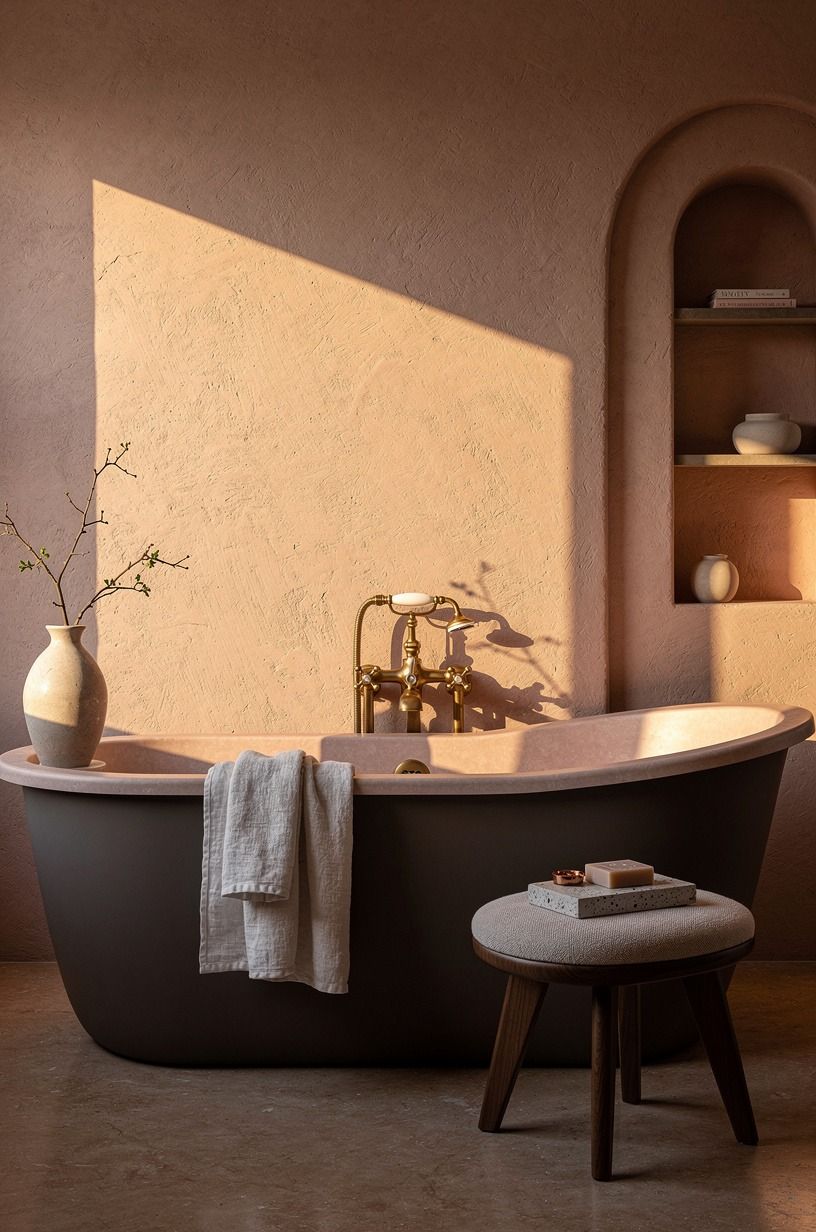
For the tub surround, I stopped the tile where the wall felt intentional, not where the old installer had stopped. Dusty rose walls and unlacquered brass make that transition feel warmer, especially once the brass starts to develop its own patina.
3Lay a patterned tile bathroom floor with breathing room
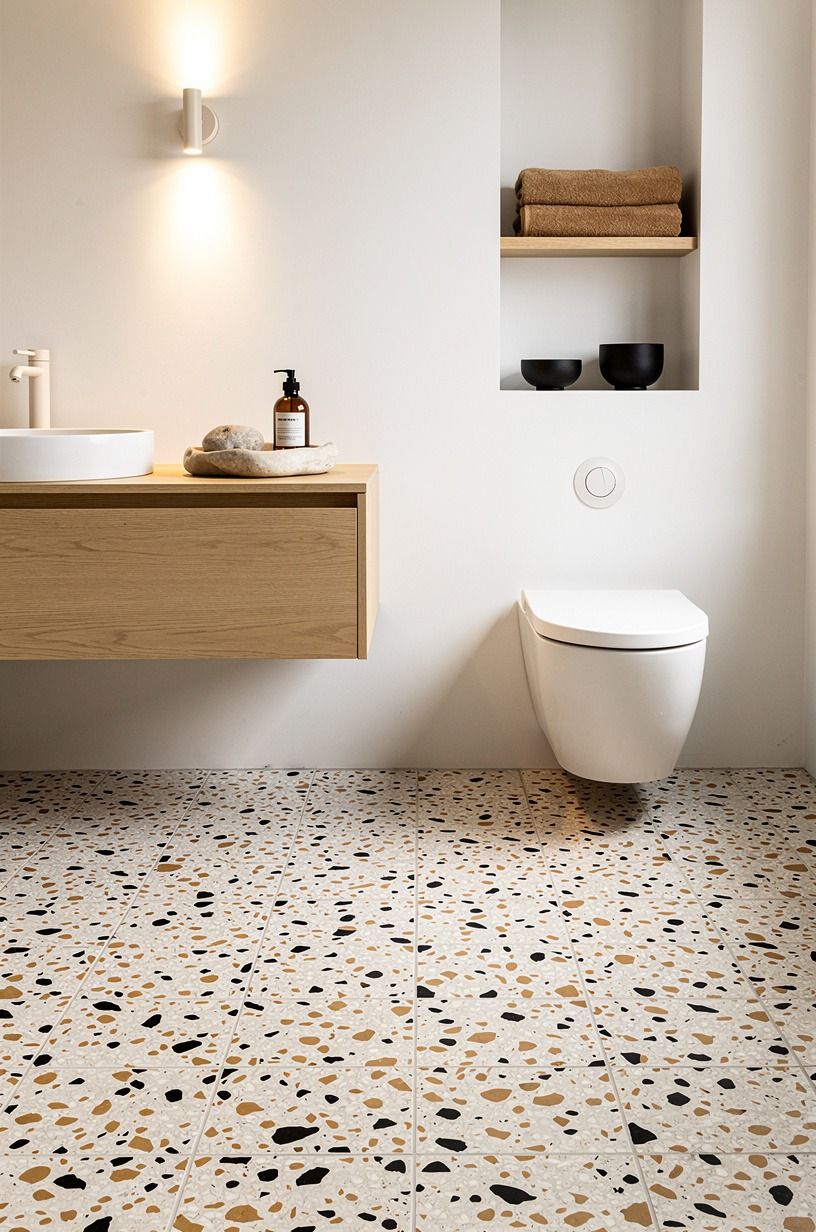
The floor was my bolder choice: oversized-chip terrazzo in warm white and camel, with black accents that hide hair, dust, and the occasional dropped makeup brush. Practical, thankfully. You don’t need a busy wall and a busy floor, though.
Keep your wall tile quiet if you choose a patterned floor. I learned that after laying two sample boards side by side, and the second pattern made my eyes feel tired before coffee. For another direction, I kept coming back to these mid-century modern bathroom floor tile ideas, especially if your home has cleaner lines.
4Frame the mirror with aged brass, not chrome
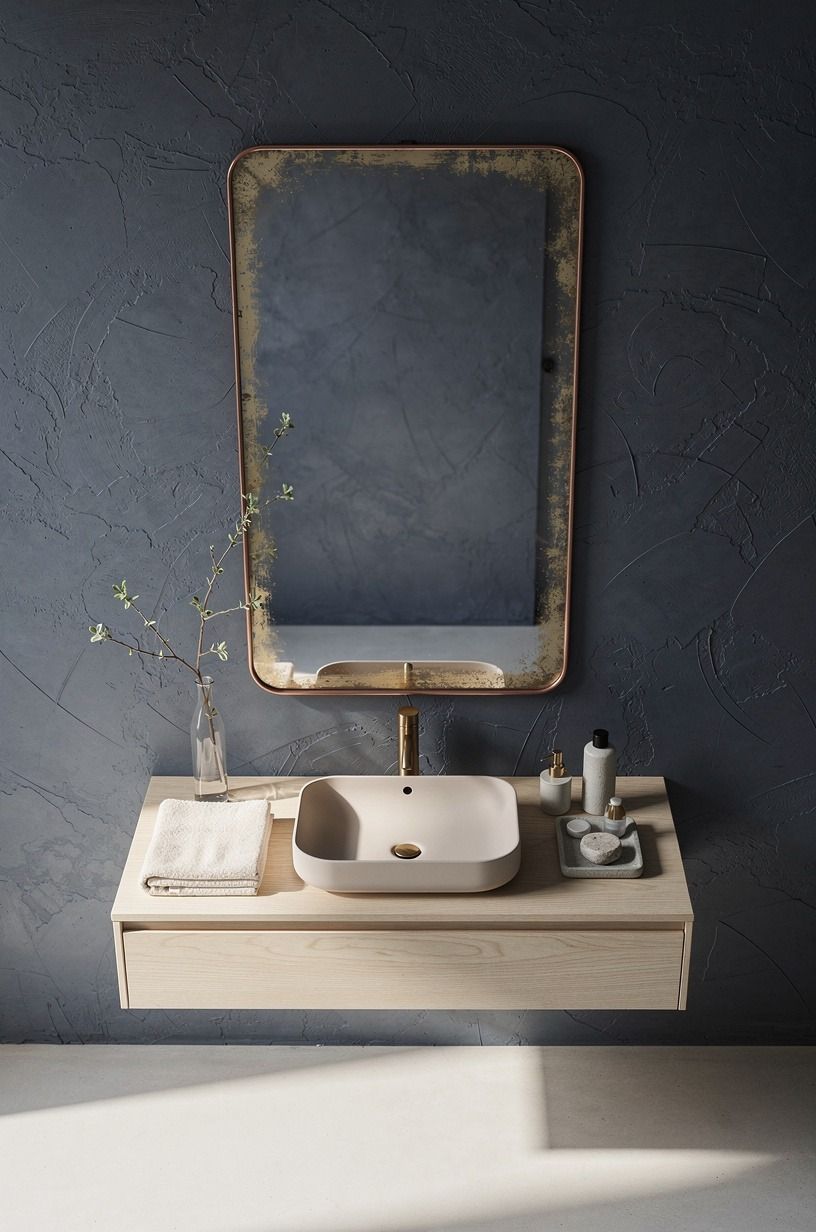
The old frameless mirror wasn’t terrible. It was just invisible in the least helpful way. I swapped it for a rounded aged-brass metal mirror, then added a faucet in a finish close enough to read as family, not a forced matching set.
Your brass doesn’t need to match tile hardware exactly. In fact, I’d avoid a full set from one box store because it can look staged. Brushed brass faucet options typically run $120-$450, and even a modest faucet feels richer beside hand-applied Venetian plaster in midnight blue and ivory.
That’s the bit.
5Why does a european tile bathroom need plain grout?
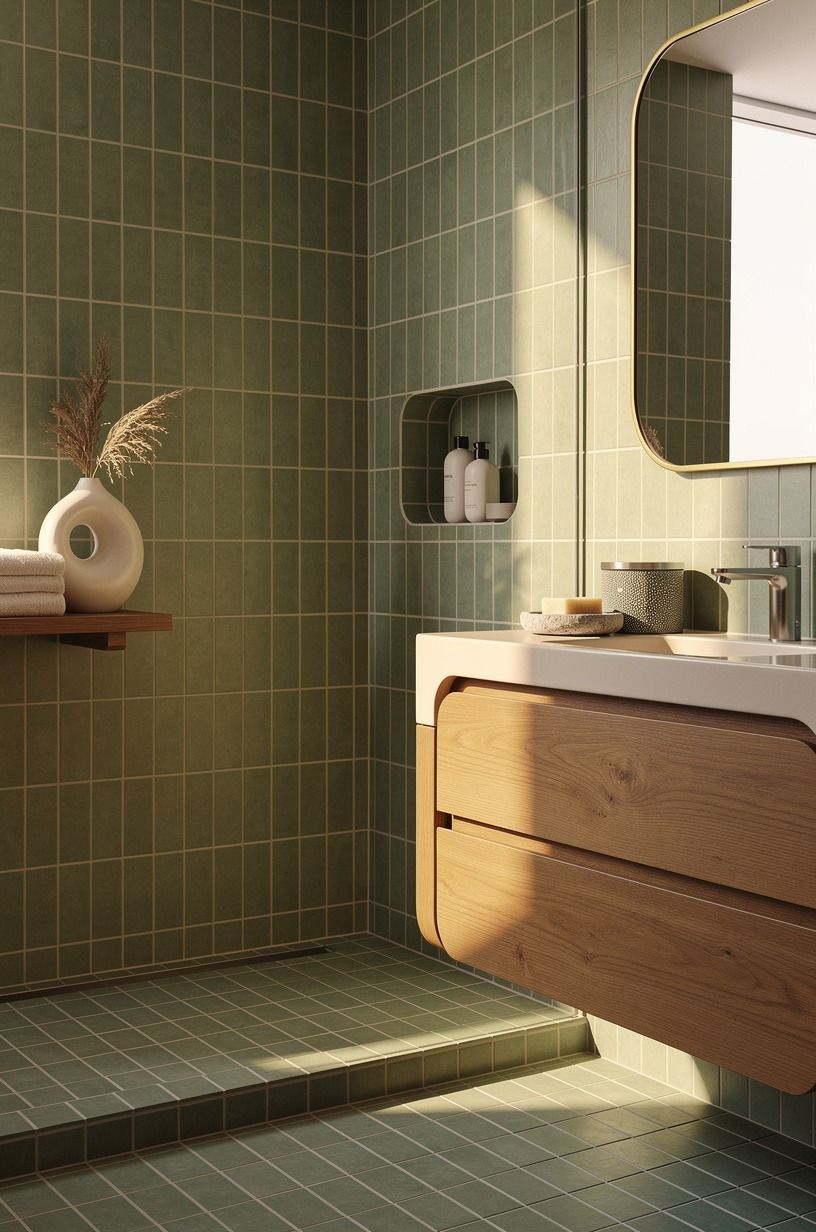
Yes, plain grout is the better call when your tile has movement. I chose warm cream rather than bright white, and it stopped the wall from turning into a grid. Your grout should hold the tile together, not announce itself before the tile does.
I nearly used dark grout because it looked dramatic on a sample board. In the full bathroom, it would’ve chopped up every uneven zellige edge.
Warm-cream grout gives your bathroom a softer read beside sage green and natural wood, while a little shagreen texture keeps the room from feeling flat. And yes, cleaning it takes care. Worth it.
6Build the Three-Height Light Stack
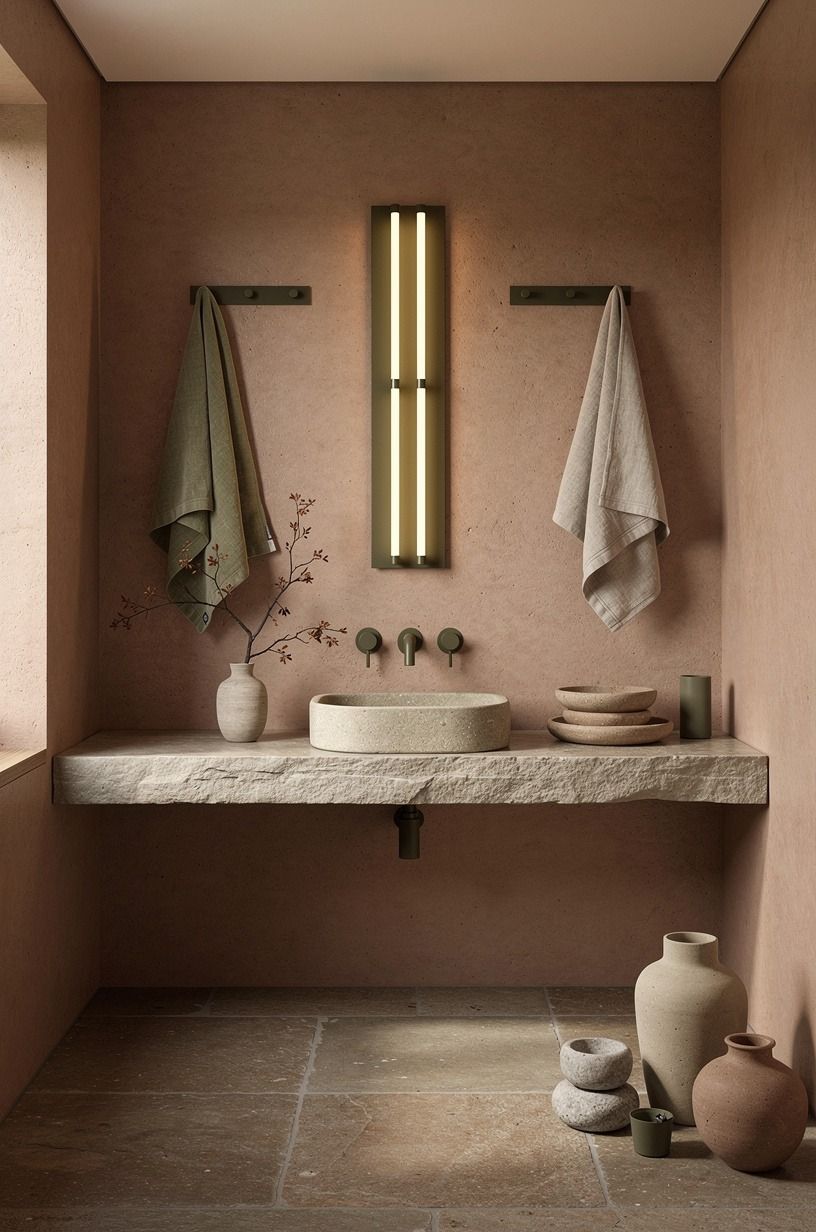
My overhead light used to do all the work, badly. I added terracotta-toned lighting at three levels, then softened the room with washed Belgian linen so the stone and olive details still felt calm.
7Paint the quiet walls Chestertown Buff
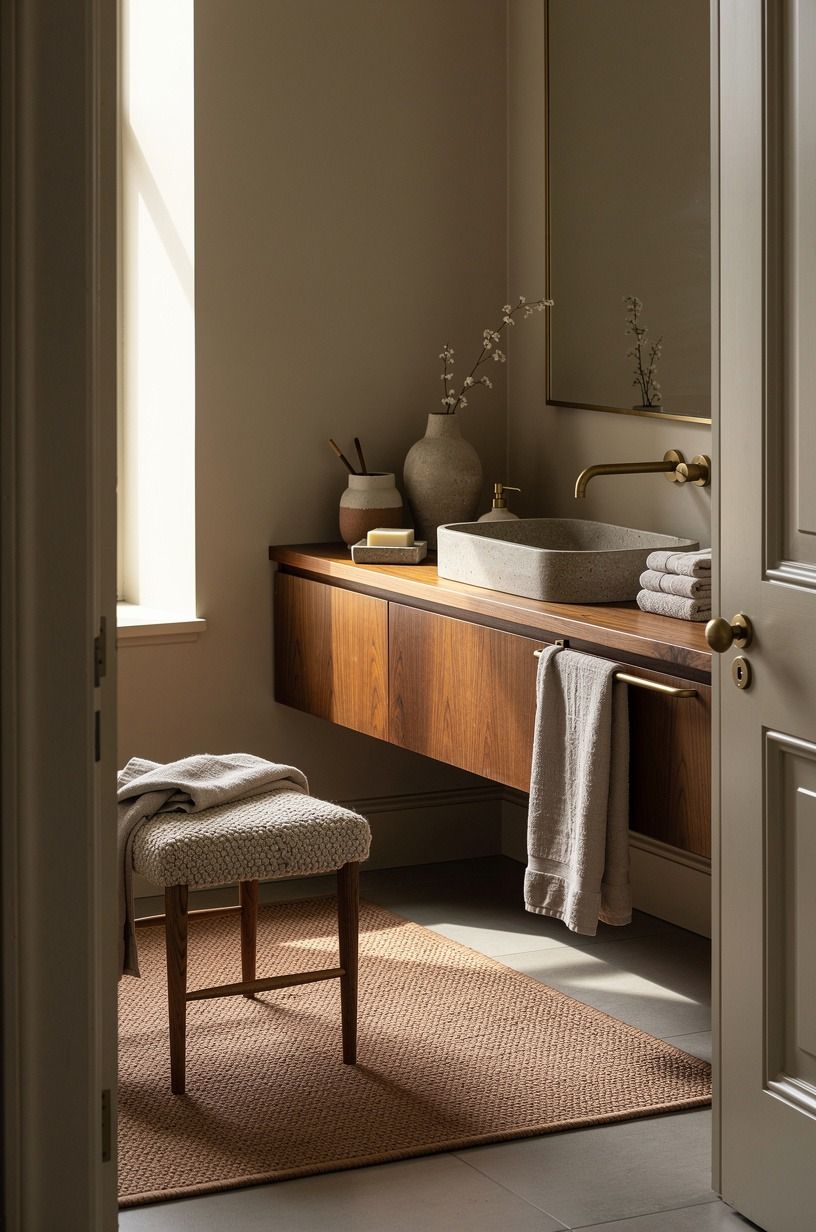
The wall opposite the tile needed warmth, not another shade of blue. I used Benjamin Moore Chestertown Buff HC-9, a muted ochre that looks earthy without making the small room feel heavy. Your tile will look more intentional when the paint has a little sun in it.
But don’t paint every wall gold-toned. One supporting color is plenty.
I tested Farrow & Ball Hague Blue No. 30 too, and it was handsome, but too moody for a bathroom without much natural light. The buff worked beautifully with clay tones, linen, aged brass, and organic bouclé.
8Float a vanity so your floor can show
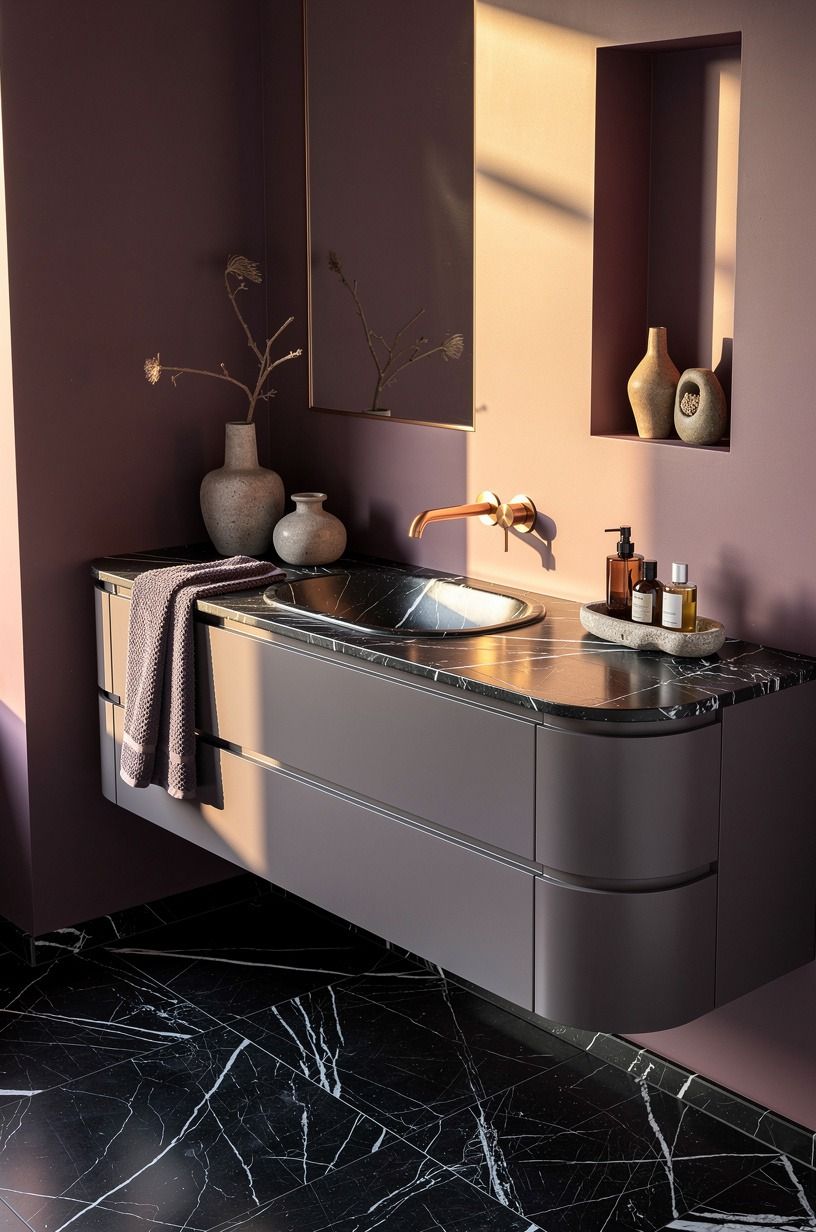
A floating vanity made more difference than a larger mirror ever could. Seeing the floor run beneath the cabinet gives your bathroom extra visual width, especially if you’re working with a narrow footprint. I kept the vanity between the standard 32-36 in height range, so it still felt comfortable every day.
My pick was a simple oak-front IKEA GODMORGON base with a Nero Marquina black marble top, its fine white veins giving the plum, gray, and rose-gold mix some needed structure. I’d skip a dark, skirted vanity in this room. It would’ve hidden the floor, trapped dust, and made the tile feel like an afterthought.
9Let linen soften the azulejos bathroom look
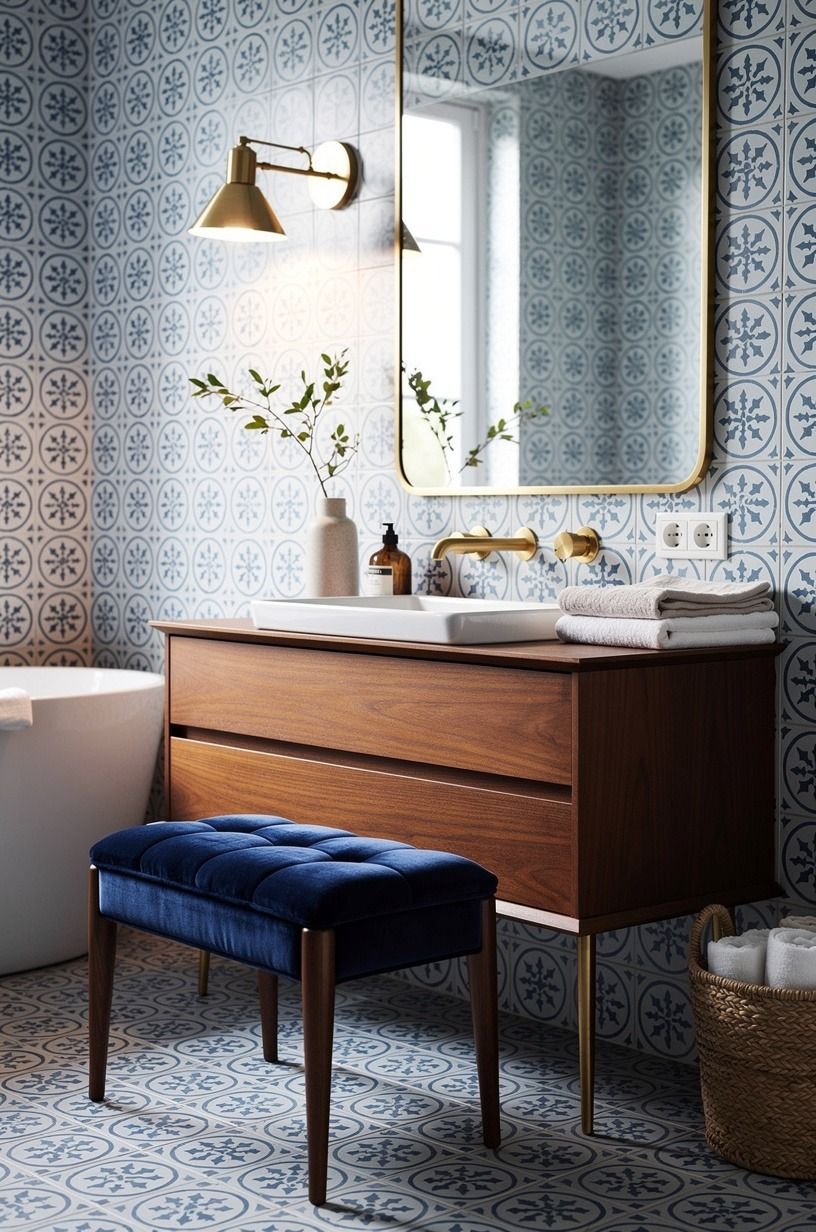
Tile can get hard fast, particularly around a tub. I brought in a navy-and-white shower curtain, a textured bath mat, and towels that weren’t all the same shade. Deep-pile mohair velvet on a small upholstered accent has the softness that makes an azulejos bathroom feel lived-in instead of precious.
You don’t need a Mediterranean-print shower curtain. Please don’t buy one just because the tile is blue.
A quiet navy-and-white curtain with walnut nearby gives your bathroom enough softness, while the tile gets to be the interesting part. Less costume, more house you want to stay in.
10Skip the tiny rug and anchor the wet zone
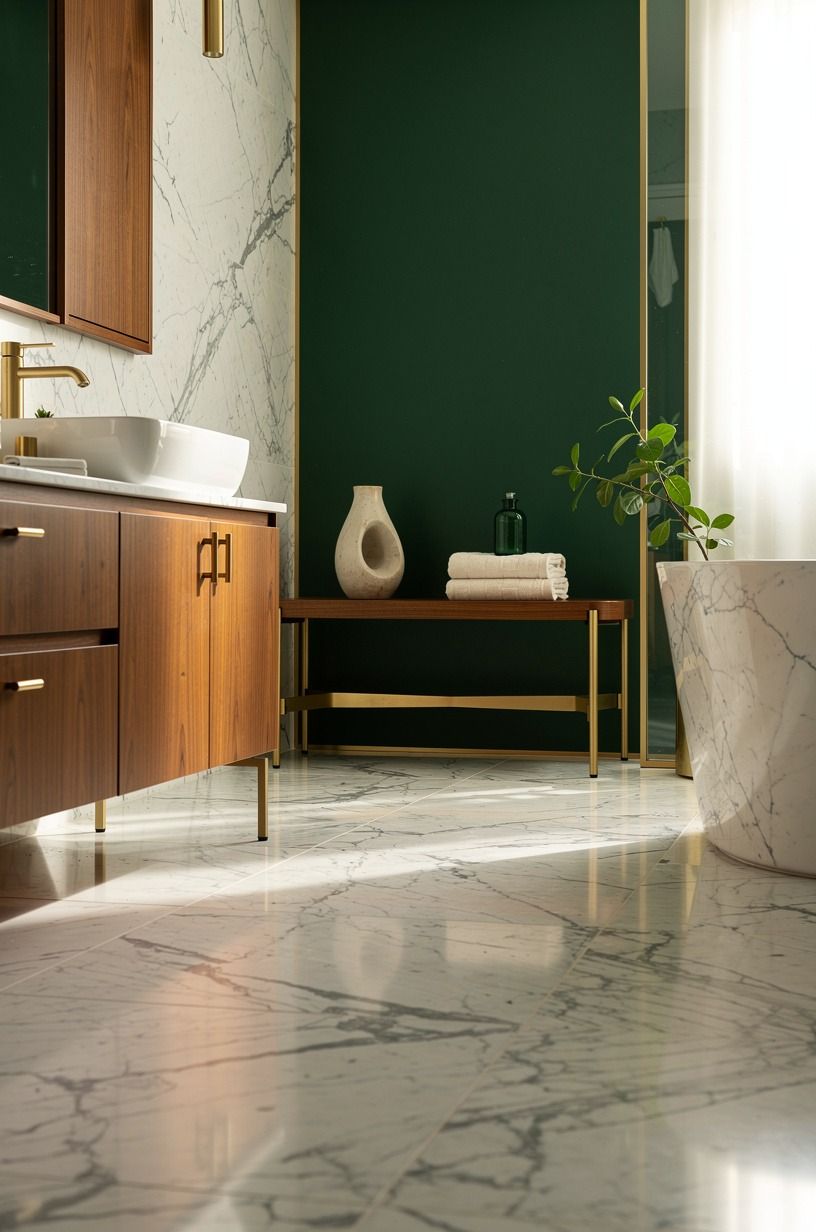
I bought a small bath mat first and hated it within a week. It floated in front of the vanity like an apology. A wider 600gsm Turkish cotton bath rug grounded the sink wall and gave bare feet something soft after the shower.
Your rug should sit where you stand, not merely where the floor happens to be empty. I used one broad enough for the vanity, with the edge just clear of the toilet path.
Keep at least 21 in clear in front of the toilet, or your lovely bathroom will feel annoyingly tight. Emerald, gold, and cream sit especially well beside subtle Carrara marble veining.
11Mix wood tones with the Two-Wood Rule
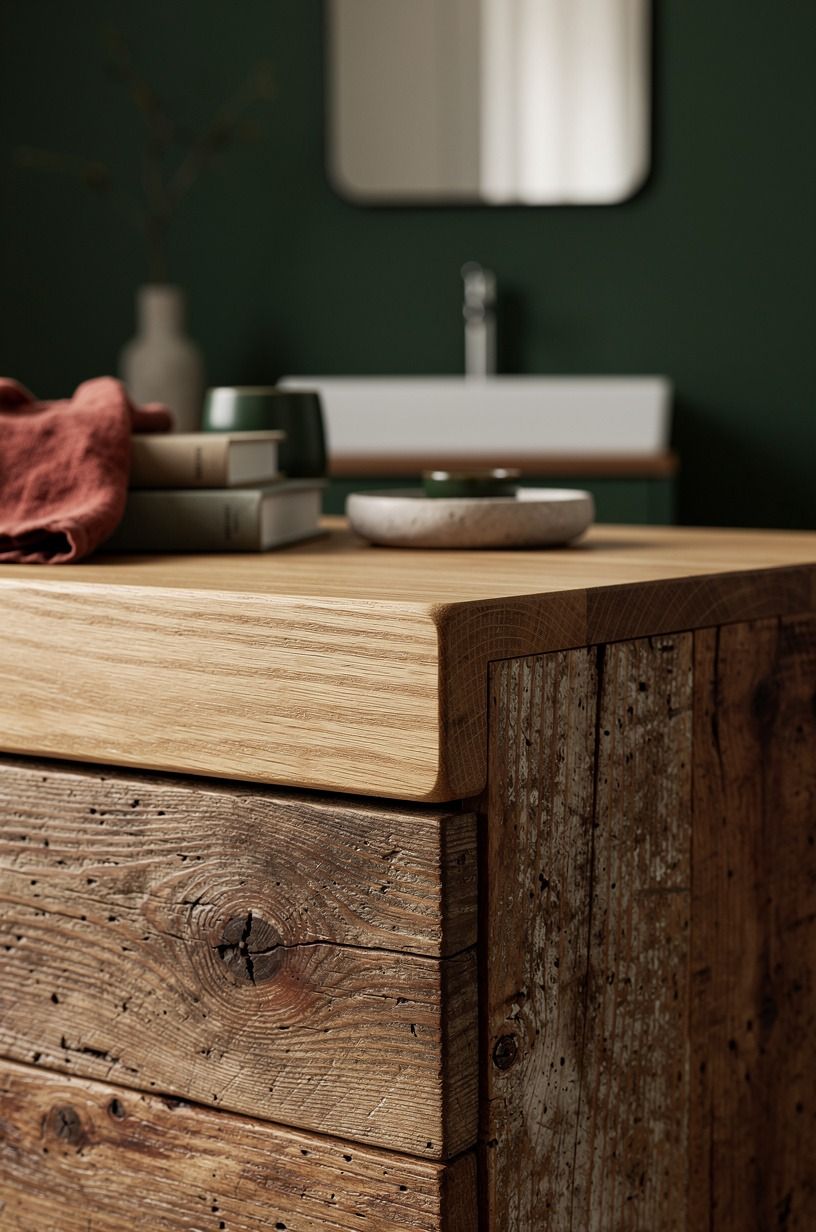
I didn’t want the room to become a catalog of matching oak. The Two-Wood Rule kept me from overdoing it: one wood for the vanity, another for a small stool or tray, then stop. You get warmth without the room reading like a sauna.
My vanity was natural oak, while a reclaimed weathered teak step stool sat beside the tub. They weren’t identical, and that’s why they worked.
If your wood looks too orange beside tile, don’t force it. Teak’s worn grain is the safer move because it holds its own against forest green and rust.
12Hang art where you least expect it
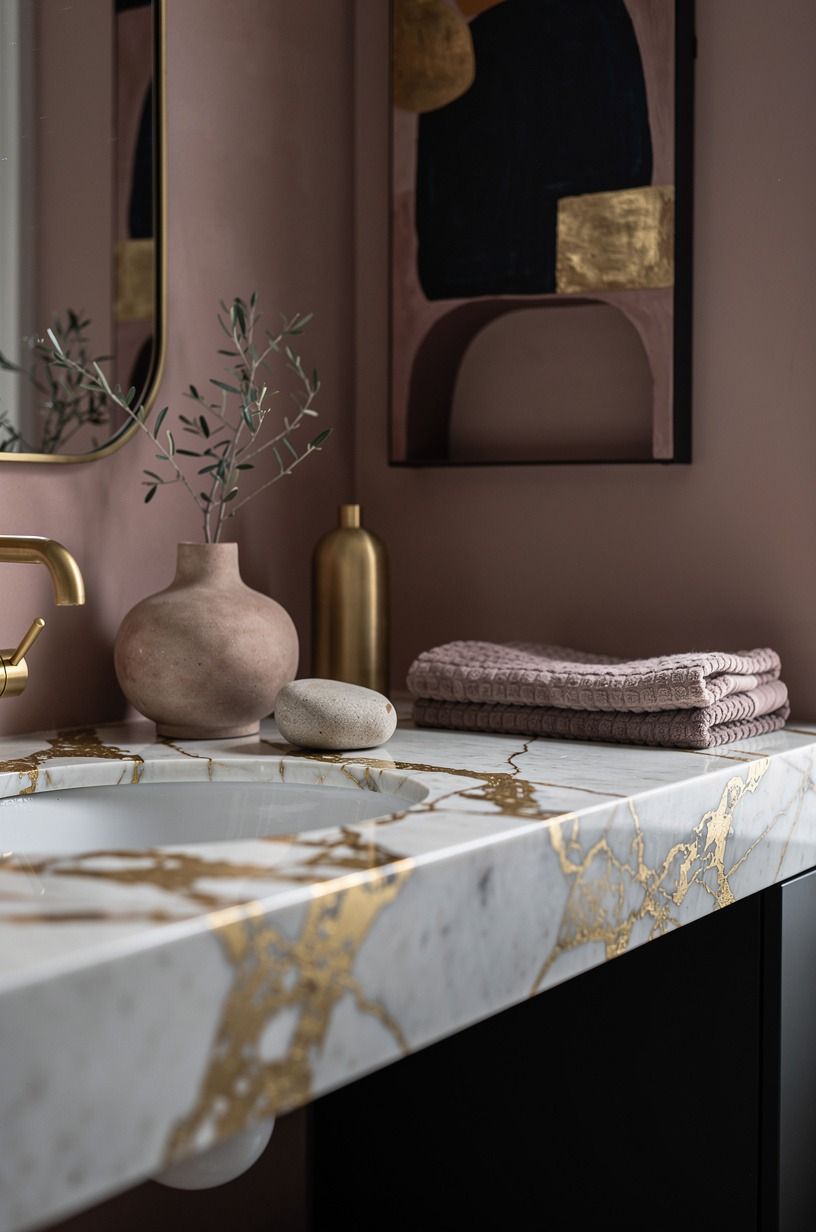
A bathroom needs one thing that has nothing to do with bathing. In a dusty-rose room with charcoal and brass, a small piece above Calacatta marble with gold veining gives the practical surfaces a little personality.
13Add a stool that earns its place
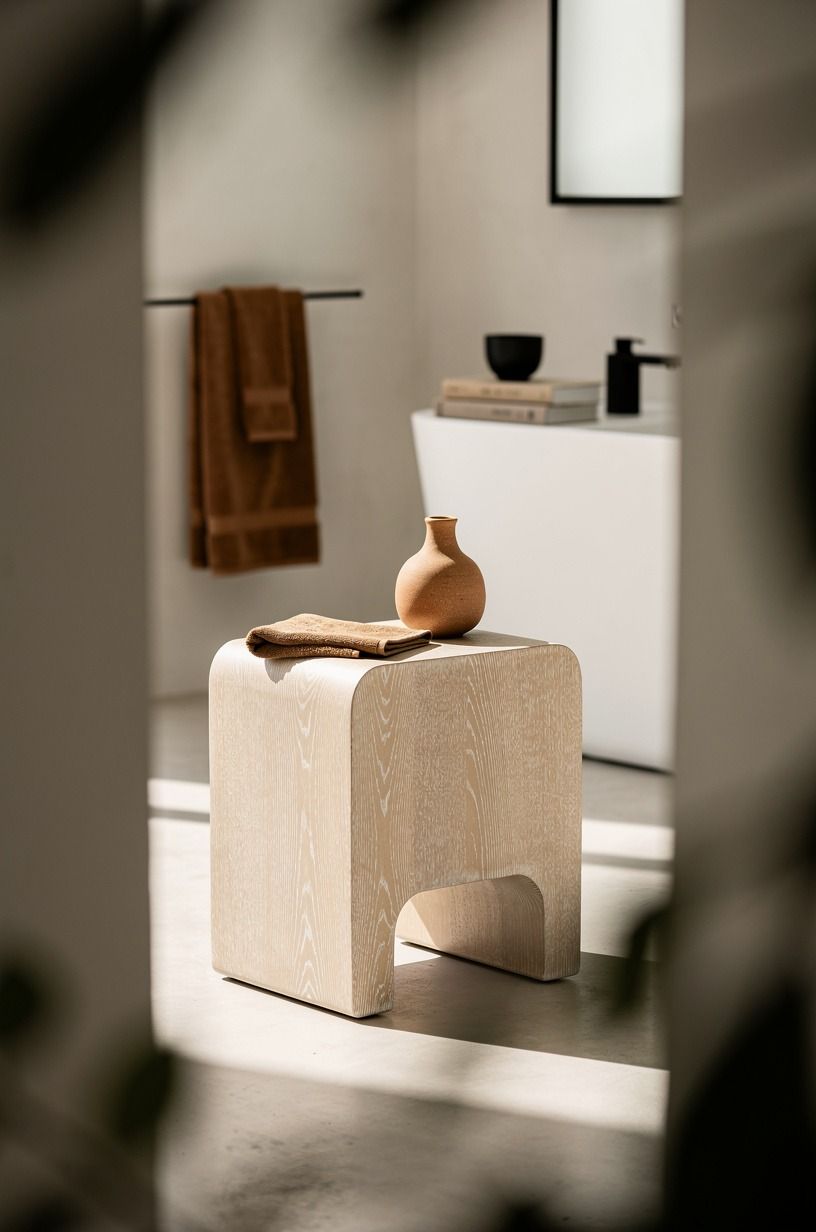
A stool beside the tub sounds decorative until you live with one. Mine holds a book, a glass of water, a folded towel, and sometimes the clothes I should’ve put away. Your bathroom feels more inviting when a useful object can also look good.
Choose a cerused white oak stool or a sealed wood piece that can handle humidity. I tried a painted side table once, and the finish started lifting near the feet. Not charming.
Pale oak works especially well with warm white, camel, and black accents.
14Choose a quiet vanity top over busy marble
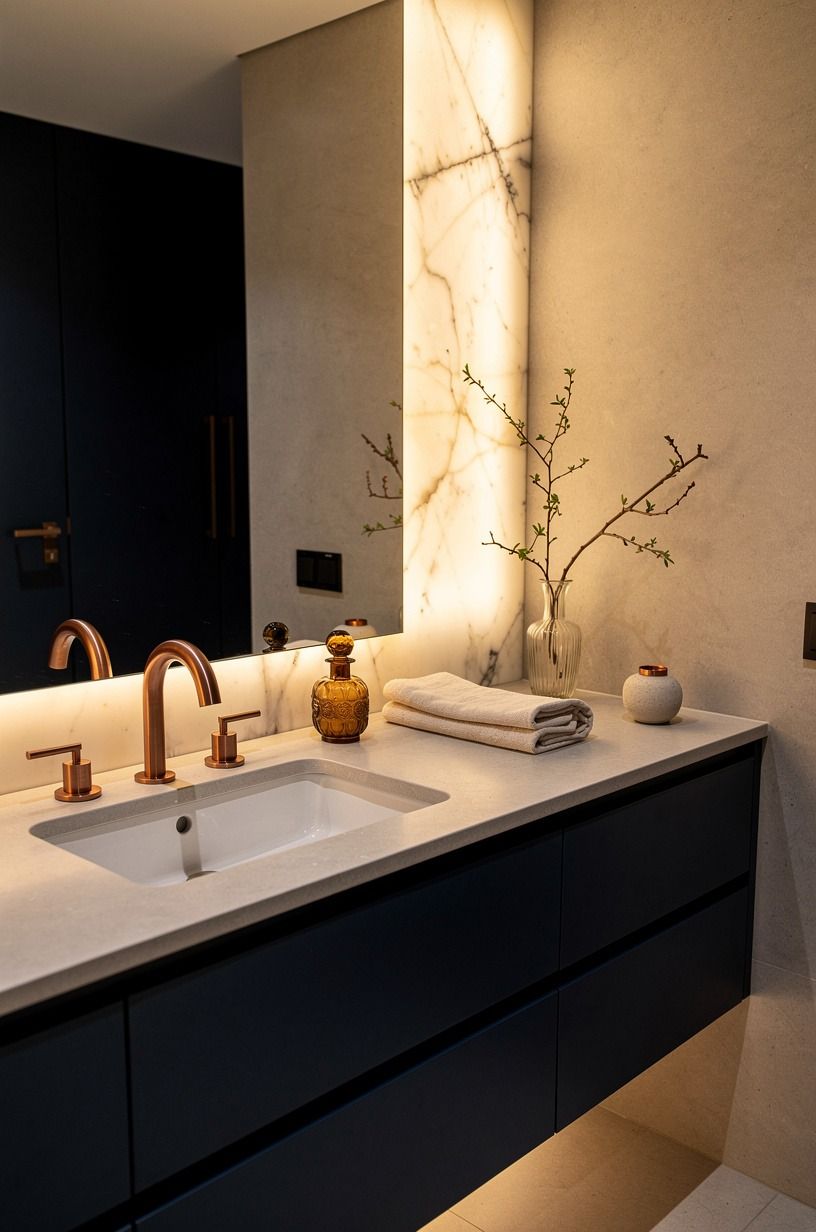
I went back and forth on a veined counter. Then I realized the tile already had enough movement. A backlit translucent onyx vanity top gave the room its needed pause, with a soft glow that worked beautifully against midnight blue, copper, and ivory.
A marble top typically costs $50-$100 per square foot, but I wouldn’t spend there first if your tile budget is tight. Your faucet, mirror, and wall tile will be noticed more. Save the dramatic Calacatta Gold marble with amber veining for a quieter bathroom, where it won’t start a visual argument.
15Can you make a rental mediterranean tile moment?
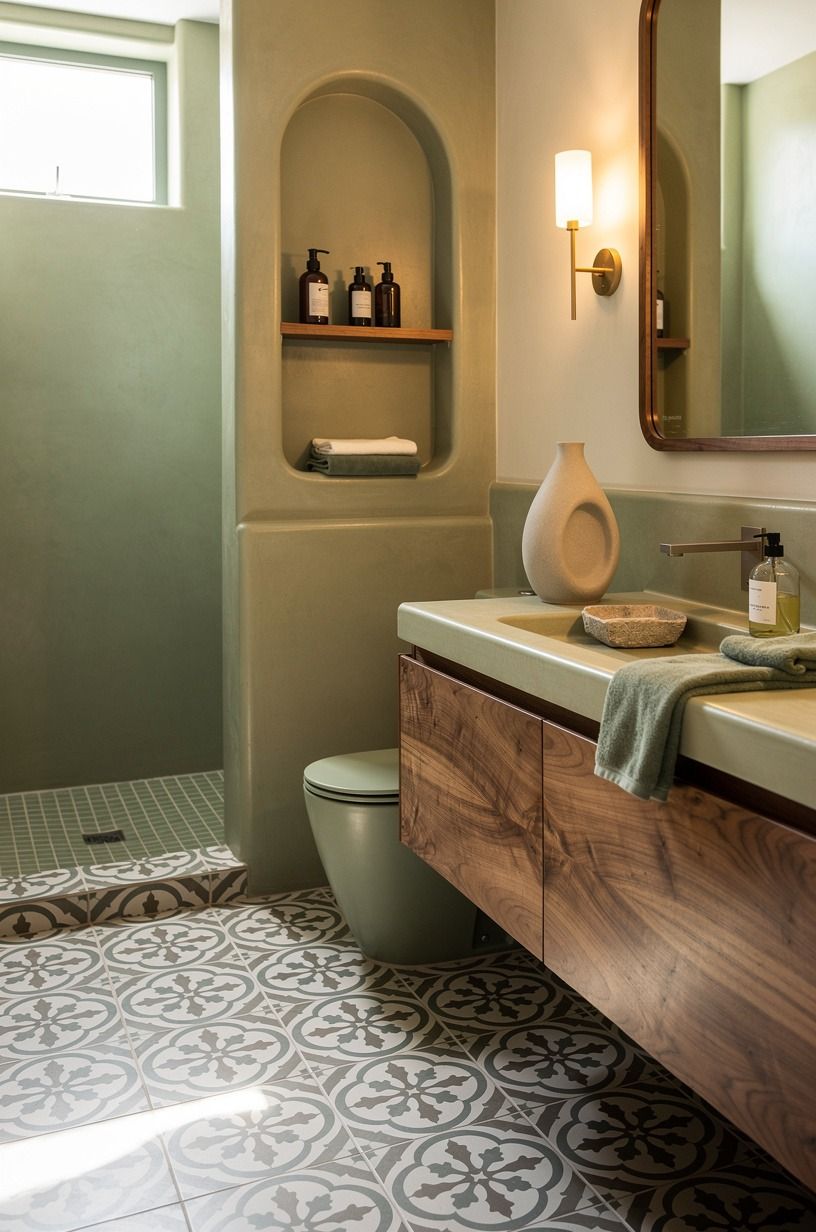
You can, as long as you don’t treat peel-and-stick like permanent ceramic. A book-matched walnut accent, warm cream, and sage green can bring in the character without making lease-sensitive changes.
16Keep the shower generous, even when it isn’t large
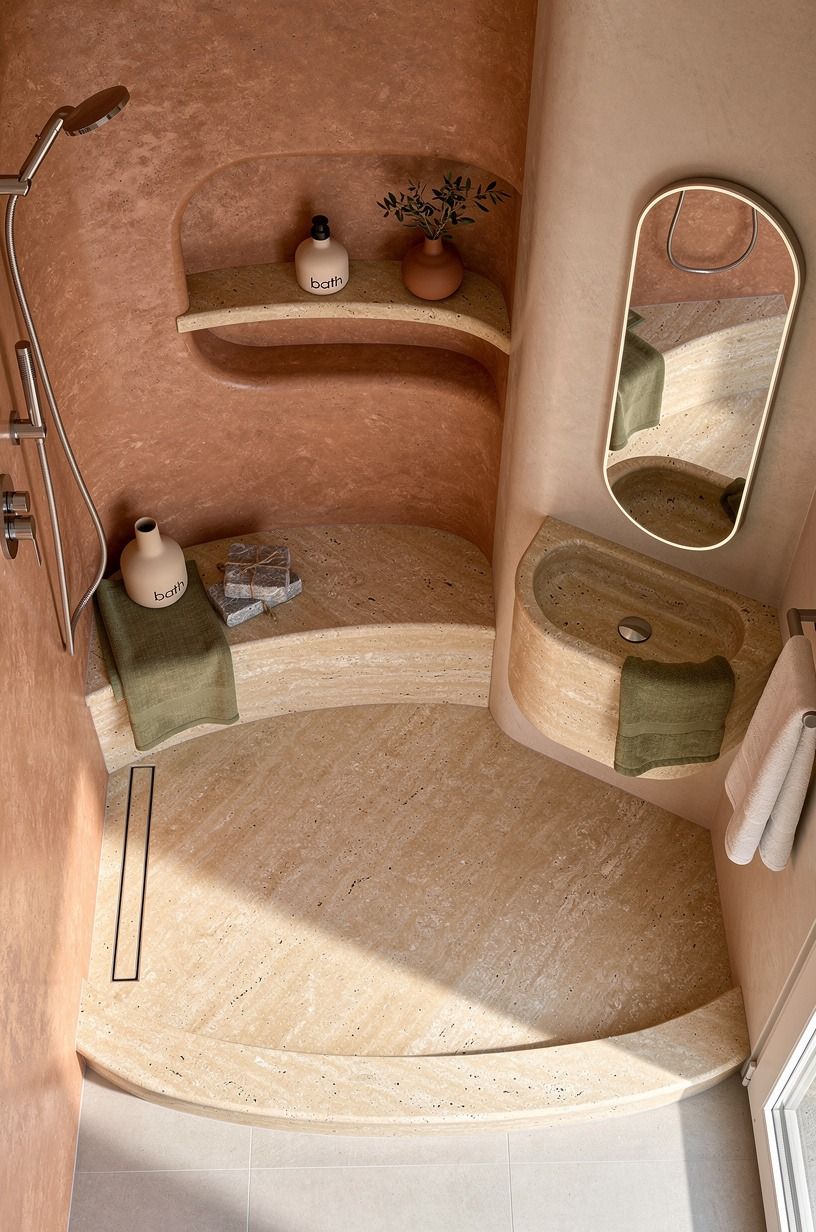
A shower doesn’t need to be huge to feel relaxing, but it does need room to move. I kept the layout close to the 36×36 in minimum that makes a shower comfortable, then used warm travertine with terracotta, stone, and olive to make the small footprint feel considered.
Vertical subway tile is cheaper than zellige, typically $2-$10 per square foot, and it can still look refined with a warm grout. But I’d avoid a tiny mosaic everywhere. It creates too many lines in a compact shower, and cleaning all those joints gets old fast.
17Finish with objects that look collected
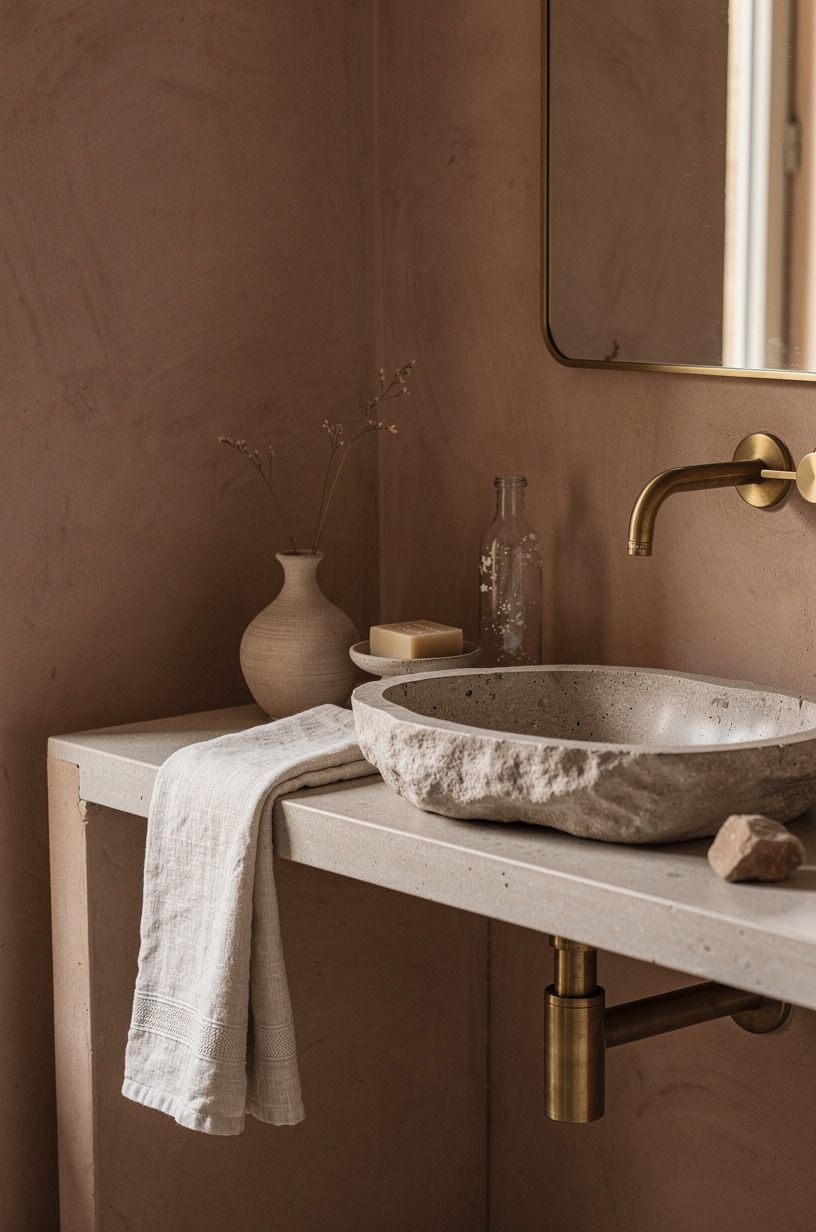
The last layer was the one I almost skipped: a handmade soap dish, an amber bottle, a folded washcloth, and a little ceramic bowl. Clay, linen, and aged brass gave those small objects enough warmth, especially once the unlacquered brass began developing patina.
How much it cost
My bathroom makeover landed in the mid-range because I kept the plumbing where it was and used the expensive-looking tile on one key wall. You can spend less by painting, swapping fixtures, and tiling only a backsplash. You can spend much more if your shower needs new plumbing.
The money I wouldn’t cut was the wall tile installation. Crooked handmade tile looks accidental, not relaxed.
I did save on the vanity, accessories, and paint, which let the tile be the room’s main event. If you’re deciding between styles, these mid-century modern bathroom tile ideas are useful for comparing a cleaner, more tailored direction.
Why I think this look has lasted
Mediterranean bathrooms are everywhere right now because people are tired of rooms that could belong to anyone. We want surfaces that show a little hand, a little age, maybe even a small flaw. Tile does that without asking you to fill every shelf with stuff.
I’ve made the opposite mistake before. I bought every “finishing” object first, then tried to make the room feel warm with baskets, jars, and towels.
It didn’t work because the bones were still cold. The lighting was blunt, the paint was gray, and the surfaces had no rhythm.
This time, I started with the tile because it gave me a decision framework. If an object looked too shiny beside the glaze, it left.
If a finish felt too slick next to the linen, it left. That sounds fussy, but it made shopping easier.
You don’t need more options when you’re renovating a small bathroom. You need a few rules you trust.
And I don’t think every Mediterranean bathroom needs blue tile. Blue is the obvious choice, and obvious can be lovely, but Chestertown Buff with creamy handmade tile can feel more like late afternoon on a plaster wall. Green tile works too, particularly if you balance it with wood and brass.
What matters is the tension between the polished and the imperfect.
The part I love most is how the room behaves at night. The tile catches the low sconce light in little uneven flashes, while the linen curtain goes almost gray-green.
It’s quiet. Not showroom quiet, either.
The kind of quiet that makes you linger after brushing your teeth, even though you should probably be in bed.
A Few Things Worth Answering
What is the best Mediterranean tile idea for a small bathroom?
A single tiled vanity wall is the best place to start because it gives your small bathroom a focal point without covering every surface. Choose hand-glazed zellige or a quiet vertical subway tile, then keep your floor and paint calmer.
Where can I buy Mediterranean bathroom pieces on a budget?
Start with IKEA, Target Threshold, and Wayfair for mirrors, towels, and simple wood stools. Facebook Marketplace is useful for vintage frames and small cabinets. Your tile is where I’d spend carefully; your accessories don’t need to cost much.
How much does a Mediterranean tile bathroom makeover cost?
A modest cosmetic version can cost about $200-$1,200, while partial tile and a new vanity usually land around $3,000-$9,000. Paint and styling are the cheapest changes, especially if you keep your existing plumbing and layout.
Can I create this look on a budget?
Yes, and you don’t need a full retile. Use removable tile, repaint in Sherwin-Williams Sea Salt, switch to a linen curtain, and add a wood stool. Your existing mirror can work too if you frame it or change the lighting.
Is Mediterranean tile worth it in a small space?
Yes, because a small bathroom needs fewer square feet of material, so one strong tile can carry the whole room. A focused tile wall adds depth without taking floor space. Keep your vanity floating if you can.
Is Mediterranean tile a good idea for a rental?
Yes, if you use removable materials and avoid permanent plumbing changes. Try peel-and-stick tile, a tension-rod curtain, and plug-in sconces. You can also borrow ideas from this Mediterranean coastal bathroom guide without touching the lease-sensitive surfaces.
Where I’d Start First
If I had to pick one, I’d start with the tile behind the vanity. You can’t fake the uneven glow of a hand-glazed wall with towels or decor. Pin that wall idea for later, then let the rest of your bathroom get quieter around it.