
A mid-century green bathroom can cost as little as $200 for paint, textiles, and a few focused swaps. I tackled mine while the room still had beige vinyl, a tired oak vanity, and exactly zero charm. Green made the dated parts feel intentional. Weirdly fast!
Here’s what it looked like before
Before, you saw the full 2005 starter-home package: a 32-inch honey-oak vanity, shiny chrome faucet, beige floor, and a mirror that felt too small for the wall. I didn’t hate any one piece, but your eye had nowhere to land.
The tub was the standard 60×30-inch acrylic tub, still sound, so I kept it. You don’t need to demolish a working bathroom to make your green bathroom renovation feel considered.
What bothered me most was the cold overhead bulb. It made the beige walls look grey by breakfast and yellow by dinner.
- Paint the walls with a green that carries brown wood
- Keep the original vanity, then change its temperature
- Use the Two-Wood Rule for a warm green bathroom
- Swap chrome for brushed brass where hands touch
- Frame the sink with an oval medicine cabinet
- Lay down green tile only where it earns attention
- Let the Three-Height Light Stack soften the room
- Choose a floating shelf over a crowded cabinet top
- Hang a linen curtain to break up hard surfaces
- Add a striped bath mat with some nerve
- Build a green tile focal wall instead of redoing the shower
- Make room for a 21-inch clear path
- Pick Benjamin Moore Chestertown Buff for the ceiling
- Put storage in baskets, not in sightlines
- Choose a low, wide mirror for a small vanity wall
- Contrast olive green against a pale floor
- Add one art piece that isn’t bathroom art
- Use Farrow & Ball Hague Blue when green needs more weight
- Finish with towels that feel like furniture
1Paint the walls with a green that carries brown wood
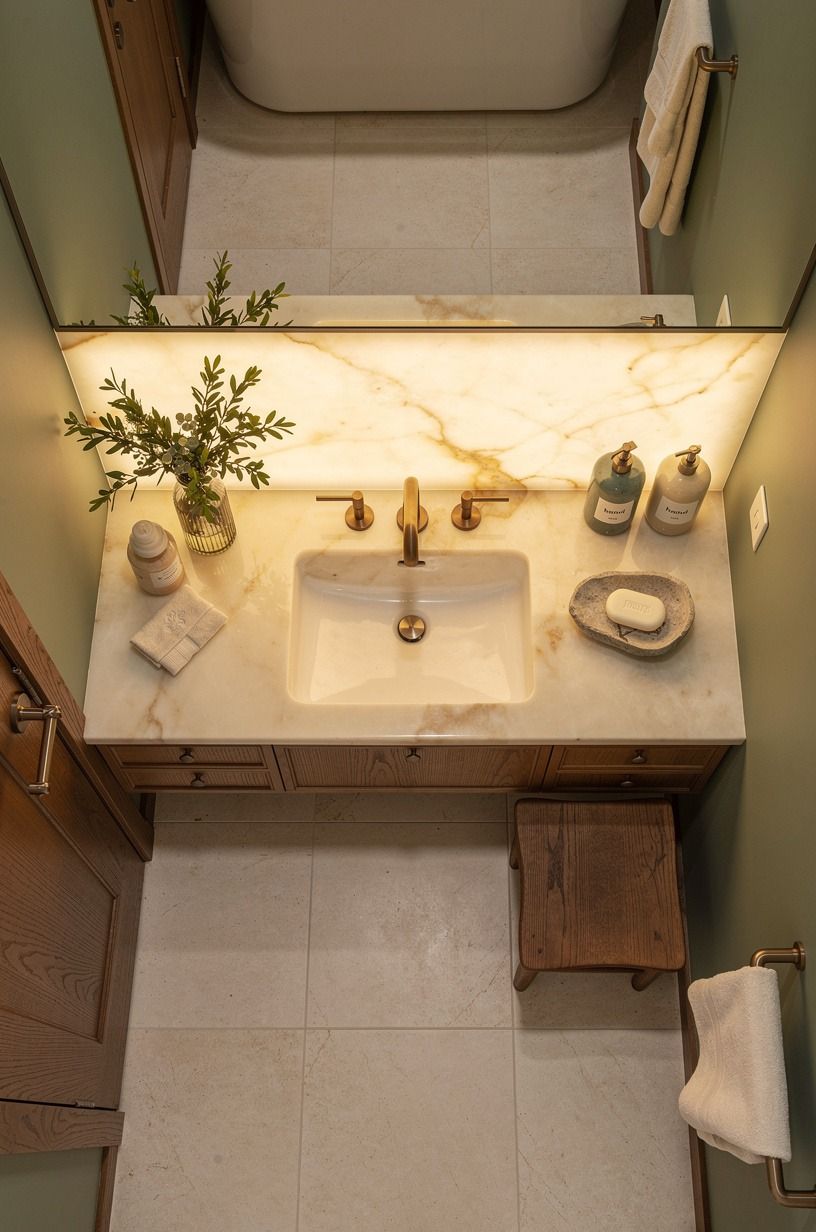
I chose Sherwin-Williams Sea Salt SW 6204 because I needed green without a minty, nursery-like finish. You can read it as soft grey-green in daylight, then warmer once your lamps come on. That shift is what made my old oak vanity stop looking accidental beside warm cream and natural wood.
For your own room, test paint behind the toilet and beside the mirror. You’ll see the real undertone there, not the flattering patch by the window.
I’d skip bright emerald paint on every wall. It’s bold, sure, but it fights walnut and teak instead of letting your wood grain do its job.
2Keep the original vanity, then change its temperature
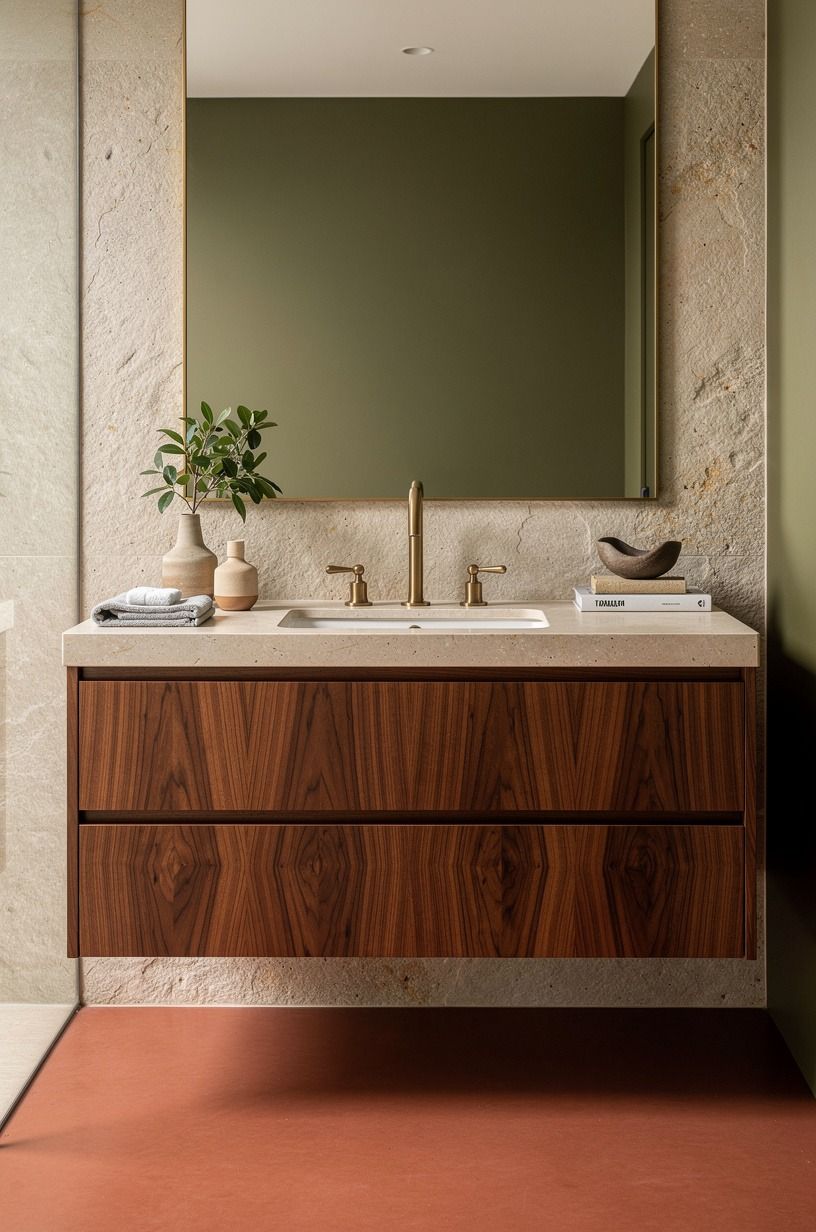
My vanity stayed, but I sanded the orange sheen down and sealed the book-matched walnut surface in a matte finish.
3Use the Two-Wood Rule for a warm green bathroom
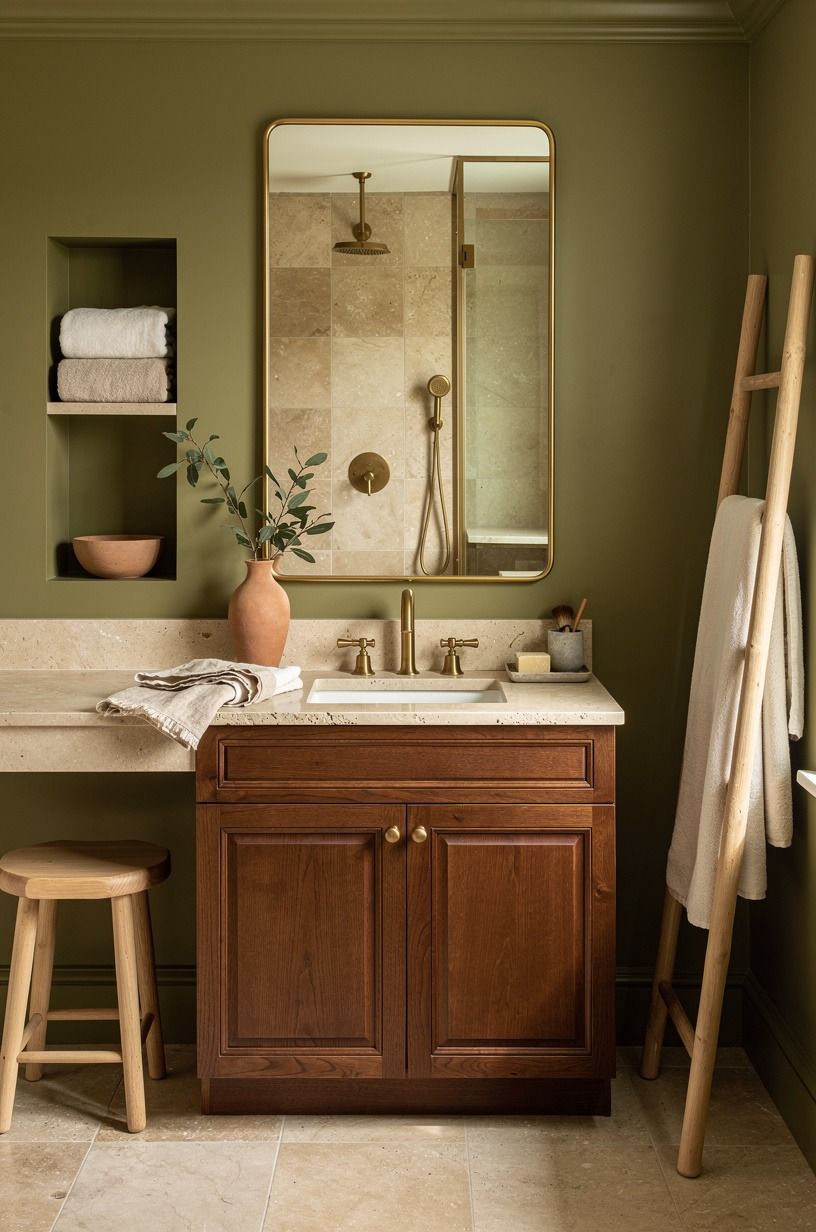
The Two-Wood Rule is simple: you give your bathroom one medium wood and one darker wood, then stop. I used the existing oak vanity plus a darker accent, then grounded the room with warm travertine. You can keep your room grounded without collecting five unrelated brown finishes.
The darker note was my turning point. It gave the clay and linen tones something to push against, while aged brass kept the result intimate instead of overly polished.
For more small-room scale ideas, I keep returning to small mid-century modern bathroom layouts. Your bathroom doesn’t need more wood, just two woods with a clear job.
4Swap chrome for brushed brass where hands touch
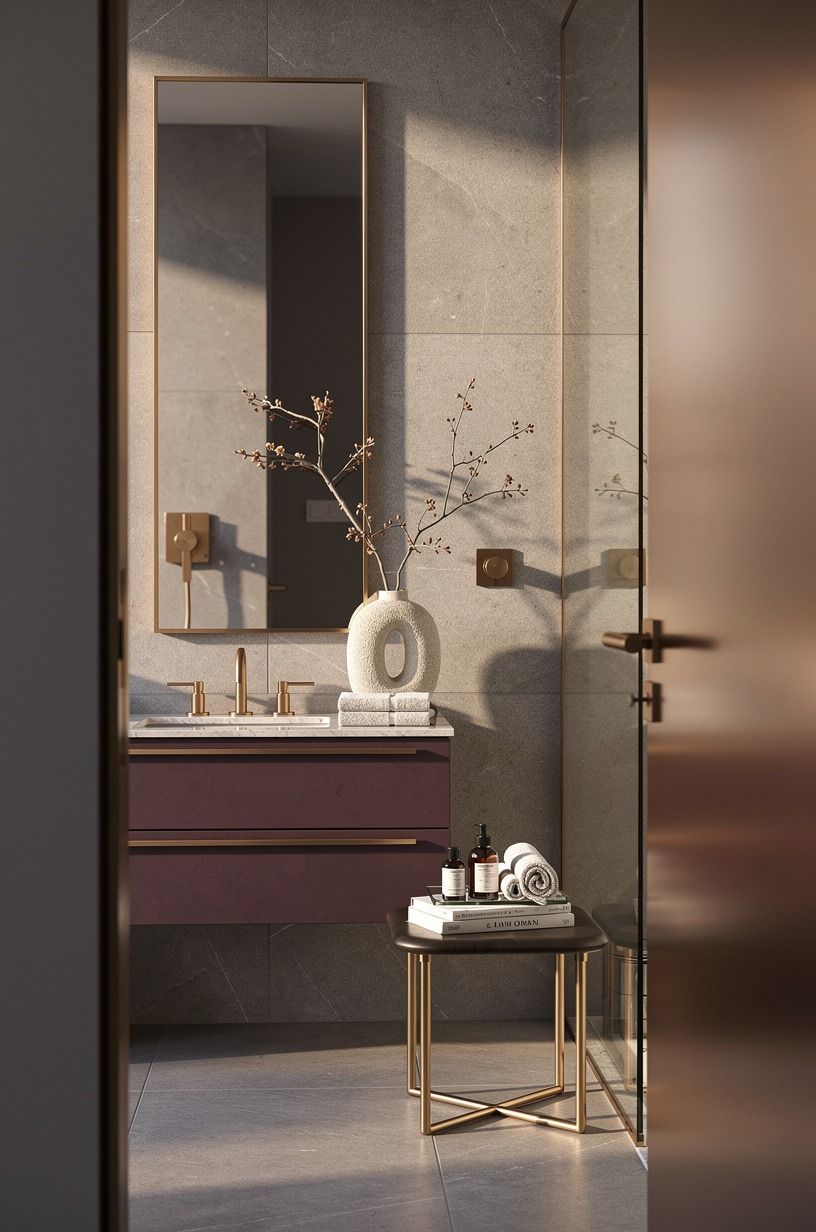
I replaced the faucet first, not the light, choosing unlacquered brass that will develop a little patina over time.
5Frame the sink with an oval medicine cabinet
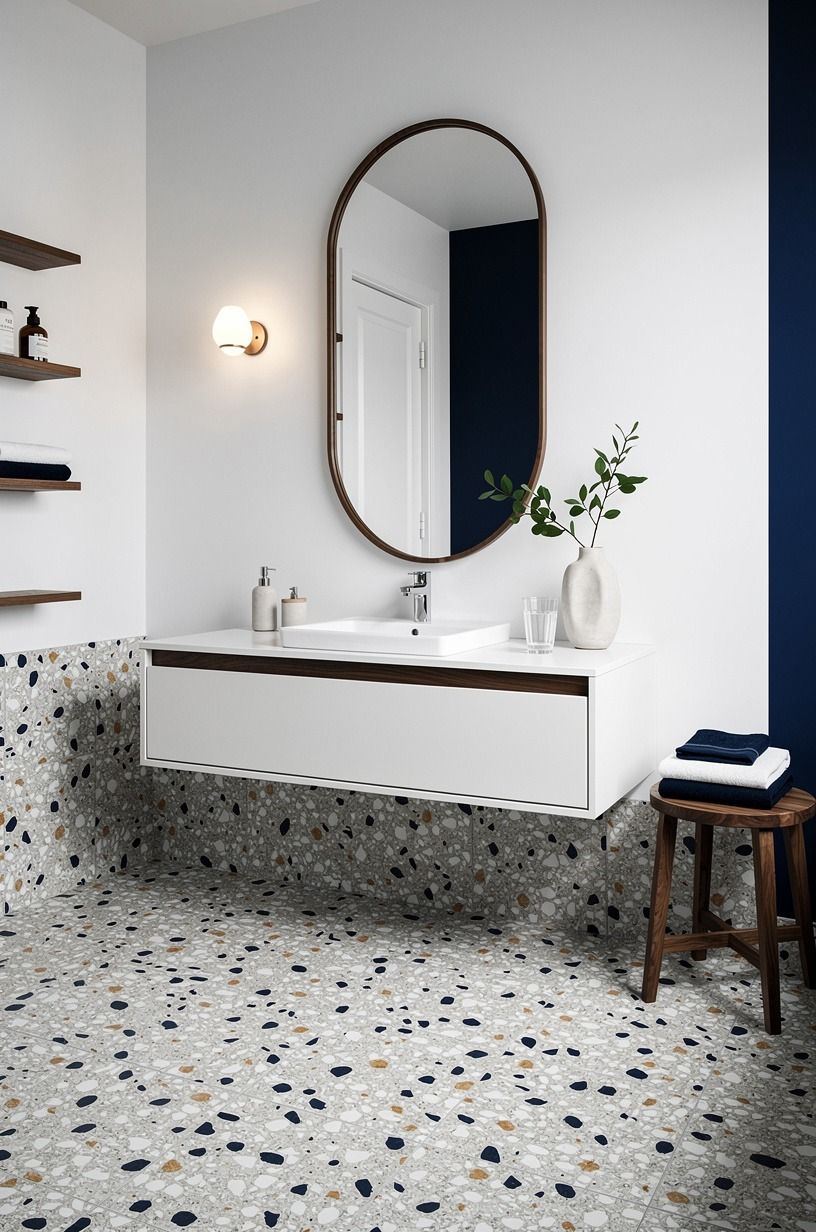
A plain rectangular mirror was making my compact sink wall feel stiff. I hung an arched walnut medicine cabinet instead, with enough depth for toothpaste and contact cases. You get storage, but your wall also gains a softer silhouette against navy, white, and walnut.
Hang the center near your eye level, then check it while you’re standing where you brush your teeth. I made mine too high once. You don’t want to see more ceiling than face.
I’d choose a cabinet over a thin decorative mirror in a small bath. Your counter stays calmer when the daily clutter has somewhere to disappear.
6Lay down green tile only where it earns attention
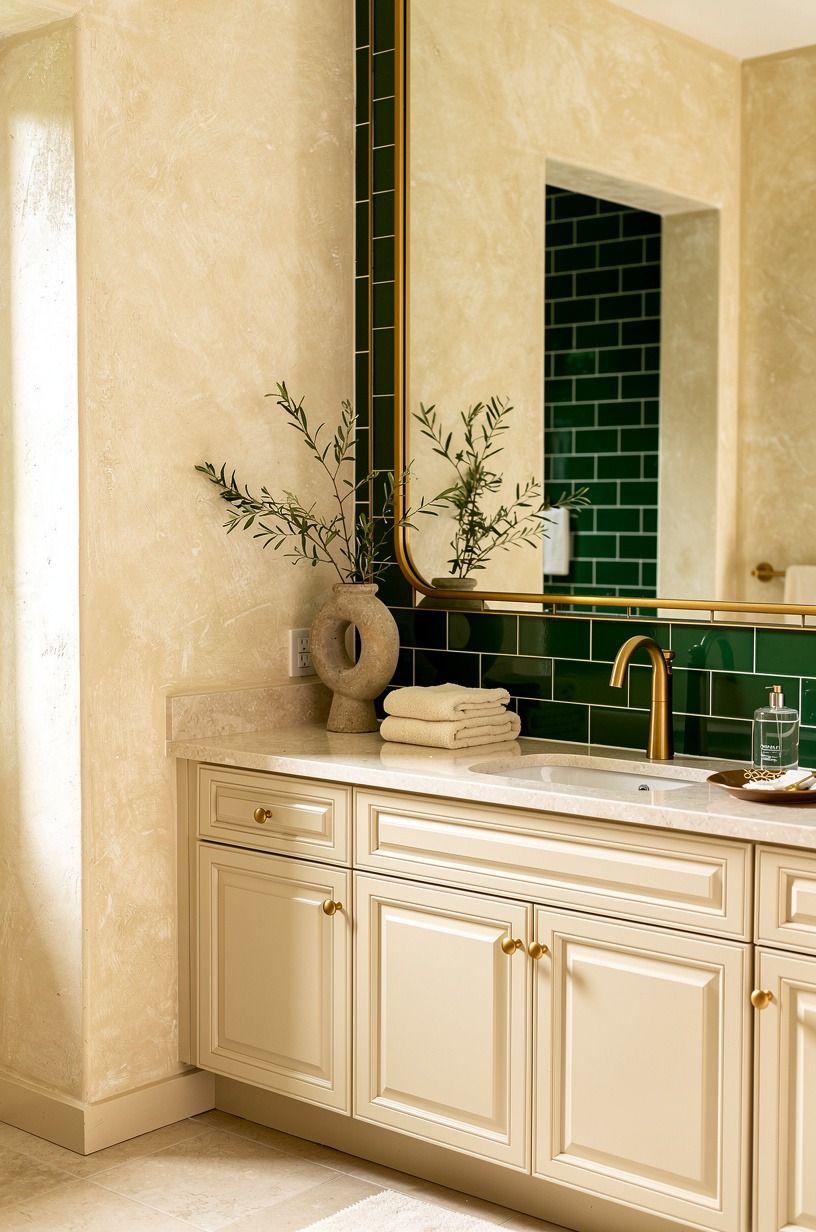
I didn’t cover every surface. Instead, I used a band of hand-applied Venetian plaster behind the vanity, where you see it from the doorway. Its emerald, gold, and cream variation catches a little lamp light and makes the wall feel lively without shouting.
A green tile bathroom renovation can use zellige at $15 to $35 per sq ft, while subway tile typically costs $2 to $10 per sq ft. You can spend where your eye lands and save where it doesn’t.
For more tile pairings, see these mid-century modern bathroom tile ideas. I’d skip glossy forest-green subway tile floor to ceiling, because it can feel clinical rather than calming.
7Let the Three-Height Light Stack soften the room
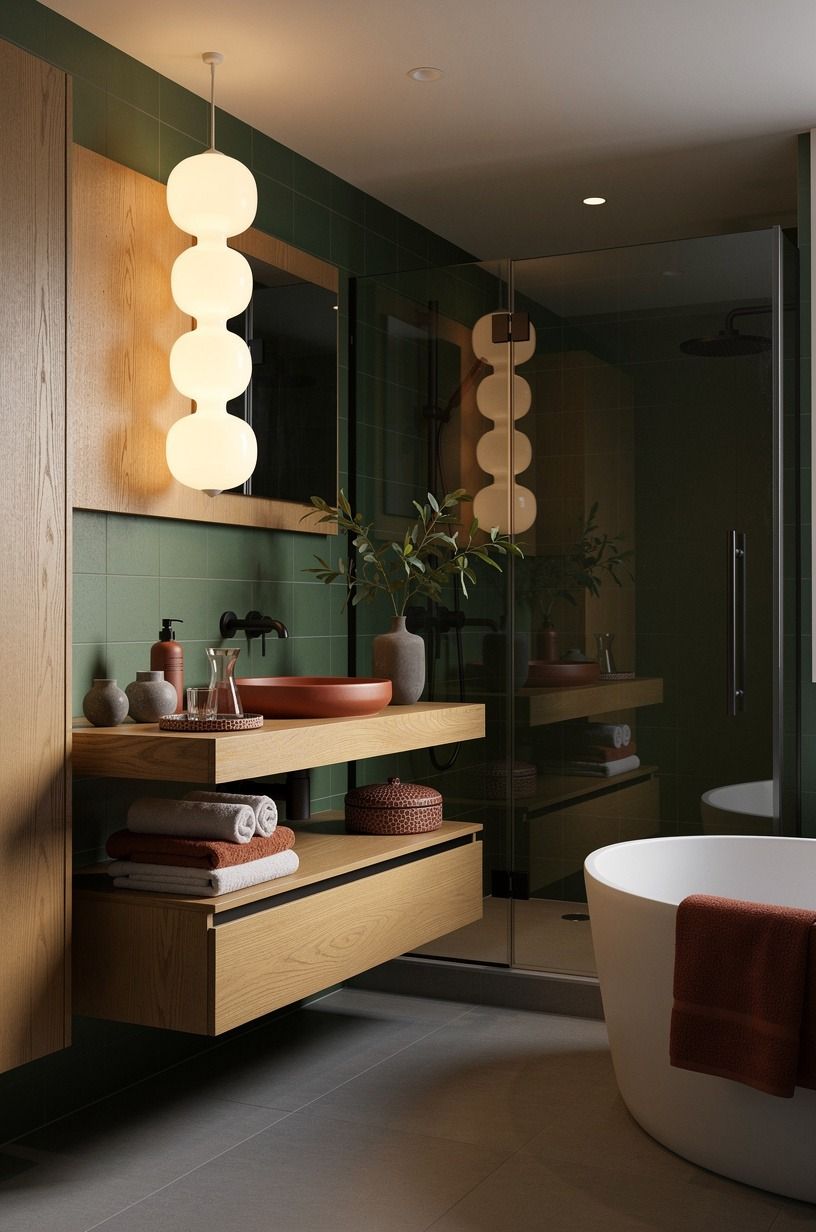
The Three-Height Light Stack means overhead light, mirror-height light, and one lower glow. Forest green, rust, natural oak, and a few shagreen accents make those softer layers feel especially warm.
8Choose a floating shelf over a crowded cabinet top
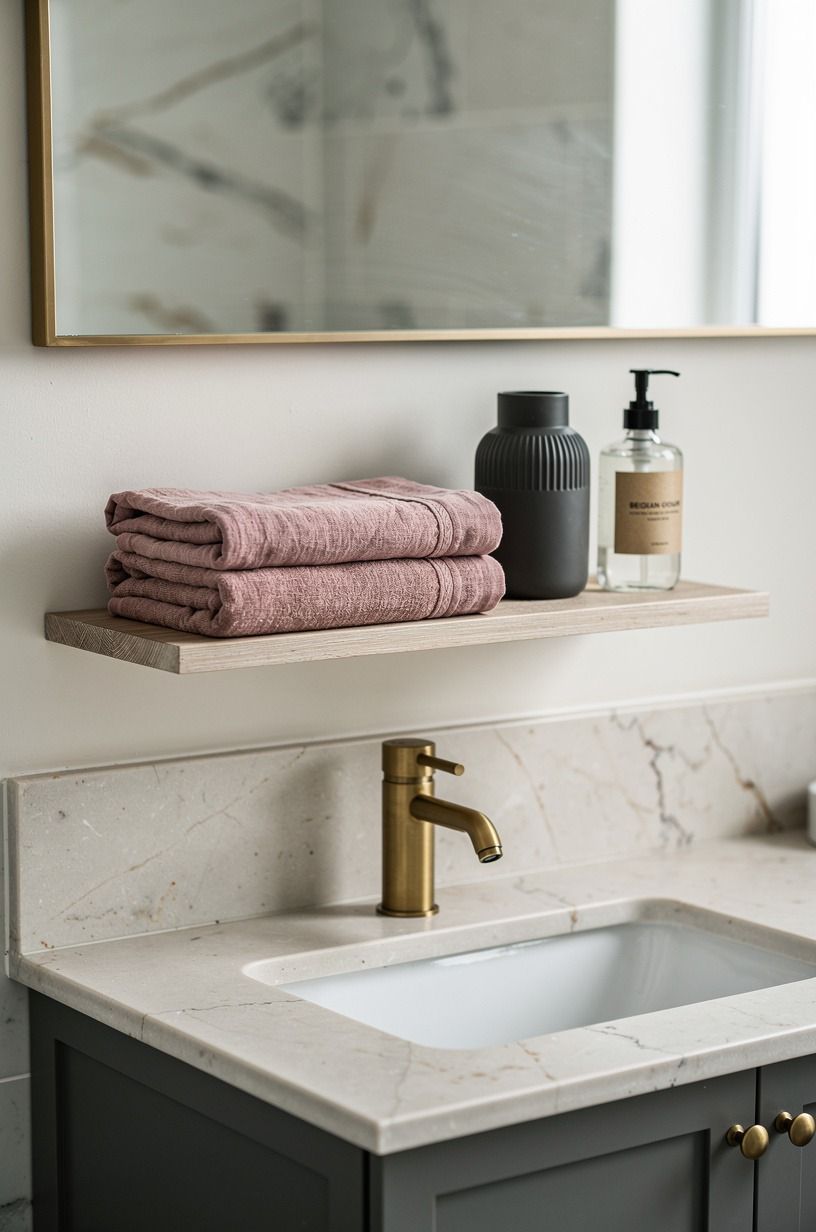
My counter used to hold lotion, cotton pads, a candle, and several things I won’t name. I moved the useful pieces to a floating shelf over the toilet and lined its tray with washed Belgian linen. You gain breathing room without buying a larger vanity.
A 3/4-inch solid white oak shelf can carry folded towels and a small tray if you anchor it properly. You’ll want to measure around the toilet first, especially if your clearance is tight.
One bottle of soap. One little bowl. A folded towel.
That’s enough. I’d skip a shelf full of matching jars, because your bathroom should feel lived-in, not staged for a catalogue.
9Hang a linen curtain to break up hard surfaces
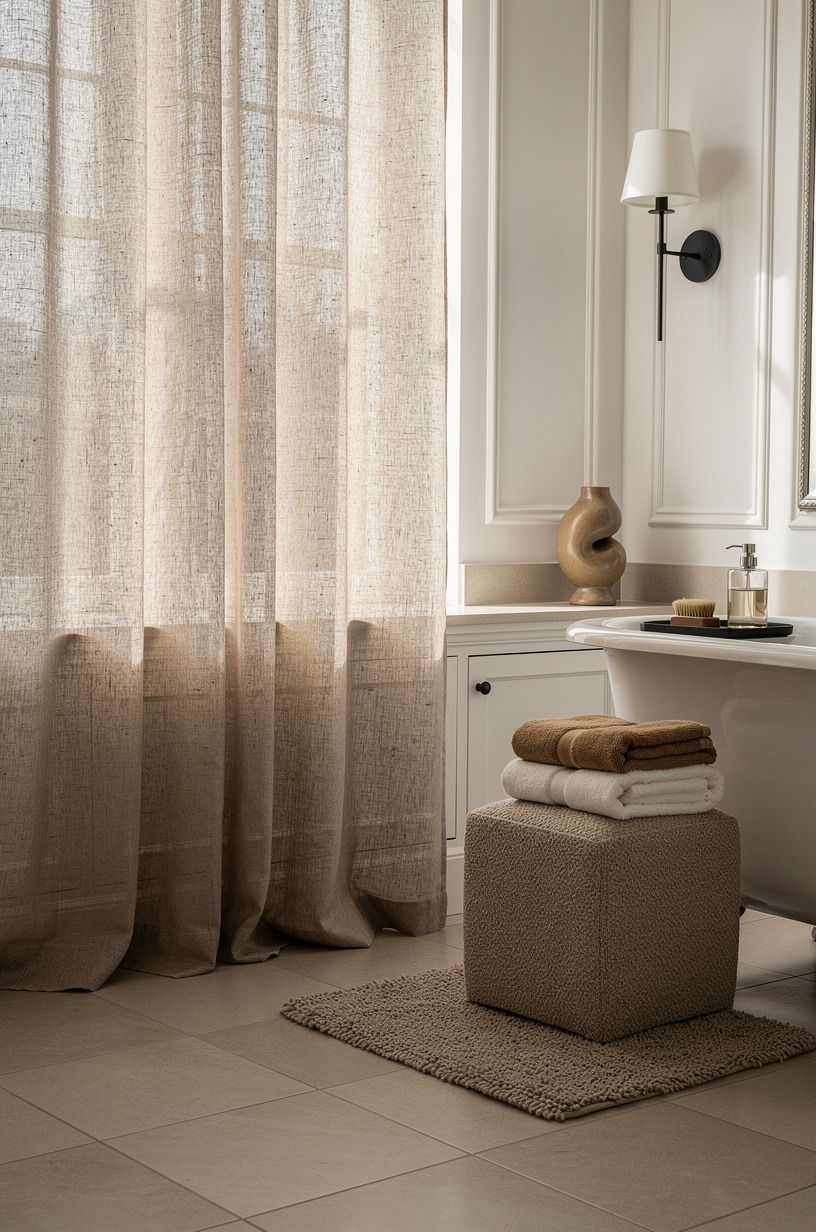
The shower curtain was the largest soft surface in my room, and I’d been treating it like an afterthought. I swapped polyester for organic bouclé in a quiet camel tone. Against warm white walls and black accents, it looked warm and slightly textured in the best way.
You can use a washable liner behind it, then let the curtain sit wide so the tub doesn’t feel boxed in. Mine framed the standard 60×30 in tub without crowding the window.
And don’t choose a busy atomic print here. Your green tile and brass already have enough personality.
10Add a striped bath mat with some nerve
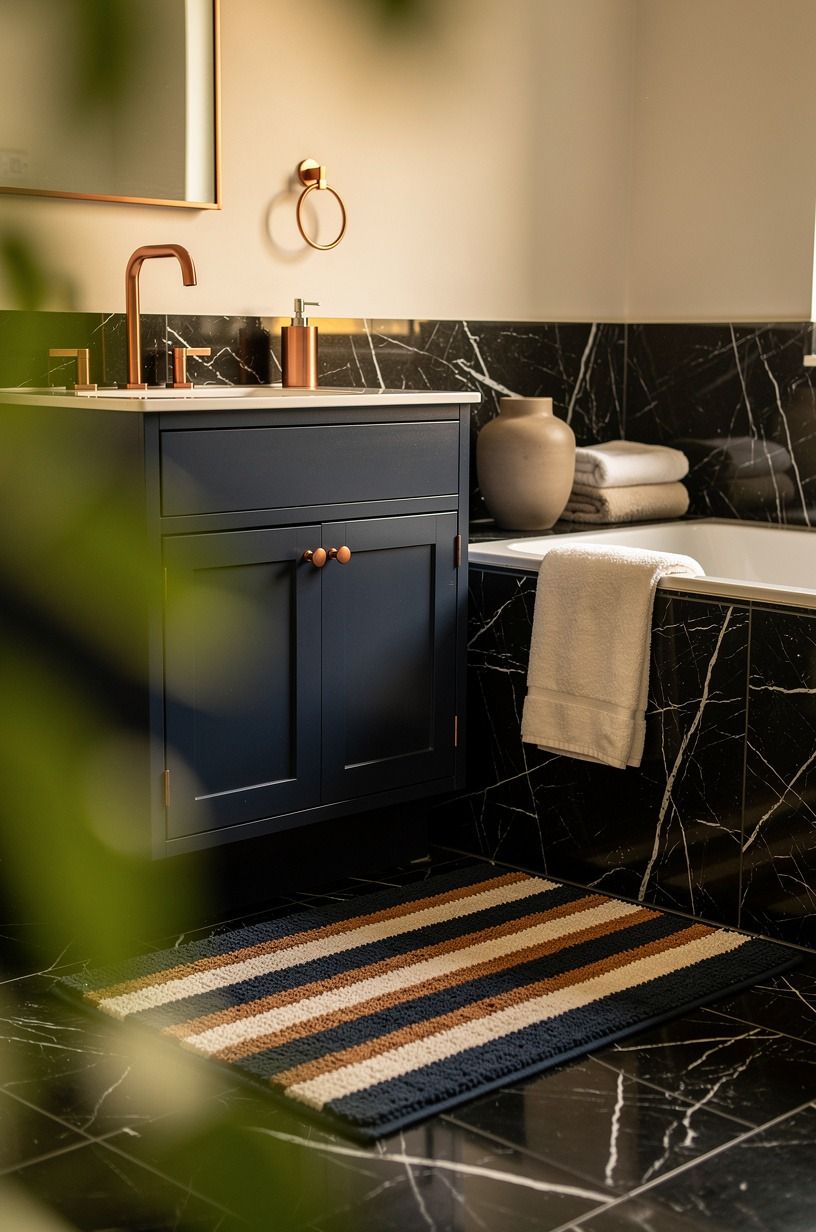
A flat white mat disappeared against the midnight-blue floor and made the bathroom feel timid. I chose an ivory-and-copper stripe instead, which softened the Nero Marquina marble without competing with its white veining.
11Build a green tile focal wall instead of redoing the shower
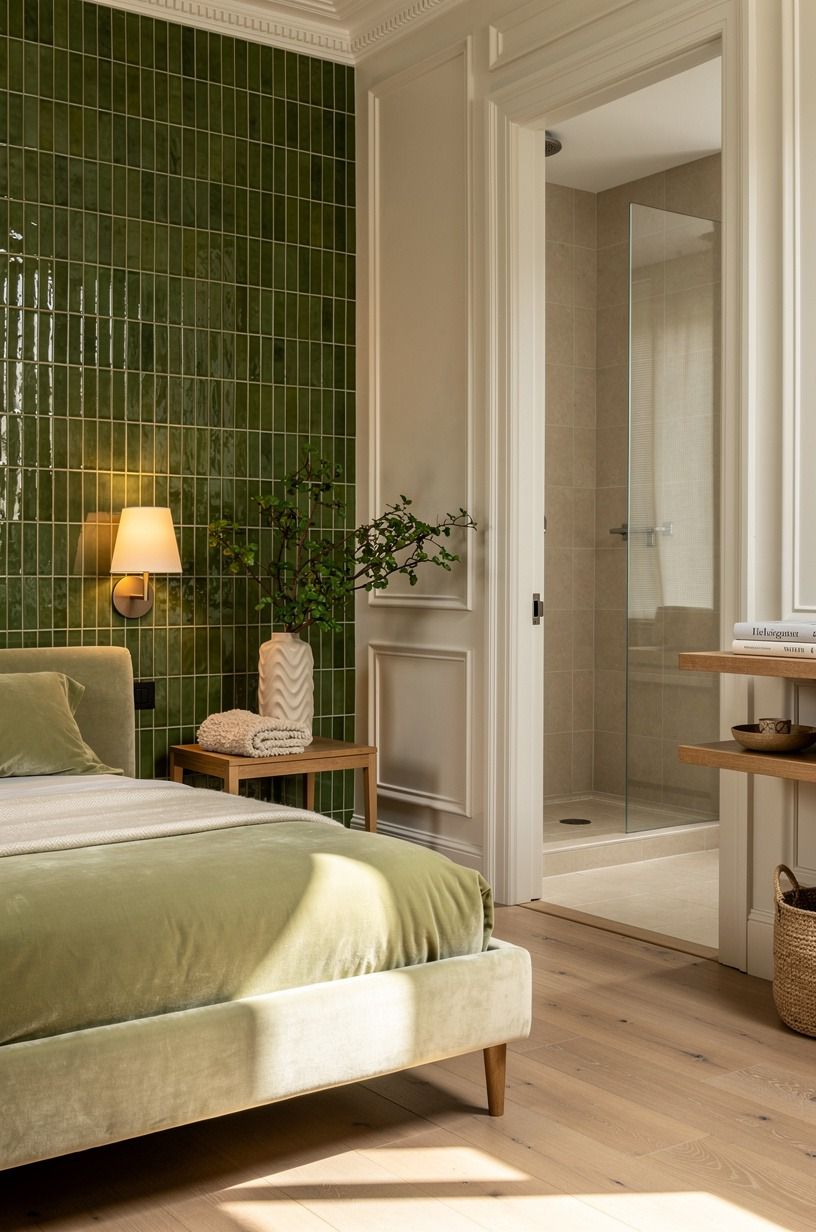
I wanted a dark green tiled bathroom, but a full shower rebuild wasn’t in my budget. So I made the vanity wall the focal point with deep olive mohair velvet wallcovering and left the shower alone. Your eye reads the change before it notices what stayed.
The install took a weekend because the wall was small. I kept the surrounding finish simple, which stopped the rich texture from feeling busy.
For a more retro direction, browse mid-century green tile bathroom ideas for retro charm. You’ll get more character from one edited focal wall than from fake peel-and-stick marble everywhere.
12Make room for a 21-inch clear path
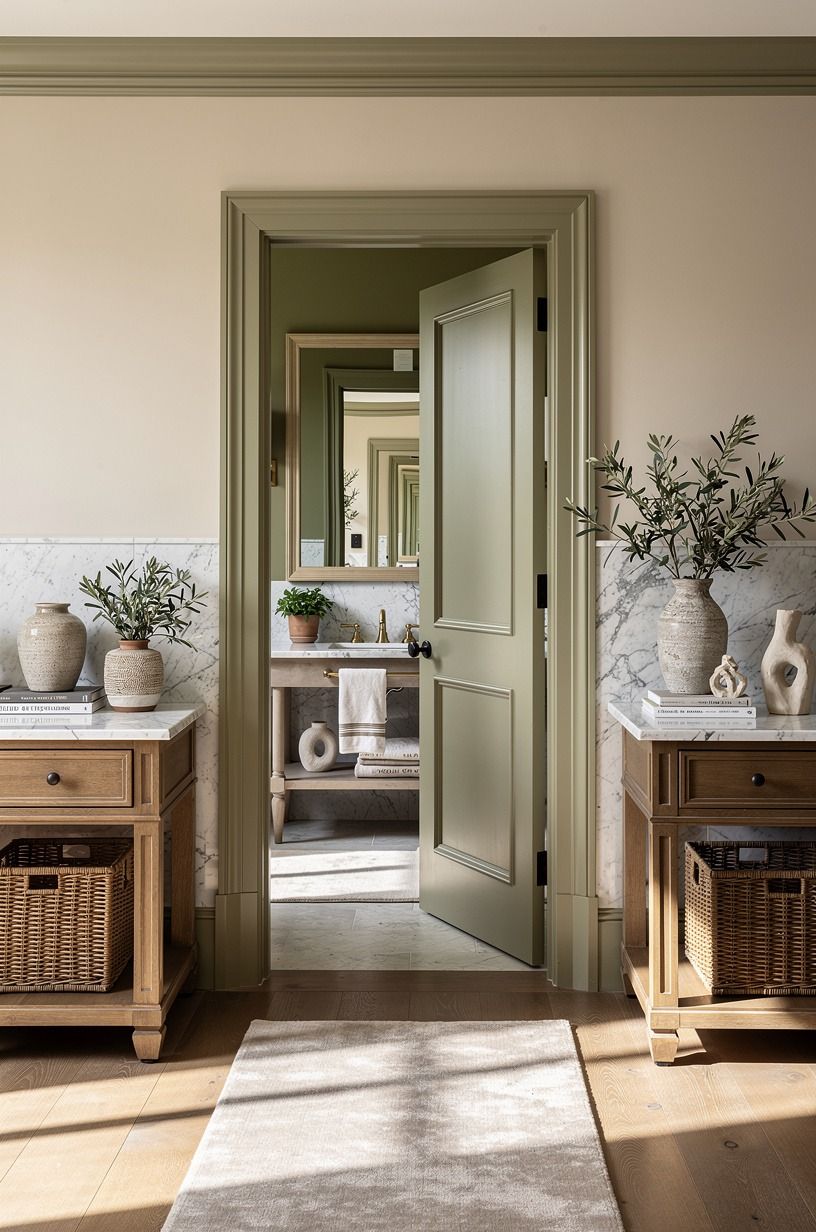
I had to stop styling around a layout issue and deal with it. The space in front of the toilet needs at least 21 inches of clearance, and my laundry basket was stealing it. You can make a small bathroom feel bigger by removing one badly placed object.
I moved laundry to a lidded basket outside the room. Not glamorous. Very effective.
Your bathroom won’t feel relaxing if you have to sidestep around storage. I’d skip a freestanding ladder shelf in a narrow room, because it turns useful floor space into an obstacle course.
13Pick Benjamin Moore Chestertown Buff for the ceiling
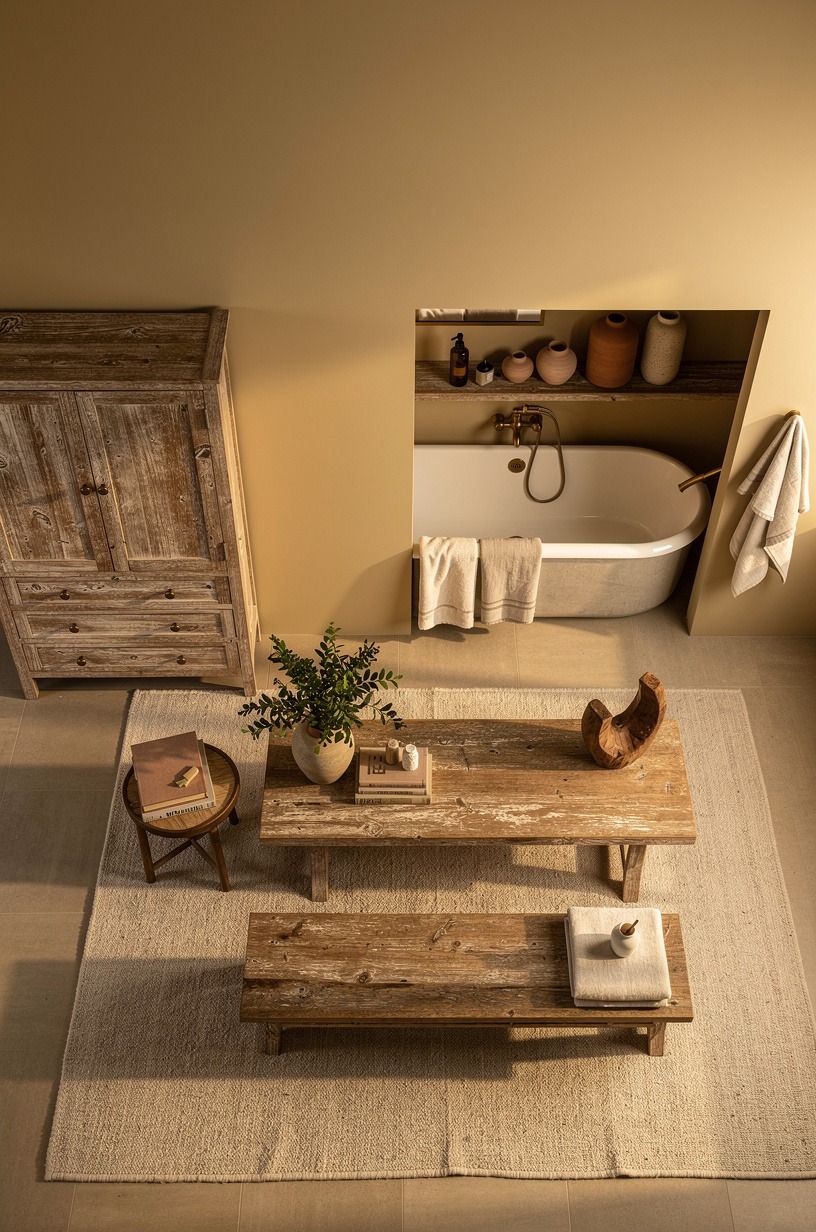
I didn’t want a white ceiling after the green walls went up. Benjamin Moore Chestertown Buff HC-9 gave the clay, linen, and aged-brass palette a warmer finish, especially with reclaimed weathered teak nearby.
14Put storage in baskets, not in sightlines
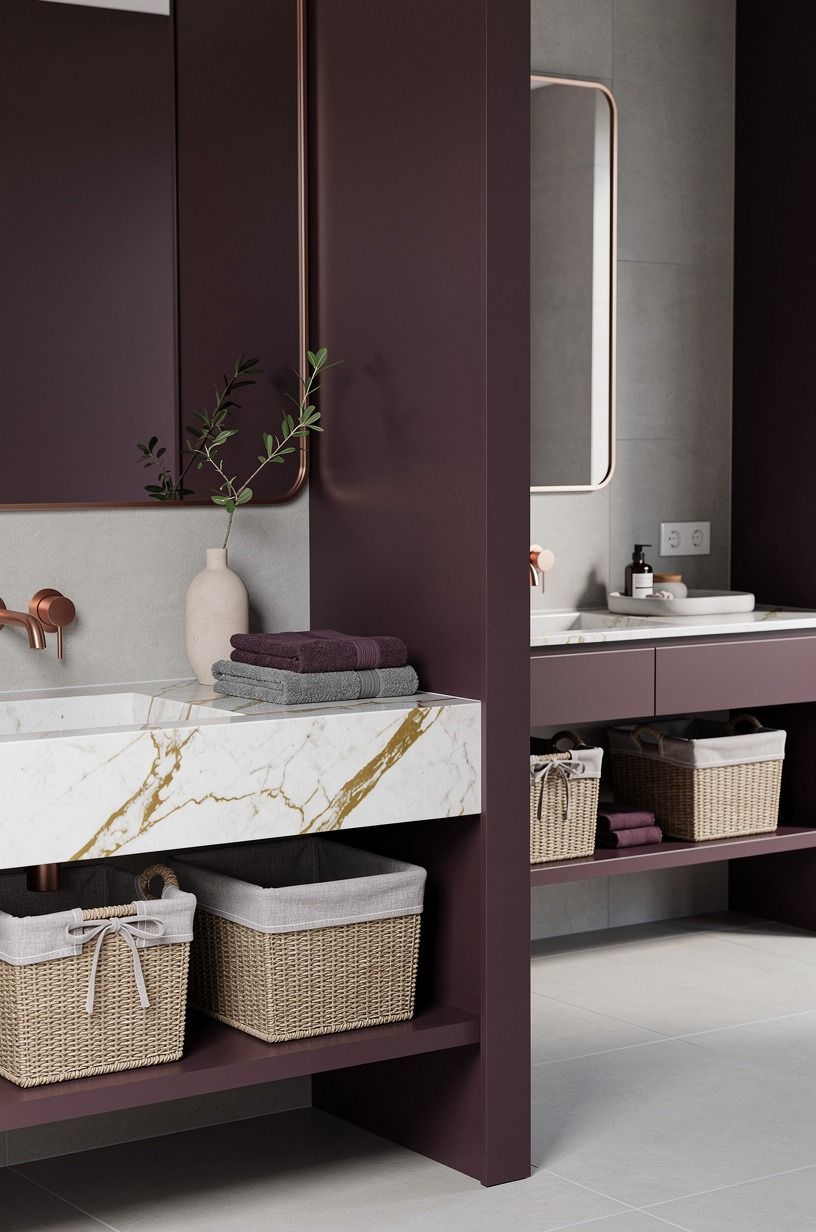
The visual mess came from tiny plastic packages, not from the room itself. I placed storage baskets on the shelf and under the vanity, where you can grab what you need without seeing every label. A Calacatta marble counter with gold veining kept the plum, grey, and rose-gold scheme from feeling flat.
Use baskets for backups, not for wet washcloths. You’ll save yourself the musty surprise later.
I like woven storage better than glossy acrylic here because green walls need something dry and organic nearby. A little texture. Enough.
15Choose a low, wide mirror for a small vanity wall
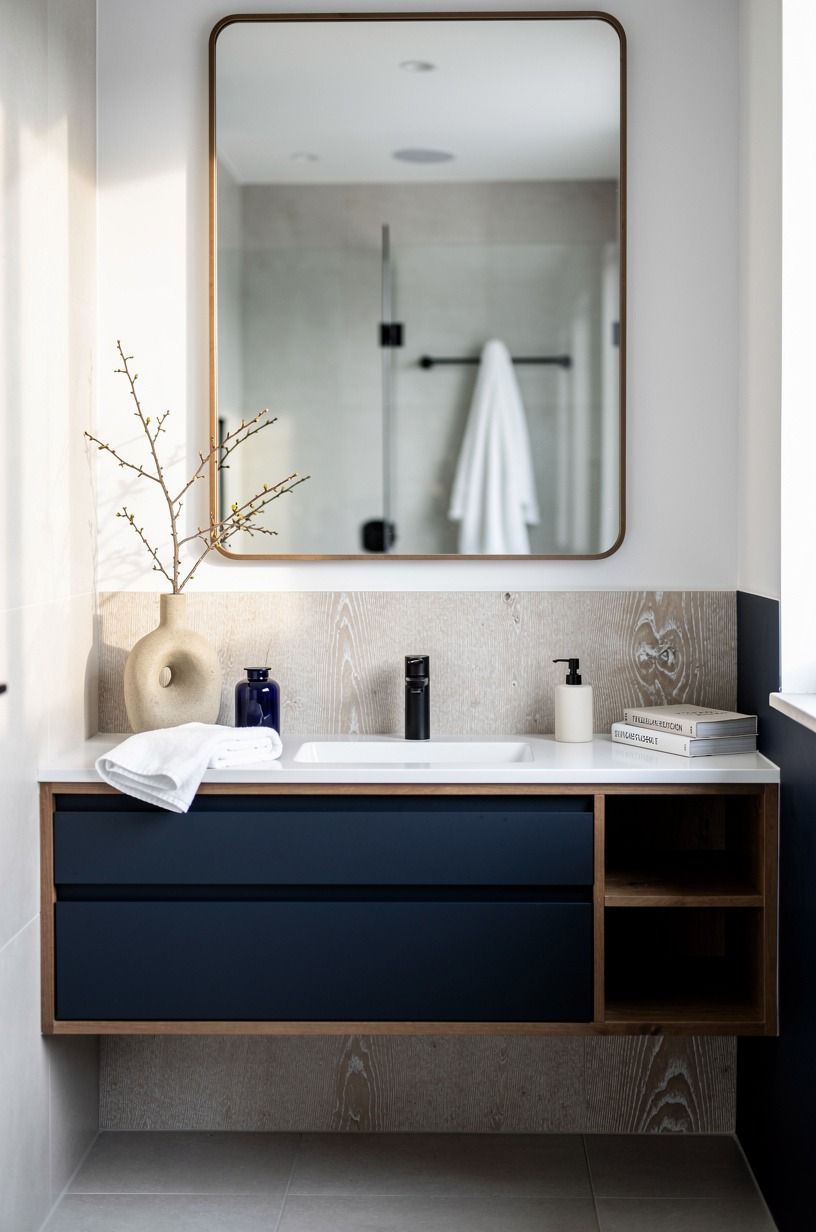
A tall mirror can make a narrow wall feel even narrower. A low, wide mirror above a cerused white-oak vanity makes the navy, white, and walnut palette feel calmer and more generous.
16Contrast olive green against a pale floor
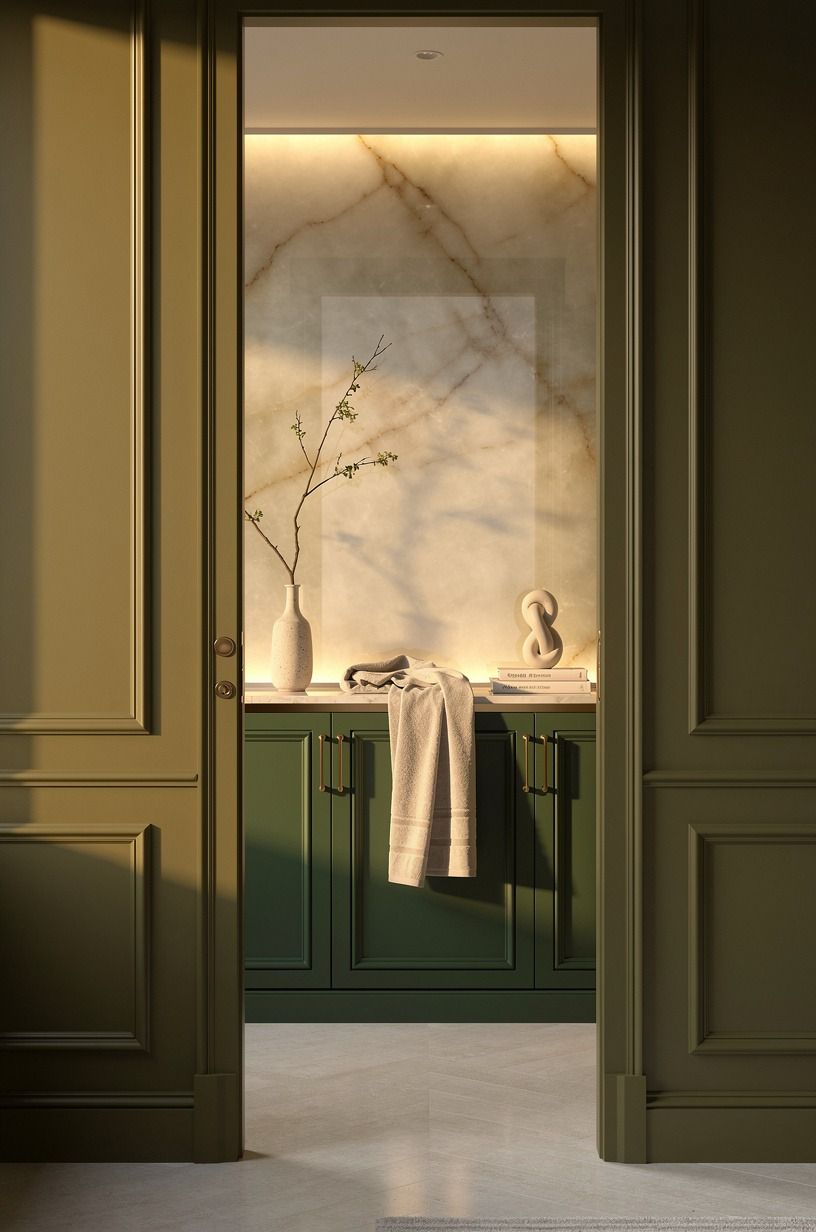
My beige floor wasn’t ideal, but it had one virtue: it made the olive wall feel bold without making the room dark. You can keep a pale floor while building a green bathroom renovation around it. Contrast is doing more work than matching ever could.
If you’re replacing flooring, use pale stone or a creamy backlit onyx finish rather than black hex tile. Black is dramatic, but it shows every hair, splash, and speck of powder.
I learned that after living with a dark floor in another house. Your morning routine is busy enough without becoming a cleaning audit.
17Add one art piece that isn’t bathroom art
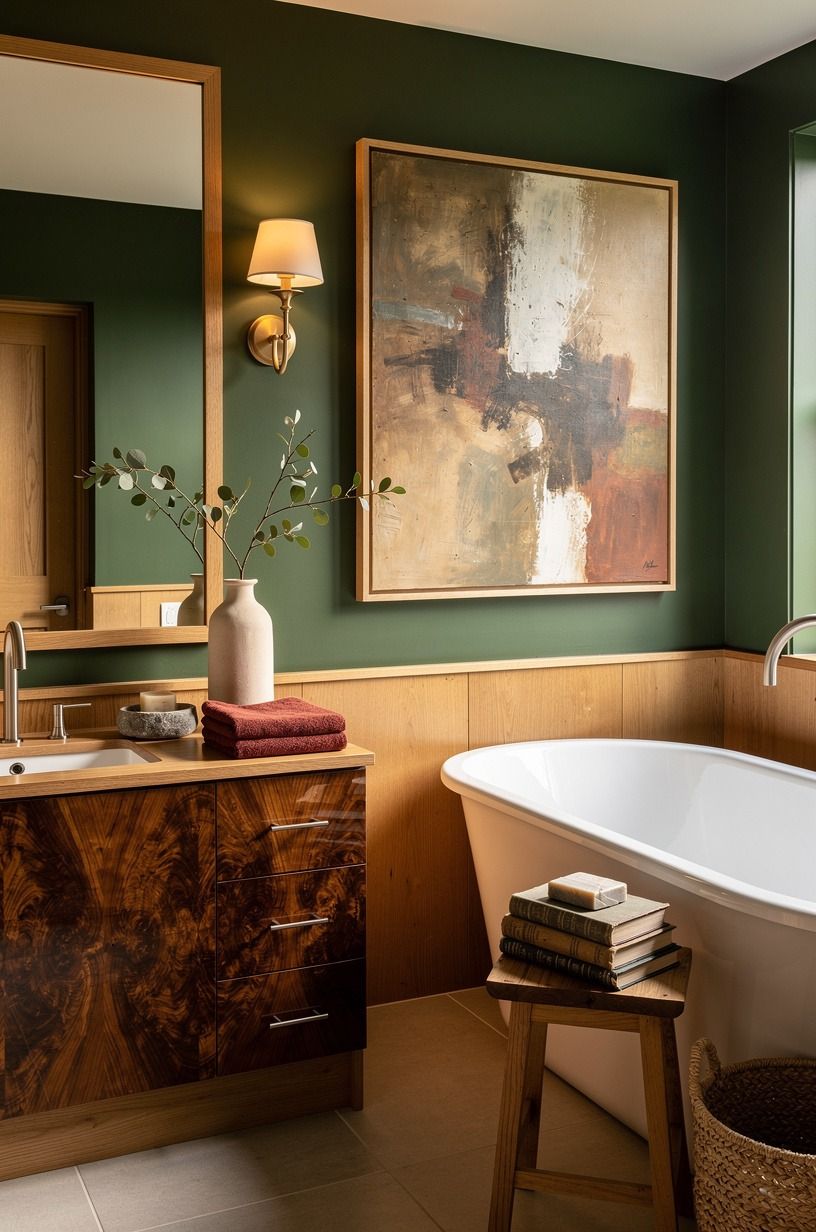
I hung a small abstract print with forest green, rust, and cream beside the door. The walnut picture frame made it read like part of the home, not an accessory purchased for a bathroom aisle. You can use a landscape, a sketch, even a saved exhibition postcard.
Keep it away from direct shower steam. Your art needs a dry wall and a little visual distance from towels.
Why should every bathroom announce that it is a bathroom? I’d skip word art entirely. A personal image gives guests something better to look at while they wash their hands.
18Use Farrow & Ball Hague Blue when green needs more weight
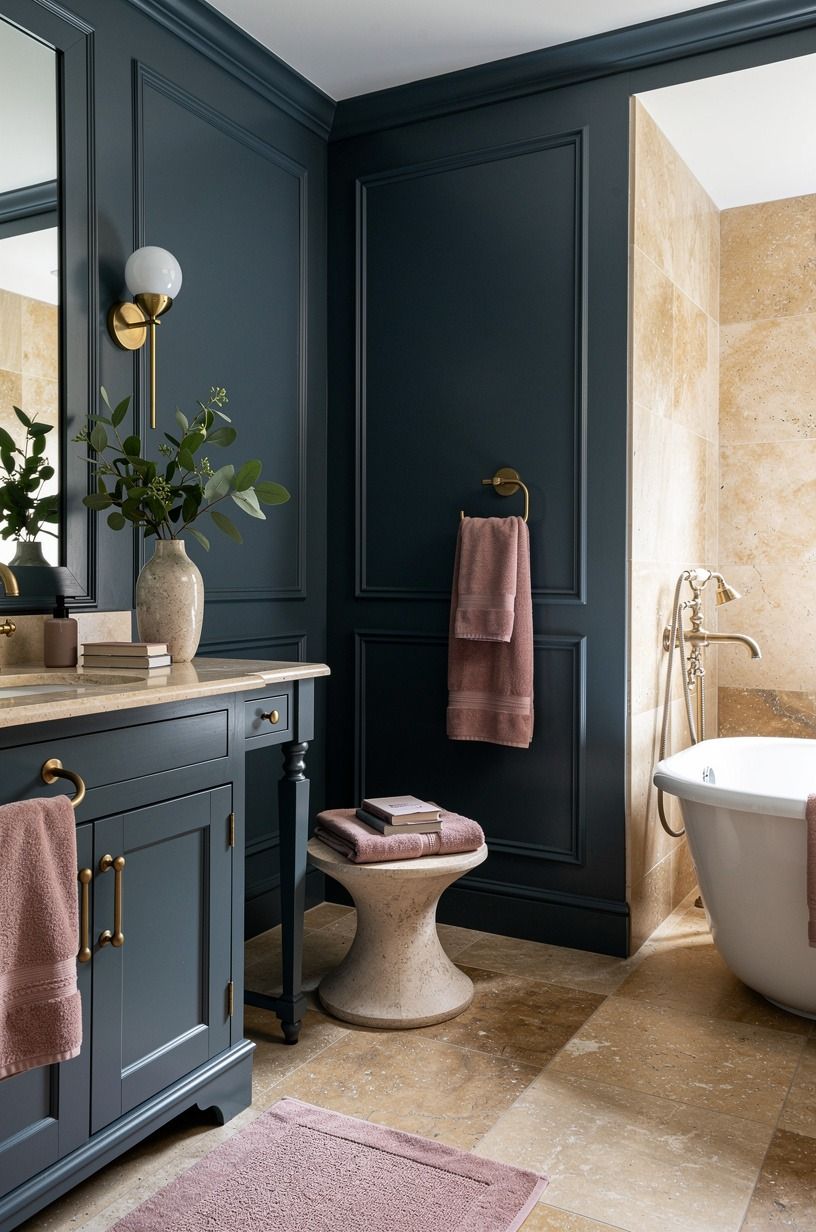
I tested Farrow & Ball Hague Blue No. 30 on the back wall before settling on Sea Salt elsewhere. With dusty rose, charcoal, brass, and warm travertine, that blue-green depth feels refined rather than heavy.
It looked nearly black at night in my small room. Gorgeous, but wrong for what I wanted.
If your bathroom has a separate shower zone, Hague Blue can make that area feel intimate. For a master-scale version, look at mid-century modern master bathroom ideas. Your light level gets the final vote.
19Finish with towels that feel like furniture
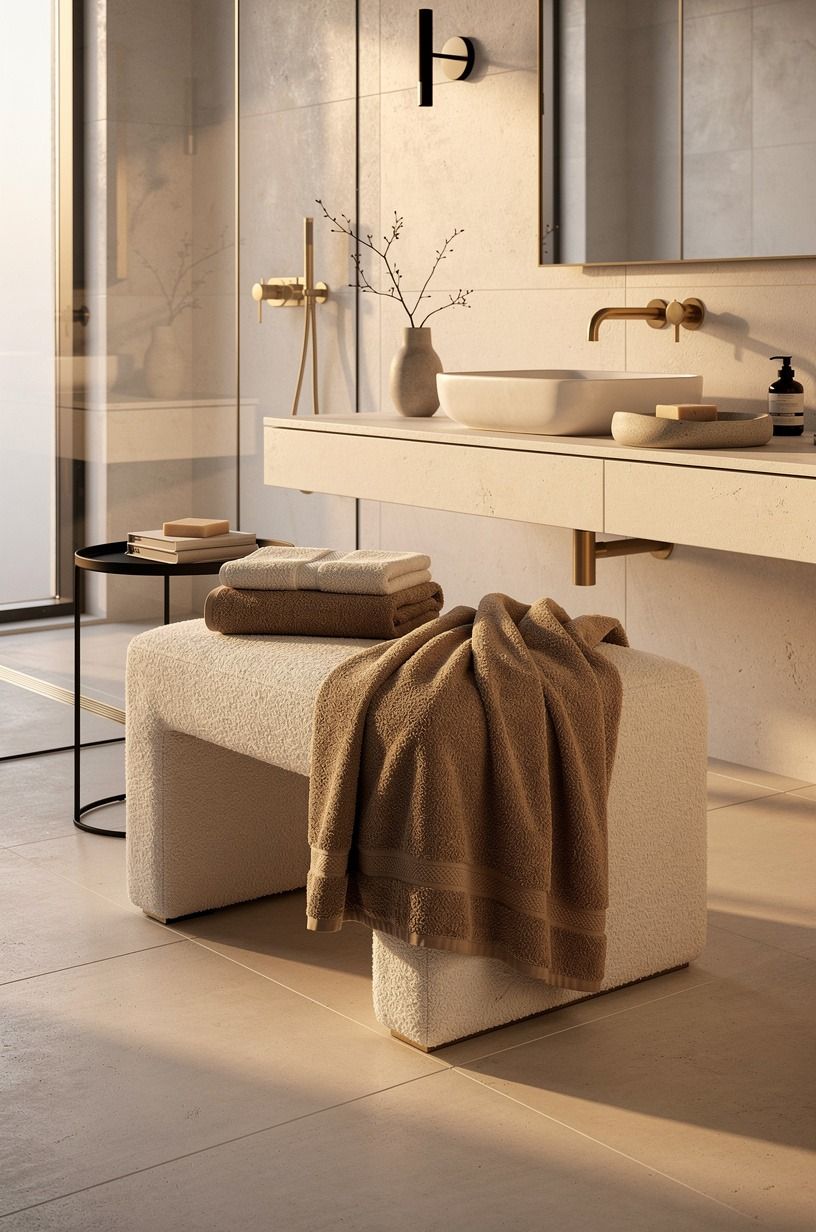
The last thing I bought was a pair of 600gsm Turkish cotton towels in warm ivory. They softened the room, looked substantial on the hook, and made the warm-white, camel, and black palette feel welcoming after every shower. You can fold them neatly or let one hang a little loose.
I chose ivory instead of bright white because bright white can feel sharp beside olive and unlacquered brass. Your green will look gentler with cream, mushroom, or faded ochre nearby.
And that was the surprising part. The room didn’t need more decor. It needed textiles with enough weight to hold their own.
How much it cost
My version stayed in the budget-refresh lane because I kept the tub, vanity box, and plumbing locations. Typical US costs climb quickly once you move walls, retile a shower, or relocate a faucet.
I spent on the brushed brass faucet, tile behind the sink, and lighting, then saved by keeping the tub and vanity. You can make a $200 to $1,200 update feel luxurious when you don’t scatter money across twenty little purchases.
Why green is having its mid-century moment
I think green is back because people are tired of bathrooms that could belong to any rental listing. White and grey were safe for a long time, but safe can become anonymous. A soft green holds onto light, works with real wood, and makes a small room feel more peaceful without pretending it is a spa hotel.
I’ve tried pale blue, charcoal, and all-white baths. Blue can get chilly, charcoal needs serious daylight, and white asks your towels to do all the emotional labor.
Green gives you more range. It can be gentle with oak, moody with brass, or bright beside cream tile.
That’s why it works now: you can make it personal without making it loud.
The Questions Worth Answering First
What is the best mid-century green bathroom idea for a small bathroom?
A soft green wall with a wide teak-framed mirror is the best place to start. You’ll get depth without using floor space, and your reflection makes the room feel broader. An IKEA HEMNES mirror cabinet can add storage if your counter is crowded.
Where can I buy mid-century green bathroom pieces on a budget?
Start with IKEA, Target Threshold, and Wayfair for mirrors, towels, and lighting. You can find better wood frames on Facebook Marketplace or at thrift shops. Your best budget move is buying one solid vintage-looking piece, not five small matching accessories.
How much does a mid-century green bathroom makeover cost?
A paint-and-accessories makeover usually costs about $200 to $1,200, depending on tile and faucet choices. You can keep costs low by retaining your existing vanity, painting yourself, and moving clutter into baskets instead of buying new cabinetry.
Can I create a mid-century green bathroom on a budget?
Yes, and you don’t need new plumbing. Paint, a cotton shower curtain, thrifted wood frame, and switched-out cabinet pulls can change the whole feeling. You can also keep your current floor and use a rug to introduce rust or cream.
Is a mid-century green bathroom worth it in a small space?
Yes, it’s worth it because a small bathroom lets one color make a strong impression without requiring much paint or tile. Use your green on the vanity wall, then keep the floor pale. You’ll get impact while preserving visual space.
Is a mid-century green bathroom a good idea for a rental?
Yes, if you choose reversible layers. Try removable wallpaper, a tension-rod linen curtain, and peel-and-stick tile behind the sink. You can take the mirror, art, and textiles with you, which makes your money go further.
Where I’d Start First
If I had to pick one, I’d start with the wall color. You can’t make tired oak feel intentional with accessories alone; green gives the wood a reason to exist. Pin the paint choice for later, then let your bathroom grow around it.