
Moorish & Arabic bathroom ideas work best when you commit to one tiled focal point and let the rest breathe. I once covered every surface in pattern, then spent a week wishing I’d stopped at the shower wall. Go bold, but give your eye somewhere quiet to land. That’s where the luxurious feeling comes from.
Don’t overthink: Layer a warm islamic style bathroom floor.
- Anchor arabic bathroom design with a tiled arch
- Layer a warm islamic style bathroom floor
- Float the Two-Wood Rule around your vanity
- Hang pierced-metal lanterns instead of a generic ceiling light
- Paint the ceiling in a desert-sky color
- Frame the sink with a horseshoe mirror (the Soft-Edge Effect)
- Mix zellige with quiet plaster walls
- Build a real ablution corner near the shower
- Choose black grout over white in a high-traffic shower
- Create the Three-Height Light Stack
- Swap a plain niche for a patterned tile jewel box
- Use an antique rug where you’d normally buy a bath mat
- Frame the toilet wall with restrained pattern
- Spend your budget where water meets tile
- Let one bold color win over five small accents
1Anchor arabic bathroom design with a tiled arch
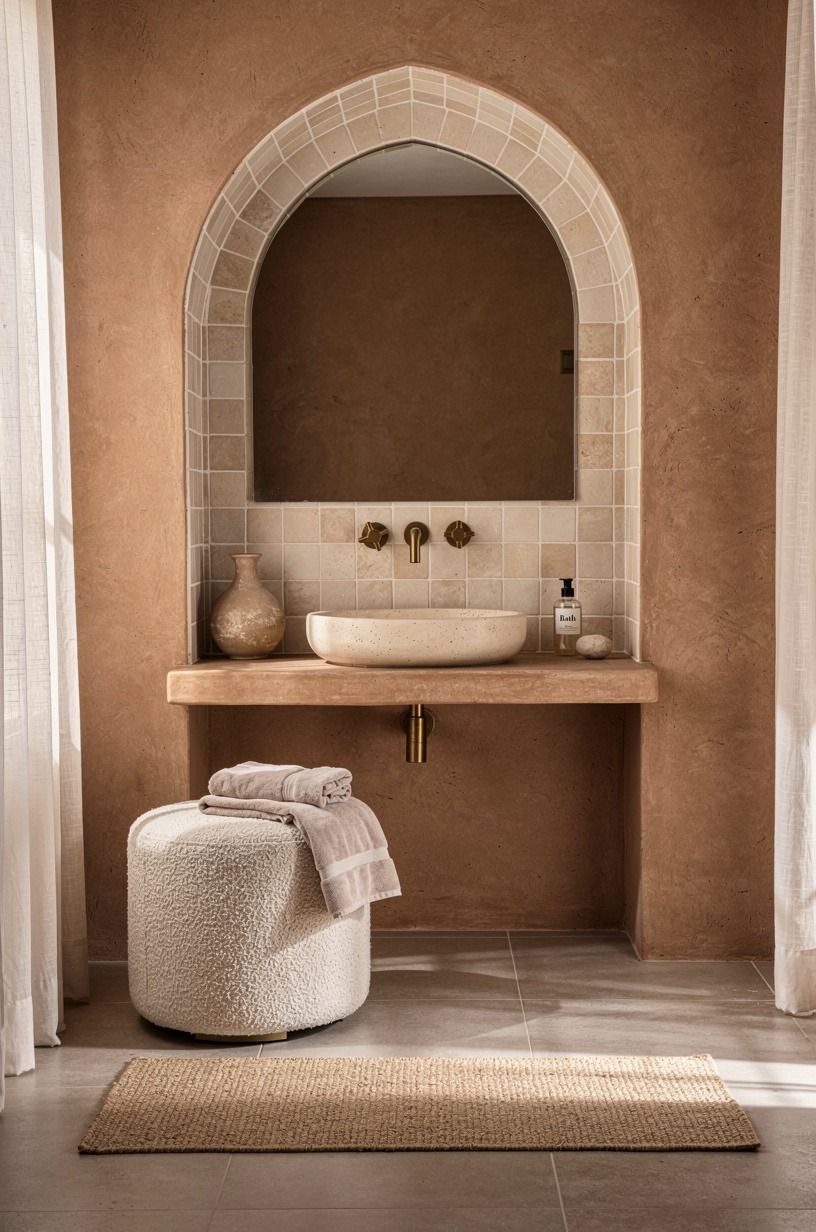
Build your room around a pointed tiled arch framing the shower or vanity, rather than scattering tiny motifs everywhere. You’ll get the architectural drama you want without making your bathroom feel like a souvenir shop.
Use hand-glazed clay zellige inside the arch and keep the outer wall in a soft linen tone with aged brass accents. The uneven glaze catches morning light in little flashes. I’d skip a perfectly symmetrical printed tile here, because the slight wobble of real zellige is the whole point.
A small organic bouclé stool can soften the hard finishes without crowding the room. Your arch needs air around it, and you don’t need a massive room for that. A small bathroom can look more intimate when the shape is contained!
Moroccan tile belongs in your next bathroom is worth reading before you settle on a pattern scale.
2Layer a warm islamic style bathroom floor
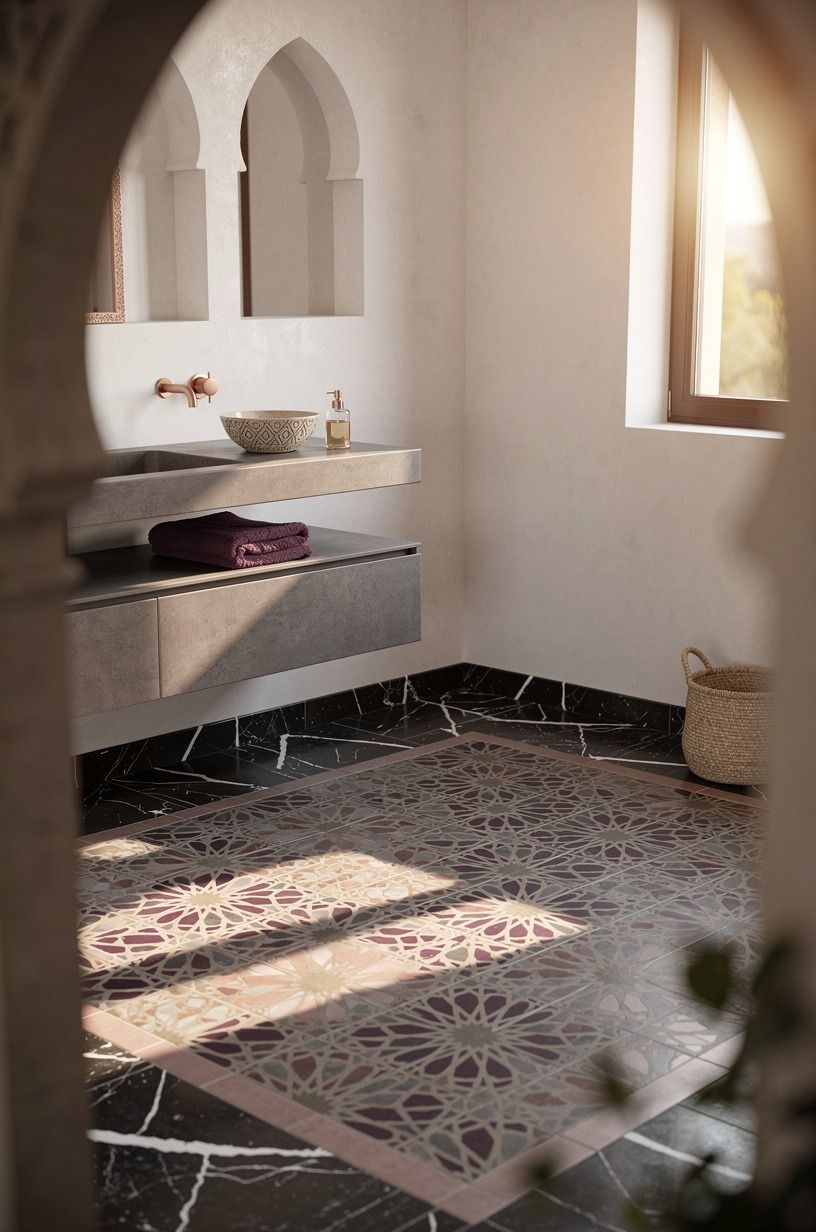
Start with a floor that can take visual weight. A star-and-cross cement tile in plum, gray, and rose-gold tones gives your bathroom a rich base while the walls stay soft.
You’ll want a pattern with enough contrast to read from the doorway. I made the mistake of choosing pale gray motifs once, and they vanished the minute a bath mat went down. A Nero Marquina marble vanity top brings a crisp dark note to the warmer tile without making the room busy.
Keep your vanity at the standard 32 to 36 in height. It’s not glamorous advice, but your back will care every morning. And yes, a patterned floor hides the odd dropped hair tie better than white porcelain ever will.
3Float the Two-Wood Rule around your vanity
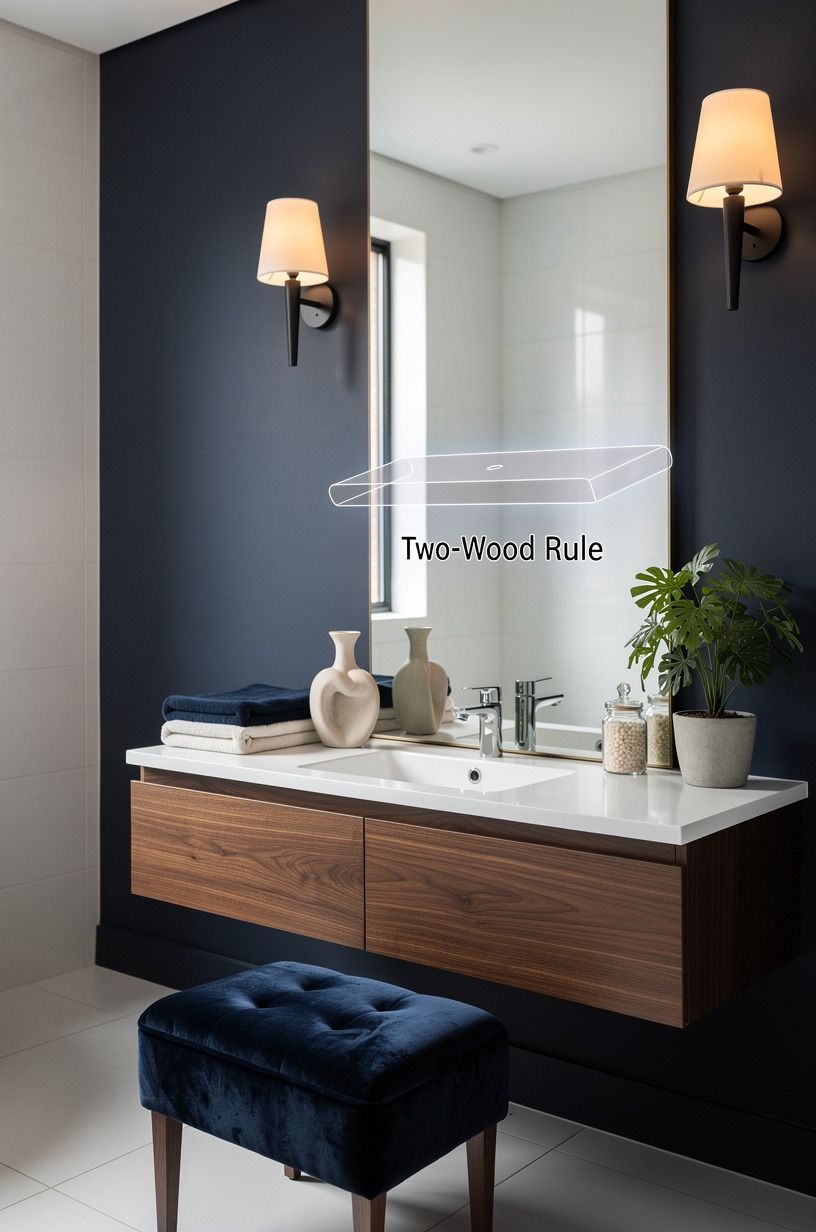
The Two-Wood Rule is simple: choose one wood for the vanity and one darker wood for the mirror or stool. You’ll create depth without that matching-set stiffness that makes a room feel staged.
Try a walnut vanity with a white-framed arched mirror against a navy wall. The pale detail keeps things bright; the walnut gives your room a grounded, refined edge. I’d avoid orange oak beside honey tile, because it turns the whole palette muddy by noon.
A slim deep-pile mohair velvet stool can sit under a floating vanity if you need a perch for lotion, towels, or a kid’s toothbrush routine. Useful, not decorative clutter. But choose a stool that can tuck fully away.
4Hang pierced-metal lanterns instead of a generic ceiling light
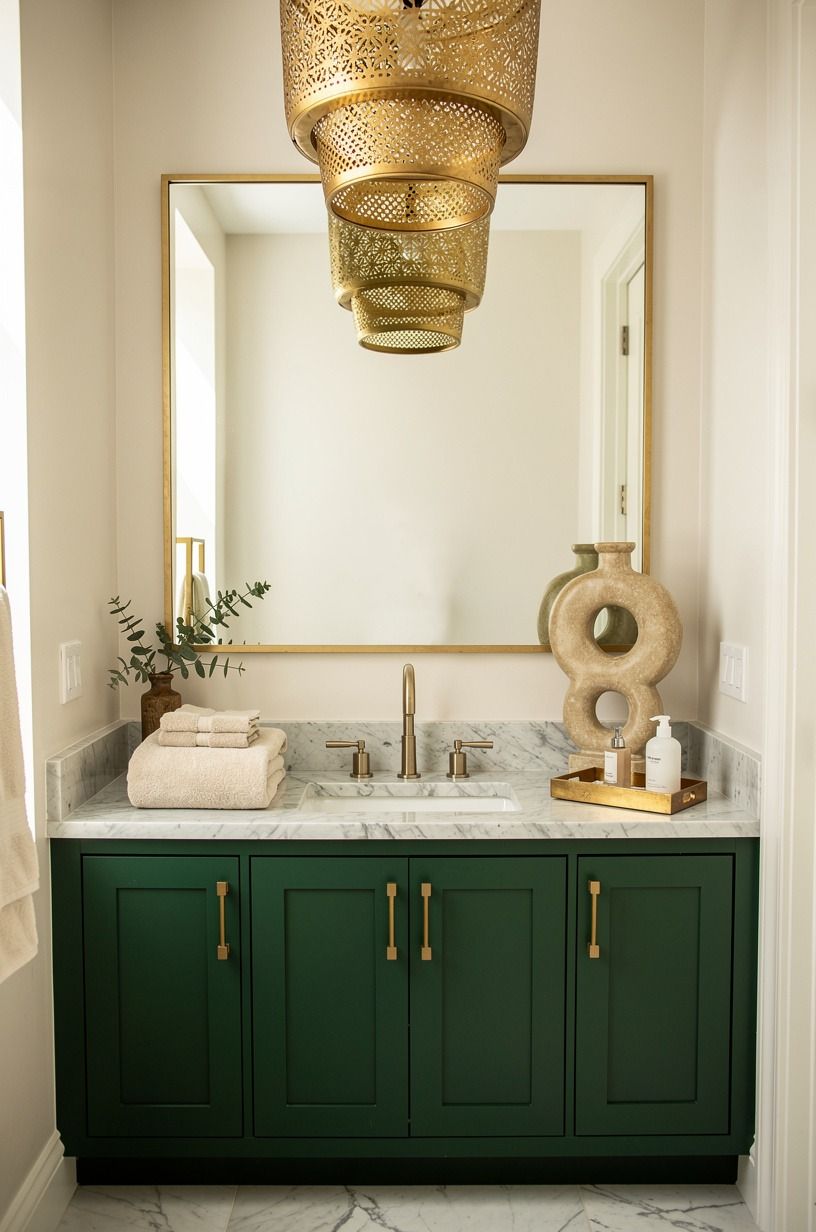
A single pierced brass lantern over a freestanding tub throws tiny pools of light across Carrara marble and cream plaster. The subtle gray veining keeps the emerald and gold palette from feeling too ornate.
5Paint the ceiling in a desert-sky color
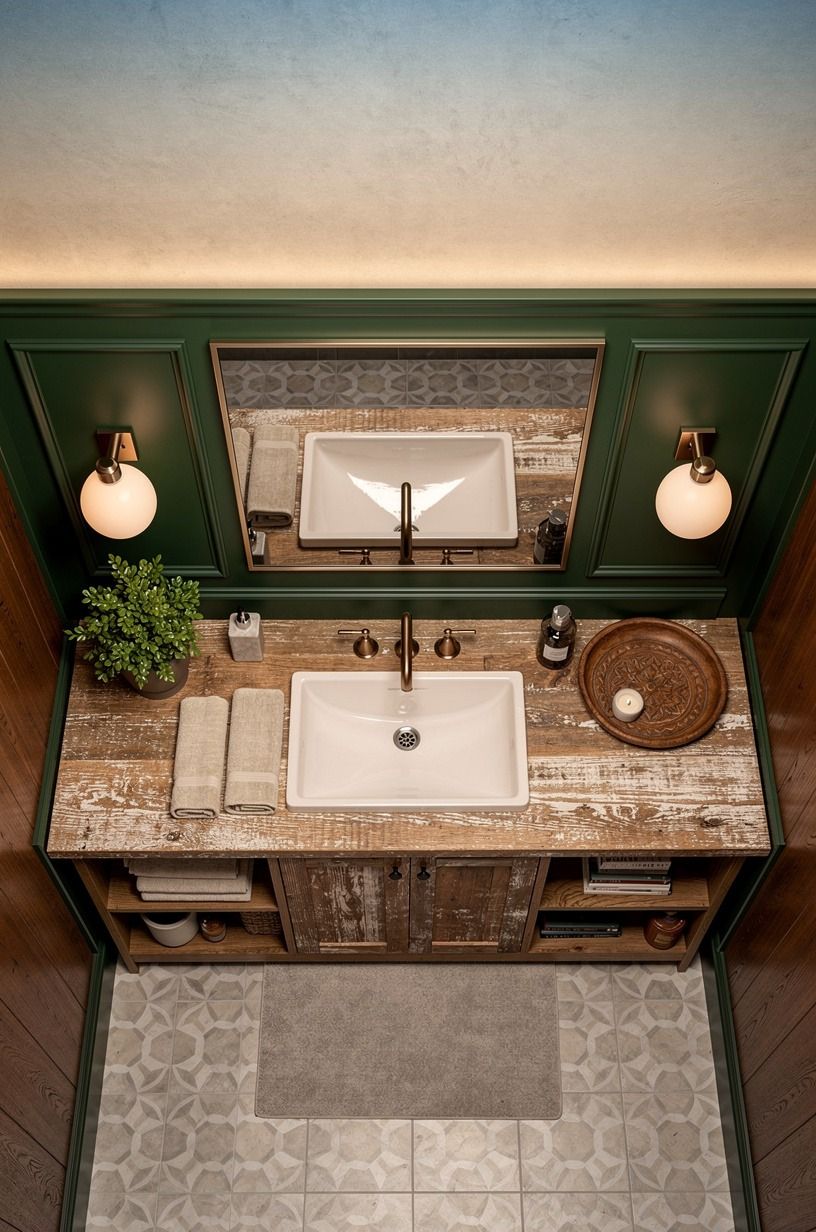
Your ceiling doesn’t have to remain white. A deep forest green overhead makes a tiled bathroom feel calmer, particularly if you’ve got rust accents and natural oak below.
You’ll want to test it in your actual light because it can lean heavier in a north-facing room. Pair it with reclaimed weathered teak and suddenly the hard tile surfaces feel gentler. It’s a quiet move, which is why I like it.
And don’t paint every wall green. Keep the ceiling as the unexpected note, then let the tile carry the pattern.
6Frame the sink with a horseshoe mirror (the Soft-Edge Effect)
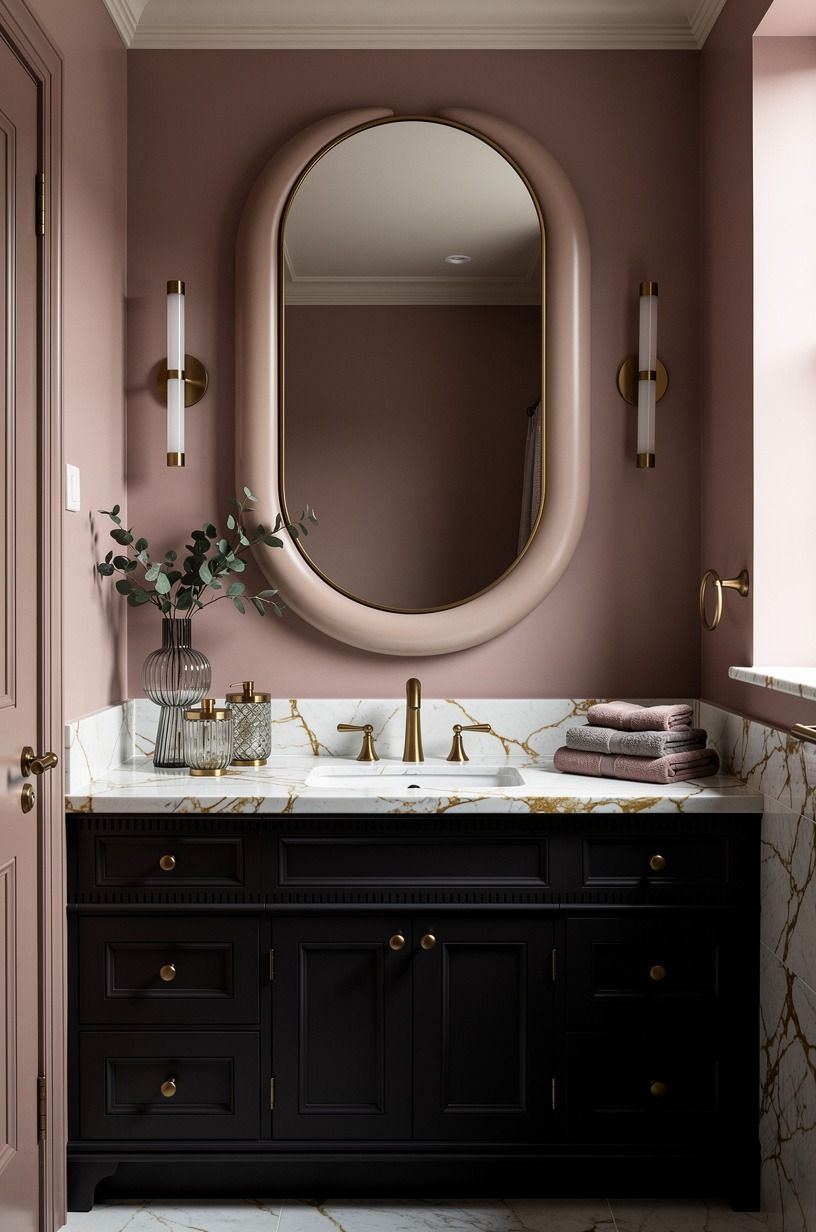
The Soft-Edge Effect is what happens when you balance angular tile with one rounded shape. A horseshoe-shaped mirror above your sink does more for a compact bathroom than another row of decorative border tile.
Choose an aged brass frame if your tile has charcoal or dusty rose in it. You’ll get a moody contrast that feels old-world without pretending your house is a palace. A Calacatta marble counter with gold veining gives the mirror a warmer partner than a narrow, fussy vanity ever could.
Give yourself enough counter room around the sink. A 36 in vanity is easier to style than a cramped pedestal, but even a small wall-mounted sink can work if the mirror has presence.
Why navy is the bathroom color that never goes out of style has a useful case for going deeper with blue.
7Mix zellige with quiet plaster walls
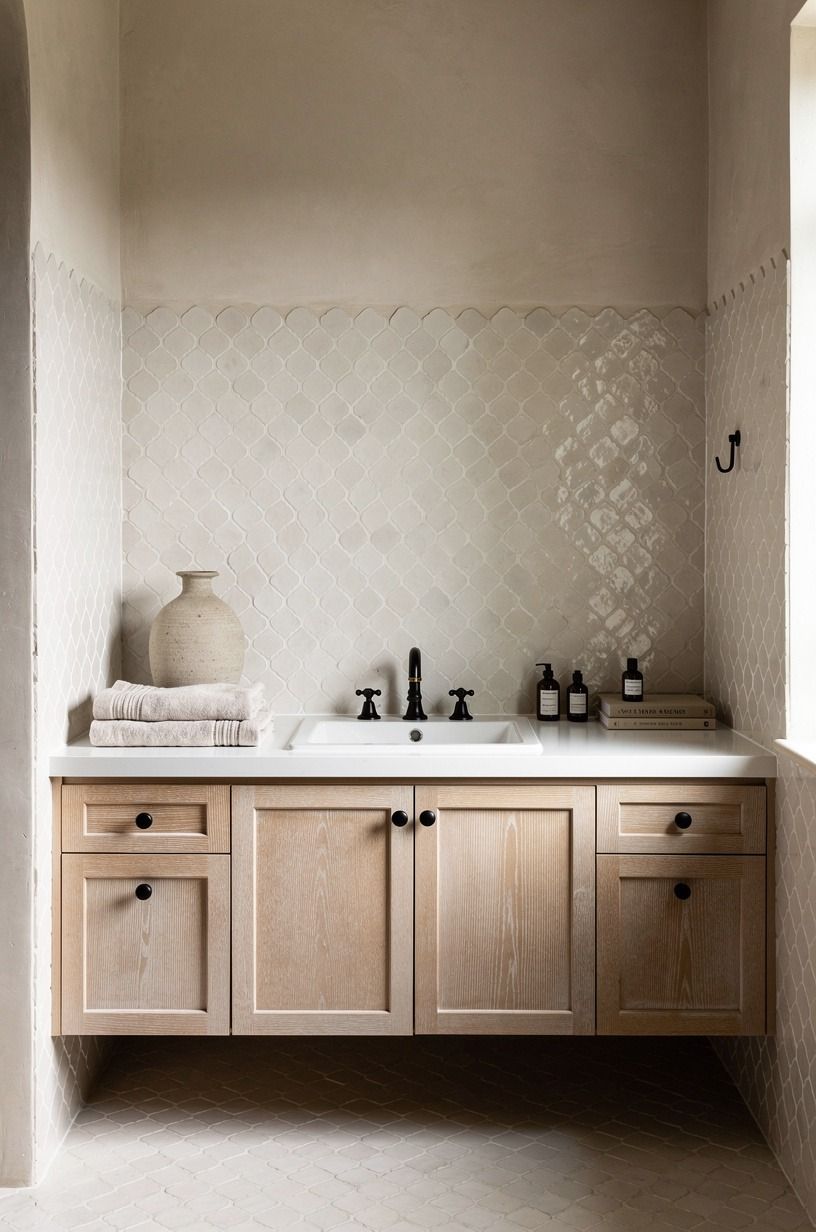
Real zellige tile costs about $15 to $35 per sq ft, so use it where your hands and eyes land first: a backsplash, shower niche, or the wall behind the tub.
8Build a real ablution corner near the shower
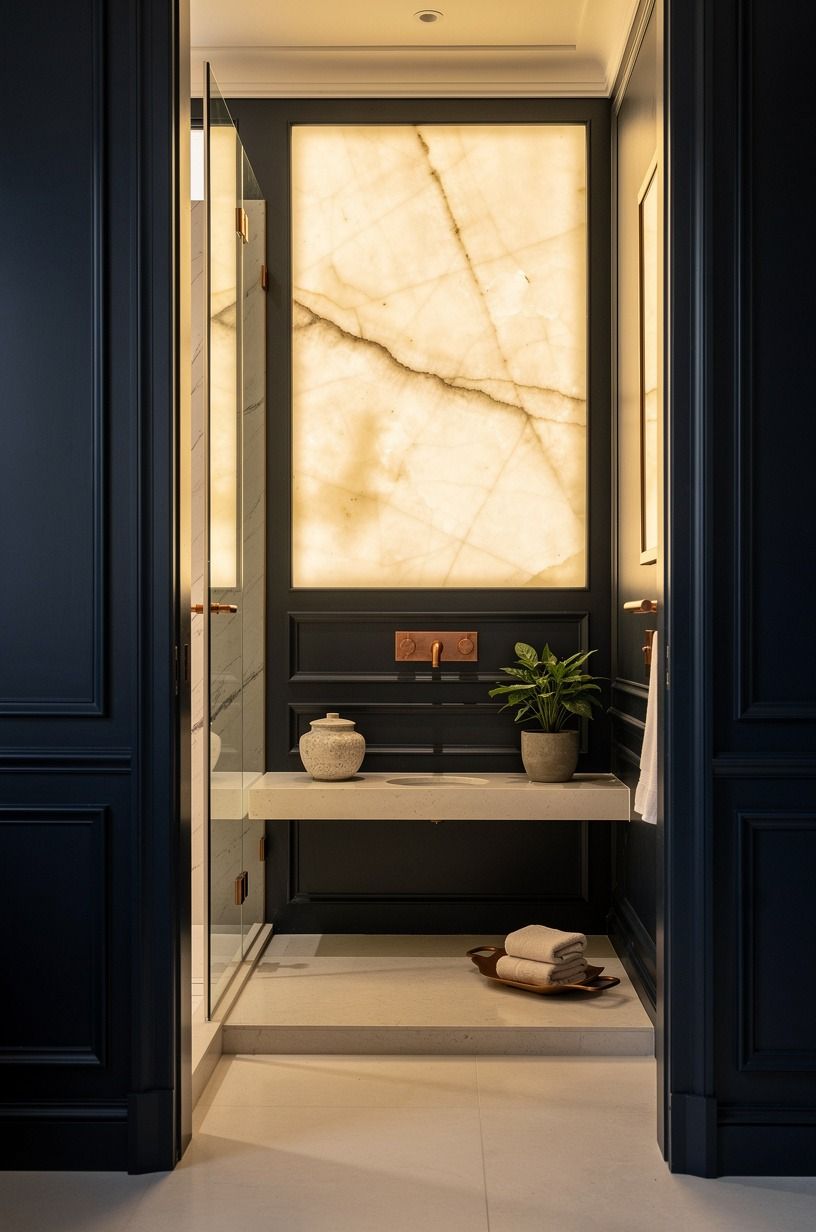
Borrow the practical side of Arabic bathroom design: make a small washing zone feel intentional. A hand shower, a low ivory bath stool, and a backlit translucent onyx ledge for soap create a useful corner instead of an awkward empty patch.
You’ll appreciate a comfortable 36 x 36 in minimum shower more than an oversized decorative niche. Function first, even in a gorgeous room. Add Turkish cotton towels, 600gsm in midnight blue and copper so the corner looks warm when it’s dry and still feels good after a shower.
I’ve seen too many rooms add a stool that blocks the door swing. Measure first. Then choose the stool.
9Choose black grout over white in a high-traffic shower
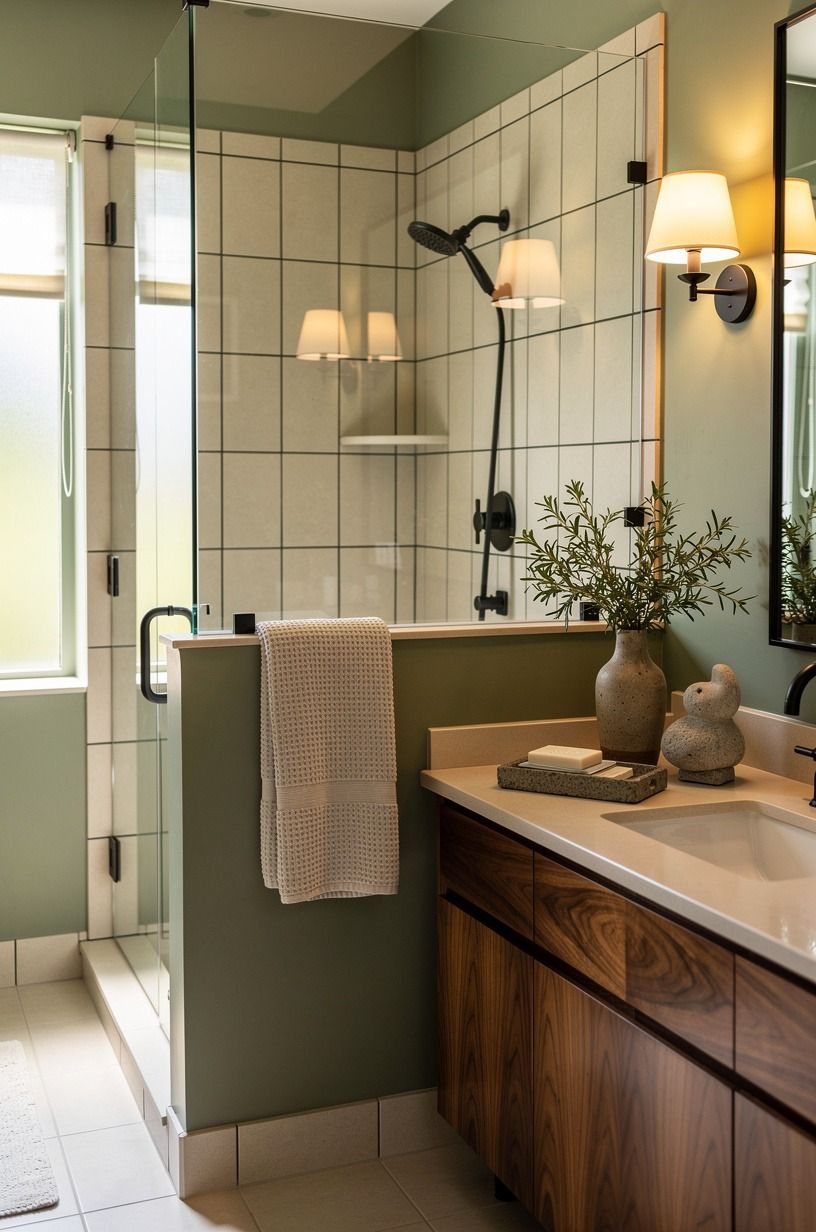
White grout has its place, but not behind a busy shower routine. Charcoal grout beside warm cream geometric tile defines the pattern and saves you from staring at every faint pink shampoo stain.
You should keep the tile itself light if your bathroom lacks a window. A book-matched walnut threshold can bridge the floor and shower while bringing natural warmth to sage green walls. The effect is elegant, not precious.
But don’t use black grout with very irregular white zellige unless you want every edge outlined. It can look harsh fast. A warm mushroom grout gives you the softer answer.
Vintage black and white bathroom ideas can help if you’re weighing a stronger contrast.
10Create the Three-Height Light Stack
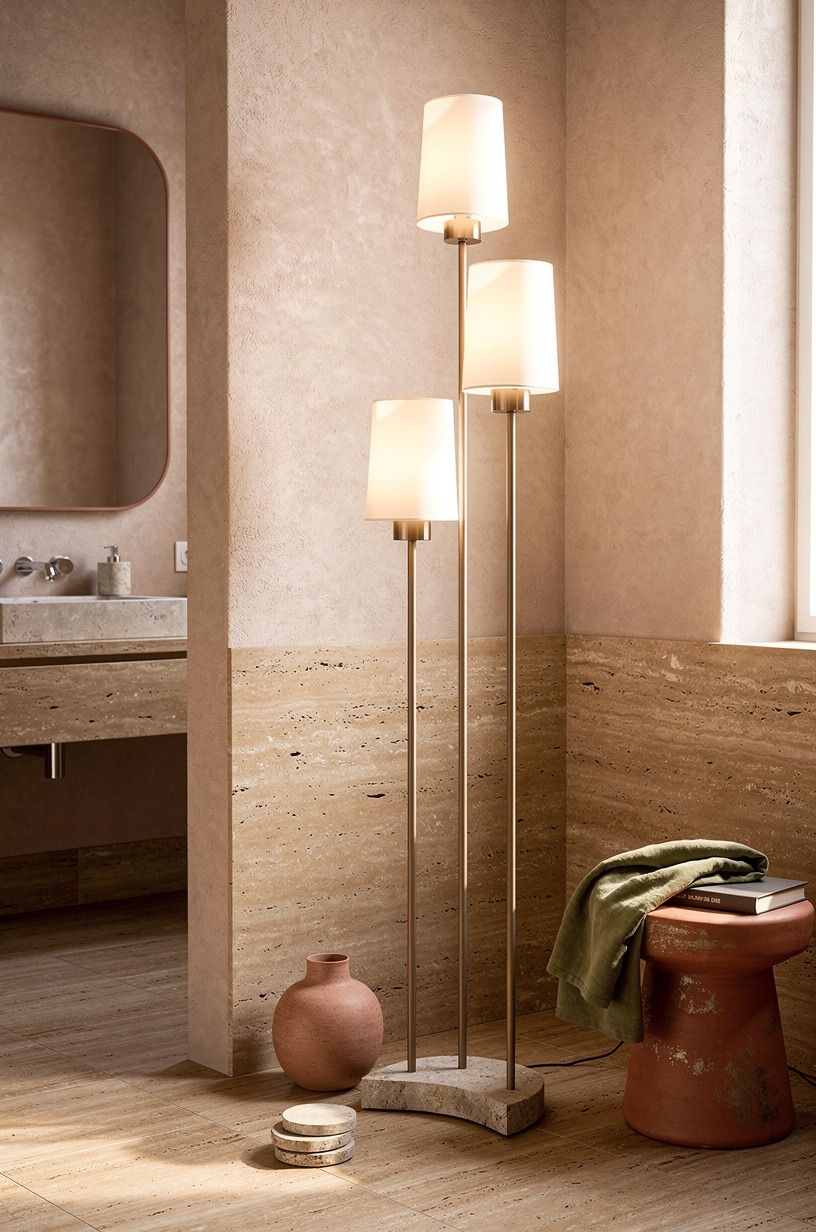
The Three-Height Light Stack means light at face level, ceiling level, and low level. You’ll avoid that flat overhead glare that makes even expensive tile feel clinical.
Use sconces beside the mirror, a small terracotta pendant above, and a low olive glass night light near the vanity toe kick. Let warm travertine carry some of the room’s soft stone texture.
Three sources. Different jobs. The gentle lower glow is especially good when someone gets up before sunrise.
I’d rather install one excellent pair of sconces than buy a decorative chandelier and call it finished. Your face needs practical light; your room needs atmosphere. Both matter.
11Swap a plain niche for a patterned tile jewel box
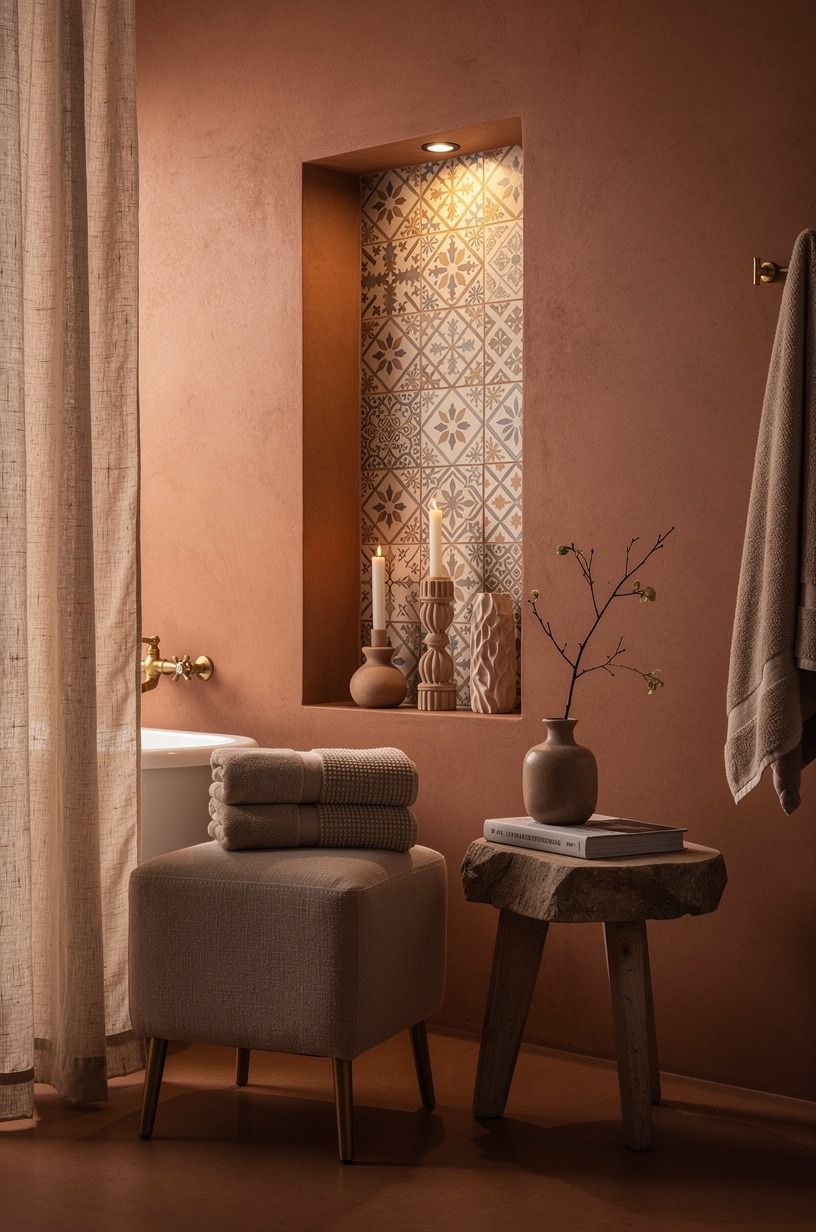
Line your shower niche in a tile that’s louder than the main wall.
12Use an antique rug where you’d normally buy a bath mat
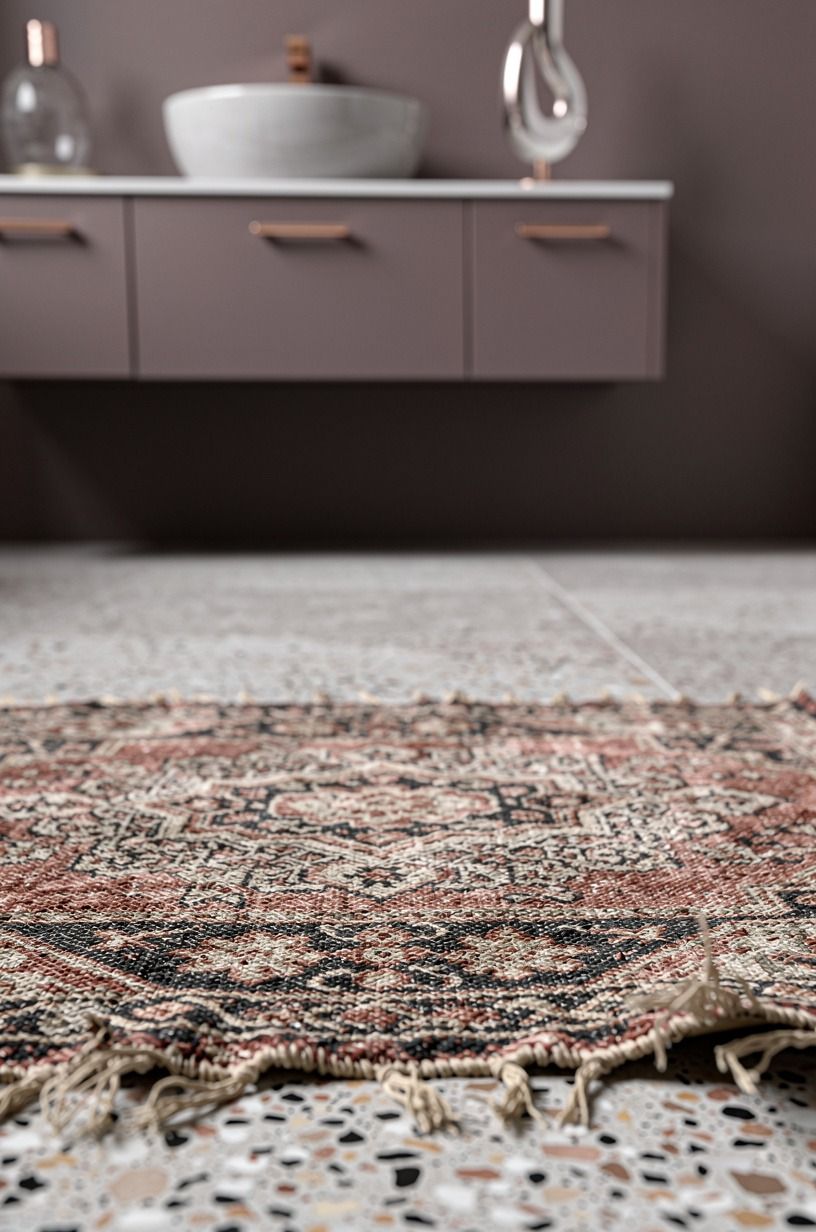
A flatwoven vintage kilim runner in plum, gray, and muted rose brings warmth to an islamic style bathroom without asking you to renovate a thing. It looks lived-in, and your feet get something warmer than oversized-chip terrazzo.
You should use a non-slip pad underneath and choose a washable construction near the sink. I’d skip thick fluffy mats in this look, because they cover the floor pattern and turn the whole setup suburban fast. Slightly blunt, but true.
A runner also helps a long vanity feel connected to the rest of the room. Target Studio McGee bath textiles can fill in with plain towels when the rug is doing the visual work.
13Frame the toilet wall with restrained pattern
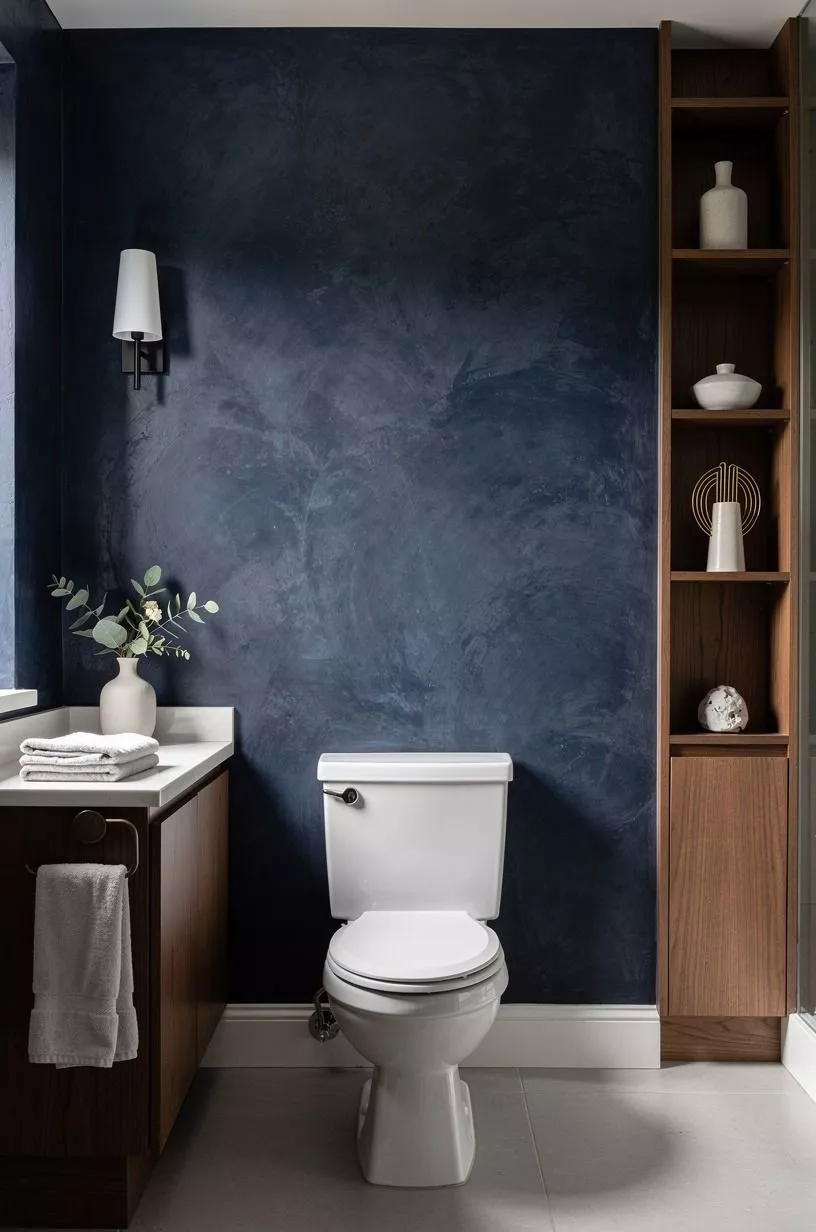
The toilet wall is often ignored, which makes it a smart place for one considered statement. A hand-applied Venetian plaster panel in navy and white behind the tank can make a basic layout feel considered without overwhelming your shower.
Keep at least 21 in clear in front of the toilet. Your bathroom has to work before it photographs well. Use a plain walnut floating shelf above it for folded towels, one lidded jar, and a small trailing plant.
But don’t turn that shelf into a tiny store display. Three things max. You’ll keep the wall serene, and cleaning won’t become a whole event.
Why black and white is the bathroom combo that never fails is a strong reference if you prefer pattern without color.
14Spend your budget where water meets tile
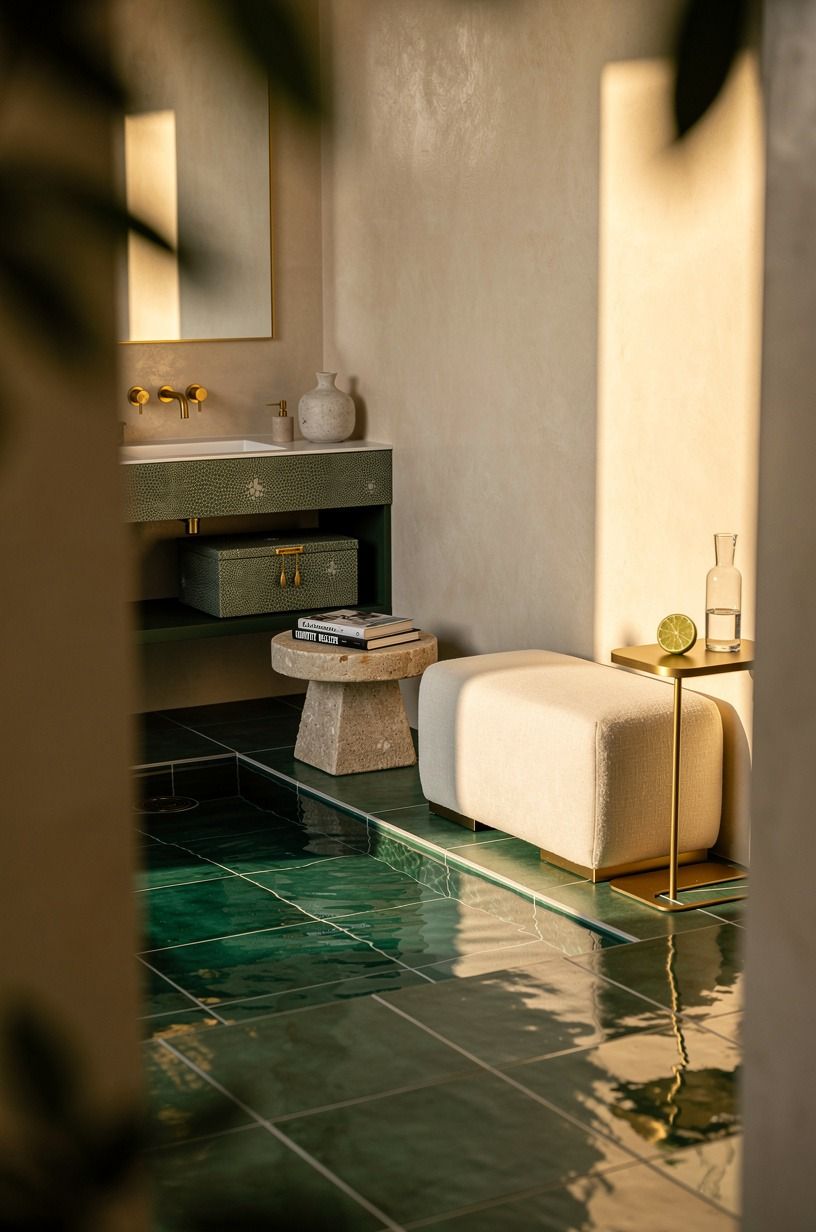
A Moorish bathroom can be a $200 refresh or a $30,000 rebuild, depending on what you touch. You’ll get more visible value from tile, lighting, and a proper faucet than from a trendy accessory haul.
For a budget version, paint the walls, change the mirror, and add Wayfair patterned peel-and-stick floor tiles only if your existing floor is sound. For mid-range, choose a CB2 arched medicine cabinet and tile one wall. High-end work is where plumbing moves, and that’s the cost I wouldn’t underestimate.
15Let one bold color win over five small accents
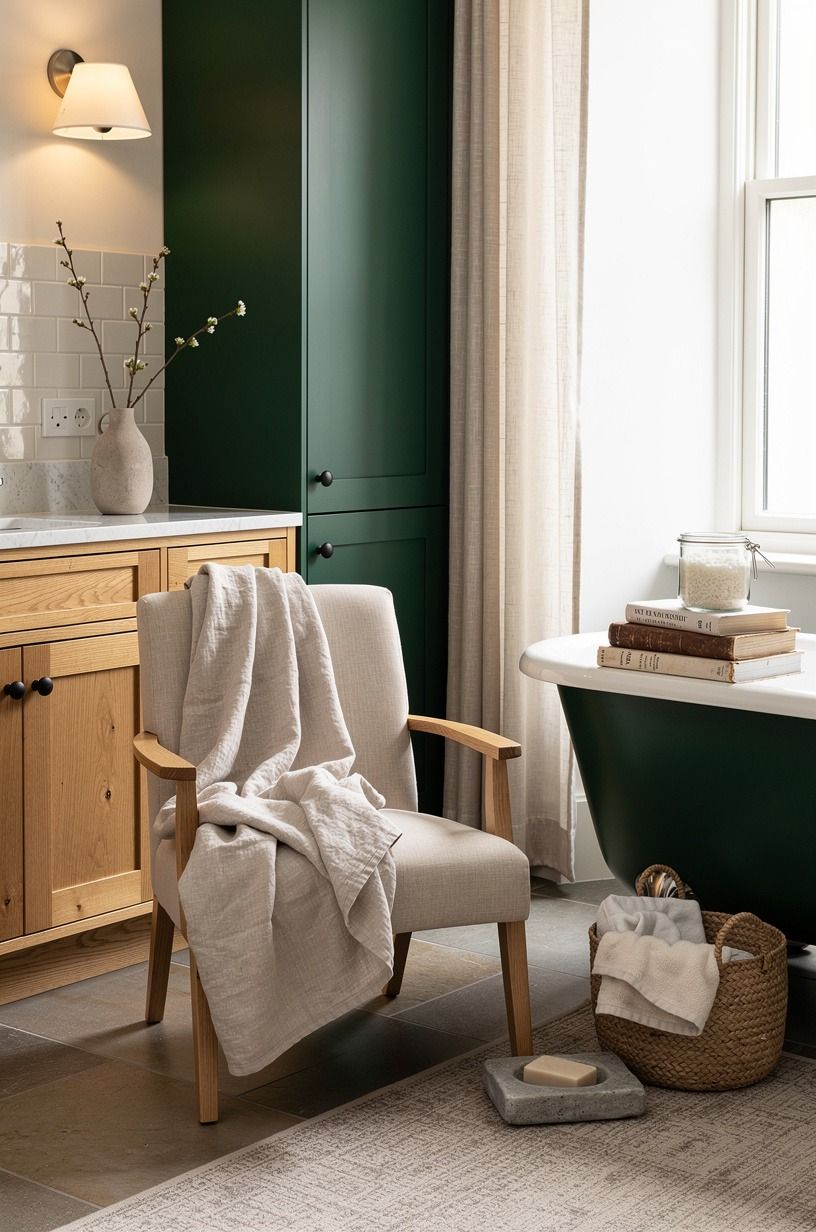
Pick one dominant color, then repeat it in tile, a towel stripe, and one piece of art. Farrow & Ball Studio Green is my choice for a room with rust and natural oak, because it has enough depth to keep the palette from feeling sugary.
You’ll get a more harmonious room if your secondary colors stay earthy: rust, warm cream, natural oak. Washed Belgian linen can soften those harder finishes without demanding another color.
I’d skip bright turquoise, magenta, gold, and cobalt all at once. Each is lovely alone.
Together, they start yelling. Your bathroom should feel luxurious, not like a theme restaurant.
Why I Think This Style Needs Restraint
I love Moorish and Arabic influences in bathrooms because they make a practical room feel gathered rather than sterile. Tile becomes more than a wipeable surface. It catches steam, throws back lamp light, and gives your morning routine a little ceremony.
But I don’t think copying every reference photo is the answer. The best rooms borrow a vocabulary, then speak it in their own accent.
I learned that after trying to force a patterned floor, a tiled arch, carved cabinetry, a lantern, and three competing metals into one small bath. It looked impressive in pieces. Together, it was exhausting.
I kept buying accessories because the room felt unfinished, when the real problem was that nothing had been allowed to be quiet. You may know that feeling: one more basket, one more tray, one more thing that promises to fix the mood.
Now I use a tighter rule. Choose your main gesture first: floor, arch, shower wall, or vanity.
Then give it supporting materials with different textures but fewer colors. Glossy zellige beside matte plaster.
A heavy wood mirror beside a thin brass sconce. Soft towels against a hard stone threshold.
That friction is what makes the room feel human.
And I’m firmly against treating every old-world reference as ornate. There’s real power in a plain wall painted Chestertown Buff beside one patterned tile panel.
It lets the craft show. Your bathroom doesn’t need to perform at every inch.
It just needs one part that makes you pause, even while you’re late.
A Few Things Worth Answering
What is the best Moorish & Arabic Bathroom Ideas for Intricate, Tiled Beauty for a small bathroom?
A tiled shower niche and arched IKEA HEMNES mirror are the best small-space picks because they add character without stealing floor area. You’ll get a clear focal point while keeping the walls and circulation open.
Where can I buy Moorish & Arabic Bathroom Ideas for Intricate, Tiled Beauty pieces on a budget?
Look at IKEA, Target, and Wayfair for mirrors, towels, and removable tile options. You can also search Facebook Marketplace or thrift stores for brass trays and wood stools. Your best value is one real vintage piece, not a cart full of matching decor.
How much does a Moorish & Arabic Bathroom Ideas for Intricate, Tiled Beauty makeover cost?
A cosmetic refresh typically runs about $200 to $1,200, while a tiled vanity wall and new lighting can reach $3,000 to $9,000. You can paint, rearrange textiles, and remove clutter for free. That’s a meaningful change without plumbing work.
Can I create a Moorish & Arabic Bathroom Ideas for Intricate, Tiled Beauty on a budget?
Yes, and you should start with paint, textiles, and one patterned surface. Removable floor tile, a thrifted brass mirror, and deep-colored towels can shift the room for far less than a new vanity. You don’t need a full demolition.
Is a Moorish & Arabic Bathroom Ideas for Intricate, Tiled Beauty worth it in a small space?
Yes, it’s worth it because a smaller room lets you use a bolder finish in less square footage. Put your pattern on one wall or underfoot, then keep your storage slim. You’ll get more impact per square foot.
Is Moorish & Arabic Bathroom Ideas for Intricate, Tiled Beauty a good idea for a rental?
Yes, if you use reversible layers. Try peel-and-stick tile, a tension rod with linen curtains, and removable wallpaper inside a dry vanity nook. Your lease stays protected, but the room can still feel warm and personal.
Why Moroccan tile belongs in your next bathroom is a useful next read if you’re choosing between printed and handmade finishes.
Where I’d Start First
If I had to pick one, I’d start with the tiled arch. It gives even a plain vanity wall a real destination, while loose accessories just collect dust. Pin the tiled arch for later and read why navy works in bathrooms before choosing paint.