Blue farmhouse bathrooms work best when paint, wood, metal, and textiles share the same visual temperature. A few hundred dollars can shift the room dramatically, and a full renovation isn’t required. The strongest results pair one confident blue with warm natural texture. Your bathroom can feel charming, calm, and lived-in without losing function!
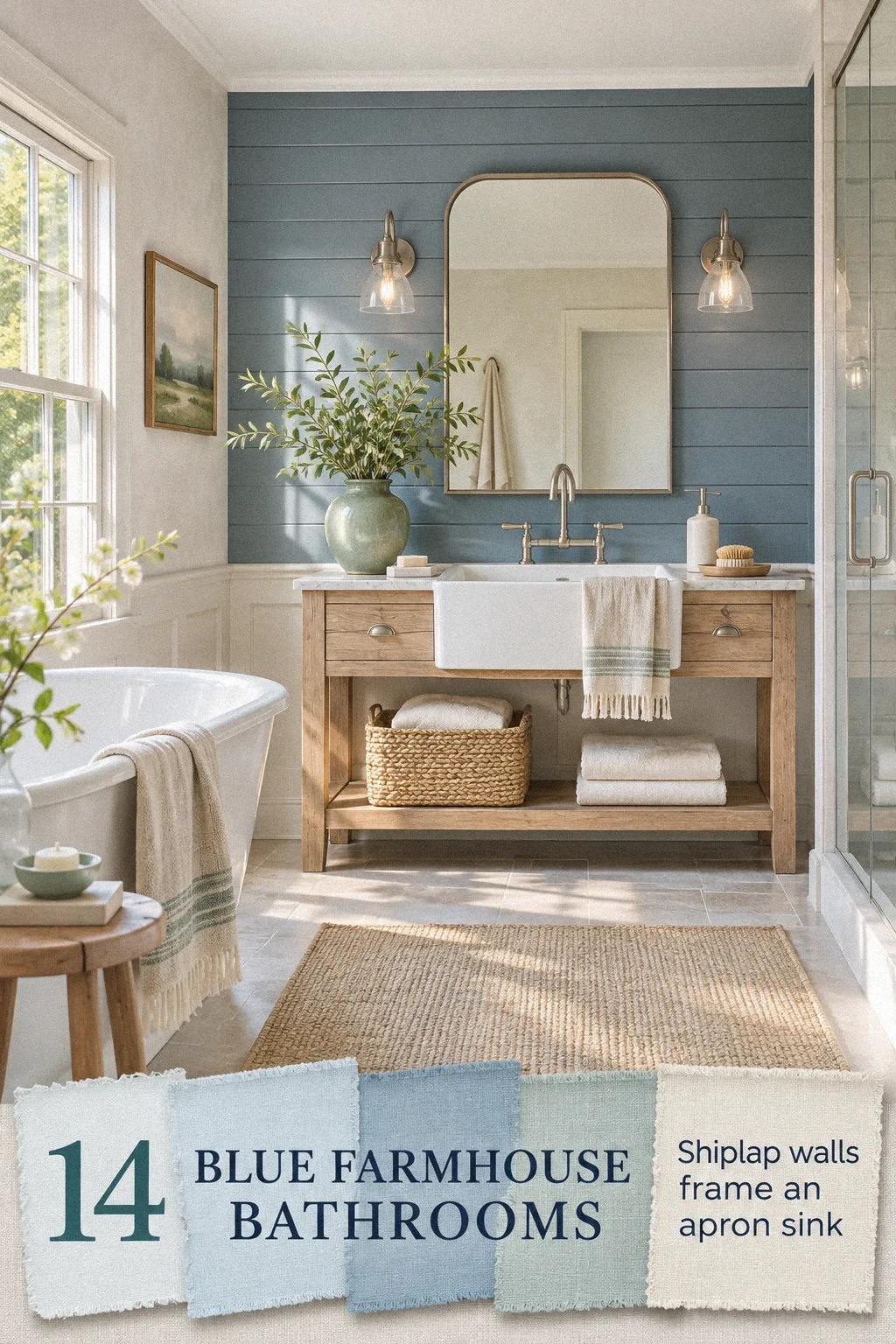
- Paint the Beadboard Slate Blue with the Two-Tone Farmhouse Base
- Install a White Chair Rail Above Blue Walls
- Frame the Tub with the Walnut Frame Rule
- Hang a Weathered Mirror Above the Sink
- Install a Vessel Sink on a Farmhouse Cabinet
- Paper the Ceiling Powder Blue
- Tile the Shower in Blue Zellige with the Zellige Rhythm Rule
- Add Blue-and-White Gingham Curtains
- Swap Cabinet Pulls for Aged Brass
- Display Towels on a Rustic Ladder
- Build a Coastal Landscape Gallery
- Seal the Floor with Hexagonal Tile
- Can White Shutters Keep the Blue Palette Light?
- Hang a Blue Porcelain Sconce with the Porcelain Glow Rule
1Paint the Beadboard Slate Blue with the Two-Tone Farmhouse Base
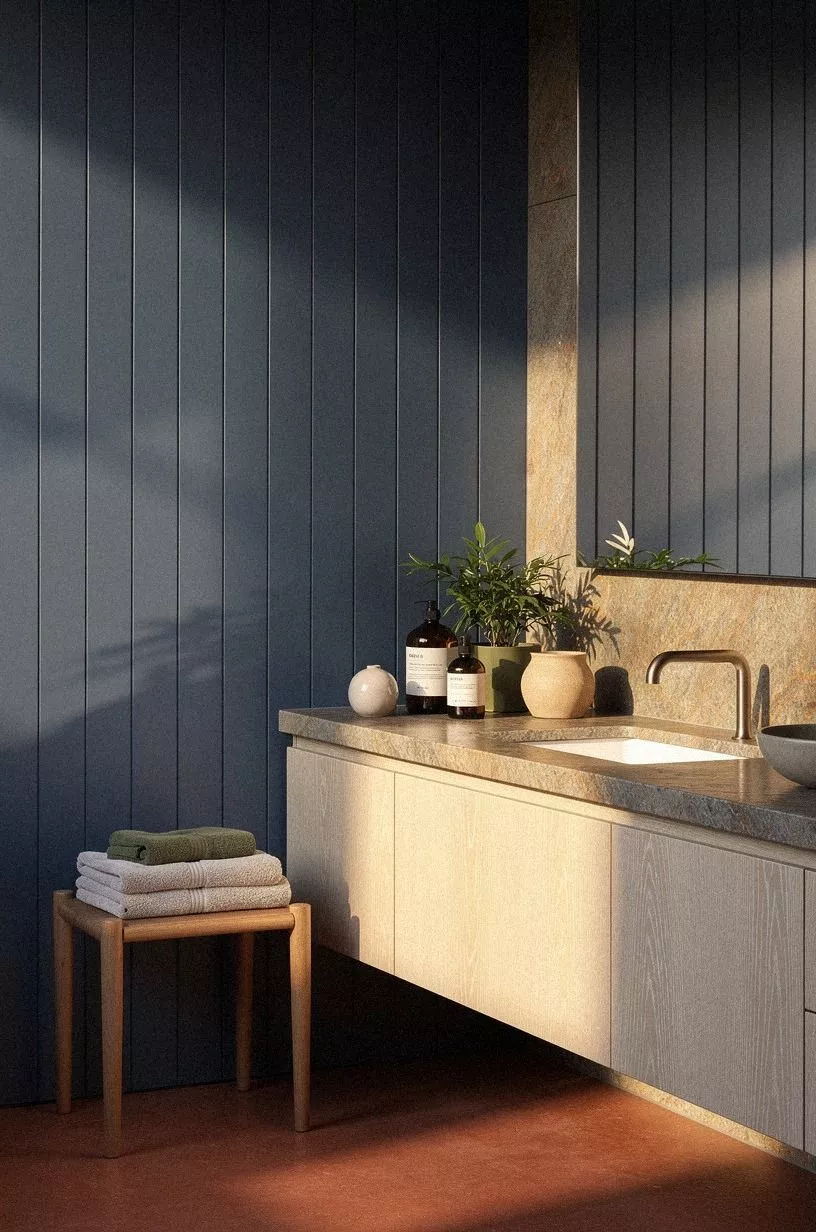
Slate-blue beadboard gives your bathroom a grounded country feel while keeping the upper walls light. Choose a matte finish so the wood texture stays visible instead of reflecting every bulb. Farrow & Ball Hague Blue No.30 works especially well with terracotta accessories, olive greenery, and cerused white oak.
Keep the blue below chair-rail height if your room is narrow. Your eye will read the pale upper wall as extra breathing space, while the darker lower half brings weight near the floor. A 32 to 36 in vanity height will sit comfortably against this treatment.
Use cerused white oak for a stool, framed print, or shallow shelf. The pale grain breaks up the blue without making the room feel cold. If you’re choosing between glossy navy paint and matte slate, choose matte slate because the finish looks more architectural and less themed.
For another direction, compare this palette with these dusty blue bathroom palette ideas. Your room doesn’t need several blues; one carefully chosen shade will carry the whole scheme.
2Install a White Chair Rail Above Blue Walls
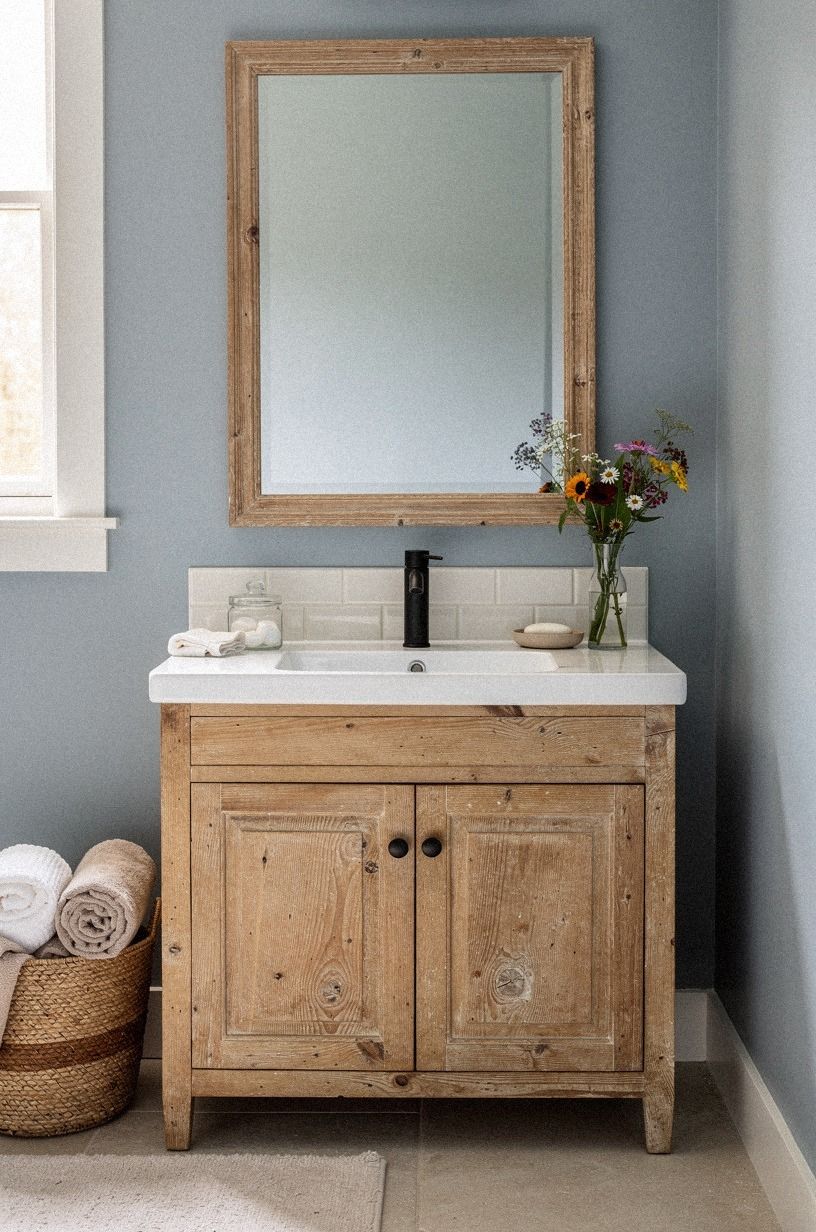
A crisp white chair rail creates the clean horizontal line that makes blue walls feel intentional. Below it, use a muted blue with clay, linen, and aged brass accents. Above it, keep the wall warm white so your bathroom still feels bright on cloudy mornings.
The most convincing version uses Benjamin Moore White Dove OC-17 on the trim rather than a stark refrigerator white. Your eye will notice the softer contrast, especially beside translucent onyx or a cream ceramic basin. If you’re styling a rental, a lightweight picture ledge can create a similar line without permanent carpentry.
Keep the rail slim. A bulky profile can make the wall feel shorter, while a simple 2 to 3 in molding keeps the detail refined. Add aged brass hooks below the line, then repeat the metal once near the mirror so the bathroom feels collected rather than decorated in one afternoon.
Don’t cover every surface with accessories. The blue wall needs quiet space around the rail, and you’ll get more charm from one framed botanical print than from five small signs. The result suits a farmhouse powder room with lived-in details especially well!
3Frame the Tub with the Walnut Frame Rule
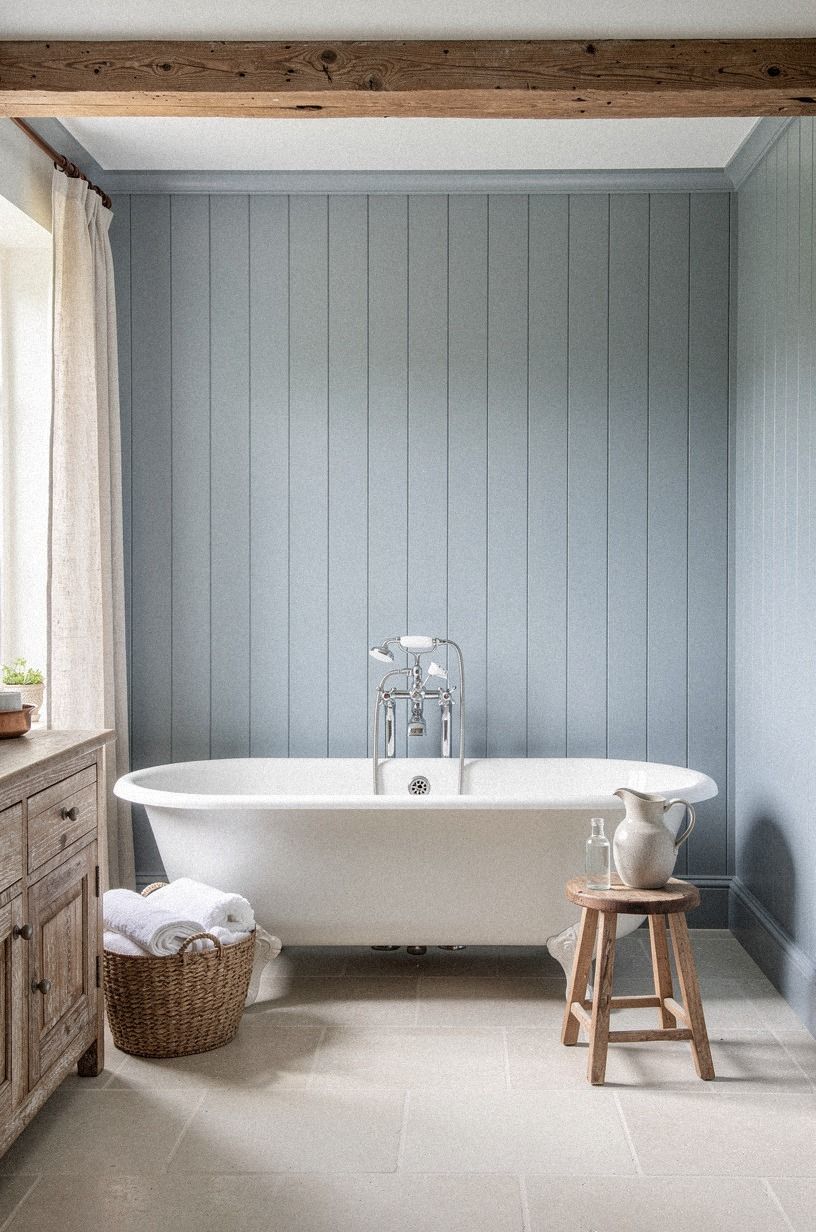
A wood tub apron can make a standard white bathtub look like a piece of furniture. Use book-matched walnut veneer or narrow walnut boards, then pair the rich brown with plum, gray, and rose-gold accents. Book-matched walnut gives the surface enough movement to stand beside a deep blue wall.
The tub still needs practical protection from splashes. Use a bathroom-rated finish, leave ventilation at the base, and keep the wood clear of standing water. A standard tub measures 60 by 30 in, so the apron should follow the existing footprint without stealing clearance from the walkway.
If you’re tempted to use orange pine, skip it. The warm orange cast competes with blue and can make the bathroom look busy. Walnut has a quieter depth, especially beside rose-gold hardware and a gray woven bath mat.
Keep the rest of the fixtures restrained. One ceramic vessel, a folded linen towel, and a low stool are enough. The eye will land on the tub surround, which is exactly what this upgrade should do.
4Hang a Weathered Mirror Above the Sink
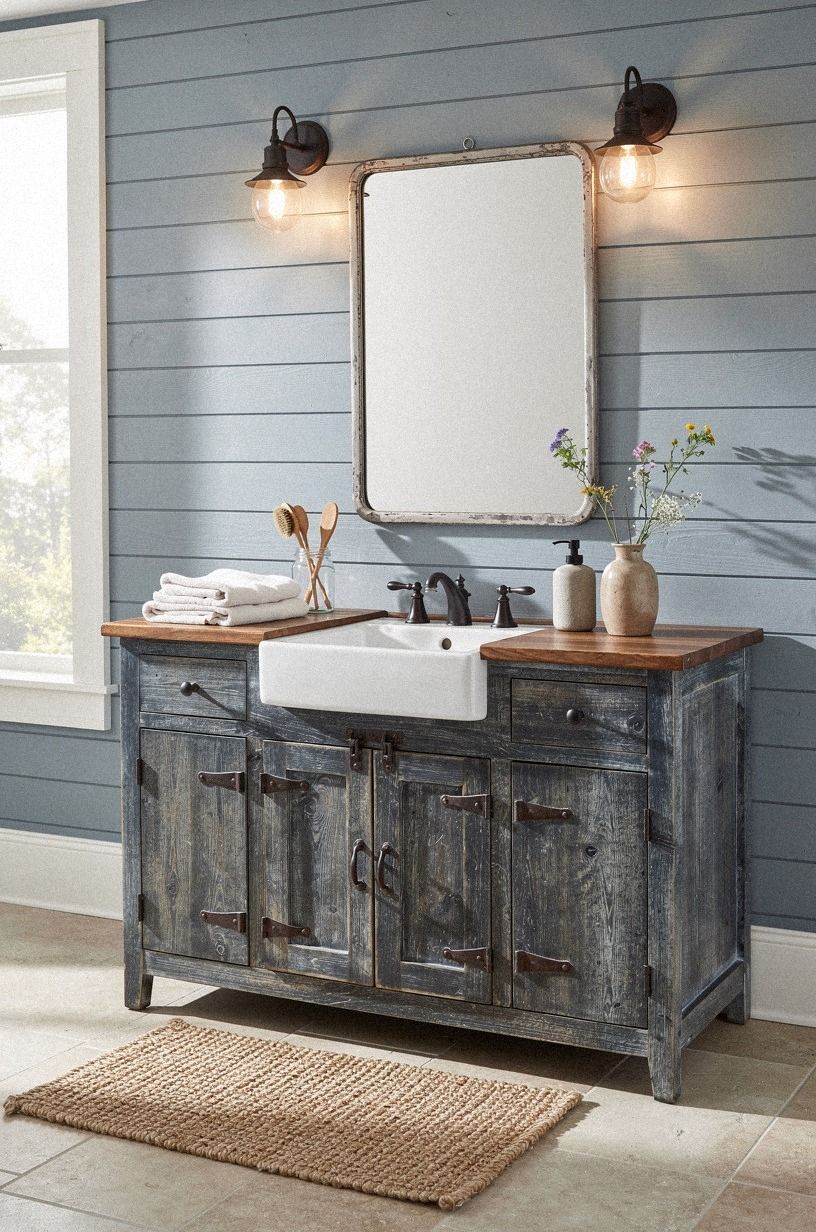
A patinated mirror softens the straight lines of a farmhouse vanity and brings navy, white, and walnut into one view. Look for a thin weathered frame with rubbed edges rather than a heavily distressed finish. Warm travertine nearby will echo the uneven surface and keep the room from feeling overly polished.
Hang the mirror so the bottom sits several inches above the faucet, with enough room for the fixture to remain visually clear. A round or softly arched shape works well against square wall paneling. If you’re using a wide vanity, choose a mirror that leaves visible wall on both sides.
The best frame has variation. A flat black frame can feel sharper, while weathered wood gives the bathroom more age and texture. The navy paint can stay moody because the mirror introduces a lighter, irregular surface.
Don’t pair a heavily ornate mirror with carved furniture. The combination can push the room toward costume. Choose one aged detail, then let navy painted walls and clean white fixtures keep the composition fresh.
5Install a Vessel Sink on a Farmhouse Cabinet
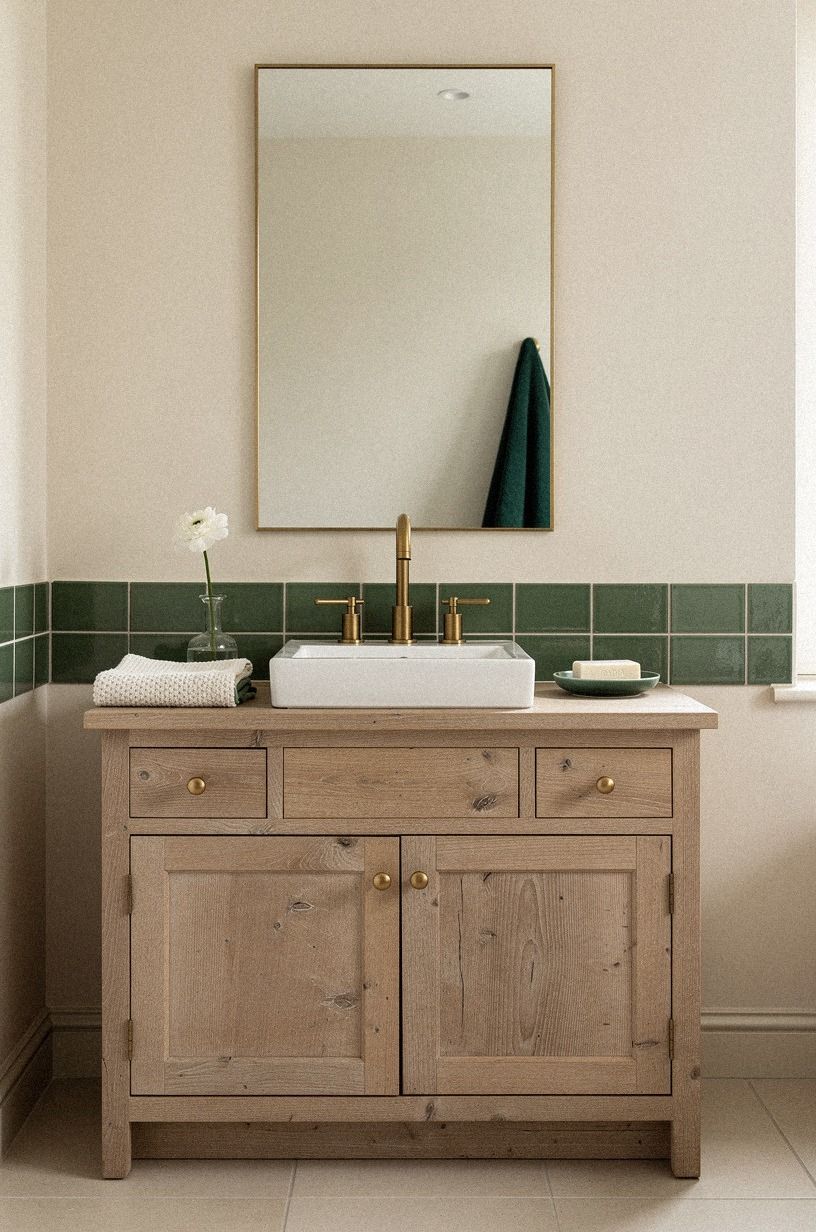
A vessel sink on a furniture-style cabinet makes a bathroom feel less builder-grade. Choose a cream basin, an emerald accent, and a warm metal faucet with a surface that can develop patina. Unlacquered brass is the better choice here because small color changes make the fixture feel more personal over time.
The cabinet should support the basin without making the counter too high. Vanity height typically falls between 32 and 36 in, so measure the vessel before fixing the cabinet in place. A tall bowl can push the finished surface beyond a comfortable washing height.
Use a simple cabinet with recessed panels or visible legs. The furniture should read as a farmhouse piece rather than a kitchen island. Emerald green ceramic can appear in a soap dish or small planter, but too much green will compete with the blue walls.
If you’re comparing a floating vanity with a furniture base, choose the furniture base for this look. The visible legs create a lighter shadow line and allow the floor to remain part of the design. The bathroom will feel warmer without adding another major color.
6Paper the Ceiling Powder Blue
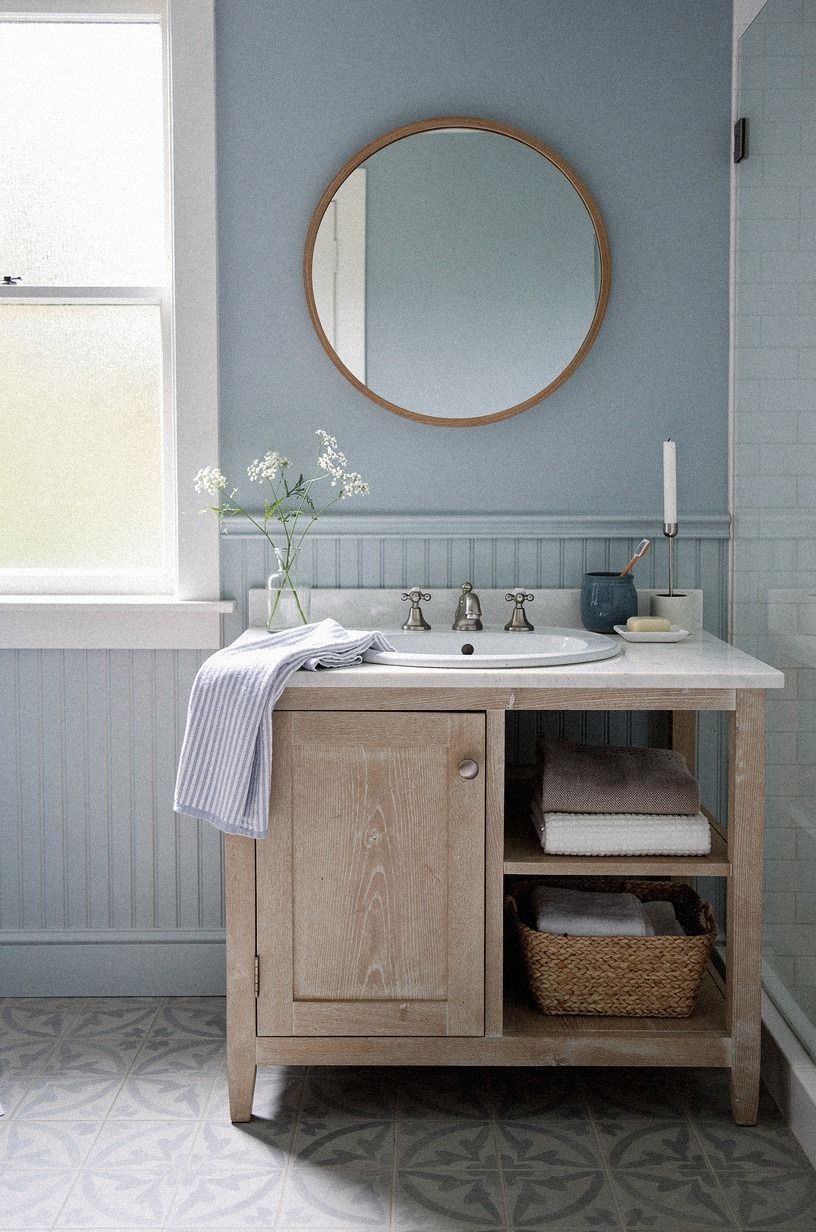
A powder-blue ceiling adds a gentle wash of color above forest green walls, rust textiles, and natural oak. Choose a small-scale paper or painted finish that disappears slightly from the doorway. Sherwin-Williams Sea Salt SW 6204 can work as a soft reference when a blue-green ceiling feels more suitable than a sugary blue.
The ceiling treatment should support the room rather than become a fifth wall. Keep the pattern small if the bathroom has low height, and repeat one ceiling color in a hand towel or framed print. The connection will feel subtle, especially beside oversized-chip terrazzo.
Don’t use a high-contrast stripe overhead. It can visually lower the ceiling and make the bathroom feel compressed. A quiet geometric pattern or brushed texture gives the same character with less visual noise.
Pair the ceiling with natural oak shelving and rust-colored cotton towels. Your eye will travel upward, then return to the warmer materials below. This approach works particularly well when the floor already has a strong pattern.
7Tile the Shower in Blue Zellige with the Zellige Rhythm Rule
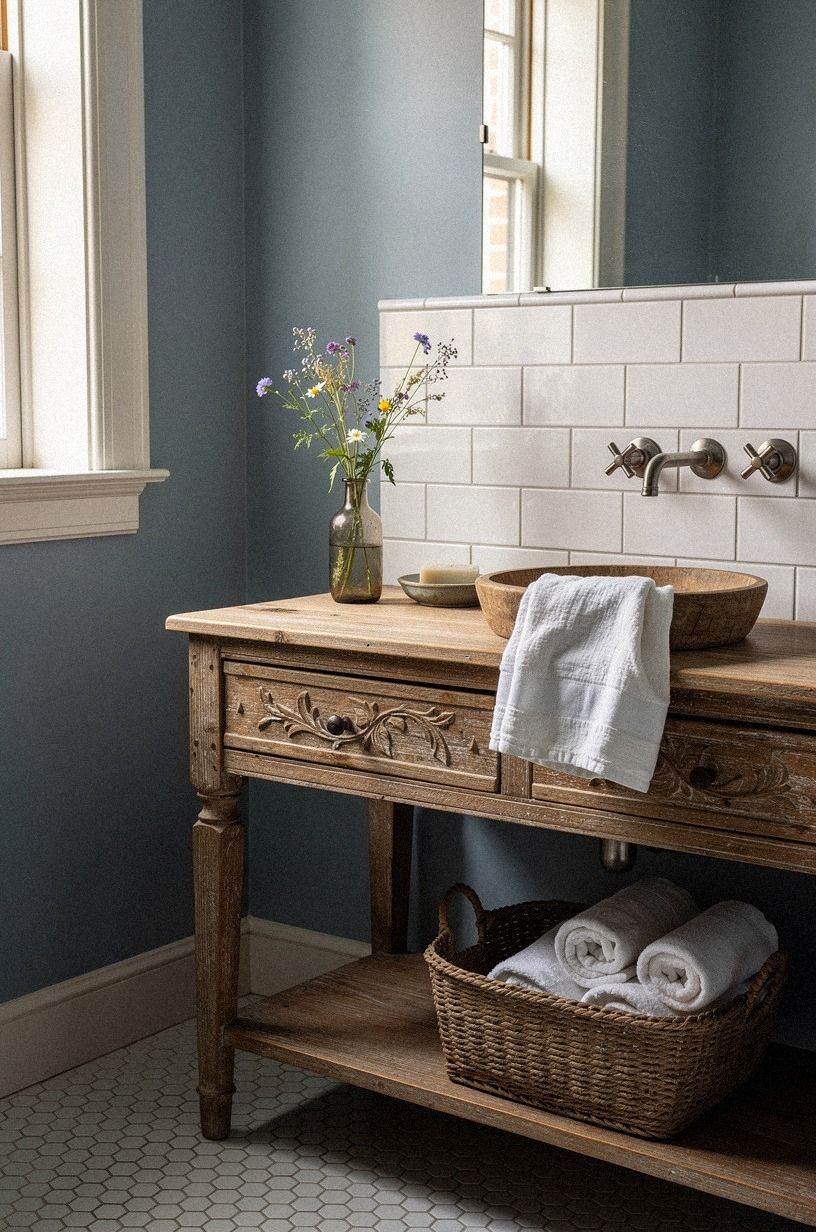
Hand-applied blue zellige tile gives the shower a watery surface with irregular edges, soft color shifts, and tiny flashes of glaze. The variation works beautifully with dusty rose, charcoal, and brass. Hand-applied Venetian plaster outside the shower can echo the tile’s movement without repeating its exact texture.
Use the tile as a focused field rather than wrapping every bathroom wall. A shower with a 36 by 36 in minimum comfortable footprint gives the surface enough room to read as a feature.
Grout choice matters too. A close blue-gray grout keeps the effect calm, while bright white can make every uneven edge shout.
Why settle for flat subway tile when the shower is the room’s most tactile surface? Choose zellige when a more handcrafted result feels right, but plan for uneven alignment and a slower installation. The contractor should understand that variation is part of the material.
Keep aged brass fixtures simple. One rainfall head, one control set, and a recessed niche will look more considered than several decorative pieces. The shower needs air around the tile so the blue remains the star!
Use this idea beside a blue-green bathroom color pairing when a softer transition between wall and tile is needed.
8Add Blue-and-White Gingham Curtains
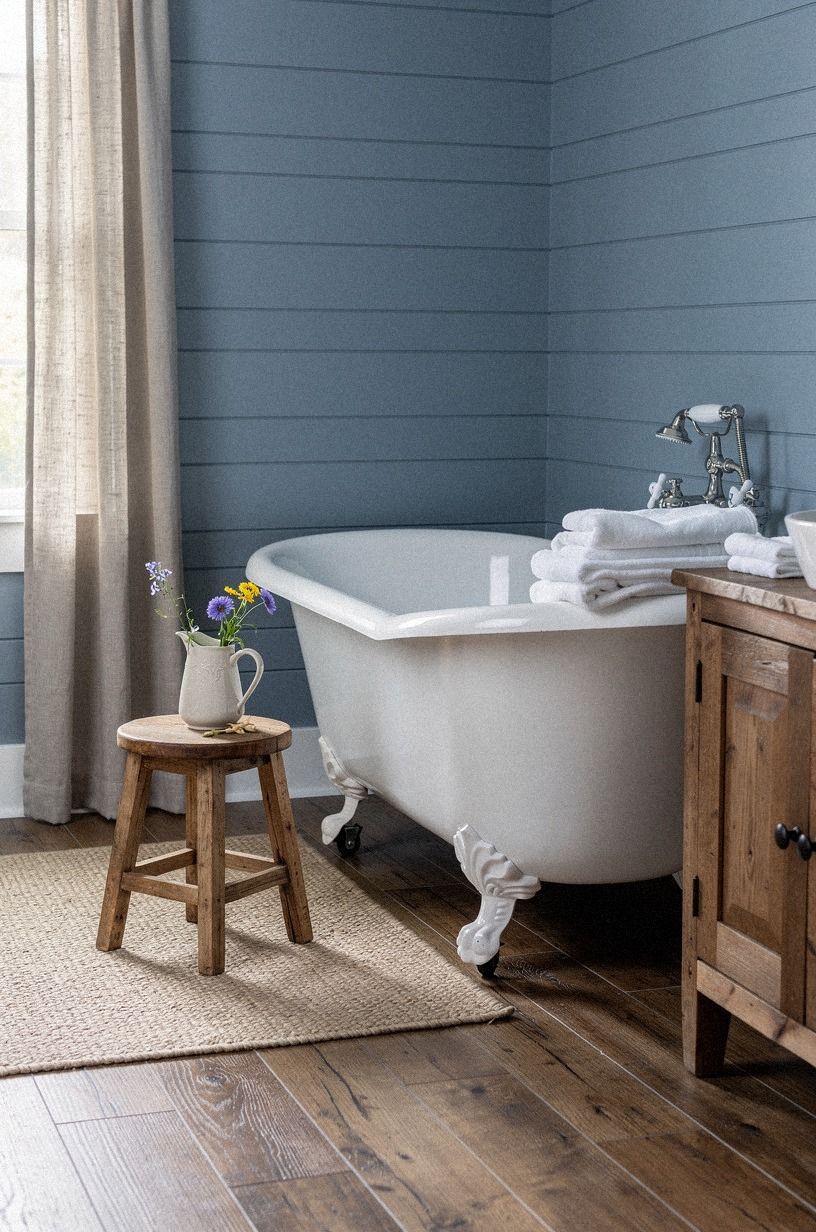
Blue-and-white gingham curtains bring cottage warmth to a bathroom window without demanding a complete color change. Use washable cotton or a cotton-linen blend, then pair the pattern with warm white walls, camel accents, and small black details. A small shagreen accent nearby can add tactile contrast without making the fabric look too crisp.
The curtain rod should sit slightly wider than the window so the fabric can stack outside the glass. A tension rod makes the idea rental-friendly, while simple café curtains preserve daylight and privacy. Keep the checks medium-sized; tiny checks can look busy beside tile.
A camel leather stool or woven basket adds a dry, earthy note. Black accents can stay limited to the rod, a framed print, or a small sconce. If you’re choosing between gingham and floral fabric, gingham is the stronger option because it gives the room pattern without turning the bathroom sugary.
Use shagreen accents sparingly, perhaps on a tray or small box. The texture adds polish, but too much will compete with the farmhouse cotton. The window should feel relaxed rather than staged.
For a smaller room, borrow layout ideas from these cottage half bathroom ideas. A short curtain can make the window feel wider and the ceiling feel taller.
9Swap Cabinet Pulls for Aged Brass
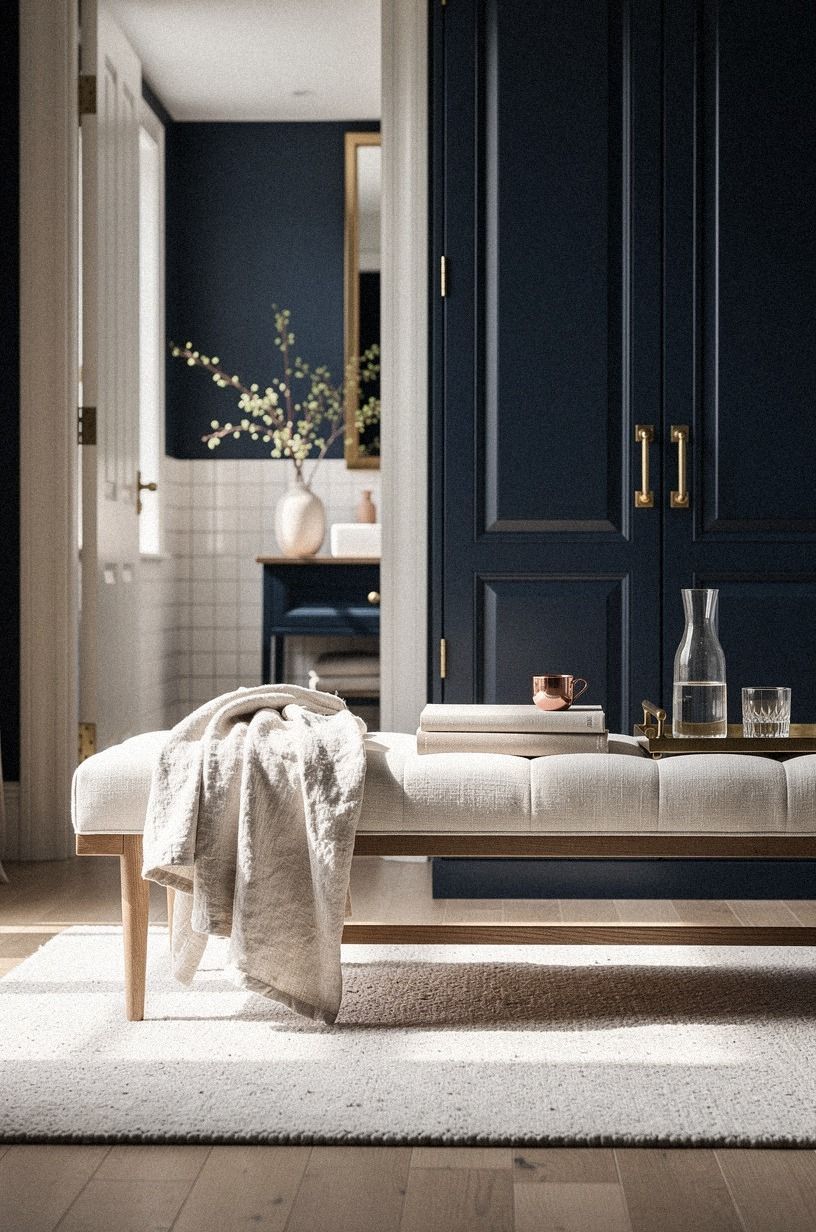
Changing cabinet pulls is one of the quickest ways to move a bathroom toward blue farmhouse style. Select aged brass with a muted surface, then pair it with midnight blue paint, copper accents, and ivory textiles. Aged brass cup pulls look especially convincing on painted drawers because the shape adds a small furniture reference.
Existing holes determine the easiest replacement. Measure the center-to-center distance before shopping, and choose knobs when the spacing doesn’t match common bar sizes. The update can stay inexpensive because the visual impact comes from repetition across several drawers.
Don’t combine bright polished brass with copper in the same small bathroom. The two metals can compete under warm bulbs. A better option is muted brass as the main finish, with copper appearing once in a frame, tray, or vessel.
Pair the hardware with washed Belgian linen towels and a simple ivory runner. The bathroom will feel layered without needing new cabinetry. If you’re updating a rental, removable adhesive pulls can provide a temporary test before any permanent change.
10Display Towels on a Rustic Ladder
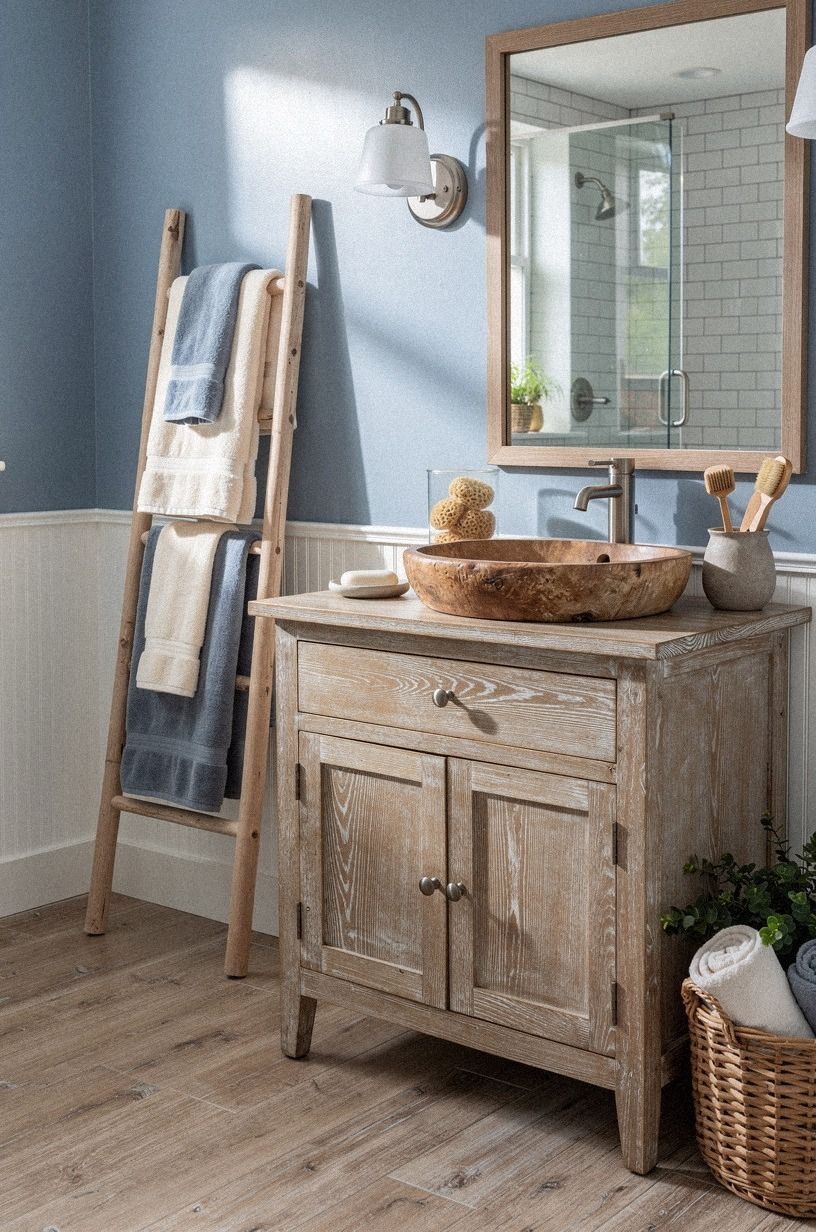
A rustic ladder gives the bathroom vertical storage while keeping folded textiles visible. Choose weathered oak or reclaimed pine, then lean it safely against a wall away from direct splash. Organic bouclé towels add softness beside sage green, warm cream, and natural wood.
The ladder should remain narrow enough to preserve the walkway. Hang one large bath towel, one hand towel, and a smaller washcloth, with space between each layer for air circulation. A crowded ladder will look like overflow storage rather than a planned feature.
The Three-Tier Towel Ladder works because the eye reads the arrangement from top to bottom. Keep the lightest textile near the top, the largest one in the middle, and a small folded cloth at the bottom. If you’re styling a guest bathroom, a small basket beside the ladder can hold extra rolls.
Skip shiny chrome hooks on the ladder. Natural wood grain already supplies warmth, so black iron or aged brass hardware will look more grounded. The towels should be easy to reach rather than merely decorative.
11Build a Coastal Landscape Gallery
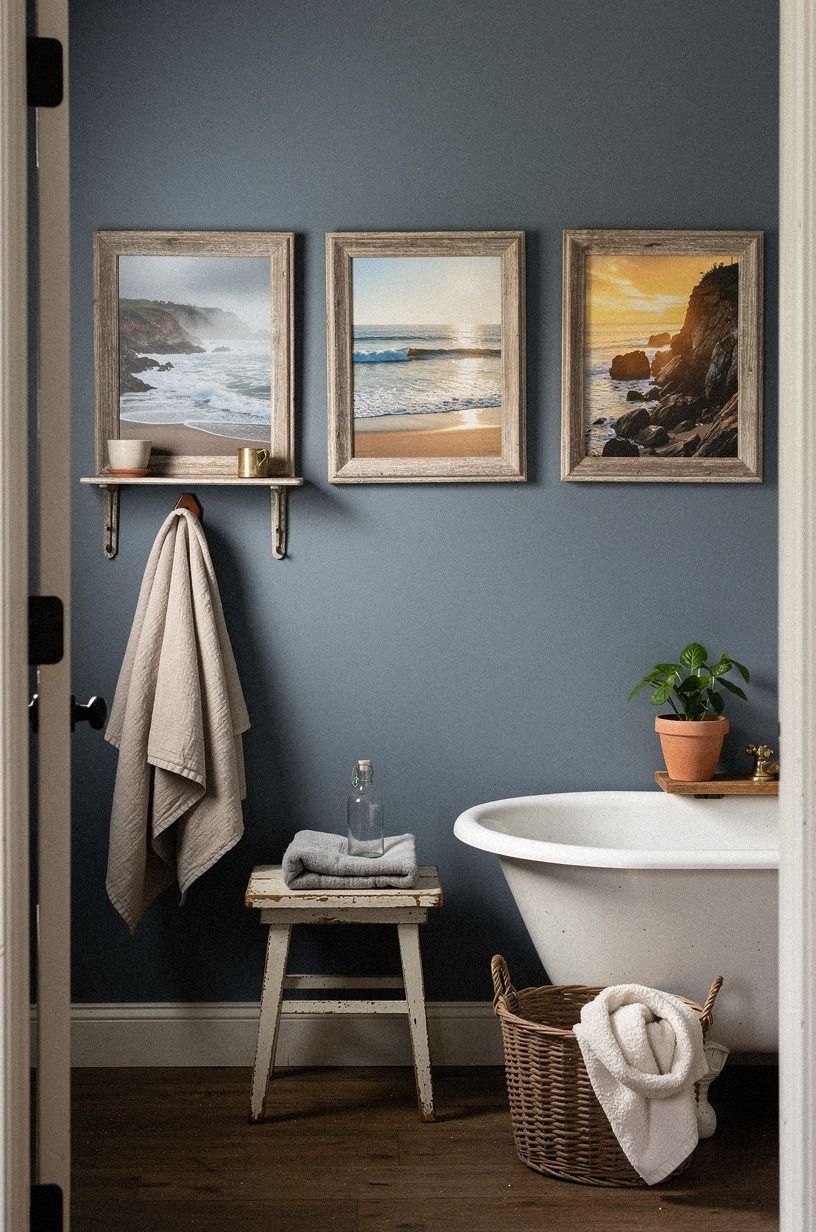
A gallery of coastal landscapes gives blue farmhouse bathrooms a sense of place without relying on obvious nautical signs. Choose small paintings or prints with terracotta, olive, stone, and muted blue. Nero Marquina black marble with white veining can appear in a narrow shelf or soap tray to add a sharp note beneath the softer artwork.
Frames should share one visual link. Try thin oak, aged brass, or dark wood, then vary the artwork sizes. A group of three to five pieces can fill the wall beside a vanity without overwhelming a small bathroom.
Keep the lowest frame above splash height.
If you’re tempted to use shells, ropes, and anchors together, stop at one coastal reference. The room will feel more sophisticated when the landscape carries the theme. A muted horizon, a weathered boat, or a salt-marsh study says enough.
Use olive-toned ceramic for a small vase or toothbrush cup. The gallery will then connect to the room’s accessories without matching every color exactly. For a broader European mood, pair the artwork with whitewashed coastal village details and restrained hardware.
12Seal the Floor with Hexagonal Tile
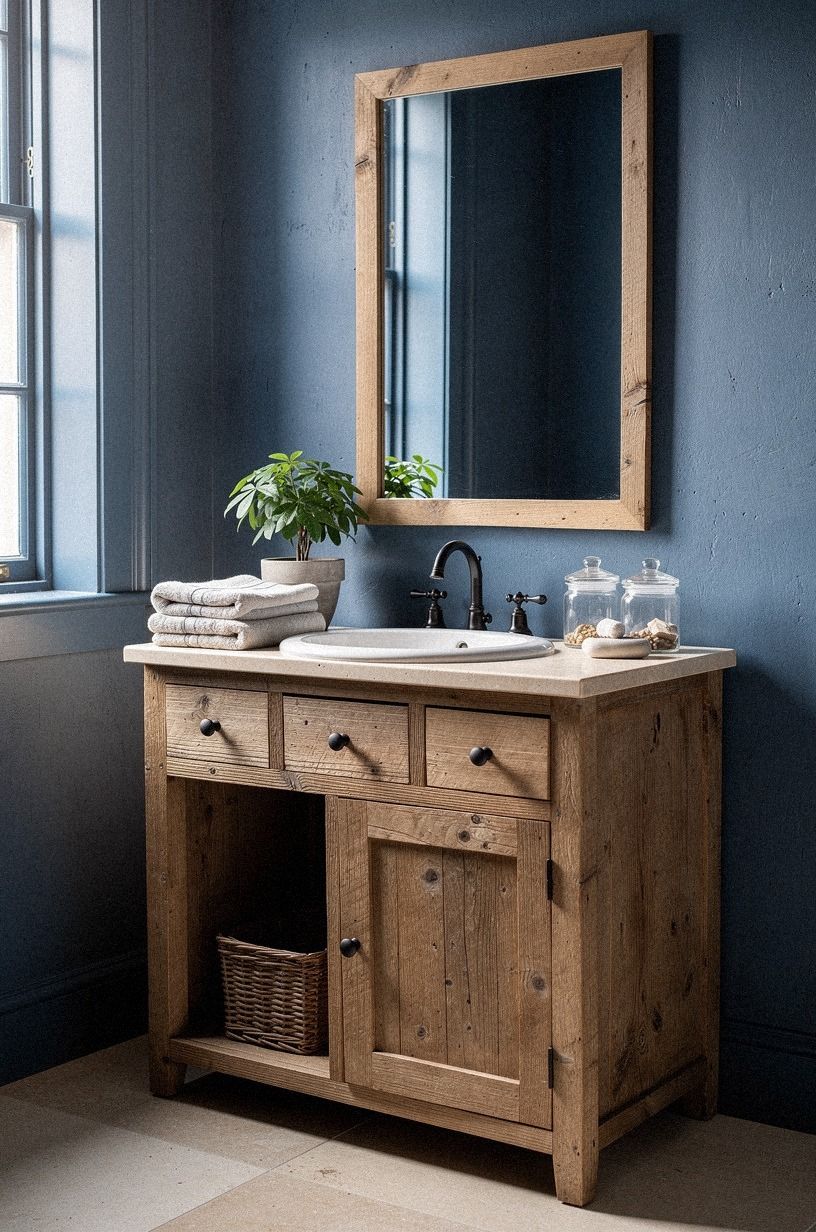
Hexagonal floor tile gives a blue farmhouse bathroom a patterned foundation, especially when the walls use clay, linen, and aged brass. Choose a matte surface with moderate variation rather than a glossy finish. Deep-pile mohair velvet can appear in a small stool cushion or window seat, adding softness above the harder floor.
The tile layout should respect the bathroom’s scale. Smaller hexagons create more grout lines and a busier effect, while larger shapes feel calmer. Use a warm gray grout if the walls are creamy, then repeat that gray in a towel or framed print.
A sealed floor is especially important near the tub and vanity. Follow the material manufacturer’s care instructions, and check that the tile surface provides suitable wet-area traction. The bathroom needs beauty that can handle daily use.
Don’t pair an elaborate floor with elaborate wall tile. Matte clay-toned hexagons are enough of a statement, so keep the shower walls quieter. The eye will move across the floor and then rise toward the blue cabinetry.
For a more layered old-world direction, compare this treatment with Tuscan bathroom material ideas. The strongest connection is texture rather than identical color.
13Can White Shutters Keep the Blue Palette Light?
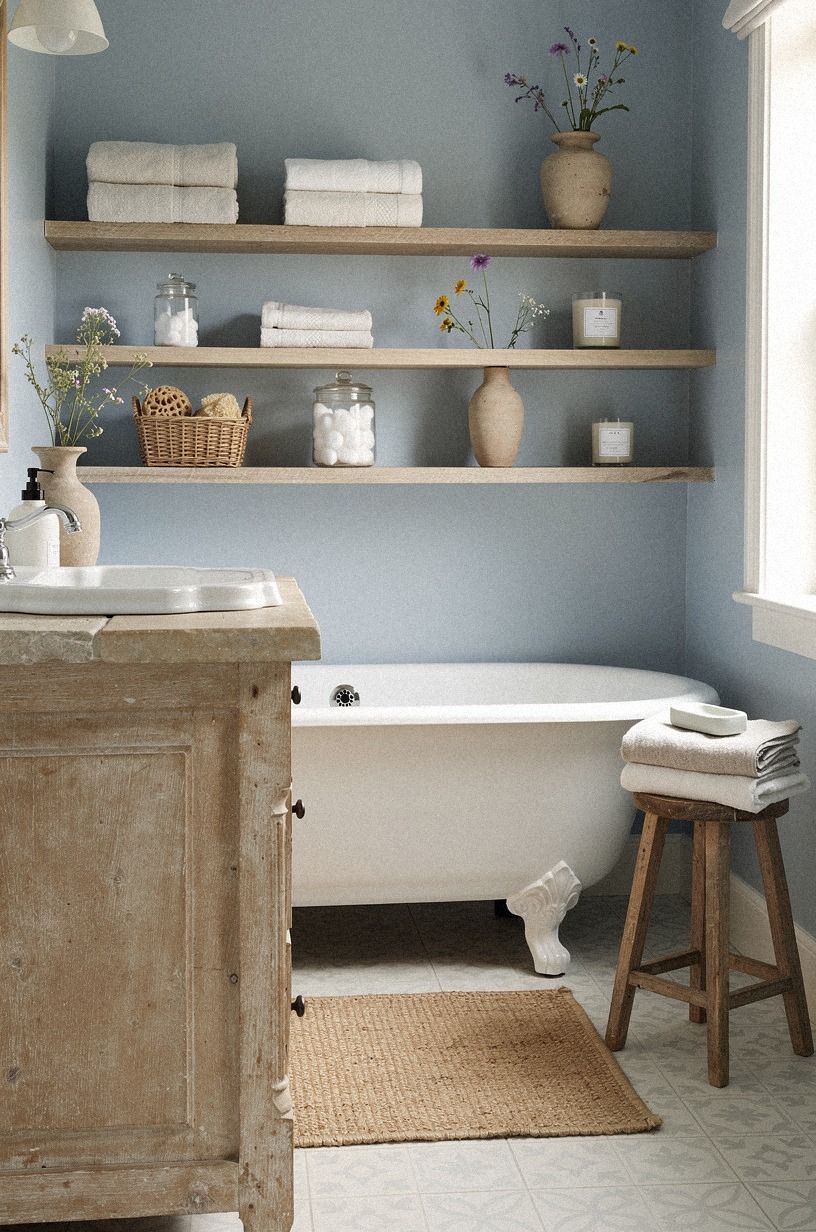
White louvered shutters frame a bathroom window while keeping the plum, gray, and rose-gold palette controlled.
14Hang a Blue Porcelain Sconce with the Porcelain Glow Rule
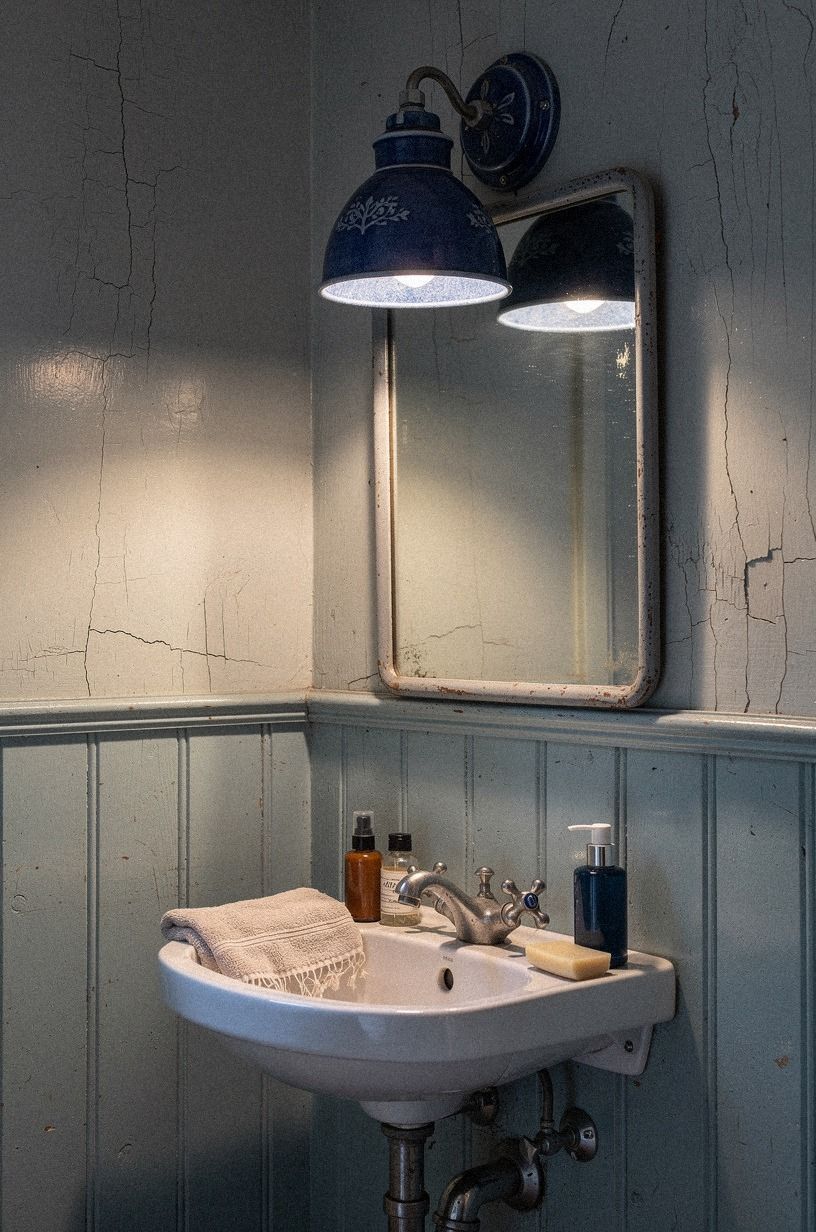
A blue porcelain sconce adds a decorative note exactly where the bathroom needs evening light. Choose a hand-painted or softly mottled shade, then pair it with navy, white, walnut, and reclaimed teak. Reclaimed weathered teak can appear in a mirror frame or small stool, giving the polished porcelain a dry, aged counterpoint.
The sconce should sit near face height beside the mirror, with a warm bulb and a shade that directs light outward. If you’re installing two fixtures, keep their centers level and let the mirror remain the visual anchor. One fixture can work beautifully in a narrow powder room.
The Porcelain Glow Rule is simple: use one decorative ceramic light and let the surrounding materials stay quiet. Blue porcelain looks refined beside white walls, but too many patterned ceramics will make the bathroom feel like a display cabinet.
Choose dimmable wiring where possible. The room will need brighter light for grooming and softer light for a late evening visit. The fixture should support both uses without changing the character of the space.
The Honest Cost of a Blue Farmhouse Bathroom Update
A cosmetic bathroom refresh can stay far below a full renovation when plumbing, shower placement, and major tile areas remain intact. Paint, a mirror, hardware, and textiles usually create the largest visual shift for the least disruption. The first decision should be whether the existing layout already works.
The mid-range tier becomes more realistic when the vanity, lighting, and partial wall tile all change together. Handmade zellige tile typically costs $15-$35 per sq ft, while subway tile often falls between $2-$10 per sq ft. A marble top commonly runs $50-$100 per sq ft, and a brushed brass faucet may cost $120-$450.
The best value usually comes from choosing one visible focal point. A blue beadboard wall, a furniture-style vanity, or a decorative sconce can carry the room. It’s rarely necessary to spend on every surface, and you’ll get a more relaxed result when the original floor or tub remains part of the story.
A secondhand mirror, a sample pot of paint, and replacement pulls can create a surprisingly strong shift. Budget-friendly hardware matters because repeated small details often register before expensive materials. Start with the surface seen from the doorway, then build outward.
For a broader low-disruption plan, compare the palette with farmhouse powder room storage details. Storage, lighting, and wall color can work together without changing the plumbing.
The Blue Balance Rule
Blue farmhouse bathrooms feel warm when blue is allowed to be deep without making every other element dark. The balance comes from pale trim, visible wood grain, soft textiles, and metal that isn’t too shiny. Farrow & Ball Hague Blue No.30 can feel dramatic, but white trim and warm bulbs keep it welcoming.
The most convincing rooms also leave a little imperfection visible. A knot in the oak, a slight glaze variation in zellige, or a patina mark on brass gives the bathroom a sense of age.
Artificial distressing isn’t needed on every object. One or two honest materials will do more than a collection of themed accessories.
For a small bathroom, choose one dark surface and two light surfaces. The blue can cover the vanity or lower wall, while the ceiling and upper wall remain pale.
If the floor is patterned, keep the shower tile simple. This hierarchy lets each material breathe.
A blue farmhouse bathroom shouldn’t look like a catalog assembled from one collection. It should feel gathered over time, even when the project happens in one weekend. Choices will look more personal when the colors repeat gently instead of matching exactly.
Use a second palette reference when selecting the final paint sample, such as these dusty blue bathroom paint combinations. Undertones become easier to judge beside the room’s actual flooring, trim, and daylight.
A Few Things Worth Answering
Which blue farmhouse bathroom look suits a small bathroom?
A pale blue ceiling, white chair rail, and compact furniture vanity usually suit a small bathroom best. Benjamin Moore White Dove keeps the upper walls bright, while one blue lower section gives the room depth. Keep the mirror broad and the accessories low so the sightline stays open.
Where can you find blue farmhouse bathroom pieces on a budget?
Large home retailers, thrift shops, salvage stores, and local resale listings offer useful starting points for mirrors, stools, baskets, and hardware. Look for solid wood, washable cotton, and ceramic pieces with simple shapes. Secondhand finds may need only new paint or careful cleaning.
How much does a blue farmhouse bathroom makeover cost?
A cosmetic update typically falls around $200 to $1,200 for paint, a mirror, a faucet, and textiles. Reusing the vanity and changing the hardware can lower the total. The cost rises sharply when plumbing, full shower tile, or floor replacement enters the project.
Is it possible to create this look on a budget?
Yes, and the first low-cost moves can be paint, rearranged textiles, and secondhand accessories. A sample pot of blue paint, aged-look pulls, and one framed landscape can change the room without construction. Keep the existing mirror if its shape works, then spend on the most visible fixture.
Is a blue farmhouse bathroom worth it in a small space?
Yes, because a small bathroom gives fewer surfaces to coordinate and less material to buy. Use one confident blue, pale trim, and a mirror with a slim frame. The room will feel more spacious when the pattern stays concentrated on one wall or the floor.
Is a blue farmhouse bathroom suitable for a rental?
Yes. Safe swaps include a tension-rod gingham curtain, removable wallpaper above a chair rail, temporary cabinet pulls, and freestanding wood storage. Choose pieces that leave no permanent marks, and keep the original hardware labeled in a small bag for moving day.
Where to Start First
If one upgrade deserves priority, start with slate-blue beadboard. It gives the bathroom color, texture, and a strong visual base without moving plumbing or replacing tile.
Paint the lower wall first, then let the mirror, towels, and wood accents follow. Save the idea for later and compare it with quiet craftsman bathroom character.
For a second starting point, choose the fixture that faces the doorway. A weathered mirror, a blue-painted vanity, or a warm sconce can establish the room’s direction quickly. Once that anchor is set, repeat its undertones through textiles and hardware.