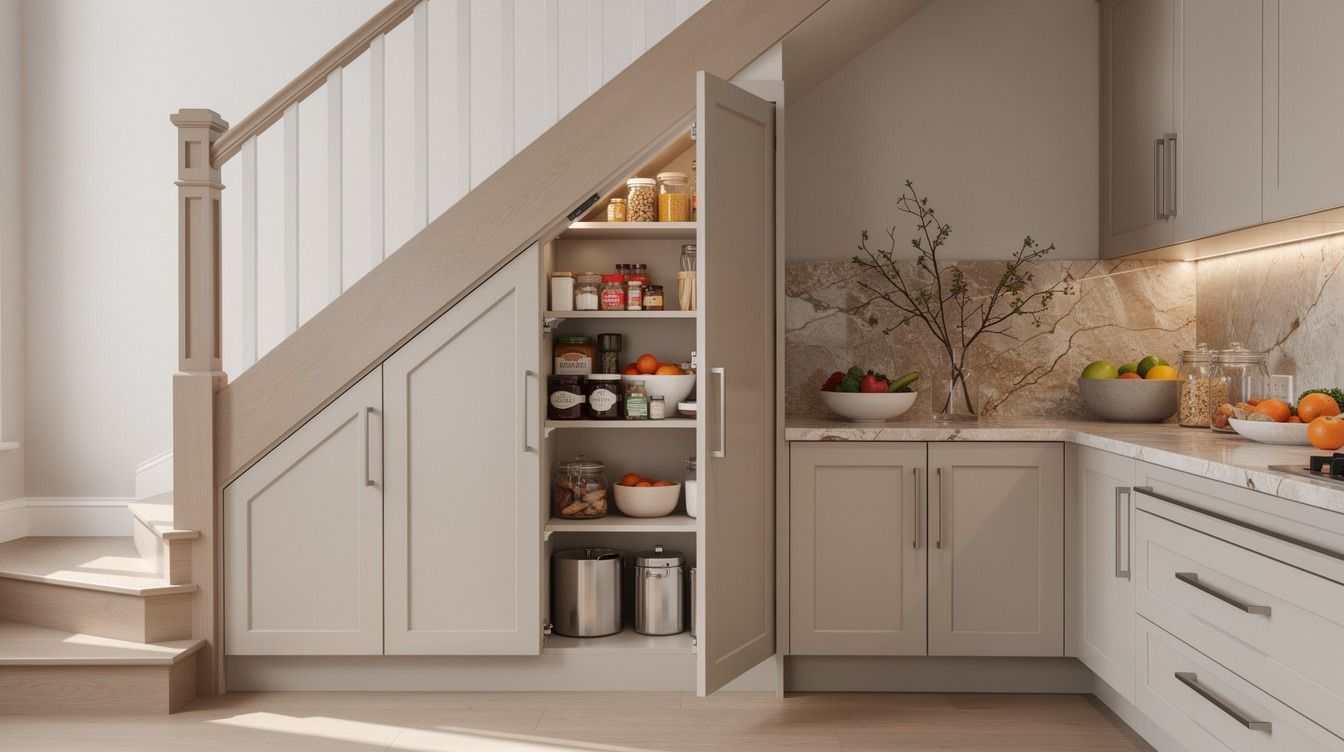
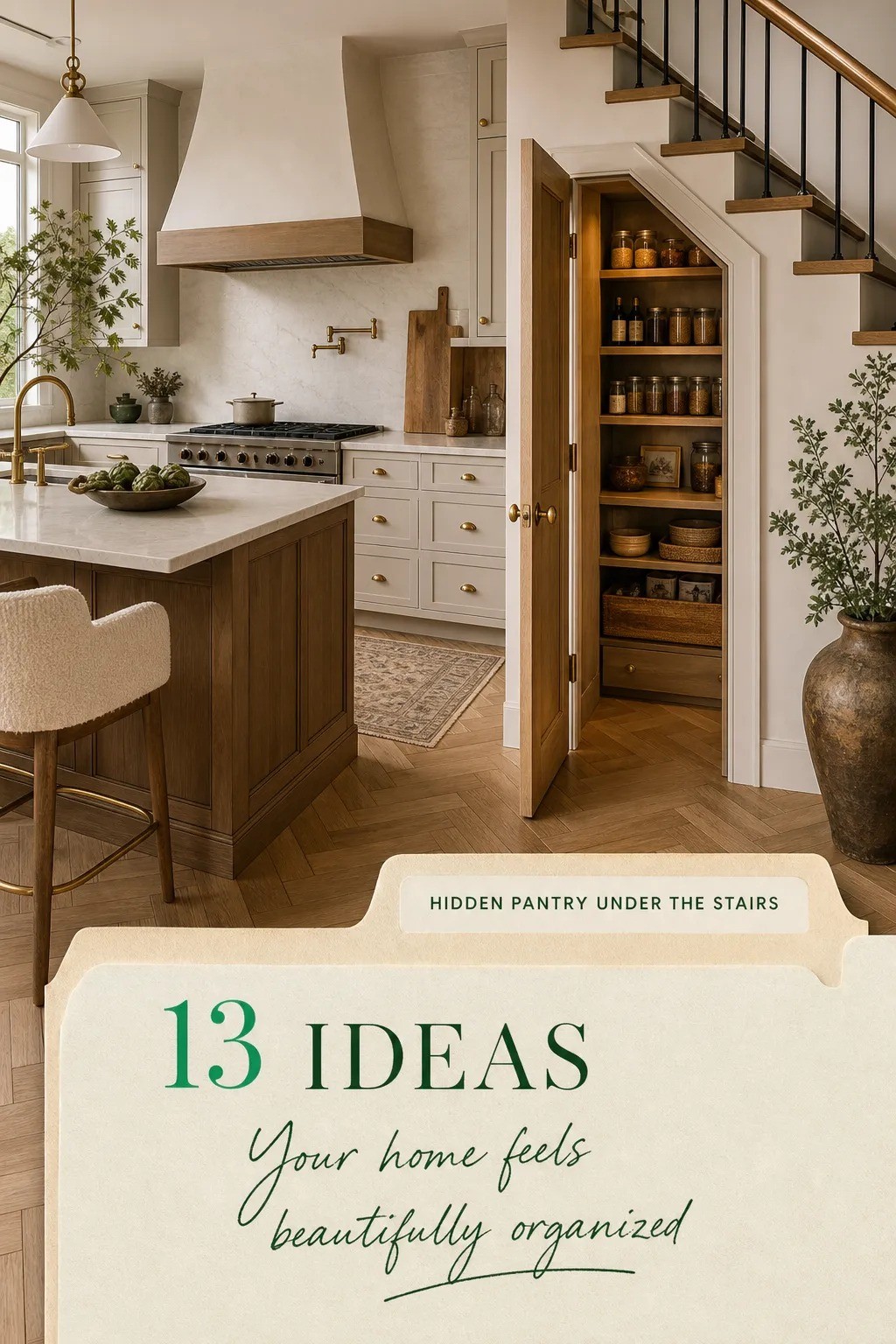
Hidden pantry under the stairs ideas work because they turn an awkward wedge into food storage without stealing another inch from your kitchen. I used to treat that spot as a dumping ground for bags and boots. Then I saw how much calmer a kitchen feels when the cereal, cans, and backup paper towels have one proper home.
- Build the Two-Wood Rule for a hidden storage room
- Float shallow shelves where your stairs pinch in
- Paint an enclosed pantry in Benjamin Moore White Dove
- Use the Pull-Out Ladder Method for tall packages
- Frame the door with the Pocket-Pantry Effect
- Choose drawers over deep shelves for hidden kitchen storage
- Can a glass-front door keep a non walk in pantry light?
- Add a 36-inch prep perch near the pantry entrance
- Skip open baskets and install labeled fronts instead
- Make the Three-Height Light Stack work after dark
- Use hand-glazed zellige behind a coffee shelf
- Try cabinets over curtains for a polished enclosed pantry
- Create a “buy less twice” zone at the door
1Build the Two-Wood Rule for a hidden storage room
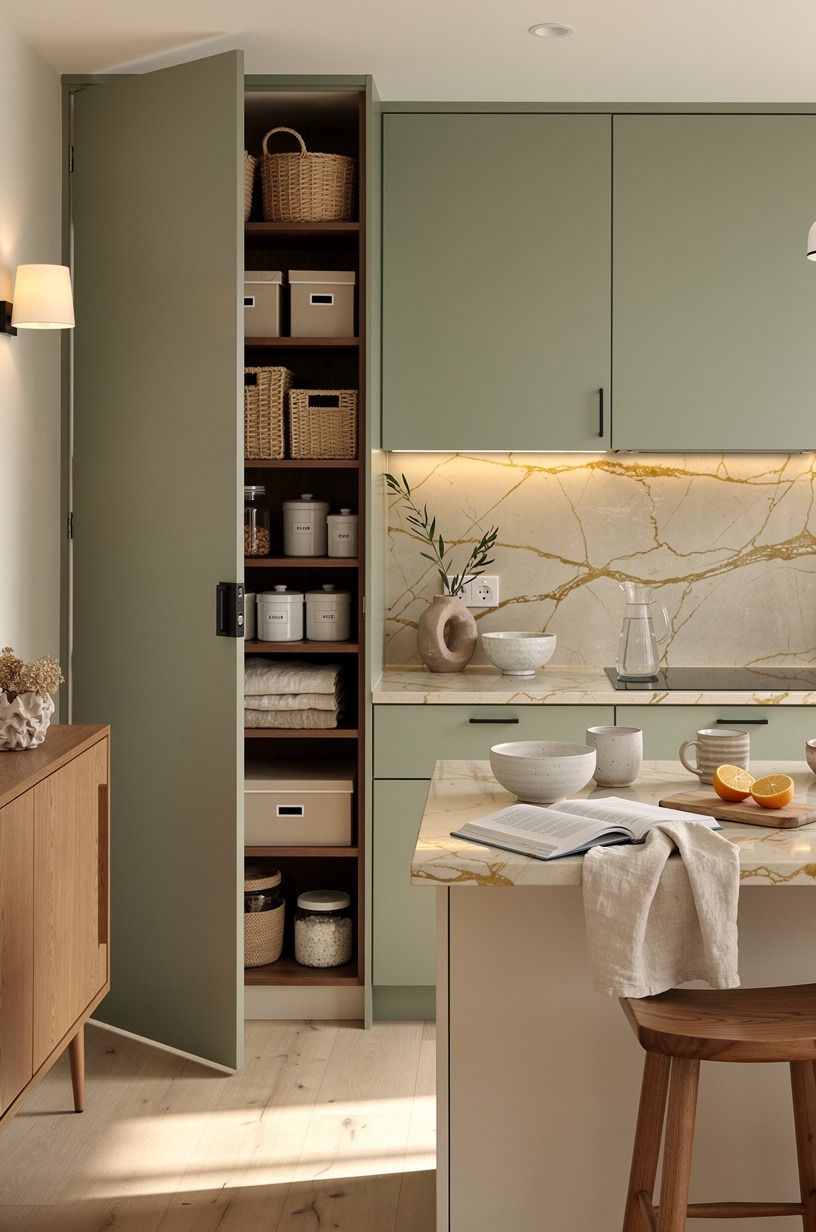
Pair one pale wood with one dark wood, and your under-stairs pantry won’t read like an afterthought. I’d use natural wood shelving against sage green walls, with a Calacatta marble worktop bringing in a quiet vein of gold.
Keep your everyday food at eye level, then let the low triangle hold bulk items. You’ll get a warm, grounded look without filling every shelf with matching jars.
And don’t use three wood tones here. That’s where it starts to look accidental.
For more ways to use this footprint, see these under-stairs hidden bar layouts.
2Float shallow shelves where your stairs pinch in
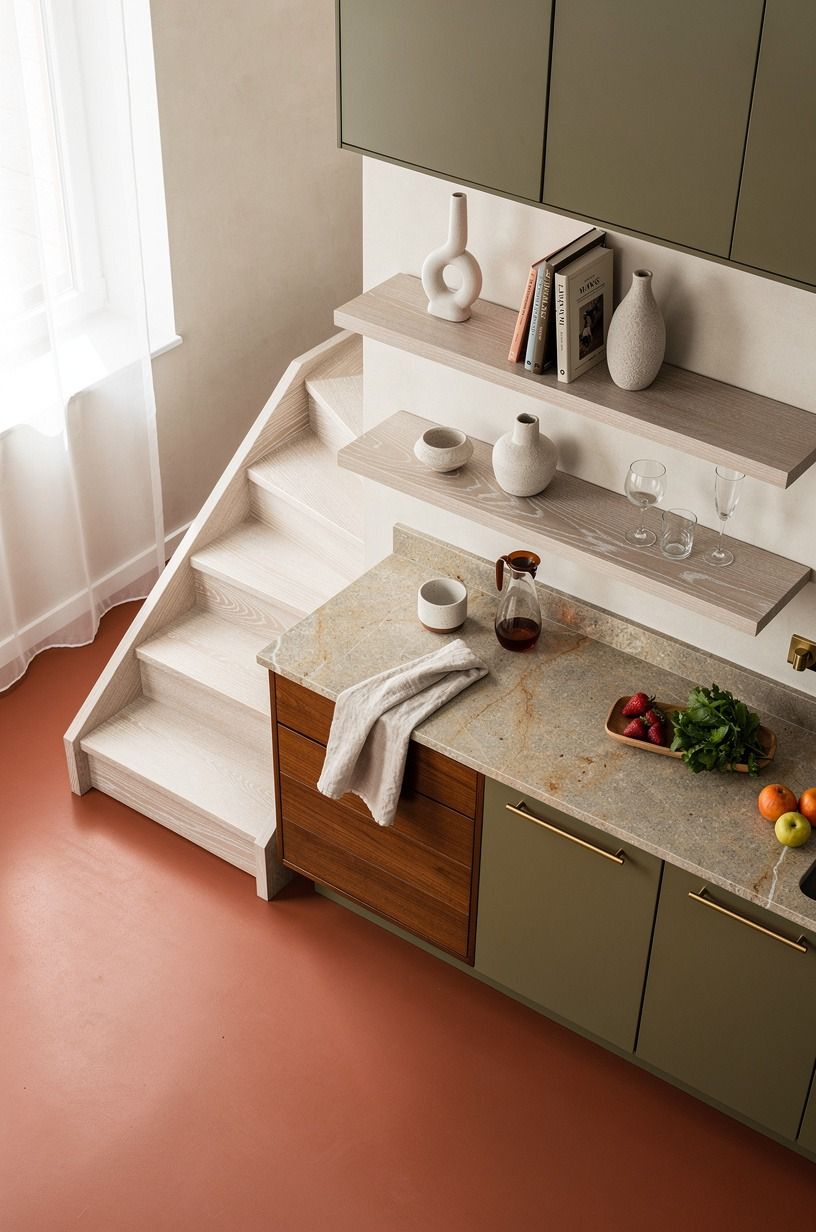
The narrowest end is usually useless for deep cabinets, but it’s excellent for 6-inch-deep shelves. You can line up spices, baking extracts, tea tins, and the odd jar of capers you keep buying twice.
I’d choose cerused white oak shelves against terracotta, stone, and olive tones below. The pale grain keeps the tight space from feeling heavy, and you won’t need to fight a bulky door in a tight hall.
Measure before you buy anything. Your shelves should sit clear of the stair stringer, and your hand needs room to reach the back row. Small detail.
Big difference.
3Paint an enclosed pantry in Benjamin Moore White Dove
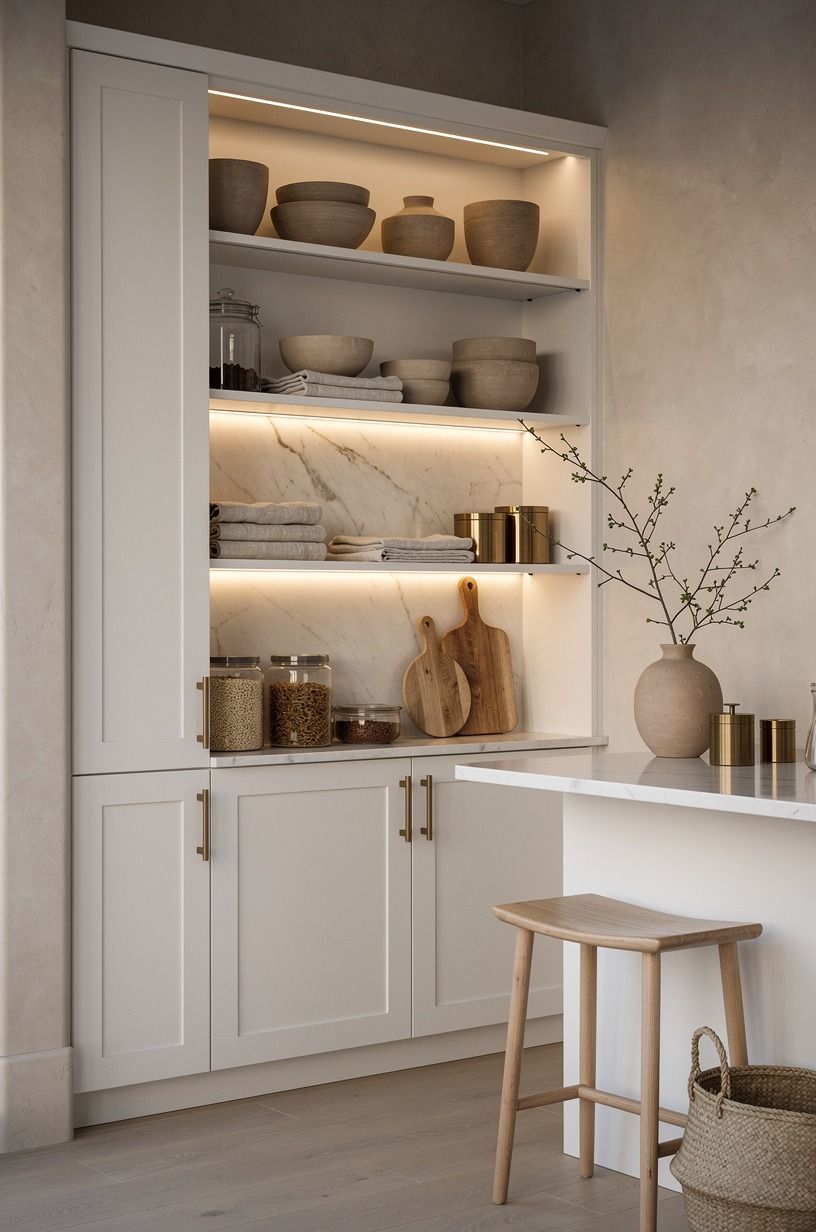
A dark under-stairs nook can feel cave-like fast, so paint is the cheapest course correction.
4Use the Pull-Out Ladder Method for tall packages
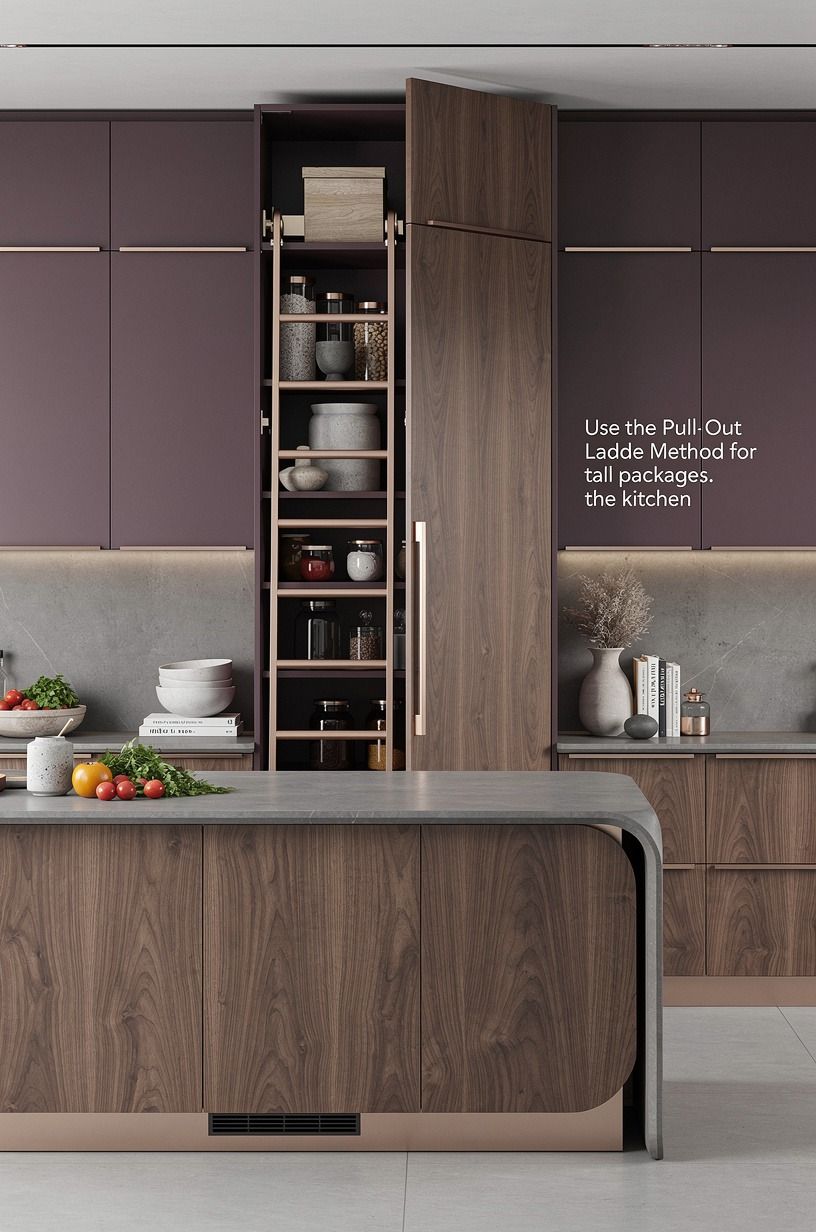
Put the tallest pantry zone at the high end under the stairs, then add a slim rolling ladder or a pull-out step stool. You’ll finally have a place for paper towels, party platters, and the enormous bag of rice that never fits anywhere else.
A slim book-matched walnut rolling cart works better than fixed cubbies if you’re renting, because you can pull it forward and clean behind it. I’ve tried stacking loose cartons there. They slump, vanish, and make you buy another box of foil.
Think in layers: daily snacks low, weekly groceries in the middle, backup stock overhead. Your shoulders will thank you.
Browse these corner pantry storage ideas if your staircase footprint is especially narrow.
5Frame the door with the Pocket-Pantry Effect
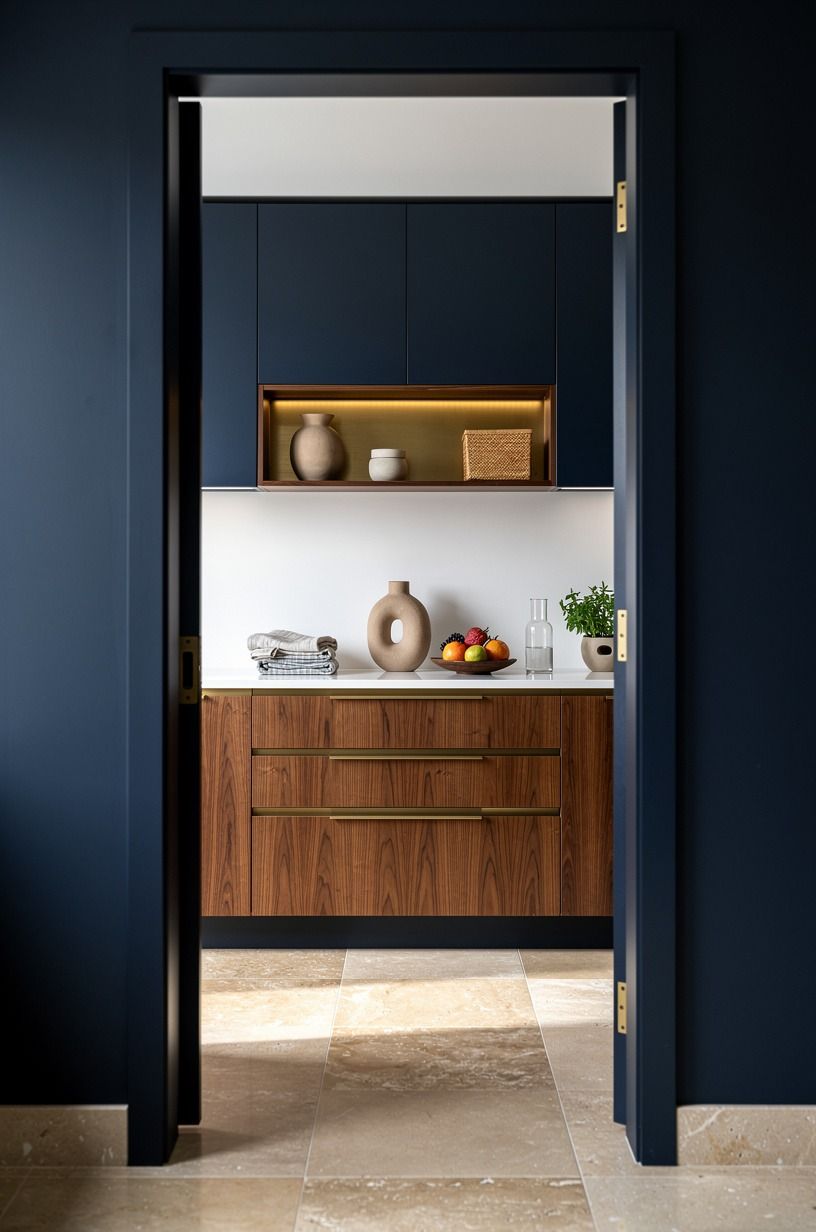
A pantry door can disappear into the architecture when you repeat the surrounding trim.
6Choose drawers over deep shelves for hidden kitchen storage
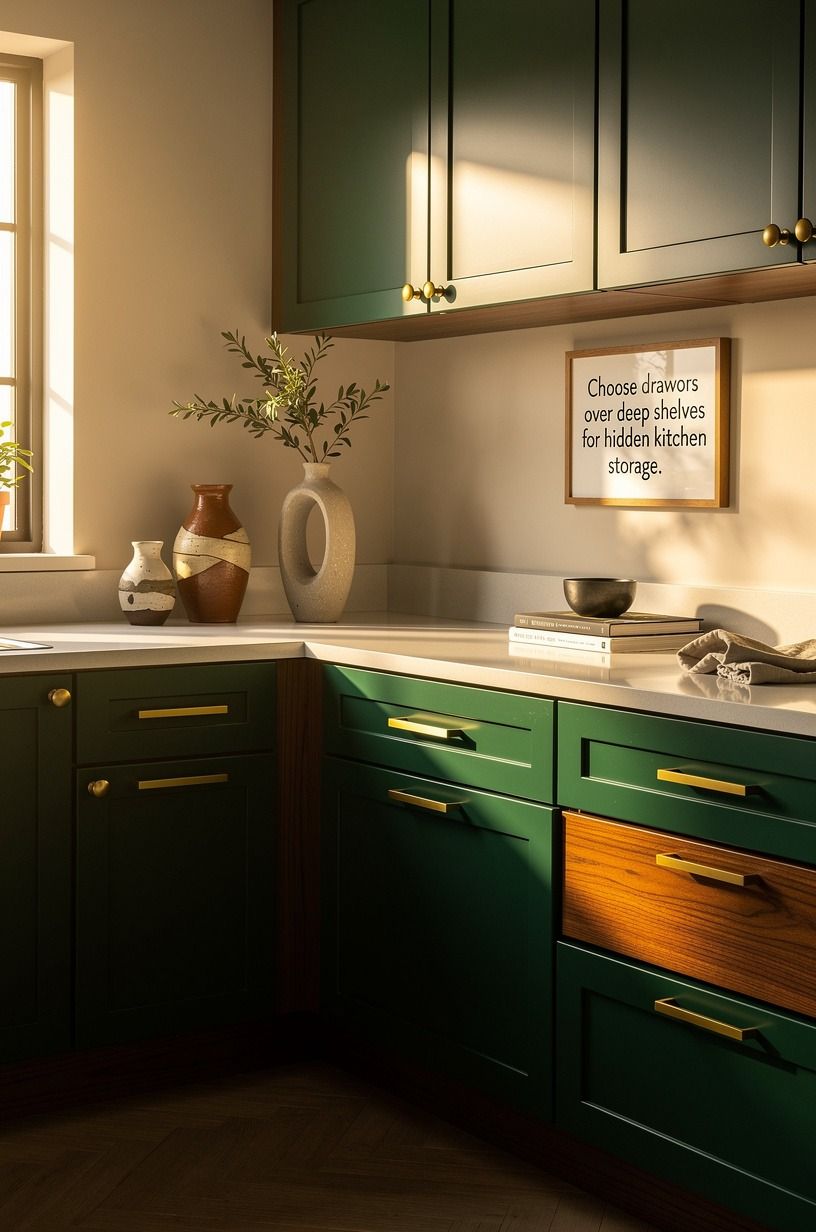
Deep shelves look generous until you’re kneeling down to find one can behind six others. Drawers solve that miserable little problem. Use IKEA MAXIMERA drawers or simple unlacquered brass pull-outs so you can see every packet from above.
You’ll want the bottom drawers for potatoes, onions, and lunchbox supplies, with washable liners under everything. The upper drawers can hold baking tools and spices, especially if you label the fronts in a restrained black typeface.
And yes, drawers cost more than fixed shelving. They’re still the better investment if you cook often, because your pantry becomes usable rather than merely full.
7Can a glass-front door keep a non walk in pantry light?
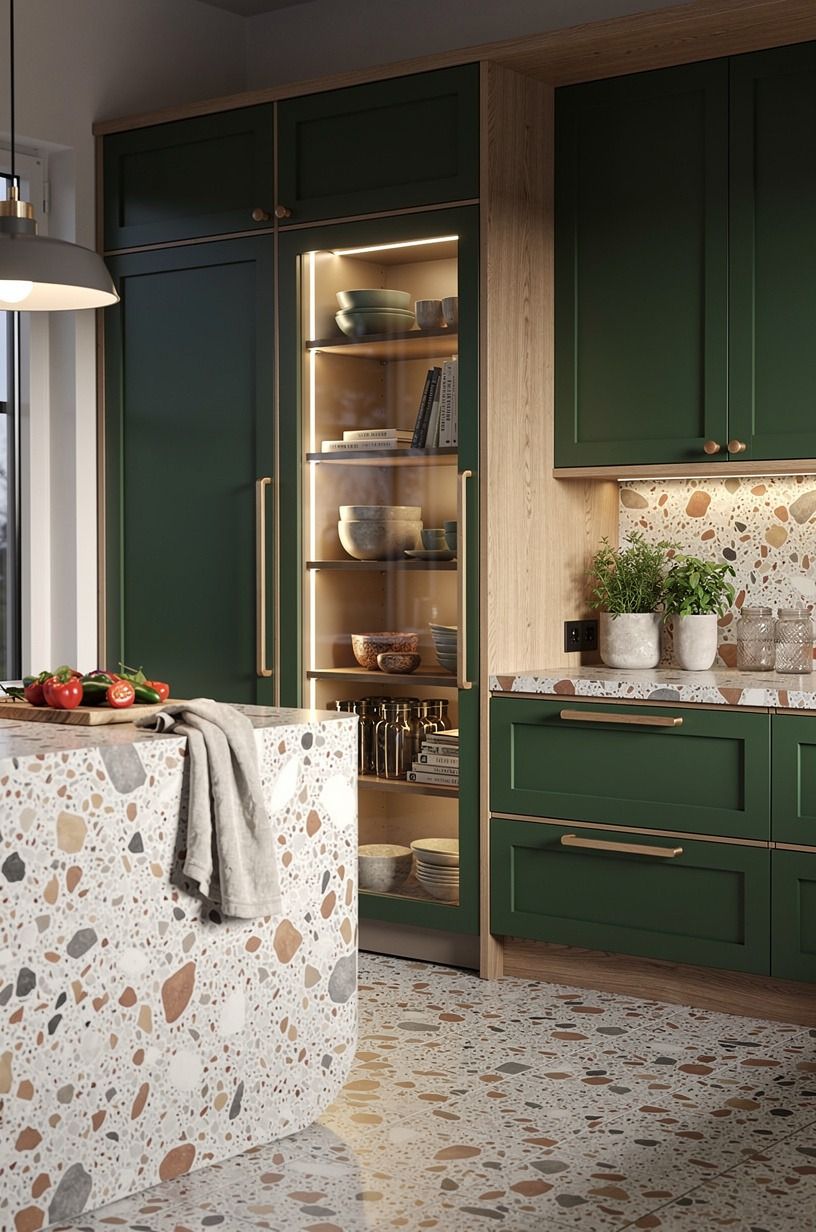
Yes, if you use reeded or fluted glass instead of clear glass.
8Add a 36-inch prep perch near the pantry entrance
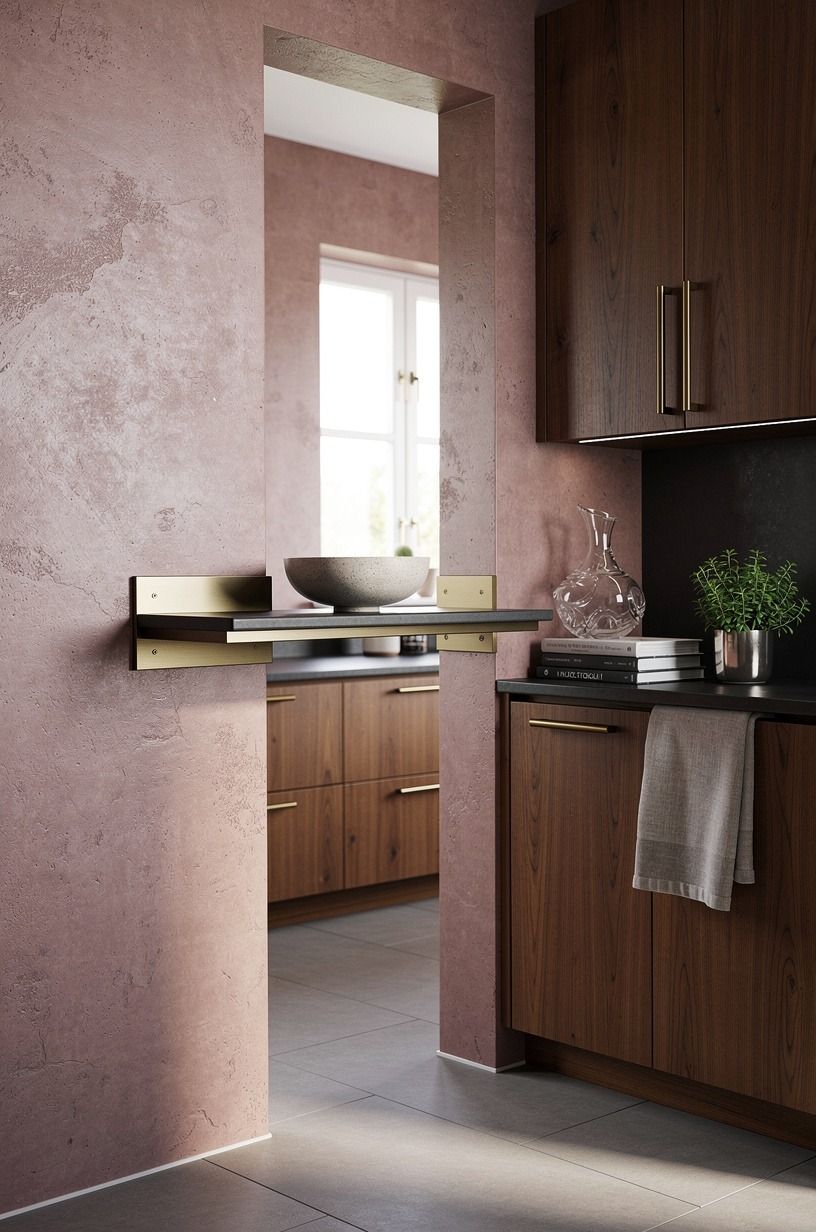
If the pantry opens toward the kitchen, a narrow landing shelf can earn its place as a grocery-drop zone. Standard counter height is 36 in (91 cm), so matching that height makes unloading bags feel natural rather than improvised.
Try a Venetian plaster finish over a shallow cabinet, especially if you’re watching cost. It gives you somewhere to set groceries, decant snacks, or make coffee before the morning gets loud. You don’t need a full island for this.
Leave the main kitchen aisle open. Islands need 42 to 48 in (107 to 122 cm) of clearance all around, and cramming one into a small room is the wrong battle.
9Skip open baskets and install labeled fronts instead
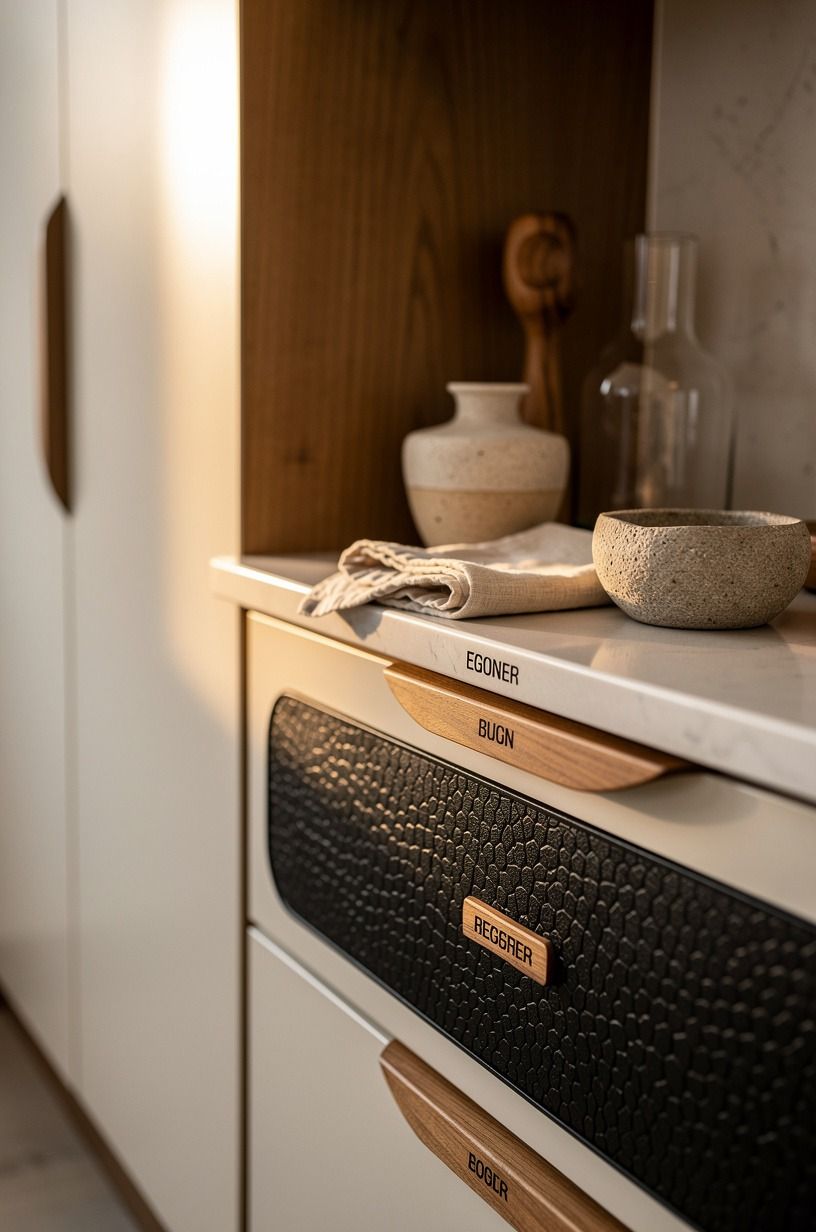
Open baskets photograph well, but they’re not my favorite for a hardworking pantry.
10Make the Three-Height Light Stack work after dark
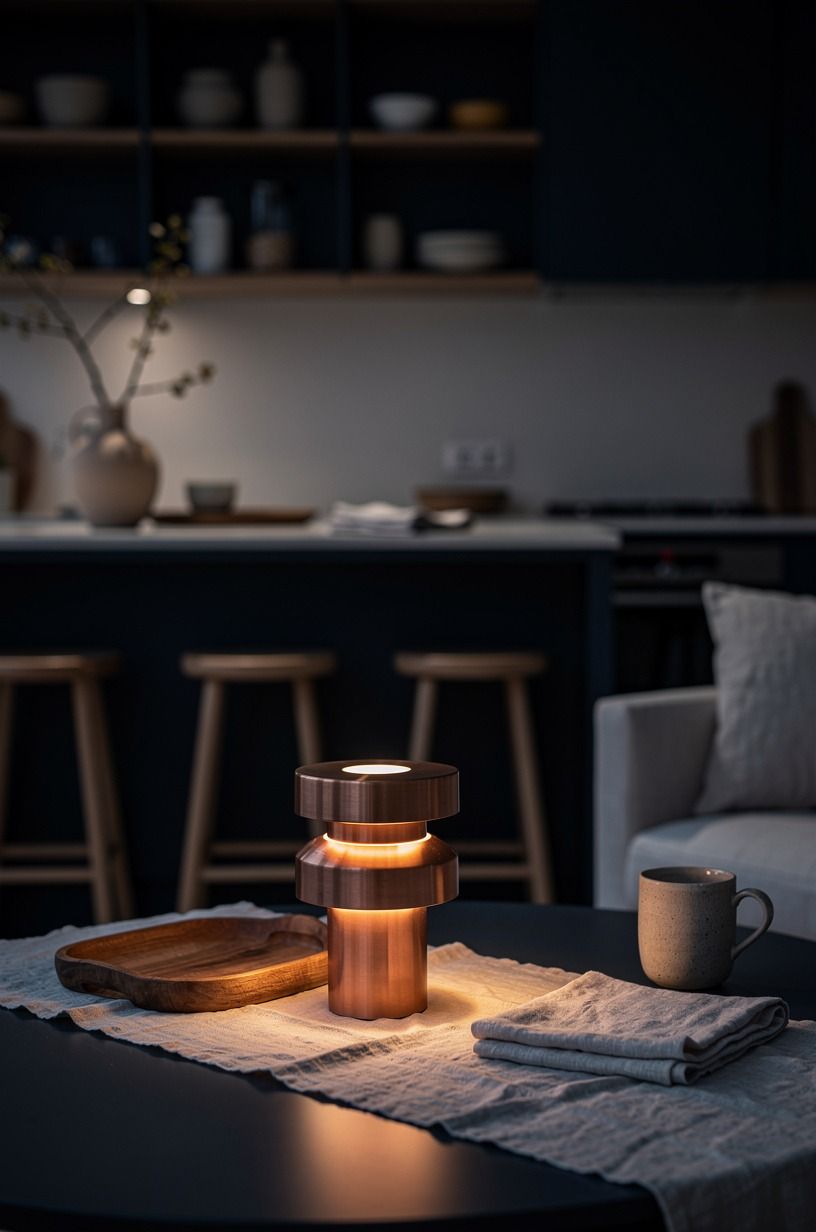
One ceiling puck won’t light the deep end of a stair pantry. Layer three heights instead: a ceiling fixture, an under-shelf strip, and a low sensor light near the floor. You’ll see the labels, the back corners, and the inevitable dropped onion.
Choose 2700K LED strip lighting beneath each shelf edge, then use an ivory washed Belgian linen shade above. The glow should feel calming, not theatrical. Your pantry is storage, not a jewelry case.
I’d place the switch just outside the door. Nobody wants to step into a dark triangle with arms full of groceries. And the motion sensor is worth it!
11Use hand-glazed zellige behind a coffee shelf
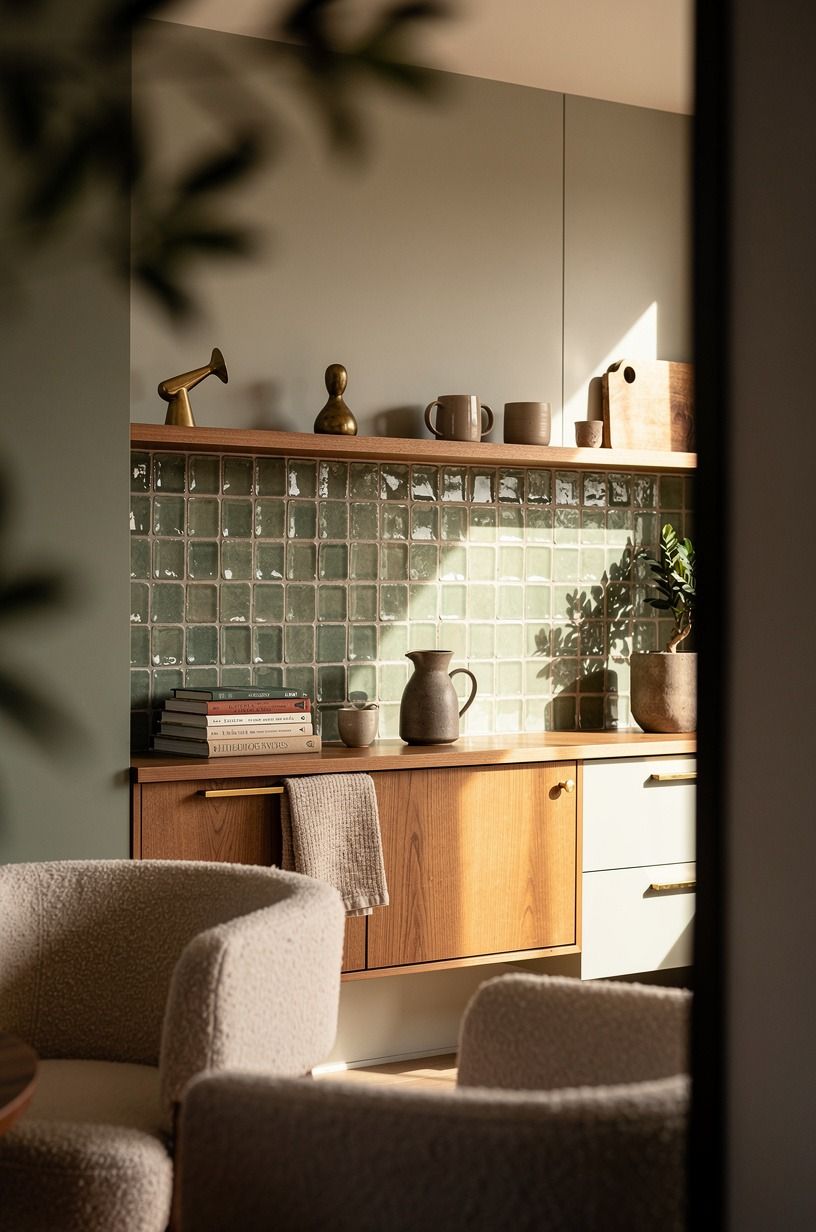
A pantry can hold more than dry goods.
12Try cabinets over curtains for a polished enclosed pantry
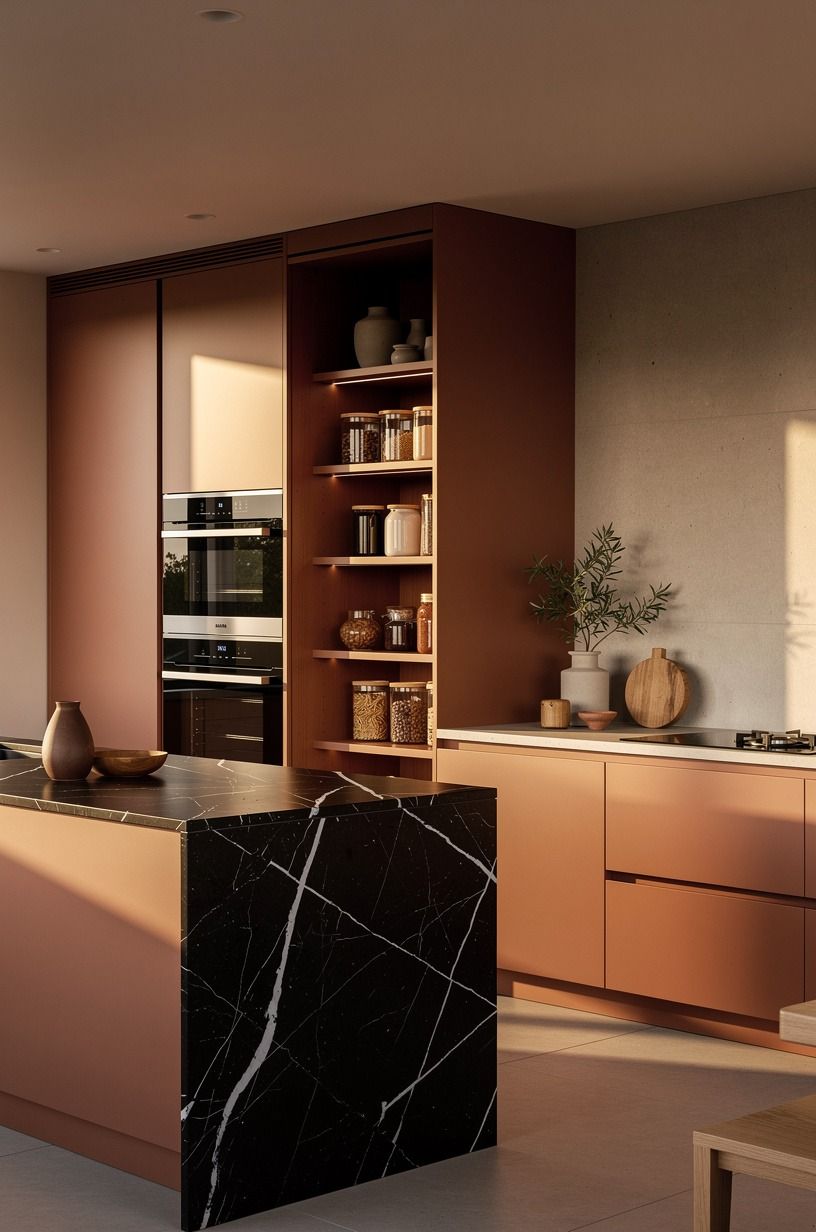
Curtains are cheap, and they can work for a temporary rental setup. But for a permanent pantry, cabinet fronts win because they block dust, soften package clutter, and make the stair wall feel settled.
Use Shaker fronts beside a Nero Marquina black marble counter if your kitchen needs contrast. The typical repainting range is $150 to $400 per door, which is still less disruptive than rebuilding cabinetry from scratch.
You can use a tension rod and linen panel while you save. But don’t pretend fabric gives you the same seal. It doesn’t, especially around flour, pet food, and little hands.
13Create a “buy less twice” zone at the door
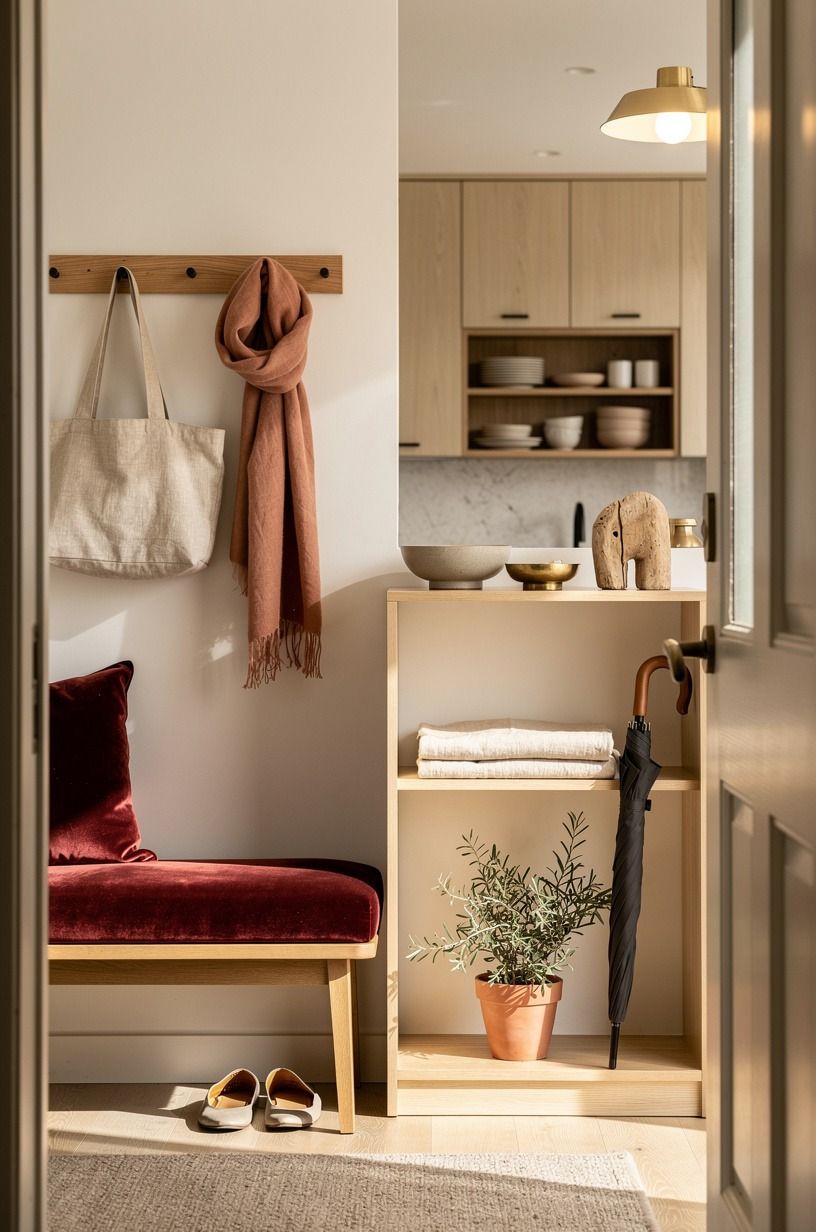
Give the first shelf inside the pantry one job: stop duplicate shopping.
What a pantry refresh typically costs
You don’t need a full kitchen remodel to make this space useful. Start with paint, shelves, and hardware if the structure is sound. But if your staircase project is part of a larger kitchen update, these typical US ranges help you decide where the money belongs.
The budget tier is where I’d stay for most under-stairs pantries. Peel-and-stick backsplash and new pulls can make a plain nook feel refined without swallowing the money you need for better shelves.
Why I think hidden pantries are having their moment
I’ve watched kitchens swing from fully open shelving to rooms that want a little visual peace again. We still want ingredients close by, but we don’t necessarily want every bag of chips and paper towel roll in the main sightline. A hidden pantry under the stairs lands right in that sweet spot: useful, modest, and oddly satisfying.
My first attempt was too decorative. I used matching jars for everything, ignored the awkward angles, and spent more time refilling containers than cooking. The pantry looked tidy for about forty-eight hours.
Then real life arrived: school snacks, bulky cereal, half-used bags of flour, and a random assortment of sauces that would not fit the plan.
That taught me to start with the way you move through a weekday. What do you grab with one hand?
What do you need when dinner is already underway? Your pantry should answer those questions before it worries about looking polished. I now reserve the visible shelf for everyday things, hide the ugly backup stock behind doors, and leave breathing room on purpose.
And I’m opinionated about this: don’t turn every inch into storage. A pantry packed wall to wall feels stressful, no matter how elegant the materials are.
Leave one shelf partly empty. Let the light hit the wood.
It makes the whole thing feel more welcoming, and you’ll have a place for the surprise grocery run. That’s not wasted space.
That’s room for life.
What People Always Want to Know
What is the best hidden pantry under the stairs for a small kitchen?
A shallow drawer-and-shelf layout is the best choice for a small kitchen because you can see what you own. IKEA MAXIMERA drawers handle the low triangle well, while open upper shelves keep daily items within reach. You’ll avoid crawling behind deep cabinets.
Where can I buy hidden pantry under the stairs pieces on a budget?
Start with IKEA, Target, and Wayfair for shelves, bins, and basic hardware. Facebook Marketplace is excellent for solid wood cabinets you can repaint.
Your best finds: removable baskets, used drawer units, and simple brass-look pulls. Don’t buy matching containers first.
How much does a hidden pantry under the stairs makeover cost?
A simple makeover costs about $300 to $1,500 in typical US cosmetic-update territory. Paint and hardware are the lowest-cost changes, while pull-out drawers raise the bill. You can clean, sort, and relabel what you own for free.
Can I create a hidden pantry under the stairs on a budget?
Yes, and you can start without custom cabinetry. Removable shelf liner, tension-rod curtains, and secondhand bins give you a useful first version. Sort by how often you reach for things, keep the floor clear, and add doors later if you still want them.
Is a hidden pantry under the stairs worth it in a small space?
Yes, it’s worth it because small spaces benefit most from storage that doesn’t spread into the room. Vertical shelving lets you use the high end of the stair slope while keeping the kitchen calm. Put bulky backups at the back and daily food near the door.
Is a hidden pantry under the stairs a good idea for a rental?
Yes, if you keep the changes removable. Peel-and-stick wallpaper, tension shelves, and adhesive puck lights can create a warm pantry without permanent damage. You can also borrow ideas from these second hidden-door layouts before committing to a door.
Where I’d Start First
If I had to pick one, I’d start with pull-out drawers. Deep shelves make you lose food in the dark back corner, while drawers put every can in your line of sight. Pin pull-out drawers for later and browse these under-stairs playroom layouts.