
Corner hidden pantry ideas to use that awkward space can turn an ignored kitchen wedge into real food storage without touching a wall. I once filled mine with a plant stand and three dead basil plants. The better answer was a cabinet that worked with the corner, not against it. Small change, big relief!
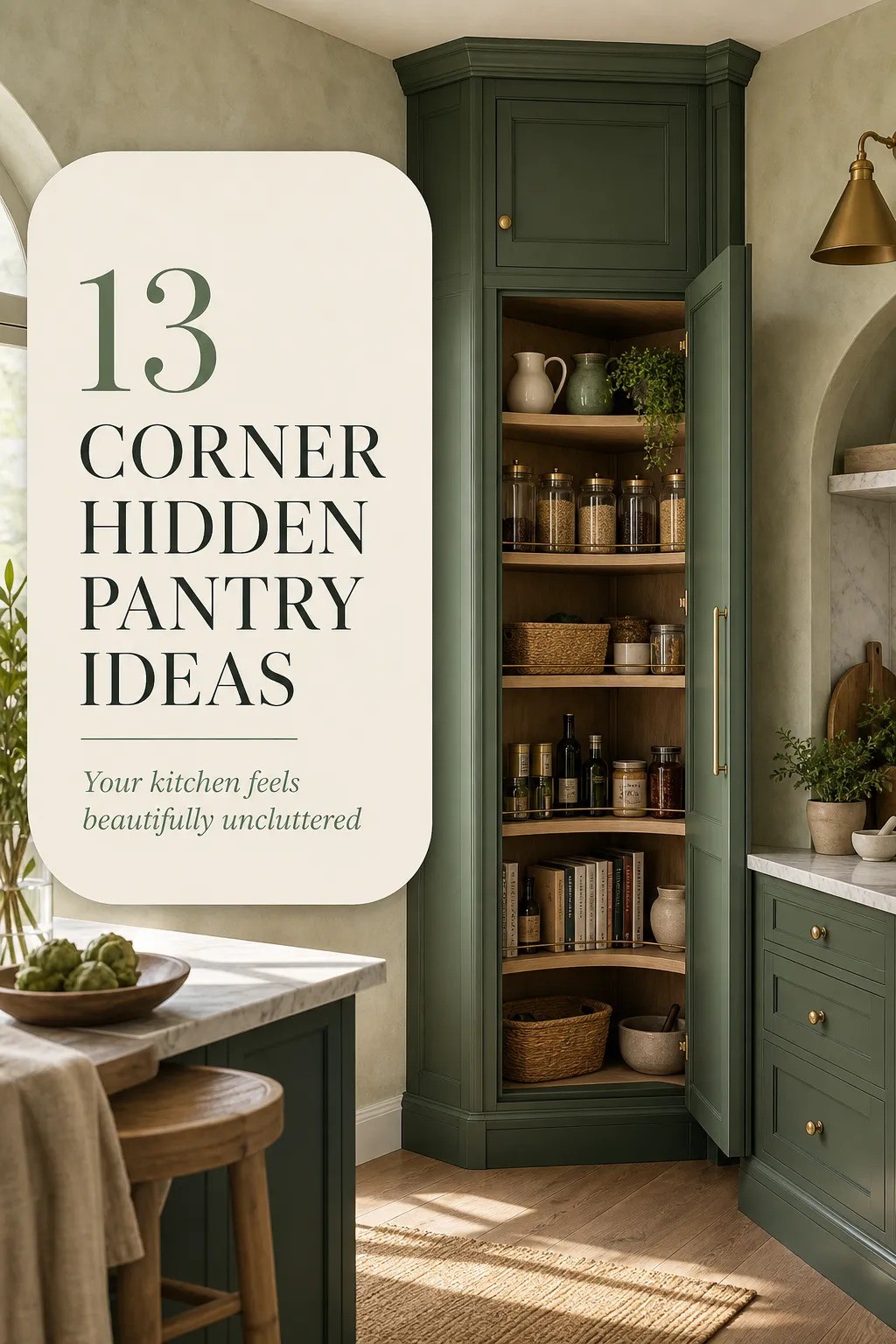
- Build a tall corner storage cabinet that follows the wall
- Float open shelves with the Corner Ladder Method
- Hide dry goods behind a full-height curtain
- Paint the recess with the Pantry Shadow Rule
- Swap bulky doors for a slim sliding panel
- Use pull-out baskets for the deep-back problem
- Can a cabinet door become your pantry wall?
- Anchor a freestanding armoire instead of adding cabinets
- Hang peg rails for the little things you lose
- Choose baskets over bins in a visible corner
- Frame the niche with the Two-Wood Rule
- Add a lamp with the Three-Height Light Stack
- Let a rolling cart fill the corner temporarily
1Build a tall corner storage cabinet that follows the wall
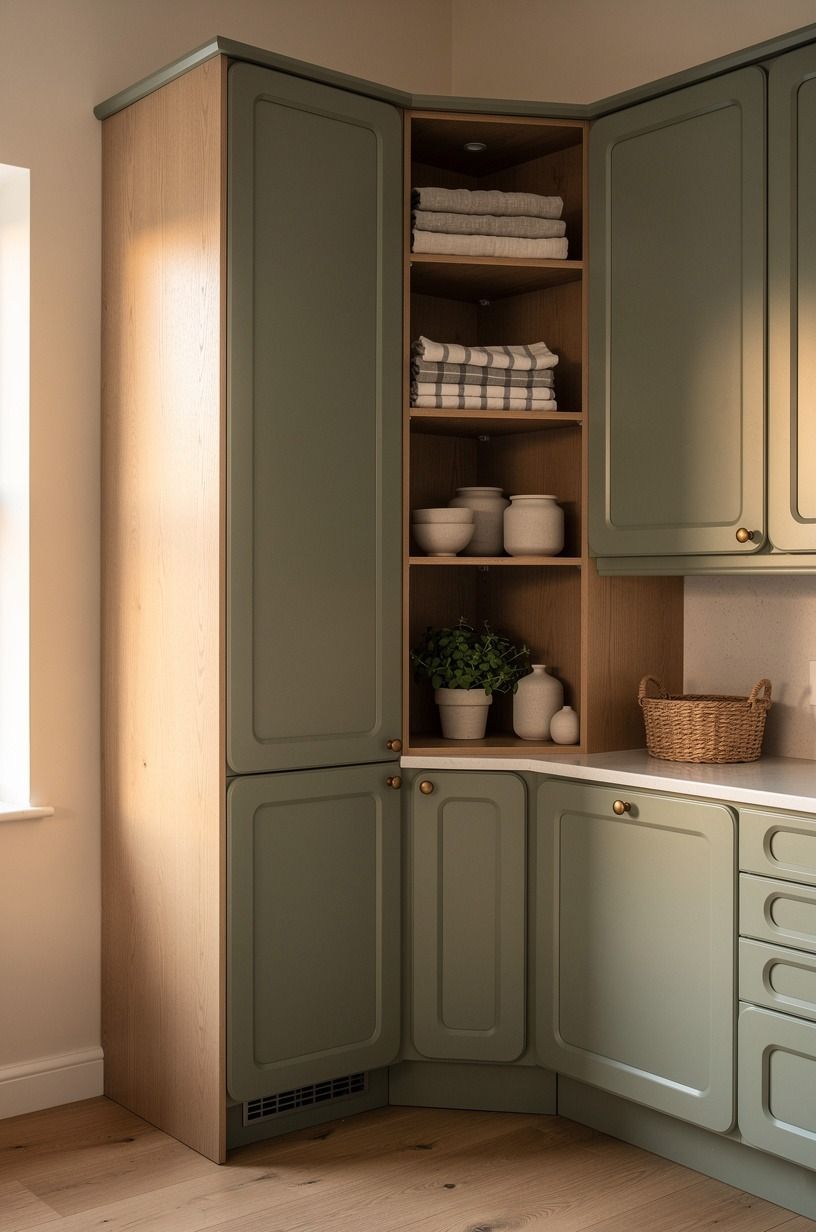
Start with a tall corner storage cabinet that sits tight to the wall instead of claiming the whole room. Sage green doors, warm cream walls, and natural wood shelving keep the vertical pantry zone calm, and your kitchen won’t feel pinched at the 36 in counter line.
Try an IKEA BILLY bookcase with shallow shelves, then add plain doors or a washed Belgian linen curtain. I’d skip a deep 24-inch cabinet here.
It swallows the corner, and you’ll lose the easy path around your kitchen. A 42 to 48 in clear route matters more than squeezing in one more cereal box.
For scale, look at why furniture can make a corner feel crowded. Your cabinet should look built in, but still leave your elbows room.
2Float open shelves with the Corner Ladder Method
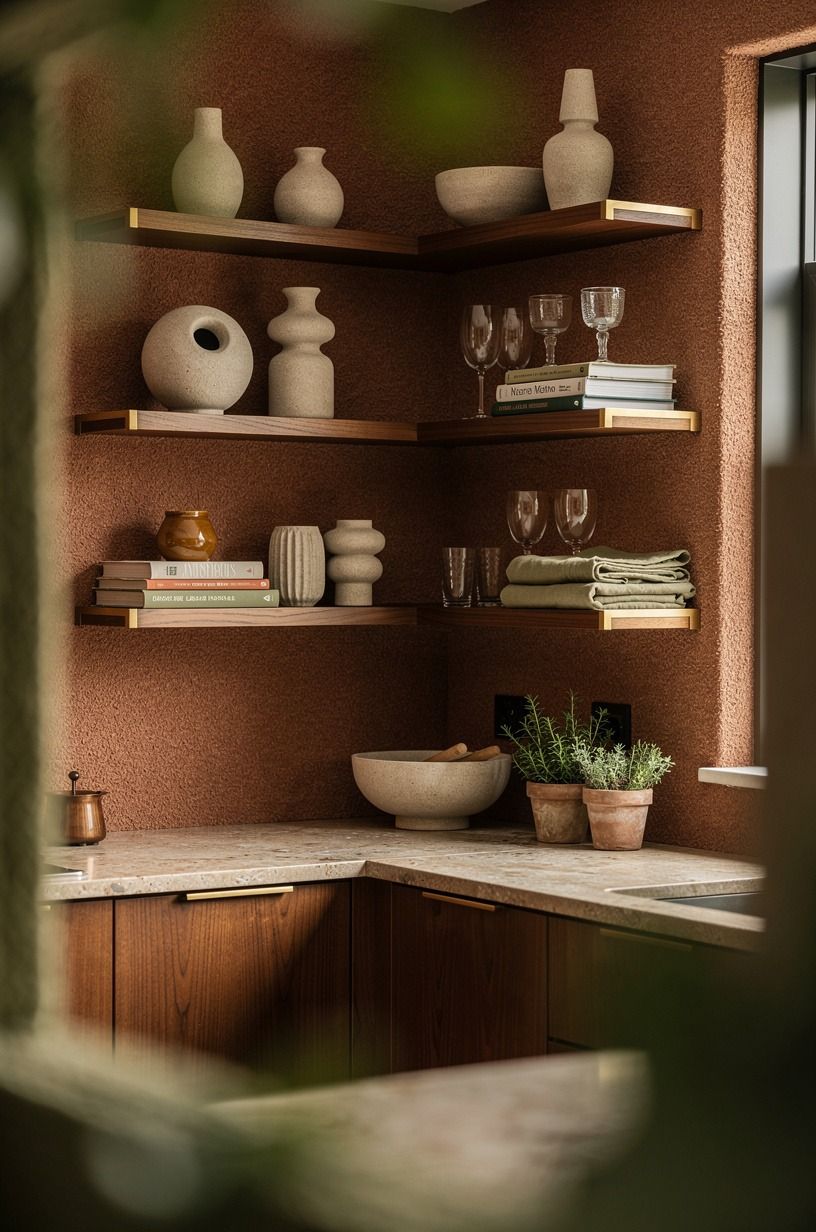
The Corner Ladder Method uses short shelves that climb upward, with the lowest shelf holding daily items and the top shelves catching backups. Terracotta, stone, and olive keep the shelves from feeling bare, while an organic bouclé basket softens the practical setup.
3Hide dry goods behind a full-height curtain
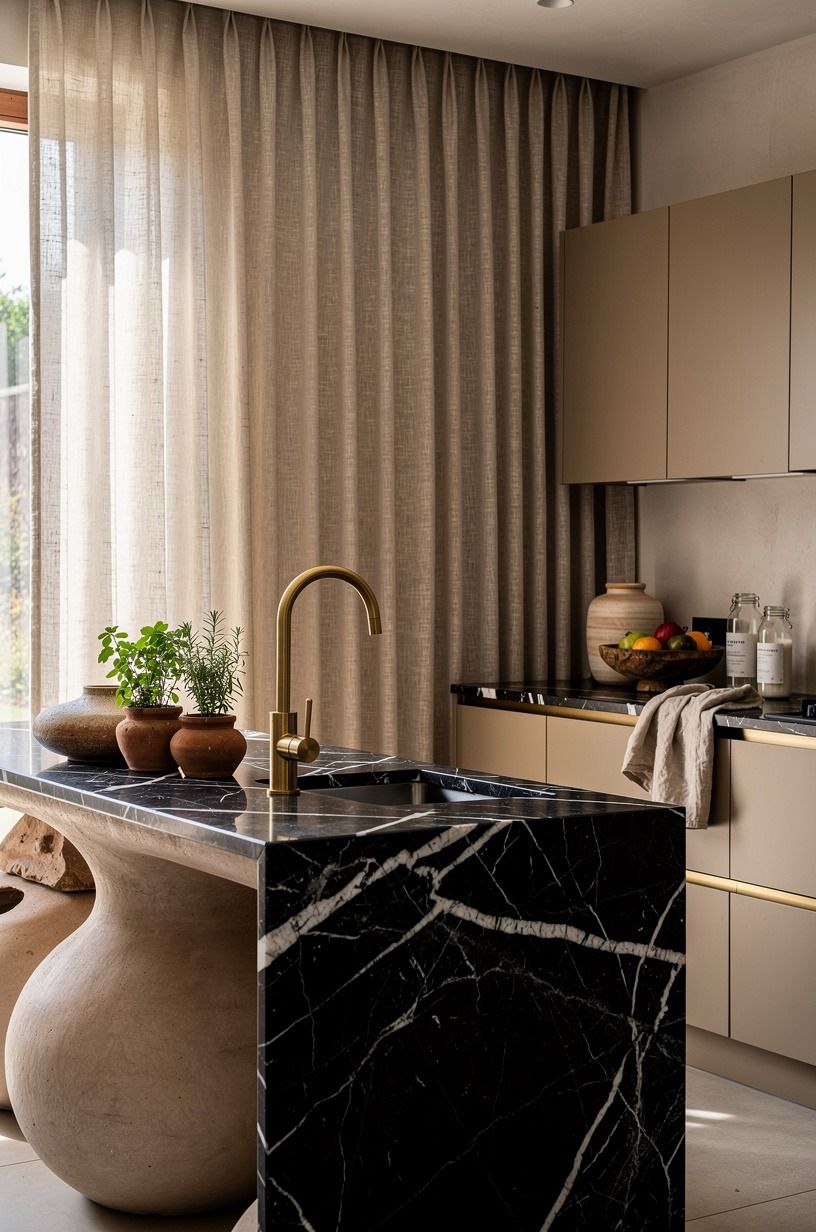
A curtain can make a cabinet into pantry storage when you’re renting or working with a strange little alcove. It’s soft, cheap, and forgiving if your shelves aren’t perfectly aligned.
Hang a clay-toned linen curtain from a tension rod, then use a warm white rather than stark optic white. Benjamin Moore White Dove OC-17 is a better paint match nearby because it doesn’t make cream packaging look yellow.
A shelf with Nero Marquina black marble brings a crisp dark note to the clay, linen, and aged-brass palette. You can pull the fabric aside with one hand while holding a grocery bag in the other.
That’s the test.
But avoid heavy velvet here. It catches dust and makes a food-storage corner feel theatrical. Linen has enough texture without asking for attention.
4Paint the recess with the Pantry Shadow Rule
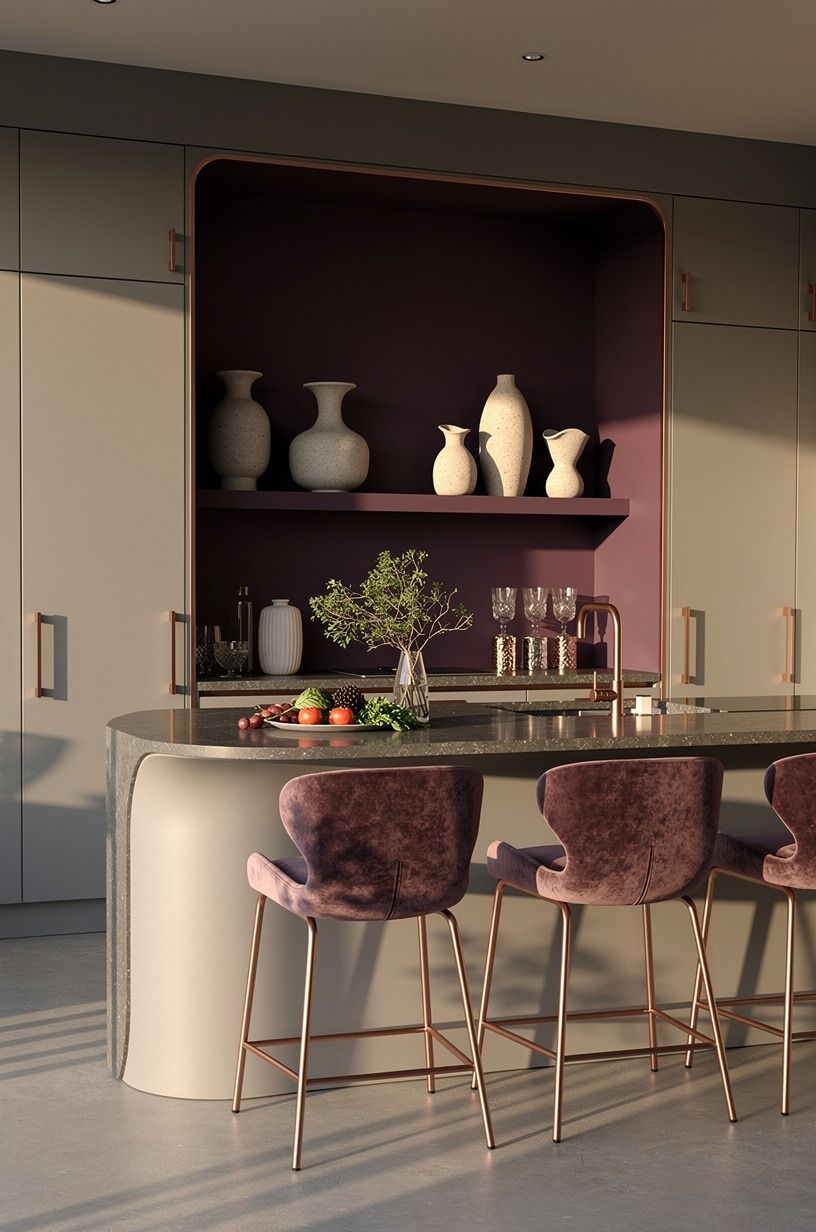
The Pantry Shadow Rule is simple: paint the recessed corner darker than the surrounding kitchen so it reads as a deliberate pocket. A plum recess with soft grey nearby and rose-gold hardware feels especially rich against a small touch of deep-pile mohair velvet.
5Swap bulky doors for a slim sliding panel
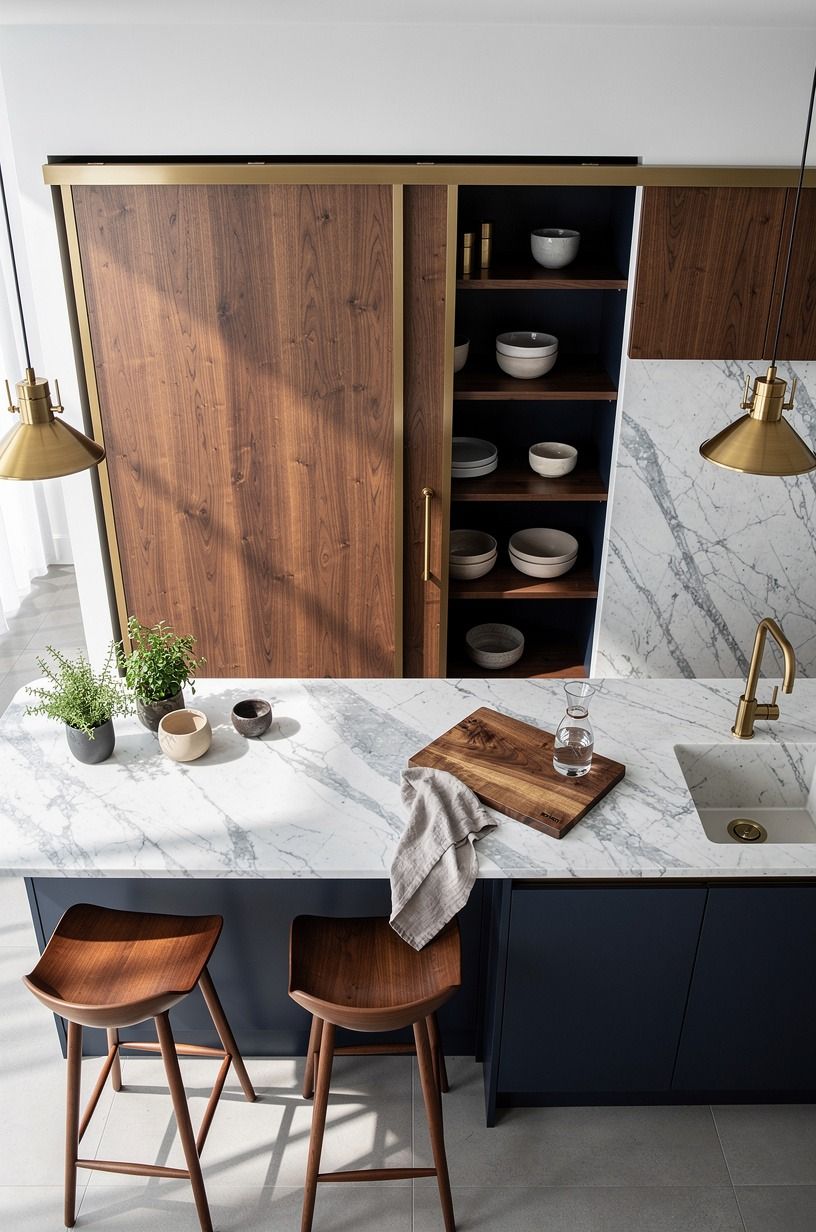
If a hinged door bangs into your island, replace the visual bulk with a slim sliding panel. Your pantry can disappear without forcing you to choreograph every cabinet opening.
A flat walnut panel beside white cabinetry gives the corner a clean, grounded finish, especially with a small Carrara marble shelf or ledge. Keep the track above the opening, not inside it, so you don’t shrink the already-small entry. And measure the 18 in backsplash gap before adding anything that interrupts upper cabinet clearance.
I’d choose a painted panel over mirrored glass. Mirror makes a narrow food corner look like a hallway, which is not the mood you want while looking for pasta at 6 p.m.
6Use pull-out baskets for the deep-back problem
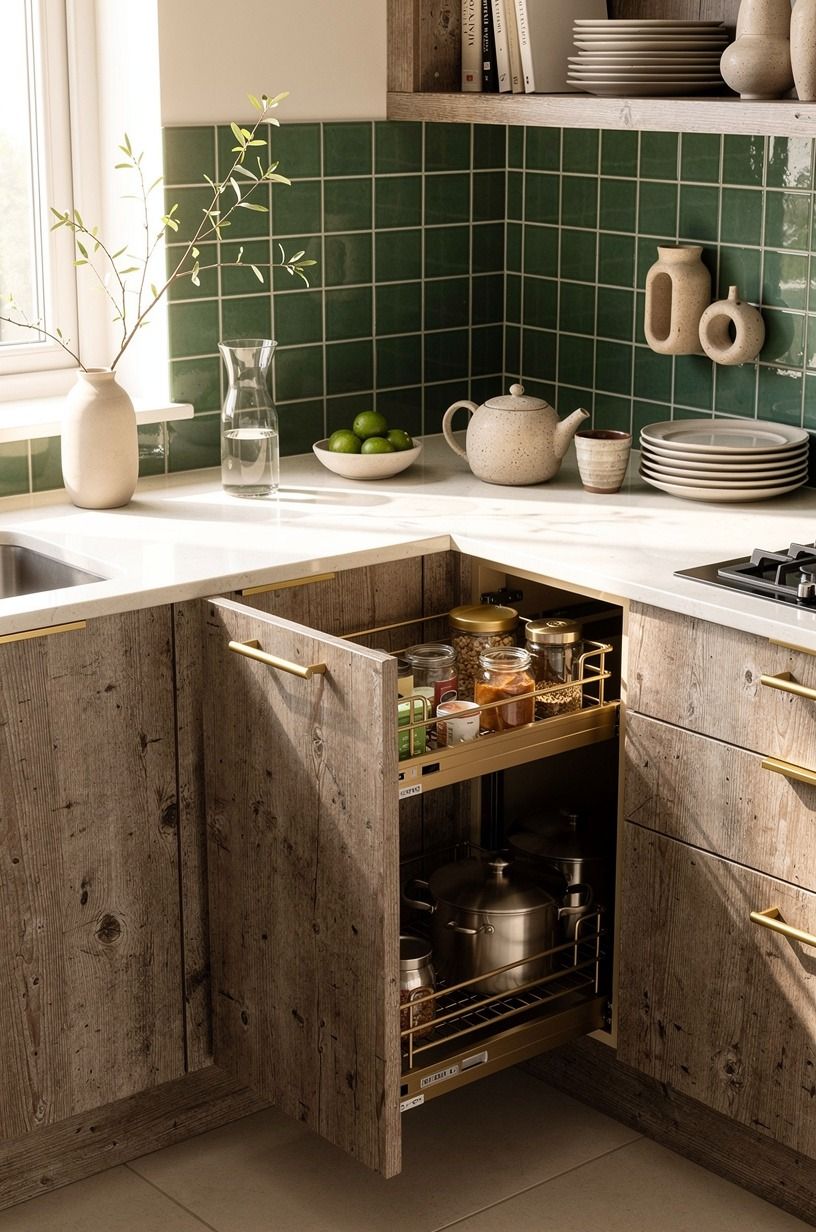
Deep corners become black holes fast. Pull-out baskets solve that without requiring custom cabinetry, and you’ll stop buying duplicate crackers because the first box vanished behind a bag of flour.
Choose pull-out baskets with reclaimed, weathered teak fronts, or Target Threshold woven bins with a label slot. Emerald, gold, and cream make the system feel considered without making it precious.
One category per basket. Snacks.
Baking. Breakfast.
The labels can be handwritten, slightly crooked, and still look charming.
For more small-space thinking, borrow the logic from this vertical-space guide. Your corner needs a visible system, not more containers.
7Can a cabinet door become your pantry wall?
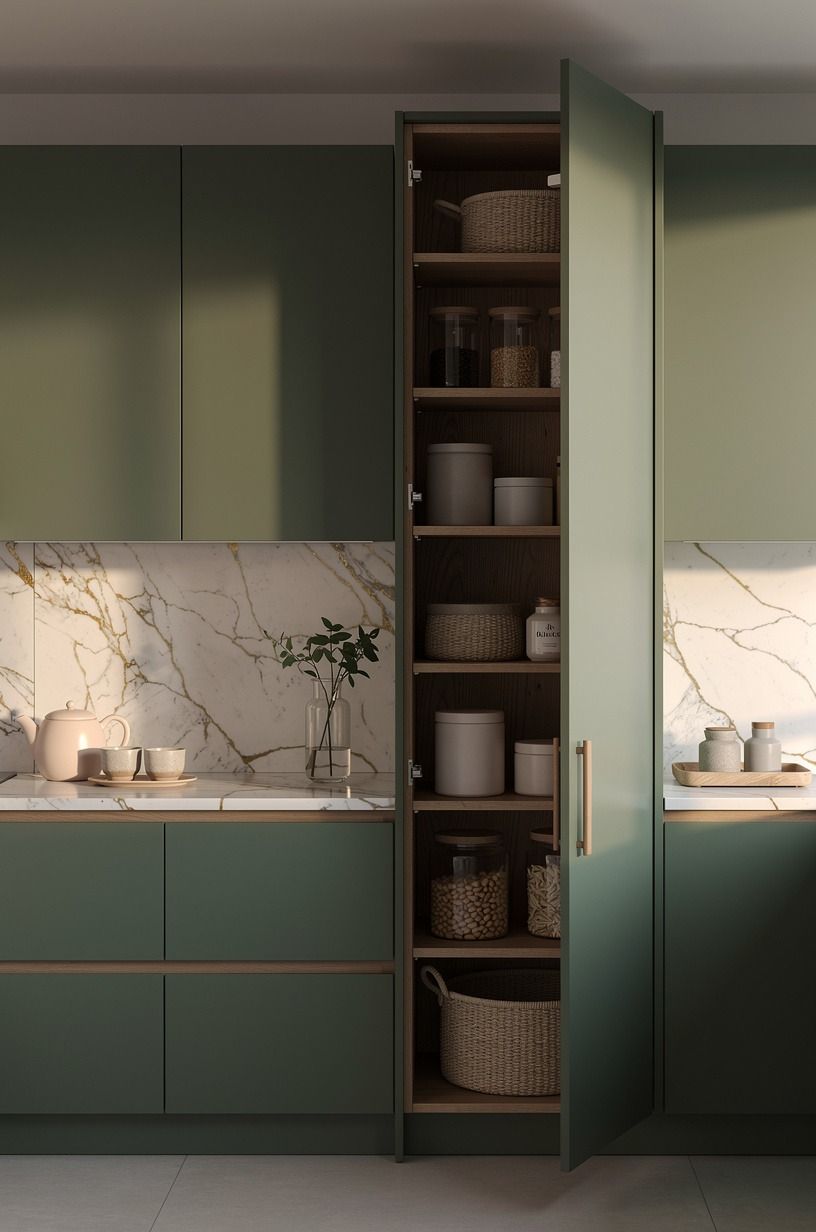
Yes, if you use the inside face for flat, light things. A forest-green door with natural oak storage and rust-colored accents works beautifully beside a slim Calacatta marble ledge for notes, clips, and lightweight pantry tools.
8Anchor a freestanding armoire instead of adding cabinets
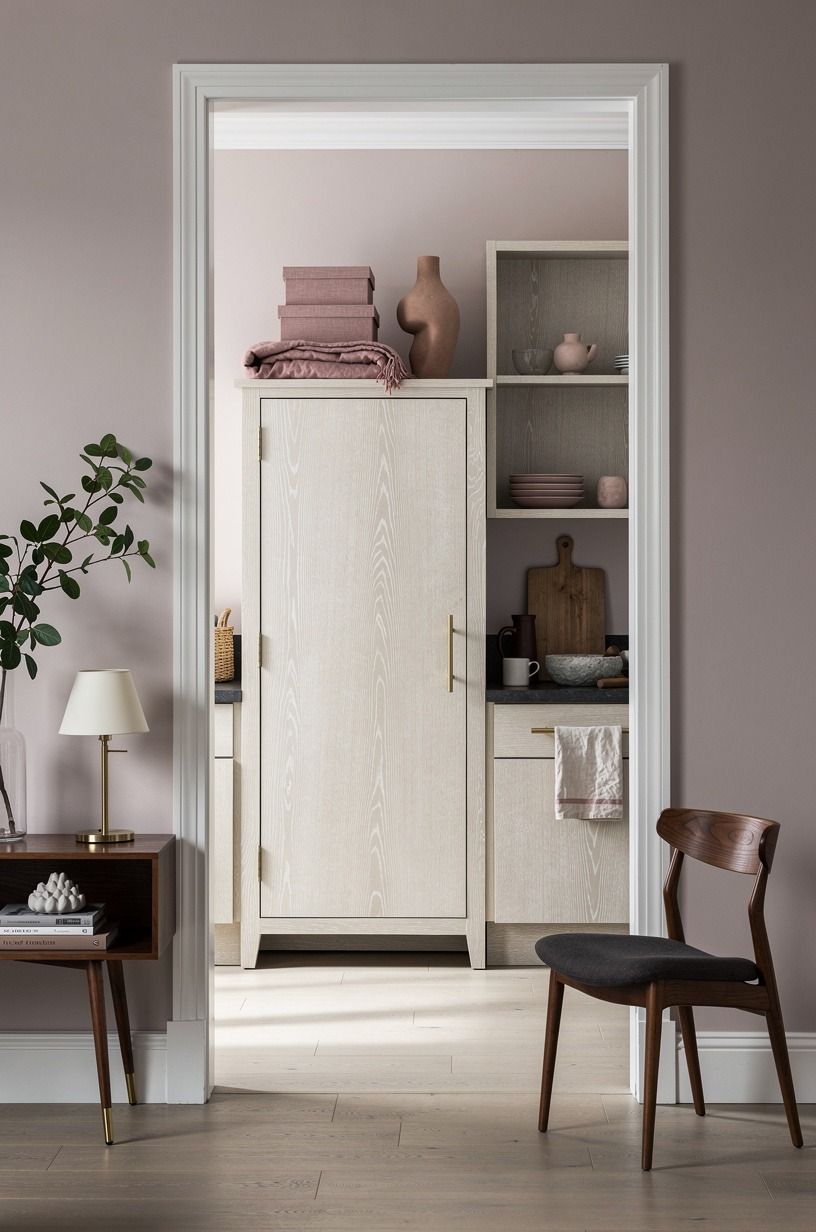
A freestanding armoire can be the right call when your corner has no usable upper cabinet run. It gives you pantry storage, hides visual clutter, and lets you take the piece with you later.
Look for an IKEA HEMNES cabinet or a secondhand pine hutch with doors that open wide. Paint it Sherwin-Williams Evergreen Fog SW 9130 if your kitchen has pale floors; the muted green makes the cabinet feel settled rather than pasted on.
Dusty rose, charcoal, and brass look especially elegant around an armoire with cerused white oak details. Your shelves can hold food below and serving pieces above.
Why buy a generic white utility cabinet when an old armoire can do the same job with more character? A little uneven grain is part of the point.
9Hang peg rails for the little things you lose
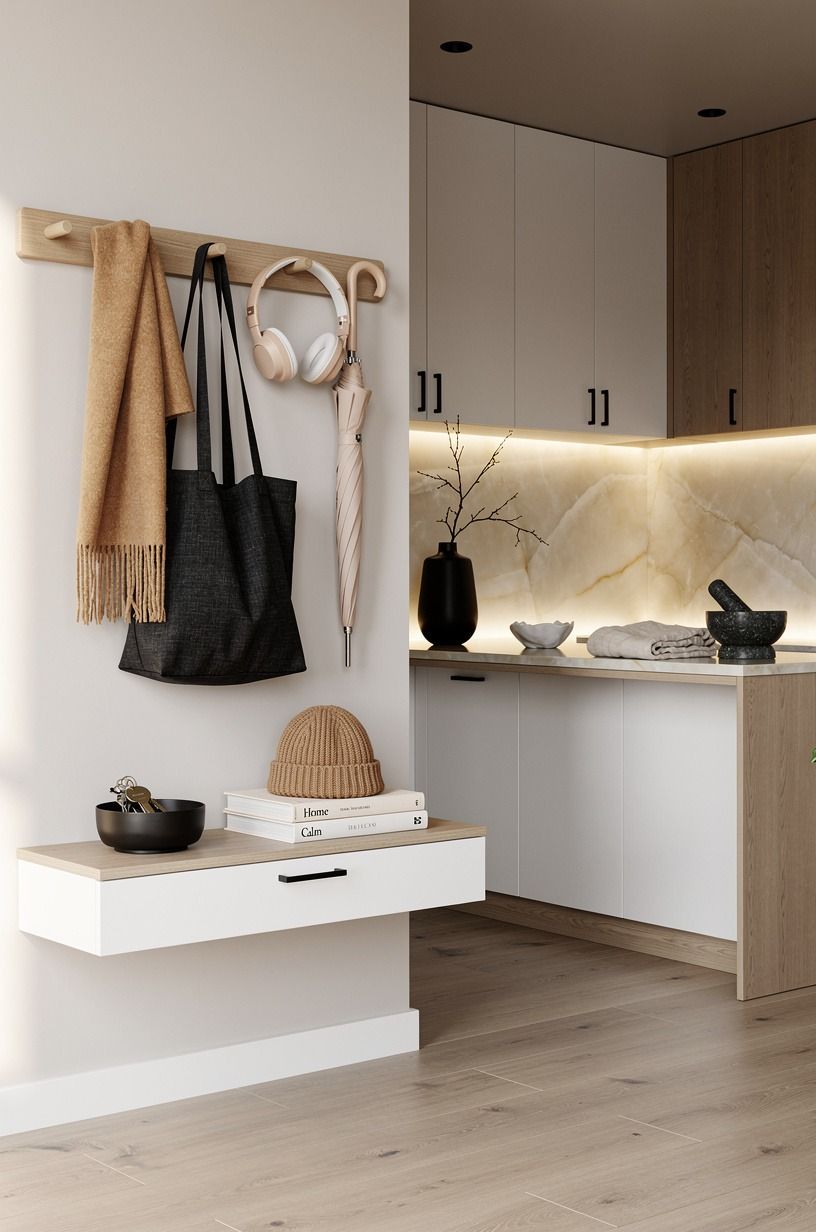
Peg rails are for the awkward pantry pieces that never stack well: market bags, aprons, scissors, measuring cups, and the basket you always need when you’re unloading groceries. Small items. Constant use.
Use a warm-white peg rail with camel storage bags and a few black accents above a shallow shelf. A slim panel of backlit translucent onyx can make the utility zone feel unexpectedly warm.
You’ll keep the useful pieces close without crowding your counter. A checked linen bag, a wooden scoop, and one sturdy apron can look welcoming instead of messy.
And yes, this is a tiny detour from pantry shelves. But your pantry works better when the things around it stop clogging drawers.
10Choose baskets over bins in a visible corner
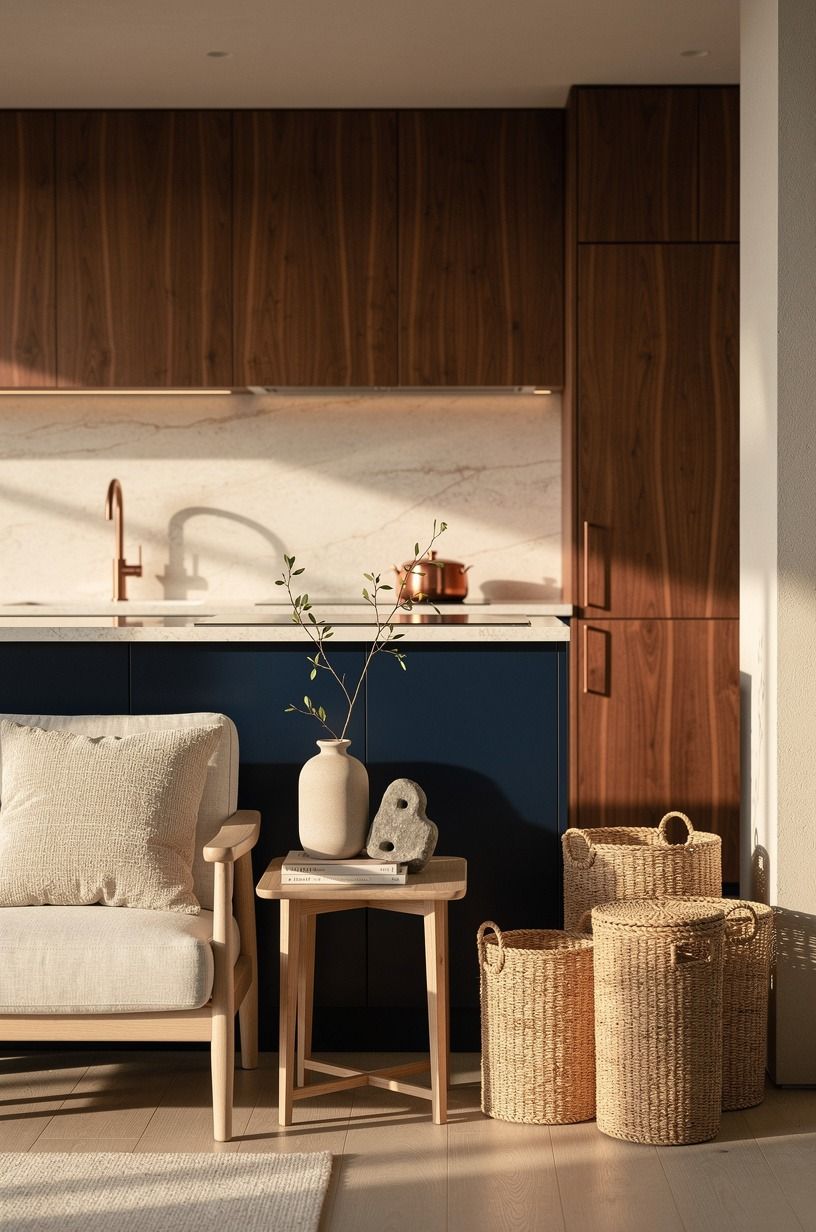
In a hidden pantry cabinet design that stays partly exposed, baskets beat clear plastic bins. Midnight blue cabinetry, copper details, and ivory baskets pair especially well with book-matched walnut shelving.
11Frame the niche with the Two-Wood Rule
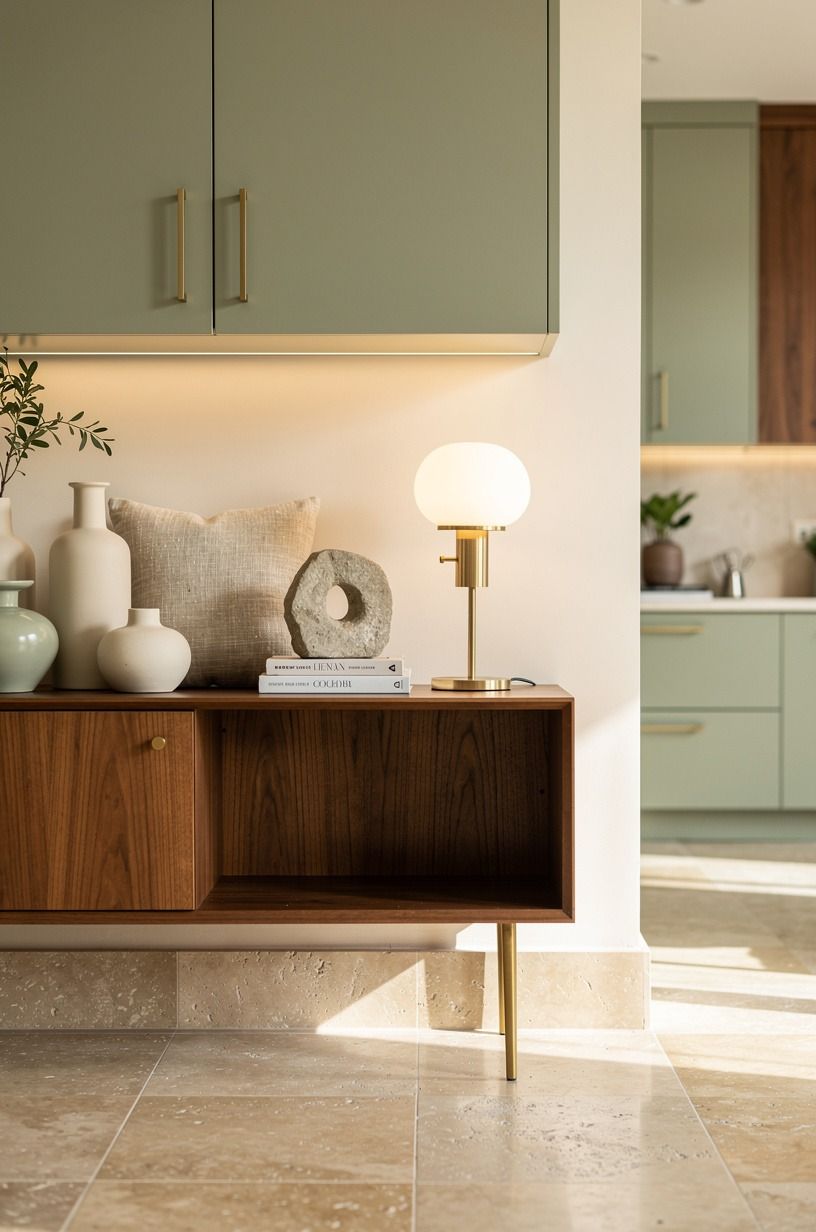
The Two-Wood Rule keeps a pantry corner from looking accidental: use one wood tone for shelves and one darker tone for the frame, then repeat each once elsewhere in the kitchen. Your eye gets a pattern without a showroom effect.
Pair natural wood shelves with a darker edge band, then bring in a small piece of warm travertine to connect the sage green and warm cream around the niche. Keep the grain matte. Glossy wood in a pantry corner can look oddly formal, especially beside flour bags and cereal.
If your room already has too many finishes, choose the shelf color from this guide to keeping furniture proportional. Your pantry shouldn’t become the loudest thing in the room.
12Add a lamp with the Three-Height Light Stack
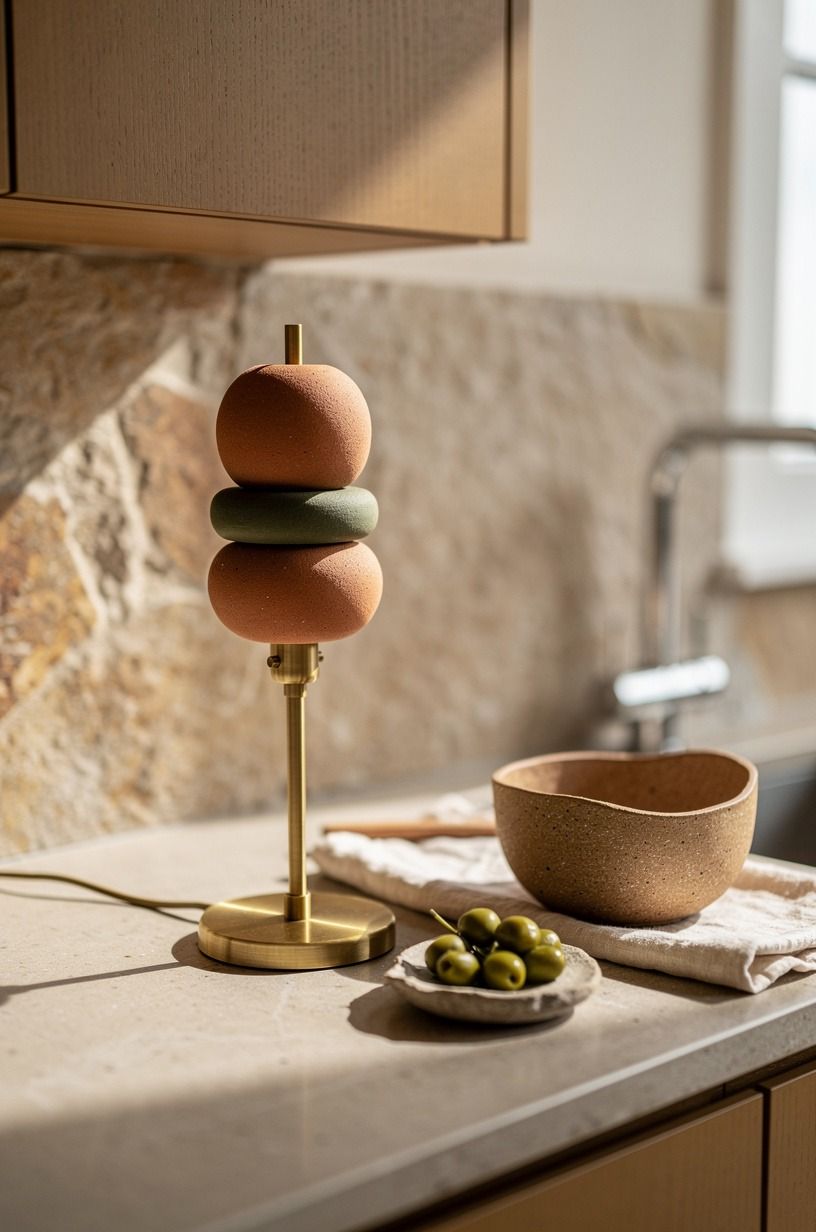
The Three-Height Light Stack means one low lamp, one mid-height shelf light, and one ceiling source. Terracotta, stone, and olive feel warmer under an unlacquered brass lamp that develops a little patina over time.
13Let a rolling cart fill the corner temporarily
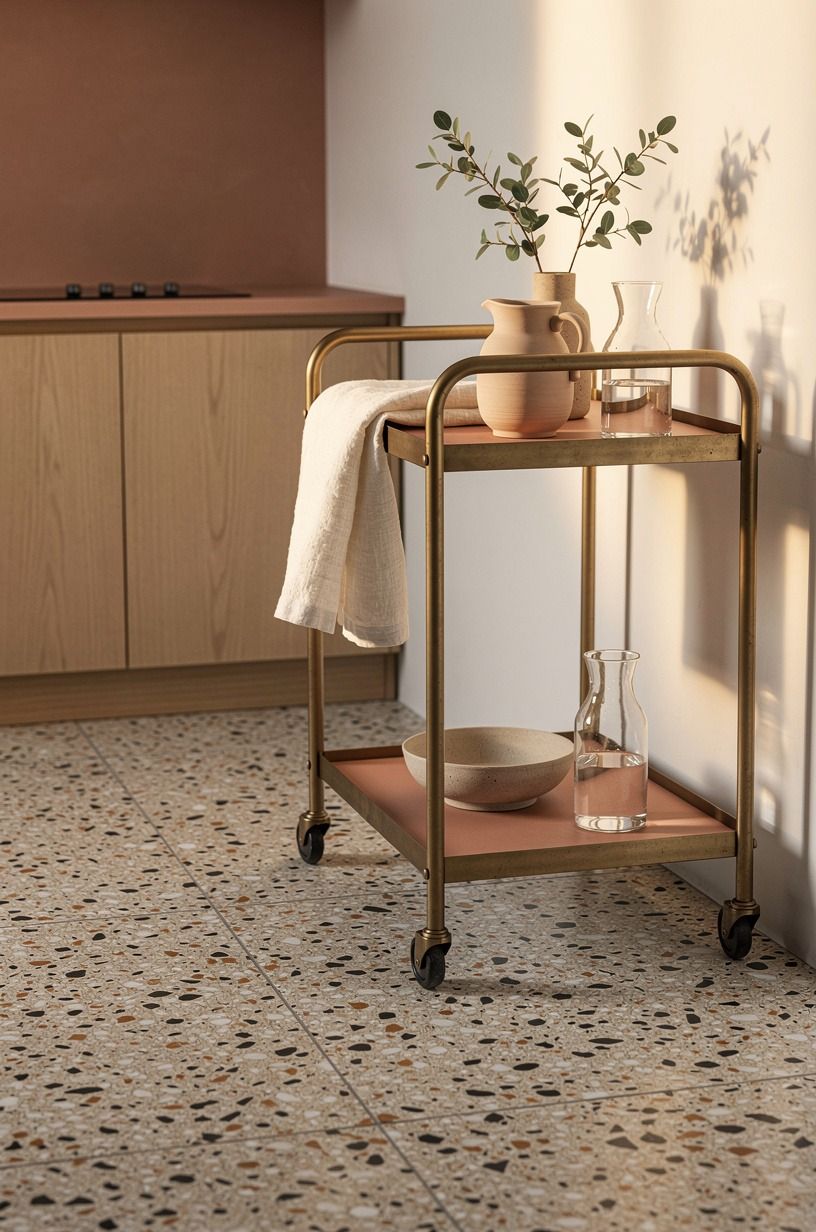
A rolling cart is the least permanent option, and that’s why it deserves more respect. You can test the pantry location before committing to shelves, then move it if the kitchen traffic says no.
Choose a narrow IKEA RÅSKOG cart in a muted clay tone and give each tier one job. Baking on top.
Produce in the middle. Paper goods below.
An oversized-chip terrazzo tray can keep the top tier tidy without making the cart feel fussy. Your cart should stop below counter height so it doesn’t interrupt the 36 in work surface.
This works especially well beside a breakfast nook or near a back door. I’d rather see a useful cart than a decorative ladder holding nothing. Function wins every time!
What a corner pantry refresh can cost
You don’t need a full remodel to make your pantry corner work. Start with the cheapest layer that fixes your real problem: visibility, access, or visual clutter. Your kitchen can feel more refined long before you touch the cabinets.
For a visible corner, I’d put money into doors, shelves, and lighting before a counter replacement. Laminate countertop pricing typically runs $10 to $40 per sq ft, while quartz countertop pricing commonly runs $60 to $120 per sq ft. Both have a place, but neither fixes a pantry you can’t reach.
Why I stopped trying to make pantry storage disappear
I used to think a good pantry had to vanish completely. Smooth doors.
No labels. Nothing on display.
It looked polished in photographs, but in my own kitchen it lasted about three days. Then the cabinet became a jumble because I had no visual reminder of what belonged where.
The tidy version was too precious for real life.
Now I think a corner pantry should reveal just enough. Let the useful things show through a linen panel.
Keep the tea tins on an open shelf. Use baskets that look good even when someone puts the crackers back sideways.
You’re not building a museum display; you’re building a place that can absorb Tuesday night.
The most effective corners have a little tension between hidden and visible. A dark painted recess makes the storage feel deep.
A pale shelf keeps it from becoming a cave. A practical hook beside a pretty cabinet says someone uses this room.
That’s the part I trust.
I’ve also learned that expensive storage doesn’t automatically feel better. A custom cabinet can be gorgeous, but if the shelf is too deep or the door blocks the aisle, you’ll resent it.
Meanwhile, a $20 tension rod and a good basket can make an awkward niche feel calm. Not glamorous.
Useful.
So give yourself permission to leave a little evidence of life. Your pantry corner can be warm, orderly, and slightly imperfect. The slightly imperfect part is usually why it works.
The Questions Worth Answering First
What is the best corner hidden pantry idea for a small kitchen?
A tall, shallow cabinet with pull-out baskets is the best choice for most small kitchens. Easy access matters more than maximum depth, because you’ll use what you can see. An IKEA BILLY bookcase with doors keeps your food close without crowding the aisle.
Where can I buy corner hidden pantry pieces on a budget?
Start with IKEA, Target, Wayfair, and Facebook Marketplace for affordable pantry pieces. Secondhand wood cabinets often have better proportions than new utility units. Look for baskets, narrow shelving, curtain rods, and hardware rather than buying a complete matching set.
How much does a corner hidden pantry makeover cost?
A simple corner pantry makeover often costs about $100 to $300 if you reuse shelves and focus on paint, baskets, and a curtain. Paint and sorting are the cheapest moves. Your existing cabinet, leftover jars, and a tension rod can cover most of the work.
Can I create a corner hidden pantry on a budget?
Yes, and you can begin without buying cabinetry. Low-cost storage starts with grouping food, adding labels, and moving rarely used items higher. A removable curtain, thrifted basket, and shelf liner give your corner a more welcoming finish.
Is a corner hidden pantry worth it in a small space?
Yes, it’s worth it because a small kitchen benefits from using vertical space and dead corners. More usable storage reduces counter clutter immediately. Keep daily goods at hand height, then put backups above so your kitchen stays easy to move through.
Is a corner hidden pantry a good idea for a rental?
Yes, especially with removable choices. No-damage storage can include tension rods, peel-and-stick shelf liner, freestanding cabinets, and rolling carts. You can also use a curtain to hide open shelving, then take every piece with you when you move.
Where I’d Start First
If I had to pick one, I’d start with a tall, shallow cabinet. Deep storage is where groceries go to disappear, while a slim cabinet keeps every shelf in your line of sight. Pin the cabinet idea for later and revisit these vertical storage principles.