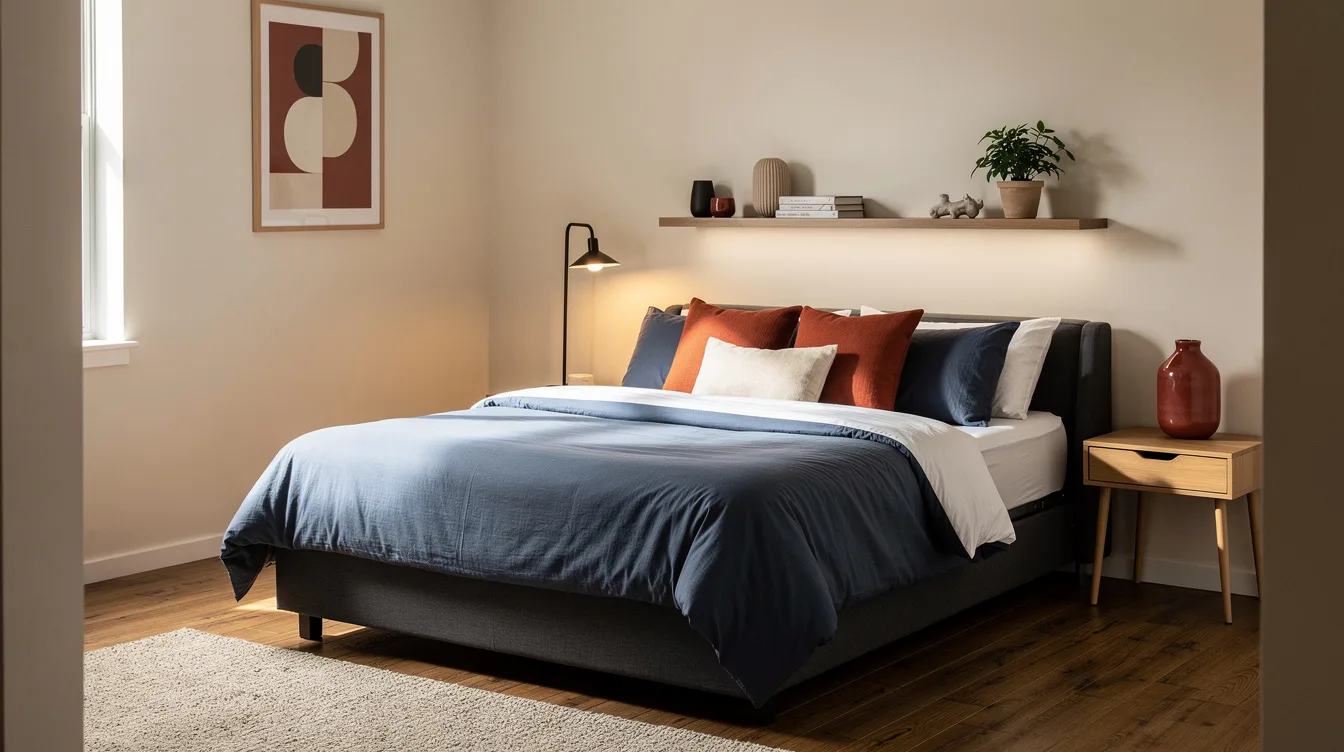
A queen sleeper asks a small room to work twice as hard: it has to feel like a sitting room on Tuesday and offer a real bed on Friday night. In a room under roughly 120 square feet, that tension shows up fast, especially when the sofa opens to a 60-by-80-inch sleep surface.
I’d rather build the room around the open bed first, then make the closed sofa look intentional. Guests notice elbow room and a decent mattress long before they notice a clever color palette.
Measure the Open Bed Before Buying
Mark out the fully opened sleeper with painter’s tape before ordering anything. A true queen needs room for a roughly 60-by-80-inch mattress, plus a walkable path at the foot and one usable side.
The American Leather Comfort Sleeper is compelling for tight rooms because its mechanism opens with zero wall clearance and gives guests a true 80-inch length. It costs roughly $4,500 and up, so reserve it for a room that earns its keep year-round.
Choose a Mattress Guests Can Actually Sleep On
A thin foldout pad turns a polished room into an apology. Look for at least a roughly 4.5-inch mattress, and skip the cheapest bar-style mechanism if overnight visitors come more than once or twice a year.
The included HiPerform foam mattress in many American Leather models avoids that familiar bar-in-the-back feeling. Cooling Gel and Tempur-Pedic upgrades can add roughly $800 to $1,300, which is meaningful money but easier to justify than replacing an entire sleeper.
Anchor the Sofa With a Real Rug
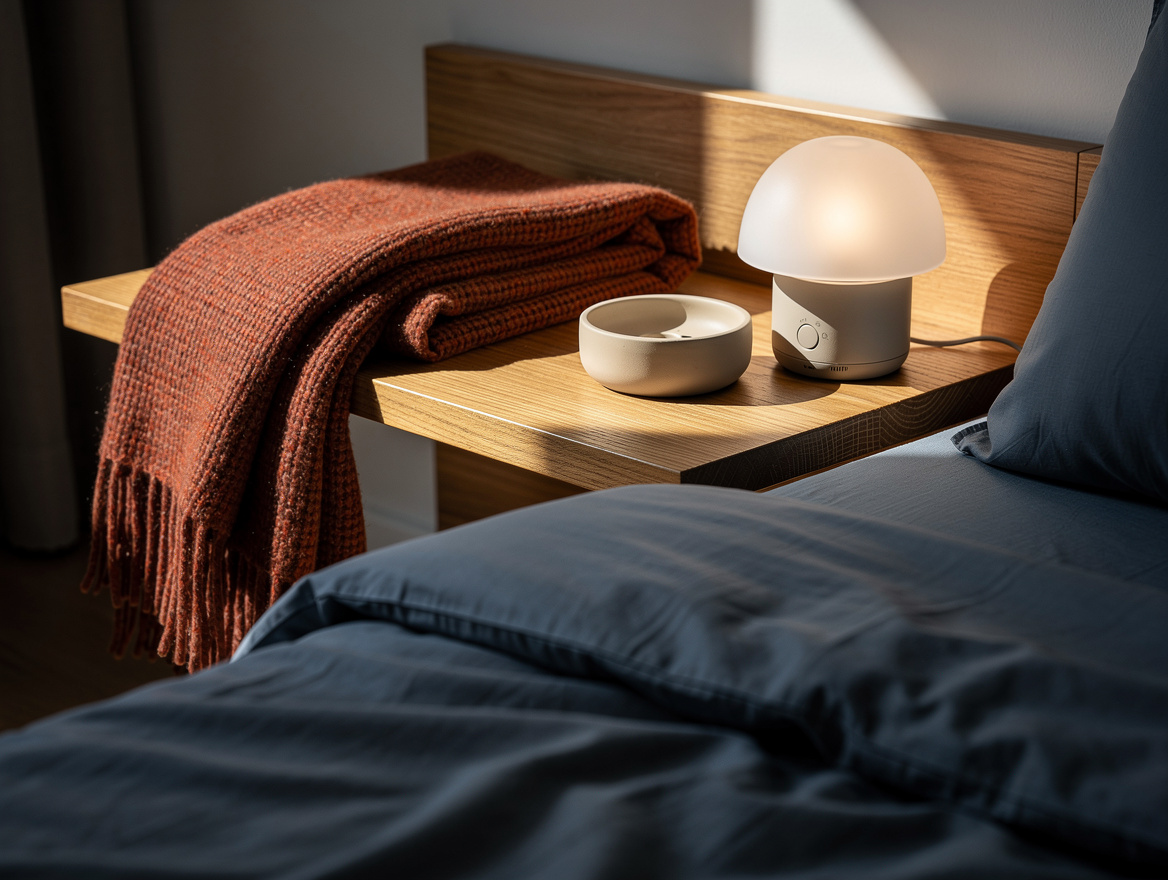
A sleeper floating on bare flooring reads like temporary furniture. Slide a low-pile Wayfair wool-blend rug under the front legs, then make sure it extends beyond the open bed zone so the room still feels grounded at night.
Use a flat weave or a tightly woven indoor-outdoor rug, not a deep shag that catches the pullout frame. An average 5-by-8-foot rug is often enough for a compact guest room, while an 8-by-10 gives a larger den a much calmer footprint.
Give the Sofa a Daytime Identity
Closed up, the bed should read as a sofa with purpose. The IKEA FRIHETEN, typically around $799 to $899, has useful storage and a solid-wood frame, though its roughly 56¾-by-78⅜-inch sleep surface suits shorter stays better than a true queen.
Dress it like seating, not a waiting bed: two lumbar pillows, one washable throw, and a substantial pillow behind each arm. A Target Threshold cotton quilt folded across the seat adds softness without creating a mountain guests have to relocate.
Build a Landing Zone Beside the Bed
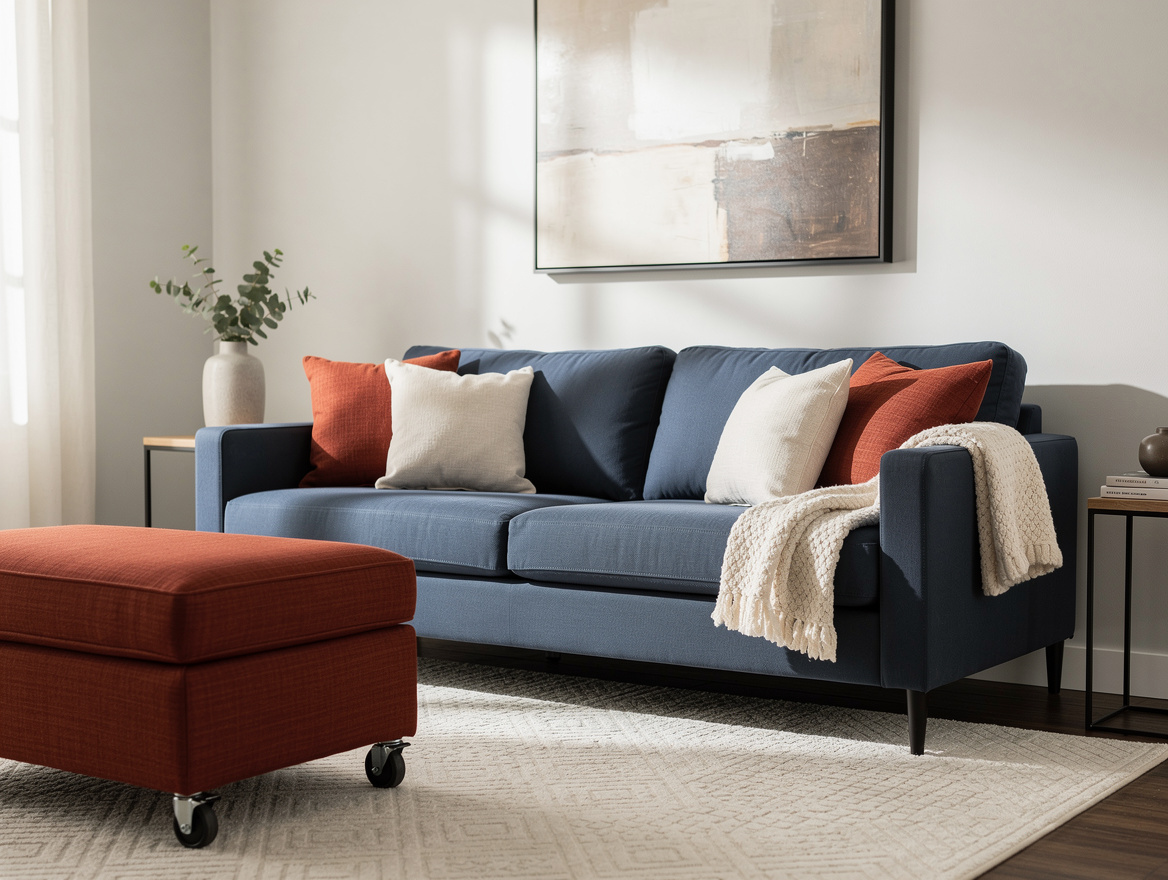
Guests need somewhere for a phone, water, glasses, and a book once the sleeper is open. A narrow Home Depot oak wall shelf installed at bedside height works better than a bulky nightstand that blocks the pullout path.
Add a plug-in sconce or a small cordless lamp, then keep the surface mostly clear. One ceramic dish. A paperback.
That modest setup feels more generous than a decorative console that becomes unusable after 9 p.m.
Use Storage That Moves When Guests Arrive
Fixed furniture is the usual mistake in a dual-purpose room. Choose a Walmart rolling storage ottoman or a lidded bench that can hold spare linens by day and roll into a closet when the bed comes out.
For a sleeper used as an office sofa, keep one labeled basket with sheets, two towels, and a blanket nearby. The Costco cotton sheet set approach is practical: buy an extra set, wash it after each stay, and avoid turning a desk drawer into a linen closet.
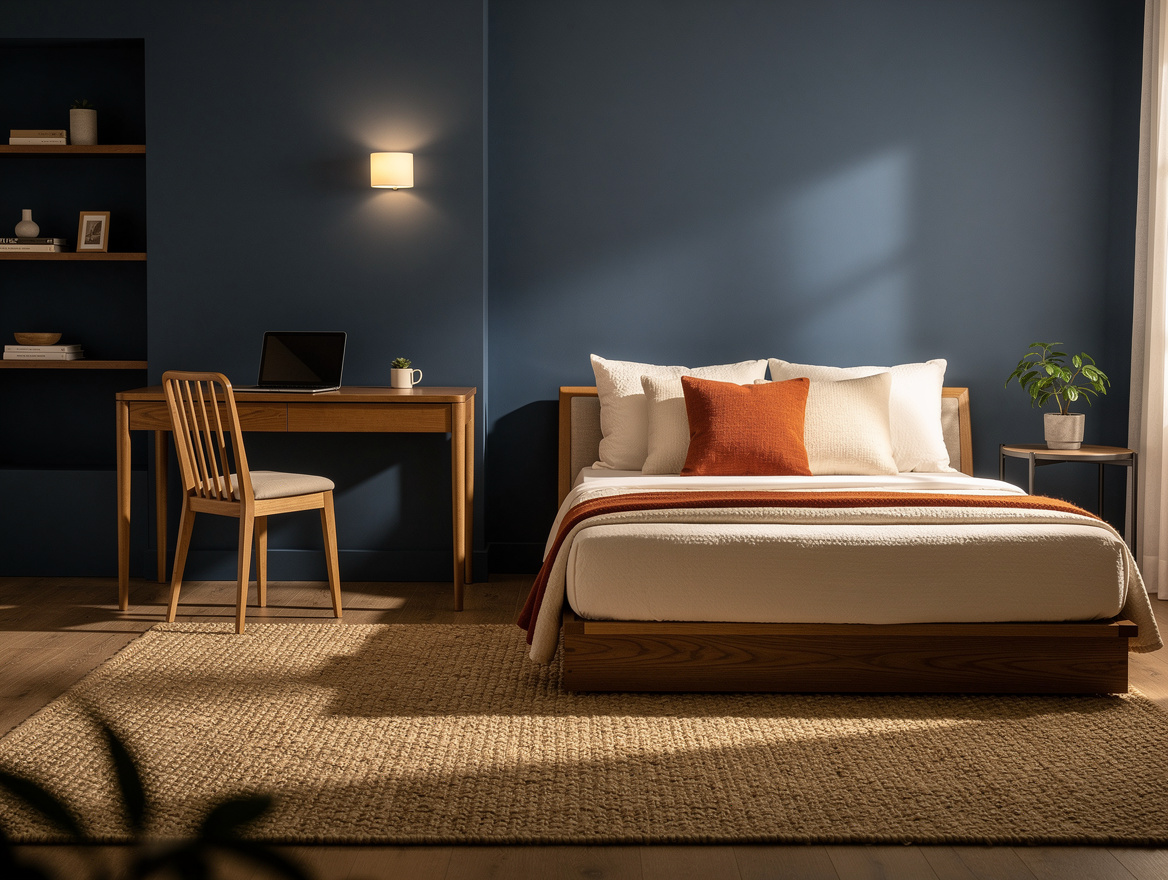
Start with the bed footprint, then buy the sleeper that leaves a clear route to the door. A guest room feels cozy when nobody has to climb over furniture to get into it.
Mia Carter writes about small-space living and budget home makeovers. She has restyled three rentals and tests most ideas in her own 45 sqm flat.