
A compact armchair can make a small bedroom feel finished, but one careless placement turns the path from the door to the wardrobe into a daily obstacle. In a 300 × 300 cm room, the chair belongs beyond the bed’s foot or inside a wider side bay, never in the route.
Start with about 90 cm / 35½ in for the main passage and around 60 cm / 24 in in front of the chair when only the sitter needs access. The right choice is usually shallow, measured, and placed after circulation is solved.
Map the Route Before Shopping
A chair should never sit in the daily path between the door, bed, and wardrobe. Protect about 90 cm / 35½ in for the main route, then reserve around 60 cm / 24 in in front of the seat when only the sitter needs access.
Use a paper template or painter’s tape to mark the chair’s full footprint, including the legs. IKEA VEDBO has a 73 × 65 cm footprint, so its real floor claim is easy to test before you carry it upstairs.
These measurements are useful furniture-planning guidelines, not local accessibility regulations. Door swings, wardrobe doors, radiators, and bed frames can change the usable clearance.
The winning layout gives the chair a destination instead of making it part of the obstacle course.
Tuck a Shallow Chair Beyond the Foot
In a compact room, the best position is often a far corner beyond the bed’s foot, with the chair facing inward and its back against the wall. The route then uses the opposite side of the foot-end zone.
IKEA VEDBO measures 73 × 65 cm and is listed at €249, with a 44 cm seat height and solid-birch legs. Its shallow depth makes it the strongest choice here when the problem is projection into the room.
VEDBO projects 17 cm less than the deeper POÄNG, a meaningful difference beside a bed or near a narrow walkway. That extra breathing room matters more than a chair’s visual lightness.
Keep the corner free of a floor basket or spare stool. One chair can fit comfortably, while a second small object can erase the clearance that made the layout work.
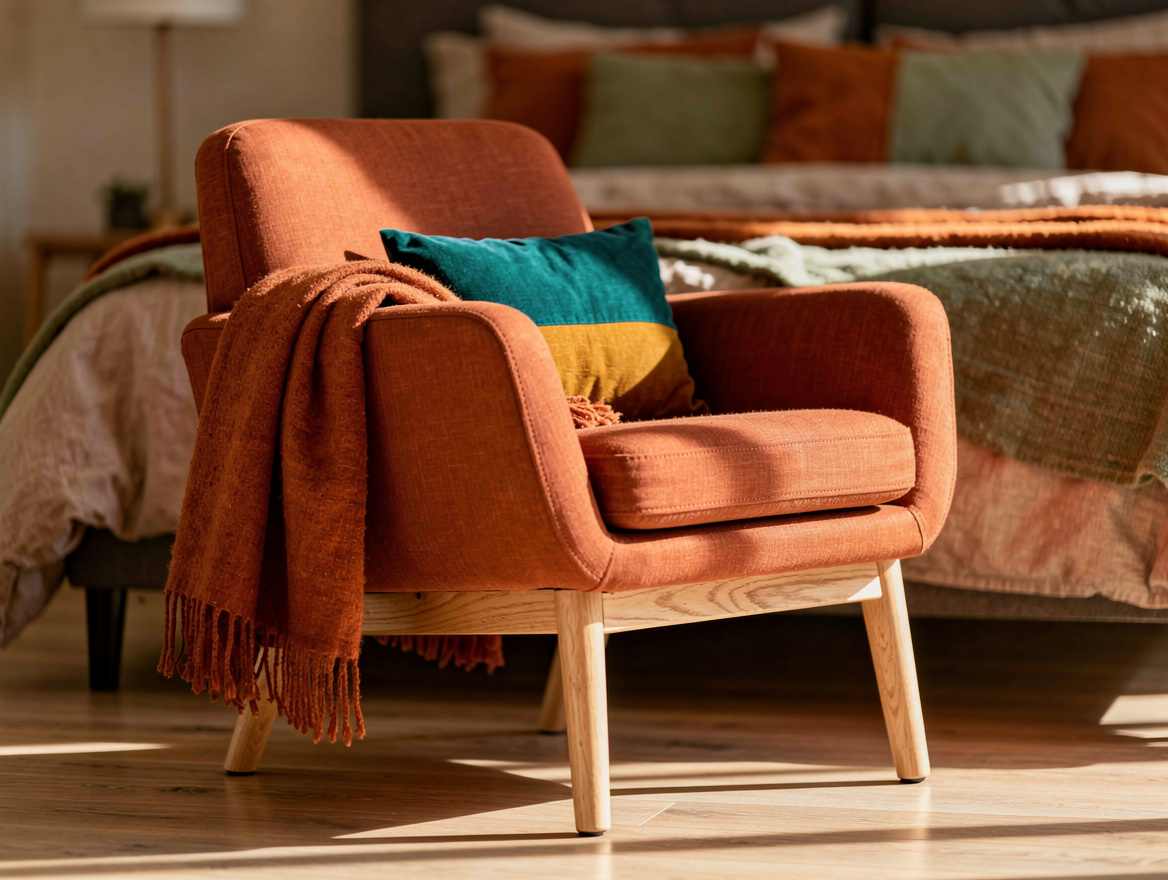
Use a Side Bay for Washable Upholstery
A wider side bay can handle a roomier chair when the bed is not centered tightly against both walls. This is the right place to prioritize seat comfort and easy cleaning.
IKEA TULLSTA measures 79 × 70 × 78 cm and is listed at €199, making it wider and deeper than VEDBO. Its removable outer cover washes at 40°C, a practical advantage for a reading corner used every day.
Place TULLSTA beside the bed only when the chair leaves the main route intact and the wardrobe can open fully. A washable cover does not compensate for a chair that blocks drawers or forces sideways shuffling.
Give the bay a clear visual boundary with the wall behind the chair. The result feels intentional, even when the room has no spare square footage.
Reject Depth When Width Looks Tempting
A narrow chair can still be the wrong chair if it reaches too far into the walkway. Width is only one part of the fit, and depth often creates the daily frustration.
IKEA POÄNG measures 68 × 82 × 100 cm and is listed at €69.99, depending on finish and cushion. Its birch-veneer frame keeps the price low, but the 82 cm depth makes it a poor choice when circulation is the main constraint.
POÄNG works better in a deep side bay where its extended frame points toward a wall rather than across the route. Do not choose it simply because it is narrower than VEDBO.
Open legs and a thin frame can make a chair look lighter, but they do not reduce its actual footprint. Measure the floor, not the visual impression.
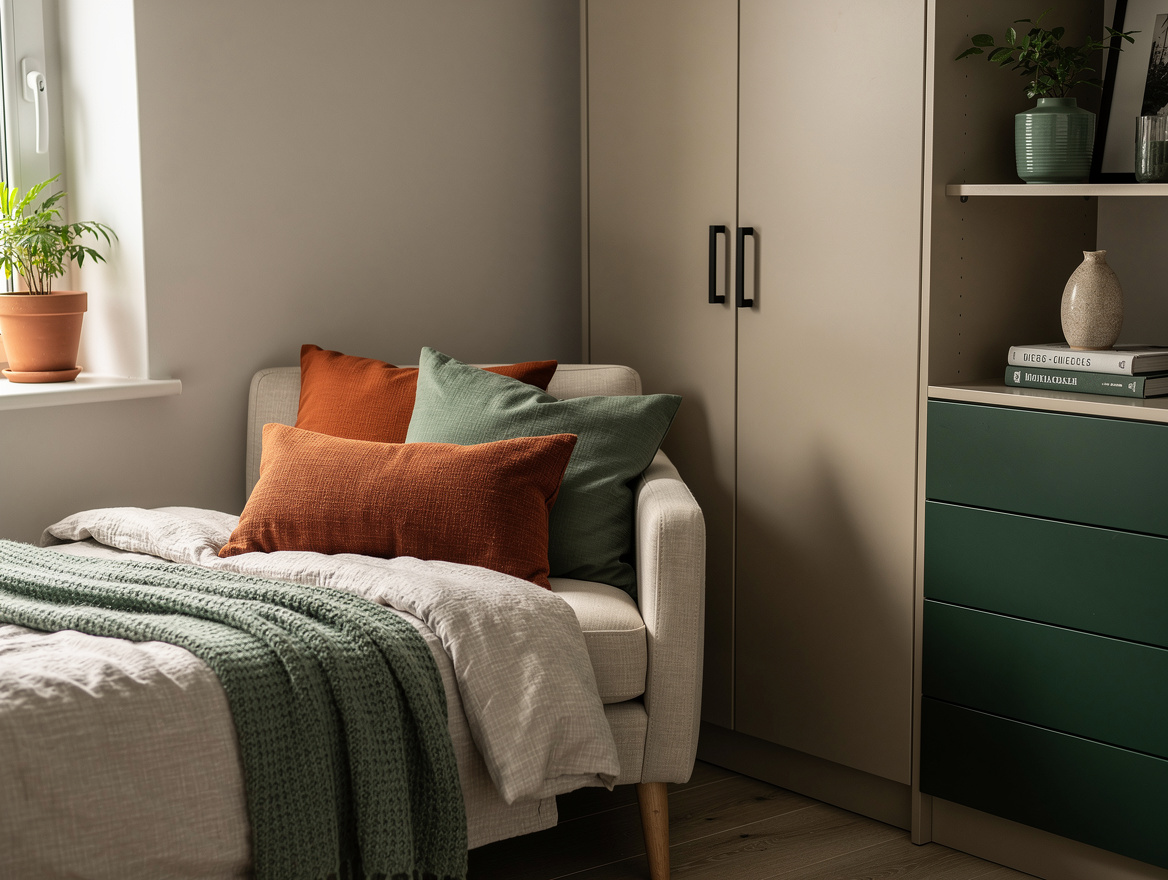
Tape the Footprint Before Moving Furniture
For a square room measuring 300 × 300 cm, or roughly 9 ft 10 in square, one workable plan starts with a 150 × 205 cm bed centered on one wall. That arrangement leaves about 75 cm on each side and roughly 95 cm beyond the foot.
Mark the bed first, then place a rectangle for IKEA VEDBO in the far foot-end corner. Keep the chair facing the bed and send the main route through the other side of the foot-end zone.
Walk from the door to the wardrobe several times while the tape is down. Open the wardrobe, turn at the bed, and sit in the marked chair area before committing to the furniture.
This test catches problems a floor plan misses, especially when a door swing or radiator steals part of the apparently open space.
Face the Chair Into the Room
Orientation controls whether the chair feels useful or stranded. A seat aimed toward the bed creates a small reading or dressing pause, while one aimed directly at a wall can make the corner feel like leftover storage.
Use the solid-birch legs and compact frame of IKEA VEDBO to keep the corner visually open, but place the chair fully beyond the bed’s foot. Do not let its front edge drift into the route.
Keep nearby accessories disciplined: a wall-mounted reading light, a small book, and nothing that narrows the passage. The chair already supplies enough visual weight for a small room.
The best layout is the one you can cross in the dark without thinking about it. Start by taping a 73 × 65 cm rectangle beyond the bed, then adjust the bed only if the route still feels generous.
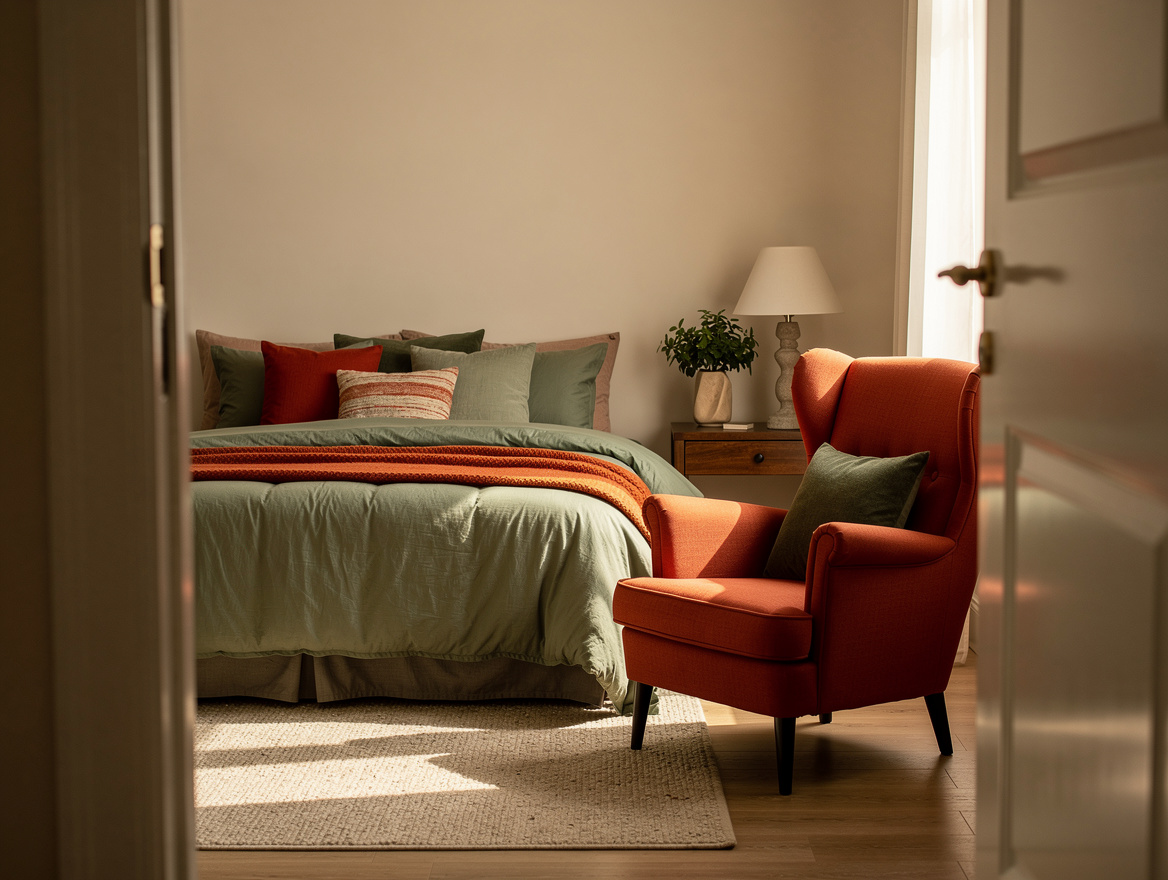
Put painter’s tape on the floor before comparing upholstery, color, or price. If the taped footprint protects the route and the wardrobe still opens cleanly, you have found the right corner.
Mia Carter writes about small-space living and budget home makeovers. She has restyled three rentals and tests most ideas in her own 45 sqm flat.