
The short answer: a dark academia whiskey room runs about $200 to $800 if you paint and restyle what you own, and it’s the single highest-impact weekend project I’ve done. I painted my first one a safe greige because I was scared of dark walls. It looked like a dentist’s waiting room with a bottle of scotch in it. Dark academia isn’t about buying more stuff. It’s about committing to the mood, and these 15 moves will get you there.
- Paint the walls darker than you’re comfortable with
- Anchor the room with one wall of floor-to-ceiling shelves
- The Two-Wood Rule: mix exactly two wood tones
- Choose leather over velvet for the main seat
- Build the Three-Height Light Stack
- Why does one small lamp beat three big ones?
- Hang art at eye level, not above the mantel
- Stack books horizontally, not just vertically
- Frame your whiskey collection like art
- The Shelf-Fill Ratio: two-thirds full, never stuffed
- Ground the zone with a rug that can take a spill
- Swap the overhead bulb before you buy anything else
- What things actually cost
- Bring in one aged brass moment
- The Corner-Only Doctrine: give the room one perfect seat
1Paint the walls darker than you’re comfortable with
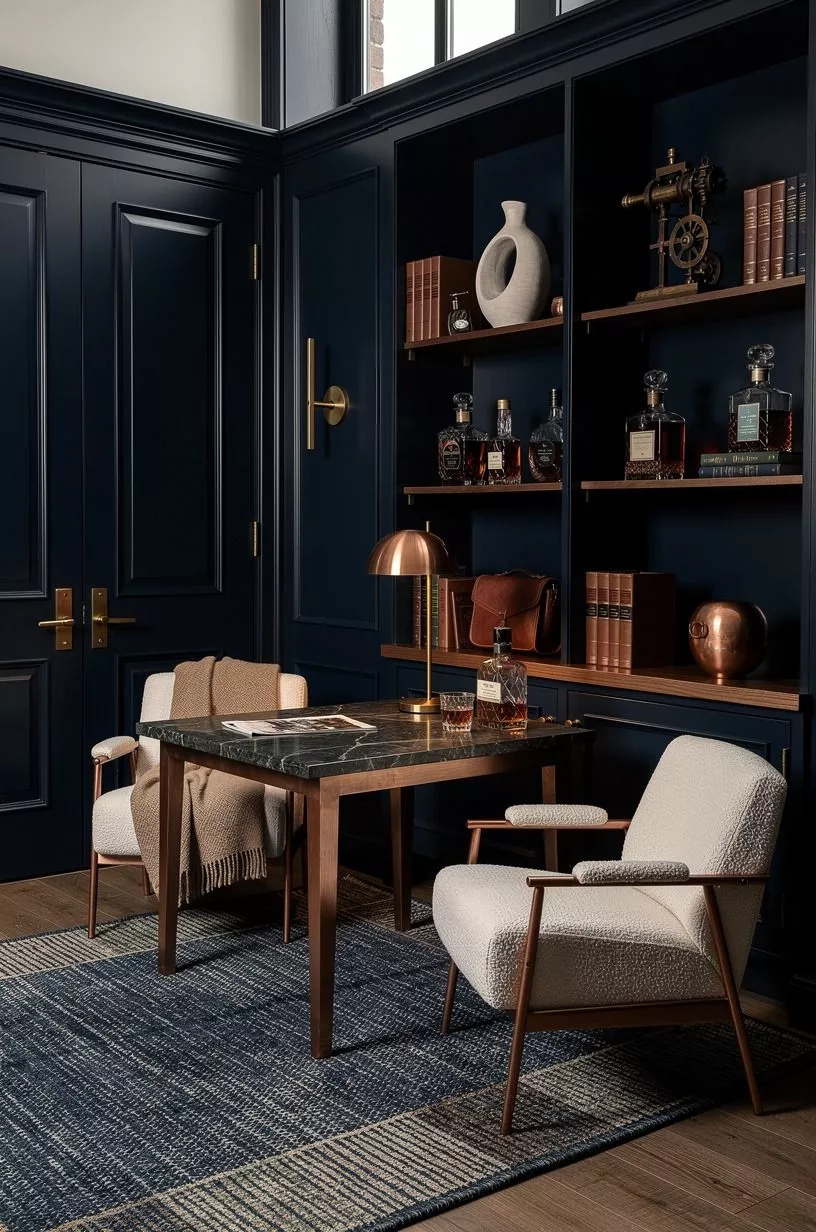
This is the move everything else hangs on. I went with Farrow & Ball Hague Blue on my second attempt, and the room stopped feeling like a rental and started feeling like a chapter from a novel. If blue isn’t your thing, Benjamin Moore Black Forest Green reads almost black by lamplight and it’s gorgeous behind a whiskey shelf.
Here’s the part that surprises people: dark paint makes a small room feel bigger, not smaller, because the corners disappear. Your eye can’t find the edges, so the walls stop closing in.
I wrote about this exact effect in my dark walls makeover, and the before photos still make me laugh. Don’t do one accent wall.
Commit to all four, or the room reads as indecisive.
2Anchor the room with one wall of floor-to-ceiling shelves
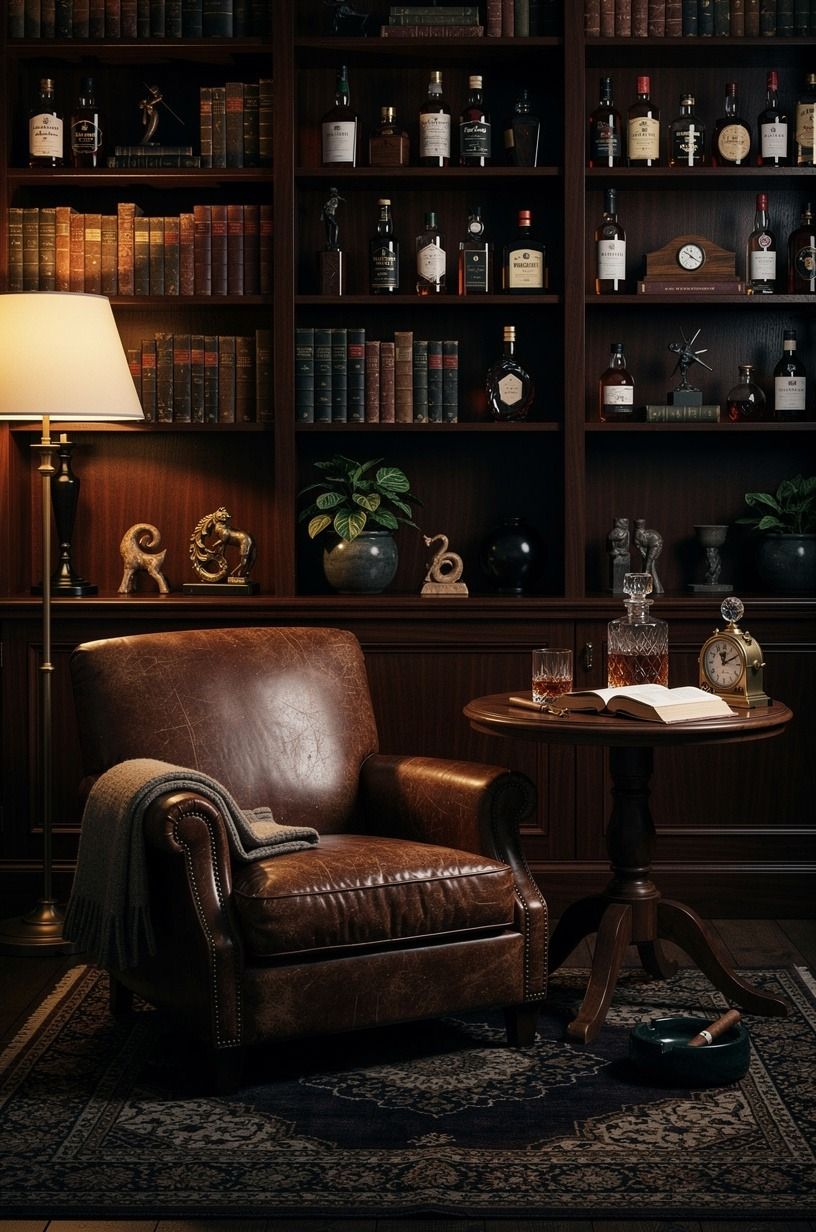
Every great dark academia home bar I’ve seen has exactly one wall doing the heavy lifting.
3The Two-Wood Rule: mix exactly two wood tones
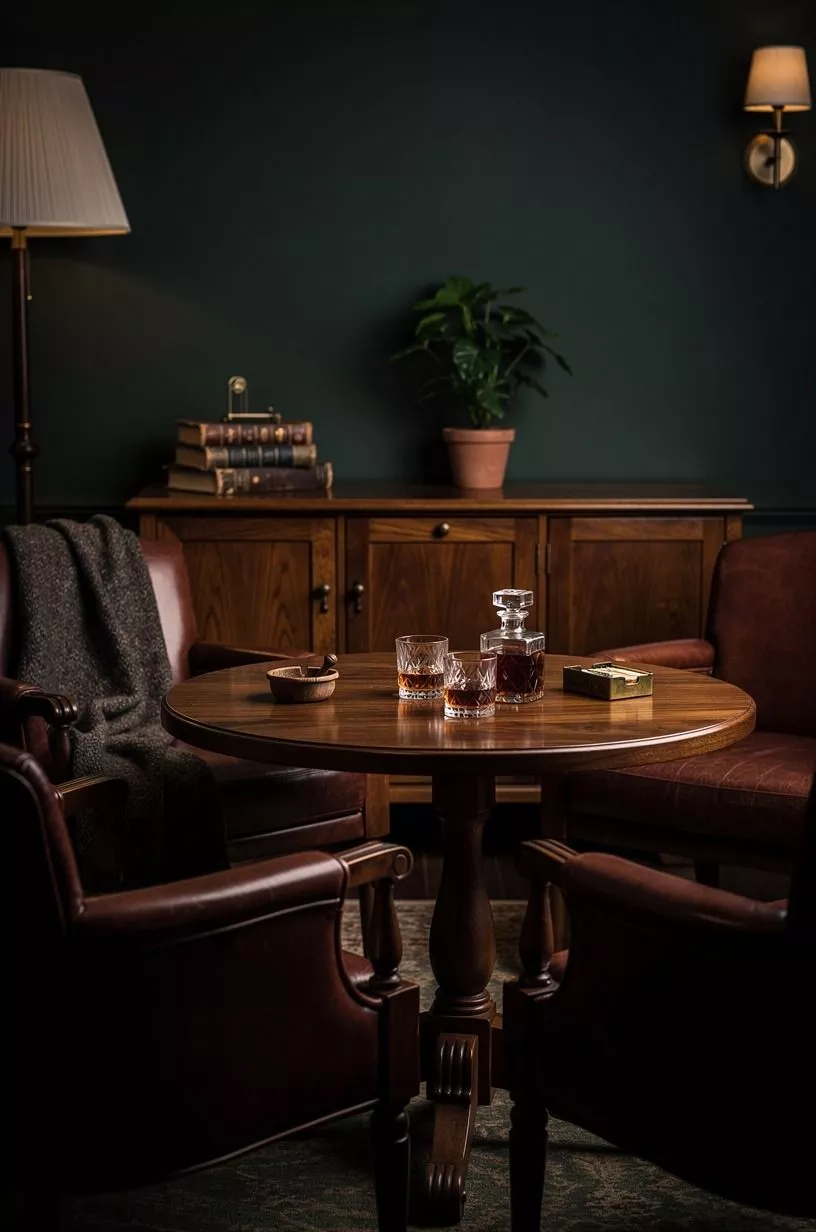
Most dark whiskey rooms fail because of wood chaos. Walnut desk, oak shelves, cherry bar cart, pine frame.
It’s a lumber yard, not a library. My rule: pick two tones and refuse everything else. I run dark walnut as the dominant wood and a worn mid-tone oak as the accent, and the room finally looked intentional instead of accumulated.
If you’re working with what you already own, don’t panic. A $12 tin of dark gel stain will pull three mismatched pieces into the same family in an afternoon. That’s cheaper than replacing anything, and honestly, more satisfying.
4Choose leather over velvet for the main seat
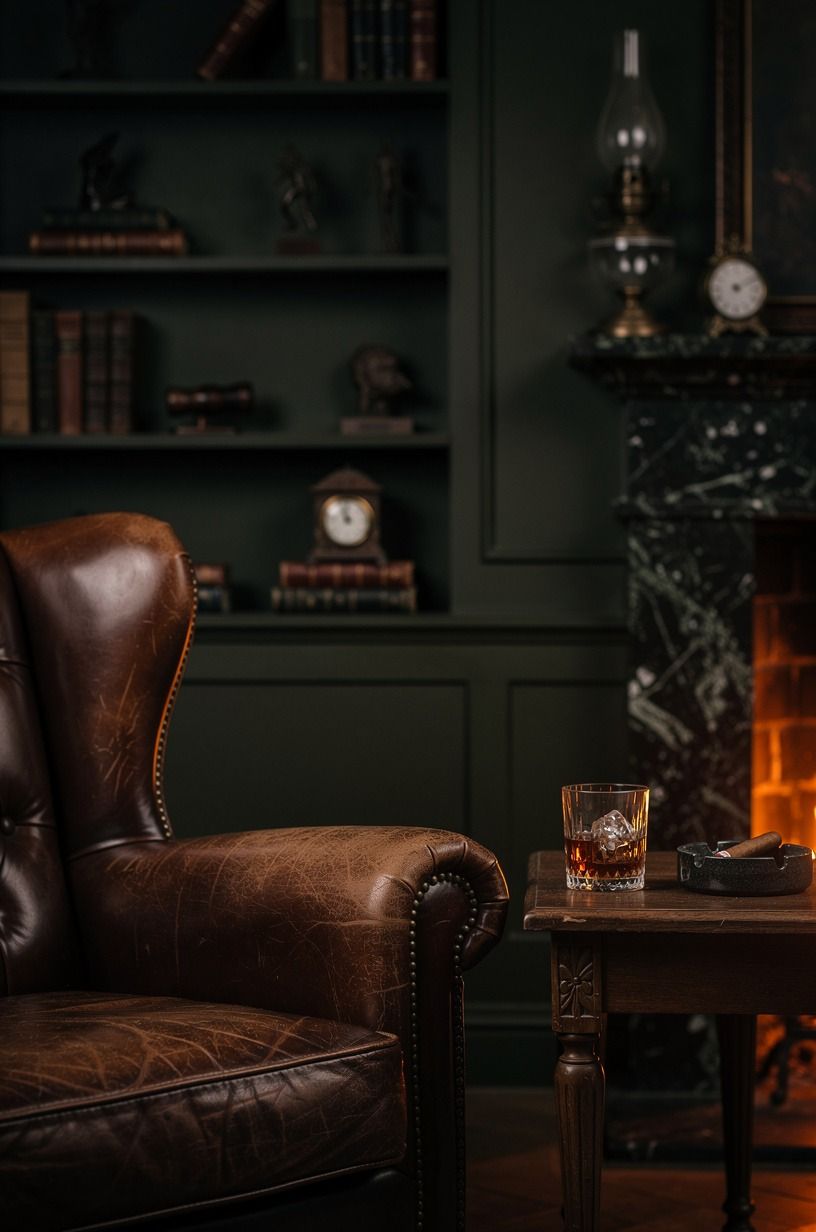
Velvet photographs beautifully. It also shows every crumb, every watermark, and every cat decision.
For a room where people actually sit with a glass in hand, full-grain tan leather wins every time. It takes a spill, it ages into character, and the patina after two years looks better than the day you bought it.
The Article Sven chair in tan leather is the one three of my friends bought after sitting in mine. Worth it.
If the budget says no, a secondhand Chesterfield from Facebook Marketplace, conditioned with leather balm, gets you eighty percent of the look for a tenth of the price. Velvet belongs on one small accent pillow, not the seat you’ll live in.
5Build the Three-Height Light Stack
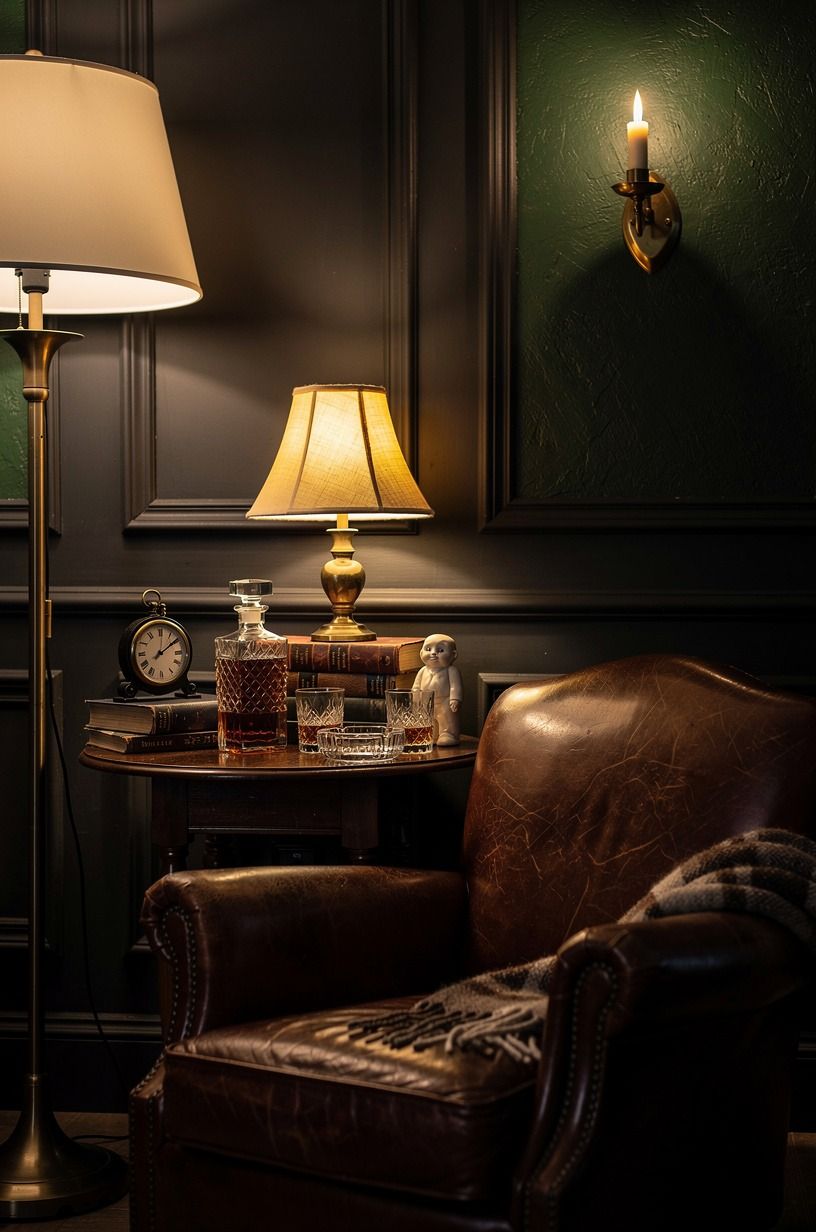
One ceiling light is how a whiskey room dies.
6Why does one small lamp beat three big ones?
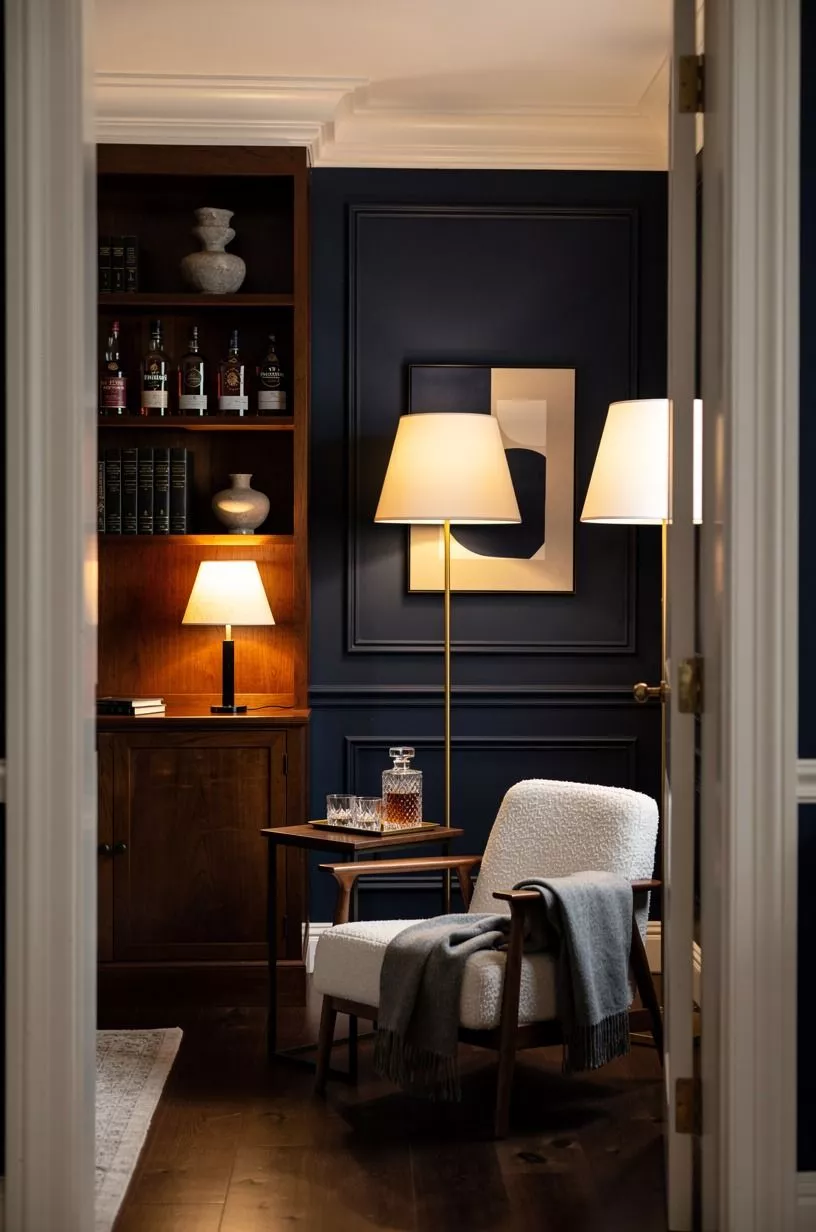
Because pools of light are the entire move. Three bright lamps flatten a room into an office. One small amber-glass table lamp, throwing a warm circle that stops at the arm of your chair, creates the feeling of a private club.
Your eye rests in the lit zone and the darkness does the decorating for free.
If you’re building out the rest of the room’s atmosphere, my dark moody speakeasy decor guide covers the bulb temperatures that make this work. Stay at 2700K or warmer. One cool-white bulb and the spell breaks.
7Hang art at eye level, not above the mantel
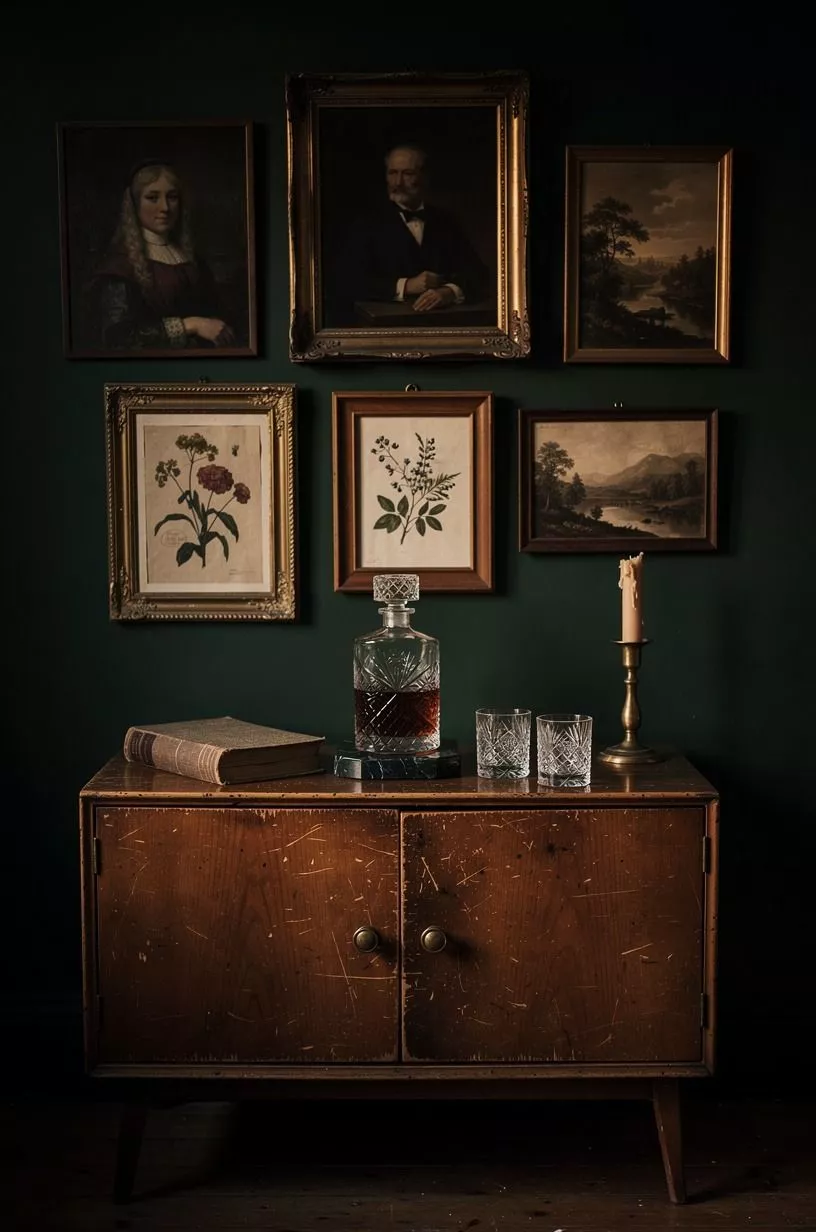
The standard rule exists for a reason: hang art with its center at 57 to 60 inches from the floor. In a dark academia room I’d go a touch lower, because most viewing happens seated, glass in hand. Vintage botanical prints or an old oil portrait from a thrift store beat anything mass-produced, and they cost less than dinner out!
I made the mistake of hanging a gallery grid too high for a year. It looked like a waiting room.
Lowered everything four inches and the whole wall settled into place. Frames matter too: mismatched gilt and dark wood frames look collected, while a matching set looks like a hotel corridor.
8Stack books horizontally, not just vertically
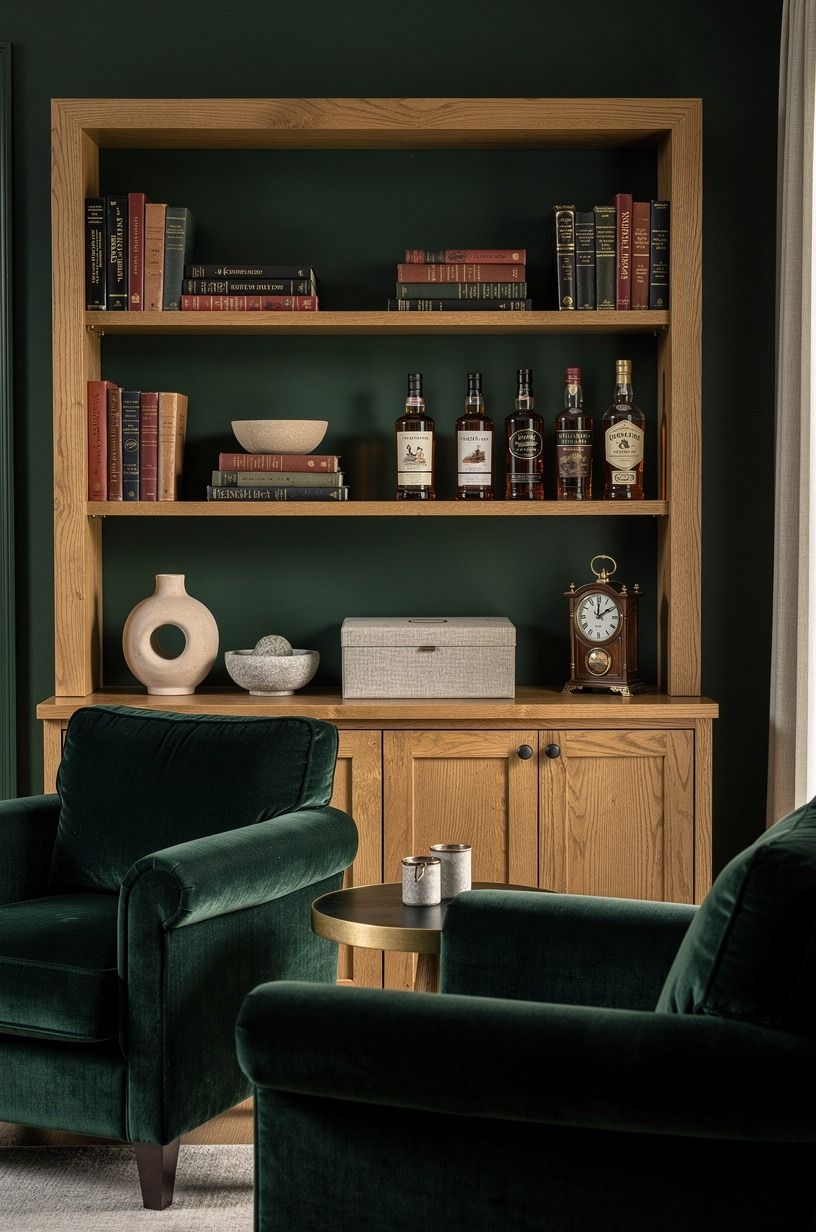
A shelf of perfectly vertical books looks like a bookstore.
9Frame your whiskey collection like art
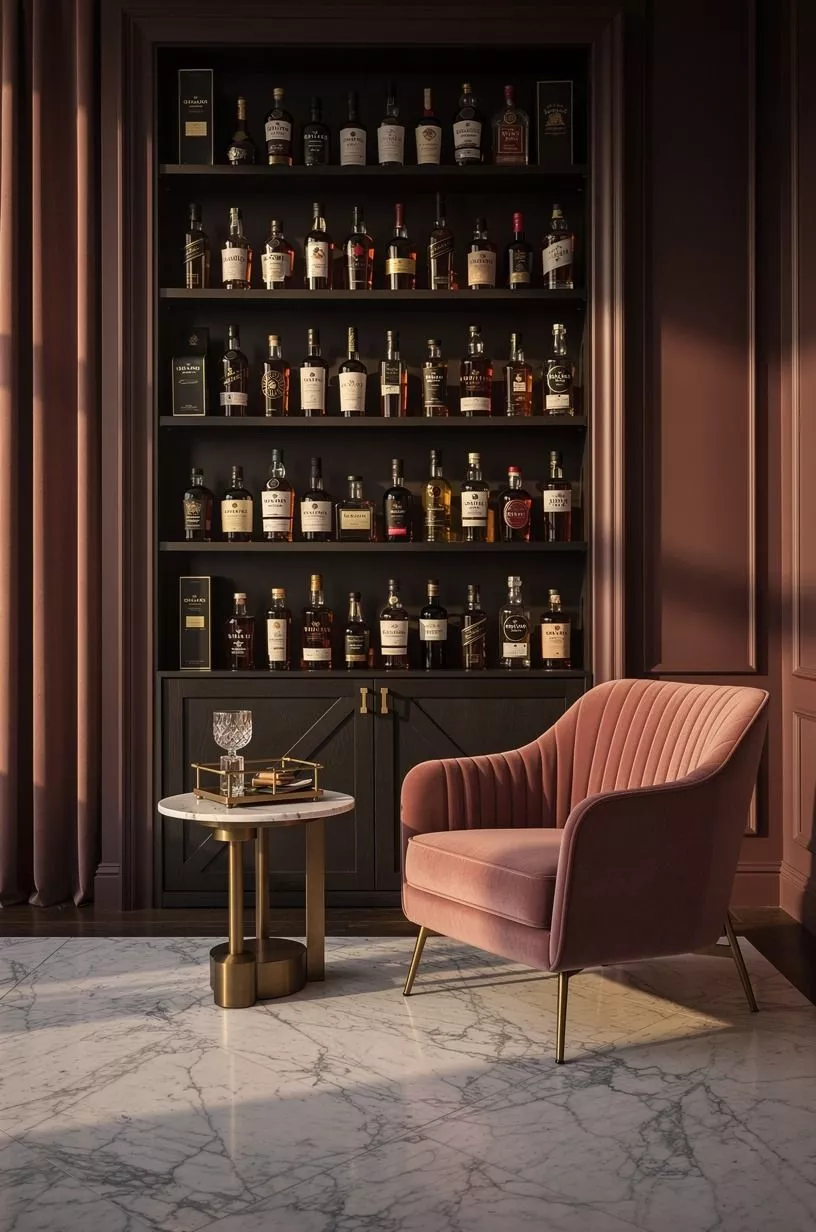
Your bottles are the decor. Treat them that way.
A simple Carrara marble ledge shelf with a lip, mounted at eye level, turns a dozen bottles into a gallery wall. Decant one good whiskey into a cut-crystal decanter and it becomes the centerpiece for under $40.
The mistake I see everywhere: bottles crammed onto a bar cart with no breathing room. Give each bottle space like it earned a solo exhibition. Group by height, tallest at the back.
And rotate what’s on display with the season, because a shelf that never changes stops being seen.
10The Shelf-Fill Ratio: two-thirds full, never stuffed
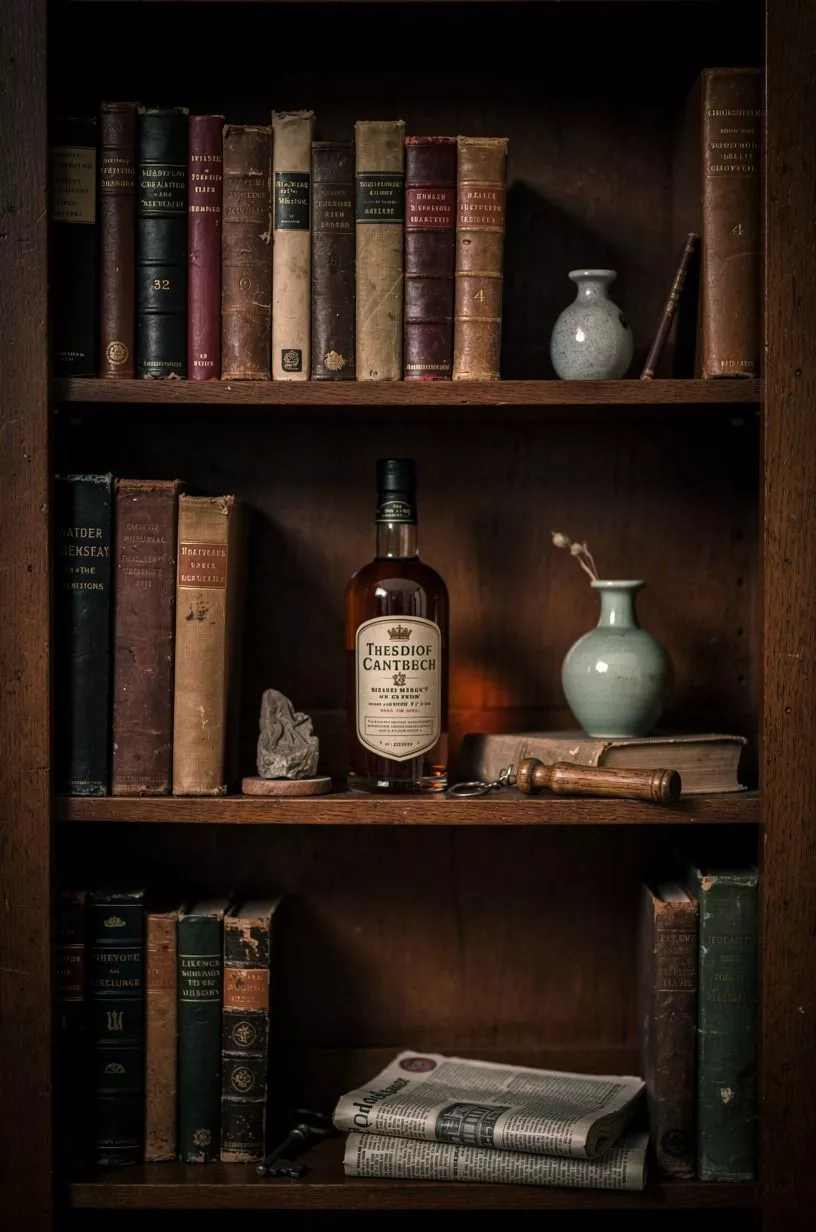
Here’s a number nobody gives you: fill your shelves to about two-thirds capacity and stop.
11Ground the zone with a rug that can take a spill
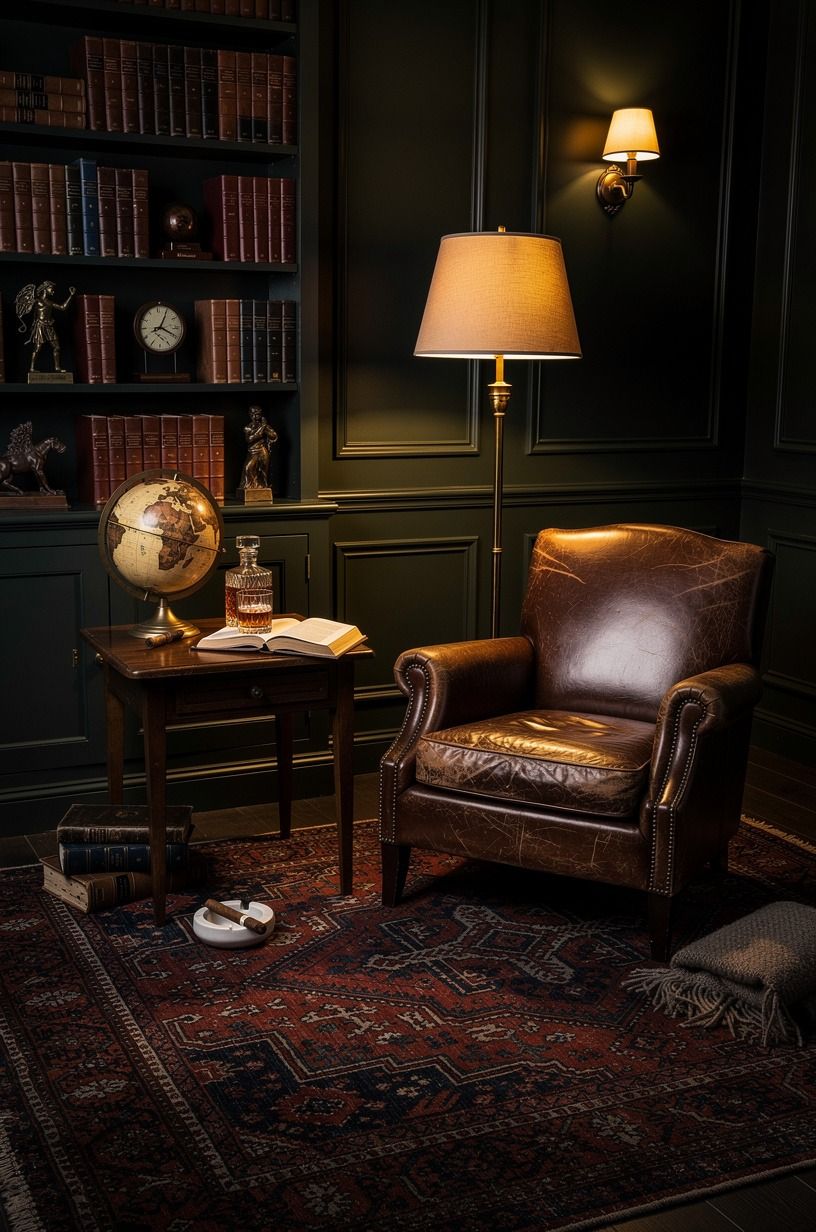
A dark room needs a rug with enough pattern to hide a drip and enough weight to feel serious. A vintage-look wool rug in oxblood or deep navy does both, and the typical US cost runs $400 to $1,500 depending on size. Get one large enough that your seating overlaps it, because a floating postage-stamp rug shrinks the whole zone.
On a tighter budget, the printed vintage-style rugs from Target’s Threshold line land around $100 to $200 in the 8×10 size and photograph shockingly well. I’ve used one in a rental for two years and guests still assume it’s the real thing. Just add a proper rug pad underneath so it doesn’t skate.
12Swap the overhead bulb before you buy anything else
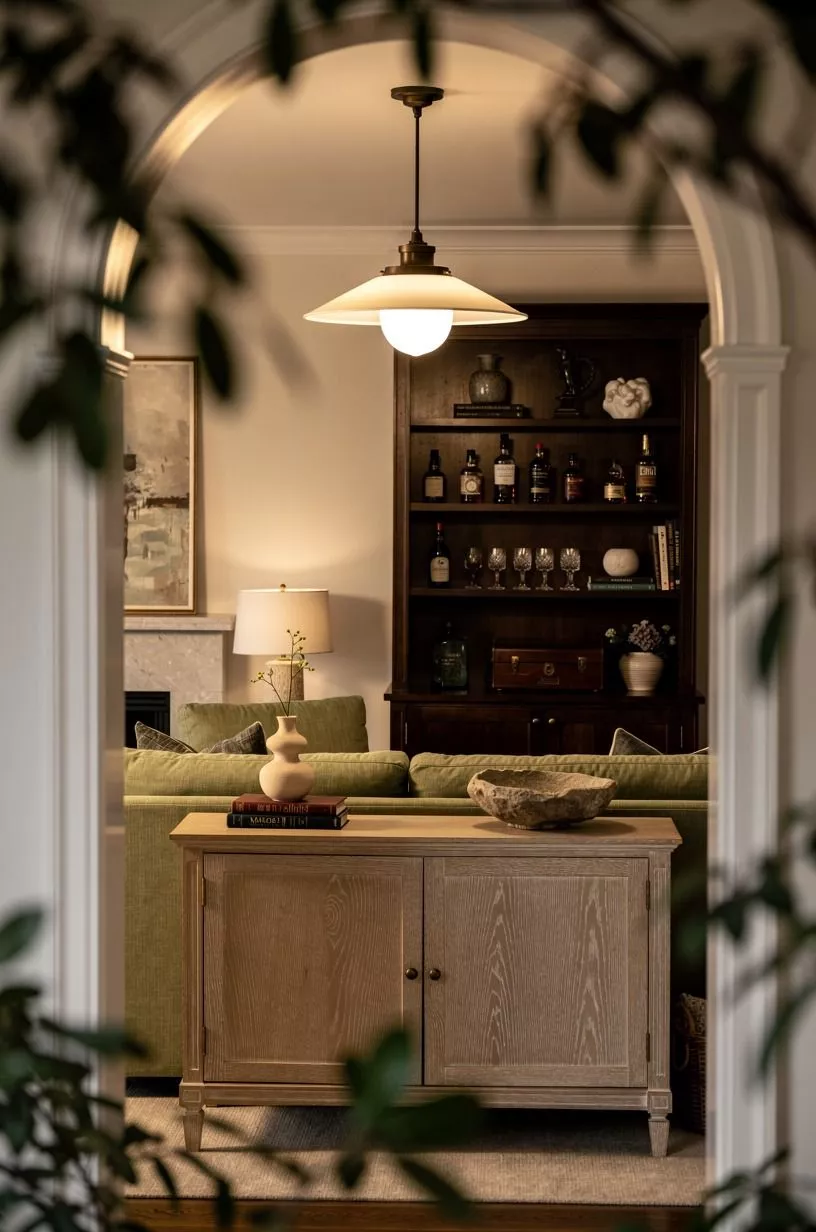
If you change nothing else this weekend, change this. A single cool-white overhead bulb is why your dark cozy bar interior feels like a break room. A dimmable warm LED at 2700K costs about $12, and the room transformation is immediate and a little absurd.
Pair it with a $20 plug-in dimmer if you rent and can’t touch the wiring. I did this in my first apartment and it was the highest return on twelve dollars I’ve ever spent. Honestly, do it tonight, then come back to the rest of this list tomorrow with fresh eyes.
13What things actually cost
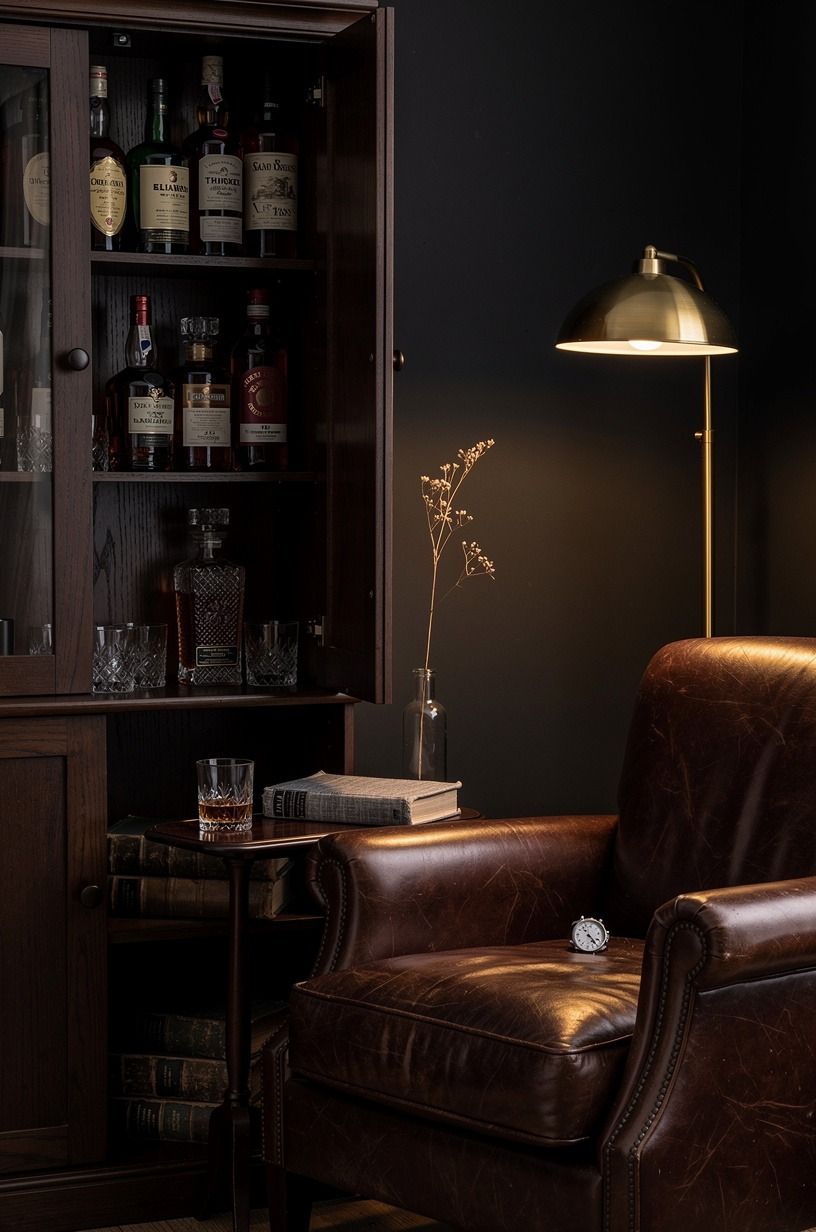
Before you plan, get honest about the tiers. These are typical US ranges, and they should shape where you start:
And the line items people ask about most:
My read: most dark academia whiskey rooms live happily in the Budget tier. The style rewards patina and secondhand finds, which is the rare case where cheap actually helps the look.
14Bring in one aged brass moment
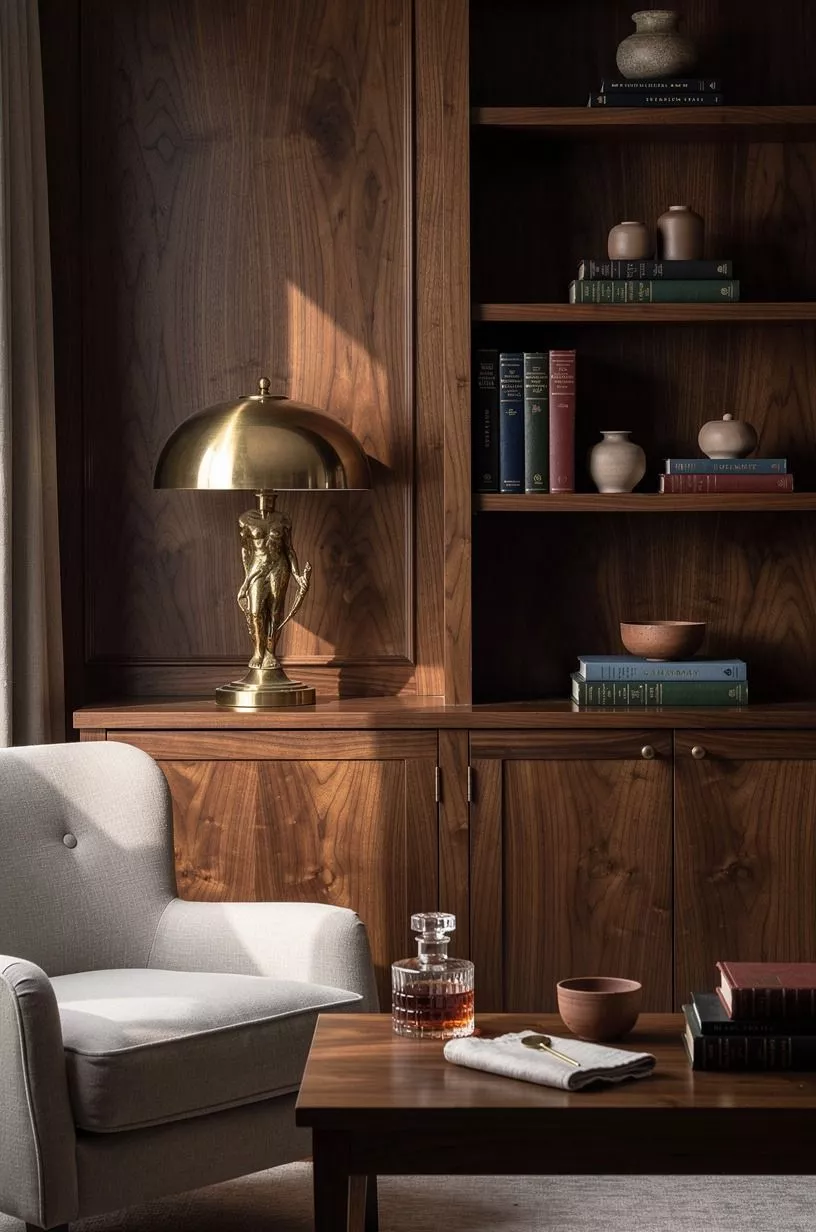
One. Not five. A single unlacquered brass lamp or a brass-rimmed bar tray catches lamplight like nothing else in a dark room, and the patina it develops over a year is the scholarly vibe in physical form.
Unlacquered means it tarnishes, and tarnish is the point.
The trap is brass scatter: brass lamp, brass frames, brass bottle opener, brass coasters. Then it reads as a theme instead of an accent. Pick your one moment, let it sit against dark wood or a moody wall, and stop.
If you love the dark-and-metal combination, the palette work in these dark green and gold rooms shows how little metal you actually need.
15The Corner-Only Doctrine: give the room one perfect seat
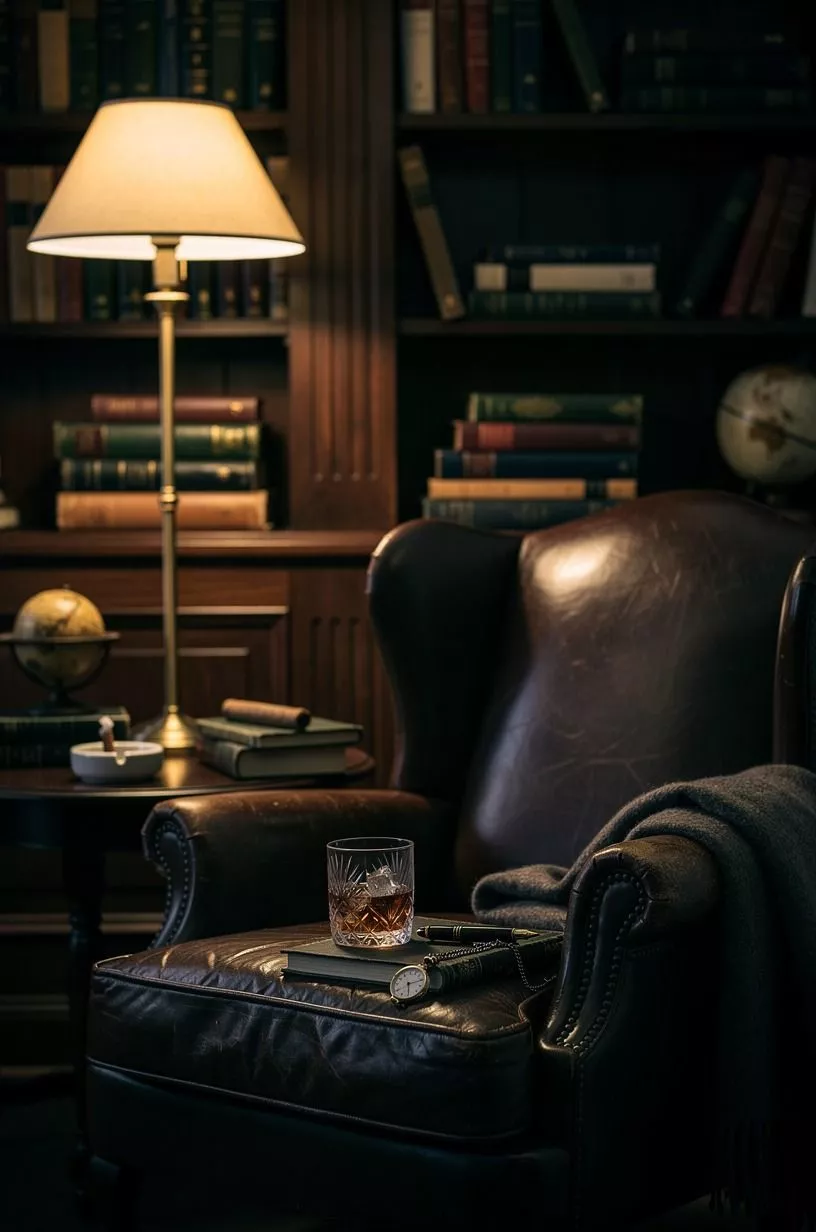
Don’t furnish the whole room. Furnish one corner completely: the leather chair, the side table at arm’s reach, the lamp, the stack of two books you’re actually reading, a wool throw over the arm. That corner becomes the reason the room exists, and everything else can stay simple.
This is how small spaces win. A mohair-wool throw in plum or charcoal, a warm travertine side table just big enough for a glass and a book, and you’ve built a destination instead of a room. If your square footage is tight, the layout thinking in these small speakeasy room ideas proves the corner approach beats a half-furnished full room every time.
What I got wrong before I got it right
I’ve built this style twice now, and the first attempt taught me more than the second one cost. My biggest error was treating dark academia as a shopping list.
I bought the globe bar, the bust of Beethoven, the fake antique map, and the room looked like a film set for a movie nobody would watch. It had every prop and no gravity. The fix wasn’t more stuff.
It was subtraction and commitment: darker paint, fewer objects, better light.
The second error was fear of the dark wall. I sampled five “moody” shades and chickened out on all five, landing on a mid-tone that satisfied nobody.
Six months later I repainted properly dark, and the difference wasn’t subtle. The room went from beige-with-some-dark-things to an actual place with a point of view.
If you’re hesitating on the paint, that’s the decision. Everything downstream of the wall color gets easier, because dark walls forgive mismatched furniture and cheap frames in a way light walls never will.
The third lesson took the longest to learn: this style is about use, not display. The rooms that work are the ones where someone actually sits, reads, pours a drink, and leaves a book face-down on the table. A whiskey room that stays photo-ready is a failed whiskey room.
Style it to ninety percent, then let your life finish the job. The ring a glass leaves on an uncoastered table is not damage.
In this style, it’s the signature.
What People Always Want to Know
What is the best dark academia whiskey room setup for a small space?
A corner, not a room. One leather accent chair, a floor-to-ceiling bookcase like the IKEA BILLY, and a warm lamp beat a half-furnished full room. Small square footage helps the mood, because dark walls pull the space in tight around you.
Where can I buy dark academia whiskey room pieces on a budget?
Thrift stores first, always. Old books, brass lamps, oil portraits, and decanters cost almost nothing secondhand, and the wear is the look. Facebook Marketplace for leather chairs, Target and Wayfair for rugs and lighting to fill gaps.
How much does a dark academia whiskey room makeover cost?
On average, about $200 to $800 if you paint and restyle what you own, which covers most people. The free wins: rearranging your books, lowering your art, swapping in warm bulbs you already have. The paint is the biggest single line.
Can I create this look on a tight budget?
Yes, and the style rewards it. Three free or cheap moves: stain mismatched wood to one tone with a $12 gel stain, stack your existing books horizontally with objects on top, and hunt one vintage brass lamp at a thrift store for under $20.
Is a dark academia whiskey room worth it in a rental?
Worth it, with no-damage swaps. Removable peel-and-stick wallpaper in a dark damask or faux wood, plug-in sconces instead of wired ones, and a large rug to cover landlord flooring. Everything reverses in an afternoon when you move.
What paint color works for dark academia in 2026?
Deep green and inky blue are the two that keep winning. Benjamin Moore Black Forest Green for warmth, Farrow & Ball Hague Blue for drama. Sample both on the actual wall, because lamplight shifts them dramatically after dark.
Where I’d Start First
If I had to pick one, I’d start with the paint. Nothing else in this list works at full strength against a beige wall, and two gallons of Farrow & Ball Hague Blue costs less than one decent bottle of whiskey. Pin this for later, and paint Saturday morning.