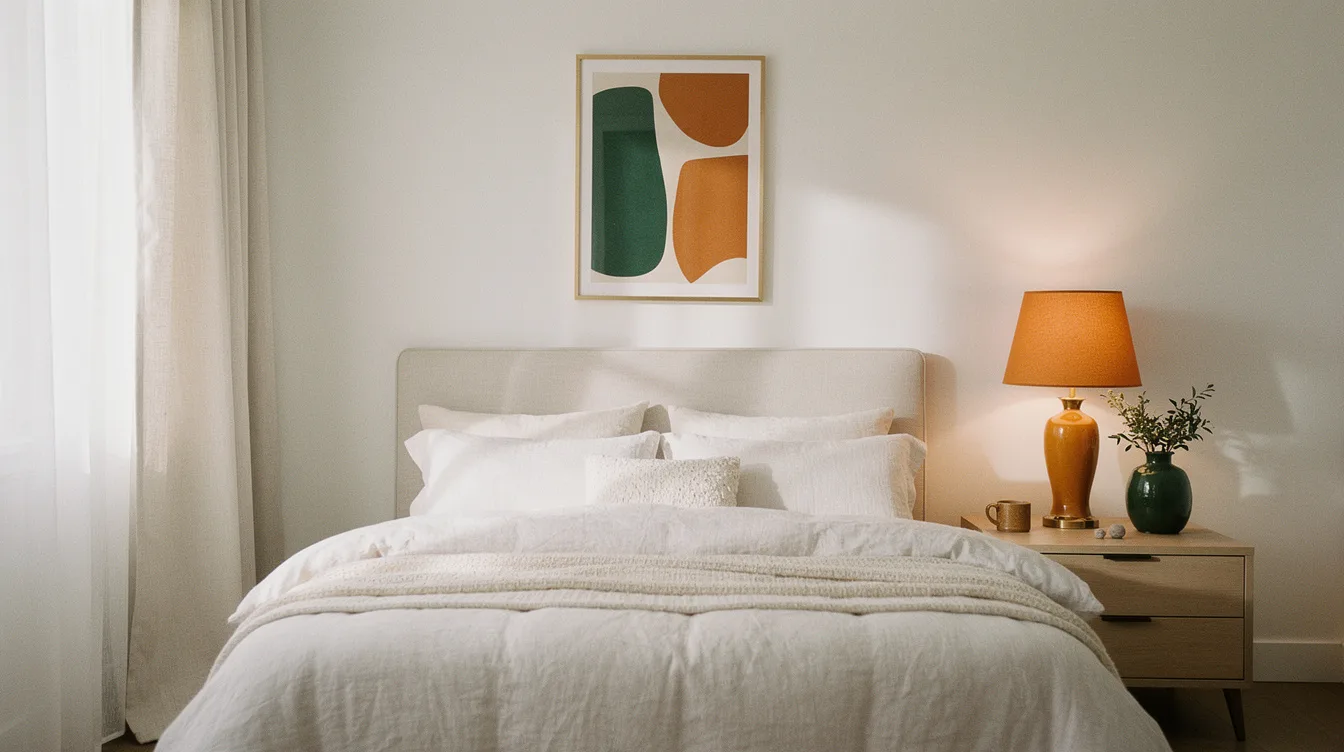
Most white bedrooms fail in the first ten seconds: they feel cold, flat, and a little unfinished. The ones that look like sleeping on a cloud share six moves designers repeat on nearly every project, and none of them require a big budget, a starter setup at IKEA typically lands between about $119 and $549.
I’ve done this look in two rentals now, including one with a queen mattress, the usual 60 by 80 inches, squeezed into a room barely wider than the bed. Here’s what actually makes it work.
Warm the Walls Before You Buy Anything
Bright, stark white is the fastest way to make a bedroom feel like a clinic. Designers almost always reach for a warm white with a hint of cream or beige instead.
A gallon of Behr Swiss Coffee at Home Depot runs about $40, and it covers a typical 12×12 room with paint left over. That single swap does more for the cloud mood than any duvet.
My rule of thumb: hold the swatch next to your bedsheets in daylight. If the wall looks bluer than the fabric, it’s too cold.
Layer the Bed Like a Hotel Does
One flat white comforter reads as a dorm room. The cloud look comes from stacking: cotton percale sheets, a linen duvet cover, then a quilt or coverlet folded across the foot.
Target’s Casaluna linen duvet cover costs around $89 for a queen, and it wrinkles in that relaxed way that makes the whole bed look softer. Skip anything shiny or sateen here.
On a standard queen mattress, which runs about 60 by 80 inches, designers typically add four sleeping pillows plus two euros. That vertical pile is half the effect.

Choose a Bed Frame With Real Presence
A flimsy frame kills the fantasy before the bedding goes on. You want either an upholstered headboard or solid white-stained wood with some visual weight.
On the budget end, IKEA’s KLEPPSTAD frame starts around $119, and the MALM sits near $229 for a queen. Both are clean, but they need strong textiles to carry the room.
If you can spend more, the IDANÄS upholstered bed runs roughly $349 to $399 depending on size, and honestly, the padded headboard alone changes how the room reads at night. Worth it.
Bring in Warm Wood So It Doesn’t Float Away
All white on white can tip into weightless and cold. A couple of light oak pieces, a nightstand, a bench, even a picture ledge, anchor the room without breaking the palette.
Wayfair sells solid oak nightstands starting around $120, and the grain does the decorating for you. Two pieces of wood is usually enough for a mid-size room.
Designers keep repeating this in 2026 trend roundups for a reason: texture and warmth are what separate a dreamy white bedroom from an empty one.
Light It Low, Warm, and Indirect
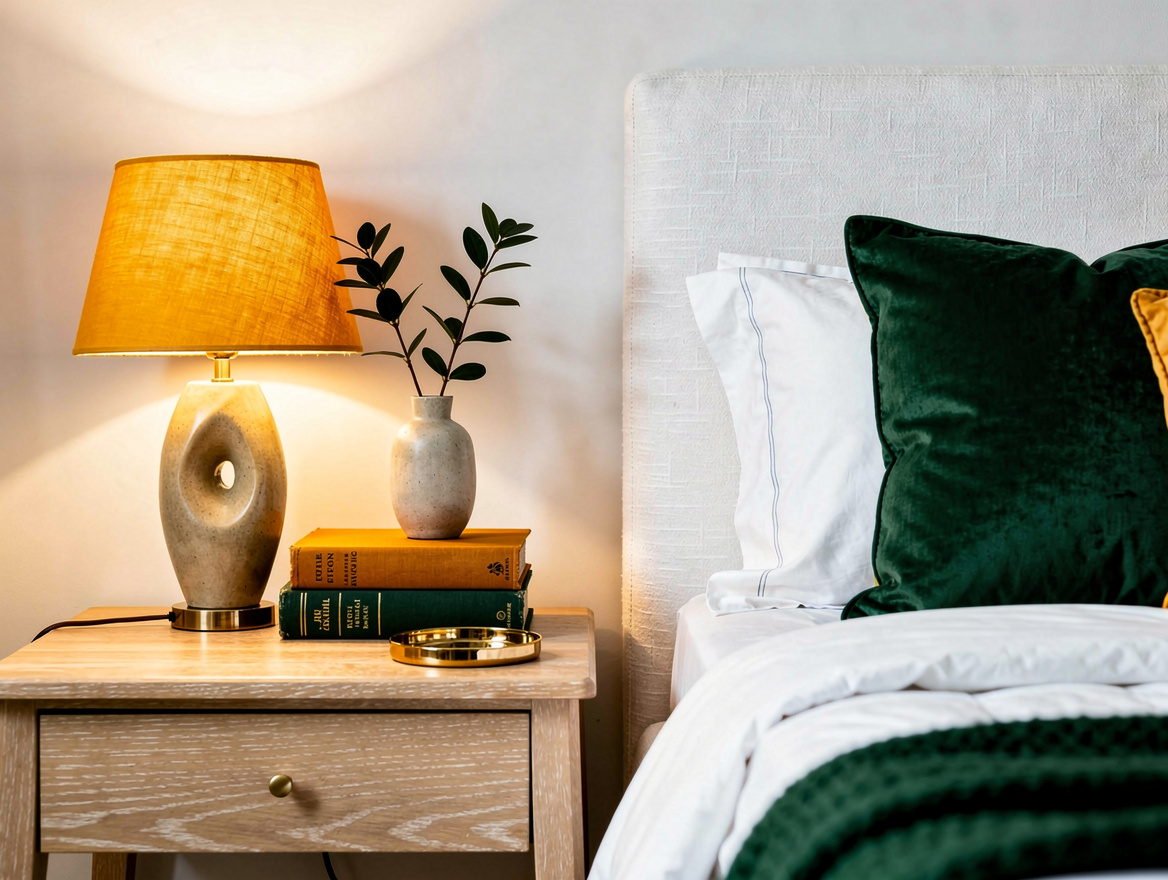
Overhead lighting is the enemy of the cloud mood. You want 2700K bulbs in table lamps or wall sconces, never a bare ceiling fixture.
A pair of simple ceramic table lamps from Target or Walmart runs about $30 to $60 each, and a plug-in dimmer adds maybe $15. That whole setup costs less than one fancy pendant and works three times harder.
Add linen curtains hung close to the ceiling, around 84 to 96 inches long on a typical 8-foot wall. The filtered daylight is basically free ambiance.
Add Exactly One Muted Accent
Pure white needs a whisper of color to feel intentional. Designers typically pick one quiet tone: sage, sand, taupe, or pale gray.
A sage throw from Amazon or Costco, around $25 to $40, tossed over the foot of the bed is enough. Don’t add a second accent color; the restraint is the whole point.
The room should still read as white from the doorway. The accent only reveals itself up close, like the difference between good vanilla and plain.
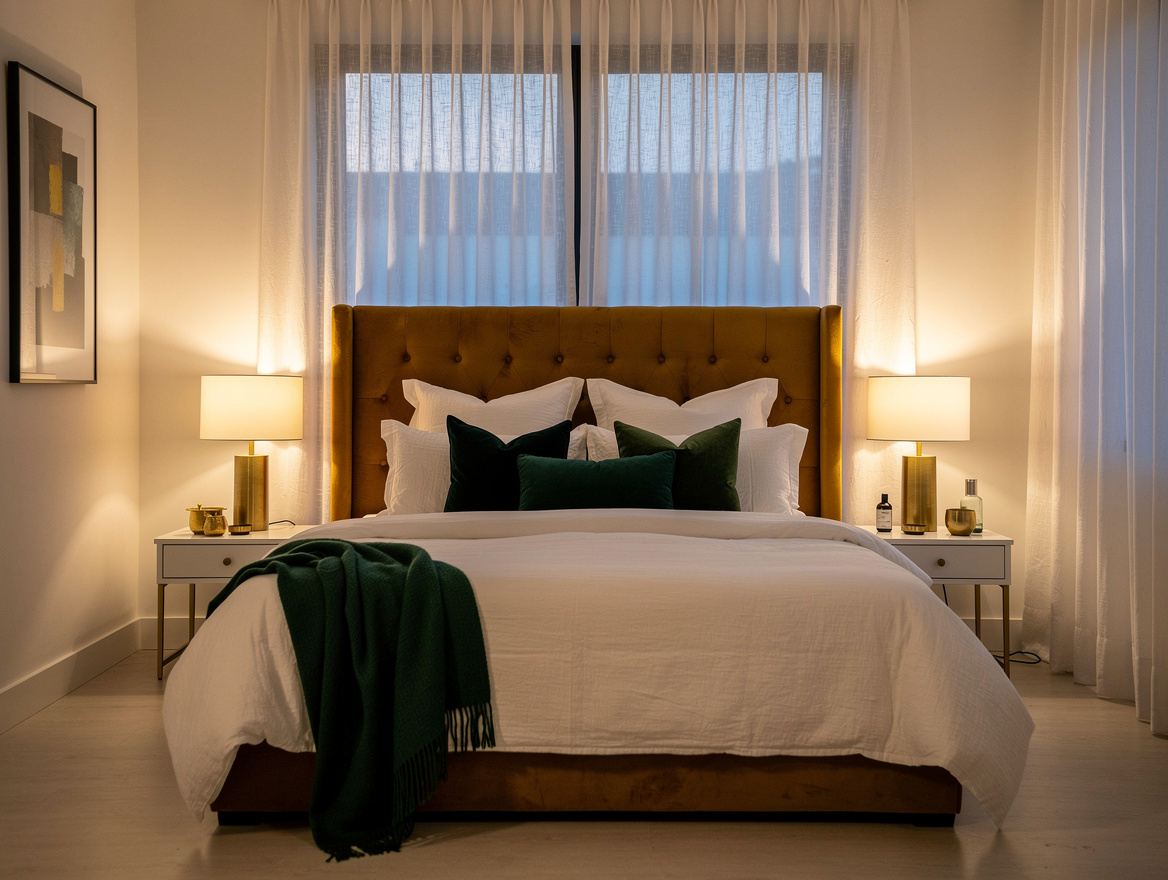
Paint first, bedding second, lighting third. Get those three right and even a $119 frame starts to look like a hotel you never want to check out of.
Mia Carter writes about small-space living and budget home makeovers. She has restyled three rentals and tests most ideas in her own 45 sqm flat.