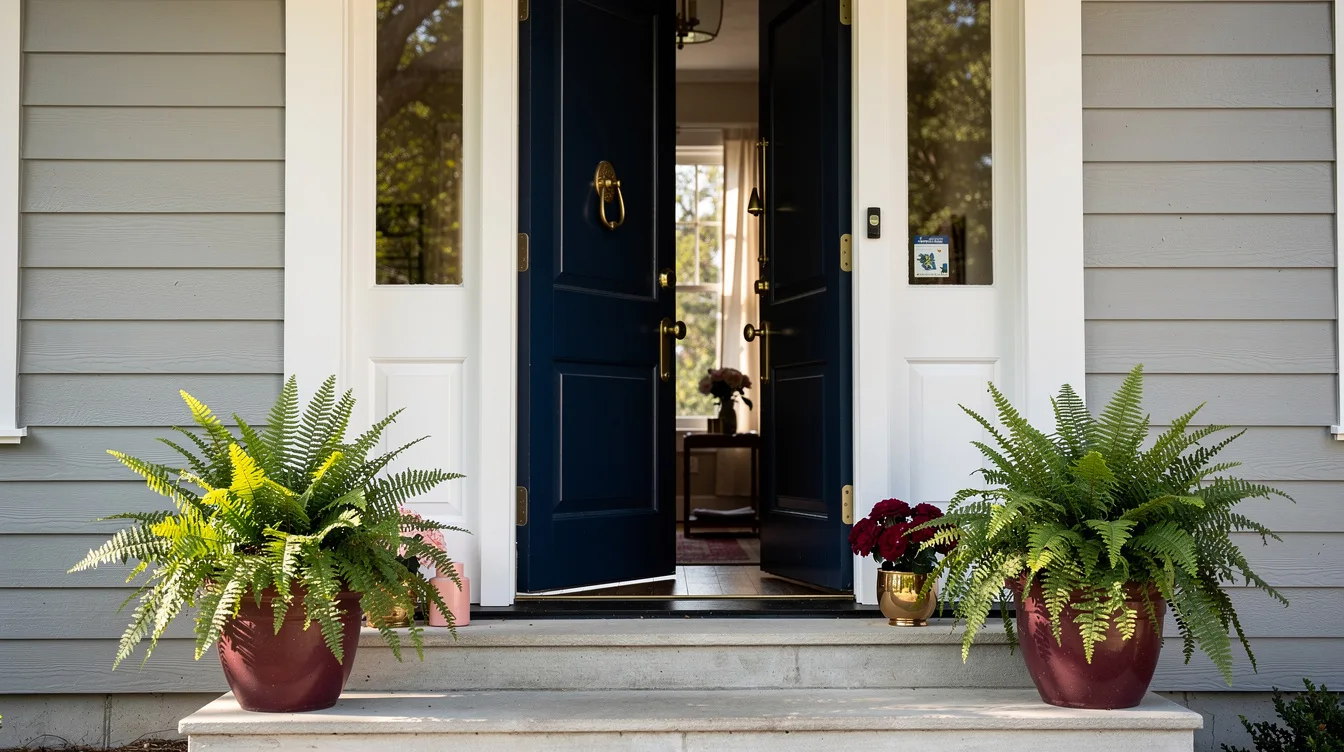
Here’s a stat that changed how I look at front doors: in one Zillow study, a black front door was tied to roughly $6,449 more in what buyers said they’d be willing to pay for a home. That’s for a standard 36-by-80-inch door and typically less than a gallon of paint.
I’ve repainted doors in two of my three rentals, and both times it was the single cheapest project with the biggest visual payoff. These are the six color directions that designers and buyer research keep pointing back to, plus the prep step most people skip.
Go Black or Charcoal for the Safest Upgrade
If one color has earned its reputation, it’s black. On a light-colored exterior, a black door reads as a deliberate upgrade instead of a default.
Benjamin Moore has a few standbys designers keep citing: Black HC-190, the softer Onyx 2133-10, and Kendall Charcoal HC-166 for homes where pure black feels too stark. Charcoal is my pick on modern farmhouse exteriors. It softens the contrast without losing the punch.
Here’s the number that gets people’s attention. In one Zillow study, a black front door was linked to roughly $6,449 more in what buyers said they’d pay for a home. That’s a wild return on what is usually about $50 to $70 in paint and supplies.
Try Dark Green When You Have Brick or Cream Siding
Dark green is having a real moment, and it’s not hard to see why. It feels sophisticated and grounded at the same time, like the house knows what it’s doing.
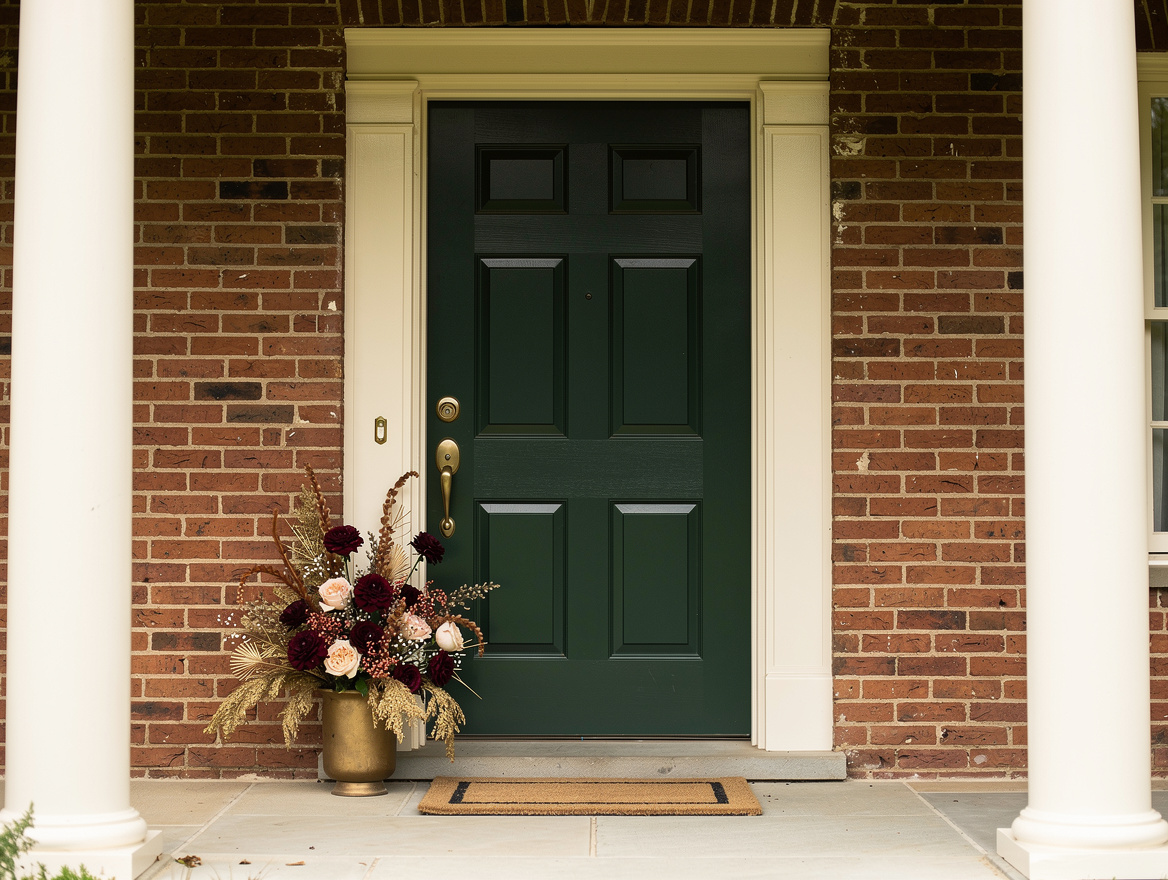
It pairs especially well with red brick, cream, tan, and white siding. Benjamin Moore’s Cushing Green HC-125 and Tarrytown Green HC-134 both sit in that deep, woodsy range, while Mohegan Sage 2138-30 leans a touch more muted.
My strong opinion: if your home has warm-toned brick, skip navy and go straight to a deep green. The contrast flatters the brick instead of fighting it.
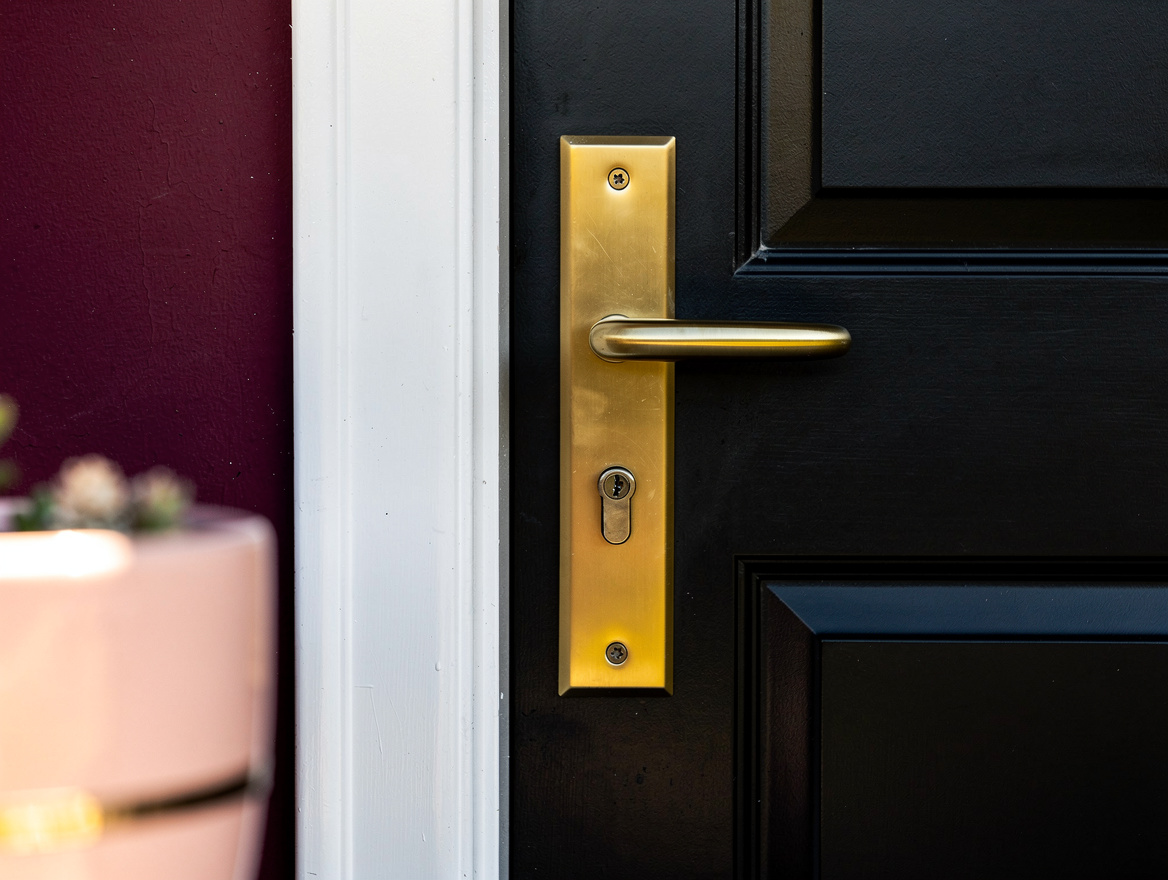
Pick Navy or Deep Blue for a Classic, Crisp Entry
Navy is the diplomat of front door colors. Almost nobody hates it, and it works on colonials, capes, and ranches without breaking a sweat.
The benchmark here is Hale Navy HC-154 from Benjamin Moore, a deep blue that stays rich instead of going chalky in bright sun. Zillow’s buyer research has also pointed to slate-blue-style doors performing well, so blue in general is a safe bet.
Navy looks best with white or light gray trim. Pair it with warm wood siding and it can go muddy, so check your surroundings first.
Choose Deep Red for Bold but Traditional
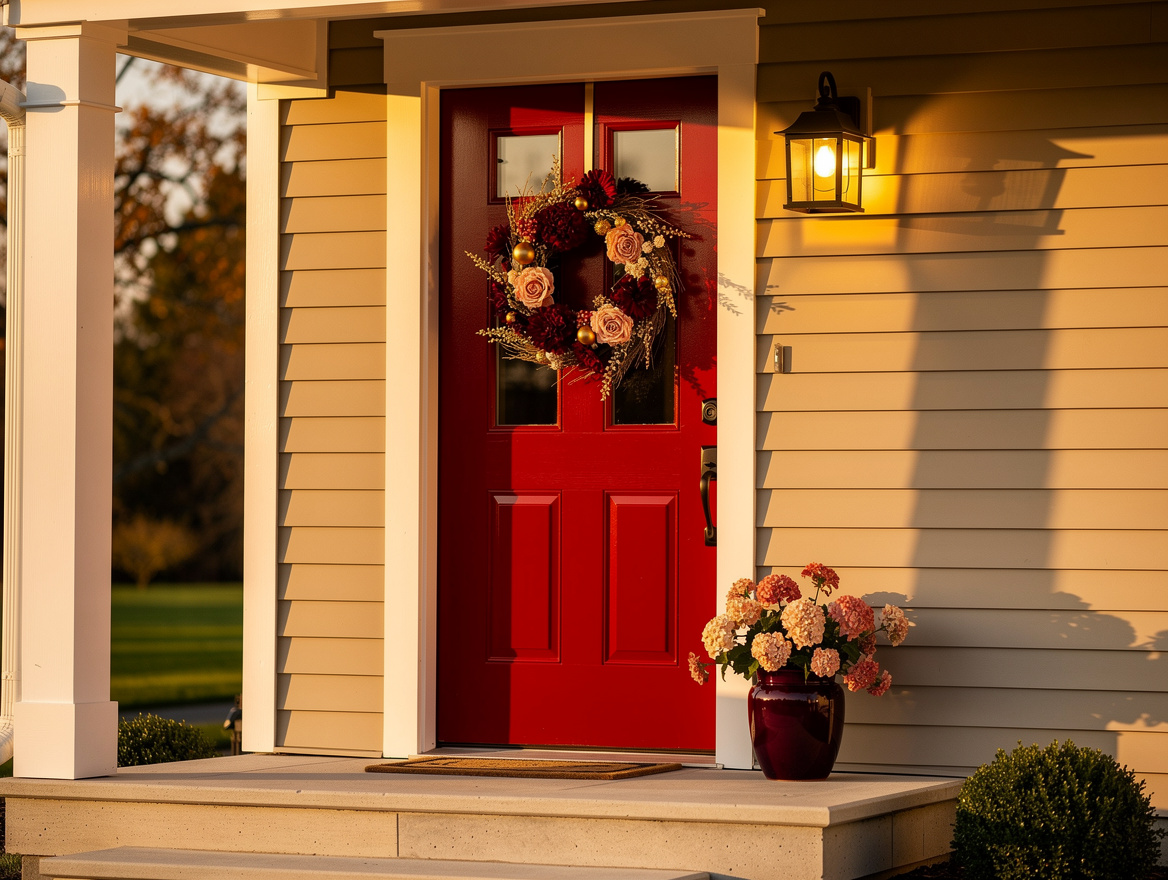
Red doors have history on their side. On a white or neutral house, a saturated red reads as confident and classic, not loud.
Benjamin Moore’s Heritage Red HC-181 is the traditional pick, while Red 2000-10 runs brighter and more saturated. For most homes, I’d take Heritage Red. Bright fire-engine red is a harder sell and can look plastic-y in full sun.
One warning from experience: red needs two coats, sometimes three over a dark existing color. Buy the extra quart up front, typically around $25 to $35 for a quart of quality exterior paint, so you’re not making a second trip mid-project.
Use White or Off-White When the Exterior Is Already Busy
Sometimes the smartest move is restraint. If your home already has colorful siding, mixed materials, or lots of trim detail, a white door gives the eye a clean place to land.
Benjamin Moore’s White Dove OC-17 is the crowd favorite for a soft, warm white. Chantilly Lace OC-65 runs crisper and cooler, while White Heron OC-57 sits in between with a slightly warm cast.
Honest caveat: white shows scuffs and shoe marks fast. If you have kids or dogs barreling through the entry daily, an off-white with a satin or semi-gloss finish will hide life better than a flat bright white.
Consider Teal, Coral, or Soft Pink for Personality
If resale isn’t your only goal, the bolder end of the spectrum is where the fun lives. Benjamin Moore’s current front-door inspiration leans into teal, yellow, pink, and coral for homeowners who want a statement.
A deep teal on a gray house is one of my favorite combinations, period. Coral and soft pink work surprisingly well on stucco and coastal-style homes, where the softer light keeps them from feeling candy-sweet.
The rule of thumb: bold colors need a quiet backdrop. One saturated door plus neutral siding reads intentional. Saturated door plus saturated siding reads chaotic.
Prep the Door Right Before You Paint
None of these colors will save a sloppy paint job. The most common residential front door is about 36 inches wide by 80 inches tall, and a door that size typically takes one quart of paint for two coats, maybe two quarts for a drastic color change.
Fiberglass and painted wood are the easiest surfaces to recolor. Steel doors take paint well too, but they need proper sanding and a bonding primer first.
Skip the primer on bare or glossy surfaces and you’ll watch your new color peel by the second season. For durability, look at exterior-specific lines like Benjamin Moore Element Guard, which you can find through Ace Hardware and independent paint dealers.
Start with the house, not the paint chip. Hold two or three sample swatches against your siding in morning and afternoon light, and the right answer usually announces itself within a day.
Mia Carter writes about small-space living and budget home makeovers. She has restyled three rentals and tests most ideas in her own 45 sqm flat.