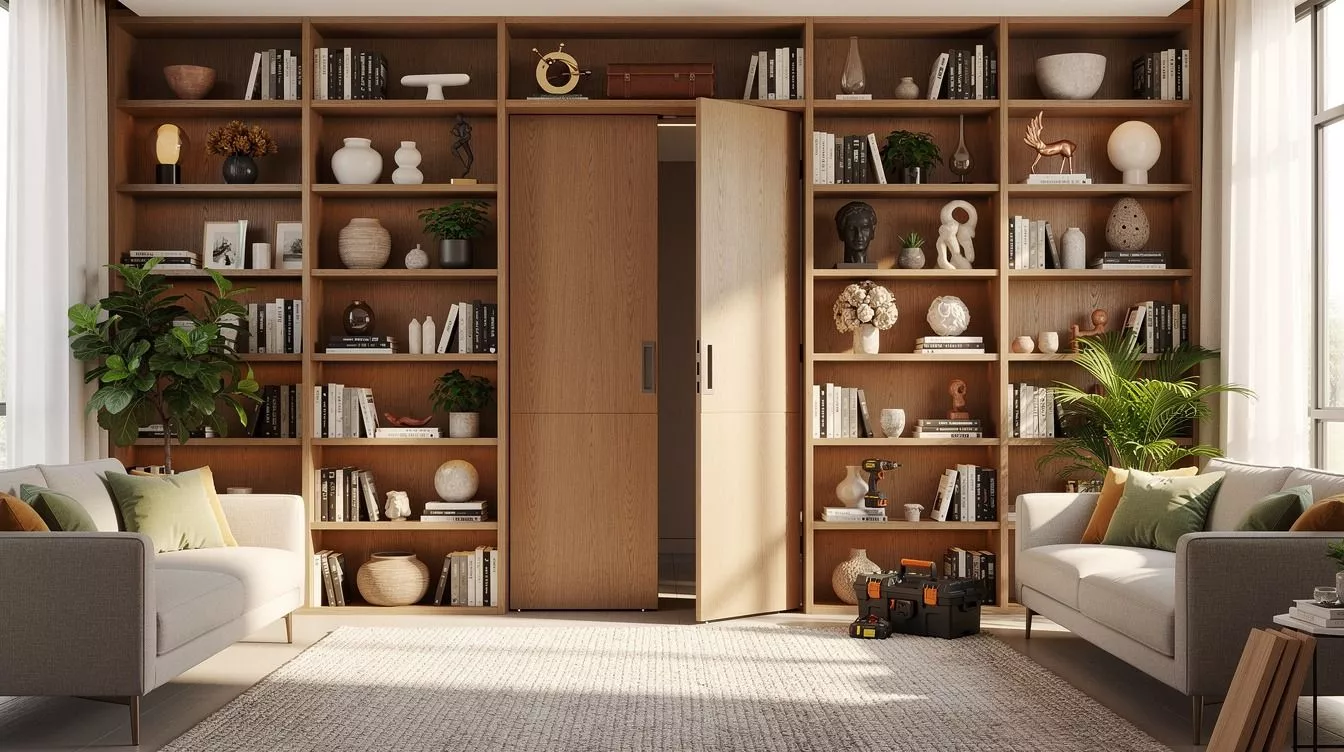
How to build a DIY hidden door step by step starts with a simple truth: a built-in wall usually costs less than people think when you keep the lines simple. I made my first one too fussy, and the wall looked like a project instead of architecture. Once I stopped chasing novelty and started chasing seam control, the whole thing made sense. That’s the version I’d copy now.
- Build a flush bookcase door wall
- Frame the opening with hidden hinges
- Skin the door with matching paneling
- Trim the seams into picture molding
- Add push latches behind the bookcase
- Mount shallow shelves across the swing
- Paint the reveal in wall color
- Use magnetic catches for clean closure
- Hide the handle inside a brass knob
- Balance the door with faux side shelves
- Anchor a pivot hinge into the jamb
- Disguise gaps with shadow-line trim
- Stage the shelves to break the outline
1Build a flush bookcase door wall
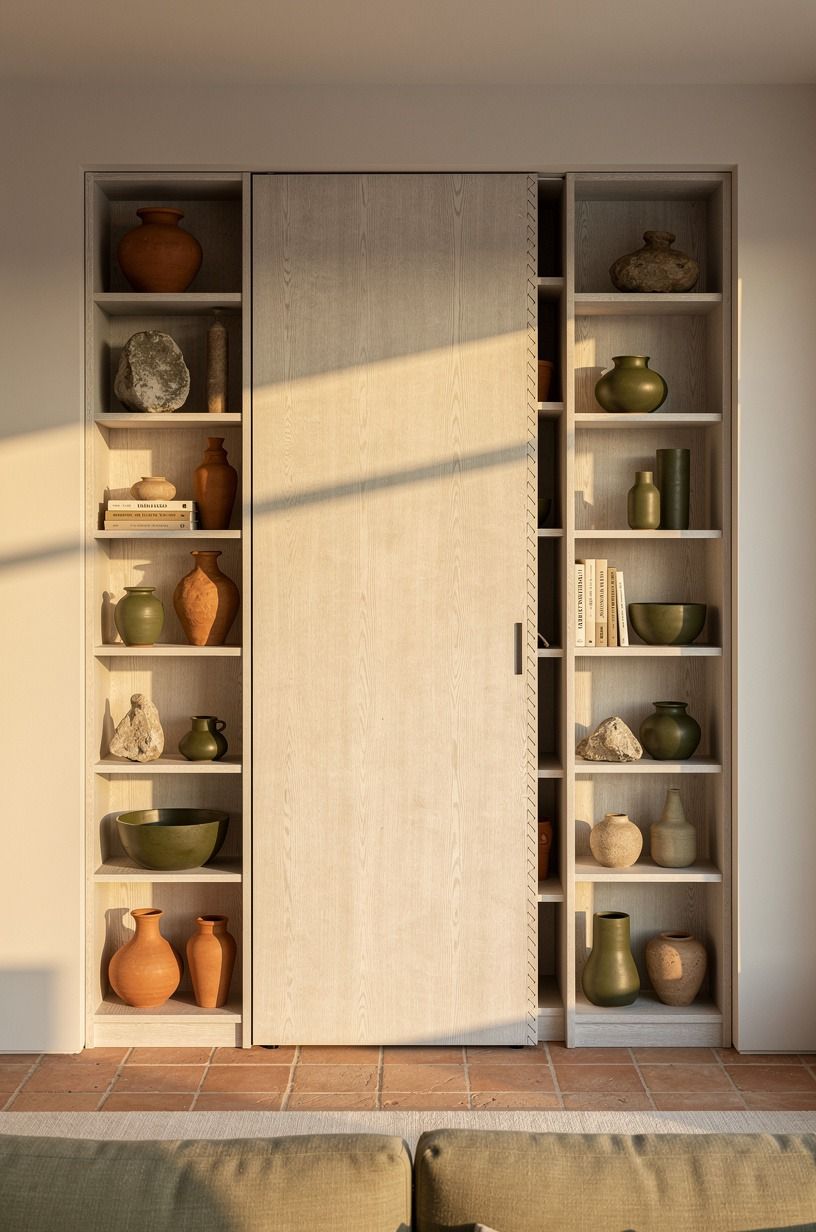
Start with the wall plane, not the swing. If you’re after diy hidden door ideas that read custom, your eye has to believe the shelves were always there, so I like a full run in cerused white oak with one door panel centered and the grain kept calm instead of busy. The photo cue matters here: terracotta styling, warm plaster, a bookcase face that feels even from edge to edge, and one exposed dovetail detail that looks intentional instead of cute.
I wouldn’t start with deep shelves on the moving panel. They look impressive for five minutes, then the weight starts fighting you.
Keep the operating shelves shallow, keep the fixed side a touch deeper, and let the wall do the convincing. A 3/4-inch solid white oak frame, a narrow 1/8-inch reveal, and evenly spaced shelf lines will get you farther than a pile of trim ever will. If you want more wall-spanning inspiration, see this guide to wood hidden door ideas for warm seamless walls.
2Frame the opening with hidden hinges
Hidden hinges are the part people skip because they’re not photogenic. Big mistake!
If your jamb isn’t dead plumb, the prettiest bookcase face in the world will still sag, rub, or spring back at the latch side when you least want it to. I learned that after hanging one on a slightly twisted opening and wondering why the top corner kept drifting.
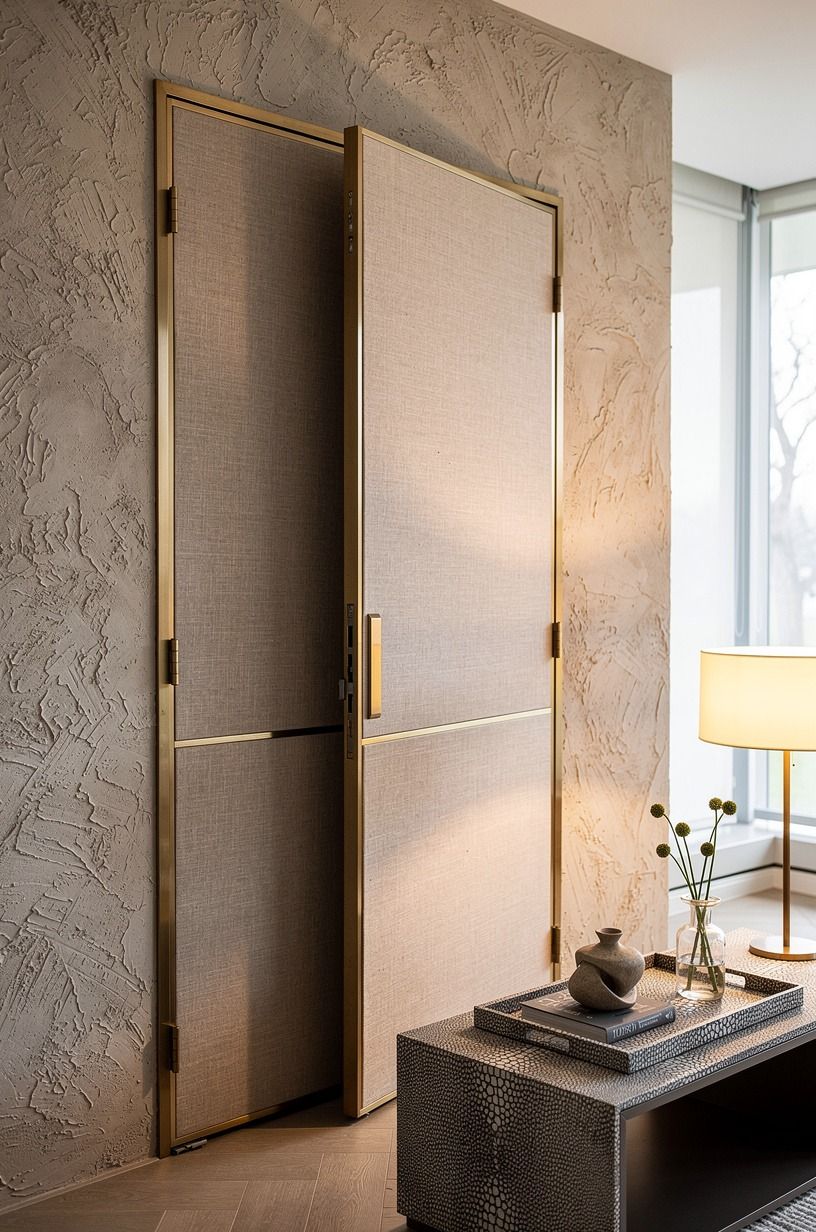
Frame the rough opening like finish carpentry, not rough carpentry. You want solid blocking where the concealed hinge lands, especially on the hinge side the photo hints at when the door cracks open and shows that shadow pocket. SOSS hinges are the obvious reference, but the real move is dry-fitting them before paint, then checking the swing with your actual shelf thickness and stop detail in place.
And if the door sits near a media wall, this roundup of tv wall hidden door ideas that conceal a whole room helps you think through sightlines before you close the wall.
3Skin the door with matching paneling
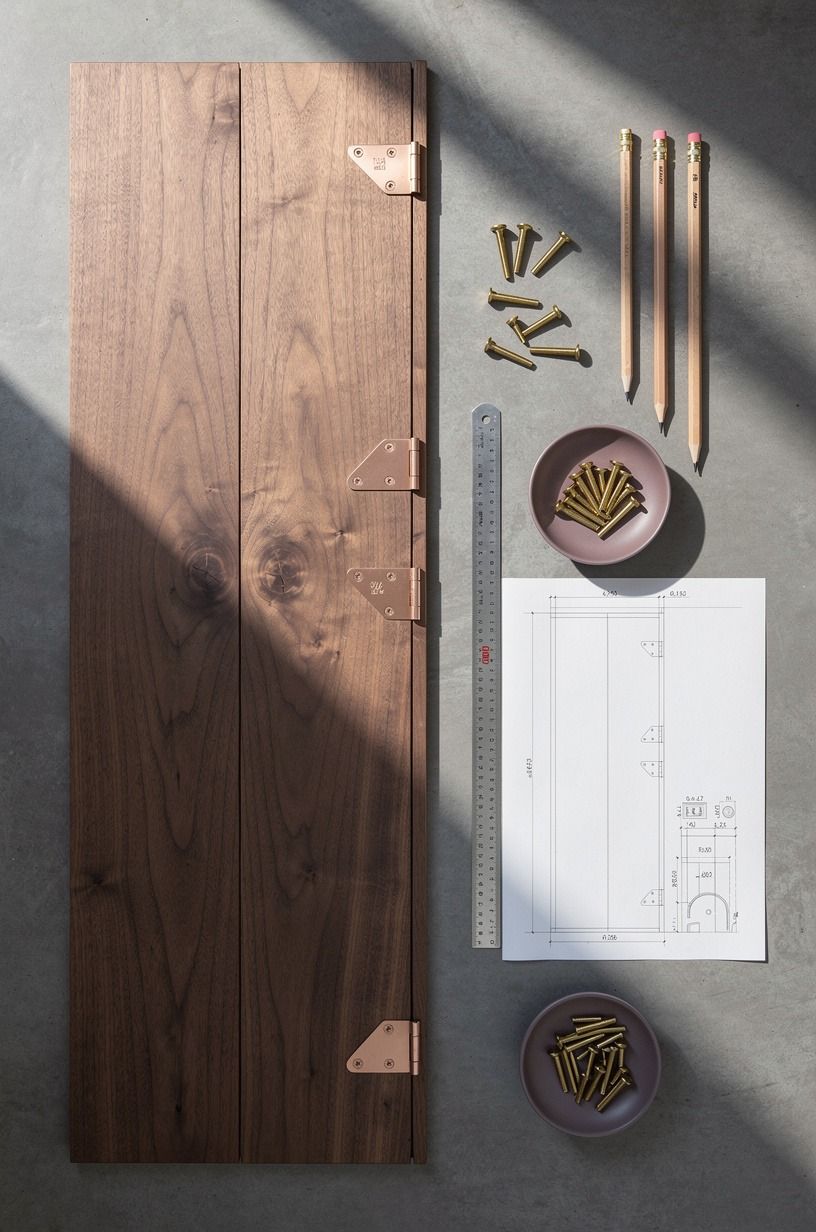
This is where cool hidden door ideas either click or fall apart.
4Trim the seams into picture molding
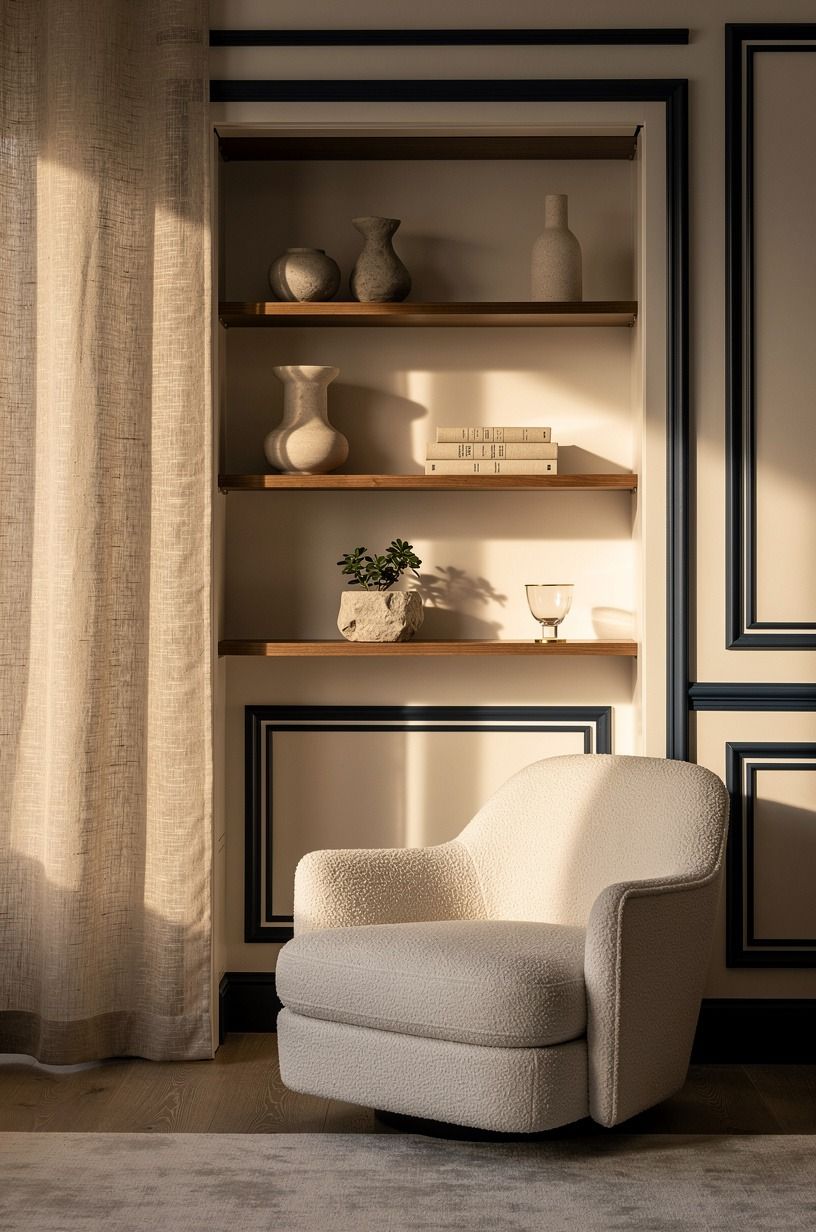
Picture molding is one of those moves that makes you look more precise than you had to be. On a navy wall with white trim, like the photo shows, the seam disappears because the geometry gives your eye something else to read first. That’s the whole game.
I call this the Grid-First Rule: draw the molding pattern across the entire wall, then let the door seam ride inside it instead of asking the seam to disappear on its own. Farrow & Ball Hague Blue No.30 gives you enough depth for the line work to matter, while warm walnut shelving keeps the wall from going flat or cold. Fewer, larger rectangles look calmer, and calm is what makes the hidden part believable.
If you want a cleaner cousin to this look, modern hidden door ideas for sleek seamless interiors is worth a look before you lock the trim layout.
5Add push latches behind the bookcase
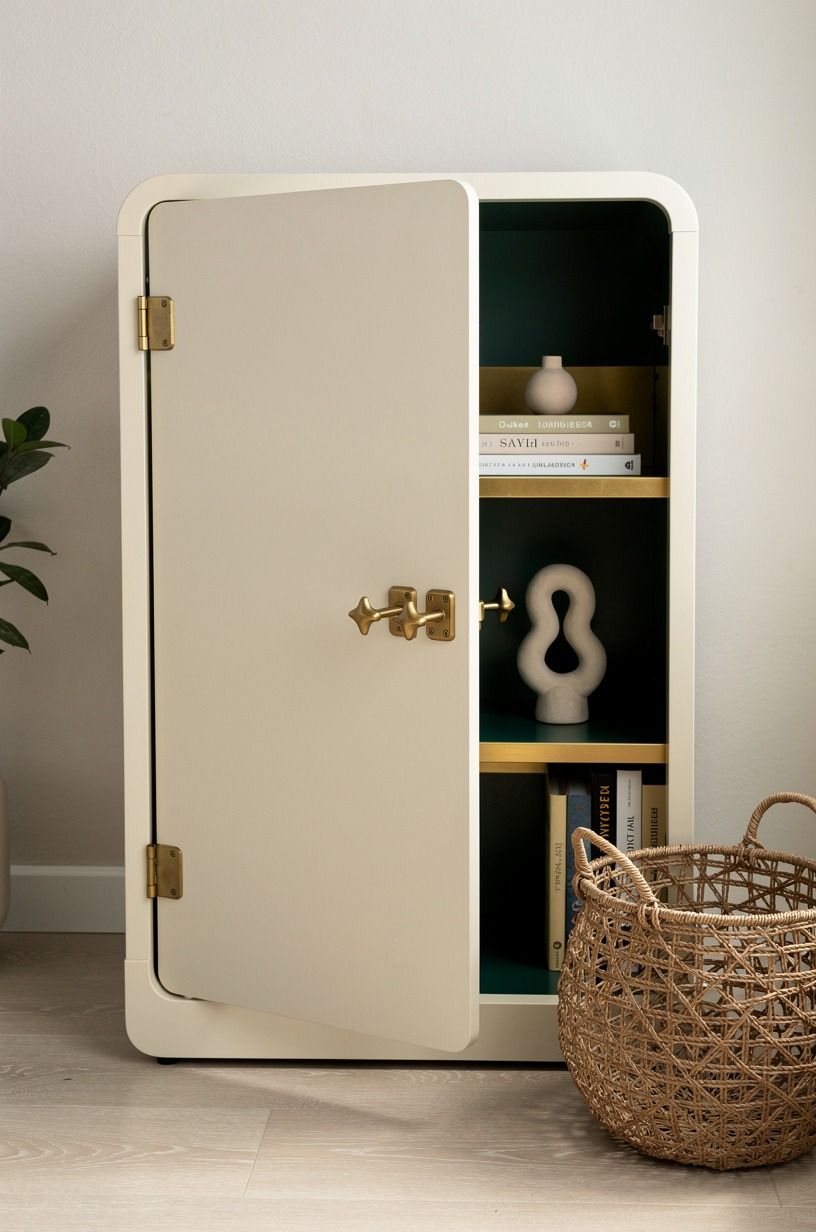
Push latches save you from the obvious pull that gives the build away. In a cream bookcase door, especially one with unlacquered brass hardware tucked inside like the image, that matters because the face stays quiet and the opening moment feels almost accidental. That’s what you want your guests to notice.
Don’t buy the cheapest latch you can find and call it done. The weak ones feel mushy, and mushy reads homemade in the worst way.
I prefer two unlacquered brass push latches set high and low so the door closes evenly, then a test with real shelf weight before final paint. A few books. One box.
A small bowl.
And if you’re still shaping the whole wall, wood hidden door ideas for warm seamless walls can help you decide how much visible storage the moving panel should really carry.
6Mount shallow shelves across the swing
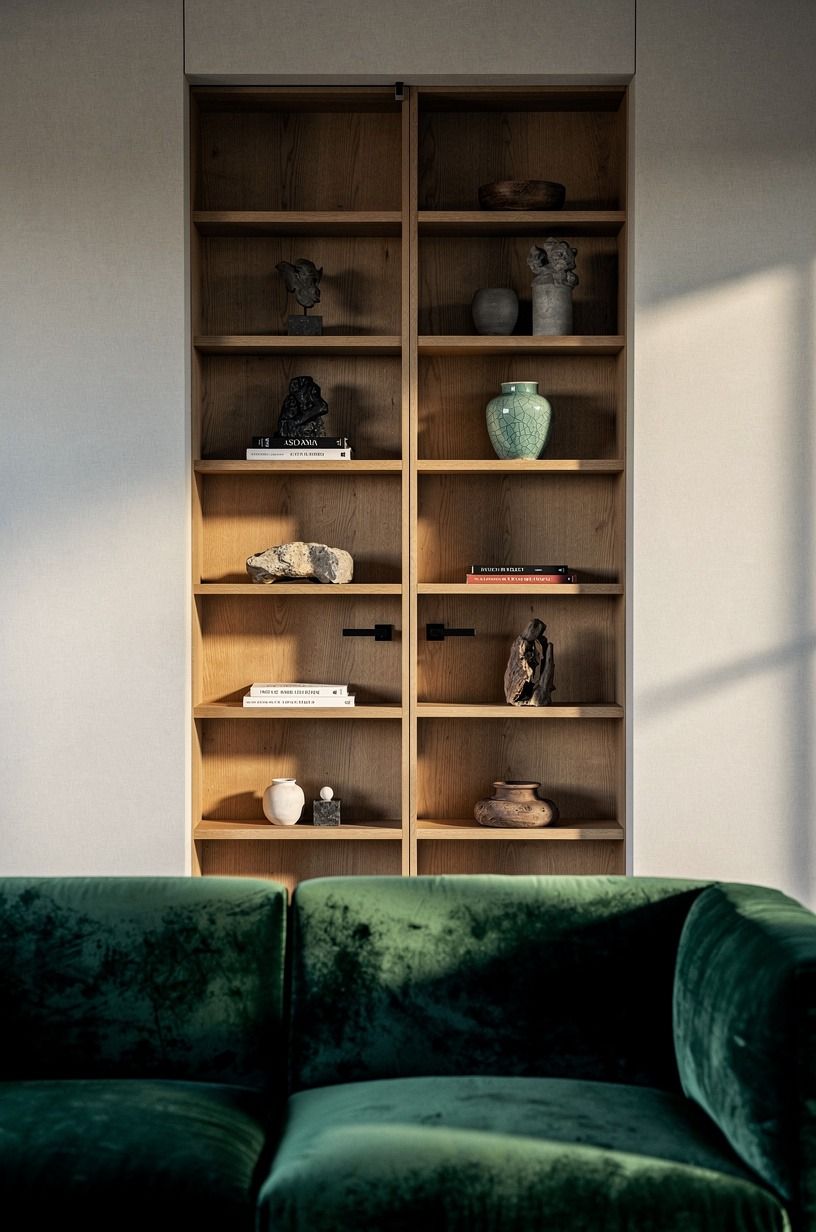
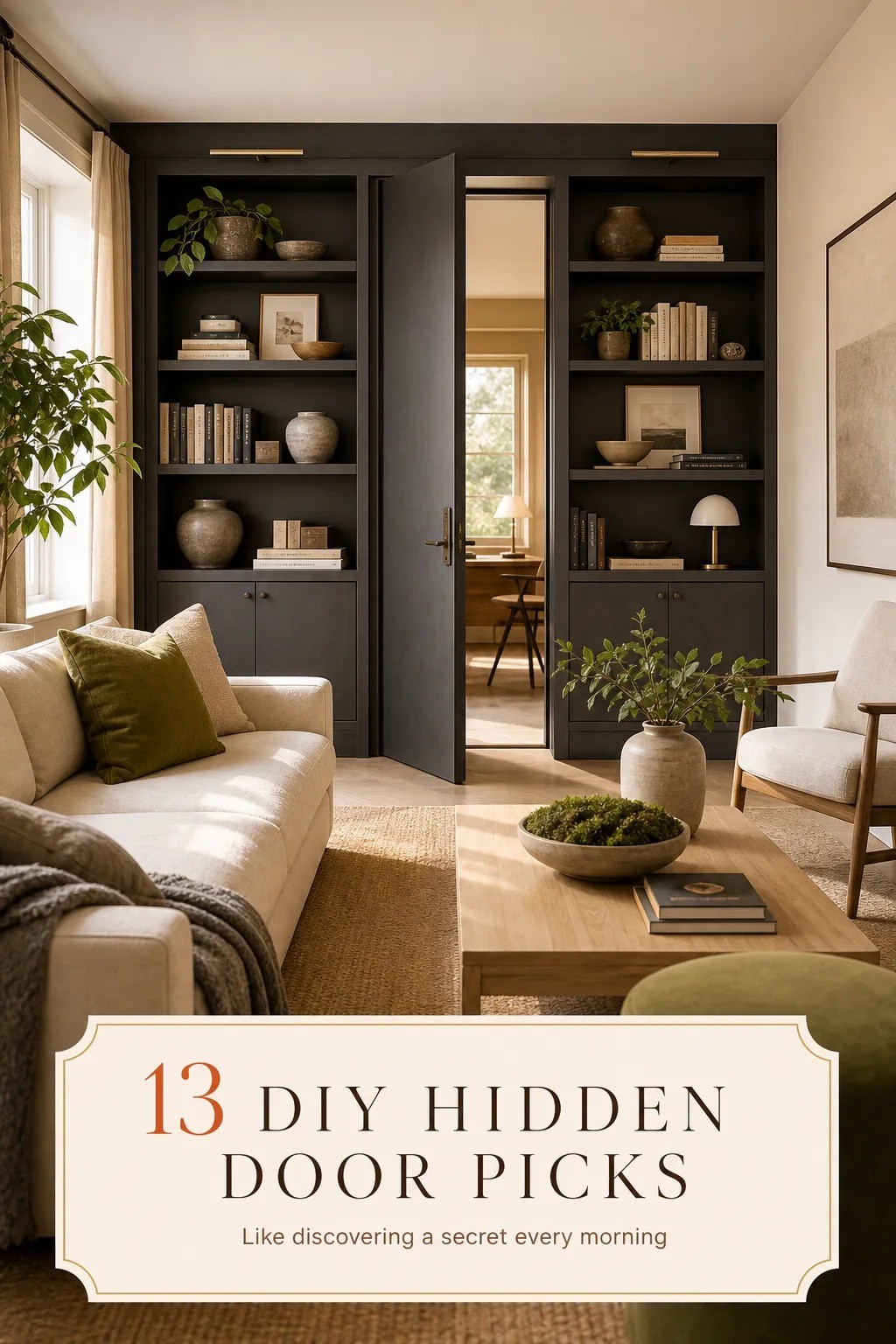
Shallow shelves are the difference between a gimmick and a built-in you can live with. If you’re planning hidden door ideas for home that sit in a living room, keep the moving shelves more decorative than storage-driven, because every extra inch changes the hinge load and the way your body moves around the opening. You should be able to pass the wall without thinking about it.
This is my Two-Depth Rule. Fixed shelves can go deeper, but the door shelves should stay visually consistent while carrying less.
natural oak shelving looks generous even when it’s restrained, especially when you style it with sideways books, a low vessel, and one framed piece leaning back. If the room already has a sofa at 35 to 40 inches deep, don’t let the door shelf projection steal your walkway.
For more built-in examples with calm shelf rhythm, wood hidden door ideas for warm seamless walls shows the kind of balance that keeps the wall grounded.
7Paint the reveal in wall color
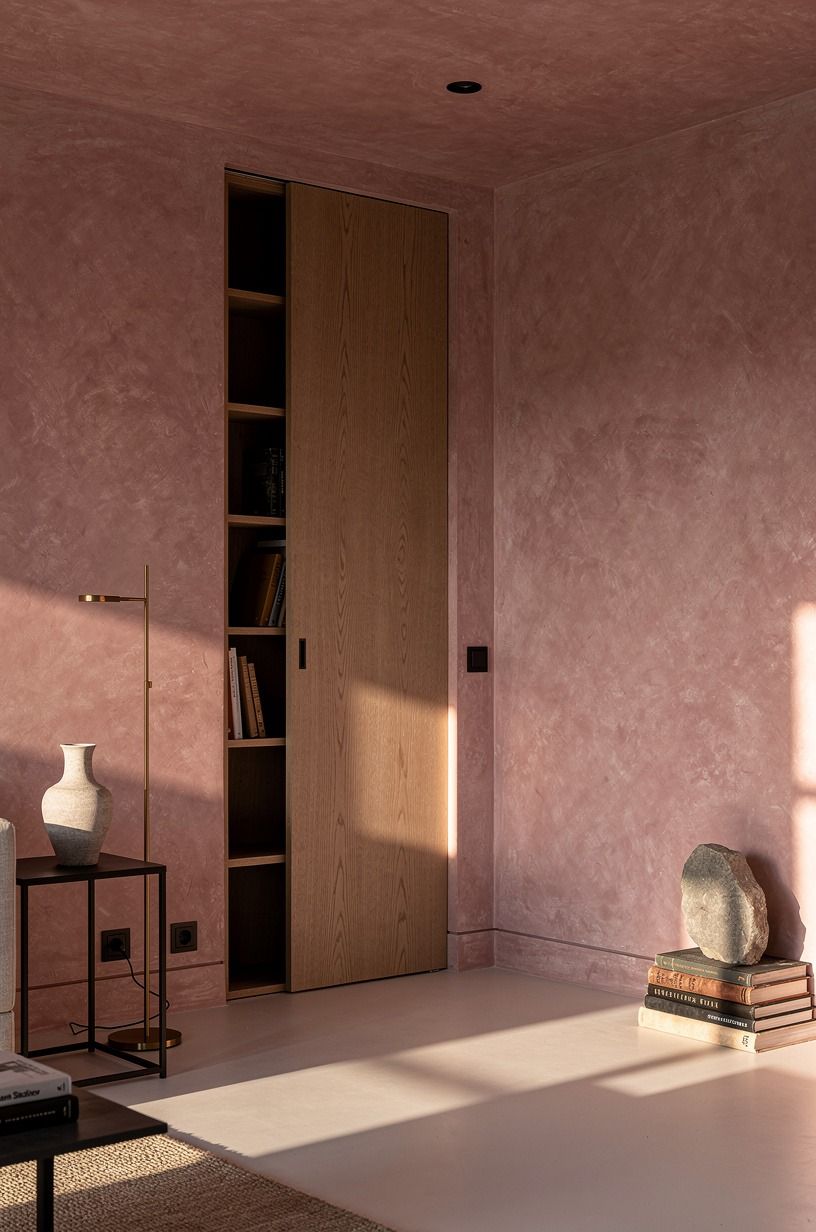
Paint the reveal the exact wall color. That’s it.
It’s the least glamorous step, and it’s one of the best. Huge difference!
When the inside edge of the opening stays white while the wall is dusty rose plaster, your eye catches the break the second the light shifts. I like a soft mineral tone here, something in the orbit of Benjamin Moore Revere Pewter HC-172 if you want beige-gray restraint, or a muddier blush plaster if the room is warmer and more layered like the image.
I made the mistake once of treating the reveal like trim because I thought contrast would look sharp. It looked loud.
But when you color-drench the return, the shadow gets softer, the seam recedes, and the whole door reads built in instead of inserted. If you lean minimalist, modern hidden door ideas for sleek seamless interiors shows the same principle in a cooler register.
8Use magnetic catches for clean closure
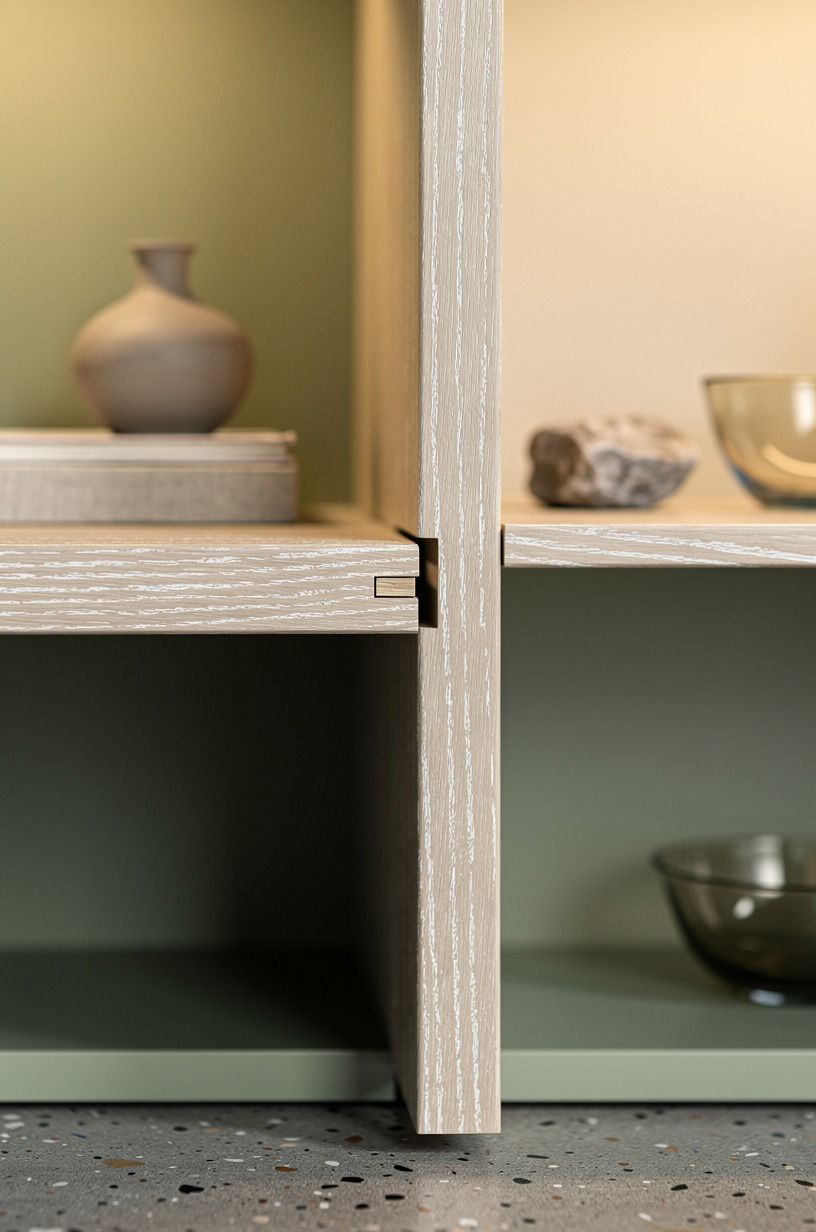
Magnetic catches are quieter than flashy hardware and better for a door that needs to land flush every single time. In a warm white living room with reclaimed teak tones, like the photo, that matters because the whole appeal is ease.
You push. It meets the wall.
No drama.
I wouldn’t rely on magnets alone for a heavy bookcase, but I do like them as the final tidy-up after your hinge geometry is right. reclaimed weathered teak has enough visual movement already, so you don’t need a visible stop or extra surface hardware pulling attention toward the seam. Mount paired catches where the face wants to bow, test them with books in place, and listen for that clean close.
If you like stronger linear texture, tv wall hidden door ideas that conceal a whole room shows how closure details disappear inside repeated wall lines.
9Hide the handle inside a brass knob
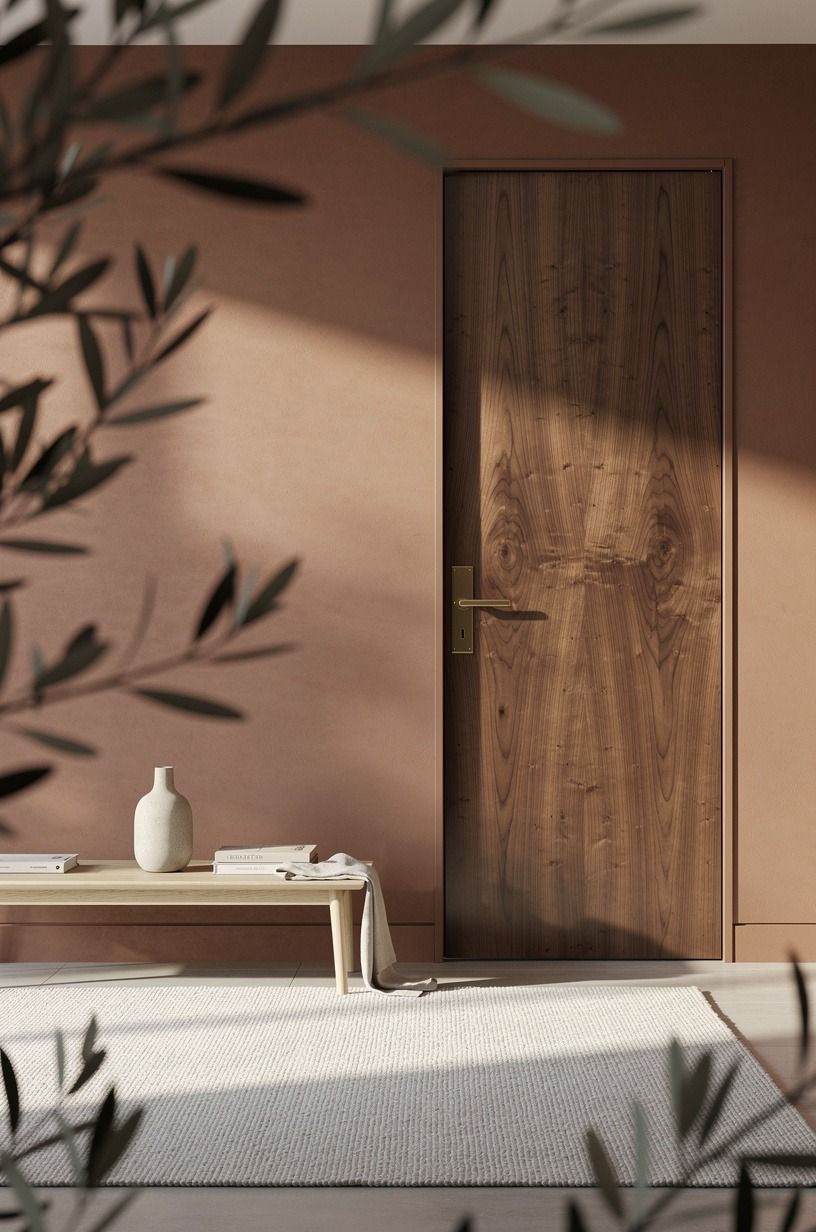
A tiny knob can work if it doesn’t announce itself.
10Balance the door with faux side shelves
If one side of the wall looks useful and the other side looks suspicious, you’ve lost. Faux side shelves give the composition enough symmetry that the moving panel stops looking like a door and starts looking like part of a plan. In the hero detail from the image, the seam works because the shelf line keeps traveling.
I call this the False-Symmetry Rule, and it’s one of my favorite cheats because it looks more expensive than it is. Carry the same cerused white oak shelf thickness across fixed and moving sections, match the nosing, and let the outer bay echo the inner one even if the storage depth changes behind the face.
A stub that only holds a candle screams stage set. A shallow ledge with stacked paperbacks, a small dish, and one framed print feels real.
For more disguised wall layouts, tv wall hidden door ideas that conceal a whole room has smart examples that solve the same balance problem.
11Anchor a pivot hinge into the jamb
A pivot hinge gives you a heavier, steadier feel when the bookcase gets substantial, and the base detail matters more than people think. In the terracotta stone and olive-toned setting from the photo, that low hinge zone is what keeps the wall feeling architectural instead of temporary. You want the hardware buried in the structure, not hanging off the idea.
Before you buy anything, get clear on budget, because a hidden door wall can live at very different levels depending on whether you’re painting, trimming, or rebuilding millwork. Here’s the range I keep in mind when people ask what a polished living room upgrade typically costs:
For the hinge zone itself, pivot hardware needs real blocking and a jamb that won’t twist under load. I wouldn’t trust hollow trim build-outs here, not if you want the door to keep its line six months from now. Worth it!
And if the hidden room sits behind a lounge wall, wood hidden door ideas for warm seamless walls can help you plan the massing before you commit.
12Disguise gaps with shadow-line trim
Not every gap has to vanish. Some just need to look intentional. In the walnut-and-clay setup from the photo, a slim shadow line works because the room already has depth, linen texture, and olive branches softening the edges, so the break reads like design instead of error.
This is a better move than over-caulking, and I’d choose it every time. Use a restrained book-matched walnut edge, keep the recess consistent, and let the trim cast one even line rather than three fussy ones. If the room is already carrying an 8×10 or 9×12 rug and layered furniture, your door detail should get quieter, not busier.
For a pared-back companion look, hidden wardrobe door ideas for a clean bedroom wall shows how thin reveals make the whole envelope feel calmer.
13Stage the shelves to break the outline
Styling is not the afterthought. It’s camouflage.
When the hidden bookcase door sits on one side of the room and the shelves are dressed with plum-gray pottery, books, and low matte objects like the image, your eye starts reading composition instead of perimeter. That’s when the wall finally works.
I keep shelf styling low and staggered, with negative space doing half the labor. plum gray pottery is useful here because it holds shape without a lot of shine, and matte book jackets do the same. If the door lives near a screen wall, keep your seating distance around 1.5 to 2.5 times the TV diagonal and make sure a coffee table at 16 to 18 inches tall doesn’t block the swing path.
If the wall shares space with a larger built-in story, tv wall hidden door ideas that conceal a whole room and modern hidden door ideas for sleek seamless interiors are both helpful references.
Why the Grid-First Rule beats fancier hardware
People love to shop hardware first because it feels decisive. I get it.
But the expensive hinge is rarely the reason a hidden door feels high end. The wall rhythm is.
If your shelf lines, trim boxes, and reveal spacing look settled, even modest hardware starts reading more confidently.
I’d put money into alignment before gadgets every time. One clean wall language, one timber tone, and one believable styling pattern will carry the illusion much farther than a pile of premium parts. For more streamlined reference points, hidden wardrobe door ideas for a clean bedroom wall and modern hidden door ideas for sleek seamless interiors are both useful.
Why does the False-Symmetry Rule make one hidden door feel custom and another feel homemade?
Most people think the wow factor comes from the reveal moment. I don’t.
I think it comes from restraint, and that took me a while to learn because my first instinct was to pile on clues that proved I had done something clever. More trim.
More shelf depth. More hardware.
More styling. The result was technically fine and visually exhausting.
What finally worked was treating the hidden door like millwork first and novelty second. If the shelf spacing is calm, the materials repeat, and the seam falls where your eye already expects a line, the wall feels expensive before anyone touches it.
That’s why I keep coming back to the False-Symmetry Rule. Match the visible language on both sides of the panel.
Let the door borrow credibility from the wall around it. Then let the opening mechanism support that read instead of trying to star in it.
There’s also an honesty question here. A hidden door doesn’t need to fool every person for every second.
It just needs to stop shouting. That’s a much more useful goal for a real house, especially a living room where you still need comfort, circulation, and storage.
I’d rather have one visible aged bronze knob that feels intentional than an overbuilt system that sticks in winter and drifts in summer.
And the styling matters more than people admit. When you keep the moving shelves light, repeat one timber tone, and use objects with weight instead of clutter, the wall starts behaving like furniture that belongs to the room. Books that stack low.
A box with a lid. Pottery with a chalky finish. Maybe one framed piece leaning at the back (nothing too precious).
That’s the part that keeps the build from reading like a workshop flex. You want architecture with a life inside it, not a stunt in a corner.
What People Always Want to Know
What is the best How to Build a DIY Hidden Door (Step-by-Step) for a small living room?
A flush bookcase wall is usually the best pick because it gives you storage and disguise at the same time. IKEA BILLY proportions are a helpful reference for shelf rhythm, and shallow moving shelves keep the room from feeling crowded while still giving you a convincing built-in face.
Where can I buy How to Build a DIY Hidden Door (Step-by-Step) pieces on a budget?
Start with IKEA, Target Threshold, and Wayfair for paintable shelving parts, basic knobs, and simple trim stock. Facebook Marketplace is worth checking too.
One solid secondhand bookcase side can save you a surprising amount if you’re willing to reface and repaint it. For styling references, wood hidden door ideas for warm seamless walls shows the level of finish worth aiming for.
How much does a How to Build a DIY Hidden Door (Step-by-Step) makeover cost?
Most DIY versions land somewhere around $300 to $1,200 if you’re reworking an existing wall and keeping the hardware simple. Free help counts too. Use what you already own for shelf styling, reuse paint if the color match is close, and spend first on hinges or pivot hardware.
Can I create a How to Build a DIY Hidden Door (Step-by-Step) on a budget?
Yes, and you don’t need custom millwork to get the effect. Budget-friendly wins usually come from painting the reveal, using shallow shelves, and faking balance with matching side ledges.
Marketplace finds. Stock trim.
One better latch. That’s plenty for a first pass.
Is a How to Build a DIY Hidden Door (Step-by-Step) worth it in a small space?
Yes, especially when the wall already needs storage. Worth it is the right phrase here because the door works harder in a compact room than in a huge one.
Keep the shelves light, the swing clear, and the visual weight spread low so the opening doesn’t dominate. If you want adjacent layout ideas, tv wall hidden door ideas that conceal a whole room is a strong next read.
Is How to Build a DIY Hidden Door (Step-by-Step) a good idea for a rental?
Usually no for the full built-in version, but parts of the look can still translate. Renter-safe options include removable panel molding, shallow freestanding shelves flanking a normal door, and color-matched paint only if your lease allows repainting. I’d save the real hinge work for a place you own.
Start with the Seam-First Rule over fancier hardware
If I had to pick one, I’d start with painting and refining the seam lines. Hardware can’t rescue a loud reveal. Get the wall read right first, and every latch, hinge, and shelf choice after that will look more expensive.
Pin this approach for later and save modern hidden door ideas for sleek seamless interiors for your next pass.