
I watched a friend’s dad swing a plain framed picture off the wall and reveal a whole mirrored bar cabinet behind it, glasses, decanters, the works. The room didn’t change. The room absolutely changed.
These are 18 hidden bar ideas behind a mirror door that earn their keep because no one in the room can find them at first glance.
Most mirror-door cabinets run $400 to $2,200 new, and a smart flip can land you one for $150 to $450 on Facebook Marketplace. And honestly, the math is better than you’d think. I’ll walk you through the moves that separate a “wow” reveal from a flat mirrored panel: how to anchor the weight with a French cleat, how to light the inside so the room glows, how to style it so it looks like a bar and not a dorm shelf, and a few renter-friendly swaps that don’t need a stud.
The first thing you’ll learn is that the mirror itself is the least important decision.
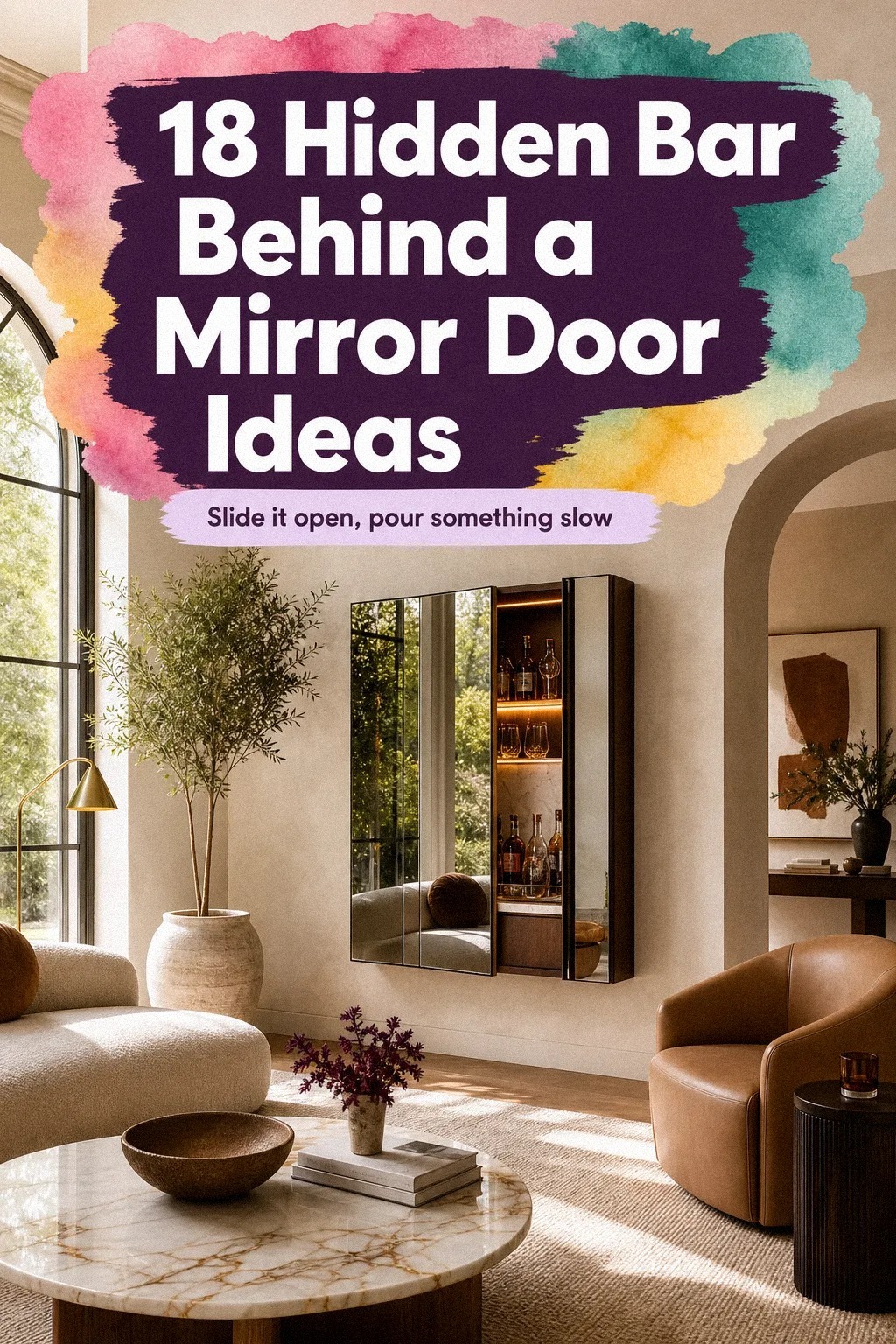
- Float a slim mirrored cabinet where the sideboard used to sit
- Build the Two-Wood Rule into the cabinet face
- Wash the inside with a warm LED strip
- Anchor the bottle row at exactly eye level when you’re standing
- Use antique mirror instead of new
- Give every shelf a single job
- Hang a single piece of art over the mirror and lose the room
- Run the mirror cabinet floor to ceiling
- Does swapping to brass hinges really change how custom the cabinet reads?
- Build a back bar out of second-hand doors
- Add a velvet-lined drawer for the tools
- Use the cabinet’s depth as a wine cellar
- Frame the mirror like a real piece of art
- Hide a reading nook behind the same door
- Wire the LED strip to a hidden contact switch
- Mirror the inside back panel so the cabinet looks twice as deep
- The Farrow & Ball + Benjamin Moore Two-Tone Back Panel Method
- Add a small lock if you collect anything valuable
1Float a slim mirrored cabinet where the sideboard used to sit
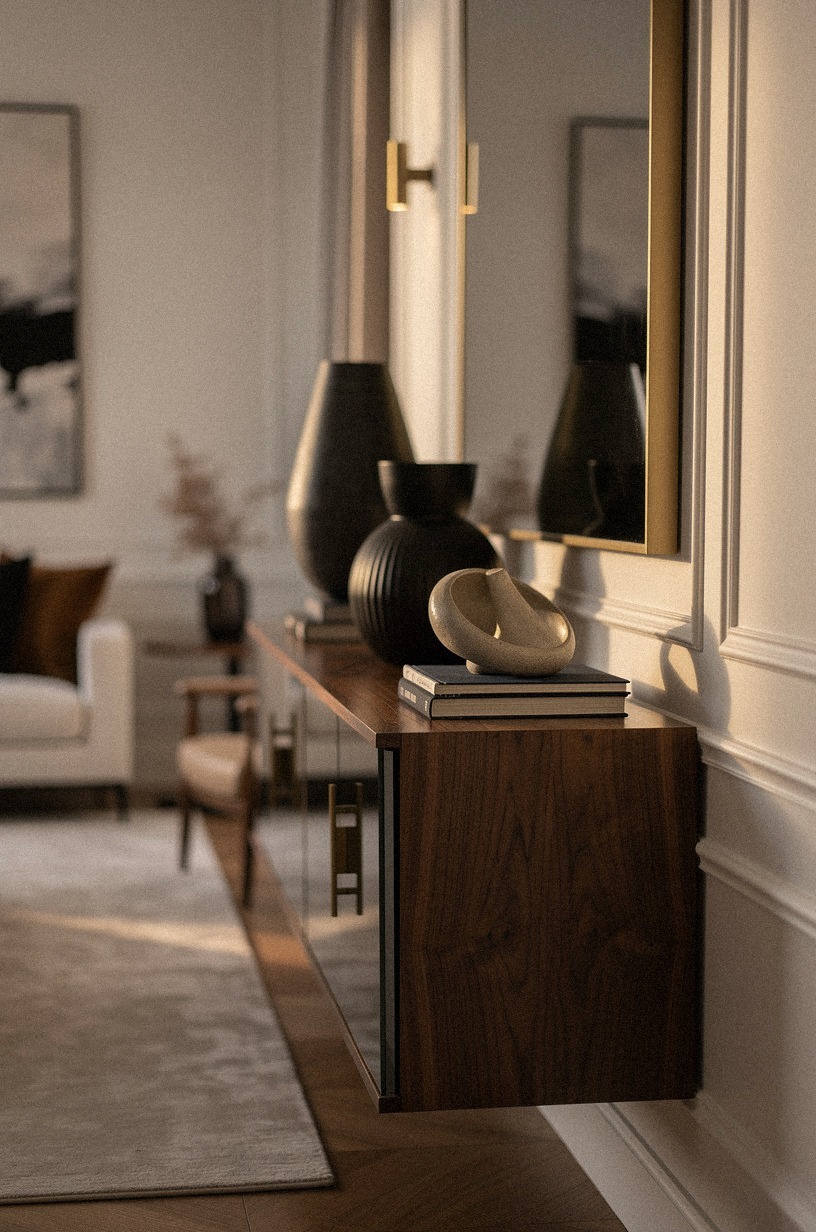
A 36-inch-wide mirror-door cabinet reads as wall art from across the room and opens to a fully stocked bar when you swing it. Mount the cleat into two studs, not just drywall, because a stocked cabinet runs 60 to 90 pounds once you add bottles.
And don’t trust toggle bolts as a substitute, because they will fail eventually on a load this heavy. But here’s the move that separates a clean install from a sagging one: hit two studs with the cleat and verify with a $15 stud finder before you lift.
I made the mistake of trusting toggle bolts on a similar install, and one side started to sag within two years. Don’t skip the studs!
If you’re working with a narrow wall, my living room speakeasy guide covers the shallow-depth versions that work in hallways.
2Build the Two-Wood Rule into the cabinet face
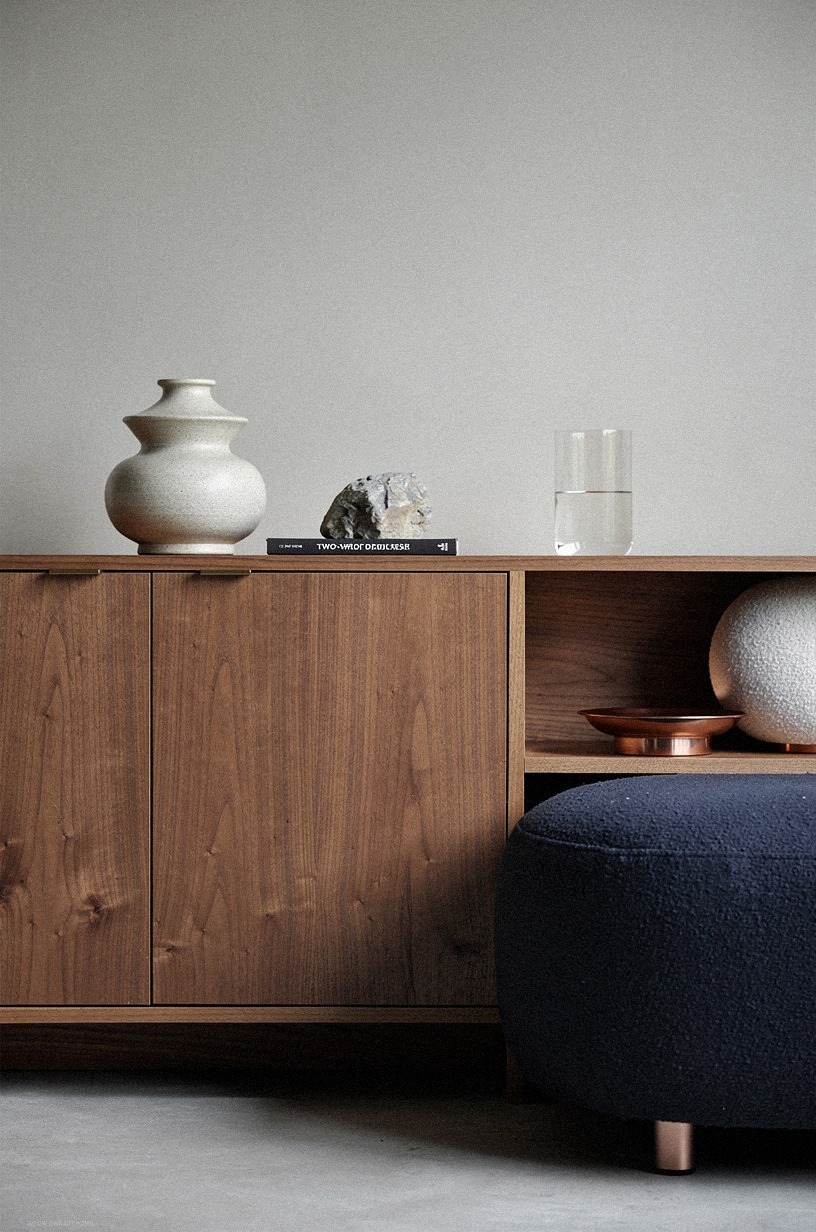
Pick one warm tone for the frame and one cool tone for the mirror’s bevel edge, and the cabinet reads as furniture instead of a mirror. Unlacquered brass edging against a white oak frame is the move I’d recommend for a 2026 room.
The brass picks up the warm light from the inside LEDs, and the oak grounds it so the whole panel doesn’t feel jewelry-store-cold. Skip the all-chrome bevel. It looks dated by morning.
For a richer take, Farrow & Ball’s Studio Green on the inside trim (just the inside, never the outside) deepens everything the cabinet catches in its reflection.
3Wash the inside with a warm LED strip
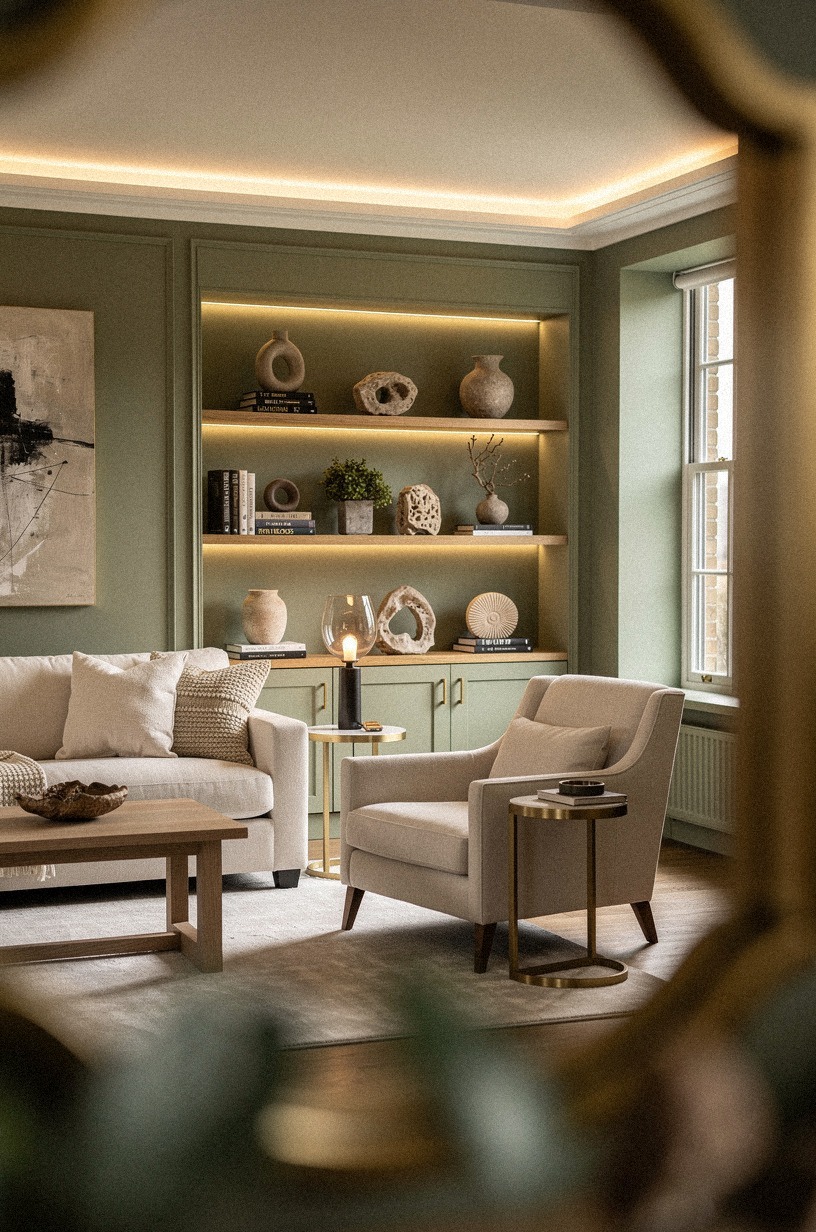
A single overhead puck light inside a mirror-door cabinet makes everything look like a hospital. Run a 2700K LED strip along the front edge of each shelf, hidden behind a 1/4-inch lip, and the bottles glow from below instead of from above. The lip is the detail that matters; without it you’ll see the LED dots in the mirror.
Warm white only. Skip the cool-white strips, they flatten the bourbon and make the cabinet look like a 2012 dorm fridge. The whole warm-light playbook shows up in our speakeasy lighting ideas, and the layered-source play is the same one I borrowed from there.
4Anchor the bottle row at exactly eye level when you’re standing
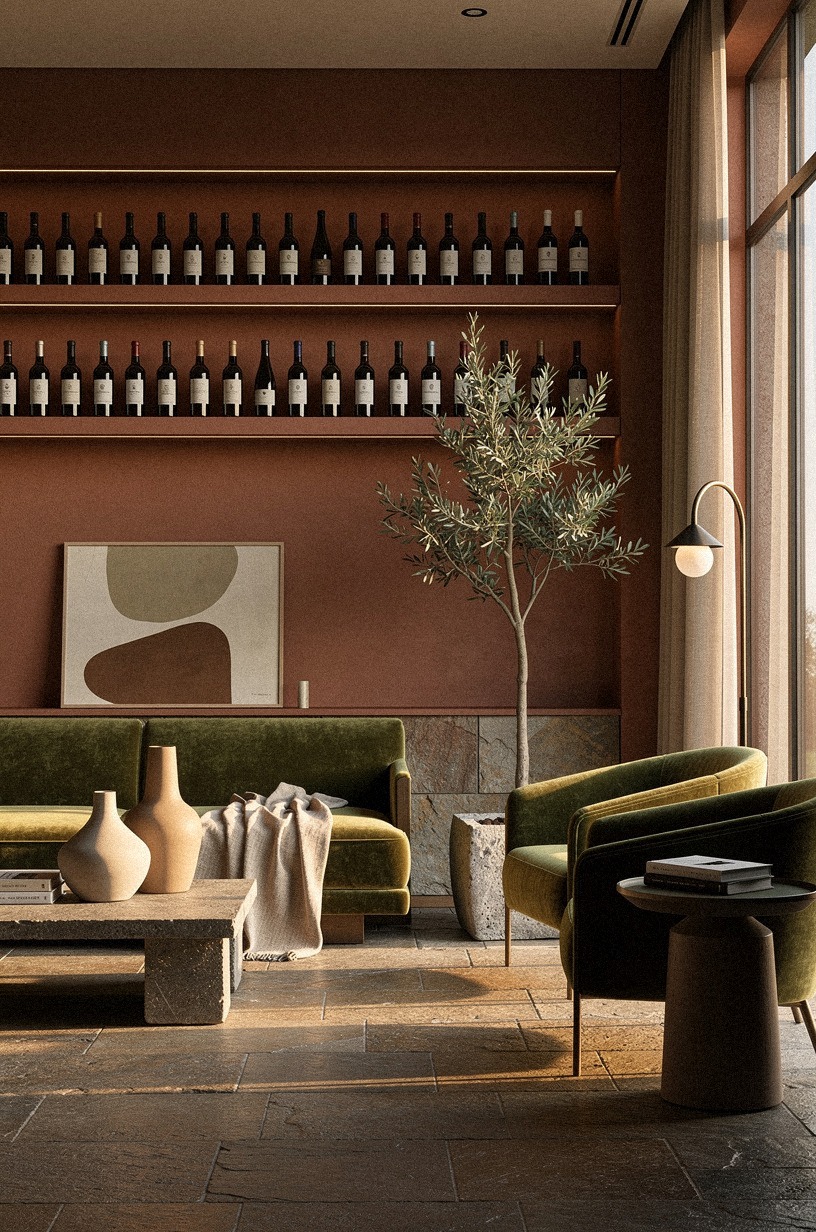
The shelf that holds your everyday bottles should land at 60 to 64 inches from the floor. That’s the height where your eye naturally goes when you’re standing in front of the cabinet, which means the bottles frame your face in the mirror when you open the door It’s a small thing.
It also makes the whole cabinet feel like a vanity, not a closet. If your cabinet has adjustable shelves, set the bottle row there and leave the upper shelf for glassware.
For the shelf above, two or three faded crystal tumblers from a flea market read better than a matched set, and they keep the eye moving up the mirrored face.
A pair of CB2 Primitivo crystal rocks glasses up top is the same idea in a bought version; the cut catches the warm LED and the shelf reads as “considered,” not “stocked.”
5Use antique mirror instead of new
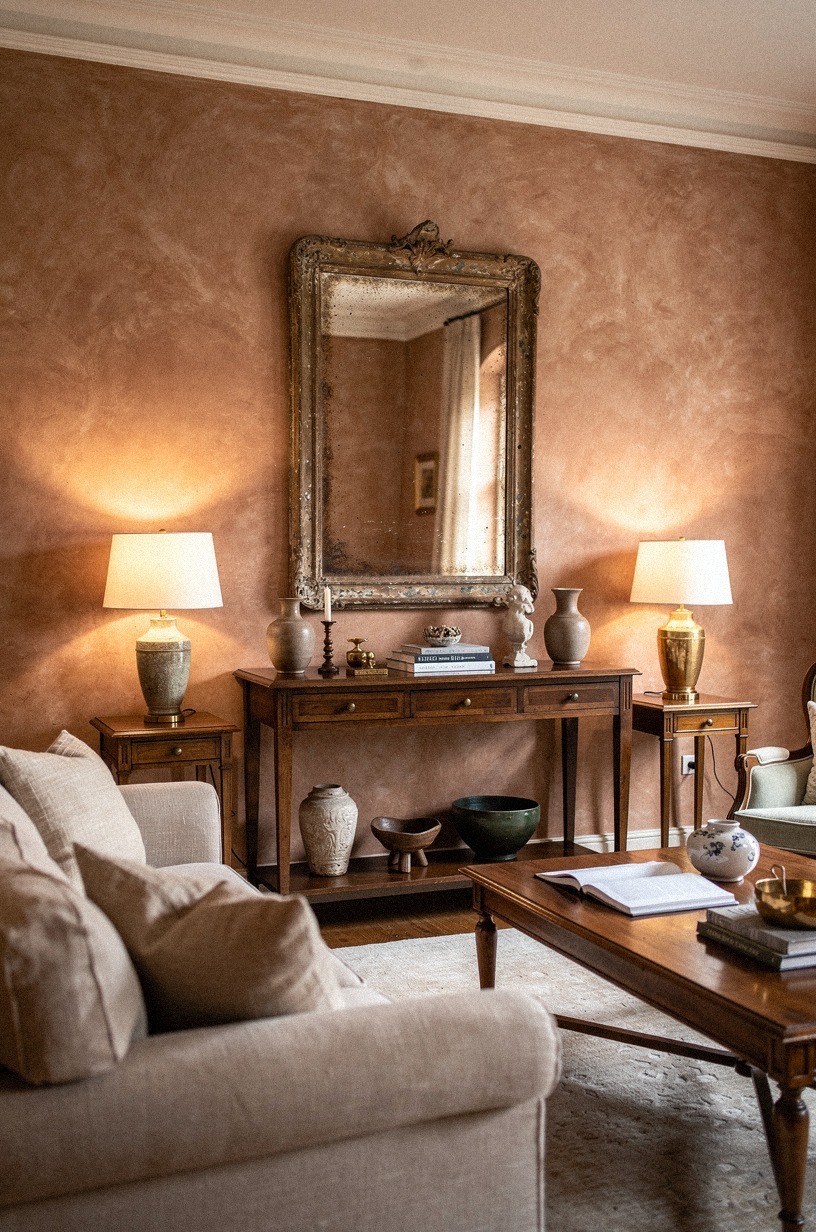
Antique mirror glass has a slight foxing and irregular reflection that kills the flat, new-build look most people associate with mirrored walls. A 36 by 48-inch panel runs about $35 to $90 per square foot through glass shops.
New mirror can work if you ask the shop to distress the edges, but antique is the easier path.
A single Restoration Hardware sample panel in the same color family is the easiest way to test the foxing before you commit to a full sheet. The foxing is also what kills the “big-box changing room” energy that turns most guests off a wall of mirrors. If you’re pairing the antique glass with a richer back panel, our speakeasy wallpaper ideas round up the dark, moody patterns that hold up behind a mirror.
6Give every shelf a single job
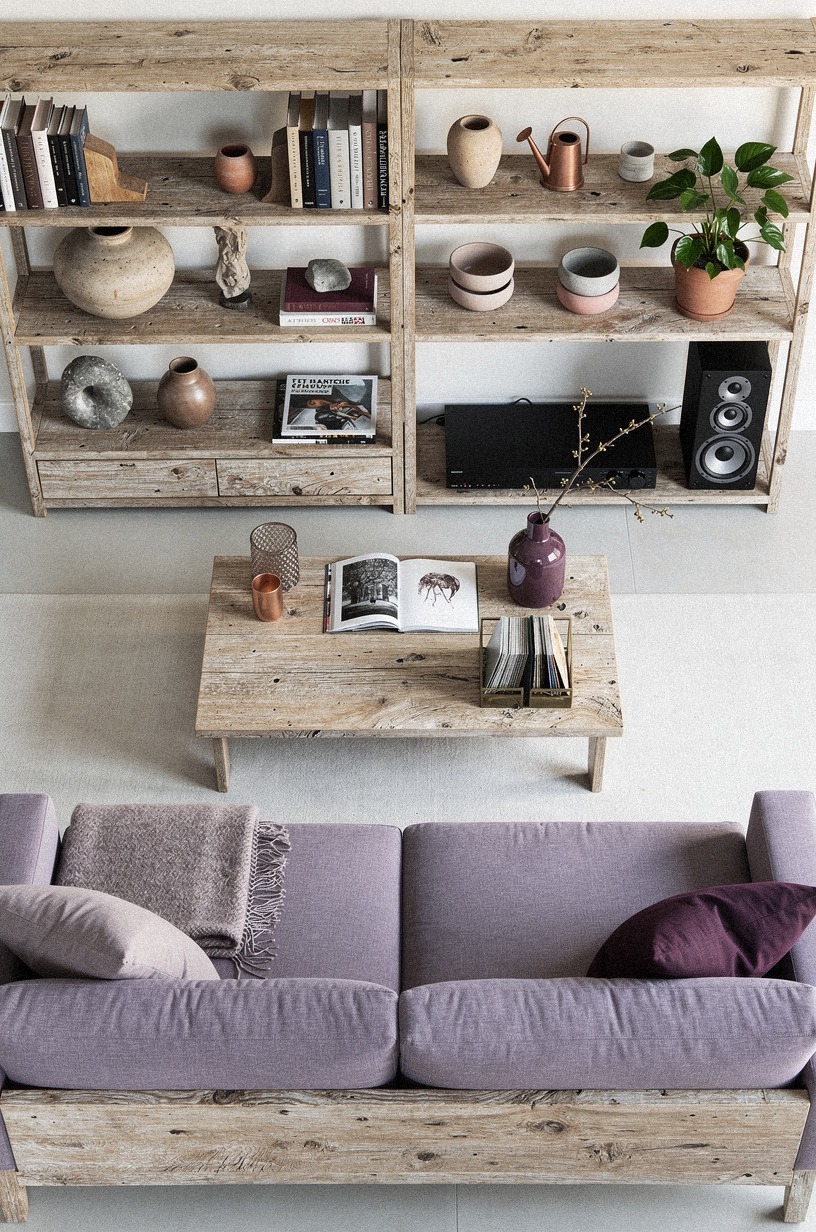
I’ve opened a lot of these cabinets in showrooms.
7Hang a single piece of art over the mirror and lose the room
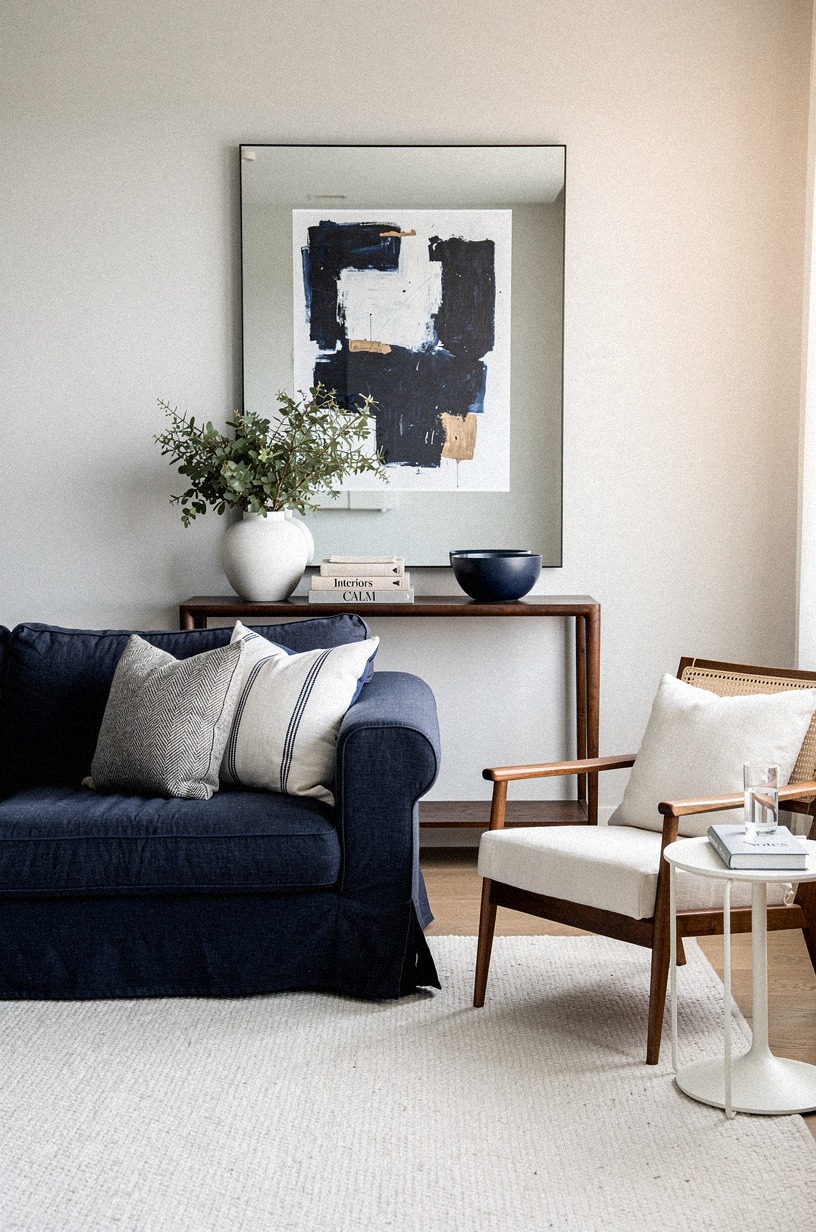
Here’s a move that sounds wrong but works. A 16 by 20-inch framed charcoal or a single matte-black-and-white photograph hung a few inches above the mirror pulls the eye into reading the whole wall as a picture wall, not a bar.
Guests look at the art, not the reflection, and the mirror disappears from the conversation entirely. Pick something quiet and graphic, no busy florals or family photos. A West Elm gallery wall is also a fine template here; the frames do the quiet work.
The art does the heavy camouflage, and the cabinet reads as furniture underneath. For art that holds up next to a mirror and pulls its own weight visually, our speakeasy wall art ideas round up exactly the prints that survive this kind of staging.
8Run the mirror cabinet floor to ceiling
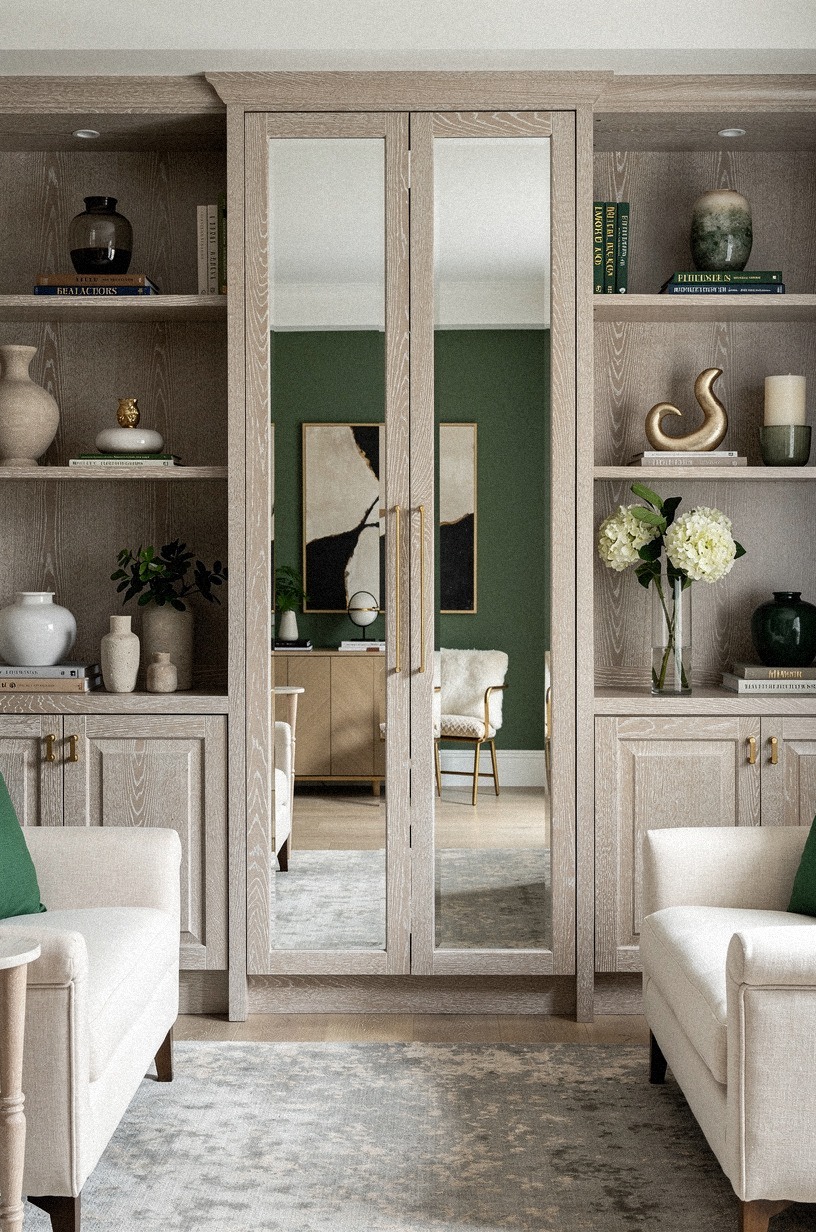
A full-height antique mirror panel makes the room feel twice the size and hides the bar behind a stretch of wall that otherwise looks empty.
9Does swapping to brass hinges really change how custom the cabinet reads?
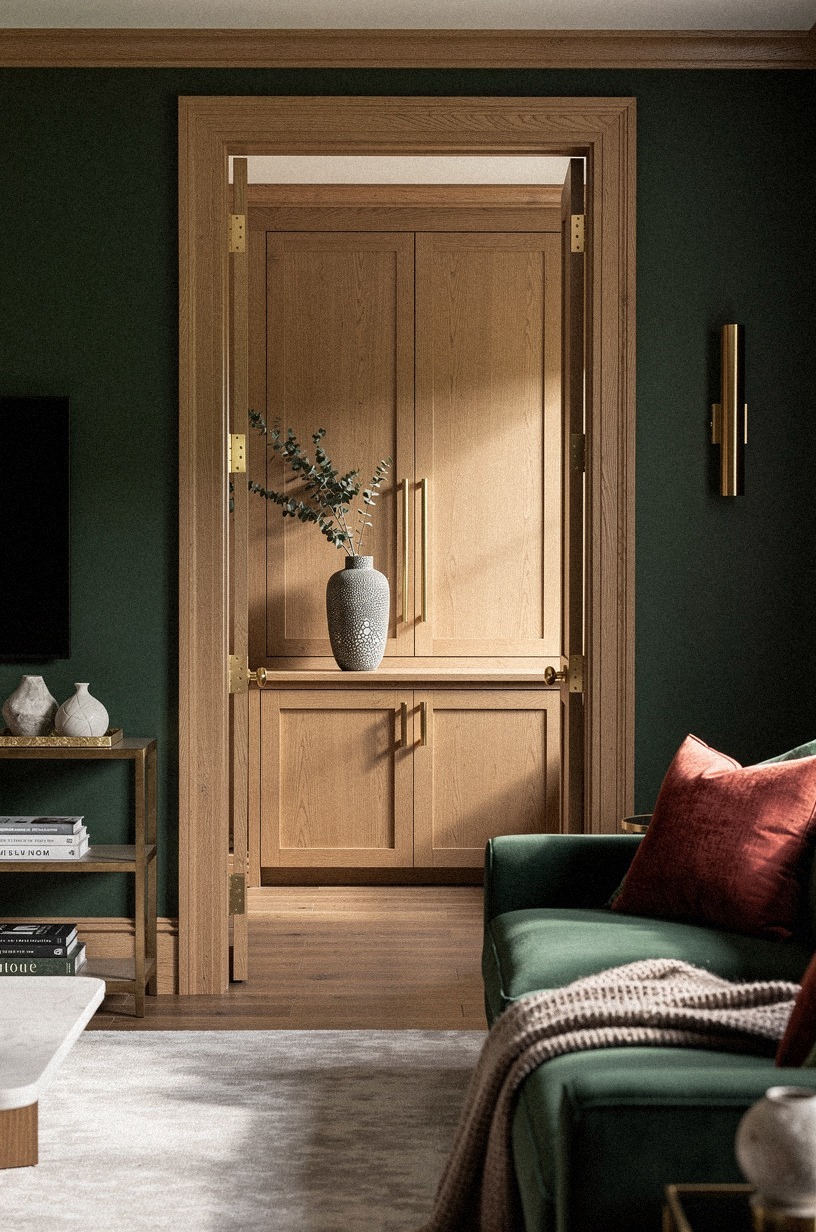
Most off-the-shelf mirror cabinets ship with silver or black hinges, and they’re the detail that dates the whole piece. Swap them for unlacquered brass pin hinges (about $18 to $35 for a 4-piece set) and the cabinet goes from builder-grade to custom in about thirty minutes.
The patina that develops on unlacquered brass over the first year is the part you can’t fake. If brass feels too warm for the room, an oiled-bronze hinge is the cooler-toned alternative and reads almost as considered.
Skip the polished chrome; it’s the one finish that keeps a mirror cabinet looking like a 2014 builder special no matter what you do around it. The full brass-vs-bronze-vs-chrome question is one we go deep on in our speakeasy gold and brass accent ideas.
10Build a back bar out of second-hand doors
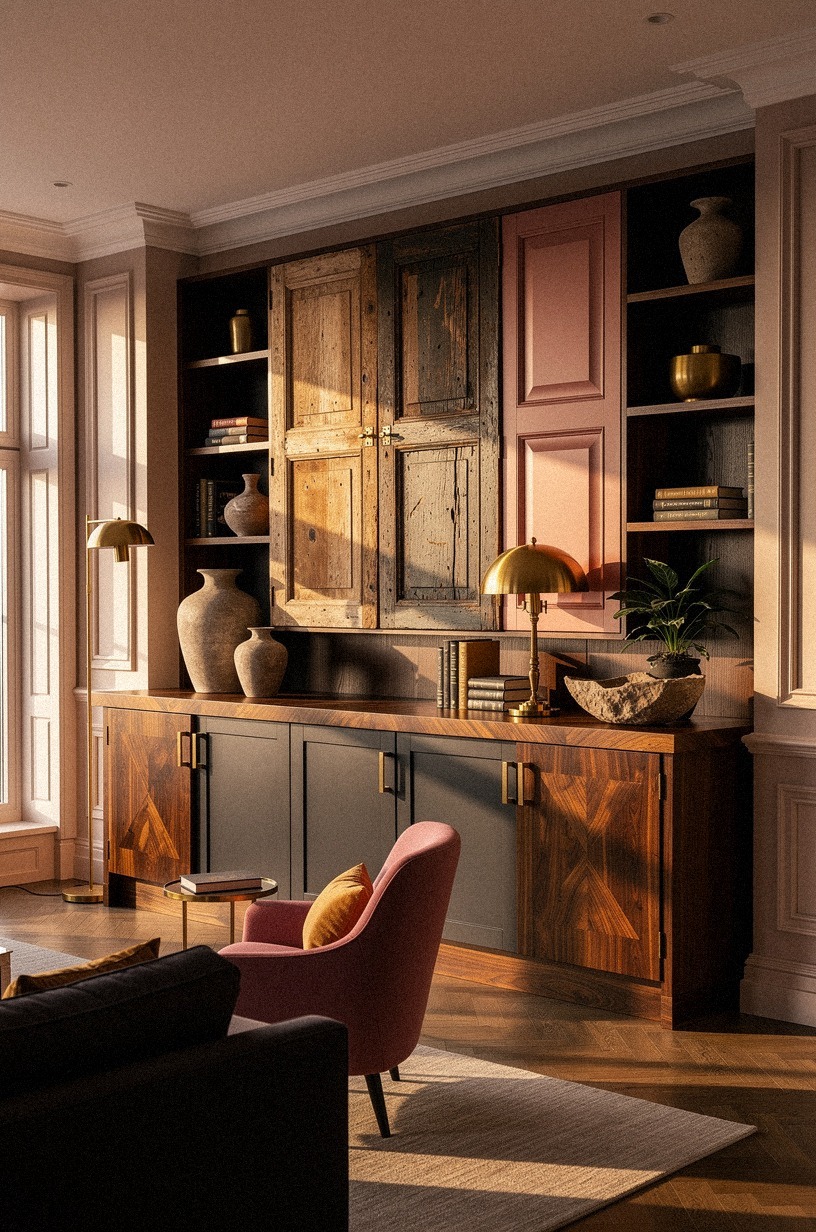
If you’ve got a workshop and a Saturday, two salvaged doors plus a sheet of mirrored MDF will get you a custom-looking mirror bar cabinet for roughly $250 in materials. Hit up architectural salvage yards in your city for paneled doors with good proportions, cut them down, and hinge them together with solid brass butt hinges.
The joints show a little, but that’s the point. A Benjamin Moore Simply White OC-117 on the paneled faces keeps the salvaged look from tipping into “old garage door.” A closet-to-speakeasy conversion walks through the structural side if you want to scale this up to a full nook, and the hinge math is almost identical.
11Add a velvet-lined drawer for the tools
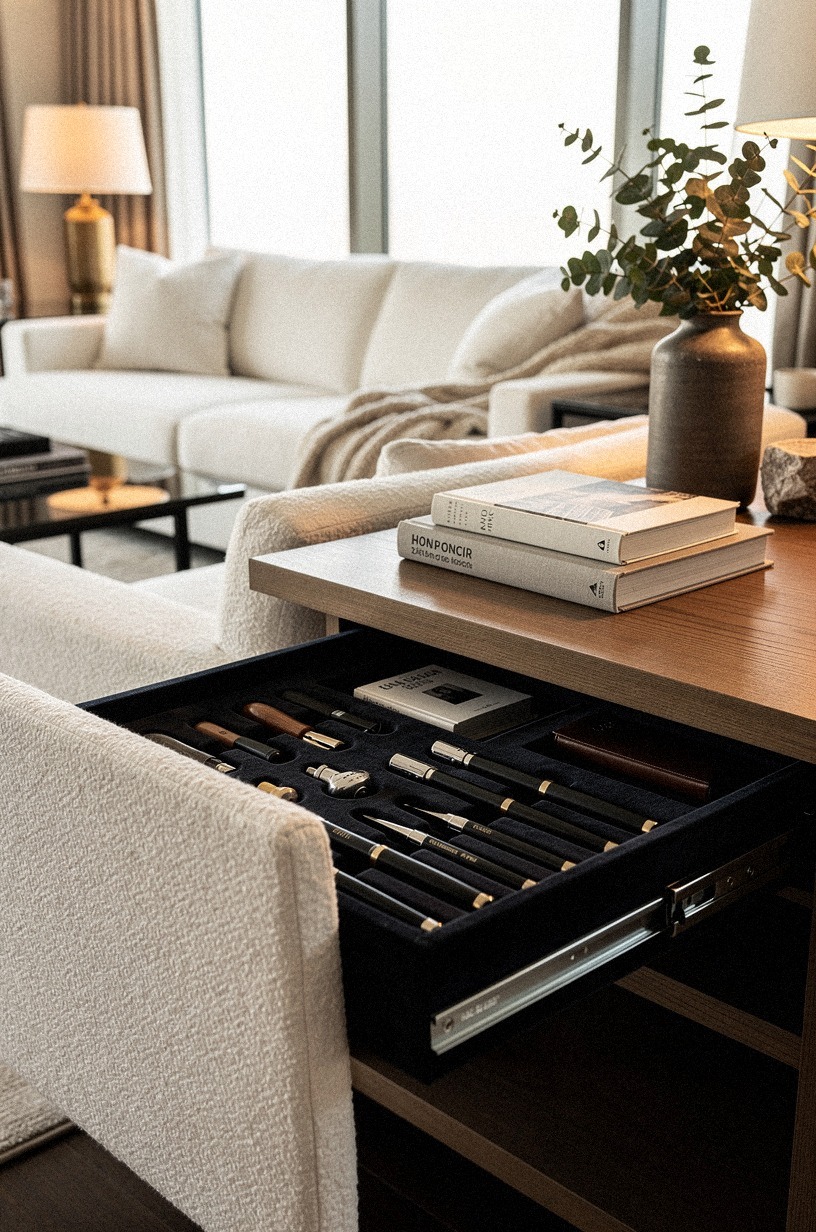
A shallow drawer under the bottle shelf, lined in sage mohair velvet or a deep wine-toned wool, holds your jigger, strainer, bottle opener, and a small paring knife without rattling around. It’s the kind of detail guests notice when they open the cabinet, and it costs about $40 in 18 oz cotton velvet and a half-day of cutting and gluing.
Skip the foam. Foam yellows and the tools end up sliding around anyway. The whole drawer takes about forty dollars in materials and a quiet Saturday morning.
A single 18 oz cotton velvet panel from Mood Fabrics runs about $25 in a yard cut, and that one yard covers most drawer interiors up to 24 inches. The same velvet-drawer move shows up at stool scale in our speakeasy seating ideas, where bouclé and mohair do the quiet-luxury work the velvet drawer is doing here.
12Use the cabinet’s depth as a wine cellar
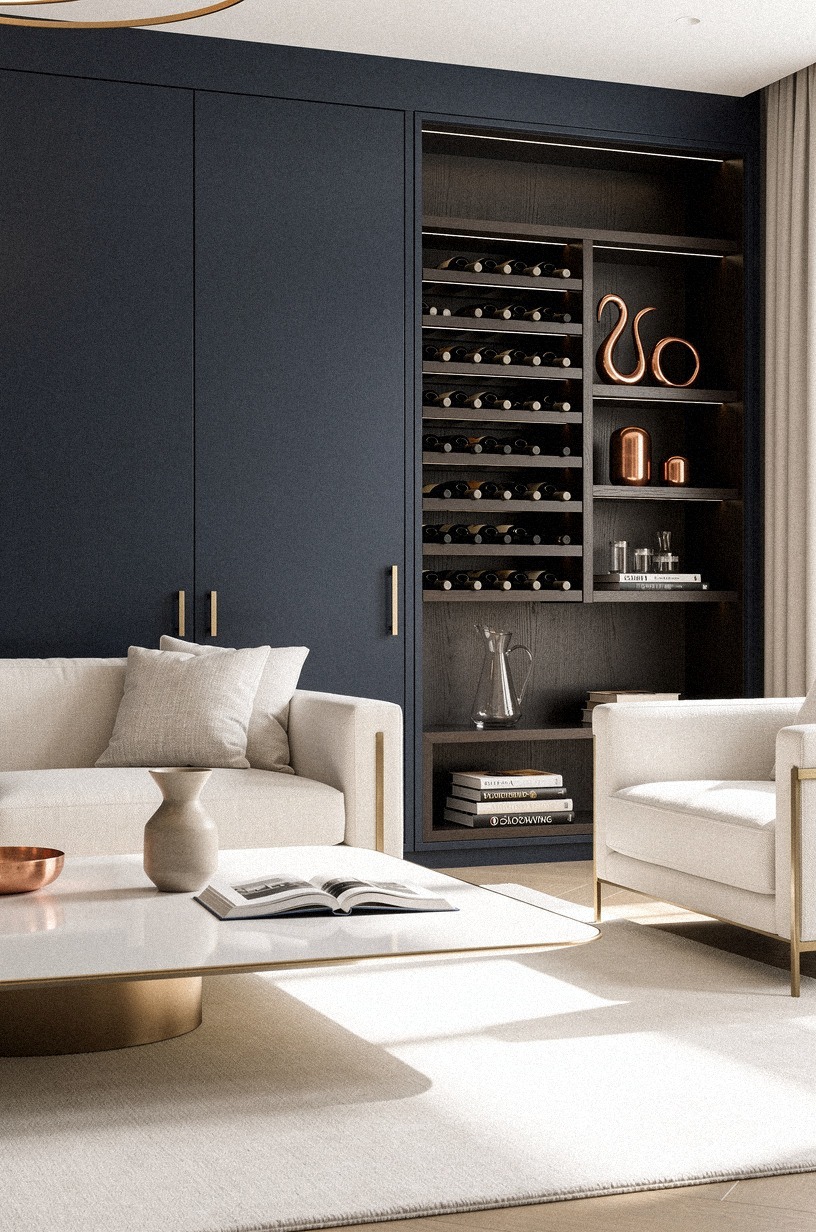
If your mirror-door cabinet is 18 inches deep or more, you can fit a slim dual-zone wine fridge behind one door.
Keep the bar tools and glassware behind the other for the cleanest split, and the reveal feels like two separate cabinets without doubling the install. The fridge needs a clean 110V outlet inside the cabinet, which is most of the install cost: an electrician charges $180 to $350 to fish a new circuit through the wall.
Set the cool zone to 55°F for whites and the warmer zone to 60°F for reds, and you’ve got a 24-bottle cellar hiding behind the same surface. Skip the undercounter fridge drawers; they rattle and the compressor hum reads through the mirror into the room. The same “bar + cellar behind one door” idea at full living-room scale lives in our speakeasy home bar design ideas, where the cabinet footprint gets a lot more generous.
13Frame the mirror like a real piece of art
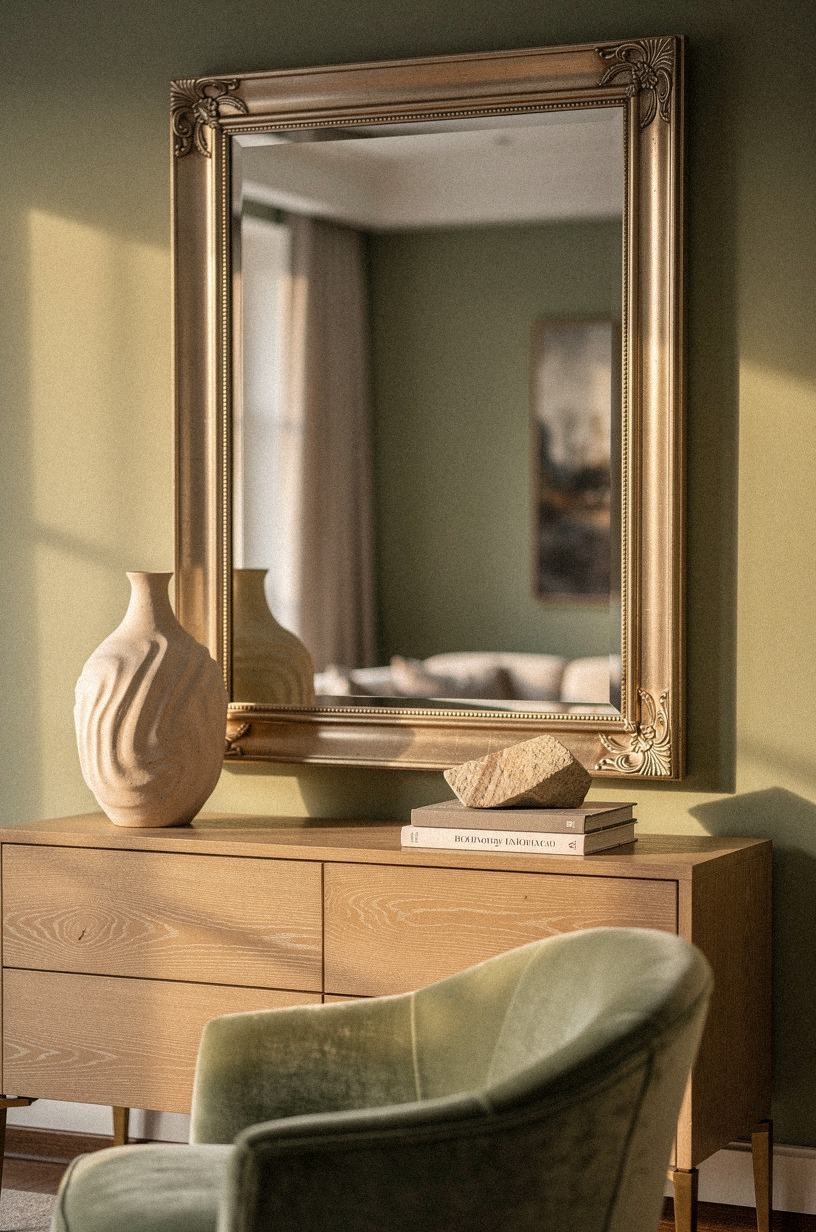
Skip the contractor-grade frame that ships with most mirror cabinets.
14Hide a reading nook behind the same door
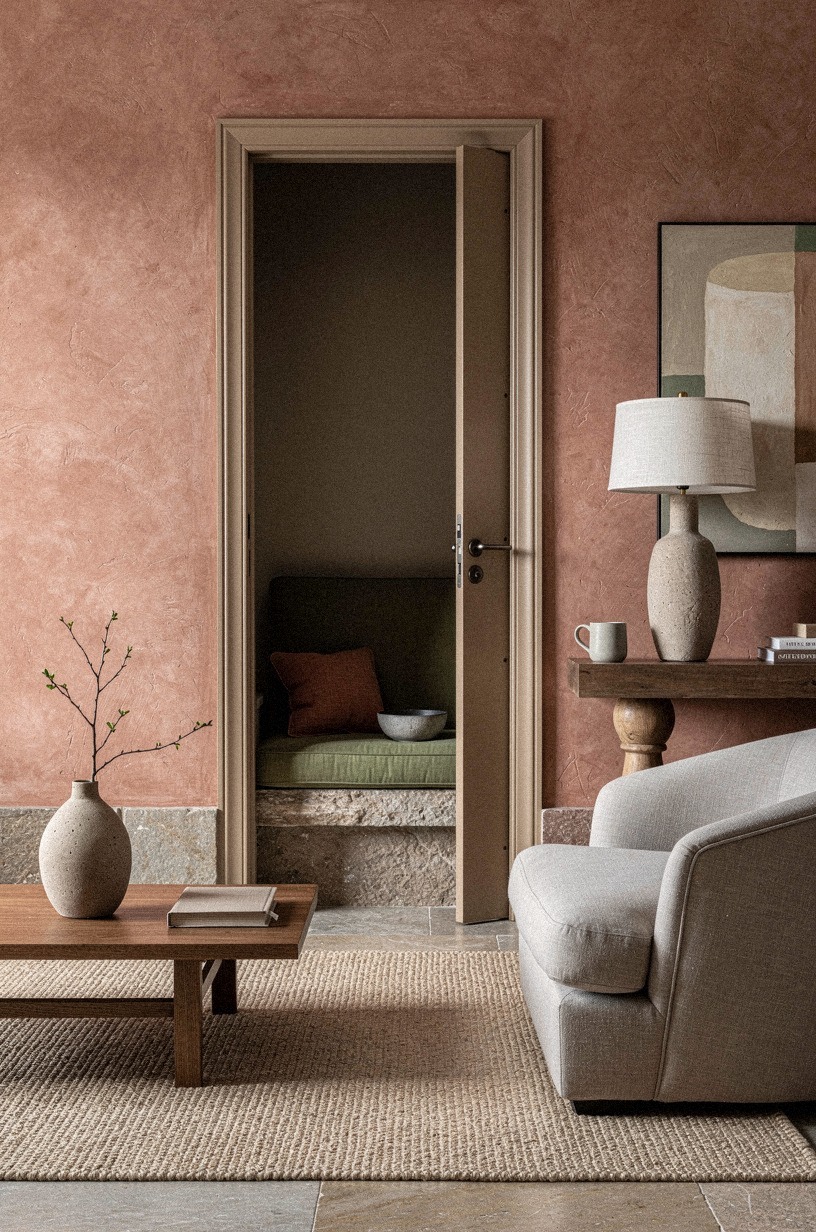
Here’s where the mirror-door concept stops being a bar idea and starts becoming a room idea. Build the mirror door wide enough to cover a reading nook, daybed, or window seat, and the nook becomes the bar after dinner. That’s a bigger project, but in a small apartment it’s the difference between a living room and a one-bedroom, especially with a tufted linen daybed from Article parked inside.
If you’re working with a sloped ceiling or an under-stair cavity, a tufted linen daybed parked inside turns the nook into a reading spot that becomes a bar after dark. speakeasy home office ideas covers the geometry, and the same “nook-becomes-bar-after-dark” idea shows up at lounge scale in our speakeasy lounge ideas.
15Wire the LED strip to a hidden contact switch
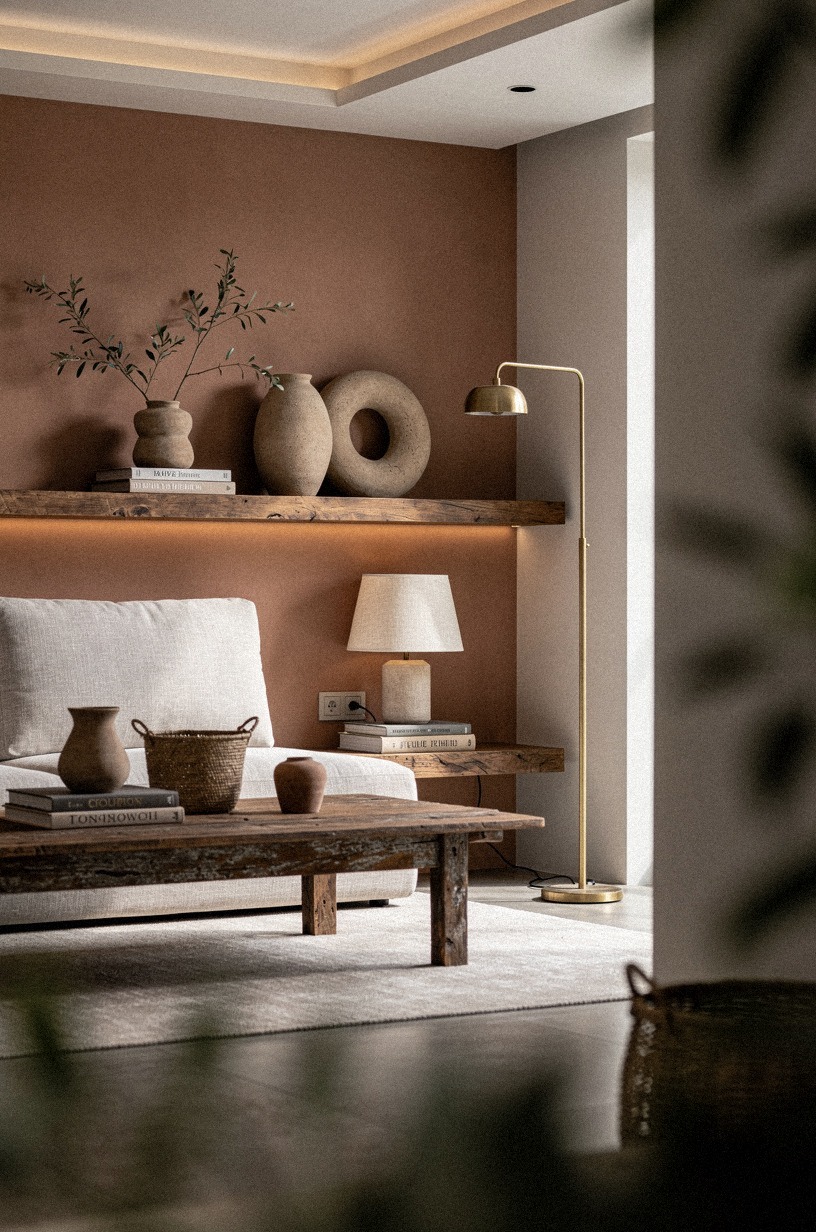
A magnetic contact switch mounted inside the cabinet frame turns the LED strip on when the door opens and off when it closes, no switch plate visible. The parts run about $20 for a basic 12V kit, and it’s a 45-minute solder-and-tape job if you’ve ever wired a light fixture before.
The payoff is huge: open the door, the bar lights itself up like a stage. Close the door, nothing.
And honestly? That single moment of light-on-reveal is worth every minute of the wiring job!
The same brass-and-warm-light combination gets even more dramatic at fireplace-mantel scale in our brass candle fall mantel ideas.
16Mirror the inside back panel so the cabinet looks twice as deep
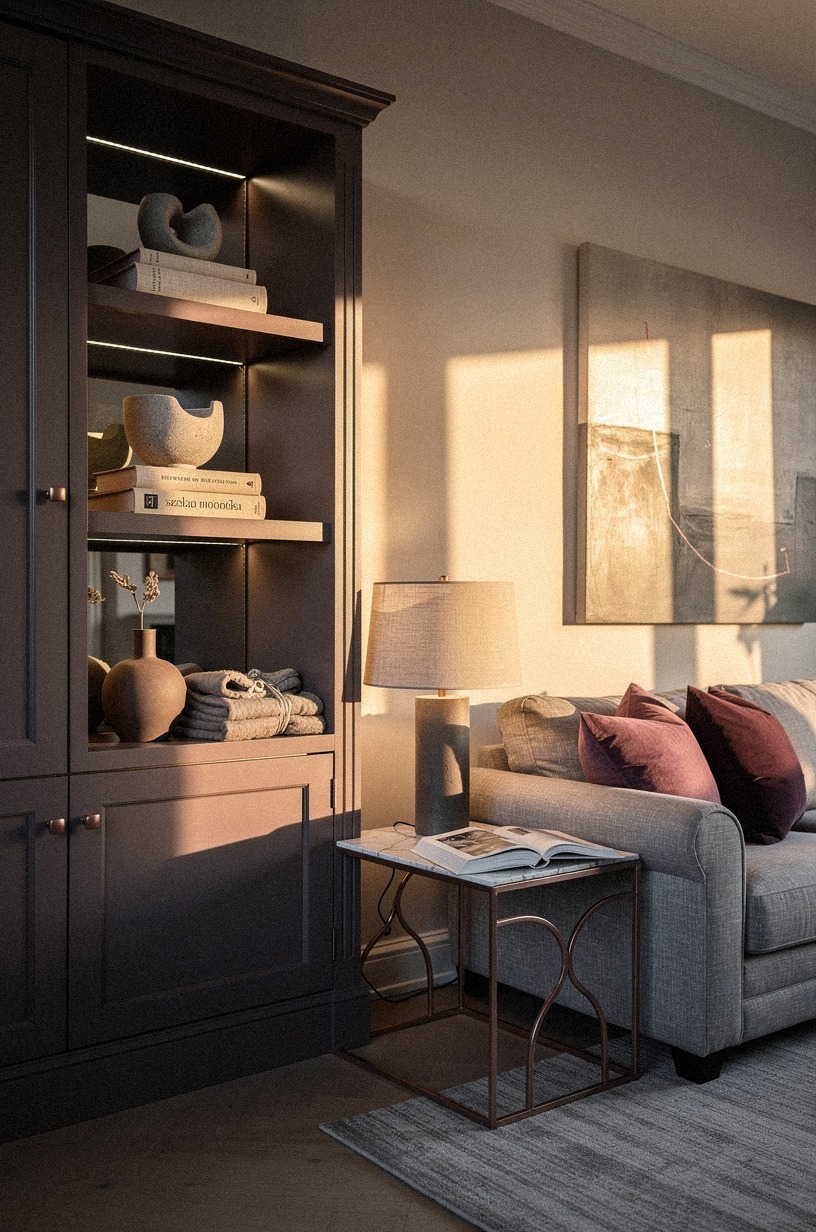
Glue a small mirrored panel to the back wall inside the cabinet, behind the bottle row, and the whole interior reads as bigger and more intentional. The play is to use antique mirror here too, not new, so the inner reflection matches the outer door. A mismatched new-and-old mirror pair always shows; matched foxing makes the cabinet feel like one intentional object.
Run a thin bead of clear silicone adhesive along the back edges (never construction adhesive; it yellows through the mirror within a year) and press the panel into place for 24 hours. The doubled reflection also doubles the apparent bottle count without doubling your bar inventory, which is the part I love, and a faint antique foxing on the inner mirror keeps it from looking like a new-build shortcut.
17The Farrow & Ball + Benjamin Moore Two-Tone Back Panel Method
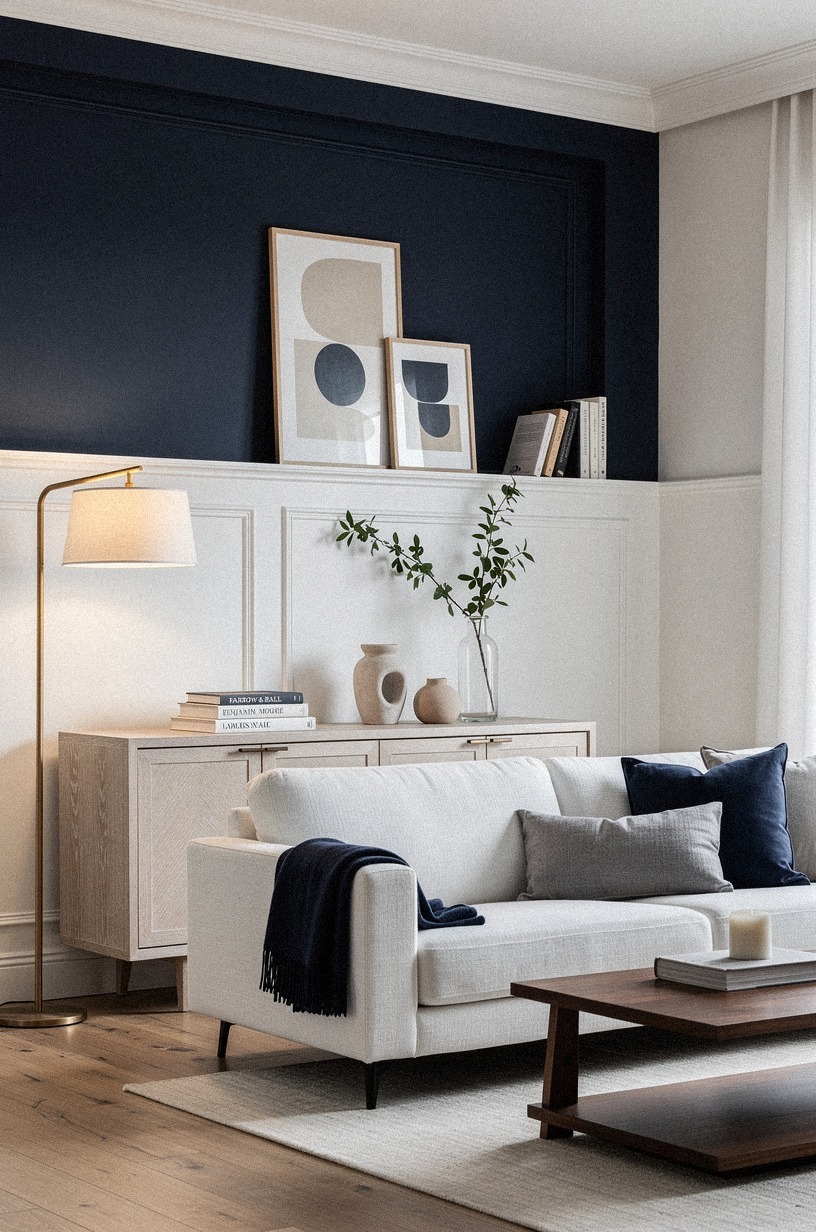
A back panel painted Benjamin Moore Revere Pewter HC-172 is the warm neutral I’d recommend for almost any 2026 mirror-door cabinet.
18Add a small lock if you collect anything valuable
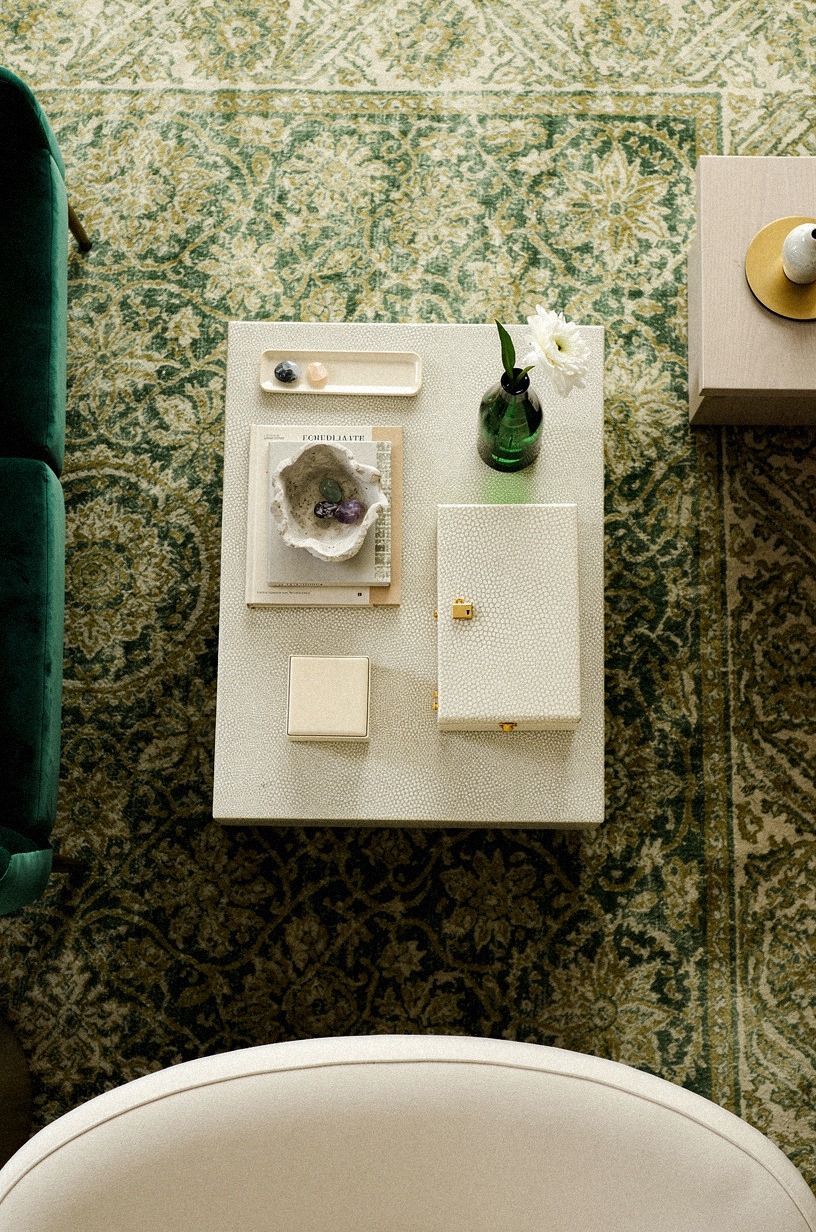
A simple push-button lock on the cabinet interior keeps the bar out of reach from kids, guests who over-pour, or anyone you’d rather not see your expensive scotch.
A tiny brass key lock is the more decorative alternative that reads warmer in the same room.
Locks add about $25 to $80 to the build, and they’re easy to retrofit if you drill a small hole in the cabinet face and mount the mechanism on the inside of the door. A Schlage keypad lock in matte black is the modern alternative. A polished brass key lock from Rejuvenation clocks in around $45 and looks like it belongs on a 1920s pharmacy cabinet, which is exactly the vibe a hidden bar is reaching for!
The Mirror Door Isn’t Really About the Mirror
Here’s the part of the mirror-door cabinet conversation that nobody talks about, and it’s the part that matters most.
The mirror is a surface. The cabinet is a box. What you’re really building is a threshold, the moment between a living room and a private bar, between a host and a bartender, between a regular weeknight and a dinner that feels like something.
I’ve watched the same mirror-door cabinet behave three different ways in three homes. The first was a serious cocktail setup with a single vintage decanter, two rocks glasses, and a bottle of rye.
The owners were considered, slow with their drinks, the bar a private ritual they opened on Saturdays. The second was high-energy with twelve bottles, four glassware styles, and a small fridge inside.
The owners entertained twice a month, and the bar was a stage prop. The third was mostly glassware and a small wine fridge, used as a display surface for one crystal piece.
All three worked. None of them looked like each other.
The design move I’d push back on, hard, is the “fill every shelf” instinct. Mirror-door cabinets have a small footprint, and when you cram them, the panel reads as a closet with a mirror on the front, almost a department-store fitting room.
Three to five bottles you drink on the regular. Two glassware styles you reach for without thinking.
One tool you keep on the counter. That’s the cabinet. Anything more is clutter behind a clever door, and guests feel the clutter before they feel the reveal.
The mirror-door bar is also a performance piece. It rewards people who open it on the regular.
If you build one and never open it, you’ve built a mirrored closet with a mirror on the door. So build one you intend to use.
Buy the bottles you drink, not the bottles a person with a hidden bar should own. Set up the lighting so the bottles catch the warm wash from the strip. Practice one cocktail you can make in under a minute with a single jigger and a bar spoon. The cabinet is the prop.
The pour is the show.
One last practical note. A stocked 36-inch cabinet runs 80 to 110 pounds.
Mount it into studs, full stop. If you can’t find studs (concrete, plaster over block, masonry), use a French cleat rated for double the loaded weight and have a second person help you lift. A fallen cabinet will take out a chunk of drywall and won’t survive the fall.
Mount it like it matters. The threshold only works if the hardware behind it disappears.
A Few Things Worth Answering
What is the best mirror-door bar cabinet for a small living room?
A 30 to 36-inch-wide wall-mount cabinet from West Elm or CB2 in the $600 to $1,400 range. Slim enough to clear a doorway, deep enough to hold a full bottle row.
Where can I buy mirror-door bar cabinet pieces on a budget?
IKEA, Wayfair, and Target Threshold carry mirrored cabinets in the $300 to $700 range. Facebook Marketplace has higher-end cabinets for $150 to $450. No reason to pay full retail.
How much does a mirror-door bar cabinet makeover cost?
A budget refresh runs about $300 to $700 with a second-hand cabinet and new hinges and lighting. Mid-range custom lands around $1,800 to $4,000. Full millwork with sink and wine fridge starts at $6,000.
Can I create a mirror-door bar on a budget?
Yes. A second-hand mirrored armoire from a thrift store, a $40 rechargeable picture light, and a $25 LED strip wired to a $20 contact switch. Total materials: about $100 to $200 plus the cabinet.
Is a mirror-door bar worth it in a small space?
Worth it, more than almost any other bar setup. The mirror face does double duty as wall decor and the cabinet as storage. In a 10 by 12-foot room, it replaces a sideboard, mirror, and bar cart.
Is a mirror-door bar a good idea for a rental?
Yes, with three no-damage swaps. Use a free-standing mirrored armoire, a rechargeable picture light, and peel-and-stick mirror panels on the back interior. All three come off cleanly when you move.
Where I’d Start First
If I had to pick one, I’d start with the second-hand mirrored armoire and the picture light. You skip the stud work, you learn what you reach for behind the door, and you find out within a month whether your room wants brass hinges or oil-rubbed bronze.
Everything else you can add later. The cabinet itself is the only decision you have to live with.
Pin a few of these alongside our closet-to-speakeasy conversion and start there.
A second-hand mirrored armoire is the cheapest serious version of this build.
A rechargeable picture light handles the rest of the work in under an hour, no electrician needed.
And if the look you’re chasing is older and moodier, our vintage speakeasy decor ideas land in the same warm, candlelit place!