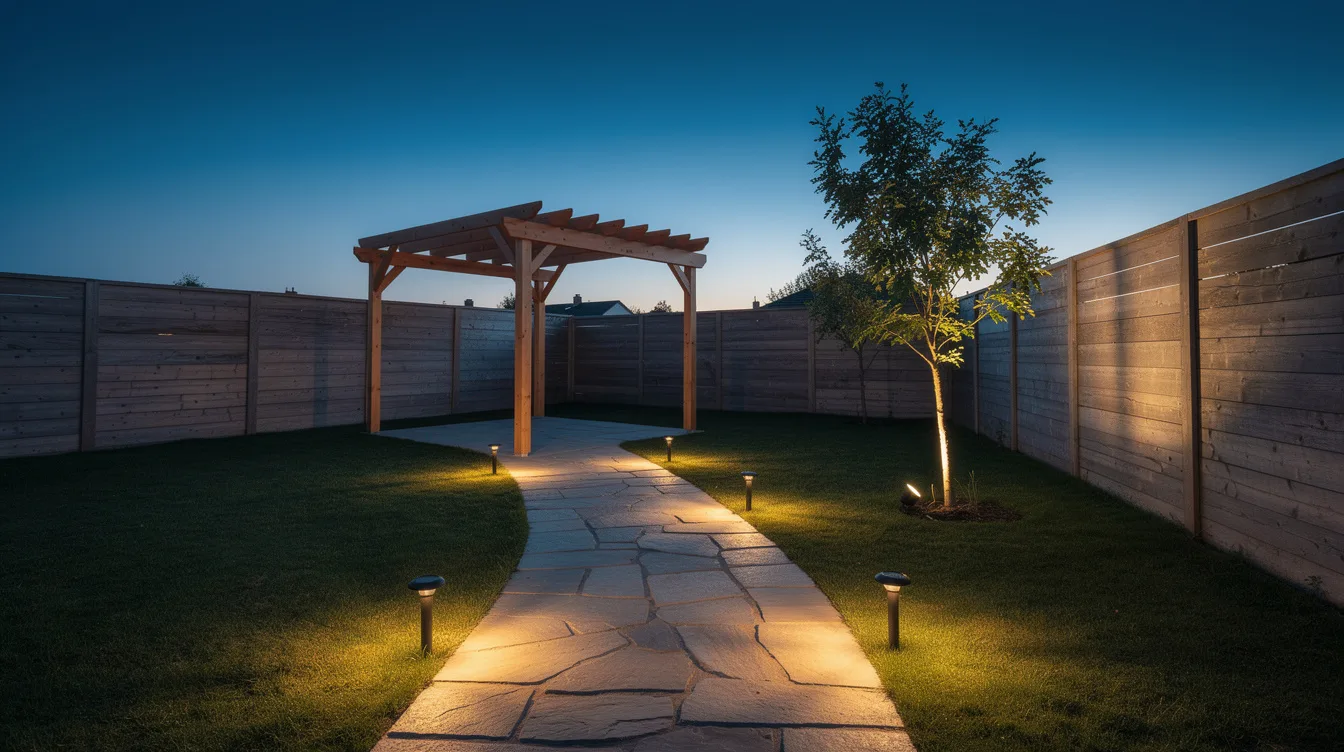
Every June I walk past the same block and see the same thing: a row of brand-new solar path lights already flickering at 21:30, plus one glaring blue flood pointed straight at the neighbor’s fence. Outdoor solar lighting is sold like party decor, then expected to behave like a real lighting system.
Treat it like a system instead. Think in lux, beam angles, battery capacity, and corrosion ratings, and a 30 USD set from Home Depot or Amazon can look like it belongs on a designer’s patio through 2026.
Mounting Panels Where the Sun Never Reaches
The fastest way to kill a solar light is to hide its panel. North-facing walls, deep pergolas, and dense tree canopies give a panel just 1 to 2 hours of weak light, so the LED usually dies by 22:00 in mid-summer.
Designers insist on 4 to 6 hours of direct sun and routinely place the panel separately from the head. A Home Depot stake light moved two feet into the open lawn often outlasts a pricier fixture tucked under an eave.
Mixing Warm and Icy Color Temperatures
A 2700K path light next to a 6000K “ice blue” flood is the outdoor version of wearing clashing metals: it screams cheap. Designers pick one palette per zone and hold the line.
Warm 2700 to 3000K for terraces and dining, neutral 3500 to 4000K for paths, cooler 4000 to 5000K only where security matters. A simple test: stand on the patio at dusk and check that every fixture reads the same color from across the yard.
Overlighting a Small Patio Like a Parking Lot
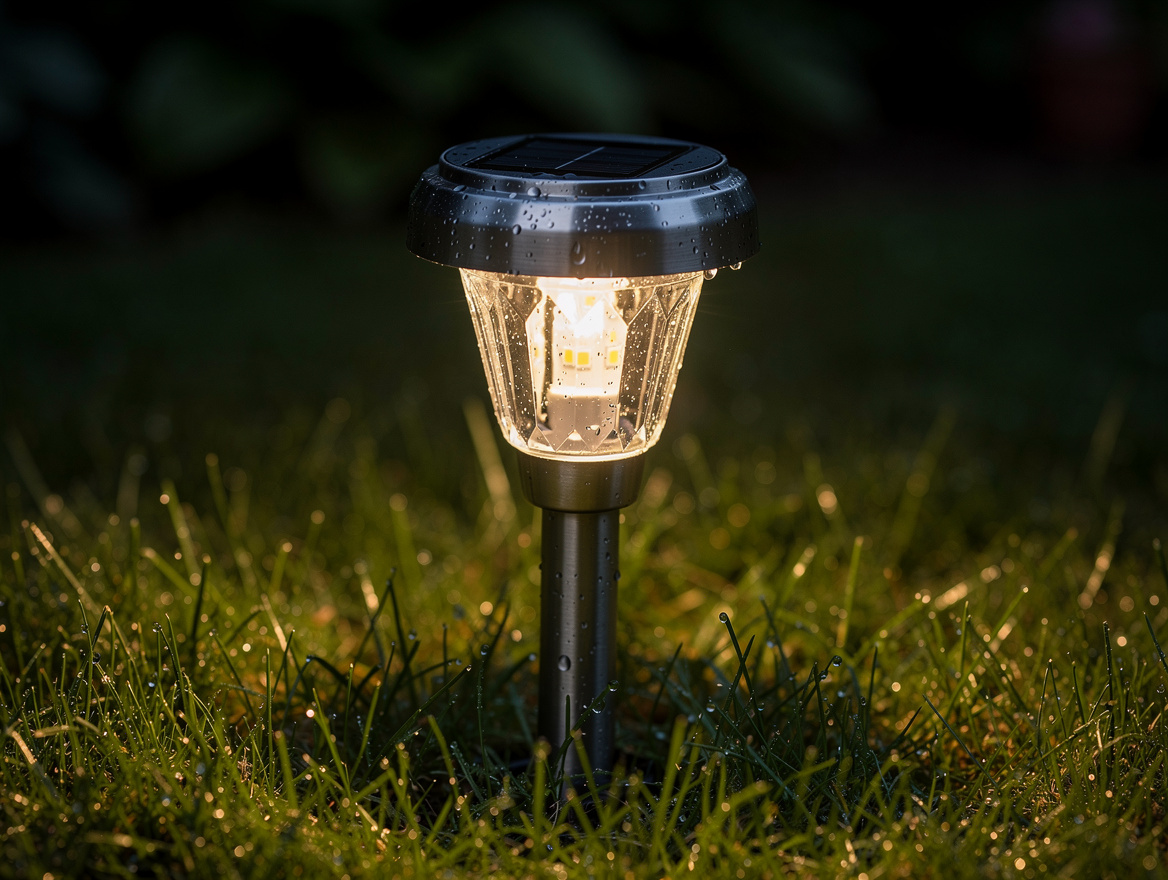
Stacking six high-lumen floods into a 20 m² patio flattens every shadow and ruins the mood. Light level is measured in lux, and most outdoor dining zones only need 20 to 50 lux to feel inviting.
Build in layers: low markers on the ground, two or three accent spots on plants or walls, one functional fixture by the door. Walmart and Amazon both sell dimmable solar path sets around 25 to 50 USD a pack, which is plenty for a typical patio.
Pointing Beams Straight Into Eyes
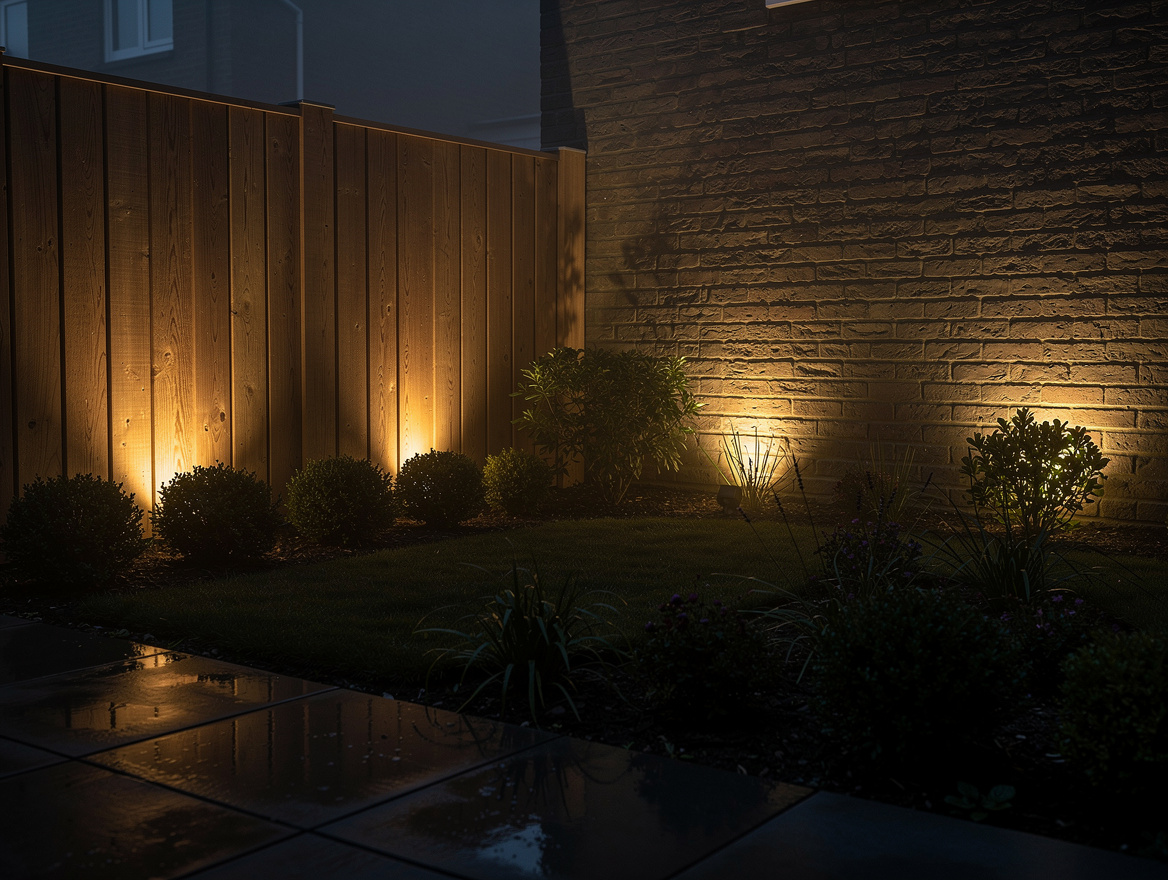
A spotlight aimed horizontally at a sofa blinds anyone sitting there and annoys the neighbors. The pro move is to light vertical surfaces instead: a fence, a tree trunk, a textured wall.
Light bouncing off those surfaces fills the space softly, which reads as more architectural and far less harsh. Aim fixtures at a 30 to 45 degree angle toward the surface, never across the seating zone.
Ignoring IP Rating and Corrosion
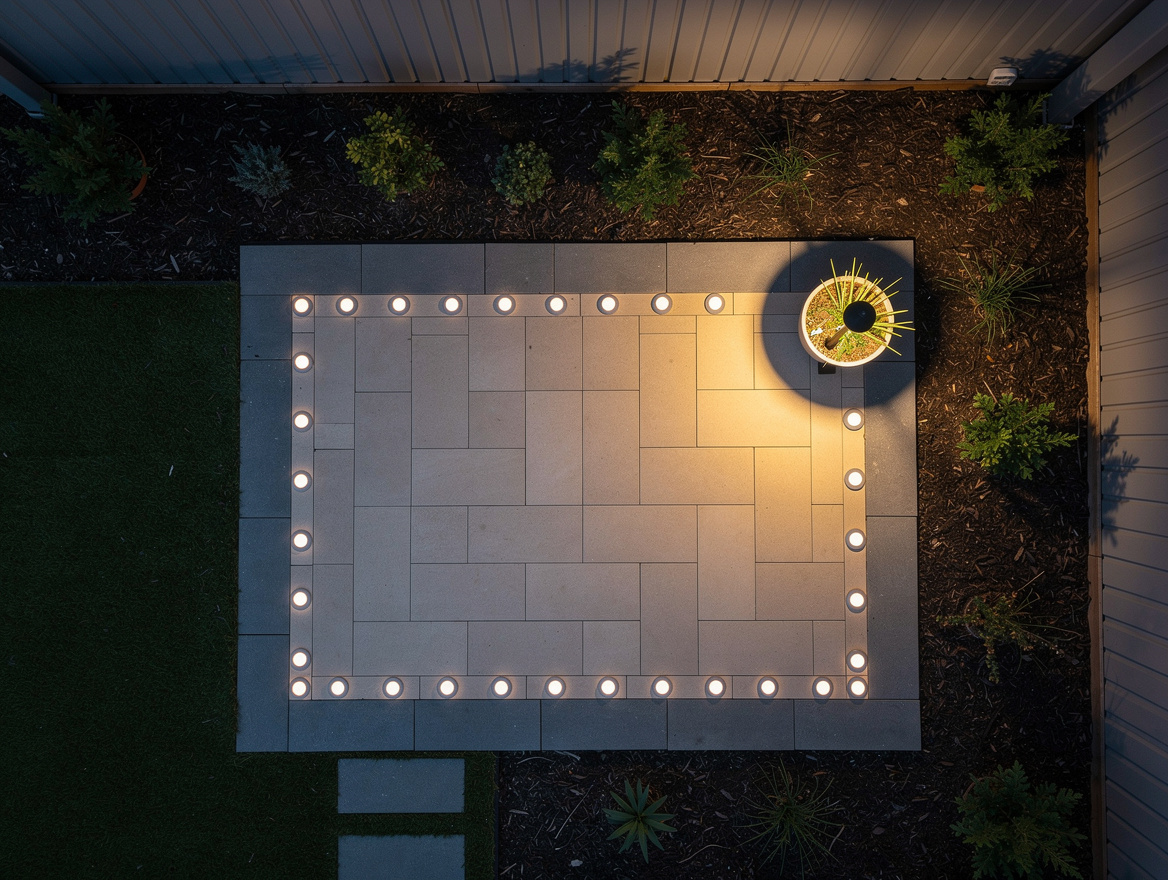
Cheap IP44 plastic stakes drink water and crack under UV within a single summer, especially near sprinklers or salty coastal air. Designers default to IP65 or higher for anything ground-mounted and reach for stainless steel or powder-coated aluminum bodies.
Stainless and glass sets like the Beau yard 8-pack at about 16.5 inches tall, or the Mancra glass-and-stainless line, cost roughly 25 to 50 USD for a pack of 6 to 8 and tend to survive season after season.
Skipping Hierarchy, Rhythm, and Battery Math
Lining every post and plant with the same tiny puck light turns a garden into a flat dotted runway. Real lighting design has focal points: one brighter accent on a hero tree or sculpture, dimmer markers along the path, and intentional dark zones for contrast.
Battery and panel sizing matter just as much. A 600 to 800 mAh cell will not push 10 to 12 hours at full brightness, no matter the sticker. Designers match panel area, battery capacity, and lumen output to the site’s latitude and winter sun hours, which is the single most skipped step in summer installs.
Order of priority for one weekend fix: sun exposure first, color temperature second, IP rating third. Everything else is styling.
Mia Carter writes about small-space living and budget home makeovers. She has restyled three rentals and tests most ideas in her own 45 sqm flat.