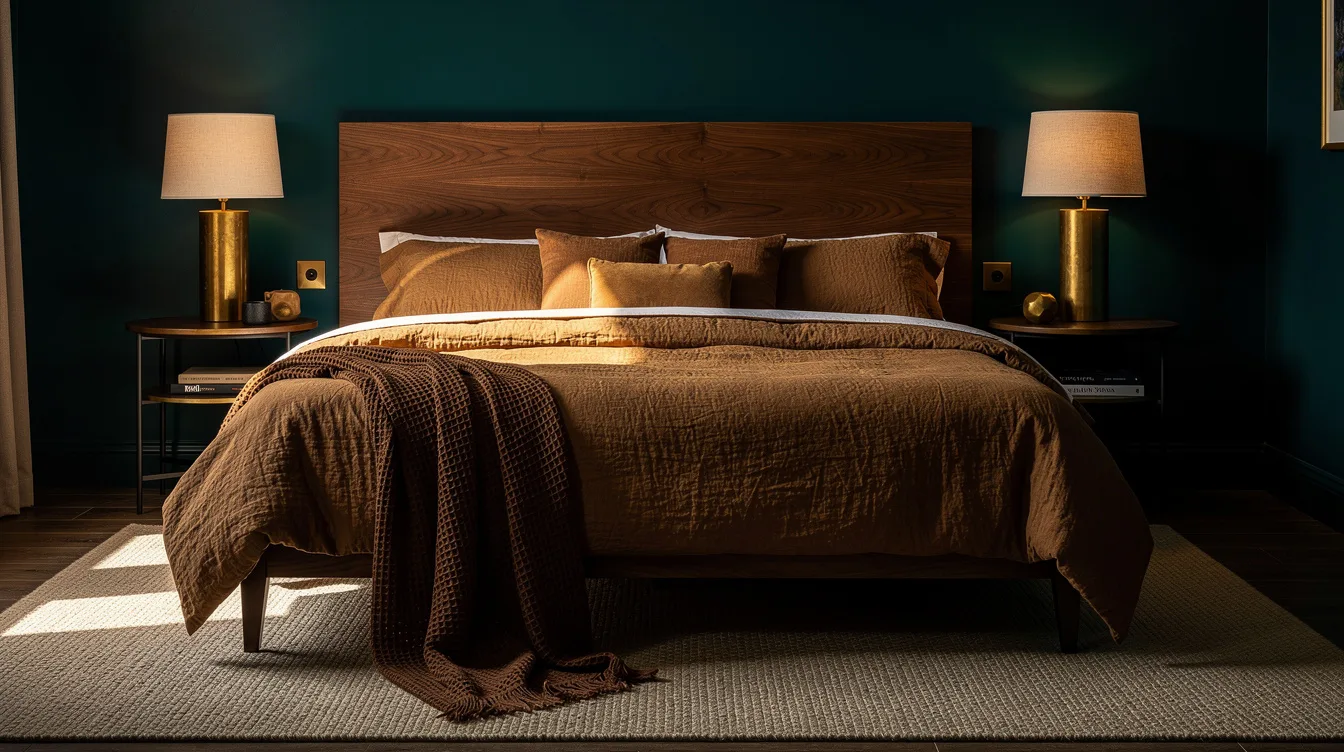
I expected brown bedding to make my 63-inch-wide bed feel smaller, especially after piling on seven different textures. Instead, the room finally felt settled once I stopped treating brown as one color.
The useful shift was material: dark wood, tobacco fabric, pale plaster-like walls, and one light layer that kept morning light moving around the room.
Start With a Warm, Quiet Wall
Paint is the first decision because a cold gray wall makes every chocolate textile look muddy. I chose a mushroom-toned wall similar to Behr Blank Canvas, then let the deeper shades sit in the furniture and bedding.
Keep the wall color in the background, roughly half the room’s visual field. Warm putty, clay beige, and soft taupe give brown a soft edge without turning the bedroom tan.
A dark feature wall can work, but only when the room gets strong daylight. In an average bedroom, I think one espresso wall asks too much of the lamps and makes the bed disappear after sunset.
Give the Bed a Wider Anchor
A headboard needs enough width to look deliberate behind a 63-inch mattress. I aimed for about 67 to 71 inches, which gives the bed a small overhang on both sides and makes it read like a real focal point.
A walnut veneer headboard has more presence than a matching brown duvet, and it ages better than a large painted accent wall. Home Depot and Wayfair both make this look accessible in wood or upholstered versions.
For a softer route, use tobacco bouclé or faux suede on a broad padded headboard. Skip a tiny tufted shape, because moody rooms need one confident horizontal line rather than lots of fussy detail.
Stack Fabrics From Crisp to Plush
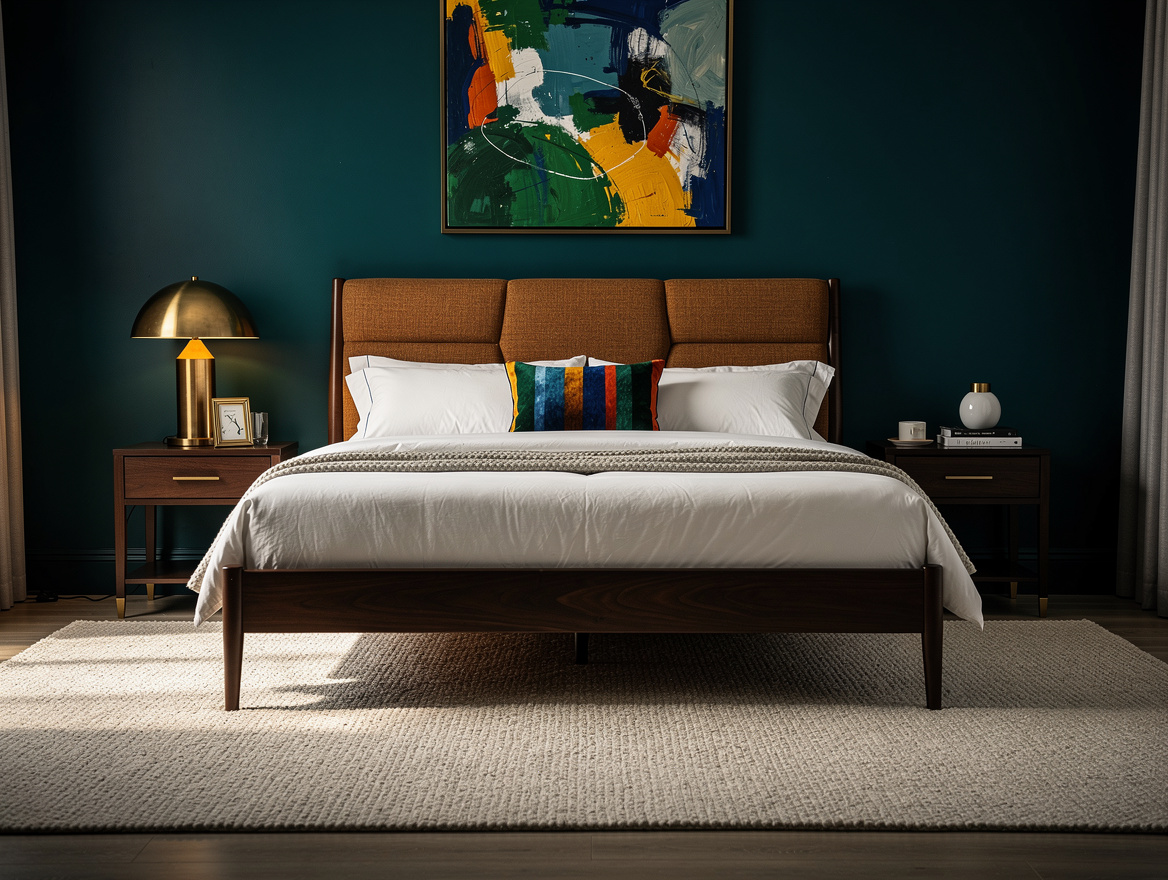
I built the bed in layers that feel different in the hand: ecru sheets, a brown duvet, a quilted coverlet, then a folded mocha waffle blanket. That contrast keeps the palette rich even when every visible textile is brown-adjacent.
Washed linen works especially well beside velvet, while wool or bouclé adds the dry, nubby texture that smooth sateen lacks. Five to seven distinct finishes is plenty; adding more starts to look like a showroom display.
Use two square velvet pillows and one lumbar pillow, then stop. A narrow tobacco leather lumbar pillow gives the bed a tailored center without burying the headboard under cushions.
Pull the Rug Far Enough Under
A rug should reach beyond the sides of the bed, not sit like a postage stamp at its foot. If the room allows it, a roughly 79-by-118-inch rug under the lower two-thirds creates the generous hotel-room proportion I wanted.
In a tighter room, a roughly 63-by-91-inch IKEA LOHALS rug placed crosswise still gives your feet a soft landing. Its flatwoven natural fiber also breaks up the weight of a velvet duvet and dark furniture.
Choose oat, faded camel, or muted brown rather than a high-contrast cream-and-black pattern. The floor needs to soften the dark anchor, not compete with it.
Dim the Room With Brass and Shade
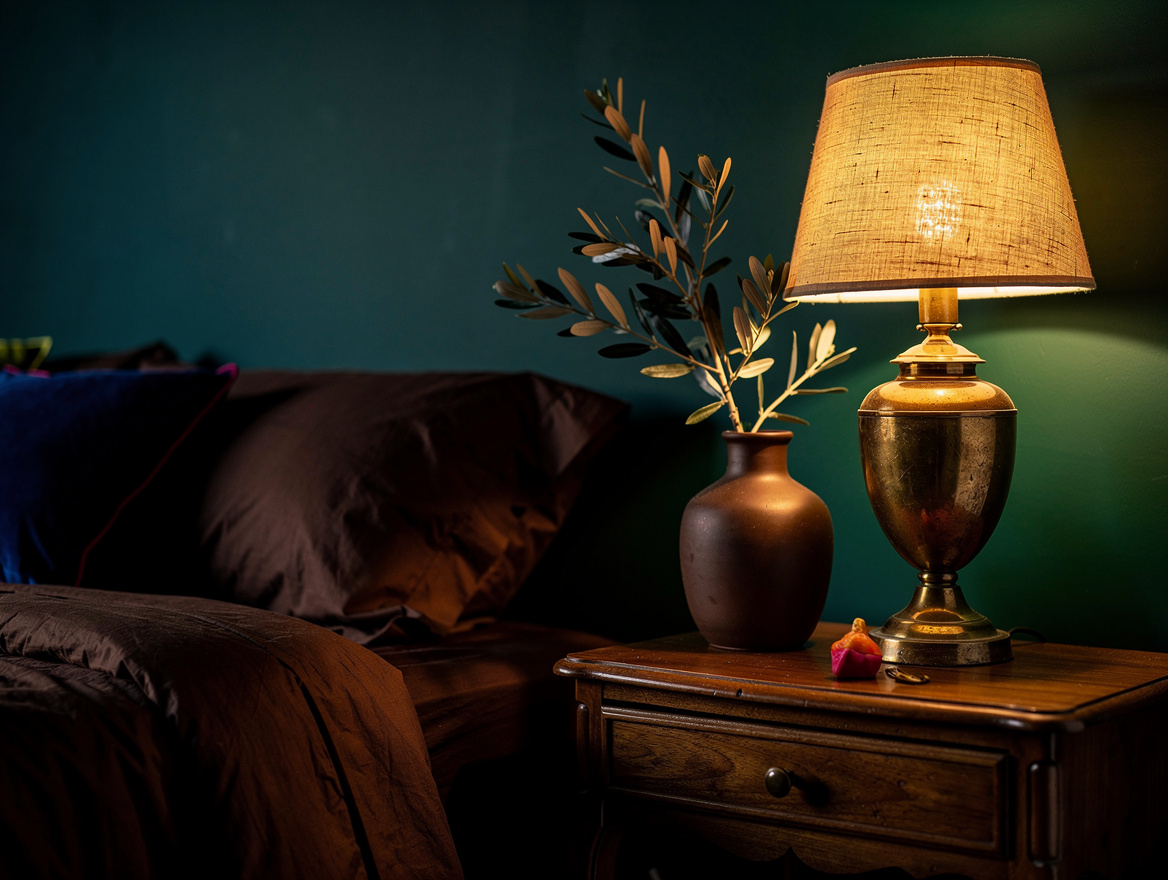
Overhead light makes brown look flat, so I rely on two small lamps with fabric shades beside the bed. A pair of aged-brass table lamps gives the room a low evening glow that shiny chrome never manages.
Target and Walmart often have affordable linen-look shades, while an antique-brass base adds enough warmth on its own. Keep bulbs warm, around 2700K, so the wall color stays creamy instead of gray.
Blackened steel is the one dark metal I would add, usually in a slim bed frame or picture frame. Don’t mix it with polished nickel, which brings a chilly flash into an otherwise earthy room.
Break Up Brown With Pale Stone
The room needs a pale interruption or it becomes visually dense from floor to ceiling. I used ecru pillowcases and a limestone-effect lamp to create small pools of light against the cocoa bedding.
One muted olive branch, a burnt-umber vessel, or an oxblood book cover is enough color. Brown has its own range, from camel wool to espresso wood, and too many bright accents make that range feel accidental.
Choose ceramics with an irregular surface over glossy decor pieces. A hand-finished burnt umber ceramic vase brings in shadow and texture without adding another large object to dust around.
Begin with the warm wall and the oversized headboard, then add the pale rug before buying extra pillows. That order gives the bedroom depth early, so every later layer has a job.
Mia Carter writes about small-space living and budget home makeovers. She has restyled three rentals and tests most ideas in her own 45 sqm flat.