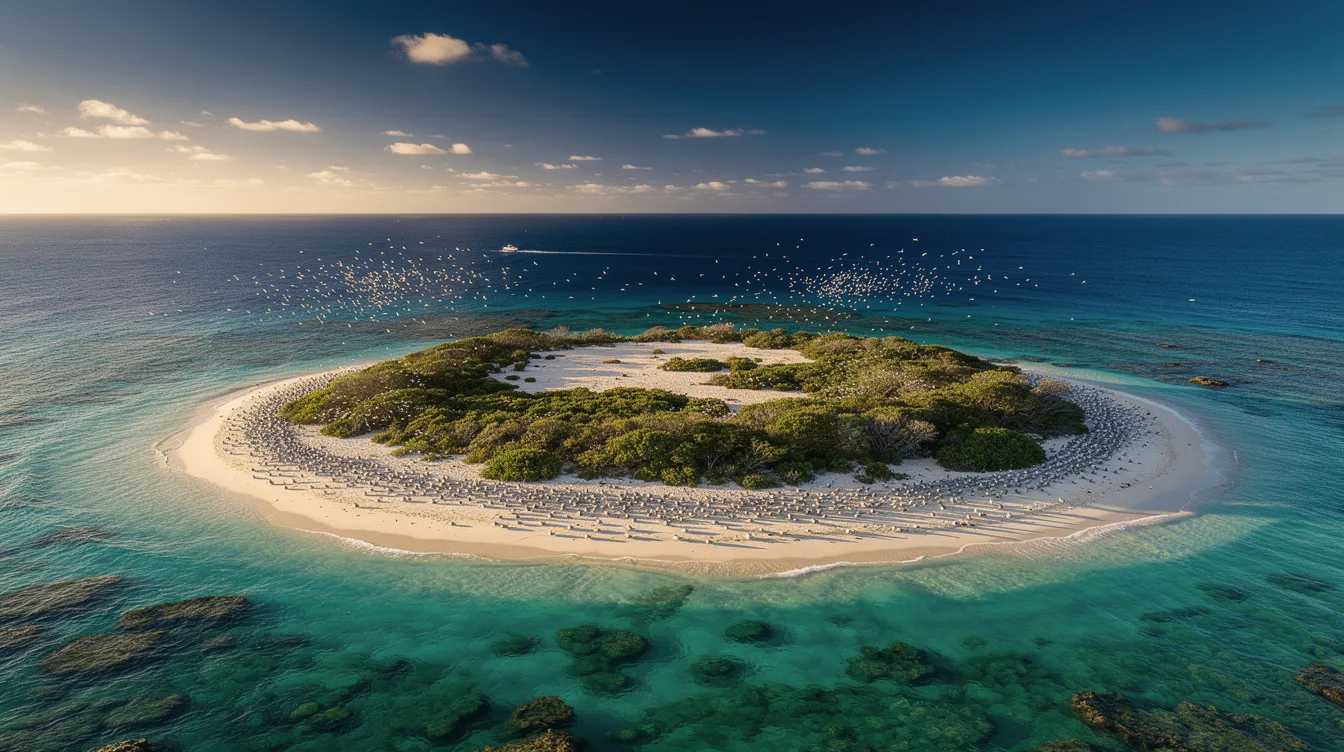
Lady Elliot Island hosts more than 100,000 nesting birds in its summer breeding season, and that number changes the feel of this tiny coral cay. You don’t come here for a long list of distractions. You come because the airstrip lands you inside a working seabird colony at the southern tip of the Great Barrier Reef.
It is remote, but not difficult to reach. Charter aircraft fly here from Bundaberg, Hervey Bay, Brisbane and the Gold Coast, and there is no ferry or road alternative. That flight-only arrival keeps the pace low-key from the start.
A 45-minute island with a summer bird population
The island covers about 111 acres, yet more than 50 species of tropical seabirds and wading birds use it. Brown boobies, black noddies, lesser frigatebirds and red-tailed tropicbirds are among the nesters. You can walk around the cay in about 45 minutes, but don’t mistake small for quiet.
And in summer, the sound is part of the reason to go. Calls carry through the vegetation and above the crushed-coral paths, so a simple walk feels less like a resort stroll and more like entering an active colony. It is busy, but never nightlife-busy.
The cay is also home to the Capricorn silvereye, found only in the southern Great Barrier Reef, plus buff-banded rails. Because the island has been revegetated, birds have returned in force. That makes the place feel alive in a way a polished beach resort rarely does.
The reef begins where your shoes end
Lady Elliot Island sits in a Marine National Park Green Zone, the Great Barrier Reef Marine Park’s highest protection classification. Fishing and taking marine life are banned in the surrounding waters, which helps explain why shore-access snorkeling and diving are the main event here.
But bring reef shoes or sturdy water footwear. The beaches and paths are made of crushed coral, and bare feet can turn a dreamy first swim into an annoying morning. The water is exceptionally clear because the island sits far offshore at the reef’s southern end.
There are around 20 dive sites, though you don’t need a boat to see reef life. Snorkeling starts directly from shore. That easy access is the island’s real luxury, especially if you prefer slipping into the water before breakfast to scheduling every hour around a transfer.
One resident is especially unusual: the Lady Elliot shrimp goby, Tomiyamichthys elliotensis. It was described in 2023, and this island is its only known locality. You probably won’t arrive hoping to spot a tiny goby, but that fact tells you how specific this reef still is.
Choose your season for rays, turtles, or whales
Manta rays are most often seen from June through September, drawn by plankton around the island. And because the water is clear, a manta encounter can feel almost close enough to touch. Keep your distance, of course.
The better view comes when you let it choose the route.
Humpback whales are common from June to October. Whale songs can be heard underwater almost daily during the season, including while swimming from the beach. It sounds less like music than a distant vibration passing through your chest.
Can you see turtles nesting here?
Yes. Green and loggerhead turtles nest between November and March, and each can nest up to nine times in one season. They lay 80 to 120 eggs per clutch.
Hatchlings leave nests for the ocean from January to April, which is extraordinary to witness but never guaranteed on a particular day.
But seasonal wildlife is not a menu. A June visit favors mantas and whales. A summer stay puts nesting birds and turtles at the center.
Pick the experience you care about most, then accept that the rest belongs to chance.
The practical trade-off is part of the point
Lady Elliot lies about 52.8 miles northeast of Bundaberg in the Coral Sea. Flights take roughly 30 minutes from Bundaberg and just under two hours from the Gold Coast. The small aircraft is not merely transport.
It is the line between mainland routine and reef time.
There is a small eco-resort and an airstrip, not a town to wander after dinner. Costs and logistics are limited by that setup, and travelers wanting shopping or late bars should choose elsewhere. But if you want an island where the reef dictates the day, that restraint is the appeal.
Take time to see the 1873 lighthouse, which stands 49 feet tall and once shone about 18.6 miles out to sea. The original structure was assembled from pieces shipped from England. It is a sharp reminder that this exposed cay has always required planning.
By the time the small plane lifts off, the coral path is pale below, the bird calls fade, and the reef holds its blue-green edge around the island.