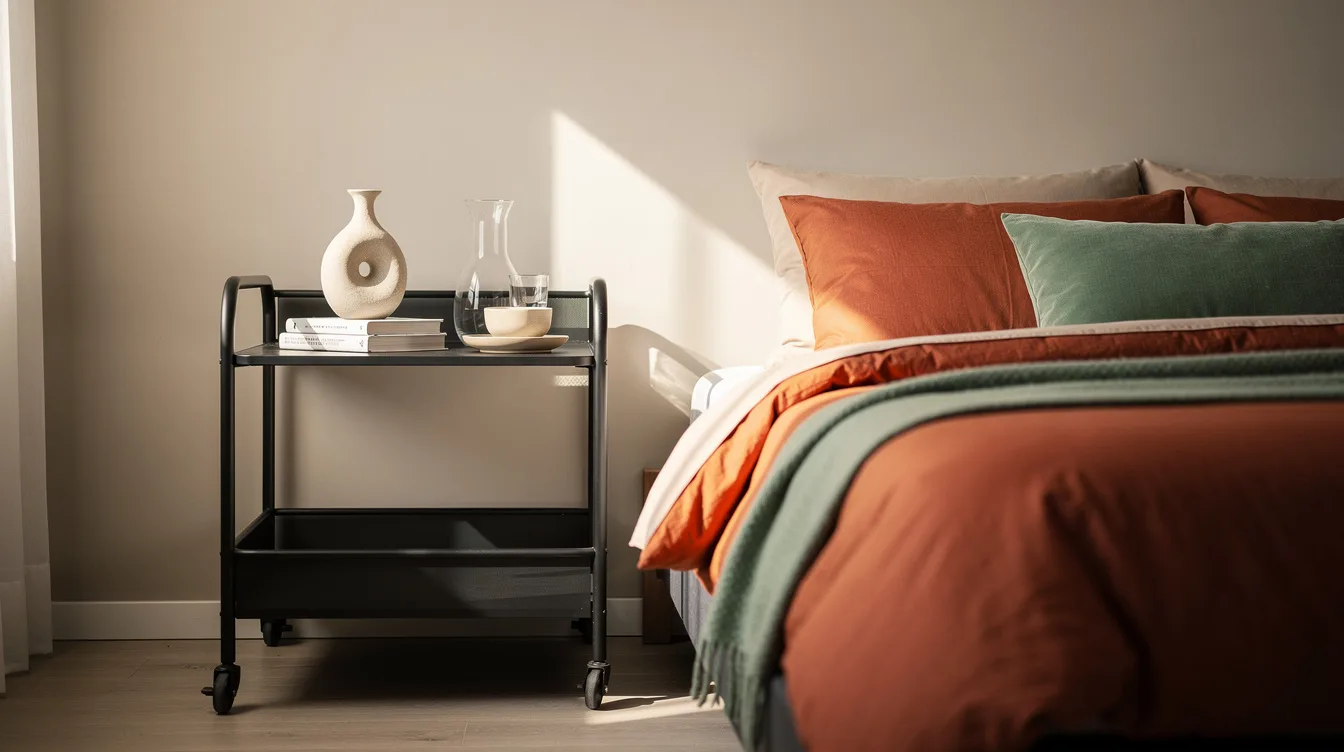
A 7.5-inch strip between the mattress and wall can feel too small to use, yet it often becomes the most hardworking space in a cramped bedroom. The problem starts when a standard nightstand blocks the walkway or makes the bed look squeezed in.
Measure the narrowest point, including the baseboard, then leave roughly 0.5 to 1 inch for casters and a less-than-perfect wall. A slim cart should pull out like a drawer, not scrape paint every night.
Measure the Gap Before You Buy
Start with a tape measure at floor level and again higher up, because bed frames, outlets, and trim can steal precious room. The useful width ranges are roughly 5 to 6 inches, about 7.5 to 8 inches, and around 9 to 10 inches.
A Home Depot 5.5-inch gap cart can work in the tiniest opening, while anything wider may become an irritating wedged-in object. Skip the optimistic measurement: a cart that barely fits will never roll smoothly.
Check the cart’s smallest horizontal measurement rather than assuming its listed width faces the gap. Many models can turn so their narrow side enters beside the bed, which opens up far more choices.
Roll a Micro Pull-Out Into a 5-Inch Gap
For a gap of roughly 5.75 inches or more, a three-tier plastic cart makes a practical pull-out for nightly essentials. The typical listed price for the perforated plastic utility cart is about $60, and its roughly 18-inch length gives it useful shelf space.
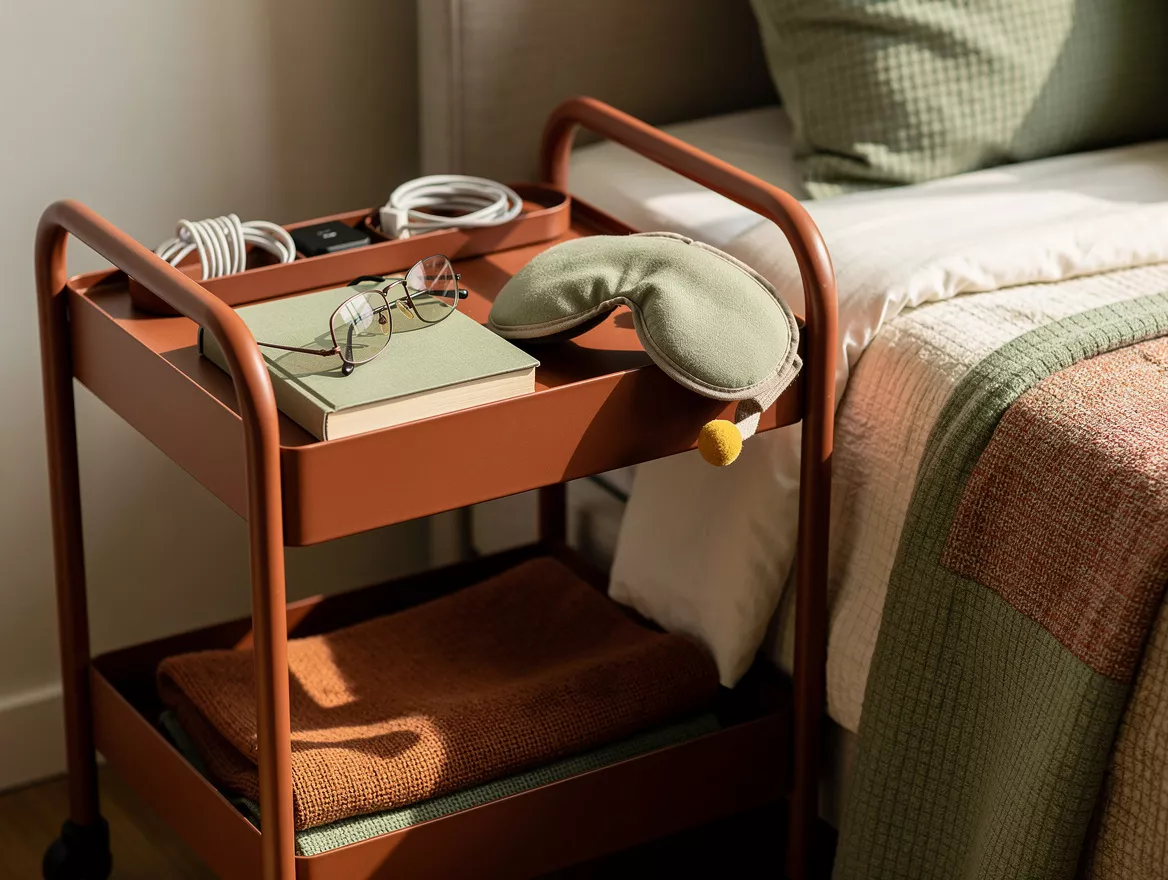
Keep the top shelf calm: glasses, a sleep mask, a remote, and a charging brick. Narrow acrylic trays and zip pouches earn their keep here because a regular tissue box or hardback book will eat the whole shelf.
Use the middle shelf for cables and a power bank, then reserve the bottom for lotion, wipes, medication, or a spare water bottle. This is storage with a firm boundary, so don’t turn it into a dumping ground for clothes.
Choose Steel for the Best Everyday Cart
The narrow IKEA NISSAFORS cart is the strongest all-around choice for a gap of about 7.5 to 8 inches. At $24.99 in the United States, its roughly 7.5-by-19.9-by-26.4-inch shape feels compact beside a low or medium bed frame.
Its powder-coated steel mesh shelves look lighter than solid plastic and let charging cords pass through without a tangled knot. Add a thin liner or shallow tray on the upper shelf, since small earbuds and adapters can slip through the mesh.
Put slippers, a water bottle, or a rolled throw on the bottom, then books and device accessories in the middle. IKEA rates the shelves for about 9 pounds each and about 26 pounds total, so dense stacks of books belong elsewhere.
Make an 8-Inch Cart Feel Like Furniture
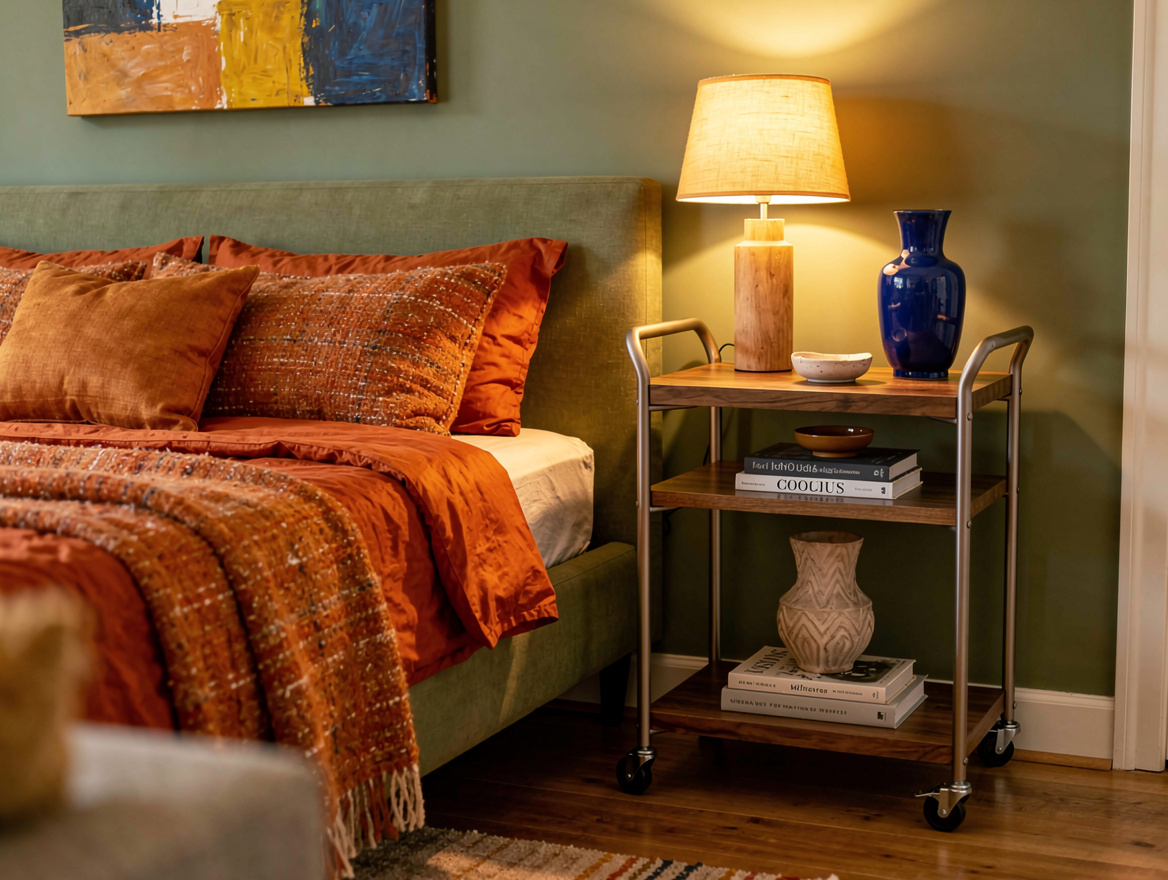
A slightly wider opening can handle an Anqtovp wood-top cart, which is roughly 8.1 inches wide and typically costs about $121. The wood surface gives you a real landing spot for a lamp, glasses, or a small framed photo.
Choose a cart with a wood top if the visible end faces the room, since it reads more like a narrow nightstand than laundry-room storage. A painted metal frame still keeps the look airy enough for a small bedroom.
Keep the top mostly open and use a lamp with a broad, stable base rather than a tall fragile one. One lamp, one book, one dish for rings is plenty; the shelves below can handle the functional clutter.
Orient the Cart Like a Hidden Drawer
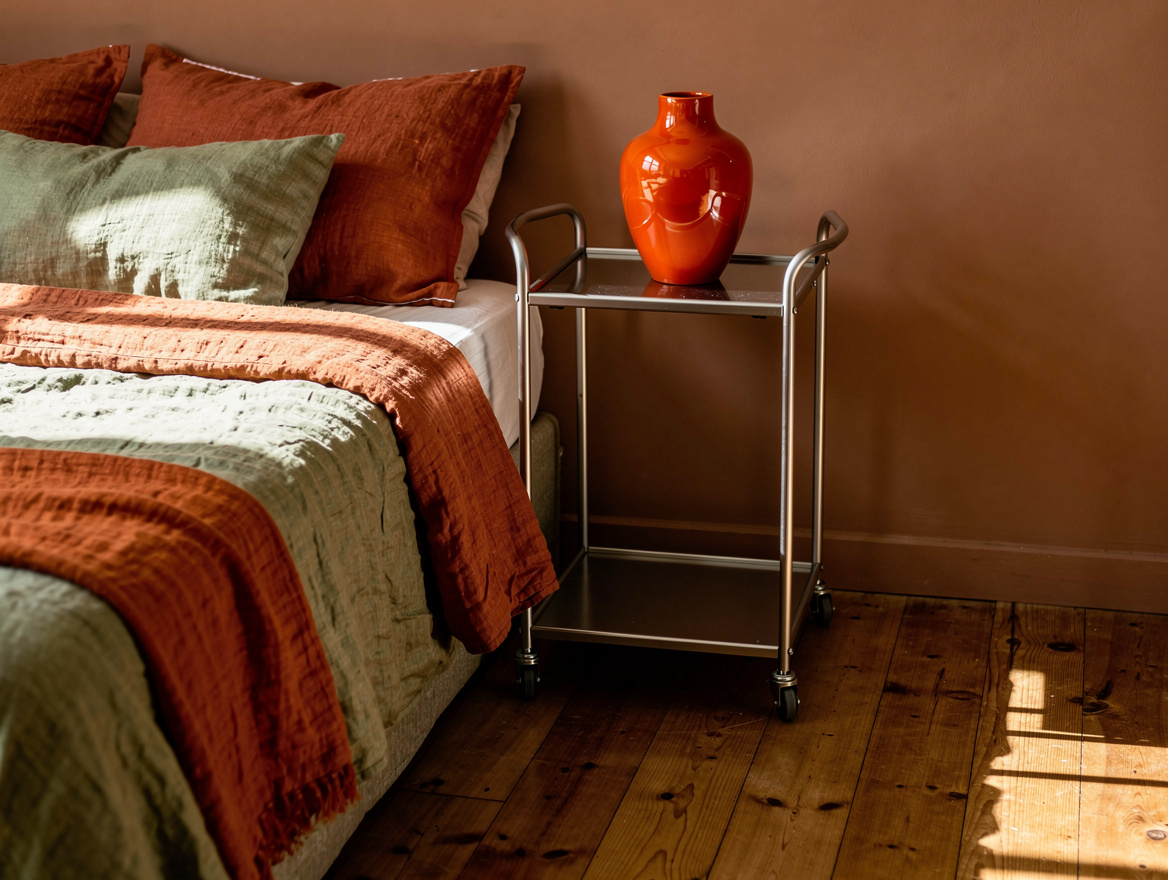
Run the cart parallel to the bed whenever possible, with its accessible end facing the foot or head of the bed. You can pull it out in one motion instead of trying to reach behind the mattress.
A side-facing handle matters more than decorative details, because pulling on thin shelf edges gets old fast. If your preferred cart has no handle, test whether its frame offers a comfortable grip before committing.
Look for locking wheels when the cart sits near the place where you swing your feet out of bed. The slim Home Depot model lists four casters and two locks, a useful detail for anyone who tends to bump furniture at 6 a.m.
Use Taller Storage Only When the Room Can Take It
A 9- to 10-inch opening can support more serious overflow storage, but height changes the mood of the room. The COWLON six-tier shelving cart is roughly 10 inches wide and 61.2 inches tall, typically around $119, so it works best when the bed wall has visual breathing room.
For clothing, laundry supplies, or taller containers, the extra shelves are genuinely useful. Keep the upper tiers disciplined with matching bins, because open shelving full of loose items will make a bedroom feel busy.
If the available opening is depth-facing instead, the LAIFUCAM mesh cart can run its roughly 9-inch side into the gap while its longer side follows the bed. Its typical price is about $77, and its metal baskets suit linens and larger bedside items better than tiny electronics.
Begin with the actual floor-level gap, then choose the lowest cart that holds your nightly routine. A cart that rolls freely and stays half-empty will feel like smart built-in storage, not another piece of bedroom clutter.
Mia Carter writes about small-space living and budget home makeovers. She has restyled three rentals and tests most ideas in her own 45 sqm flat.