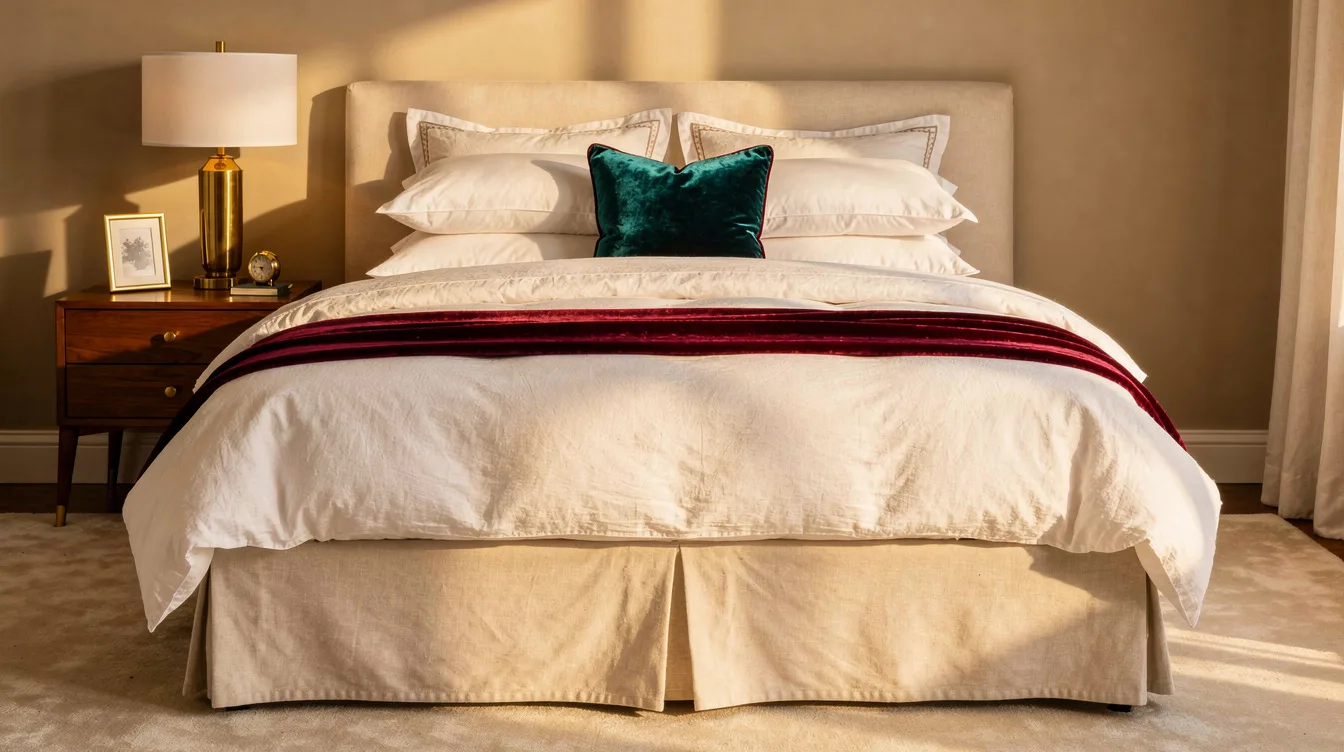
The detail that makes a bed feel finished is often hiding in plain sight: a tailored bed skirt that conceals the base and gives the entire frame a deliberate outline. On a roughly 63-by-79-inch bed, a loose or poorly measured skirt can make even expensive bedding look borrowed.
Designers favor a straight, custom-looking drop because it visually anchors the mattress without adding fuss. The goal is restraint, not romance for its own sake.
Measure the Base Before Ordering
Buying by mattress size alone is the fastest route to a skirt that floats above the floor or drags behind the bed. Measure the bed base width and length, then measure from its top edge to the floor, especially if you have a storage frame.
Off-the-shelf drops are typically around 10 to 12 inches, while taller hotel-style bases may need roughly 14 to 18 inches. A custom drop that lands about half an inch above the floor looks intentional and stays cleaner.
Choose a Straight Panel Construction
A gathered ruffle has its place in a soft country bedroom, but it weakens a polished room quickly. Ask for straight tailored panels with clean seams and closed corners for the calmest result.
For a classic hotel effect, add one inverted box pleat at the center of the foot. That single fold gives the fabric enough movement without turning the bed into a costume.

Use Linen for Relaxed Depth
Washed linen is the most convincing choice for bedrooms with oak, antique brass, woven shades, or warm plaster-colored walls. Its slight irregularity makes a plain skirt feel lived-in rather than mass-produced.
Choose flax, oatmeal, chalk, stone, or tobacco instead of a chilly bright white. A linen-cotton blend is the smarter pick when you want sharper folds and less visible creasing after laundry day.
Build Structure With Heavier Cotton
For a more architectural bed, use cotton panama or heavy cotton canvas in warm ivory, taupe, charcoal, or matte white. The firmer hand keeps the skirt vertical and makes a simple platform frame look upholstered.
Cotton percale is a crisp, washable alternative when the room already has tailored sheets and a smooth duvet cover. It is less forgiving of wrinkles, so iron the visible front panel and let the side panels stay practical.

Cut Corners Around Real Obstacles
Four-poster beds, visible feet, and footboards need split corners, placed exactly where the posts or legs interrupt the fabric. A skirt that catches on hardware announces itself every time the bed is made.
For a clean platform bed with no interruptions, closed corners create a stronger continuous line. Keep the hem simple, with no contrast piping unless the room already repeats that exact trim elsewhere.
Skip the Elastic Wrap When Elegance Matters
An elastic bed-base wrap can hide a worn foundation fast, and options from Walmart or Amazon are useful for a guest room. It rarely has the weight, seam placement, or floor-length proportion of a proper tailored skirt.
Save velvet wraps for a dark, theatrical bedroom where the fabric appears elsewhere, perhaps on an accent chair or upholstered headboard. In most rooms, a matte textile reads more expensive because it does not compete with the bedding.

Start with the measurement from the top of your base to the floor, then choose the fabric. A straight warm-ivory linen skirt with one foot pleat is the safest first move for an elegant bedroom.
Mia Carter writes about small-space living and budget home makeovers. She has restyled three rentals and tests most ideas in her own 45 sqm flat.