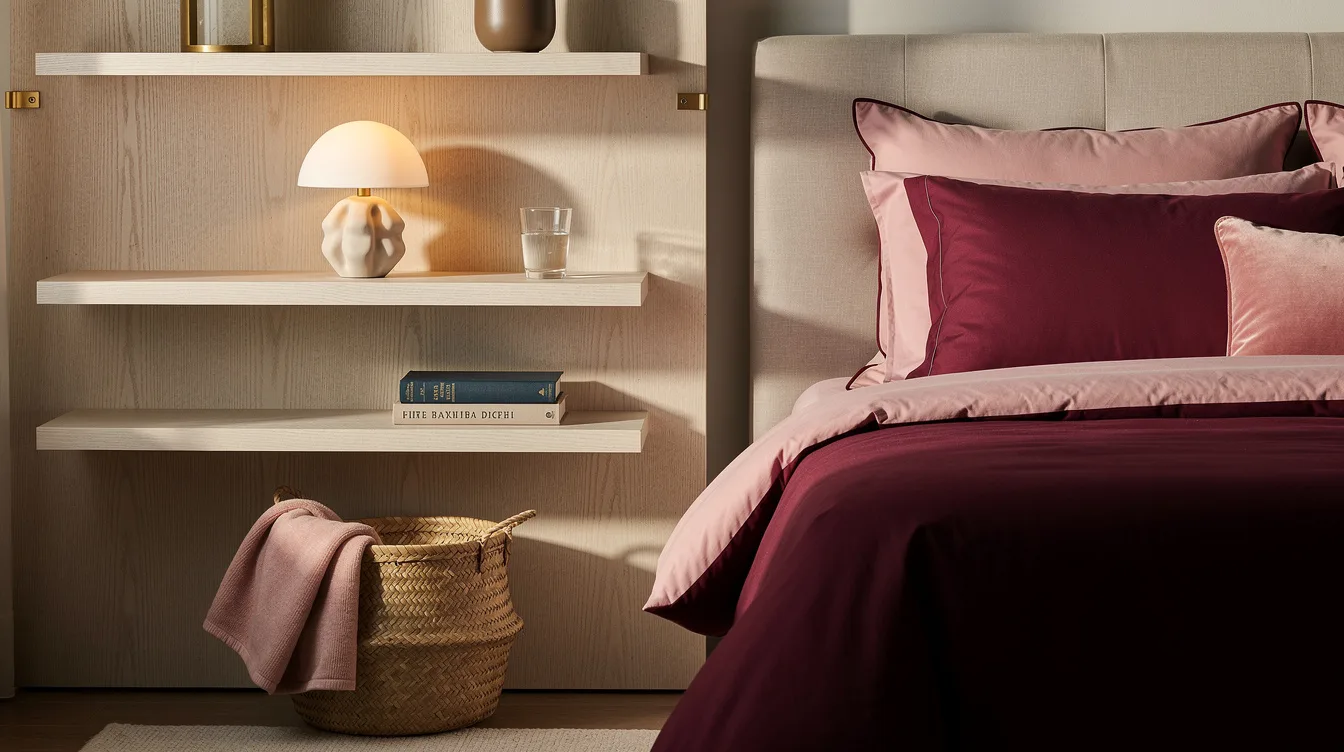
I understand the appeal of losing the bulky nightstand, especially beside a 54-inch bed where every inch of floor shows. But an open shelf can look less like calm minimalism and more like a charging station with a lamp perched on top.
Designers tend to love bedside shelving when it is sized for sleep, not loaded with every loose object from the room. The goal is a reachable landing spot that still lets the bed feel like the focal point.
Mount the Shelf at Mattress Height
A shelf installed roughly 22 to 26 inches above the floor usually lands near mattress height, which makes a glass of water and your phone easy to grab in the dark. Hanging it much higher turns a useful bedside surface into wall decor.
Use the top of the mattress as your visual reference, then place the shelf level with it or slightly below it. This small adjustment makes the setup feel intentional instead of improvised.
Keep the Shelf Shallow Enough to Sit Beside
Deep shelving is the fastest way to create a shin-level hazard beside the bed. A 20- to 28-centimeter shelf depth has room for a lamp, a book, and a water glass without jutting into the path around the mattress.
Skip a full bookcase depth unless the shelf is recessed into the wall. A narrow profile looks lighter, cleans up easily, and leaves more breathing room around upholstered beds.
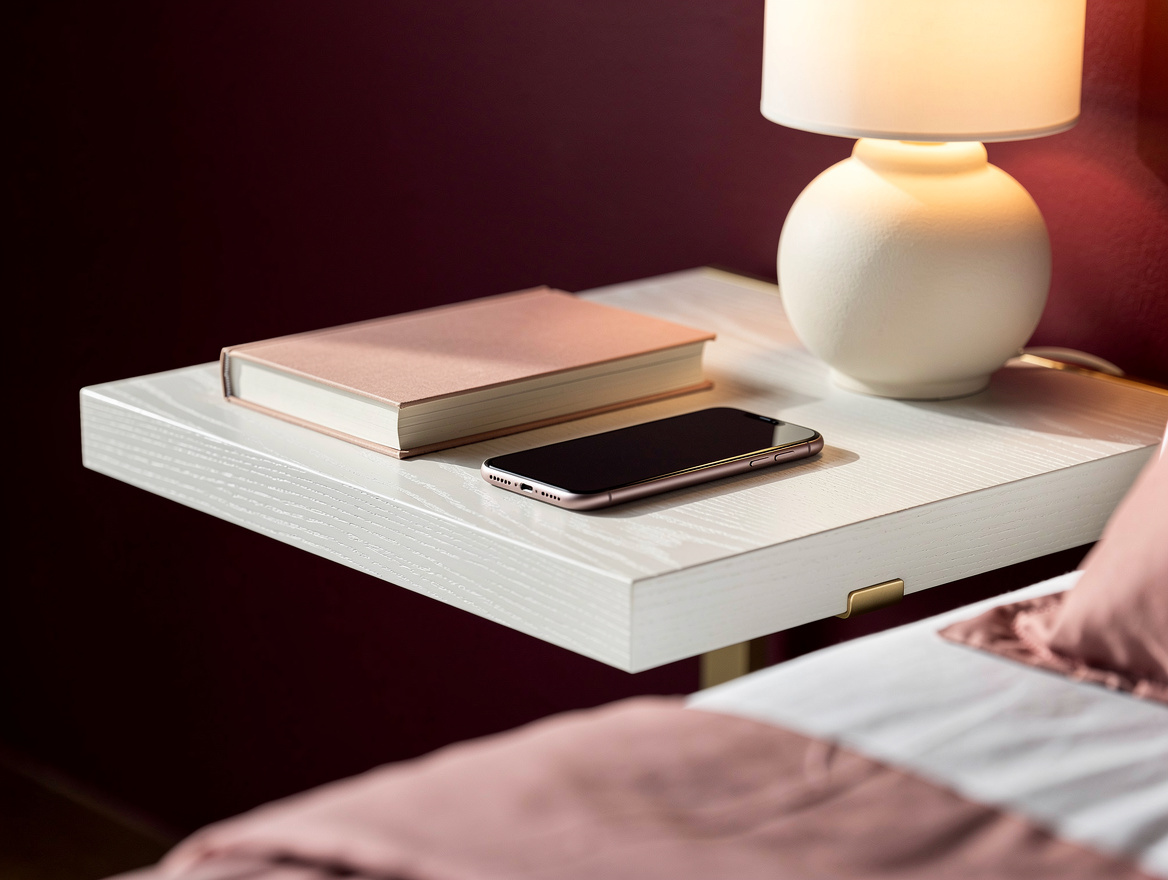
Choose a Material That Matches the Room’s Weight
A thin IKEA LACK shelf can work in a casual bedroom when the rest of the room is similarly streamlined. It gets awkward when paired with a heavy carved wood bed or a substantial upholstered headboard.
For a room with warmer furniture, choose white oak or walnut-toned wood that has visible grain. Solid-wood floating shelves can typically run about €280 to €850 depending on length, so a simple wood veneer shelf is often the sensible middle ground.
Anchor It for the Objects You Actually Use
An open shelf rarely stays empty. A ceramic lamp, hardcover books, a phone charger, and a water glass add more weight than people expect, so the bracket or mounting hardware needs to hit wall studs.
Do not treat a bedside shelf as a display ledge with decorative hardware doing all the work. Secure installation matters more here because you reach for it while half asleep.
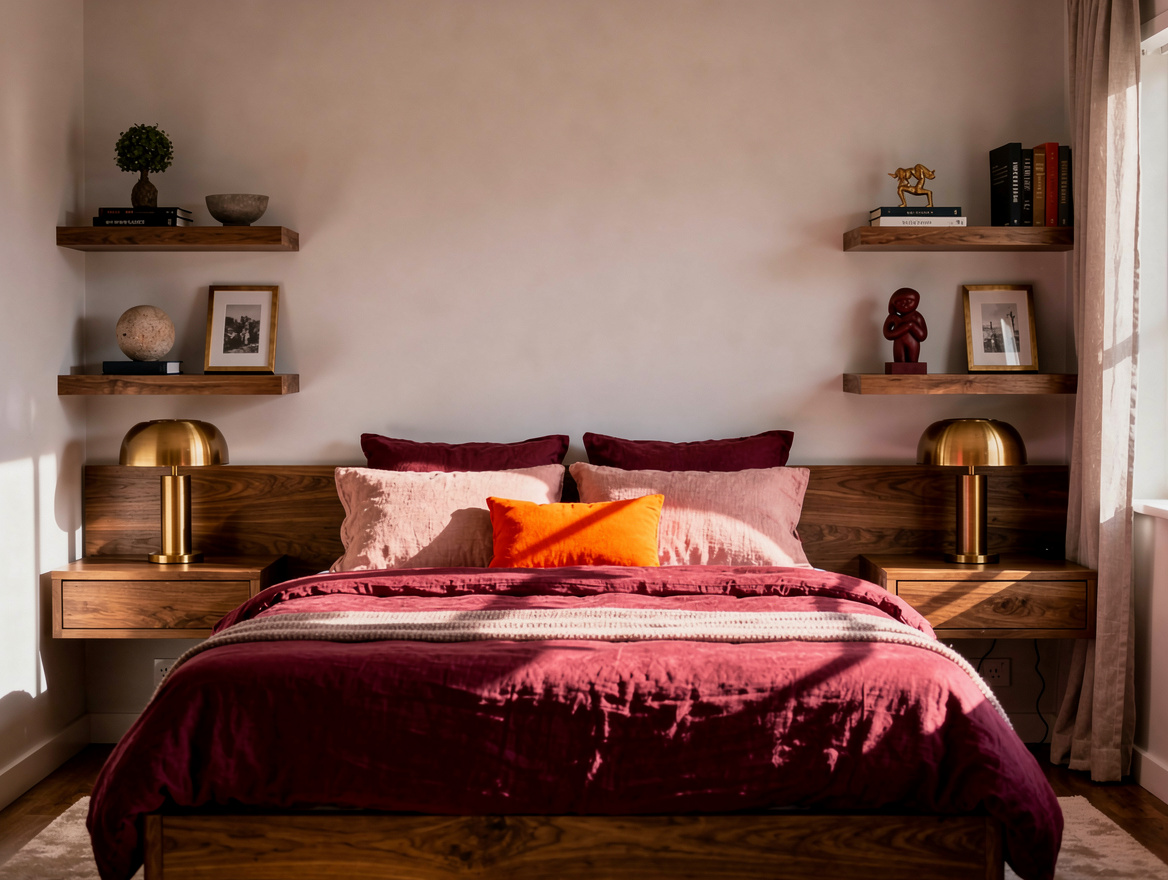
Give Cables and Clutter a Place to Disappear
Open shelving demands editing because everything remains visible from the bed. A woven basket on the lower shelf or beneath a floating shelf can hold chargers, hand cream, and the miscellaneous items that make a nightstand look busy.
Keep the top surface to a few useful pieces. One lamp, one current book, and one small tray are usually plenty, while a stacked collection of bottles and receipts drains the calm out of the room.
Pick the Right Format for Your Living Situation
Renters and dorm dwellers should not force a wall-mounted solution. A BedShelfie clip-on shelf attaches to a bed frame or headboard rail, and the supplied size range, from about 35 by 24 centimeters up to 49 by 29 centimeters, suits a phone-and-book setup.
For more storage, an open-shelf nightstand from Wayfair or Target gives you visible cubbies without drilling. Typical options around 21 by 14 by 10 inches work best when the room needs a basket below and a proper lamp above.
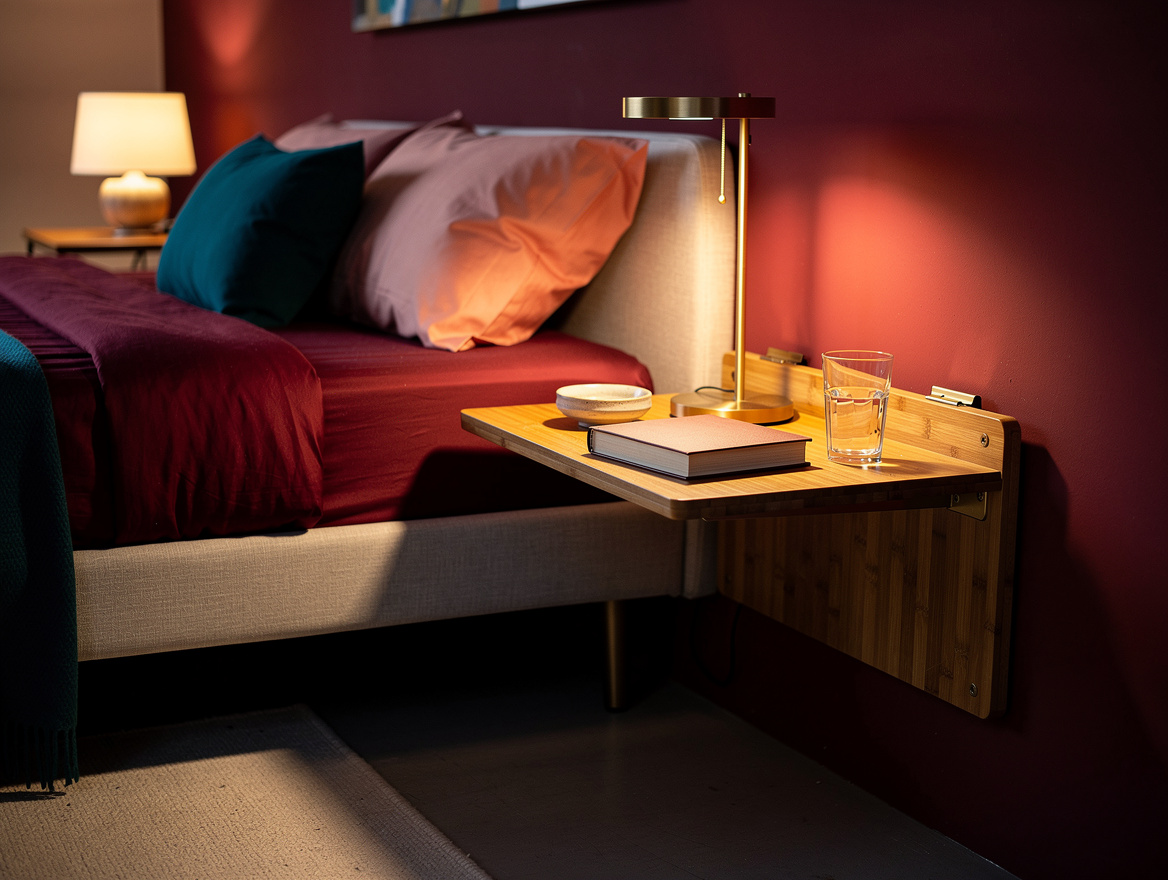
Start by clearing the bedside surface down to what you touch before sleep and after waking. Once that edit is done, the right shelf size becomes obvious, and the room will look calmer without trying too hard.
Mia Carter writes about small-space living and budget home makeovers. She has restyled three rentals and tests most ideas in her own 45 sqm flat.