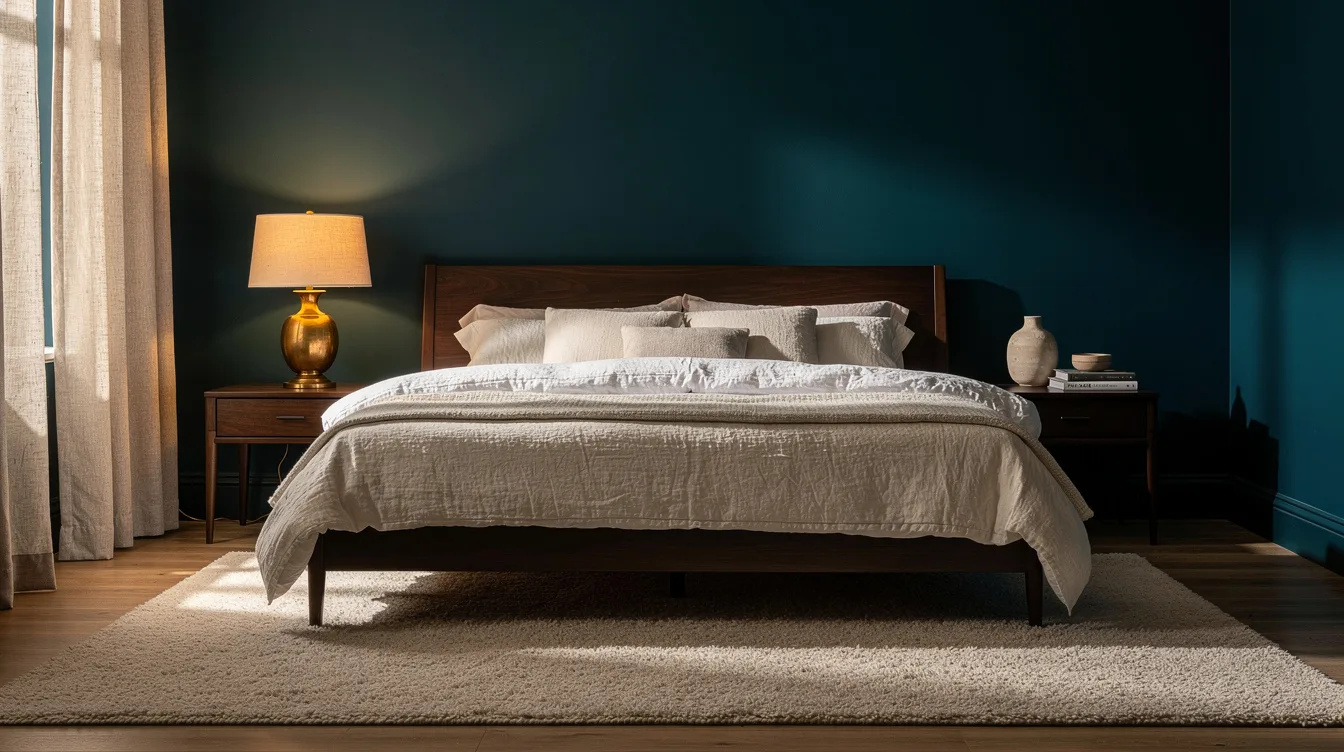
A cream bedroom can turn flat fast when a dark wood bed arrives with three unrelated brown finishes. In a typical 12-by-14-foot room, the contrast needs a clear job: cream carries the calm, while wood draws the outline.
I lean toward warm ivory walls, an upholstered bed, and one steady walnut tone because that formula feels like a boutique hotel instead of a beige box.
Set a Warm Cream Foundation
Choose a cream with a visible warm undertone, such as Dutch Boy Melodious Ivory, rather than a sharp blue-white. Soft buttery ivory gives dark walnut a rich edge and keeps morning light from feeling cold.
Let cream cover roughly 60 to 70 percent of the room: walls, ceiling, main bedding, curtains, and most of the rug. A typical gallon of paint costs about $35 to $70 at Home Depot, a small expense with an outsized effect on the whole palette.
Repeat One Deep Wood Tone
Pick walnut, smoked oak, espresso-stained oak, or brown-black wood, then repeat it across the bed, nightstands, and one frame or bench. The room looks intentional when those pieces speak the same brown language.
Red-orange cherry against yellow cream creates a dated, overly sweet cast. A pair of matching walnut nightstands from Wayfair will look more settled than two mismatched bedside tables, even when the rest of the room is simple.
Anchor the Bed on the Main Axis
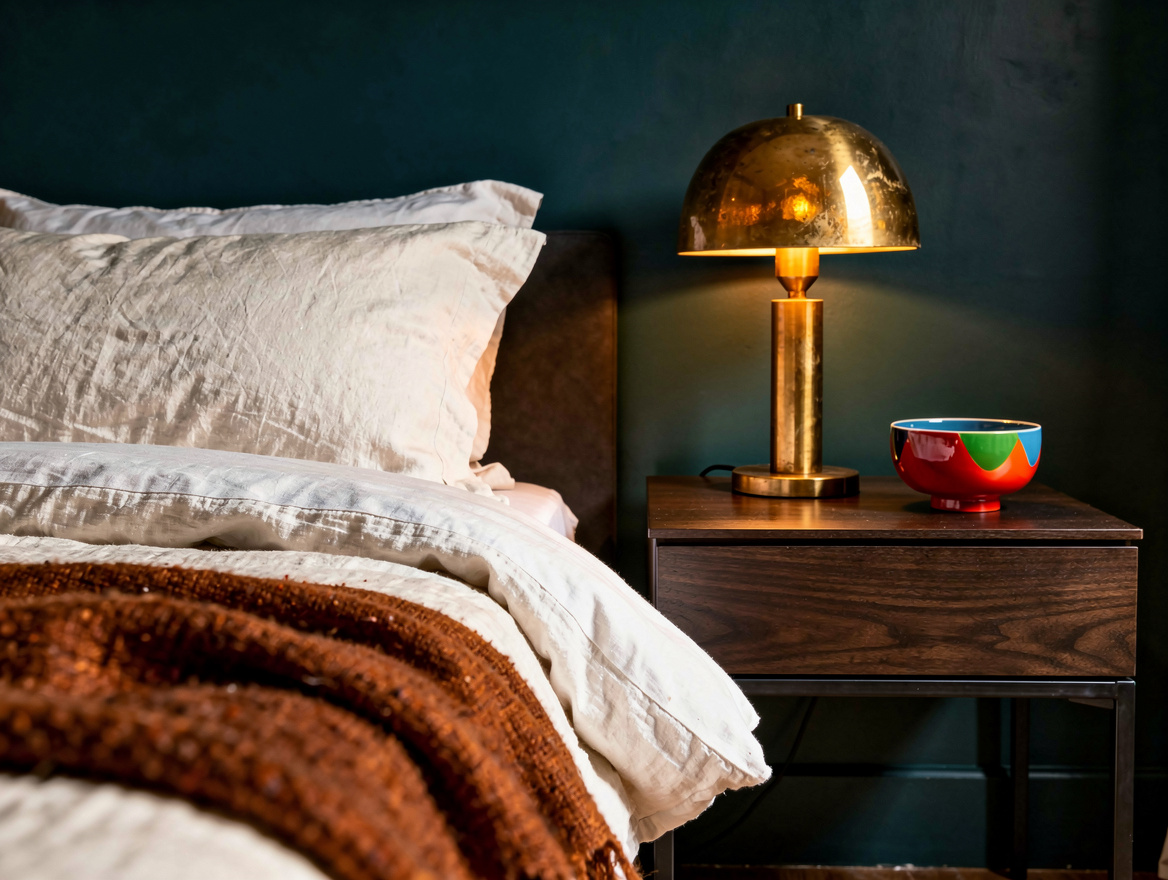
Place a cream upholstered bed where it reads first from the doorway, then let dark wood sit around mattress height and below. A cream channel-tufted bed gives the wall texture without asking for another color.
For a queen setup, leave roughly 24 to 30 inches of walking room at each side where the floor plan allows it. A typical upholstered queen bed runs about $500 to $1,200 at Walmart or Target, before the mattress.
Bring Texture Into the Pale Layers
Flat cream is the real culprit behind a forgettable bedroom. Use washed ivory linen bedding, a wool rug, and one nubby bouclé pillow so the neutral surfaces change with the light.
Keep the layers edited: a tobacco mohair throw, two standard pillows, one lumbar cushion. Travertine on a small tray or lamp base adds a chalky mineral note that makes dark wood feel collected rather than heavy.
Light the Wood With Aged Brass
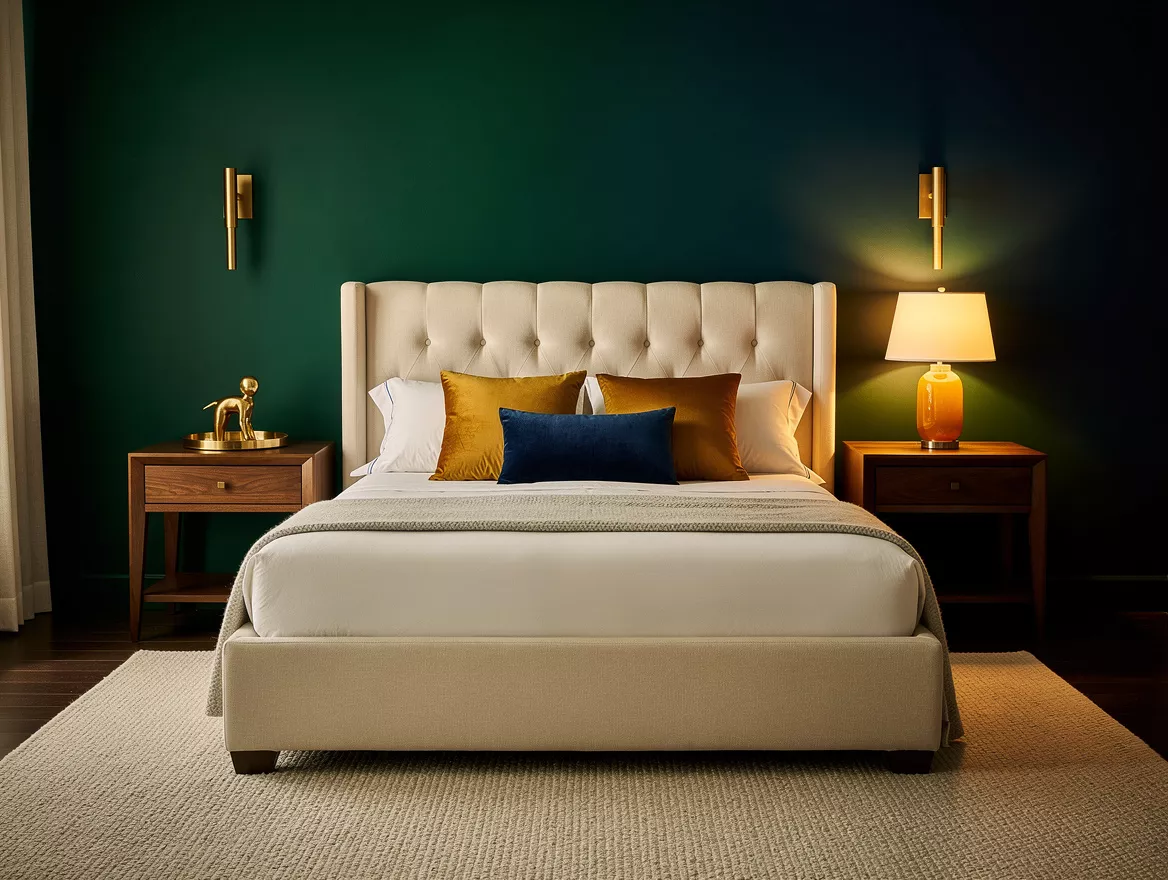
Dark wood needs a warm glow after sunset, especially around a tall headboard. Install plug-in aged-brass sconces or use matching brass lamps on both nightstands for a tailored hotel rhythm.
Skip bright chrome and cool daylight bulbs, which make cream look gray and espresso wood look nearly black. A typical pair of bedside lamps costs around $60 to $180 at Lowe’s, and warm bulbs make the purchase earn its keep.
Use One Quiet Accent for Depth
Reserve roughly 5 to 10 percent of the room for an accent, then commit to it. Muted tobacco leather, dusty blue, olive, charcoal, or blackened metal works especially well against oatmeal curtains and walnut.
A single dark wood bench at the foot of the bed can carry the contrast through the center of the room. Don’t scatter black accents across every surface, because the calm depends on cream remaining the dominant read.
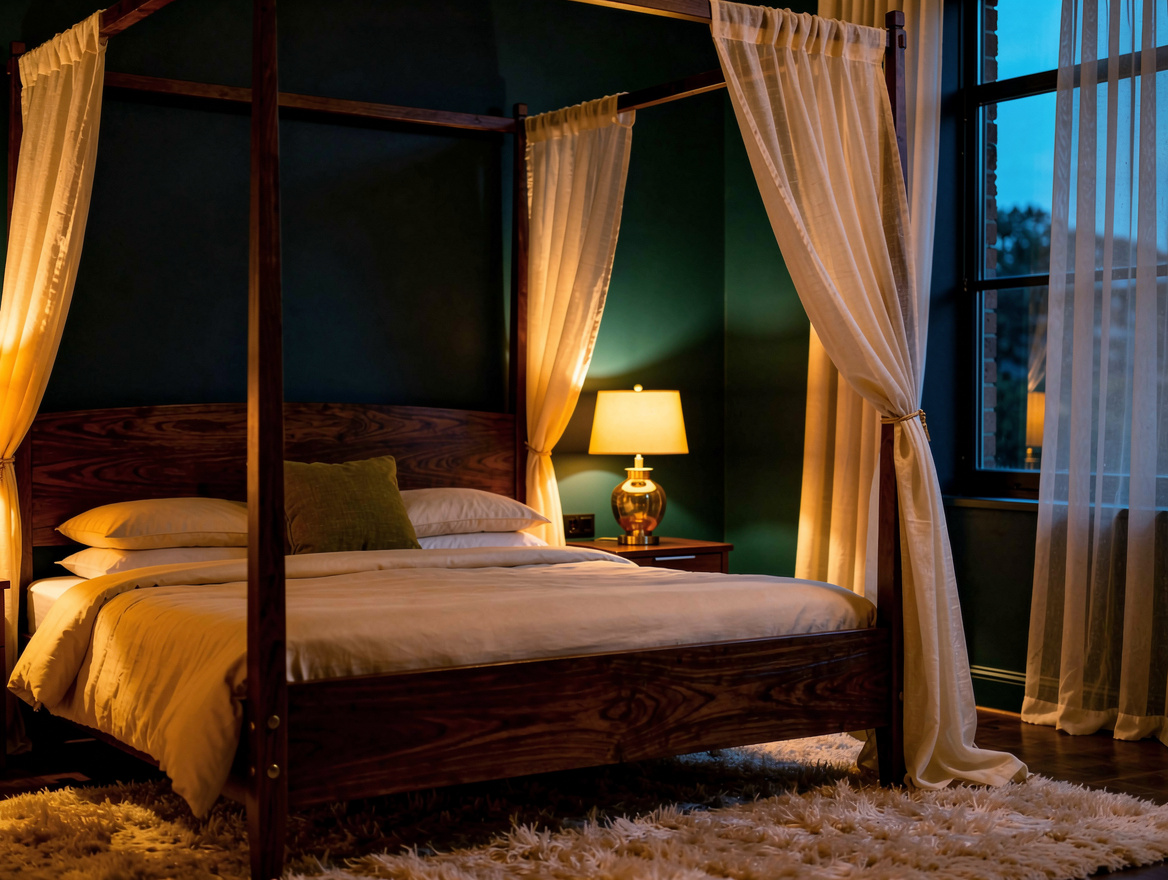
Start by matching the two nightstands and the bed frame in one dark wood family. Once that outline is steady, add cream textiles slowly until the room feels soft instead of washed out.
Mia Carter writes about small-space living and budget home makeovers. She has restyled three rentals and tests most ideas in her own 45 sqm flat.