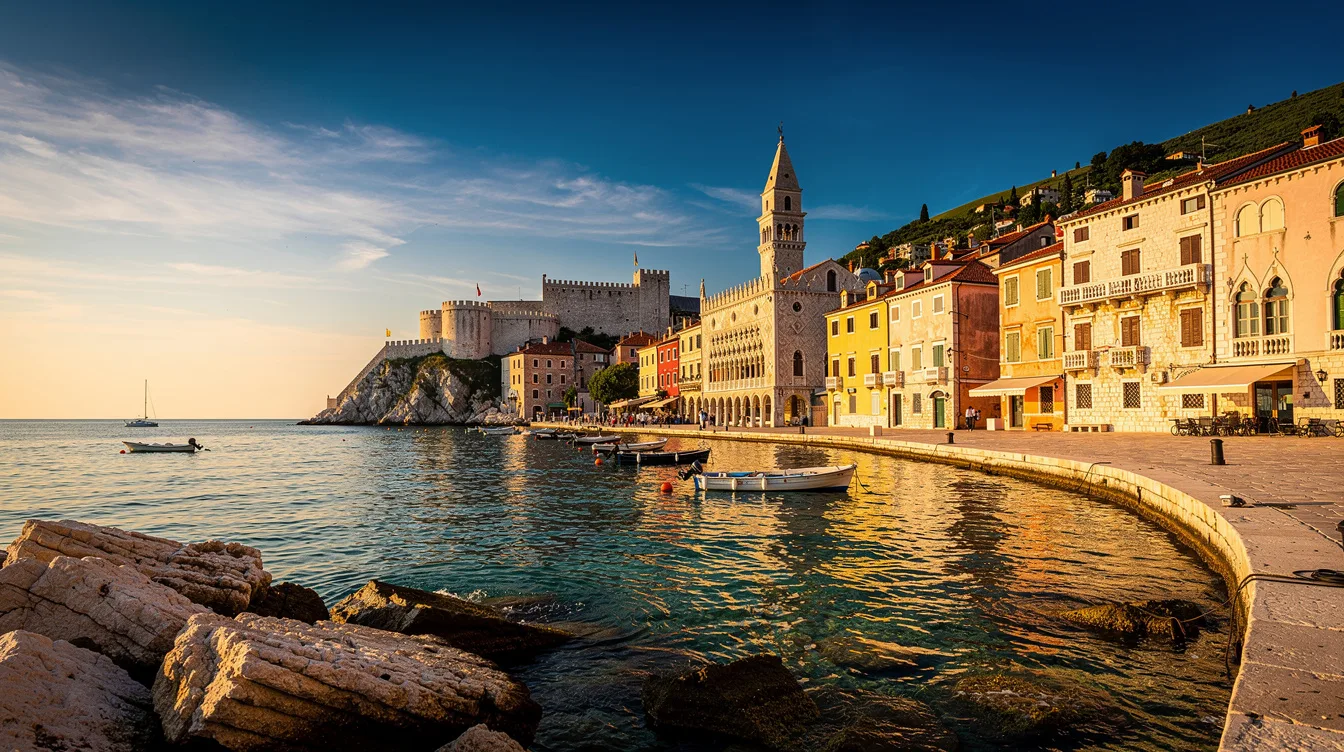
Piran sits at the tip of Slovenia’s short Adriatic coast, and its old town feels more Venetian than many travelers expect. That’s because it belonged to the Republic of Venice from 1283 to 1797, leaving behind Gothic facades, red roofs, tight lanes, and a bell tower that keeps pulling your eyes uphill.
You can reach it in about 1 hour 45 minutes from Ljubljana by car, yet it doesn’t feel like a quick stop. The sea appears at the end of alleyways, shutters catch the afternoon light, and the town’s compact scale makes wandering more rewarding than planning.
Venice’s long shadow is the point
Piran is overlooked partly because Slovenia’s coast is so short. But that small stretch holds a town shaped by Venetian rule for more than five centuries, so the Italian influence is not a restaurant-theme version of history. It’s built into the streets themselves.
The old town is largely pedestrian, which changes the pace immediately. You’ll walk past pastel walls and tiled roofs instead of circling for parking, and the sound of rolling luggage often replaces traffic. Lively, but never sprawling.
Slovene and Italian both have official status here, reinforcing the town’s Adriatic character. And Piran’s Italian name, Pirano, still fits the atmosphere. This is Slovenia, certainly, but it looks toward the water and across the border at Trieste.
The square once held the harbor
At the center, Tartini Square was once a harbor basin before it was filled in to create today’s open esplanade. That history explains its unusual shape. You stand in a civic square, but the curve of the waterfront still feels close.
From there, take the uphill streets toward Saint George’s Church and its campanile. The climb earns its place in the day because the rooftops, Gulf of Piran, and Adriatic come into view together. But wear sensible shoes, as the lanes are steep and polished smooth in spots.
The town walls give you the broadest view over the peninsula. You can see why Piran’s position mattered: water presses in on both sides, while the old core gathers tightly below. It’s defensive geography turned into an afternoon walk.
Can you swim in Piran?
Yes, but Piran is a rock-and-steps swimming town, not a soft-sand beach escape. You can enter the water from rocky edges and small developed areas near the harbor promenade. On a hot day, that quick plunge is enough, especially after climbing back down from the church.
But if you want a resort beach, pools, spas, or casino hotels, stay in Portorož instead. It gives you a more conventional coastal break. Piran is better for atmosphere, sea views, and dinner after sunset.
Walk out toward Punta and Saint Clement Lighthouse late in the day. The edge of the peninsula has little theatricality beyond wind, stone, and water, which is exactly why it works. You don’t need an elaborate plan there.
You just need to arrive before the light goes flat.
Stay overnight if you want the town back
A day trip works, though one or two nights makes much more sense. You’ll see the old town before the day visitors arrive, then again when harbor tables fill and the narrow streets quiet down. That second version is the one worth staying for.
Sleep inside the old town if mood matters most. Everything is walkable, so you can leave your car outside and forget it. But July and August bring limited availability on the peninsula and higher prices, so reserve early if those dates are unavoidable.
Driving into the old town is a bad idea because it is largely car-free. Use the peripheral parking around Fornače or Arze, then walk or take the shuttle. It’s one small inconvenience that protects the part of Piran you came to see.
Go when the heat and crowds ease
May through June and September through October are the smart windows. The weather remains pleasant, while the streets have more breathing room than in high summer. And you’ll have a better chance of lingering over seafood instead of treating the town like a checklist.
If you have extra time, the Sečovlje salt pans lie about 3.1 miles south. Their traditional salt-making history connects directly to Piran’s past, offering a quieter counterpoint to the tight old streets and busy waterfront.
Piran also has an odd transport footnote: the Balkans’ first trolleybus line entered service here on October 24, 1909. Today, the more memorable arrival is on foot, when the alleys narrow, the salt air rises, and the Adriatic appears again at the end of the street.