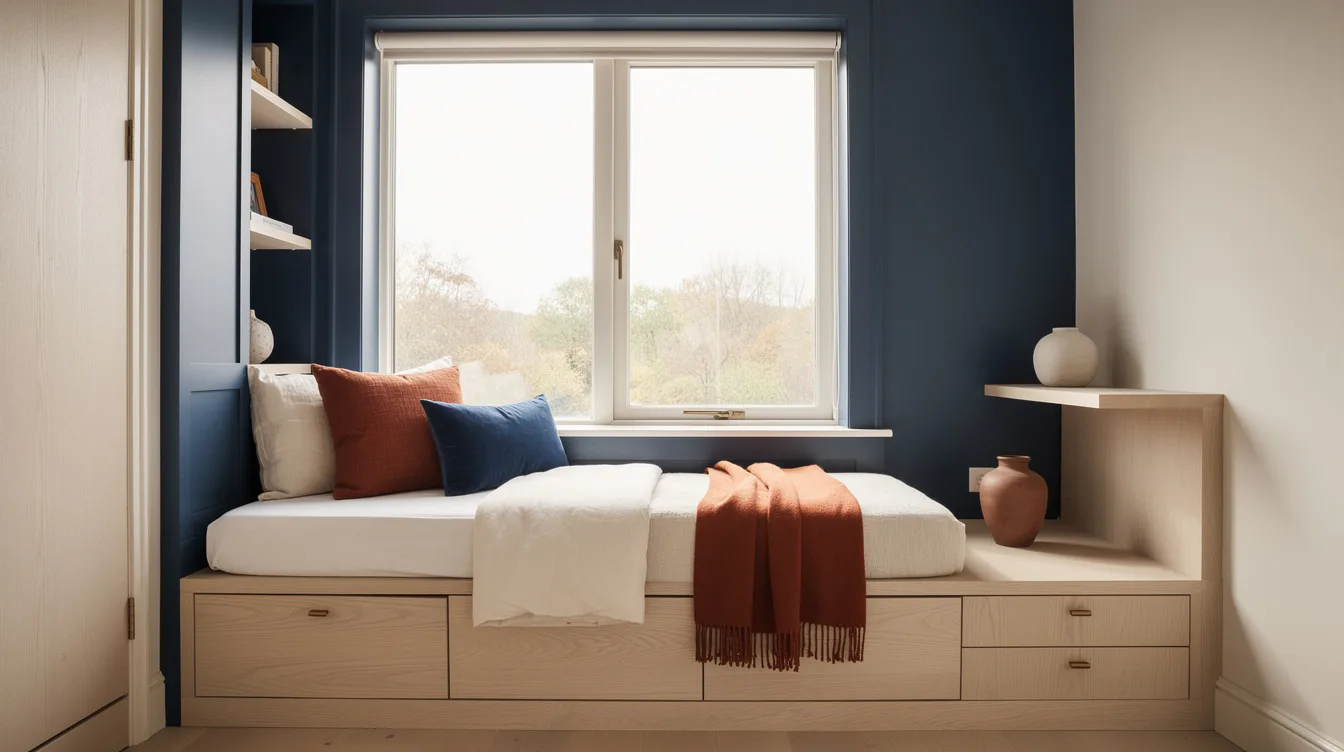
A 39-inch-wide twin mattress can look absurdly large on a floor plan, then feel like the smartest square footage decision in a small bedroom. Tucked below a window, it gives you a place to read, lounge, and sleep without asking for a separate chair.
The catch is that plenty of window seat beds become expensive benches with too many pillows. Designers tend to favor a platform that solves a real sleeping need, keeps the window bright, and pulls storage into the same wall.
Size the Platform for a Real Mattress
A reading bench can be roughly 17 to 20 inches deep, but that measurement creates a perch, not a bed. For overnight use, build around a twin mattress measuring 39 by 75 inches, or choose a 39-by-80-inch twin XL when the room can spare the extra length.
Designers see this mistake constantly: a handsome shallow bench dressed with pillows and called a daybed. Commit to sleeping dimensions from the first sketch, then keep the platform height around the typical 16 to 21 inches that feels comfortable for sitting.
Keep the Window Clear of a Tall Back
The wall can work as the headboard, but a tall upholstered back in front of the glass makes a small bedroom feel boxed in. A low plywood platform beneath the sill gives the mattress a grounded look while preserving daylight.
Use a washable bolster or two against the wall instead of permanent bulk. This is especially useful when the window is the room’s only strong source of natural light, because the bed remains a window seat during the day.
Build Storage Into the Same Footprint
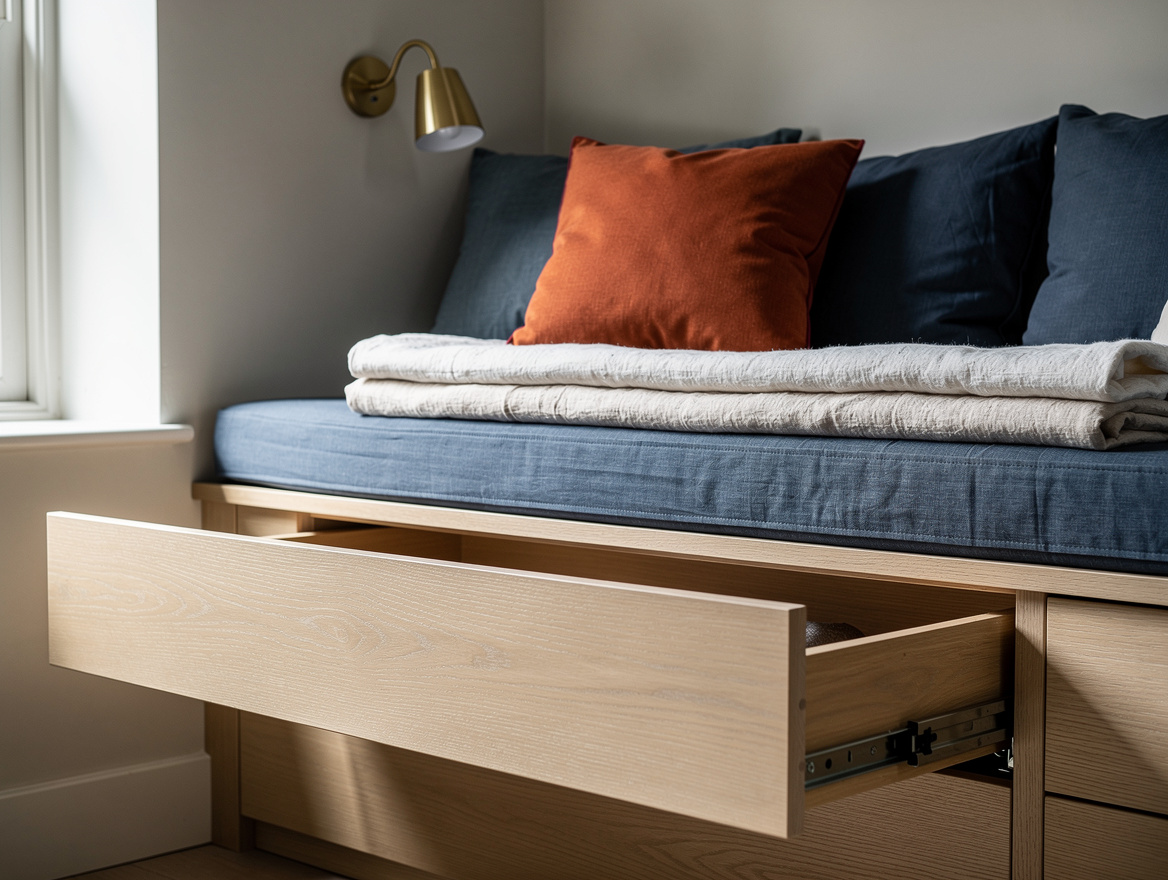
A window seat bed earns its space when it replaces another piece of furniture. Put drawers, lift-up lids, or open cubbies below a custom MDF carcass, then move extra bedding, books, and off-season clothes out of the room’s visible corners.
A fully custom built-in daybed typically costs about $1,000 to $8,000, while the average installed window-seat project is around $2,500. Spend on drawers only when you will actually use them, since complicated storage can swallow a modest budget fast.
Use Modular Bases for a Budget Build
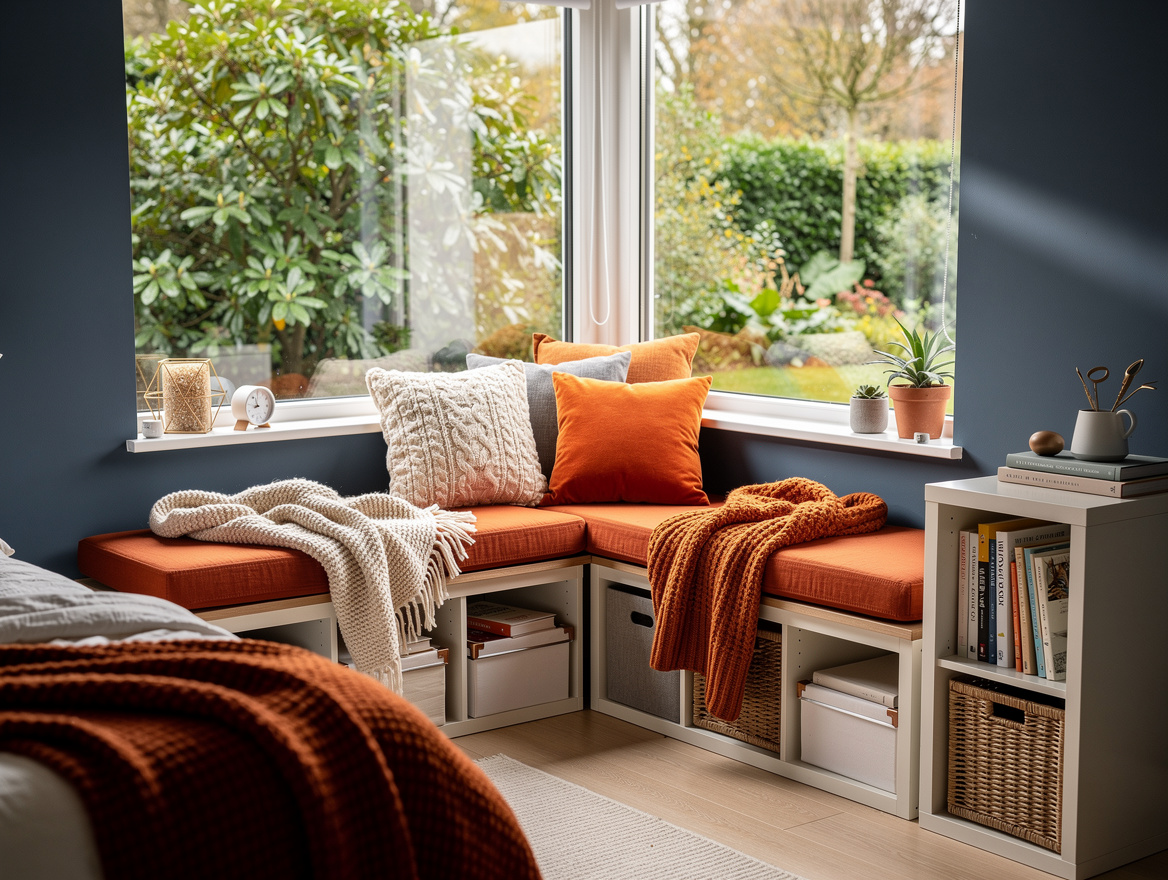
For renters and cautious DIYers, stack IKEA EKET cubes into a mattress-length base and top them with a trimmed wood panel, foam, and durable fabric. The result has the built-in look without committing the wall to a contractor project.
Choose closed units where visual calm matters, and leave a few open cubes for baskets or bedtime books. This approach works best when the window wall is long enough for a true mattress, rather than forcing a bed into a narrow reading nook.
Choose a Daybed That Does Not Crowd the Room
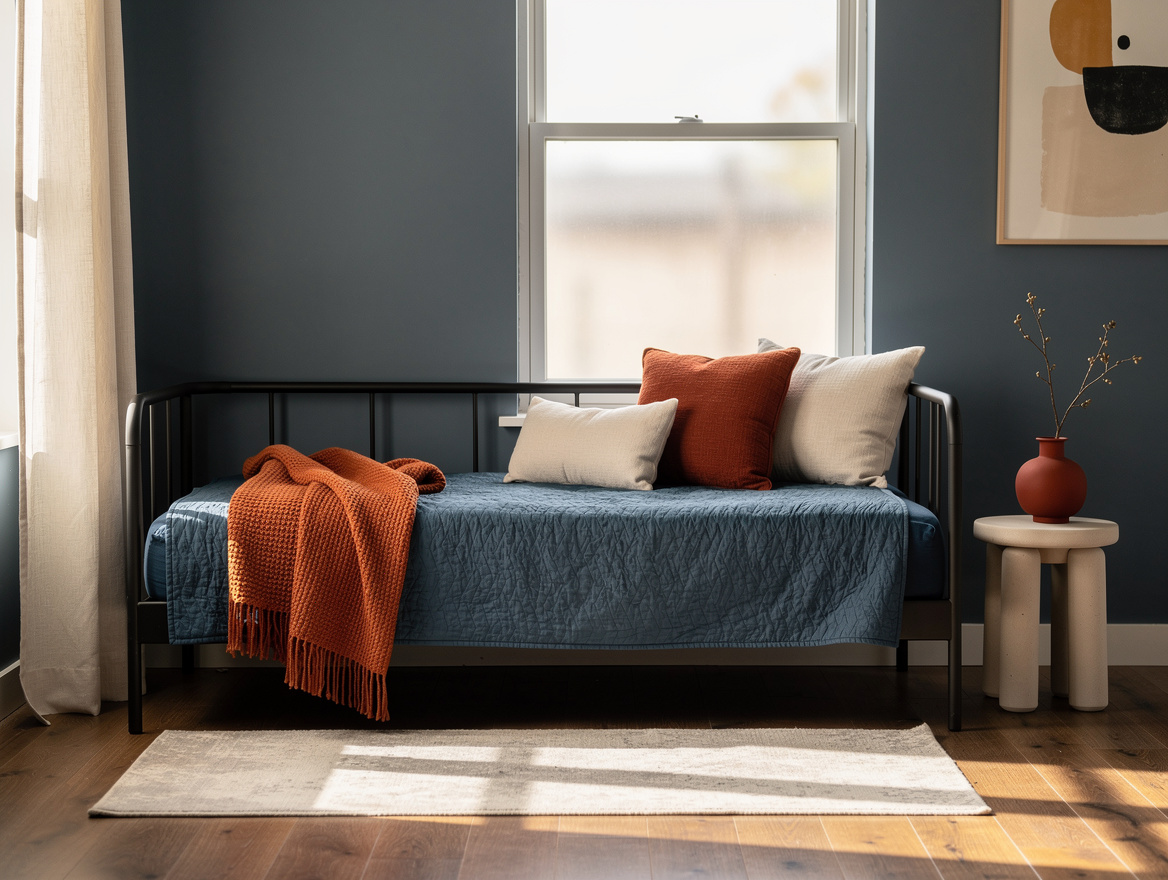
A ready-made frame is often the cleanest answer when construction is off the table. At Wayfair, basic twin daybeds typically run about $150 to $470, while models with storage, charging, or a pop-up trundle can range roughly from $660 to $1,070.
Skip ornate rails and heavy scrollwork in a tight room. A simple metal frame or slim wood daybed leaves more visible floor around its legs, which makes the room read larger even before you add storage.
Treat the Bed Like Seating After Dark
A window seat bed fails when its bedding turns into a permanent pile. Start with one fitted mattress cover, a tailored quilt, and two large back cushions in a tough linen-blend fabric so it can shift from lounge spot to sleep space in minutes.
Keep the palette quiet near the glass, then add one textured throw for warmth. A chunky knit throw. One brass reading light.
The seat should look intentional at noon and still feel genuinely comfortable when someone stays over.
Begin by measuring the clear wall length under the window, then tape out a 39-by-75-inch twin on the floor. That single test tells you whether you need a full built-in, an IKEA module base, or a slimmer seat-only nook.
Mia Carter writes about small-space living and budget home makeovers. She has restyled three rentals and tests most ideas in her own 45 sqm flat.